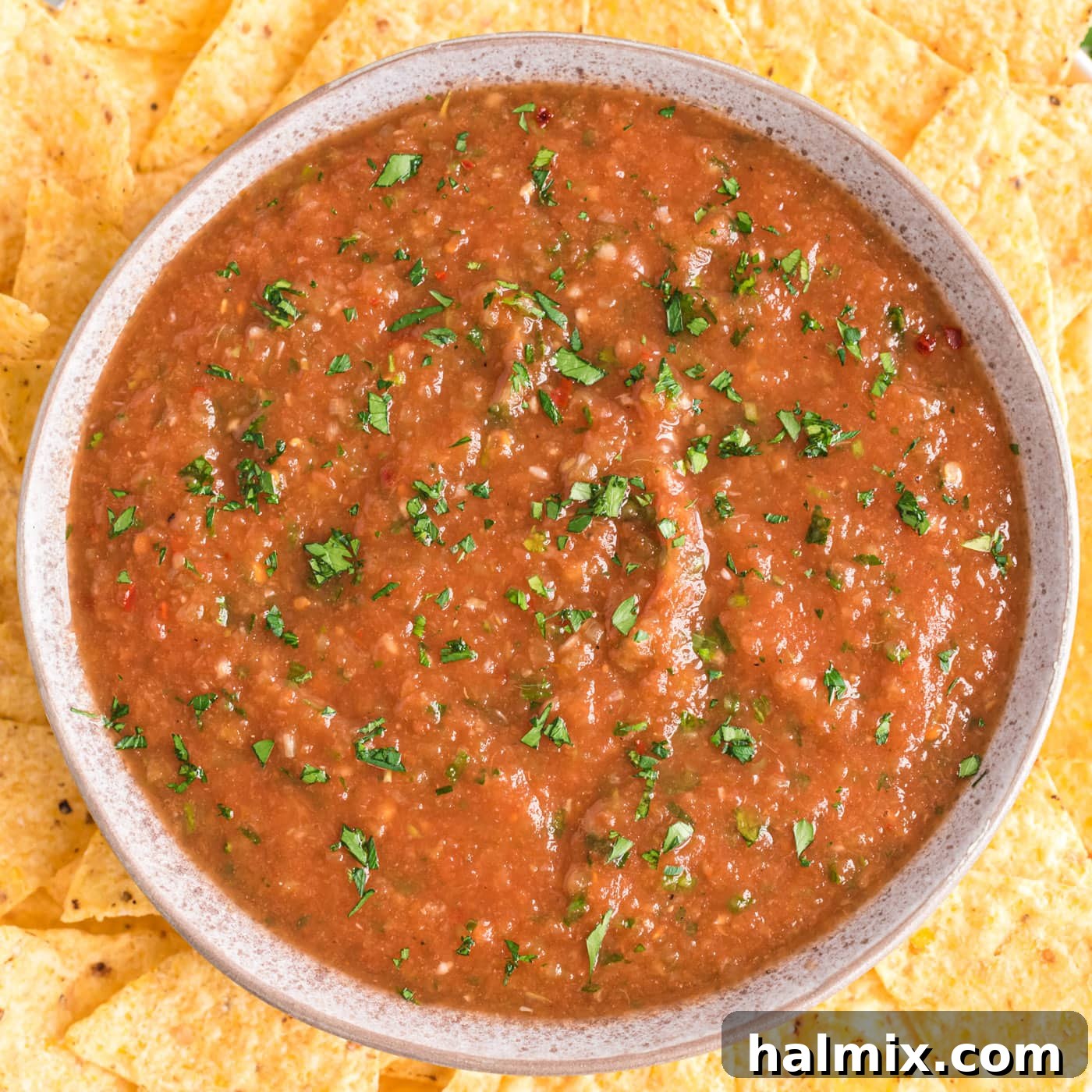
Unlock the secret to irresistible, vibrant restaurant-style salsa right in your own kitchen! Forget store-bought jars and complicated recipes; this incredibly easy method allows you to whip up a batch of delicious, dippable perfection in under 10 minutes. By simply layering a few key ingredients into your blender or food processor, you’re just moments away from an authentic, flavorful salsa that tastes like it came straight from your favorite Mexican eatery. Perfect for impromptu gatherings, a weeknight snack, or to elevate any meal, this recipe proves that homemade goodness can also be incredibly quick and convenient.
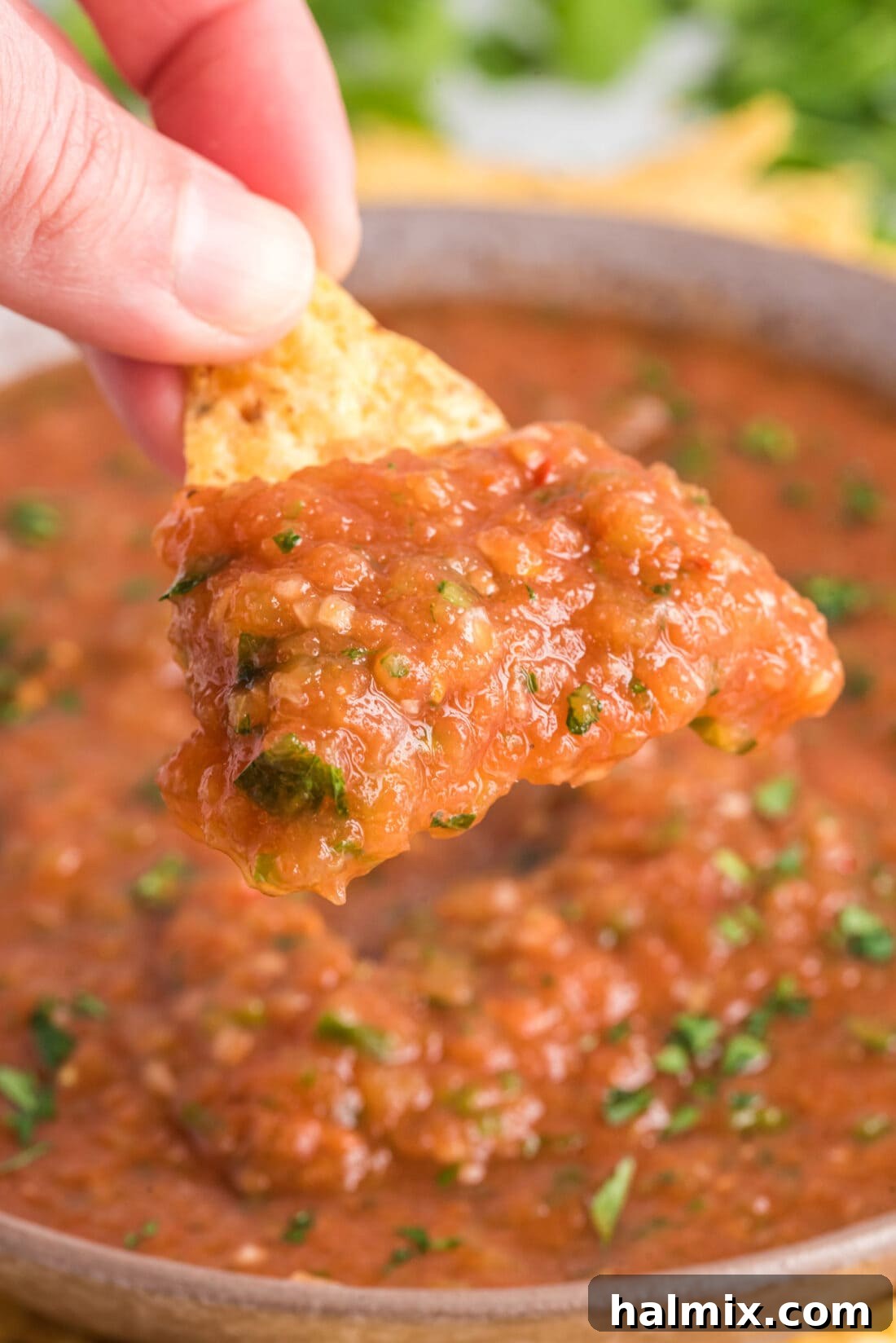
Why This Restaurant-Style Salsa Recipe is a Game-Changer
There’s nothing quite like the taste of fresh, homemade salsa, especially when made with sun-ripened tomatoes straight from the garden during peak season. However, as the weather cools and fresh produce becomes less abundant, sourcing truly flavorful tomatoes can be a challenge. That’s precisely why this recipe shines! It leverages the consistent quality and deep flavor of canned tomatoes, allowing you to enjoy authentic restaurant-style salsa all year long, regardless of what’s available at your local grocery store. I took the core ingredients from my beloved salsa fresca recipe, swapped in canned tomatoes, and let my trusty food processor do all the hard work. The result? A revelation!
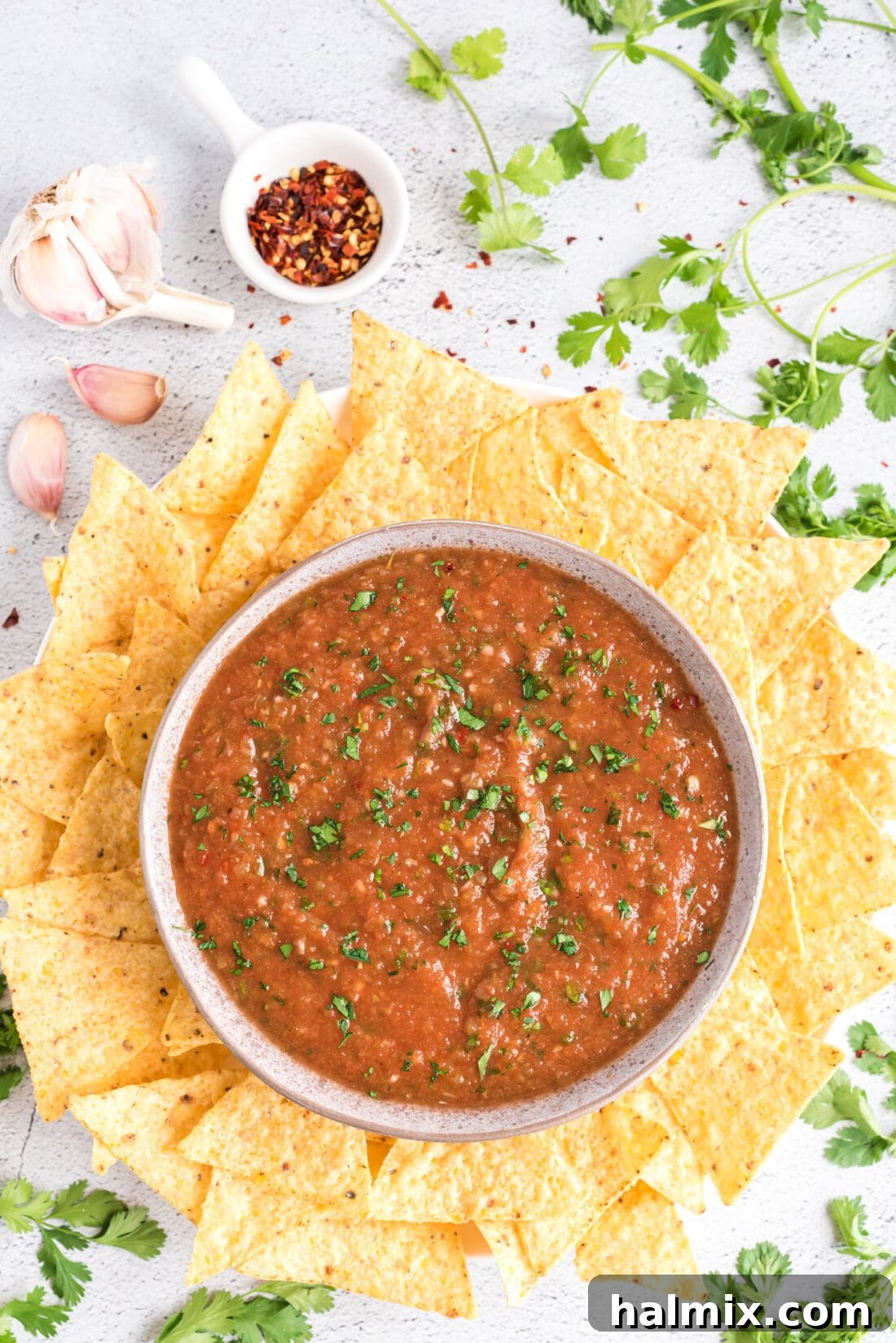
This method transforms simple ingredients into a rich, complex salsa with minimal effort. It’s incredibly easy to prepare and consistently a crowd-pleaser at any get-together, from casual backyard barbecues to festive holiday parties. The magic lies in the simplicity: just layer the ingredients into your food processor or blender, give it a few pulses, and you’re done. This isn’t just a recipe; it’s a testament to how quick and straightforward creating delicious, vibrant food can be. It stands as one of the most effortless food processor recipes you’ll ever master, consistently delivering exceptional taste without the fuss.
Essential Ingredients for Your Homemade Restaurant-Style Salsa
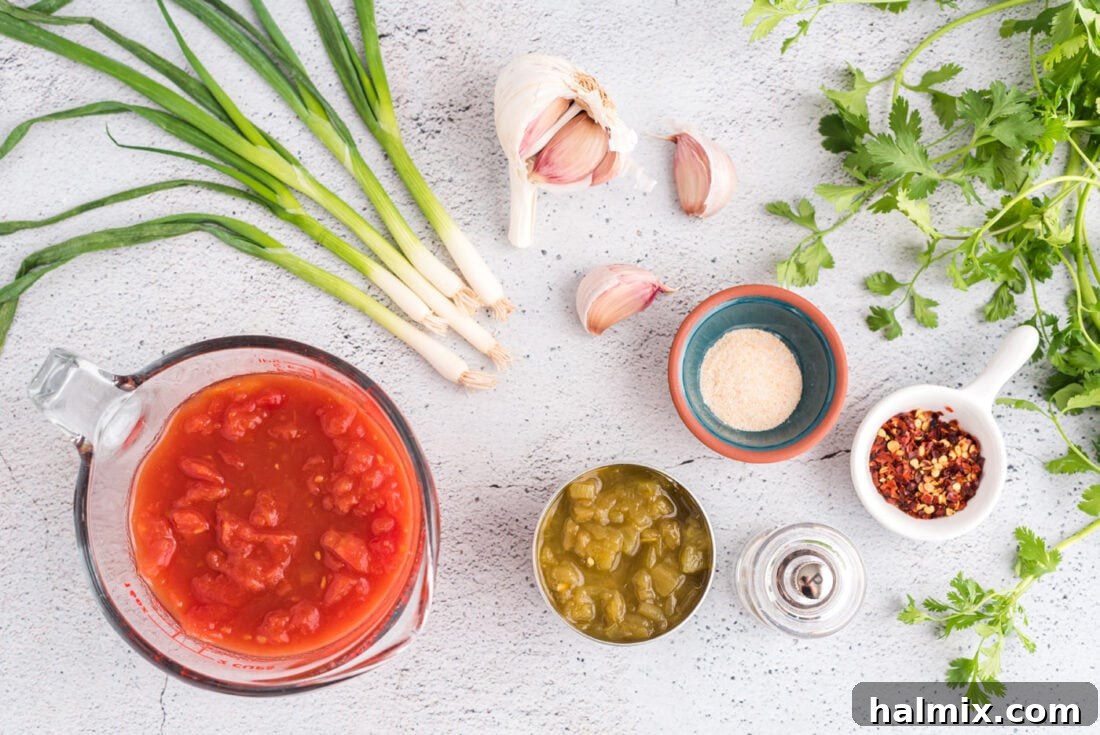
Crafting the perfect restaurant-style salsa relies on a balance of fresh aromatics, savory tomatoes, and a touch of spice. This recipe simplifies the process without compromising on flavor, making it accessible for home cooks of all skill levels. Below is a detailed list of what you’ll need to create this incredibly addictive dip. Remember, while the quantities provided are ideal, feel free to adjust them to your personal taste preferences.
Ingredient Deep Dive and Savvy Substitution Suggestions
Understanding the role of each ingredient and knowing how to make smart substitutions can truly elevate your salsa game. Here’s a closer look at the components that make this restaurant-style salsa so special:
TOMATOES: The Heart of the Salsa
For this recipe, canned tomatoes are our secret weapon, providing a consistent, rich flavor base that’s available year-round. I personally lean towards Hunts Fire Roasted canned tomatoes for their depth and slightly smoky undertone, which adds another layer of complexity to the salsa. However, you have plenty of options! Feel free to use your preferred brand of whole or chopped canned tomatoes. If you’re lucky enough to have homemade canned tomatoes, they would be an excellent choice. For a spicier kick and added convenience, Rotel tomatoes with green chiles are a fantastic substitute. If you opt for Rotel, remember to omit the additional canned green chiles specified in the recipe card to avoid excessive heat.
GREEN CHILES: A Touch of Mild Heat
Canned green chiles provide a mild, earthy spice that is characteristic of many restaurant salsas. They add flavor without overwhelming the palate. If you prefer a fresher approach, you can lightly roast a few poblano or Anaheim peppers, peel them, and deseed them before adding to the food processor. For those who love a bit more fire, a small amount of a freshly chopped jalapeño or serrano pepper can be incorporated, keeping some of the seeds and ribs for extra heat.
GARLIC: The Aromatic Foundation
Fresh minced garlic is non-negotiable for that authentic, pungent depth. It melds beautifully with the tomatoes and chiles. While fresh is always best, in a pinch, you can use pre-minced garlic from a jar, though you might need to adjust the quantity as its flavor can sometimes be milder. Garlic powder is a last resort, but it won’t give you the same vibrant taste.
GREEN ONIONS (SCALLIONS): A Zesty Punch
Green onions, coarsely chopped, provide a milder, fresher onion flavor compared to red or white onions. They contribute a subtle sharpness and a beautiful green fleck to the salsa. If green onions aren’t available, a small amount of finely diced white or red onion can be used, but blanching it briefly in hot water before adding can help mellow its raw bite.
CILANTRO: The Essential Herbaceous Note
Fresh cilantro is what truly defines many Mexican salsas. Its bright, citrusy, and slightly peppery notes are indispensable. Use a generous handful, coarsely chopped, for maximum impact. If you’re one of those who find cilantro soapy (due to a genetic predisposition), fresh parsley can be a decent substitute for the green color, but the flavor profile will differ significantly. You could also try a combination of parsley and a tiny pinch of cumin for a different but pleasant twist.
SEASONINGS: Enhancing the Flavor Profile
* Garlic Salt: This provides both saltiness and an extra layer of garlic flavor. Adjust to taste, always starting with a smaller amount and adding more if needed.
* Freshly Ground Black Pepper: A few turns of black pepper add a subtle warmth and aromatic complexity.
* Red Pepper Flakes: For a gentle background heat and visual appeal. This is where you can easily customize the spice level. If you desire a spicier salsa, don’t hesitate to increase the amount or introduce other hot peppers as mentioned above.
Crafting Your Restaurant-Quality Salsa: Step-by-Step Guide
These step-by-step photos and detailed instructions are designed to help you visualize and easily master this incredible recipe. For a convenient printable version, complete with precise measurements and comprehensive instructions, simply scroll to the end of this post and locate the recipe card.
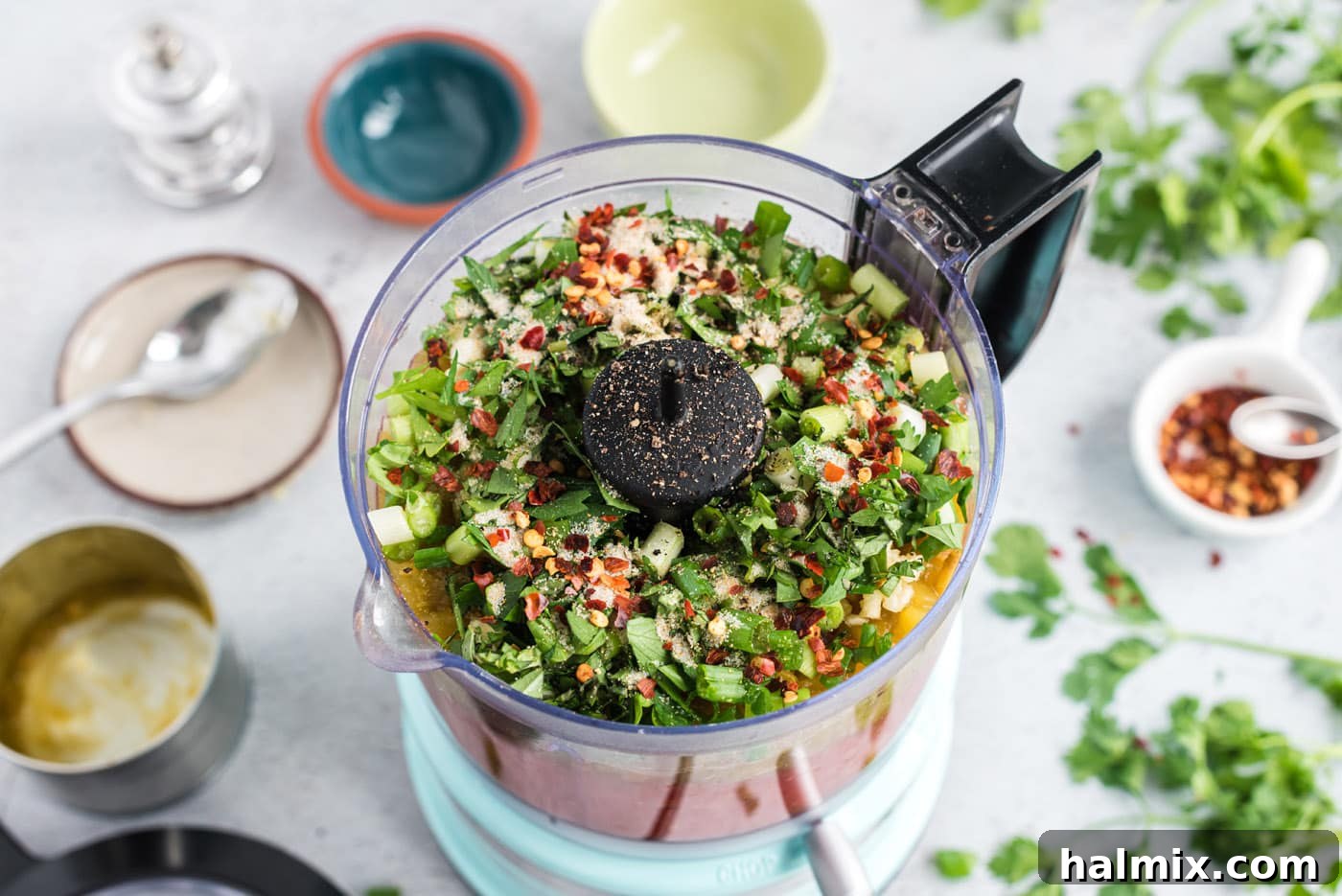
- Prepare Your Ingredients and Layer into the Food Processor: Begin by gathering all your fresh and canned ingredients. Coarsely chop the green onions and cilantro; mince your garlic. The beauty of this recipe lies in its simplicity. Carefully layer all the ingredients into your food processor or blender. While the exact order isn’t critical for blending, adding liquids first sometimes helps the blades catch solids more easily. However, with canned tomatoes providing moisture, simply piling them in works perfectly fine. Make sure your food processor bowl isn’t overfilled, especially if you’re doubling the recipe.
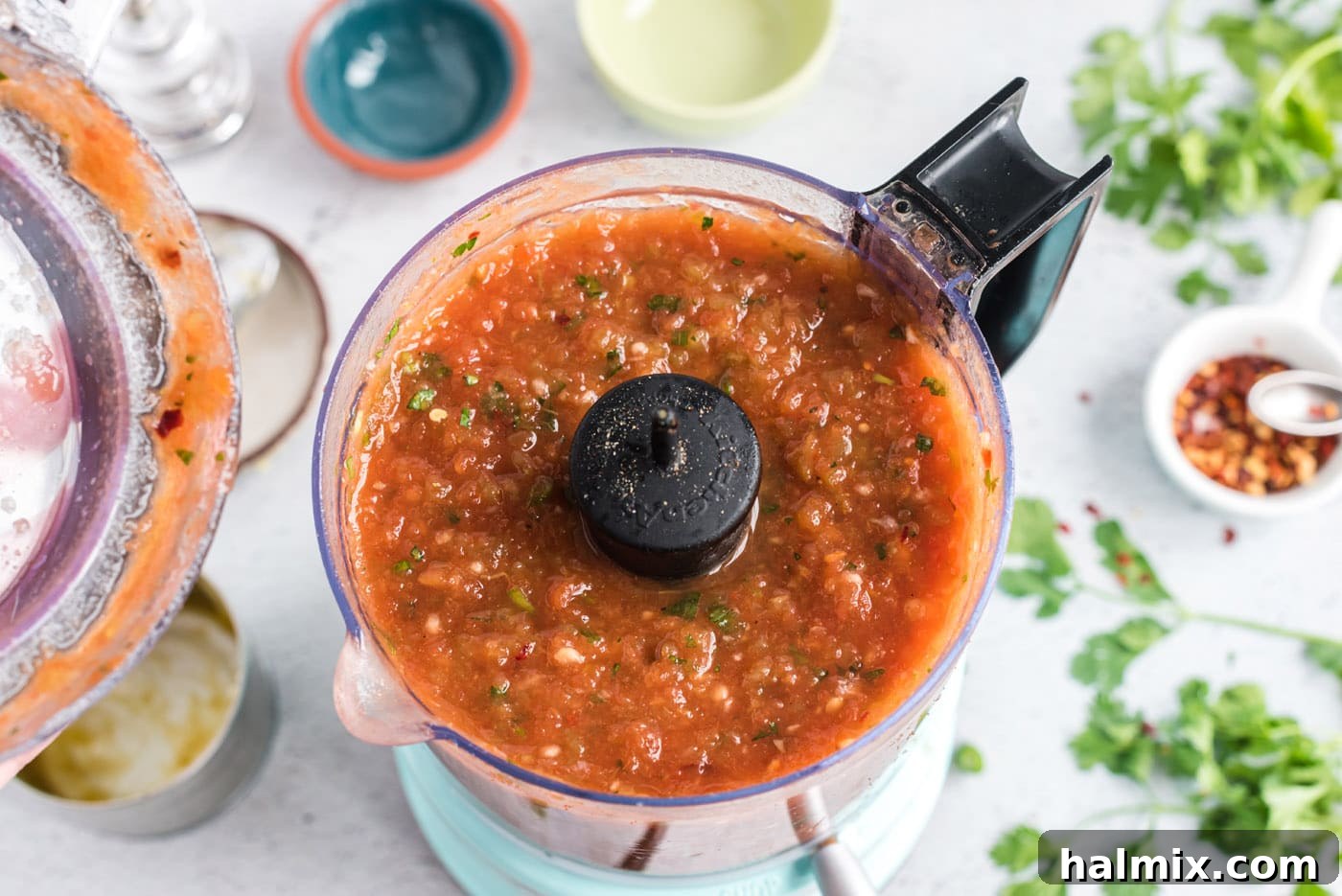
- Pulse to Your Desired Consistency: Secure the lid on your food processor or blender. Start by pulsing the ingredients a few times. This initial pulsing helps break down the larger chunks and begins to combine everything. Assess the consistency after a few pulses. If you prefer a chunkier salsa, resembling a pico de gallo, you can stop here or continue with minimal additional pulsing. For that classic, smooth restaurant-style salsa with small, discernible flecks of ingredients, continue to process for approximately 30-45 seconds. Keep an eye on it – you want a relatively smooth texture with small, uniform pieces, not a completely pureed soup. The goal is to blend thoroughly but avoid over-processing, which can make the salsa watery and compromise its texture.
Frequently Asked Questions & Expert Tips for Perfect Salsa
Yes, absolutely! While a food processor offers a bit more control over the chunkiness, a blender will work perfectly fine for making this salsa. Just be mindful not to over-blend; use the pulse setting to achieve your desired texture and prevent it from becoming too watery. A high-speed blender might achieve a smoother consistency faster, so keep a close eye on it.
When stored properly in an airtight container in the refrigerator, this homemade restaurant-style salsa will maintain its freshness and best flavor for up to 4 days. After this time, while it might still be safe to eat, the freshness of the ingredients, especially the cilantro and green onions, may start to diminish.
A crucial rule of thumb in home canning is to avoid re-canning ingredients that have already been commercially canned. The acidity levels and processing times are carefully balanced in tested canning recipes to ensure safety. Since this recipe uses canned tomatoes and chiles, it’s generally not recommended for home canning. If your goal is to preserve homemade salsa through canning, your best and safest bet is to start from scratch with fresh, raw ingredients. My salsa fresca recipe uses fresh tomatoes and very similar ingredients to this one. You can blend or food process all those fresh components together and then follow a safe, tested home canning procedure designed for fresh tomato salsa.
As written, this salsa is on the milder side, offering a gentle background warmth from the red pepper flakes and green chiles. This makes it palatable for a wide audience. However, adjusting the spice level to your preference is incredibly easy! If you crave more heat, feel free to add in a freshly chopped jalapeño. For an even spicier kick, you can leave some of the ribs and seeds intact, as that’s where much of the capsaicin (the compound responsible for heat) is concentrated. Alternatively, simply increase the amount of red pepper flakes, or for a really bold flavor, consider adding a dash of cayenne pepper or a chopped serrano chile.
Absolutely! In fact, making this salsa an hour or two (or even a day) in advance allows the flavors to meld and deepen beautifully. Just be sure to store it in an airtight container in the refrigerator. Give it a quick stir before serving to redistribute any settled ingredients.
If your salsa turns out a bit too watery, it could be due to over-processing or the canned tomatoes having a higher water content. To remedy this, you can let the salsa sit in a fine-mesh sieve over a bowl for about 15-30 minutes to allow some excess liquid to drain off. Alternatively, you can add a few more solid ingredients like an extra half-can of well-drained chopped tomatoes or another handful of cilantro to thicken it slightly.
Delightful Serving Suggestions for Your Homemade Salsa
Honestly, when isn’t a good time for a bowl of fresh, zesty restaurant-style salsa? Its versatility makes it a perfect addition to almost any occasion or meal. Serve it proudly at potlucks, football viewing parties, summer cookouts, or bring it along as an effortless appetizer for game nights. The possibilities truly are endless:
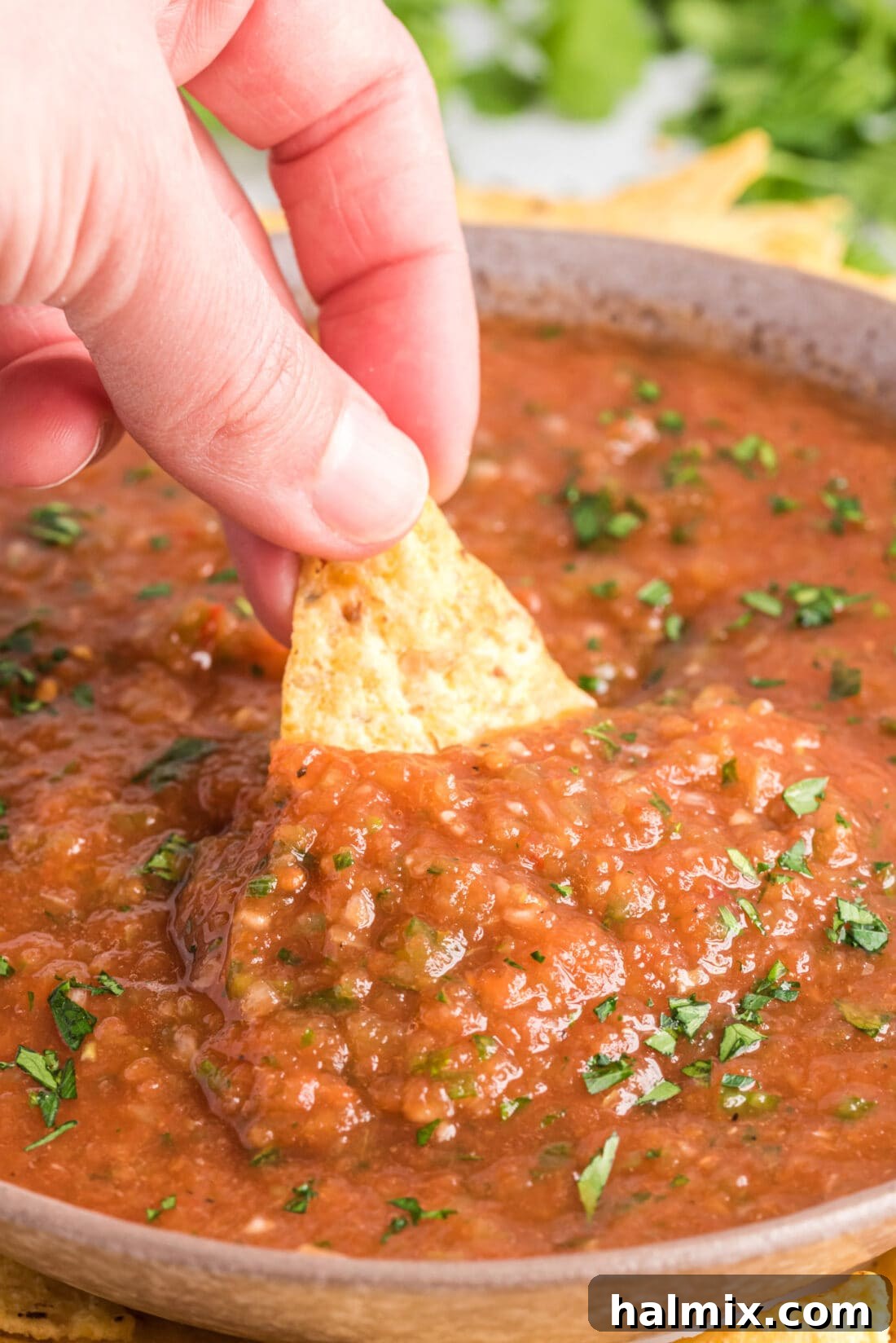
- The Classic Dip: Of course, serve it with a generous basket of crispy tortilla chips for the ultimate dipping experience.
- Mexican Mains: Elevate your favorite Mexican dishes by layering it into burritos, drizzling it generously over tacos, enchiladas, walking tacos, or piling it high on loaded nachos.
- Breakfast Boost: Spoon it over scrambled eggs, omelets, or a breakfast burrito for a flavorful start to your day.
- Grilled Favorites: Use it as a vibrant topping for grilled chicken, fish, or steak, adding a fresh, tangy kick.
- Healthy Snack: Pair it with crunchy vegetable sticks like cucumber, carrots, or bell peppers for a light and refreshing snack.
- Sandwich & Wrap Enhancer: Spread a thin layer inside sandwiches or wraps to add moisture and a burst of flavor.
Explore More Delicious Salsa Creations
If you’ve fallen in love with making your own salsa, you’re in for a treat! The world of homemade dips is vast and exciting. Expand your repertoire with these other fantastic salsa recipes:
- Salsa Verde: A tangy, zesty green salsa made with tomatillos, perfect for pork or chicken.
- Corn Salsa: Sweet corn combined with fresh vegetables for a refreshing and vibrant side.
- Mango Salsa: A tropical delight, balancing sweet mango with spicy peppers and cilantro, ideal for fish.
- Cowboy Caviar: A hearty bean and corn salsa, often called Texas caviar, excellent as a dip or salad.
- Strawberry Salsa: An unexpected fruity twist, great for desserts or surprising pairings.
- Easy Pineapple Salsa: Sweet and tangy, offering a bright counterpoint to savory dishes.
I absolutely adore spending time in the kitchen, experimenting with new flavors, and sharing my culinary adventures with all of you! To make sure you never miss out on a delicious new recipe, I offer a convenient newsletter service. Simply subscribe today and start receiving free daily recipes delivered straight to your inbox!
Restaurant Style Salsa
IMPORTANT – Don’t forget to check the Frequently Asked Questions section within the blog post for helpful tips and insights. Simply scroll up to read them!
Print It
Pin It
Rate It
Ingredients
- 14 ounce canned tomatoes (1 can whole or chopped, undrained for best liquid)
- 4 ounce green chiles (1 can, drained if preferred for less liquid)
- 3 teaspoons garlic (minced, about 3 cloves)
- 5 green onions (coarsely chopped, both white and green parts)
- 1 handful fresh cilantro (coarsely chopped, about 1/2 cup or to taste, stems removed)
- garlic salt (to taste, start with 1/2 tsp)
- freshly ground black pepper (4 or 5 turns or to taste)
- ¼ teaspoon red pepper flakes (add more for extra heat)
Things You’ll Need
-
Food processor or blender
-
Chef’s knife
-
Cutting board
Before You Begin
- This recipe will yield approximately 2 cups of delicious salsa. If you’re hosting a larger crowd or simply want more on hand, it’s very easy to double the recipe.
- For optimal freshness and flavor, store your homemade salsa in an airtight container, such as a mason jar, in the refrigerator for up to 4 days.
- The base recipe is designed to be mild. To dial up the heat, feel free to incorporate a freshly chopped jalapeño (leaving some of the rib and seeds for extra spice) or simply add more red pepper flakes to your liking.
Instructions
-
Carefully layer all the prepared ingredients into your food processor or blender. There’s no strict order, but ensure larger items are at the bottom if your appliance struggles with blending.
-
Pulse the ingredients a few times to initiate blending. Continue to pulse for about 30-45 seconds, or until you reach your desired consistency – a smooth salsa with small, uniform chunks, reflective of authentic restaurant-style texture. Avoid over-processing to prevent a watery result.
Nutrition
The recipes on this blog are meticulously tested with a conventional gas oven and gas stovetop to ensure consistent results. It’s important to acknowledge that oven performance can vary, especially with older models, leading to inconsistent cooking and baking. We highly recommend using an inexpensive oven thermometer to verify that your oven is truly reaching the proper temperature. If you utilize a toaster oven or countertop oven, please be aware that their heat distribution may differ from a full-sized conventional oven, potentially requiring adjustments to your cooking or baking times. For recipes prepared with specialized appliances like pressure cookers, air fryers, or slow cookers, a link to the specific appliances we use is typically provided within each respective recipe. In the case of baking recipes where measurements are given by weight, please note that using volumetric cups instead may lead to different outcomes, and we cannot guarantee success with such method variations.
This post was originally published on January 13, 2011, and has been extensively updated with enhanced content, new photos, and expert tips to provide the most valuable and comprehensive guide for making homemade restaurant-style salsa.