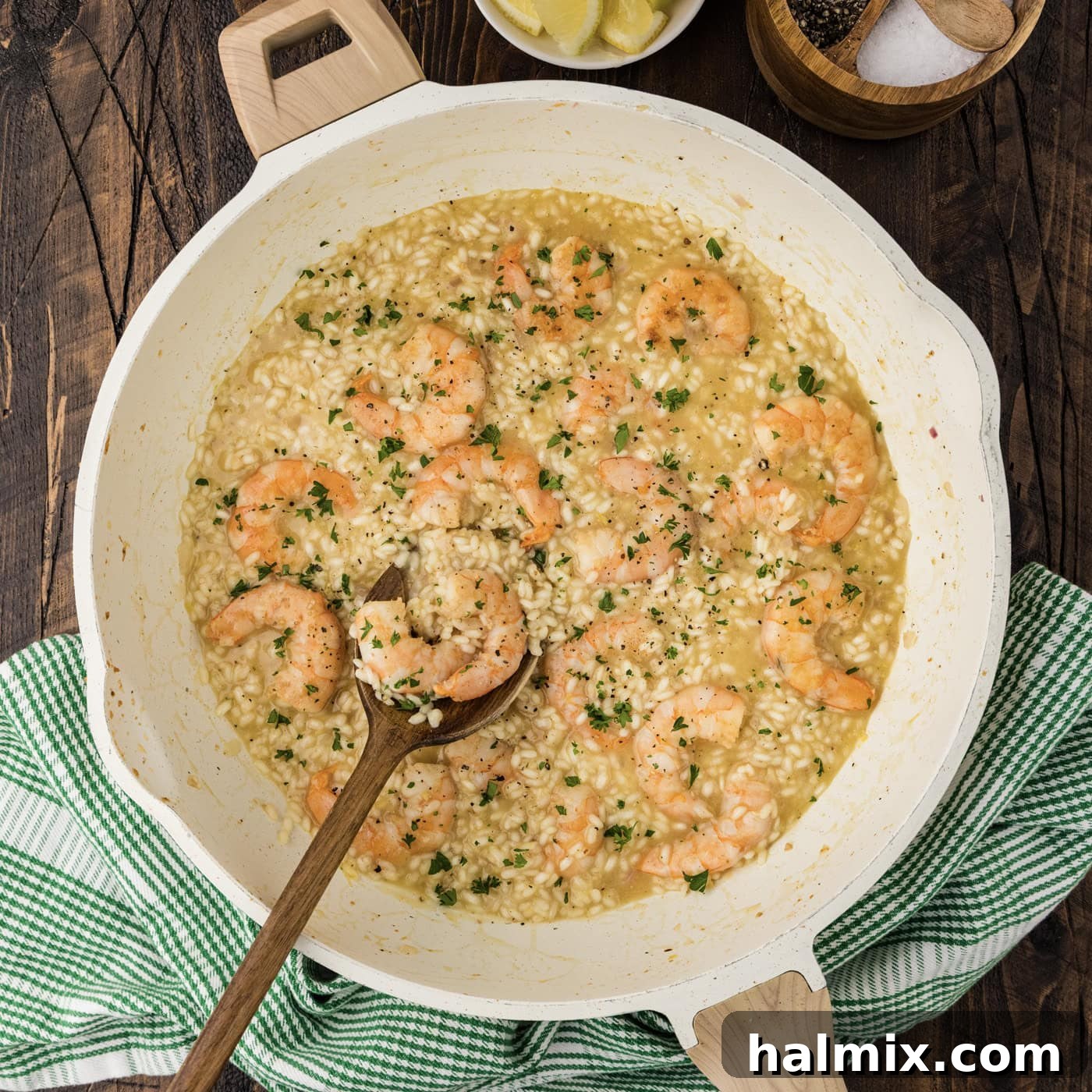
Exquisite Creamy Shrimp Risotto: A Simple Yet Elegant Recipe
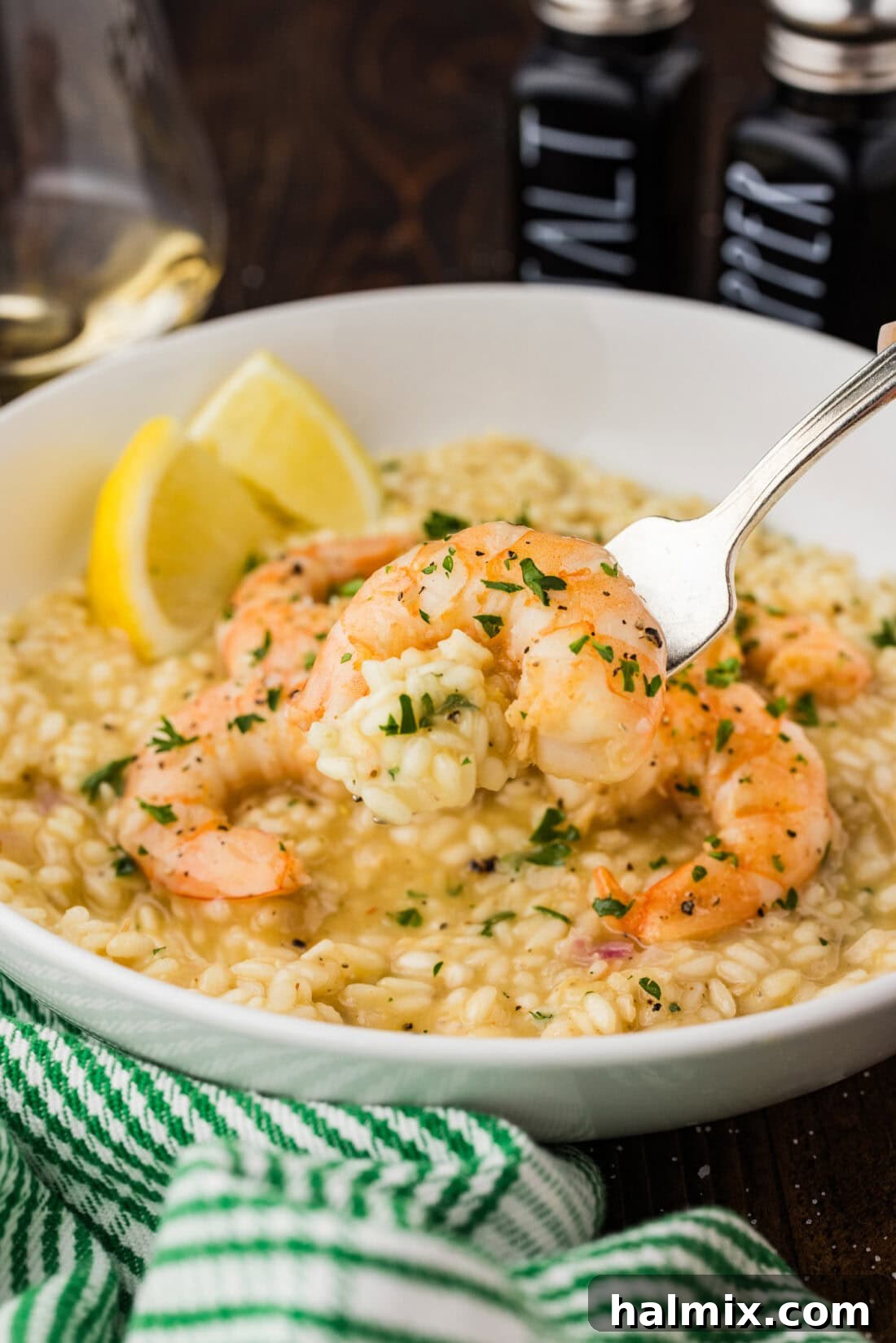
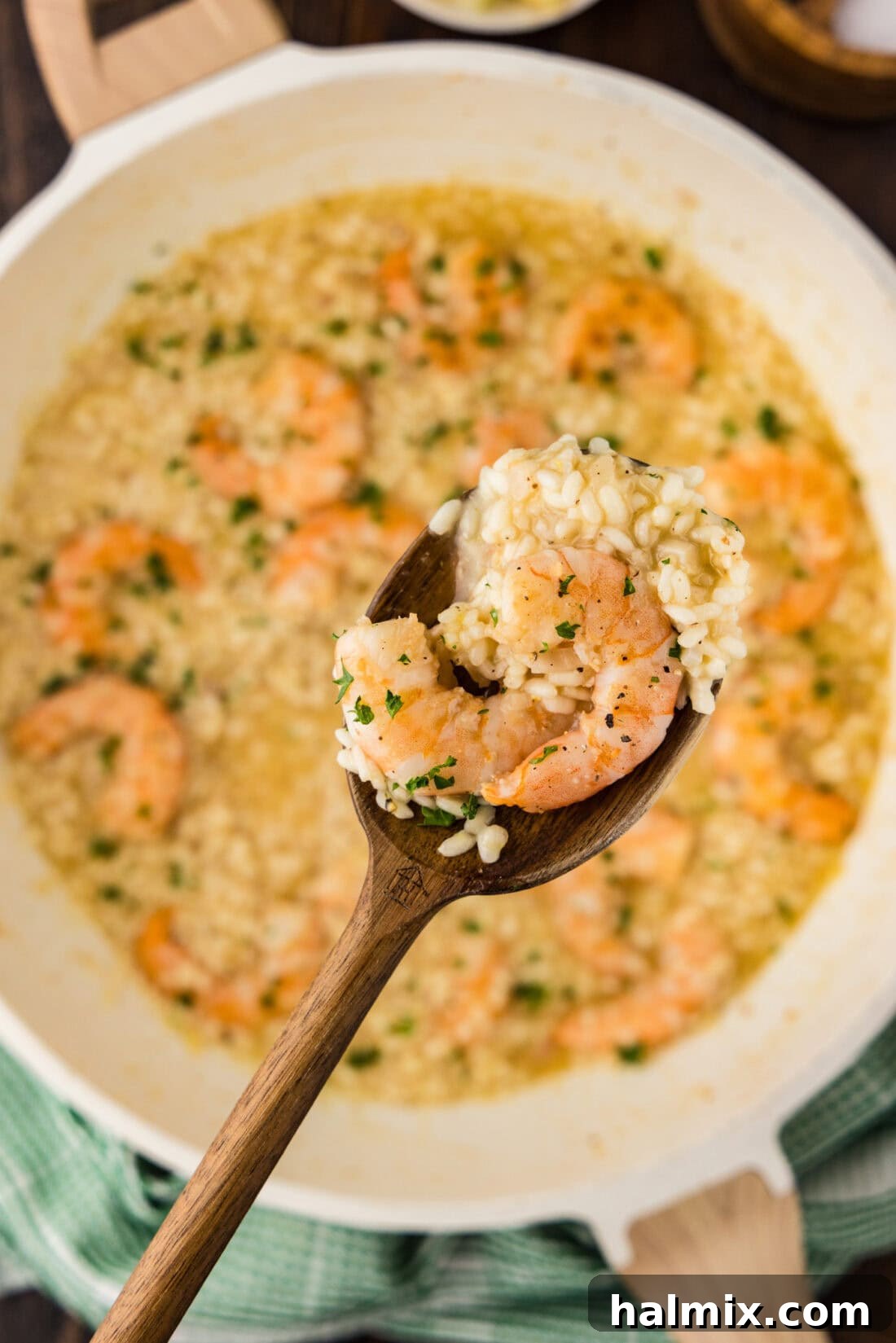
Indulge in the sheer delight of a truly remarkable dish: this creamy shrimp risotto. Imagine plump, succulent shrimp perfectly nestled in a bed of luxurious, buttery Arborio rice, each grain infused with the bright zest of lemon and the sophisticated depth of white wine. This isn’t just a meal; it’s an experience that speaks volumes with every spoonful, promising comfort and elegance in equal measure.
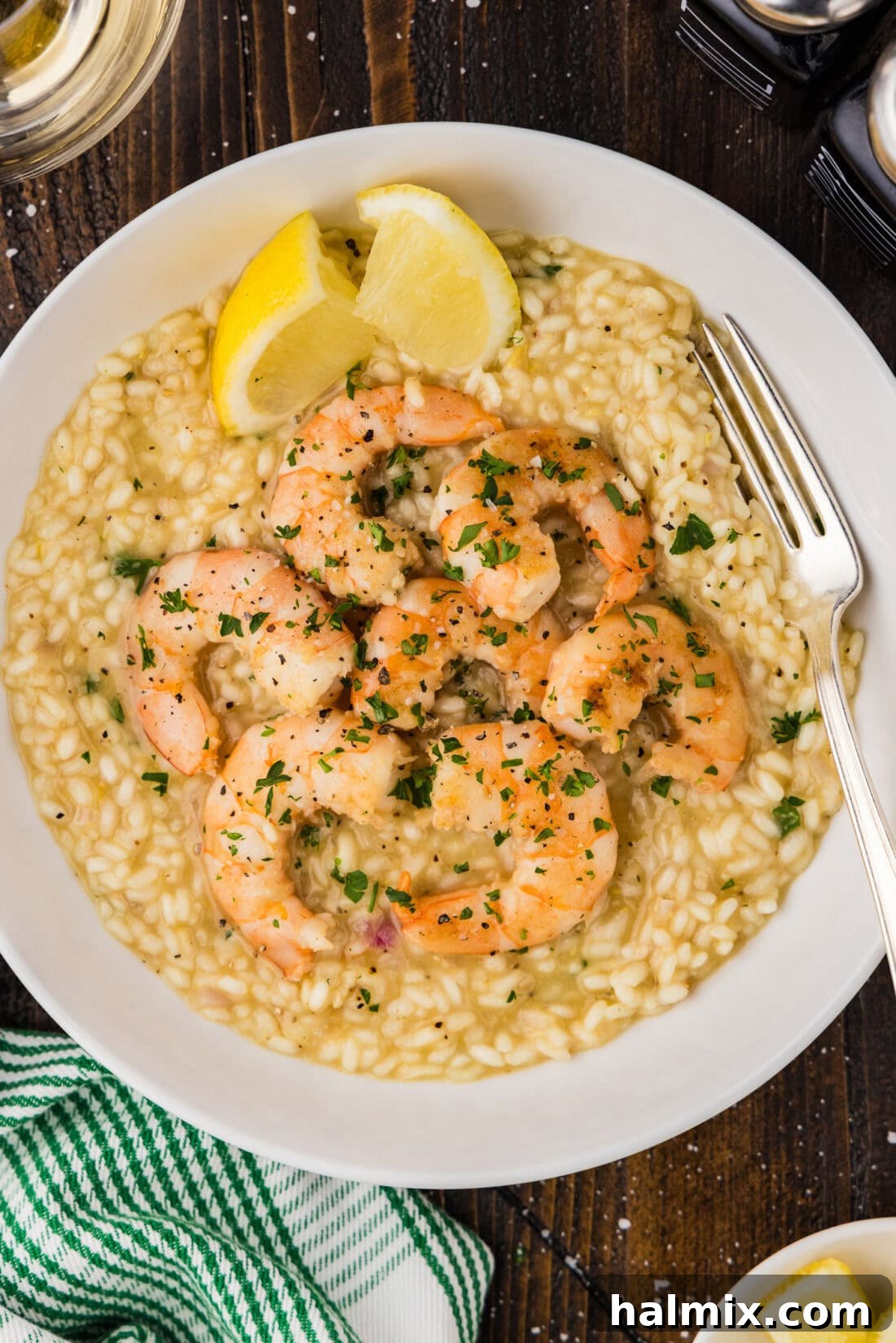
Risotto, a classic Italian rice dish, is renowned for its rich, creamy texture, achieved through a slow cooking process where broth is gradually added to short-grain rice. When combined with the delicate flavor of fresh shrimp and a hint of citrus, it transforms into a culinary masterpiece that is both impressive and surprisingly easy to master. Whether you’re planning an intimate dinner party or seeking to elevate a weeknight meal, this shrimp risotto recipe is designed to deliver restaurant-quality results in your own kitchen.
Why This Recipe Is an Absolute Must-Try
After the rave reviews for our lobster risotto, it was only fitting to bring an equally stellar shrimp variation to the table. This recipe shines for several compelling reasons, making it a beloved staple:
- Effortlessly Elegant: This dish strikes a perfect balance between sophisticated and approachable. It’s refined enough for a special occasion, yet comforting and straightforward enough for an everyday family dinner. It truly is chef’s kiss for any setting.
- Remarkably Quick: Despite its gourmet appeal, this shrimp risotto comes together in approximately 35 minutes from start to finish. This speed makes it an ideal choice for busy evenings when you crave something special without spending hours in the kitchen.
- Unforgettable Flavor and Texture: Every bite offers a symphony of flavors – the sweetness of the shrimp, the tang of lemon, the richness of butter, and the subtle notes of white wine. The creamy texture, achieved by patiently stirring the Arborio rice, is incredibly satisfying. Antoine and I absolutely adored the luxurious creaminess, and we were pleasantly surprised at how well the leftovers held up!
- Comfort in a Bowl: There’s something inherently comforting about a warm bowl of creamy risotto. This recipe takes that comfort to the next level, offering a truly wholesome and delightful eating experience that will leave you feeling nourished and content.
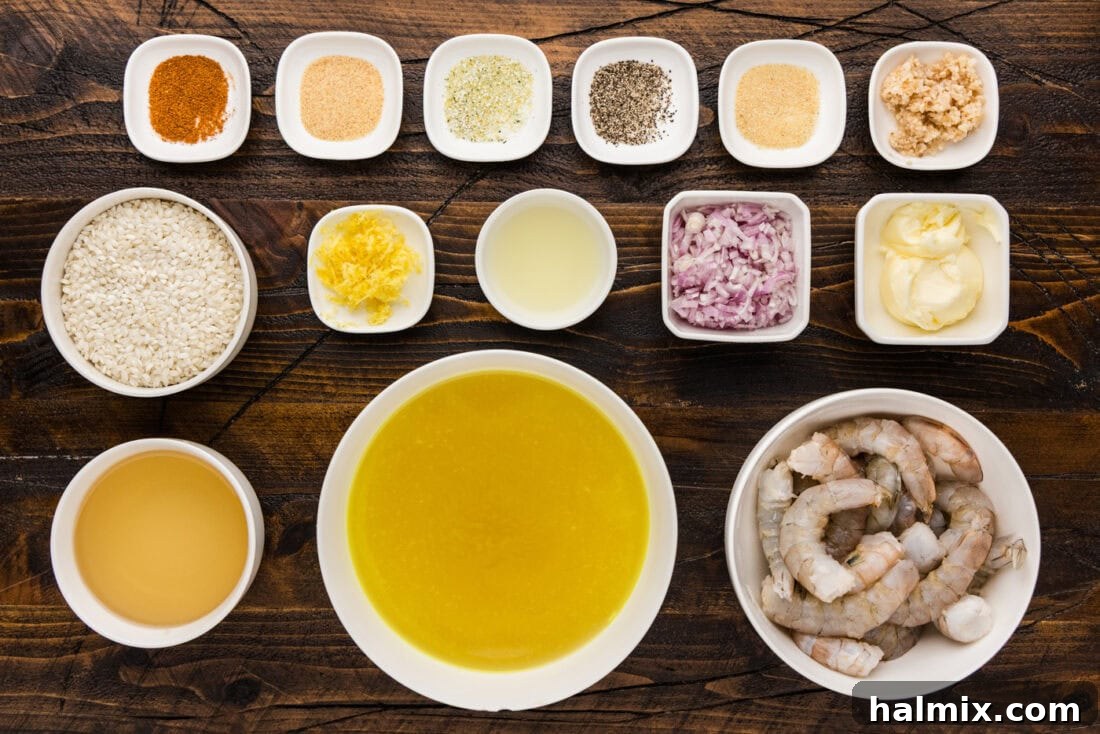
Essential Ingredients for Your Shrimp Risotto
Crafting the perfect shrimp risotto begins with selecting fresh, high-quality ingredients. While the full, printable recipe with precise measurements can be found at the end of this post, here’s a look at the core components you’ll need to gather:
Ingredient Spotlight & Smart Substitutions
Understanding each ingredient’s role and knowing smart substitutions can empower you in the kitchen, ensuring delicious results every time.
- Shrimp: For this recipe, you’ll need large raw shrimp. It’s crucial that they are peeled, deveined, and have had their tails removed for the best eating experience. If using frozen shrimp, remember to thaw them thoroughly and pat them completely dry before cooking. This step is vital to prevent excess moisture from steaming the shrimp instead of searing it, ensuring a beautiful pink color and tender texture. For a slightly different flavor profile, you could also experiment with scallops or a mix of seafood.
- Risotto Rice (Arborio Rice): The star of any risotto is its rice. We specifically use a short-grain rice known as Arborio rice. What makes Arborio so special is its high starch content. As it cooks and is stirred, this starch is released, creating the characteristic creamy, luscious texture that defines a perfect risotto. Arborio rice is widely available in most supermarkets, often found in the rice or international foods aisle. While Arborio is ideal, other short-grain rices like Carnaroli or Vialone Nano can also be used if you can find them, as they share similar starchy properties. Avoid long-grain rice like Basmati or Jasmine, as they won’t yield the desired creaminess.
- White Wine: A dry white wine, such as Pinot Grigio, Sauvignon Blanc, or a dry Vermouth, is highly recommended. It adds a wonderful depth, acidity, and complex flavor to the risotto, balancing the richness. Avoid sweet wines. If you prefer to cook without alcohol, or simply don’t have wine on hand, an equal amount of chicken broth can be used as a direct substitute. While the flavor profile will be slightly different, the dish will still be delicious and creamy.
- Chicken Broth: This liquid gold is gradually added to the rice, allowing it to absorb and release its starches, contributing to the creamy consistency. Using a good quality chicken broth (or even a seafood broth for an extra layer of flavor) is key. Ensure it’s warm before adding it to the rice; this helps maintain a consistent cooking temperature and prevents shocking the rice, which can affect its texture.
- Lemon Juice and Zest: Fresh lemon juice and zest provide a vibrant, zesty finish that brightens the entire dish, cutting through the richness and enhancing the shrimp’s natural sweetness. Always opt for fresh lemons for the best flavor.
- Butter, Garlic, and Shallots: These aromatic foundations build a rich flavor base. Butter provides a luscious fat, while minced garlic and finely diced shallots offer a milder, sweeter oniony flavor compared to standard onions.
- Seasonings: Onion powder, garlic powder, Old Bay seasoning, garlic salt, and black pepper enhance the overall taste. Old Bay, in particular, adds a classic seafood seasoning blend that complements the shrimp beautifully. Adjust to your personal taste.
Mastering Creamy Shrimp Risotto: Step-by-Step Guide
These step-by-step photos and detailed instructions are here to guide you through making this incredible recipe. For a quick jump to the printable version, complete with all measurements and instructions, scroll to the bottom of this post.
- Melt 1 tablespoon of the butter in a large, heavy-bottomed skillet over medium-high heat. Allow the butter to fully melt and become shimmering, indicating it’s hot enough to cook.
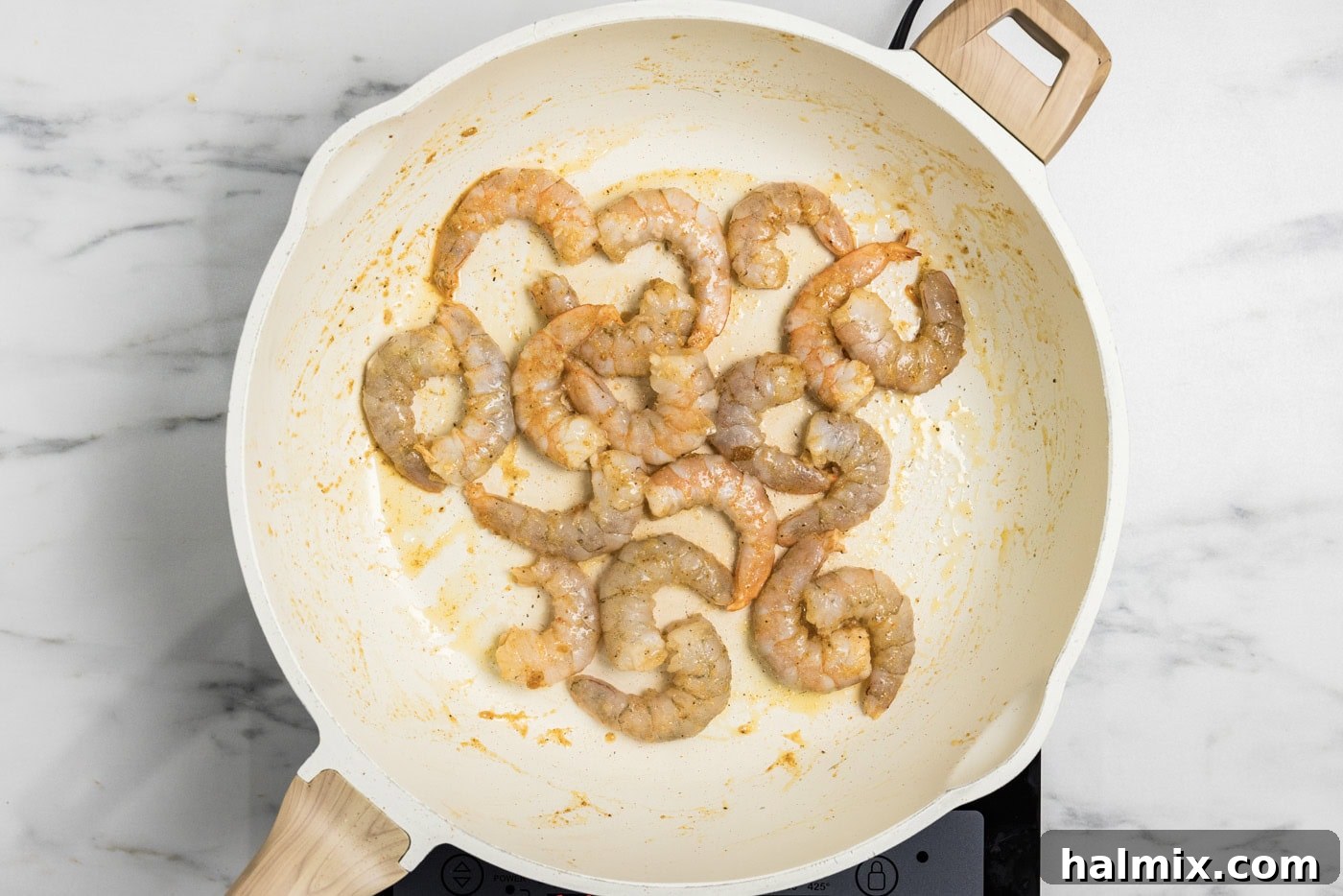
- Add the prepared shrimp to the hot skillet, along with onion powder, garlic powder, and Old Bay Seasoning. Toss and turn the shrimp for a brief 1-2 minutes. You’re looking for them to just turn pink and begin to curl. Immediately remove the partially cooked shrimp from the skillet and set them aside, keeping them warm.
Chef’s Tip: Shrimp cooks incredibly fast. By partially cooking it now and adding it back in at the end, you ensure perfectly tender shrimp and avoid the dreaded rubbery texture that can result from overcooking.

- In the same skillet, melt the remaining 1 tablespoon of butter over medium heat.
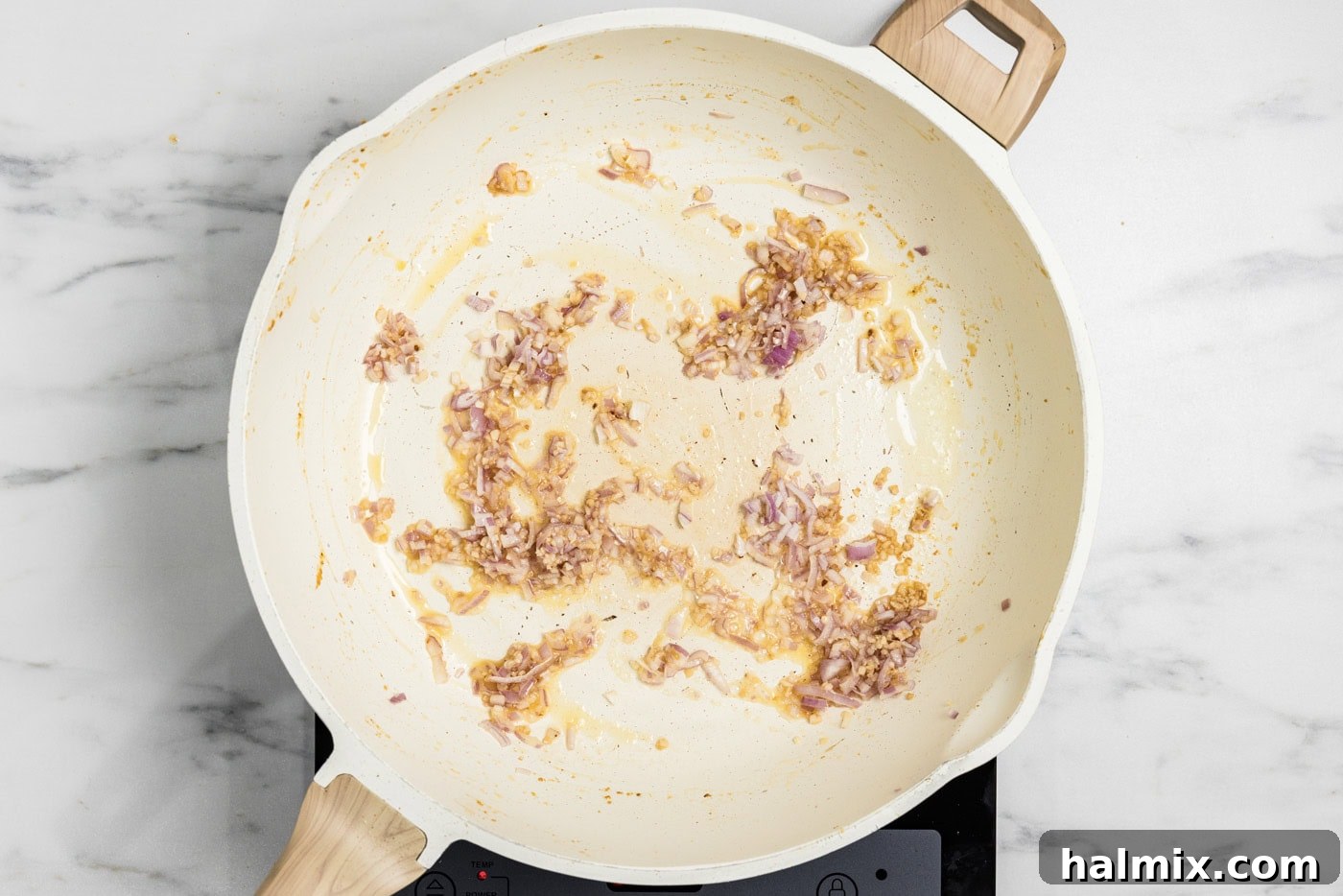
- Add the minced garlic and diced shallots to the skillet. Cook, stirring frequently, for about 1-2 minutes, or until they have softened and become beautifully fragrant, filling your kitchen with their inviting aroma.
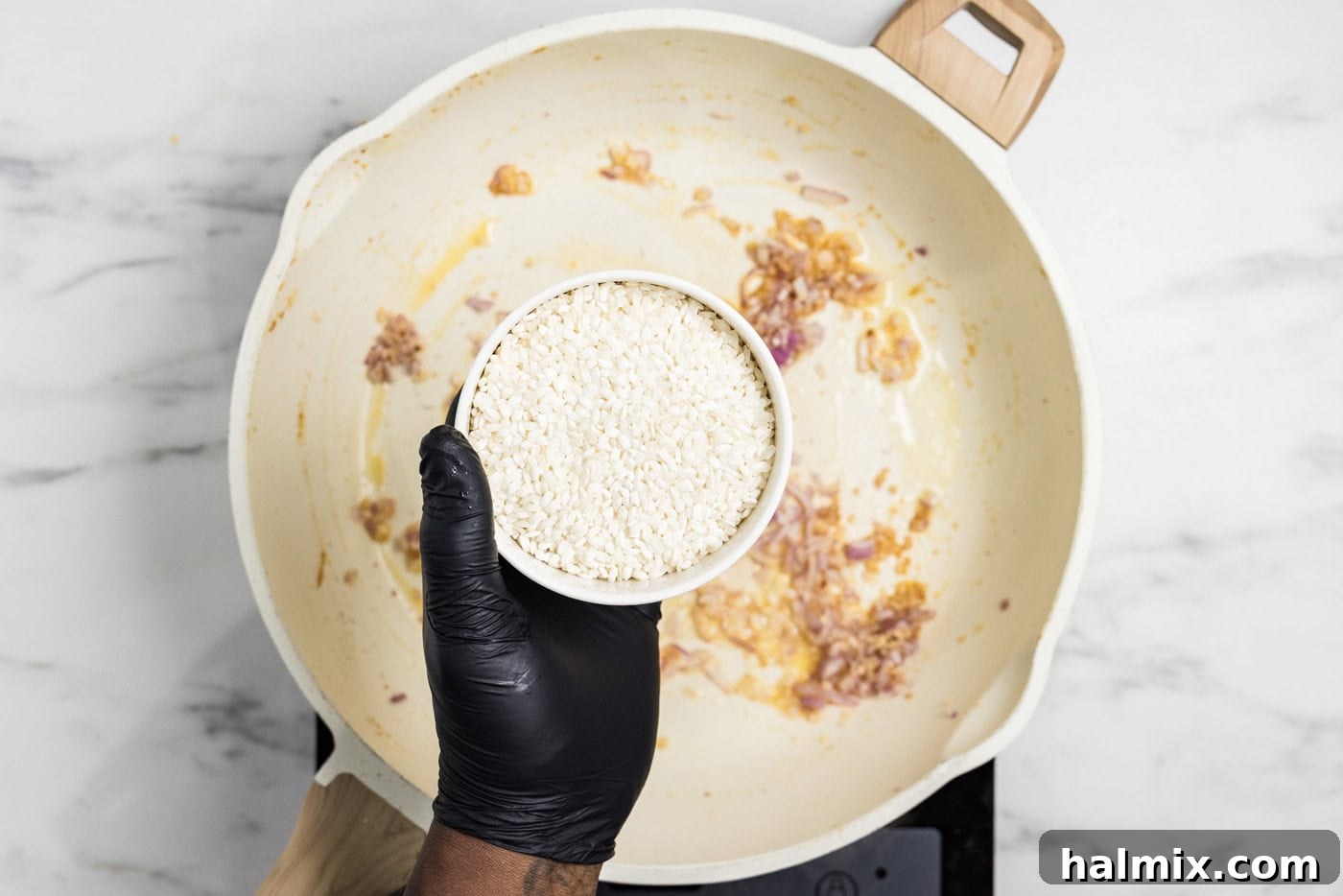
- Introduce the Arborio rice (risotto) to the skillet. Stir it well to coat each grain with the butter and aromatics. Cook, stirring occasionally, for 2-3 minutes until the grains begin to turn a light golden color and become slightly translucent around the edges. This “toasting” step, known as tostatura, is crucial for enhancing the flavor and creating the ideal texture.
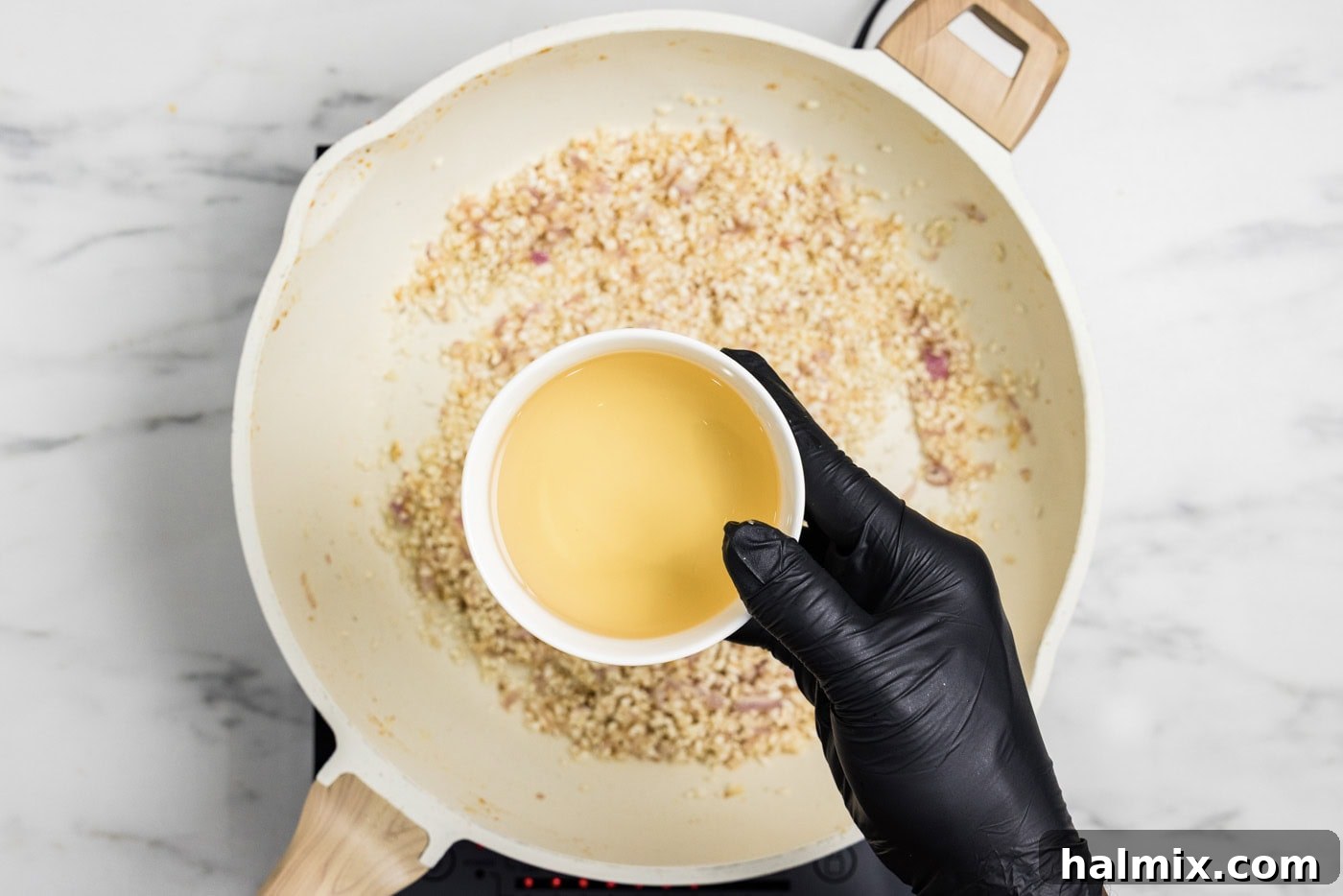
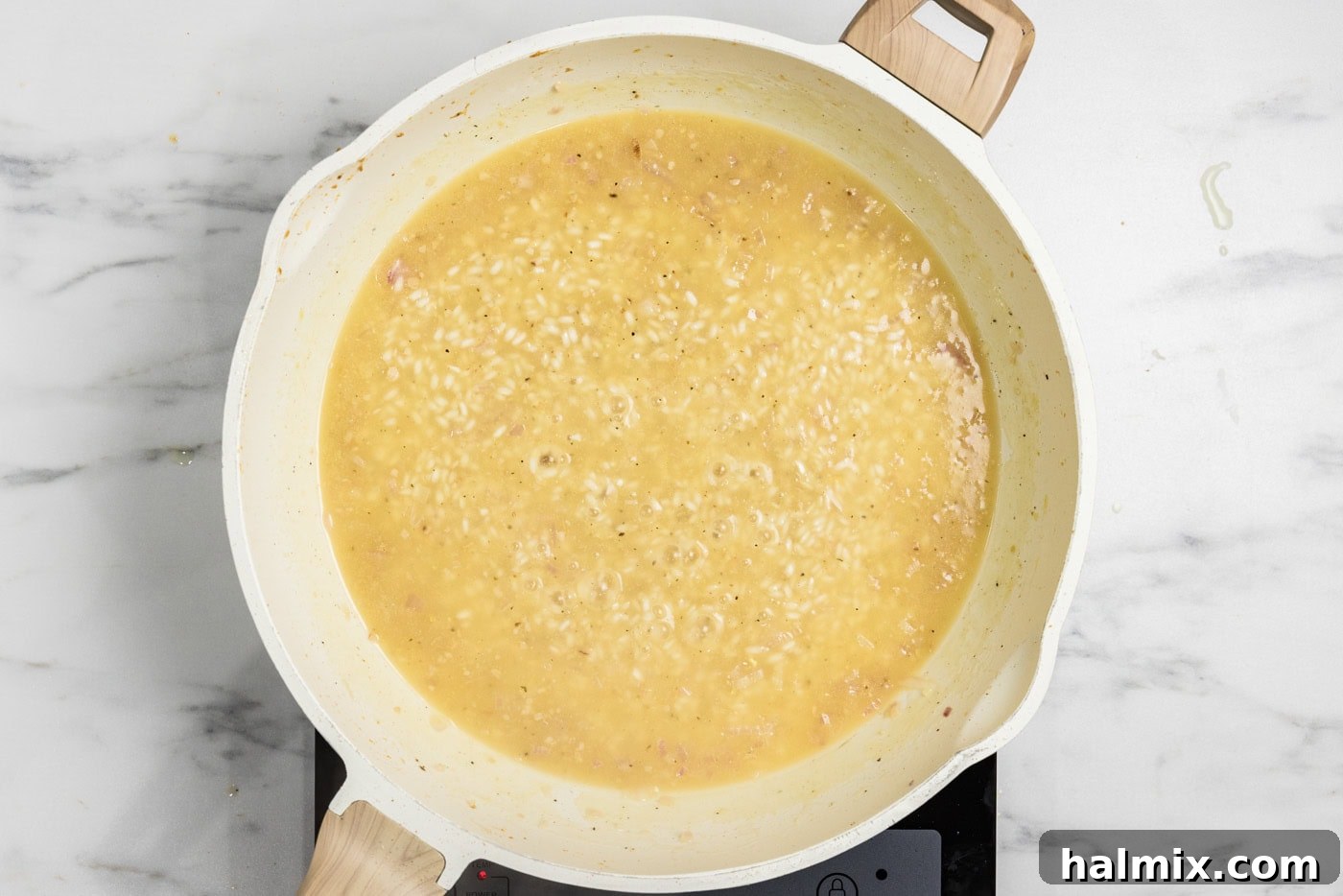
- Season the rice with garlic salt and black pepper, stirring to distribute. Pour in the dry white wine and stir continuously, allowing the wine to be fully absorbed by the rice. Bring the mixture to a gentle boil, then reduce the heat to medium. Continue to cook for 10-15 minutes, stirring frequently, until the risotto is tender but still retains a slight bite (al dente). The alcohol will cook off, leaving behind a wonderful depth of flavor.
- Begin whisking in the warm chicken broth, adding it about 1/2 cup at a time. Stir almost continuously, allowing each addition of broth to be nearly fully absorbed by the rice before adding the next. This gradual process and constant stirring are essential for developing the creamy consistency of the risotto. Continue adding broth and stirring until all the broth has been incorporated and the risotto is creamy and cooked to your desired tenderness. Bring the mixture to a final boil after the last addition of broth.
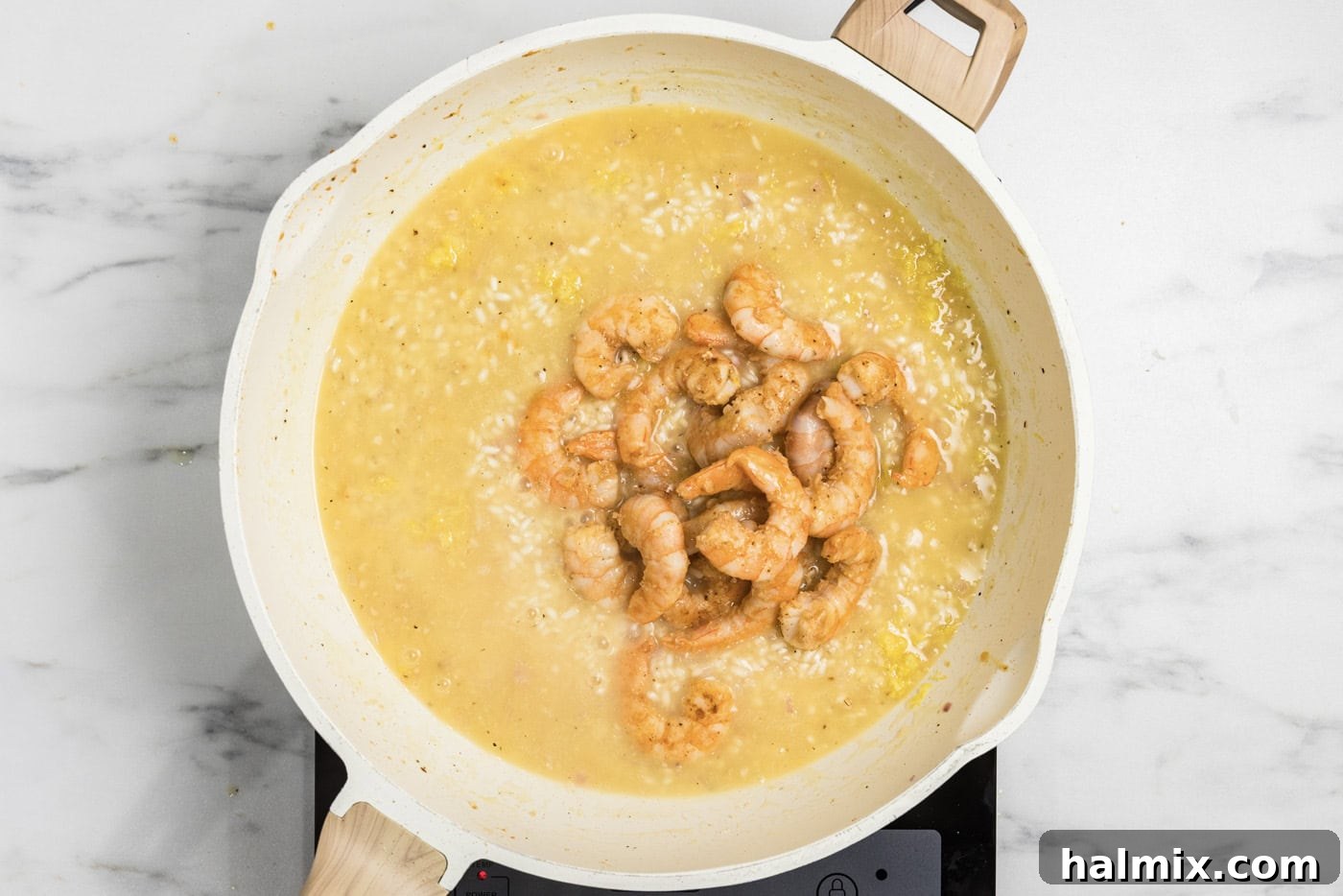
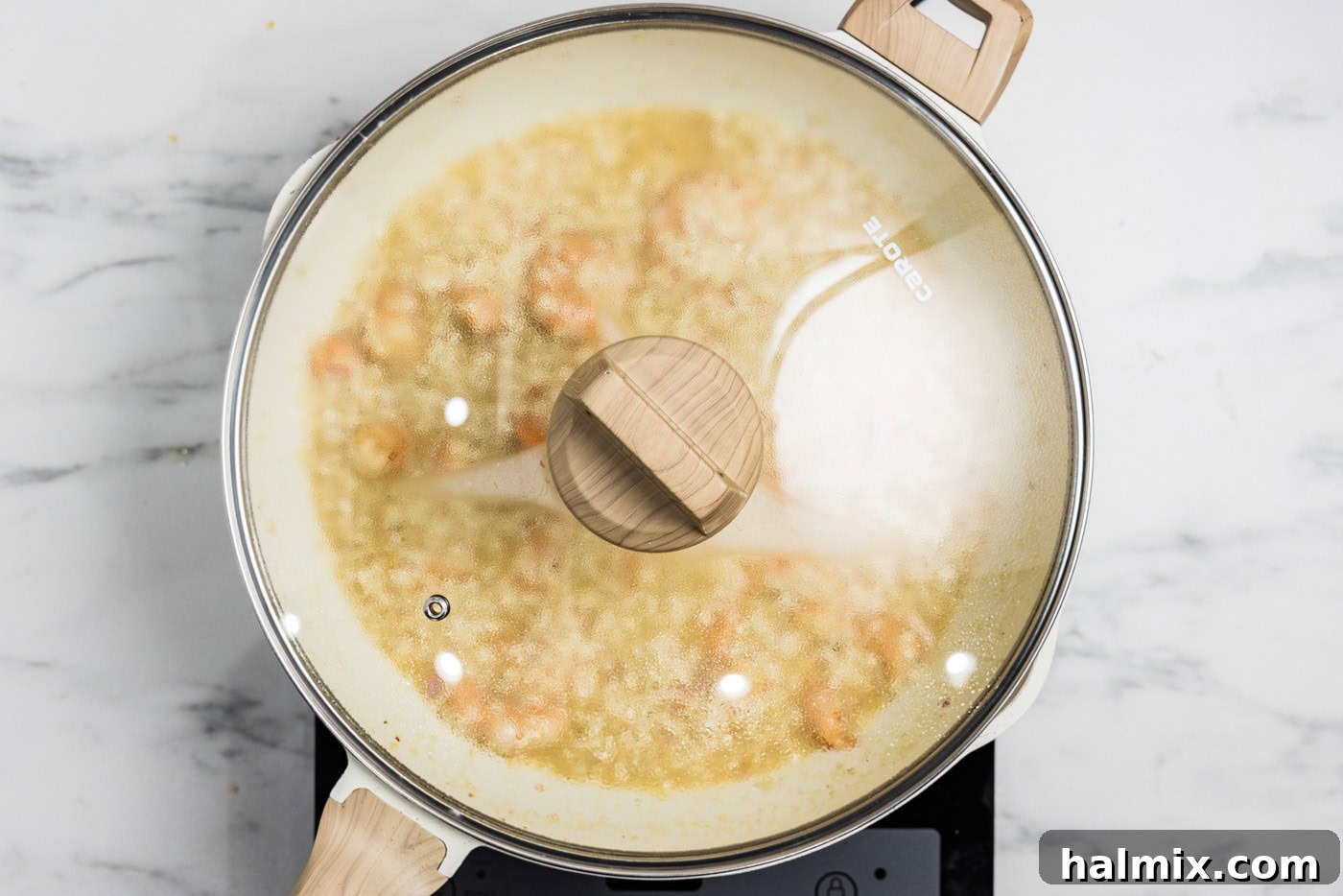
- Finally, stir in the fresh lemon juice, bright lemon zest, and the partially cooked shrimp. Gently combine all the ingredients. Cover the skillet with a lid and cook for just 1-2 more minutes, allowing the shrimp to finish cooking through and the flavors to meld beautifully.
Frequently Asked Questions & Expert Tips for Perfect Risotto
Why is it important to toast rice before making risotto?
Toasting the rice, also known as “tostatura,” is a crucial step that significantly enhances both the flavor and texture of your risotto. When the rice grains are toasted, typically with a fat like butter or olive oil, they develop a protective, light coating. This coating allows the rice to absorb liquids at a slower, more controlled rate. This slow absorption is key to achieving that classic creamy risotto texture while ensuring each grain remains al dente and distinct, rather than becoming mushy.
How do you store and reheat leftover shrimp risotto?
To store, allow any leftover shrimp risotto to cool completely before transferring it to an airtight container. Keep it in the refrigerator for up to 3-4 days. Risotto tends to thicken considerably when chilled, and reheating shrimp can be a bit tricky to prevent it from becoming rubbery. For best results, place the desired portion of risotto in a saucepan or skillet and gently heat it over medium-low heat. Add a splash of extra chicken broth or water as needed, stirring frequently, to help loosen the risotto and restore its creamy consistency. Be careful not to overheat the shrimp.
Can I substitute the white wine in this recipe?
Absolutely! While dry white wine lends a wonderful depth and complexity to the dish, it can certainly be substituted. If you prefer to avoid alcohol or simply don’t have wine on hand, an equal amount of chicken broth or even vegetable broth can be used in its place. The flavor profile will be slightly different, perhaps less acidic and vibrant, but the risotto will still be delicious and maintain its creamy texture.
What kind of skillet is best for making risotto?
A large, heavy-bottomed skillet or Dutch oven is ideal for making risotto. The heavy bottom provides even heat distribution, which is crucial for uniform cooking of the rice grains and preventing sticking or burning. The larger surface area also allows for better evaporation of the liquid, contributing to the creamy texture. Cast iron or stainless steel skillets work wonderfully for this recipe.
How do I know when risotto is perfectly cooked?
Perfectly cooked risotto should be creamy and flowing, yet the rice grains should still have a slight bite to them – this is known as “al dente.” It shouldn’t be crunchy, nor should it be mushy. The cooking time can vary, so it’s best to taste the rice frequently towards the end of the cooking process. The final consistency should resemble a thick, creamy sauce, rather than separate grains of rice.
Delightful Serving Suggestions
Shrimp risotto is inherently hearty and quite filling on its own, making it a complete meal. However, it pairs beautifully with a few simple accompaniments to create a more balanced and elegant dining experience.
- Fresh Salad: A crisp, refreshing dinner salad with a light vinaigrette is an excellent counterpoint to the richness of the risotto. Think mixed greens with cherry tomatoes, cucumber, and a lemon-herb dressing.
- Roasted Vegetables: Enhance your meal with a side of roasted or steamed vegetables. Asparagus, green beans, or broccoli florets tossed with a little olive oil, garlic, and a pinch of salt and pepper would be fantastic.
- Artisan Bread: A crusty piece of artisan bread or a warm baguette is perfect for soaking up any remaining creamy sauce from your plate.
- Wine Pairing: For those who enjoy wine, complement this dish with a glass of the same dry white wine you used in the recipe, such as a crisp Pinot Grigio or a refreshing Sauvignon Blanc.
If you’re looking for more delicious risotto options beyond seafood, be sure to explore our other dreamy recipes: our vibrant asparagus risotto and our rich, earthy creamy mushroom risotto.
More Irresistible Shrimp Recipes to Try
Shrimp is a versatile ingredient that lends itself to a multitude of incredible dishes. If you loved this risotto, you’re sure to enjoy these other fantastic shrimp recipes:
- Shrimp Pasta: A quick and flavorful weeknight favorite.
- Garlic Butter Shrimp: Simple, elegant, and packed with flavor.
- Shrimp and Grits: A comforting and hearty Southern classic.
- Chicken and Shrimp Carbonara: A rich and creamy pasta dish with a delightful seafood twist.
I absolutely adore sharing my passion for baking and cooking, along with all my kitchen experiences, with you! To make sure you never miss out on a new recipe, I offer a convenient newsletter. Simply subscribe today and start receiving free daily recipes delivered straight to your inbox!
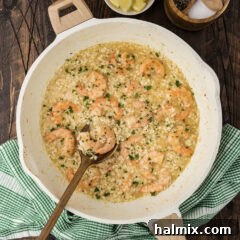
Creamy Shrimp Risotto
Plump shrimp enveloped in a creamy, buttery risotto that’s vibrantly flavored with white wine and fresh lemon juice. This shrimp risotto is truly an absolute keeper, perfect for both special occasions and a comforting weeknight meal.
IMPORTANT: For additional helpful information and tips, including storage and reheating advice, please refer to the Frequently Asked Questions section earlier in this blog post!
Print Recipe
Pin Recipe
Ingredients
- 2 Tablespoons unsalted butter (divided)
- 12 ounces large raw shrimp (peeled, deveined, tails removed)
- 1 teaspoon onion powder
- 1 teaspoon garlic powder
- 1 teaspoon Old Bay seasoning
- 2 teaspoons minced garlic
- ¼ cup diced shallots
- ¾ cup Arborio rice (risotto)
- ½ teaspoon garlic salt
- ½ teaspoon black pepper
- ½ cup dry white wine (e.g., Pinot Grigio, Sauvignon Blanc)
- 1 ½ cups warm chicken broth
- 2 Tablespoons fresh lemon juice (from about 1 medium lemon)
- 1 Tablespoon fresh lemon zest (from about 1 medium lemon)
- Fresh parsley (optional, for garnish)
Equipment You’ll Need
-
Large heavy-bottomed skillet
-
Heat-resistant rubber spatula
Before You Begin: Important Notes
- Typically, one medium lemon will yield approximately a tablespoon of zest and 2-3 tablespoons of juice.
- Risotto rice is a short-grain variety; Arborio is the most common and recommended. Its high starch content is key to achieving that signature creamy texture.
- For the dry white wine, opt for varieties like Pinot Grigio, dry Vermouth, or Sauvignon Blanc to ensure no unwanted sweetness is added. If you prefer, an equal amount of chicken broth can be substituted for the wine.
Instructions
-
Melt 1 tablespoon of butter in a large, heavy-bottomed skillet over medium-high heat until it shimmers.
-
Add the shrimp, onion powder, garlic powder, and Old Bay Seasoning to the skillet. Toss and cook for 1-2 minutes, just until they turn pink and begin to curl. Remove the partially cooked shrimp and keep warm. This prevents overcooking.
-
Melt the remaining 1 tablespoon of butter in the same skillet.
-
Add minced garlic and diced shallots; cook, stirring frequently, until softened and fragrant (about 1-2 minutes).
-
Add the Arborio rice and stir occasionally until the grains begin to turn light golden in color, about 2-3 minutes.
-
Season with garlic salt and black pepper. Pour in the dry white wine and stir to combine. Bring to a boil, then reduce heat to medium and cook for 10-15 minutes, or until the risotto is tender, stirring often.
-
Gradually whisk in the warm chicken broth, 1/2 cup at a time, allowing each addition to be absorbed before adding the next. Continue this process until all broth has been added and the risotto is creamy. Bring the mixture to a final boil.
-
Stir in the fresh lemon juice, lemon zest, and the reserved partially cooked shrimp. Mix everything together, cover the skillet with a lid, and cook for 1-2 minutes to finish cooking the shrimp. Serve immediately.
Nutrition Information
Tried this Recipe? Pin it for Later!
Follow on Pinterest @AmandasCookin or tag #AmandasCookin!
The recipes on this blog are meticulously tested with a conventional gas oven and gas stovetop. Please note that oven performance can vary, especially with age, leading to inconsistent cooking and baking. An inexpensive oven thermometer can help ensure your oven is consistently heating to the correct temperature. If using a toaster oven or countertop oven, be aware that heat distribution may differ from a full-sized conventional oven, potentially requiring adjustments to cooking and baking times. For recipes made with appliances like pressure cookers, air fryers, or slow cookers, a link to the specific models we use is often provided within each recipe. Additionally, for baking recipes where measurements are given by weight, we highly recommend using a kitchen scale for accuracy, as results may not be consistent if cup measurements are used instead, and we cannot guarantee success with alternative methods.