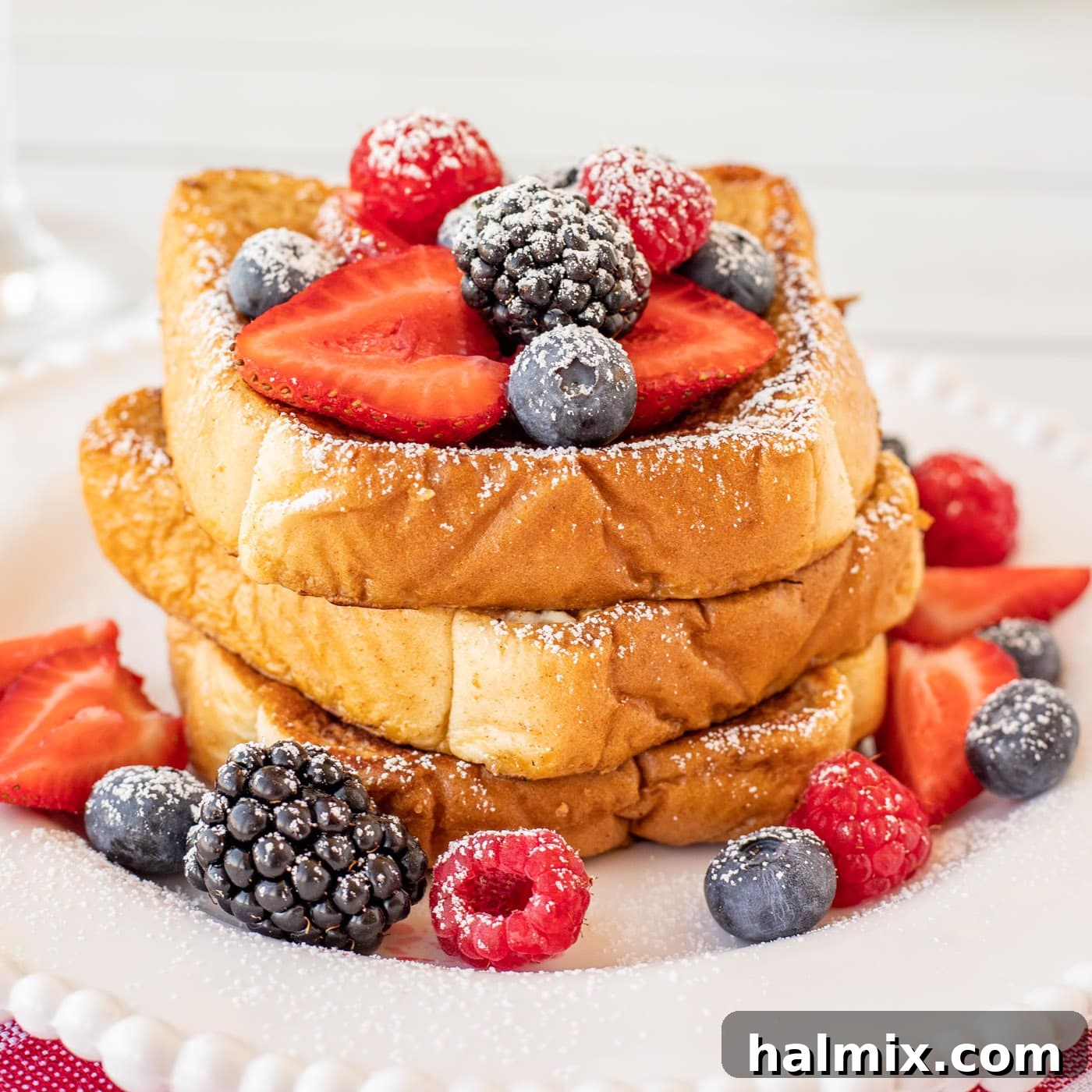
Wake up to the aroma of freshly cooked, golden-brown French toast, a timeless breakfast delight that promises comfort in every bite. This isn’t just any French toast recipe; it’s a meticulously crafted guide to achieving thick, fluffy slices infused with a warm, spiced custard of nutmeg, cinnamon, and maple syrup, then perfectly pan-fried to a delicate crisp. Prepare for this to become your new favorite go-to recipe for an easy, yet incredibly indulgent, morning treat that’s ready in mere minutes!
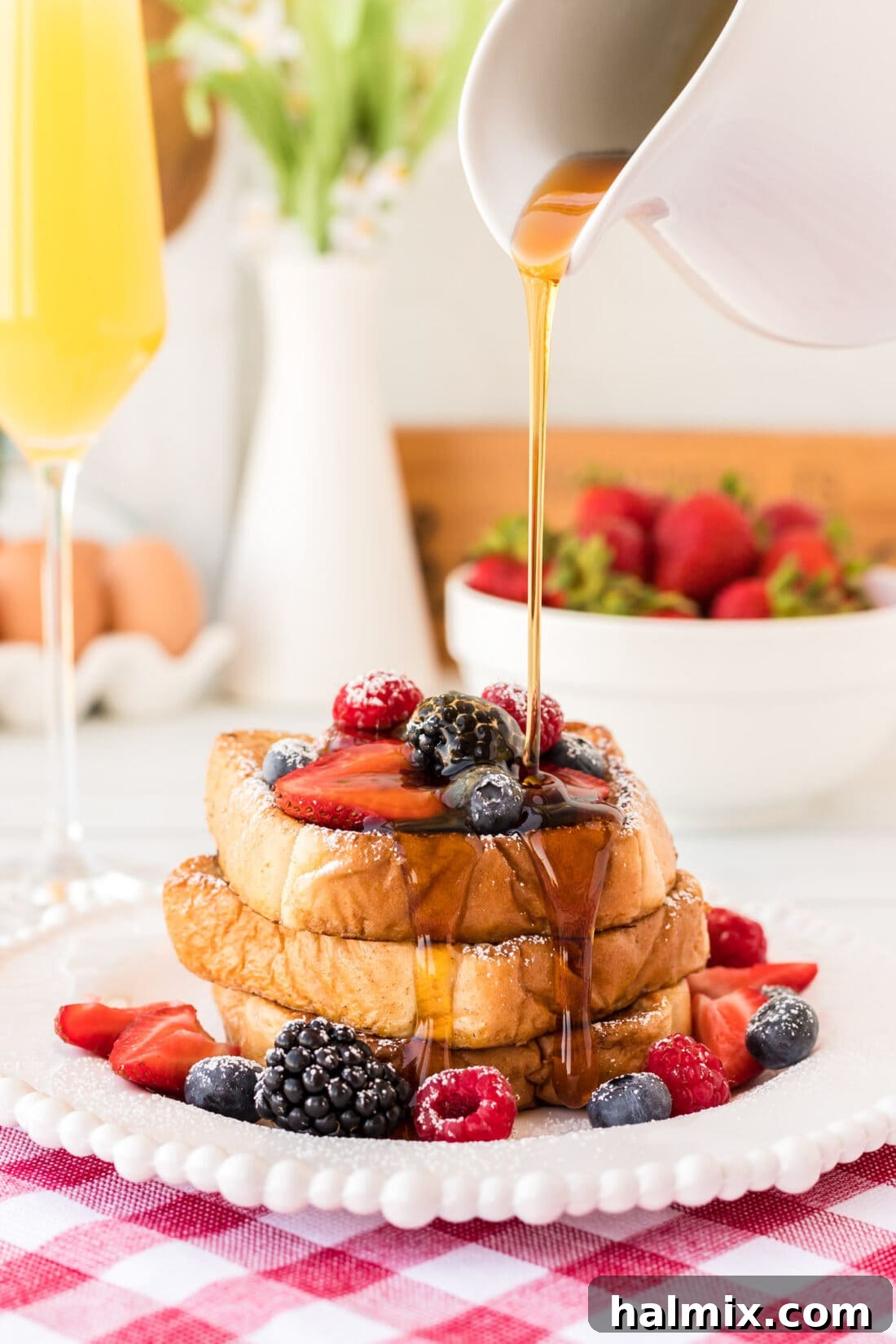
Why You’ll Love This Fluffy French Toast Recipe
Among the pantheon of breakfast classics, alongside hearty buttermilk pancakes and savory breakfast casseroles, French toast truly stands out as one of the most comforting and satisfying morning meals. Its universal appeal lies in its perfect balance of textures and flavors – a slightly crispy exterior yielding to a soft, custardy interior, often elevated by a generous drizzle of sticky sweet maple syrup and a melting pat of butter. This recipe ensures that classic experience is not just met, but exceeded, offering a simple yet profoundly delicious rendition of the beloved dish.
Our French toast recipe distinguishes itself by embracing the beauty of thick-cut bread. We recommend using Texas toast for its substantial structure, which effortlessly soaks up our rich, spiced custard without becoming soggy. Each slice is lovingly dipped into a harmonious blend of eggs, creamy milk, authentic maple syrup, aromatic cinnamon, warming nutmeg, and a touch of granulated sugar. This perfectly balanced mixture coats the bread before it’s gently transferred to a hot, buttered skillet. The result? A sizzling spectacle that transforms into French toast with a gorgeously light crisp on the outside and an incredibly soft, fluffy interior that practically melts in your mouth.
Beyond its incredible taste and texture, this recipe is designed for ease and efficiency. It demonstrates that a truly gourmet breakfast doesn’t require hours in the kitchen. With minimal prep and quick cooking times, you can enjoy restaurant-quality French toast any day of the week, whether for a hurried weekday breakfast or a leisurely weekend brunch. It’s a testament to simple ingredients coming together to create something truly magical, proving that the best culinary experiences often come from the most straightforward preparations.
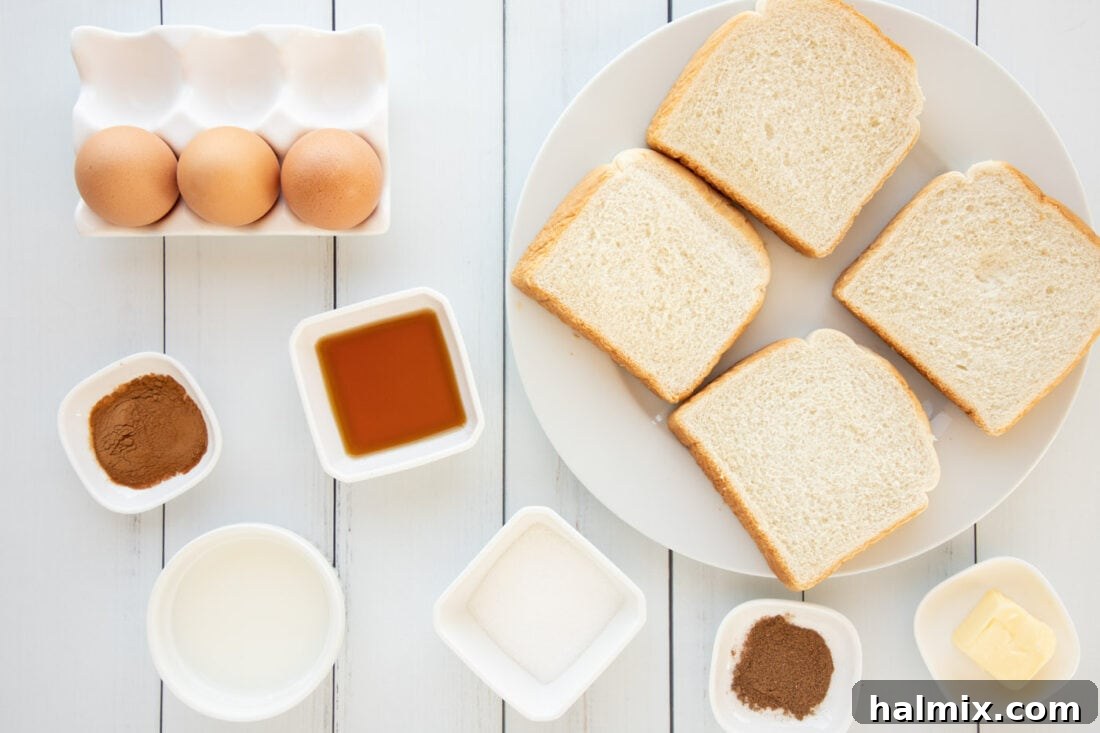
Essential Ingredients for Perfect French Toast
Crafting the perfect French toast begins with selecting the right ingredients. Each component plays a vital role in achieving that delightful balance of flavor and texture. Below is a detailed look at what you’ll need, along with insights into choosing the best options for truly irresistible results.
Ingredient Spotlight & Substitution Suggestions
Understanding the role of each ingredient will help you achieve French toast perfection and confidently make substitutions if needed.
- Bread: The Foundation of Flavor
The choice of bread is paramount to French toast success. While we enthusiastically recommend thick-cut Texas toast for its robust structure and ability to absorb the custard without falling apart, several other options work beautifully:
- Challah Bread: This rich, slightly sweet, and eggy bread is a classic choice for French toast. Its dense crumb makes it perfect for soaking up the custard.
- Brioche: Similar to challah, brioche is a buttery, tender, and slightly sweet bread that creates a luxurious French toast with a light, airy texture.
- Sourdough: For a hint of tanginess that complements the sweetness, sourdough can be an excellent choice, especially if it’s a day or two old.
- Day-Old Bread: Regardless of your choice, using slightly stale, day-old bread is a secret weapon. It’s firmer and less likely to become soggy, allowing it to soak up more of the custard for a richer flavor and better texture.
- Regular White Sandwich Bread: While it can work in a pinch, ensure it’s thick-sliced to avoid over-saturation and a flimsy final product. Remember, the thicker the slice, the better, as it provides a satisfying custardy center!
- Eggs: The Custard Base
Large eggs are essential for creating the creamy custard that gives French toast its signature texture. They bind the ingredients and contribute to the rich, golden hue. Don’t skimp on fresh, quality eggs.
- Milk: For Creaminess and Soak
Any type of milk will work, but whole milk or even a splash of heavy cream will yield a richer, more decadent custard. Dairy-free alternatives like almond milk or oat milk can also be used if preferred, though they may slightly alter the final richness.
- Maple Syrup: Natural Sweetness & Depth
Pure maple syrup is key for its distinctive flavor profile, which is superior to artificial pancake syrups. It adds natural sweetness and a beautiful caramel note to the custard. Feel free to adjust the amount to your sweetness preference.
- Spices: Warmth and Aroma
- Ground Cinnamon: A foundational spice for French toast, cinnamon adds a warm, inviting aroma and a familiar, comforting taste.
- Ground Nutmeg: A pinch of nutmeg elevates the flavor profile, adding a subtle, earthy warmth that perfectly complements the cinnamon and maple. For the best flavor, consider freshly grating whole nutmeg.
- Optional: Vanilla Extract: A dash of pure vanilla extract (½ teaspoon) can deepen the overall flavor of the custard, adding another layer of complexity.
- Granulated Sugar: Boosting Sweetness
A touch of granulated sugar in the custard enhances the sweetness, ensuring the French toast is perfectly balanced. This also helps with caramelization during cooking.
- Butter: For Frying Perfection
Unsalted butter is preferred for pan-frying. It not only prevents sticking but also imparts a rich, nutty flavor and helps create that desirable golden-brown crust. If using salted butter, you might want to slightly reduce the amount of added sugar.
How to Make the Best Fluffy French Toast
Follow these step-by-step photos and instructions to visualize the process of making this irresistible French toast. For the complete printable recipe with precise measurements, please refer to the detailed recipe card at the bottom of this post.
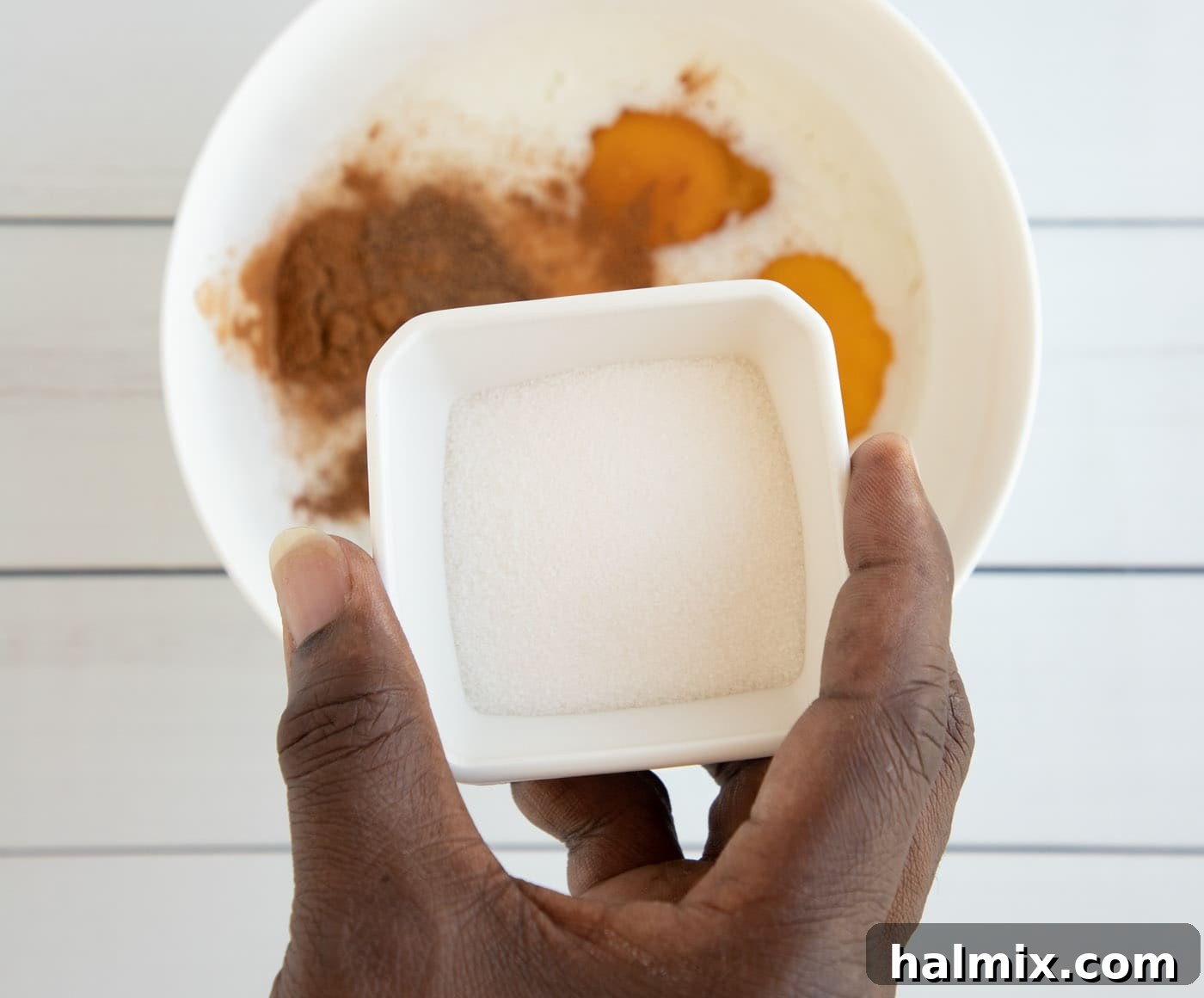
- Prepare the Custard: In a medium-sized bowl, thoroughly whisk together the eggs, milk, maple syrup, ground cinnamon, ground nutmeg, and granulated sugar until the mixture is completely smooth and well combined. Ensure there are no streaks of egg white remaining. This creates the flavorful custard base for your French toast.

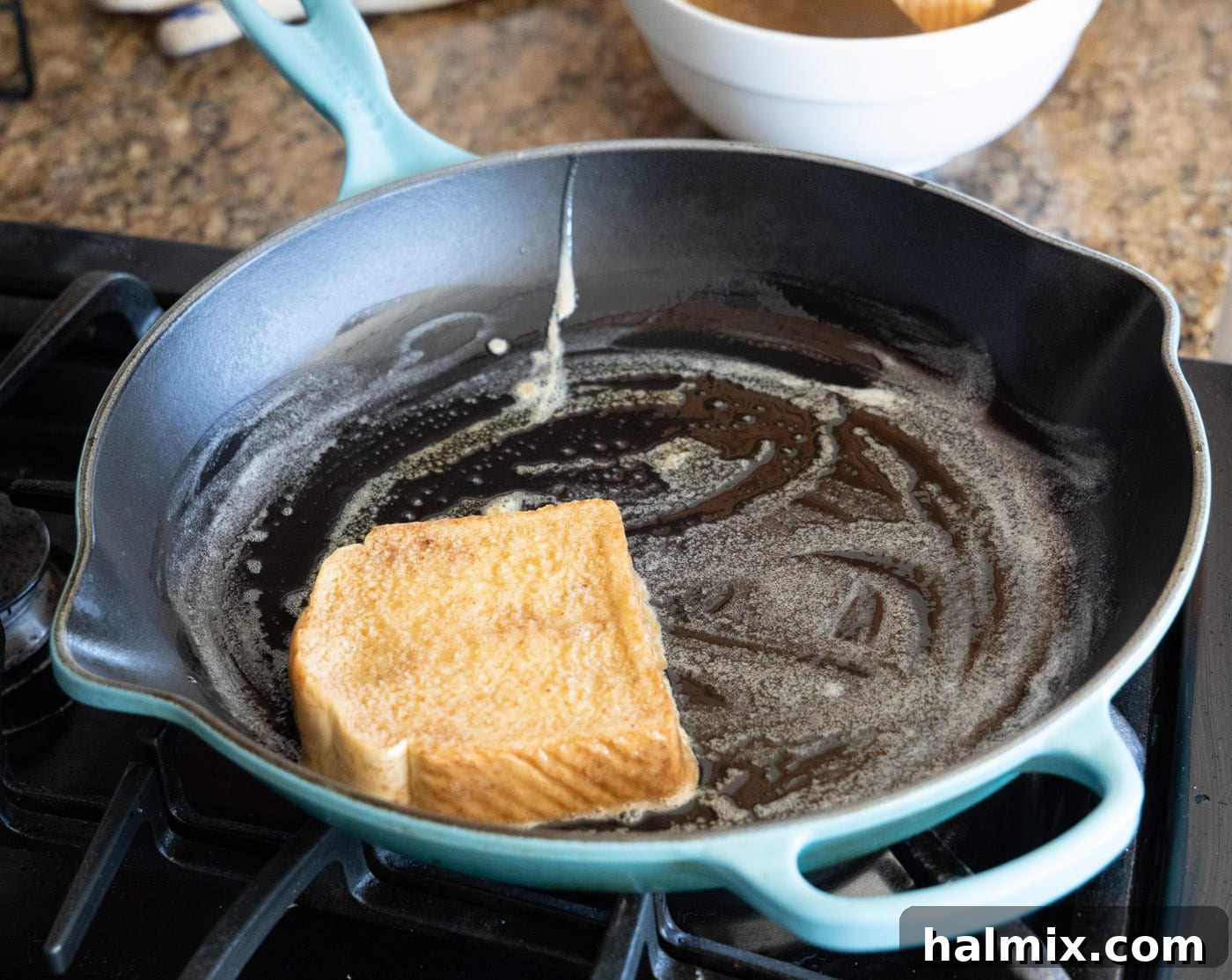
- Heat the Skillet: Melt a tablespoon of butter in a large skillet or griddle over medium heat. It’s crucial that the butter fully coats the entire bottom of the pan to prevent sticking and promote even browning. Keep the heat at medium to prevent the butter from burning.
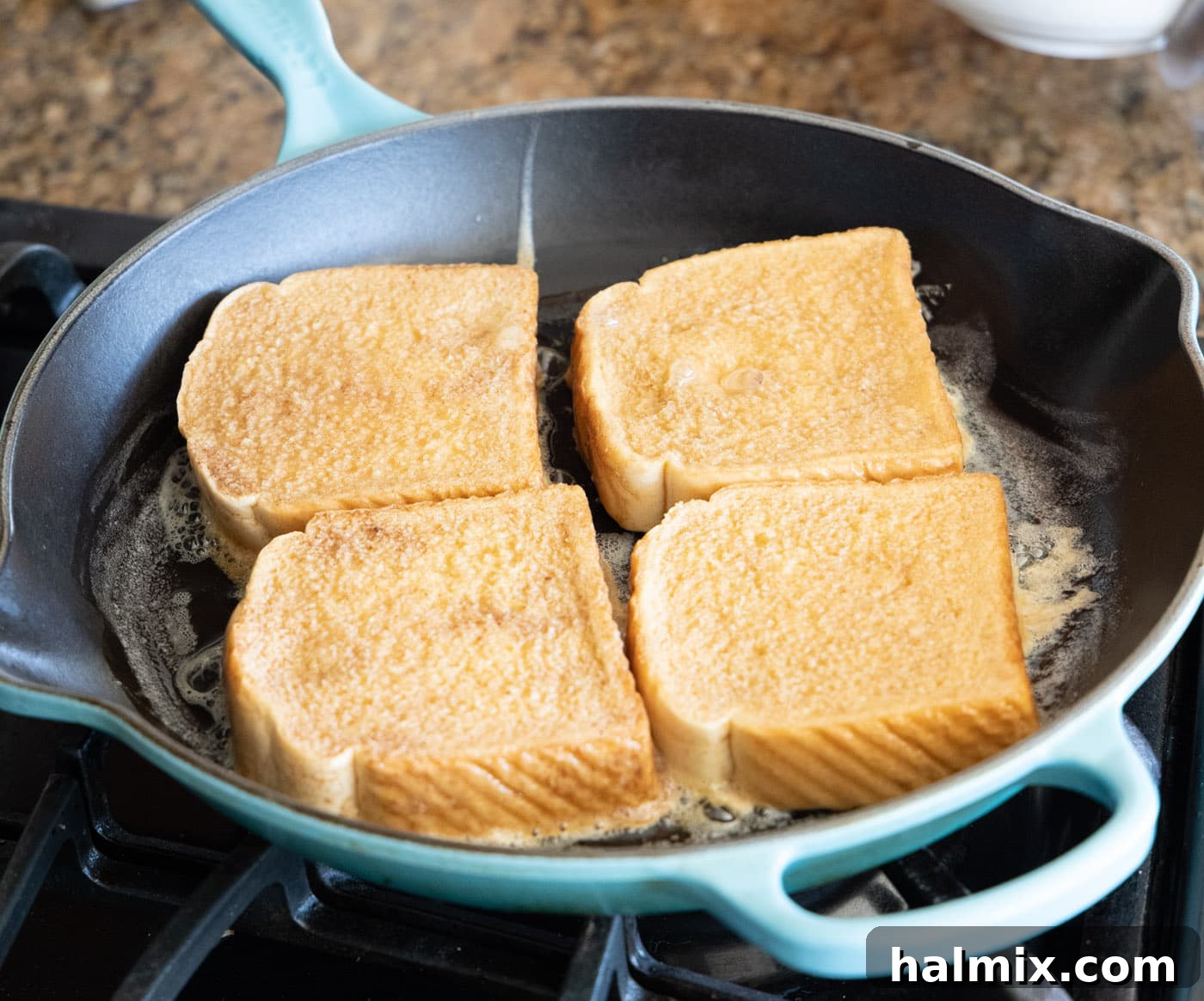
- Dip the Bread: Take one slice of bread and immerse it into the prepared egg mixture, turning it gently to ensure both sides are evenly coated. Don’t let it soak for too long, especially if your bread isn’t thick, as this can lead to soggy French toast. Lift the bread out of the mixture and allow any excess custard to drip off slightly before carefully placing it into the hot, buttered skillet. Repeat this process with additional bread slices, being careful not to overcrowd the pan. Cook in batches if necessary to maintain consistent pan temperature and even browning.
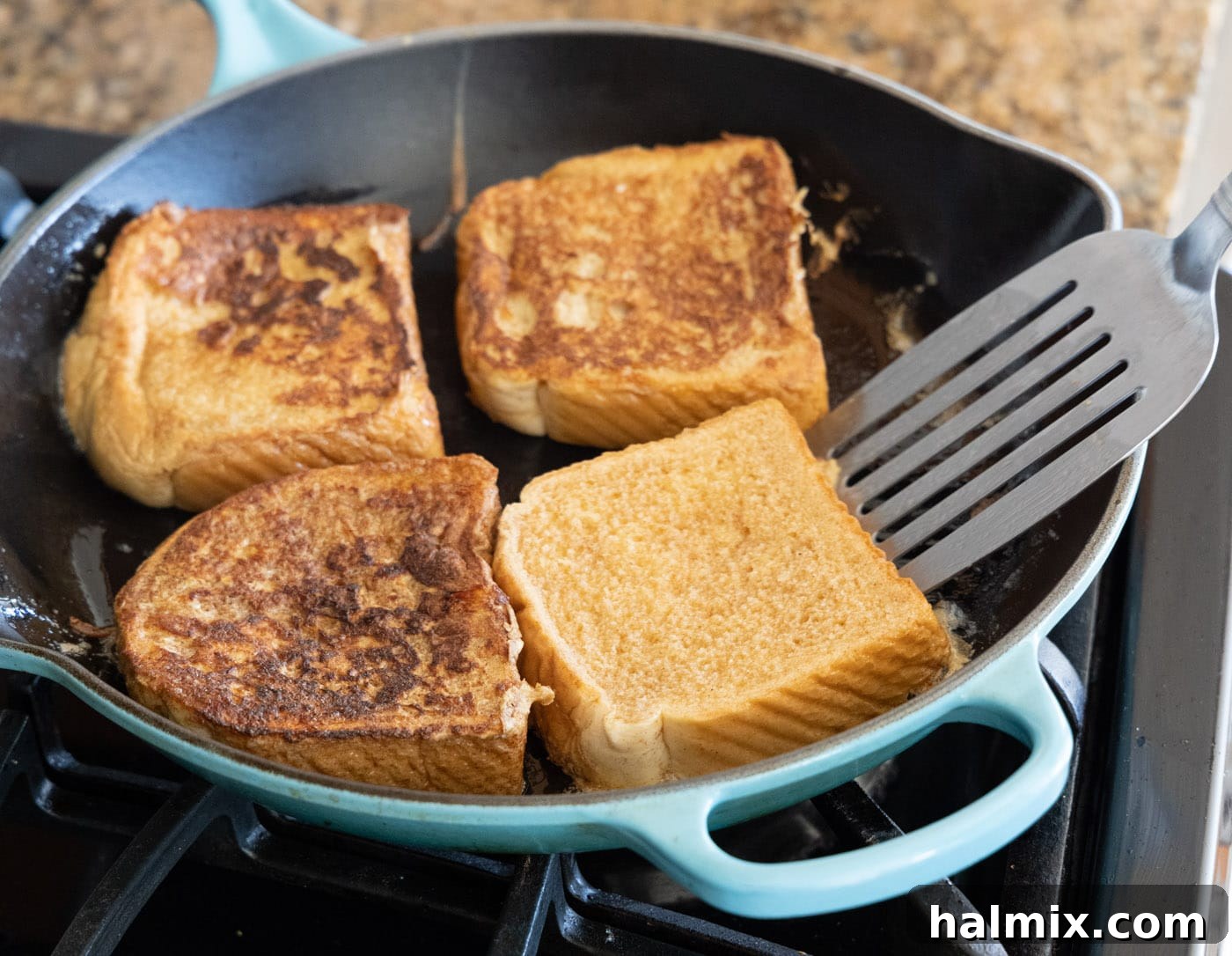
- Cook to Golden Perfection: Cook the French toast slices on the first side for approximately 2 minutes, or until they achieve a beautiful golden-brown color and look nicely browned. Use a spatula to gently lift an edge and check the color. Once browned, flip the slices over and cook for an additional 2 minutes on the second side, or until they are also golden brown and cooked through. The internal texture should be soft and custardy, not raw.
- Serve Immediately: Transfer the cooked French toast to plates and serve hot with your favorite toppings. If cooking multiple batches, you can keep the cooked slices warm on a baking sheet in a low oven (around 200°F / 95°C) while you finish the rest.
Frequently Asked Questions & Expert Tips for French Toast
Can I freeze homemade French toast?
Absolutely! Freezing homemade French toast is an excellent way to enjoy a quick breakfast on busy mornings. We highly recommend pre-cooking the French toast before freezing. Allow the French toast to cool completely on a wire rack to prevent condensation and ice crystals. Once fully cooled, transfer the slices to a large, freezer-safe zip-top bag or an airtight container, separating layers with parchment paper to prevent sticking. Label the bag with the date. French toast can be frozen for up to 2 months. To reheat, simply place the frozen slices on a baking tray and warm them in an oven preheated to 400°F (200°C) for about 7-8 minutes, or until heated through. Alternatively, for a quicker option, pop the slices into a toaster or toaster oven until golden and crisp.
What is the best type of bread for French toast?
The “best” bread for French toast really depends on your preference, but certain types yield superior results. As mentioned, thick-cut Texas toast, brioche, and challah are top contenders. Their slightly dense yet soft crumb absorbs the custard beautifully without becoming mushy. Day-old bread is also fantastic because it’s slightly drier and can soak up more of the egg mixture, resulting in a richer, more flavorful French toast. Avoid thin, highly processed white bread, as it tends to disintegrate or become overly soggy.
How do I prevent my French toast from becoming soggy?
Soggy French toast is a common pitfall. Here are the key tricks to avoid it:
- Use Thick-Cut Bread: Thicker slices (at least 3/4 to 1 inch) can absorb more custard without becoming saturated.
- Don’t Oversoak: A quick dip (5-10 seconds per side) is usually enough. You want the bread to be coated, not waterlogged. Staler bread can soak a little longer.
- Ensure Hot Skillet: Cook your French toast on a medium-hot, well-buttered skillet. If the pan isn’t hot enough, the bread will steam rather than sear, leading to a softer, less crisp exterior.
- Don’t Overcrowd the Pan: Give each slice room to breathe and cook evenly. Overcrowding lowers the pan temperature and can lead to steaming.
Can I prepare the French toast custard mixture ahead of time?
Yes, you can! Preparing the egg mixture a few hours or even the night before can save you time in the morning. Simply whisk all the ingredients together, cover the bowl tightly with plastic wrap, and refrigerate. Give it a quick whisk again before dipping your bread slices. This advance prep makes morning cooking even faster.
What’s the ideal pan for cooking French toast?
A good quality non-stick skillet or a well-seasoned cast-iron griddle are both excellent choices. A non-stick pan ensures easy flipping and cleanup, while a cast-iron griddle provides superb heat retention and an incredibly even, golden-brown crust. Whatever you use, ensure it’s large enough to cook a few slices at once without overcrowding.
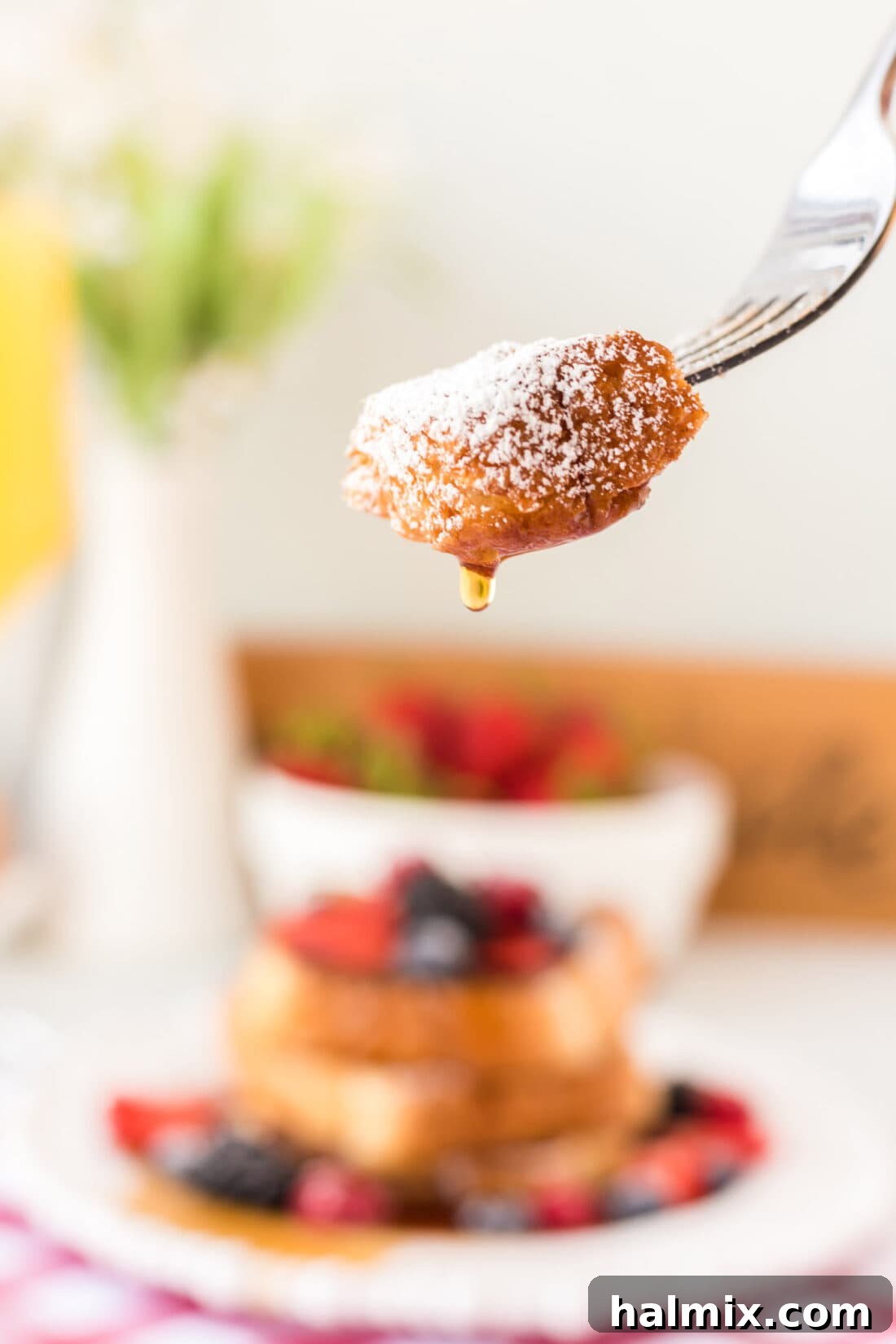
Creative Serving Suggestions for Your French Toast
While classic butter and maple syrup are always a winning combination, French toast is incredibly versatile and open to a myriad of creative toppings and pairings. Here are some ideas to elevate your breakfast experience:
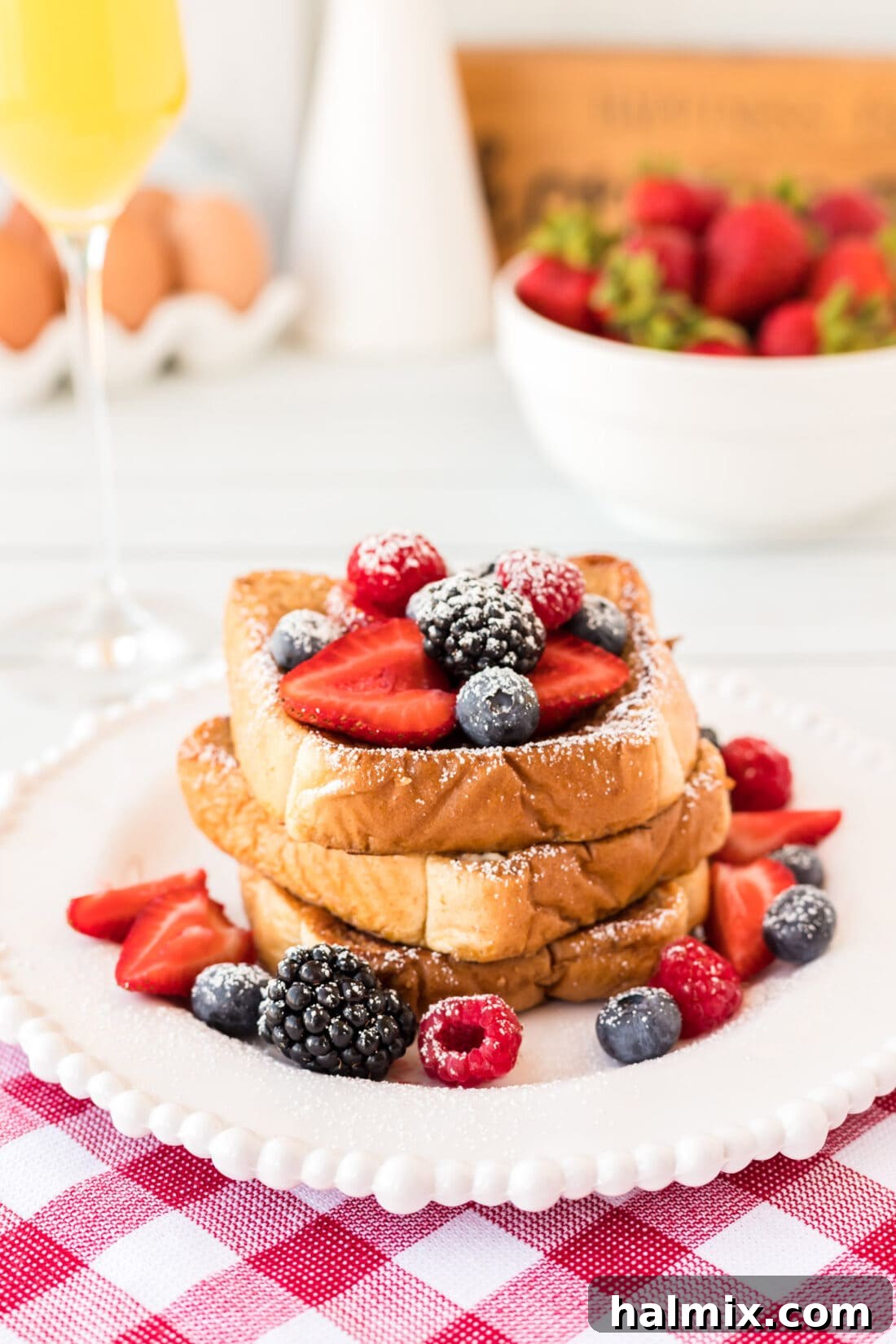
- Fresh Fruit Medley: Brighten your plate with an assortment of fresh berries like strawberries, blueberries, raspberries, and blackberries. Sliced bananas also add a delightful sweetness and creamy texture.
- Powdered Sugar & Cream: A simple dusting of powdered sugar adds an elegant touch, while a dollop of freshly whipped cream or a scoop of vanilla ice cream can transform your French toast into a dessert-like indulgence.
- Specialty Syrups & Sauces: Beyond traditional maple, experiment with flavored syrups such as blueberry, peach, or chocolate. Decadent sauces like Nutella, caramel, or fruit compotes (like apple cinnamon or cherry) also make fantastic additions.
- Nutty Crunch: Sprinkle with chopped nuts like pecans, walnuts, or almonds for added texture and a hint of earthy flavor. Toasted coconut flakes are another great option.
- Savory Pairings: For a complete brunch experience, serve your French toast alongside crispy bacon, savory sausage links, or a perfectly fried egg. The sweet and savory contrast is truly exceptional.
- Flavored Butters: Instead of plain butter, try making cinnamon honey butter or orange zest butter for an extra layer of flavor.
- Brunch Beverage: Complete your meal with a refreshing glass of orange juice, a hot cup of coffee, or for a festive touch, a sparkling mimosa.
More Delightful Breakfast & Brunch Recipes
If you loved this French toast, be sure to explore more of our fantastic breakfast and brunch recipes that are sure to impress:
- Crispy Chicken and Waffles
- Classic Eggs Benedict
- Fluffy Blueberry Muffins
- Irresistible Homemade Cinnamon Rolls
- Strawberries and Cream Stuffed French Toast
- Easy Cinnamon Roll Casserole
I love to bake and cook and share my kitchen experience with all of you! Remembering to come back each day can be tough, that’s why I offer a convenient newsletter every time a new recipe posts. Simply subscribe and start receiving your free daily recipes!
Classic Fluffy French Toast
French toast stands out as one of the most comforting morning meals, especially when smothered in sticky sweet maple syrup and a pat of butter. This recipe delivers a perfectly thick and fluffy texture with warm spices.
Course: Breakfast | Cuisine: American | Servings: 2 servings (4 slices)
Prep time: 5 minutes | Cook time: 5 minutes | Total time: 10 minutes
Calories: 453 kcal per serving | Author: Amanda Davis
Ingredients
- 4 slices thick-cut bread (Texas toast, challah, or brioche recommended)
- 3 large eggs
- ½ cup milk (whole milk preferred)
- 2 Tablespoons maple syrup
- ½ teaspoon ground nutmeg
- 1 teaspoon ground cinnamon
- 2 Tablespoons granulated sugar
- 1 Tablespoon unsalted butter, for frying
Equipment You’ll Need
- Large skillet or griddle
- Medium mixing bowl
- Whisk
- Spatula
Before You Begin (Tips & Notes)
- Garnish your French Toast with powdered sugar, additional syrup, and/or fresh berries for the best presentation and flavor.
- To Freeze: Allow cooked French toast to cool completely. Store in a freezer-safe bag or container, separated by parchment paper, for up to 2 months. Reheat in a 400°F (200°C) oven for 7-8 minutes or in a toaster/toaster oven.
- For extra richness, add a splash of vanilla extract to your custard mixture.
Instructions
- In a medium bowl, whisk together the eggs, milk, maple syrup, cinnamon, nutmeg, and sugar until completely smooth.
- Melt 1 Tablespoon of butter in a large skillet or on a griddle over medium heat, ensuring the entire bottom of the pan is coated.
- Dip one slice of bread into the egg mixture, turning to coat both sides. Allow excess mixture to drip off, then place the coated bread in the hot buttered skillet. Repeat with remaining slices, cooking in batches if needed to avoid overcrowding.
- Cook on the first side for about 2 minutes, or until nicely golden brown. Flip the slices and cook for an additional 2 minutes, or until the second side is also golden brown and the French toast is cooked through.
- Serve immediately with your preferred toppings.
Nutrition Information
Serving size: 1 serving (2 slices) | Calories: 453 kcal | Carbohydrates: 56g | Protein: 18g | Fat: 18g | Saturated Fat: 8g | Polyunsaturated Fat: 3g | Monounsaturated Fat: 5g | Trans Fat: 0.3g | Cholesterol: 301mg | Sodium: 442mg | Potassium: 327mg | Fiber: 3g | Sugar: 31g | Vitamin A: 683IU | Vitamin C: 0.2mg | Calcium: 222mg | Iron: 3mg
The recipes on this blog are tested with a conventional gas oven and gas stovetop. It’s important to note that some ovens, especially as they age, can cook and bake inconsistently. Using an inexpensive oven thermometer can assure you that your oven is truly heating to the proper temperature. If you use a toaster oven or countertop oven, please keep in mind that they may not distribute heat the same as a conventional full sized oven and you may need to adjust your cooking/baking times. In the case of recipes made with a pressure cooker, air fryer, slow cooker, or other appliance, a link to the appliances we use is listed within each respective recipe. For baking recipes where measurements are given by weight, please note that results may not be the same if cups are used instead, and we can’t guarantee success with that method.