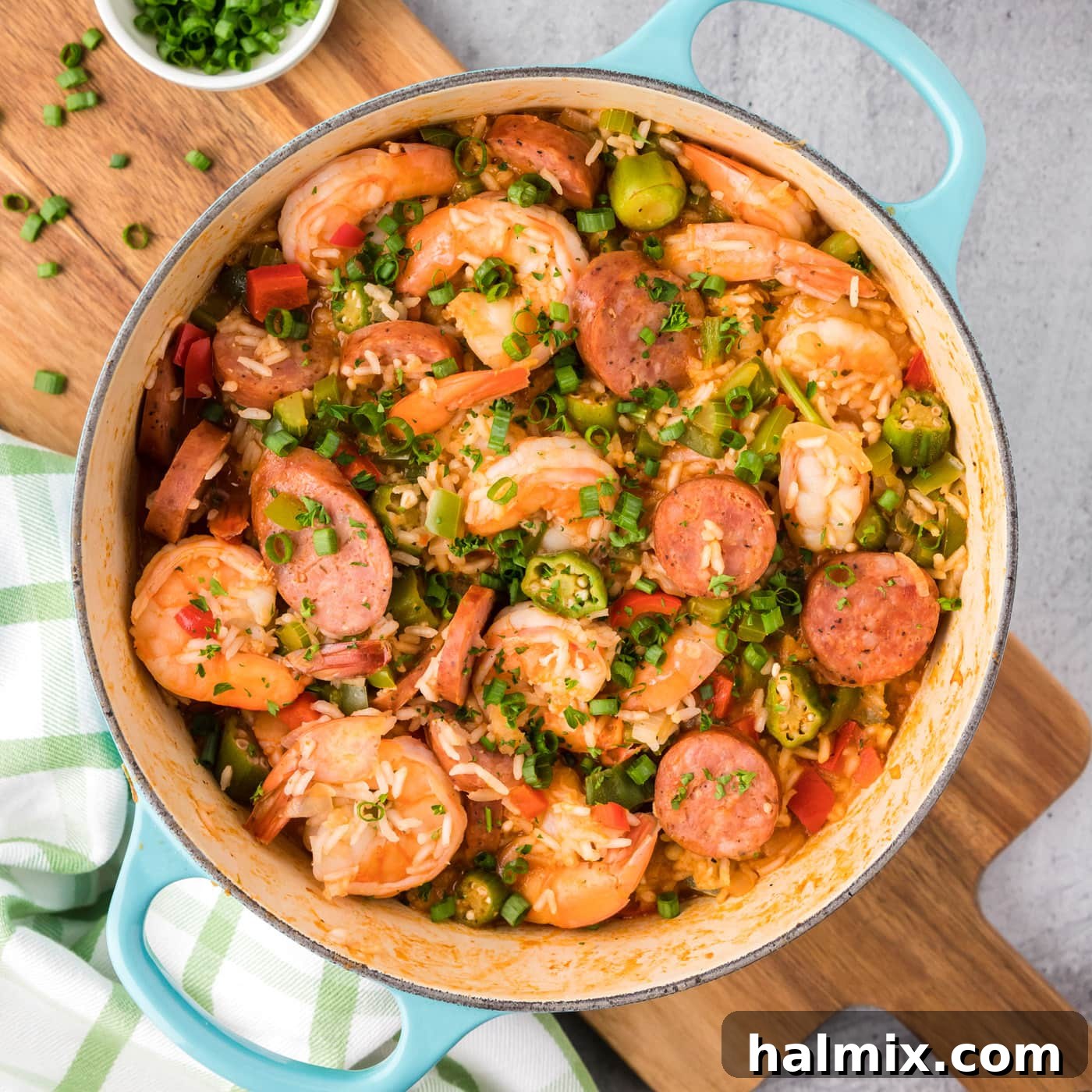
Welcome to the ultimate guide for crafting the most delectable Jambalaya recipe, a true celebration of vibrant Cajun and Creole flavors! This easy-to-follow, one-pot dish promises to transport your taste buds straight to the heart of Louisiana with its rich, smoky, and spicy notes. We start with the foundational “Holy Trinity” – a harmonious blend of diced onion, bell pepper, and celery – then layer in succulent shrimp, savory smoked sausage, tender okra, and fluffy white rice. The result is a profoundly flavorful, hearty meal that’s perfect for family dinners, gatherings, or simply when you crave a taste of authentic Southern comfort food. Get ready to experience a symphony of textures and aromas, all cooked to perfection in a single pot in under 35 minutes.
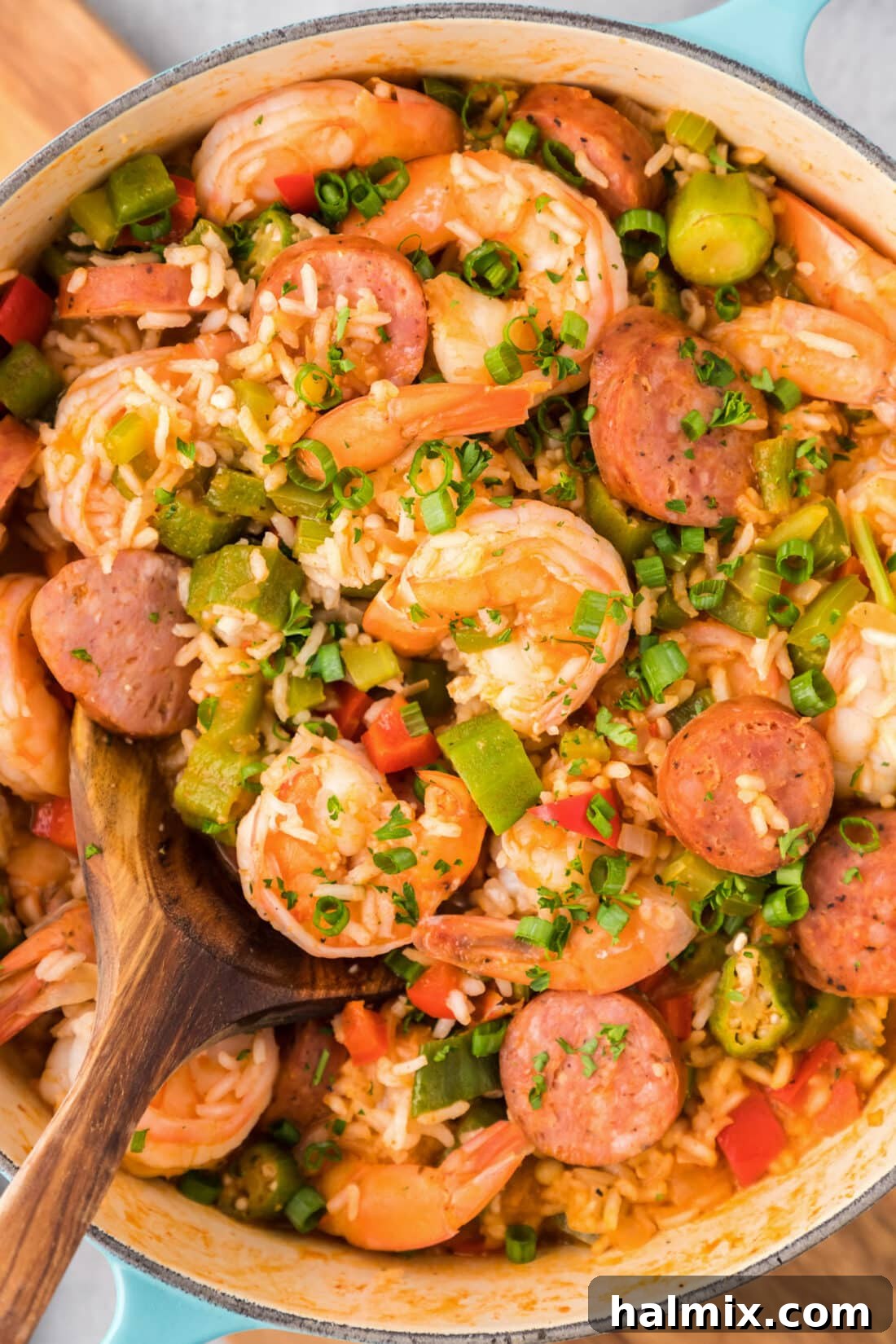
Why This Easy One-Pot Jambalaya Recipe is a Must-Try
Jambalaya, a culinary jewel of Louisiana, boasts countless variations, but our rendition focuses on delivering an incredibly rich, smoky, and perfectly spiced flavor profile that will undoubtedly make your mouth water. This recipe stands out for several compelling reasons:
- Authentic Cajun Flavors: We honor the classic Cajun tradition by building a robust flavor base. It begins with sautéing the “Holy Trinity” – bell peppers, onion, and celery – a fundamental step that infuses the dish with aromatic depth from the very start.
- Speed and Simplicity: Despite its complex flavors, this jambalaya is surprisingly quick and easy to prepare. Everything comes together in one pot on the stovetop, making cleanup a breeze. From start to finish, you’ll have a restaurant-quality meal on the table in under 35 minutes, perfect for busy weeknights.
- Perfect Balance of Ingredients: This recipe masterfully combines a delightful medley of textures and tastes. Smoked sausage provides a deep, savory foundation, while tender shrimp adds a touch of the sea. Okra contributes a unique texture and subtle earthy sweetness, and fluffy white rice rounds out the dish, making it incredibly satisfying and filling.
- Bold Seasoning: The secret to truly outstanding jambalaya lies in generous and well-balanced seasoning. We emphasize the critical role of authentic Cajun seasoning, fragrant bay leaves, and smoky paprika. These spices are not just add-ons; they are integral to building the layers of bold flavor that define a truly great jambalaya. For those who enjoy an extra kick, a dash or two of cayenne pepper can be easily incorporated to elevate the heat.
- Versatility: While our recipe features shrimp and smoked sausage, jambalaya is inherently adaptable. You can easily adjust proteins, vegetables, and spice levels to suit your preferences, making it a versatile staple in your cooking repertoire.
By following our simple steps and embracing the power of quality ingredients and thoughtful seasoning, you’ll create a jambalaya that is not only delicious but also a joy to cook and share.
Essential Ingredients for Your Flavorful Jambalaya
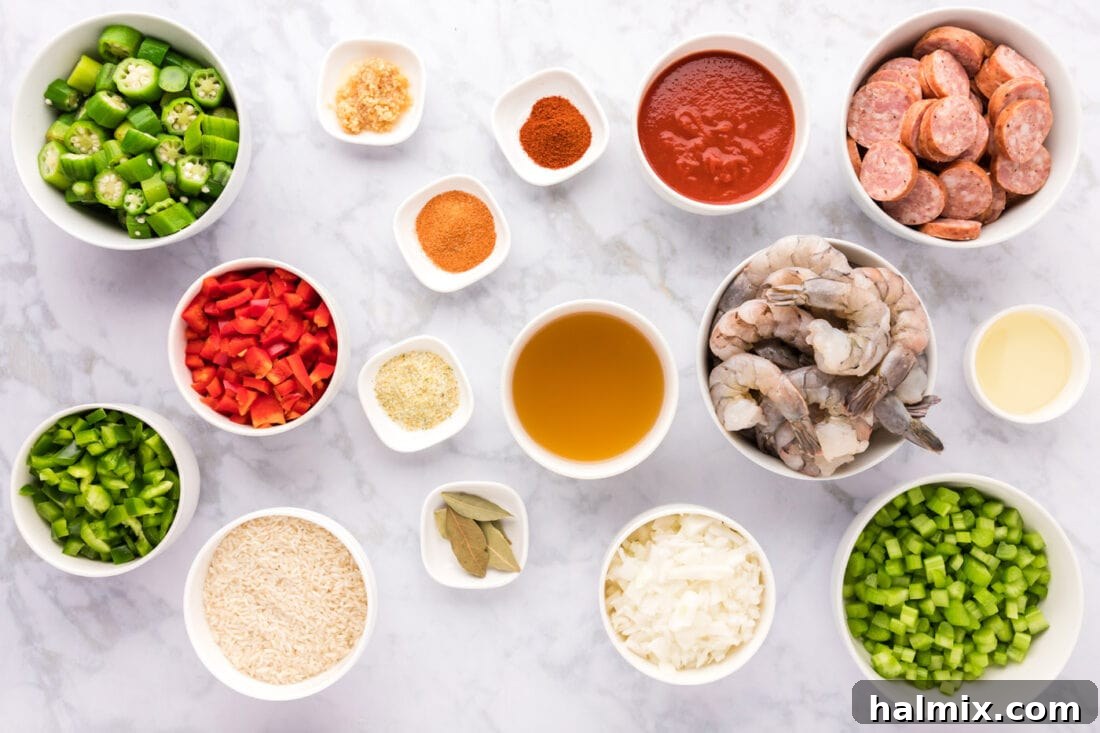
Crafting an authentic and delicious jambalaya requires a thoughtful selection of fresh, high-quality ingredients. Each component plays a vital role in building the layered flavors and hearty texture that define this iconic Louisiana dish. Below is a comprehensive list of what you’ll need, along with insights into their importance.
Ingredient Spotlight & Expert Substitution Tips
Understanding each ingredient’s role and knowing how to make smart substitutions can elevate your jambalaya and adapt it to your preferences. Here’s a deeper dive:
THE HOLY TRINITY: This triumvirate of **celery, onion, and bell peppers** is non-negotiable in authentic Cajun and Creole cuisine. They form the aromatic foundation, providing sweetness, pungency, and a refreshing crispness that sets the stage for all other flavors. In this recipe, we use both green and red bell peppers to add color and slightly different flavor notes. Their gentle sautéing is key to unlocking their full potential. This flavor base is so crucial it’s also featured in other Southern classics like our dirty rice recipe.
SAUSAGE: We opt for **smoked sausage** in this recipe for its inherent smoky depth and savory richness, which complements the other ingredients beautifully. However, if you’re seeking a more traditional Cajun heat, **andouille sausage** is an excellent substitute. Andouille is a smoked, coarse-grained pork sausage that’s typically spicier and adds another layer of robust flavor. Whichever you choose, ensure it’s a good quality smoked sausage for the best results.
SHRIMP: Fresh or frozen, **grilling shrimp** are perfect here. We recommend using peeled and deveined shrimp for ease of preparation. The decision to leave the tails on or remove them is entirely up to personal preference. Keeping the tails on can make for a more visually appealing presentation and provides a natural handle for eating, while removing them makes for a cleaner eating experience, especially if you’re serving it in bowls. Just be sure not to overcook the shrimp, as they cook quickly and can become rubbery if left on the heat for too long.
RICE: Rice is what gives jambalaya its comforting, hearty character. We strongly prefer **long-grain white rice** because it holds its shape well and remains fluffy after cooking, absorbing all the delicious flavors without becoming overly sticky or mushy. You’ll need 1 cup of dry white rice, which typically yields 2 cups cooked, for this recipe. If you need a refresher, we can show you how to make rice perfectly every time. Avoid short-grain or medium-grain rice, as their higher starch content can lead to a gummier texture that isn’t ideal for jambalaya.
SEASONINGS: Beyond the Holy Trinity, the soul of jambalaya lies in its spices. We use a generous amount of **Cajun seasoning**, such as “Slap Ya Mama” (white pepper blend recommended for a balanced heat), to imbue the dish with its signature spicy and savory kick. **Smoked paprika** adds a beautiful color and an additional layer of smoky flavor that enhances the overall depth. **Bay leaves** are essential for their subtle herbaceous notes that develop as the dish simmers. For those who crave extra heat, a pinch or two of **cayenne pepper** can be stirred in along with the other seasonings, or a diced jalapeño can be sautéed with the Holy Trinity.
ADDITIONAL FLAVOR BOOSTERS: **Minced garlic** is added for its pungent aroma and flavor. **Garlic salt** further enhances the savory notes. A small amount of **chicken broth** helps create a flavorful liquid base, while **tomato sauce** contributes acidity, color, and a slight tang, balancing the richness of the meats and spices. Make sure your tomato sauce is plain, not seasoned.
ADDITIONS & VARIATIONS: Feel free to customize your jambalaya! If you desire more heat, consider adding a diced **jalapeño** or **serrano pepper** to the skillet alongside your celery, onion, and bell peppers. Other popular protein additions include diced **chicken breast or thighs**, and even **pork** (like diced ham or leftover pork roast). For added vegetables, consider corn kernels or sliced bell peppers of different colors. Just remember to adjust cooking times accordingly for any raw meat additions.
Step-by-Step Guide: Crafting Your Perfect Jambalaya
These step-by-step photos and detailed instructions are designed to help you visualize each stage of making this incredible jambalaya. For a quick reference, you can Jump to the Full Recipe Card to get the printable version of this recipe, complete with precise measurements and instructions at the bottom of this post.
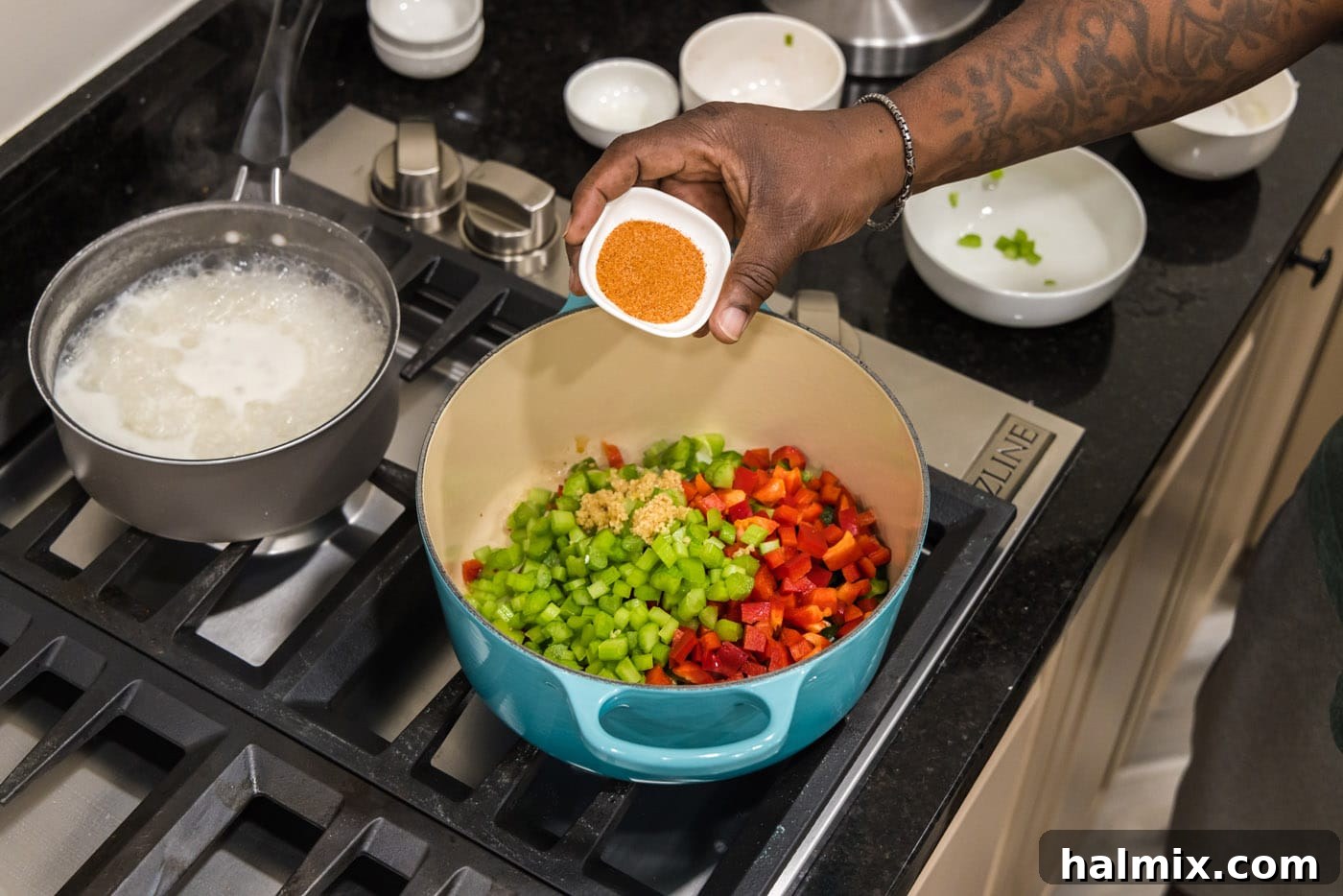
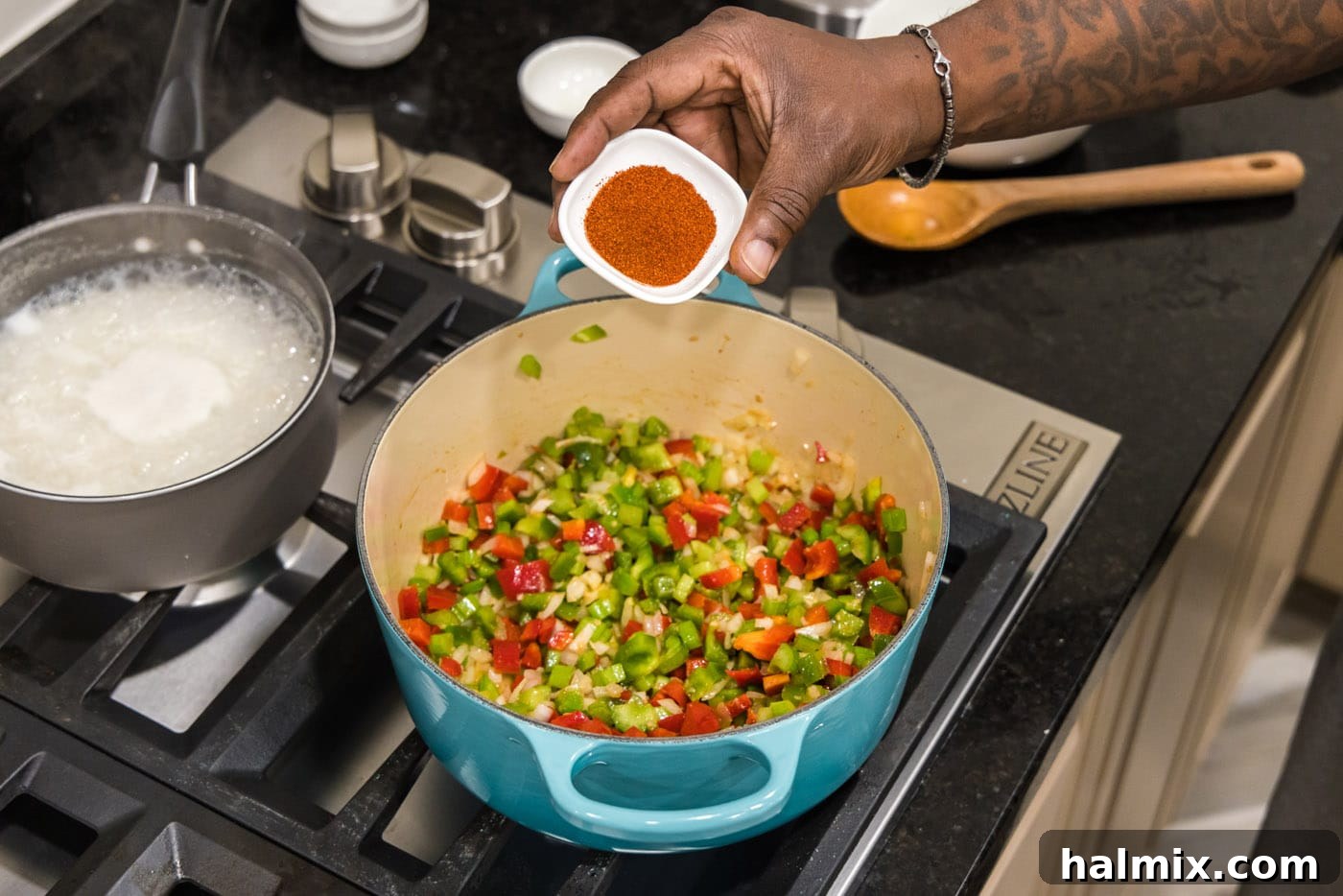
- Build the Flavor Base (The Holy Trinity): Begin by heating 2 tablespoons of olive oil in a sturdy Dutch oven or a large, heavy-bottomed pot over medium-high heat. Once shimmering, add 1 cup of diced onion, 1 cup of diced green bell pepper, 1 cup of diced red bell pepper, 1 cup of diced celery, and 1 tablespoon of minced garlic. Stir all these aromatics together thoroughly. Sprinkle in 1 ½ teaspoons of Cajun seasoning (we recommend the “Slap Ya Mama” white pepper blend for a fantastic flavor balance). Sauté these vegetables for 3-4 minutes, stirring occasionally, until they begin to soften and become fragrant, releasing their wonderful aromas. Next, add 1 teaspoon of smoked paprika, stir well, and continue to cook for another 1-3 minutes. This step is crucial for building the foundational flavor of your jambalaya.

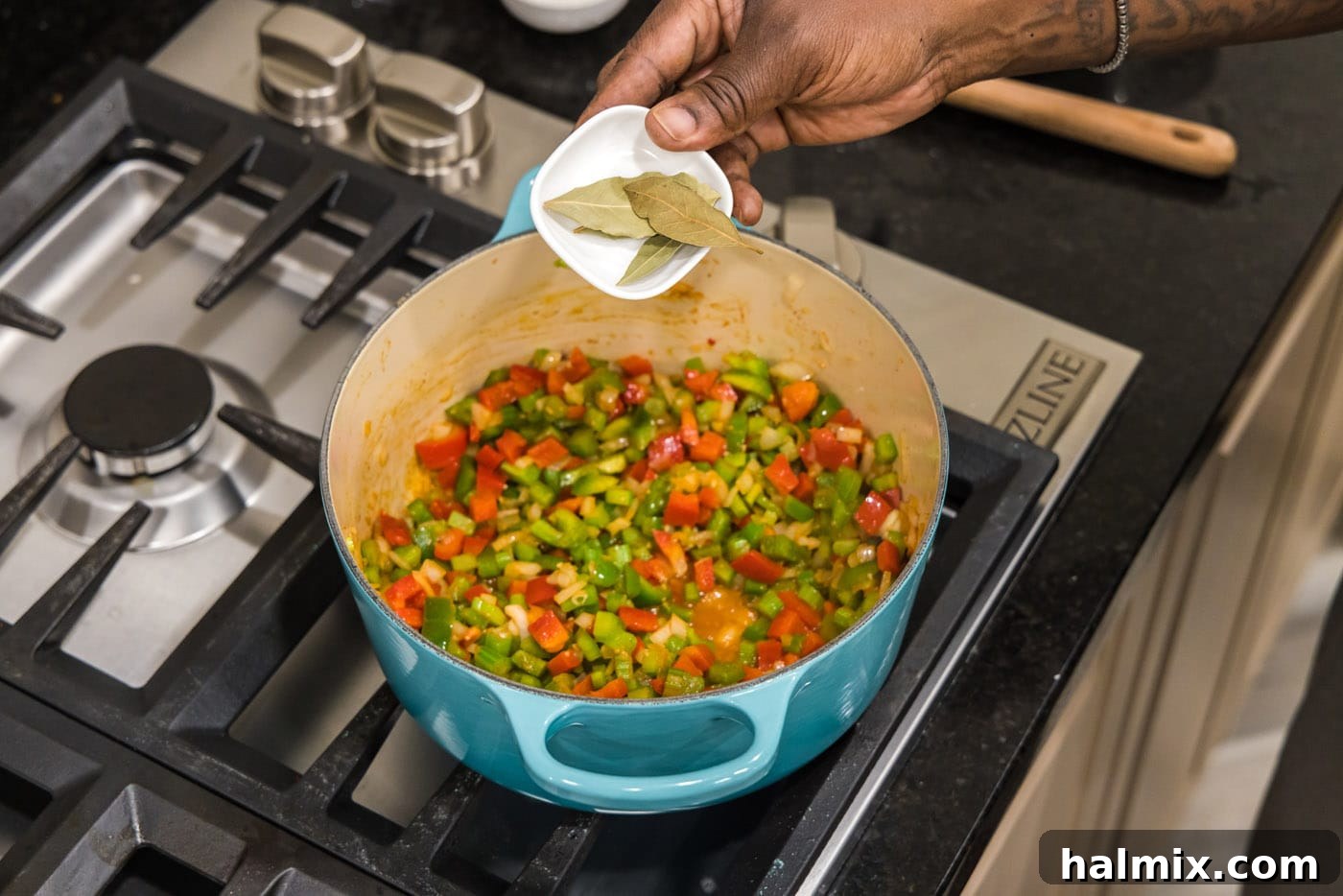
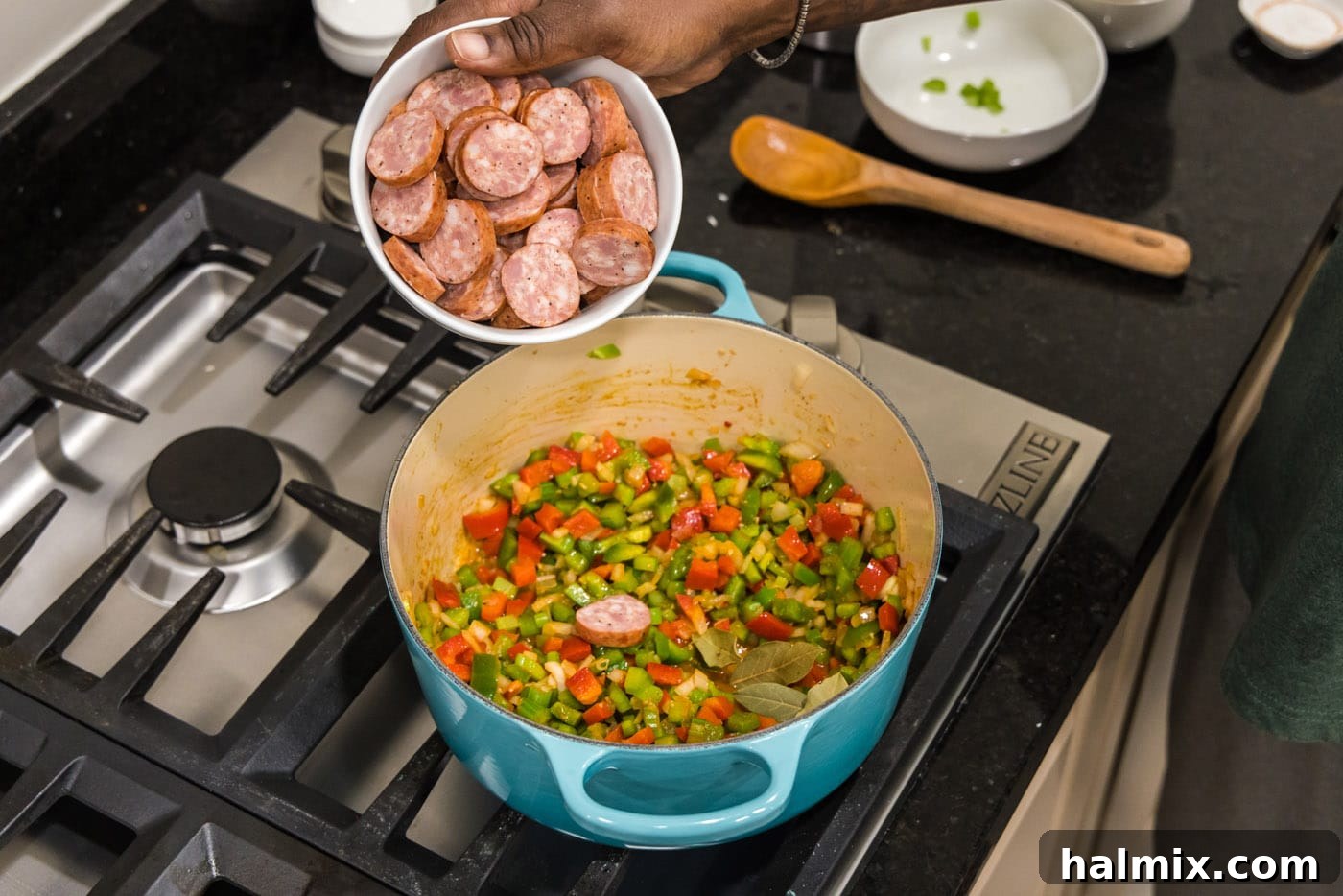
- Incorporate Sausage and Bay Leaves: Once the vegetables are fragrant and slightly tender, add 4 bay leaves to the pot. Then, introduce 1 pound of sliced smoked sausage (or andouille sausage, if preferred). Stir everything to combine, allowing the sausage to brown slightly and release its flavorful oils into the vegetable mixture. This step infuses the entire dish with a rich, smoky taste.
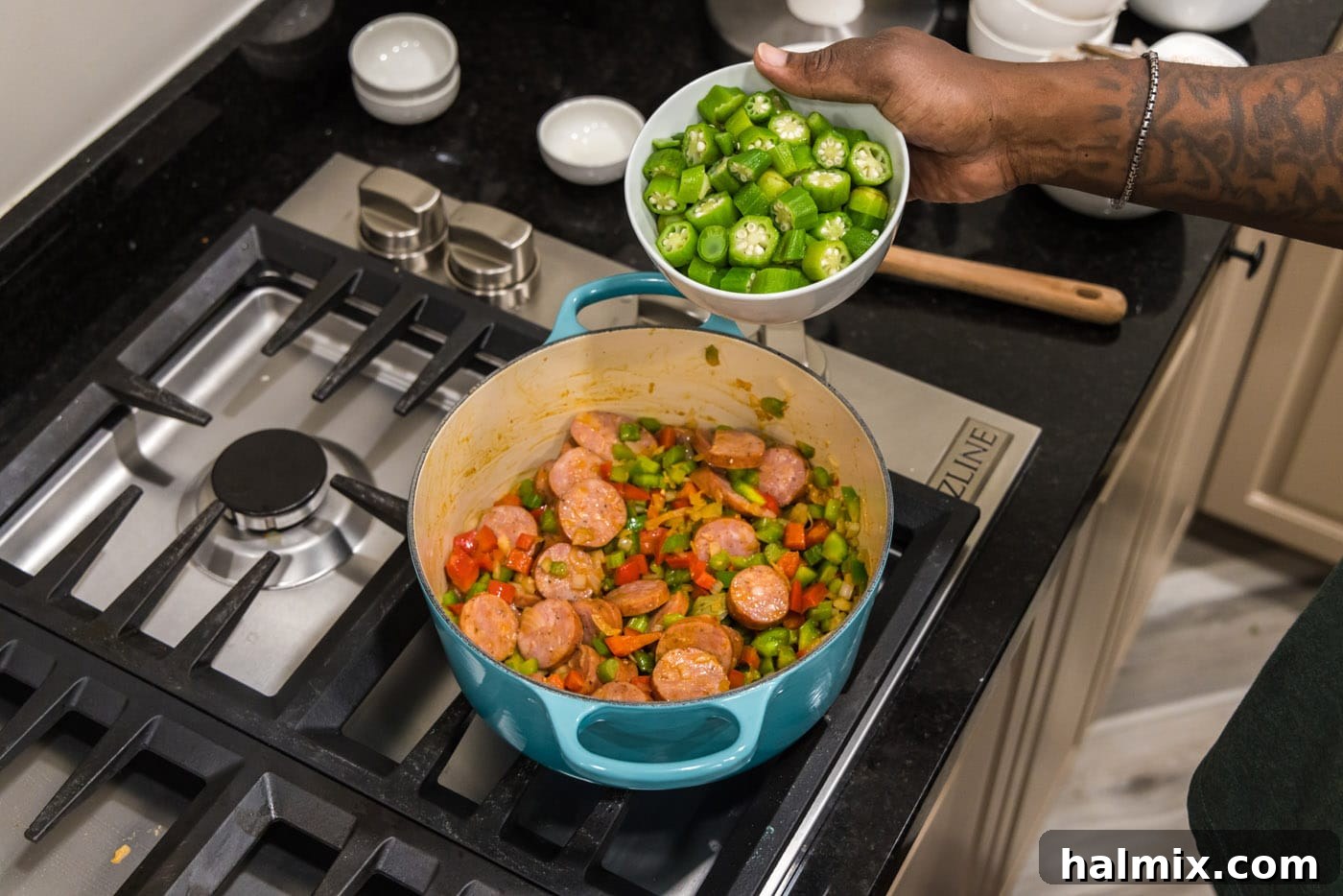
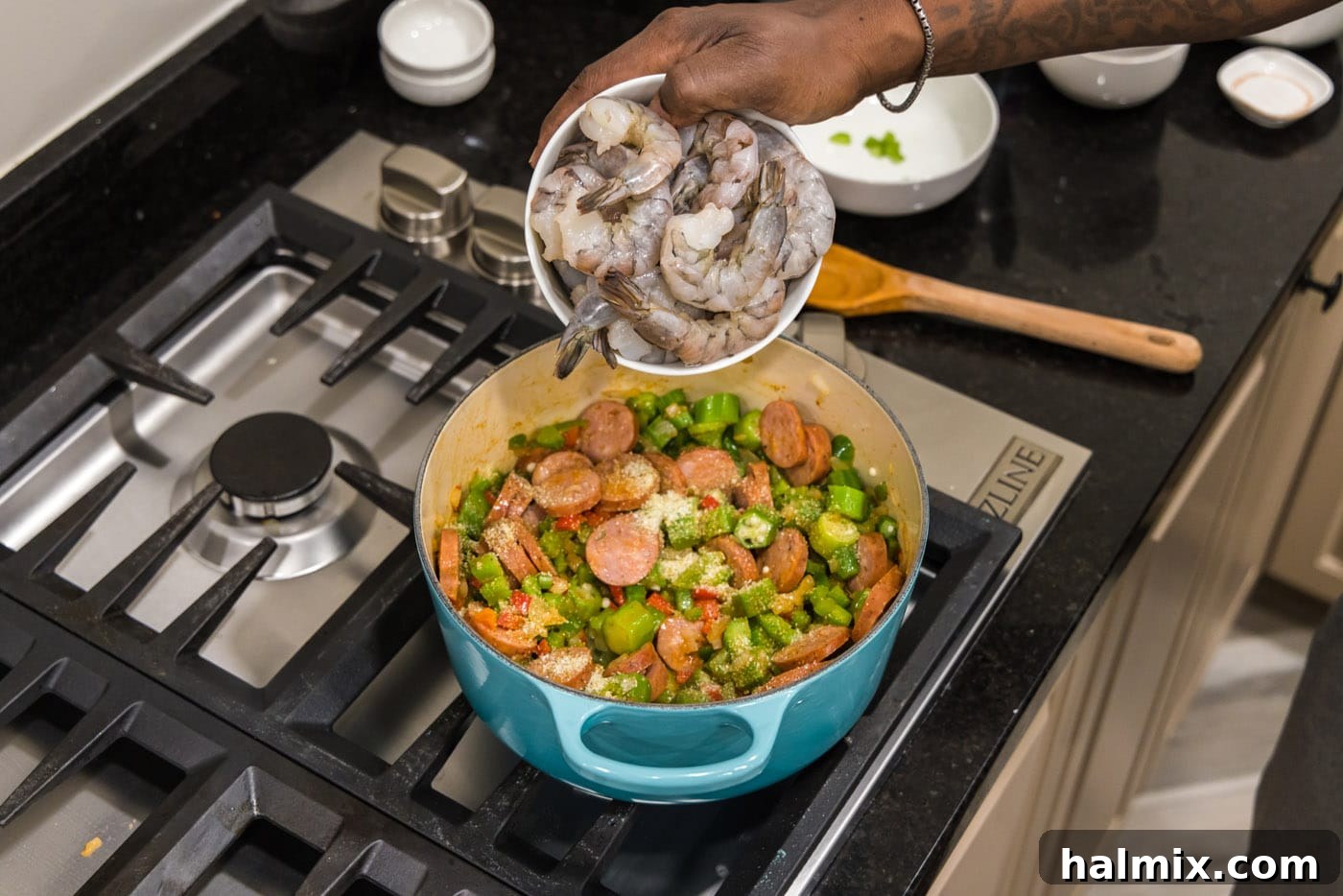
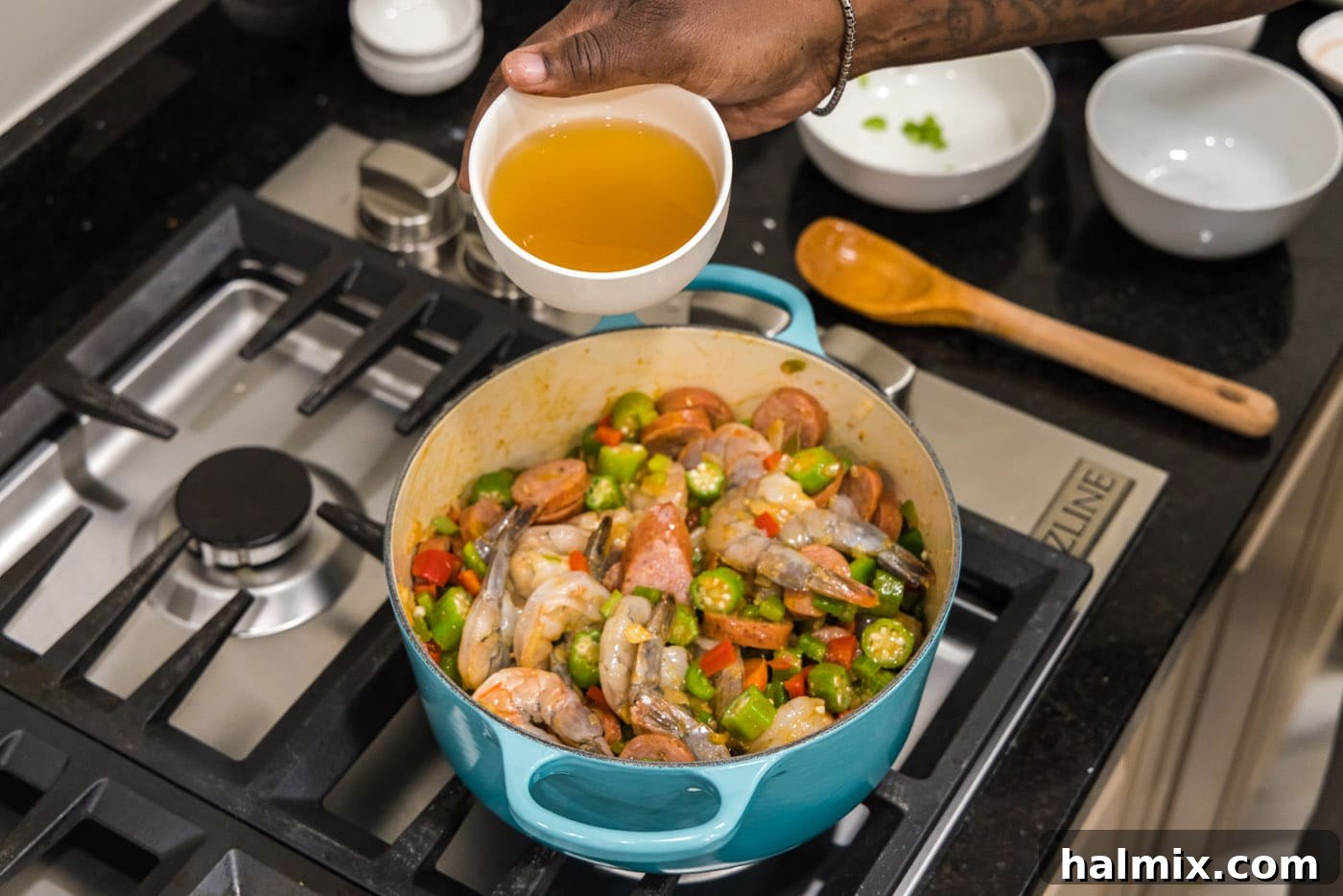
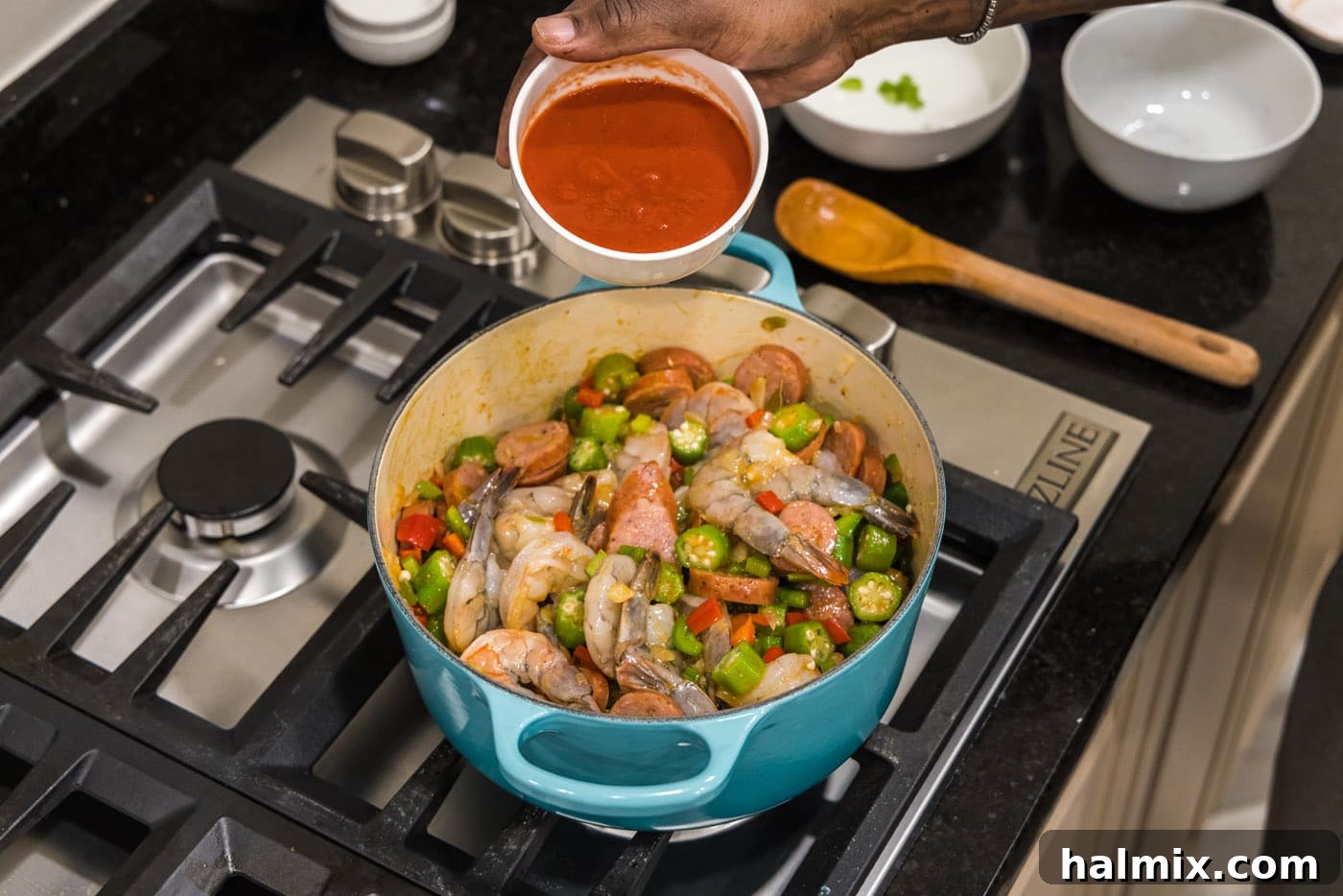
- Add Okra, Shrimp, Broth, and Tomato Sauce: Now it’s time to add the remaining key ingredients. Stir in 12 ounces of thawed frozen okra, 2 teaspoons of garlic salt, and 1 ½ pounds of peeled and deveined grilling shrimp. Pour in ¼ cup of chicken broth and 8 ounces of tomato sauce. Stir gently to ensure all ingredients are well combined. Cover the pot with a lid and reduce the heat to medium. Allow the mixture to cook for 4-5 minutes. During this time, the shrimp will turn pink and opaque, indicating they are cooked through, and the flavors will meld beautifully. Avoid overcooking the shrimp to maintain their tender texture.
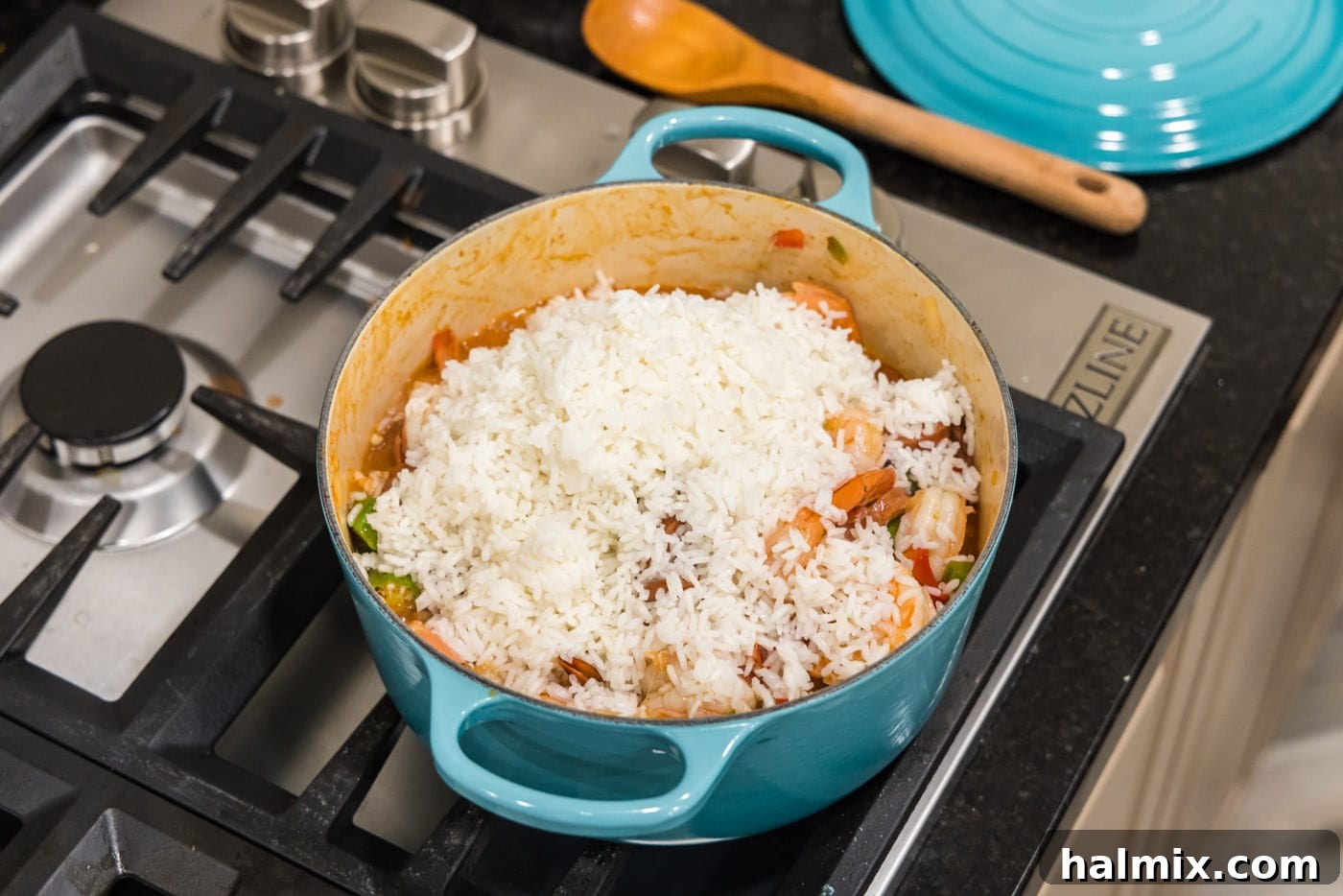
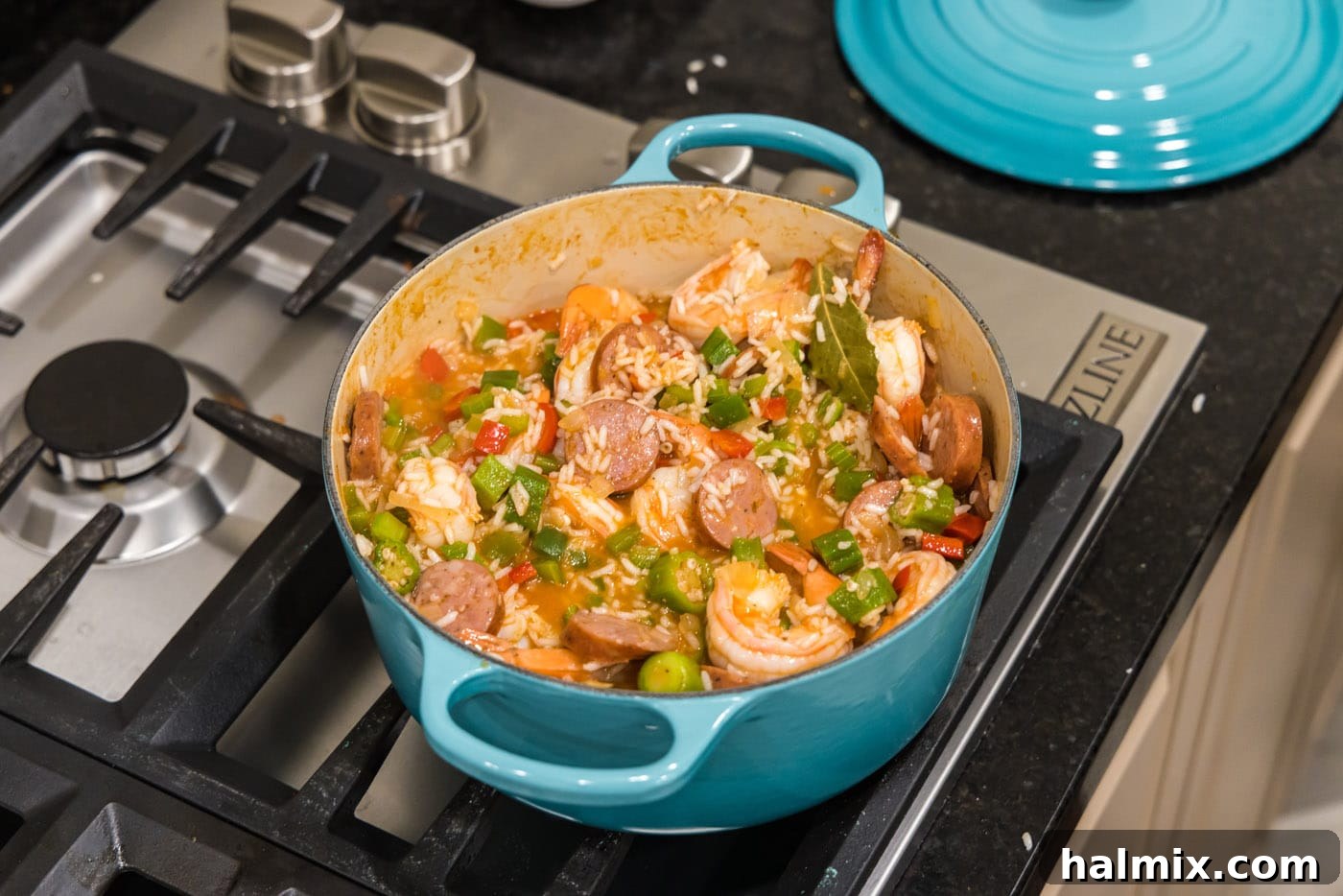
- Incorporate Cooked Rice and Finish: Finally, add 2 cups of cooked white rice to the pot. Gently stir to incorporate the rice thoroughly with the jambalaya mixture. Continue to cook for just 1-2 minutes, stirring occasionally, until the rice is heated through and has fully absorbed the wonderful flavors of the dish. Remove the bay leaves before serving. Serve hot and enjoy your homemade, flavorful jambalaya!
Frequently Asked Questions & Expert Tips for Jambalaya Success
To properly store leftover jambalaya, ensure it’s fully cooled to room temperature within two hours of cooking. Transfer the cooled jambalaya into an airtight container and refrigerate for up to 4 days. For longer storage, jambalaya freezes beautifully for up to 2 months. When reheating, gently warm on the stovetop over medium-low heat or in the microwave until thoroughly heated through. If your jambalaya appears a bit dry after storage, simply add a splash or two of chicken broth during reheating to restore its moisture and consistency.
The primary difference lies in the use of tomatoes. Creole jambalaya, often referred to as “red jambalaya,” typically includes tomatoes or tomato sauce, giving it a reddish hue. It’s also influenced by Spanish and French cuisine and often features a wider array of ingredients, sometimes including ham or chicken along with seafood. Cajun jambalaya, known as “brown jambalaya,” omits tomatoes and gets its rich color and flavor from browning the meat (often pork or sausage) first, developing a deep fond at the bottom of the pot. Our recipe leans towards Creole due to the inclusion of tomato sauce, but with a strong Cajun spice profile.
This particular recipe calls for pre-cooked rice to ensure a quick cooking time and fluffy texture. If you want to use uncooked rice, you would need to significantly adjust the liquid amount and cooking time, treating it more like a traditional rice pilaf where the rice absorbs the liquid directly. This would increase the total cooking time and alter the cooking method. For this recipe, stick to cooked rice for guaranteed success.
To make it spicier, you have several options: increase the amount of Cajun seasoning, add a diced jalapeño or serrano pepper when sautéing the Holy Trinity, or stir in a pinch or two of cayenne pepper with the other dry spices. For a milder version, use a mild Cajun seasoning blend, omit the cayenne pepper, and consider using less bell pepper (though it’s part of the Holy Trinity, so don’t remove it entirely) or balancing with a bit more broth or tomato sauce.
A Dutch oven or a large, heavy-bottomed pot (like a stockpot) is ideal for making jambalaya. These types of pots retain and distribute heat evenly, which is essential for sautéing the ingredients properly and allowing the flavors to simmer and meld without scorching. The capacity should be large enough to hold all ingredients comfortably for easy stirring.
Shrimp cook very quickly, usually within 3-5 minutes, turning pink and opaque. Overcooked shrimp become tough and rubbery. Add them towards the end of the cooking process, just enough time for them to cook through, and then remove the pot from the heat promptly.
The key to rich jambalaya is layering flavors. Take your time to properly sauté the “Holy Trinity” until fragrant and slightly caramelized. Allow the sausage to brown slightly. Each step builds on the last, creating a complex and satisfying taste. Don’t rush these initial stages!
Perfect Pairings & Serving Suggestions for Jambalaya
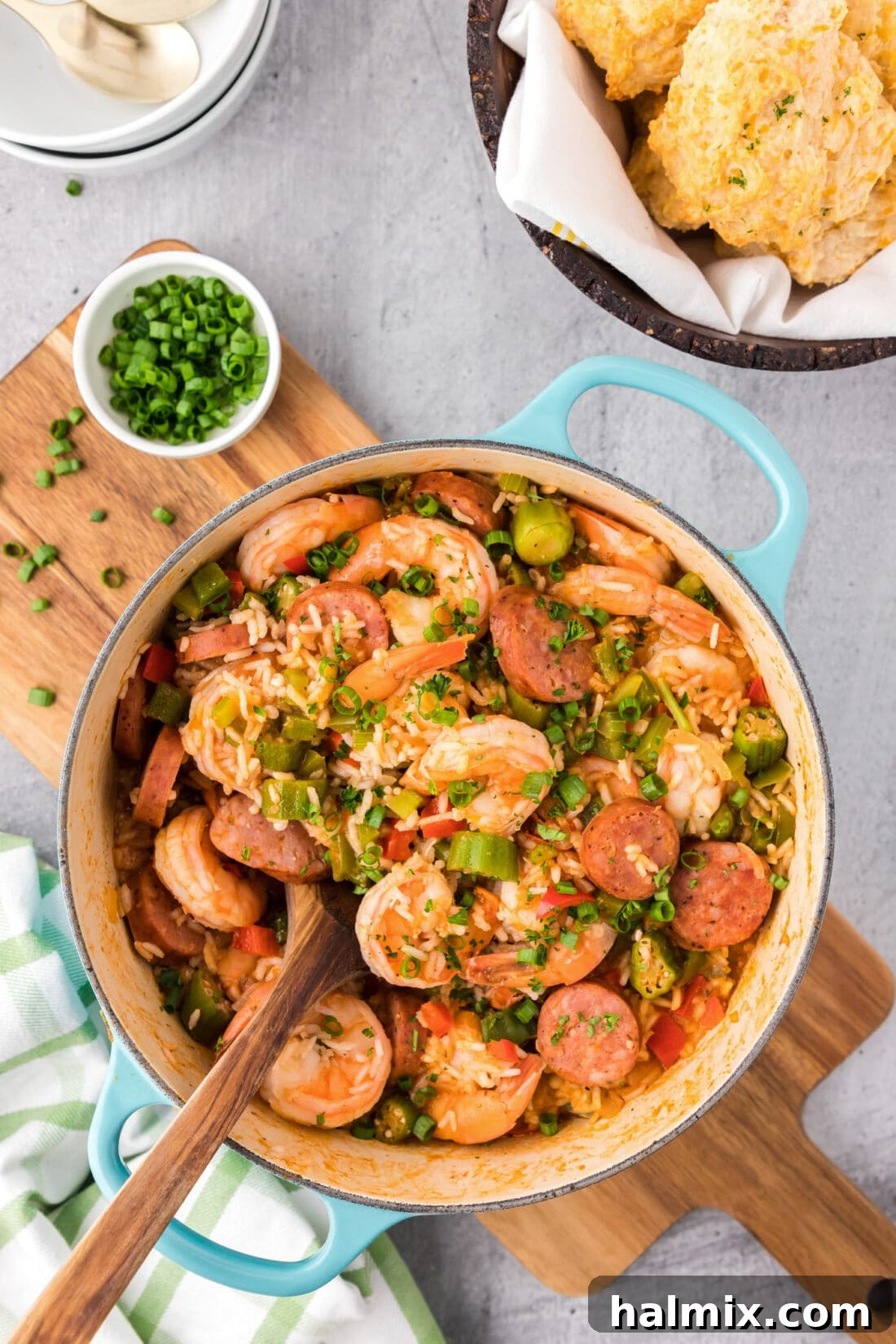
Jambalaya is an incredibly filling and satisfying meal all on its own, packed with proteins, vegetables, and rice. However, it’s often complemented by simple side dishes that enhance the overall dining experience and are rooted in Southern tradition. Enjoy your jambalaya warm, fresh from the stovetop, for the best flavor and texture.
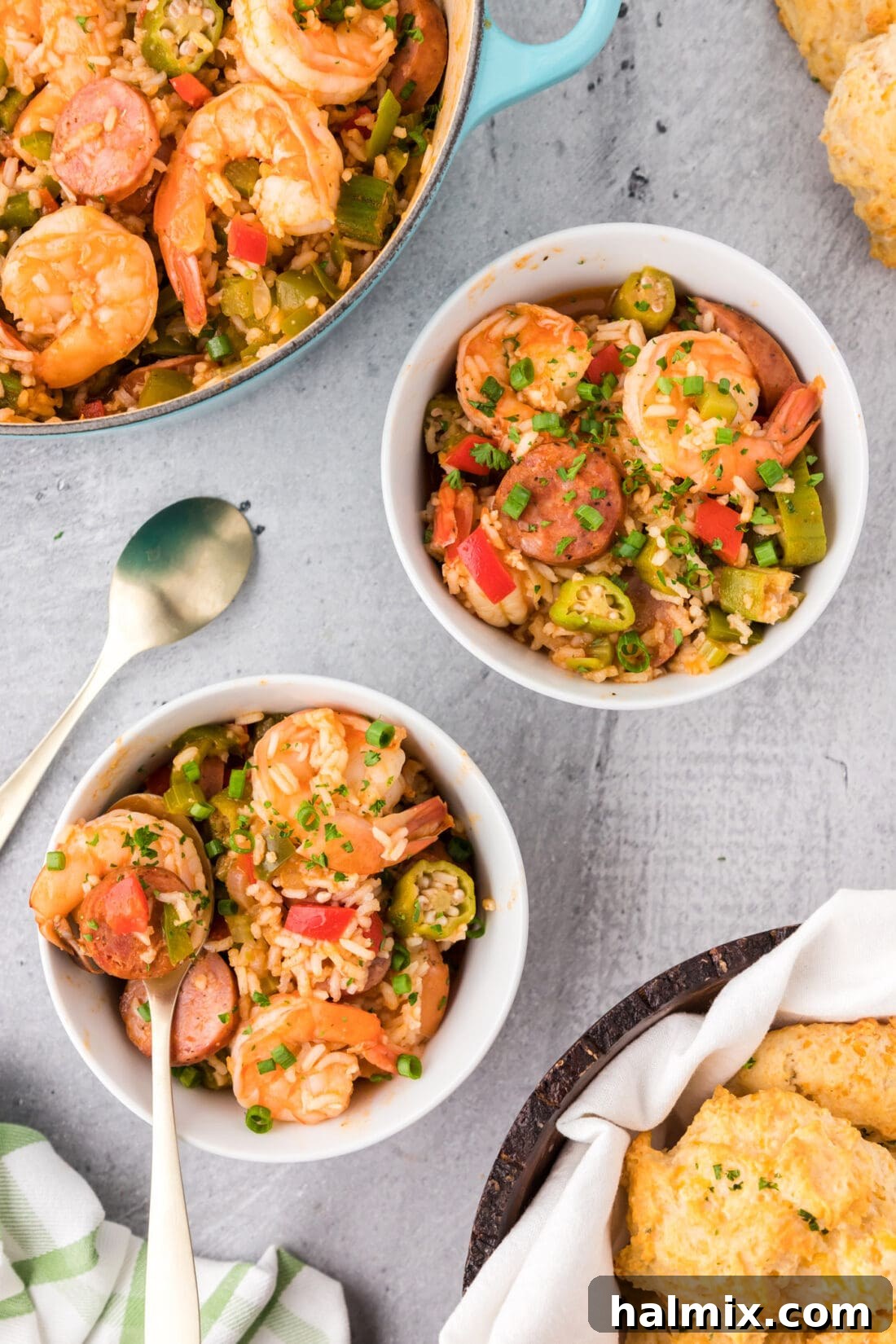
- Sweet Cornbread: A classic pairing, the slight sweetness and crumbly texture of cornbread provide a wonderful contrast to the savory and spicy notes of jambalaya. It’s also perfect for soaking up any delicious juices.
- Homemade Biscuits: Flaky, buttery homemade biscuits are another excellent choice, offering a soft texture that pairs beautifully with the hearty jambalaya.
- Green Salad: A simple, crisp green salad with a light vinaigrette can provide a refreshing counterpoint, cutting through the richness of the dish.
- Crusty Bread: A warm loaf of crusty French bread is always a welcome addition, ideal for soaking up every last bit of that flavorful sauce.
- Cool & Refreshing Beverages: Sweet iced tea is a quintessential Southern drink that perfectly complements spicy dishes. For alcoholic pairings, a crisp, cold lager or a light-bodied white wine like a dry Riesling or Sauvignon Blanc can balance the heat.
Explore More Southern & Seafood Delights
If you’ve enjoyed this Jambalaya recipe and are eager to explore more vibrant flavors from the Southern kitchen, especially those with a seafood twist, here are some other fantastic recipes from our collection:
- Dirty Rice: A quintessential Cajun side dish, packed with savory flavors and seasonings.
- Shrimp Boil: A festive and communal meal, brimming with perfectly cooked shrimp, corn, and potatoes, all seasoned to perfection.
- Shrimp and Grits: A comforting and rich Southern classic, featuring creamy grits topped with savory shrimp in a flavorful sauce.
- Blackened Shrimp: Quick-cooking shrimp coated in a bold, smoky spice blend, seared to perfection for an intense flavor.
- Instant Pot Jambalaya: For those seeking an even faster way to enjoy jambalaya, this pressure cooker version delivers all the flavor in a fraction of the time.
I absolutely adore spending time in the kitchen, experimenting with new dishes, and perfecting classic recipes. Sharing my culinary experiences and passion for cooking with all of you brings me immense joy! To ensure you never miss out on a new recipe or kitchen tip, I offer a convenient newsletter delivered straight to your inbox every time a fresh post goes live. Simply subscribe today and start receiving your free daily recipes, designed to inspire and delight your inner chef!
Easy One-Pot Jambalaya
This classic Cajun-inspired jambalaya comes together quickly in one pot. We start by sautéing the “Holy Trinity” of bell peppers, onion, and celery, then add smoked sausage, okra, succulent shrimp, a hint of tomato sauce, and finish with fluffy white rice. A hearty and flavorful meal ready in under 35 minutes!
Rating: 5 out of 5 stars (based on 4 votes)
IMPORTANT – There are often Frequently Asked Questions within the blog post that you may find helpful. Simply scroll back up to read them!
Print Recipe
Pin It
Rate It
Ingredients
- 2 Tablespoons olive oil
- 1 cup diced onion (about 1 medium onion)
- 1 cup diced green bell pepper (1 large green bell pepper)
- 1 cup diced red bell pepper (1 large red bell pepper)
- 1 cup diced celery (about 2 ribs of celery)
- 1 Tablespoon minced garlic
- 1 teaspoon smoked paprika
- 1 ½ teaspoons Slap Ya Mama Cajun seasoning (we used the white pepper blend)
- 4 bay leaves
- 1 pound smoked sausage (sliced)
- 12 ounces frozen okra (thawed)
- 2 teaspoons garlic salt
- 1 ½ pounds grilling shrimp (peeled and deveined)
- ¼ cup chicken broth
- 8 ounces tomato sauce
- 2 cups cooked white rice (from 1 cup dry white rice)
Things You’ll Need
-
Dutch oven
-
Vinyl gloves (optional, for handling shrimp)
Before You Begin (Expert Tips)
- Leaving the tails on the shrimp is up to you. Some people prefer to remove them, while others like to keep them on for presentation purposes.
- You’ll need 1 cup of dry white rice to yield 2 cups cooked that’s called for in this recipe.
- We are using smoked sausage, but you can substitute with andouille if desired for an extra spicy kick.
- If you like it extra spicy, add a diced jalapeno to the skillet with your celery, onion, and bell peppers. You can also add in or substitute other proteins as needed; chicken or pork are popular additions to jambalaya.
- Store fully cooled leftovers in an air-tight container kept in the refrigerator for up to 4 days or freeze for up to 2 months. Reheat gently on the stovetop until warmed through. If your jambalaya feels a bit dry after storing, add a splash of chicken broth when reheating.
Instructions
-
Heat olive oil in a Dutch oven over medium-high heat. Add onion, green pepper, red bell pepper, celery, minced garlic, and Cajun seasoning. Stir everything together and saute for 3-4 minutes. Add smoked paprika, stir and cook for another 1-3 minutes.
-
Add bay leaves and smoked sausage, stir to combine.
-
Add okra, garlic salt, shrimp, chicken broth, and tomato sauce. Stir to combine, cover pot, and cook over medium heat for 4-5 minutes, or until shrimp is pink and opaque.
-
Add cooked rice and stir to combine. Cook for 1-2 minutes, enough to heat through. Remove bay leaves before serving.
Nutrition
Serving: 1 serving (2 cups) | Calories: 570cal | Carbohydrates: 36g | Protein: 34g | Fat: 32g | Saturated Fat: 9g | Polyunsaturated Fat: 4g | Monounsaturated Fat: 15g | Trans Fat: 0.01g | Cholesterol: 236mg | Sodium: 2754mg | Potassium: 932mg | Fiber: 6g | Sugar: 6g | Vitamin A: 2561IU | Vitamin C: 84mg | Calcium: 176mg | Iron: 3mg
Tried this Recipe? Pin it for Later!Follow on Pinterest @AmandasCookin or tag #AmandasCookin!
The recipes on this blog are tested with a conventional gas oven and gas stovetop. It’s important to note that some ovens, especially as they age, can cook and bake inconsistently. Using an inexpensive oven thermometer can assure you that your oven is truly heating to the proper temperature. If you use a toaster oven or countertop oven, please keep in mind that they may not distribute heat the same as a conventional full sized oven and you may need to adjust your cooking/baking times. In the case of recipes made with a pressure cooker, air fryer, slow cooker, or other appliance, a link to the appliances we use is listed within each respective recipe. For baking recipes where measurements are given by weight, please note that results may not be the same if cups are used instead, and we can’t guarantee success with that method.