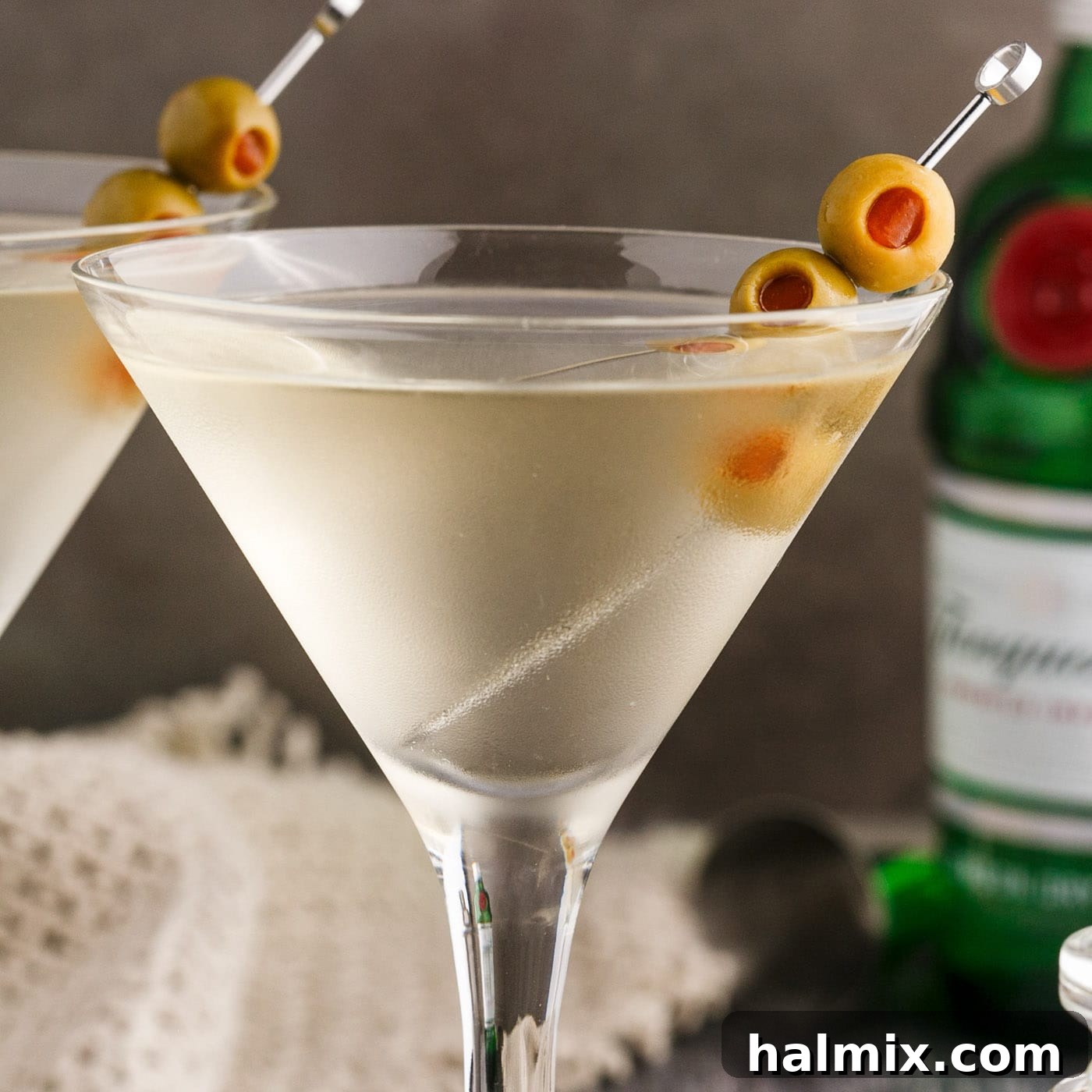
The Ultimate Dirty Martini Recipe: A Savory Classic Reimagined
Step into the sophisticated world of savory cocktails with our definitive dirty martini recipe. This iconic drink, celebrated for its bold and distinctive flavor, perfectly balances the dry notes of gin (or vodka) and vermouth with the piquant, briny essence of olive brine, culminating in a truly unforgettable experience garnished with luscious olives.
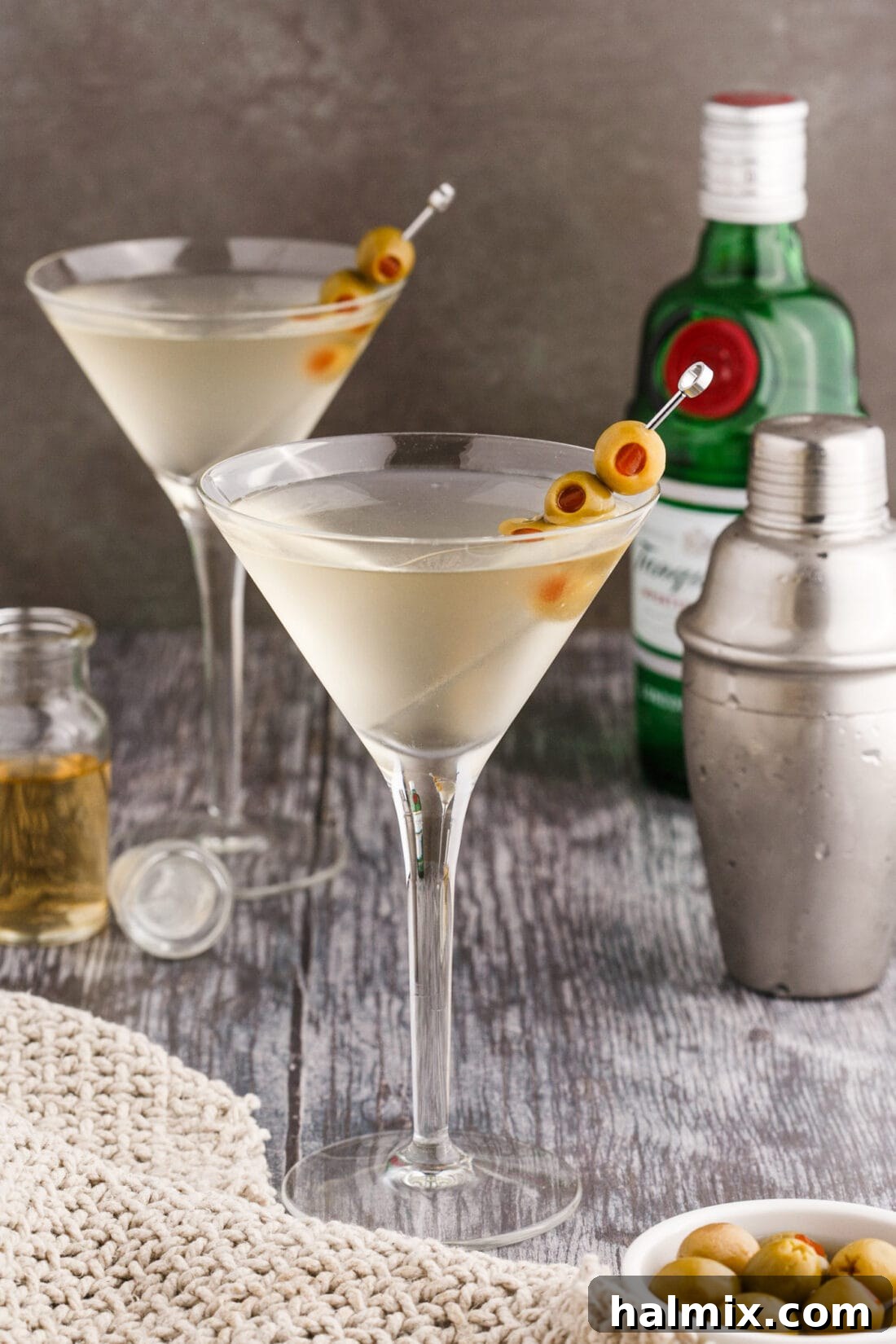
Why This Dirty Martini Recipe Stands Out
The Dirty Martini isn’t just a drink; it’s a statement. It boldly steps away from sweet and fruity concoctions, embracing a flavor profile that is unapologetically dry, intensely salty, and imbued with a rich, umami depth. This isn’t a cocktail for the faint of heart, but rather for those who appreciate a sophisticated bite and a complex, savory character that truly awakens the palate.
Unlike its sweeter counterparts like a French Martini or an Appletini, the Dirty Martini holds its own as a true connoisseur’s choice. It’s an acquired taste, yes, but once you develop an appreciation for its unique blend of botanicals and brine, there’s no going back. This recipe ensures a harmonious balance of these potent elements, guiding you to create a martini that is both robust and remarkably smooth, a staple for any discerning cocktail enthusiast.
Its enduring popularity is a testament to its timeless appeal. From bustling bars to elegant dinner parties, the Dirty Martini has cemented its place as a classic. Our recipe provides a clear, concise path to mastering this sophisticated cocktail, allowing you to replicate bar-quality results in the comfort of your own home.
Essential Ingredients for Your Dirty Martini
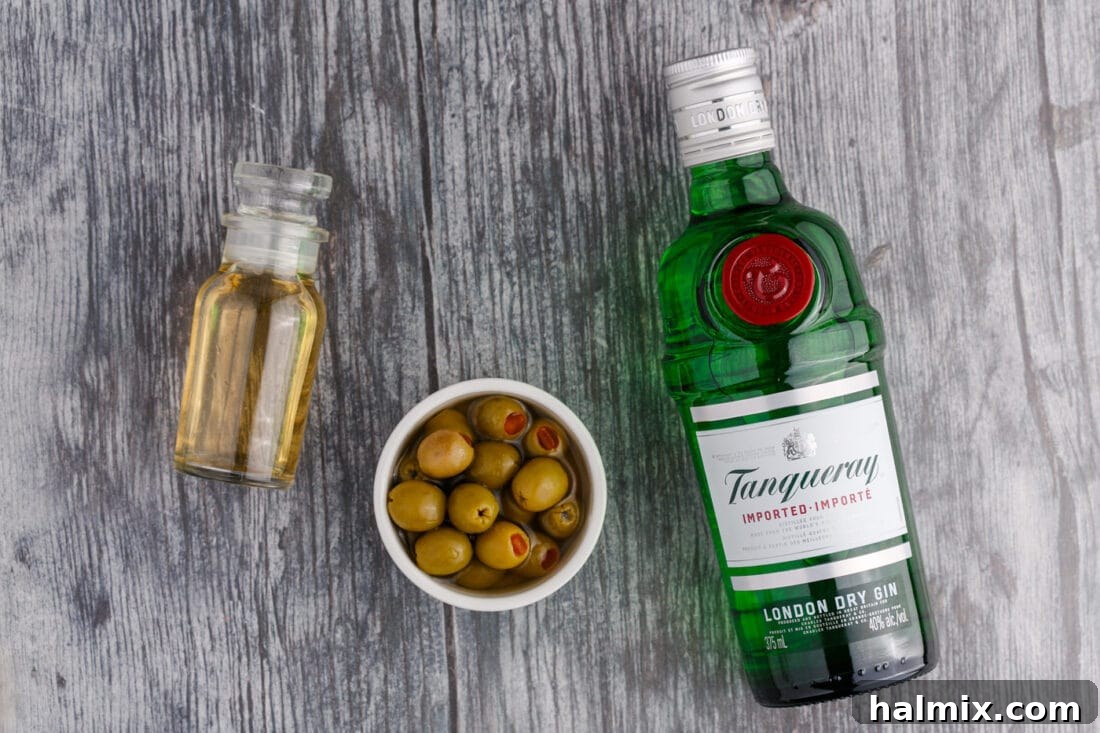
Crafting the perfect Dirty Martini requires just a few high-quality ingredients. The beauty of this cocktail lies in its simplicity, where each component plays a crucial role in achieving that signature savory, dry, and briny flavor. Below are the core ingredients you’ll need, along with detailed information and substitution suggestions to help you tailor your drink to perfection.
Ingredient Info and Substitution Suggestions
- LIQUEUR: Gin vs. Vodka
Traditionally, a martini is made with gin, and a Dirty Martini is no exception. We recommend a high-quality dry gin for its botanical complexity, which beautifully complements the brininess of the olive juice. London Dry gins are a popular choice, offering juniper-forward notes that many find essential to a classic martini.
However, if gin is not to your taste, you can easily substitute it with dry vodka. A vodka martini, often preferred for its cleaner, smoother profile, allows the olive brine to take center stage even more prominently. Choose a premium vodka for the best results, as its subtle character will contribute to the overall smoothness of your cocktail.
- VERMOUTH: Dry is Key
Vermouth is a fortified wine, and for a Dirty Martini, dry vermouth is absolutely essential. This is typically the clear or pale straw-colored variety, distinctly different from sweet (red) vermouth. Dry vermouth adds an herbaceous, slightly bitter, and aromatic layer that balances the gin/vodka and the brine. Always use fresh vermouth; once opened, it begins to oxidize and can lose its crisp flavor. Store it in the refrigerator to extend its shelf life.
- BRINE: The “Dirty” Secret
The star of the show, olive brine, is what gives this cocktail its signature “dirty” character and savory kick. The easiest and most convenient source is the brine straight from a jar of good quality green olives. Since you’ll likely be purchasing green olives for garnish anyway, this is a perfect two-in-one solution.
For those who desire a deeper, more consistent brine flavor, or simply wish to avoid opening a fresh jar of olives every time, you can also purchase bottles of olive brine specifically marketed for dirty martinis. These often offer a richer, more concentrated olive flavor. Experiment to find your preferred intensity!
- GARNISH: The Olive Crown
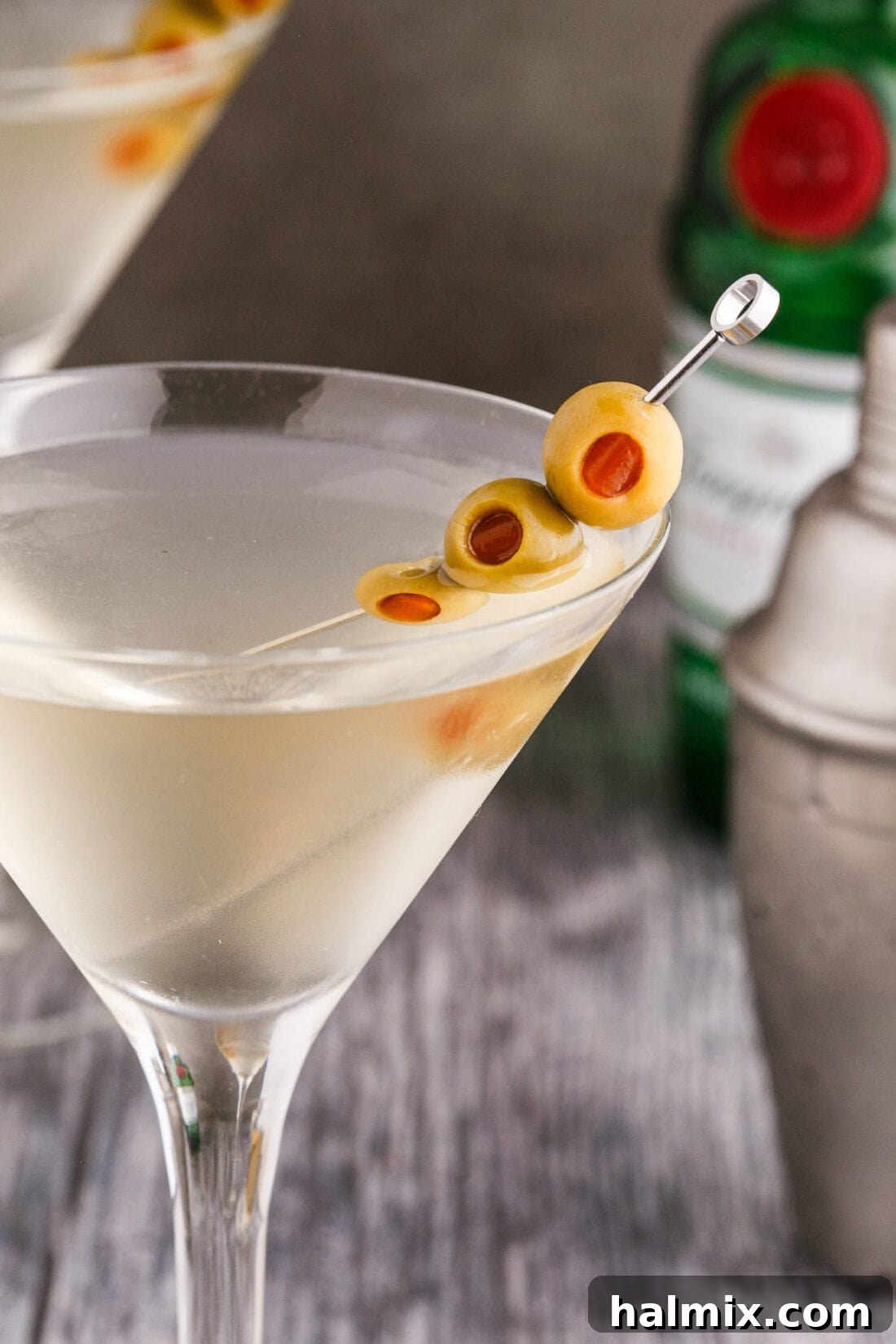
The garnish is not just for aesthetics; it’s an integral part of the Dirty Martini experience. Classic green olives are the standard, but feel free to elevate your drink with various stuffed options. Consider:
- Plain Green Olives: The traditional choice, offering a pure olive flavor.
- Blue Cheese Stuffed Olives: For an extra layer of creamy, tangy richness that pairs exceptionally well with the savory cocktail.
- Pepper Jack Cheese Stuffed Olives: Adding a subtle spicy kick and creamy texture.
- Garlic Stuffed Olives: For those who love a bold, pungent aroma and flavor.
- Jalapeño Stuffed Olives: If you’re seeking a distinct spicy heat to complement the brine.
Arrange your chosen olives on a cocktail pick for an elegant presentation that invites you to savor every sip.
Crafting Your Perfect Dirty Martini: Step-by-Step Guide
These step-by-step photos and instructions are here to help you visualize how to make this recipe. You can also find the full printable version of this recipe, complete with measurements and instructions, in the recipe card at the end of this post.
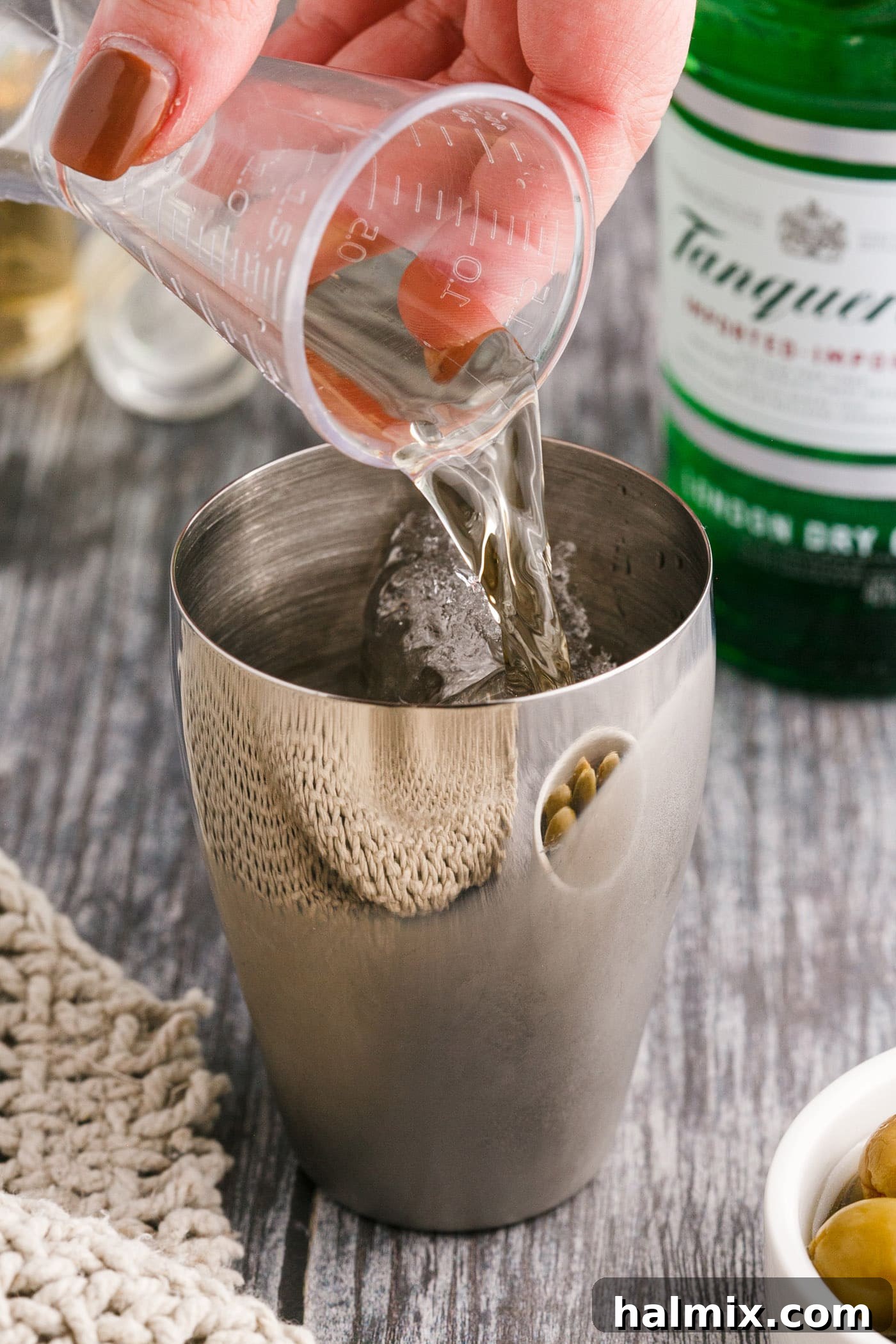
- Prepare Your Shaker: Begin by filling a cocktail shaker generously with ice. The colder your ingredients, the better the martini. Add your chosen spirit (gin or vodka), dry vermouth, and olive brine to the shaker.
- Shake and Chill: Secure the lid on your cocktail shaker and gently shake for about 30 seconds to a minute. This process not only chills the ingredients but also provides a slight dilution that helps meld the flavors. The exterior of the shaker should be frosty to the touch, indicating proper chilling.
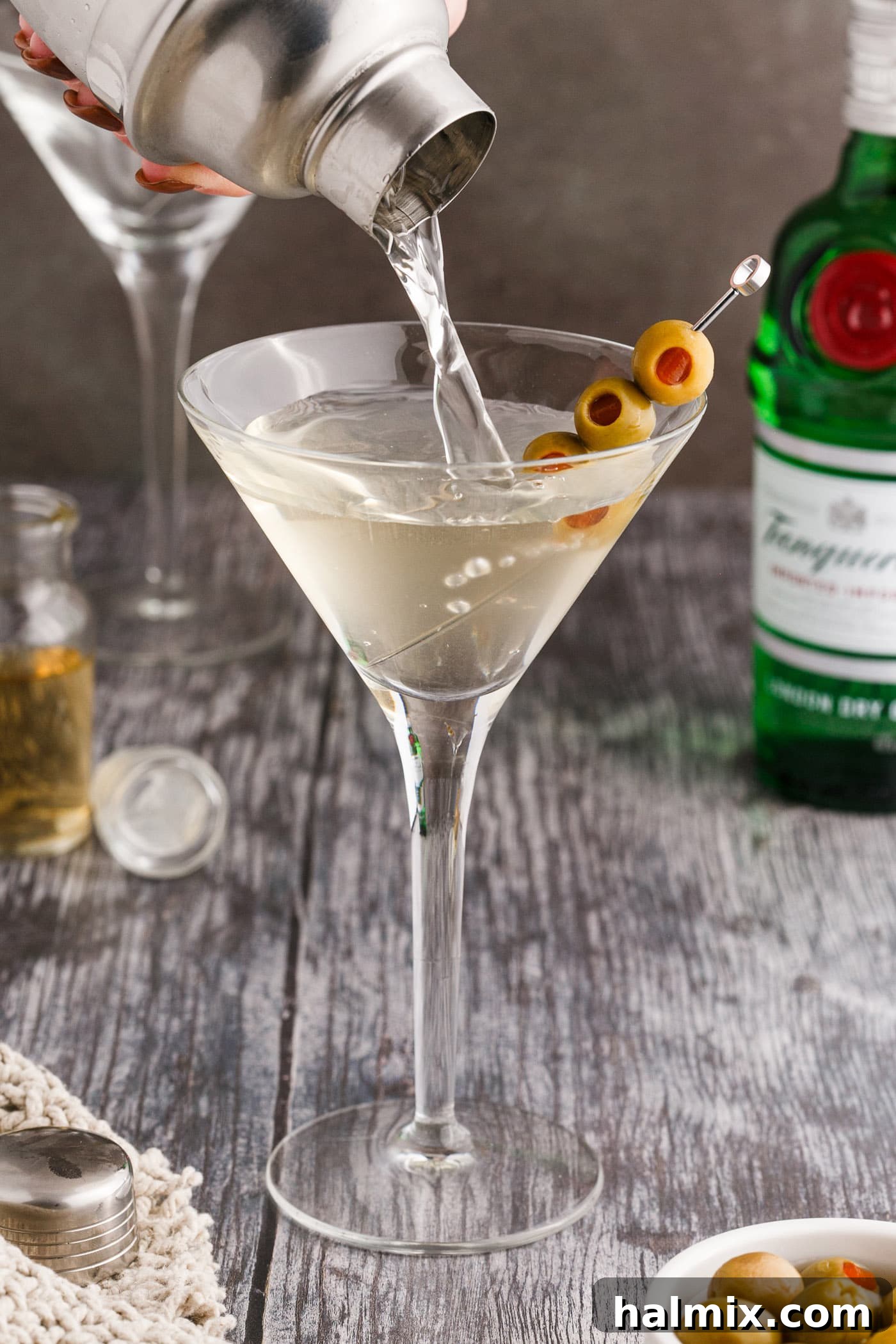
- Strain into Glass: Using a cocktail strainer, strain the chilled mixture directly into a pre-chilled martini glass. Chilling your glass beforehand helps maintain the drink’s cold temperature, preventing it from warming too quickly.
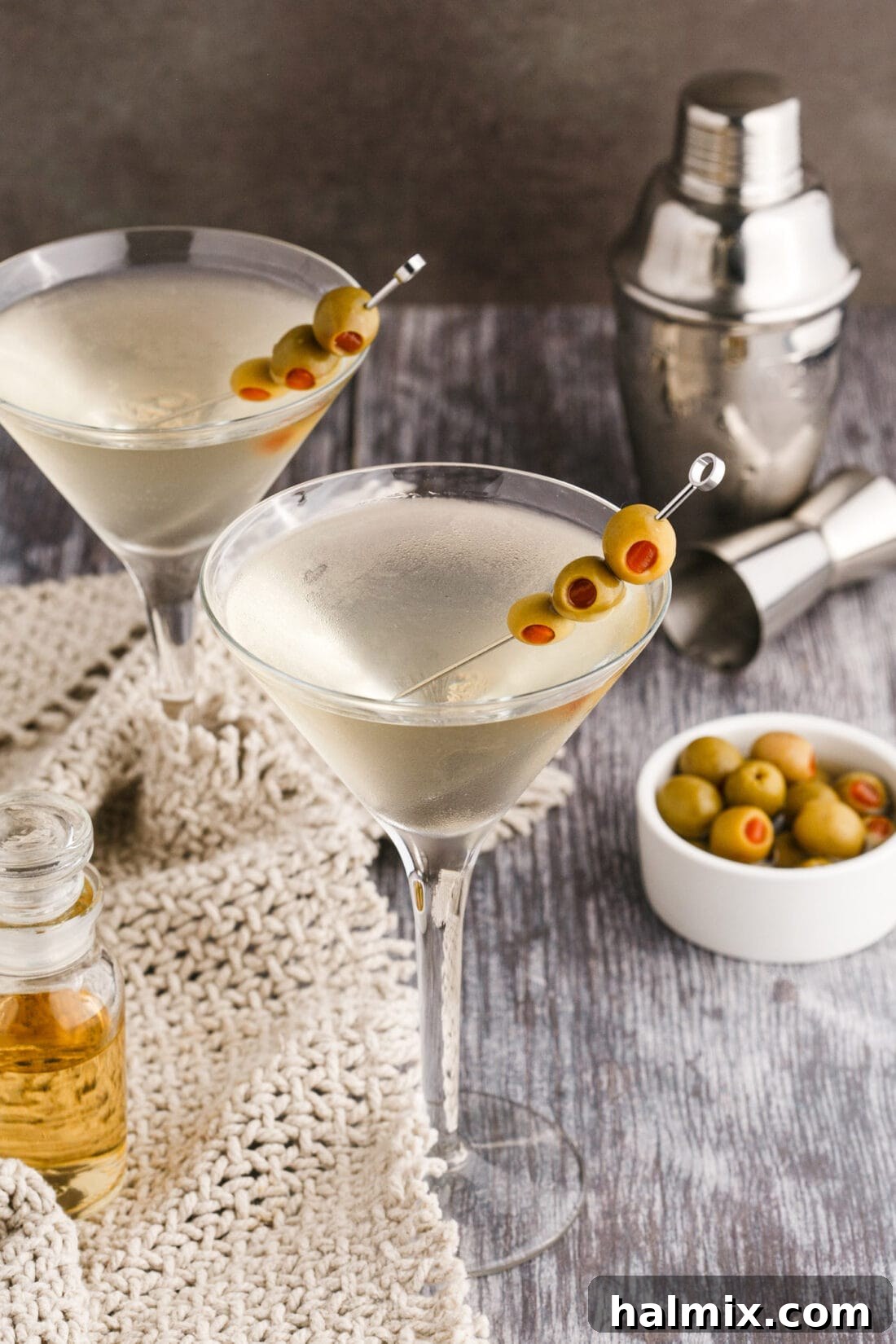
- Garnish and Serve: Finally, garnish your Dirty Martini with a cocktail pick adorned with your favorite olives. Serve immediately and enjoy the exquisite balance of flavors.
Frequently Asked Questions & Expert Tips
Ah, the age-old martini debate! While James Bond famously preferred his “shaken, not stirred,” traditionalists often argue that gin martinis should be stirred to avoid “bruising” the gin (a term referring to over-dilution and cloudiness). However, for a Dirty Martini, the olive brine already gives the drink a cloudy appearance, making “bruising” less of a concern. Shaking offers a faster, more thorough chill and a bit more dilution, which can soften the drink’s sharp edges. Stirring, on the other hand, results in a silkier texture and less dilution. Ultimately, it’s a matter of personal preference. Experiment with both methods to discover what you enjoy most!
The “dirty” in Dirty Martini refers to the addition of olive brine (or olive juice) to the cocktail. This brine imparts a savory, salty, and slightly cloudy character to the drink, distinguishing it from a classic, clear martini. The amount of brine can be adjusted to your taste – more brine means a “dirtier” martini.
For a Dirty Martini, a robust London Dry gin is often favored as its strong juniper and botanical notes stand up well to the olive brine. Brands like Tanqueray, Beefeater, or Plymouth gin are excellent choices. If you prefer a less juniper-forward gin, a more contemporary style gin could also work. The key is to choose a gin you genuinely enjoy drinking on its own, as its character will shine through.
To make your Dirty Martini “extra dirty,” simply increase the amount of olive brine used in the recipe. Instead of ½ oz, try ¾ oz or even a full ounce, depending on your preference for brininess. You can also muddle a couple of olives in the shaker before adding the other ingredients to release more olive flavor.
Yes, absolutely! Chilling your martini glass is a crucial step for any cold cocktail. A warm glass will immediately raise the temperature of your perfectly chilled martini, diluting it faster and diminishing the drinking experience. You can chill your glass by placing it in the freezer for at least 15 minutes, or by filling it with ice water while you prepare the drink and discarding the water just before straining.
Serving Suggestions & Food Pairings
The Dirty Martini is best enjoyed immediately after preparation, served either “up” (in a chilled martini glass) or “on the rocks” (in an old-fashioned glass with ice), always with a cocktail pick of your chosen olives. Its bold, savory profile makes it an excellent aperitif, designed to stimulate the appetite before a meal.
When it comes to food pairings, the Dirty Martini shines alongside appetizers and main courses that complement its salty, umami notes. Consider:
- Seafood: Classic pairings include shrimp cocktail, fresh oysters, smoked salmon, or delicate baked salmon. The brininess of the martini beautifully enhances the flavors of the ocean.
- Charcuterie Boards: An assortment of cured meats, hard cheeses, olives, and cornichons provides a fantastic contrast and complement to the martini’s robust taste.
- Savory Bites: Mini quiches, mushroom tarts, or even gourmet grilled cheese bites can stand up to the martini’s strong flavor.
- Mediterranean Flavors: Dishes featuring feta, sun-dried tomatoes, or strong herbs will resonate with the olive and botanical notes of the drink.
Remember, the goal is to enhance the experience without overpowering it. Choose rich, savory, or slightly salty foods that can hold their own against this iconic cocktail.
Explore More Martini Recipes
While the Dirty Martini offers a unique savory thrill, the world of martinis is vast and varied. If you’re looking to explore different flavor profiles, from sweet and decadent to fruity and refreshing, here are some other fantastic martini recipes to try:
- S’mores Martini: A dessert in a glass, perfect for those with a sweet tooth.
- Key Lime Pie Martini: Tart, creamy, and wonderfully refreshing.
- Pumpkin Pie Martini: A festive and spiced cocktail ideal for autumn gatherings.
- Blackberry Gin Martini: Fruity and herbaceous, a delightful twist on the classic gin martini.
- Blended Frostbite Martini: A cool, invigorating, and visually stunning cocktail.
- Baileys Chocolate Martini: Rich and indulgent, a perfect after-dinner treat.
- Espresso Martini: A coffee-lover’s dream, offering a spirited caffeine kick.
I love to bake and cook and share my kitchen experience with all of you! Remembering to come back each day can be tough, that’s why I offer a convenient newsletter every time a new recipe posts. Simply subscribe and start receiving your free daily recipes!
Dirty Martini Recipe Card

Dirty Martini
A dirty martini is quite bold in its flavors. It’s dry and salty with a true bite and has long been a favorite of many.
Course: Cocktails
Cuisine: American
Servings: 1 cocktail
Prep time: 1 minute
Calories: 178 kcal
Author: Amanda Davis
Ingredients
- Ice (to fill the cocktail shaker)
- 2 ½ oz dry gin (or vodka)
- ½ oz dry vermouth
- ½ oz olive brine
- Olives (for garnish)
Equipment
- Cocktail shaker or a mixing glass with a long cocktail spoon
- Martini glasses
- Jigger (for precise measuring)
Before You Begin (Notes)
- You can substitute the gin with vodka if desired. Be sure to use dry vermouth (the white kind), not sweet (which is normally red).
- There’s a long debate on whether to stir or shake a dirty martini. Shaking gently with ice chills the ingredients further, providing a slight dilution and a cloudy appearance. Stirring results in a silkier, less diluted drink. Choose the method that best suits your preference for temperature and texture. Always use a chilled martini glass, or serve it on the rocks.
Instructions
- Fill a cocktail shaker generously with ice. Add the dry gin (or vodka), dry vermouth, and olive brine.
- Gently shake the mixture for approximately 30 seconds to a minute, until well-chilled.
- Strain the cocktail into a pre-chilled martini glass.
- Garnish with a cocktail pick holding your preferred olives and serve immediately.
Nutrition Information
Calories: 178 kcal |
Carbohydrates: 1g |
Protein: 1g |
Sodium: 1mg |
Potassium: 2mg |
Sugar: 1g |
Calcium: 1mg |
Iron: 1mg
Tried this Recipe? Pin it for Later!
Follow on Pinterest @AmandasCookin or tag #AmandasCookin!
The recipes on this blog are tested with a conventional gas oven and gas stovetop. It’s important to note that some ovens, especially as they age, can cook and bake inconsistently. Using an inexpensive oven thermometer can assure you that your oven is truly heating to the proper temperature. If you use a toaster oven or countertop oven, please keep in mind that they may not distribute heat the same as a conventional full-sized oven and you may need to adjust your cooking/baking times. In the case of recipes made with a pressure cooker, air fryer, slow cooker, or other appliance, a link to the appliances we use is listed within each respective recipe. For baking recipes where measurements are given by weight, please note that results may not be the same if cups are used instead, and we can’t guarantee success with that method.