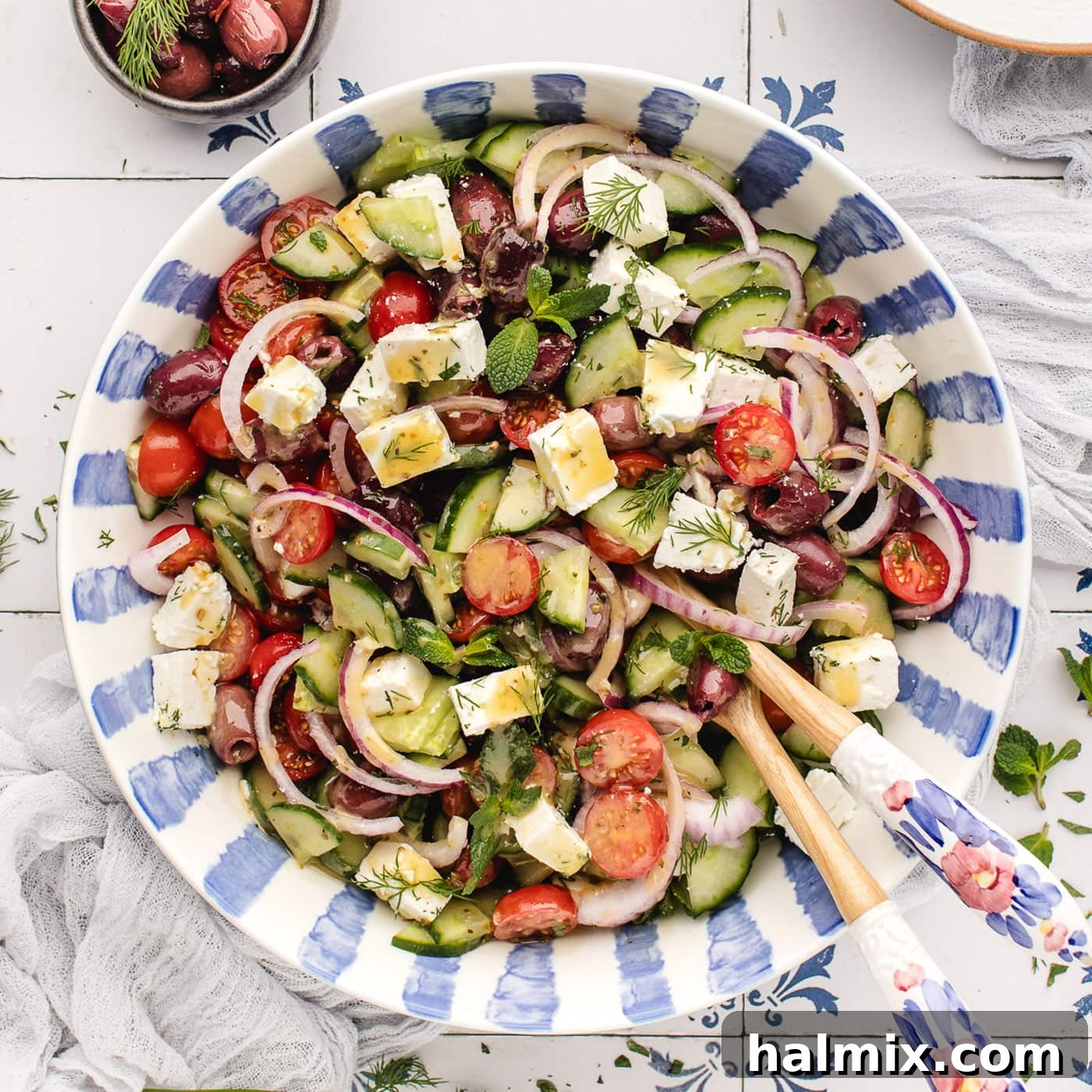
Immerse yourself in the vibrant flavors of the Mediterranean with this incredibly fresh and easy-to-make Greek Salad. Bursting with an array of colorful, crisp vegetables, tangy feta, and briny Kalamata olives, this classic dish is more than just a salad – it’s a celebration of simple, wholesome ingredients. Ready in just 10 minutes, it’s the ultimate healthy side dish for any summer gathering, backyard barbecue, or a refreshing meal on its own. With minimal effort, you can chop, drizzle, toss, and serve a salad that’s as pleasing to the eye as it is to the palate, bringing the taste of Greece straight to your table.
Why This Easy Greek Salad Recipe Works So Well
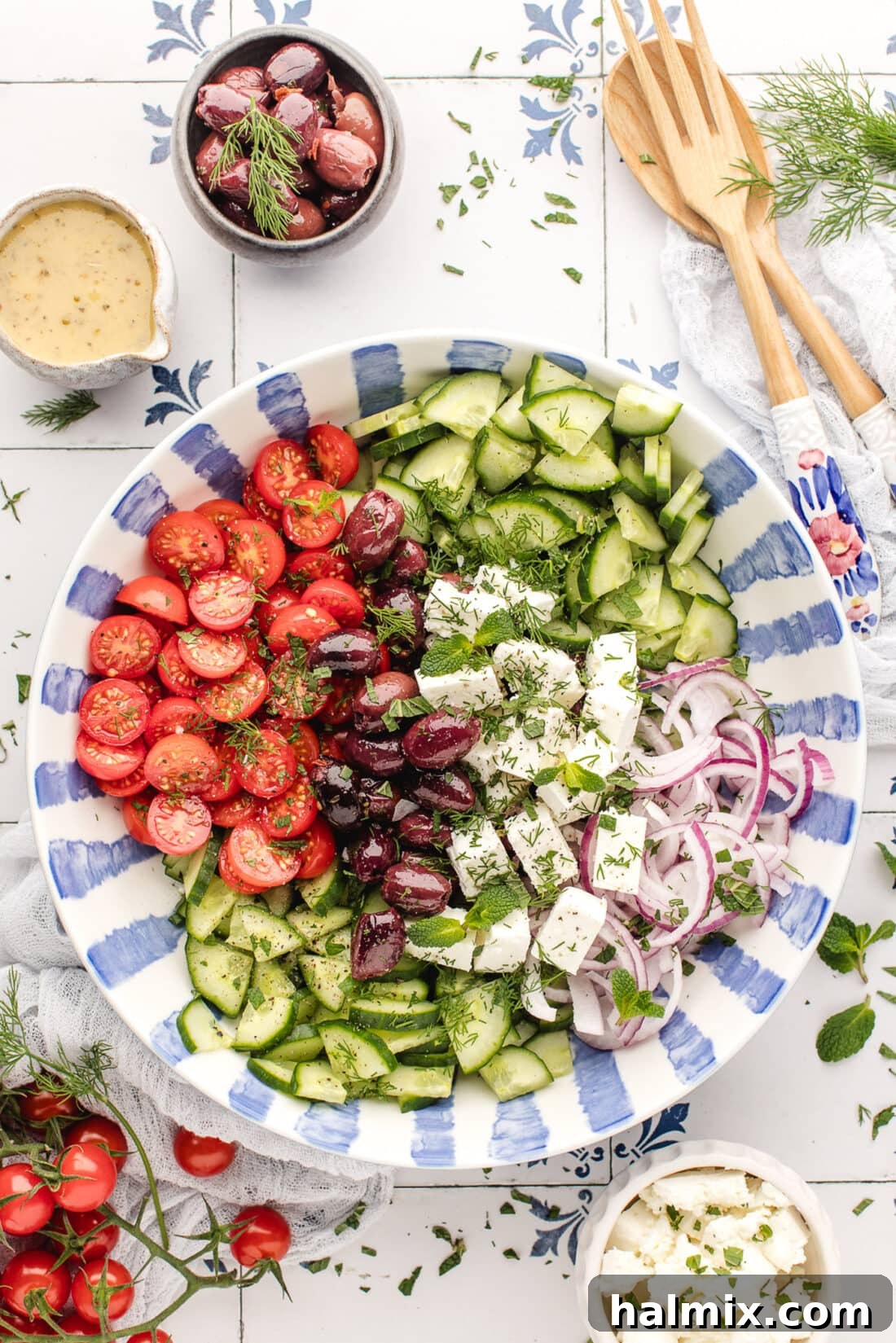
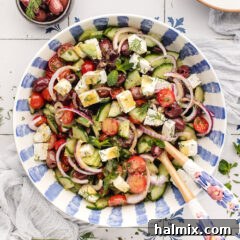
This Greek salad recipe isn’t just a dish; it’s a testament to the beauty of simplicity and fresh ingredients. Its appeal lies in its effortless preparation, taking only about 10 minutes from start to finish, making it perfect for busy weeknights or last-minute entertaining. The combination of crisp cucumber, juicy tomatoes, sharp red onion, salty feta, and rich Kalamata olives creates a harmonious blend of textures and tastes. Each ingredient contributes its unique profile, resulting in a vibrant explosion of Mediterranean flavors that is both satisfying and incredibly refreshing.
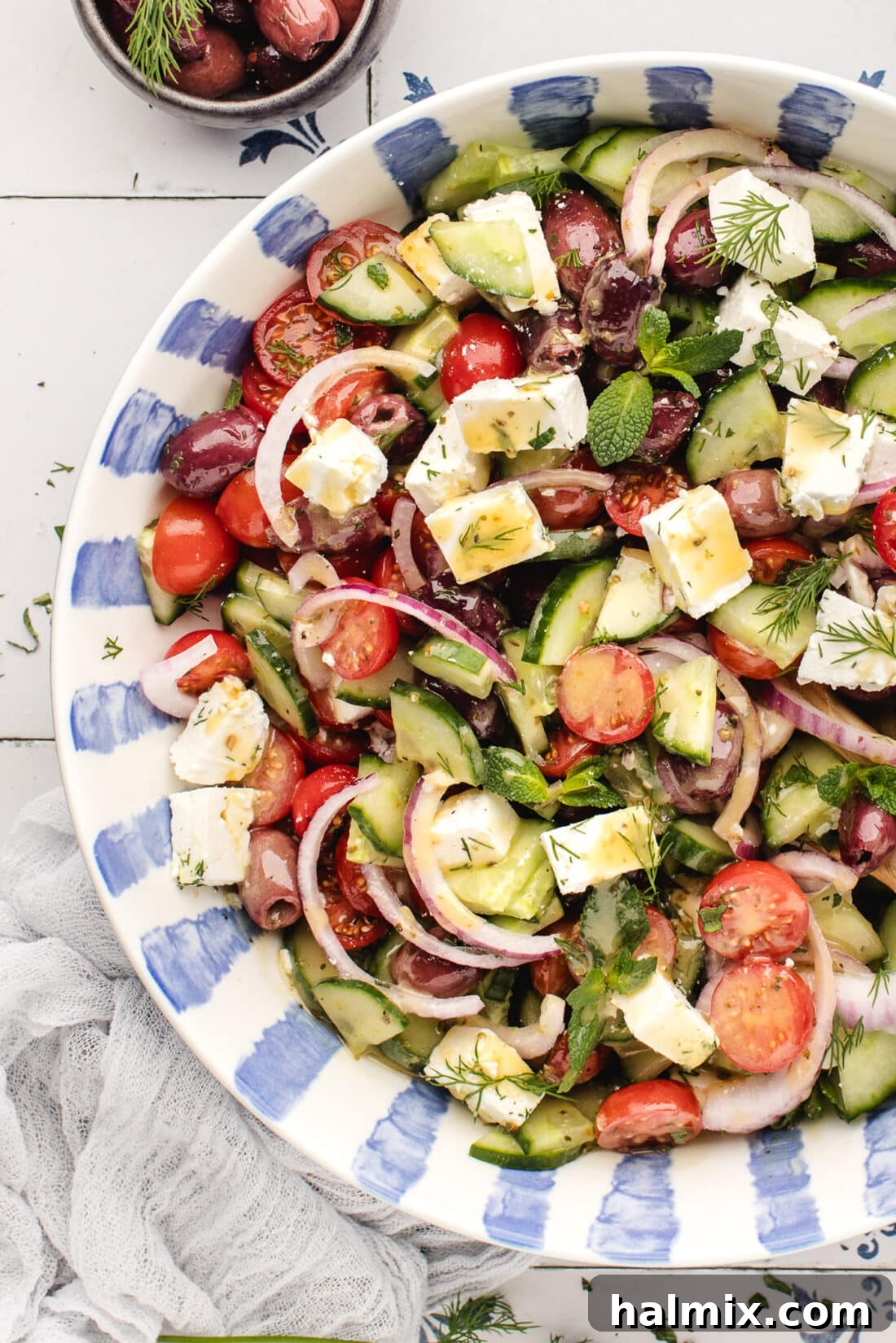
Furthermore, this salad aligns perfectly with a healthy lifestyle, packed with nutrient-dense vegetables and a homemade vinaigrette that’s free from artificial additives. It’s naturally gluten-free and can be easily adapted to various dietary needs. The robust flavors of the classic Greek vinaigrette, made with extra virgin olive oil, red wine vinegar, fresh lemon, Dijon mustard, garlic, and fragrant oregano, perfectly coats every morsel, tying all the components together without overpowering them. This recipe works because it delivers authentic taste, exceptional freshness, and remarkable ease, making it a go-to for anyone seeking a delicious and wholesome meal.
Essential Ingredients for Your Classic Greek Salad
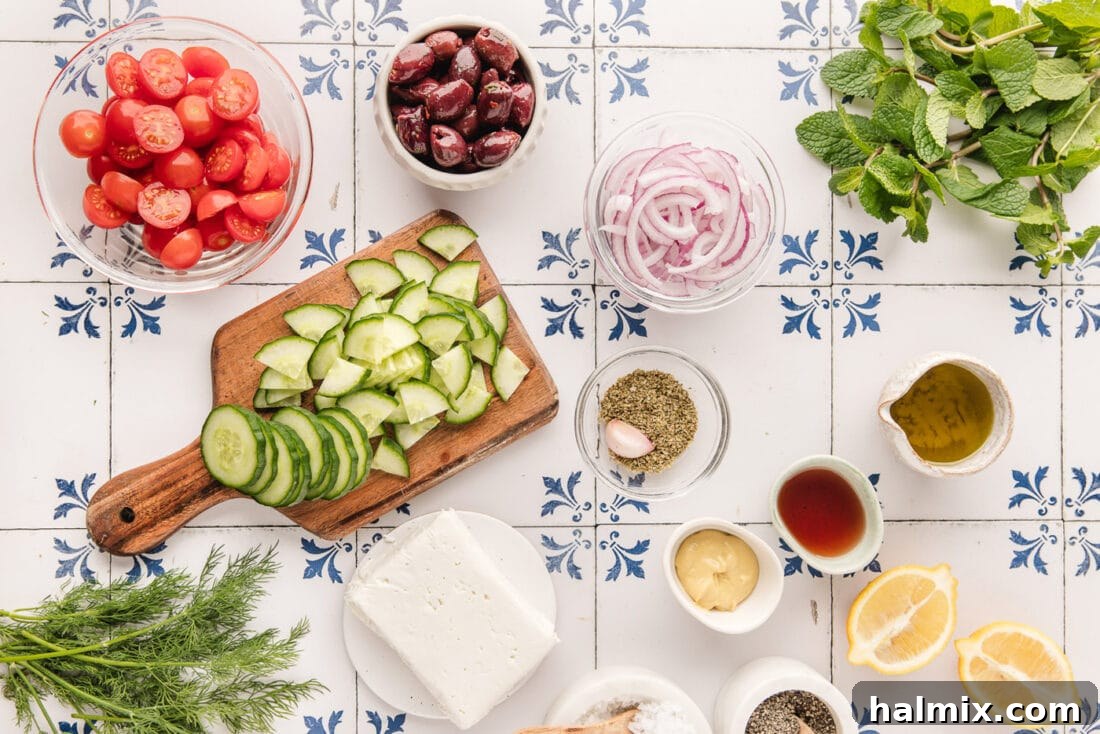
To create this magnificent Mediterranean masterpiece, you’ll need a selection of fresh, high-quality ingredients that are readily available. The beauty of a traditional Greek salad lies in the purity and freshness of its components. Gathering these items is the first step towards a truly authentic culinary experience. While the full, printable recipe card with precise measurements and detailed instructions is available at the end of this post, here’s a glance at the core ingredients that bring this healthy salad to life.
Ingredient Breakdown & Smart Substitutions
Understanding each ingredient’s role and knowing a few substitution tricks can elevate your Greek salad from good to extraordinary. Here’s a detailed look at the core components and how you can personalize them:
CUCUMBER: For this Greek Salad, we highly recommend an English cucumber. These varieties are favored for their fewer, less watery seeds and thinner skins, which means no need for peeling. They offer a delightful sweetness and a satisfying crunch that elevates the salad’s texture. Plus, their larger size often means you only need one for a substantial salad, reducing prep time. If English cucumbers are unavailable, regular slicing cucumbers can be used, though you might consider scooping out the seeds for a less watery result.
TOMATO: The choice of tomato significantly impacts the salad’s sweetness and juiciness. Cherry tomatoes and grape tomatoes are excellent choices, offering concentrated bursts of flavor and requiring minimal chopping – often just a quick halve. Alternatively, larger, ripe tomatoes like Roma, Beefsteak, or heirloom varieties can be chopped into bite-sized pieces. Just ensure they are firm and ripe for the best taste and texture.
FETA CHEESE: A true Greek salad wouldn’t be complete without authentic feta. Look for feta sold in brine, as it tends to be creamier and more flavorful than crumbled dry feta. You can buy it in a block and cube it yourself, or opt for pre-crumbled for convenience. Its salty, tangy profile is crucial to the overall balance of the salad. For those avoiding dairy, a plant-based feta alternative can be used, though the flavor profile will vary slightly.
KALAMATA OLIVES: These dark purple, almond-shaped olives are a hallmark of Greek cuisine, offering a distinctive fruity and briny flavor. Pitted Kalamata olives are ideal for easy eating, but if you prefer, you can use unpitted ones and remove the pits yourself for maximum flavor (just warn your guests!). If Kalamata olives are hard to find, good quality black olives or even a mix of Mediterranean olives can work, but the unique taste of Kalamatas is highly recommended.
RED ONION: Red onion provides a sharp, pungent bite and a beautiful pop of color. To mellow its intensity, you can finely slice it and soak it in cold water for 10-15 minutes before adding it to the salad. This technique helps to remove some of the raw “bite” while retaining its crispness. Sweet onions like Vidalia could also be used for a milder flavor.
FRESH HERBS (DILL AND MINT): Fresh herbs are non-negotiable for an authentic Greek salad, adding layers of aromatic depth and brightness. Dill offers a fresh, slightly anisy note, while mint contributes a cool, refreshing zest. Don’t be shy with these! A generous handful of each, roughly chopped, will make a significant difference. If fresh herbs are scarce, dried oregano is a good backup for the dressing, but fresh is always superior for the salad itself.
THE DRESSING: The heart of this salad’s flavor is a classic Greek vinaigrette. Our recipe uses a harmonious blend of extra virgin olive oil, red wine vinegar, Dijon mustard, fresh lemon juice, minced garlic, and dried oregano. This dressing balances acidity, richness, and aromatics perfectly. Preparing it is as simple as shaking all ingredients in a mason jar until emulsified. If you’re making the salad in advance, always keep the dressing separate and toss it in just before serving to prevent the vegetables from becoming soggy. For those who enjoy a creamier profile, a homemade Tzatziki sauce, combining Greek yogurt with lemon, dill, and garlic, would also be a delicious alternative. You can find a fantastic Tzatziki recipe in our Tzatziki Salad post.
ADDITIONAL ENHANCEMENTS: This salad is incredibly versatile. Feel free to incorporate other Mediterranean-friendly ingredients like crisp bell pepper (green, red, or yellow for extra color and crunch), briny capers, creamy avocado (adds a lovely richness), or even chickpeas for added protein and fiber. Grilled chicken, shrimp, or a sprinkle of toasted pine nuts can also transform it into a more substantial main course.
Crafting Your Greek Salad: A Simple Guide
Creating this delicious Greek salad is a straightforward process, emphasizing fresh ingredients and minimal fuss. The steps below, accompanied by helpful photos, will guide you through the preparation. For a complete printable version of this recipe, including all measurements and instructions, please refer to the end of this post.
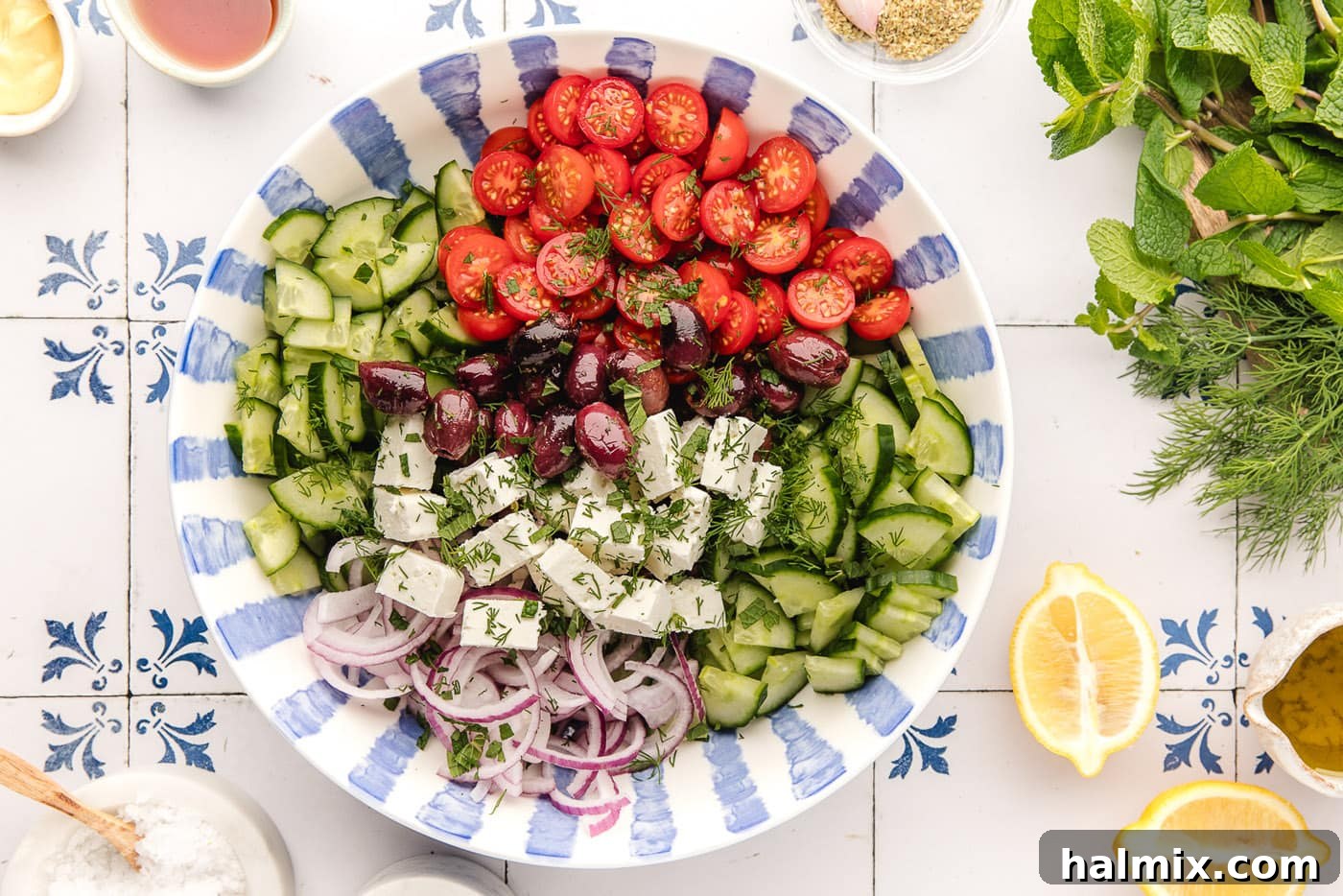
- Prepare the Salad Ingredients: Begin by gathering all your fresh vegetables and herbs. Finely slice your English cucumber into rounds and then quarter them for bite-sized pieces. Halve the cherry tomatoes, thinly slice the red onion, and cube your feta cheese. Add the Kalamata olives and a generous small handful each of roughly chopped fresh dill and mint into a large serving bowl.
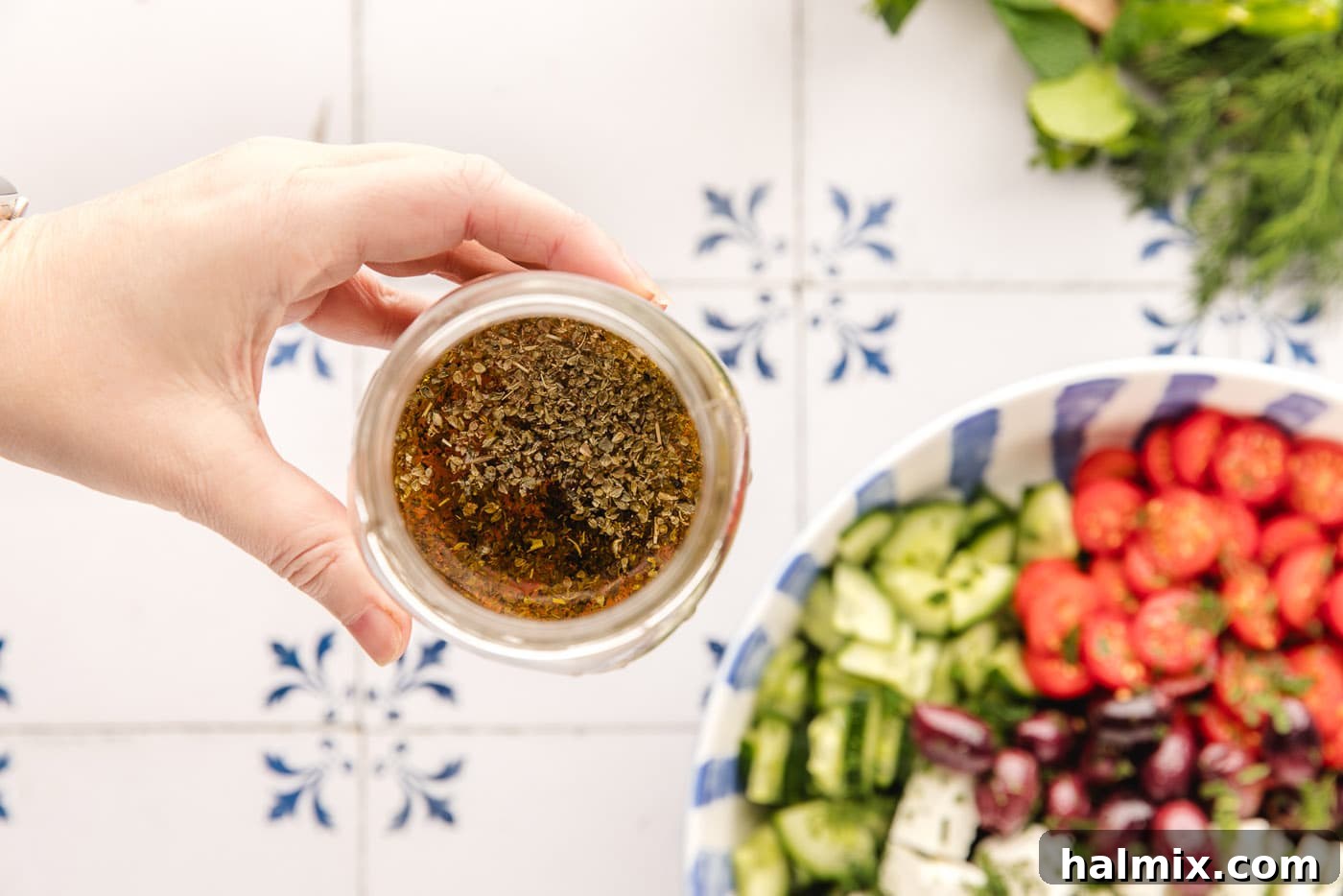
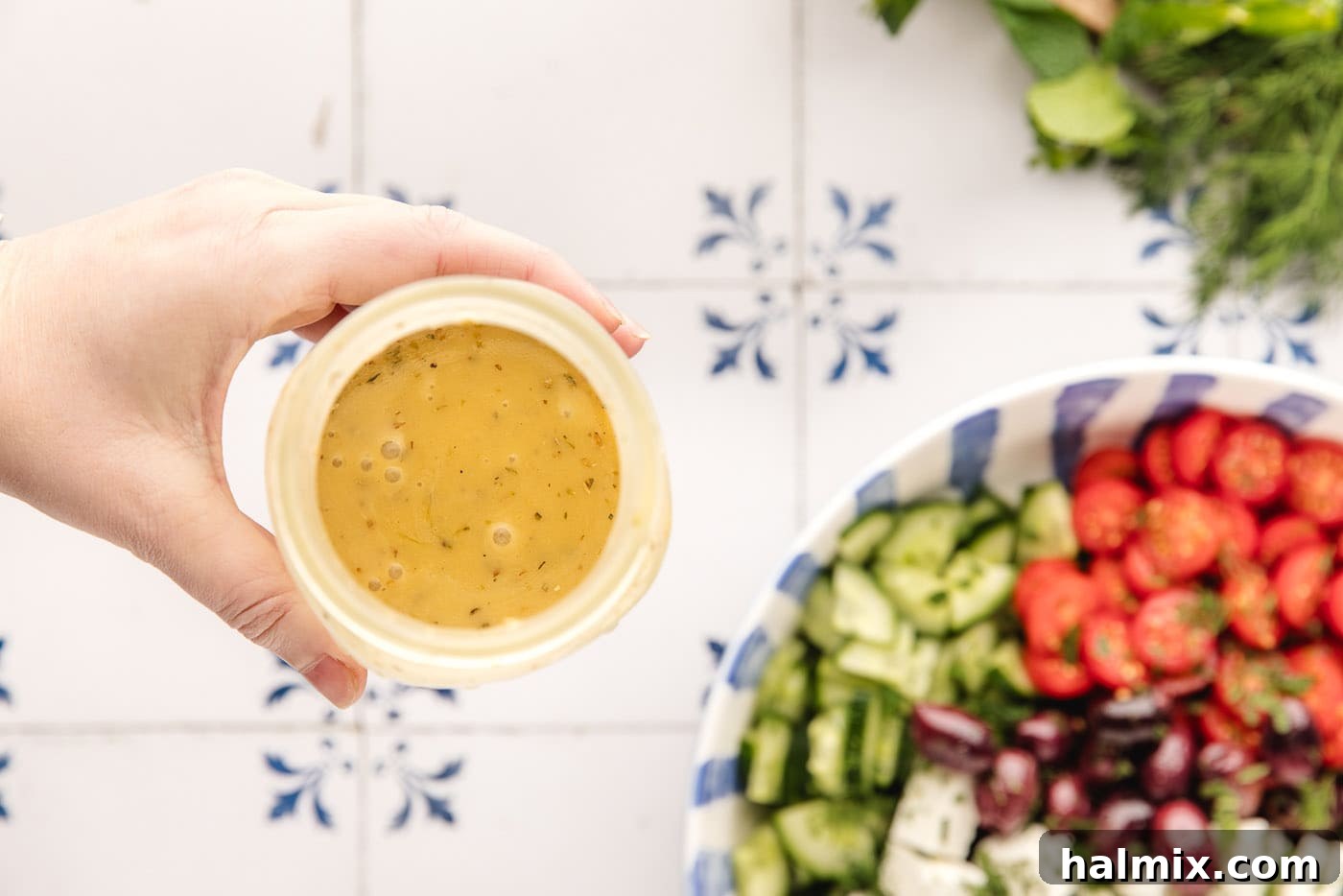
- Whip Up the Zesty Vinaigrette: In a separate jar with a secure lid, combine all the dressing ingredients: extra virgin olive oil, red wine vinegar, Dijon mustard, the juice of half a lemon, minced garlic, dried oregano, and season with salt and pepper to taste. Secure the lid tightly and shake vigorously for about 30 seconds to a minute, until all ingredients are thoroughly combined and the dressing is emulsified. This ensures a uniform flavor distribution.
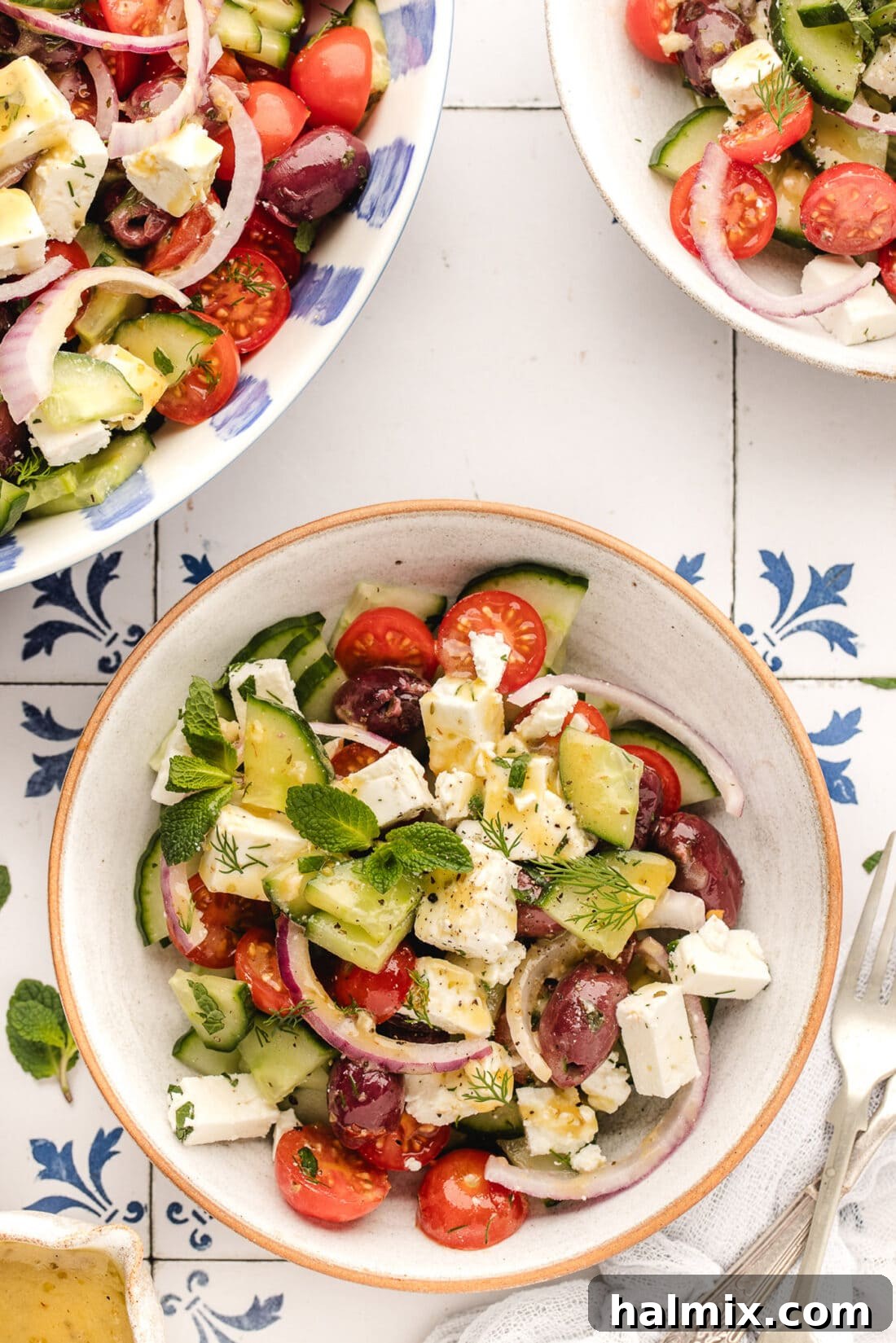
- Combine and Serve: Just before you’re ready to serve, pour the freshly prepared vinaigrette over the chopped salad ingredients in the large serving bowl. Gently toss everything together until all the vegetables and feta are evenly coated with the dressing. Serve immediately while the ingredients are at their freshest and crispiest. Enjoy this delightful burst of Mediterranean sunshine!
Frequently Asked Questions & Expert Tips for the Best Greek Salad
To ensure your Greek salad is always a hit, here are some common questions and expert advice to guide you:
How do you store Greek salad?
For optimal freshness, Greek salad is best stored undressed. Combine all the chopped vegetables, feta, and olives in an airtight container and refrigerate. They will remain fresh for at least two days. The dressing should be stored separately in an airtight jar or container in the refrigerator, where it will keep well for 4-5 days. When ready to serve, simply toss the desired portion of salad with the dressing.
Can you make Greek salad ahead of time?
Absolutely! This salad is an excellent make-ahead option, especially if you’re planning for an event or need quick meals throughout the week. You can chop and combine all the dry salad ingredients (cucumber, tomatoes, onion, feta, olives, and fresh herbs) in a large bowl and cover it tightly with a lid or plastic wrap, storing it in the refrigerator. The dressing can also be prepared several days in advance and kept in a sealed jar in the fridge. For the best texture and flavor, wait until just before serving to pour the dressing over the salad and toss to combine.
What are some expert tips for a perfect Greek Salad?
- Quality Ingredients are Key: Since Greek salad relies on fresh flavors, invest in the best quality vegetables you can find. Ripe, in-season tomatoes and crisp cucumbers make a huge difference.
- Don’t Overdress: Start with half the dressing, toss, and then add more if needed. You want to coat the ingredients lightly, not drown them.
- Size Matters: Ensure all your vegetables are chopped into roughly bite-sized pieces for ease of eating and a pleasant mouthfeel.
- Chill Before Serving: While quickly assembled, a brief chill in the refrigerator (30 minutes) before serving allows the flavors to meld beautifully.
- Customize to Your Taste: Don’t be afraid to adjust ingredient ratios. Love feta? Add more! Not a fan of red onion? Use less or try the soaking trick to reduce its bite.
Serving Suggestions for Your Greek Salad
This versatile Greek salad is a fantastic addition to almost any meal. It shines as a light and refreshing side dish, perfectly complementing a variety of main courses. Consider pairing it with grilled protein like flaky grilled salmon, succulent Greek chicken kabobs, or tender lamb chops for a complete Mediterranean-inspired feast. It also makes an excellent accompaniment to a casual backyard barbecue, offering a fresh contrast to heavier grilled meats.
Beyond being a side, you can transform this vibrant salad into a satisfying light lunch by adding grilled halloumi cheese, a handful of chickpeas, or even some leftover shredded chicken. Serve it chilled to fully appreciate its refreshing qualities. Whether you prefer it as a vibrant starter, a colorful side, or a light main, this Greek salad is sure to impress with its fresh flavors and appealing presentation.
More Delightful Summer Salad Recipes to Explore
If you’re a fan of fresh, easy, and flavorful salads, then you’re in for a treat! Our collection features a variety of summer-ready recipes perfect for any occasion. From light lunches to impressive side dishes, these salads are designed to bring joy to your table:
- Caprese Salad: A classic Italian favorite with fresh mozzarella, ripe tomatoes, and basil.
- Cucumber Salad: Simple, cool, and refreshing, ideal for hot days.
- Spaghetti Salad: A unique and hearty pasta salad perfect for potlucks.
- Watermelon Salad: Sweet and savory, often with feta and mint for an unexpected twist.
- Mediterranean Potato Salad: A flavorful alternative to traditional potato salad, with fresh herbs and a zesty dressing.
- Salmon Salad: A protein-packed, healthy salad that’s perfect for lunch.
These recipes offer endless possibilities to keep your summer menu exciting and your taste buds delighted. Enjoy discovering your next favorite salad!
I love to bake and cook and share my kitchen experience with all of you! Remembering to come back each day can be tough, that’s why I offer a convenient newsletter every time a new recipe posts. Simply subscribe and start receiving your free daily recipes!
Greek Salad
This classic Mediterranean dish is fresh, vibrant, and incredibly delicious. Greek Salad is a perfect balance of sweet, salty, and acidic flavors, all brought together by a bright and refreshing vinaigrette. It’s an ideal choice for a healthy side dish or a light meal.
Course: Salad, Side Dish
Cuisine: Greek, Mediterranean
Servings: 4 servings
Prep time: 10 mins
Author: Amanda Davis
Pin Recipe
Ingredients
Salad
- 1 large English cucumber, sliced into rounds and then quarters
- 2 cups halved cherry tomatoes
- ½ red onion, finely sliced
- 8 ounces feta cheese, cubed
- 1 cup Kalamata olives
- 1 small handful of fresh dill, roughly chopped
- 1 small handful of fresh mint, roughly chopped
Dressing
- ½ cup extra virgin olive oil
- 3 Tablespoons red wine vinegar
- 2 teaspoons Dijon mustard
- ½ lemon, juiced
- 1 clove garlic, minced
- 2 teaspoons dried oregano
- Salt and pepper to taste
Equipment You’ll Need
- Large Serving Bowl
- Chef’s Knife
- Cutting Board
- Jar with a secure lid for dressing
Instructions
- Chop all the salad ingredients (cucumber, tomatoes, red onion, feta, olives, dill, and mint) and place them into a large serving bowl.
- To prepare the dressing, add all dressing ingredients (olive oil, red wine vinegar, Dijon mustard, lemon juice, garlic, dried oregano, salt, and pepper) to a jar. Seal the lid tightly and shake vigorously until well combined and emulsified.
- Just before serving, pour the dressing over the salad mixture. Toss gently to ensure all ingredients are evenly coated.
- Serve immediately and savor the fresh, vibrant flavors!
Nutrition Information
Approximate values per serving (1 serving):
- Calories: 480 cal
- Carbohydrates: 13 g
- Protein: 10 g
- Fat: 45 g
- Saturated Fat: 12 g
- Polyunsaturated Fat: 4 g
- Monounsaturated Fat: 26 g
- Cholesterol: 50 mg
- Sodium: 1213 mg
- Potassium: 388 mg
- Fiber: 3 g
- Sugar: 4 g
- Vitamin A: 867 IU
- Vitamin C: 28 mg
- Calcium: 345 mg
- Iron: 2 mg
Tried this Recipe? Pin it for Later!
Follow on Pinterest @AmandasCookin or tag #AmandasCookin!
The recipes on this blog are tested with a conventional gas oven and gas stovetop. It’s important to note that some ovens, especially as they age, can cook and bake inconsistently. Using an inexpensive oven thermometer can assure you that your oven is truly heating to the proper temperature. If you use a toaster oven or countertop oven, please keep in mind that they may not distribute heat the same as a conventional full sized oven and you may need to adjust your cooking/baking times. In the case of recipes made with a pressure cooker, air fryer, slow cooker, or other appliance, a link to the appliances we use is listed within each respective recipe. For baking recipes where measurements are given by weight, please note that results may not be the same if cups are used instead, and we can’t guarantee success with that method.