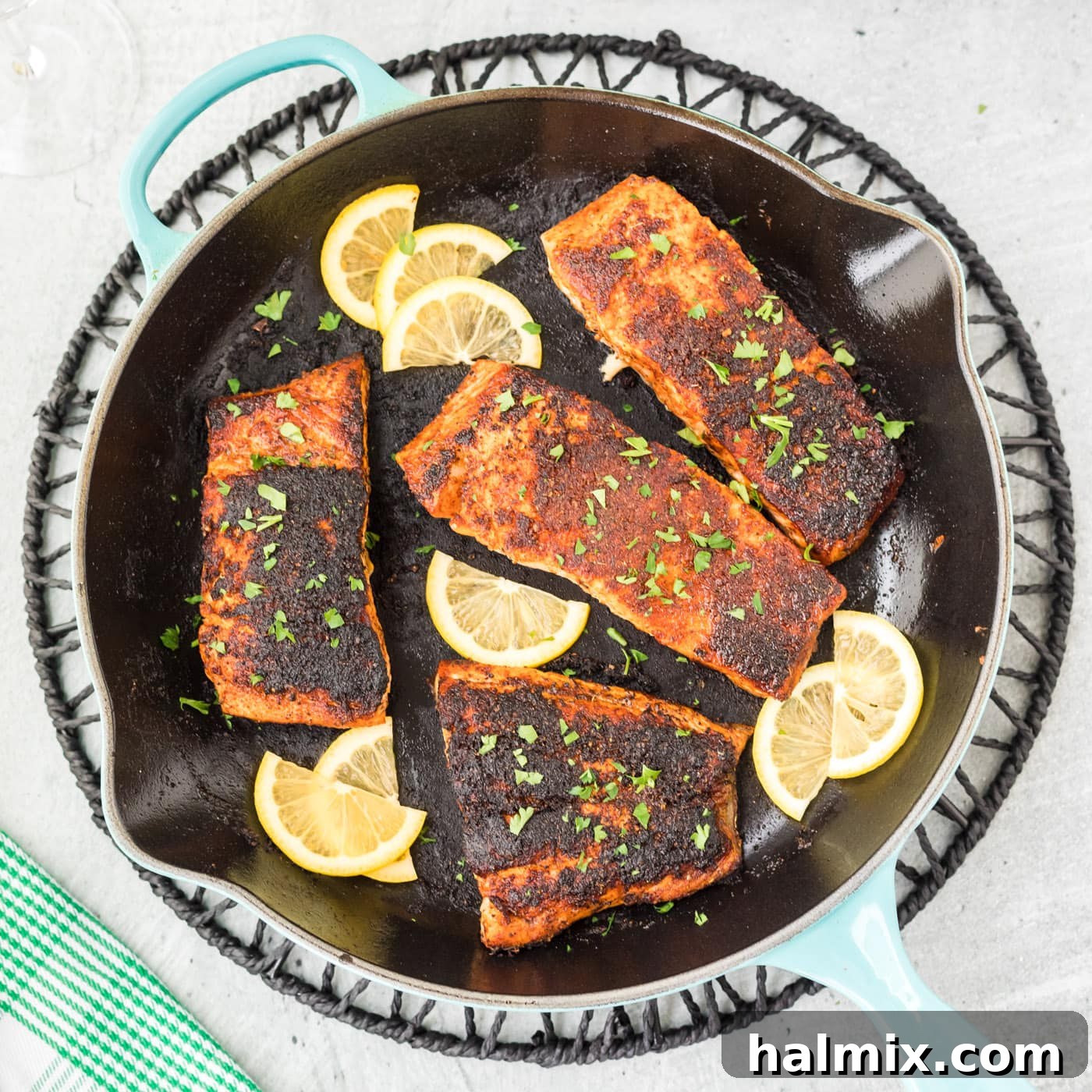
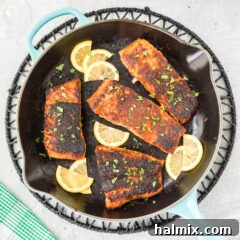
Welcome to the ultimate guide for creating perfectly pan-seared blackened salmon – a dish that’s as incredibly flavorful as it is surprisingly simple to make. In just under 20 minutes, you can transform fresh salmon fillets into a culinary masterpiece, boasting a irresistibly crispy, spice-crusted exterior and a tender, flaky interior. This recipe isn’t just quick and easy; it’s a powerhouse of flavor that promises to elevate your weeknight dinners or impress guests at your next gathering. Dive into the world of bold spices and healthy eating with this must-try blackened salmon.
Why This Blackened Salmon Recipe is a Culinary Game Changer
There are countless reasons why this blackened salmon recipe deserves a permanent spot in your culinary repertoire. First and foremost, salmon is renowned as one of the best sources of Omega-3 fatty acids, crucial for heart health, brain function, and reducing inflammation. Beyond its impressive nutritional profile, this particular preparation introduces an explosion of flavor that will excite your taste buds and make healthy eating an absolute joy. It’s a harmonious blend of health and deliciousness, a rare combination that makes this dish truly special.
The “blackened” technique, often misunderstood, is a transformative method that brings out an unparalleled depth of flavor in seafood. Far from being burnt, blackening involves coating fish or meat in a robust, aromatic spice blend and then searing it in an extremely hot skillet. This rapid cooking process creates a dark, almost charred crust packed with flavor, while simultaneously locking in the moisture, ensuring the fish remains incredibly tender and flaky inside. It’s a method that promises a dramatic flavor uplift, as evidenced by our popular blackened shrimp recipe, which proves just how irresistible this technique can be.
What sets our blackened salmon apart is its exceptional speed and simplicity. In an era where time is a precious commodity, a gourmet-quality meal ready in under 20 minutes is a dream come true. You don’t need to be a seasoned chef to master this dish; the steps are straightforward, and the results are consistently spectacular. Whether you’re preparing a quick family dinner or an elegant meal for guests, this recipe offers maximum impact with minimal effort. Its versatility also means it pairs wonderfully with a wide array of side dishes, making it adaptable to any occasion and personal preference.
Essential Ingredients for Your Blackened Salmon
Crafting the perfect blackened salmon begins with a selection of fresh, high-quality ingredients. While the full list of measurements and detailed instructions can be found in the printable recipe section at the end of this post, here’s a general overview of what you’ll need to gather:
- **Premium Salmon Fillets:** The star of our dish, chosen for its rich flavor and tender texture.
- **Softened Butter (or Margarine):** Essential for adhering the spice blend and creating that signature crust.
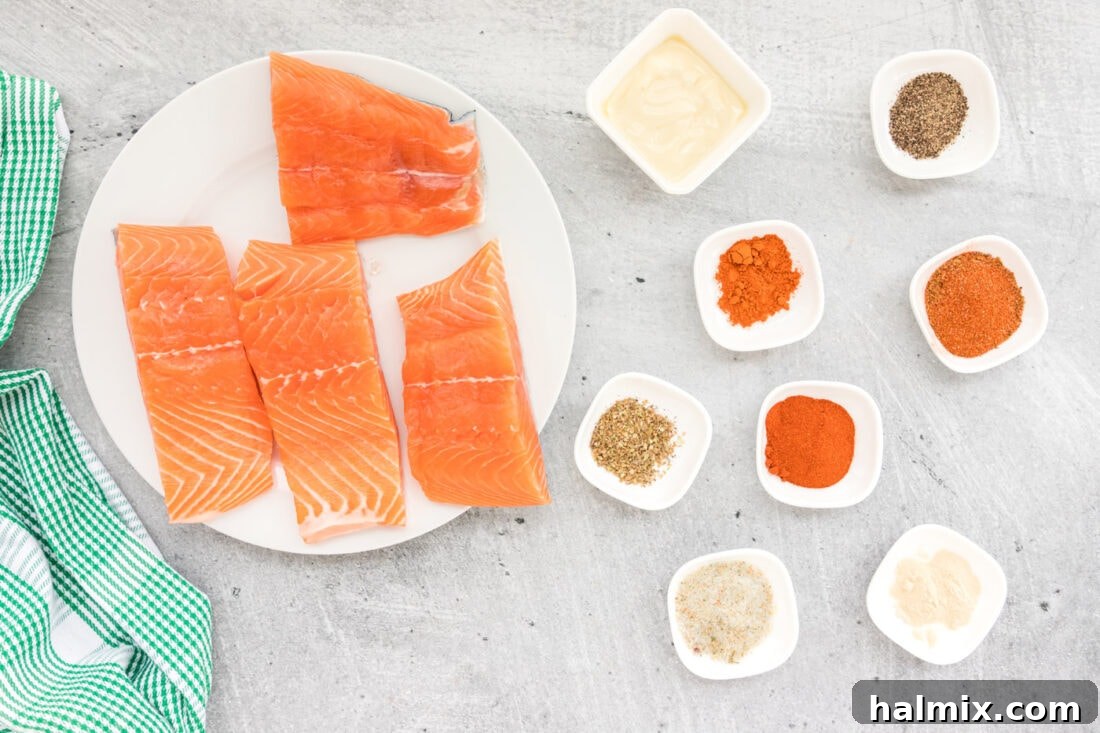
- **Homemade Blackening Seasoning Blend:** A vibrant mix of spices including Cajun seasoning, onion powder, paprika, dried oregano, garlic salt, black pepper, and cayenne pepper. This blend is what gives our salmon its distinctive bold flavor and color.
Each ingredient plays a vital role in achieving the optimal taste and texture for this incredible dish. From the quality of your salmon to the freshness of your spices, attention to these details will ensure a truly memorable culinary experience.
Ingredient Insights and Smart Substitutions
Understanding your ingredients is key to successful cooking. Here’s a deeper look into the components of our blackened salmon recipe, along with some helpful tips and substitution ideas:
SALMON: Choosing the Best Fillets
For this recipe, we highly recommend using center-cut salmon. This specific cut is the thickest part of the fish, resulting in more substantial and uniformly thick fillets. Uniform thickness is crucial for even cooking, ensuring each piece reaches perfect doneness simultaneously. Aim for individual fillets weighing approximately 6 ounces each. A sharp chef’s knife will allow you to easily slice a larger fillet into these smaller, manageable portions.
While fresh salmon is always superior for its flavor and texture, we understand that frozen salmon is often more accessible. If using frozen, it is imperative to allow it to fully thaw overnight in the refrigerator. Never attempt to cook salmon from frozen, as this will result in uneven cooking and a less desirable texture. Patting the thawed fillets thoroughly dry with paper towels before seasoning is also a critical step to achieve that coveted crispy crust.
SEASONING: Crafting the Perfect Blackening Blend
Our signature blackening seasoning blend is a symphony of flavors, featuring Cajun seasoning, onion powder, paprika, dried oregano, garlic salt, black pepper, and cayenne pepper. This combination creates a bold, aromatic profile that is characteristic of authentic blackened dishes. While Cajun seasoning and a pre-made “blackened seasoning” are often used interchangeably, our blend provides a custom depth that many find superior.
The heat in this spice blend primarily comes from the cayenne pepper and the inherent spice in the Cajun seasoning. If you have a lower tolerance for spicy foods, you can easily adjust this by omitting the cayenne pepper entirely or reducing the amount of Cajun seasoning. However, we’ve found that the specified amounts create a balanced warmth rather than an overpowering heat, allowing the other flavors to shine through. For convenience, many grocery stores also offer pre-packaged blackened seasoning blends, which can be a good alternative if you’re short on individual spices. Just be sure to check the salt content if using a store-bought blend, as it can vary.
Experimenting with additional spices like thyme, smoked paprika, or a pinch of brown sugar can further customize your blackening blend to suit your personal taste preferences, adding another layer of complexity to this already fantastic dish.
Step-by-Step Guide: How to Master Blackened Salmon
For a complete, printable version of this recipe, including exact measurements and detailed instructions, please Jump to Recipe at the bottom of this page. The following step-by-step photos and explanations are designed to help you visualize each stage of the cooking process, ensuring your success.
- Prepare the Salmon Fillets: Begin by rinsing your salmon fillets under cold water. This helps remove any loose scales or impurities. Once rinsed, it’s crucial to pat them thoroughly dry with paper towels. Excess moisture is the enemy of a crispy crust, so take your time with this step.
- Butter the Fillets: Gently brush the flesh side (the side without skin) of each salmon fillet with a generous amount of softened butter. The butter acts as a crucial adhesive for the seasoning and contributes significantly to the rich, dark crust. You won’t use all the butter in this initial step; save some for later.
- Create Your Spice Blend: In a small bowl, combine all the dry seasoning ingredients: Cajun seasoning, onion powder, paprika, dried oregano, garlic salt, black pepper, and cayenne pepper. Mix them well until evenly distributed. This blend is the heart of your blackened salmon’s flavor profile.
- Season Generously: Liberally coat the buttered flesh side of your salmon fillets with the prepared spice mixture. The key here is “heavily” – you want a thick, visible layer of spice. Ensure the seasoning adheres well to the buttered surface without excess falling off. You can gently press the seasoning into the butter to help it stick.
- Top with More Butter: Using a clean pastry brush, dab a little more softened butter directly on top of the spice mixture. This additional butter layer helps to create that perfectly rich, dark crust during searing and ensures the spices don’t burn too quickly. Again, you will not use all the butter at this stage.
- Combine Remaining Ingredients: Take any leftover seasoning mixture and remaining softened butter, combine them in a small bowl, and set aside. This will be used to flavor the skin side of the salmon during cooking.
- Heat the Skillet: Place a large, heavy-bottomed skillet (cast iron is ideal for blackening) over medium-high heat. Allow the skillet to heat until it is very hot and just begins to smoke faintly. Achieving the right temperature is paramount for a proper blackening crust.
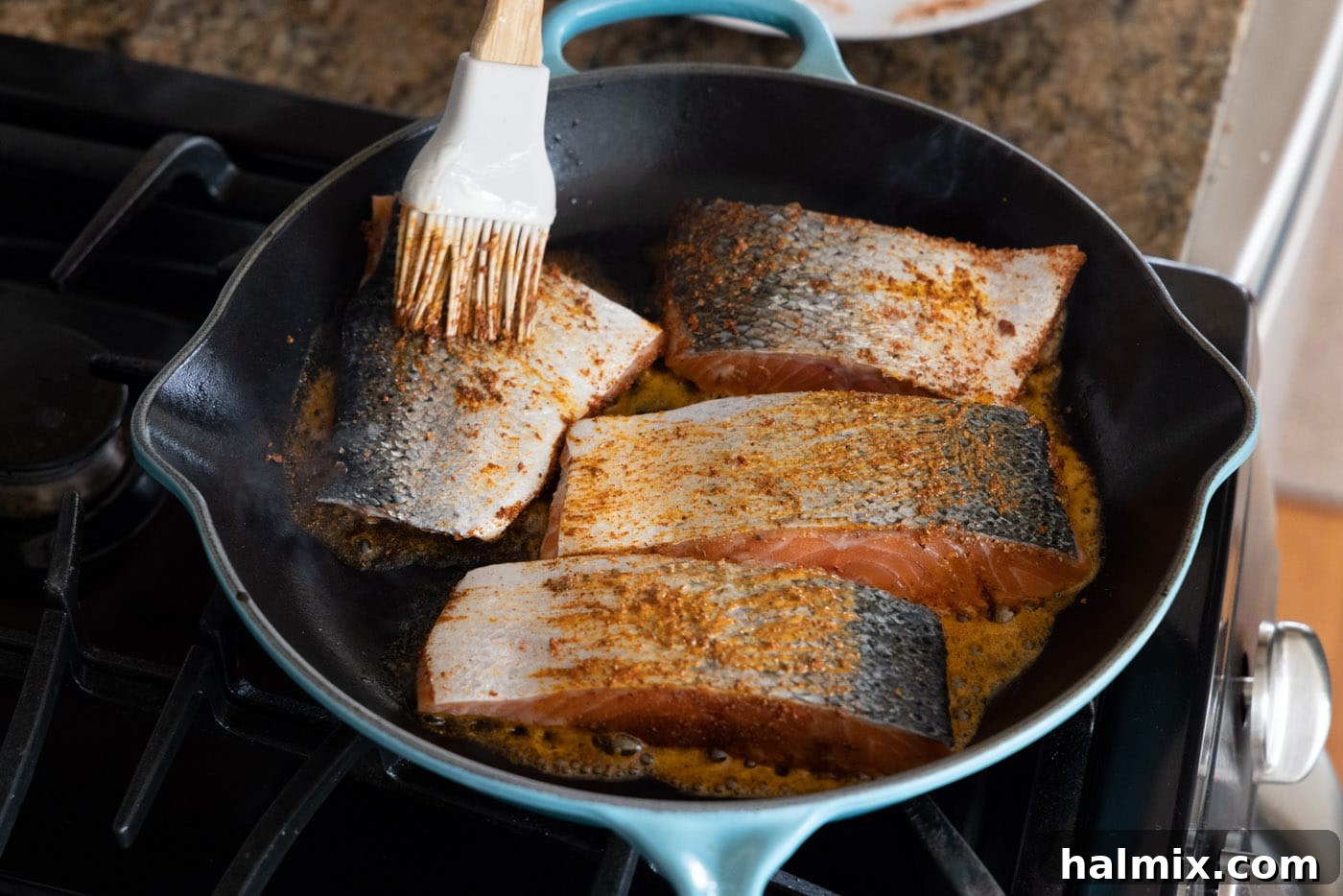
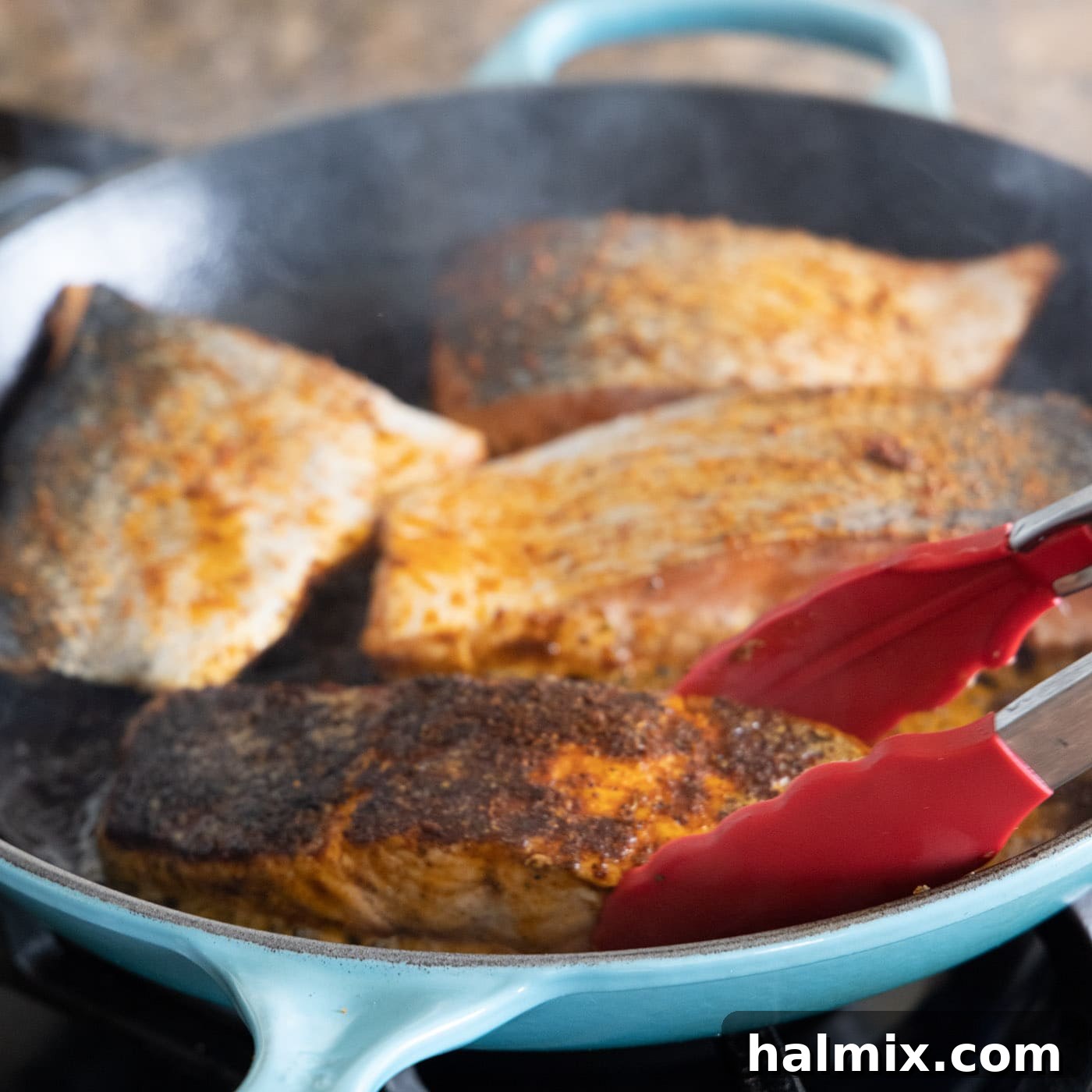
- Sear the Salmon (Skin Side Up): Carefully add the seasoned salmon fillets to the hot skillet, placing them skin side up. The seasoned side should be in direct contact with the hot pan. Immediately brush the skin side of the fillets with the reserved butter and seasoning mixture. Cook the fillets for approximately 3-4 minutes on this side. During cooking, use tongs to gently wiggle the fillets a little to prevent them from sticking to the pan. This technique is incredibly helpful for ensuring a clean release and an intact crust. If you encounter significant sticking, a thin fish turner spatula can be an excellent tool to lift the entire fillet at once.

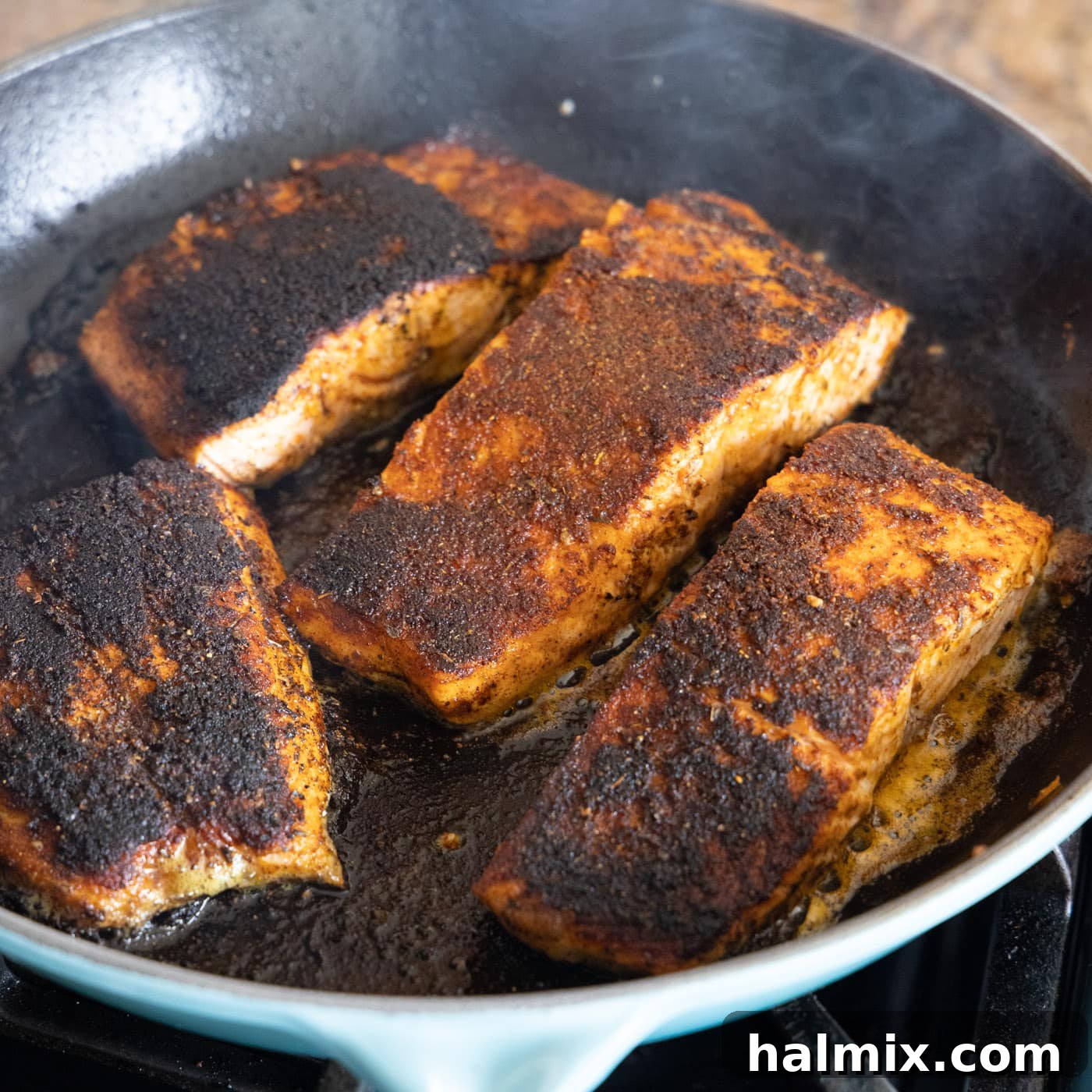
- Flip and Finish: Once the first side has developed a beautiful dark crust, carefully turn the fillets over. Cook for an additional 2-3 minutes on the skin side, or until the salmon is cooked through to your desired doneness. The exact cooking time will depend on the thickness of your fillets and your preferred level of doneness.
Frequently Asked Questions & Expert Tips for Perfect Blackened Salmon
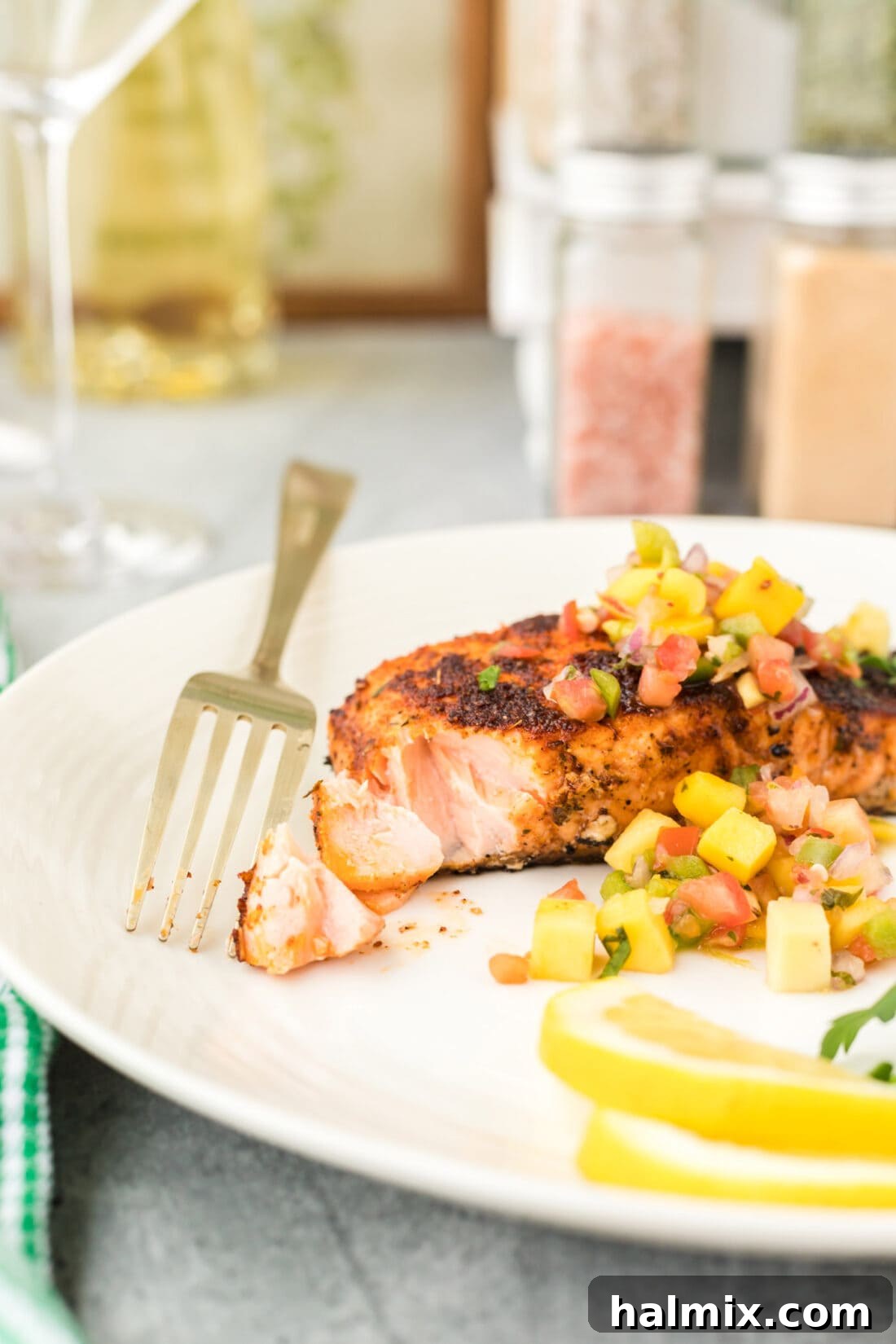
To ensure your salmon is perfectly cooked, look for signs of flakiness. Gently press your finger (or the tip of a knife if it’s too hot) onto the top center or the thickest part of the fillet. If it begins to flake easily or separate, it’s done. Be careful not to overcook, as this can lead to dry, overly flaky salmon. For precise results, use an instant-read thermometer; salmon is typically finished when it reaches an internal temperature of 125-135°F (52-57°C) in its thickest part.
Absolutely not! “Blackened” refers to the cooking technique, not the state of being burnt. It involves coating meat or fish with a heavy layer of spices and then searing it at very high temperatures in a cast-iron skillet. This process creates a dark, crusty, and intensely flavorful exterior while keeping the interior moist and tender. The dark color comes from the spices and the caramelized butter, not from charring the food itself.
A heavy-bottomed cast-iron skillet is highly recommended for blackening. Cast iron retains heat exceptionally well and distributes it evenly, which is essential for achieving that characteristic dark, crispy crust without burning. If you don’t have cast iron, a good quality stainless steel skillet can work, but you may need to adjust cooking times and heat to prevent uneven searing.
Blackening produces a fair amount of smoke due to the high heat and searing process. To minimize this, ensure your kitchen is well-ventilated. Turn on your exhaust fan to its highest setting, open windows, and if possible, cook near an open window or even outdoors on a side burner of a grill. Using a higher smoke point oil (like avocado oil) in addition to butter can also help reduce smoke, though butter is crucial for flavor and crust development.
Absolutely! The blackening technique is incredibly versatile. It works wonderfully with other firm white fish like tilapia, cod, or mahi-mahi. You can also apply it to chicken breasts or even shrimp, as shown in our blackened shrimp recipe. Adjust cooking times based on the thickness and type of protein you are using.
Store any leftover blackened salmon in an airtight container in the refrigerator for 2-3 days. Reheat gently in a skillet over low heat or in the microwave to maintain its moisture and flavor. Avoid high heat when reheating, as this can dry out the fish.
Delicious Serving Suggestions for Blackened Salmon
Blackened salmon is a versatile dish that pairs beautifully with a wide array of sides, allowing you to create a complete and satisfying meal. Here are some of our favorite serving suggestions to inspire your next dinner:
- **Classic Pairings:** Serve your vibrant salmon fillets alongside fluffy white or brown rice for a comforting and complete meal. A crisp, fresh side salad with a light vinaigrette offers a refreshing counterpoint to the salmon’s bold flavors.
- **Green Vegetable Power:** Enhance the nutritional value and visual appeal of your plate by adding some vibrant green vegetables. Roasted asparagus, sautéed green beans with garlic, or steamed broccoli are all excellent choices that complement the salmon without overpowering it.
- **Tangy & Creamy Accompaniments:** Offer a selection of dipping sauces or garnishes to customize each bite. Traditional tartar sauce provides a creamy, tangy contrast, while our homemade rosemary cream sauce adds an elegant and herbaceous touch. Simple lemon wedges for squeezing fresh juice over the fish can brighten the flavors beautifully.
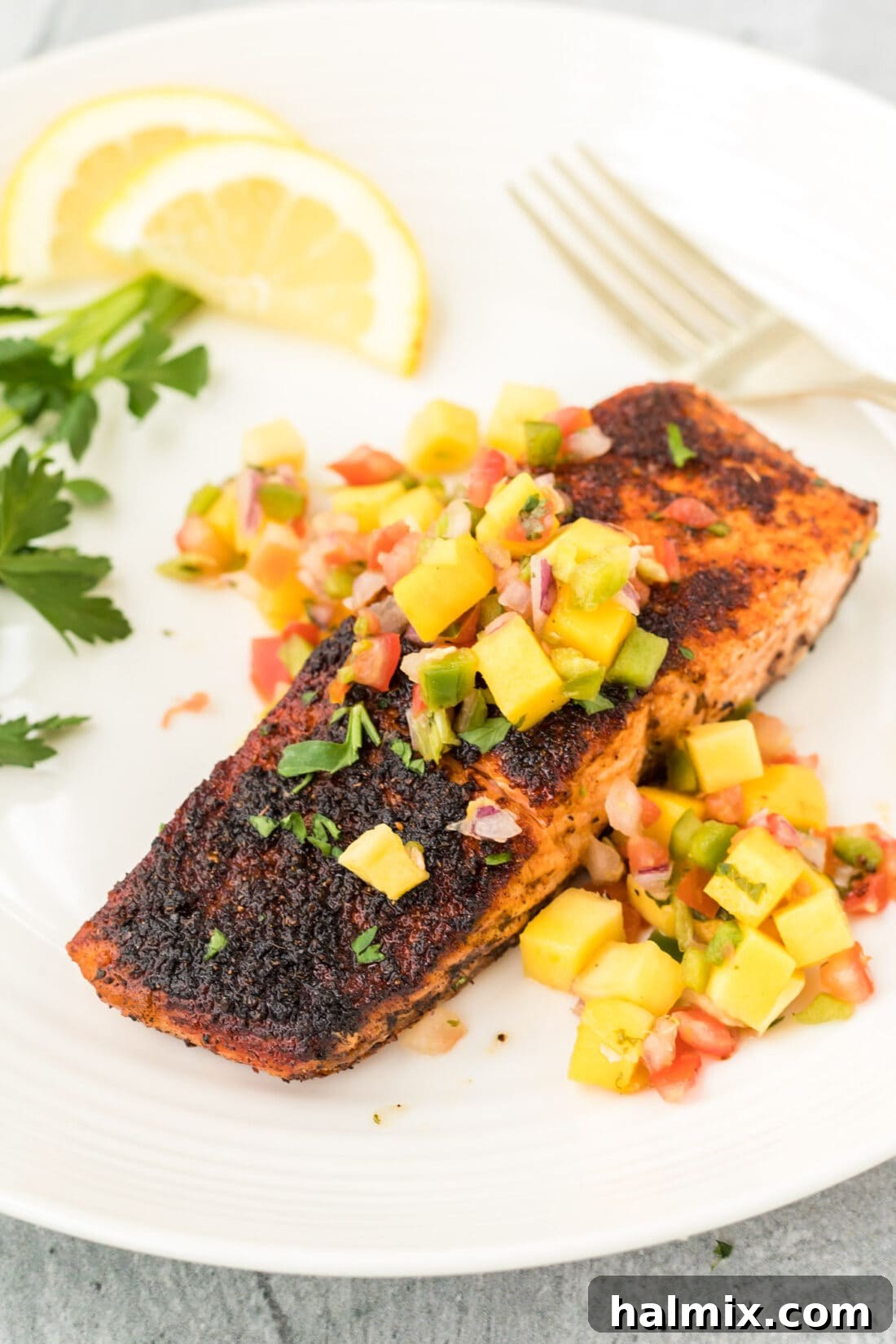
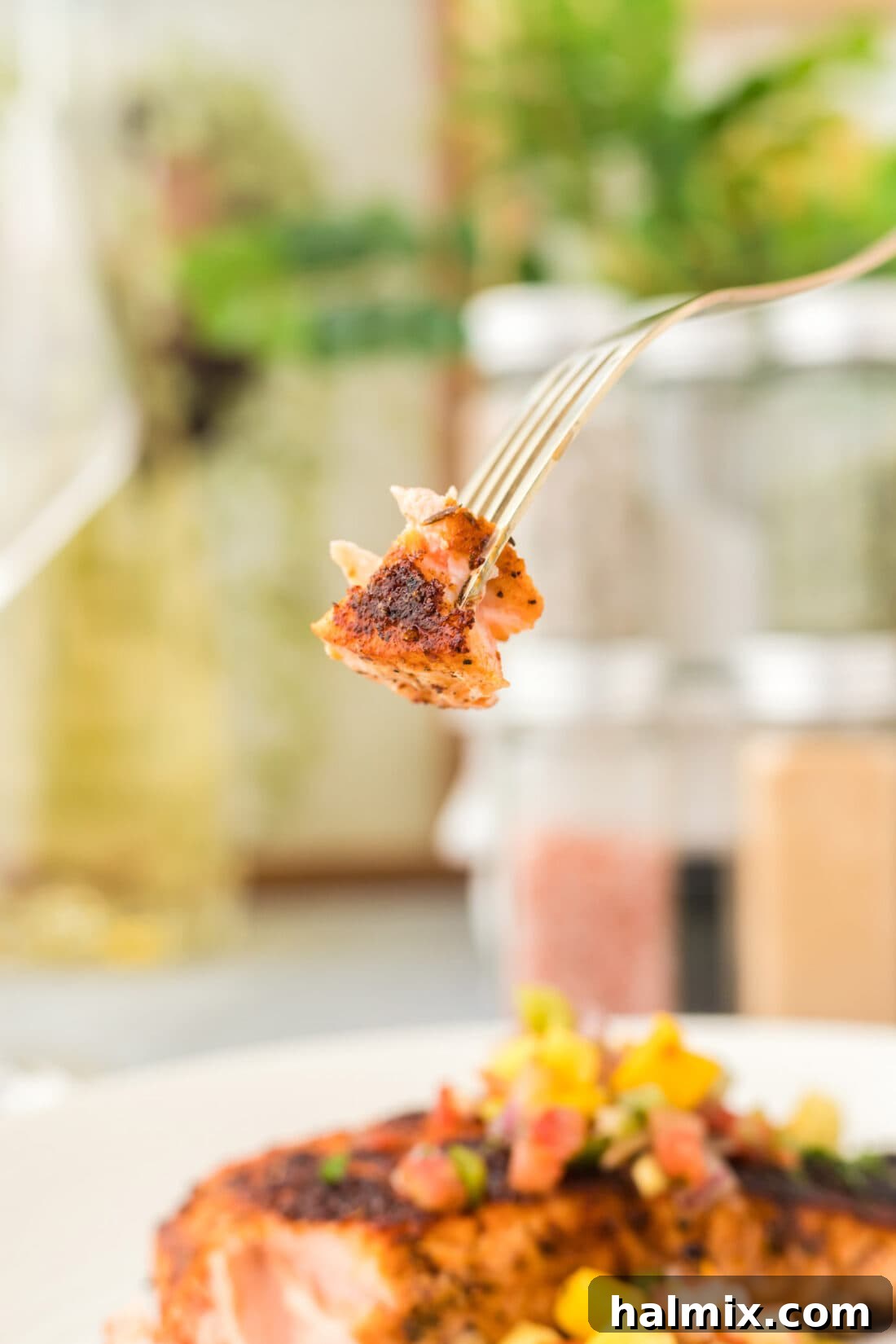
- **Sweet & Spicy Complement:** For a truly dynamic flavor experience, pair your blackened salmon with a sweet and tangy salsa. As seen in our photographs, a refreshing mango salsa adds a delightful touch of sweetness and acidity that balances the spicy notes of the blackening seasoning perfectly. Other fruit salsas, like pineapple or corn salsa, would also work wonderfully.
- **Hearty Options:** For a more substantial meal, consider serving the salmon with roasted sweet potatoes, a creamy polenta, or even a flavorful quinoa salad. These options add texture and richness that stand up well to the salmon’s robust profile.
Explore More of Our Favorite Salmon Recipes
If you’ve enjoyed this blackened salmon, you’ll love exploring our other delicious salmon creations. Salmon is a wonderfully adaptable fish, perfect for a variety of cooking methods and flavor combinations. Discover your next favorite:
- Baked Salmon
- Lemon Salmon
- Maple Soy Salmon
- Cedar Plank Salmon
- Instant Pot Salmon
- Dijon Lemon Caper Salmon
I love to bake and cook and share my kitchen experience with all of you! Remembering to come back each day can be tough, that’s why I offer a convenient newsletter every time a new recipe posts. Simply subscribe and start receiving your free daily recipes!
Blackened Salmon
IMPORTANT – Find helpful tips and frequently asked questions within the blog post above!
Print It
Pin It
Rate It
Save ItSaved!
Ingredients
- 1 ½ pounds center cut salmon cut into 4 fillets
- 3 Tablespoons butter well softened, or margarine
- 1 Tablespoon Cajun seasoning
- ½ Tablespoon onion powder
- ½ teaspoon paprika
- ½ teaspoon dried oregano
- 2 teaspoons garlic salt
- ½ teaspoon black pepper
- ½ teaspoon cayenne pepper
Equipment You’ll Need
-
Large heavy-bottomed skillet (cast iron recommended)
-
Pastry brush
-
Vinyl gloves (optional, for handling spices)
-
Fish turner or tongs
Before You Begin: Expert Tips
- To ensure your fillets don’t stick to the pan, gently wiggle them a little with tongs during the searing process. If you find them sticking, a thin fish turner spatula is excellent for lifting the entire fillet without breaking the crust.
- Using center-cut salmon is recommended due to its uniform thickness, which ensures all fillets cook evenly and reach perfect doneness simultaneously.
- To accurately test for doneness, gently press the thickest part of the fillet; it should begin to flake easily. An instant-read thermometer can confirm salmon is done when it reaches 125-135°F (52-57°C). Overcooking will result in dry, excessively flaky salmon.
Instructions
-
Rinse salmon fillets and thoroughly pat them dry with paper towels to remove all excess moisture.
-
Brush the flesh side (non-skin side) of each salmon fillet with softened butter. You will save some butter for a later step.
-
In a small bowl, combine Cajun seasoning, onion powder, paprika, dried oregano, garlic salt, black pepper, and cayenne pepper to create your signature spice mixture. Mix thoroughly.
-
Generously season the buttered flesh side of the fillets with the spice mixture, ensuring a thick and even coating that adheres well to the butter.
-
Using a pastry brush, dab a small amount of additional softened butter directly on top of the applied seasoning mixture. This helps create the deep, rich crust.
-
Combine any remaining spice mixture and softened butter in a small bowl; this will be used for the skin side.
-
Heat a heavy-bottomed skillet (preferably cast iron) over medium-high heat until it is very hot and just begins to smoke faintly.
-
Place the fillets in the hot skillet, skin side up. Immediately brush the skin side with the reserved butter and seasoning mixture. Cook for approximately 3-4 minutes, gently wiggling the fillets with tongs to prevent sticking.
-
Flip the fillets over and continue to cook for another 2-3 minutes, or until the salmon reaches your desired doneness and the skin side is beautifully crisped.
Nutrition Information
The recipes on this blog are tested with a conventional gas oven and gas stovetop. It’s important to note that some ovens, especially as they age, can cook and bake inconsistently. Using an inexpensive oven thermometer can assure you that your oven is truly heating to the proper temperature. If you use a toaster oven or countertop oven, please keep in mind that they may not distribute heat the same as a conventional full sized oven and you may need to adjust your cooking/baking times. In the case of recipes made with a pressure cooker, air fryer, slow cooker, or other appliance, a link to the appliances we use is listed within each respective recipe. For baking recipes where measurements are given by weight, please note that results may not be the same if cups are used instead, and we can’t guarantee success with that method.