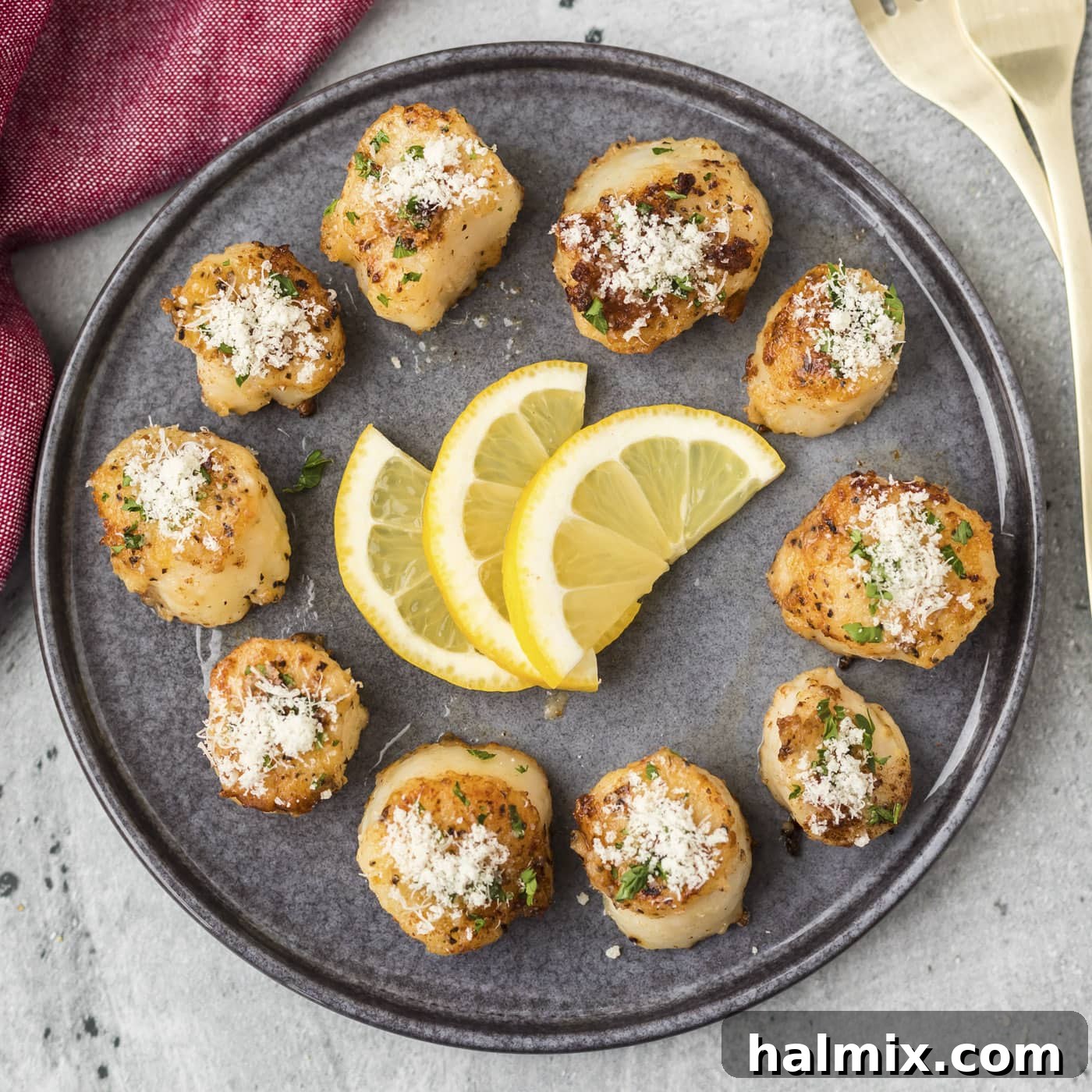
Transform your kitchen into a gourmet seafood restaurant in just 10 minutes with this incredible recipe for **Classic Pan-Seared Scallops**. Imagine tender, succulent scallops, perfectly caramelized with a golden crust formed from a delicate blend of flour and Parmesan cheese, delivering a burst of savory flavor with every bite. This dish isn’t just easy; it’s an experience, proving that exquisite seafood doesn’t have to be intimidating or reserved solely for special occasions. With a handful of simple ingredients and a few expert techniques, you can master the art of perfectly seared scallops right in your own home.
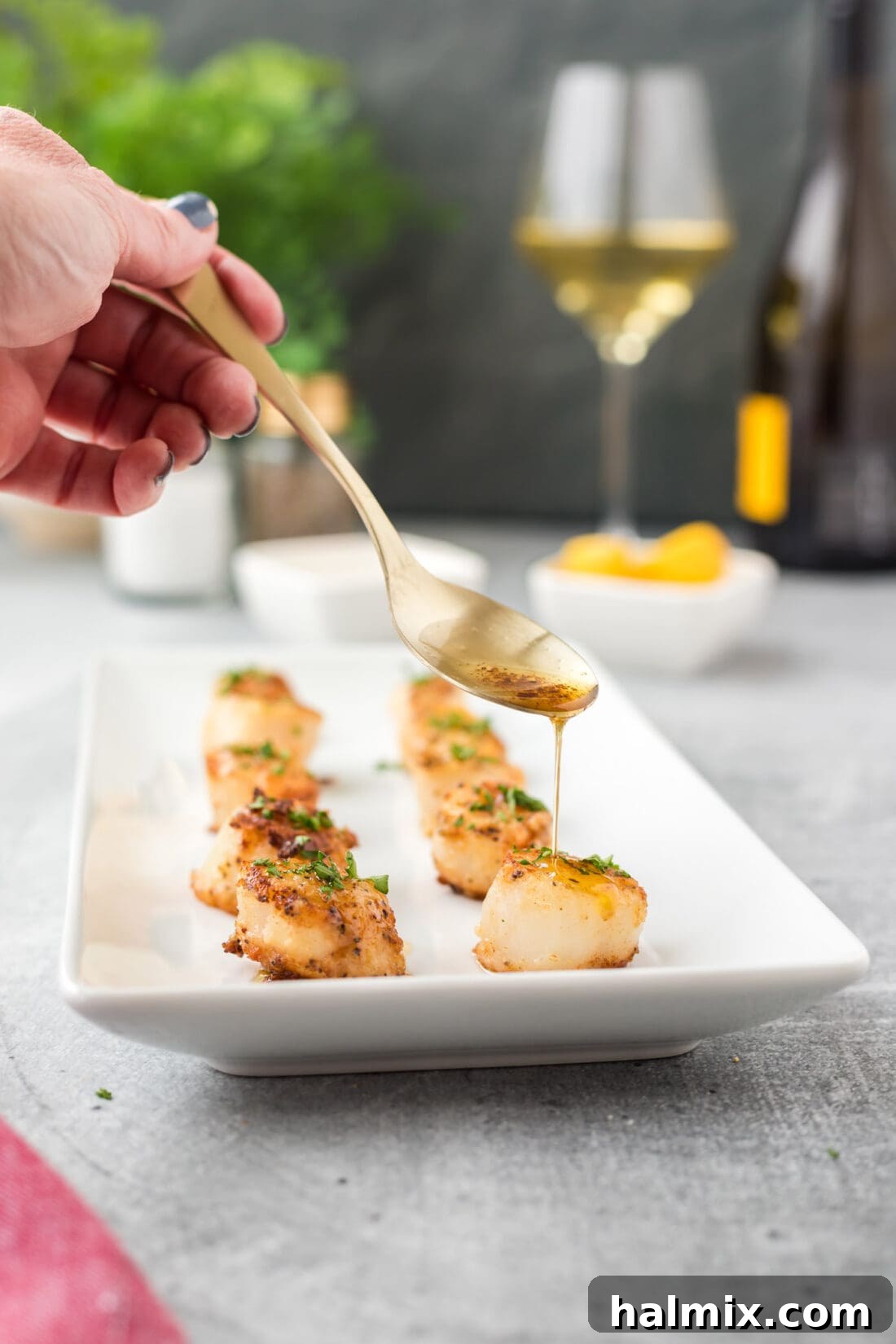
Why This Pan-Seared Scallop Recipe is a Must-Try
Many home cooks shy away from preparing seafood like scallops, assuming they’re too delicate or difficult to get right. However, this pan-seared scallops recipe is designed to demystify the process, bringing that luxurious restaurant experience directly to your dining table. Here’s why this recipe stands out and guarantees success:
- Effortlessly Gourmet: Achieve fine-dining quality scallops with minimal effort. The entire process, from prep to plate, takes less than 15 minutes, making it ideal for busy weeknights or a quick, impressive meal.
- Simple Ingredients, Maximum Flavor: You only need six core ingredients to create this culinary masterpiece. The magic lies in the subtle addition of flour and Parmesan, which creates an irresistible golden-brown crust, locking in the scallops’ natural sweetness and briny notes.
- Perfect Texture Every Time: The key to exceptional scallops is a beautiful sear on the outside and a tender, melt-in-your-mouth interior. Our method ensures just that, preventing the rubbery texture often associated with overcooked seafood.
- Versatility at Its Best: Whether served as an elegant appetizer, a light main course, or incorporated into a more elaborate dish, these seared scallops are incredibly versatile and pair well with a wide range of sides.
Much like preparing succulent lamb chops or perfectly steamed lobster tail, scallops are often considered a special treat to order out. But with our straightforward guide, you’ll discover how incredibly simple it is to prepare these delectable morsels yourself, impressing family and friends with your newfound culinary prowess.
Essential Ingredients for Perfect Pan-Seared Scallops
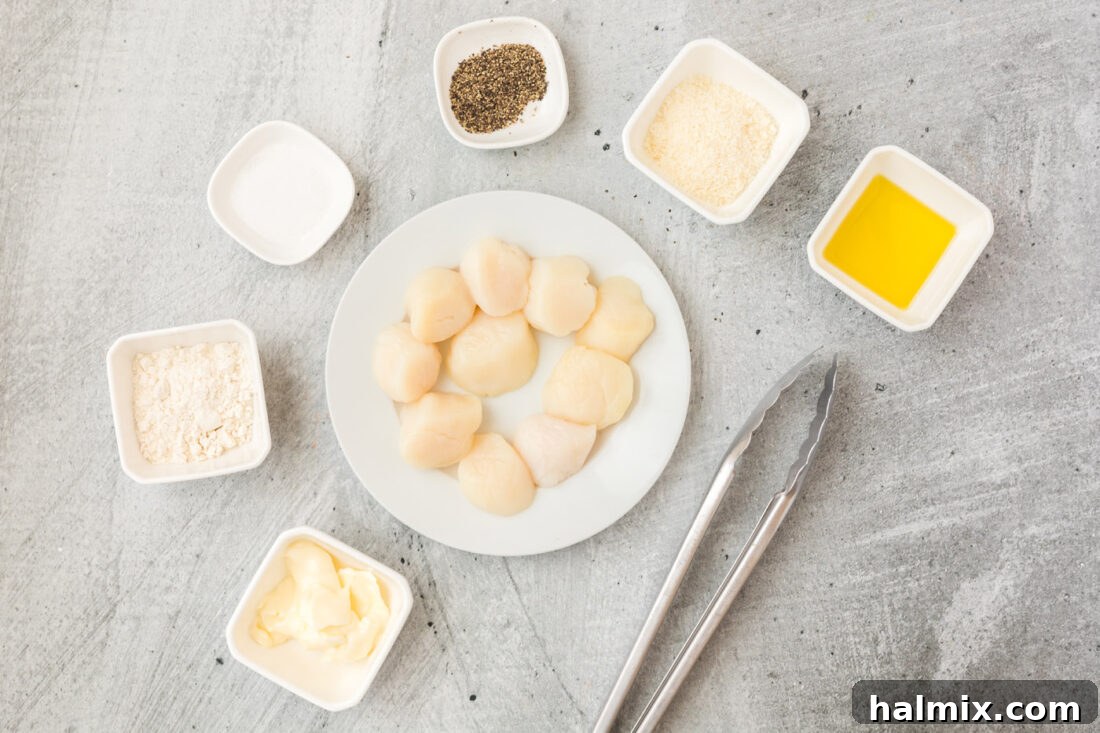
Crafting these exquisite pan-seared scallops requires only a handful of fresh ingredients. Focus on quality, especially when it comes to the scallops themselves, as this will significantly impact the final taste and texture of your dish. All precise measurements and detailed instructions can be found in the printable recipe card at the conclusion of this post.
Ingredient Spotlight & Expert Substitution Tips
Understanding your ingredients is key to achieving culinary excellence. Here’s a deeper look into the components of our pan-seared scallops and how to make the best choices or smart substitutions.
Choosing Your Scallops: Dry vs. Wet
Scallops: The star of the show! For this recipe, always opt for plump, evenly sized sea scallops. Uniformity in size ensures consistent cooking. When purchasing scallops, you might encounter labels like “wet” and “dry” at your grocery store or fish market. This distinction is crucial for pan-searing success:
- Wet Scallops: These scallops have been soaked in a solution of sodium tripolyphosphate (STP) to extend their shelf life and plump them up. While this makes them appear larger and heavier, it causes them to retain excess moisture. When cooked, this moisture releases, making it difficult to achieve a proper sear and often resulting in a steamed, rubbery texture rather than a beautifully caramelized crust.
- Dry Scallops: These are natural, untreated scallops, free from any additives or preservatives. They are harvested and flash-frozen or refrigerated without any chemical baths. Dry scallops have a naturally sweet flavor and firm texture, and most importantly, they contain less moisture, allowing them to brown beautifully in a hot pan. This is why we **highly recommend using dry sea scallops** for this recipe to achieve that perfect golden crust.
To identify dry scallops, look for a creamy, off-white or slightly pinkish hue and a firm texture. They should not be sitting in a milky liquid. If you can only find wet scallops, you can try to mitigate the moisture by soaking them in a brine solution (1 tablespoon salt per cup of water) for 30 minutes, then rinsing and patting them excessively dry before cooking.
Butter, Flour, and Parmesan: The Crust Trinity
- Butter: We use butter for its rich flavor and its ability to help create a beautiful golden crust. Using a good quality unsalted butter allows you to control the seasoning. You can also use clarified butter (ghee) which has a higher smoke point, ensuring it won’t burn as easily during searing.
- All-Purpose Flour: A small amount of flour provides the base for our flavorful crust, absorbing surface moisture and promoting browning. For a gluten-free alternative, you can use a 1-to-1 gluten-free flour blend.
- Grated Parmesan Cheese: Parmesan adds a salty, savory depth and contributes significantly to the crisp, golden crust. Freshly grated Parmesan will offer the best flavor and texture, but pre-grated will work in a pinch. You could experiment with other hard, salty cheeses like Pecorino Romano for a slightly different flavor profile.
- Salt and Black Pepper: Simple seasonings are all these naturally flavorful scallops need. Use good quality sea salt and freshly ground black pepper to enhance their inherent taste.
Garnishes for a Finishing Touch
- Chopped Parsley: Fresh parsley adds a vibrant green color and a touch of herbaceous freshness that brightens the dish.
- Additional Grated Parmesan: A final sprinkle of Parmesan can elevate the presentation and intensify the savory notes.
- Lemon Wedges: While not listed as a core ingredient, a squeeze of fresh lemon juice over the finished scallops can cut through the richness of the butter and cheese, adding a delightful tang.
Mastering the Art of Pan-Seared Scallops: Step-by-Step
These step-by-step photos and detailed instructions are here to guide you visually through the process of making this recipe. For a concise, printable version of the recipe, complete with precise measurements and comprehensive instructions, simply navigate to the recipe card located at the bottom of this article.
-
Prepare the Scallops: The Foundation of a Perfect Sear
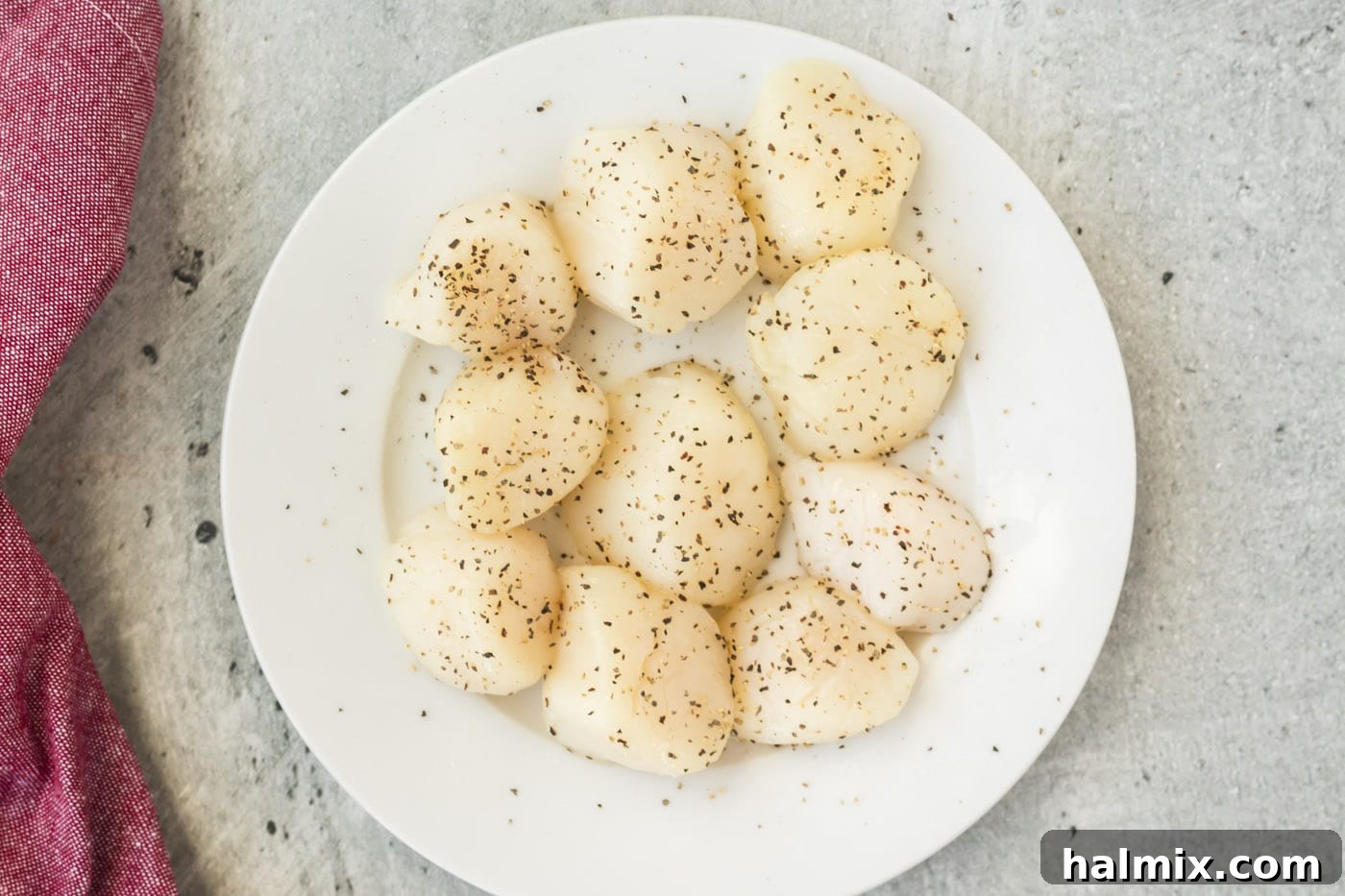
Start by rinsing your sea scallops under cold water to remove any grit. The most crucial step for achieving a perfect sear is thoroughly patting them dry. Use several layers of paper towels to absorb as much surface moisture as possible. Excess water on the scallops will steam them rather than sear them, preventing that desirable golden crust. Once dry, season both flat sides generously with salt and black pepper.

-
Heat Your Skillet: The Right Temperature is Key
In a heavy-bottomed skillet (cast iron or stainless steel works best), melt 2 tablespoons of butter over medium-high heat. Allow the butter to fully melt and start to foam. This foamy stage indicates that the water in the butter is evaporating, leaving behind the milk solids and fat that will contribute to a fantastic sear. Be careful not to let the butter brown too much or burn.
-
Prepare the Coating Mixture
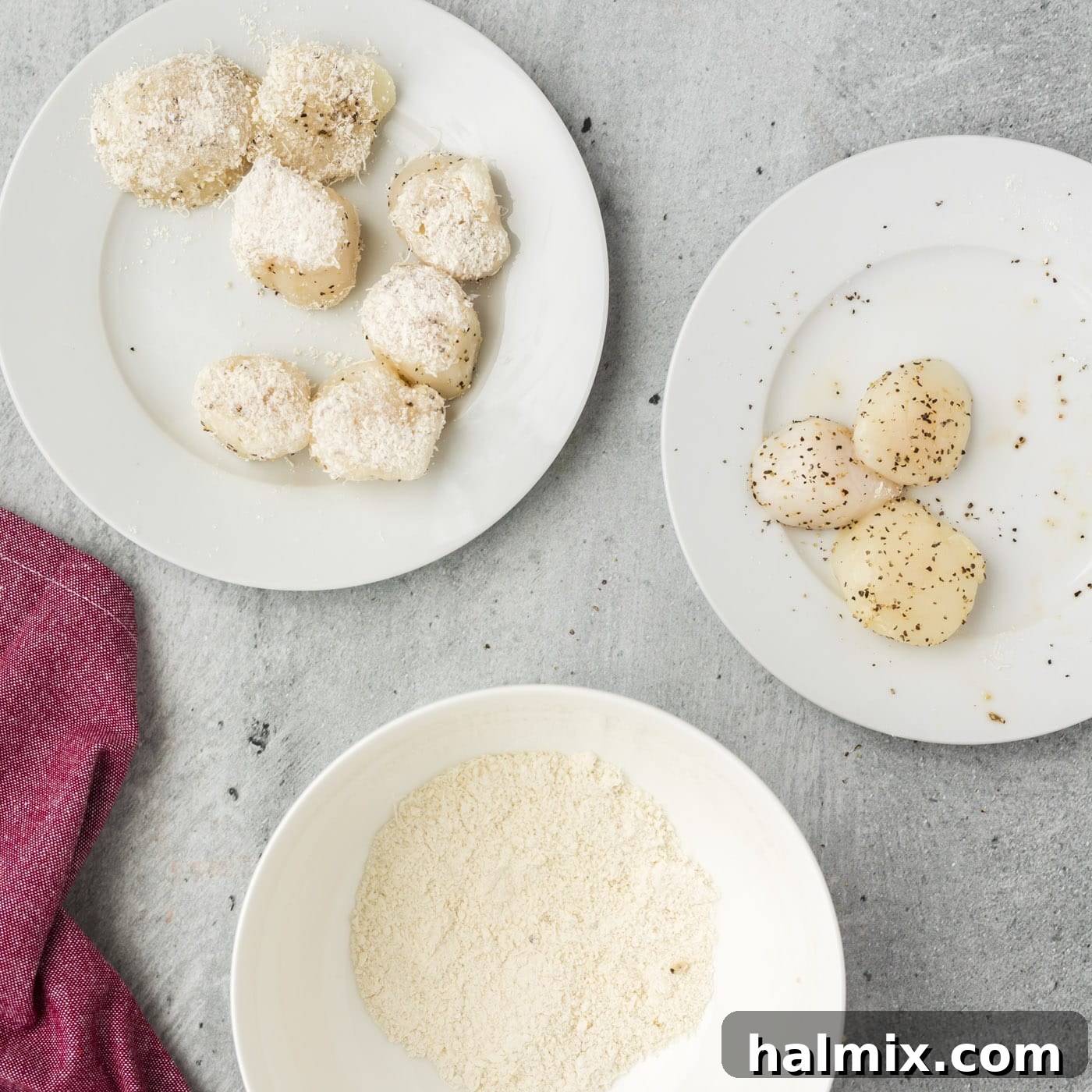
While the butter is heating, combine the all-purpose flour and grated Parmesan cheese in a shallow medium bowl. Whisk them together until well blended.
-
Coat the Scallops: Just the Right Amount
Gently dip one flat side of a seasoned scallop into the flour and Parmesan mixture, pressing lightly to adhere the coating. Flip the scallop over and coat the other flat side. Repeat this process for all the scallops. This light coating is essential for developing a flavorful, crisp crust while still allowing the scallop’s natural sweetness to shine through.
-
Sear the Scallops: The Moment of Truth
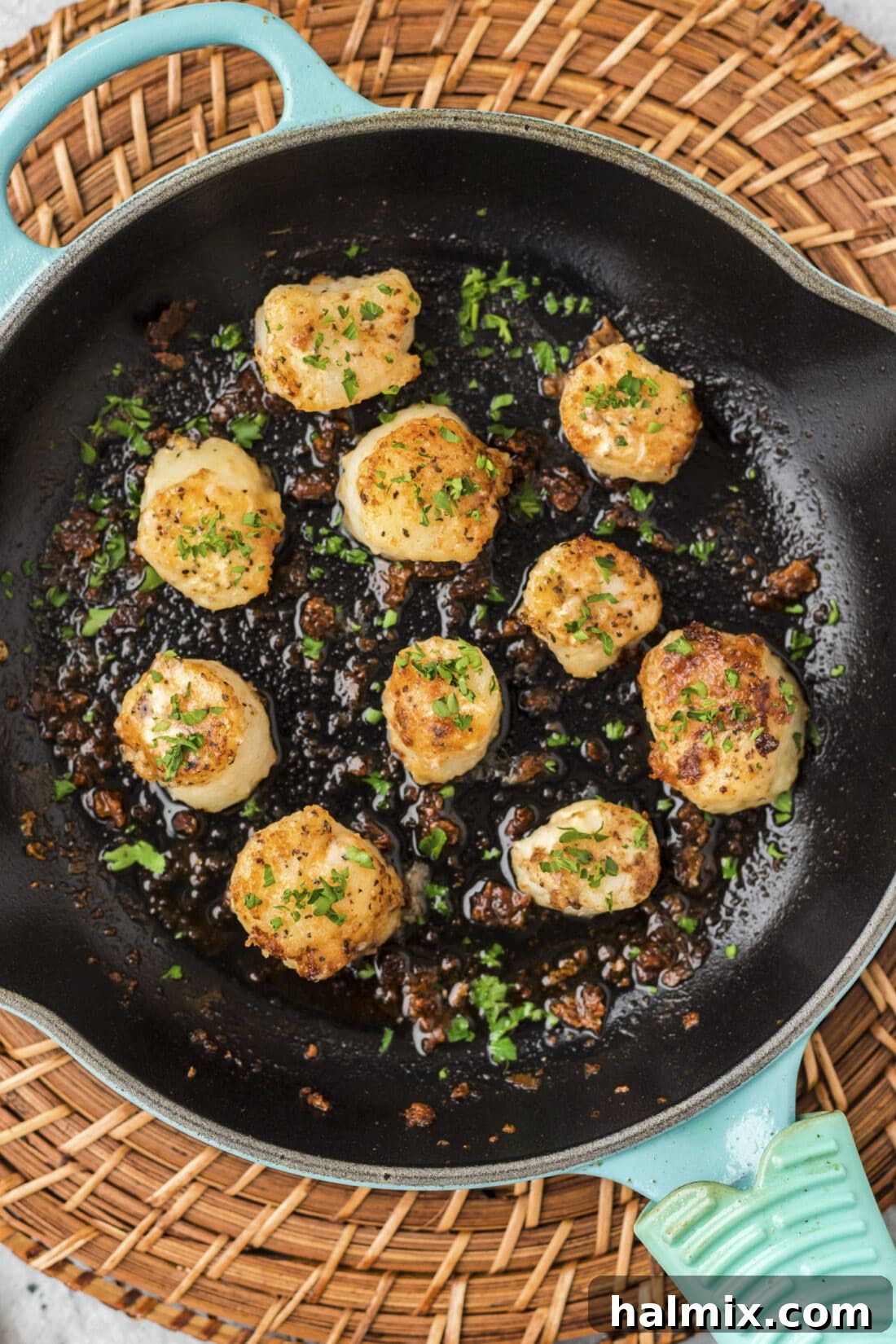
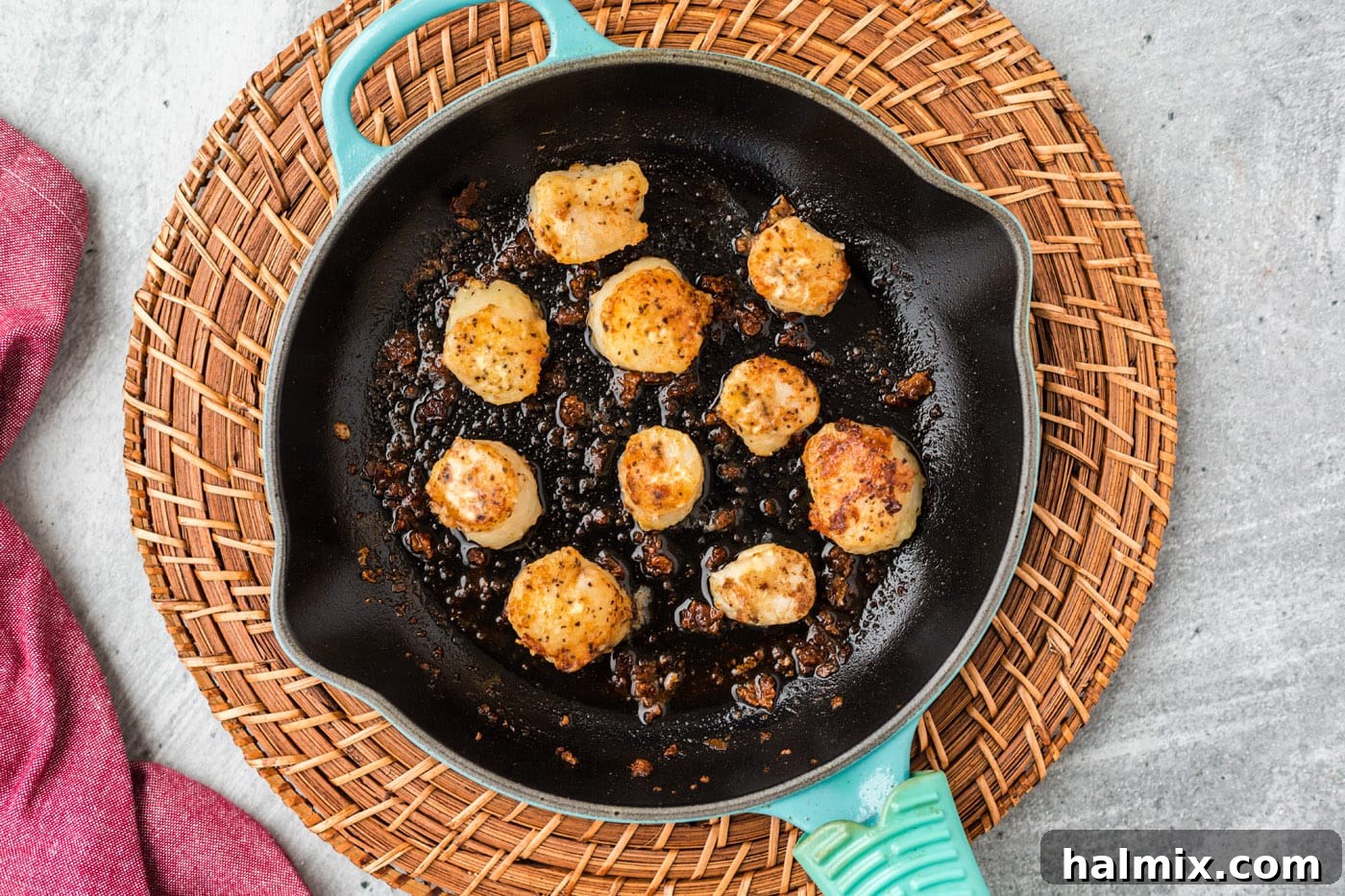
Carefully place the coated scallops, flat side down, into the hot skillet. Ensure not to overcrowd the pan; cook in batches if necessary, as overcrowding will lower the pan’s temperature and result in steaming rather than searing. Cook for 2-3 minutes per side. Resist the urge to move them until it’s time to flip – this allows for a beautiful crust to form. The scallops are done when they have a deep golden-brown crust on both sides and are opaque throughout but still slightly translucent in the very center.
-
Serve Immediately
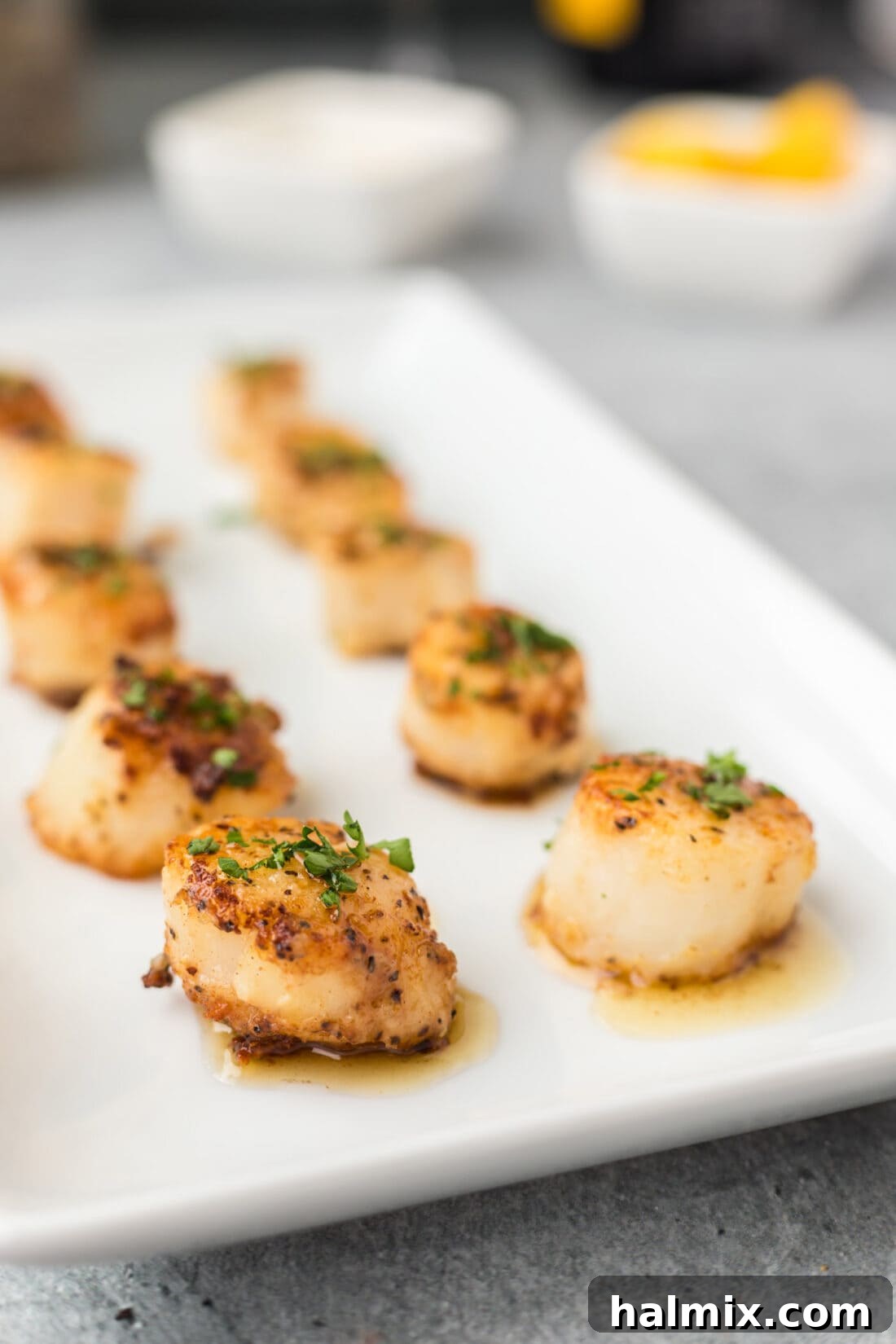
Remove the perfectly seared scallops from the skillet. Garnish with freshly chopped parsley and an additional sprinkle of grated Parmesan cheese if desired. For an extra touch of richness, you can spoon some of the flavorful butter from the pan over the cooked scallops. Serve hot and enjoy immediately!
Frequently Asked Questions & Expert Tips for Scallop Success
Even though pan-seared scallops are quick and easy, a few common questions and expert tips can help you achieve perfection every time.
How do I store leftover scallops?
Cooked scallops are best enjoyed fresh, right off the pan. However, if you have leftovers, store them in an airtight container in the refrigerator for up to two days. Reheat gently on low heat or enjoy cold in a salad. Be aware that scallops spoil rather quickly, so consume them promptly.
Can I use frozen scallops?
Yes, you can use frozen scallops, but ensuring they are properly thawed and dried is even more critical. Thaw frozen scallops overnight in the refrigerator or under cold running water. Once thawed, pat them extremely dry with paper towels to remove all excess moisture before seasoning and coating.
What kind of pan is best for searing scallops?
A heavy-bottomed skillet is essential for even heat distribution and a good sear. Cast iron skillets are excellent for retaining heat and creating a beautiful crust. Stainless steel pans also work well. Avoid non-stick pans if you want to achieve a deep, rich sear, as their surfaces often prevent proper browning.
How do I know when scallops are cooked through?
Perfectly cooked scallops will have a golden-brown crust on the outside and be opaque throughout, with just a hint of translucence in the very center. They should feel firm to the touch but still spring back slightly. Overcooked scallops become tough and rubbery, so watch them closely and err on the side of slightly undercooking, as they will continue to cook slightly from residual heat once removed from the pan.
Why are my scallops rubbery?
Rubbery scallops are almost always a sign of overcooking. Scallops cook very quickly, usually within 2-3 minutes per side. Another common reason is using “wet” scallops (treated with STP) which release too much water, preventing a sear and essentially steaming them. Always use dry scallops and avoid overcooking!
What if my butter starts to burn?
If your butter starts to brown too quickly or burn, your pan is too hot. Reduce the heat immediately, remove the pan from the heat briefly, and if necessary, wipe it clean and start with fresh butter. Using clarified butter (ghee) can also help prevent burning as it has a higher smoke point than regular butter.
Can I make a pan sauce with the drippings?
Absolutely! After removing the scallops, you can deglaze the pan with a splash of white wine, chicken broth, or lemon juice. Whisk in a knob of cold butter and a squeeze of fresh lemon to create a simple yet flavorful pan sauce to spoon over your scallops.
Elevate Your Meal: Inspired Serving Suggestions
Pan-seared scallops are incredibly versatile and can anchor a variety of meals, from a sophisticated appetizer to a hearty main course. Here are some ideas to inspire your plating:
- As an Elegant Appetizer: Serve them simply on their own with a lemon wedge and a sprinkle of fresh herbs. They also pair wonderfully with a light salad or a dollop of creamy aioli.
- Perfect Pasta Partner: Toss the warm scallops into a simple pasta dish with good quality olive oil or the remaining butter from the pan, a touch of garlic, red pepper flakes, and fresh basil or parsley. A lemon-butter sauce complements them beautifully.
- Rice & Grain Companions: Serve alongside fluffy white rice, wild rice pilaf, or a creamy risotto (especially lemon or mushroom risotto). For a zesty twist, try them with bright lemon couscous.
- Vibrant Vegetable Sides: Pair with seasonal roasted vegetables like asparagus, green beans almandine, roasted broccoli, or sautéed spinach. The freshness of the vegetables provides a lovely contrast to the rich scallops.
- Hearty Potato Pairings: Creamy mashed potatoes, roasted new potatoes with rosemary, or even crispy potato gratin can make a satisfying accompaniment.
- Wine Pairings: For a truly elevated experience, pair your pan-seared scallops with a crisp, dry white wine such as Sauvignon Blanc, Pinot Grigio, or a unoaked Chardonnay.
Always garnish with freshly chopped parsley and an additional dusting of Parmesan cheese for visual appeal and an extra layer of flavor. Don’t forget to spoon any leftover fragrant butter from the pan over your scallops and sides—it’s liquid gold!
The Surprising Health Benefits of Scallops
Beyond their exquisite taste and quick cooking time, scallops also offer an impressive array of health benefits, making them a smart choice for any balanced diet. They are a lean source of protein and packed with essential nutrients:
- Rich in Protein: Scallops are an excellent source of lean protein, which is vital for muscle repair, growth, and overall body function.
- Low in Calories and Fat: They are naturally low in calories and fat, especially saturated fat, making them a heart-healthy option.
- Abundant in Omega-3 Fatty Acids: Scallops contain beneficial omega-3 fatty acids, which are known to support heart health, reduce inflammation, and improve brain function.
- Packed with Vitamins and Minerals: They are a good source of Vitamin B12, crucial for nerve function and red blood cell formation. They also provide important minerals like selenium (an antioxidant), zinc (for immune health), phosphorus (for bone health), and magnesium (for muscle and nerve function).
Incorporating scallops into your diet is a delicious way to boost your nutrient intake while enjoying a luxurious meal.
Explore More Delicious Seafood Recipes
If you love seafood, we have a growing collection of recipes to tantalize your taste buds and expand your culinary repertoire. Discover new favorites and master classic dishes with our easy-to-follow guides:
- Creamy Crab Dip
- Savory Baked Scallops
- Perfect Dungeness Crab Legs
- Crispy Air Fryer Scallops
- Delicious Fried Crab Legs
- Exquisite Scallop Pasta
I find immense joy in baking and cooking, and love sharing my kitchen adventures with all of you! Remembering to check back daily for new recipes can be tough, which is why I offer a convenient newsletter every time a new recipe is published. Simply subscribe today and start receiving your free daily recipes directly in your inbox!
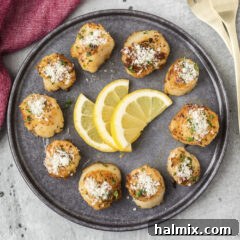
Pan Seared Scallops
IMPORTANT – There are often Frequently Asked Questions within the blog post that you may find helpful. Simply scroll back up to read them!
Print It
Pin It
Rate It
Save It
Ingredients
- ½ pound sea scallops about 10 scallops
- ½ teaspoon salt
- ½ teaspoon black pepper
- 3 Tablespoons butter divided
- 2 Tablespoons all-purpose flour
- 2 Tablespoons grated parmesan cheese
- chopped parsley optional as garnish
- additional grated parmesan optional as garnish
Things You’ll Need
-
Large skillet
-
Tongs
Before You Begin
- Use a large pan so there is room for the scallops without overcrowding.
- Look for plump, evenly sized scallops wherever possible to keep the cook time even. You will want to purchase sea scallops for this recipe. You may notice them labeled “wet” and “dry” at the grocery store. Wet scallops are soaked in a preservative to extend shelf life, but this causes the scallops to retain more moisture when cooked. We prefer to use dry sea scallops for this recipe.
- You can spoon some of the butter from the pan over the cooked scallops if you like.
- Store leftover cooked scallops in an air-tight container kept in the refrigerator for up to two days. Scallops are best served right away as they spoil rather quickly.
Instructions
-
Rinse scallops and pat dry with paper towels. Season with the salt and pepper.
-
Heat 2 tablespoons of butter in skillet over medium heat, until butter is foamy.
-
Mix flour and parmesan together in a medium bowl.
-
Dip the flat side of a scallop into the flour mixture. Turn over and flour the other flat side. Do this for all the scallops. This will help develop a flavorful crust on the scallop.
-
Place scallops, flat side down into the hot skillet. Cook for 2-3 minutes per side.
-
Remove from skillet and garnish with chopped parsley and additional parmesan cheese.
Nutrition
Tried this Recipe? Pin it for Later!
Follow on Pinterest @AmandasCookin or tag #AmandasCookin!
The recipes on this blog are tested with a conventional gas oven and gas stovetop. It’s important to note that some ovens, especially as they age, can cook and bake inconsistently. Using an inexpensive oven thermometer can assure you that your oven is truly heating to the proper temperature. If you use a toaster oven or countertop oven, please keep in mind that they may not distribute heat the same as a conventional full sized oven and you may need to adjust your cooking/baking times. In the case of recipes made with a pressure cooker, air fryer, slow cooker, or other appliance, a link to the appliances we use is listed within each respective recipe. For baking recipes where measurements are given by weight, please note that results may not be the same if cups are used instead, and we can’t guarantee success with that method.