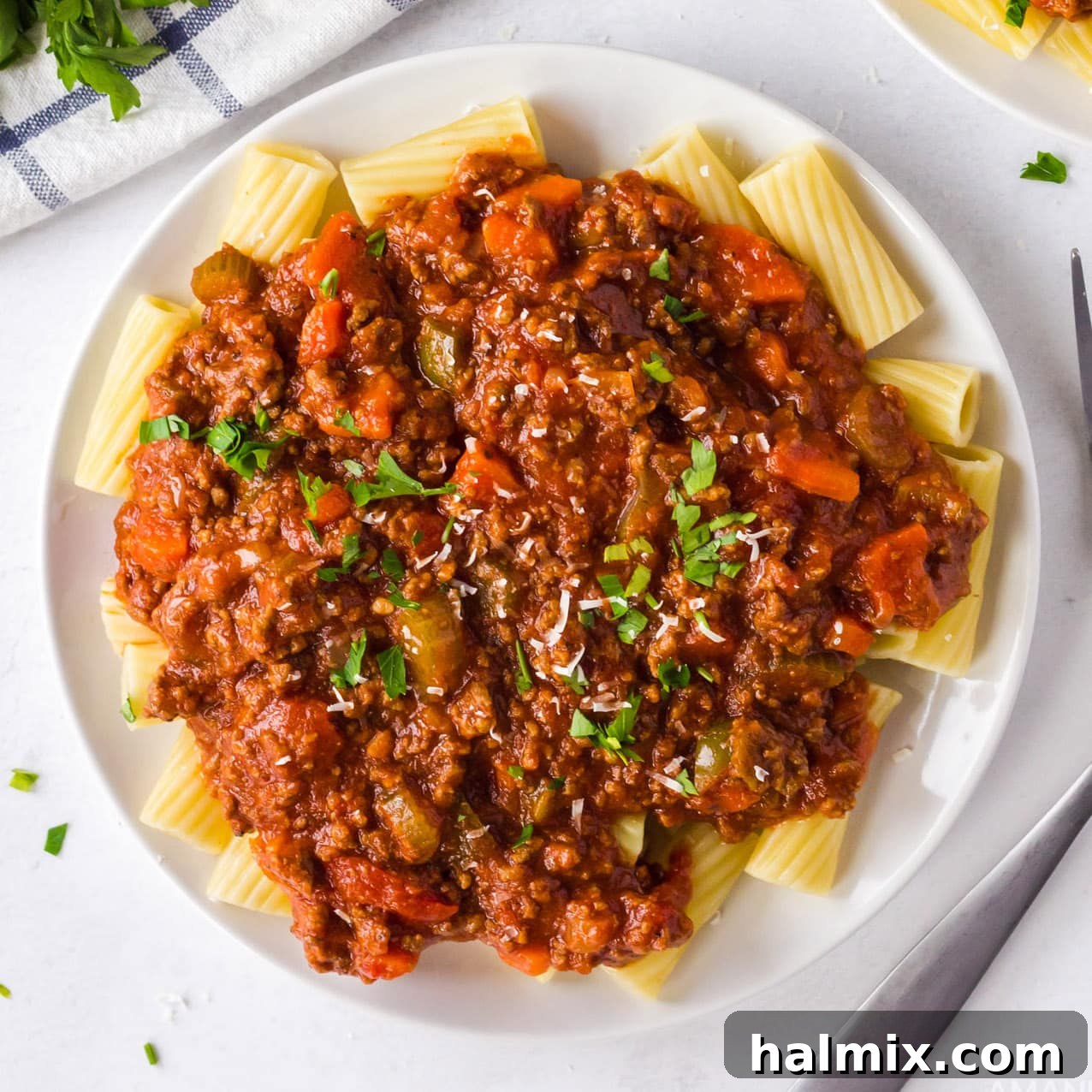
Bolognese sauce, a culinary masterpiece from Bologna, Italy, has captivated food lovers worldwide with its rich, complex flavors and comforting embrace. Far more than just a simple meat sauce, authentic Bolognese is a slow-simmered symphony of ingredients, a true testament to Italian gastronomic tradition. It’s a dish that embodies warmth, family, and the joy of a shared meal. For many, including us, pasta paired with a perfectly crafted Bolognese is not just a meal; it’s an experience, a journey to the heart of Italian cooking.
Unlocking the Secrets of Authentic Bolognese: Why This Recipe Stands Out
Understanding Bolognese is key to appreciating its unique magic. It’s crucial to distinguish it from a typical tomato sauce with ground meat. True Bolognese is a meat sauce first and foremost, with tomatoes serving as a supporting character, providing depth and acidity rather than overwhelming the palate. In Italy, this beloved creation is classified as a type of ragu, a broad category for meat-based sauces. This is why you’ll often hear it referred to as “Ragù alla Bolognese.” The well-known “Ragu” brand found in supermarkets, while popular, offers a simplified version that bears little resemblance to the traditional, slow-cooked masterpiece originating from Bologna.
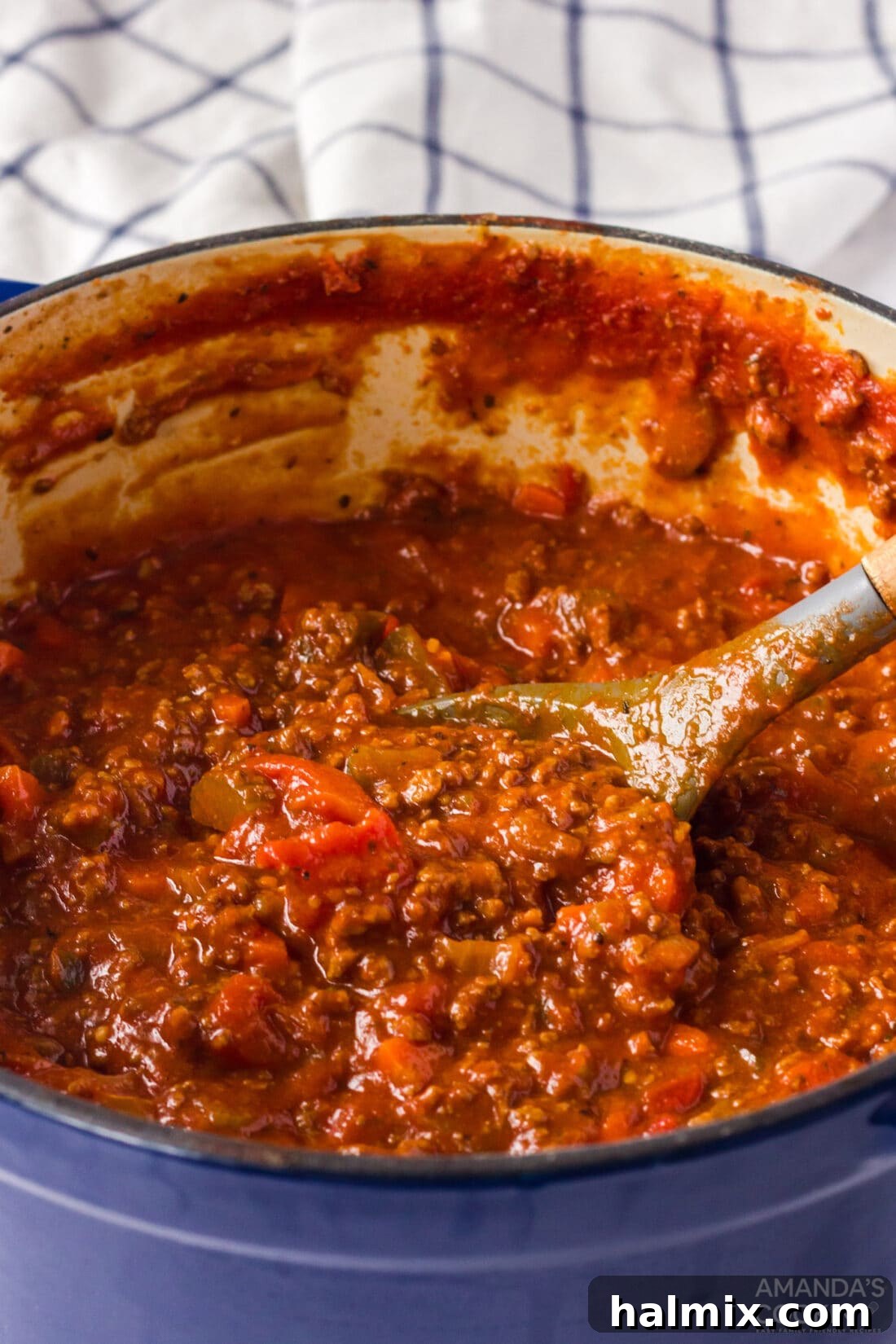
Our recipe embraces the time-honored techniques that make Bolognese so profoundly satisfying. It begins with a meticulously prepared soffritto – a aromatic base of finely diced vegetables including celery, carrots, and onions, gently sautéed to release their sweet, earthy essence. This foundational step is paramount, as it infuses the sauce with layers of flavor right from the start. We then brown the meat to perfection, adding depth and richness. The subsequent addition of liquids, such as wine and milk, is not merely for thinning but to tenderize the meat, balance acidity, and meld all the ingredients into a harmonious whole. Finally, the sauce undergoes a long, slow simmer, allowing the flavors to deepen and concentrate, transforming simple components into a truly extraordinary culinary creation. This patient cooking process is the heart of any great Bolognese, resulting in a velvety, complex sauce that truly celebrates its Italian heritage.
To streamline your preparation, consider utilizing a food processor for efficiently chopping all your vegetables. This handy kitchen gadget can drastically cut down on prep time, making even elaborate recipes more approachable for weeknight cooking. If you’re looking for more ways to incorporate this versatile tool into your culinary routine, you might find inspiration in my guide, “The Food Processor: 13 Ways to Use It and 20 Recipes to Prove It.”
Essential Ingredients for Your Perfect Bolognese
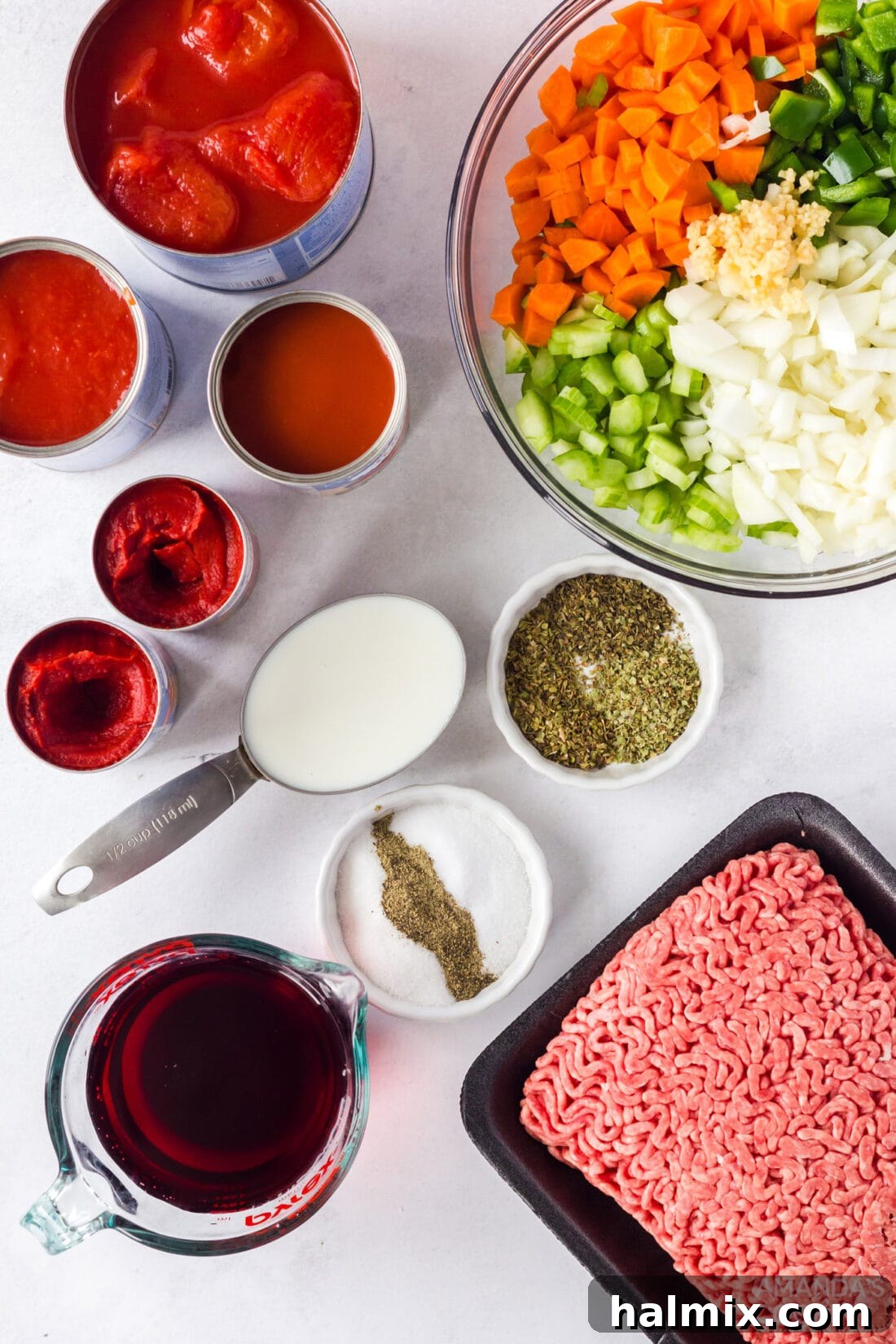
Crafting an authentic Bolognese sauce relies on a careful selection of fresh, high-quality ingredients, each playing a vital role in developing the sauce’s signature depth and character. From the foundational aromatics to the specific types of tomato products and the crucial dairy, every component contributes to the rich tapestry of flavors. Below, you’ll find a visual overview of the key ingredients that will transform your kitchen into an Italian trattoria. For precise measurements and step-by-step instructions, please refer to the detailed recipe card at the conclusion of this article.
Step-by-Step Guide to Crafting a Classic Bolognese Sauce
Embark on a culinary journey to Italy with this comprehensive guide to making a rich and hearty Bolognese sauce. These step-by-step photos and detailed instructions are designed to help you visualize each stage of the cooking process, ensuring a successful and delicious outcome. For your convenience, a printable version of this recipe, complete with precise measurements and full instructions, is available in the recipe card at the end of this post.
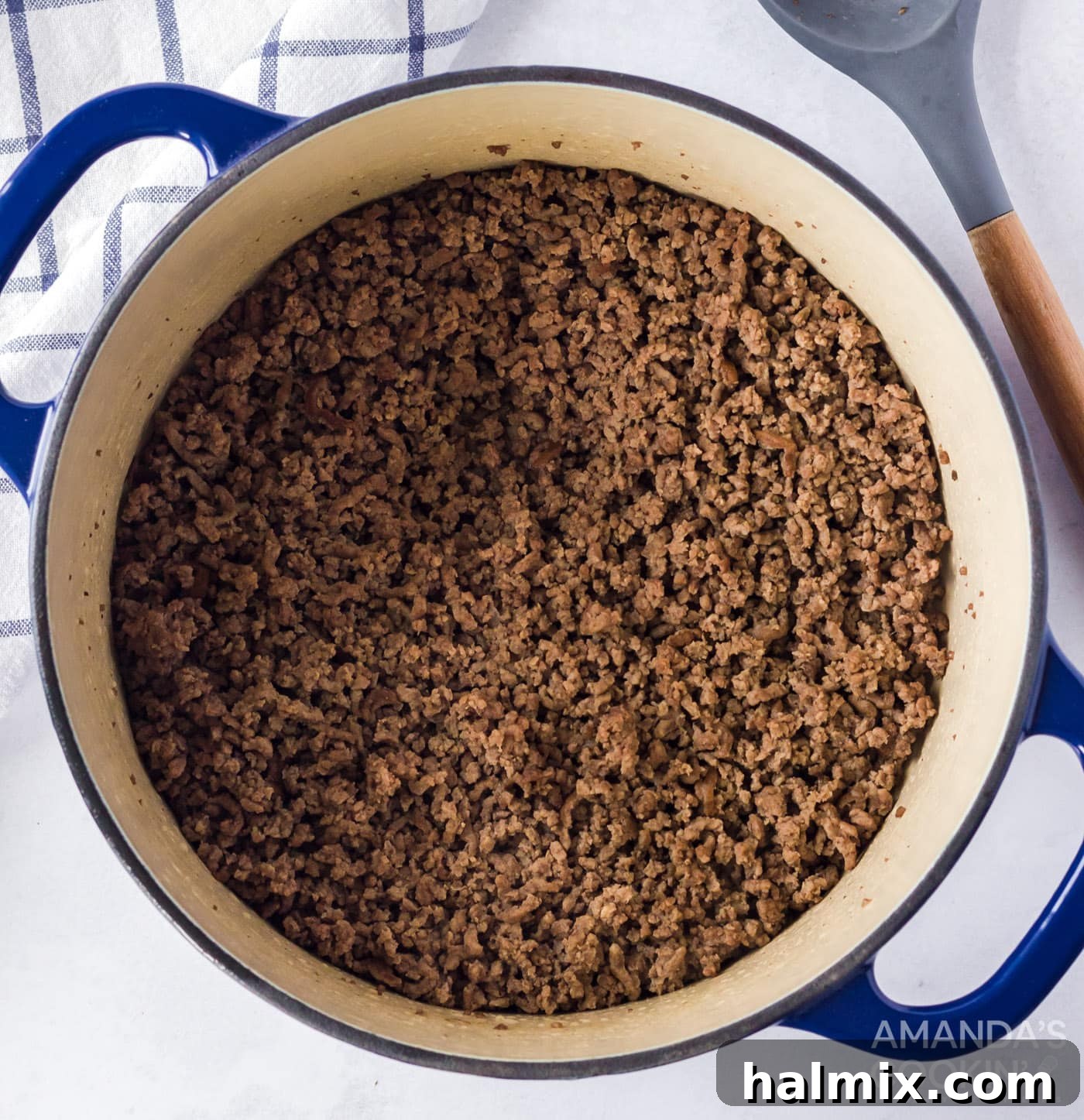
- **Prepare the Meat:** Begin by browning the ground beef in a large, heavy-bottomed pot or a 6 qt Dutch oven over medium-high heat. Break the meat into small, even pieces as it cooks using a wooden spoon or a meat chopper. Cook until deeply browned and no pink remains. Once cooked, carefully drain most of the rendered fat, leaving approximately 2 tablespoons in the pot. This residual fat will provide a flavorful base for sautéing the vegetables.

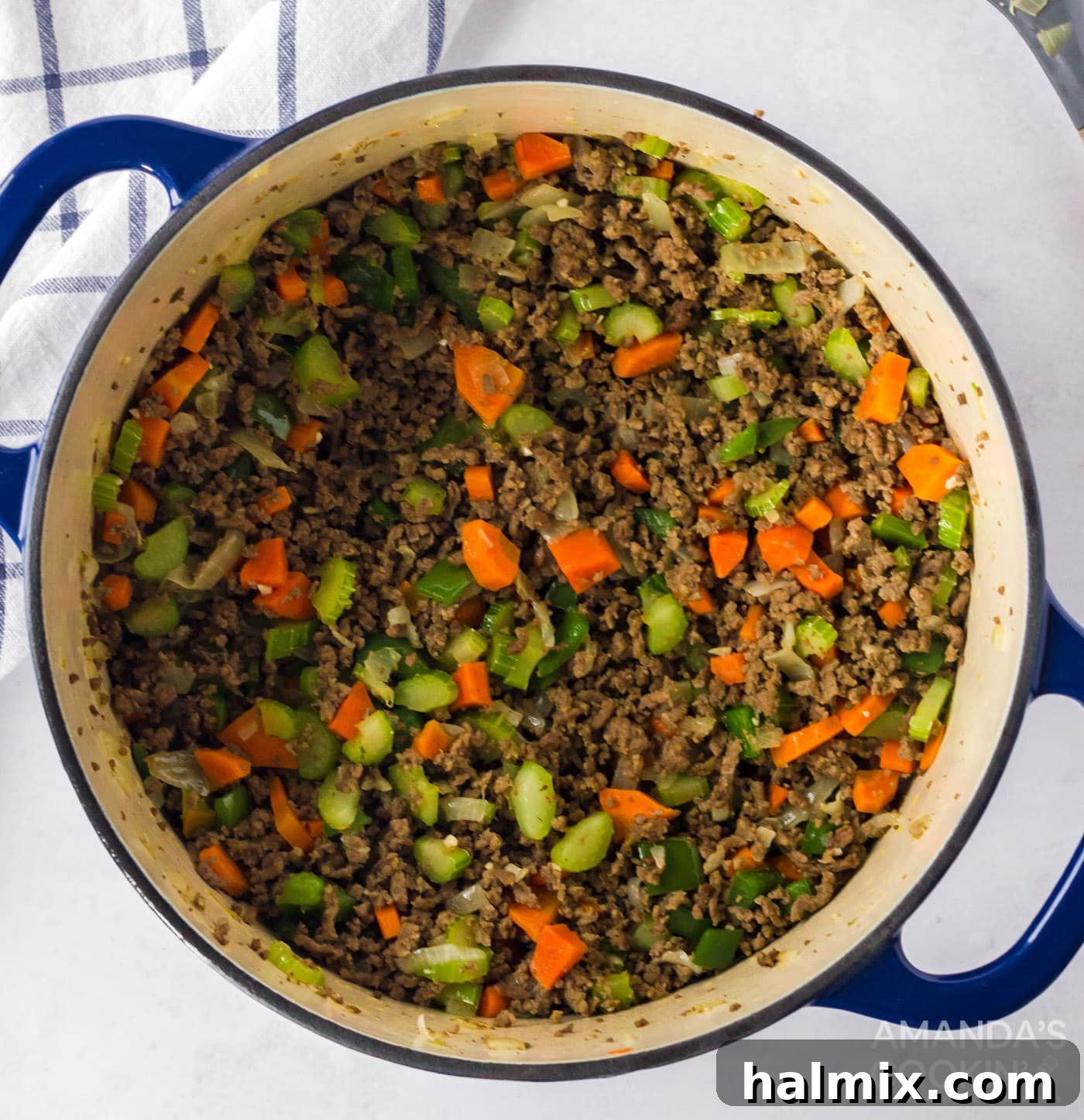
- **Build the Soffritto:** To the same pot with the remaining fat, add the finely diced celery, carrots, onion, green bell pepper, and minced garlic. Cook these vegetables over medium heat, stirring occasionally, until they soften and become fragrant, which typically takes about 5 to 10 minutes. This aromatic base, known as soffritto, is critical for developing the rich, underlying flavors of the Bolognese. Ensure they are tender but not browned, allowing their natural sweetness to emerge.
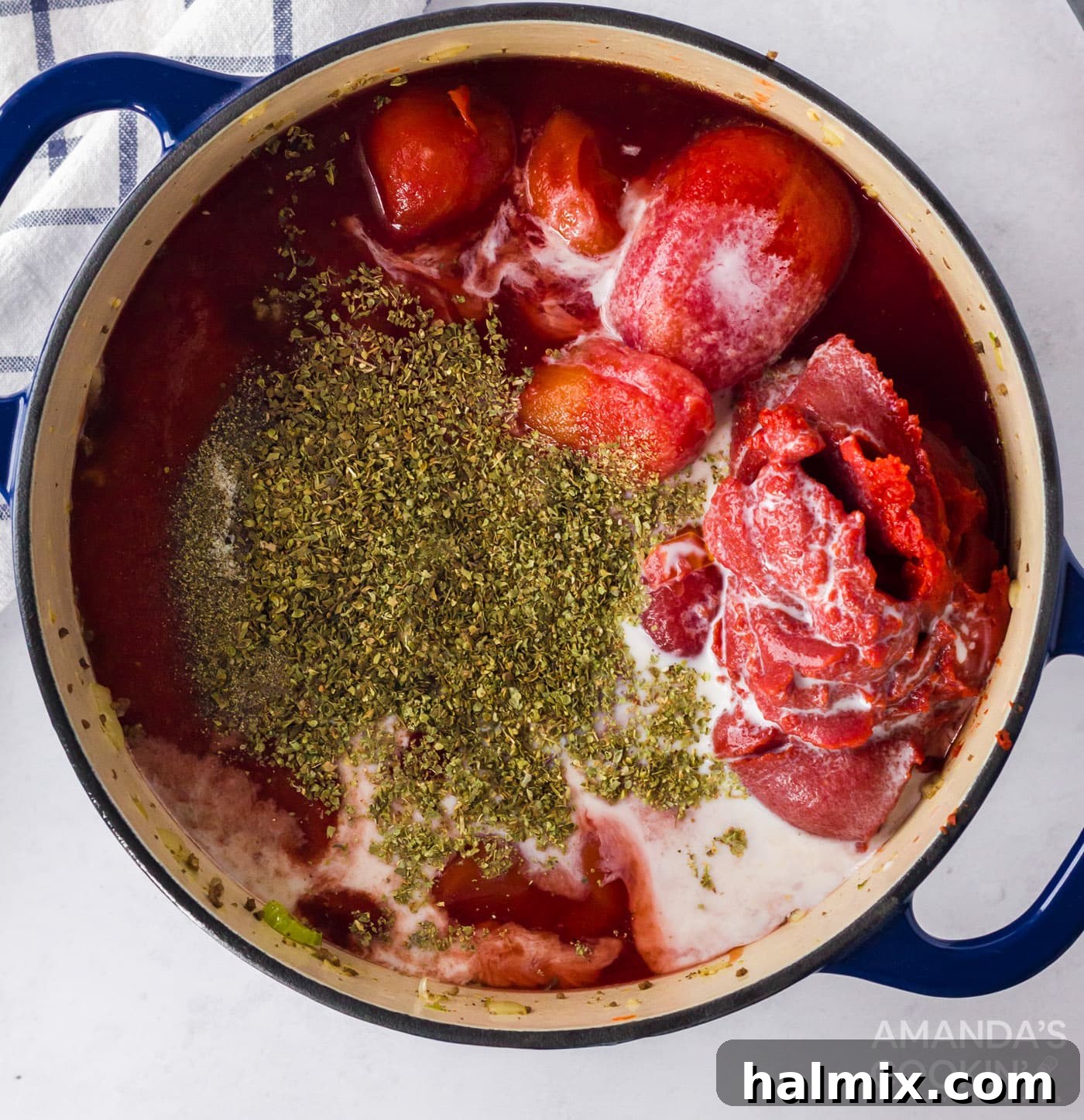
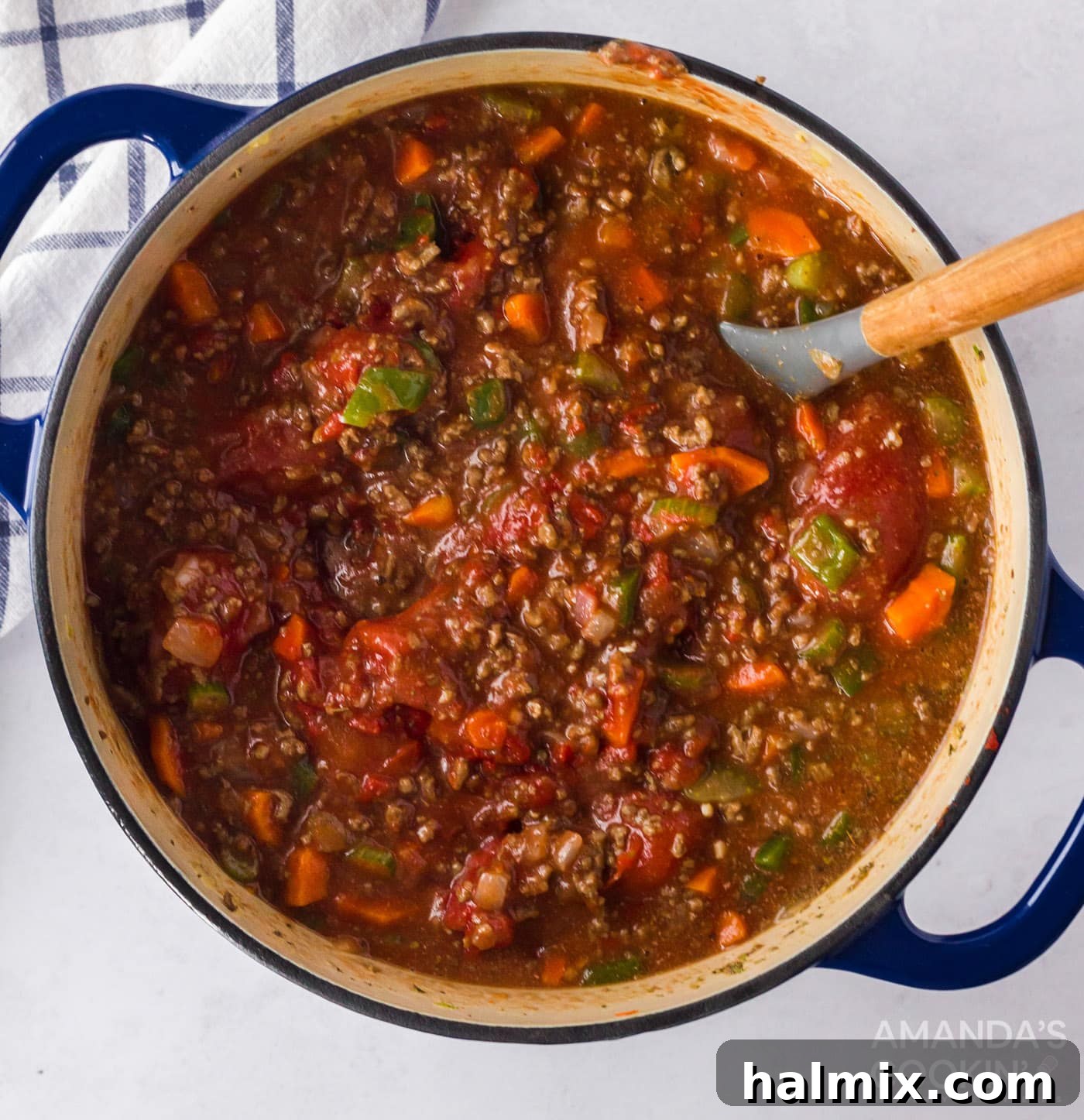
- **Simmer to Perfection:** Once the vegetables are tender, add all the remaining ingredients to the pot: the canned whole tomatoes (crush them by hand or with a spoon as you add them, or use diced tomatoes for a smoother sauce), tomato soup, tomato sauce, tomato paste, dry red wine, whole milk, granulated sugar, salt, crushed dried oregano, dried basil, dried marjoram, and ground black pepper. Stir everything thoroughly to ensure all ingredients are well combined. Reduce the heat to low, allowing the sauce to gently simmer, uncovered, for an extended period of 2 to 3 hours. Stir the sauce occasionally to prevent sticking and to encourage even flavor development. This long, slow simmer is what allows the flavors to deepen, meld, and transform into the luxurious, rich Bolognese you desire. The sauce will thicken and become incredibly fragrant, indicating it’s nearly ready to be enjoyed.
Frequently Asked Questions About Bolognese Sauce
Bolognese, or “Ragù alla Bolognese,” is a deeply flavorful and hearty meat-based sauce that proudly hails from Bologna, a city renowned for its culinary traditions in the Emilia-Romagna region of Italy. Dating back to the 18th century, it is not merely a pasta sauce but a carefully crafted ragu, characterized by a complex profile derived from a soffritto (a sautéed mixture of celery, carrots, and onions), various cuts of meat (often beef, sometimes with pork or veal), white or red wine, broth, and a small amount of tomatoes and milk or cream. The hallmark of an authentic Bolognese is its slow, gentle simmer, which allows the flavors to marry and deepen, creating an incredibly rich, savory, and satisfying sauce.
The primary distinction lies in its base: while many traditional pasta sauces, like marinara or arrabbiata, are tomato-centric, Bolognese is fundamentally a meat-based sauce. Tomatoes are present, but in a supporting role, contributing acidity and color without dominating the rich meat flavors. Other key differentiators include the presence of a soffritto (finely diced aromatic vegetables), the use of wine (often red, sometimes white), and critically, the addition of milk or cream. These elements collectively contribute to Bolognese’s signature creamy texture, profound savory depth, and well-balanced flavor profile, setting it apart from lighter, brighter, or more acidic tomato-forward sauces.
The inclusion of milk or cream in Bolognese is a traditional, yet often misunderstood, step that profoundly impacts the sauce. Its primary functions are threefold: firstly, it helps to tenderize the meat, contributing to the sauce’s incredibly soft and yielding texture. Secondly, the dairy introduces a luxurious richness and creaminess that rounds out the flavors, creating a more velvety mouthfeel. Lastly, milk or cream effectively helps to cut through and balance the acidity of the tomatoes and wine, preventing the sauce from tasting too sharp or sour. The result is a more mellow, harmonious, and deeply satisfying sauce with a beautifully complex flavor.
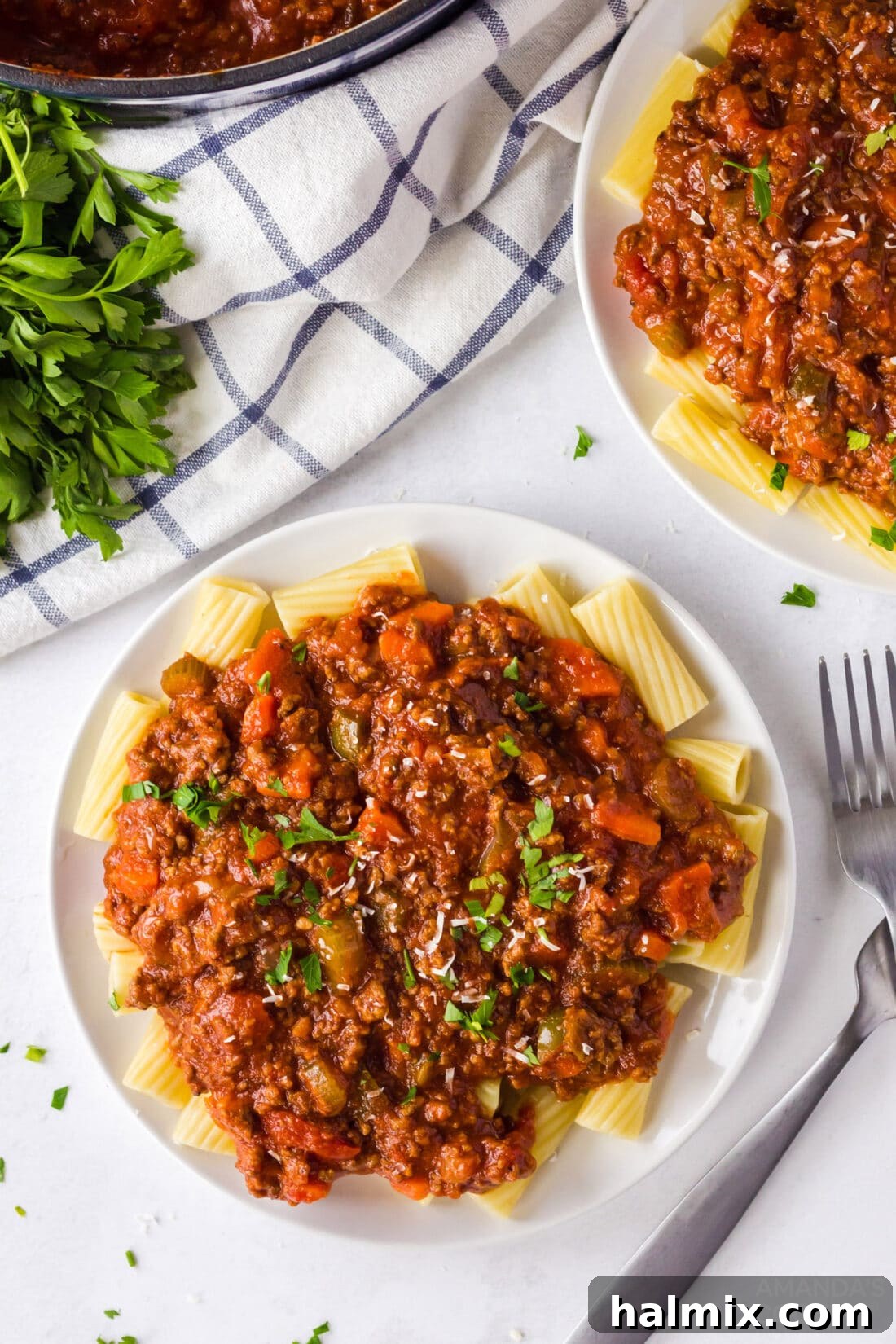
Bolognese is exceptionally versatile and pairs wonderfully with a variety of pasta shapes and other dishes. Traditionally, it is served with wide, flat pasta noodles such as pappardelle, tagliatelle, or fettuccine, as their broad surface area is perfect for clinging to the thick, rich sauce. Other excellent choices include tubular pastas like rigatoni or penne, which capture the meaty bits within their hollows, or even classic spaghetti for a hearty meal. Beyond pasta, Bolognese makes a fantastic layered sauce for lasagna, can be mixed with rice for a savory risotto-like dish, or used as a flavorful filling for stuffed peppers or zucchini. A generous sprinkle of freshly grated Parmigiano-Reggiano or Pecorino Romano cheese is always a welcome finish.
Absolutely! Bolognese sauce freezes beautifully, making it an ideal candidate for meal prepping. To freeze, allow the sauce to cool completely to room temperature. Then, transfer it to airtight containers or heavy-duty freezer bags, ensuring you leave a little headspace if using containers, as liquids expand when frozen. It can be stored in the freezer for up to three months without significant loss of quality. When you’re ready to enjoy it again, simply thaw the sauce overnight in the refrigerator. Reheat gently on the stove top over low heat, stirring occasionally, until it’s warmed through. A splash of broth or water can be added if it seems too thick after thawing.
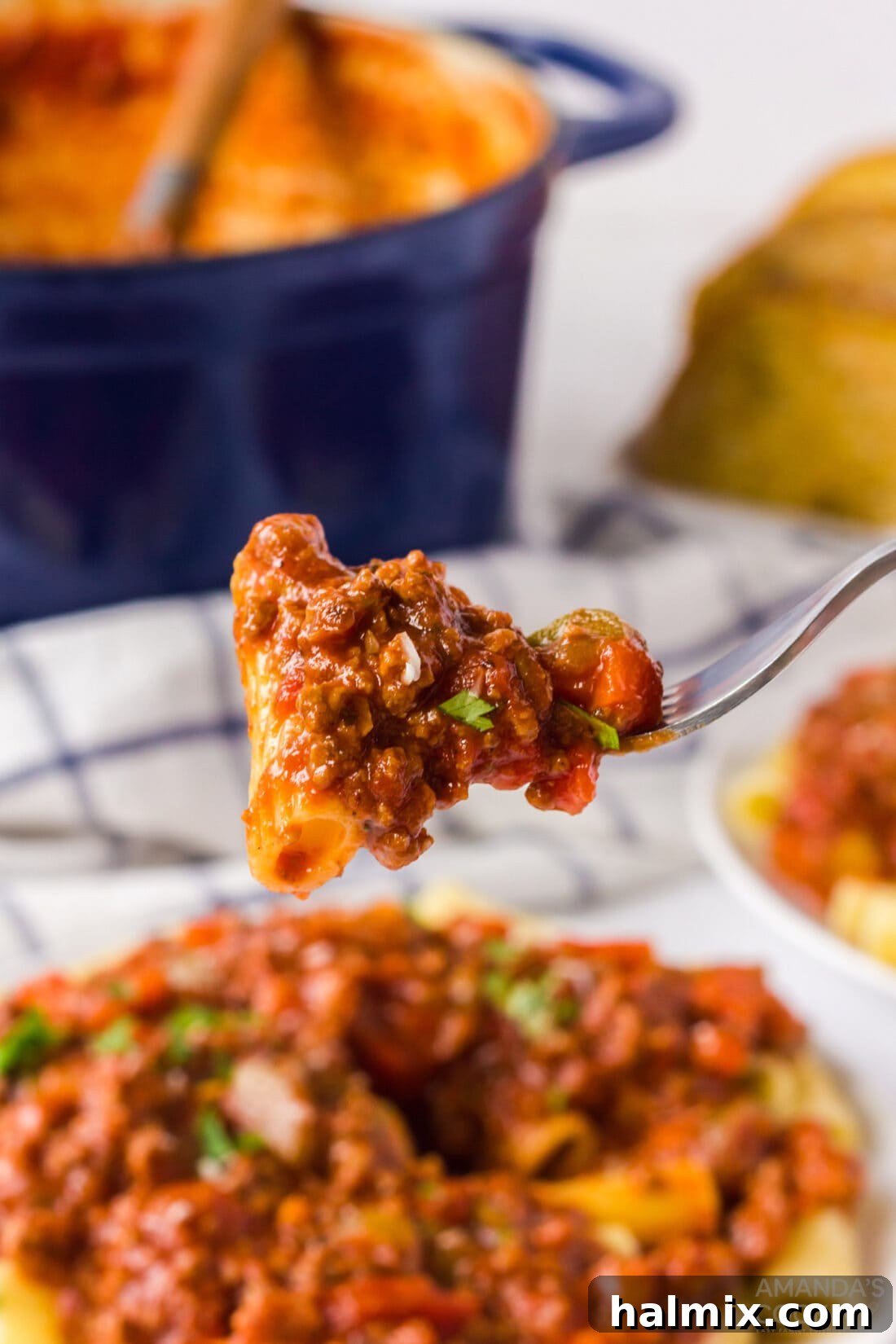
This rich and robust Bolognese sauce transforms a simple plate of pasta into a deeply satisfying weeknight meal. For an even more authentic Italian dining experience, serve it alongside some crusty homemade Italian bread, perfect for soaking up every last drop of that delectable sauce!
More Hearty Ground Beef Recipes You’ll Love
If you enjoy the versatility and comforting appeal of ground beef, you’re in for a treat! This economical and flavorful ingredient is a staple in many kitchens, forming the foundation for countless delicious dishes. From casseroles to classic Italian fare, ground beef offers endless possibilities for creating satisfying meals that the whole family will adore. Explore these other fantastic ground beef recipes:
- Hearty Southwest Ground Beef Casserole
- Classic Italian Lasagna with Meat
- Comforting Homemade Chili
- Delicious Baked Ziti
- Spaghetti and Meatballs in Rich Marinara Sauce
- Tender Veal Osso Buco (can be adapted with ground beef if preferred for a ragu)
I am passionate about cooking and baking, and I love sharing my culinary adventures and tested recipes with all of you! To make sure you never miss a new dish, I offer a convenient newsletter delivered straight to your inbox every time a new recipe is posted. Simply subscribe today and start receiving your free daily recipes, bringing fresh inspiration to your kitchen!
Classic Bolognese Sauce
IMPORTANT – Don’t forget to check the Frequently Asked Questions section above within the blog post for helpful tips and insights!
Print It
Pin It
Rate It
Save It
Ingredients
- 2 lbs ground beef
- 1.5 cups celery chopped, about 4 stalks
- 1.5 cups carrots chopped, about 2 large carrots
- 1 large onion diced
- 1 large green bell pepper diced
- 2 cloves garlic minced, or 1 tsp jarred minced garlic
- 28 oz can whole tomatoes
- 10.75 oz tomato soup 1 can
- 15 oz tomato sauce 1 can
- 12 oz tomato paste 1 can
- 1 cup dry red wine
- ¾ cup whole milk
- 1 Tbsp granulated sugar
- 1 Tbsp salt
- 1 tsp crushed dried oregano
- 1 tsp dried basil
- 1 tsp dried marjoram
- ½ tsp ground black pepper
Things You’ll Need
-
6 qt Dutch Oven
-
Chef’s knife
Before You Begin: Expert Tips & Variations
- This versatile Bolognese sauce can also be prepared in a slow cooker for maximum convenience. Simply brown the ground beef and sauté the vegetables as instructed, then transfer everything to your slow cooker. Cook on low for 2 to 4 hours, or until the sauce is rich and thoroughly combined. While I haven’t personally tested this recipe in an Instant Pot, a general estimate for pressure cooking a similar sauce would be around 45 minutes, though results may vary.
- For a smoother sauce texture, you can substitute the whole canned tomatoes with crushed or diced tomatoes. If you prefer a rustic sauce with larger tomato pieces, feel free to break up the whole tomatoes by hand directly in the pot as it simmers.
- The whole milk in this recipe contributes significantly to the sauce’s creaminess and richness. You can substitute it with heavy cream or half-and-half for an even more decadent result. While skim or 2% milk will work in a pinch, be aware that the final sauce may not achieve the same depth of creaminess or luxurious texture. That said, I have often omitted the milk entirely and still achieved a fantastic sauce, so don’t hesitate to adapt based on your preference or what you have on hand.
- For an even more complex flavor profile, experiment with a mixture of meats. Combining ground beef with ground pork or Italian sausage (mild or hot, depending on your preference) can add incredible depth and traditional Italian character to your Bolognese.
Instructions
-
Brown the ground beef in a large, heavy-bottomed pot or Dutch oven over medium-high heat. Break up the meat as it cooks. Once fully browned, drain most of the rendered fat, leaving approximately 2 tablespoons in the pot.
-
Add the chopped celery, carrots, onion, green bell pepper, and minced garlic to the pot. Cook over medium heat, stirring occasionally, for 5 to 10 minutes, or until the vegetables soften and become fragrant.
-
Stir in all the remaining ingredients: canned whole tomatoes (crushed), tomato soup, tomato sauce, tomato paste, dry red wine, whole milk, granulated sugar, salt, crushed dried oregano, dried basil, dried marjoram, and ground black pepper. Bring the mixture to a gentle simmer, then reduce the heat to low. Allow the sauce to simmer, uncovered, for about 2 to 3 hours, stirring occasionally, until it has thickened and the flavors have fully developed.
Nutrition Information (per serving)
Serving: 1 serving |
Calories: 449 cal |
Carbohydrates: 30g |
Protein: 25g |
Fat: 24g |
Saturated Fat: 9g |
Trans Fat: 1g |
Cholesterol: 83mg |
Sodium: 1891mg |
Potassium: 1542mg |
Fiber: 6g |
Sugar: 18g |
Vitamin A: 5355 IU |
Vitamin C: 47mg |
Calcium: 132mg |
Iron: 6mg
Tried this Recipe? Pin it for Later!
Follow on Pinterest @AmandasCookin or tag #AmandasCookin!
The recipes on this blog are tested with a conventional gas oven and gas stovetop. It’s important to note that some ovens, especially as they age, can cook and bake inconsistently. Using an inexpensive oven thermometer can assure you that your oven is truly heating to the proper temperature. If you use a toaster oven or countertop oven, please keep in mind that they may not distribute heat the same as a conventional full sized oven and you may need to adjust your cooking/baking times. In the case of recipes made with a pressure cooker, air fryer, slow cooker, or other appliance, a link to the appliances we use is listed within each respective recipe. For baking recipes where measurements are given by weight, please note that results may not be the same if cups are used instead, and we can’t guarantee success with that method.
The secret to a truly exceptional Bolognese lies in its patient simmer. Watch for small, consistent bubbles – a gentle, rhythmic boil that indicates the flavors are slowly but surely melding into a rich, cohesive masterpiece. This extended cooking time allows the aromatics to fully integrate with the meats and tomatoes, creating a sauce that is both deeply satisfying and incredibly complex. Enjoy the process as much as the meal itself, knowing that every stir contributes to a truly delicious Italian tradition.