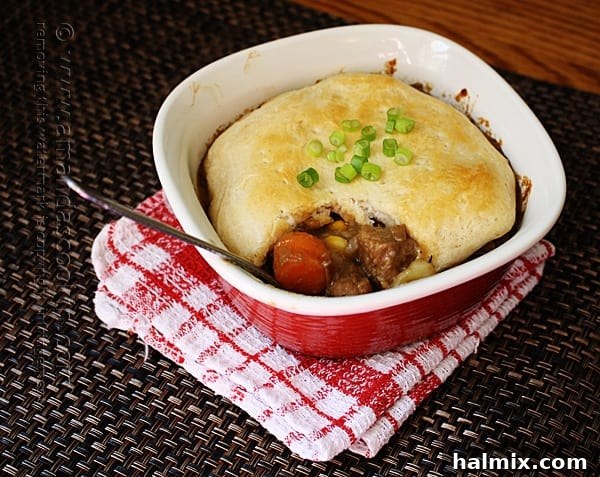
Hearty Beef Stew Biscuit Pot Pie: The Ultimate Comfort Food Experience
There’s a special kind of warmth that comes from a homemade pot pie. Growing up, my experience with pot pies often involved pulling them from the freezer and popping them into the oven. While undeniably convenient, there’s nothing quite like the rich, savory depth of a slow-cooked homemade beef stew. However, a traditional stew often feels incomplete without a comforting accompaniment, be it a crusty dinner roll or a fluffy biscuit. This culinary dilemma sparked an idea: why not combine the best of both worlds? This Beef Stew Biscuit Pot Pie brings together the robust flavors of a classic beef stew with the ease and satisfaction of a tender biscuit topping, creating an individualized comfort meal that’s both fast to prepare and incredibly fulfilling.
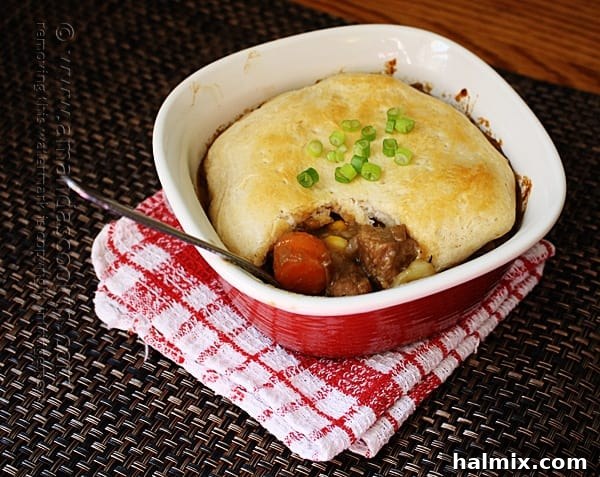
Why This Beef Stew Pot Pie is a Game-Changer for Weeknight Dinners
The beauty of this recipe lies in its ingenious simplicity. Traditional pot pies often demand the effort of preparing pie dough, a step that, while rewarding, can be time-consuming for a busy weeknight. Our solution? A ready-made biscuit topping that not only saves precious time but also introduces a delightful texture contrast to the tender beef and vegetables below. This isn’t just a shortcut; it’s an enhancement. The biscuit provides a soft, buttery counterpoint to the robust stew, soaking up all the incredible juices and ensuring every bite is packed with flavor. It transforms a humble stew into a complete, satisfying meal without the fuss.
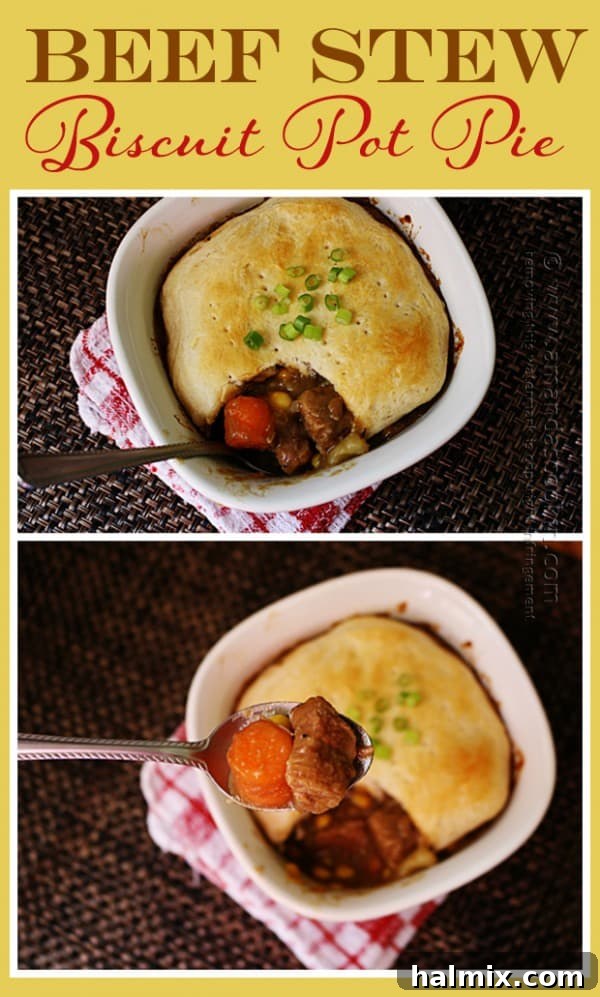
The Secret to Our Irresistible Biscuit Topping
Now, here’s a confession that might surprise you: I’m not typically a huge fan of biscuits. Dinner rolls? Absolutely. But biscuits, in their usual fluffy, tall glory? Not so much. I know, it sounds almost sacrilegious to some! However, I’ve discovered a way to wholeheartedly embrace them, and it’s by doing the exact opposite of what most biscuit connoisseurs would recommend: I flatten them. Yes, completely flat. This unconventional method, however, is precisely what makes them perfect for this pot pie. When baked on top of the stew, these flattened biscuits become a wonderfully crisp yet tender lid, capturing the stew’s steam and flavor while offering a delightful, golden-brown crust. It’s similar to the “bubble up” casseroles you might know, where multiple biscuits cover a large dish, but here we’re personalizing the experience for individual servings, ensuring everyone gets their own perfect portion of biscuit-topped goodness.
Crafting the Perfect Beef Stew Base
At the heart of any great pot pie is an exceptional filling, and our beef stew delivers just that. We start with tender beef stew meat, seasoned and browned to lock in flavor, then simmered slowly with a medley of vegetables and a secret ingredient: brewed coffee. The coffee, far from making the stew taste like breakfast, deepens the savory notes of the beef and adds a subtle richness that truly elevates the dish. Paired with beef broth and water, this creates a luxurious, thick gravy that coats every piece of meat and vegetable. The slow cooking process ensures the beef becomes fall-apart tender, while the potatoes, carrots, and mushrooms absorb all the wonderful aromas and flavors, making for a stew that’s satisfying enough on its own, but truly magical when crowned with a biscuit.
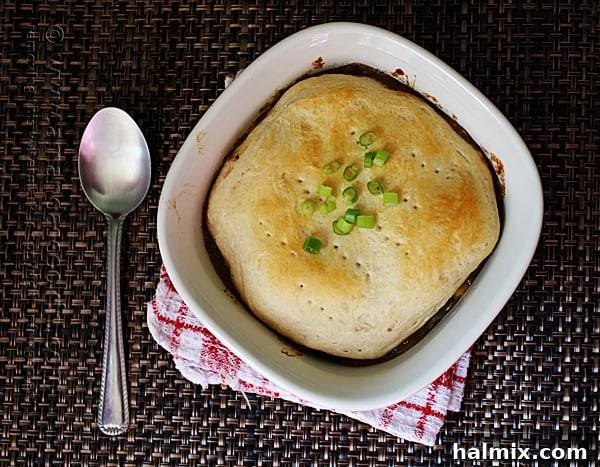
This recipe is incredibly adaptable. If you already have a beloved beef stew recipe, feel free to use it as the base for this pot pie. However, if you’re looking for a tried-and-true version, mine below is sure to become a new family favorite. And for those watching their carb intake, simply skip the biscuit and enjoy the hearty stew on its own – it’s delicious either way!
Beef Stew Biscuit Pot Pie Recipe
This hearty beef stew, topped with a golden-brown biscuit, is the ultimate comfort food. Perfect for a cozy family dinner.
- Servings: 6-8
- Prep Time: 30 minutes
- Cook Time: 2 hours 30 minutes – 3 hours 15 minutes
- Author: Amanda Davis
Ingredients
- 2 lbs beef stew meat, cut into 1-inch cubes
- ¼ cup all-purpose flour
- ½ teaspoon sea salt
- ¼ teaspoon freshly ground black pepper
- ½ teaspoon dried thyme
- 2 tablespoons olive oil
- ½ cup brewed coffee (regular or decaf)
- 2 cups beef broth
- 1 cup water
- 2 cups chopped potatoes (e.g., Yukon Gold or Russet, peeled if desired)
- 1 cup chopped carrots (about 2-3 medium carrots)
- 1 cup sliced mushrooms (button or cremini work well)
- 1 can large biscuits (standard 6-8 count refrigerated biscuits)
Instructions
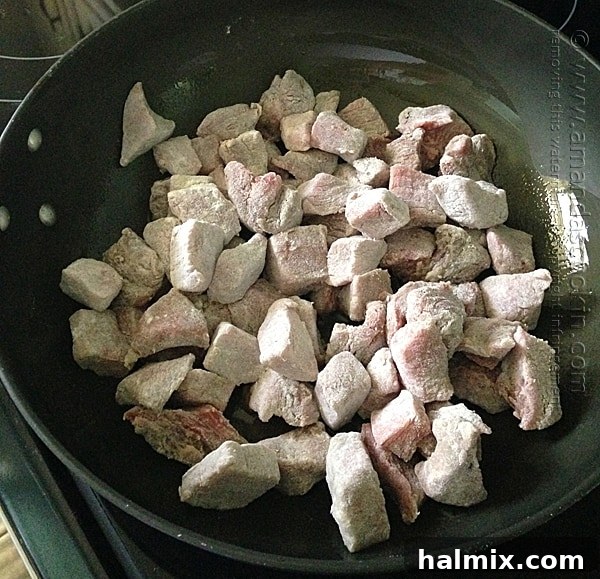
- Pat the beef stew meat dry with paper towels. This step is crucial for achieving a good sear. In a shallow bowl or plate, combine the flour, sea salt, freshly ground black pepper, and dried thyme. Toss the beef cubes in this mixture, ensuring each piece is evenly coated.
- Heat the olive oil in a large, heavy-bottomed skillet or Dutch oven over medium-high heat. Once the oil is shimmering, add the floured beef in batches. Do not overcrowd the pan, as this will steam the meat instead of browning it. Sear the meat on all sides until it develops a deep, golden-brown crust and is no longer pink in the center. Remove the browned beef and set it aside in a bowl.
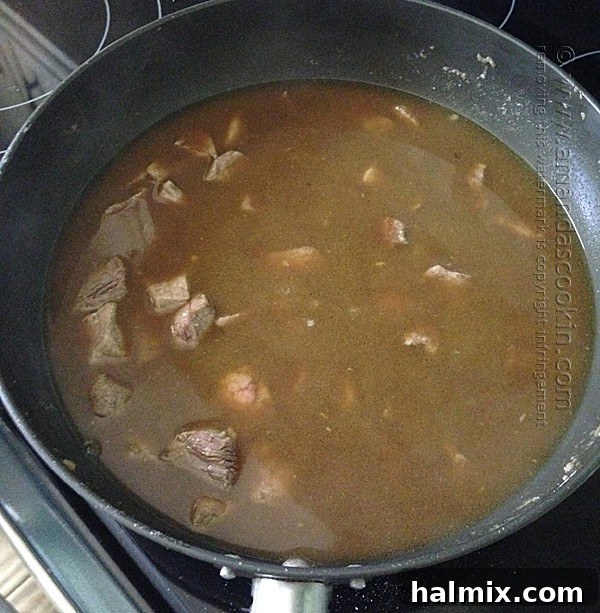
- Return all the browned beef to the skillet or Dutch oven. Pour in the brewed coffee, beef broth, and water. Stir well, making sure to scrape up any flavorful browned bits from the bottom of the pan – these fond bits are packed with flavor! Bring the liquid to a boil, then immediately reduce the heat to low. Cover the pot with a lid, leaving it partially open to allow some steam to escape. Simmer for one hour to begin tenderizing the beef.
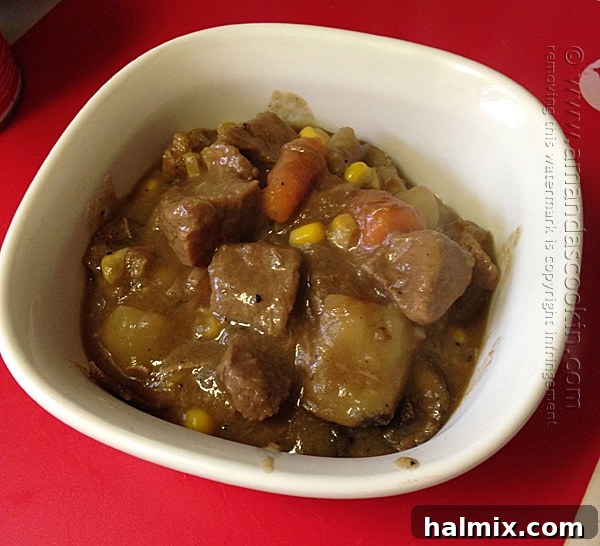
- After the first hour of simmering, add the chopped potatoes, chopped carrots, and sliced mushrooms to the stew. Stir gently to combine all the ingredients. Continue to cook the stew, covered with the lid partially open, for another 1 to 2 hours, or until the beef is incredibly fork-tender and the vegetables are soft. The stew should have thickened beautifully.
- While the stew is finishing, preheat your oven to 375°F (190°C). Prepare 6 to 8 individual oven-safe serving dishes, such as ramekins or small gratin dishes.
- Carefully divide the hot, bubbling beef stew evenly among the prepared individual serving dishes.
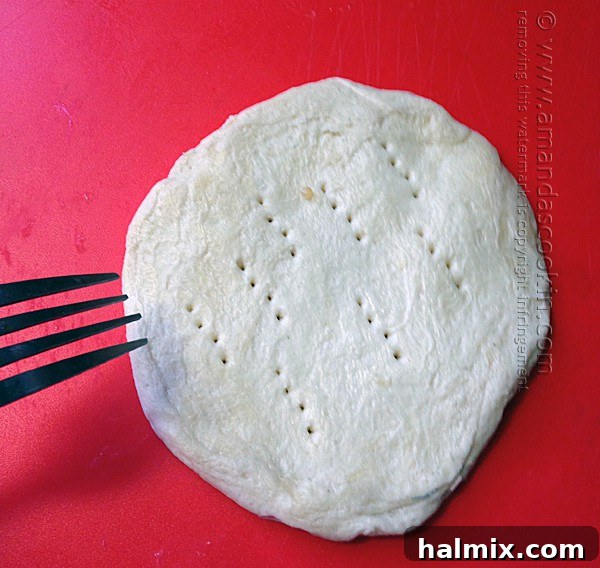
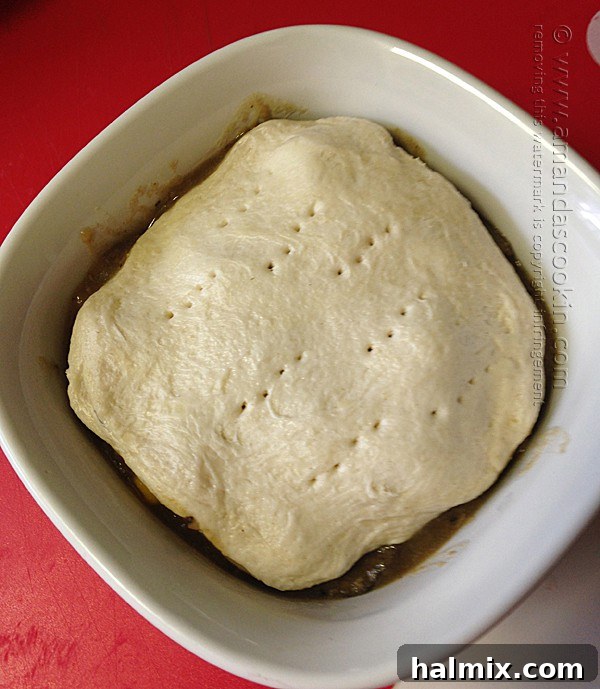
- Open the can of biscuits. Take one biscuit and place it on a clean surface. Using the heel of your hand, flatten the biscuit into a thin, round disc, aiming for a diameter slightly larger than the opening of your serving dish. Use a fork to poke several holes across the surface of the flattened biscuit. This helps prevent it from puffing up too much in the center and ensures even baking.
- Gently place the flattened and poked biscuit on top of the beef stew in one of the individual dishes. Repeat this process for the remaining biscuits and serving dishes, ensuring each pot pie has its own biscuit topping.
- Transfer the dishes to the preheated oven. Bake for 12 to 15 minutes, or until the biscuit topping is puffed, golden brown, and cooked through. The internal temperature of the biscuit should reach 200-210°F (93-99°C).
- Carefully remove the hot pot pies from the oven. Allow them to cool for a few minutes before serving. Enjoy this comforting and satisfying Beef Stew Biscuit Pot Pie!
Tips for Success: Mastering Your Beef Stew Pot Pie
- Sear for Flavor: Don’t skip browning the beef! This step creates a rich, complex flavor base for your stew. Work in batches to ensure the meat truly sears, rather than steams.
- The Power of Coffee: While optional, adding brewed coffee significantly enhances the savory notes of the beef without imparting a coffee taste. It adds depth and richness.
- Fork-Tender Test: The beef should be easily pierced and pulled apart with a fork. If it’s still tough after the recommended cooking time, continue simmering until it reaches the desired tenderness.
- Vegetable Timing: Adding vegetables later prevents them from becoming mushy. They cook perfectly during the final 1-2 hours of simmering.
- Don’t Overcrowd the Ramekins: Leave a little space at the top of your individual dishes for the biscuit to expand slightly.
- Flattening the Biscuits: The key to a good topping here is a thin, even biscuit. Flattening them with the heel of your hand or a rolling pin ensures they cook through nicely and provide a crisp crust. The fork pricks also help with even baking and prevent excessive puffing.
- Adjusting Thickness: If your stew is too thin, you can remove a cup of liquid, whisk in a tablespoon of cornstarch, and return it to the stew, simmering until thickened. If it’s too thick, add a little more beef broth or water.
Customization and Variations
One of the best things about this Beef Stew Biscuit Pot Pie is its versatility. Feel free to experiment with different ingredients to suit your taste or what you have on hand:
- Different Meats: While beef is classic, you could easily adapt this recipe for a chicken pot pie (using boneless, skinless chicken thighs or breast) or a lamb stew pot pie.
- Vegetable Medley: Add other root vegetables like parsnips or turnips, or leafy greens such as spinach or kale (add these in the last 15-20 minutes of stew cooking). Frozen peas and corn are also popular additions, added during the last 30 minutes.
- Herb Variations: Rosemary, bay leaves, or a touch of parsley can add different aromatic profiles to your stew. Fresh herbs added at the very end can brighten the flavors.
- Spice It Up: For a touch of heat, a pinch of red pepper flakes can be added to the flour dredging mixture.
- Cheese Please: For an extra layer of flavor, sprinkle a little shredded cheddar or Gruyere cheese on top of the stew before adding the biscuit.
Frequently Asked Questions (FAQs)
Here are answers to some common questions you might have about making this delicious Beef Stew Biscuit Pot Pie:
- Can I make the stew ahead of time? Yes, absolutely! The beef stew base can be made up to 2-3 days in advance. Store it in an airtight container in the refrigerator. When ready to serve, reheat the stew gently on the stovetop, then divide into dishes, top with fresh biscuits, and bake as directed.
- Can this recipe be frozen? The beef stew itself freezes beautifully. Allow it to cool completely, then transfer to freezer-safe containers for up to 3 months. Thaw in the refrigerator overnight before reheating. I do not recommend freezing the assembled pot pies with the biscuit topping, as the biscuits can become soggy upon thawing and baking.
- What if I don’t have individual serving dishes? You can use a single 9×13 inch baking dish. Divide the biscuits evenly over the top of the stew. Keep in mind that baking times may vary slightly, possibly needing a few extra minutes for the biscuits to fully brown.
- Can I use homemade biscuits? Yes, if you have a favorite homemade biscuit recipe, feel free to use it! Just ensure they are flattened before placing on the stew.
- Is the coffee essential? The coffee adds a wonderful depth of flavor but is not strictly essential if you prefer not to use it. You can substitute with an equal amount of beef broth.
More Comfort Food Creations You’ll Love
If you enjoyed this hearty Beef Stew Biscuit Pot Pie, be sure to explore some of our other satisfying comfort food recipes. These dishes are perfect for cozy evenings and family gatherings!
 Individual Tamale Pies |
Chicken Tostada Casserole | Sweet Italian Sausage, Pepper and Potato Bake | Sausage & Pepperoni Pizza Casserole |
This Beef Stew Biscuit Pot Pie is more than just a meal; it’s a warm hug in a bowl, a testament to how simple ingredients and smart techniques can create truly unforgettable comfort food. Whether you’re a long-time stew lover or new to the world of pot pies, this recipe offers a delightful twist that’s sure to satisfy. Enjoy the rich flavors, the tender beef, and that perfect, golden biscuit topping. Happy cooking!
The recipes on this blog are tested with a conventional gas oven and gas stovetop. It’s important to note that some ovens, especially as they age, can cook and bake inconsistently. Using an inexpensive oven thermometer can assure you that your oven is truly heating to the proper temperature. If you use a toaster oven or countertop oven, please keep in mind that they may not distribute heat the same as a conventional full sized oven and you may need to adjust your cooking/baking times. In the case of recipes made with a pressure cooker, air fryer, slow cooker, or other appliance, a link to the appliances we use is listed within each respective recipe. For baking recipes where measurements are given by weight, please note that results may not be the same if cups are used instead, and we can’t guarantee success with that method.