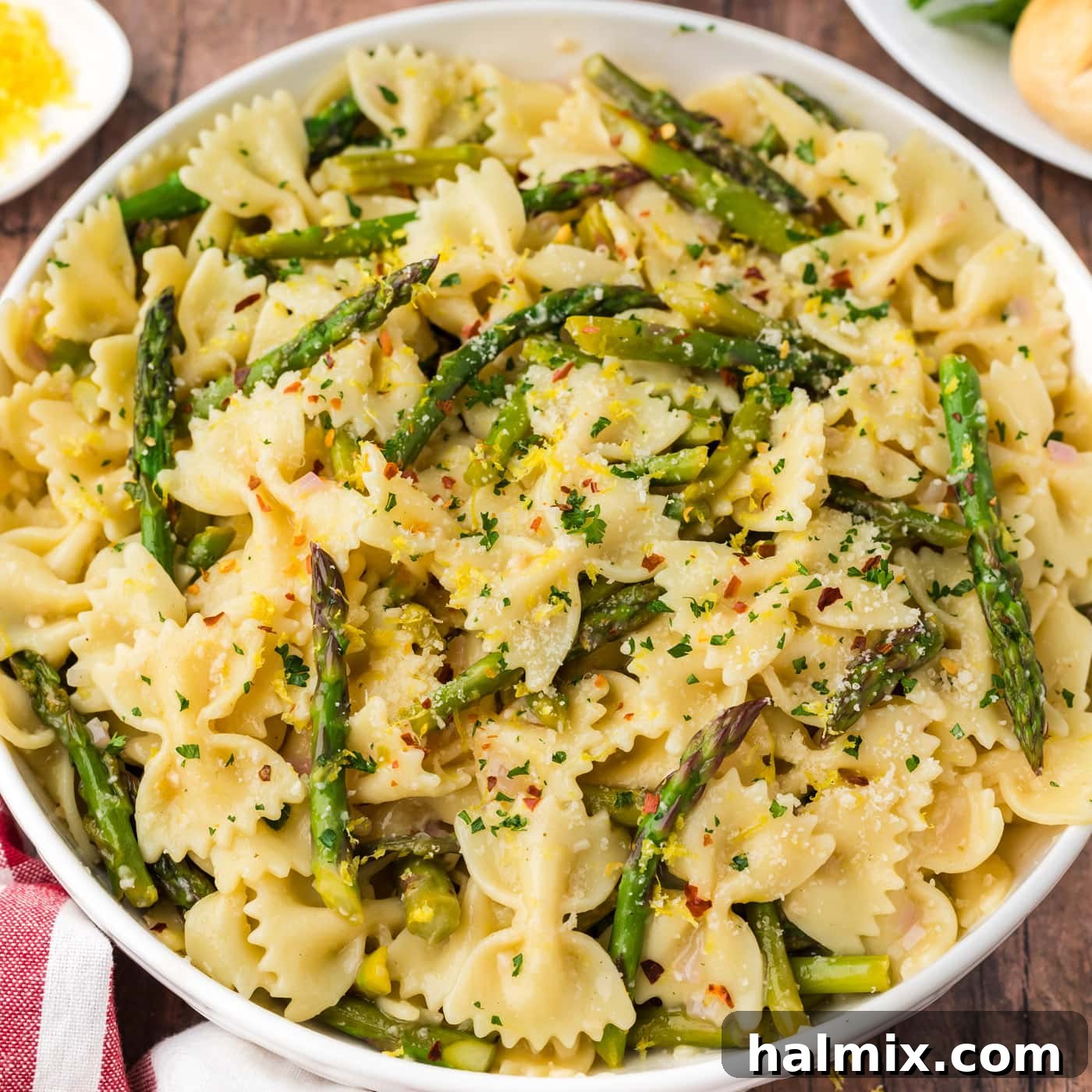
Welcome to a culinary journey that celebrates the vibrant flavors of spring with our exquisite Asparagus Pasta recipe. Imagine tender-crisp asparagus spears perfectly tossed with al dente bowtie pasta, all enveloped in a rich, buttery garlic and shallot sauce, finished with a bright burst of fresh lemon. This dish isn’t just a meal; it’s an experience – simple enough for a weeknight yet sophisticated enough to impress your dinner guests. It truly captures the essence of fresh ingredients and effortless elegance, proving that incredible flavor doesn’t have to be complicated.
Whether you’re a seasoned chef or a home cook looking for a delightful new addition to your repertoire, this Asparagus Pasta will quickly become a cherished favorite. Its harmonious blend of savory and tangy notes, coupled with varying textures, makes every bite a pleasure. Get ready to discover your new go-to recipe for spring entertaining or a comforting, quick family dinner.
Why This Asparagus Pasta Recipe is a Must-Try
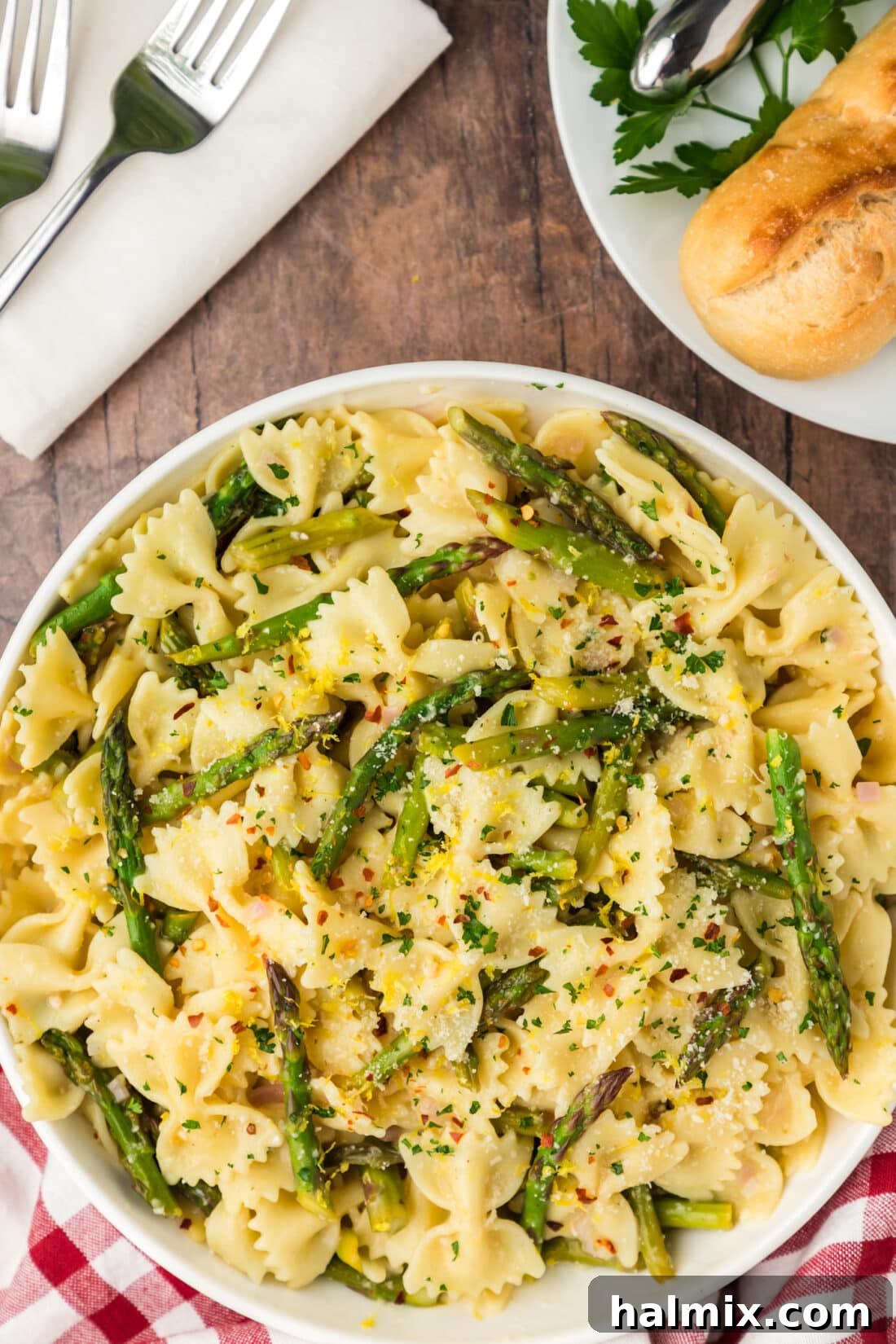
This Asparagus Pasta recipe stands out for several compelling reasons, making it an absolute winner in any kitchen. First and foremost, its refreshing lemon twist beautifully complements a luxurious base of buttery garlic and shallot pasta, harmonizing perfectly with the delicate, fresh asparagus. This creates a flavor profile that is both comforting and invigorating, a true delight for the palate.
One of the greatest advantages of this dish is its incredible speed and simplicity. You can whip up this entire meal in less than 30 minutes, making it an ideal choice for busy weeknights when you crave something homemade and delicious but are short on time. Despite its rapid preparation, the finished product exudes an air of sophistication that makes it perfectly suitable for entertaining guests. You’ll find yourself reaching for this recipe again and again, whether you’re hosting a casual gathering or simply treating yourself to a gourmet experience at home.
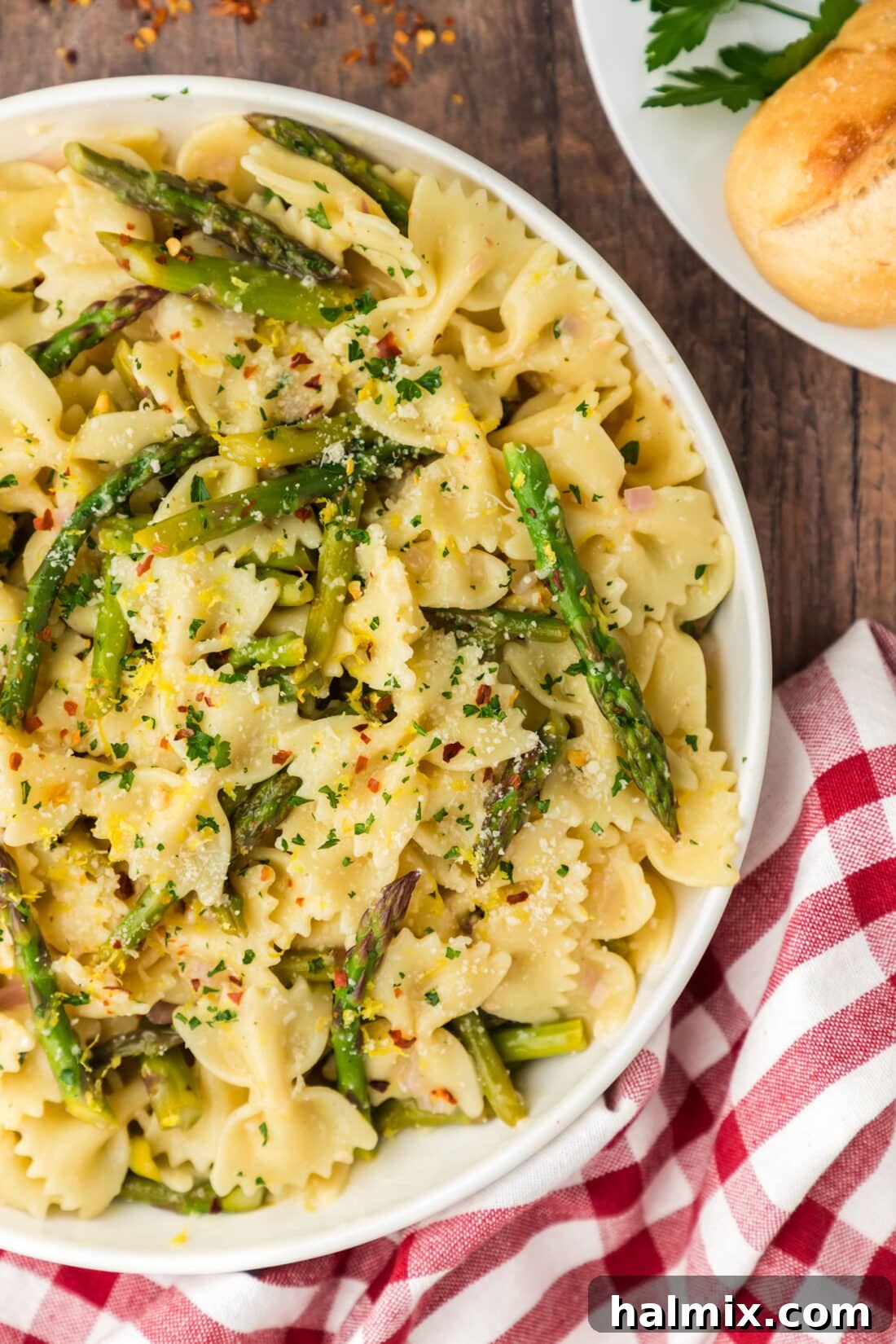
The versatility of this Asparagus Pasta is another key factor in its appeal. It serves as a fantastic foundation, easily adaptable to your preferences. By garnishing with a sprinkle of extra lemon zest, a pinch of red pepper flakes for a subtle kick, and a generous dusting of Parmesan cheese, you elevate the dish even further. These optional additions introduce layers of flavor and texture that transform a simple pasta into an impressive culinary creation with minimal effort.
Furthermore, this recipe is one of our favorite and most delicious ways to utilize a bounty of fresh asparagus, especially during its peak season. It celebrates the vegetable’s natural sweetness and crisp texture, making it the star of the show. Should you have any delightful leftovers, consider repurposing them into elegant prosciutto-wrapped asparagus, serving them as a sophisticated appetizer or a light snack. This recipe truly offers convenience, flavor, and elegance all in one delicious package.
Essential Ingredients for Your Asparagus Pasta
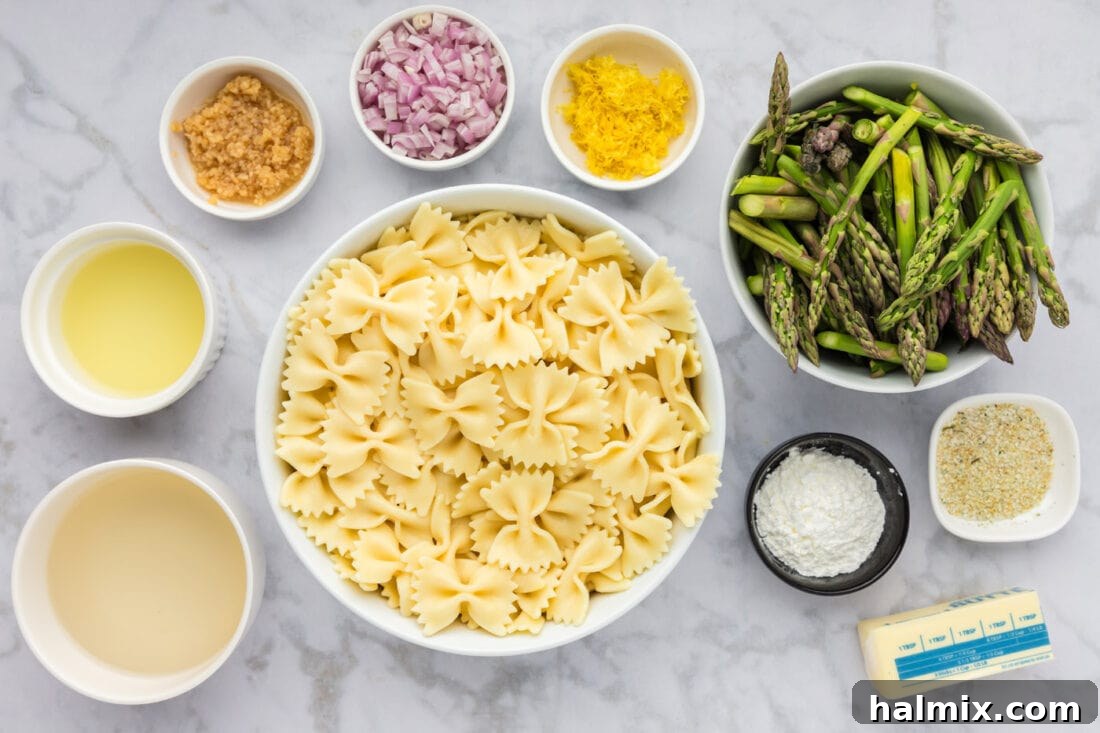
Crafting the perfect Asparagus Pasta begins with selecting fresh, high-quality ingredients. While the core components are straightforward, understanding their role and potential substitutions can enhance your cooking experience. You’ll find all precise measurements and detailed instructions in the printable recipe card located further down this post. Here’s a closer look at the key elements:
Ingredient Spotlight & Smart Substitutions
Let’s dive deeper into the ingredients that make this Asparagus Pasta so delectable, offering insights and flexible substitution options to suit your pantry and preferences:
PASTA – For this recipe, we’ve chosen elegant bowtie pasta (Farfalle) because its shape beautifully cradles the buttery lemon sauce and tender asparagus pieces. However, the beauty of pasta dishes lies in their adaptability. Feel free to use any type of pasta you adore! Excellent alternatives include:
- **Penne:** A classic choice, its ridged surface and tubular shape are perfect for capturing rich sauces.
- **Mostaccioli:** Similar to penne but with a smoother surface and often cut diagonally, offering a slightly different texture.
- **Angel Hair (Capellini):** For a lighter, more delicate feel, angel hair cooks quickly and creates a refined presentation.
- **Spaghetti or Linguine:** These long strands are wonderful for twirling and ensure every bite is coated in the savory sauce.
- **Fettuccine or Tagliatelle:** Wider flat noodles provide a more substantial mouthfeel, ideal for holding creamier sauces.
Consider the texture and how well the pasta will hold the sauce when making your selection. Gluten-free pasta options can also be used, simply follow package directions for cooking times.
FRESH ASPARAGUS – The star of our dish! Look for bright green, firm spears with tightly closed tips. Thinner spears tend to be more tender, while thicker ones offer a satisfying crunch. This recipe is a fantastic way to enjoy asparagus in season, highlighting its fresh, slightly earthy flavor. When trimming, gently bend each spear; it will naturally snap where the woody end begins, indicating where to cut.
BUTTER – Unsalted butter is crucial here as it forms the rich, foundational flavor of our sauce. Using unsalted allows you to control the overall sodium content of your dish. If you only have salted butter, reduce the amount of added garlic salt accordingly. Olive oil can be used for a lighter sauce, but butter provides an unmatched depth and creaminess.
GARLIC & SHALLOTS – These aromatics are indispensable, building a complex and fragrant base for the sauce. Minced fresh garlic offers a pungent, robust flavor, while shallots, a milder member of the onion family, contribute a subtle sweetness and delicate oniony note. Freshly minced is always best for maximum flavor. In a pinch, you can substitute shallots with finely minced yellow onion, though the flavor will be slightly stronger.
WHITE WINE – Incorporating a dry white wine (like Sauvignon Blanc, Pinot Grigio, or Chardonnay) into this recipe adds a wonderful depth of flavor, acidity, and a touch of sophistication. The alcohol cooks off, leaving behind a nuanced richness. If you prefer to omit alcohol, or don’t have wine on hand, high-quality chicken or vegetable broth makes an excellent substitute. Choose a low-sodium broth to maintain control over the seasoning.
LEMON – When it comes to lemon, fresh is undeniably best for this recipe. We strongly recommend skipping pre-bottled lemon juice, as its flavor can be dull and lacking compared to fresh. You’ll need a fresh lemon not only for its bright, tangy juice but also for its aromatic zest. The zest contains essential oils that contribute a profound lemony aroma and flavor, making a significant difference to the overall dish. Divide the zest as instructed – some for cooking into the sauce, and some for a fresh finish.
CORNSTARCH & WATER (SLURRY) – This simple mixture is used to create a light slurry, which acts as a gentle thickening agent for our sauce. It helps bind the sauce to the pasta without making it heavy or overly rich. If you prefer a slightly thicker sauce, you can adjust the cornstarch quantity slightly. A roux (butter and flour) could also be used, but cornstarch offers a lighter, gluten-free option.
GARLIC SALT – This seasoning helps tie all the flavors together. Start with a small amount and taste as you go, adjusting to your preference. Remember that garlic salt already contains sodium, so be mindful when adding extra salt.
By understanding these ingredients, you’re well-equipped to create a truly spectacular Asparagus Pasta, customizing it to your taste while maintaining its core deliciousness.
Crafting Your Delicious Asparagus Pasta: A Step-by-Step Guide
These step-by-step photos and detailed instructions are designed to help you visualize each stage of making this delightful recipe. For the complete printable version, including all measurements and a concise instruction list, please refer to the recipe card at the bottom of this post.
- Begin by preparing your asparagus. Hold each spear and gently bend it near the bottom. It will naturally snap where the tough, woody end meets the tender stalk. Discard the woody ends. Once trimmed, cut the tender asparagus spears in half crosswise. This ensures they cook evenly and are easy to integrate with the pasta. Set these vibrant green pieces aside.
- Next, cook your chosen pasta according to package directions, aiming for an al dente texture. This means it should be firm to the bite, not mushy, as it will continue to cook slightly when added to the sauce. Once cooked, drain the pasta under cold water to immediately halt the cooking process.
CHEF’S TIP – To prevent your pasta from clumping or drying out, you have two excellent options. You can either keep the drained pasta submerged in clean, cold water until ready to use, or you can toss it with a tablespoon of olive oil. Both methods will ensure your pasta remains perfectly separate and moist, ready to absorb the delicious sauce.
- In a large, deep-sided skillet (or a spacious pan), melt the unsalted butter over medium-high heat. Allow it to fully melt and just begin to sizzle, indicating it’s ready for the aromatics.
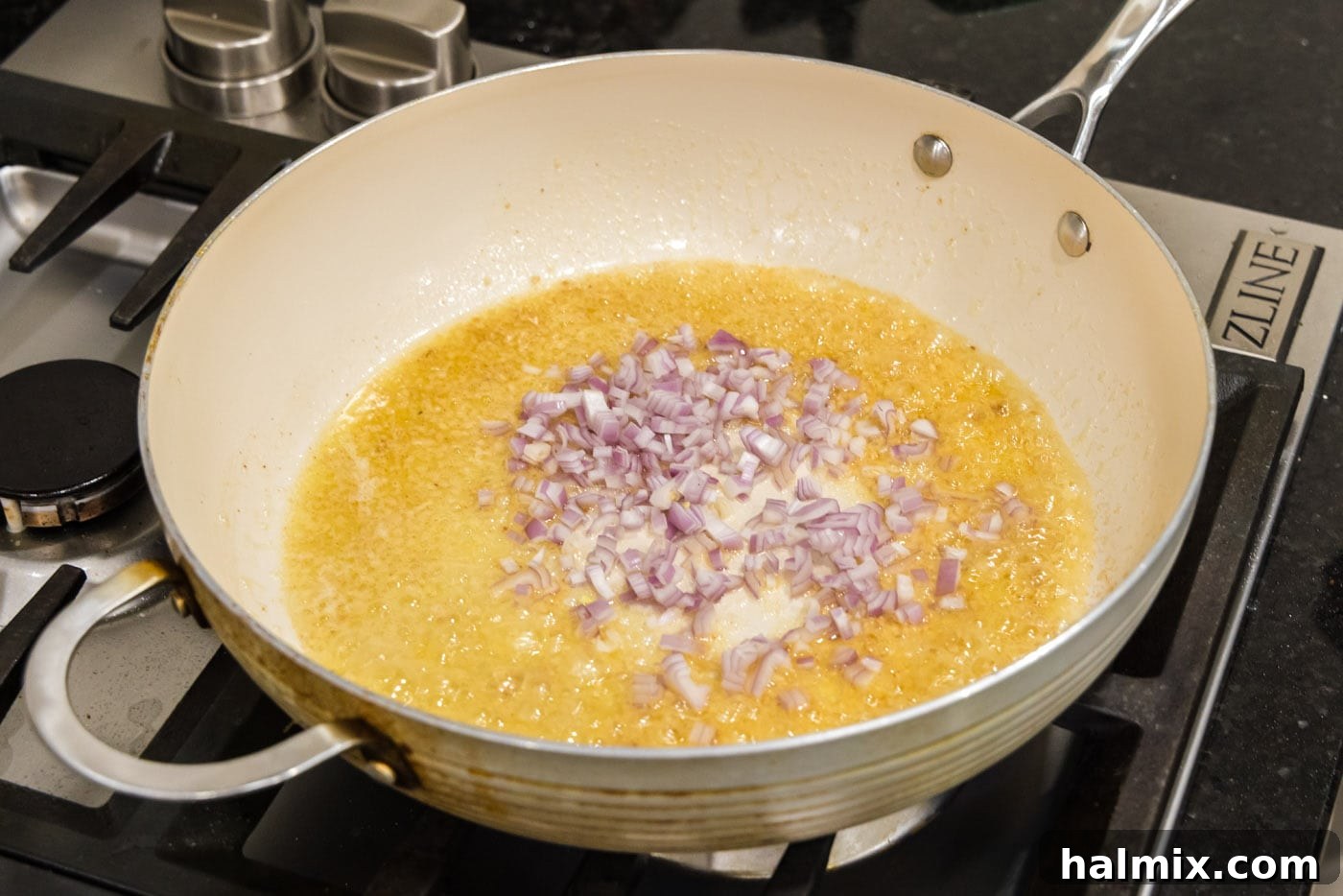
- Add the minced garlic and shallots to the melted butter. Sauté for 1-2 minutes, stirring frequently, until they become wonderfully fragrant and softened. Be careful not to brown them too much, as this can lead to a bitter taste. The goal is to release their sweet and savory aromas.

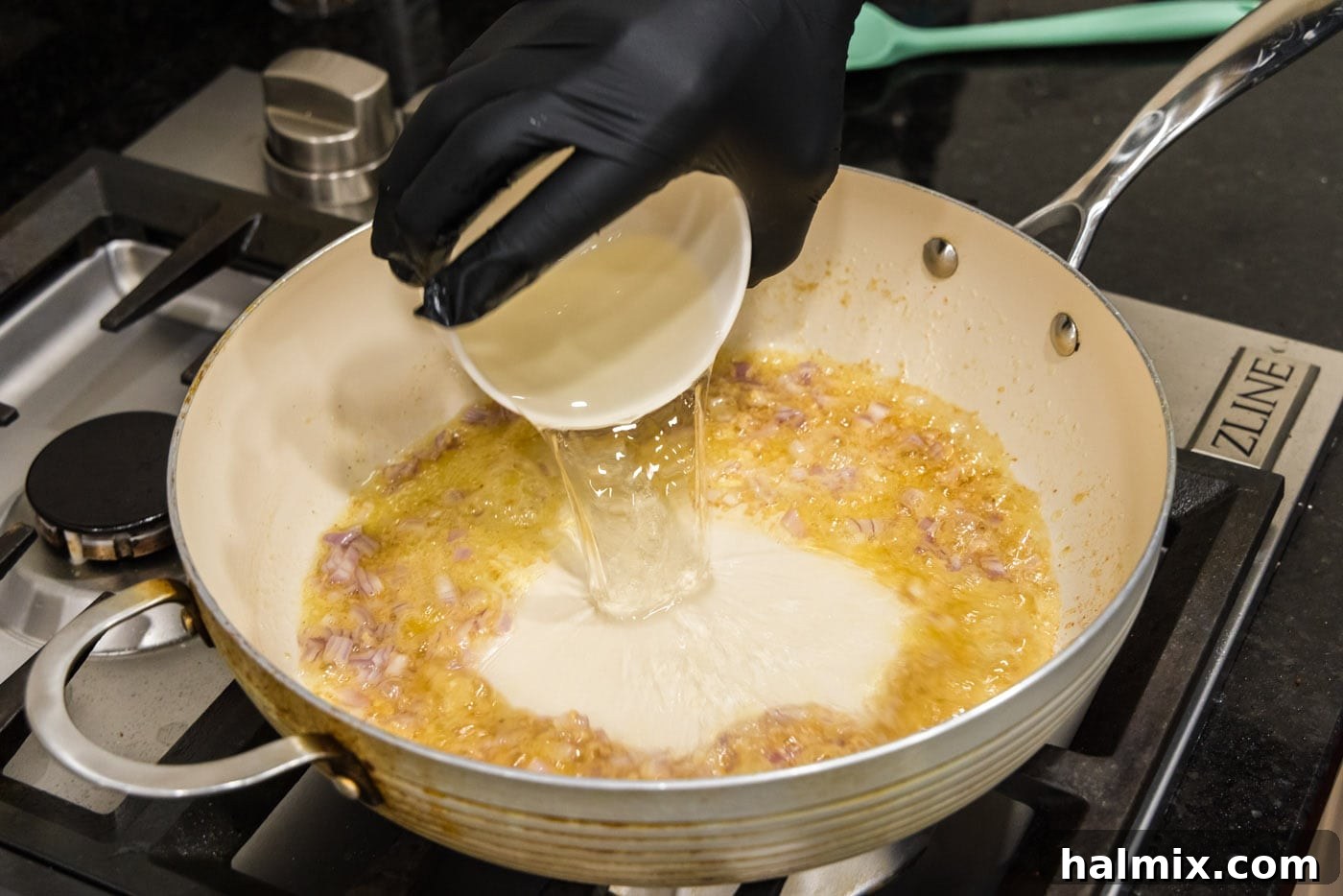
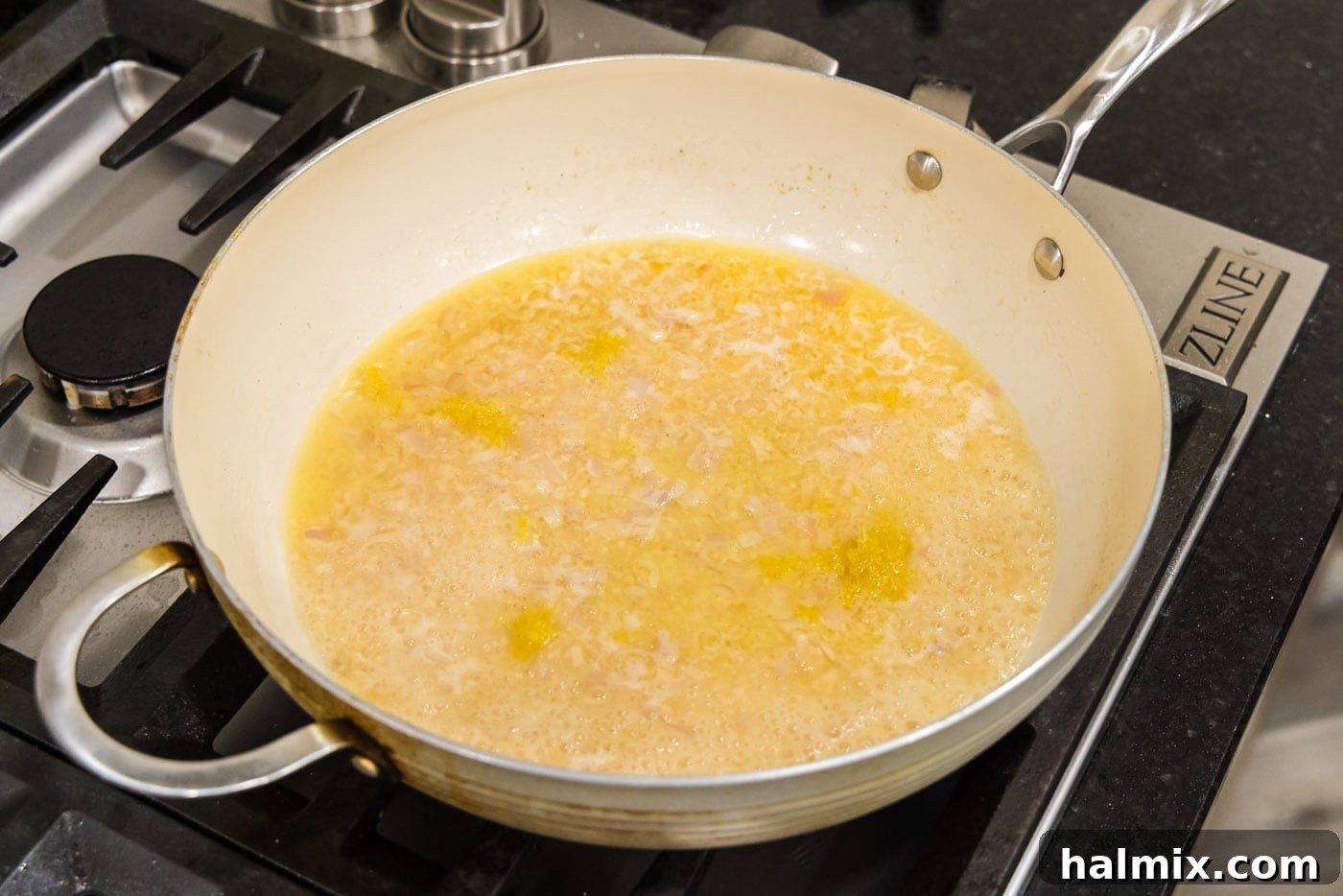
- Carefully pour in the white wine (or broth, if substituting) into the skillet. Immediately add half of the lemon zest. Stir well to combine all the ingredients. The wine will deglaze the pan, picking up all the flavorful bits from the bottom.
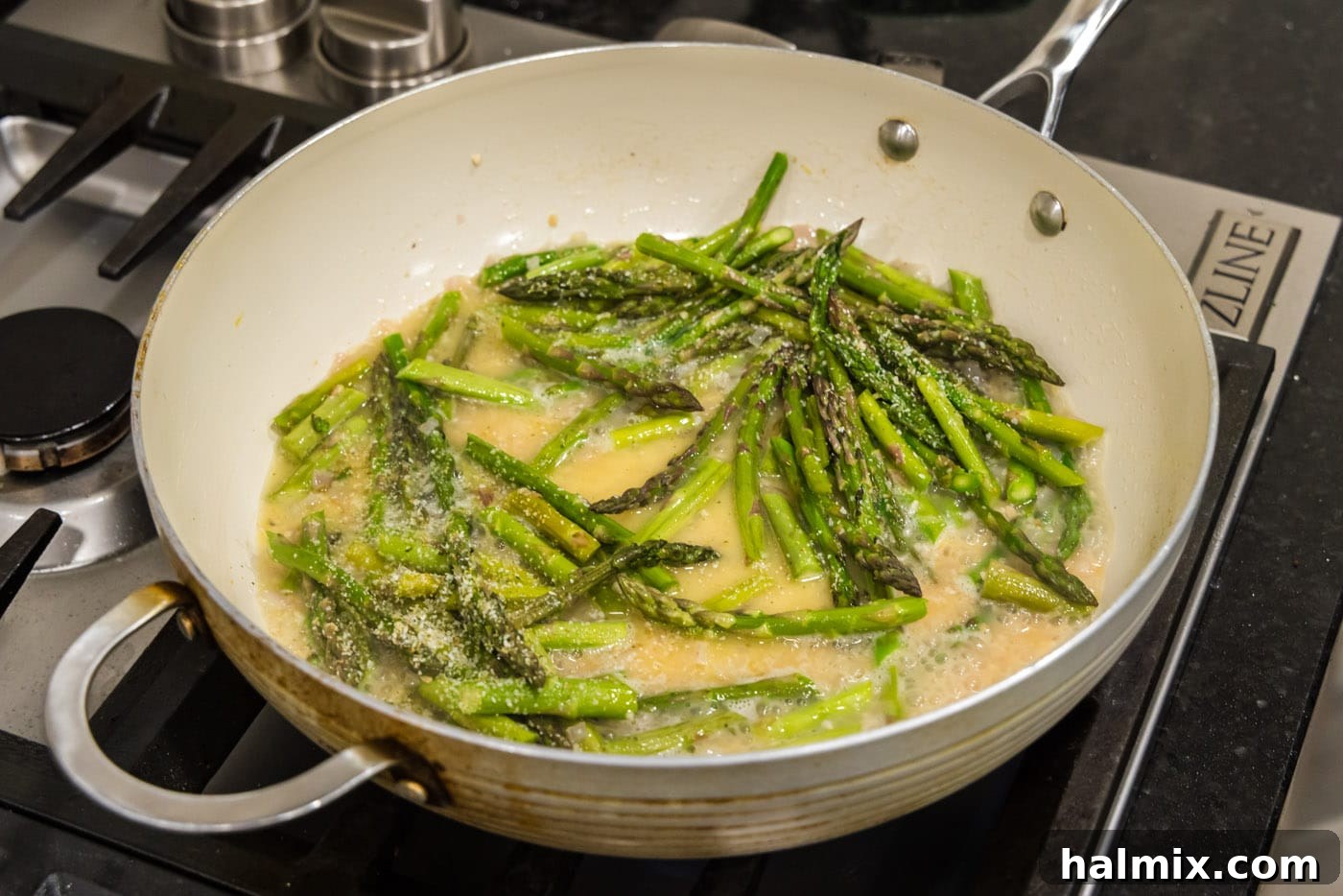
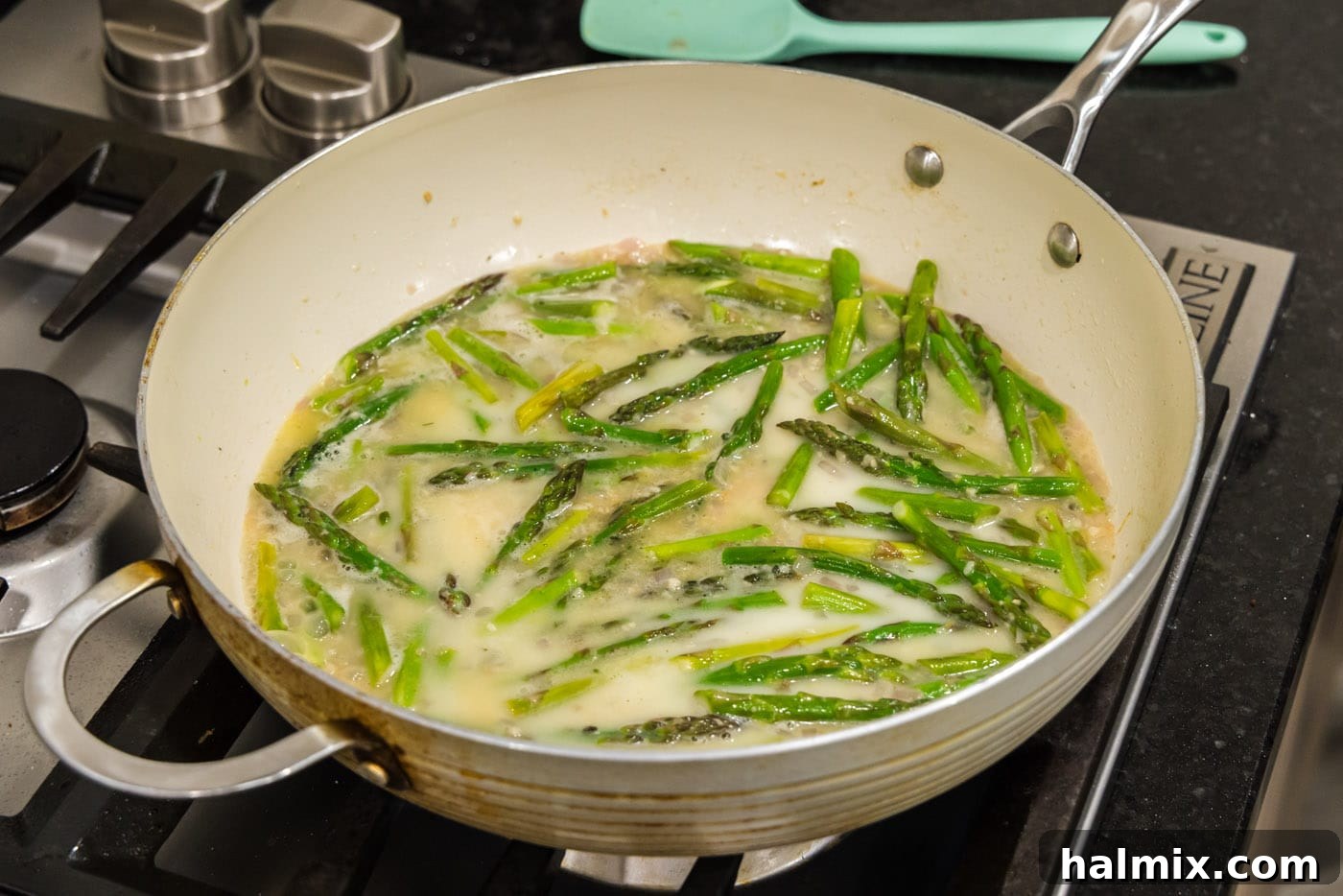
- Bring the sauce to a gentle boil, then add the prepared asparagus spears. Toss them thoroughly to coat them in the simmering sauce. Season the mixture to taste with garlic salt. Allow the asparagus to cook for a few minutes, until they are tender-crisp – vibrant green and still retaining a slight bite. This ensures they don’t become mushy.
- While the sauce continues to simmer and the asparagus cooks, prepare a slurry by whisking together the cornstarch and water in a small bowl until smooth. Pour this slurry into the skillet, stirring constantly. Continue cooking and stirring until the sauce begins to visibly thicken to your desired consistency. This adds a lovely body to the sauce, helping it cling beautifully to the pasta.
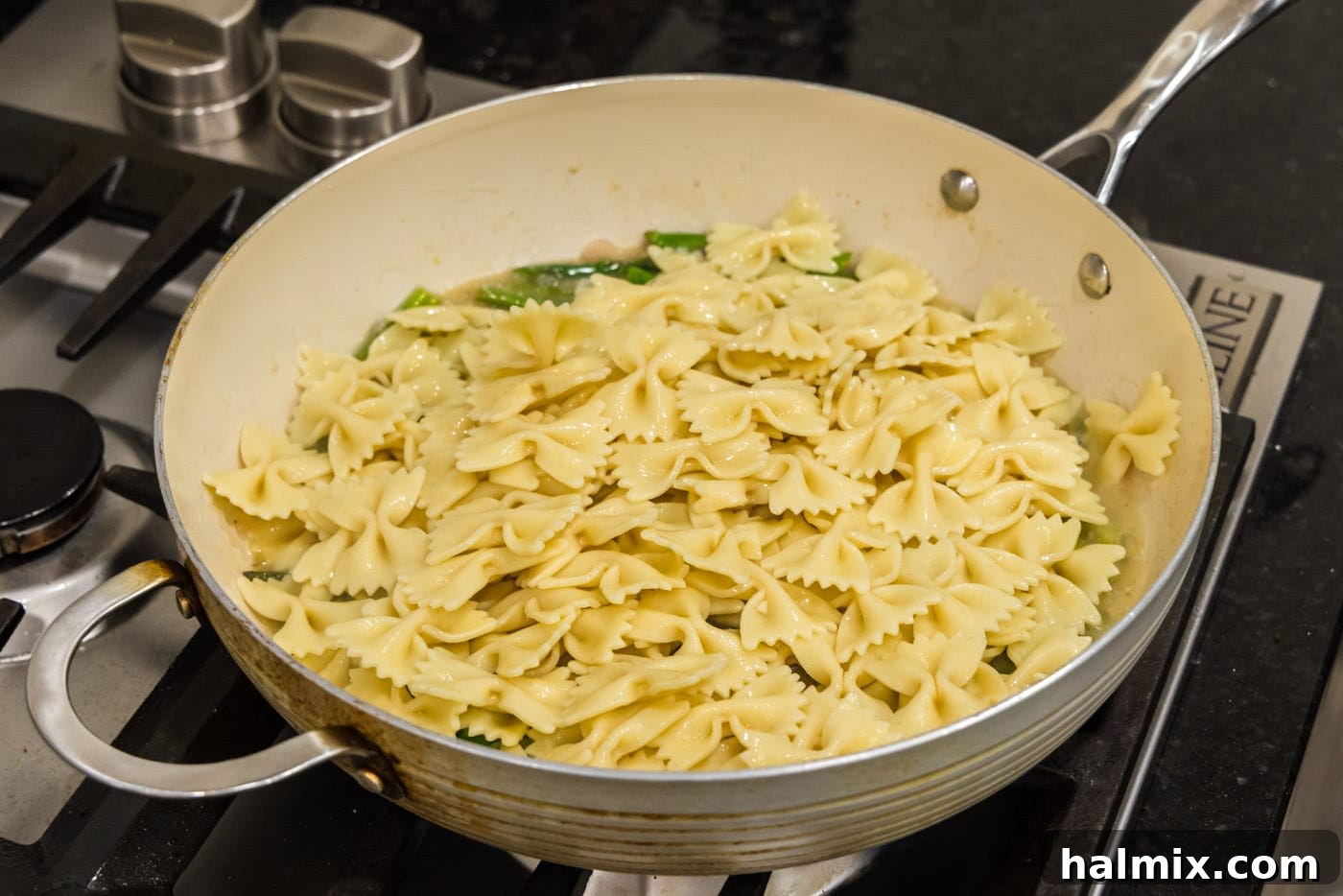
- Add the cooked and drained pasta directly into the skillet with the thickened sauce and tender asparagus. Using tongs or a large spoon, toss everything together thoroughly, ensuring every piece of pasta and asparagus is generously coated in the flavorful sauce.
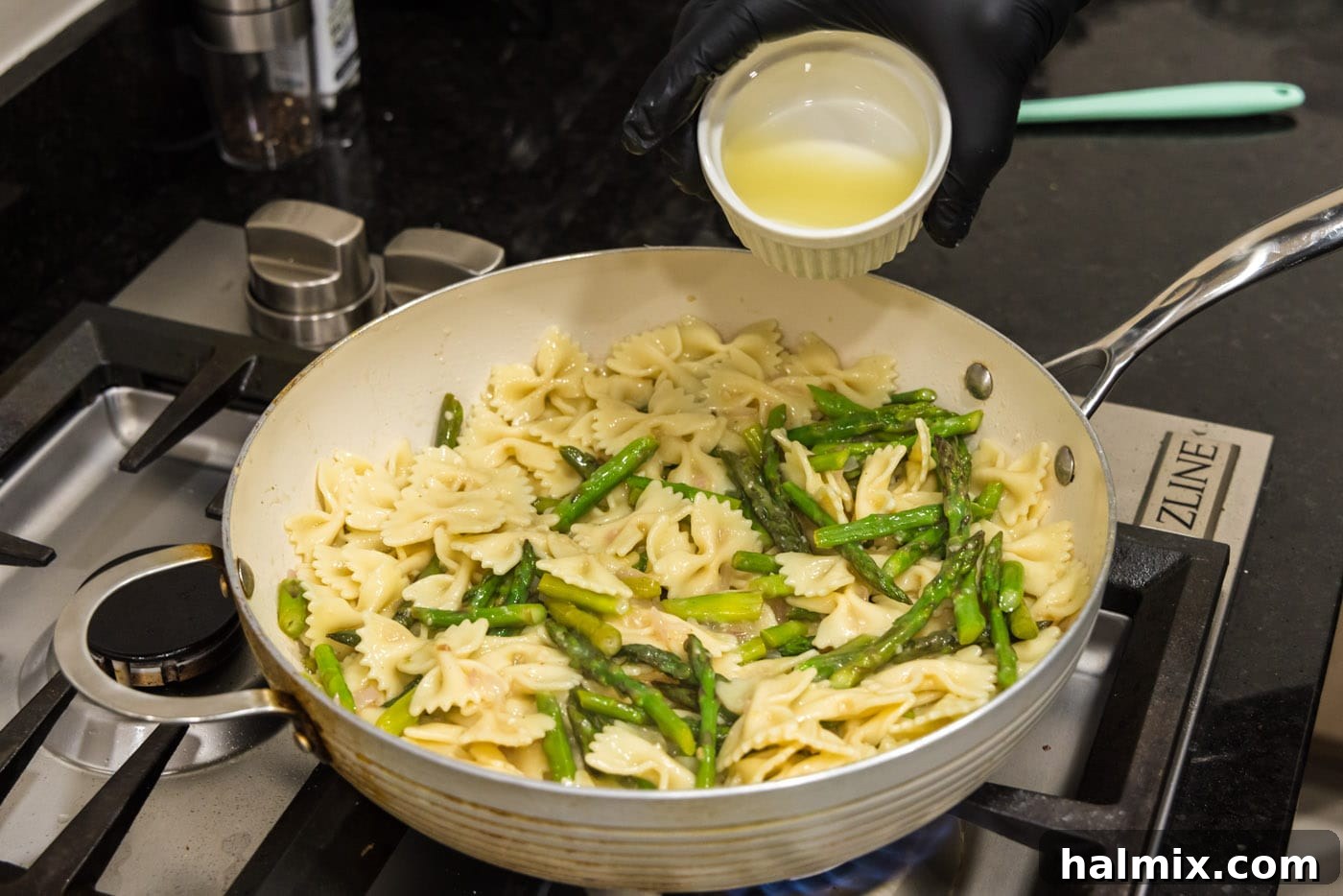
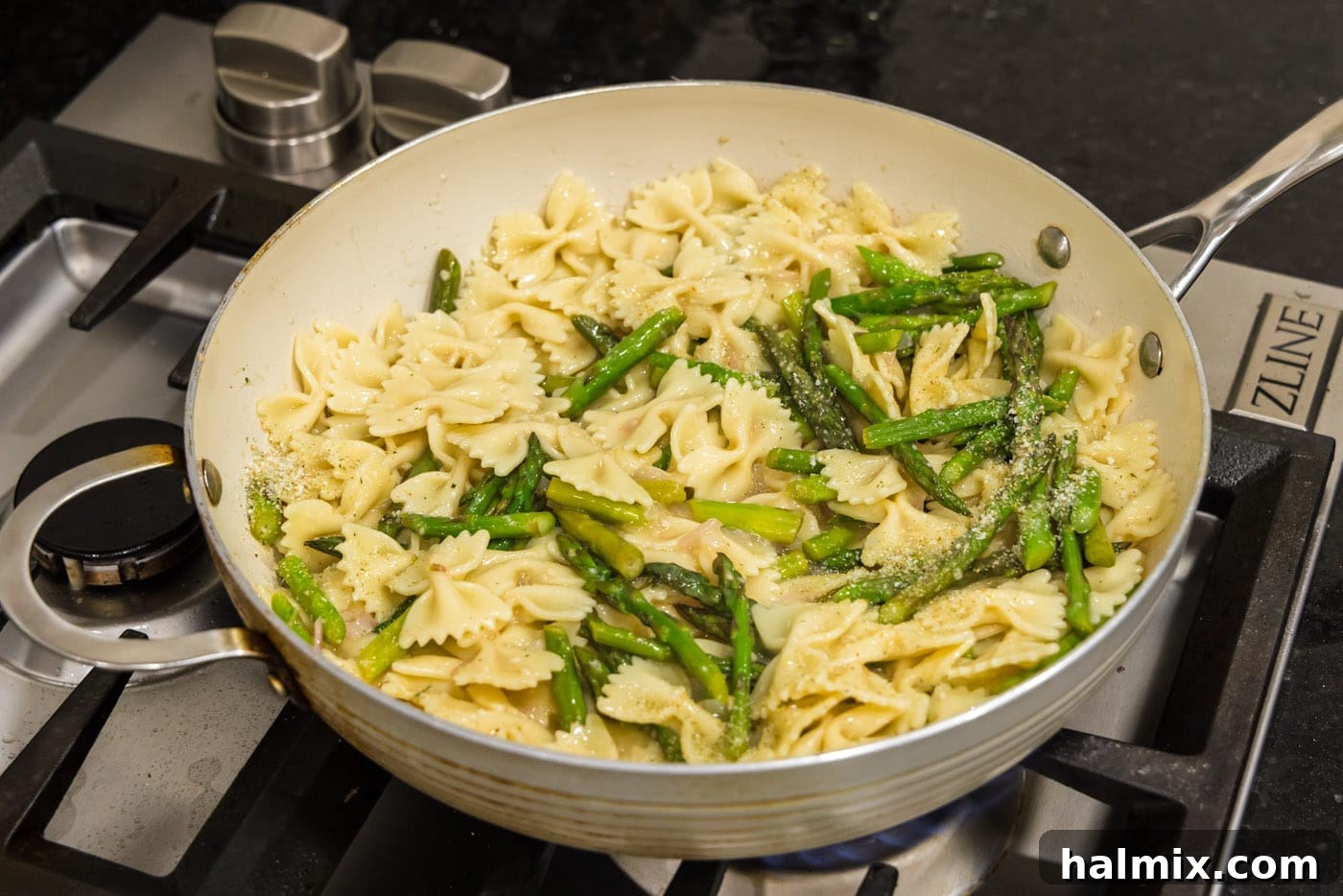
- Finally, pour in the fresh lemon juice, add more garlic salt if needed (taste and adjust!), and sprinkle in the remaining lemon zest. Give it one last good toss to combine and heat everything through for just a minute or two. The fresh lemon juice and zest added at the end will brighten the entire dish, providing a final burst of vibrant flavor.
Frequently Asked Questions & Expert Tips for Asparagus Pasta
This Asparagus Pasta is wonderfully versatile, making it easy to customize and enhance with additional ingredients. To add a protein boost and even more savory depth, consider incorporating cooked:
- **Bacon or Prosciutto:** Crispy bits of bacon or pan-fried prosciutto bring a salty, smoky element that perfectly complements the asparagus and lemon.
- **Chicken:** Shredded rotisserie chicken or diced, pan-seared chicken breast makes this a heartier meal.
- **Shrimp:** Quick-cooking shrimp are an excellent choice for a light yet satisfying seafood option. Sauté them briefly in the skillet before adding the garlic and shallots, or cook them separately and add them in with the pasta.
- **Sausage:** Italian sausage (mild or spicy), cooked and crumbled, adds a robust, herb-infused flavor.
We highly recommend not skipping the optional garnishes of fresh lemon zest, a pinch of red pepper flakes, and grated Parmesan cheese. The extra lemon zest brightens the entire dish, red pepper flakes add a subtle warmth without overwhelming heat, and Parmesan cheese provides a crucial salty, umami finish that truly makes the flavors sing. These simple additions can transform your pasta from great to extraordinary.
Proper storage is key to enjoying your delicious Asparagus Pasta for days to come. Store any leftovers in an airtight container and keep it in the refrigerator for up to 4 days. This ensures the pasta remains fresh and prevents it from absorbing refrigerator odors. When you’re ready to enjoy it again, you have a couple of excellent reheating options:
- **Microwave:** For a quick reheat, place your desired portion in a microwave-safe dish. Add a splash of water or a tiny knob of butter, cover loosely, and heat in 30-second intervals, stirring in between, until warmed through. The added liquid helps remoisten the pasta and sauce.
- **Stovetop:** For best results, reheat the pasta in a skillet over medium-low heat. Add a small amount of water or chicken/vegetable broth to the pan before adding the pasta. Stir gently and cook until warmed through. This method helps the sauce regain its creamy consistency and prevents the pasta from drying out.
Remember that asparagus is best consumed relatively fresh, so while it reheats well, aim to enjoy it within the recommended timeframe for optimal taste and texture.
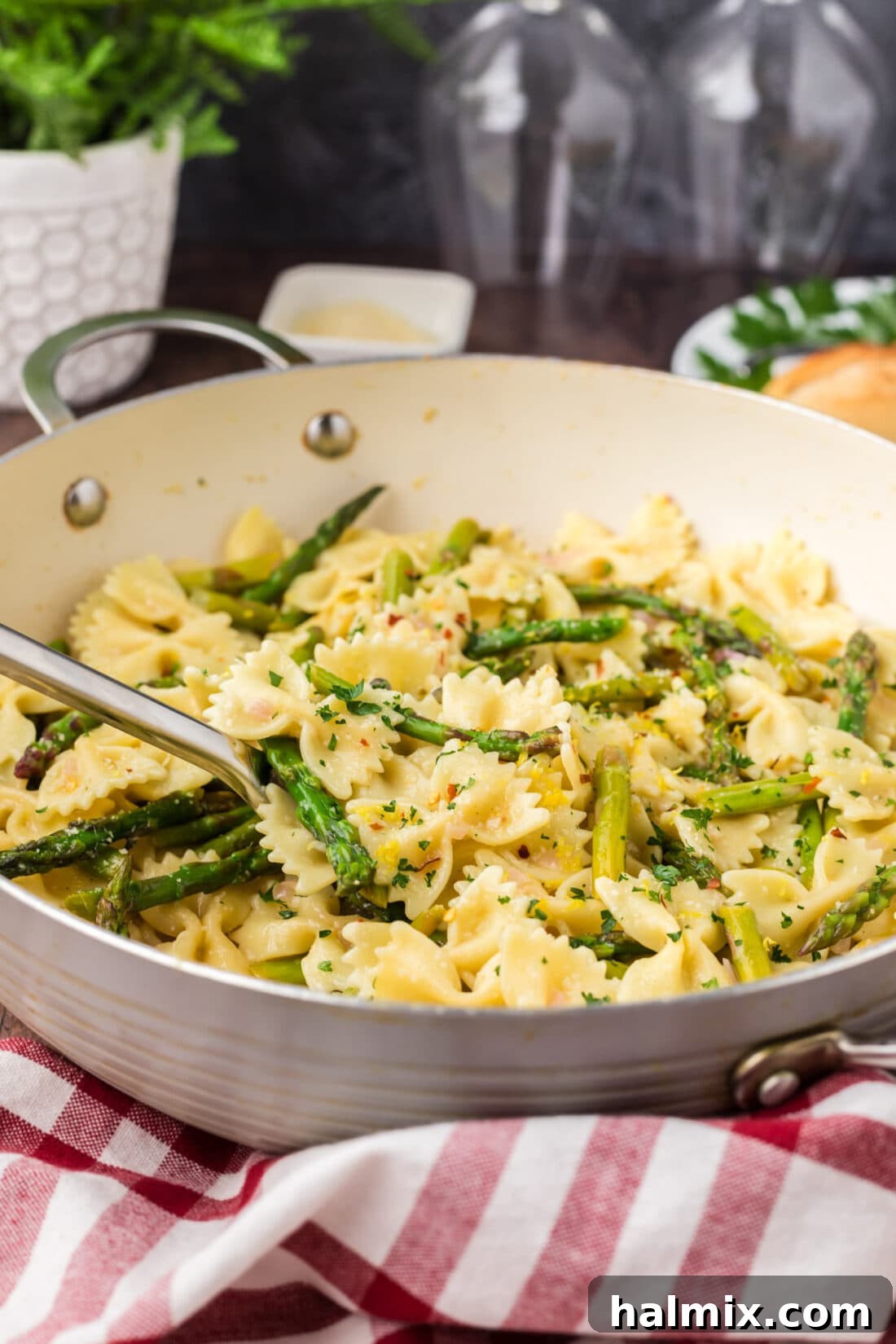
Elevate Your Asparagus Pasta Experience: Perfect Serving Pairings
Once your Asparagus Pasta is cooked to perfection, the presentation and accompanying elements can truly complete the meal. Serve this delightful dish warm, garnished generously with your preferred optional toppings: a sprinkle of vibrant fresh lemon zest for an aromatic finish, a pinch of red pepper flakes to add a subtle, inviting heat, and a generous dusting of freshly grated Parmesan cheese for its nutty, salty depth. These garnishes not only enhance the flavor but also add visual appeal, making each serving look as good as it tastes.
To create a truly satisfying and balanced meal, consider pairing your Asparagus Pasta with some classic accompaniments. A crusty loaf of artisanal bread or warm garlic bread is ideal for soaking up every last drop of the exquisite buttery lemon sauce. For a refreshing contrast, a simple, crisp dinner salad with a light vinaigrette dressing can cut through the richness of the pasta and cleanse the palate. For beverages, a dry white wine, like the one used in the recipe (Sauvignon Blanc or Pinot Grigio), would be a harmonious choice, or opt for a sparkling lemon-infused water for a non-alcoholic option. This combination ensures a well-rounded and memorable dining experience.
Explore More Delicious Pasta Recipes
If you’ve fallen in love with the simplicity and flavor of this Asparagus Pasta, you’ll be thrilled to discover more delightful pasta creations from our kitchen:
- Pasta Primavera
- Mushroom Ravioli
- Buffalo Chicken Casserole
- Chicken and Shrimp Carbonara
- Spinach Fettuccine
- Broccoli Pasta
I genuinely love to bake and cook, and my greatest joy is sharing my kitchen experiences and successful recipes with all of you! Staying updated with new recipes can be tricky, which is why I offer a convenient newsletter delivered straight to your inbox every time a new recipe is posted. Simply subscribe here and start receiving your free daily recipes, ensuring you never miss out on fresh inspiration!
Asparagus Pasta
IMPORTANT – There are often Frequently Asked Questions within the blog post that you may find helpful. Simply scroll back up to read them!
Print It
Pin It
Ingredients
- ½ pound Farfalle bowtie pasta cooked to al dente, 8 ounces (1/2 box)
- 1 bunch asparagus spears
- 5 Tablespoons unsalted butter
- 1 ½ Tablespoons minced garlic
- 2 Tablespoons minced shallots
- 1 cup white wine
- 1 Tablespoon lemon zest divided
- garlic salt to taste
- 1 Tablespoon cornstarch
- ½ cup water
- 2 Tablespoons lemon juice
Optional Garnish
- lemon zest
- red pepper flakes
- grated parmesan cheese
Things You’ll Need
-
Large deep sided skillet
-
Large saucepan
-
Colander
Before You Begin
- We used bowtie pasta, but you can use any type of pasta you like. Penne, Mostaccioli, angel hair, and spaghetti noodles are all great options.
- Using wine in this recipe adds richness. Chicken or vegetable broth can be used in its place if desired.
- Fresh is best when it comes to lemon juice, skip the pre-bottled stuff for this recipe. Plus, you will need a fresh lemon to incorporate the zest.
Instructions
-
Cut woody ends off the asparagus spears then cut spears in half. Set aside.
-
Cook pasta al dente then drain under cold water to stop the cooking process.
TIP: Pasta can then be kept submerged in clean cold water or drained and tossed with olive oil. Either method will keep pasta from drying out and/or sticking together.
-
Melt butter in skillet over medium-high heat.
-
Add garlic and shallots and cook for 1-2 minutes until softened.
-
Pour in white wine and half of lemon zest. Stir to combine.
-
Bring to a gentle boil then add asparagus. Toss to coat and season to taste with garlic salt.
-
While sauce and asparagus continue to cook, make a slurry from the cornstarch and water. Add slurry to the skillet and continue cooking until sauce begins to thicken.
-
Add cooked pasta to the skillet and toss to coat.
-
Add lemon juice, more garlic salt (to taste), and remaining lemon zest. Toss to coat and heat through.
Expert Tips & FAQs
- Store leftovers in an air-tight container kept in the refrigerator for up to 4 days. Reheat in the microwave or in a skillet over medium-low heat until warmed through. Optionally add a splash of water when reheating to remoisten.
- Amanda’s tip – I highly recommend using the optional garnishes. Surprisingly, the red pepper flakes do not add too much heat (for me anyway!) and the flavor of this dish just sings!
Nutrition
The recipes on this blog are tested with a conventional gas oven and gas stovetop. It’s important to note that some ovens, especially as they age, can cook and bake inconsistently. Using an inexpensive oven thermometer can assure you that your oven is truly heating to the proper temperature. If you use a toaster oven or countertop oven, please keep in mind that they may not distribute heat the same as a conventional full sized oven and you may need to adjust your cooking/baking times. In the case of recipes made with a pressure cooker, air fryer, slow cooker, or other appliance, a link to the appliances we use is listed within each respective recipe. For baking recipes where measurements are given by weight, please note that results may not be the same if cups are used instead, and we can’t guarantee success with that method.