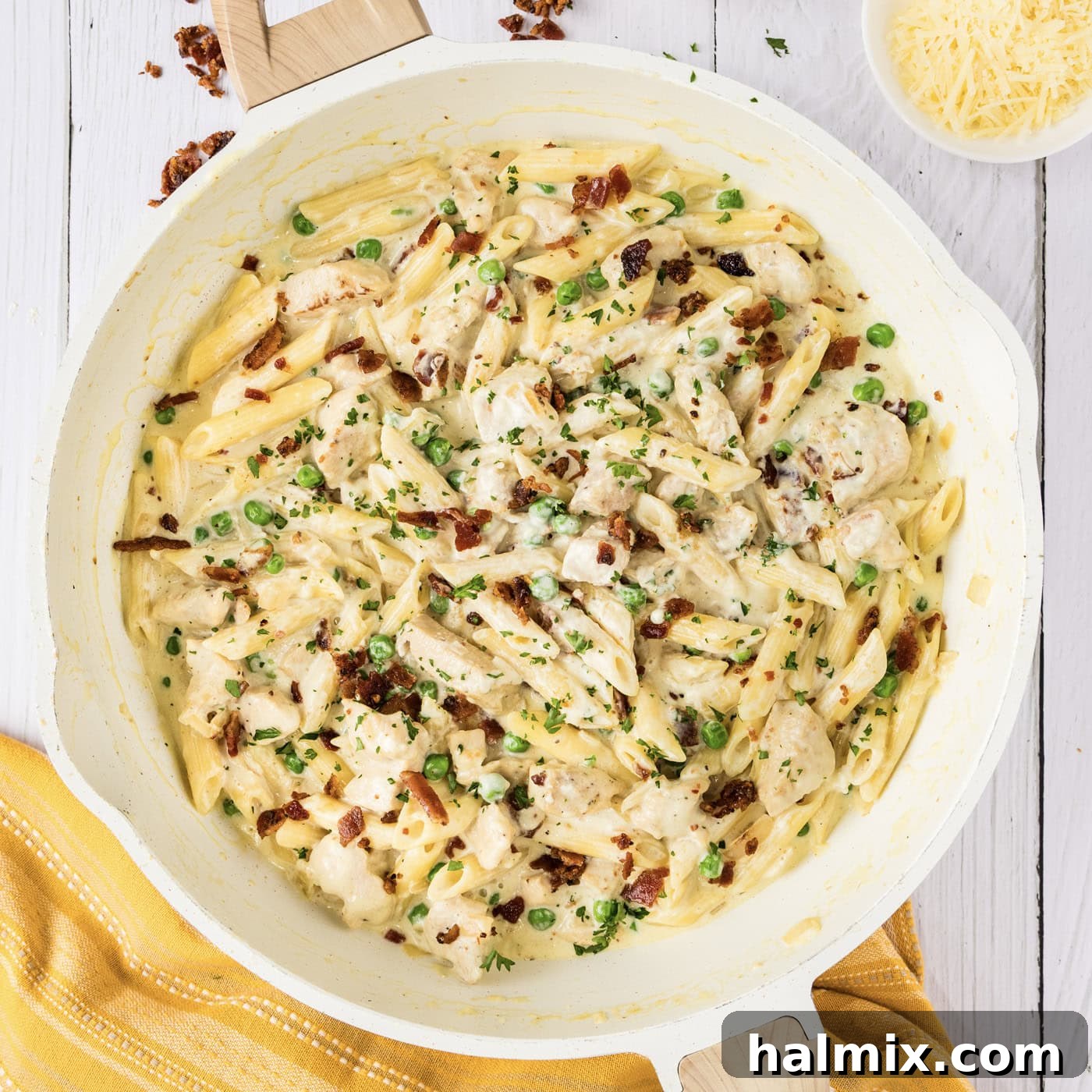
Creamy Chicken Carbonara Recipe: Your Ultimate Guide to a Classic Dish
Indulge in the rich, comforting flavors of our go-to Chicken Carbonara recipe. This delightful dish features tender chicken, crispy bacon, and sweet peas, all tossed with your favorite pasta and generously coated in a luxurious, creamy garlic and Parmesan cheese sauce. It’s an American-inspired twist on a classic, designed to bring a truly satisfying meal to your table.
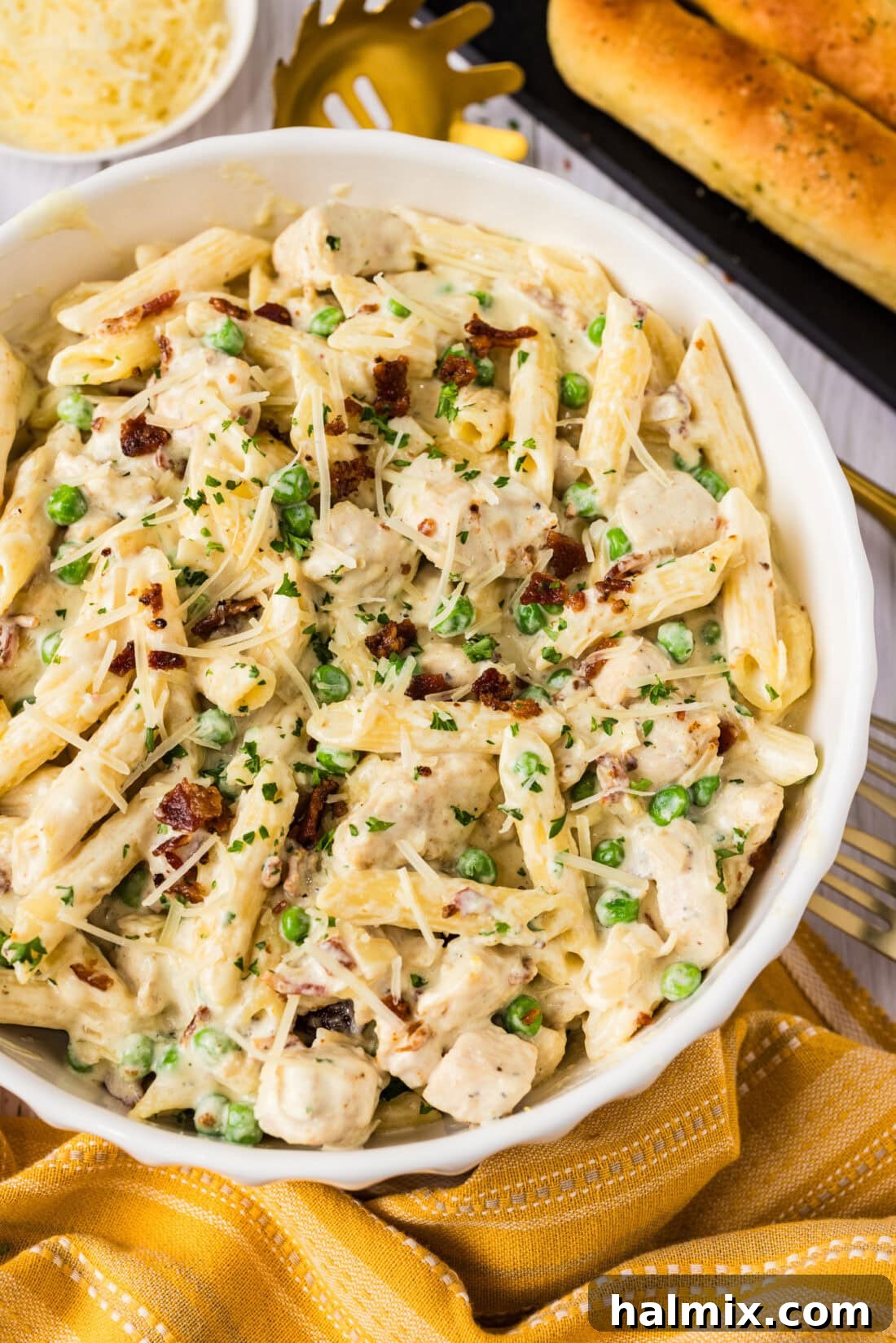
Why This Creamy Chicken Carbonara Will Be Your New Favorite
While purists might debate its authenticity, this recipe celebrates the beloved Americanized version of Carbonara. Unlike the traditional Italian Pasta Carbonara, which strictly uses cured pork (like guanciale or pancetta), egg yolks, Pecorino Romano cheese, and black pepper (never cream or chicken), our rendition embraces a richer, creamier profile that has become a staple in many households across the U.S. It offers a hearty, satisfying meal that’s both elegant enough for guests and simple enough for a weeknight dinner.
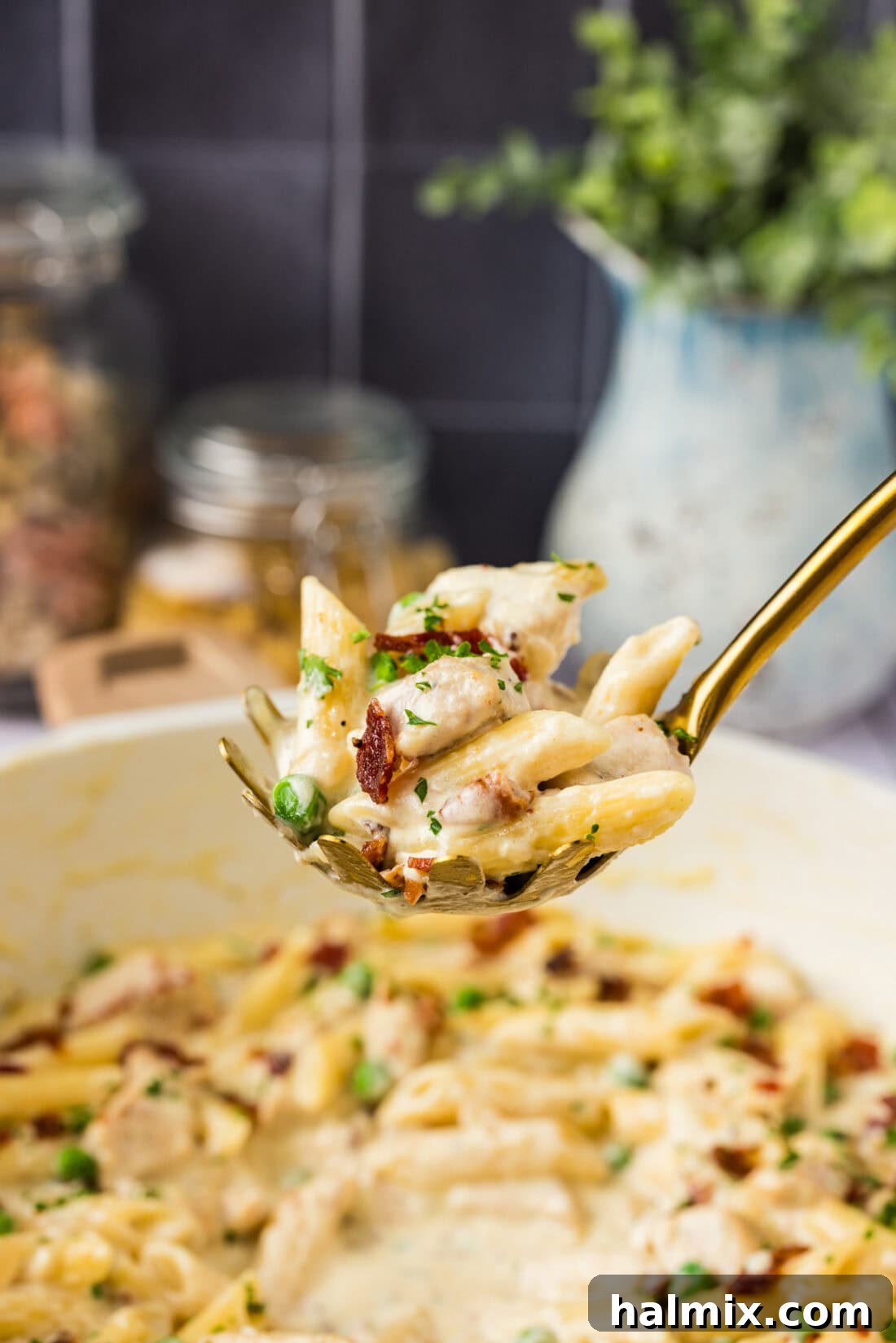
The true magic of this chicken carbonara lies in its exquisitely smooth and silky sauce, achieved through the classic technique of tempering eggs. You might find the idea of adding raw eggs to hot pasta sauce a bit unconventional at first, but this is precisely what imparts carbonara its signature velvety, almost custard-like texture, without scrambling the eggs. This delicate decadence, combined with the savory crunch of bacon, the freshness of green peas, and the sharp, salty notes of Parmesan cheese, creates an unparalleled depth of flavor that will have you coming back for seconds. It’s a harmonious blend of textures and tastes, promising a truly comforting and memorable dining experience.
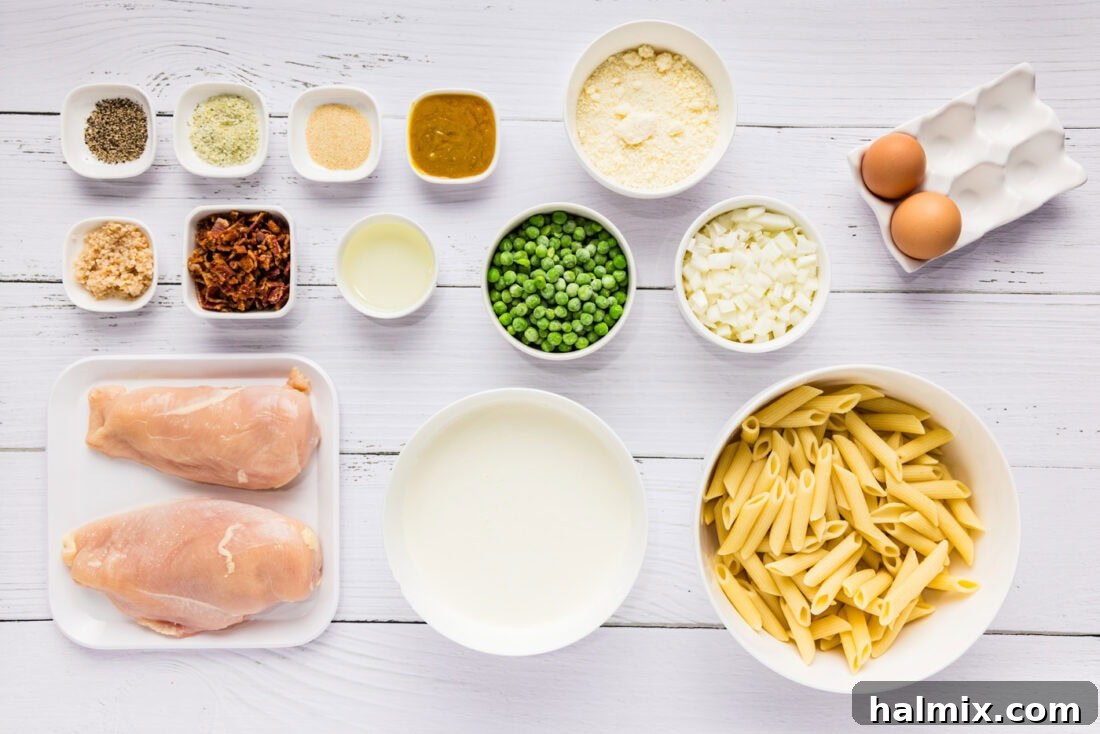
Essential Ingredients for Your Perfect Chicken Carbonara
Crafting this delicious Chicken Carbonara starts with selecting quality ingredients. Below is a general overview of what you’ll need. For precise measurements and step-by-step instructions, please refer to the detailed recipe card at the end of this post, where you can easily print the full recipe.
Ingredient Insights and Smart Substitutions
Understanding each ingredient’s role and knowing your substitution options can elevate your cooking experience and ensure a successful dish every time, even if you’re missing an item or catering to dietary needs.
PASTA POWER: Choosing the Right Noodle
For this chicken carbonara, we chose penne pasta, known for its ridges and tubular shape that wonderfully captures the creamy sauce. However, the beauty of carbonara is its flexibility with pasta shapes. Traditionally, carbonara is often made with longer strands like fettuccine, linguine, or spaghetti, which are excellent for coating evenly with the rich sauce. Other fantastic alternatives include rotini, farfalle (bow-tie), rigatoni, elbows, and mostaccioli. These shapes all have nooks and crannies that hold the sauce beautifully. We generally advise against using angel hair pasta due to its delicate nature; it tends to clump together and can become mushy under the weight of a heavy sauce and other ingredients, losing its desirable texture.
THE SAUCE SECRET: Creaminess and Texture
The foundation of our incredibly rich and creamy carbonara sauce is heavy whipping cream. Its high-fat content is essential for achieving that luxurious, velvety consistency that defines this dish. If you need a lighter alternative without sacrificing too much richness, half and half can be used. It will still provide a good creaminess, but the sauce might be slightly thinner. Whole milk is another option, though anything with less milk fat than whole milk may require a longer cooking time to achieve the desired thickness, and the overall richness will be considerably less pronounced. For an extra touch of depth and a hint of tanginess, you could also experiment with a small amount of cream cheese or mascarpone whisked into the sauce.
SAVORY SELECTIONS: Chicken and Bacon
Our star protein, boneless, skinless chicken breasts, brings a lean, satisfying element to the dish. Cut into uniform cubes, the chicken cooks quickly and browns nicely, adding flavor. You could also use chicken thighs for a juicier result. For the smoky, salty backbone of carbonara, bacon is paramount. We adore the flavor it imparts, but if you’re aiming for a slightly more sophisticated touch, pancetta (Italian cured pork belly) makes an excellent substitute. It offers a similar savory depth with a slightly different flavor profile. If you’re looking for variations, smoked ham or prosciutto could also be considered, though they will alter the taste significantly.
AROMATICS & CHEESE: The Flavor Boosters
Fresh minced garlic and chopped onion are crucial for building the aromatic base of our sauce, infusing it with their irresistible fragrance and savory notes. For the cheese, finely grated Parmesan cheese is a must. Its sharp, nutty, and salty characteristics melt into the sauce, adding incredible depth and helping to thicken it. Always opt for freshly grated Parmesan over pre-shredded varieties, as the latter often contain anti-caking agents that can prevent it from melting smoothly.
FRESHNESS FACTOR: Peas and Beyond
Frozen peas add a pop of color, a touch of sweetness, and a welcome textural contrast to the rich pasta. They are easy to incorporate and cook quickly. Feel free to experiment with other vegetables like sautéed mushrooms, blanched asparagus, or fresh spinach for added nutrients and variety.
How to Make Chicken Carbonara: A Detailed Step-by-Step Guide
This section provides detailed step-by-step photos and comprehensive instructions to help you visualize and master this recipe. For a concise, printable version of the recipe, complete with exact measurements, please Jump to Recipe at the bottom of this page.
- Prepare the Pasta: Begin by cooking your chosen pasta (penne works wonderfully) according to the package directions, aiming for an al dente texture. This means it should be firm to the bite, as it will continue to cook slightly when added to the hot sauce. Once cooked, drain the pasta thoroughly and rinse it under cold water. This crucial step stops the cooking process, preventing the pasta from becoming overcooked and mushy.
PRO TIP: To prevent the pasta from sticking together while you prepare the other ingredients, you can toss it with a small amount of olive oil after rinsing, or simply submerge it in cool water until you’re ready to combine it with the sauce.
- Prep the Chicken: While the pasta cooks, trim any excess fat from your boneless, skinless chicken breasts and cut them into bite-sized cubes. Uniform pieces ensure even cooking. Place the chicken cubes in a large bowl.
- Season the Chicken: Season the cubed chicken generously with garlic salt, onion powder, and black pepper. Using gloved hands, toss the chicken thoroughly to ensure every piece is evenly coated with the seasoning. This step is vital for infusing flavor directly into the chicken itself.
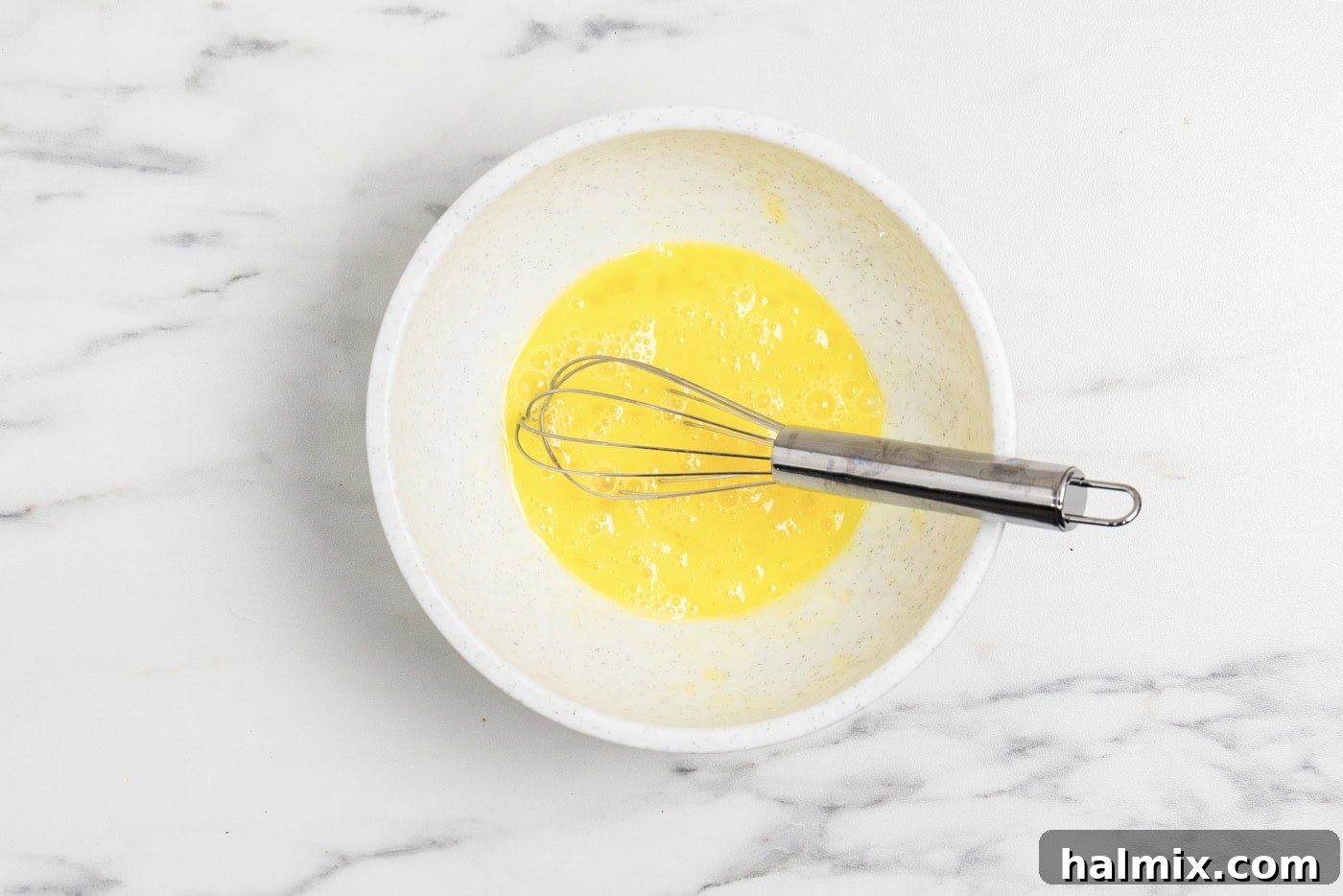
- Whisk the Eggs: In a separate medium-sized bowl, whisk the two large eggs until the yolks and whites are completely combined and slightly frothy. Set this aside; these eggs will be used to create the signature silky carbonara sauce.

- Heat the Skillet: Heat two tablespoons of olive oil in a large, heavy-bottomed skillet over medium-high heat. Wait until the oil is shimmering, indicating it’s hot enough to cook the ingredients efficiently without burning.
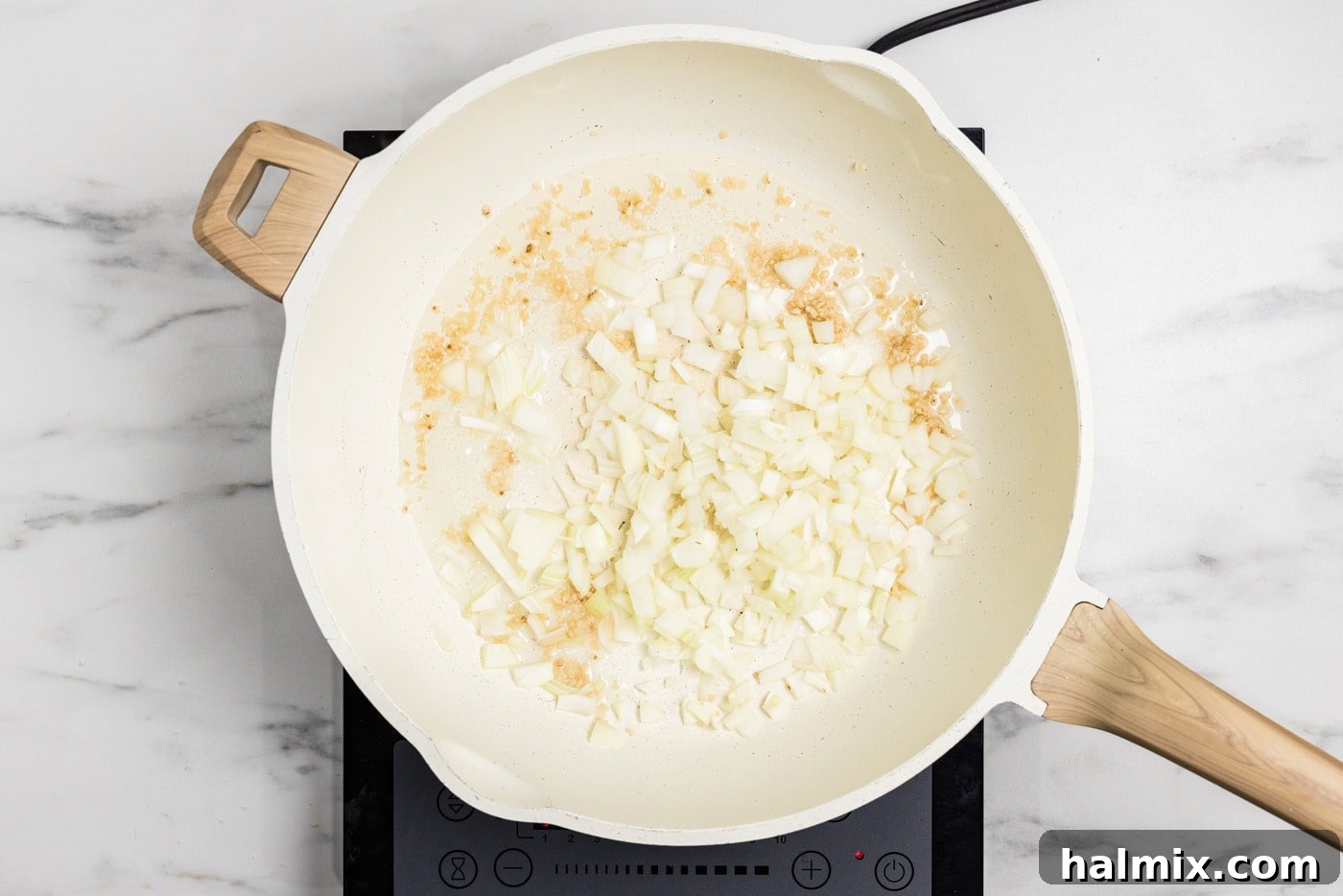
- Sauté Aromatics: Add the minced garlic and chopped onion to the hot skillet. Sauté for 1-2 minutes, stirring frequently, until the onions become translucent and fragrant. Be careful not to burn the garlic, as it can turn bitter quickly.
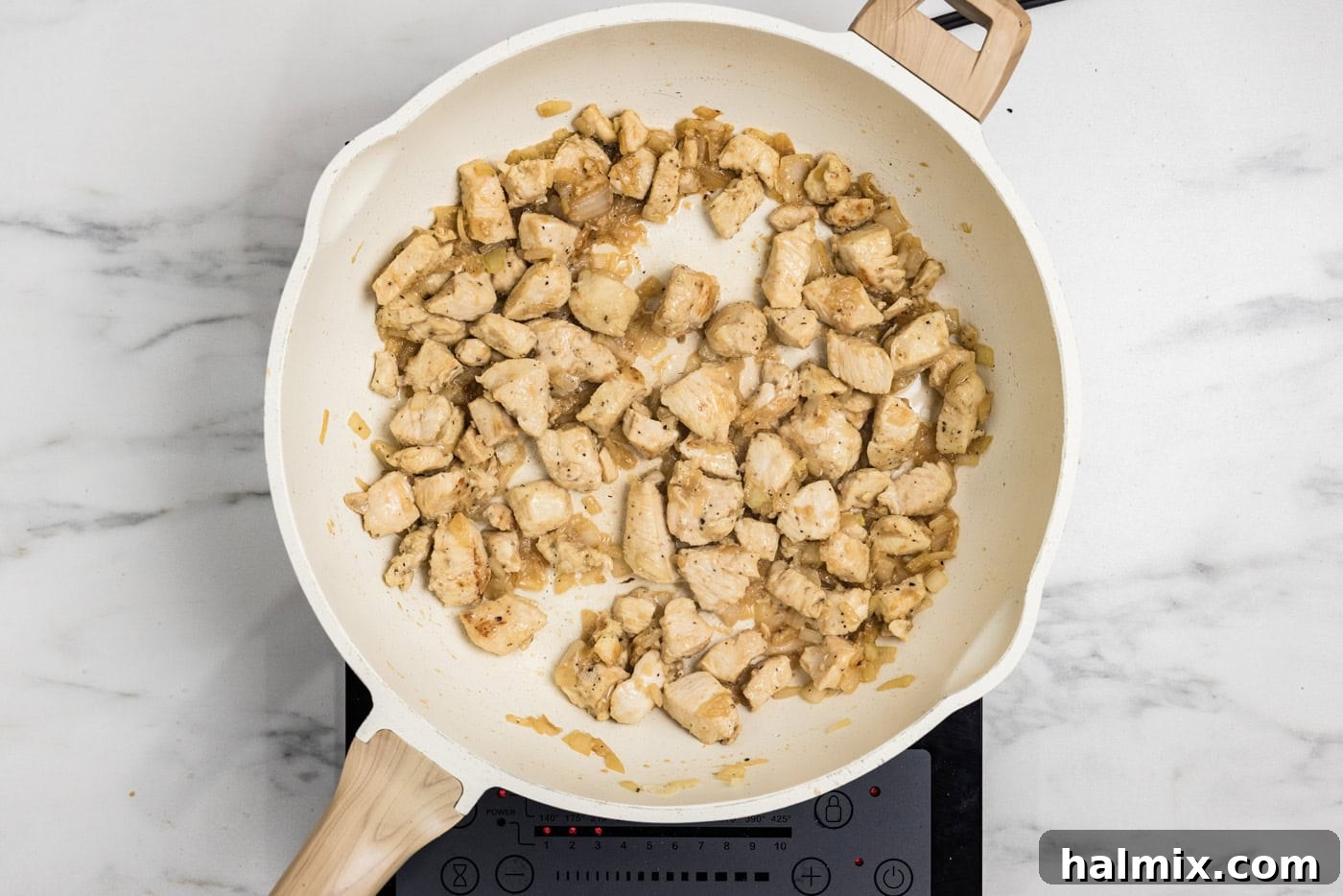
- Cook the Chicken: Add the seasoned chicken cubes to the skillet. Cook for approximately 10-15 minutes, turning the pieces occasionally, until no pink remains in the chicken and a light golden-brown sear has developed on the exterior. Once cooked, remove the chicken from the skillet and transfer it to a plate, keeping it warm while you prepare the sauce.
- Prepare the Cream Base: To the same skillet (no need to clean it; the fond adds flavor!), add the heavy whipping cream and the chicken base (like Better than Bouillon). Whisk these ingredients together until well combined. Heat this mixture gently, just until it’s hot and small bubbles start to form around the edges. It’s crucial not to let the cream boil or scorch, as this can alter its texture and taste.
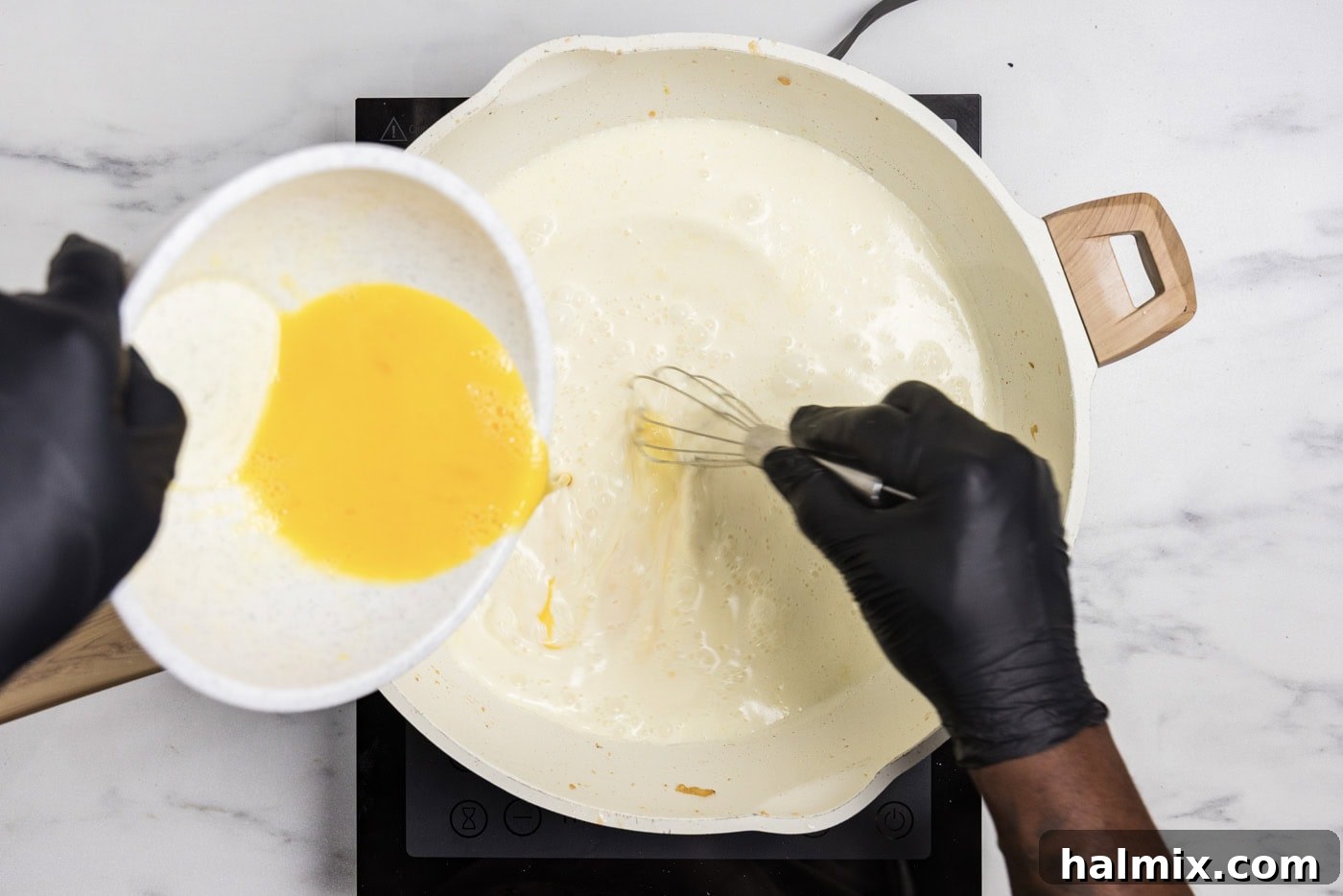
- Temper the Eggs: This is a critical step for a smooth carbonara sauce. Slowly drizzle the whisked eggs into the hot cream mixture while continuously whisking. The gradual addition and constant whisking prevent the eggs from scrambling, allowing them to gently thicken and enrich the sauce into a velvety consistency.
- Melt the Parmesan: Once the eggs are incorporated, sprinkle in the grated Parmesan cheese. Continue whisking until the cheese is fully melted and completely combined with the sauce, creating a smooth and luscious texture.
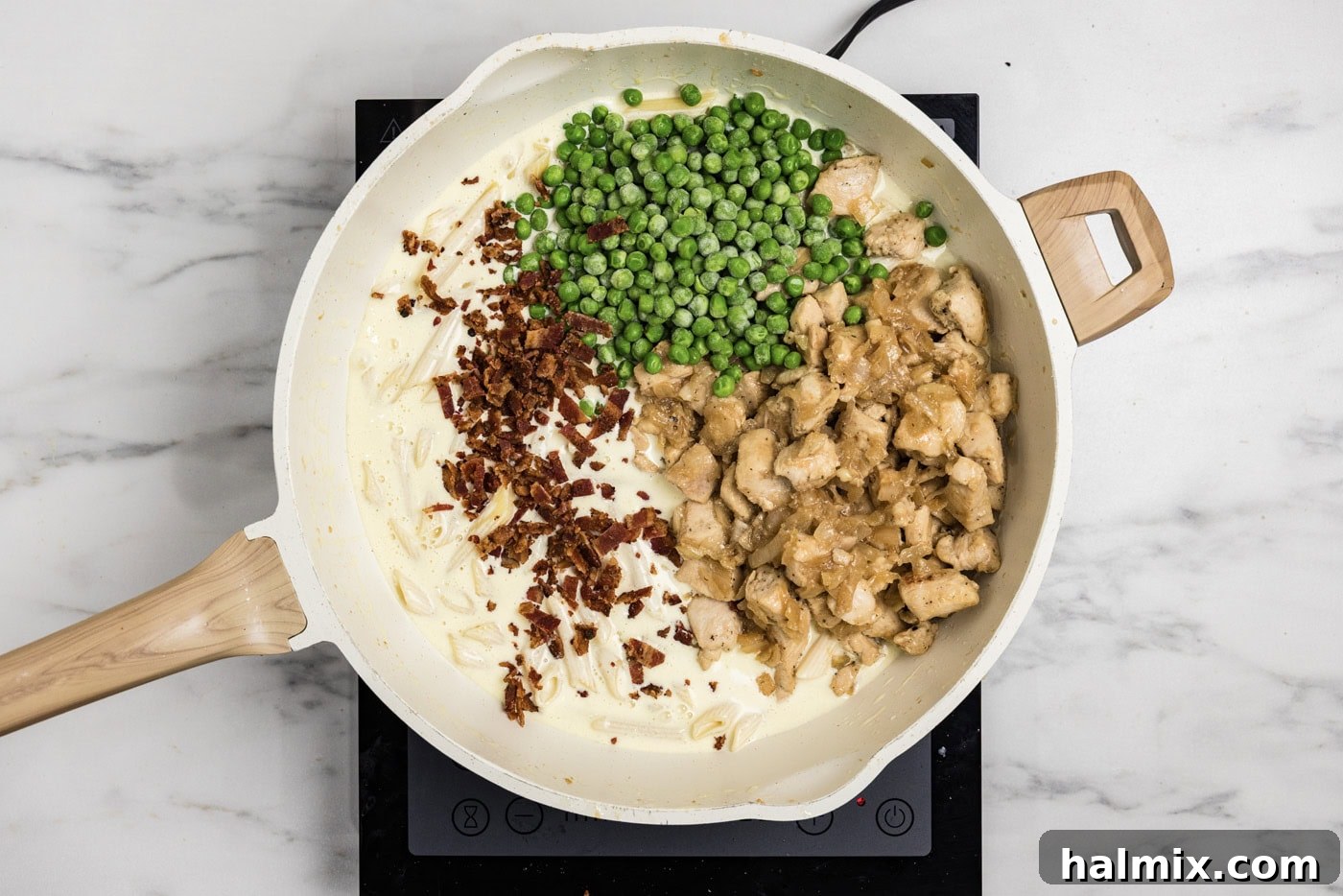
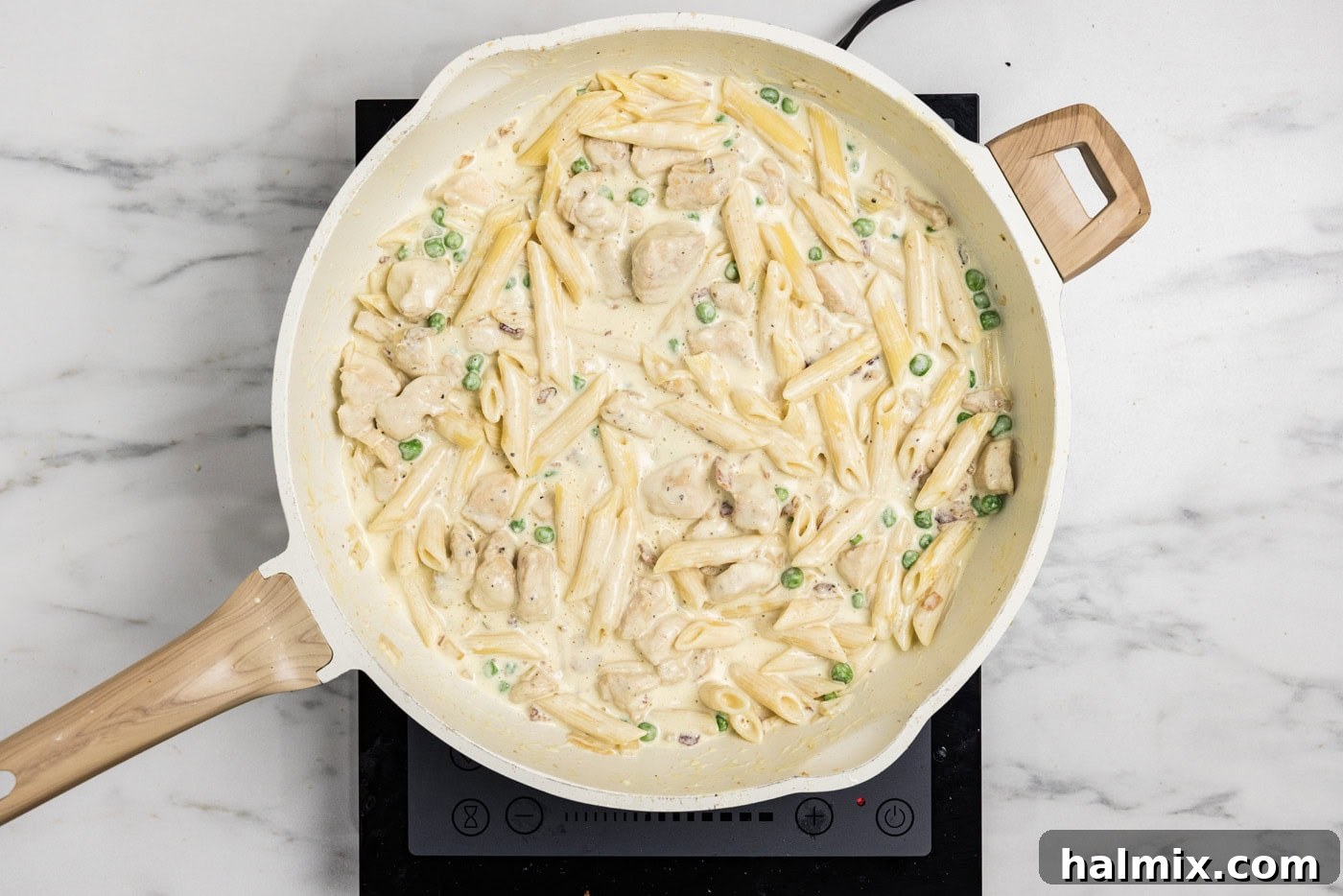
- Combine All Ingredients: Finally, add the cooked penne pasta, the cooked chicken cubes, a cup of frozen peas, and the chopped cooked bacon to the skillet with the sauce. Stir everything together thoroughly, ensuring all the pasta and ingredients are generously coated in the creamy sauce. Continue to heat the mixture gently for a few minutes, allowing the peas to warm through and all the flavors to meld beautifully.
Frequently Asked Questions & Expert Tips for Carbonara Success
Tempering eggs is the key to preventing them from scrambling. This process involves gradually raising the temperature of raw eggs by slowly drizzling them into a hot liquid while continuously whisking. The key is to add the eggs very slowly, allowing them to integrate into the warm cream without cooking too rapidly. Ensure your cream is hot but not boiling vigorously. If you pour the eggs in too quickly or stop whisking, they can indeed scramble, resulting in a stringy texture similar to egg drop soup. Gentle heat and constant motion are your best friends here.
If your carbonara sauce ends up a little too thick, it likely cooked for too long or over too high a heat. Don’t worry, it’s easily remedied! Simply add a splash of reserved pasta water, a little at a time, while stirring gently. The starch in the pasta water helps to loosen the sauce and bind it to the pasta, giving you that perfect desired consistency. Conversely, if your sauce is too thin, you might need to simmer it for an extra minute or two, stirring constantly, to allow it to thicken slightly. Adding a bit more grated Parmesan can also help thicken it.
Store any leftover chicken carbonara in an airtight container in the refrigerator for up to 4 days. When reheating, it’s best to do so gently on the stovetop over low to medium heat. The sauce can sometimes thicken considerably in the fridge. To restore its creamy texture, add a small amount of water, chicken broth, milk, or cream while reheating. Stir constantly until the sauce loosens and the dish is warmed through. Avoid microwaving on high heat, as this can cause the eggs to curdle and the sauce to separate.
Absolutely! To adapt this recipe for vegetarians, simply omit the chicken and bacon. You can replace the chicken with sautéed mushrooms (cremini or shiitake would be excellent), roasted vegetables like zucchini or bell peppers, or even plant-based chicken substitutes. For the smoky flavor of bacon, consider using smoked paprika, liquid smoke, or a vegetarian bacon alternative. Ensure your chicken base is vegetarian-friendly, or use vegetable broth instead.
Beyond scrambling the eggs, a common mistake is overcooking the pasta. Always cook it al dente. Another pitfall is using too much heat when combining the sauce and pasta, which can lead to a broken or greasy sauce. Keep the heat low and work quickly. Also, using pre-grated Parmesan can result in a grainy sauce; always opt for freshly grated cheese for the best melt and flavor.
Serving Suggestions to Complete Your Meal
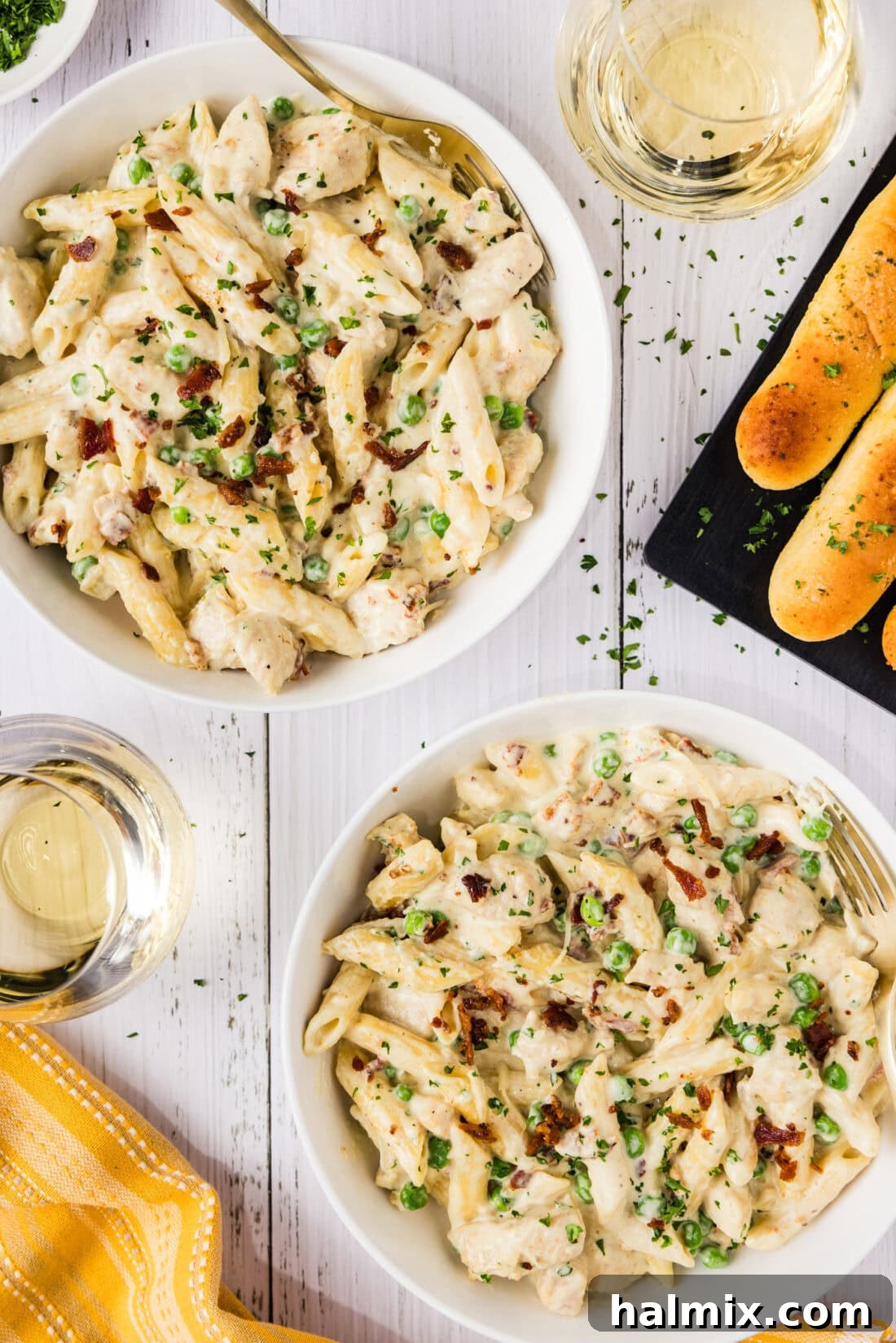
Chicken Carbonara is a complete meal on its own, but pairing it with a simple side can truly elevate the dining experience. A crusty slice of garlic bread is perfect for soaking up every last drop of that creamy sauce. For a lighter, refreshing contrast, serve it alongside a crisp leafy dinner salad. My personal favorite accompaniment is a classic Caesar salad with its tangy dressing and crunchy croutons. To add a final flourish, consider garnishing your finished dish with extra crumbled bacon, a sprinkle of fresh Parmesan, or a scattering of chopped fresh parsley for a burst of color and herbaceous note.
Explore More Pasta Delights
If you loved this chicken carbonara, you’re sure to enjoy these other delightful pasta recipes from our kitchen. Expand your repertoire and discover new family favorites:
- Creamy Chicken Alfredo
- Classic Chicken Tetrazzini
- Simple Garlic Butter Pasta
- Hearty Chicken and Shrimp Carbonara
- Flavorful Garlic Chicken Pasta
We love sharing our passion for cooking and baking with you! To make sure you never miss a new recipe, we offer a convenient newsletter delivered straight to your inbox every time a fresh post goes live. Simply subscribe here and start receiving your free daily recipes, bringing culinary inspiration directly to you!
The Ultimate Chicken Carbonara Recipe
Here’s the complete, printable recipe for our creamy chicken carbonara. Follow these instructions closely for a perfect dish every time!
Chicken Carbonara
IMPORTANT – Please refer to the Frequently Asked Questions and Expert Tips section above for valuable advice and troubleshooting!
🖨️Print It
📌Pin It
⭐ Rate It
Ingredients
- 8 ounces penne pasta about 5 cups cooked
- 1.5 pounds boneless skinless chicken breasts (680g), 2 large breasts
- ½ teaspoon garlic salt
- ½ teaspoon onion powder
- ¼ teaspoon black pepper
- 2 large eggs
- 2 Tablespoons olive oil
- 1 Tablespoon minced garlic
- 1 cup chopped onion
- 2 cups heavy whipping cream
- 2 Tablespoons Better than Bouillon chicken base
- ½ cup grated Parmesan cheese
- 1 cup frozen peas
- ½ cup chopped cooked bacon
Equipment
-
Chef’s knife
-
Cutting board
-
Whisk
-
Large heavy bottomed skillet
Recipe Notes & Tips
- For the creamiest sauce, heavy cream is recommended. Half and half can be used for a slightly lighter version, and whole milk is also an option, though it may require more cooking to thicken.
- While penne is used here, feel free to use other pasta shapes like fettuccine, linguine, spaghetti, rotini, farfalle, rigatoni, elbows, or mostaccioli. Avoid angel hair due to its delicate texture.
- We often use a concentrated bouillon base for rich flavor; you can substitute with chicken broth or stock if preferred.
- Leftovers store well in an airtight container in the refrigerator for up to 4 days. Reheat gently on the stovetop, adding a splash of water, milk, or cream to loosen the sauce as needed.
Instructions
-
Cook 8 ounces penne pasta al dente according to package instructions. Drain and rinse under cold water to stop cooking. Toss with a little olive oil or submerge in cool water to prevent sticking.
-
Meanwhile, trim 1.5 pounds boneless skinless chicken breasts and cut into cubes. Place in a large bowl.
-
Season chicken with ½ teaspoon garlic salt, ½ teaspoon onion powder, and ¼ teaspoon black pepper. Toss together to coat.
-
In a medium bowl, whisk 2 large eggs. Set aside.
-
Heat 2 Tablespoons olive oil in a skillet over medium-high heat until shimmering.
-
Add 1 Tablespoon minced garlic and 1 cup chopped onion; sauté 1-2 minutes until fragrant.
-
Add chicken cubes to the skillet and cook 10-15 minutes, turning occasionally, until no pink remains and browned. Remove chicken to a plate and keep warm.
-
To the skillet, add 2 cups heavy whipping cream and 2 Tablespoons Better than Bouillon chicken base; whisk together. Heat JUST until hot with tiny bubbles, do not scorch the cream.
-
Temper the eggs by slowly drizzling them into the hot cream, whisking continuously.
-
Sprinkle in ½ cup grated Parmesan cheese and whisk until melted and well combined.
-
Add cooked penne pasta, cooked chicken, 1 cup frozen peas, and ½ cup chopped cooked bacon to the skillet. Stir well and heat through.
Nutrition Information
The recipes on this blog are meticulously tested with a conventional gas oven and gas stovetop to ensure consistent results. It’s important to note that oven performance can vary, especially with age, often leading to inconsistent heating. We recommend using an inexpensive oven thermometer to verify that your oven is accurately reaching the desired temperature. If you use a toaster oven or countertop oven, please be aware that they may not distribute heat identically to a full-sized conventional oven, which might necessitate adjustments to your cooking or baking times. For recipes prepared with specialized appliances such as pressure cookers, air fryers, or slow cookers, a direct link to the specific appliance models we utilize is provided within each respective recipe. When it comes to baking recipes where measurements are given by weight, please understand that using volume-based measurements (cups) instead may yield different results, and we cannot guarantee success with alternative measuring methods.