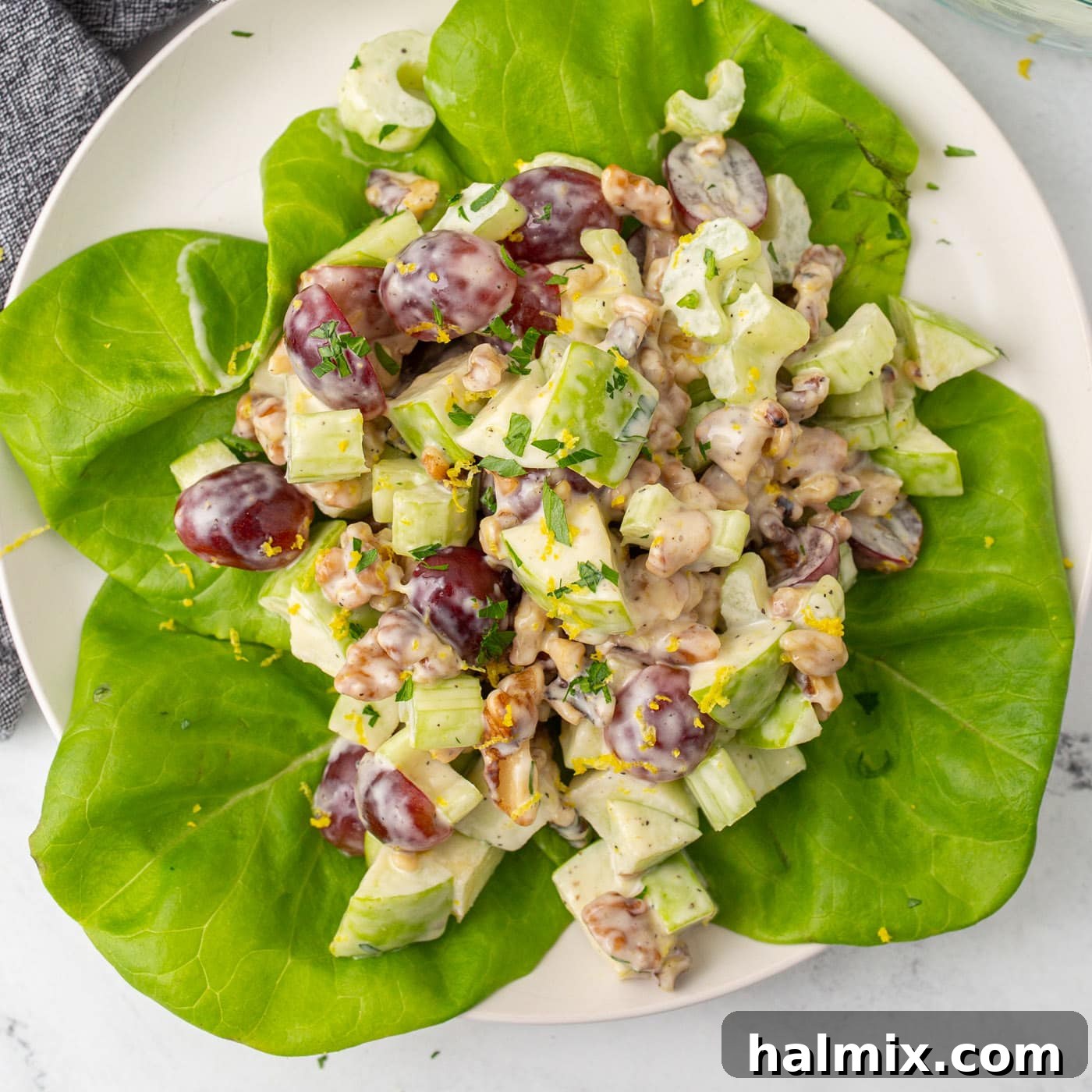
Experience the timeless charm of the Waldorf Salad, a vibrant and refreshingly crisp dish that has graced tables for over a century. Featuring a delightful medley of crunchy apples, succulent grapes, and toasted walnuts, all harmoniously bound by a creamy, tangy dressing, this salad is more than just a side dish – it’s a celebration of fresh flavors and varied textures. A true staple at potlucks, barbecues, and festive gatherings, the Waldorf Salad is effortlessly elegant yet wonderfully simple to prepare, making it a beloved classic for any occasion.
Why This Waldorf Salad Recipe is a Must-Try
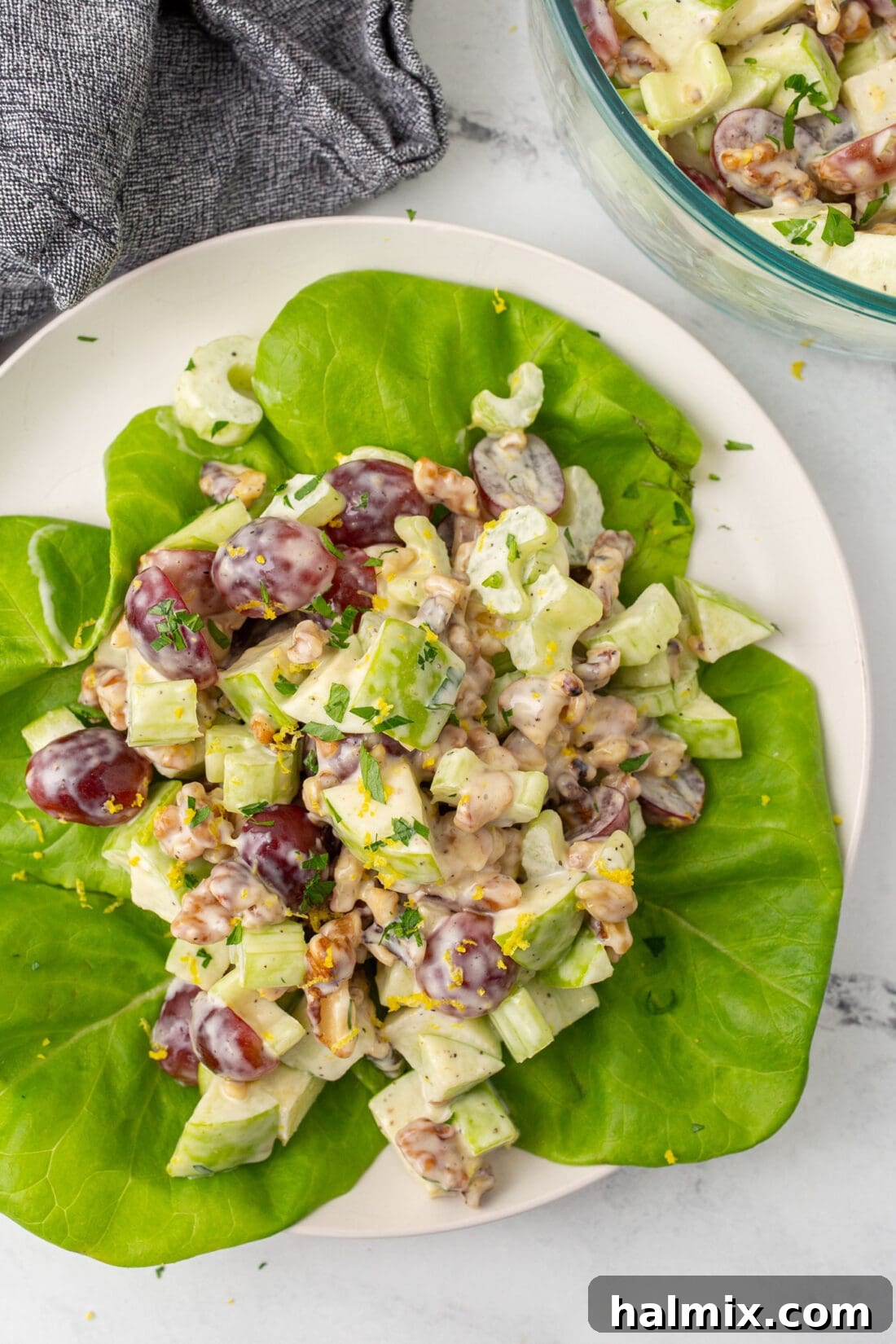
The Waldorf Salad is a culinary icon for good reason, and this particular recipe elevates it to perfection. What makes it truly stand out is the exquisite balance of contrasting elements that come together to create a symphony of taste and texture. Each bite delivers the crisp tartness of Granny Smith apples, the juicy sweetness of plump grapes, and the earthy crunch of walnuts, all enveloped in a light, creamy, and subtly sweet dressing with a hint of citrus. This isn’t just a recipe; it’s a guide to crafting a salad that’s both nostalgic and remarkably fresh.
Dating back to 1893 at New York City’s prestigious Waldorf Astoria hotel, the original Waldorf Salad was a simpler affair, primarily featuring apples and celery in a mayonnaise-based dressing. Over the decades, innovative chefs and home cooks alike have added their unique touches, incorporating ingredients like walnuts, grapes, and various seasonal fruits, transforming it into the versatile dish we cherish today. Our recipe honors this rich history while embracing modern preferences, offering a perfectly balanced rendition that is both classic and contemporary. It works because it’s incredibly adaptable: while it shines brightly on its own as a delightful fruit and nut salad, it also offers immense potential for customization. You can easily introduce protein like chopped chicken or turkey for a heartier meal, similar to a chicken salad with grapes, making it suitable for lunch or a light dinner. This recipe isn’t just about following steps; it’s about understanding the harmony of ingredients that makes the Waldorf Salad a perennial favorite, ensuring flawless results every time.
Essential Ingredients for Your Waldorf Salad
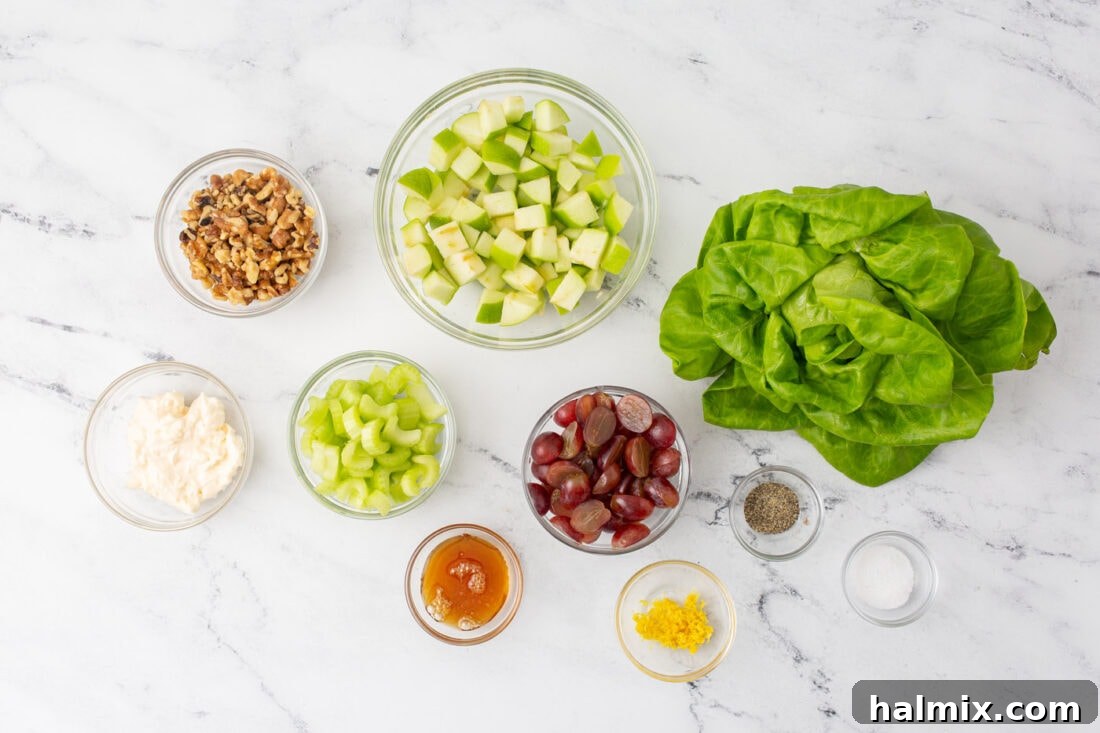
Creating an exceptional Waldorf Salad begins with selecting the freshest and highest quality ingredients. While the full, printable recipe card with precise measurements is available at the end of this post, let’s delve into the core components that make this salad truly special.
Ingredient Spotlight & Customization Tips
Understanding each ingredient’s role and potential substitutions allows for a truly personalized Waldorf Salad experience. Here’s a deeper look:
- Apples: For that signature crisp-tart bite, we highly recommend Granny Smith apples. Their vibrant green hue and firm texture hold up beautifully in the salad and provide a wonderful counterpoint to the sweetness of other ingredients. However, feel free to mix in another variety like Fuji or Honeycrisp for an added layer of sweetness and a beautiful pop of red or golden color. When selecting apples, look for firm, unblemished fruit. To prevent diced apples from browning before serving, toss them lightly with a small amount of the lemon juice intended for the dressing immediately after chopping.
- Grapes: Seedless grapes are a non-negotiable for a smooth eating experience. Whether you choose crisp red grapes for their sweetness and rich color, refreshing green grapes for a lighter flavor, or a vibrant mixture of both, they all work splendidly in this recipe. Select firm, plump grapes that are free from wrinkles. If fresh grapes aren’t available or you prefer a different texture, raisins or dried cranberries can be a delightful substitute, adding concentrated sweetness.
- Celery: The unsung hero of the Waldorf Salad, celery provides an essential textural contrast – a refreshing, watery crunch that complements the other ingredients perfectly. Look for firm, bright green stalks. Slice them thinly to ensure they integrate well into the salad without being overpowering.
- Walnuts: Walnuts contribute a rich, earthy flavor and a satisfying crunch. For an enhanced depth of flavor, consider lightly toasting your walnuts in a dry pan for a few minutes until fragrant before adding them to the salad. This simple step unlocks their full potential. If walnuts aren’t to your taste or if there are allergy concerns, pecans make an excellent substitute, offering a slightly sweeter, buttery flavor. Alternatively, you can omit nuts entirely or replace them with toasted sunflower or pumpkin seeds for a nut-free option.
- Dressing: Our simple yet impactful dressing is a blend of mayonnaise, honey, fresh lemon juice and zest, salt, and black pepper. This combination creates a light, creamy coating that perfectly binds the ingredients without weighing them down. The lemon juice and zest are crucial; they cut through the richness of the mayonnaise, add a bright, zesty aroma, and highlight the fruit flavors. For those seeking a lighter alternative, swapping out half or all of the mayonnaise for plain Greek yogurt or even sour cream will result in a tangier, lower-calorie dressing without sacrificing creaminess. Adjust the honey to your sweetness preference, and always season with salt and pepper to taste.
How to Make the Perfect Waldorf Salad
Crafting this classic salad is remarkably straightforward and requires minimal effort. These step-by-step instructions, complemented by visual cues, will guide you through the process, ensuring a perfectly balanced and flavorful Waldorf Salad every time. Remember, the full printable recipe, including exact measurements, is conveniently located at the end of this post for your ease.
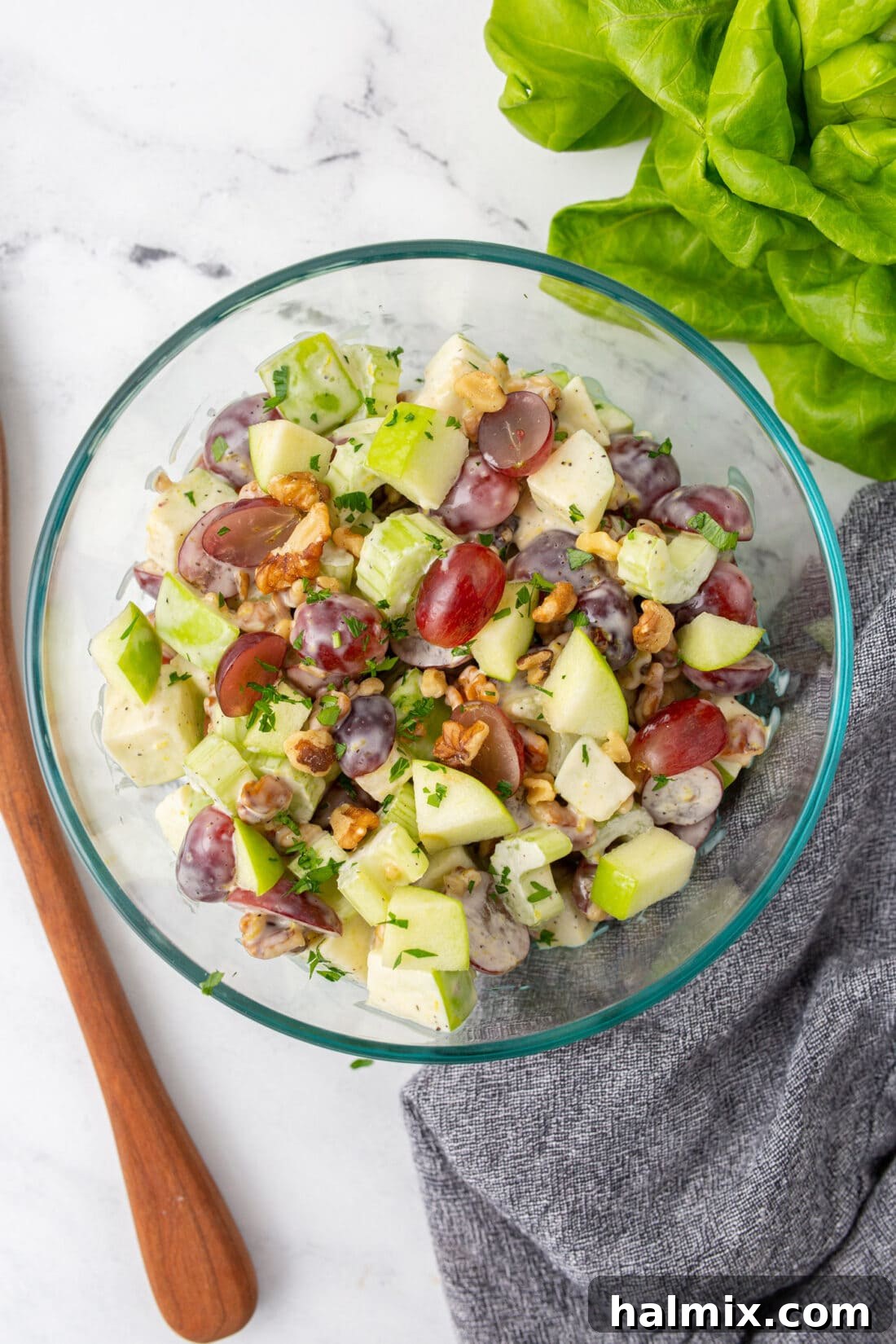
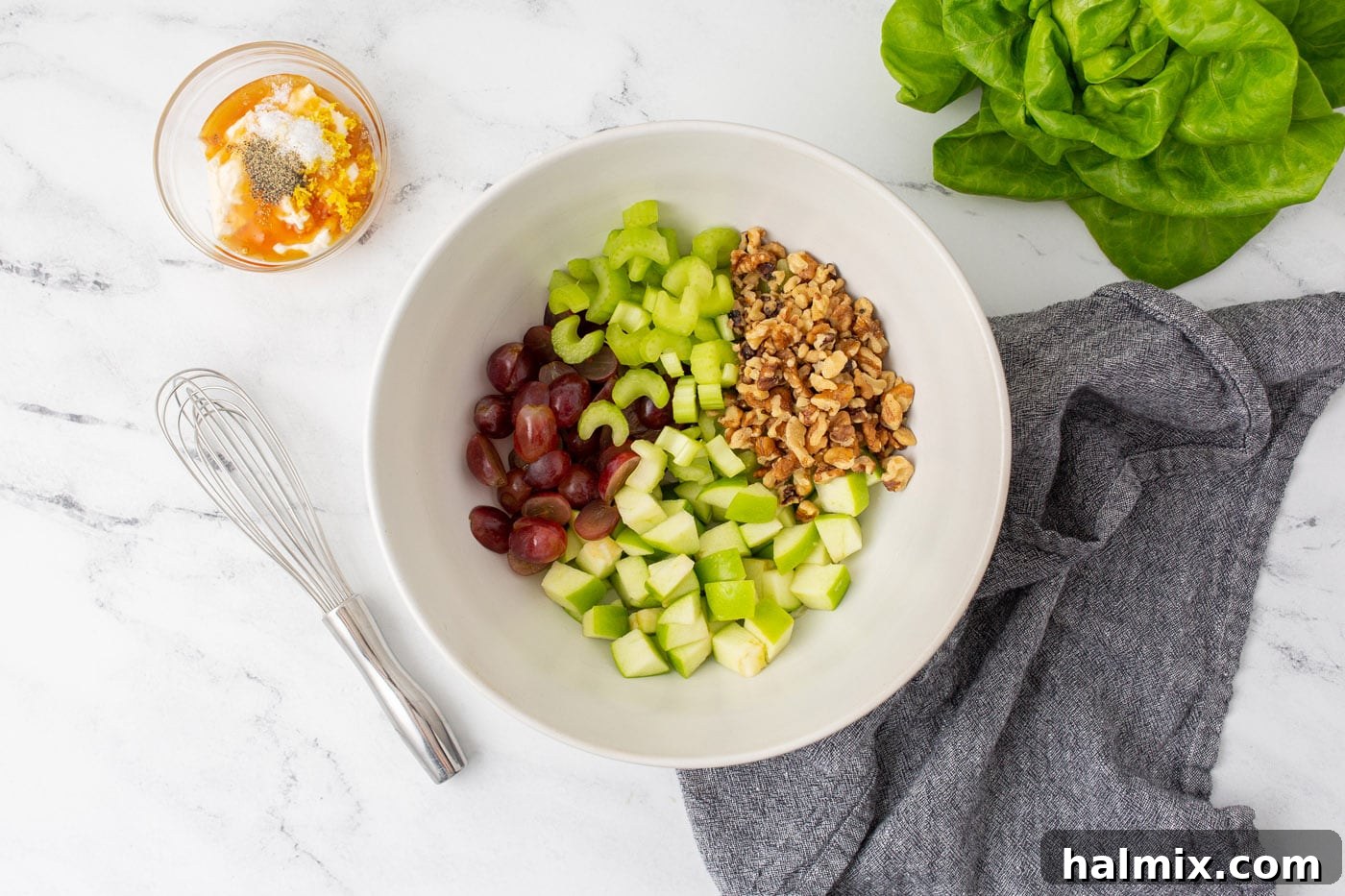
- **Prepare the Salad Base:** Begin by gathering all your fresh ingredients. In a large mixing bowl, combine the halved grapes, diced apples (toss them with a squeeze of lemon juice beforehand to prevent browning), thinly sliced celery, and toasted walnuts. Ensure all components are evenly distributed, creating a colorful and inviting foundation for your salad.
- **Whip Up the Creamy Dressing:** In a separate, smaller bowl, it’s time to create the luscious dressing. Using a small whisk, thoroughly combine the mayonnaise, honey, fresh lemon juice, lemon zest, a pinch of salt, and a dash of black pepper. Whisk until the mixture is smooth, creamy, and well-emulsified. Taste and adjust seasonings as needed – you might want a bit more lemon for tang or honey for sweetness.
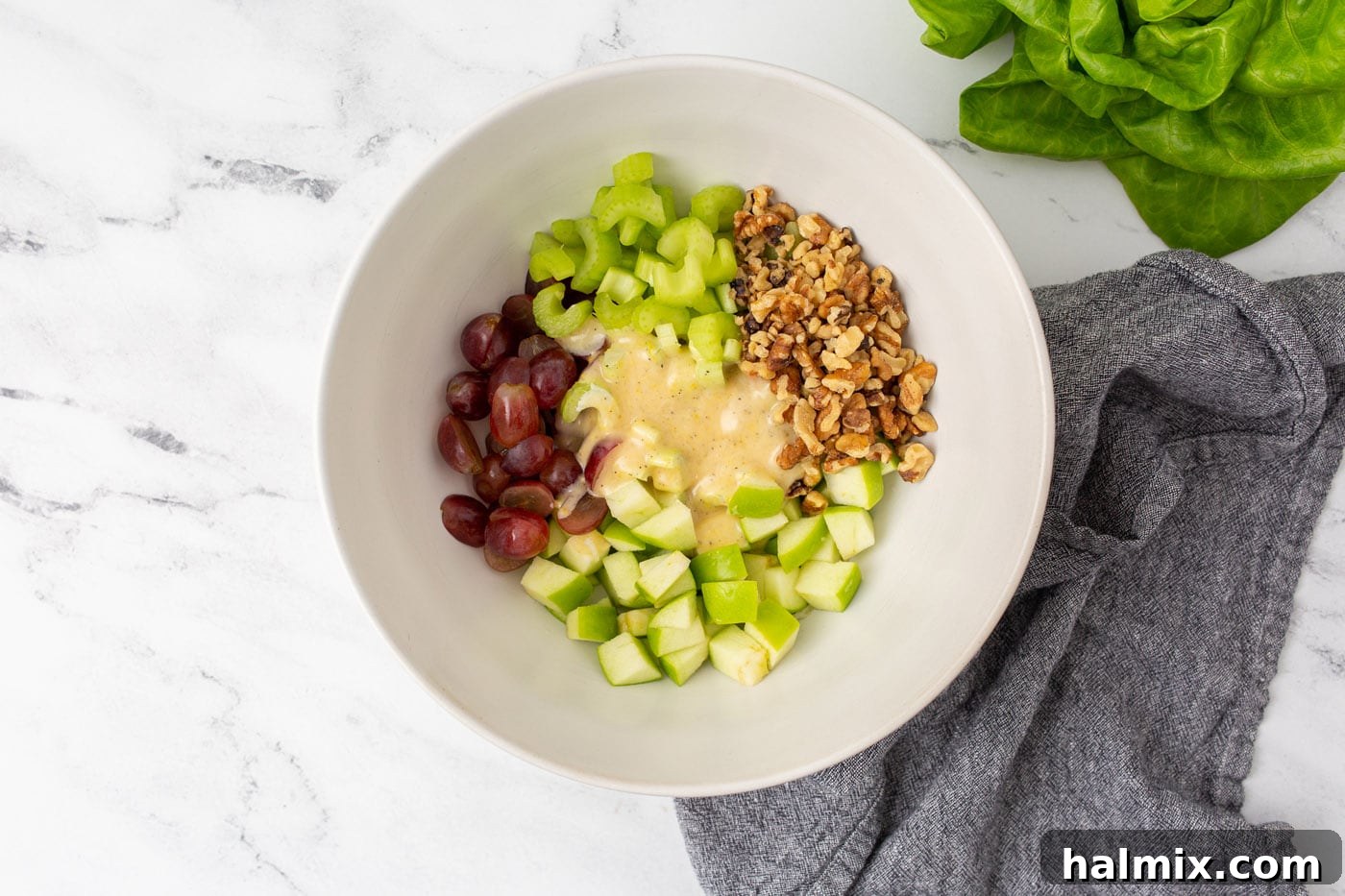
- **Combine and Toss:** Gently pour the prepared dressing over the fruit and nut mixture in the large bowl. Using a large spoon or spatula, toss everything together with care, ensuring every piece of fruit and every walnut is thoroughly coated in the creamy dressing. This step is key to achieving a cohesive flavor profile and uniform texture throughout the salad.
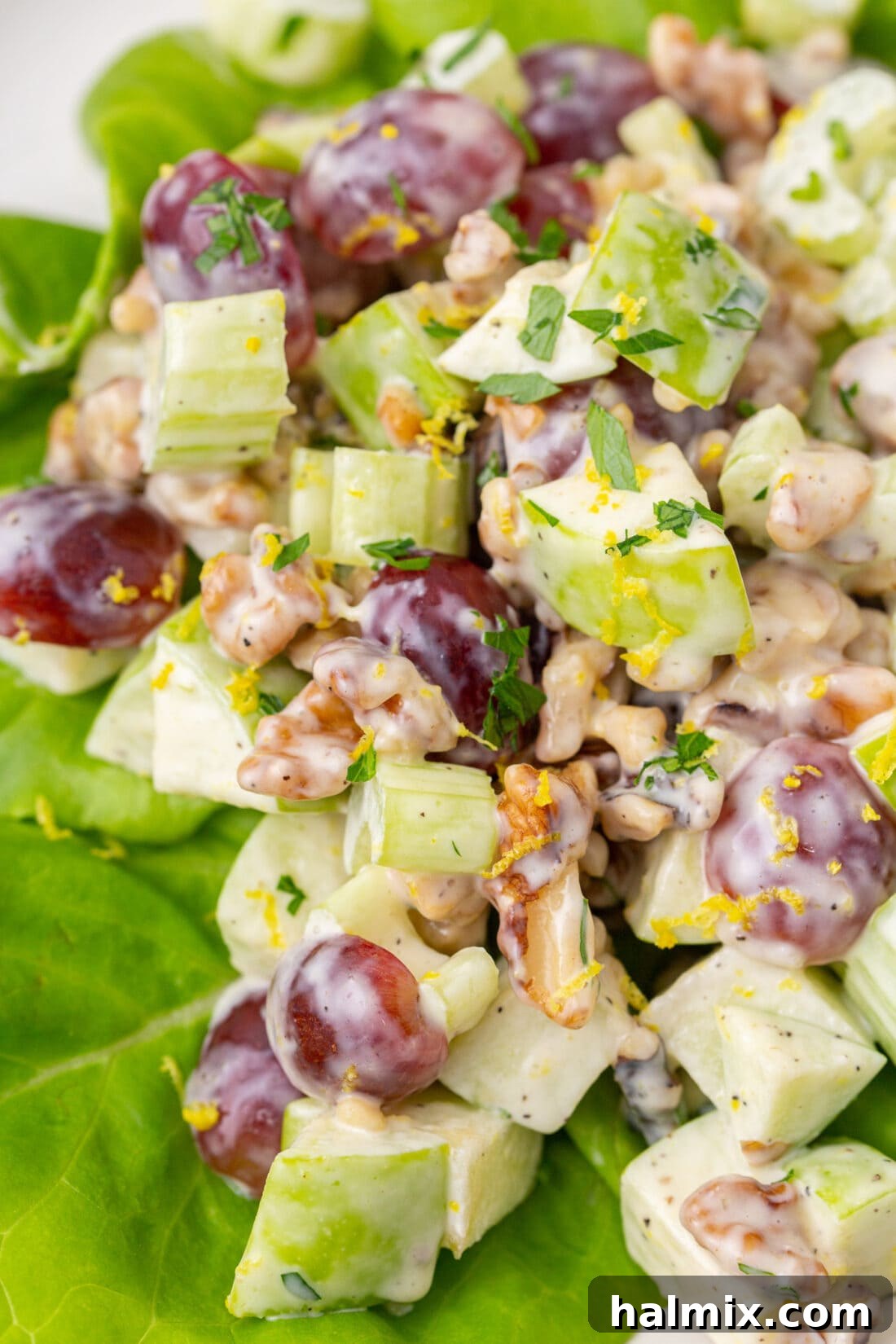
- **Serve and Enjoy:** Your delightful Waldorf Salad is now ready! Serve it immediately on a crisp bed of fresh lettuce leaves, such as romaine or butter lettuce, for an elegant presentation and an extra layer of crunch. Alternatively, it’s equally delicious served simply as is, straight from the bowl. For optimal flavor, allow the salad to chill in the refrigerator for at least 30 minutes before serving.
Frequently Asked Questions & Expert Tips for Waldorf Salad Success
To ensure your Waldorf Salad is always a resounding success, here are answers to common questions and some valuable expert tips:
While it’s quick to prepare (under 10 minutes!), we generally don’t recommend making this salad more than 1-2 hours before serving. The main reason is that diced apples tend to brown over time, even with a little lemon juice. The longer it sits, the softer the apples and celery may become, diminishing that desired crisp texture. However, you can prep the ingredients separately a day in advance:
- Dice the apples and toss them thoroughly with lemon juice, then store them in an airtight container in the refrigerator.
- Halve the grapes, slice the celery, and chop the walnuts, storing each in separate airtight containers.
- Prepare the dressing and keep it chilled in its own airtight container.
When ready to serve, simply combine all the prepped components and toss with the dressing. This method allows for quick assembly just before your event, ensuring maximum freshness and crispness. Store any leftovers in an airtight container in the refrigerator.
The best way to prevent your diced apples from browning is to toss them immediately after cutting with fresh lemon juice. The acidity of the lemon juice acts as a natural antioxidant, slowing down the oxidation process. Our recipe already includes lemon juice in the dressing, so you can simply use a small portion of that lemon juice to coat the apples as you chop them. Alternatively, a quick dip in a bowl of cold water with a tablespoon of lemon juice or even a pinch of citric acid can also work wonders.
Store any leftover Waldorf Salad in an airtight container in the refrigerator. It’s best consumed within 1-2 days. Beyond that, the textures of the fruits and vegetables may become too soft, and the dressing might separate slightly. While still safe to eat, the quality will diminish. Stir gently before serving leftovers.
Absolutely! To make this Waldorf Salad vegan, simply substitute the regular mayonnaise with a high-quality vegan mayonnaise. For a dairy-free option, ensure your mayonnaise is dairy-free (most are, but check labels) or use a suitable plant-based yogurt alternative in the dressing. The rest of the ingredients are naturally vegan and dairy-free.
While you can serve Waldorf Salad immediately, allowing it to chill in the refrigerator for at least 30 minutes (or up to 1-2 hours) before serving significantly enhances its flavors. This chilling time allows the ingredients to meld together, and the dressing to slightly thicken, resulting in a more harmonious and refreshing salad.
For an extra layer of depth and crunch, take a few minutes to lightly toast your walnuts before adding them to the salad. Simply spread them on a dry baking sheet and bake at 350°F (175°C) for 5-7 minutes, or toss them in a dry skillet over medium heat until fragrant. Let them cool completely before incorporating them into the salad.
Creative Ways to Serve Waldorf Salad
The beauty of Waldorf Salad lies not only in its delightful taste but also in its versatility. While it’s fantastic on its own, here are some creative and popular ways to serve this classic dish:
- Elegant Lettuce Wraps: For a light and refreshing appetizer or a chic lunch, serve spoonfuls of Waldorf Salad nestled in crisp lettuce leaves (such as butter lettuce, endive, or romaine hearts).
- Classic Sandwiches: Create simple yet satisfying sandwiches by spooning the salad between two slices of soft bread, perhaps with an additional layer of crisp lettuce. It’s a wonderful alternative to traditional chicken or tuna salad sandwiches.
- A Perfect Side Dish: Waldorf Salad is an ideal companion for a variety of meals. It shines as a refreshing side at potlucks, barbecues, picnics, and holiday dinners. Its bright flavors cut through richer main courses beautifully.
- Hearty Green Salad: Transform it into a more substantial green salad by adding a generous amount of chopped mixed greens, such as spring mix, spinach, or arugula, just before serving.
- Brunch Highlight: Offer it as part of a brunch spread, pairing it with quiches, pastries, or egg dishes for a balance of freshness and flavor.
- Fruit Platter Enhancement: Incorporate smaller portions of Waldorf Salad onto a large fruit platter, offering a creamy, crunchy contrast to fresh berries and melon.
Feel free to customize this recipe to your liking or experiment with unique additions that complement your palate. Some traditions include adding mini marshmallows for extra sweetness and chewiness, while others enjoy incorporating other fruits and veggies like juicy mandarin oranges, chunks of pineapple, or even finely chopped broccoli for an unexpected twist. The possibilities for personalization are endless!
More Delightful Salad Recipes to Explore
If you’ve enjoyed the classic appeal of our Waldorf Salad, you’re sure to love these other fantastic salad recipes:
- Vibrant Fruit Salad
- Creamy Broccoli Salad
- Classic Ambrosia Salad
- Refreshing Cucumber Salad
- Retro Watergate Salad
- Nana’s Comforting Macaroni Salad
- Flavorful Cajun Chicken Salad
- Sweet and Savory Watermelon Salad
We are passionate about cooking and baking, and love sharing our culinary adventures with you! To make sure you never miss a new recipe, we offer a convenient newsletter. Simply subscribe here and receive free daily recipes directly to your inbox!
Waldorf Salad
The Waldorf Salad, a beloved classic, traces its origins back to 1893 at the renowned Waldorf Astoria hotel in New York City. Since its inception, this delightful dish has evolved, with many adding their personal touches, such as walnuts, grapes, and a variety of in-season fruits, making it a versatile and timeless favorite.
Course: Side Dish
Cuisine: American
Servings: 4 servings
Prep Time: 10 mins
Calories: 285 per serving
Author: Amanda Davis
Ingredients
- 1 cup red seedless grapes, halved
- 2 Granny Smith apples, diced
- 2 ribs celery, sliced 1/4 inch
- ½ cup walnuts
- ¼ cup mayonnaise
- 1 Tbsp honey
- 1 Tbsp lemon juice (from about half a lemon)
- Zest from half a lemon
- ½ tsp salt (or to taste)
- ¼ tsp pepper (or to taste)
Equipment
- Large mixing bowl
- Small whisk
Before You Begin
- To prevent apples from browning, toss them with the lemon juice (part of the recipe’s dressing) immediately after cutting. No additional lemon juice is needed thereafter.
Instructions
- To a large bowl, add the grapes, apples, celery, and walnuts.
- In a small bowl, whisk together the mayonnaise, honey, lemon juice, lemon zest, salt, and pepper.
- Pour the dressing over the ingredients in the large bowl and toss well to coat everything evenly.
- Serve immediately on a bed of fresh lettuce or as is.
Nutrition Information
Serving: 1 serving | Calories: 285cal | Carbohydrates: 27g | Protein: 3g | Fat: 20g | Saturated Fat: 3g | Polyunsaturated Fat: 13g | Monounsaturated Fat: 4g | Trans Fat: 1g | Cholesterol: 6mg | Sodium: 398mg | Potassium: 297mg | Fiber: 4g | Sugar: 21g | Vitamin A: 177IU | Vitamin C: 8mg | Calcium: 34mg | Iron: 1mg
Tried this Recipe? Pin it for Later! Follow on Pinterest @AmandasCookin or tag #AmandasCookin!
Please note: The recipes on this blog are typically tested using a conventional gas oven and stovetop. Oven temperatures can vary, especially with older appliances, so an inexpensive oven thermometer can be useful for accuracy. If using countertop appliances like a toaster oven, air fryer, or slow cooker, cooking times may need adjustment due to different heat distribution. For baking recipes that specify measurements by weight, using volume (cups) instead may lead to different results, and success cannot be guaranteed with alternate measuring methods.