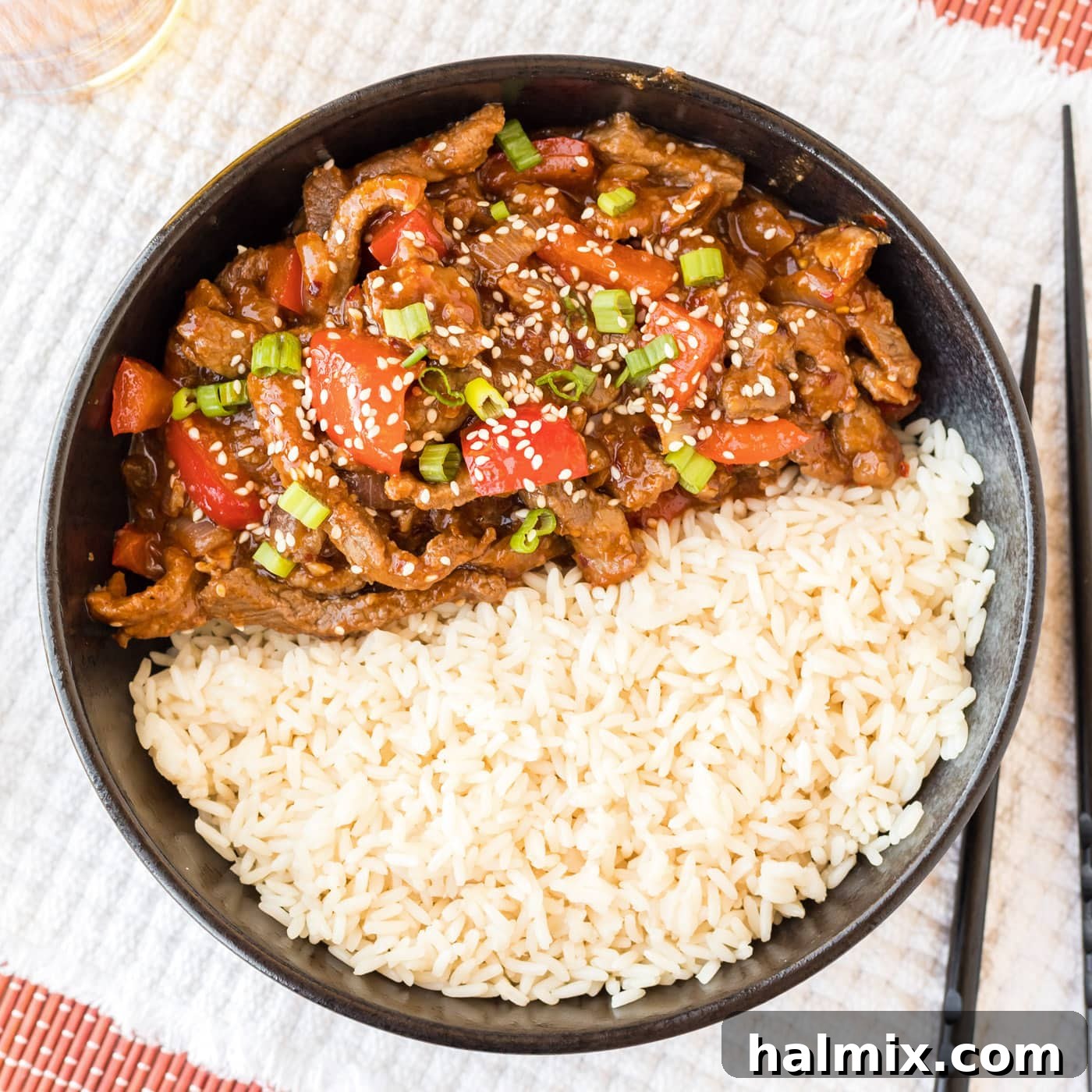
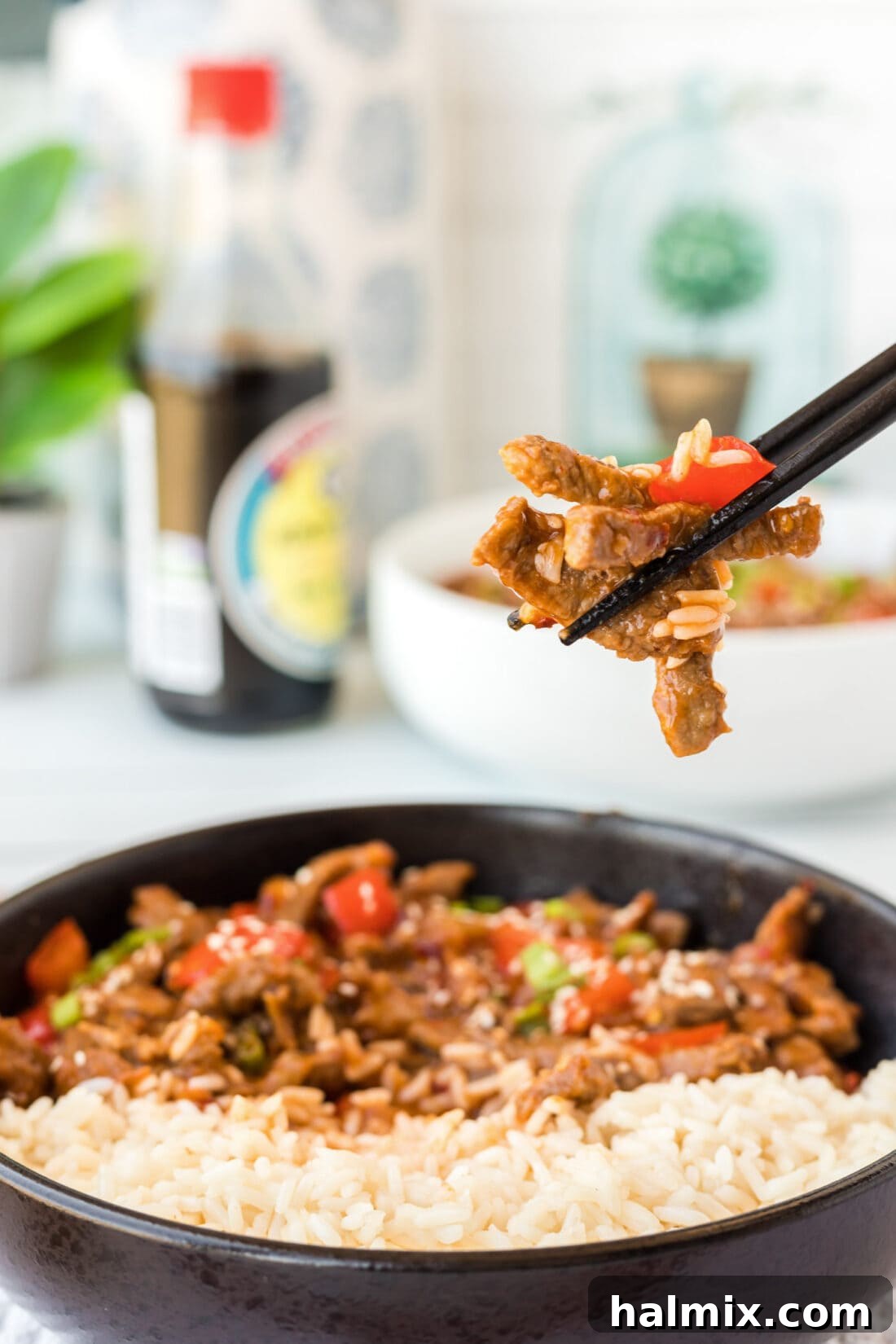
Embark on a culinary journey to craft the perfect Beijing Beef right in your own kitchen! This exceptional recipe features tender, crispy beef strips, perfectly complemented by vibrant sautéed bell peppers and onions, all coated in an irresistible homemade tangy, sweet, and subtly spicy sauce. Tossing everything together in a hot wok ensures that signature authentic flavor and texture. Forget expensive takeout and bland leftovers; prepare to create a dish that’s not just as good as your favorite restaurant’s offering, but arguably even better, fresh from your stove to your plate.
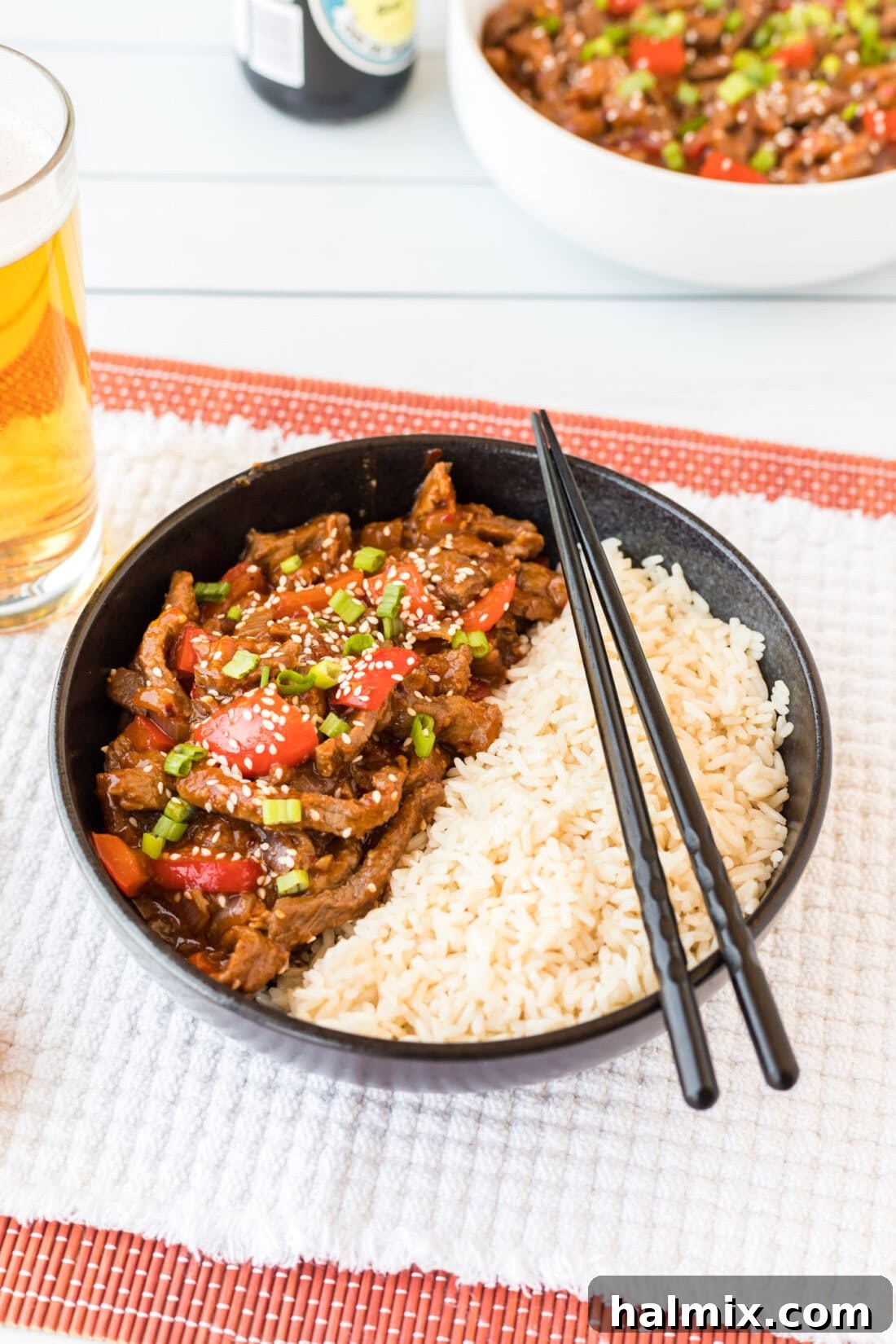
Unveiling the Magic: Why This Homemade Beijing Beef Recipe is a Must-Try
Beijing Beef holds a special place in the hearts of American Chinese food enthusiasts, largely due to its immense popularity as one of Panda Express’s most sought-after entrees. While the exact, closely guarded secret recipe from the renowned fast-casual chain remains elusive, our meticulously developed copycat version aims to capture every bit of that delightful crispiness, sweet-and-spicy kick, and tangy complexity. The best part? You get to enjoy it fresh, without the guesswork of how long it’s been waiting under a heat lamp.
What truly sets this recipe apart is the incredible depth of flavor achieved through our carefully balanced homemade sauce. This masterful blend combines the savory richness of soy sauce and oyster sauce with the vibrant sweetness and mild heat of sweet chili sauce. A hint of red pepper flakes adds an adjustable level of spice, while sesame oil introduces an aromatic depth. Rice wine vinegar and apple cider vinegar provide that essential tangy counterpoint, beautifully cutting through the sweetness. Finally, hoisin sauce contributes its unique sweet and savory umami notes, rounded out by the familiar comfort of ketchup. It may sound like a robust list of ingredients, but they harmoniously unite to create a sauce that is surprisingly quick to prepare and absolutely bursting with flavor. Elevate your dining experience by pairing this classic dish with traditional sides like fluffy white rice, savory chow mein noodles, or perfectly prepared fried rice, transforming your meal into a complete and satisfying feast.
Essential Ingredients for Your Authentic Beijing Beef
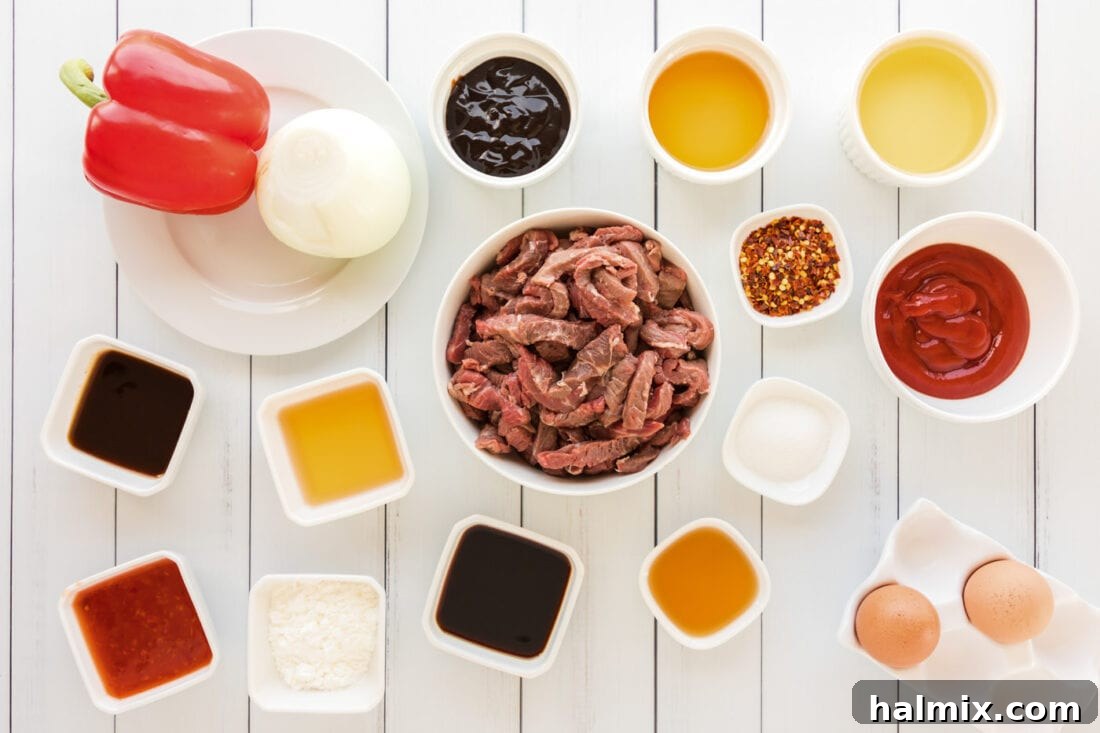
Crafting this incredible Beijing Beef begins with selecting the right ingredients. For precise measurements and step-by-step instructions, refer to the detailed recipe card conveniently located at the end of this post. Ensuring you have high-quality components is key to achieving that restaurant-quality taste and texture.
Ingredient Spotlight: Tips for Selection and Substitutions
BEEF – The star of our Beijing Beef, the cut of meat is crucial for achieving that desired crispy yet tender outcome. Both flank steak and sirloin tip steak are excellent choices due to their lean nature and ability to crisp up beautifully when fried. To ensure uniform cooking and maximum crispiness, it’s vital to slice the beef thinly and against the grain. Cutting against the grain shortens the muscle fibers, resulting in a more tender bite. For easier, ultra-thin slicing, a pro tip is to flash freeze the meat for about 30 minutes before cutting. This firms it up, making it less slippery and easier to manage with a sharp knife. Remember to allow the meat to return to room temperature before proceeding with the recipe to ensure even cooking.
VEGETABLES – Red bell pepper and yellow onion are not just colorful additions; they are fundamental to the classic Beijing Beef profile, offering a sweet crunch that complements the rich beef and tangy sauce. For consistent cooking and an appealing presentation, strive to chop your vegetables into uniform, bite-sized pieces. This ensures they cook evenly and integrate perfectly with the beef. While red bell pepper and onion are traditional, feel free to personalize your dish by adding other stir-fry friendly vegetables such as green bell peppers, carrots, or even snap peas, depending on your preference and what you have on hand.
THE SAUCE BLEND – Our secret weapon for this copycat recipe is a comprehensive sauce that balances multiple flavor profiles.
- Soy Sauce: Provides the fundamental savory, umami base. Opt for a good quality brand, and consider low-sodium options if you’re watching salt intake.
- Oyster Sauce: Adds a distinct sweet, salty, and savory depth with a hint of seafood essence, crucial for authentic Chinese-American flavors.
- Sweet Chili Sauce: Delivers a delightful balance of sweetness and mild heat, giving the sauce its characteristic tang.
- Red Pepper Flakes: Allows for adjustable heat. Add more for a spicier kick, or less for a milder version.
- Granulated Sugar: Essential for balancing the tangy and spicy notes, providing the “sweet” component of Beijing Beef.
- Sesame Oil: Contributes a wonderfully nutty and aromatic fragrance, enhancing the overall profile of the dish.
- Apple Cider Vinegar & Rice Wine Vinegar: These two vinegars work in tandem to provide the signature tangy brightness. Apple cider vinegar offers a slightly fruitier tang, while rice wine vinegar is milder and sweeter.
- Hoisin Sauce: A thick, fragrant sauce used in Chinese cuisine that adds a dark, sweet, and savory richness, creating a deep, complex flavor.
- Ketchup: While seemingly unconventional, ketchup is a common ingredient in many Americanized Chinese sauces, contributing sweetness, tang, and a subtle tomato base that rounds out the flavors.
Step-by-Step Guide: How to Master Beijing Beef at Home
These visual step-by-step photos and detailed instructions are designed to guide you through the process of making this delectable Beijing Beef recipe. For a convenient printable version, complete with precise measurements and comprehensive instructions, you can simply Jump to Recipe at the bottom of this page.
- **Prepare the Vegetables:** Begin by meticulously chopping the red bell pepper and yellow onion into uniform, bite-sized pieces. Consistency in size ensures they cook evenly and add a pleasant texture to the finished dish.
- **Slice the Beef:** Using a very sharp knife, slice the flank or sirloin tip steak against the grain into thin strips, approximately 1/4 inch thick. This crucial step is key to ensuring the beef remains tender after cooking.
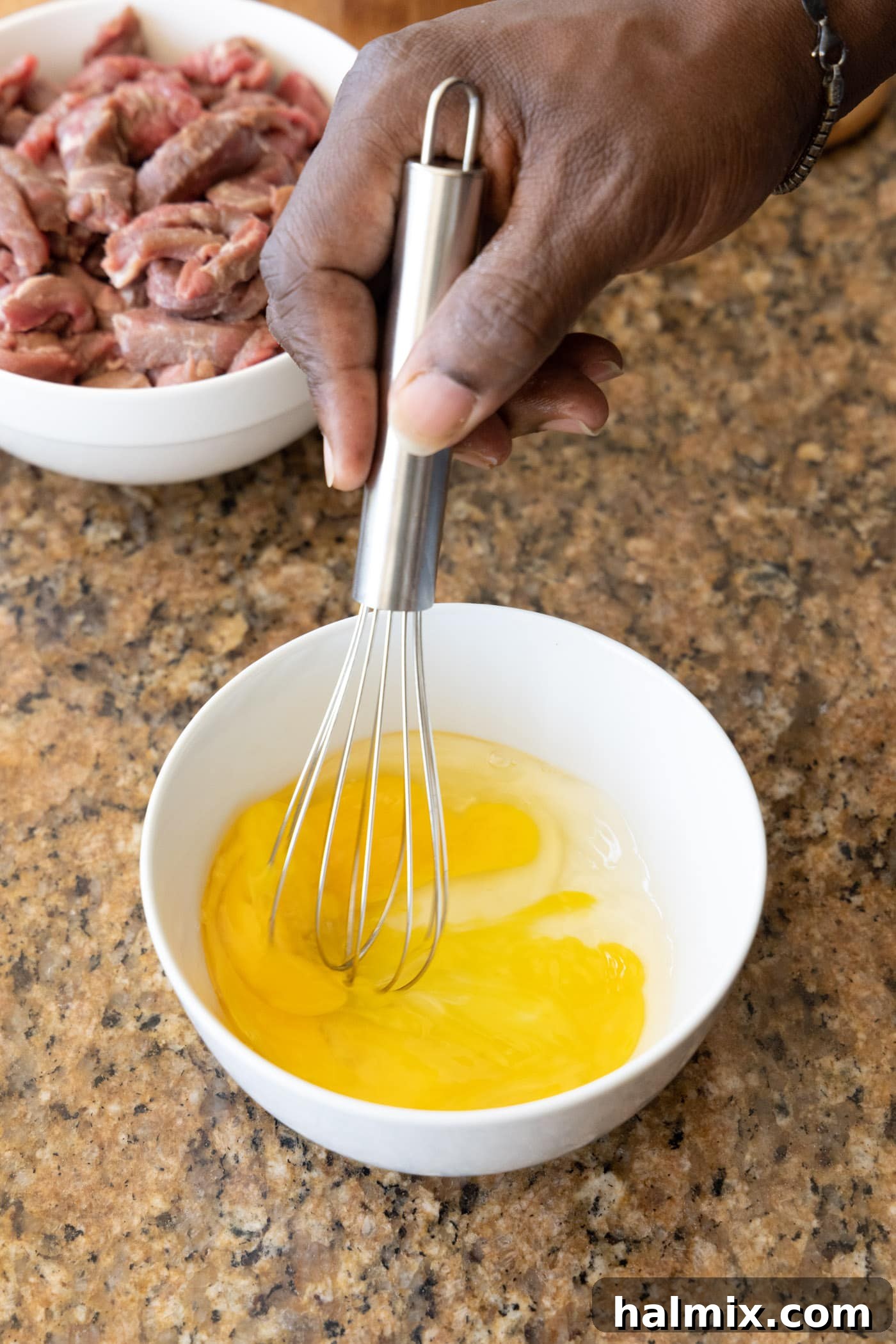
- **Egg Wash Preparation:** In a medium-sized bowl, whisk two eggs until they are thoroughly combined and slightly frothy. This egg wash will help the cornstarch adhere to the beef, creating a crispy coating.

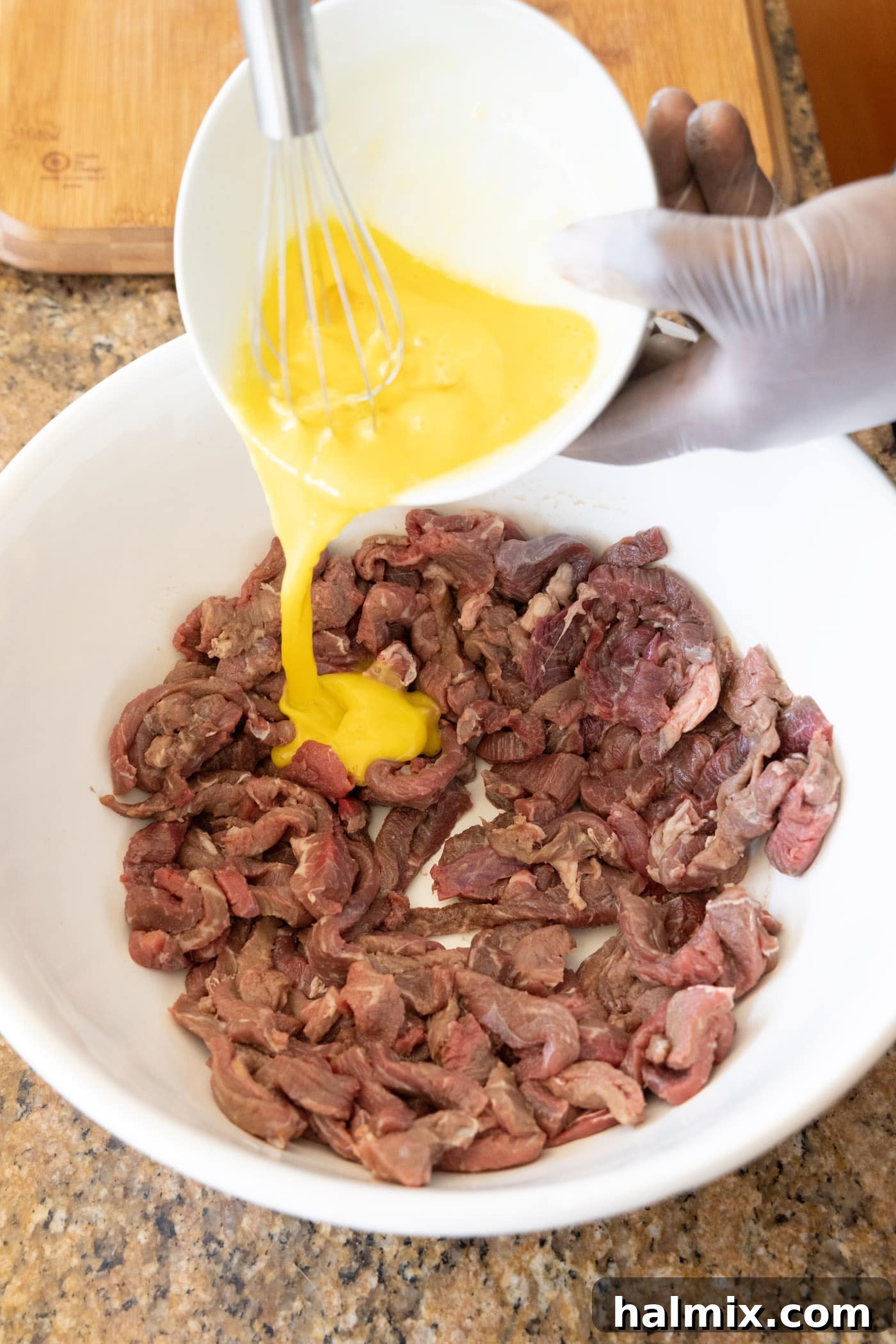
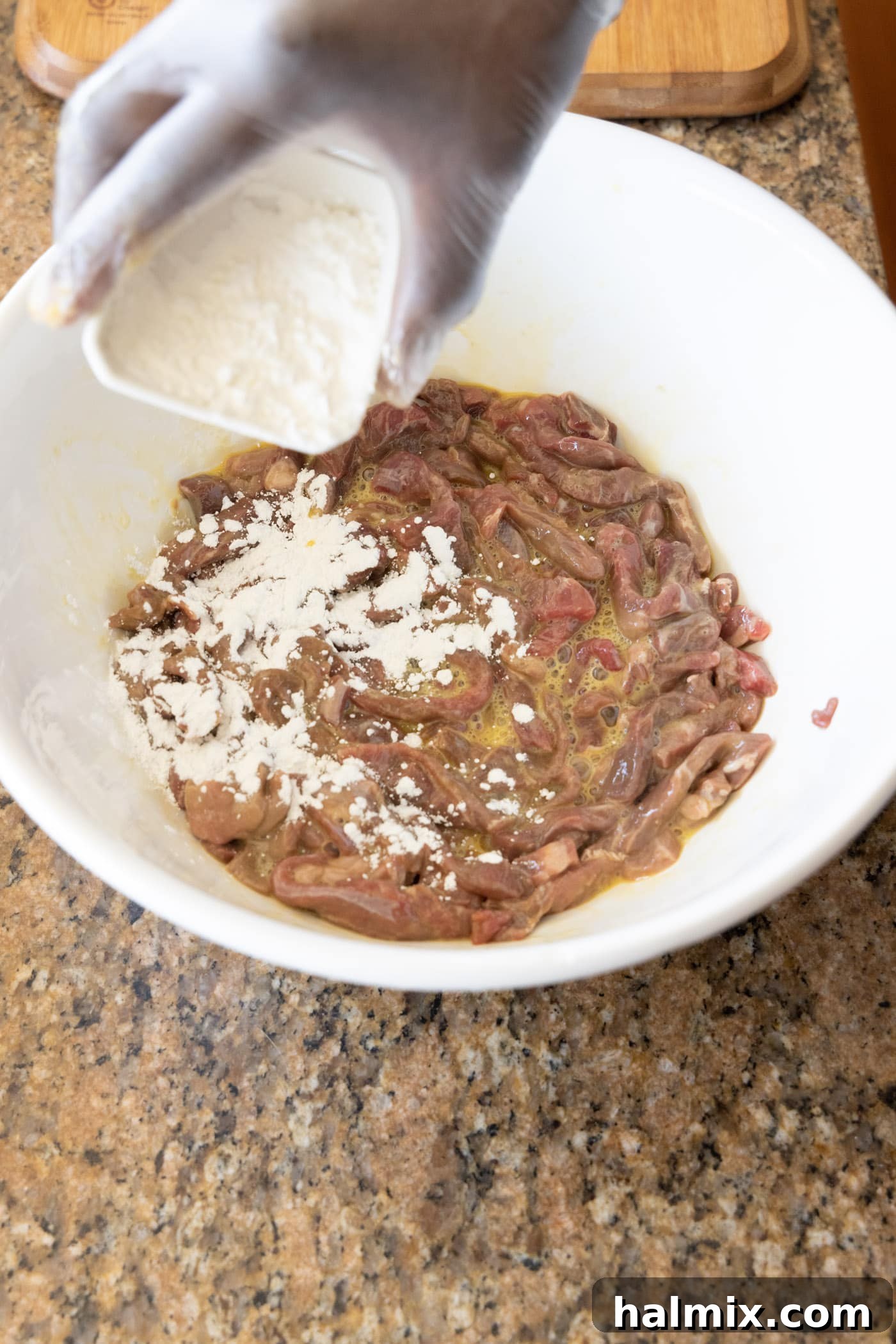
- **Coat the Beef:** Pour the whisked egg mixture over the thinly sliced beef strips in the bowl. Mix gently to ensure all the beef is evenly coated. Then, sprinkle the cornstarch over the beef. Using gloved hands (or clean bare hands), thoroughly mix the cornstarch into the beef and egg until every strip is lightly and uniformly coated. This forms the essential crispy crust.
- **Heat the Oil:** Add approximately ½ cup of vegetable oil to a large, heavy-bottomed skillet or a wok. Heat the oil over medium-high heat until it begins to shimmer, indicating it’s hot enough for frying. A small piece of beef should sizzle immediately when added.
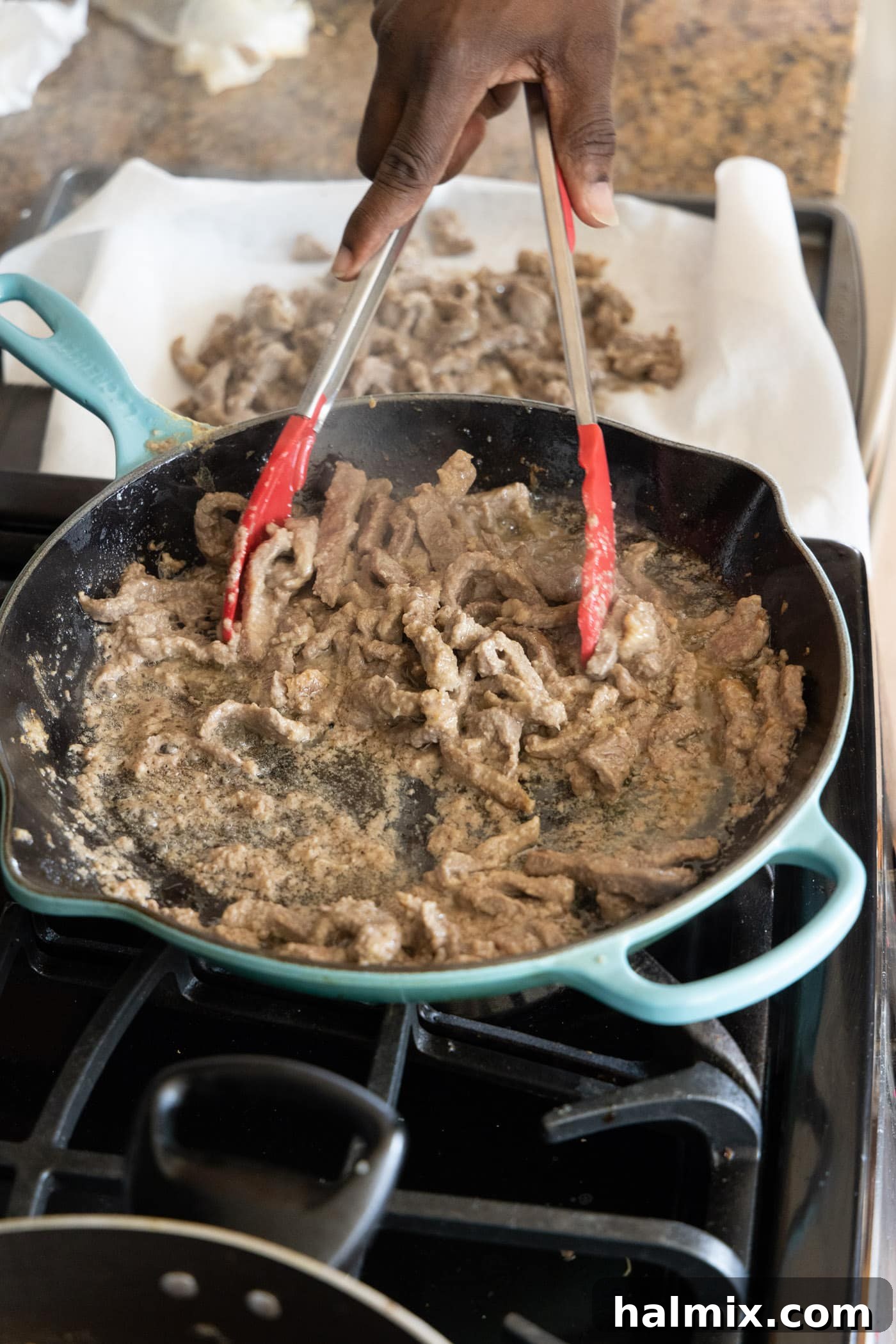
- **Fry the Beef:** Carefully add the cornstarch-coated beef strips to the hot oil. Be mindful not to overcrowd the pan; cook in batches if necessary to ensure even crisping. Turn the beef occasionally with tongs until it’s golden brown and crispy on all sides, with no pink remaining.
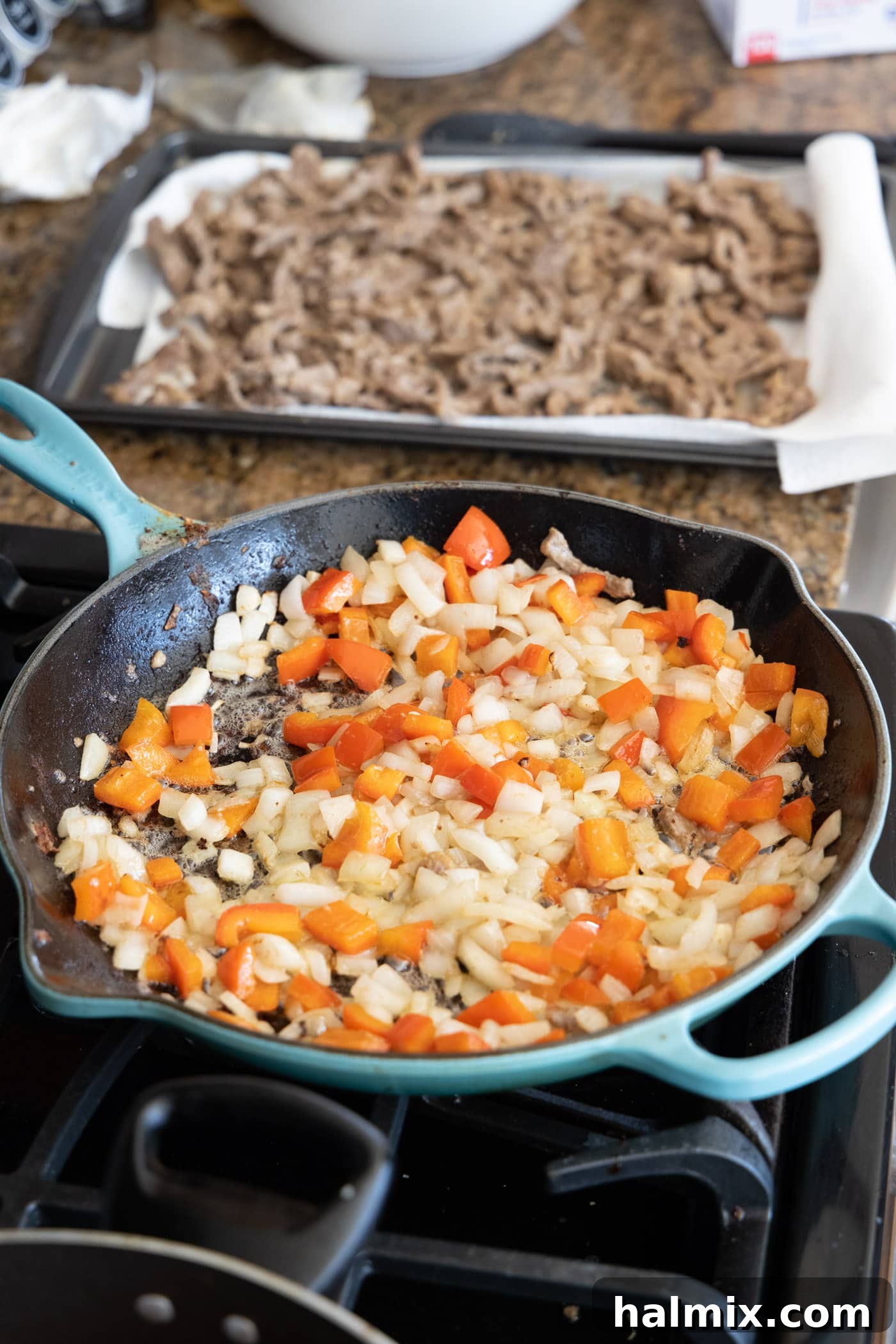
- **Rest the Beef and Cook Vegetables:** Once cooked, remove the crispy beef from the skillet and transfer it to a plate lined with paper towels to drain excess oil. Keep it warm. Next, add the chopped onion and bell pepper to the drippings remaining in the pan. Sauté until the vegetables are tender-crisp, then remove them and set aside with the beef.
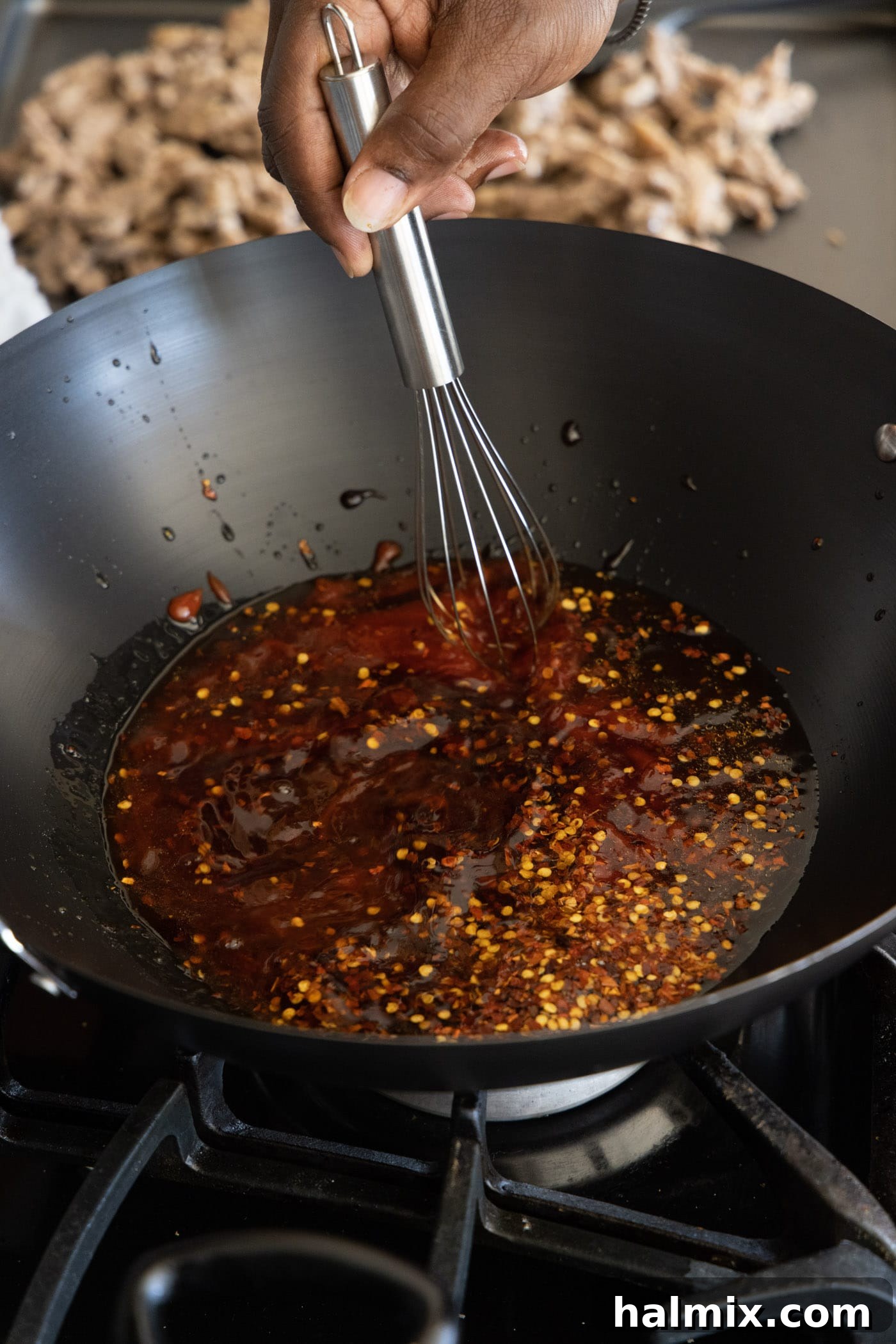
- **Prepare the Sauce:** Wipe the skillet or wok clean to remove any remaining food particles. Return the pan to medium-high heat. Add all the remaining sauce ingredients (soy sauce, oyster sauce, sweet chili sauce, red pepper flakes, granulated sugar, sesame oil, apple cider vinegar, rice wine vinegar, hoisin, and ketchup) to the pan. Whisk vigorously to combine all ingredients smoothly and bring the mixture to a gentle boil, allowing it to slightly thicken.
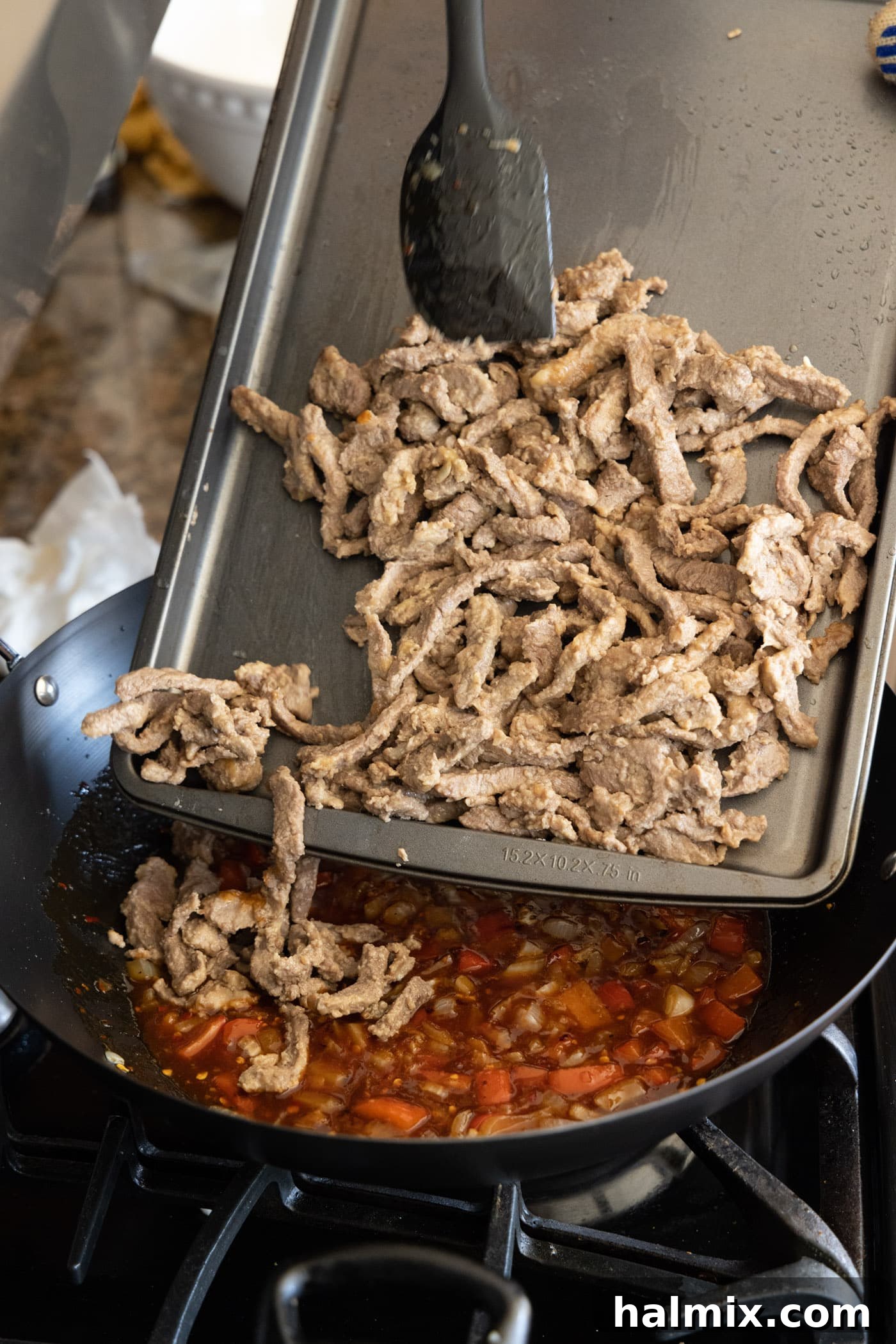
- **Combine and Serve:** Return the cooked beef, onion, and bell pepper to the pan with the simmering sauce. Using a rubber spatula, stir everything together thoroughly, ensuring every piece of beef and vegetable is evenly coated in the rich, glossy sauce. Let it simmer over medium-low heat for just 2-3 minutes, allowing the flavors to meld and the dish to heat through. Serve immediately for the best crispy texture and flavor.
Frequently Asked Questions & Expert Tips for Beijing Beef Perfection
To maintain freshness, store any leftover Beijing Beef in an airtight container within the refrigerator for up to 4 days. When reheating, the best method is to use a skillet over medium-low heat. This helps to re-crisp the beef slightly and warm the sauce evenly. If the sauce appears too thick or sticky upon reheating, simply add a small splash of water or a bit of chicken broth to the pan and stir, allowing it to loosen back to the desired consistency.
While Beijing Beef and Mongolian Beef share some superficial similarities, such as often using similar cuts of beef like flank steak, they are quite distinct in preparation and flavor profile. Beijing Beef is known for its signature crispy texture, achieved by lightly coating the beef in an egg and cornstarch mixture before frying. Mongolian Beef, on the other hand, typically features very tender, thinly sliced beef that is stir-fried quickly. Flavor-wise, Beijing Beef sauce is a dynamic combination of sweet, spicy, and tangy notes, often with a hint of ketchup. Mongolian Beef usually presents a milder, more savory profile, often relying on a rich hoisin-based sauce, though some versions may incorporate dried chili peppers for added heat. The textural and flavor differences make them unique and equally delicious dishes.
Yes, you can adapt this recipe to be gluten-free. The main ingredients to watch are soy sauce and hoisin sauce, which typically contain wheat. Simply substitute regular soy sauce with a gluten-free tamari or a certified gluten-free soy sauce alternative. For hoisin sauce, look for a gluten-free version, or you can make a simple homemade hoisin sauce using gluten-free ingredients. Ensure all other ingredients you use are naturally gluten-free or certified as such.
While a wok is ideal for stir-frying due to its high heat retention and sloped sides, a large, heavy-bottomed skillet or a cast-iron pan will work perfectly well. The key is to ensure your pan is hot enough and that you don’t overcrowd the pan when cooking the beef. If your pan isn’t large enough to cook all the beef at once without steaming, cook in batches to ensure the beef gets crispy.
The spice level in this Beijing Beef recipe comes primarily from the red pepper flakes and sweet chili sauce. To make it spicier, you can easily increase the amount of red pepper flakes or add a dash of sriracha or other chili paste to the sauce. For a milder version, simply reduce the amount of red pepper flakes or omit them entirely. You can also opt for a milder sweet chili sauce.
Elevate Your Meal: Delicious Serving Suggestions for Beijing Beef
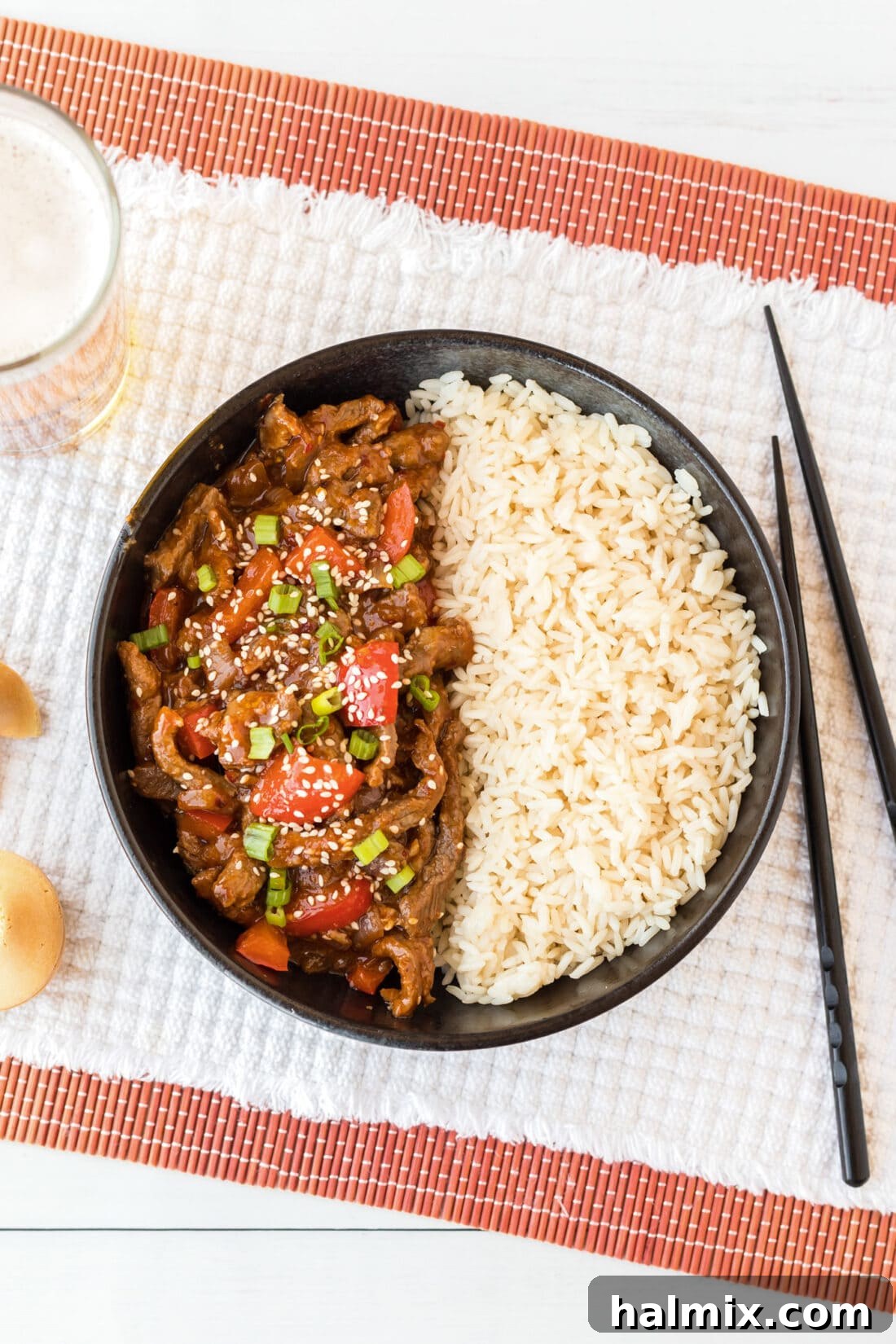
Beijing Beef is a remarkably versatile dish that pairs wonderfully with a variety of sides. For a classic, satisfying meal, serve it alongside steaming white rice, which perfectly absorbs the rich, tangy sauce. If you prefer more flavor, consider fluffy fried rice or a generous portion of savory chow mein noodles. To add a fresh, aromatic finish, garnish your Beijing Beef with thinly sliced green onions (scallions) or a sprinkle of toasted sesame seeds. For a more complete Asian-inspired feast, you could also serve it with steamed or stir-fried broccoli, snow peas, or a light cucumber salad.
More Delightful Asian-Inspired Recipes to Explore
If you loved this Beijing Beef recipe, you’re sure to enjoy these other popular Asian-inspired dishes:
- Orange Chicken
- Teriyaki Chicken
- Mongolian Beef
- Kung Pao Chicken
- General Tso Chicken
Passionate about cooking and sharing culinary adventures, I strive to bring delicious and accessible recipes to your kitchen. Keeping up with new recipes can be easy; subscribe to my convenient newsletter and receive free daily recipes directly to your inbox!
Simply subscribe here!
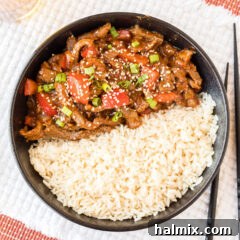
Beijing Beef
This homemade copycat Panda Express Beijing beef is designed to deliver all the crispy, sweet, tangy, and spicy flavors you love, ensuring a fresh and delicious experience every time.
IMPORTANT – Be sure to scroll up and read the Frequently Asked Questions and Expert Tips sections for valuable insights!
Print It
Pin It
Rate It
Watch the Recipe Video!
Ingredients
- 1 ½ pounds flank steak or sirloin tip steak
- 2 eggs
- 2 Tablespoons cornstarch
- ½ cup vegetable oil
- 1 red bell pepper
- 1 yellow onion
- ¼ cup soy sauce
- 2 Tablespoons oyster sauce
- 4 Tablespoons sweet chili sauce
- 1 Tablespoon red pepper flakes
- 2 Tablespoons granulated sugar
- 1 Tablespoon sesame oil
- ¼ cup apple cider vinegar
- 2 Tablespoons rice wine vinegar
- ¼ cup hoisin sauce
- ½ cup ketchup
Things You’ll Need
- Wok or large heavy bottom skillet
- Tongs
- Rubber spatula
- Whisk
- Vinyl gloves
Before You Begin / Recipe Notes
- For easier and thinner slicing, flash freeze the beef for about 30 minutes. Always slice against the grain for maximum tenderness. Ensure the meat returns to room temperature before cooking.
- Store leftovers in an airtight container in the refrigerator for up to 4 days. Reheat gently in a skillet over medium-low heat. Add a splash of water or broth if the sauce has thickened too much.
- Adjust red pepper flakes to suit your preferred spice level.
Instructions
- Chop onion and bell pepper into uniform, bite-sized pieces for even cooking.
- Slice beef into thin strips, cutting against the grain for tenderness.
- Whisk the eggs thoroughly in a medium bowl.
- Pour the whisked egg over the beef strips and mix well. Sprinkle cornstarch over the beef and mix with gloved hands until all strips are evenly coated.
- Add vegetable oil to a heavy-bottomed skillet or wok over medium-high heat until it shimmers.
- Add coated beef strips to the hot oil in batches if necessary, to avoid overcrowding. Turn occasionally with tongs until golden brown and crispy, with no pink remaining.
- Remove cooked beef from the skillet and keep warm. Add onion and bell pepper to the pan drippings. Cook until tender-crisp, then remove and set aside.
- Wipe the pan clean and heat over medium-high. Add all remaining sauce ingredients (soy sauce, oyster sauce, sweet chili sauce, red pepper flakes, granulated sugar, sesame oil, apple cider vinegar, rice wine vinegar, hoisin, ketchup) to the pan. Whisk together and bring to a gentle boil, allowing it to thicken slightly.
- Return the cooked onion, bell pepper, and beef to the pan. Stir with a rubber spatula to coat evenly. Simmer over medium-low heat for 2-3 minutes to heat through and allow flavors to meld. Serve immediately.
Nutrition
Calories: 720cal |
Carbohydrates: 41g |
Protein: 43g |
Fat: 43g |
Saturated Fat: 9g |
Polyunsaturated Fat: 18g |
Monounsaturated Fat: 12g |
Trans Fat: 0.2g |
Cholesterol: 184mg |
Sodium: 1934mg |
Potassium: 904mg |
Fiber: 3g |
Sugar: 28g |
Vitamin A: 1799IU |
Vitamin C: 41mg |
Calcium: 80mg |
Iron: 4mg
Tried this Recipe? Pin it for Later!
Follow on Pinterest @AmandasCookin or tag #AmandasCookin!
The recipes on this blog are typically tested using a conventional gas oven and stovetop. Please note that oven performance can vary, especially with older models, so using an inexpensive oven thermometer can help ensure accurate temperatures. If utilizing a toaster oven, countertop oven, pressure cooker, air fryer, slow cooker, or other specialized appliance, be aware that cooking and baking times may require adjustment. For recipes providing measurements by weight, using cups instead may lead to different results, and success cannot be guaranteed with alternative measurement methods.