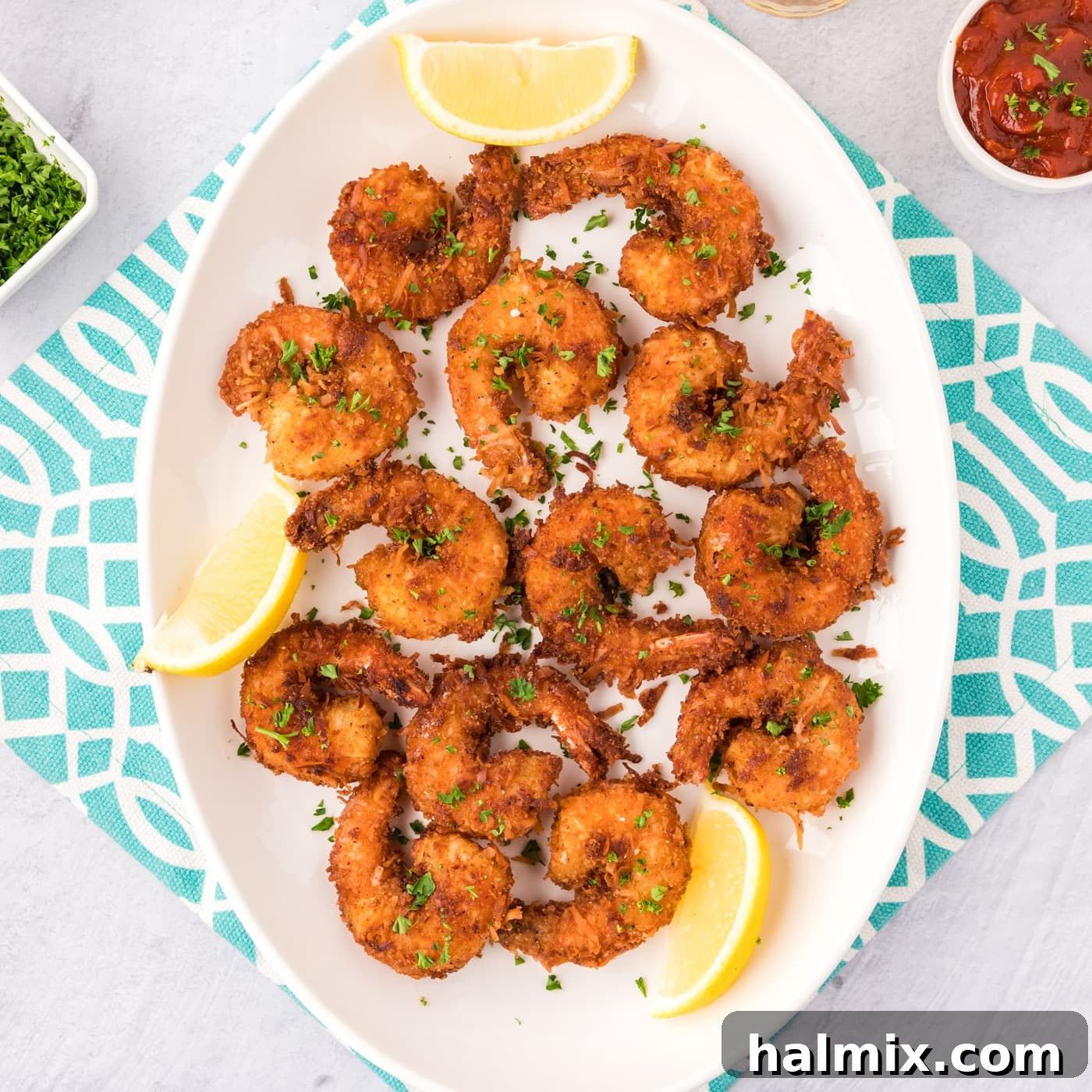
Prepare to tantalize your taste buds with the ultimate culinary delight: perfectly golden, irresistibly crispy coconut shrimp! This beloved dish combines succulent shrimp with a sweet, crunchy coating, delivering a flavor and texture experience that is simply unforgettable. Whether you’re planning an elegant appetizer for a dinner party, a delightful snack for a casual get-together, or a unique main course, this homemade coconut shrimp recipe promises an exceptional bite every single time. Forget bland, soggy imitations – our recipe ensures maximum crunch, vibrant flavor, and tender, juicy shrimp that will have everyone reaching for more.
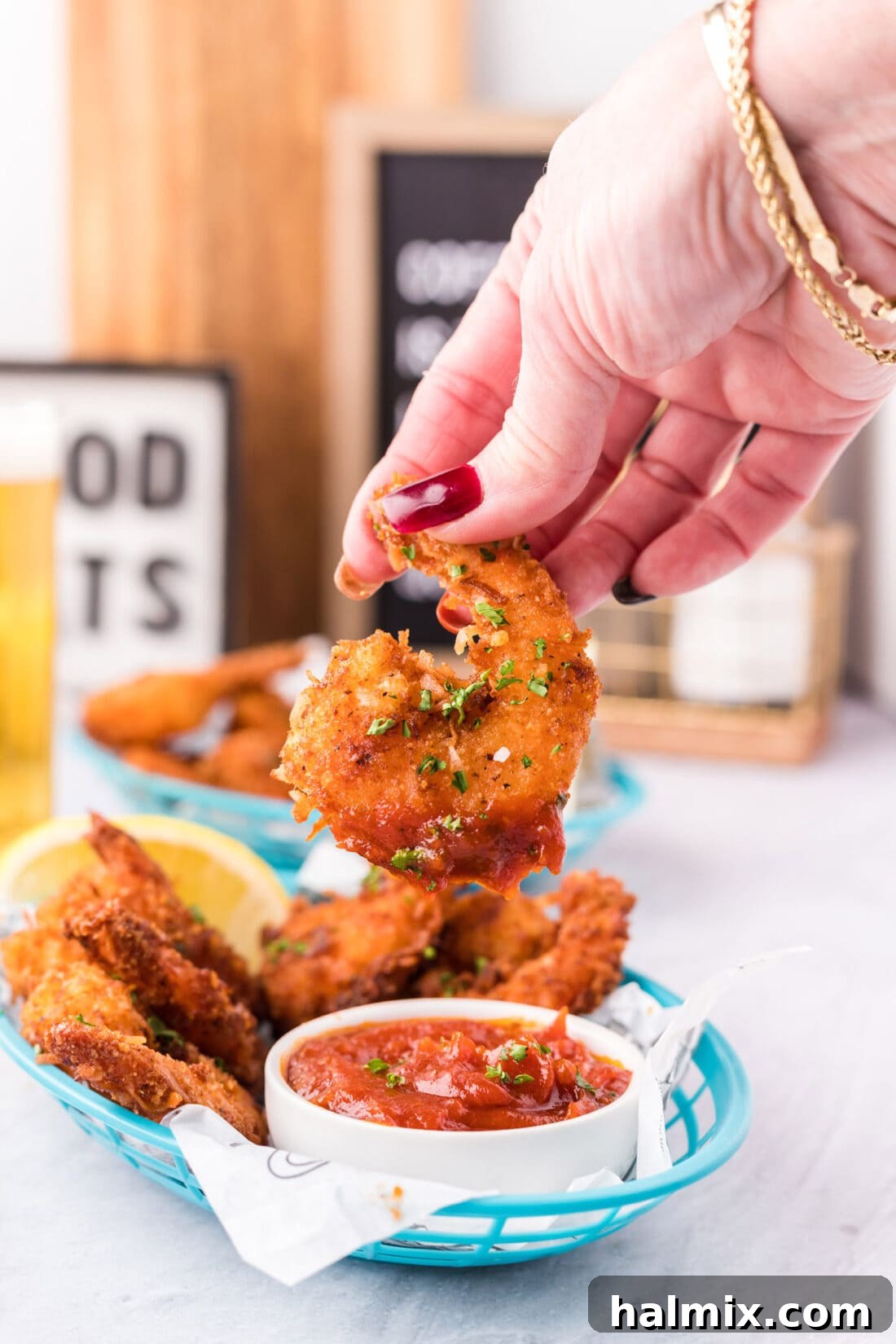
The Secret to Unbeatable Crispy Coconut Shrimp
This recipe consistently delivers outstanding results, making it a favorite for good reason. Imagine a crust so exquisitely crispy and crunchy that it gives way to perfectly tender, juicy shrimp inside, all while offering a delicate balance between sweet and savory flavors. It’s an irresistible combination that defines the perfect coconut shrimp, and our method elevates it to an art form. The magic begins with a meticulous dredging process: first a light coating of flour, followed by a nourishing egg wash, and finally, a generous blanket of our signature breadcrumb, Panko, and coconut mixture. This triple-layer coating is precisely what creates that ultimate, satisfying crunch with every morsel.
Once coated, these little treasures are ready for their golden transformation. A quick fry in a skillet with hot oil brings out their vibrant color and creates that coveted crisp texture. The result is a profoundly flavorful appetizer that’s not only easy to prepare but also versatile enough for any occasion, from casual family dinners to festive celebrations. It’s a dish that never fails to impress and leaves a lasting impression.
For those who prefer a lighter touch or want to avoid deep frying, we also offer a fantastic air fryer coconut shrimp recipe. This alternative method eliminates much of the oil without compromising on the incredible flavor or the desirable crispy texture. Whether you choose to fry or air-fry, you’re guaranteed a delicious outcome that captures the essence of classic coconut shrimp with a homemade touch.
Gather Your Ingredients: What You’ll Need
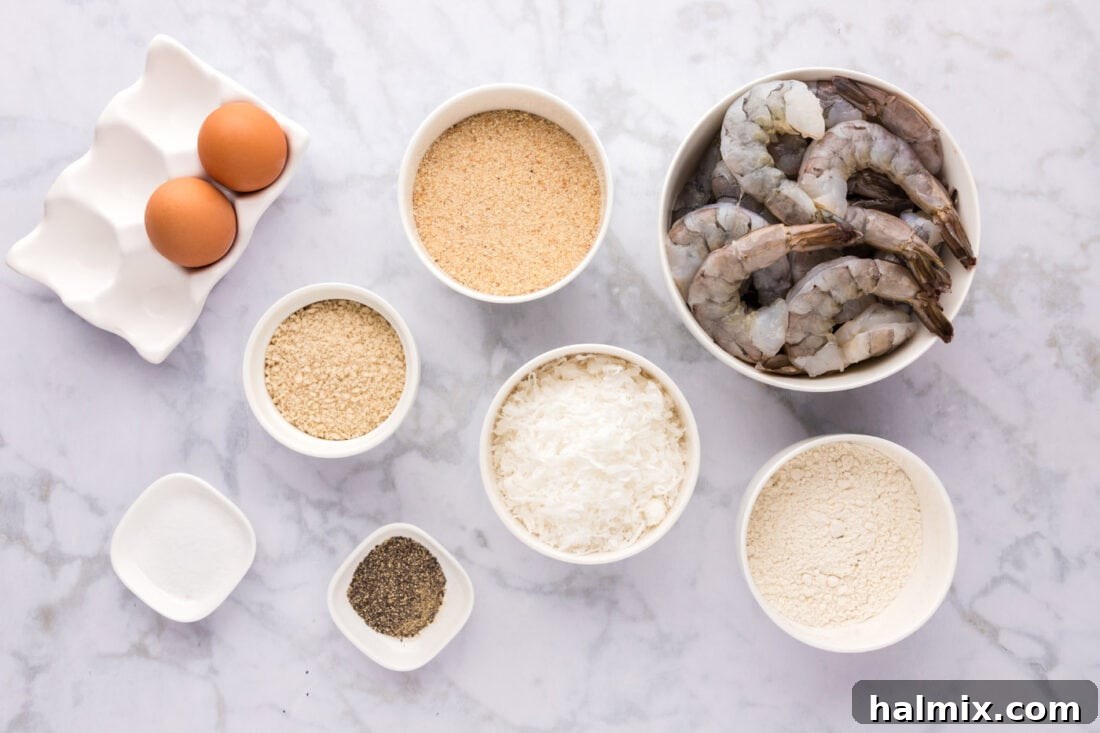
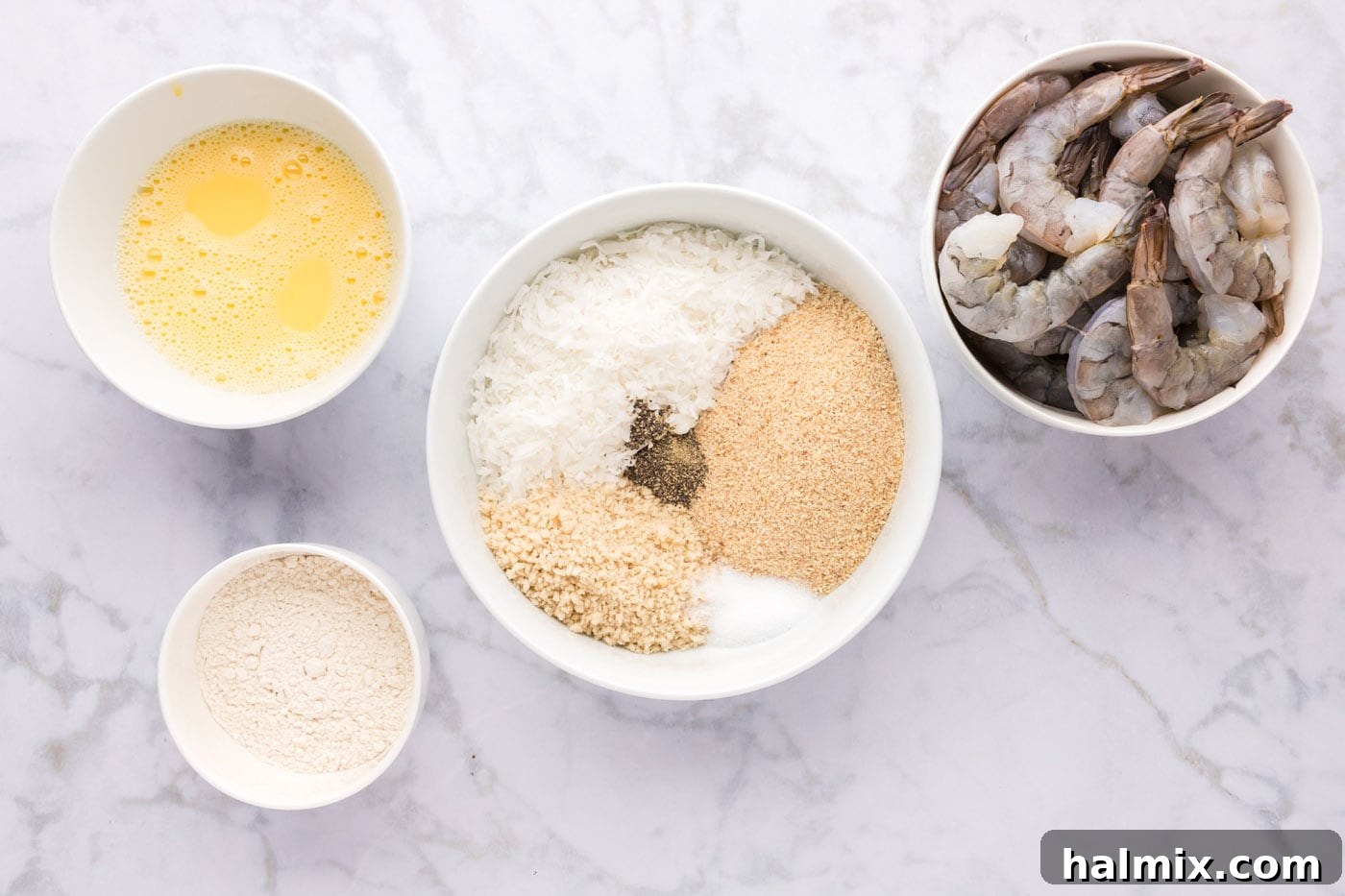
Creating sensational coconut shrimp starts with high-quality ingredients. While we’ll dive into specific details and substitution ideas shortly, here’s an overview of the essential components you’ll need to bring this delightful dish to life. For precise measurements and step-by-step instructions, be sure to refer to the comprehensive printable recipe card located at the conclusion of this post.
Ingredient Breakdown & Expert Substitution Tips
Understanding each ingredient’s role and knowing your options for substitutions can greatly enhance your cooking experience and the final outcome of your coconut shrimp.
SHRIMP: The foundation of this dish is, of course, the shrimp. We highly recommend using larger “grilling shrimp” due to their substantial size, which provides a satisfying bite and impressive presentation. You can often find these in the meat department or at a specialized butcher counter. Alternatively, extra-large bagged shrimp, which are typically already peeled and deveined, work wonderfully and save prep time. When selecting shrimp, opt for raw shrimp over pre-cooked for the best texture and flavor development during cooking. Keeping the tails on the shrimp is a classic choice for coconut shrimp, as it offers a convenient handle for dipping and eating, while also enhancing the visual appeal. However, this is entirely optional; feel free to remove the tails if you prefer.
COCONUT: The star flavor of this dish! We’ve rigorously tested both sweetened and unsweetened shredded coconut flakes to determine the best profile. Our findings consistently show that sweetened coconut flakes impart a richer, more pronounced coconut flavor to the cooked shrimp, adding an extra layer of deliciousness that truly makes the dish shine. The subtle sweetness beautifully complements the savory shrimp and provides a more authentic tropical taste. If, however, you are mindful of sugar content or simply prefer a less sweet profile, unsweetened coconut flakes are a perfectly acceptable substitute. They will still contribute that essential coconut aroma and texture without the added sugar, resulting in a more savory shrimp. Ensure your coconut flakes are finely shredded for the best adhesion and even coating.
BREADING COMPONENTS (Flour, Eggs, Breadcrumbs, Panko): These are crucial for creating that signature crispy crust.
- All-Purpose Flour: The initial dredge in flour creates a dry surface on the shrimp, allowing the egg wash to adhere effectively. This first layer is vital for ensuring the subsequent coatings stick well. For a gluten-free option, a good quality all-purpose gluten-free flour blend can be used.
- Large Eggs: Whisked with a little water, the eggs act as the binder. They create a sticky surface for the breading mixture to cling to, ensuring a uniform and robust crust.
- Breadcrumbs & Panko Breadcrumbs: This recipe uses a blend of regular breadcrumbs and Panko for optimal texture. Regular breadcrumbs provide a fine, consistent coating, while Panko (Japanese-style breadcrumbs) are larger, flakier, and absorb less oil, resulting in an exceptionally light and extra-crispy exterior. This combination delivers a multi-dimensional crunch that’s superior to using just one type of breadcrumb.
SEASONINGS (Salt & Black Pepper): Simple yet essential, salt and freshly ground black pepper enhance the natural flavor of the shrimp and the breading. Feel free to adjust the quantities to your taste or add a pinch of garlic powder or cayenne pepper for an extra kick.
VEGETABLE OIL FOR FRYING: A neutral-flavored oil with a high smoke point is ideal for frying. Vegetable oil, canola oil, or peanut oil are excellent choices as they won’t impart unwanted flavors and can withstand the heat required for crispy frying. You’ll need enough to allow the shrimp to be partially submerged for even cooking.
Step-by-Step Guide: Crafting Your Own Coconut Shrimp
These detailed step-by-step photos and instructions are provided to help you visualize each stage of making this delectable recipe. For a convenient printable version, complete with precise measurements and comprehensive instructions, simply scroll to the bottom of this post to Jump to Recipe.
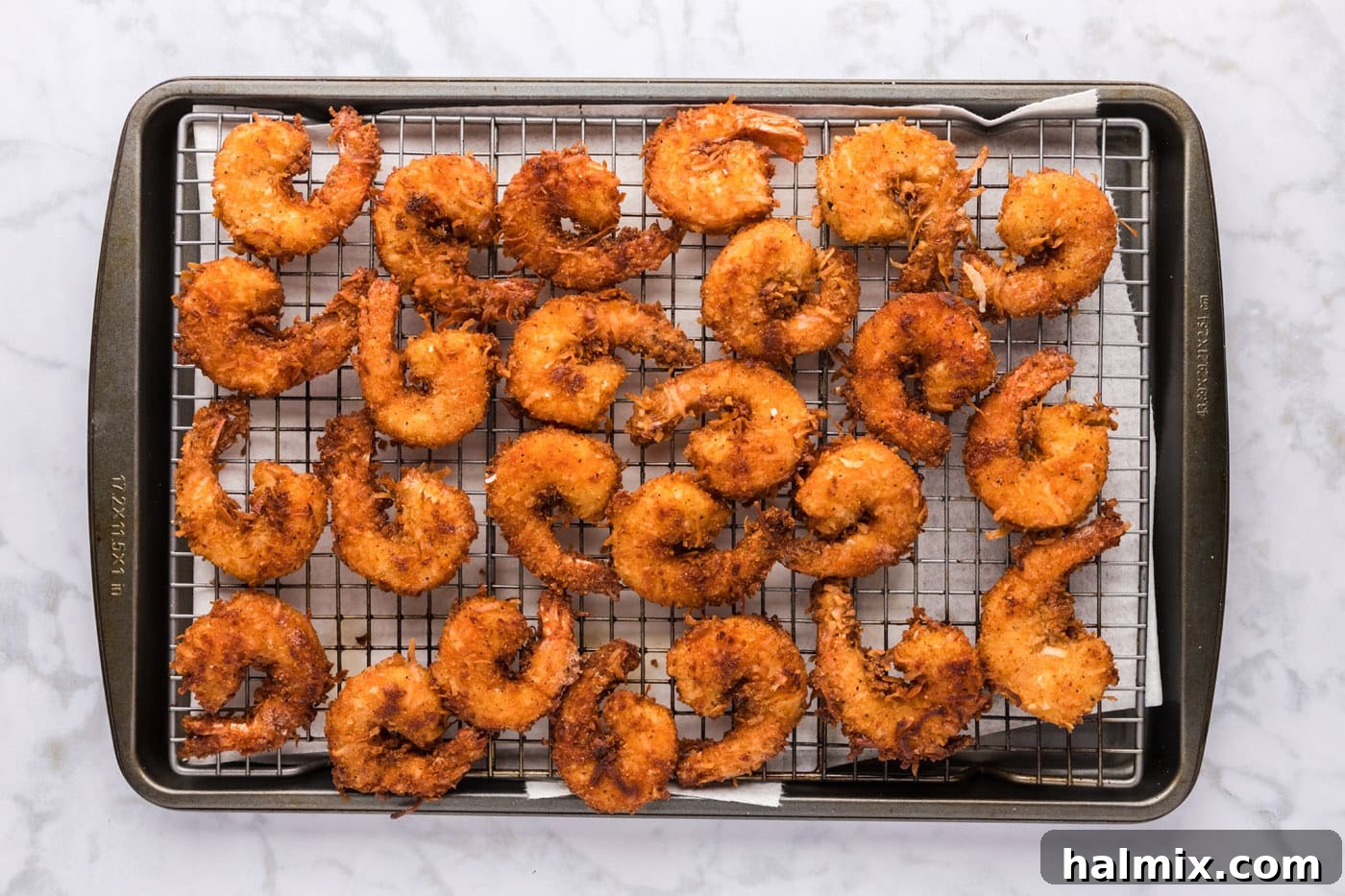
- Begin by preparing your draining station. Line a large baking sheet with several layers of paper towel. Then, place a wire rack directly over the paper towel. This setup is crucial for allowing excess oil to drain off the cooked shrimp, ensuring they remain perfectly crispy and never greasy.
- In a medium-sized bowl, combine the breadcrumbs, Panko breadcrumbs, sweetened coconut flakes, salt, and black pepper. Use a fork or whisk to mix these ingredients thoroughly, ensuring an even distribution of the coconut and seasonings throughout the breading mixture. This will be your final coating for the shrimp.

- In a separate small bowl, whisk together the two large eggs with approximately 2 tablespoons of water. This creates an egg wash that will help the breading adhere to the shrimp. Whisk until the egg whites and yolks are fully combined and slightly frothy.
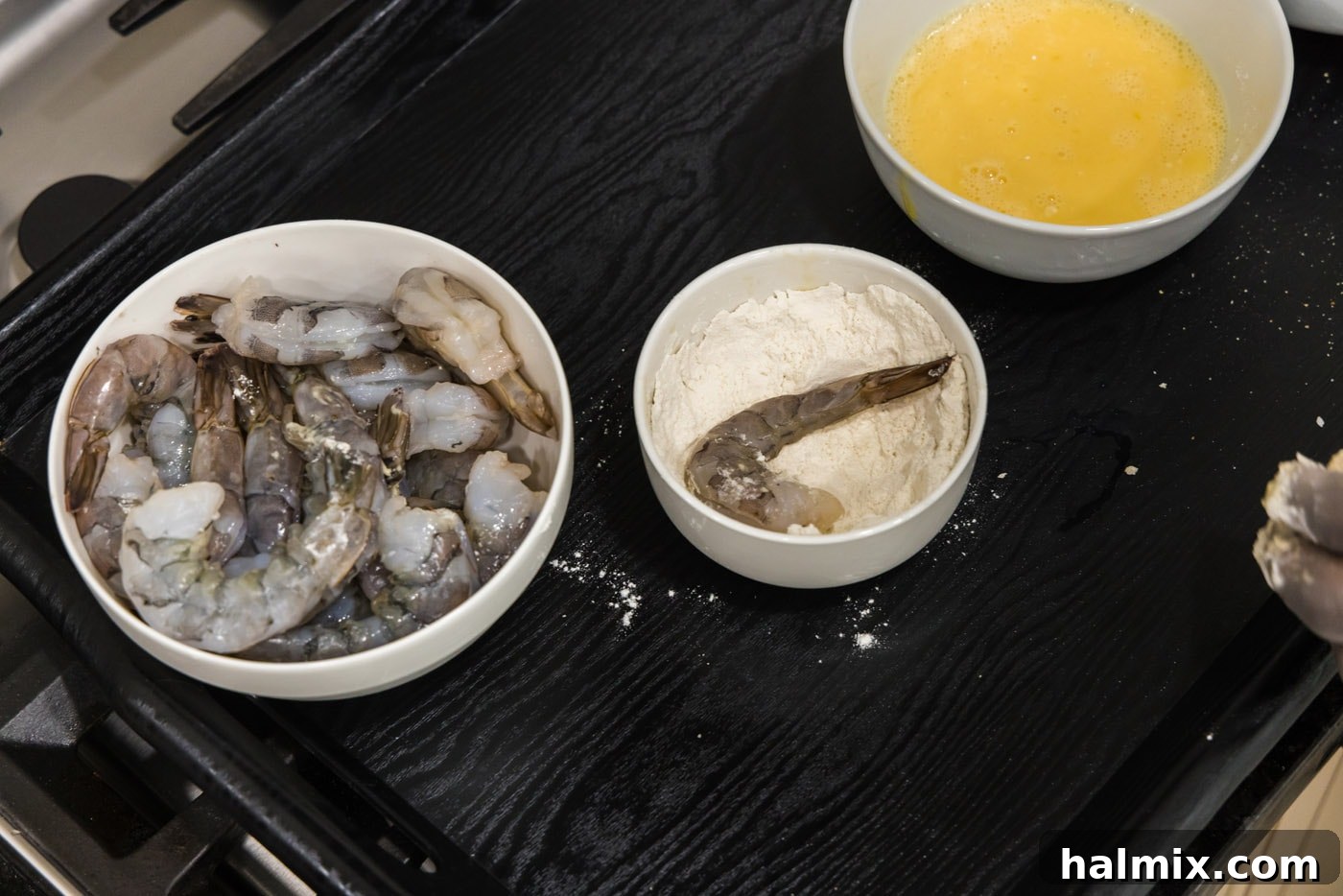
- Place the all-purpose flour in a third small, shallow bowl. This will be your first dredging station.
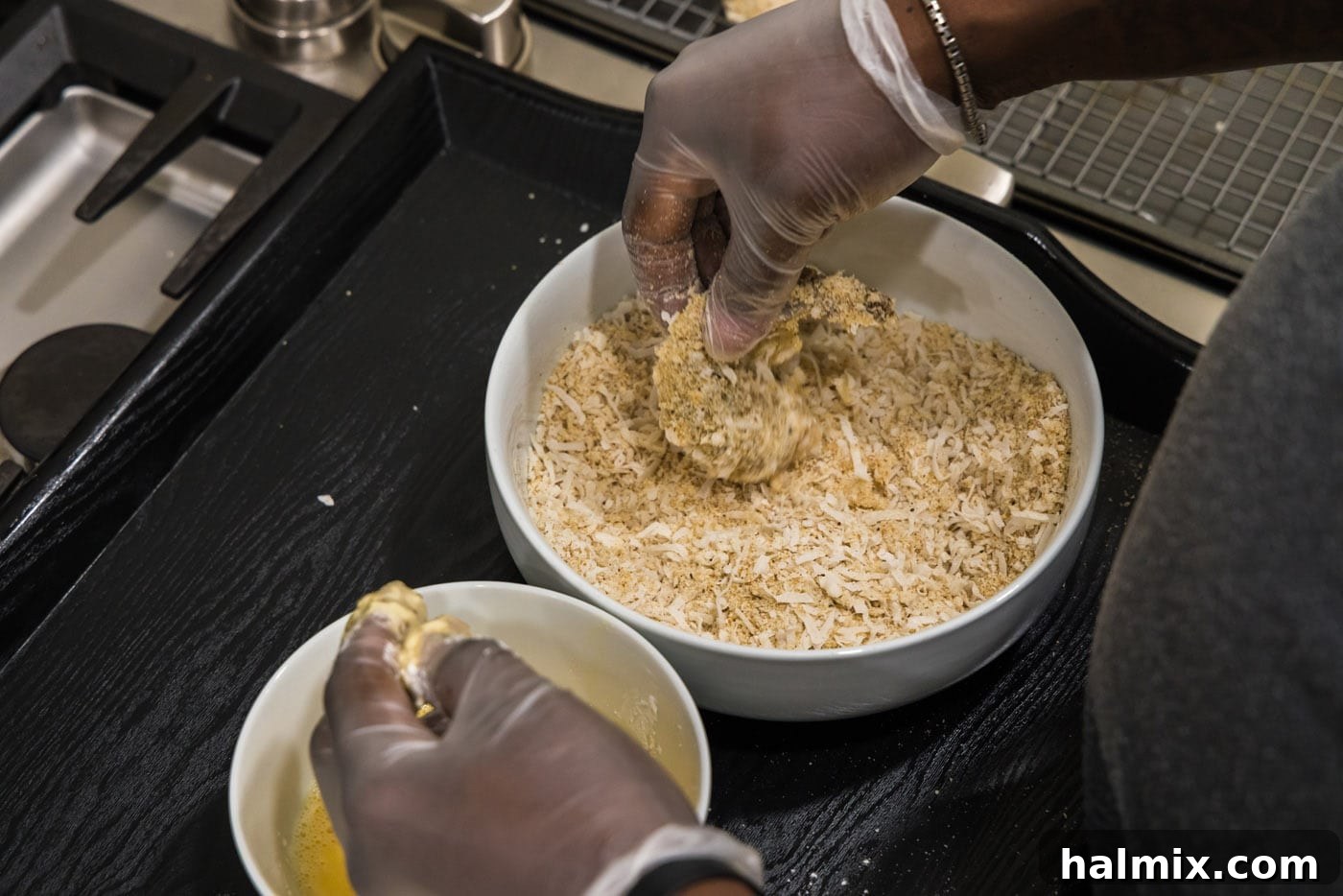
- Now, it’s time to start coating the shrimp! For best hygiene and to keep your hands clean, we recommend wearing food-safe gloves. Take one shrimp at a time and dredge it thoroughly in the flour, ensuring it’s completely coated. Gently shake off any excess flour.
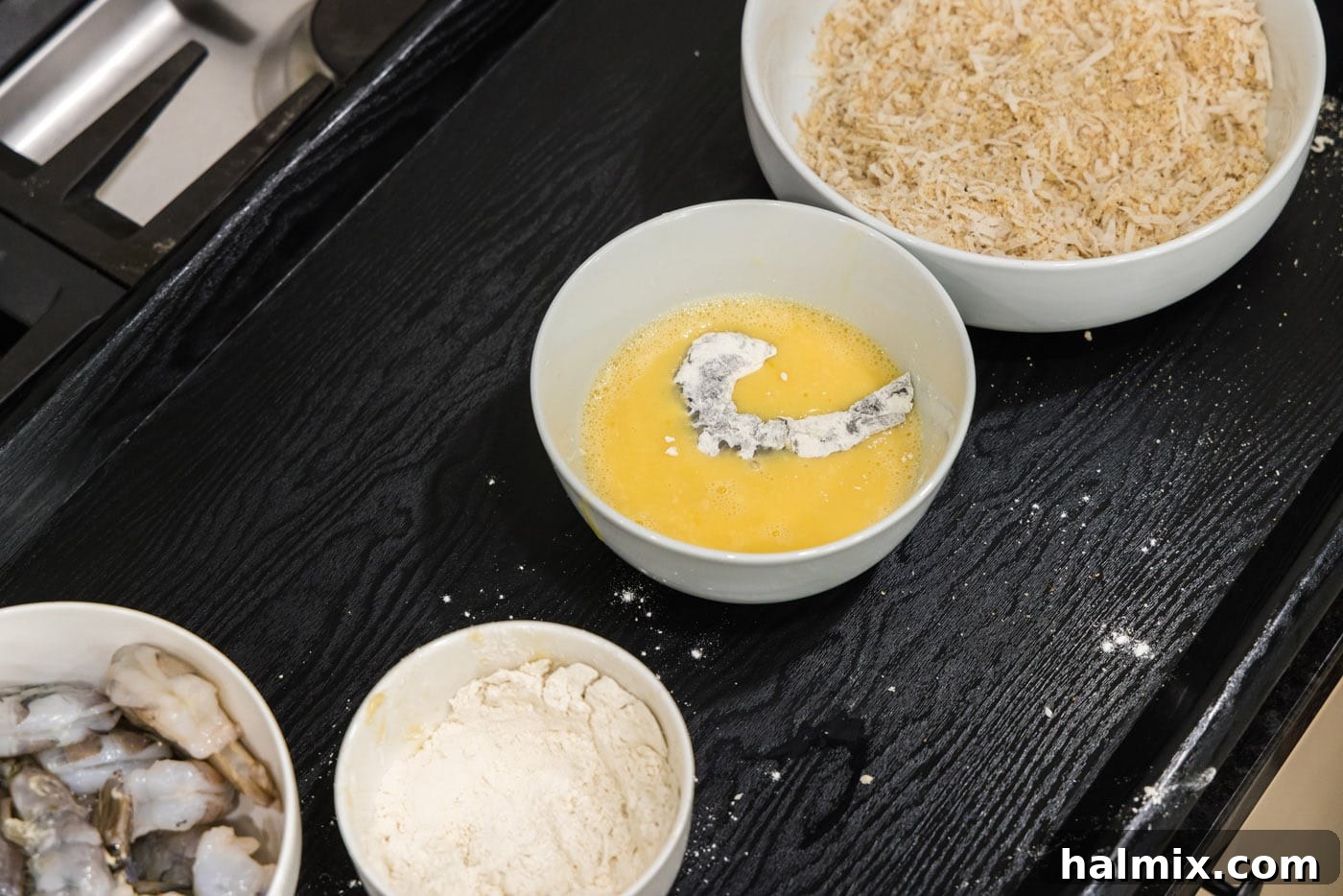
- Next, dip the floured shrimp into the egg wash. Ensure both sides are well coated, allowing any excess egg to drip back into the bowl. This sticky layer is essential for the breadcrumb mixture to adhere properly.
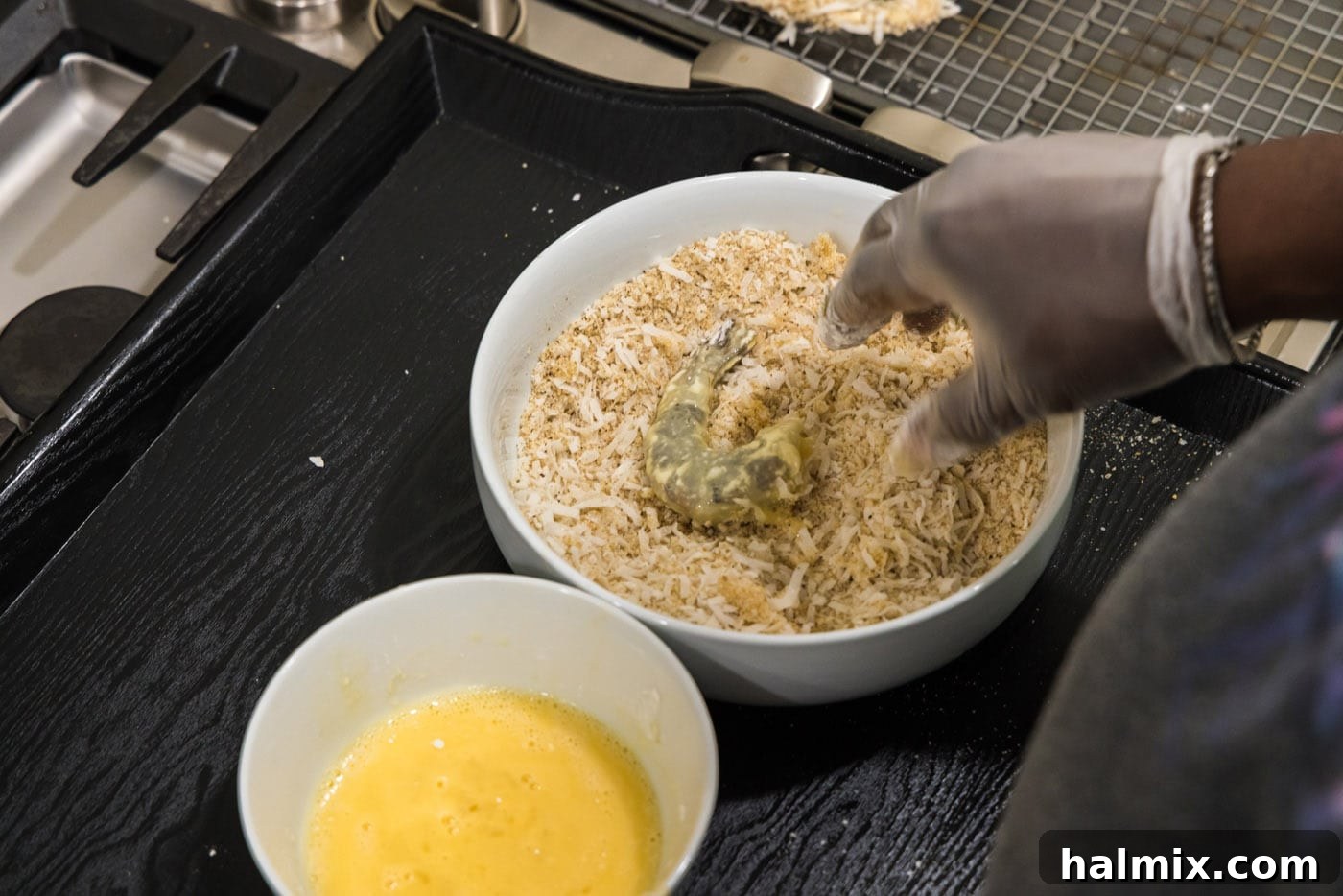
- Finally, transfer the egg-dipped shrimp to the breadcrumb mixture. Gently pat the mixture onto both sides of the shrimp, pressing lightly to ensure the Panko and coconut adhere firmly and evenly. This step is key for a thick, crispy crust.
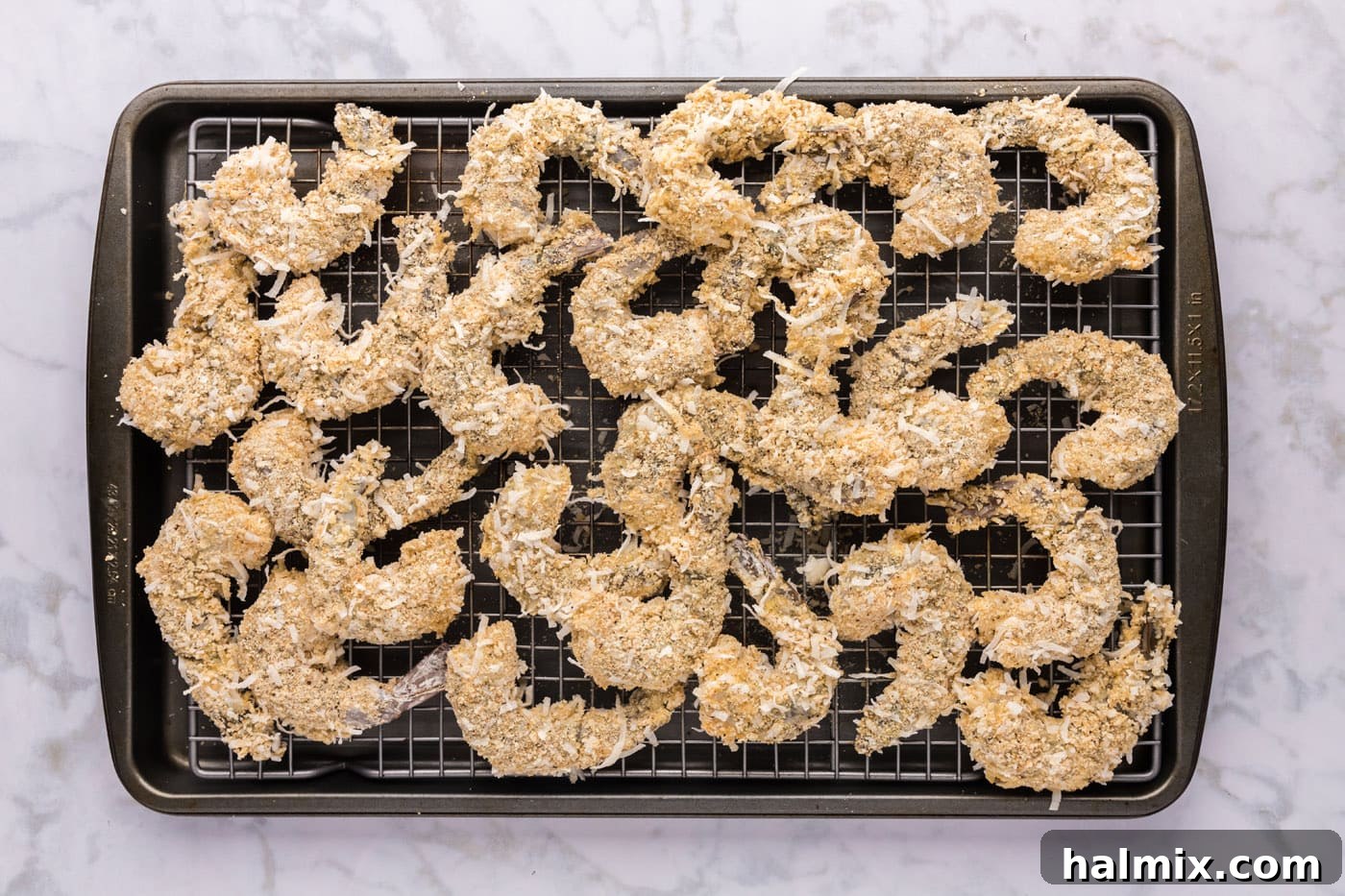
- Place each coated shrimp onto the prepared wire rack on the baking sheet. Repeat this entire dredging process for all remaining shrimp. Once all shrimp are coated, allow them to rest on the rack for about 10-15 minutes. This brief resting period helps the coating set and adhere even better, reducing the chance of it falling off during frying.
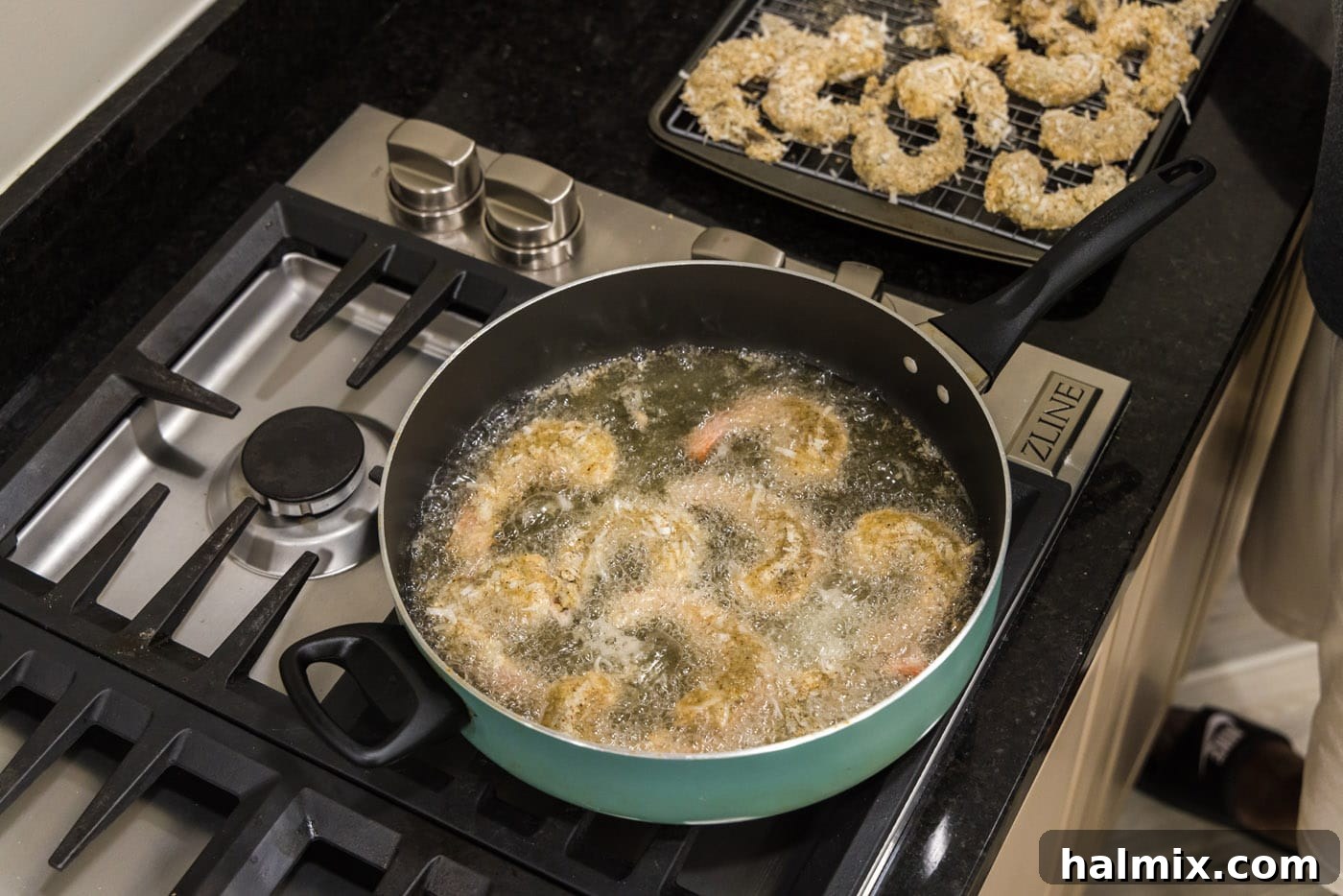
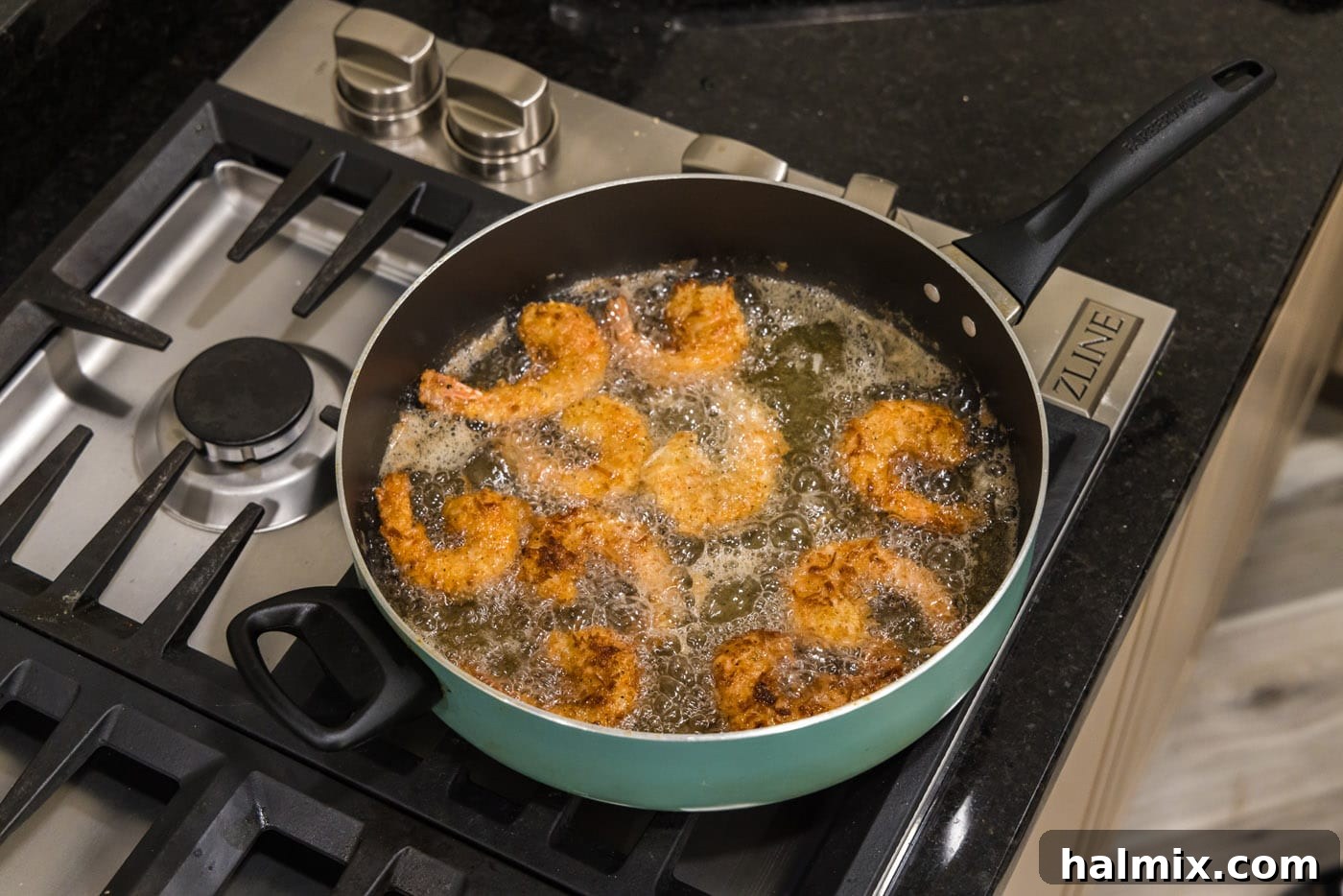
- Prepare for frying. Pour enough vegetable oil into a deep, heavy-bottomed skillet so that it comes about an inch up the sides. Place the skillet over medium-high heat. Allow the oil to heat until it shimmers and reaches approximately 350-375°F (175-190°C). You can test the oil temperature by dropping a small pinch of breadcrumbs into it; if they sizzle immediately and turn golden, the oil is ready.
- Carefully add the coated shrimp to the hot oil, ensuring not to overcrowd the skillet. Frying in batches is essential to maintain the oil temperature and achieve even cooking and crispiness. Overcrowding will lower the oil temperature and result in greasy, less crispy shrimp.
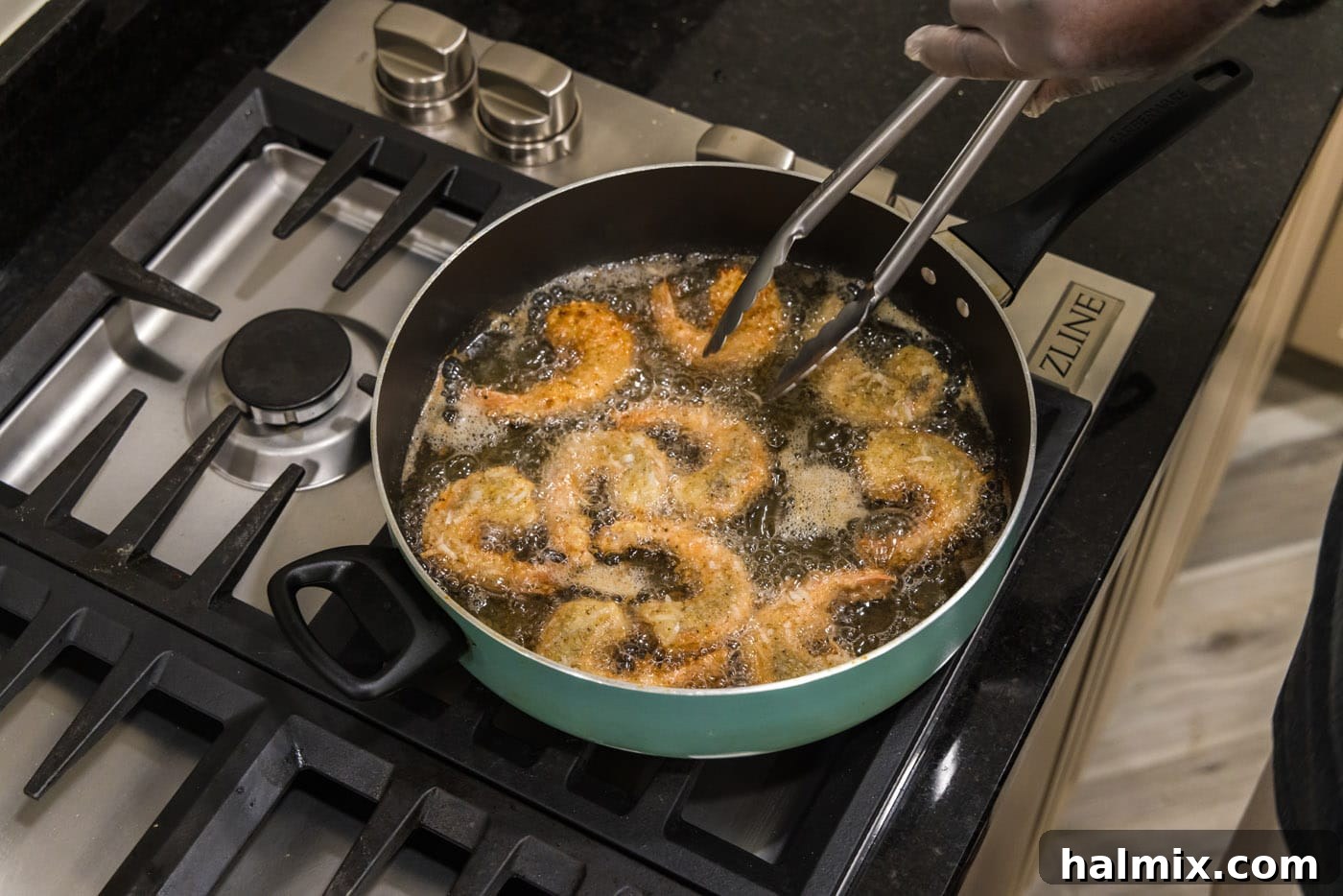
- Cook the shrimp for 2-3 minutes on one side until they turn a beautiful golden brown. Then, using tongs, carefully turn them over and cook for an additional 2-3 minutes on the other side. The goal is a uniform golden-brown color and a visibly crispy crust. Shrimp cook quickly, so watch them closely to prevent overcooking.
- Once cooked to a perfect golden crisp, remove the shrimp from the hot oil using tongs and transfer them immediately to the paper towel-lined wire rack for draining. This allows any excess oil to drip away, keeping the shrimp incredibly crispy. Repeat this frying process for any remaining batches of shrimp. Serve warm and enjoy!
Frequently Asked Questions & Expert Tips for Success
Absolutely, frozen shrimp can be used successfully for this recipe, making it convenient year-round. However, for the very best results in terms of texture and flavor, we strongly recommend using raw frozen shrimp rather than pre-cooked frozen varieties. Raw shrimp will cook fully within the crispy coating, retaining their natural succulence. It is crucial to allow the frozen shrimp to thaw completely before you begin the coating process. You can thaw them overnight in the refrigerator or by placing them in a colander under cold running water for about 15-20 minutes. Ensure they are thoroughly patted dry with paper towels after thawing; any excess moisture will prevent the breading from adhering properly and result in a less crispy outcome.
Leftover coconut shrimp can be stored in an airtight container in the refrigerator for up to 3 days. To maintain their delicious crispiness when reheating, avoid the microwave, which tends to make them soggy. Instead, we highly recommend reheating them in an air fryer or a conventional oven. For an air fryer, arrange the shrimp in a single layer and heat at 350°F (175°C) for 5-7 minutes, or until warmed through and crispy. If using an oven, place the shrimp in a shallow baking dish, cover loosely with foil to prevent excessive browning, and reheat at 300°F (150°C) for about 10-15 minutes, or until heated through. Removing the foil for the last few minutes can help restore crispiness.
Several factors contribute to ultimate crispiness. First, ensure your shrimp are very dry after peeling and deveining (and thawing, if frozen) before dredging. Moisture is the enemy of crispiness. Second, don’t skimp on the Panko breadcrumbs; their flaky texture is key. Third, don’t overcrowd the skillet during frying. Frying in smaller batches keeps the oil temperature high, which is essential for a crisp, non-greasy result. Finally, drain the shrimp immediately on a wire rack over paper towels after frying to let excess oil drip away.
Yes, you can certainly do some prep work in advance. You can peel and devein the shrimp, and even dredge them through the flour, egg, and breading mixture, up to a few hours before frying. Once coated, arrange them in a single layer on a wire rack set over a baking sheet, cover loosely with plastic wrap, and refrigerate. This allows the coating to firm up even more, which can improve adherence and crispiness when fried. Just be sure to bring them to room temperature for about 15-20 minutes before frying for more even cooking.
For frying, it’s best to use a neutral-flavored oil with a high smoke point. Good options include vegetable oil, canola oil, peanut oil, or corn oil. These oils can withstand the high temperatures needed for frying without burning or imparting undesirable flavors to your shrimp. Avoid olive oil or butter, as they have lower smoke points and will burn quickly, creating a bitter taste.
Elevate Your Meal: Delicious Serving Suggestions
Coconut shrimp are incredibly versatile and can be served in a variety of ways, whether as a show-stopping appetizer or a delightful main course. The key to truly completing the experience is pairing them with the right dipping sauces and complementary sides.
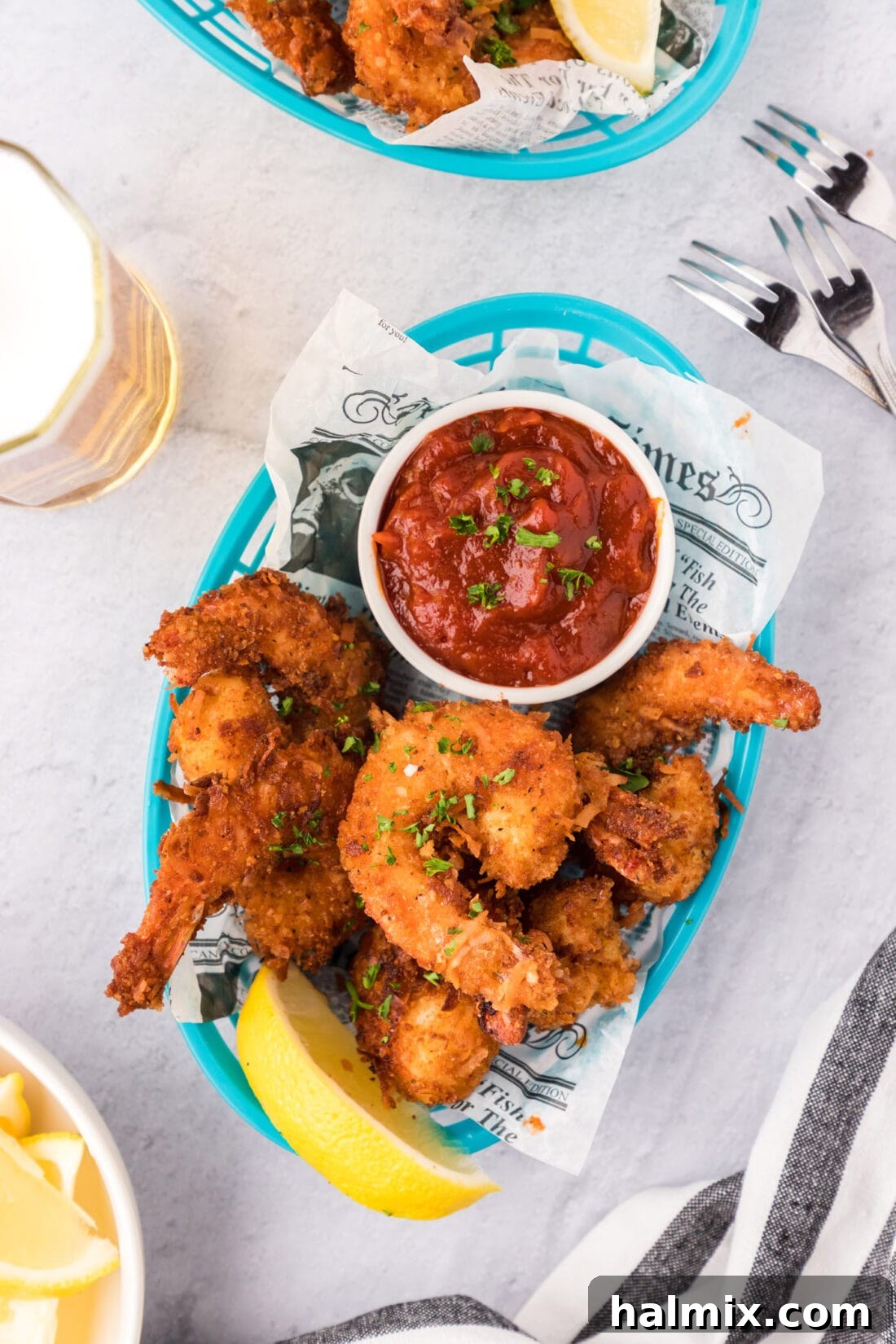
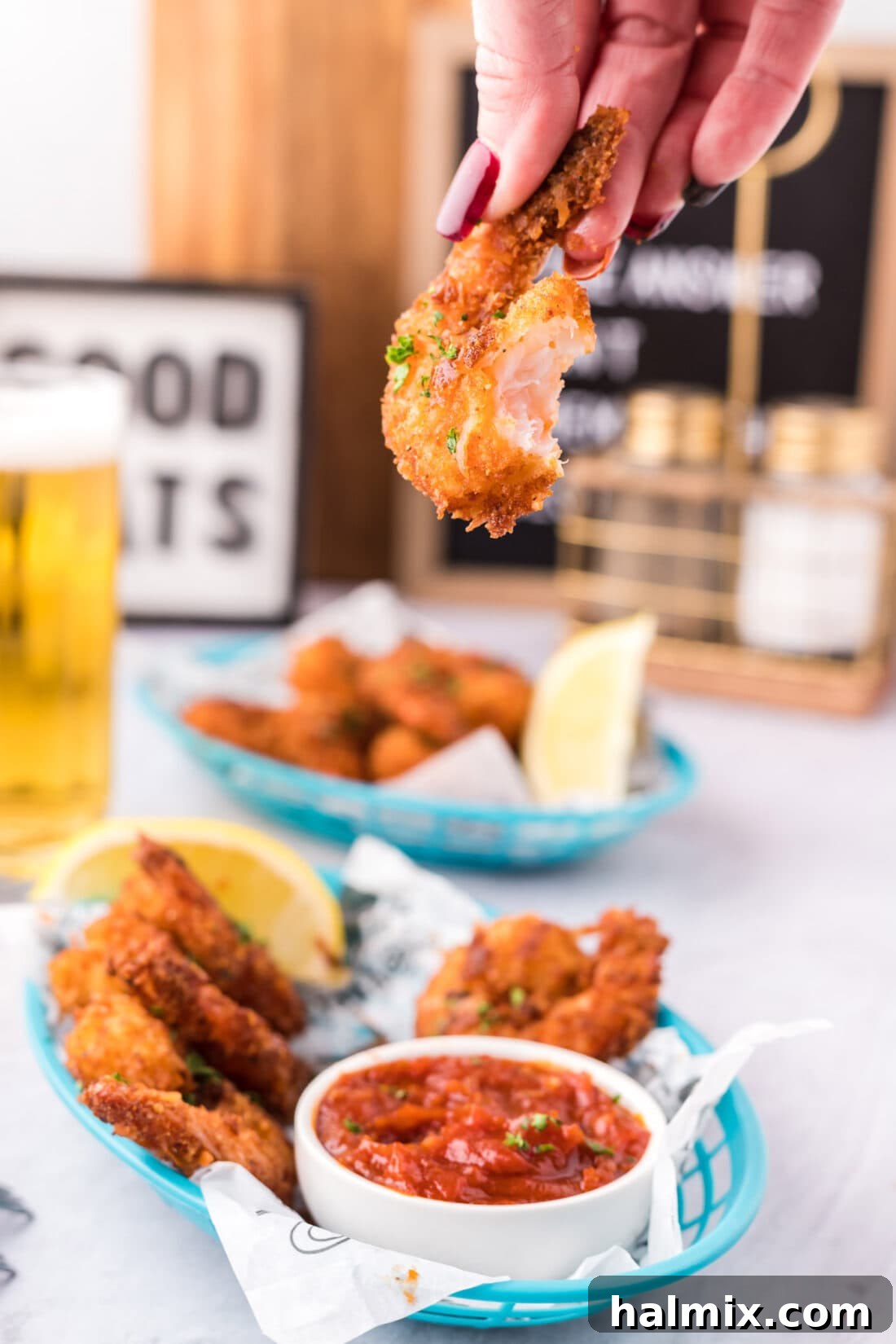
For dipping, classic choices include a tangy cocktail sauce, which provides a refreshing contrast to the richness of the shrimp, or a sweet and spicy sweet chili sauce, a favorite for its vibrant kick. Other excellent options include an apricot preserves-based sauce, a zesty lime mayonnaise, or even a homemade remoulade for a touch of Creole flair. Don’t hesitate to experiment with different flavor profiles to find your personal favorite!
These golden, crispy delights are perfect for parties and social gatherings, easily served as elegant finger food. Arrange them on a platter with small bowls of various dipping sauces and a few lemon or lime wedges for a burst of citrus. However, they are equally satisfying when enjoyed as a delicious meal all on their own. For a complete meal, consider serving them alongside light and fresh side dishes. A simple green salad with a vinaigrette dressing, fluffy jasmine rice, quinoa, or even roasted asparagus can beautifully complement the flavors of the coconut shrimp without overpowering them. A sprinkle of fresh cilantro or finely chopped parsley adds a lovely touch of color and freshness.
Discover More Delectable Shrimp Recipes
If you love shrimp as much as we do, you’re in for a treat! Explore our other fantastic shrimp recipes, each offering a unique and delicious way to enjoy this versatile seafood:
- Classic Fried Shrimp
- Crispy Shrimp
- Elegant Butterfly Shrimp
- Fun and Flavorful Popcorn Shrimp
- Irresistible Garlic Butter Shrimp
We love sharing our passion for cooking and baking with you! To ensure you never miss out on our latest delicious creations, consider subscribing to our newsletter. You’ll receive convenient updates whenever a new recipe is posted, bringing fresh inspiration directly to your inbox. It’s the easiest way to stay connected and discover new culinary adventures!
Crispy Homemade Coconut Shrimp
IMPORTANT – Don’t forget to check the Frequently Asked Questions and Expert Tips sections within the blog post for helpful insights. Simply scroll back up to read them!
Print It
Pin It
Rate It
Save ItSaved!
Course: Appetizer, Dinner
Cuisine: American
Ingredients
- 1 ½ pounds grilling shrimp peeled and deveined
- ½ cup bread crumbs
- ¼ cup Panko bread crumbs
- 1 cup sweetened coconut flakes
- 1 teaspoon salt
- 1 teaspoon black pepper
- 2 large eggs
- ½ cup all-purpose flour
- vegetable oil for frying
Things You’ll Need
-
Large heavy bottomed skillet
-
Wire cooling rack
-
Tongs
-
Vinyl gloves
Before You Begin: Important Notes for Perfect Coconut Shrimp
- For the most vibrant coconut flavor, we recommend using sweetened coconut flakes. Our testing consistently showed they impart a richer, more authentic taste to the finished shrimp. However, if you are monitoring sugar intake, unsweetened coconut flakes are a perfectly suitable alternative that will still deliver fantastic texture and aroma.
- The size of your shrimp matters for both presentation and a satisfying bite. We typically use “grilling shrimp” due to their excellent size, often found fresh at the meat department butcher case. Alternatively, extra-large bagged shrimp, pre-peeled and deveined, are a convenient option. Always opt for raw shrimp, whether fresh or frozen, as they yield the best texture when cooked.
- Keeping the tails on your shrimp is a classic choice for coconut shrimp, as it not only enhances their visual appeal but also provides a convenient “handle” for easy dipping and eating. This is entirely optional, so feel free to remove the tails if you prefer to make them fully edible.
Instructions
-
Prepare your draining station by lining a large baking sheet with several layers of paper towel and placing a wire rack directly on top. This will ensure your cooked shrimp stay crispy.
-
In a medium bowl, combine the bread crumbs, Panko bread crumbs, sweetened coconut flakes, salt, and pepper. Mix thoroughly until all ingredients are evenly distributed.
-
In a small bowl, whisk the two large eggs with approximately 2 tablespoons of water until well combined and slightly frothy.
-
Pour the all-purpose flour into another small, shallow bowl. This will be your initial dredging station.
-
Using gloved hands for cleanliness and ease, take one shrimp and dredge it thoroughly in the flour, ensuring it is completely coated. Gently shake off any excess flour.
-
Dip the floured shrimp into the whisked egg wash, making sure both sides are fully coated, and allow any excess egg to drip off.
-
Finally, transfer the shrimp to the bread crumb and coconut mixture. Gently pat the mixture onto the shrimp, pressing lightly to ensure a firm and even coating on all sides.
-
Place the coated shrimp on the prepared wire rack. Repeat this entire process for all remaining shrimp. Allow them to rest for 10-15 minutes to help the coating set.
-
Add enough vegetable oil to a deep skillet so that it comes about an inch up the sides. Heat the oil over medium-high heat until it shimmers and reaches 350-375°F (175-190°C).
-
Carefully add the shrimp to the hot oil, ensuring not to overcrowd the skillet. Work in batches to maintain optimal oil temperature and achieve even crispiness.
-
Cook the shrimp for 2-3 minutes on one side until golden brown. Then, turn them over using tongs and cook for an additional 2-3 minutes on the other side until uniformly golden brown and crispy.
-
Remove the cooked shrimp from the oil and place them on the paper towel-lined wire rack to drain and cool slightly. Repeat for any remaining shrimp. Serve immediately with your favorite dipping sauce.
Nutrition Information
Tried this Recipe? Pin it for Later!Follow on Pinterest @AmandasCookin or tag #AmandasCookin!
The recipes on this blog are meticulously tested using a conventional gas oven and a gas stovetop to ensure accuracy. It’s important to be aware that oven performance can vary significantly, especially as appliances age. Utilizing an inexpensive oven thermometer can be a valuable tool to confirm your oven is consistently reaching and maintaining the desired temperature. Should you be using a toaster oven, countertop oven, pressure cooker, air fryer, slow cooker, or other specialized appliance, please note that their heat distribution and cooking times may differ from a full-sized conventional oven. We advise adjusting cooking and baking times accordingly. For baking recipes where measurements are provided by weight, please understand that using cup measurements instead may lead to inconsistent results, and we cannot guarantee success with this alternative method. Always refer to the specific appliance links provided within each respective recipe for guidance on recommended equipment.