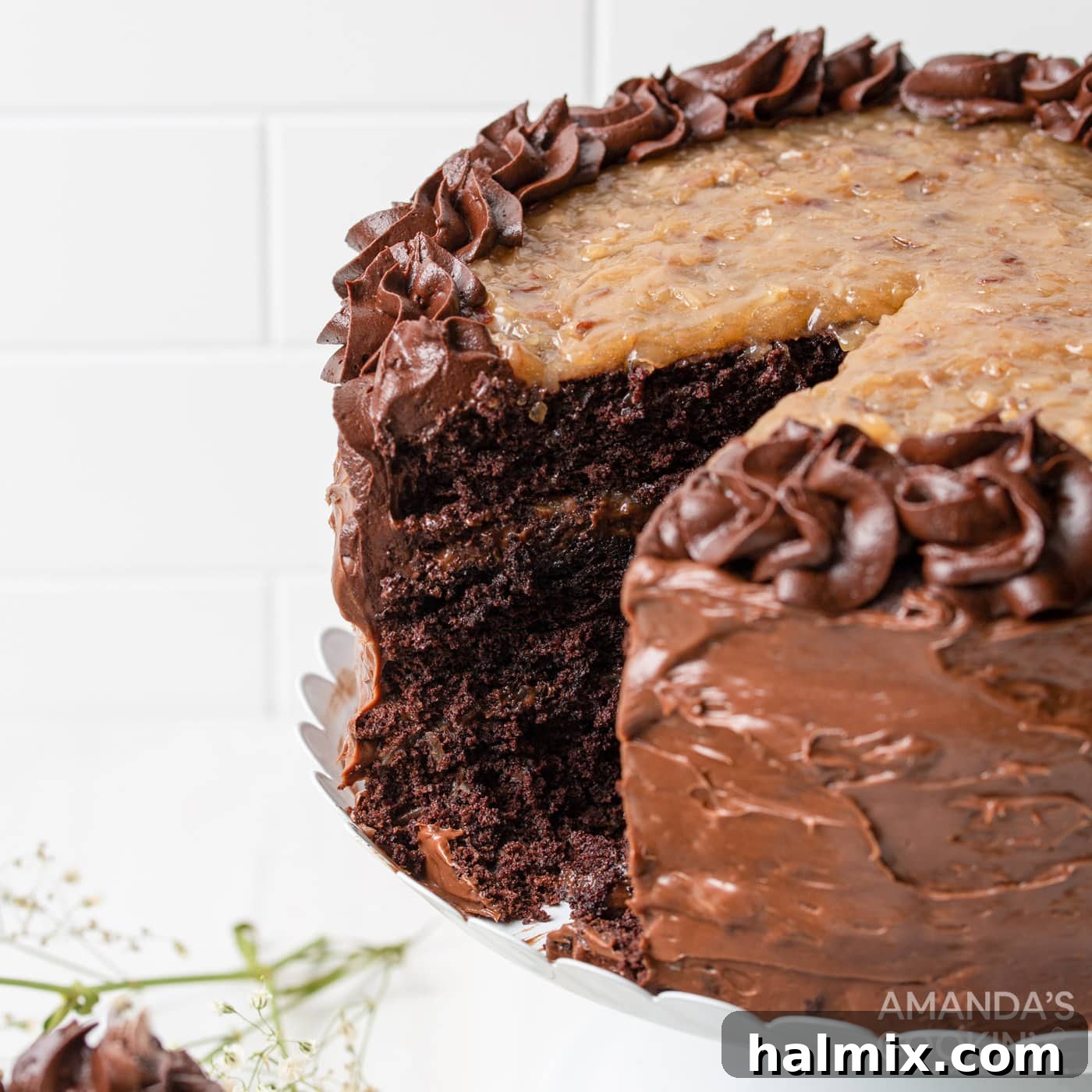
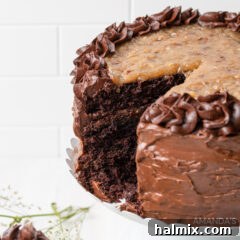
This impressive homemade German chocolate cake has tall decadent layers of moist chocolate cake, coconut-pecan filling, and chocolate frosting.
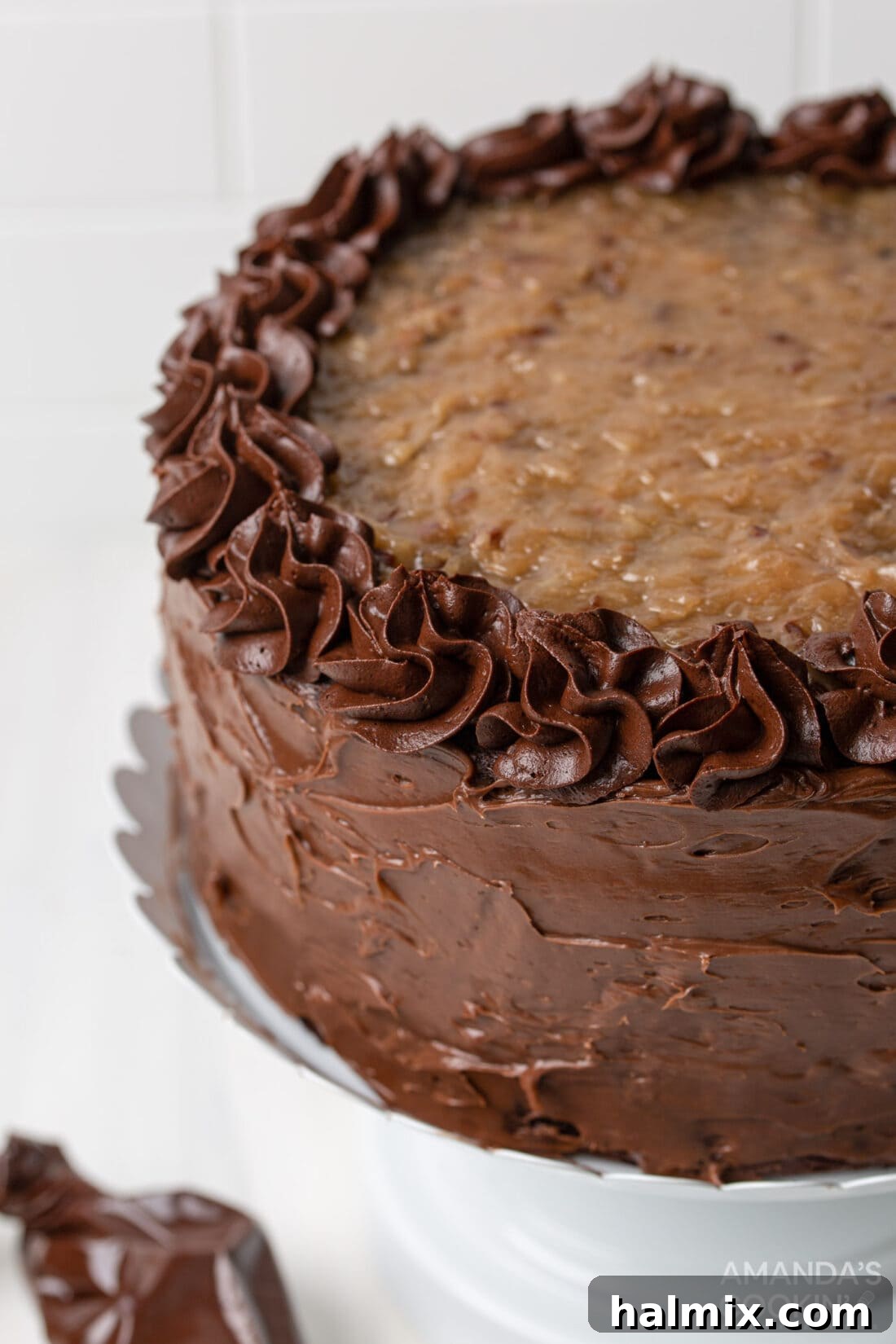
The Ultimate Homemade German Chocolate Cake: A Decadent Delight
Embark on a culinary journey to create the most exquisite homemade German Chocolate Cake, a timeless dessert renowned for its rich flavors and luxurious textures. This isn’t just any cake; it’s a magnificent three-tiered masterpiece, featuring layers of intensely moist, dark chocolate cake, generously filled with a sweet, nutty coconut-pecan concoction, and elegantly finished with a smooth, velvety chocolate frosting. Forget the boxed mixes; this scratch-made recipe promises an unparalleled depth of flavor and a truly “swoon-worthy” experience that will impress even the most discerning palates. Each bite offers a harmonious blend of tender cake, the delicate crunch of pecans and coconut, and the creamy indulgence of chocolate, making it a celebration in itself.
While traditional German chocolate cake often features the iconic coconut-pecan frosting slathered over the entire cake, our rendition elevates the experience by incorporating a separate, decadent chocolate frosting on the exterior. This addition introduces an extra layer of sophisticated chocolate flavor, creating a more balanced sweetness and a truly unforgettable taste sensation. Whether it’s for a special occasion or simply to treat yourself and your loved ones, this cake is guaranteed to become a cherished recipe in your baking repertoire. Serve it with a generous scoop of homemade chocolate ice cream for an ultimate dessert pairing that will leave your guests utterly delighted.
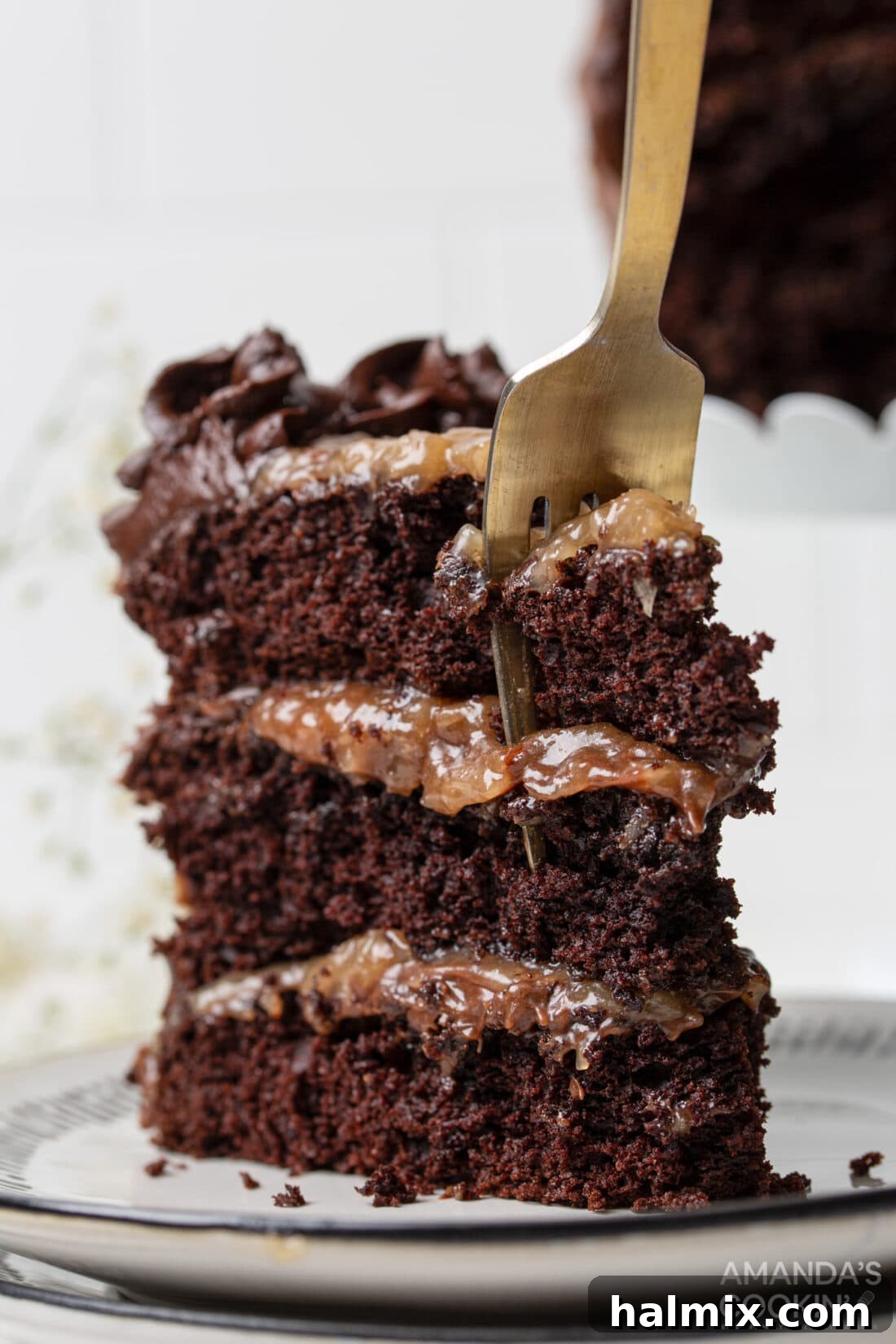
Why This German Chocolate Cake Recipe Stands Out
What makes this particular German chocolate cake recipe so exceptional and a cut above the rest? It’s a meticulous combination of carefully selected ingredients and precise techniques that result in a truly superior dessert. Firstly, the chocolate cake itself is engineered for maximum moisture and a deep, intense chocolate flavor. We achieve this by melting real Baker’s German Chocolate directly into the batter, which imbues every crumb with rich cocoa notes, far beyond what cocoa powder alone can deliver. The inclusion of buttermilk also plays a crucial role, contributing to the cake’s incredibly tender and moist texture, while reacting with baking soda to ensure a perfect rise and light crumb.
Secondly, the star of the show, the coconut-pecan filling, is crafted to perfection. This sweet, sticky, and irresistibly crunchy filling is strategically placed between the decadent chocolate layers, providing a delightful textural contrast and a burst of classic flavor that defines German chocolate cake. While some recipes might be content with this traditional approach, our recipe introduces a luxurious twist: an outer layer of smooth chocolate frosting. This external chocolate coating not only adds another dimension of chocolatey goodness but also provides a more aesthetically pleasing finish and helps to seal in the moisture, ensuring the cake remains fresh and delicious for longer. This thoughtful combination of traditional and modern elements truly makes this recipe a standout for any baker looking to create an unforgettable German chocolate cake from scratch.
Essential Ingredients for Your German Chocolate Masterpiece
Crafting this magnificent German chocolate cake requires a careful selection of quality ingredients. For your convenience, you can find all precise measurements and detailed instructions in the comprehensive, printable recipe version located at the end of this article. However, let’s dive into the key components and some helpful tips for each to ensure your baking success.
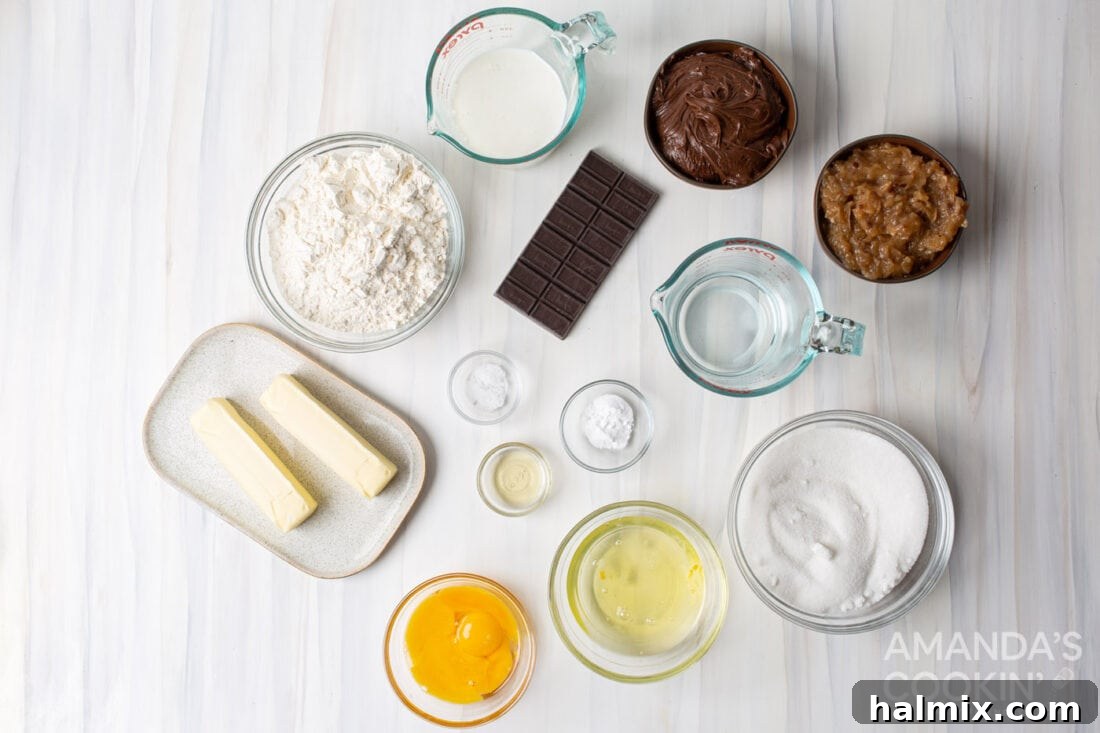
Ingredient Spotlight & Smart Substitutions
Each ingredient in this recipe plays a vital role in achieving the perfect balance of flavor and texture. Understanding their function can also help you make informed substitutions if necessary.
- For the Cake Layers:
- Baker’s German Chocolate (4 ounces): This is the cornerstone of the cake’s authentic flavor. German chocolate is a type of dark baking chocolate that contains a blend of chocolate liquor, sugar, cocoa butter, and often vanilla, giving it a milder, sweeter flavor profile than unsweetened baking chocolate. If Baker’s German Chocolate is unavailable, a good quality semi-sweet or dark chocolate (around 45-55% cacao) can be used as a substitute, though the flavor will be slightly different.
- Water: Used to melt the chocolate, creating a smooth, rich base for the batter.
- Granulated Sugar & Unsalted Butter (at room temperature): These form the creamy base of the cake batter. Ensure your butter is truly at room temperature for optimal creaming, which incorporates air and results in a lighter cake texture. Unsalted butter allows you to control the total salt content.
- Eggs (separated): The yolks add richness and moisture, while the beaten egg whites are gently folded in to create an airy, tender crumb structure, contributing significantly to the cake’s tall and decadent appearance.
- Vanilla Extract: Enhances the overall flavor profile, adding warmth and depth to the chocolate. Use pure vanilla extract for the best results.
- All-Purpose Flour: Provides the main structure for the cake. Sifting it can help ensure a lighter texture.
- Baking Soda & Salt: Baking soda acts as a leavening agent, reacting with the buttermilk to help the cake rise. Salt balances the sweetness and enhances the chocolate flavor.
- Buttermilk: A key ingredient for a super moist and tender cake. Its acidity reacts with the baking soda, aiding in leavening and contributing to a fine crumb. No buttermilk on hand? Don’t fret! You can easily make your own. Simply add 1 tablespoon of white vinegar or lemon juice to a liquid measuring cup, then fill the rest of the cup with regular milk (dairy or non-dairy alternatives work, but whole milk yields the best texture) until it reaches the 1-cup mark. Stir gently and let it sit for 5-10 minutes until it slightly curdles. Voila, homemade buttermilk!
- For the Filling & Frosting:
- Coconut Pecan Frosting (15.5 oz container): While you can certainly make this from scratch for an even more homemade touch, opting for a quality store-bought version saves significant time and effort without compromising on flavor for many home bakers. Look for brands specifically labeled “German Chocolate” or “Coconut Pecan” in the baking aisle.
- Chocolate Frosting (two 16 oz containers, total 32 oz): This recipe uniquely uses a separate chocolate frosting for the cake’s exterior, adding another layer of rich chocolate flavor and a beautiful finish. Again, a good quality store-bought chocolate frosting is a fantastic time-saver. If you prefer a completely homemade cake, feel free to whip up your favorite chocolate buttercream or ganache.
Mastering the Art of Baking German Chocolate Cake: Step-by-Step Guide
These step-by-step photos and detailed instructions are designed to help you visualize and execute each stage of this recipe with confidence. For a convenient printable version, complete with precise measurements and a condensed instruction list, please refer to the dedicated recipe card at the bottom of this post.
- Prepare Your Pans: Begin by preheating your oven to a steady 350°F (175°C). This ensures the oven is at the correct temperature when your batter is ready, promoting an even bake. Thoroughly spray three 9-inch round cake pans with a non-stick baking spray, then line the bottoms with parchment paper circles. This extra step is crucial for preventing sticking and ensuring your beautiful cake layers release perfectly.
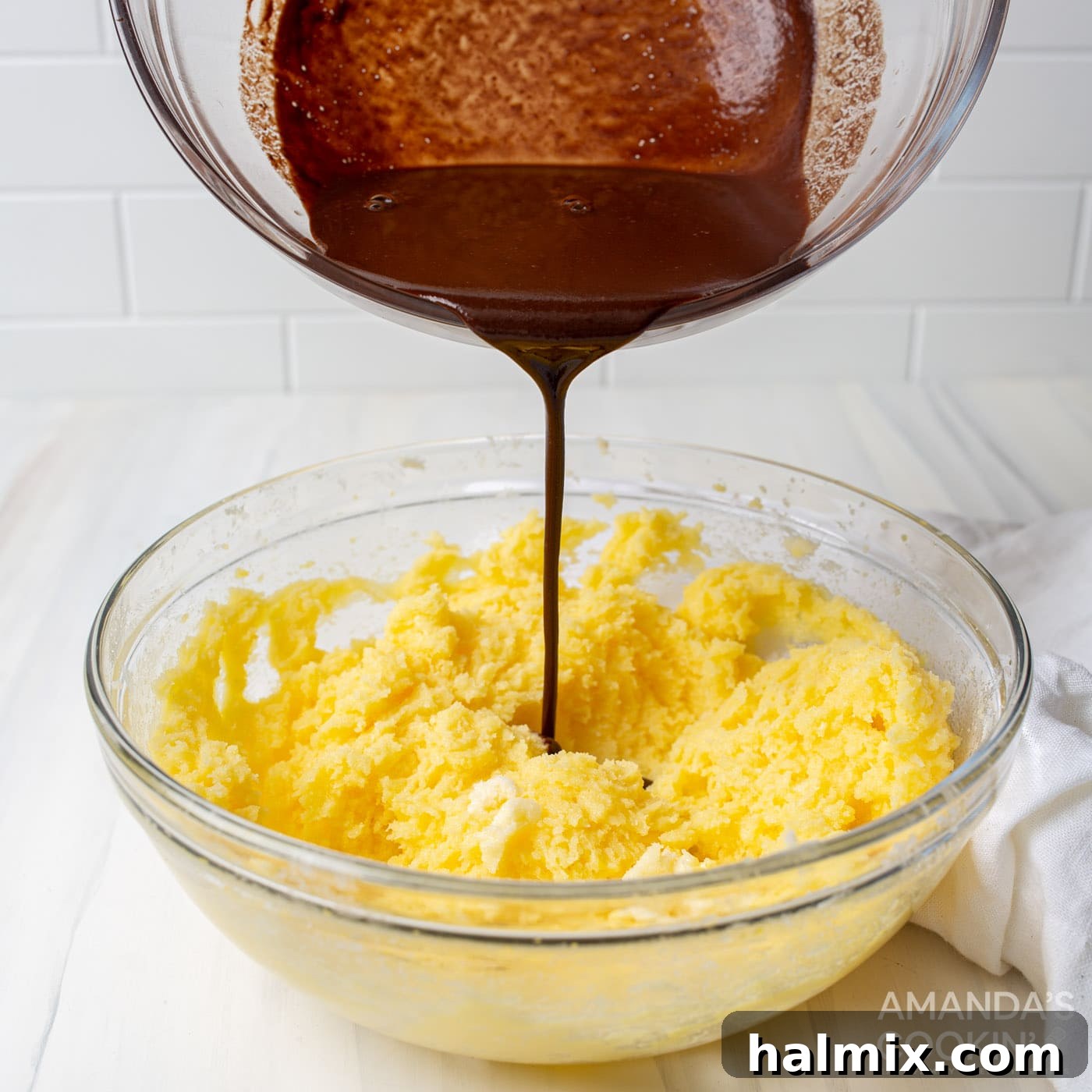
- Melt the German Chocolate: In a medium-sized, microwave-safe bowl, combine the Baker’s German Chocolate and water. Microwave on high for 1 minute. Remove and whisk vigorously until the chocolate is smooth and fully melted. If any lumps remain, microwave in additional 15-30 second intervals, whisking after each, until completely smooth. Set this mixture aside to cool slightly while you prepare the other ingredients; it should be lukewarm, not hot, when added to the batter.
- Cream Butter and Sugar: In an extra-large mixing bowl or the bowl of a stand mixer fitted with the whisk attachment, combine the granulated sugar and softened unsalted butter. Beat on medium-high speed until the mixture is light, fluffy, and pale yellow. This process incorporates air, which is essential for a tender cake. Next, add the egg yolks, one at a time, beating well after each addition until fully incorporated. Scrape down the sides of the bowl as needed to ensure everything is evenly mixed.
- Incorporate Chocolate and Vanilla: Gently fold in the melted and now cooled chocolate mixture, along with the vanilla extract, into the creamed butter mixture. Mix on low speed until everything is just combined and uniformly colored. Be careful not to overmix at this stage.

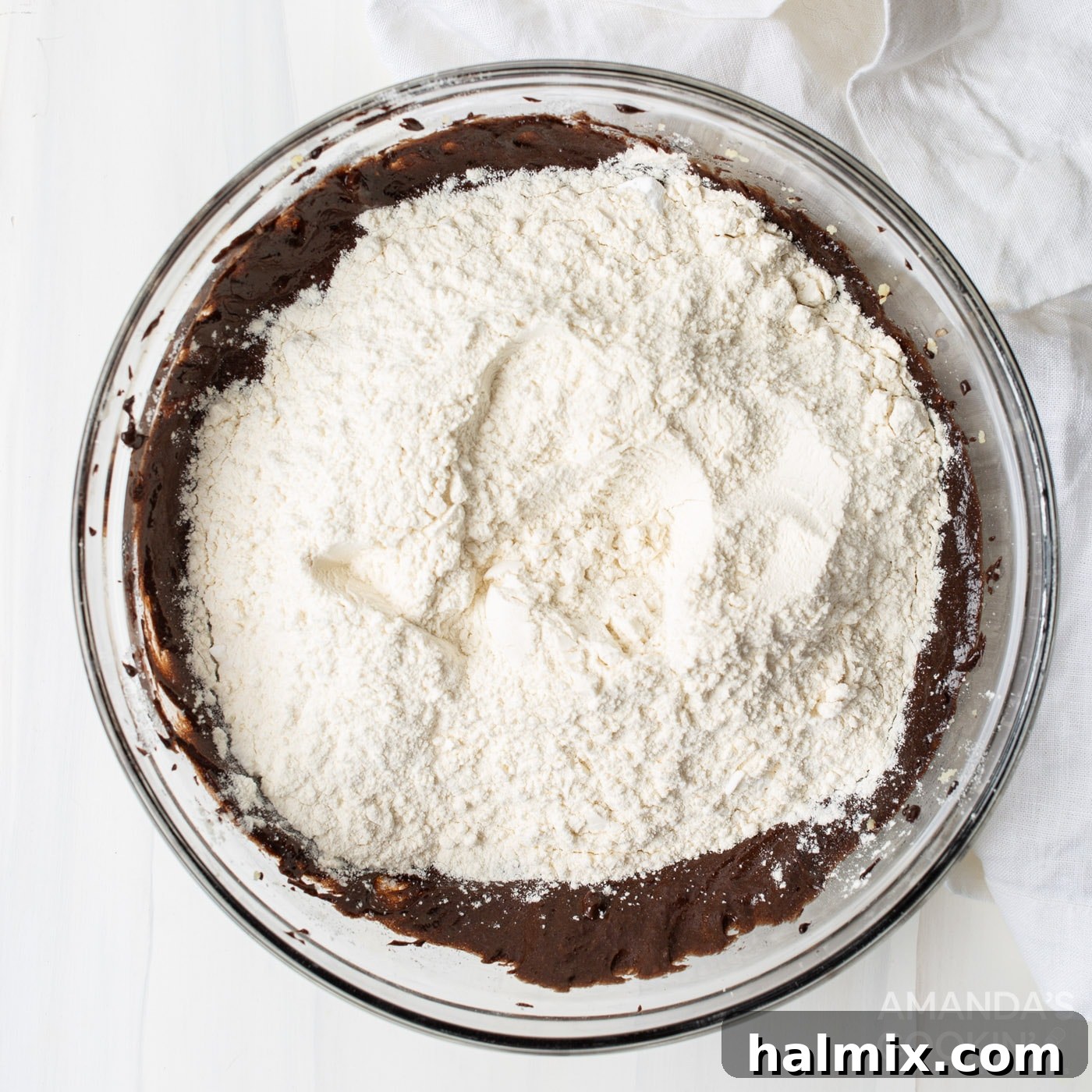
- Combine Dry Ingredients: In a separate large bowl, whisk together the all-purpose flour, baking soda, and salt. Whisking ensures these dry ingredients are evenly distributed, which is important for proper leavening and uniform flavor throughout the cake.
- Alternate Wet and Dry: With your mixer on low speed, begin adding the dry ingredient mixture to the chocolate batter alternately with the buttermilk, starting and ending with the flour. For best results, add about a third of the flour mixture, mix until just combined, then half of the buttermilk, mix, then another third of the flour, the remaining buttermilk, and finally the last third of the flour. Mix until just incorporated after each addition. Be careful not to overmix the batter, as this can develop the gluten too much and result in a tough cake.
- Whip Egg Whites: In yet another clean, separate bowl (preferably a metal or glass bowl for best results), use a handheld mixer (or the whisk attachment of your stand mixer, cleaned) to beat the reserved egg whites until stiff peaks form. Stiff peaks mean that when you lift the beaters, the egg whites hold their shape firmly and do not droop. Ensure your bowl and beaters are impeccably clean and free of any grease, as even a tiny speck can prevent the egg whites from whipping properly.
- Fold in Egg Whites: Gently fold the beaten egg whites into the cake batter using a rubber spatula. Use a “cut and fold” motion to preserve the air you’ve incorporated. This step is crucial for achieving a light and airy texture in your final cake.
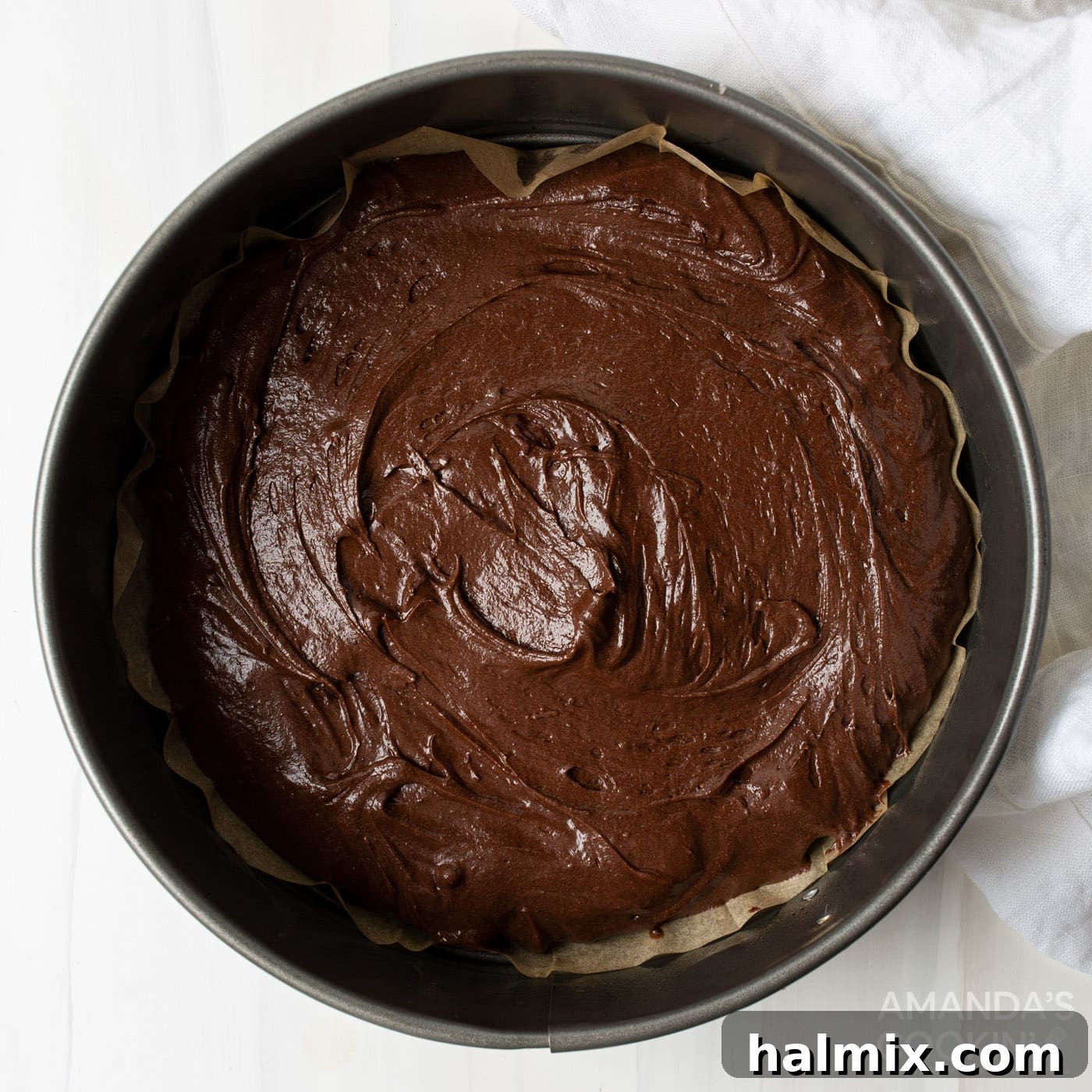
- Bake the Layers: Divide the batter evenly among the three prepared cake pans. You can use a kitchen scale for precise division, ensuring each layer bakes uniformly. Bake for approximately 30 minutes, or until a wooden skewer or toothpick inserted into the center of a cake comes out clean.
- Cool the Cakes: Once baked, remove the cakes from the oven. Allow them to cool in their pans on a wire rack for about 15 minutes. This cooling period allows the cake to firm up slightly, making it less likely to break when removed. After 15 minutes, carefully run a small metal spatula or butter knife along the edge of each pan to loosen the cakes. Invert them onto wire racks, remove the parchment paper, and let them cool completely to room temperature before assembling. Attempting to frost a warm cake will result in melted frosting and a messy situation!
Assembling Your Majestic German Chocolate Cake
Once your cake layers are completely cooled, it’s time for the exciting part: assembly! This is where your individual layers transform into a stunning, multi-textured dessert.
- Level Your Layers (Optional but Recommended): If your cake layers have domed tops, use a serrated knife or a cake leveling tool to carefully trim them, creating flat surfaces. This ensures a stable and even cake structure.
- First Layer & Filling: Place one cake layer on your serving plate or cake stand. Spread about half of the coconut-pecan filling evenly over the top, leaving a small border (about ½ inch) from the edge. This prevents the filling from squeezing out excessively when the next layer is added.
- Second Layer & Filling: Carefully place the second cake layer on top of the first, gently pressing down to secure it. Repeat the filling process, spreading the remaining coconut-pecan mixture evenly, again leaving a slight border.
- Top Layer & Crumb Coat: Place the final cake layer on top. Now, apply a very thin layer of the chocolate frosting all over the top and sides of the entire cake. This is called a “crumb coat” and its purpose is to trap any loose crumbs, preventing them from mixing into your final decorative frosting layer. Chill the cake in the refrigerator for 20-30 minutes, or until the crumb coat is firm.
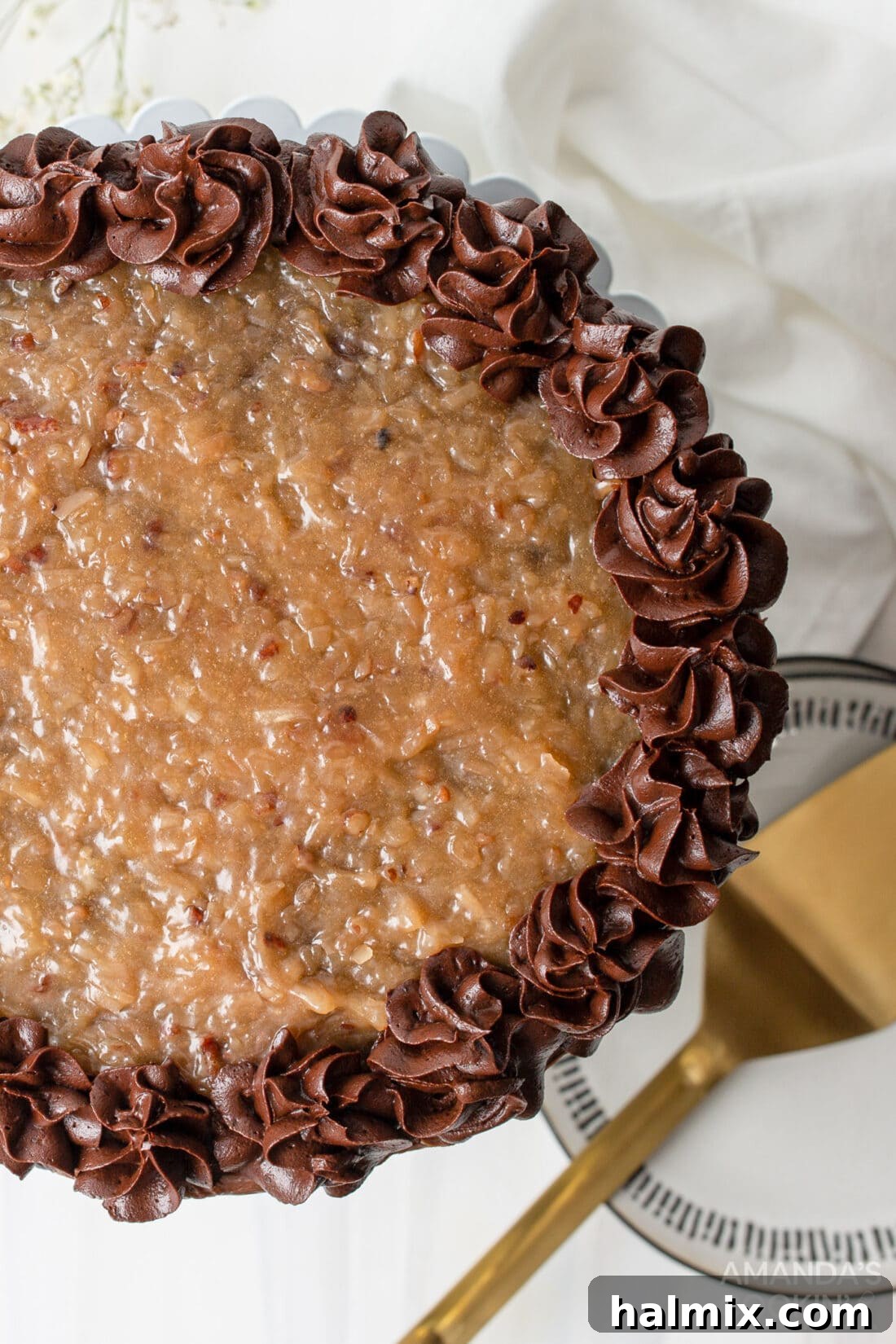
- Final Frosting & Decoration: Once the crumb coat is set, apply the remaining chocolate frosting generously and smoothly over the top and sides of the cake. Use an offset spatula or bench scraper to achieve a clean, professional finish. For a classic decorative touch, fit a piping bag with a large star or large closed-star tip. Pipe an elegant border around the top edge of the cake, or get creative with other designs.
- Chill for Perfection: For the cleanest slices and to allow the flavors to meld beautifully, chill the assembled German chocolate cake in the refrigerator for at least 1-2 hours before slicing and serving. This also helps the frosting set firmly.
Frequently Asked Questions & Expert Tips for Baking Success
Despite its name, German Chocolate Cake is not actually from Germany. It originated in the United States and gets its name from an American baker named Samuel German, who developed a type of dark baking chocolate for the Baker’s Chocolate Company in 1852. The cake recipe that became popular in the mid-20th century used “German’s Sweet Chocolate” as a key ingredient, hence the name!
Several factors contribute to a moist German chocolate cake. Firstly, using buttermilk is critical; its acidity breaks down gluten, leading to a tender crumb. Secondly, be careful not to overmix the batter once flour is added, as this can develop gluten too much and make the cake tough and dry. Thirdly, avoid overbaking. Start checking for doneness a few minutes before the suggested bake time. A toothpick inserted into the center should come out with moist crumbs, but not wet batter. Finally, allow the cake to cool fully on wire racks, but don’t leave it exposed for too long before frosting to seal in moisture.
Absolutely! German Chocolate Cake is an excellent make-ahead dessert. You can bake the cake layers a day or two in advance. Once cooled, wrap them tightly in plastic wrap and store them at room temperature. The coconut-pecan filling can also be made a day ahead and stored in an airtight container in the refrigerator. Assemble and frost the cake on the day you plan to serve it, or even the day before. The flavors often deepen and meld beautifully after a day, making it even more delicious.
Decorating a German chocolate cake can be simple yet elegant. The key is to ensure your cake layers are completely cooled before you start frosting. Begin with a thin “crumb coat” of chocolate frosting over the entire cake to lock in any loose crumbs, then chill it before applying the final, thicker layer. For the top, you can create a classic decorative border using a large star or closed-star tip on a piping bag. Experiment with different piping techniques or simply spread the coconut pecan frosting on top, leaving a border for the chocolate frosting. Chilling the cake (even for a short while) between frosting steps can make the process much easier and cleaner.
To maintain its freshness and decadent flavor, store your German chocolate cake in an airtight container. It can be kept at room temperature for 1-2 days, but placing it in the refrigerator will help it last longer, typically 3-4 days. While refrigeration isn’t strictly necessary for all cakes, the coconut-pecan filling, with its dairy components, benefits from chilling. Always bring refrigerated cake to room temperature for about 30-60 minutes before serving to ensure the best texture and flavor. You can also freeze individual slices, well-wrapped, for up to 2-3 months.
Perfect Pairing & Serving Suggestions
German chocolate cake is a versatile dessert that shines on any occasion. Its rich, comforting flavors make it a perfect centerpiece for birthday celebrations, retirement parties, family potlucks, and holiday gatherings alike. This isn’t just a seasonal treat; it’s a year-round delight that needs no special excuse to be enjoyed. Serve slices alongside a steaming cup of freshly brewed coffee, a smooth espresso, or a glass of cold milk to complement its decadent profile. For an extra touch of indulgence, a dollop of whipped cream or, as suggested, a scoop of homemade chocolate ice cream can elevate the experience even further. The cake is substantial enough to be a standalone dessert, yet it pairs wonderfully with lighter fruit sorbets or fresh berries to cut through the richness. Enjoy every luscious bite!
Explore More Irresistible Chocolate Recipes
If your heart beats for all things chocolate, you’re in for a treat! Discover more delightful ways to satisfy your cocoa cravings with these fantastic recipes:
- Chocolate Lasagna: A No-Bake Dream
- Chocolate Whoopie Pies: Fluffy & Fun
- Chocolate Icebox Cake: Cool & Creamy
- Chocolate Texas Sheet Cake: Crowd-Pleasing Perfection
- Chocolate Peanut Butter Cookies: The Ultimate Duo
- Chocolate Cheesecake Brownies: Two Desserts in One
- Double Chocolate Cupcakes: Pure Decadence
- Mayonnaise Cake: Surprisingly Moist & Delicious
I’m passionate about baking and cooking, and I love sharing my kitchen adventures with all of you! To make sure you never miss out on a delicious new recipe, I offer a convenient newsletter delivered straight to your inbox every time a new post goes live. Simply subscribe here and start receiving your free daily recipes, bringing culinary inspiration directly to you!
German Chocolate Cake
★
★
★
★
IMPORTANT – There are often Frequently Asked Questions within the blog post that you may find helpful. Simply scroll back up to read them!
Print It
Pin It
Rate It
Ingredients
- 4 oz Baker’s German Chocolate
- ½ cup water
- 2 cups granulated sugar
- 1 cup unsalted butter at room temperature
- 4 eggs separated
- 1 teaspoon vanilla extract
- 2 cups all-purpose flour
- 1 teaspoon baking soda
- ¼ teaspoon salt
- 1 cup buttermilk
- 15.5 oz coconut pecan frosting
- 32 oz chocolate frosting 2 16 oz containers
Things You’ll Need
-
9-inch round cake pans
-
Stand mixer
-
Closed star piping tip
Before You Begin
- Don’t have buttermilk? Add 1 Tablespoon of vinegar or lemon juice to a cup of milk and allow to rest for 10 minutes.
- Use a larger star or a closed-star tip on a piping bag or gallon sized Ziploc bag to pipe top chocolate border.
Instructions
-
Preheat the oven to 350F. Spray cake pans with non-stick spray and line with parchment paper.
-
In a medium bowl place the chocolate and water. Microwave on high for 1 minute. Whisk well and reheat another 15-30 seconds if needed until the mixture is smooth. Set aside.
-
In an extra large bowl or the bowl of a stand mixer, combine the sugar and butter with whisk attachments until light and fluffy. Add in the egg yolks one at a time until combined.
-
Add the melted, and now cooled, chocolate as well as the vanilla extract. Mix until combined.
-
In a separate large bowl combine the flour, baking soda, and salt.
-
Working in two batches, alternate adding the flour and buttermilk to the chocolate mixture. Mix until well combined.
-
In another separate bowl, use a hand held mixer to beat the egg whites until stiff peaks form.
-
Fold the egg whites into the cake the batter with a rubber spatula.
-
Divide evenly amongst the three cake pans and bake for 30 minutes.
-
Run a small metal spatula or butter knife along the edge of the cake pans to loosen the cake. Allow to cool in pans for 15 minutes. Remove cakes from pans and allow to cool on wire racks.
-
Assemble the cake by placing layers of coconut-pecan filling between the layers of cake with the final layer on top in the center of the cake, spread almost all the way to the edge.
-
Use the chocolate frosting to cover the outside of the cake. Use a large star or large closed-star tip on a piping bag to create decorative border on the top of the cake.
-
Chill in the refrigerator for easier cutting.
Nutrition
The recipes on this blog are tested with a conventional gas oven and gas stovetop. It’s important to note that some ovens, especially as they age, can cook and bake inconsistently. Using an inexpensive oven thermometer can assure you that your oven is truly heating to the proper temperature. If you use a toaster oven or countertop oven, please keep in mind that they may not distribute heat the same as a conventional full sized oven and you may need to adjust your cooking/baking times. In the case of recipes made with a pressure cooker, air fryer, slow cooker, or other appliance, a link to the appliances we use is listed within each respective recipe. For baking recipes where measurements are given by weight, please note that results may not be the same if cups are used instead, and we can’t guarantee success with that method.
This post was originally published here on October 16, 2021.