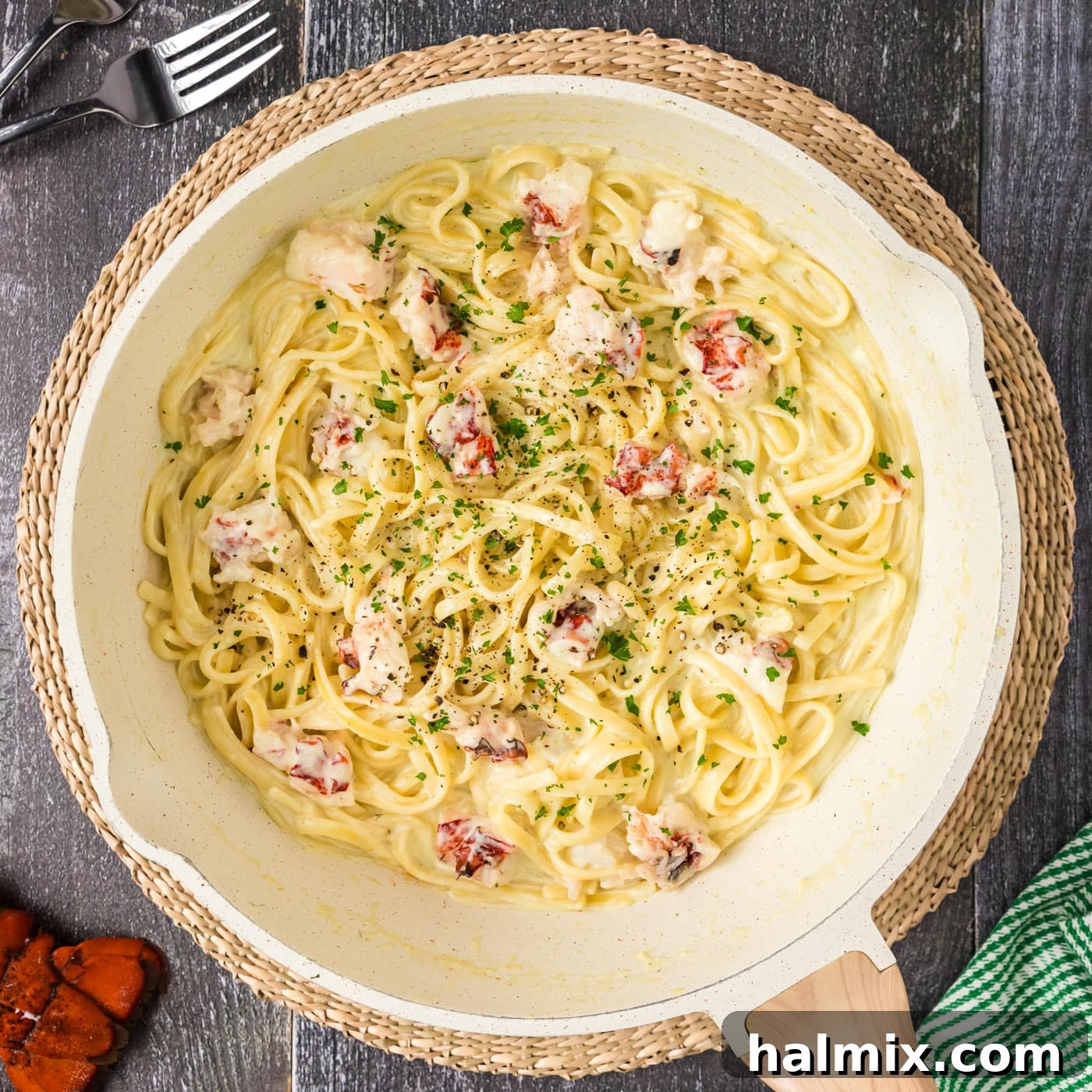
Indulge in the ultimate culinary delight with this exquisite Lobster Pasta recipe, transforming any meal into a special occasion. Featuring succulent chunks of fresh lobster meat enveloped in a rich, creamy sauce and perfectly al dente linguine, this dish is a testament to gourmet dining made accessible at home. Prepare to impress your family and friends with a seafood pasta that’s both luxurious and surprisingly simple to create, promising an unforgettable dining experience.
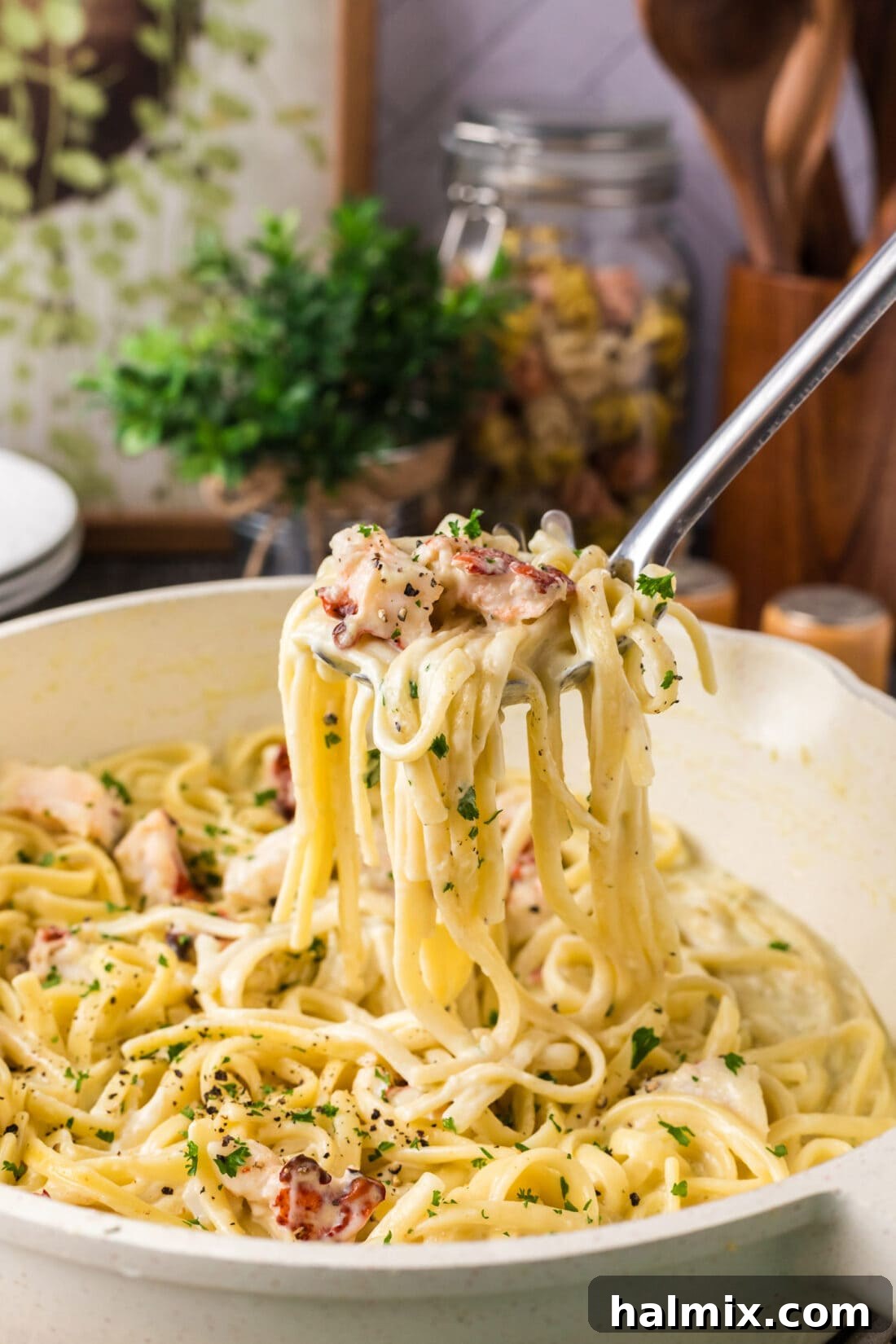
Why This Creamy Lobster Pasta Recipe Is a Must-Try
Lobster pasta is often perceived as a dish exclusively for fancy restaurants or grand celebrations. However, this recipe shatters that misconception, proving that you can whip up an opulent seafood pasta right in your own kitchen with minimal fuss. It’s designed to bring that high-end restaurant quality to your dining table without the intimidating complexity.
Beyond its obvious deliciousness and impressive presentation, this recipe offers fantastic versatility. It’s a brilliant way to elevate any leftover steamed or baked lobster tails you might have, ensuring no precious seafood goes to waste. Furthermore, its adaptable nature allows you to customize it with your favorite pasta shape, from delicate angel hair to hearty fettuccine, making it truly yours. Whether you’re planning a romantic Valentine’s Day dinner, a sophisticated dish for a dinner party, or simply a luxurious twist on your regular weeknight meal, this creamy lobster pasta is the answer. It’s a dish that promises to satisfy cravings for indulgence with every single forkful.
Essential Ingredients for Your Lobster Pasta
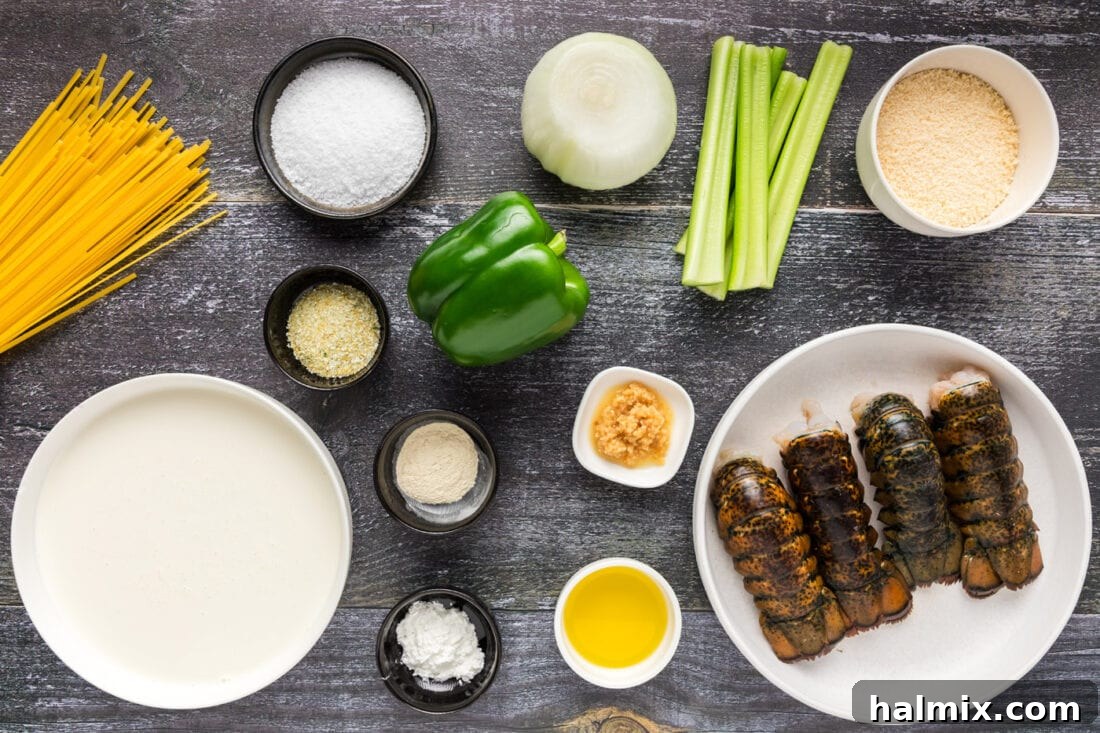
Crafting the perfect lobster pasta begins with selecting high-quality ingredients. While the full, printable recipe with precise measurements can be found at the end of this post, here’s a snapshot of what you’ll need to create this decadent dish. Each component plays a crucial role in building the layered flavors and luxurious texture of our creamy sauce and tender lobster.
Ingredient Spotlight & Smart Substitutions
Let’s dive deeper into the key ingredients and explore some helpful tips and substitutions to ensure your lobster pasta turns out spectacular every time.
LOBSTER: The Star of the Show
For this recipe, we’ve specified 4 lobster tails, which typically yields a generous amount of sweet, tender lobster meat for a family-sized meal. However, if you’re a true lobster aficionado and desire an even more pronounced lobster presence in your pasta, feel free to increase the quantity to 6 tails. When purchasing, look for fresh or frozen tails that are firm and free of discoloration. If you opt for pre-cooked lobster meat for convenience, remember that you won’t have the benefit of creating a natural seafood stock from boiling the tails. In this scenario, ensure you add a good quality seafood stock (or even clam juice) to your shopping list to provide that essential depth of flavor to your sauce.
PASTA: Your Canvas for Creaminess
We chose linguine for its classic pairing with seafood and its ability to beautifully cradle the creamy sauce. However, the world of pasta is your oyster! Don’t hesitate to substitute with other long pasta varieties like delicate angel hair for a lighter feel, hearty spaghetti for a traditional twist, or broad fettuccine which is excellent for clinging to rich sauces. Even short pastas like penne or rigatoni can work if you prefer a different mouthfeel, though long pastas are typically preferred for this dish to ensure every strand is coated in the luxurious sauce.
THE CREAMY SAUCE: Building Flavor and Richness
The sauce is the heart of this pasta, providing a velvety embrace for the lobster. Its foundation starts with aromatic vegetables like finely chopped onion, crisp celery, vibrant bell peppers, and pungent garlic. These ingredients are sautéed to coax out their sweet and savory notes, forming a delicious flavor base. The true richness, however, comes from heavy whipping cream. Its high fat content ensures a thick, luxurious, and stable sauce that won’t curdle easily. If heavy whipping cream is unavailable or if you’re looking for a slightly lighter option, half-and-half can be used as a substitute. Be aware that half-and-half will yield a thinner sauce and may require a bit more cornstarch or a longer simmer to achieve the desired consistency. For an extra layer of flavor and a touch of brininess, don’t forget the seafood stock, which ideally comes from the lobster cooking water – a secret ingredient for an authentic taste.
Crafting Your Homemade Lobster Pasta: Step-by-Step Guide
These detailed step-by-step photos and instructions are provided to guide you visually through the process of making this incredible lobster pasta. For the complete, printable recipe card with precise measurements and ingredient lists, please scroll to the bottom of this post.
- **Prepare the Pasta:** Begin by cooking your linguine pasta according to the package directions until it’s perfectly al dente. Al dente pasta offers the best texture and holds up well to the rich sauce. Once cooked, drain the pasta thoroughly and rinse it immediately with cool water. This crucial step stops the cooking process and prevents the noodles from becoming mushy. To further prevent sticking, toss the drained noodles with about 2 teaspoons of olive oil. Cover the pasta and set it aside while you prepare the lobster and sauce.
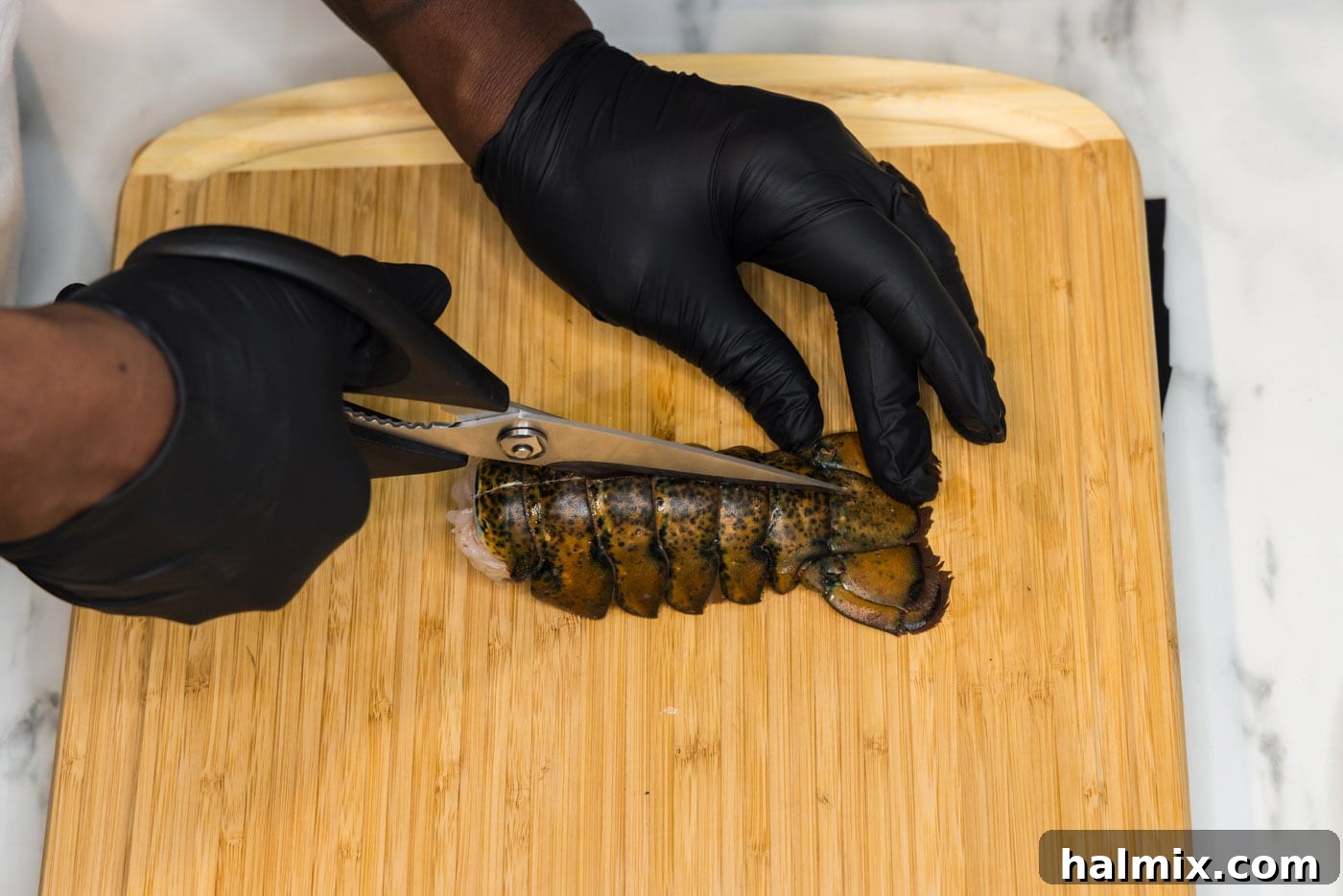
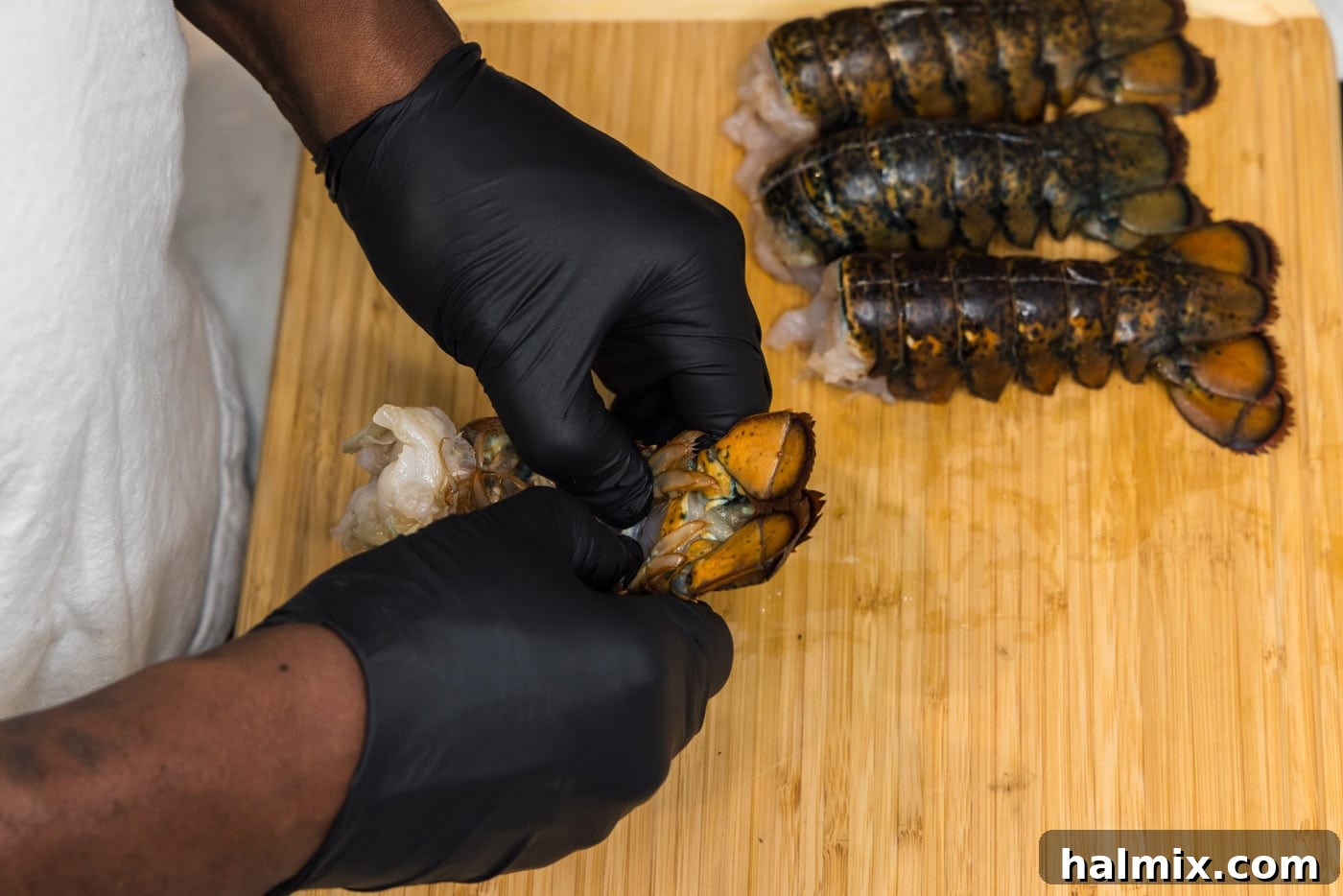
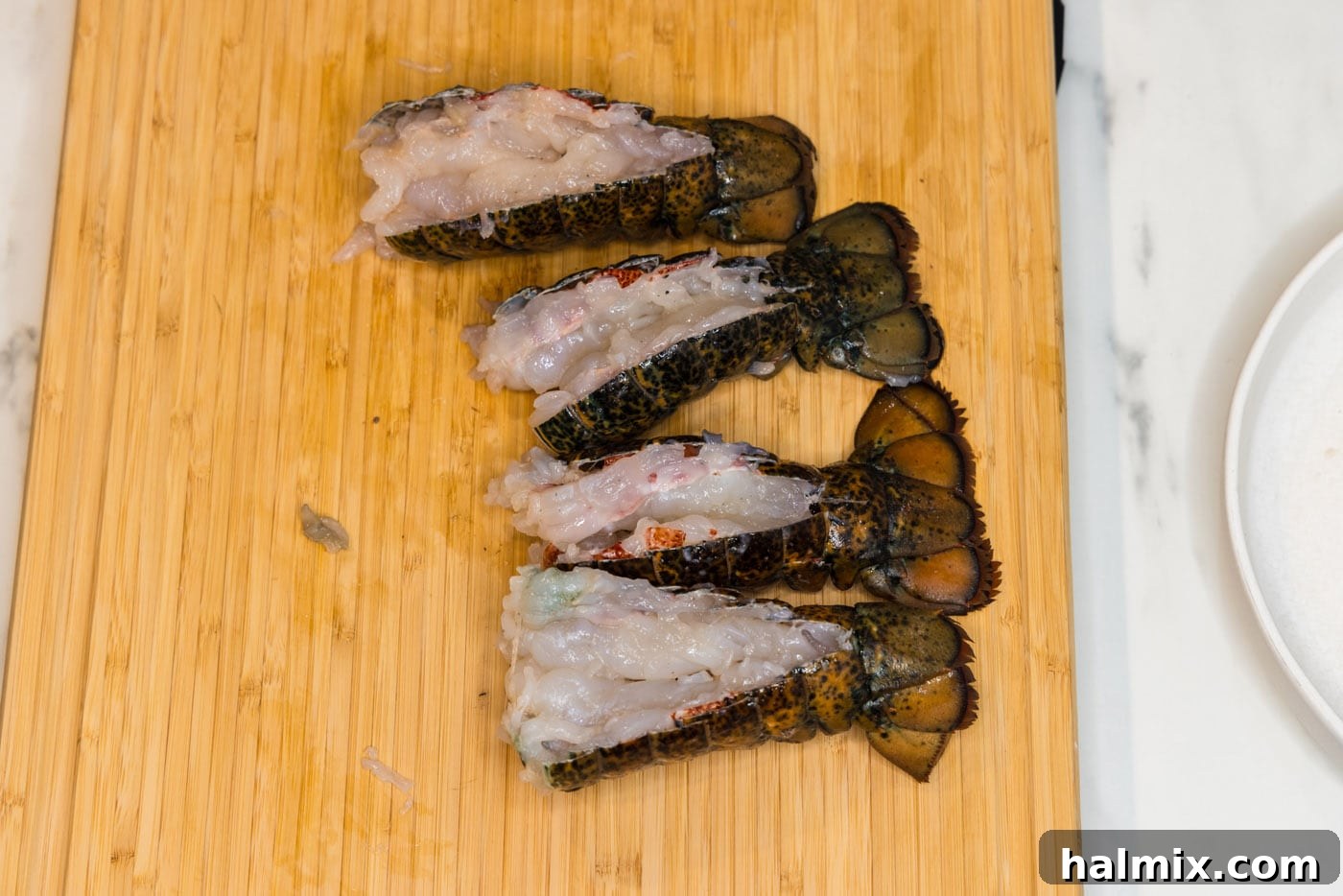
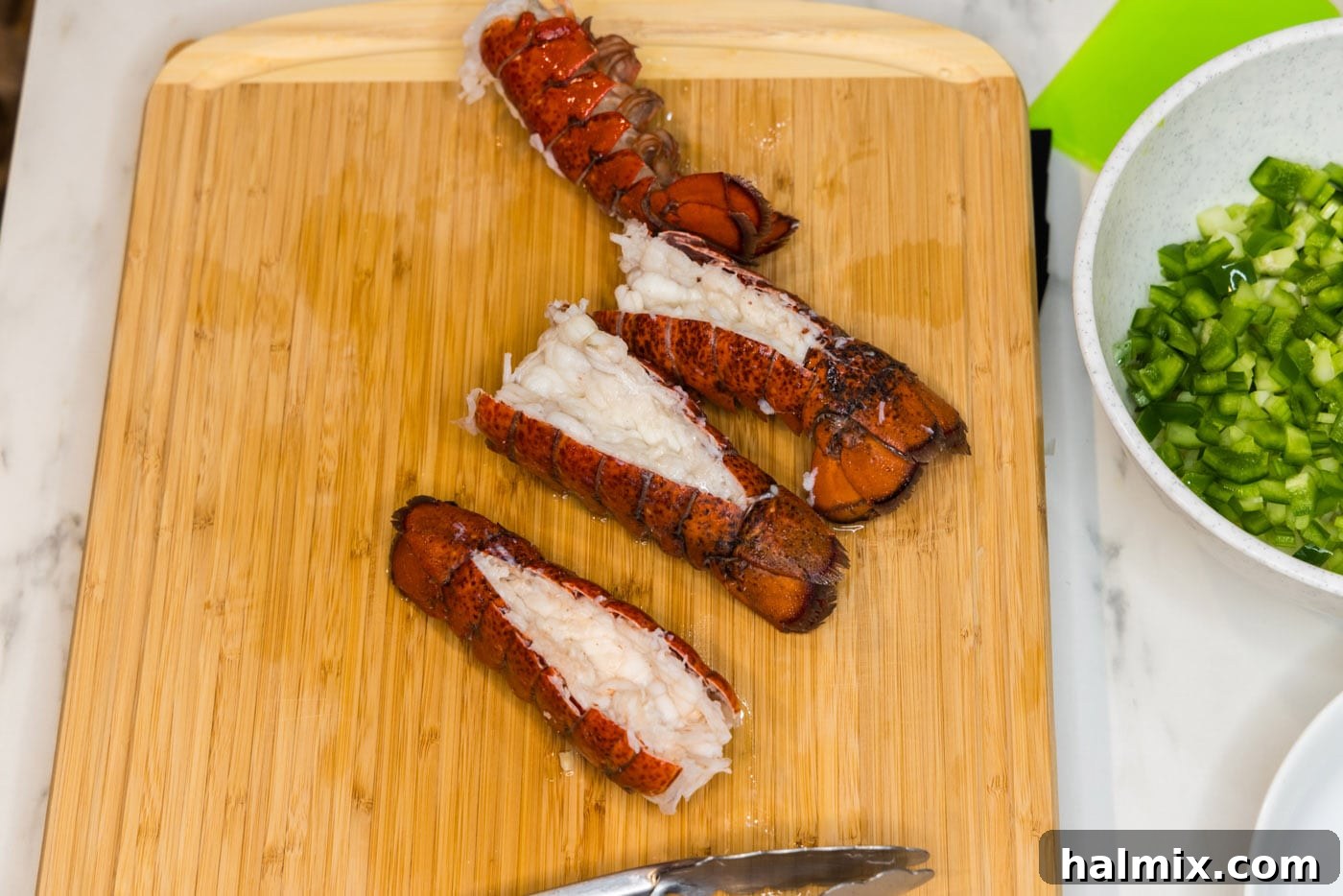
- **Prepare the Lobster Tails:** Using sharp kitchen shears, carefully cut down the center of the hard lobster shell, starting from the end closest to the head and stopping just before the tail fin. Be gentle to avoid cutting through the meat itself. Once cut, turn the lobster over and gently loosen the meat from the shell. The goal is to separate the meat while keeping it connected near the head end, allowing you to “butterfly” the tail and easily remove the cooked meat later.

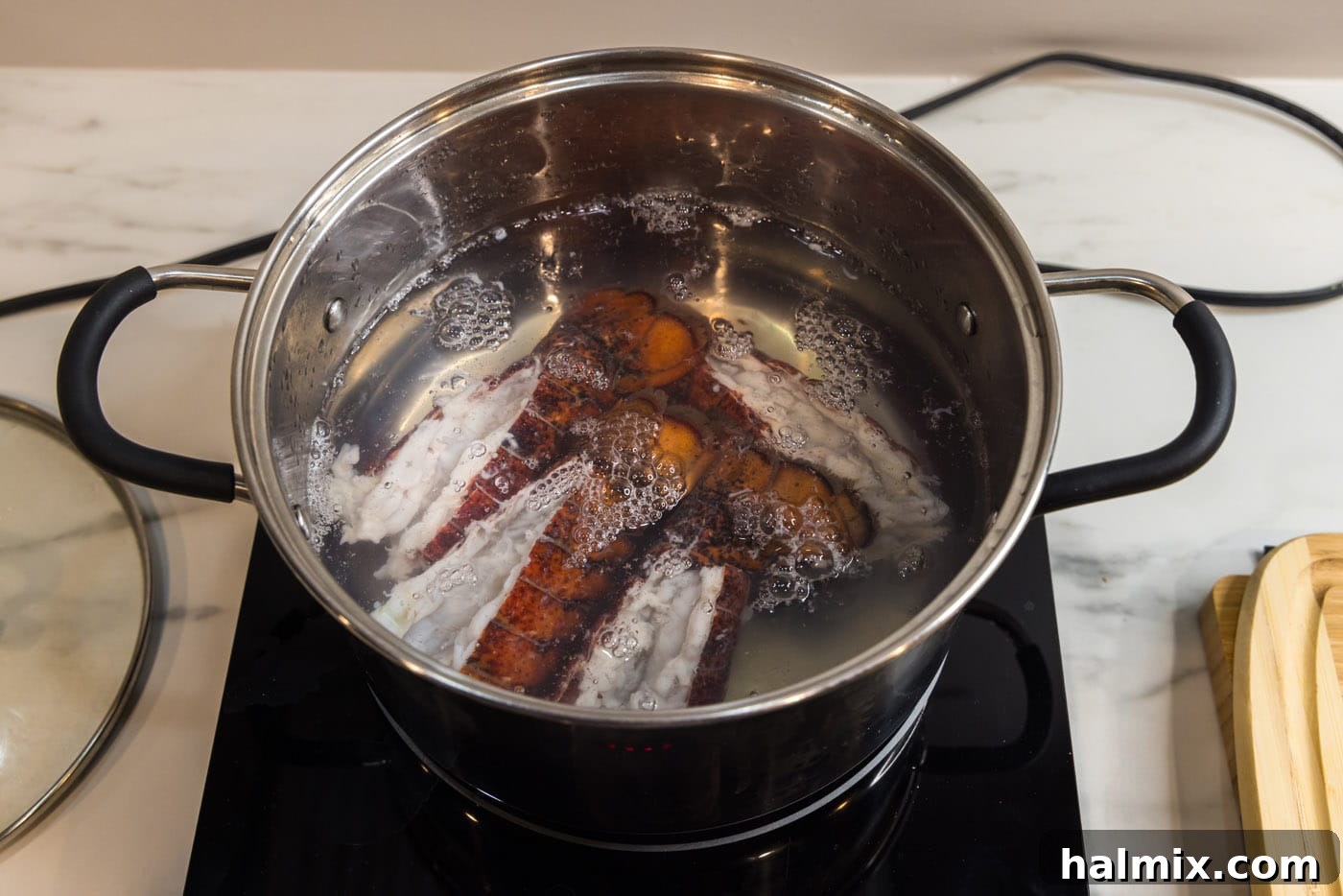
- **Boil the Lobster:** Fill a large stock pot about two-thirds full with water and bring it to a vigorous rolling boil over medium-high heat. Add a generous amount of Kosher salt (4 tablespoons), stirring until it dissolves. The water should be very salty, mimicking the ocean, which helps season the lobster perfectly. Carefully add the prepared lobster tails to the boiling salted water. Cook them for precisely one minute – there’s no need to wait for the water to return to a boil. Immediately turn off the heat and allow the lobster tails to remain in the hot water for an additional 2 minutes. This brief cooking time prevents overcooking, ensuring the lobster meat remains tender and succulent.
- **Harvest the Seafood Stock:** Using tongs, carefully remove the perfectly cooked lobster tails from the pot and transfer them to a cutting board. **Do NOT discard the cooking water yet!** This flavorful liquid is now your homemade seafood stock, essential for the sauce. Measure out 1 ¼ cups of this precious cooking water and set it aside. You can discard or freeze the remaining water for future use. Keep the stock pot handy, as you will use it again for straining the sauce.
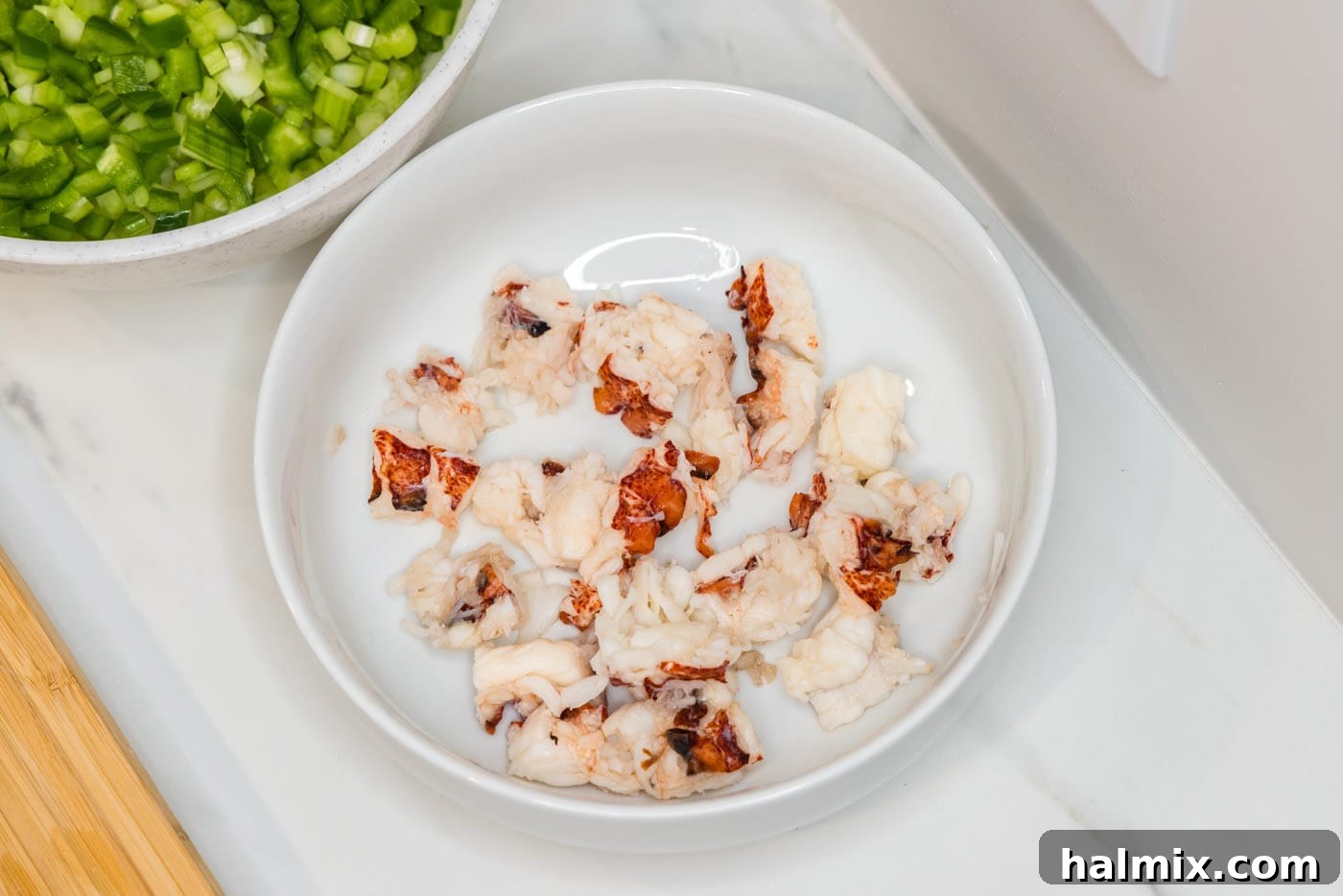
- **Chop the Lobster Meat:** Once the lobster tails are cool enough to handle, remove all the meat from their shells. Chop the cooked lobster meat into bite-sized chunks, ensuring a good distribution of lobster in every spoonful of pasta. Set these delicious pieces aside.
Crafting the Irresistibly Creamy Lobster Pasta Sauce
The velvety sauce is what truly binds this dish together, infusing every component with its rich, savory essence. Follow these steps to create a sauce that’s both deeply flavorful and wonderfully smooth.
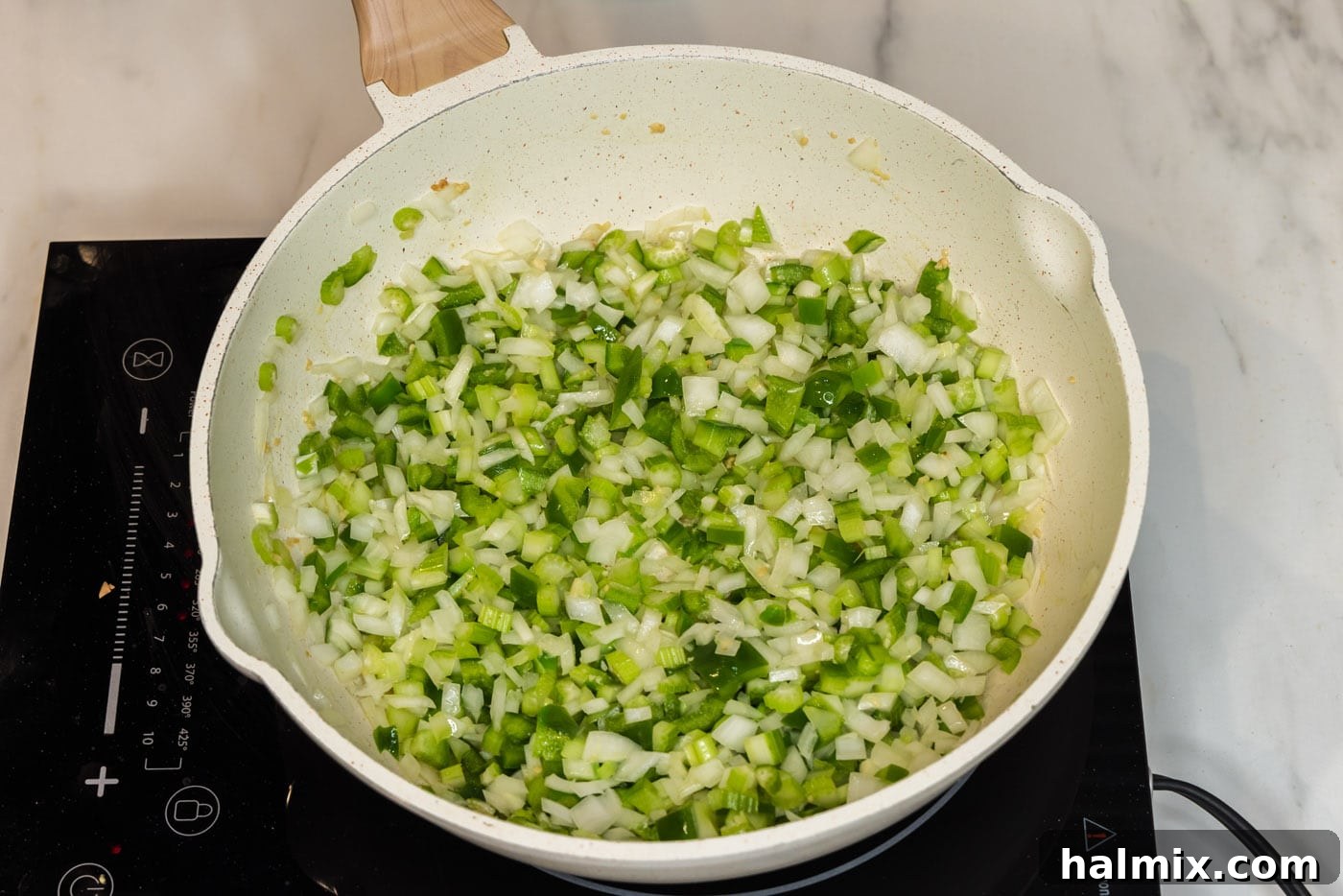
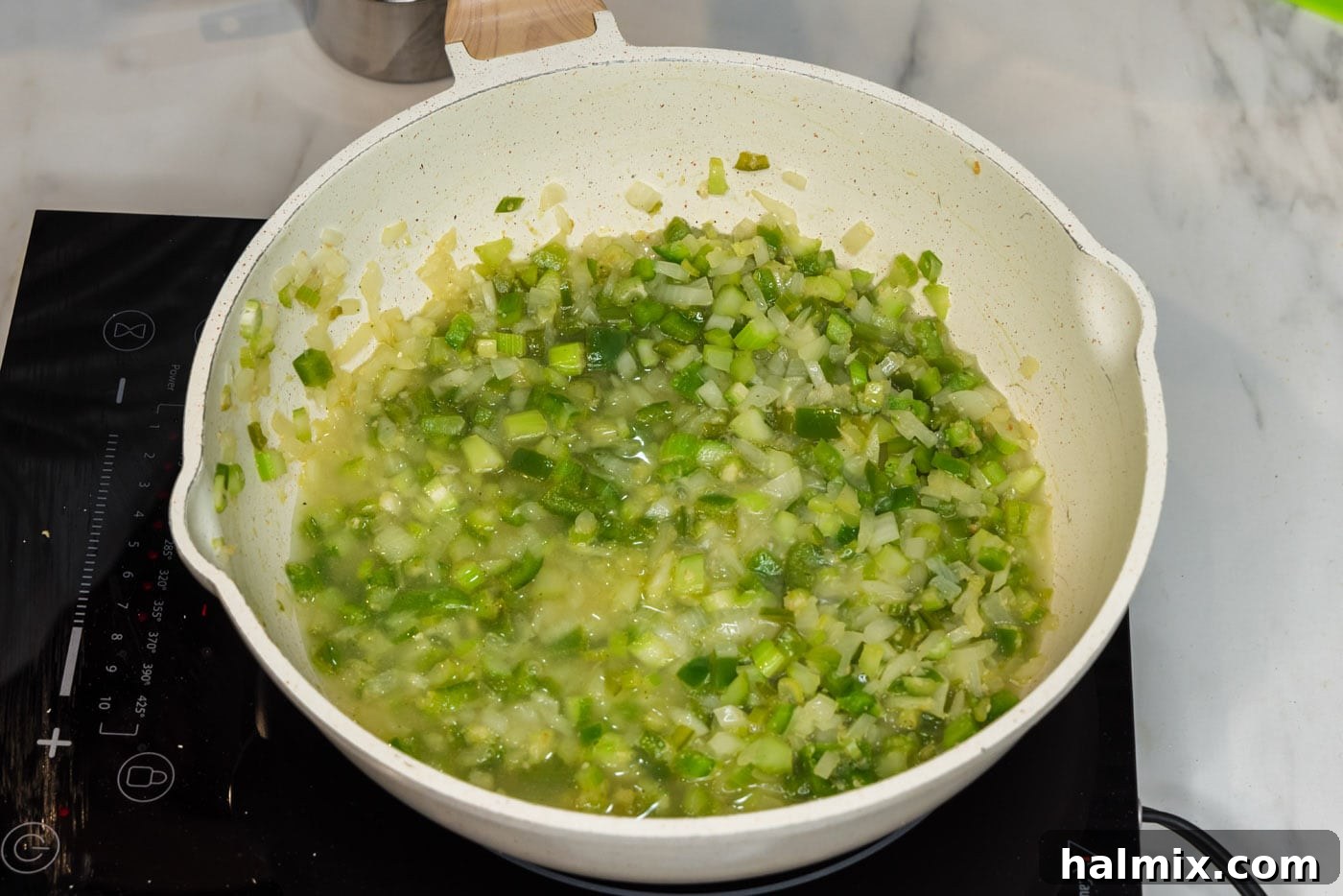
- **Sauté the Aromatics:** In a large deep-sided skillet, heat 2 tablespoons of olive oil over medium-high heat until it shimmers. Add the minced garlic and sauté for just 1 minute until it becomes fragrant – be careful not to burn it. Immediately add the chopped onion, green bell pepper, and diced celery. Cook these vegetables for 3-4 minutes, stirring occasionally, until they soften slightly but still retain a bit of their crispness. This step is crucial for building the foundational flavors of your sauce.
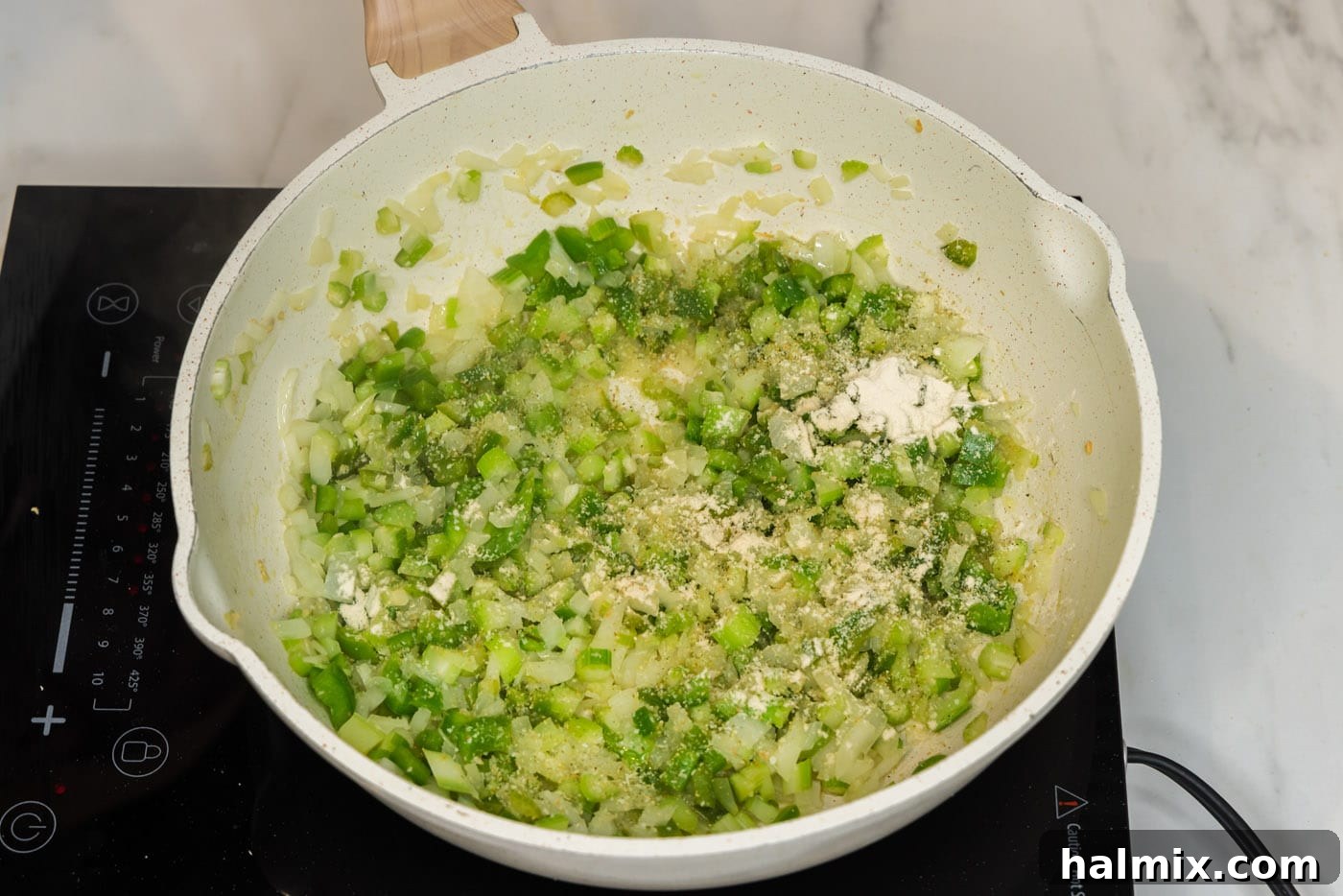
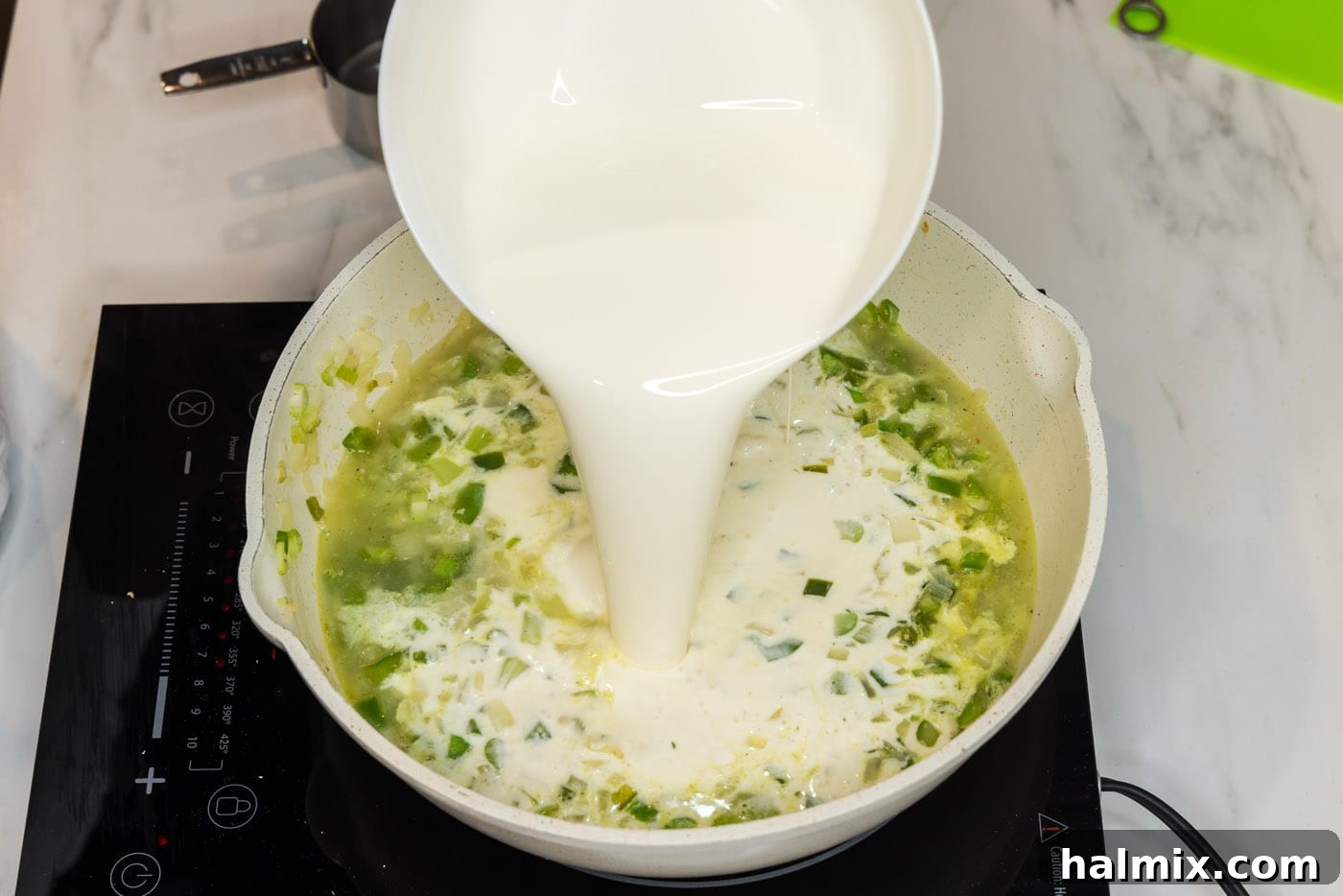
- **Build the Flavor Base:** Sprinkle the sautéed vegetables with garlic salt and onion powder, stirring well to ensure the seasonings are evenly distributed and coat all the ingredients. Now, pour in the reserved 1 ¼ cups of seafood stock (the lobster cooking water) and the heavy whipping cream. Stir everything together thoroughly, then bring the mixture to a gentle boil, allowing the flavors to meld and develop.
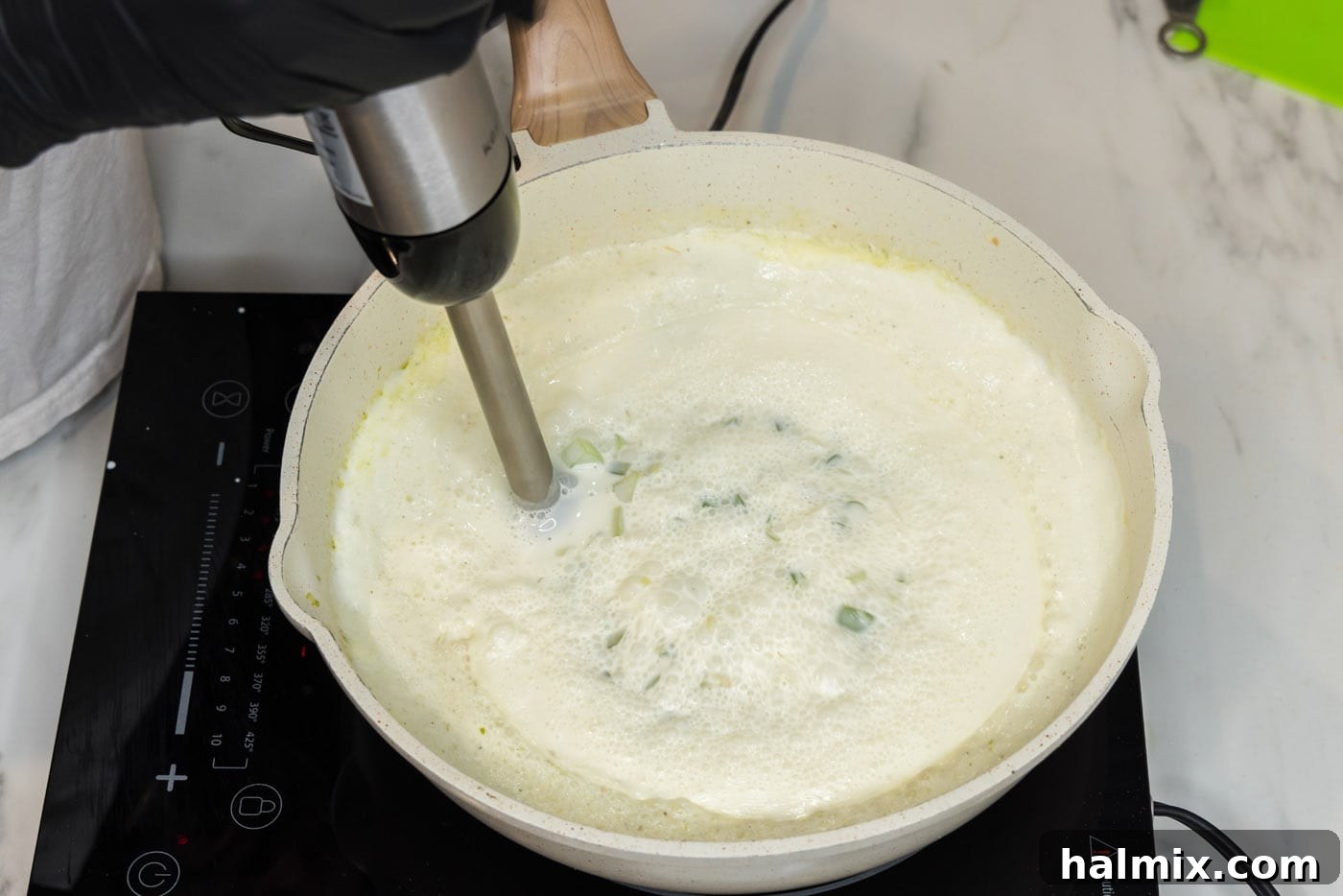
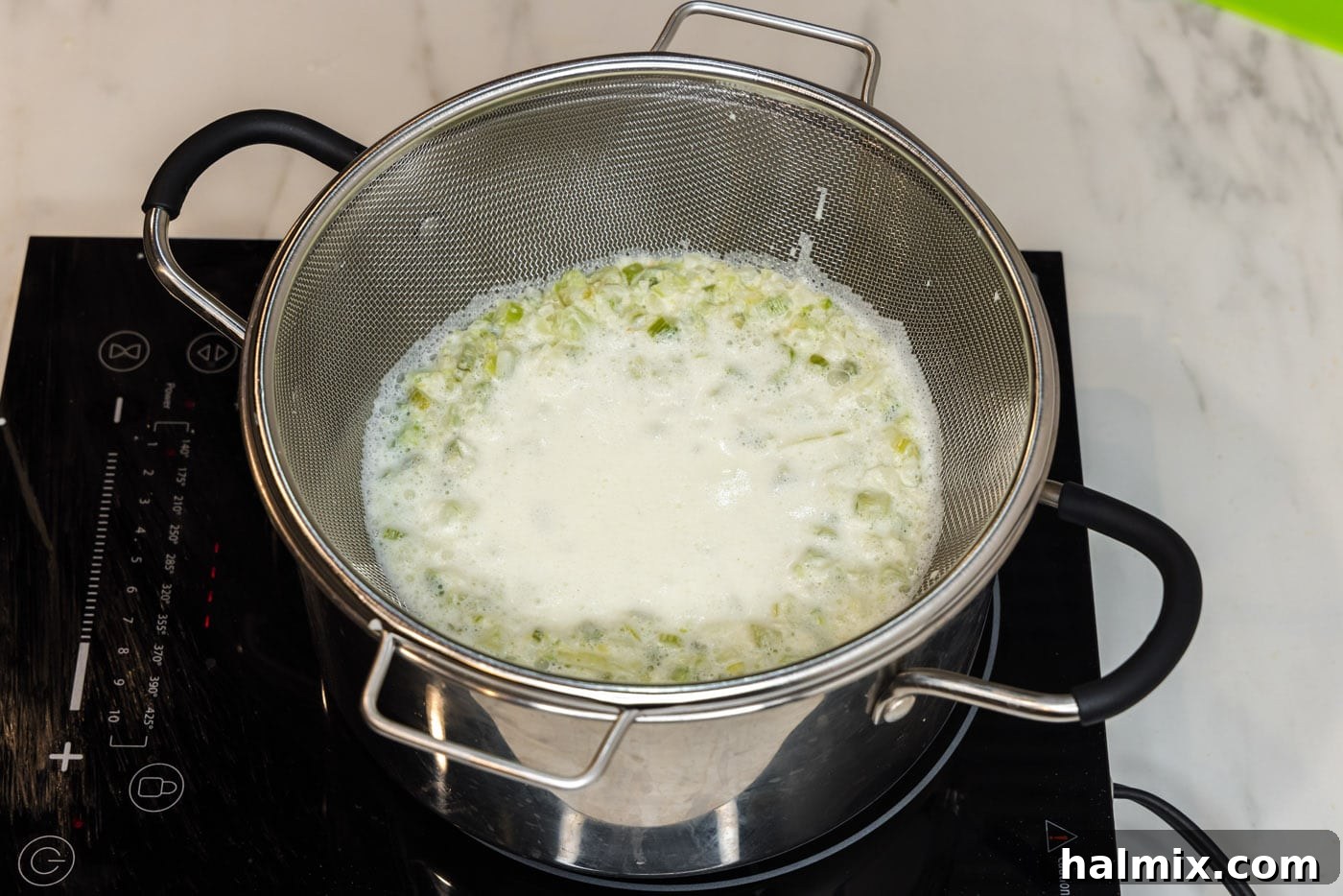
- **Achieve Ultimate Smoothness:** Reduce the heat on the sauce to a simmer. For an incredibly smooth, restaurant-quality sauce, use an immersion blender to carefully blend the sauce directly in the skillet, breaking down any larger vegetable chunks. If you don’t have an immersion blender, you can transfer the sauce to a regular blender (in batches, if necessary) and blend until smooth, then return it to the skillet. Turn off the heat. Place a colander over the empty stock pot (the one used for the lobster). Carefully strain the blended sauce through the colander to remove any remaining fibrous vegetable pieces, ensuring a truly silky texture.
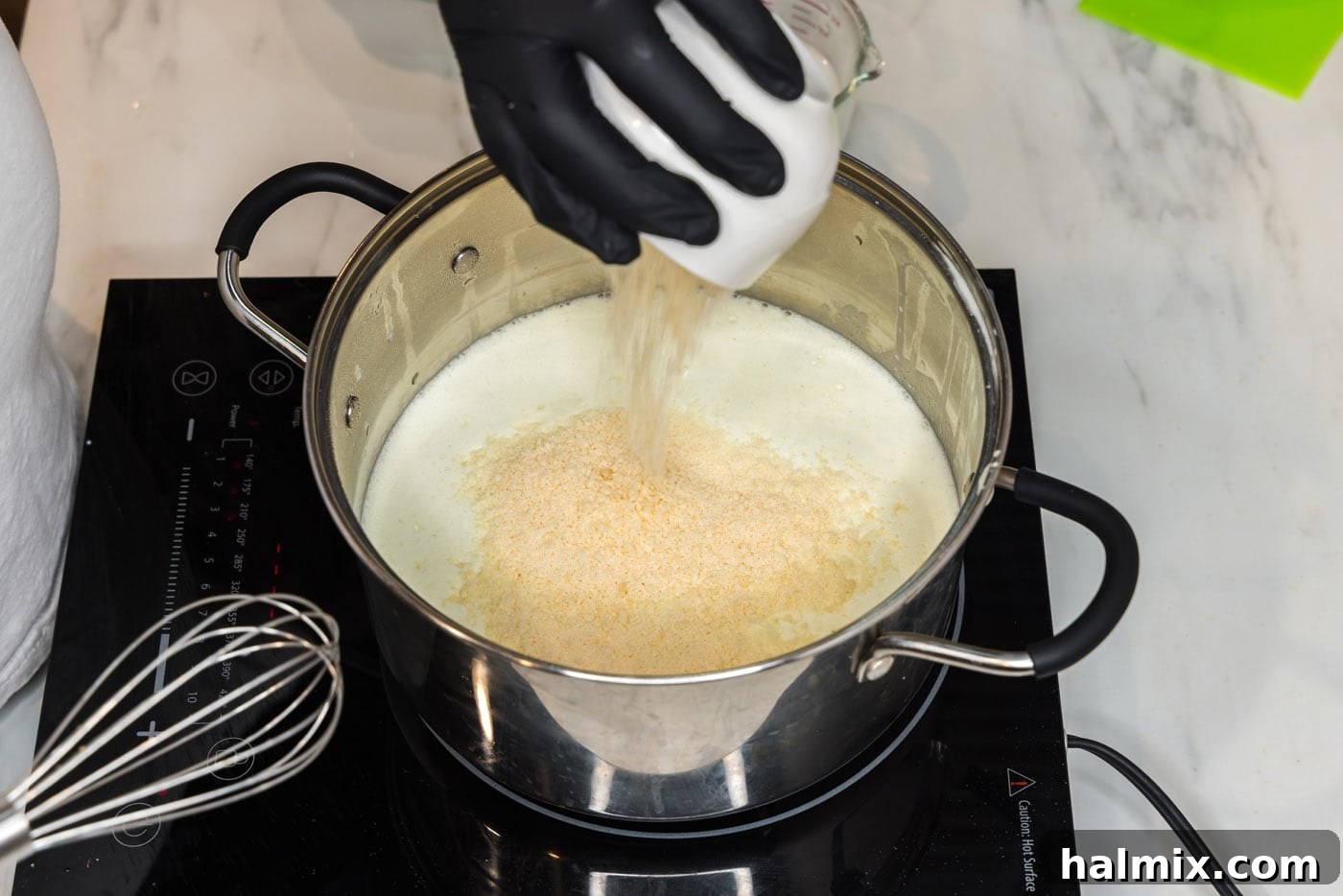
- **Add Cheese and Thicken:** Transfer the strained sauce back into the stock pot. Place it over medium-high heat. Whisk in the grated Parmesan cheese until it melts smoothly into the sauce, adding a delicious salty, umami depth.
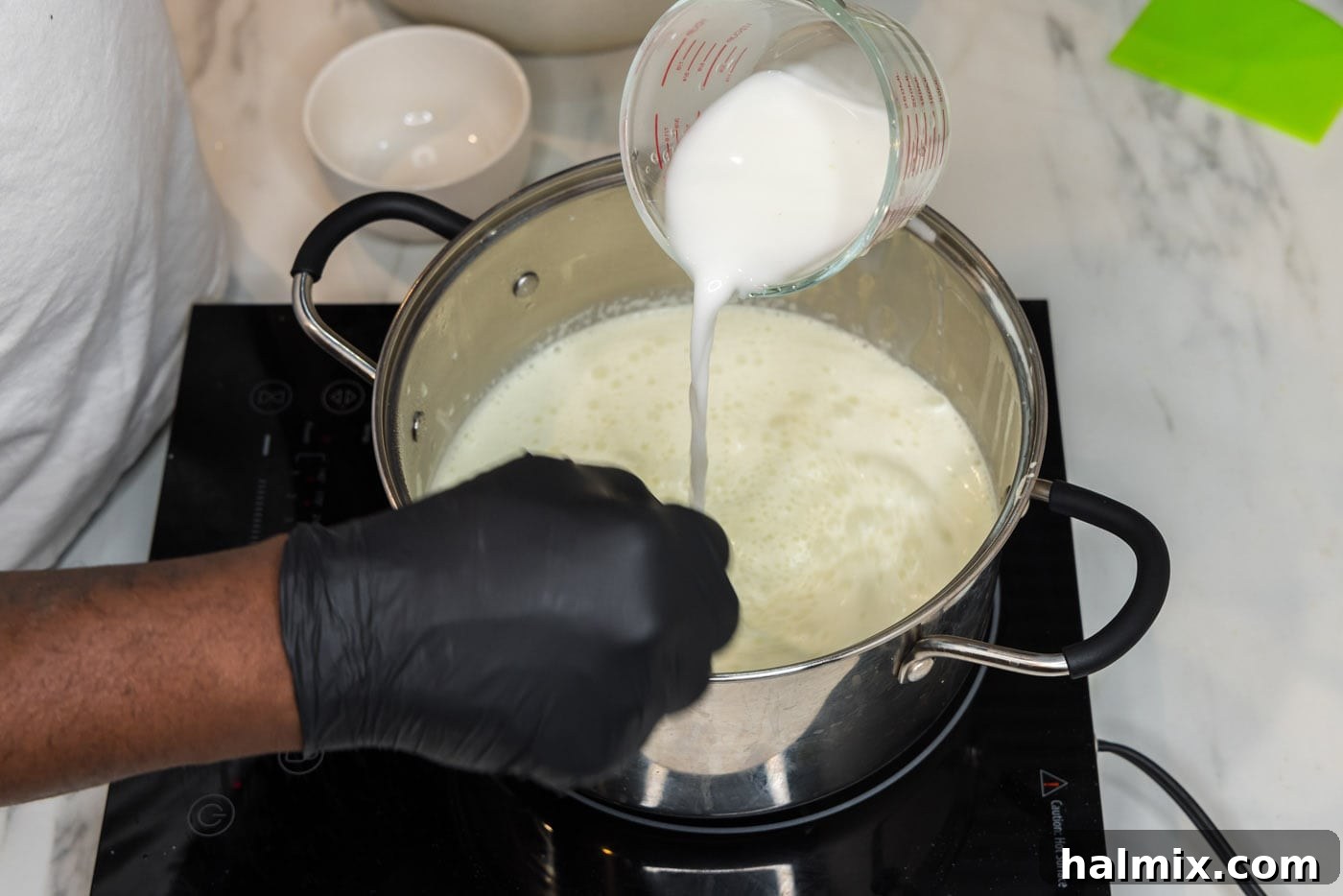
- **Achieve Perfect Consistency:** In a small bowl, create a cornstarch slurry by whisking together the cornstarch and water until smooth. Add this slurry to the simmering sauce in the stock pot, whisking continuously to prevent lumps. Bring the sauce back to a boil, then immediately reduce the heat to a gentle simmer. Continue to simmer for 10-15 minutes, or until the sauce has thickened to your desired consistency – it should be coating the back of a spoon beautifully.
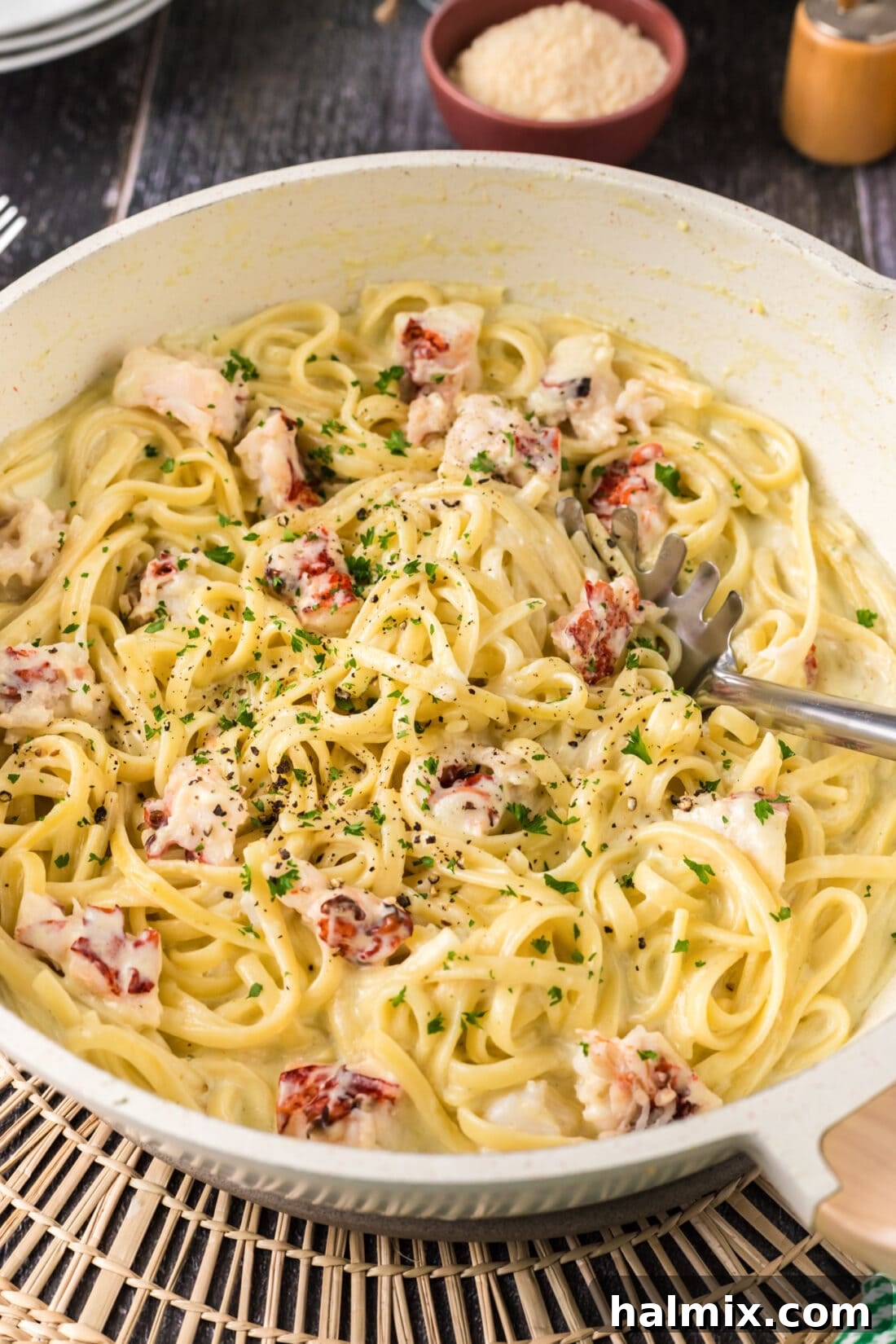
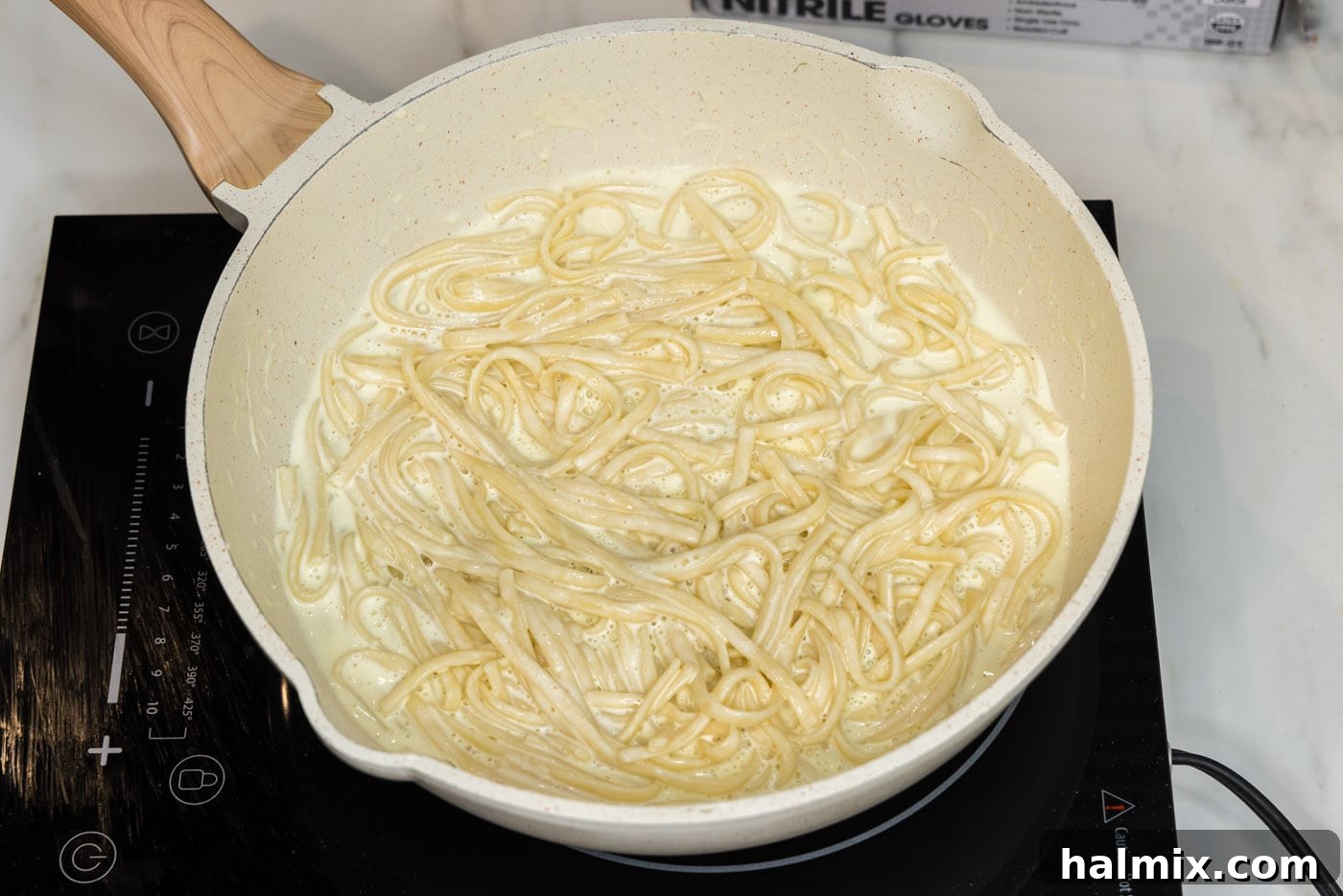
- **Combine and Serve:** Finally, add the cooked linguine noodles to the thickened, creamy sauce in the stock pot. Toss gently to ensure every strand of pasta is generously coated. Carefully fold in the pre-chopped lobster chunks, distributing them evenly throughout the pasta. Serve immediately and prepare for rave reviews!
Frequently Asked Questions & Expert Tips for Lobster Pasta
To preserve the deliciousness of your lobster pasta, store any leftovers in an airtight container in the refrigerator for up to 3 days. When reheating, gently warm the pasta in a skillet over medium-low heat or in the microwave until it’s heated through. Lobster can become rubbery if overcooked during reheating, so keep an eye on it. If the sauce appears a bit dry or too thick after refrigeration, add a splash of water, milk, or heavy whipping cream to remoisten and bring it back to its creamy consistency.
Absolutely! Frozen lobster tails are a convenient and often more affordable option. Ensure they are fully thawed in the refrigerator overnight before proceeding with step 2 of the cooking instructions. Rapid thawing methods (like in water) can sometimes affect texture, so a slow thaw is best for optimal results.
When selecting fresh lobster tails, look for ones that are firm to the touch and have a bright, vibrant color. Avoid any that appear discolored, mushy, or have a strong, unpleasant odor. If buying frozen, ensure the packaging is sealed tightly and there are no signs of freezer burn.
While the sauce is best when freshly made, you can prepare the base (sautéed vegetables, stock, and cream before adding cheese and thickening) a day in advance. Store it in the refrigerator. When ready to serve, gently reheat, add the cheese and cornstarch slurry, and proceed with combining it with the pasta and lobster.
For an extra burst of flavor, consider adding a pinch of red pepper flakes to the sauce for a subtle kick, or a splash of dry white wine (like Pinot Grigio or Sauvignon Blanc) when sautéing the vegetables to deglaze the pan and add complexity. A squeeze of fresh lemon juice at the very end can also brighten the flavors beautifully.
Elevate Your Meal: Serving Suggestions for Lobster Pasta
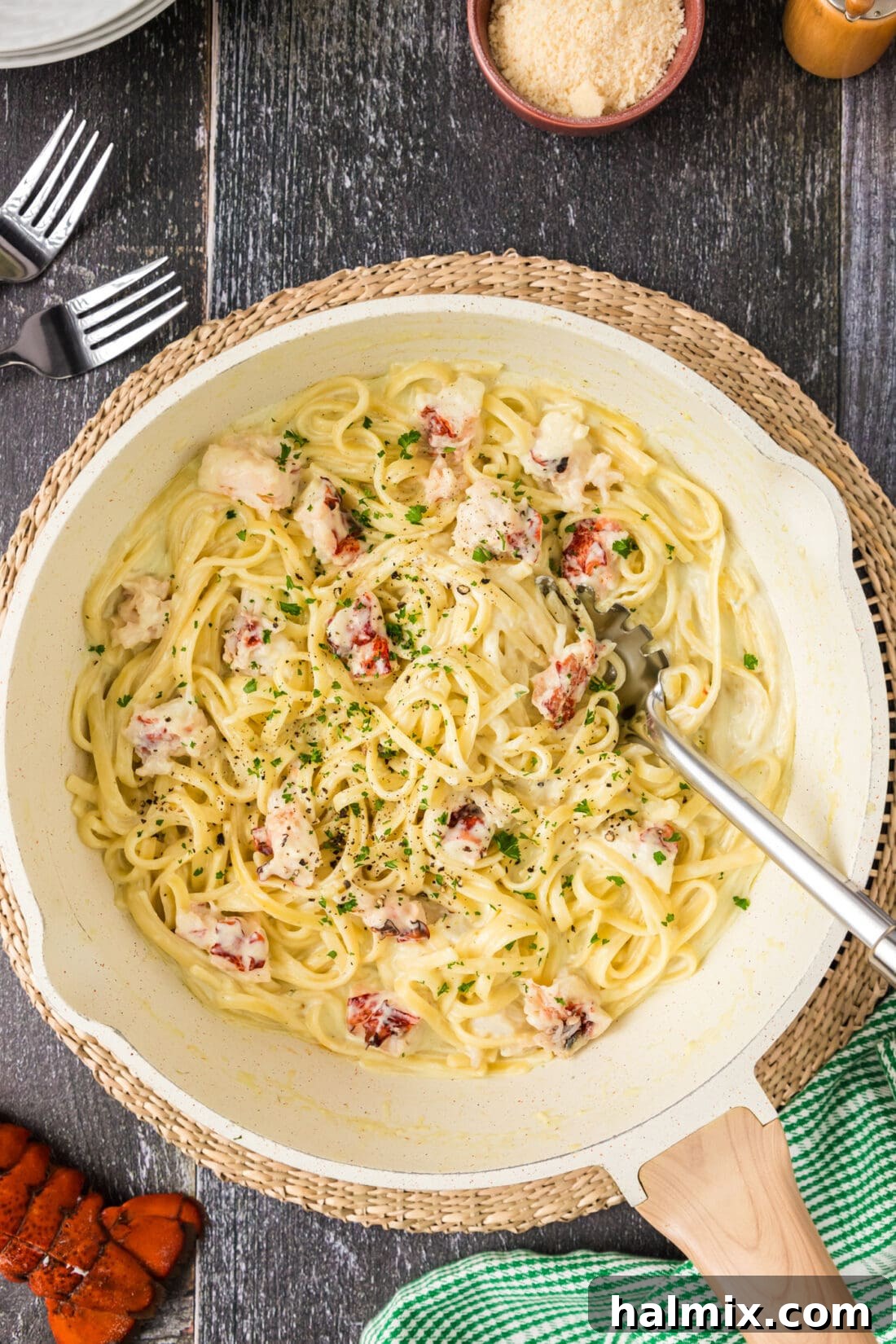
This exquisite lobster pasta is a complete meal in itself, but a few thoughtful accompaniments can truly elevate the dining experience. Serve your warm, creamy lobster pasta immediately, garnished generously with a sprinkle of finely chopped fresh parsley for a touch of color and freshness. Pair it with a side of warm, crusty artisan bread or a garlic bread for dipping into the luscious sauce, ensuring not a single drop of flavor is missed. A simple, crisp leafy green salad with a light vinaigrette provides a refreshing counterpoint to the richness of the pasta. For a complete gourmet experience, consider pairing this dish with a glass of chilled dry white wine, such as a crisp Chardonnay, Sauvignon Blanc, or a light-bodied Pinot Grigio, which beautifully complements the delicate seafood flavors.
More Decadent Seafood Pasta Recipes to Explore
If you love the luxurious taste of seafood pasta, be sure to check out these other fantastic recipes that bring the ocean’s bounty to your table:
- Shrimp Pasta
- Scallop Pasta
- Shrimp Scampi Pasta
- Lobster Mac and Cheese
- Salmon Pasta
I absolutely adore creating and sharing my kitchen adventures with all of you! Remembering to revisit for new recipes can be tricky, which is why I offer a convenient newsletter delivered straight to your inbox every time a new recipe is posted. Simply subscribe here and start receiving your free daily recipes, ensuring you never miss out on delicious inspiration!

Lobster Pasta
IMPORTANT – There are often Frequently Asked Questions within the blog post that you may find helpful. Simply scroll back up to read them!
Print It
Pin It
Rate It
Ingredients
- ½ pound linguine pasta (8 ounces)
- 16 ounce lobster tail (Four 4-ounce lobster tails)
- 4 Tablespoons Kosher salt
Sauce
- ¼ cup chopped onion
- 2 stalks celery (trimmed and diced)
- ½ green bell pepper (diced)
- 2 Tablespoons olive oil
- ½ Tablespoon minced garlic
- ½ Tablespoon garlic salt
- 1 ½ teaspoons onion powder
- 1 ½ cups heavy whipping cream
- ¼ cup grated parmesan cheese
- 2 teaspoons cornstarch
- ¼ cup water
Things You’ll Need
-
Stockpot
-
Large deep sided skillet
-
Kitchen scissors
-
Tongs
-
Immersion blender
-
Colander
Before You Begin
- We used 4 lobster tails for this recipe, providing a generous amount of seafood. If you prefer a richer lobster presence, you can easily increase the quantity to 6 tails. For those using already cooked lobster meat, remember to add seafood stock to your grocery list, as you won’t be generating it from boiling fresh tails.
- While linguine is a fantastic choice for this dish, feel free to experiment with other long pasta varieties such as angel hair, spaghetti, or fettuccine to suit your preference.
Instructions
-
Cook linguine pasta according to package directions until al dente. Drain thoroughly and rinse with cool water to halt the cooking process. Toss the noodles with 2 teaspoons of olive oil to prevent them from sticking together. Cover and set aside.
Cooking the Lobster
-
Using kitchen shears, cut down the center of the lobster shell to the tail, taking care not to cut through the tail fin. Flip the lobster over and gently loosen the meat from the shell, ensuring it remains connected near the head end.
-
Fill a stock pot 2/3 full with water and bring to a rolling boil over medium-high heat. Add the Kosher salt and stir to dissolve, making the water very salty. Carefully add the prepared lobster tails to the boiling water. Cook for precisely one minute (do not wait for the water to return to a boil), then turn off the heat and let the lobster steep in the hot water for 2 minutes.
-
Use tongs to remove the lobster tails to a cutting board. **Do NOT discard the cooking water yet.** Measure out 1 ¼ cups of this flavorful cooking water (now seafood stock) and set aside. Discard or freeze the remaining stock. Reserve the stock pot for a later step.
-
Once cool enough to handle, remove the meat from the shells and chop it into bite-sized chunks. Set aside.
Making the Sauce
-
Heat olive oil in a deep-sided skillet over medium-high heat until shimmering. Add minced garlic and sauté for 1 minute until fragrant. Add the chopped onion, green bell pepper, and celery, and cook for 3-4 minutes to soften.
-
Sprinkle in garlic salt and onion powder, stirring to combine. Pour in the reserved 1 ¼ cups of seafood stock and the heavy whipping cream. Stir well and bring to a boil.
-
Reduce the heat to a simmer. Use an immersion blender to break down any large vegetable chunks, creating a smoother sauce. Turn off the heat. Place a colander over the empty stock pot and strain the sauce through it to ensure a silky texture, removing any remaining vegetable fibers.
-
Transfer the strained sauce back to the stock pot. Over medium-high heat, whisk in the grated Parmesan cheese until fully incorporated.
-
In a small bowl, whisk together the cornstarch and water to create a slurry. Add this slurry to the stock pot with the sauce, whisking constantly. Bring the sauce to a boil, then immediately reduce to a simmer. Simmer for 10-15 minutes, or until the sauce begins to thicken to your desired consistency.
-
Add the cooked linguine noodles to the thickened sauce in the stock pot. Toss gently to coat the pasta. Finally, fold in the cooked lobster chunks. Serve warm and enjoy!
Expert Tips & FAQs
- Store any leftover lobster pasta in an airtight container in the refrigerator for up to 3 days. When reheating, use a skillet over medium-low heat or the microwave until warmed through. If the sauce seems dry, add a splash of water or heavy whipping cream to restore its creamy consistency.
- For the best flavor, use fresh lobster tails if possible. If using frozen, ensure they are fully thawed before cooking.
- Don’t overcook the lobster! The short boiling time followed by steeping in hot water ensures tender, not rubbery, meat.
- The seafood stock made from the lobster cooking water is a key ingredient for a truly authentic flavor. Don’t skip this step or substitute with plain water unless absolutely necessary (in which case, use a store-bought seafood stock).
Nutrition Information
|
Calories: 644 cal
|
Carbohydrates: 50 g
|
Protein: 18 g
|
Fat: 42 g
|
Saturated Fat: 23 g
|
Polyunsaturated Fat: 3 g
|
Monounsaturated Fat: 14 g
|
Trans Fat: 0.003 g
|
Cholesterol: 147 mg
|
Sodium: 2034 mg
|
Potassium: 391 mg
|
Fiber: 3 g
|
Sugar: 5 g
|
Vitamin A: 1512 IU
|
Vitamin C: 14 mg
|
Calcium: 171 mg
|
Iron: 1 mg
The recipes on this blog are tested with a conventional gas oven and gas stovetop. It’s important to note that some ovens, especially as they age, can cook and bake inconsistently. Using an inexpensive oven thermometer can assure you that your oven is truly heating to the proper temperature. If you use a toaster oven or countertop oven, please keep in mind that they may not distribute heat the same as a conventional full-sized oven, and you may need to adjust your cooking/baking times. In the case of recipes made with a pressure cooker, air fryer, slow cooker, or other appliance, a link to the appliances we use is listed within each respective recipe. For baking recipes where measurements are given by weight, please note that results may not be the same if cups are used instead, and we can’t guarantee success with that method.