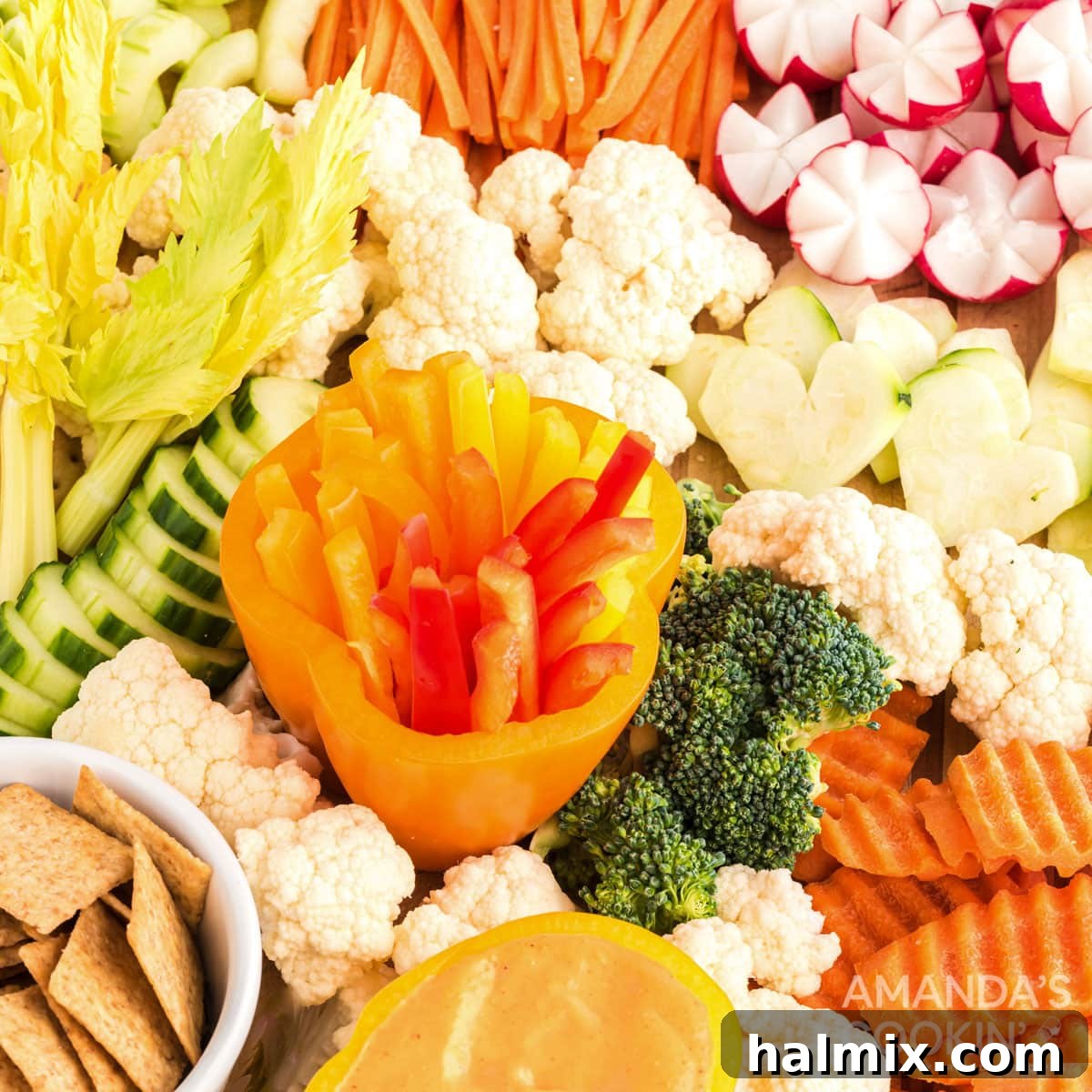
Elevate Your Table: Mastering the Art of Decorative Vegetable Platters
A beautifully arranged platter of fresh, vibrant vegetables is a feast for both the eyes and the palate. Far more than just a healthy snack, decorative vegetables can transform any ordinary table into an inviting masterpiece, perfect for holidays, birthdays, barbecues, or even just a weeknight family dinner. While they might look like something only a professional chef could create, making fresh vegetables shine with creative cuts and arrangements is surprisingly simple and incredibly rewarding. This guide will help you craft stunning displays that are as appetizing as they are attractive.
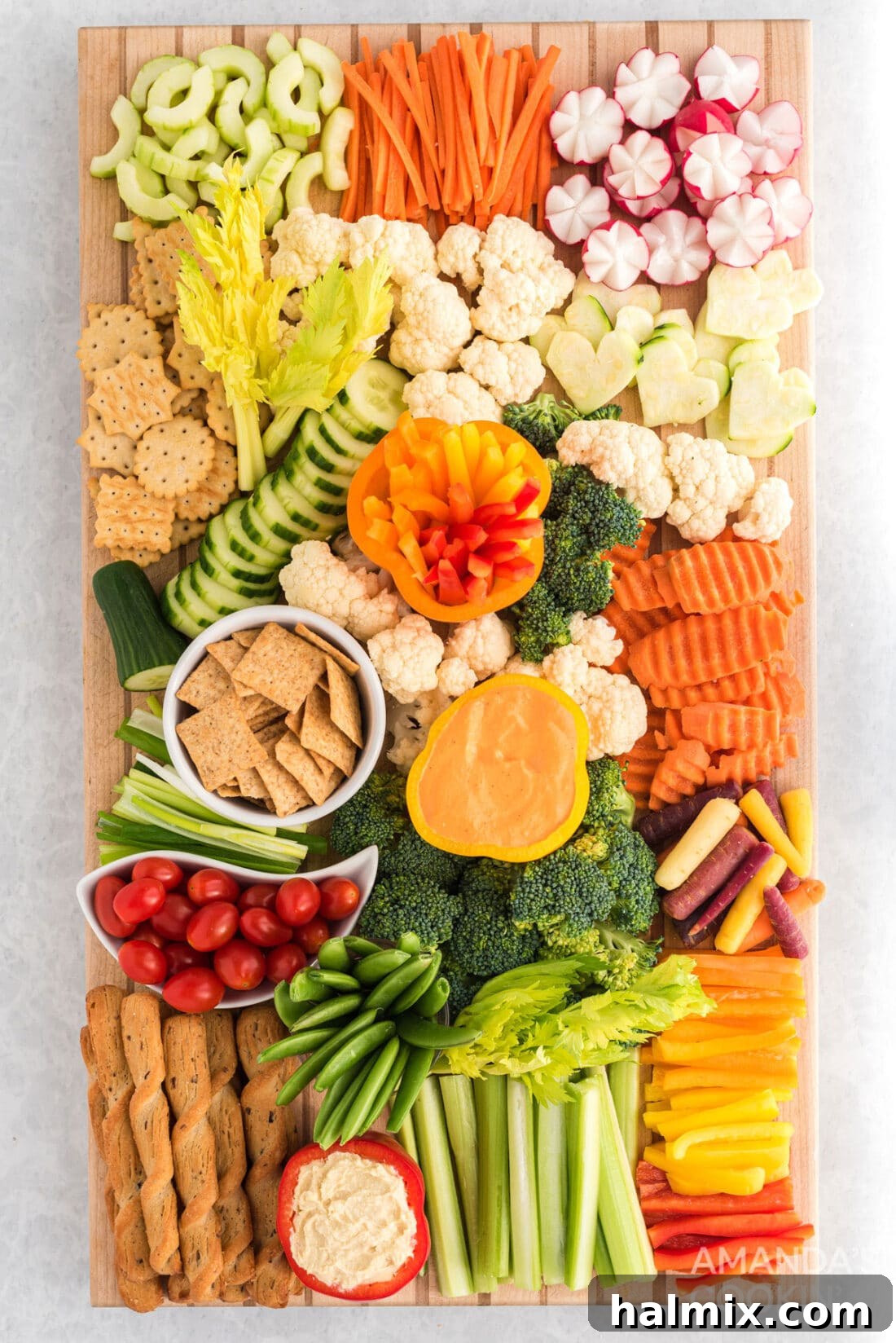
The Power of Presentation: Why Decorative Vegetables Matter
In our busy lives, it’s often a challenge to incorporate enough vegetables into our diets. But there’s an undeniable magic to food that looks as good as it tastes. When vegetables are presented with care and creativity, they become infinitely more appealing, encouraging everyone—from picky eaters to health-conscious adults—to reach for another colorful bite. A well-crafted vegetable platter, often referred to by its sophisticated French name, a “crudité platter,” doesn’t just look elegant; it actively promotes healthier eating in an enjoyable way.
Beyond the health benefits, decorative vegetables serve as a stunning centerpiece. They add a pop of natural color and fresh texture to any spread, making your gathering feel more special and thoughtful. Imagine a holiday table adorned with crisp, artfully prepared veggies, drawing guests in with their visual appeal before they even taste a single bite. Whether you’re hosting an elaborate holiday dinner, a casual backyard BBQ, or celebrating a birthday, an impressive veggie display is always a huge hit, leaving a lasting impression on your guests and making them wonder how you achieved such culinary artistry with ease. It’s a simple secret to elevating any meal.
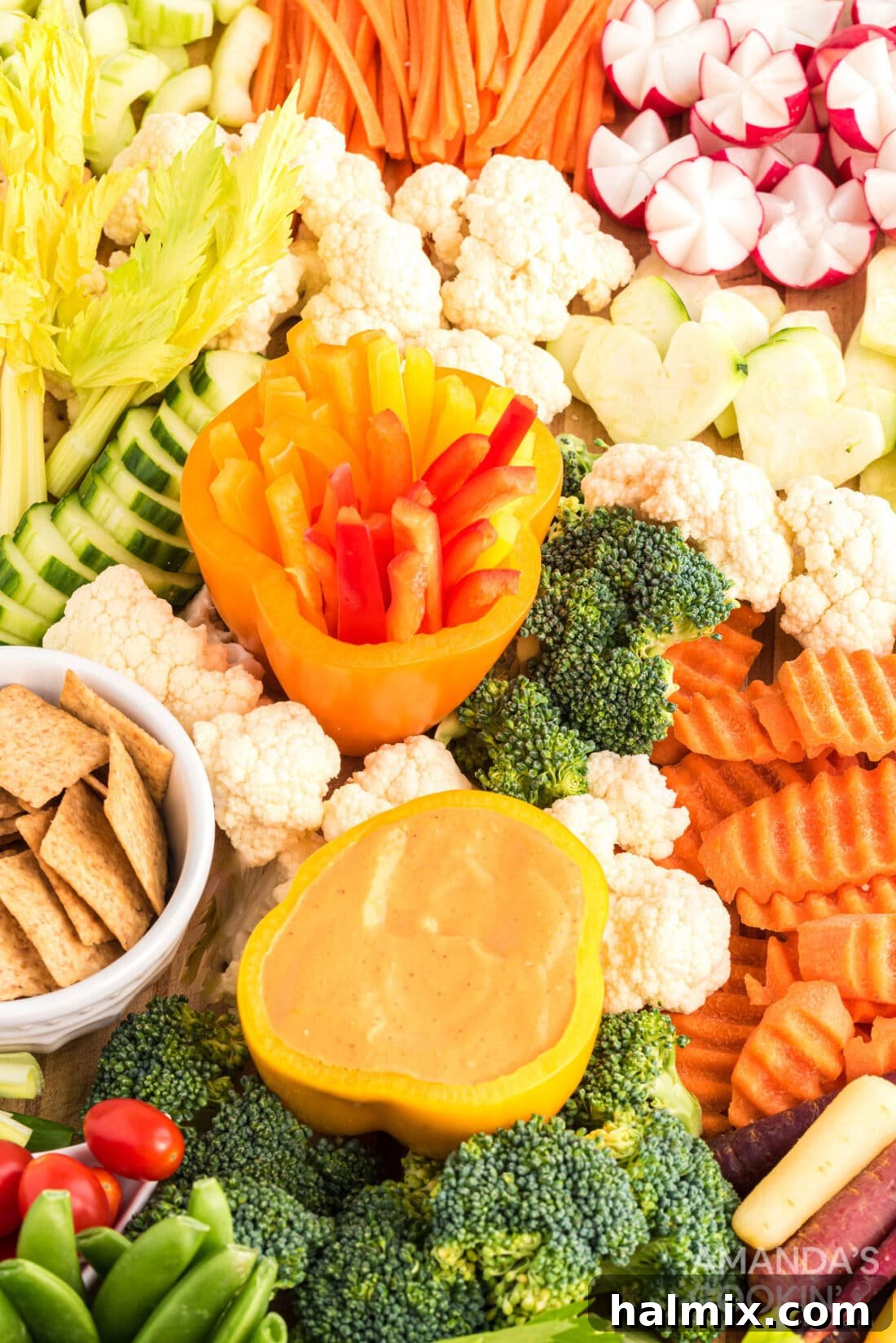
Creative Cutting Techniques for Popular Vegetables
Ready to unlock the secret to creating these edible works of art? You don’t need fancy equipment, just a few simple tools and a touch of imagination. Let’s explore some popular vegetables and easy techniques to make them stand out on your platter.
Cucumber Elegance: Striped and Cored Creations
Cucumbers are a fantastic canvas for decorative cuts, offering a refreshing crunch and a versatile mild flavor. Their long, cylindrical shape makes them ideal for several eye-catching techniques that are sure to impress.
Striped Cucumber Rounds
Creating elegant striped cucumber rounds is incredibly simple yet highly effective in adding visual interest and a professional touch. Start by washing a fresh cucumber thoroughly and trimming both ends for a clean presentation. Using a standard potato peeler, carefully peel one long strip of skin all the way down the cucumber. Then, move over approximately the width of the peeled strip, intentionally leaving a band of vibrant green skin intact. Continue this alternating pattern—peel a strip, leave a strip—until you’ve gone all the way around the cucumber. Once peeled in this manner, slice the cucumber into uniform 1/4-inch thick rounds. The striking contrast of alternating green and pale strips creates a beautiful, professional-looking garnish that’s perfect for any platter, salad, or as an elegant base for appetizers.
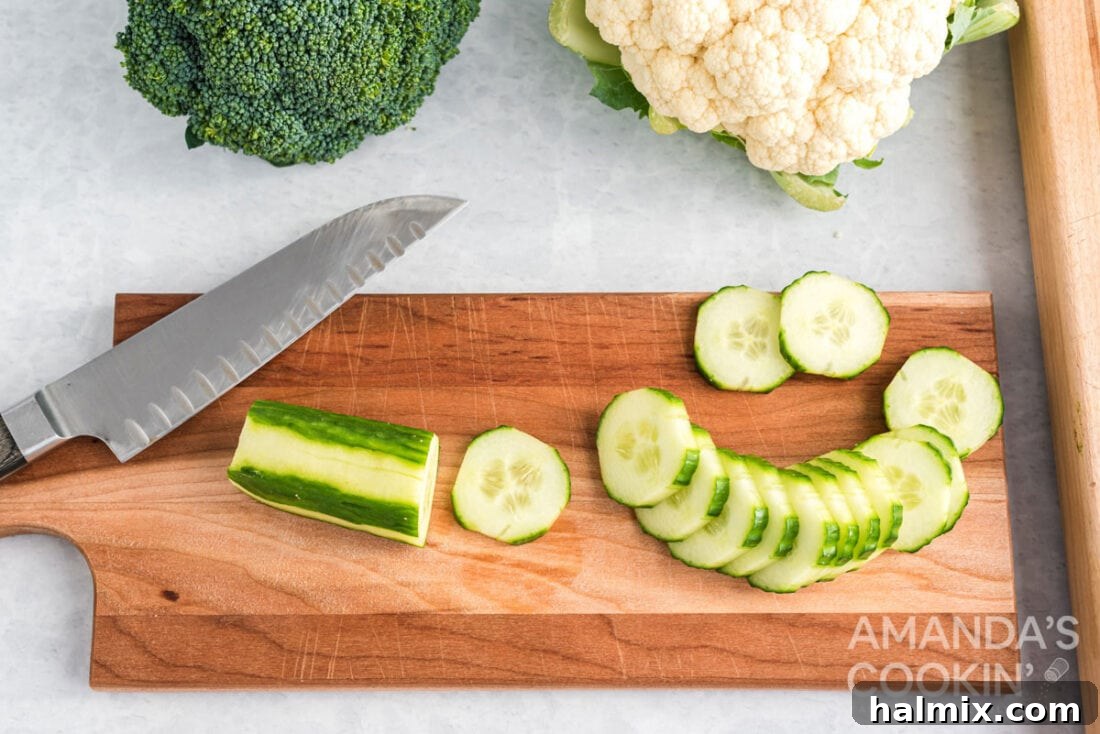
Cored Cucumbers for Creative Fillings
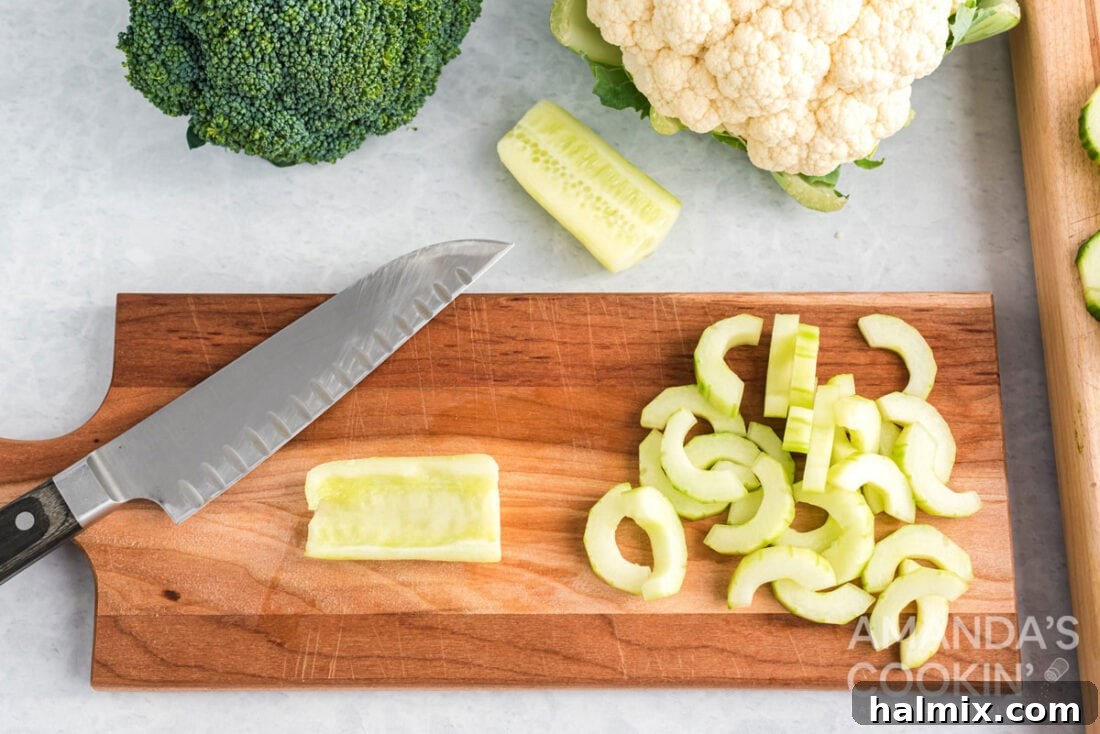
Cored cucumbers offer another dimension of presentation, allowing you to create edible vessels for delicious and colorful fillings. Begin by trimming both ends of a cucumber and peeling the entire cucumber for a uniform look. Slice the cucumber in half lengthwise. Gently scoop out the watery seeds and soft pulp using a spoon or a small knife, creating a clean, hollow channel. You can then slice these hollowed-out halves into 1/4-inch thick “half-moons.”
For a different and playful look, consider creating “donut-hole” slices. After peeling and trimming the ends, cut the cucumber into thick segments (e.g., 2-3 inches long). Then, carefully use a small round cookie cutter or a paring knife to remove the center pulp from each segment. Once the centers are removed, slice these segments into 1/4-inch thick rings, resembling mini donut holes. These cored cucumber pieces are perfect for filling with creamy dips, herbed cream cheese, savory tuna salad, a vibrant pesto, or even a blend of finely diced vegetables for an extra burst of flavor and a beautiful, interactive presentation.
Carrot Creations: Crinkle Cuts and Julienne Strips
Carrots are a staple on any vegetable platter, providing essential nutrients, vibrant color, and satisfying crunch. With a few simple techniques, they can easily go from ordinary to extraordinary.
Crinkle Carrots for Playful Texture
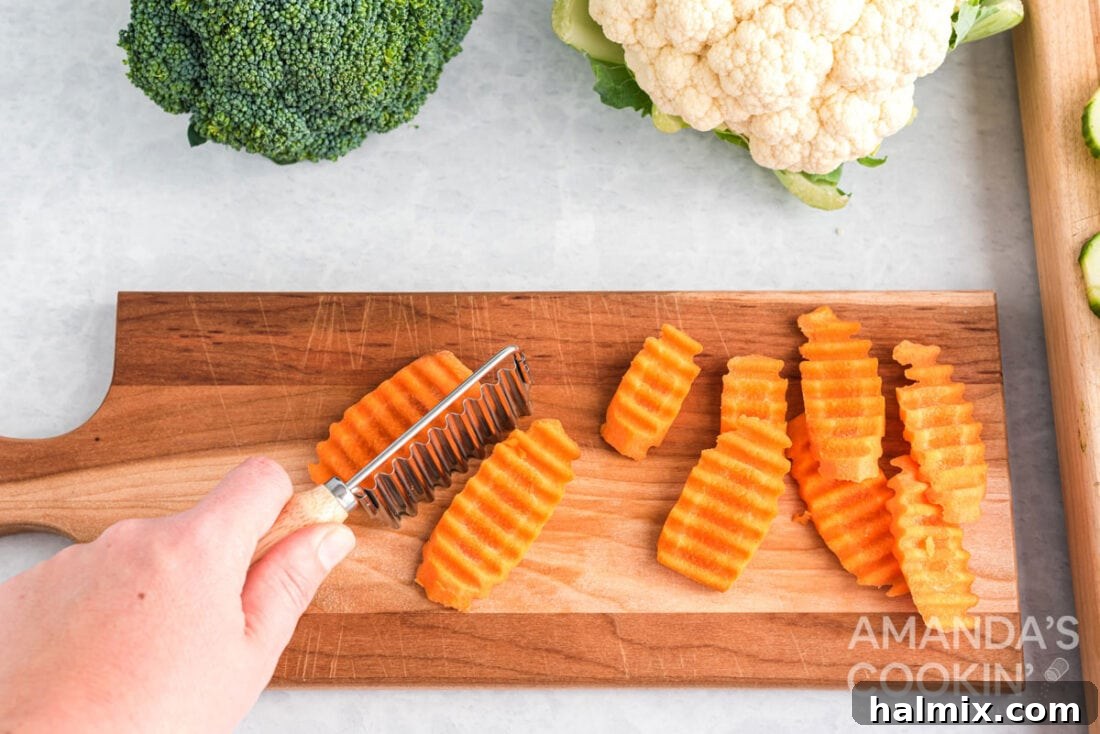
For a fun and engaging texture that’s particularly popular with children and adds visual interest, crinkle-cut carrots are a fantastic choice. After peeling your carrots and trimming both ends for a neat appearance, cut them in half lengthwise. Then, introduce a specialized kitchen tool: a potato crinkler (also widely known as a wavy cutter or crinkle knife). This tool is specifically designed to slice vegetables with attractive zigzag edges. Use it to slice the carrot halves crosswise into delightful wavy pieces. These crinkle-cut carrots not only look appealing and add a playful element to your platter but also provide a unique, satisfying mouthfeel that makes them irresistible.
Elegant Julienne Carrots
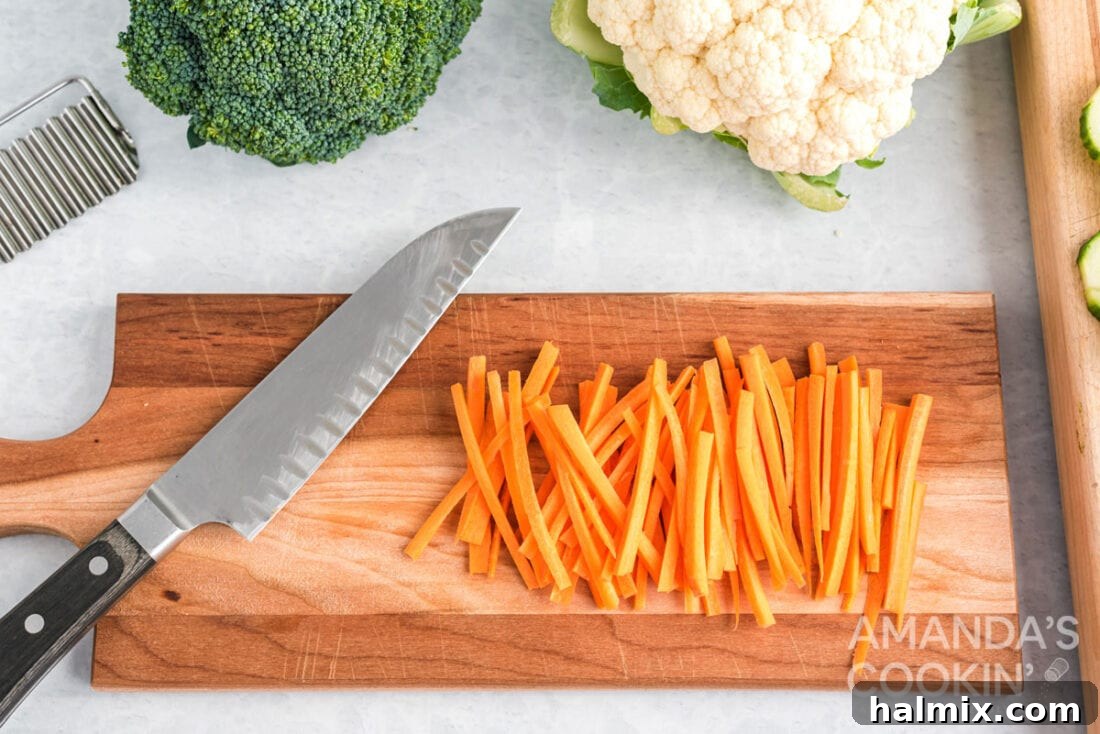
For a more refined and delicate presentation, julienned carrots are an excellent and classic option. After peeling your carrots and trimming the ends, meticulously slice them into thin, uniform strips, ideally about 1/4 inch thick and 2-3 inches long. Achieving this precision can be done with a sharp chef’s knife and careful technique, or for greater speed and impressive consistency, a mandoline slicer equipped with a julienne blade attachment works wonders. These slender, crisp carrot sticks are not only beautiful on a crudité platter but also integrate perfectly into elegant salads, fresh spring rolls, or vibrant stir-fries, adding a sophisticated touch to any dish.
Zucchini Hearts: A Touch of Whimsy and Charm
Zucchini, with its mild flavor, versatile texture, and beautiful green hue, is perfect for introducing whimsical shapes that surprise and delight your guests. This technique is particularly charming for family gatherings, romantic meals, Valentine’s Day celebrations, or delightful children’s parties.
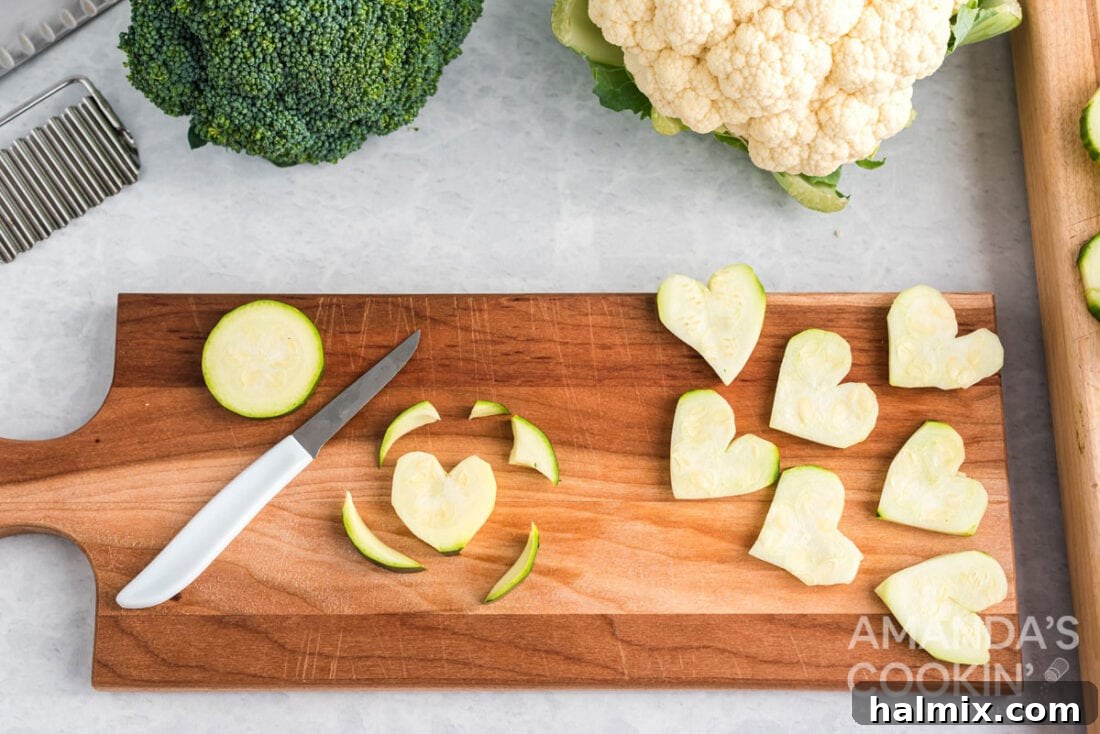
To create these adorable zucchini hearts, start by thoroughly washing a fresh zucchini and cutting off both ends. Then, slice the zucchini into even, 1/4-inch thick rounds. Once you have your rounds, use a small heart-shaped cookie cutter to press firmly into the center of each round, cutting out a perfect heart. If you don’t have a cookie cutter on hand, a small, sharp paring knife can be used to carefully carve out the heart shapes with a little patience. These delightful zucchini hearts add a delicate and thoughtful touch to any platter, salad, or even a simple sautéed vegetable mix. You can also experiment with other small cookie cutter shapes like stars, flowers, or leaves to match your occasion’s specific theme or just to add variety.
Radish Flowers: Nature’s Little Blooms for Your Platter
Radishes are known for their vibrant color and distinctive peppery bite, making them a fantastic addition to any fresh vegetable platter. But did you know they can also be transformed into stunning edible flowers that will truly amaze your guests? This intricate yet achievable technique requires a steady hand and a very sharp paring knife.
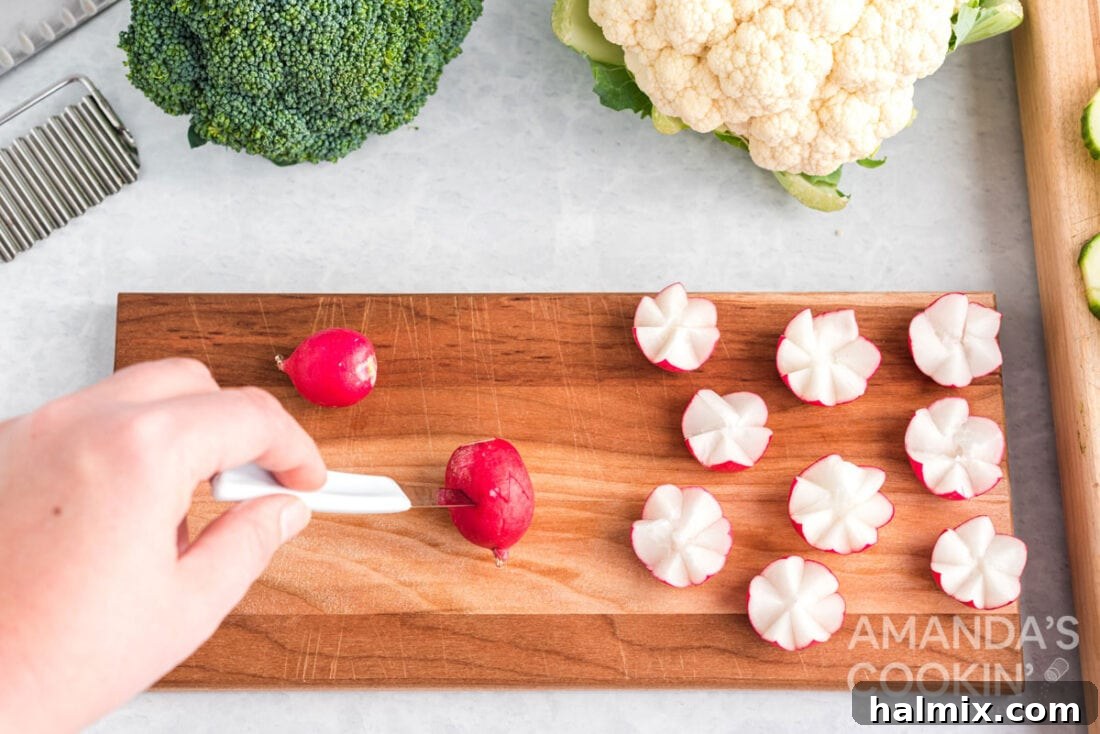
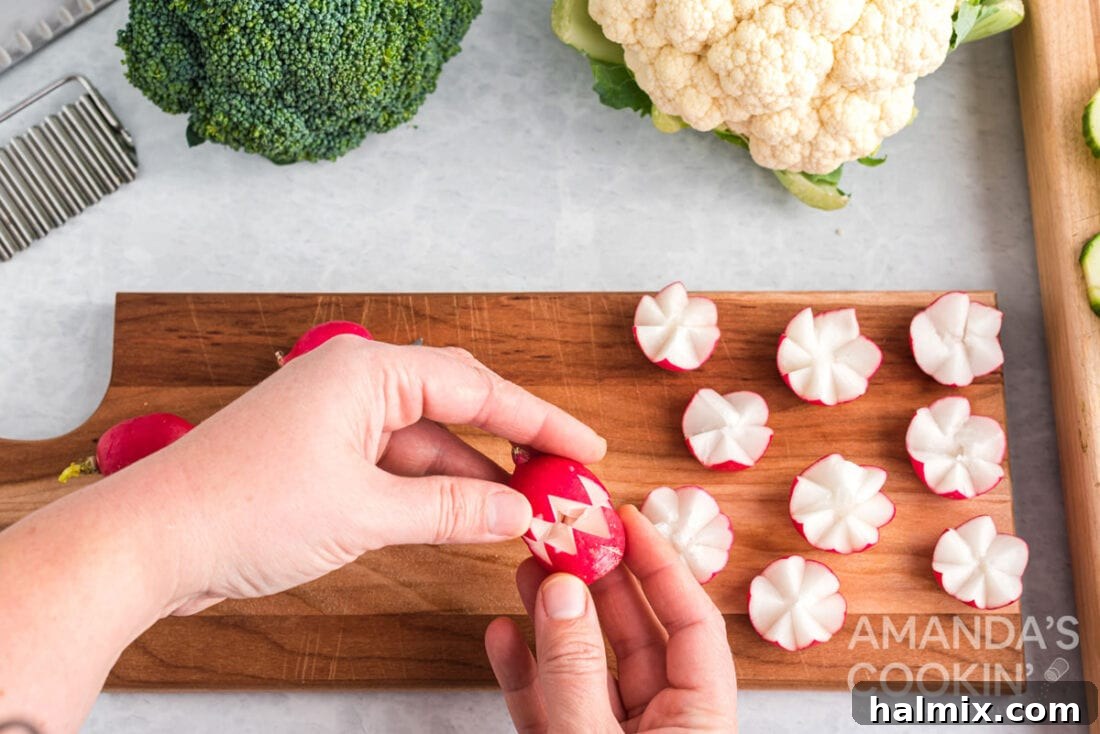
To make a beautiful radish flower, select a firm, round radish and wash it thoroughly. Trim the root end, leaving a small stem if possible, as this can add to the aesthetic. Holding the radish firmly and carefully, use the tip of your paring knife to make vertical zigzag cuts, starting from the top and going approximately halfway down towards the center of the radish. Continue these zigzag cuts all the way around the radish, ensuring each new cut precisely meets the previous one at the bottom, creating a delicate petal effect. Once all cuts are made, gently separate the two halves of the radish to reveal the “petals.” For the magical touch that makes them bloom, place these carved radishes into a bowl of iced water for about 30 minutes. The cold water will cause the “petals” to open and curl outwards, creating a beautiful, lifelike flower. These radish blooms are not just a garnish; they’re a vibrant, edible conversation starter that adds artistry to any plate.
Beyond the Cuts: Naturally Beautiful Vegetables and Serving Ideas
While creative cuts add undeniable flair, many vegetables offer their own inherent beauty that can be highlighted with minimal effort. The key to a stunning platter often lies in thoughtful selection and artful arrangement.
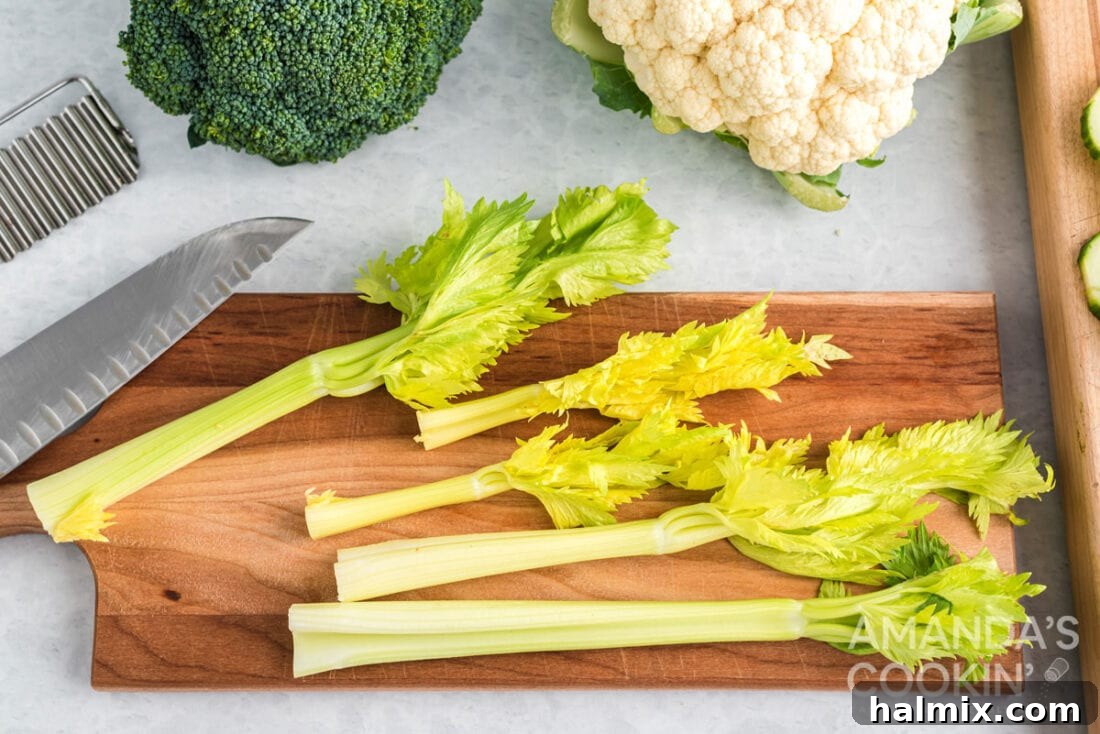
- Celery: For a rustic yet elegant look, don’t discard the leafy ends! Leaving them intact on your celery sticks adds a wonderful natural flourish and a touch of fresh green texture that enhances visual appeal. For an extra treat, consider filling the hollows of celery sticks with cream cheese, peanut butter, or a savory dip.
- Scallions (Green Onions): These slender, vibrant greens are elegant all on their own. For an extra decorative effect, trim the root ends and make several lengthwise cuts into the white and light green parts. Then, place them in iced water for 15-30 minutes, and watch as the cut ends beautifully fan out, resembling delicate, edible florets.
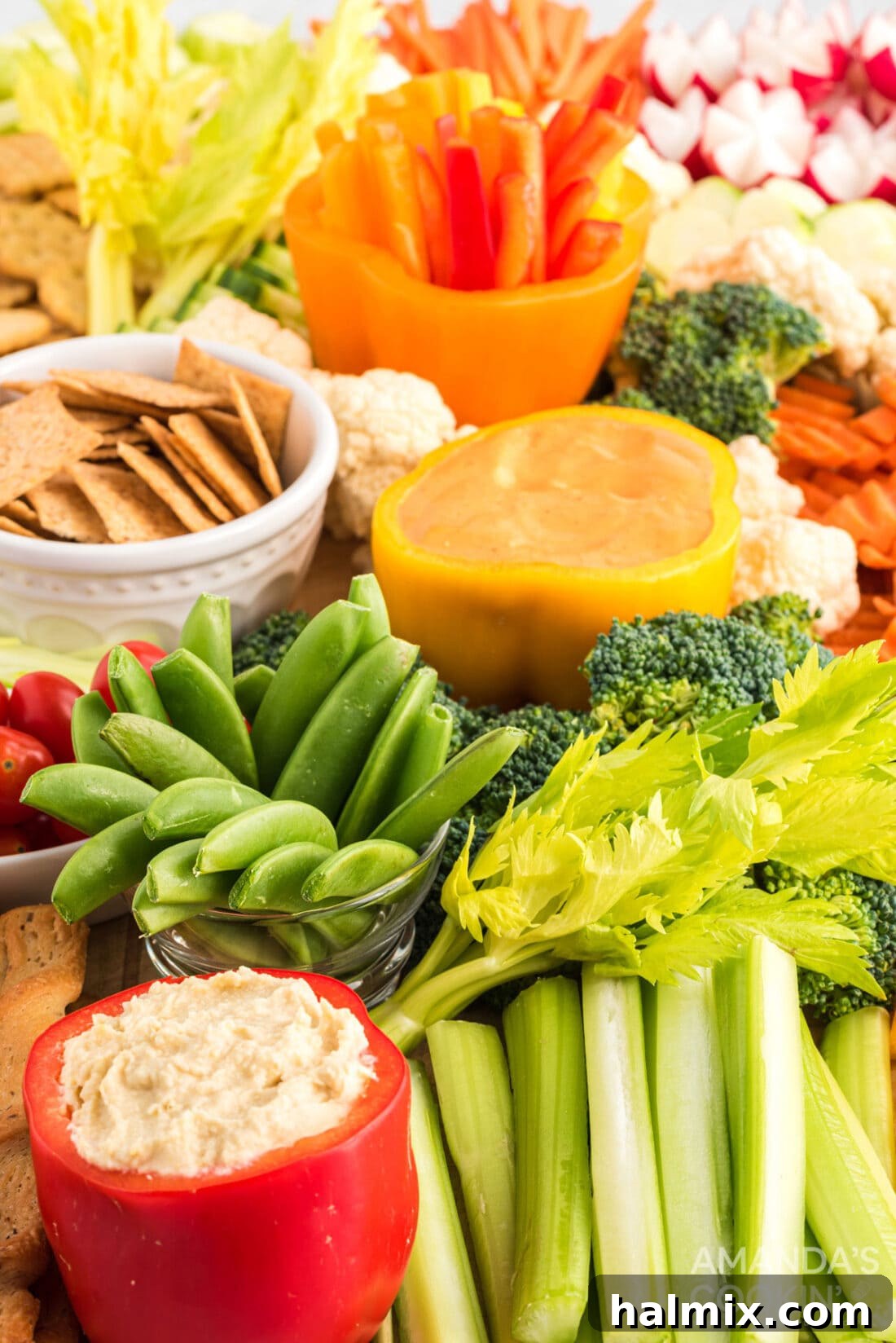
- Bell Peppers: Red, yellow, orange, and green bell peppers are superstars of color, crunch, and versatility. Simply slicing them into uniform strips, colorful rings, or playful triangles creates a beautiful medley that brightens any platter. Their various hues allow for fantastic color blocking or rainbow arrangements. For a more adventurous presentation, you can even use larger bell peppers as edible bowls!
- Cherry Tomatoes: Their small, round shape and bright, jewel-toned colors make cherry tomatoes inherently lovely and perfect for snacking. You can serve them whole, or for a sophisticated touch, slice them in half, gently scoop out the watery pulp, and fill them with a small spoonful of tuna salad, mini mozzarella pearls and fresh basil, or a savory herb-infused cream cheese mixture.
- Broccoli and Cauliflower Florets: These robust, nutritious vegetables need little dressing up. Simply break them into uniform, bite-sized spears or florets. For an even brighter color and slightly tender-crisp texture, you can lightly blanch them in boiling water for 1-2 minutes, then immediately plunge them into an ice bath to stop the cooking process and preserve their vibrant hue.
- Sliced Boiled Eggs: While not technically a vegetable, perfectly sliced hard-boiled eggs add a creamy texture, satisfying protein, and a beautiful color contrast to your platter. For an extra special touch, consider preparing simple deviled eggs with a sprinkle of paprika for added visual appeal.
Creative Serving Vessels: Edible Veggie Holders
Beyond arranging vegetables on a flat platter, consider using other vegetables as natural, edible serving containers. This ingenious idea adds an element of surprise, creativity, and sustainability to your presentation, making your display truly unique.
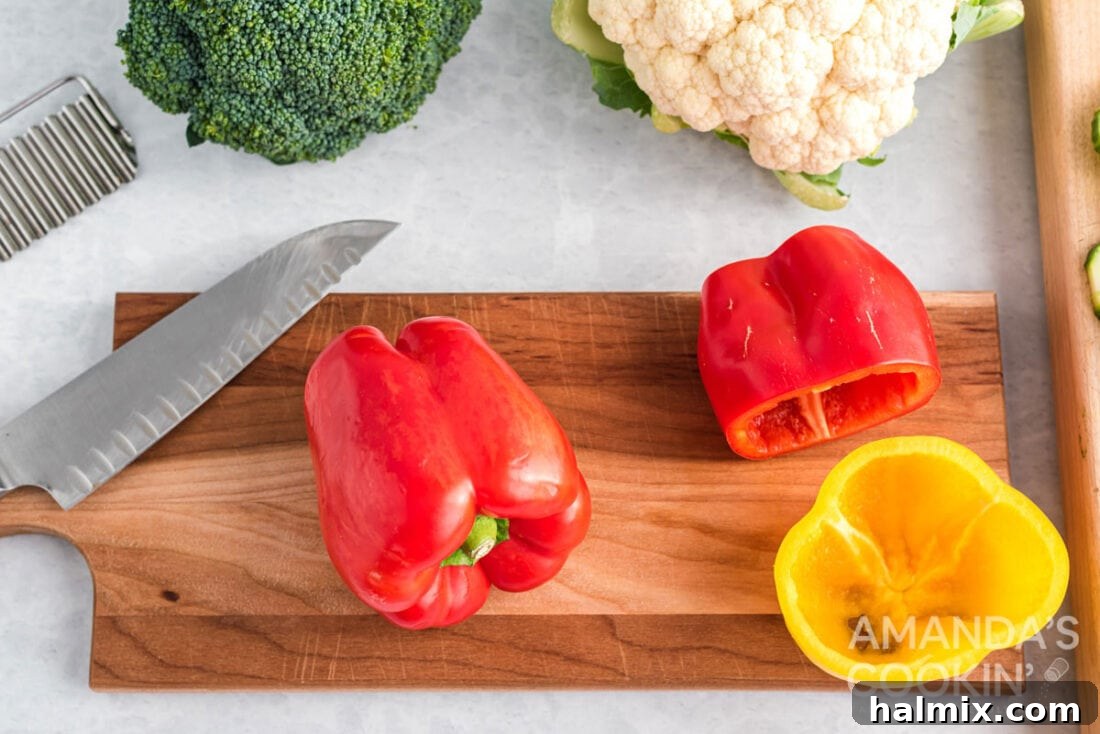
Yellow, red, and/or green bell peppers make fantastic, colorful accent pieces and practical serving vessels for your picnic or holiday table. To prepare, simply cut open the top of a firm, fresh bell pepper, remove the stem, and thoroughly clean out the seeds and membranes. You now have a vibrant pepper “cup” ready to be filled! Fill it with an assortment of sliced peppers of another color, crunchy celery sticks, elegant carrot spears, or even breadsticks. The contrast of colors and textures within the pepper holder is visually stunning and enticing. The possibilities for these natural veggie holders are truly endless—think hollowed-out small cabbages (especially for a rustic, farm-to-table theme), mini pumpkins (perfect for a fall or Halloween gathering), or even large cucumbers, all serving as charming, edible bowls for your crudités or dips.
The Grand Finale: Assembling Your Stunning Crudité Platter
Once your decorative vegetables are prepped and ready, the final step is arranging them artfully on your serving platter or board. This is where your creativity truly shines! Think about color, texture, and height as you place each component. Create inviting clusters of similar vegetables, or alternate colors for a vibrant rainbow effect that guides the eye. Don’t be afraid to stack or layer some pieces to add dimension and visual interest, making the platter look abundant and irresistible. A central bowl of dip, or several smaller bowls strategically placed, can act as an anchor around which you arrange your colorful creations.
As you can see, creating a gorgeous, healthy, and edible display is far from difficult. With a little practice, a few simple tools, and these easy-to-follow tips, you can transform ordinary produce into an impressive crudité platter that will undoubtedly wow your guests and elevate any meal or gathering. Embrace your inner artist, experiment with different vegetables and cuts, and most importantly, enjoy the process of making food beautiful and delicious!
Perfect Pairings: Delicious Dips for Your Veggie Tray
No decorative vegetable platter is complete without a selection of delicious dips to complement the fresh flavors and textures. Here are some fantastic recipes from Amanda’s Cookin’ to get you started, ensuring your crudité platter is a complete culinary success:
- Buttermilk Ranch Dressing
- Creamy Dill Dressing
- How to Make Hummus
- Cranberry Cheese Ball
- Baba Ganoush Hummus
- Creamy Onion Dip
- Gouda & Sun-Dried Tomato Cheese Ball
- Skinny French Onion Dip
I love to bake and cook and share my kitchen experience with all of you! Remembering to come back each day can be tough, that’s why I offer a convenient newsletter every time a new recipe posts. Simply subscribe and start receiving your free daily recipes!
How to Create Decorative Vegetables: A Step-by-Step Guide
Your guests will be wowed when you pull out a veggie tray full of gorgeous decorative vegetables. They aren’t hard to make, just follow our simple guide to impress with ease.
Ingredients for a Diverse Platter
- Cucumbers (English or regular)
- Carrots (various colors can add more appeal)
- Zucchini (green or yellow)
- Radishes (round, firm varieties)
- Bell Peppers (red, yellow, green, orange for color variation)
- Celery stalks
- Other vegetables as desired (e.g., cherry tomatoes, broccoli florets, cauliflower florets, scallions, sugar snap peas)
Essential Equipment You’ll Need
- Potato peeler (for cucumbers and carrots)
- Paring knife (essential for intricate cuts like radish flowers)
- Crinkle cutter (optional, for playful wavy cuts on carrots, potatoes, or zucchini)
- Small heart-shaped cookie cutter (optional, for zucchini or other soft vegetables)
- Sharp chef’s knife
- Cutting board
- Large bowl for iced water (for shocking vegetables and blooming radishes)
Detailed Instructions for Decorative Vegetable Preparation
1. Crafting Striped Cucumbers
- Thoroughly wash the cucumber and carefully trim both ends.
- Using a potato peeler, make one long, continuous strip all the way down the cucumber, removing the skin.
- Move over approximately the width of the peeled strip, intentionally leaving a band of green skin intact.
- Repeat this pattern of peeling a strip and leaving a strip until the entire cucumber is beautifully striped.
- Slice the striped cucumber into uniform 1/4-inch thick rounds for an elegant presentation.
2. Preparing Cored Cucumbers for Fillings
- Wash and peel the entire cucumber, then trim both ends.
- Slice the cucumber in half lengthwise.
- Gently scoop out the seeds and watery pulp using a spoon or a small knife, creating a clean, hollow channel.
- Slice the hollowed halves into 1/4-inch thick half-moon shapes, ready for your favorite fillings.
- (Optional “donut” slices): For a unique shape, cut the peeled cucumber into 2-3 inch segments. Carefully use a small round cookie cutter or paring knife to remove the center pulp from each segment. Then, slice these segments into 1/4-inch thick rings, resembling mini donuts.
3. Making Crinkle Carrots
- Peel the carrots and trim off both ends.
- Cut the carrots in half lengthwise to create a flat surface for cutting.
- Use a crinkle cutter (wavy cutter) to slice the carrot halves crosswise into attractive, playful crinkled pieces.
4. Creating Elegant Julienne Carrots
- Peel the carrots and trim off the ends.
- Slice the carrots into thin, uniform strips, approximately 1/4 inch thick and 2-3 inches long. For greater precision and speed, a mandoline with a julienne blade attachment can be very helpful.
5. Shaping Zucchini Hearts
- Wash the zucchini and cut off the ends. Slice it into even 1/4-inch thick rounds.
- Using a small heart-shaped cookie cutter, press firmly into the center of each zucchini round to cut out a perfect heart. Alternatively, a sharp paring knife can be used to carefully carve the shapes.
6. Blooming Radish Flowers
- Select a firm, round radish and wash it thoroughly, trimming the root end.
- Using a sharp paring knife, make vertical zigzag cuts halfway through the radish, starting from the top. Continue these cuts all the way around the radish’s center until the cuts meet, creating a petal effect.
- Gently separate the two halves of the radish to reveal the intricate petals.
- Place the carved radishes in a bowl of iced water for 30 minutes. The cold water will cause the petals to open and curl, creating a beautiful, lifelike flower.
7. Additional Vegetable Presentation Tips
- Celery: For a natural look, leave the leafy ends intact on your celery sticks.
- Scallions (Green Onions): To create a “flower” effect, make several lengthwise cuts into the white and light green parts of the scallions. Then, place them in iced water for 15-30 minutes; the cut ends will beautifully fan out.
- Bell Peppers: Slice into colorful strips, rings, or geometric shapes to add visual variety.
- Cherry Tomatoes: Serve whole for simplicity, or halve them and fill with a small spoonful of tuna salad, mozzarella pearls, or fresh herbs for an extra touch.
- Broccoli and Cauliflower: Break into uniform, bite-sized florets. For enhanced color and a tender-crisp texture, lightly blanch them in boiling water for 1-2 minutes, then immediately plunge into ice water to stop the cooking.
- Boiled Eggs: Slice hard-boiled eggs and arrange them for added protein and a contrasting creamy texture on your platter.
8. Crafting Edible Veggie Holders
- Choose large, firm bell peppers (yellow, red, or green for maximum visual impact).
- Carefully cut off the top of the pepper, remove the stem, and thoroughly clean out all seeds and membranes from the inside.
- Fill the hollowed pepper with an assortment of other sliced vegetables (e.g., contrasting colored pepper strips, crisp celery sticks, elegant carrot spears, or even breadsticks) to create a unique and appealing serving vessel.
The recipes and techniques shared in this guide are generally tested with standard kitchen appliances. It’s important to note that cooking and preparation times can vary based on individual appliance calibration, especially for ovens as they age. An inexpensive oven thermometer can help ensure accurate temperatures. When using countertop or specialized appliances like air fryers or slow cookers, adjustments to cooking times may be necessary. For baking recipes where specific measurements by weight are provided, using cup measurements instead may alter the outcome, and we cannot guarantee success with alternative measurement methods.