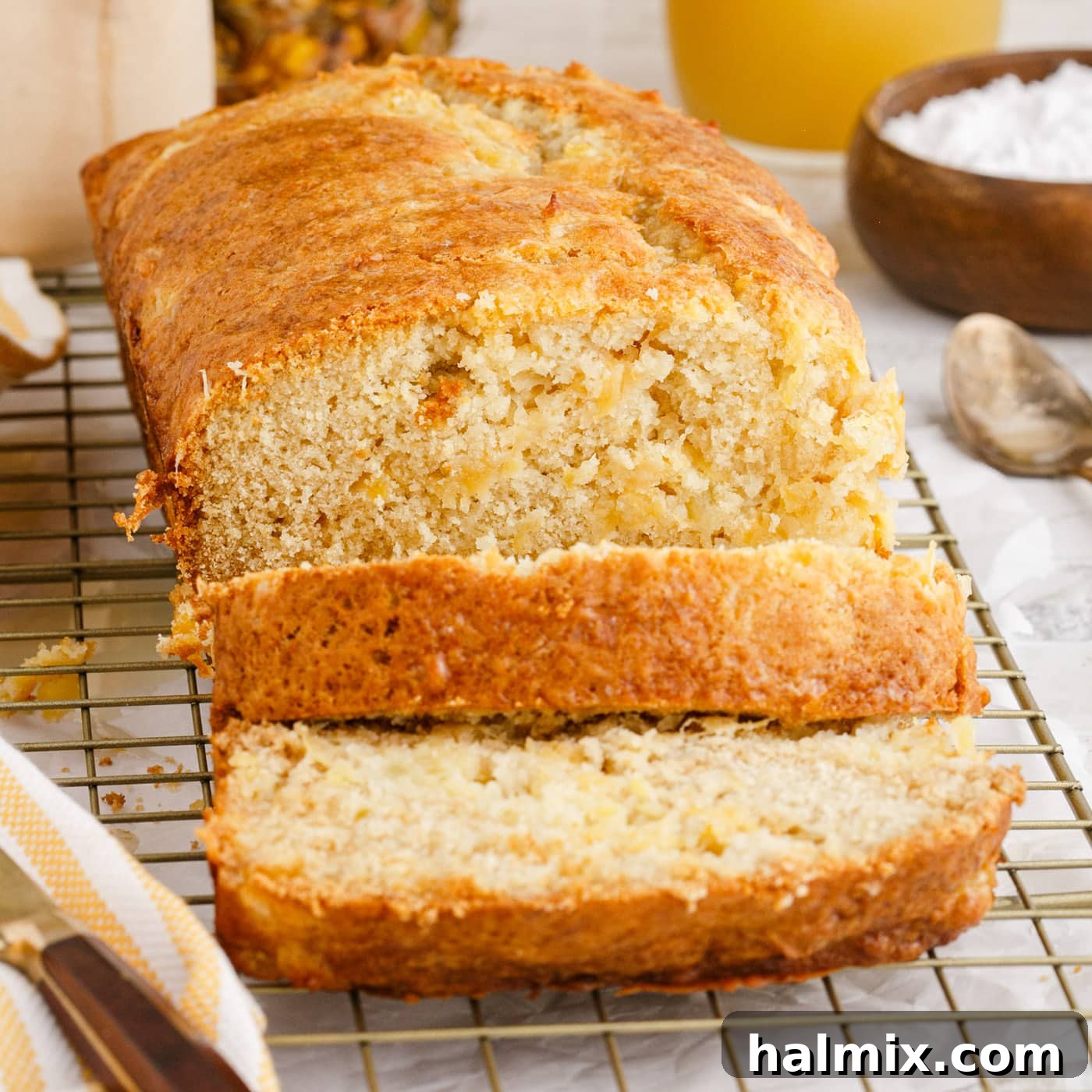
Delightfully Moist Pineapple Quick Bread: An Easy, No-Yeast Recipe for Any Occasion
Soft, incredibly moist, and bursting with tropical flavor, this pineapple quick bread is a true kitchen hero! Forget the fuss of yeast and lengthy rise times – this simple recipe comes together effortlessly, delivering a tender loaf perfect for breakfast, a delightful snack, or a sweet dessert. Crafted with luscious crushed pineapple and elegantly finished with a delicate pineapple glaze, every slice offers an irresistible taste of sunshine.
Why This Pineapple Quick Bread Recipe Works Every Time
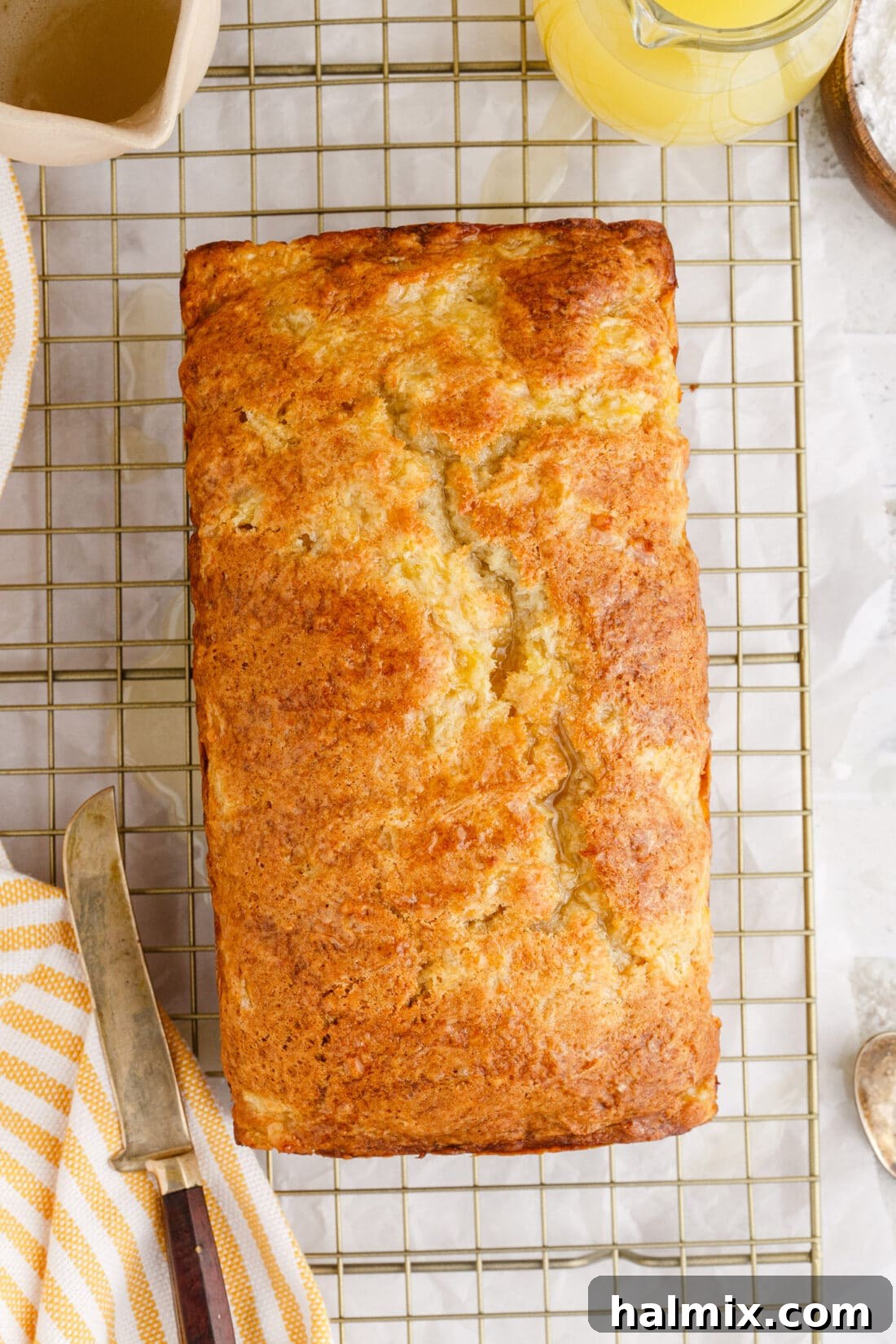
Our pineapple quick bread isn’t just easy to make; it’s designed for consistent success and maximum flavor. The magic lies in its carefully balanced ingredients and straightforward method. By incorporating both crushed pineapple and its reserved juices, we ensure an unparalleled level of moisture and a rich, authentic pineapple flavor that permeates every crumb of the loaf. This thoughtful inclusion prevents the bread from drying out, a common pitfall in some baking recipes, and instead creates a wonderfully tender texture.
At its heart, this recipe leverages the brilliance of “quick bread” baking. Unlike traditional yeast breads that demand hours of kneading and proofing, quick breads rely on chemical leavening agents like baking soda (and sometimes baking powder) to achieve their rise. This means you can whip up the batter in minutes, pop it into the oven, and enjoy a freshly baked loaf in a fraction of the time. There’s no waiting for dough to rise, making it an ideal choice for busy mornings or spontaneous baking urges. Our recipe specifically calls for baking soda, which reacts beautifully with the natural acidity of the pineapple, ensuring a perfect lift and an airy, yet substantial, texture. With just a few common kitchen staples, a trusty mixer, and a loaf pan, you’re just about 10 minutes of prep away from a truly delicious homemade treat. For more delightful quick bread ideas, explore our recipes for Cantaloupe Quick Bread and Peach Bread.
Essential Ingredients for Your Pineapple Quick Bread
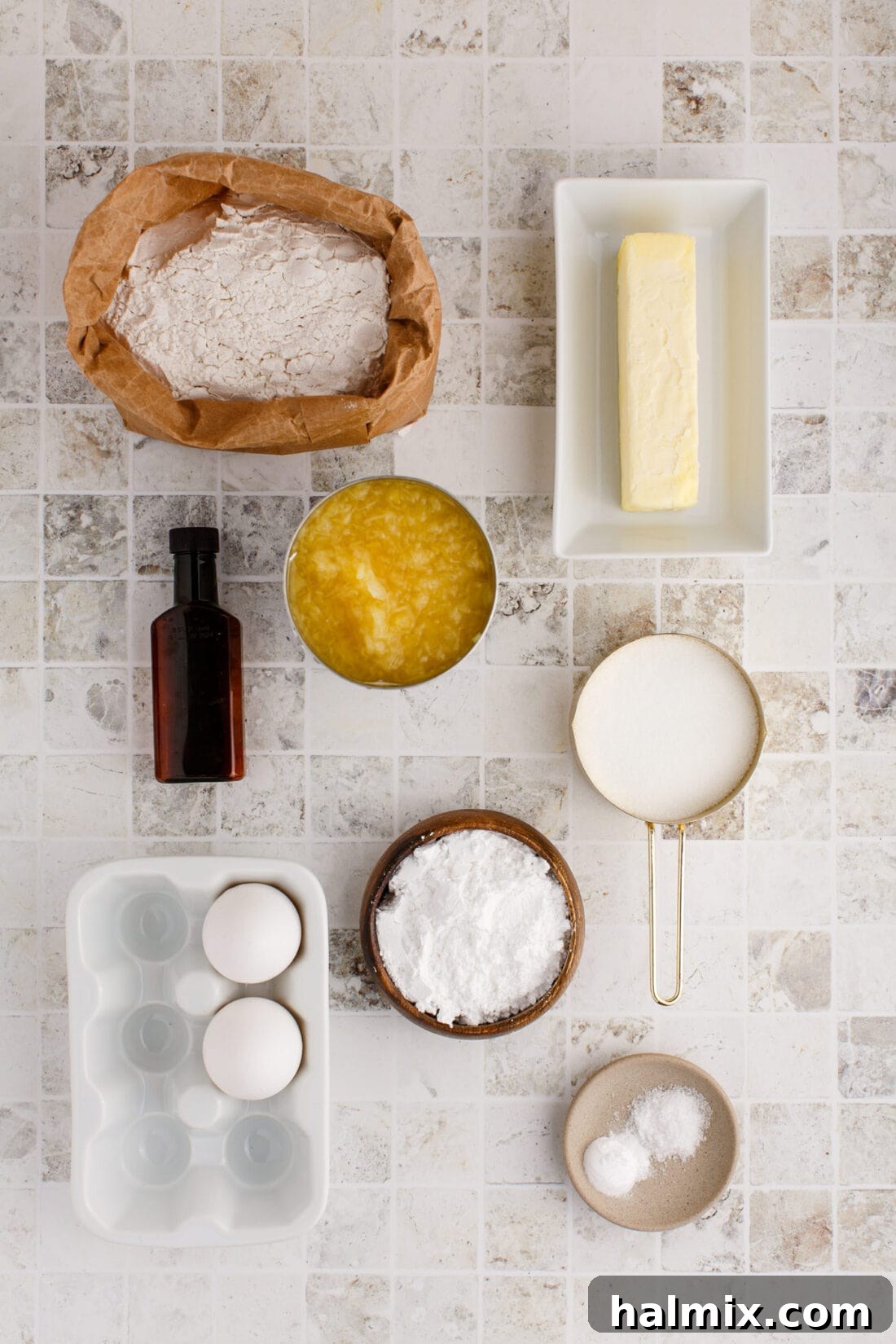
Creating this irresistible pineapple quick bread requires a selection of readily available ingredients, each playing a crucial role in achieving that perfect balance of flavor and texture. While the full, printable recipe with precise measurements is conveniently located at the end of this post, here’s a detailed look at the core components you’ll need to gather before you begin.
Ingredient Insights and Smart Substitution Suggestions
Understanding each ingredient’s role is key to baking success. Here are some detailed notes and helpful tips for the core components of your pineapple quick bread:
PINEAPPLE: We opt for canned crushed pineapple for its convenience and consistent moisture content. The “crushed” form is ideal as it disperses evenly throughout the batter, ensuring every bite is infused with pineapple flavor without creating large, watery pockets. A critical step is to drain the crushed pineapple thoroughly, making sure to reserve the precious juices for the glaze. The easiest way to achieve this is by using a fine mesh sieve or strainer. Gently press down on the pineapple with a spoon to encourage excess liquid release. While it doesn’t need to be bone-dry, removing most of the excess moisture is crucial. If the pineapple remains too wet, it can introduce too much liquid into the batter, potentially leading to a bread that sinks in the middle or doesn’t bake through completely, resulting in a gummy texture. This small step makes a significant difference in the final structure and doneness of your loaf.
ALL-PURPOSE FLOUR: The backbone of our quick bread, all-purpose flour provides the necessary structure. For best results, measure your flour correctly by spooning it into your measuring cup and leveling it off with a straight edge. Avoid scooping directly from the bag, as this can compact the flour and lead to an overly dense bread. Sifting the flour beforehand can also contribute to a lighter, airier texture.
BAKING SODA: This is our primary leavening agent, responsible for the bread’s rise and tender crumb. Baking soda reacts with acidic ingredients, like the pineapple juice, to produce carbon dioxide bubbles that lift the batter. Do not omit or substitute baking soda without consulting specific baking guidelines, as it’s vital for the quick bread’s characteristic texture. Ensure your baking soda is fresh for optimal performance; test it by adding a teaspoon to a bit of vinegar – it should fizz vigorously.
GRANULATED SUGAR: Beyond sweetness, sugar plays a role in moisture retention, browning, and tenderizing the bread. The amount specified creates a balanced sweetness, allowing the pineapple flavor to shine without being overly sugary. While you could slightly adjust the amount to your preference, significant changes might affect the bread’s texture.
UNSALTED BUTTER: Softened unsalted butter contributes rich flavor and a tender crumb. Using unsalted butter allows you to control the total salt content in the recipe. Ensure it’s truly softened (room temperature) for proper creaming with the sugar, which creates tiny air pockets essential for the bread’s texture. If your butter isn’t soft, you can quickly soften it by cutting it into cubes and letting it sit for a few minutes, or using a microwave on a very low setting for short bursts.
LARGE EGGS: Eggs act as a binder, provide structure, and add moisture and richness. Using large eggs at room temperature helps them incorporate more evenly into the batter, creating a smoother emulsion and a better final texture. If you forget to take them out ahead of time, place them in a bowl of warm water for 5-10 minutes.
PURE VANILLA EXTRACT: A touch of pure vanilla extract enhances the overall flavor profile, complementing the sweetness of the pineapple and adding depth to the bread. Avoid imitation vanilla for the best taste.
SEA SALT: A small amount of sea salt balances the sweetness and enhances all the other flavors in the bread. Don’t skip it!
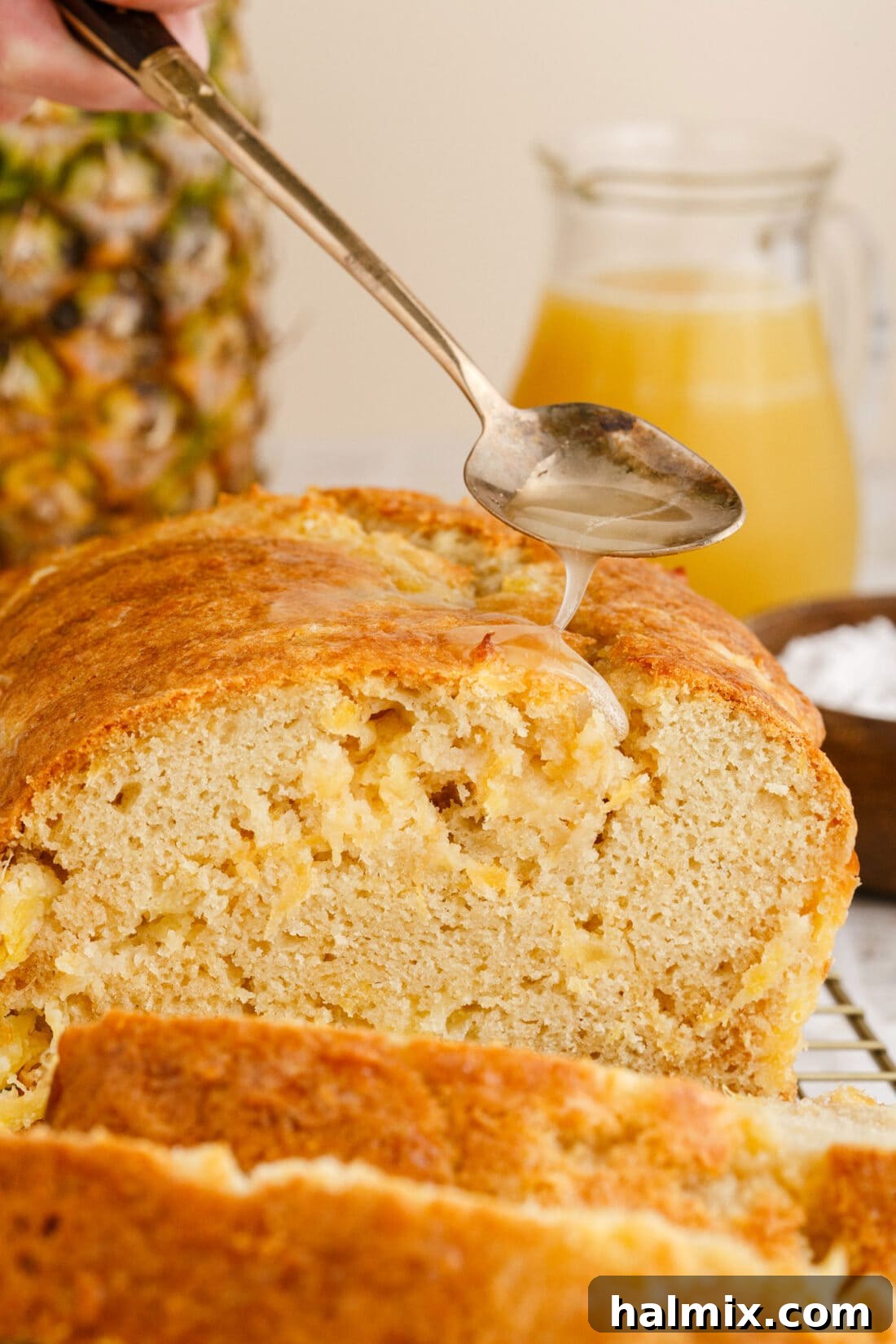
PINEAPPLE GLAZE: This recipe yields a light, delicate glaze that adds a perfect touch of sweetness and a hint of extra pineapple flavor. For those who prefer a thicker, more opaque glaze, use the given recipe as a starting point and gradually incorporate an additional tablespoon of powdered sugar at a time until you achieve your desired consistency. Remember to add the reserved pineapple juice slowly to reach the ideal pourable, yet thick, texture. This glaze elevates the bread from delicious to truly extraordinary.
How to Make Irresistible Pineapple Quick Bread
Crafting this moist and flavorful pineapple quick bread is a straightforward process, even for novice bakers. Follow these detailed steps to ensure a perfect loaf every time. These instructions are designed to guide you visually and practically through each stage of the recipe. For the full printable version of the recipe, complete with precise measurements and comprehensive instructions, please refer to the dedicated recipe card section further down this page.
- Prepare Your Pan and Oven: Begin by preheating your oven to 350°F (175°C). While the oven heats, generously grease a 9×5 inch loaf pan. For extra insurance against sticking and effortless removal, consider lining the pan with parchment paper, leaving enough overhang on the longer sides to create “handles.” This simple trick makes lifting the finished loaf out of the pan incredibly easy.
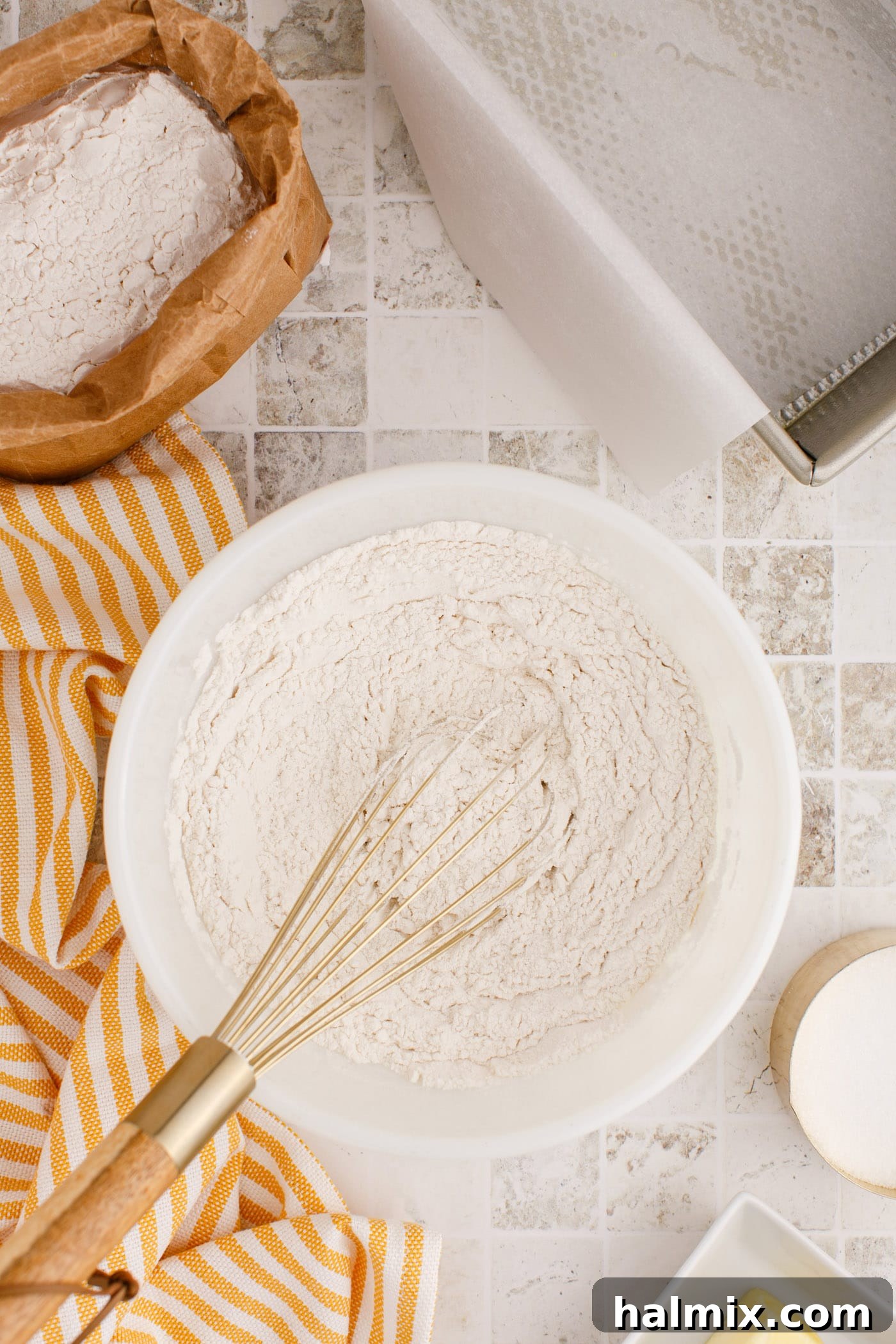
- Combine Dry Ingredients: In a medium-sized bowl, whisk together the all-purpose flour, baking soda, and sea salt. Whisking ensures that the leavening agent and salt are evenly distributed throughout the flour, which is crucial for a consistent rise and flavor in your quick bread. Set this mixture aside.
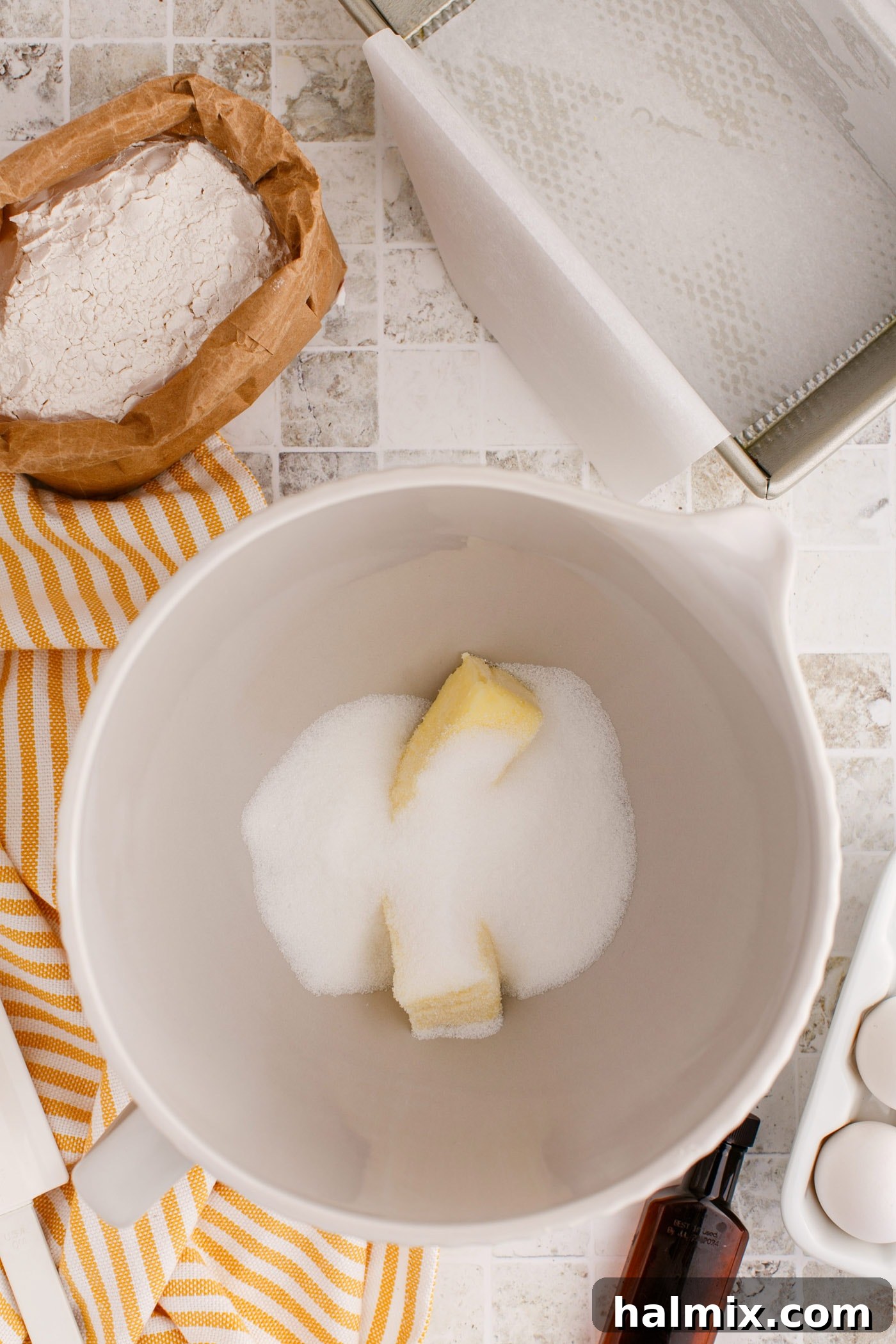
- Cream Butter and Sugar: Using a stand mixer fitted with the paddle attachment, or a hand mixer, cream together the softened unsalted butter and granulated sugar on low to medium speed. Continue mixing for about 5 minutes, or until the mixture becomes light, fluffy, and pale in color. This creaming process incorporates air into the butter, contributing to the bread’s tender texture.
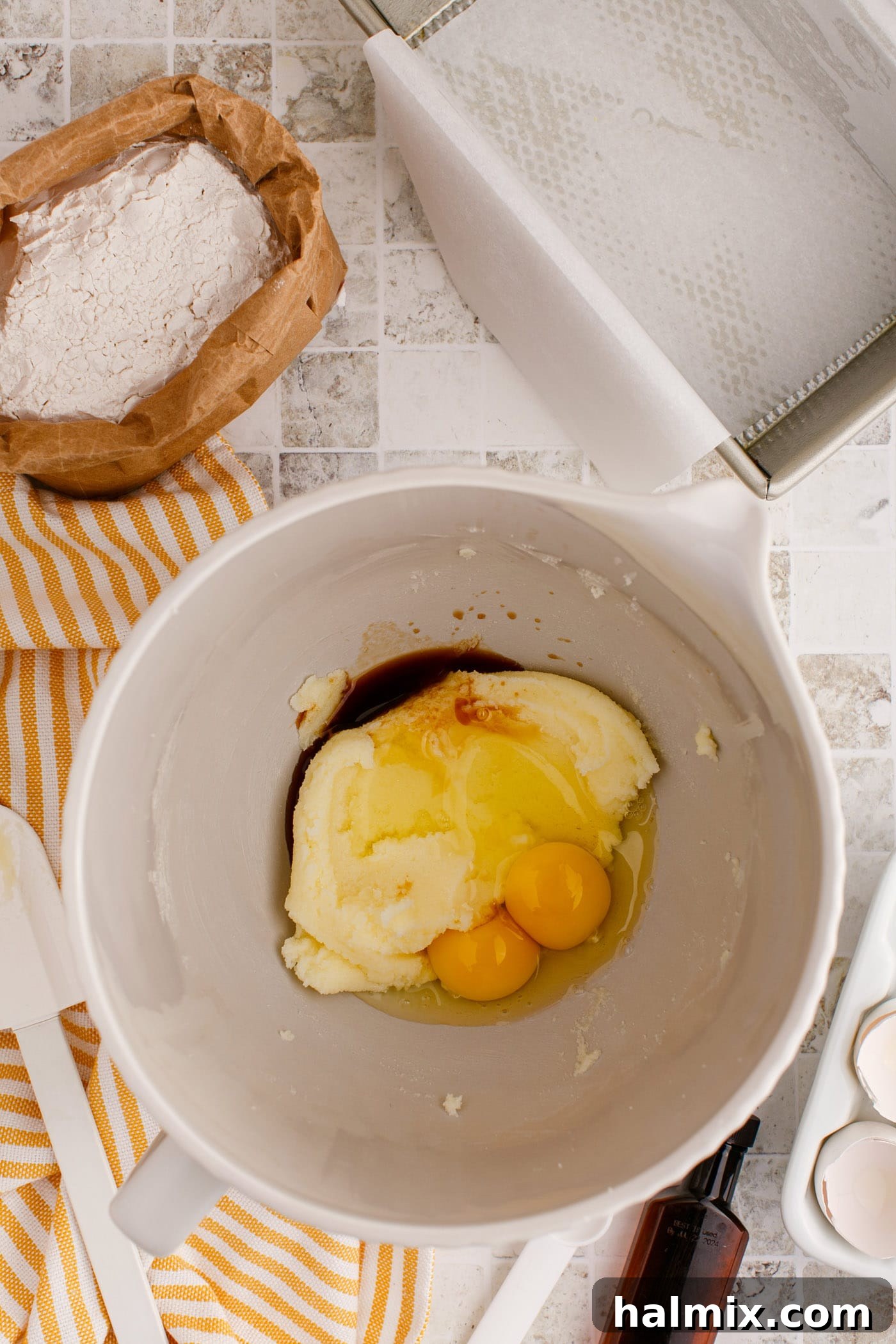
- Incorporate Wet Ingredients: Add the large eggs, one at a time, mixing well after each addition until fully incorporated. Then, stir in the pure vanilla extract. Continue mixing on the lowest setting for another minute, ensuring all wet ingredients are smoothly blended into the butter and sugar mixture.
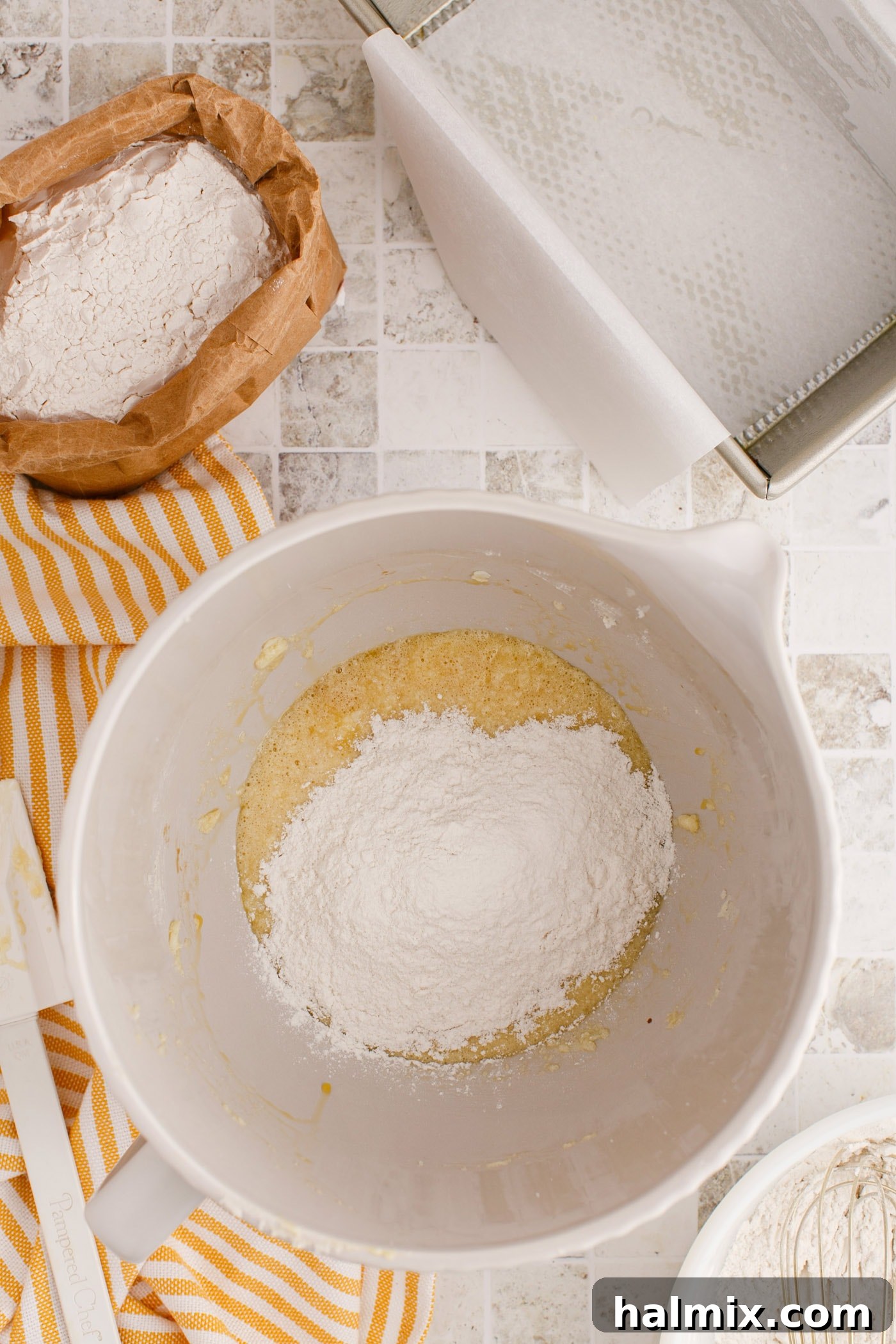
- Gradually Add Dry Ingredients: With the mixer on its lowest speed, slowly add the flour mixture to the wet ingredients. Mix just until combined. Be careful not to overmix; overmixing can develop the gluten in the flour too much, leading to a tough and dense bread. Use a spatula to scrape down the sides and bottom of the mixing bowl, ensuring all ingredients are evenly incorporated without excessive blending.
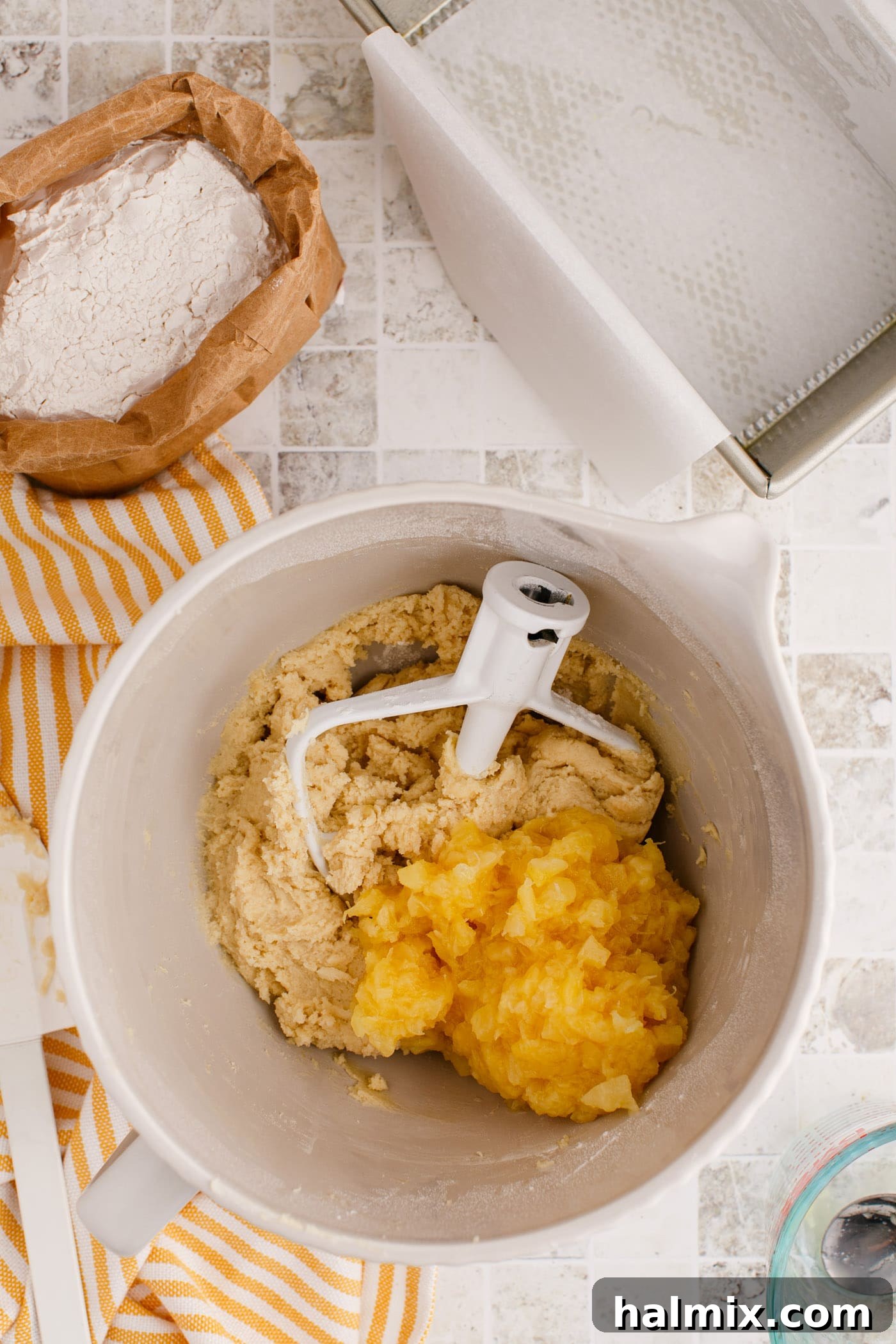
- Fold in Pineapple: Gently fold in the well-drained crushed pineapple. You can do this by hand with a spatula to prevent overmixing. Mix just enough until the pineapple is evenly distributed throughout the batter. Remember, excess liquid from the pineapple can prevent the bread from baking properly, so ensuring it’s well-drained is important.
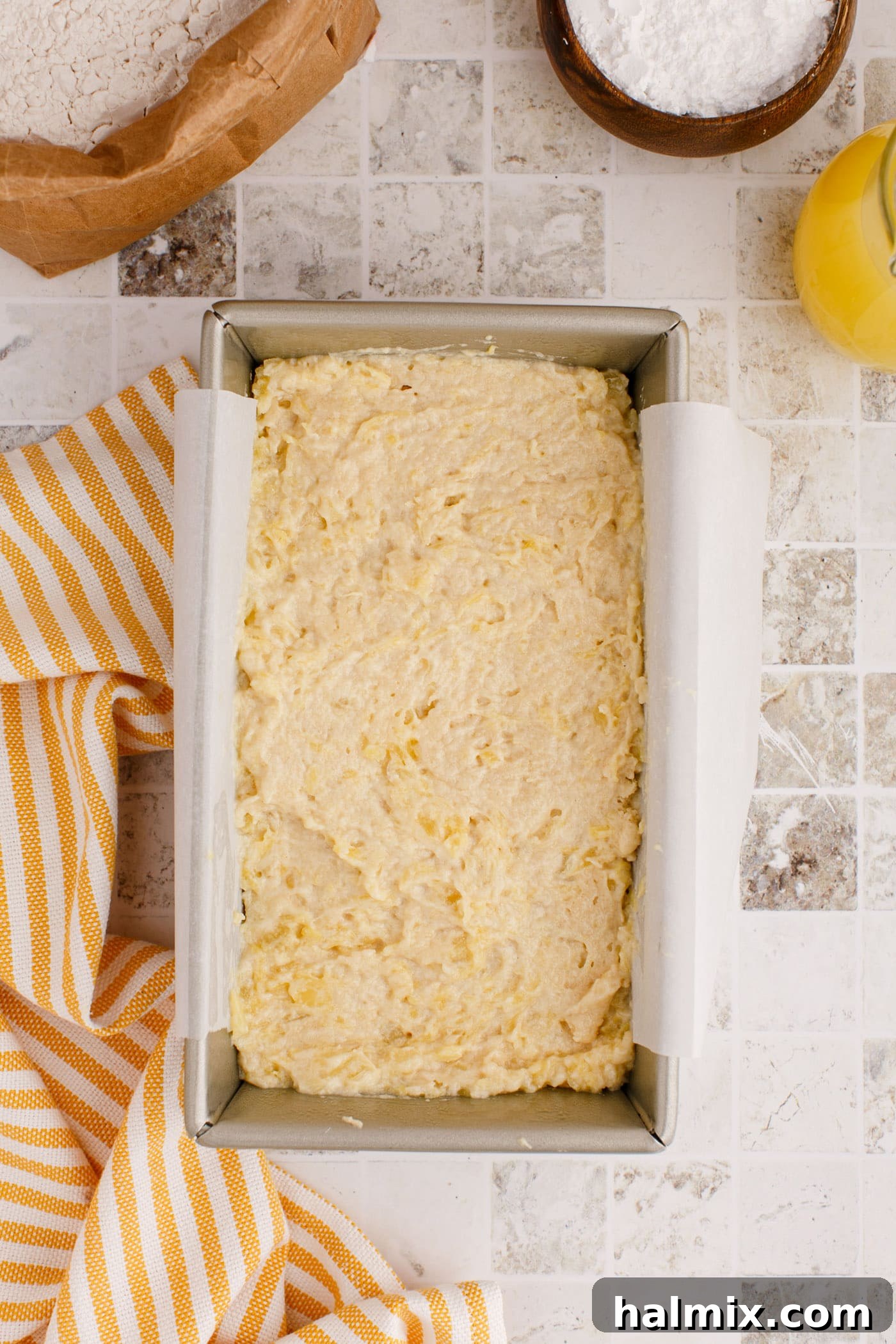
- Prepare for Baking: Pour the prepared batter into your greased (and optionally parchment-lined) loaf pan. Use your spatula to spread the batter evenly, creating a flat top.
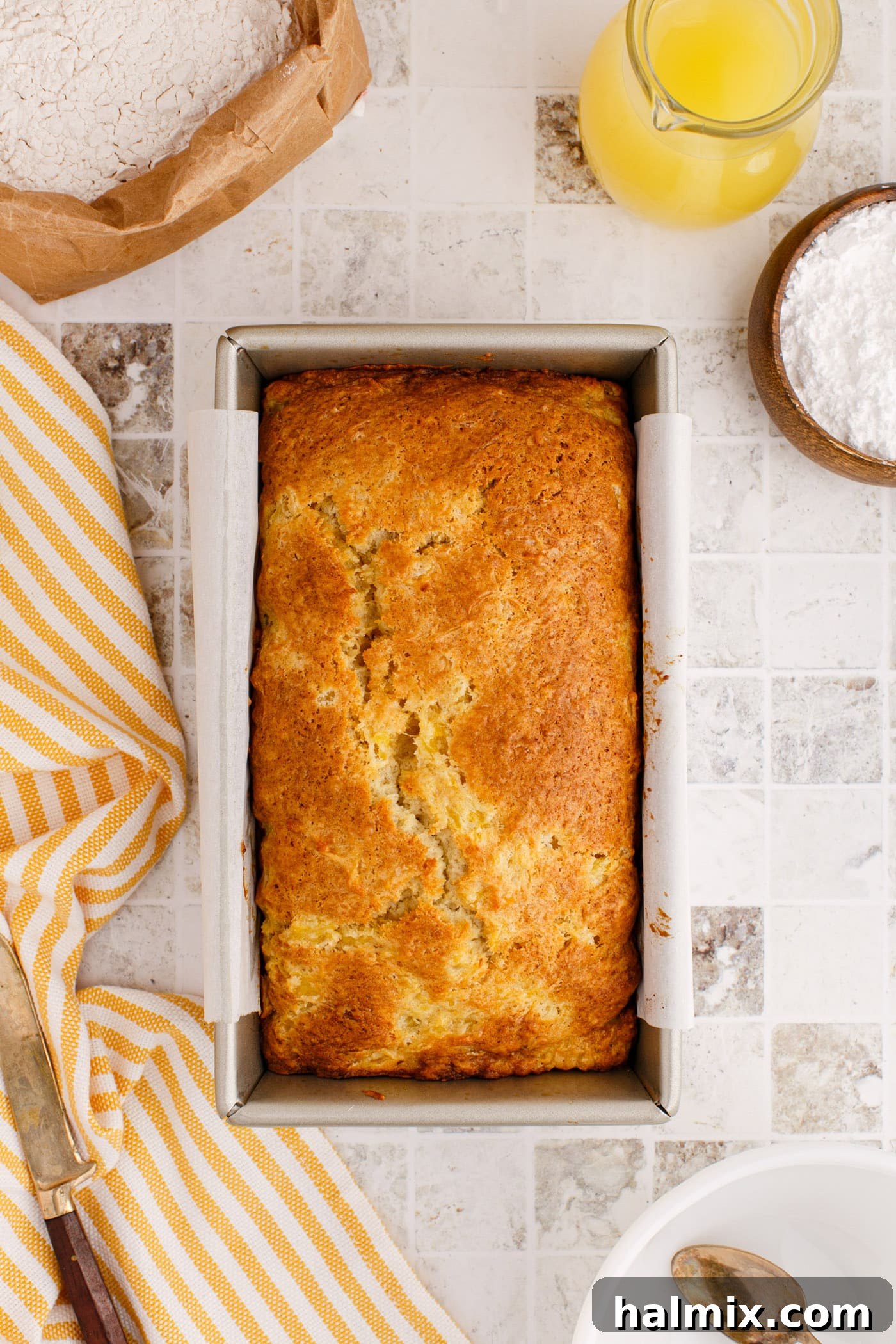
- Bake to Perfection: Place the loaf pan in the preheated oven and bake for approximately 55 minutes. Baking times can vary depending on your oven, so keep an eye on it. The bread is done when a wooden skewer or toothpick inserted into the center comes out clean or with only a few moist crumbs attached.
- Cool Before Removing: Once baked, remove the loaf pan from the oven and let the bread cool completely in the pan on a wire rack. This step is crucial; allowing it to cool in the pan prevents it from collapsing and helps it retain moisture. Attempting to remove it too soon can result in a broken or misshapen loaf.
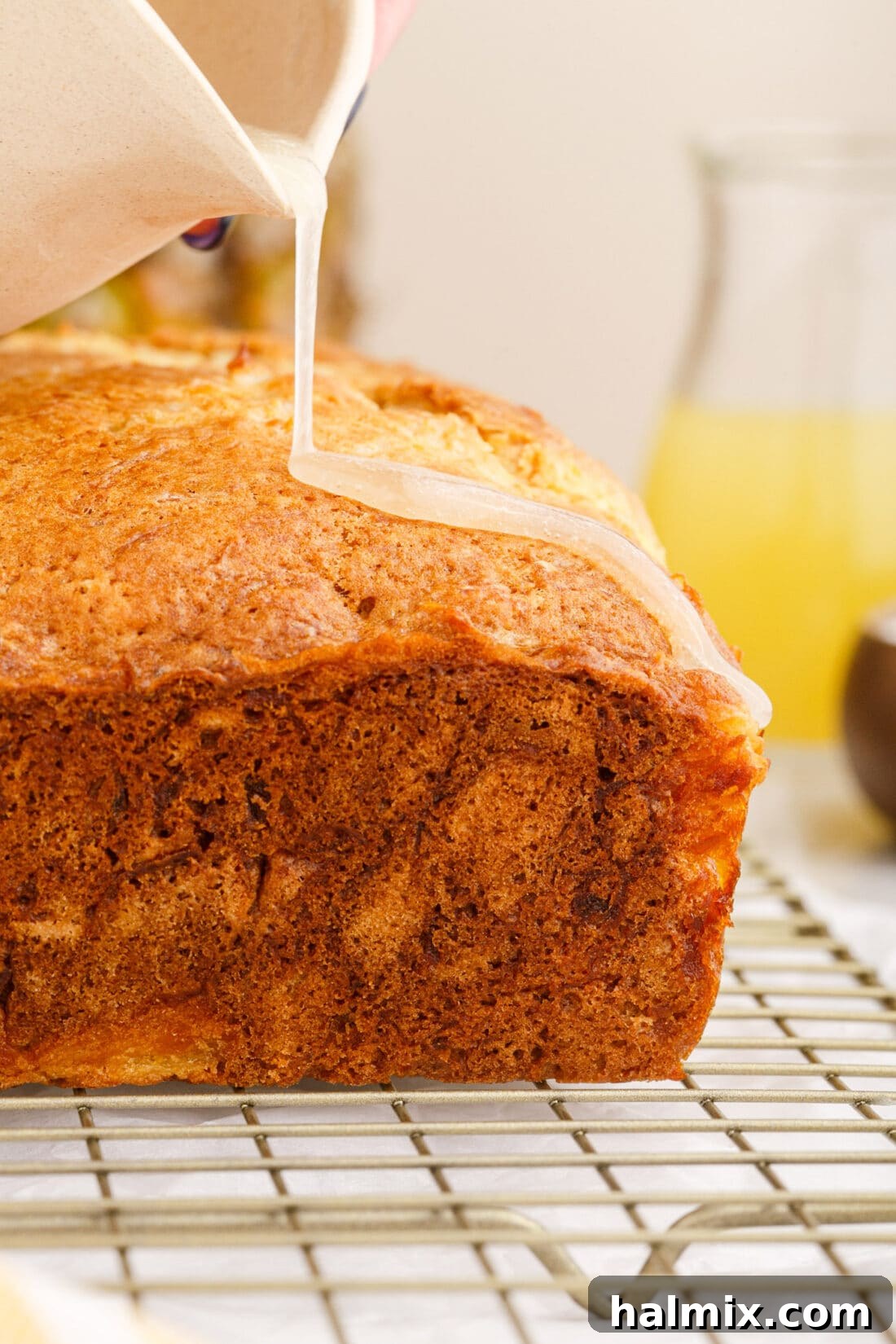
- Prepare and Apply Glaze: Once the loaf is completely cool, carefully remove it from the pan. In a small bowl, whisk together the powdered sugar and the reserved pineapple juice until smooth. The glaze should be pourable but still have some body. Drizzle the glaze generously over the top of the cooled pineapple quick bread. Allow the glaze to set slightly before slicing and serving.
Frequently Asked Questions & Expert Baking Tips
To maintain its delightful softness and moisture, wrap your pineapple quick bread tightly in plastic wrap. You can also place it in an airtight container. Store the wrapped bread at room temperature in a cool, dry place. It will stay fresh and delicious for 3-4 days. It’s generally best to avoid storing quick breads in the refrigerator, as the cold air can dry them out prematurely and alter their texture.
Absolutely! This pineapple quick bread freezes exceptionally well, making it perfect for meal prep or enjoying later. To freeze, ensure the loaf is completely cooled. For best results, wrap the entire loaf (or individual slices for convenience) tightly in plastic wrap, followed by a layer of aluminum foil. This double layer helps prevent freezer burn. Place the well-wrapped bread into a large, freezer-safe ziptop bag. It can be frozen for up to 3 months. To thaw, simply remove the bread from the freezer and let it come to room temperature on your countertop. You can also gently warm individual slices in the toaster or microwave.
A sunken quick bread often indicates too much moisture or an oven temperature issue. For this recipe, ensure your crushed pineapple is very well drained. Excess liquid from the fruit can weigh down the batter and prevent it from cooking through. Also, avoid opening the oven door too frequently during baking, especially in the first 30 minutes, as sudden temperature drops can cause the center to collapse. Lastly, ensure your baking soda is fresh, as an expired leavening agent won’t provide adequate lift.
Yes, absolutely! This pineapple quick bread is wonderfully adaptable. For an added textural element, you can fold in about 1/2 to 3/4 cup of chopped walnuts, pecans, or shredded coconut along with the crushed pineapple in step 6. Toasted nuts or coconut will offer an even deeper flavor. These additions can transform the bread into a more elaborate treat, but remember to keep the total amount of add-ins reasonable to maintain the loaf’s structure.
The best way to check for doneness is by inserting a wooden skewer or toothpick into the very center of the loaf. If it comes out clean or with only a few moist crumbs attached, your bread is ready. If it comes out wet with raw batter, it needs more time. The top should be golden brown and spring back lightly when gently pressed. Using an oven thermometer can also help ensure your oven is truly at the correct temperature, as inconsistent oven temperatures are a common cause of under or over-baking.
Versatile Serving Suggestions
The beauty of this pineapple quick bread lies in its incredible versatility. It’s truly a delight at any time of day! Enjoy a thick slice alongside your morning coffee or tea for a comforting start. It makes for an excellent mid-afternoon snack, offering a sweet pick-me-up. Or, elevate it to a simple yet satisfying dessert. For an extra treat, try popping a slice into the toaster for a few minutes; the warmth enhances its aroma and tenderness. You can also serve it with a dollop of cream cheese, a sprinkle of powdered sugar, or even a scoop of vanilla ice cream for a more decadent dessert experience. Its subtly sweet and tangy flavor pairs wonderfully with a variety of accompaniments.
Explore More Delicious Quick Bread Recipes
If you’ve fallen in love with the ease and flavor of this pineapple quick bread, you’re in for a treat! Quick breads are incredibly versatile and simple to master, making them perfect for any baker. Here are some other fantastic quick bread recipes to add to your repertoire:
- Classic Banana Bread: A timeless favorite, rich and moist with ripe bananas.
- Starbucks Copycat Lemon Loaf: Recreate that iconic zesty and sweet bakery treat at home.
- Decadent Chocolate Zucchini Bread: A clever way to sneak in veggies, offering a moist, chocolatey delight.
- Bright Lemon Blueberry Zucchini Bread: A refreshing combination of tangy lemon and sweet blueberries with the added goodness of zucchini.
- Comforting Apple Bread: Packed with warm spices and tender apple pieces, perfect for autumn.
I genuinely love to bake and cook, and my greatest joy is sharing my kitchen experiences and successful recipes with all of you! Remembering to check back for new recipes can sometimes be a challenge amidst our busy lives, which is why I offer a convenient newsletter. Simply subscribe today and start receiving free daily recipes delivered straight to your inbox, ensuring you never miss a delicious idea!
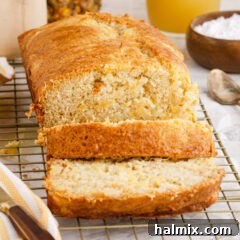
Pineapple Quick Bread
IMPORTANT – There are often Frequently Asked Questions within the blog post that you may find helpful. Simply scroll back up to read them!
Print It
Pin It
Ingredients
- 2 cups all-purpose flour
- 1 teaspoon baking soda
- ½ teaspoon sea salt
- ¾ cup granulated sugar
- ½ cup unsalted butter softened
- 2 large eggs
- 2 teaspoons pure vanilla extract
- 19 ounces crushed pineapple drained well but not completely dry (save juice for glaze)
Pineapple Glaze
- 6 teaspoons powdered sugar
- 2 Tablespoons reserved pineapple juice
Things You’ll Need
-
9×5 loaf pan
-
Stand mixer or hand mixer
-
Wire cooling rack
-
Whisk
Before You Begin
- Be sure to drain your crushed pineapple through a fine mesh sieve to remove as much excess liquid as possible. It does not need to be dry, but should be mostly drained so it isn’t soaking wet. Press the crushed pineapple down with a spoon in the sieve to release excess moisture. If you do not drain enough of the liquid, your bread will have trouble baking all the way through or may sink.
- This recipe makes a thin glaze. For a thicker glaze, use this as a base and add an additional tablespoon of powdered sugar at a time until you achieve your desired consistency.
Instructions
-
Preheat oven to 350°F (175°C) and grease a 9×5 inch loaf pan. Adding parchment paper with high sides will allow the loaf to come out easily as well.
-
In a medium bowl, whisk together all-purpose flour, baking soda, and sea salt.
-
In a stand mixer, cream together granulated sugar and unsalted butter with the paddle attachment on low-medium for about 5 minutes, until light and fluffy.
-
Add in eggs and pure vanilla extract and mix for another minute on the lowest setting, until well combined.
-
Slowly add in the flour mixture, mixing on low speed just until combined. Be sure to scrape the bottom and sides of the mixing bowl with a spatula to incorporate all ingredients evenly without overmixing.
-
Add the well-drained crushed pineapple and gently fold it into the batter using a spatula, mixing just until blended.
-
Pour the batter into the greased loaf pan and spread evenly with a spatula.
-
Bake for about 55 minutes, or until a wooden skewer inserted into the center comes out clean.
-
Cool the loaf completely in the pan on a wire rack before attempting to remove it.
-
Once cooled, remove the loaf from the pan. Prepare your glaze by adding powdered sugar and reserved pineapple juice into a small bowl and mixing well until smooth. Drizzle over the cooled bread.
Nutrition
Calories: 285 cal
Carbohydrates: 44 g
Protein: 4 g
Fat: 11 g
Saturated Fat: 6 g
Polyunsaturated Fat: 1 g
Monounsaturated Fat: 3 g
Trans Fat: 0.4 g
Cholesterol: 62 mg
Sodium: 243 mg
Potassium: 115 mg
Fiber: 1 g
Sugar: 24 g
Vitamin A: 365 IU
Vitamin C: 5 mg
Calcium: 21 mg
Iron: 2 mg
Tried this Recipe? Pin it for Later!
Follow on Pinterest @AmandasCookin or tag #AmandasCookin!
The recipes on this blog are tested with a conventional gas oven and gas stovetop. It’s important to note that some ovens, especially as they age, can cook and bake inconsistently. Using an inexpensive oven thermometer can assure you that your oven is truly heating to the proper temperature. If you use a toaster oven or countertop oven, please keep in mind that they may not distribute heat the same as a conventional full sized oven and you may need to adjust your cooking/baking times. In the case of recipes made with a pressure cooker, air fryer, slow cooker, or other appliance, a link to the appliances we use is listed within each respective recipe. For baking recipes where measurements are given by weight, please note that results may not be the same if cups are used instead, and we can’t guarantee success with that method.