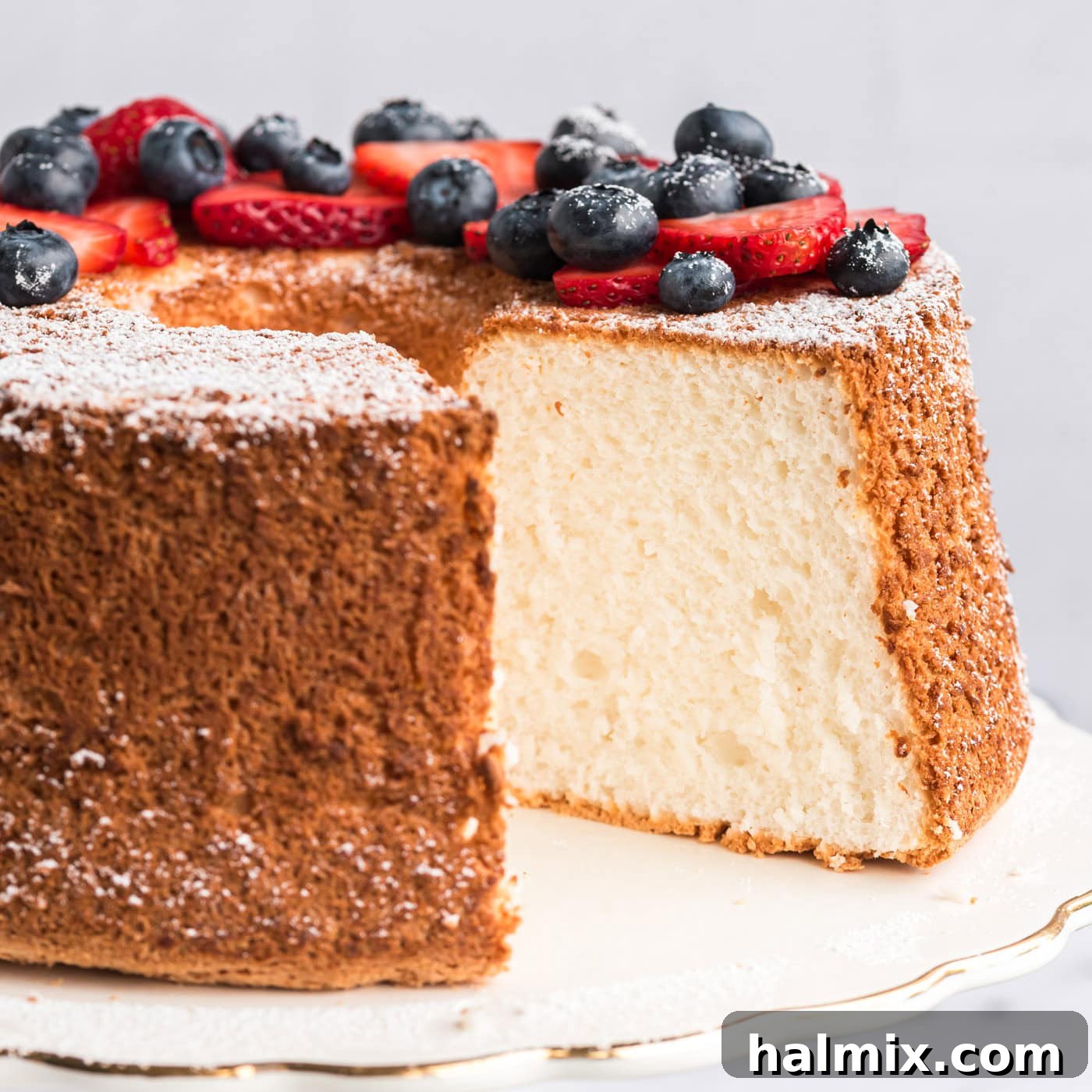
Welcome to the ultimate guide for creating an absolutely divine homemade angel food cake. Imagine biting into a cloud – that’s precisely the experience this meticulously tested and perfected recipe delivers. With its wonderfully delicate crumb and unparalleled airy texture, this angel food cake isn’t just a dessert; it’s a dream come true for any baking enthusiast. Forget dense, heavy cakes; this recipe promises a light, fluffy masterpiece that will float gracefully onto your plate and melt in your mouth, leaving a whisper of sweetness and a desire for more. Achieving this level of heavenly perfection at home is simpler than you might think, and we’re here to guide you every step of the way.
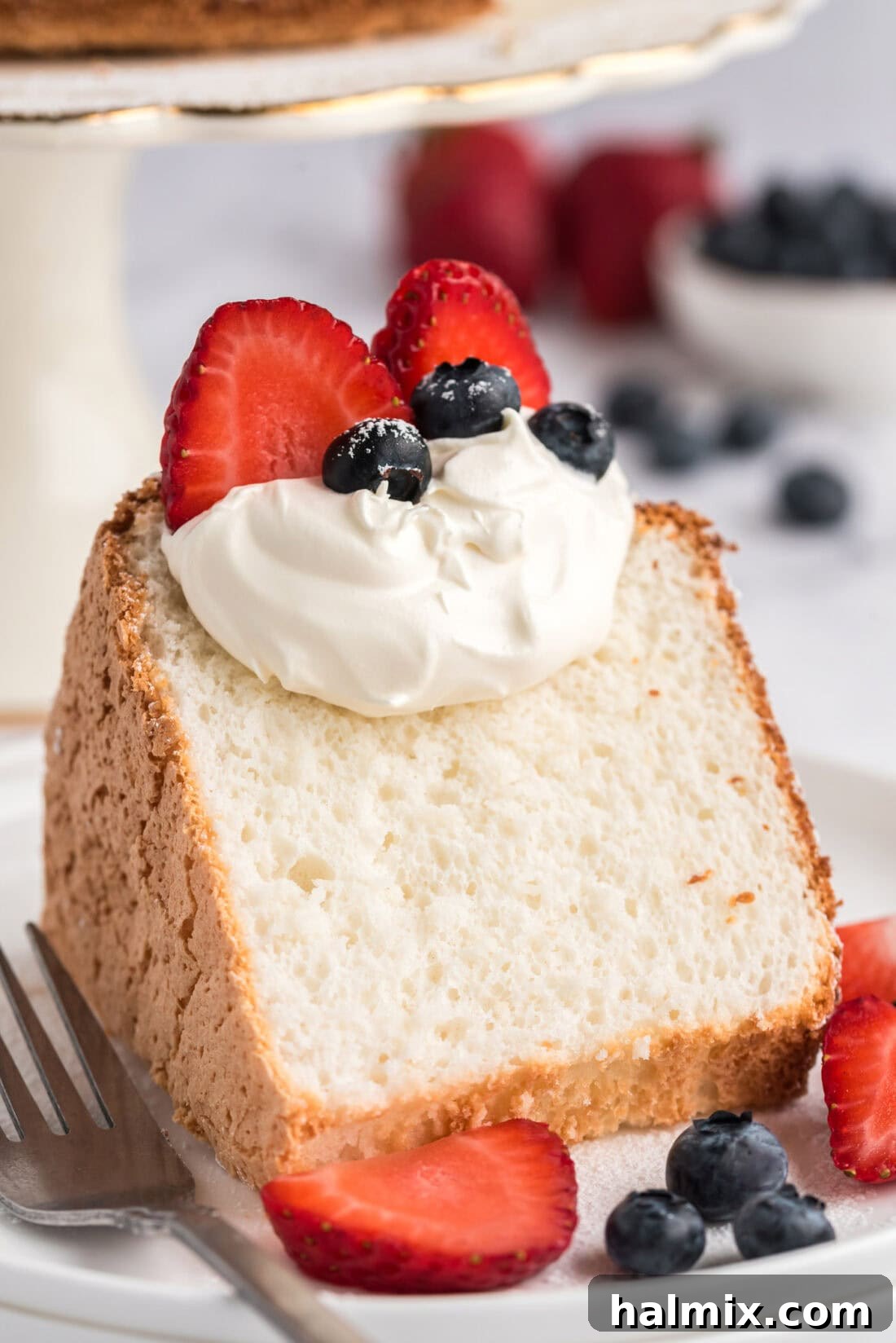
Why This Is Your Go-To Angel Food Cake Recipe
This particular homemade angel food cake recipe has been a beloved staple for over a decade, first shared on our blog in 2012, though its origins in our family kitchen stretch back even further. It has withstood the test of time, proving itself reliable for countless home bakers. Many shy away from making angel food cake from scratch, intimidated by its reputation for being tricky. However, this recipe is designed to demystify the process, providing a sturdy, foolproof foundation that will build your confidence and deliver consistent, spectacular results.
What sets this recipe apart is its ability to consistently produce a cake that is exceptionally light, wonderfully airy, impressively tall, and truly dreamy in every bite. Much like a classic chiffon cake, it achieves a delicate balance of structure and tenderness. The secret lies in precise measurements and a clear understanding of the roles each ingredient plays, particularly the egg whites, which are the heart and soul of this cloud-like dessert. Once you experience the superior flavor and texture of a homemade angel food cake, you’ll find it far surpasses any store-bought alternative, making the effort entirely worthwhile. This isn’t just a recipe; it’s an invitation to rediscover the joy of baking a truly classic dessert that will impress everyone.
Essential Ingredients for Your Heavenly Angel Food Cake
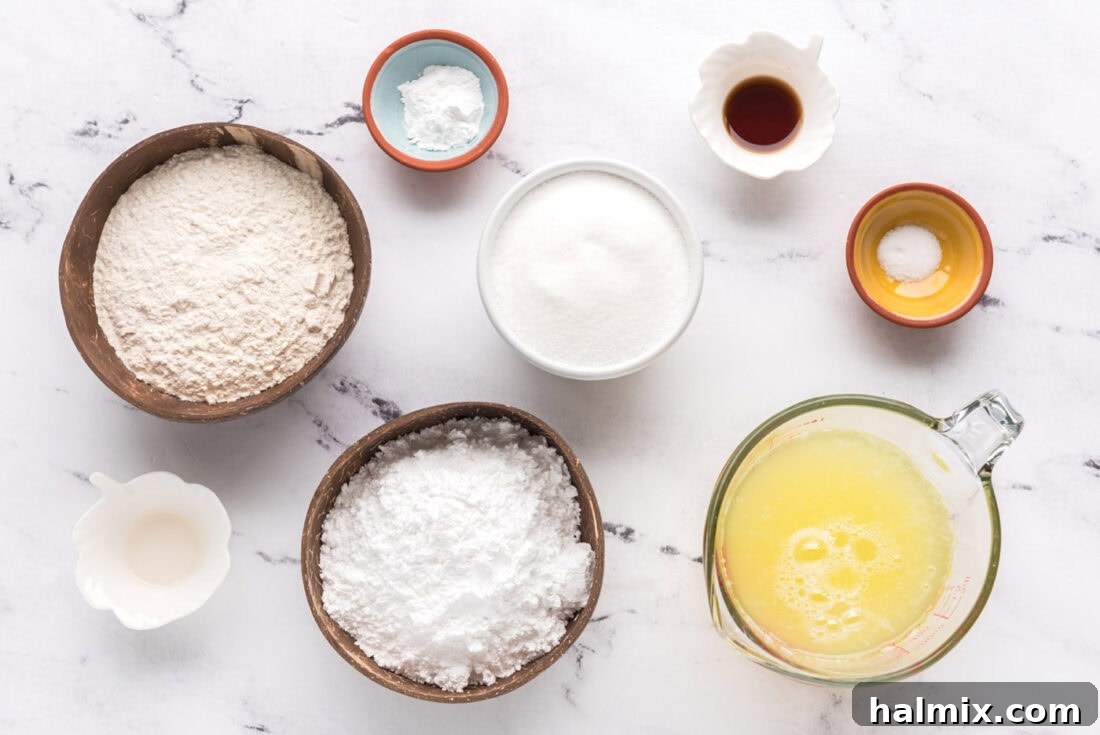
Crafting the perfect angel food cake requires a few key ingredients, each playing a critical role in achieving that signature light and airy texture. While the full, printable recipe with precise measurements can be found at the end of this post, let’s dive into the specifics of what you’ll need and why each component is so important. Using high-quality ingredients will undoubtedly elevate your cake, ensuring the best possible flavor and consistency. Freshness truly matters when it comes to delicate baked goods like this, so always start with the best you can find.
Ingredient Breakdown and Expert Tips
Understanding each ingredient’s function is key to mastering this classic angel food cake recipe. Here’s what you need to know to ensure a flawless bake:
- EGG WHITES – These are the undisputed stars of angel food cake, serving as the primary leavening agent responsible for the cake’s incredible height and ethereal texture. For optimal volume and stability, it is absolutely imperative to allow your egg whites to sit at room temperature for at least 30 minutes before whipping. Cold egg whites simply won’t whip up to their full potential. Don’t discard those leftover egg yolks! They are perfect for making other delicious treats such as rich lemon meringue pie bars or decadent creme brulee.
- CREAM OF TARTAR – This essential ingredient acts as a stabilizer for the egg whites, helping them achieve maximum volume and preventing them from collapsing. It creates a stronger, more resilient foam, which is crucial for a tall, fluffy cake. Without it, your egg whites might not reach stiff peaks, leading to a denser cake.
- SUGAR – Our recipe calls for a precise combination of both granulated sugar and powdered sugar. The granulated sugar provides structure and sweetness to the whipped egg whites, while the finely milled powdered sugar (also known as confectioners’ sugar) contributes to the delicate, tender crumb, ensuring the cake isn’t too coarse. This dual-sugar approach is fundamental to achieving the desired texture and sweetness balance.
- EXTRACTS – The signature, subtle flavor of angel food cake comes from a harmonious blend of vanilla extract and almond extract. Vanilla adds a classic warmth, while the almond extract provides that distinct, delicate nuance that makes angel food cake so recognizable and loved. Using high-quality extracts will make a noticeable difference in the final taste of your cake.
- ALL-PURPOSE FLOUR – It’s crucial to use all-purpose flour for this recipe, and to sift it thoroughly with the powdered sugar. Sifting ensures that the flour is light and lump-free, which prevents it from weighing down the delicate egg white foam. A light hand when folding in the flour mixture is paramount to retaining the air you’ve carefully whipped into the egg whites.
Step-by-Step Guide: Crafting Your Perfect Angel Food Cake
These detailed step-by-step photos and instructions are here to help you visualize each stage of making this exquisite dessert. For a convenient printable version of this recipe, complete with all measurements and instructions, simply refer to the comprehensive recipe card at the bottom of this post.
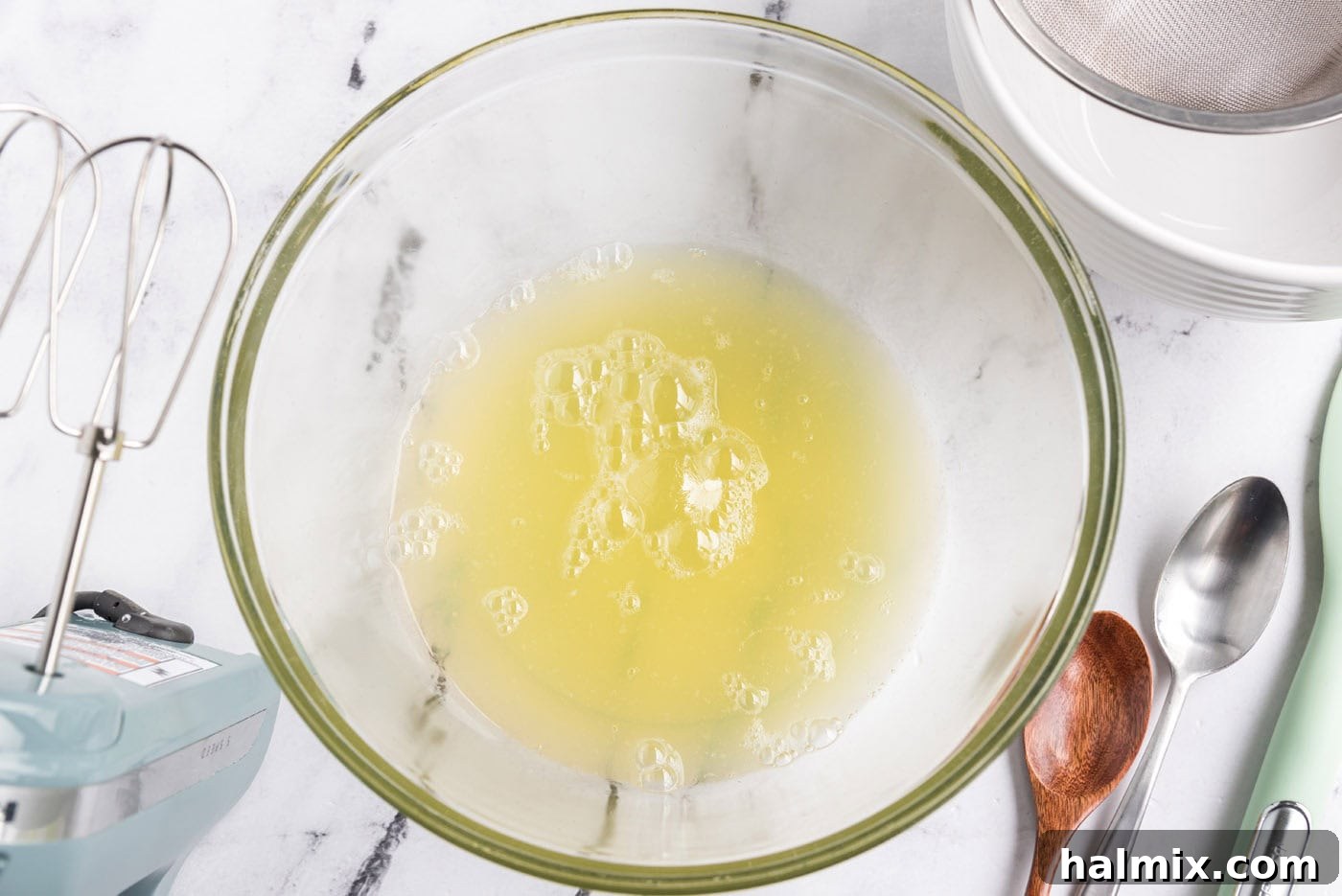
- Prepare Egg Whites: Begin by carefully measuring 1 1/2 cups of egg whites. This usually equates to about 10-12 large egg whites. Place them in a large, impeccably clean mixing bowl (any grease or yolk residue can prevent them from whipping properly). Allow the egg whites to stand at room temperature for 30 minutes. This crucial step helps them whip up to maximum volume and stability.
- Preheat Oven: While your egg whites come to temperature, preheat your oven to 350°F (175°C). Ensure your oven rack is in the lower-middle position for even baking.
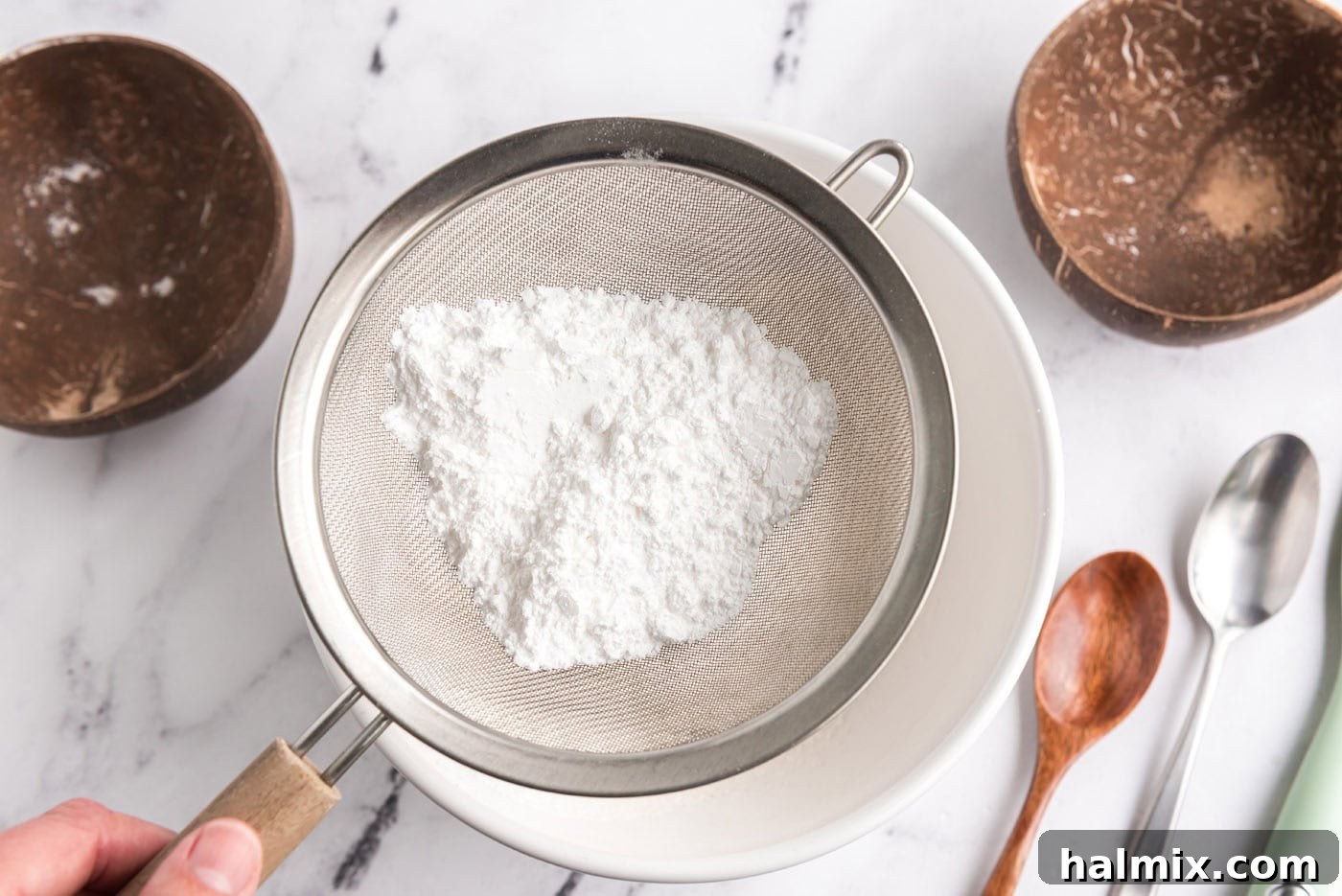
- Sift Dry Ingredients: In a separate bowl, sift the powdered sugar and all-purpose flour together three times. This triple sifting is vital for creating an incredibly fine, airy flour mixture that won’t deflate the delicate egg whites. Set this mixture aside.
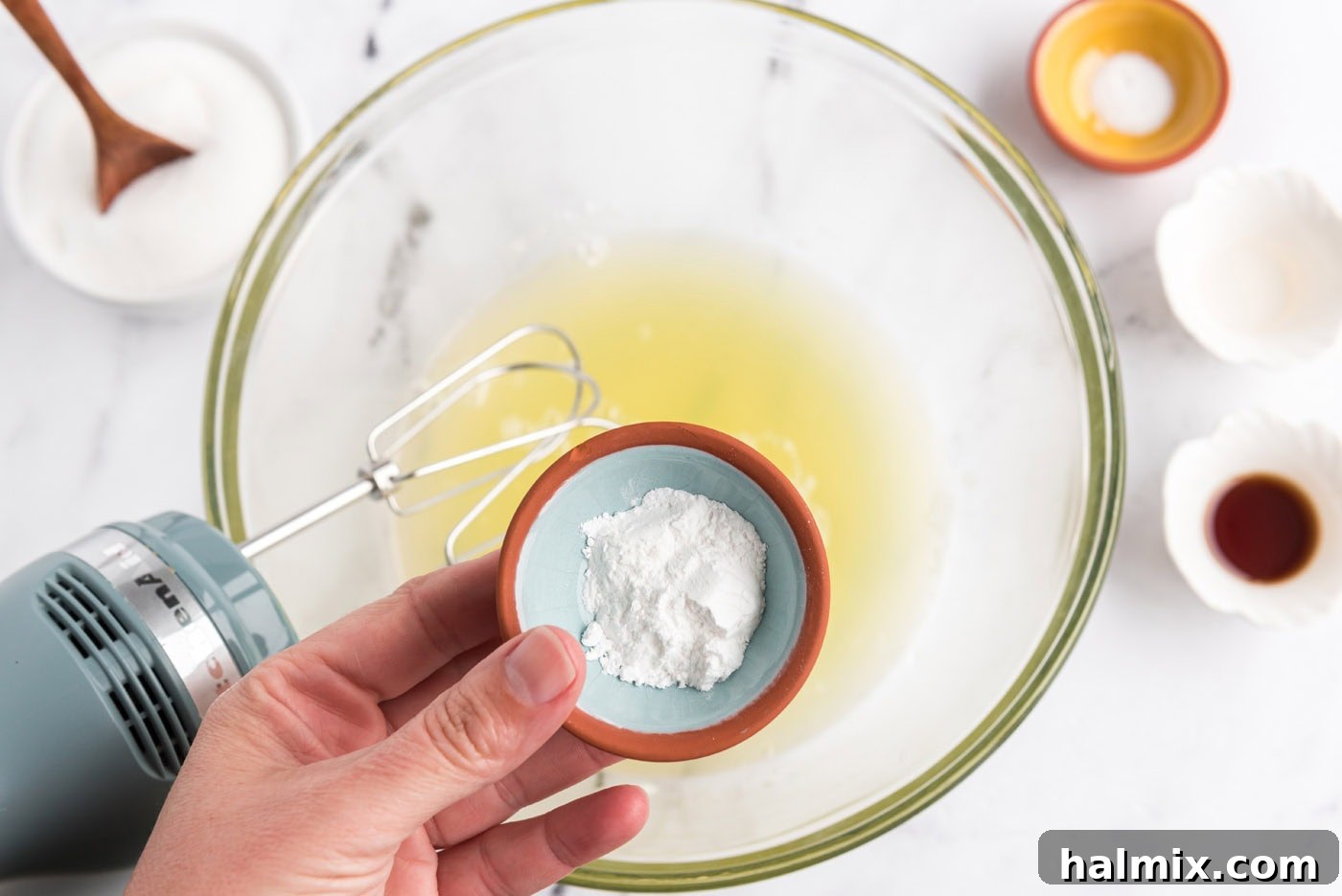
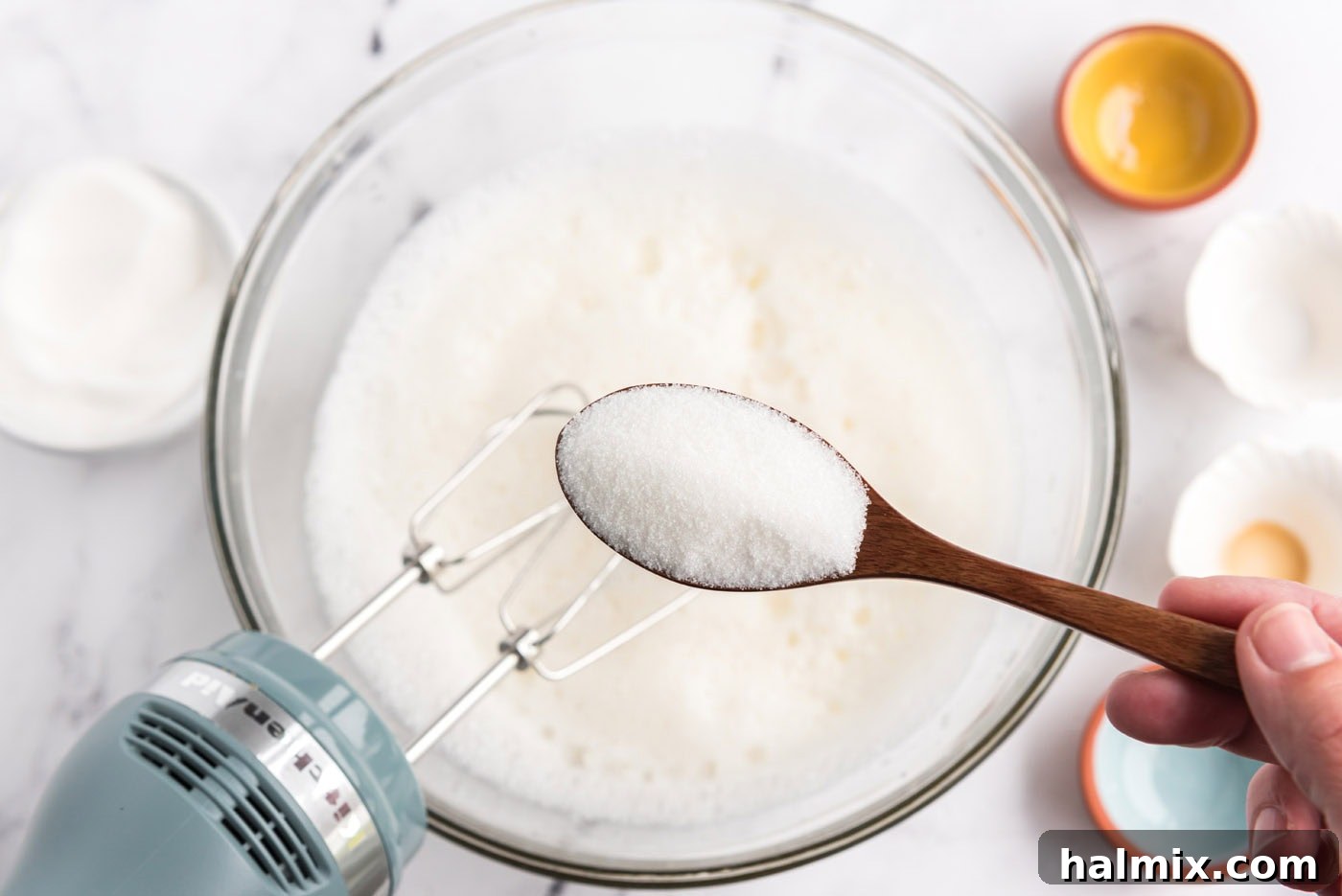
- Whip Egg Whites: Add the cream of tartar, both vanilla and almond extracts, and the salt to the room-temperature egg whites in your mixing bowl. Using an electric mixer (a stand mixer with a whisk attachment is ideal), beat the egg whites on high speed. Gradually add the granulated sugar, a tablespoon at a time, while continuing to beat. Continue mixing until the sugar is completely dissolved and stiff, glossy peaks form. The mixture should hold its shape firmly when the whisk is lifted, and when you rub a small amount between your fingers, it should feel smooth, not gritty.

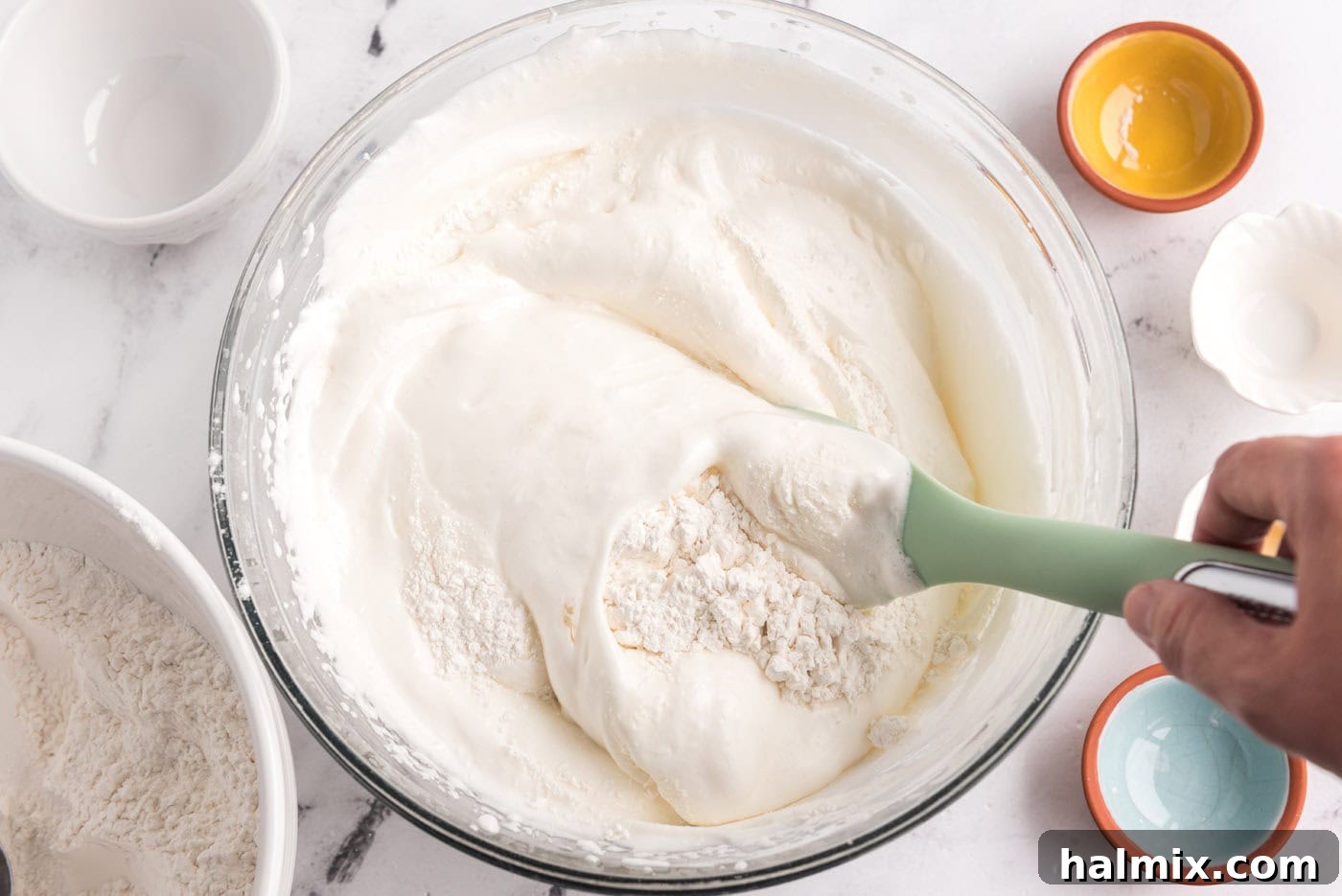
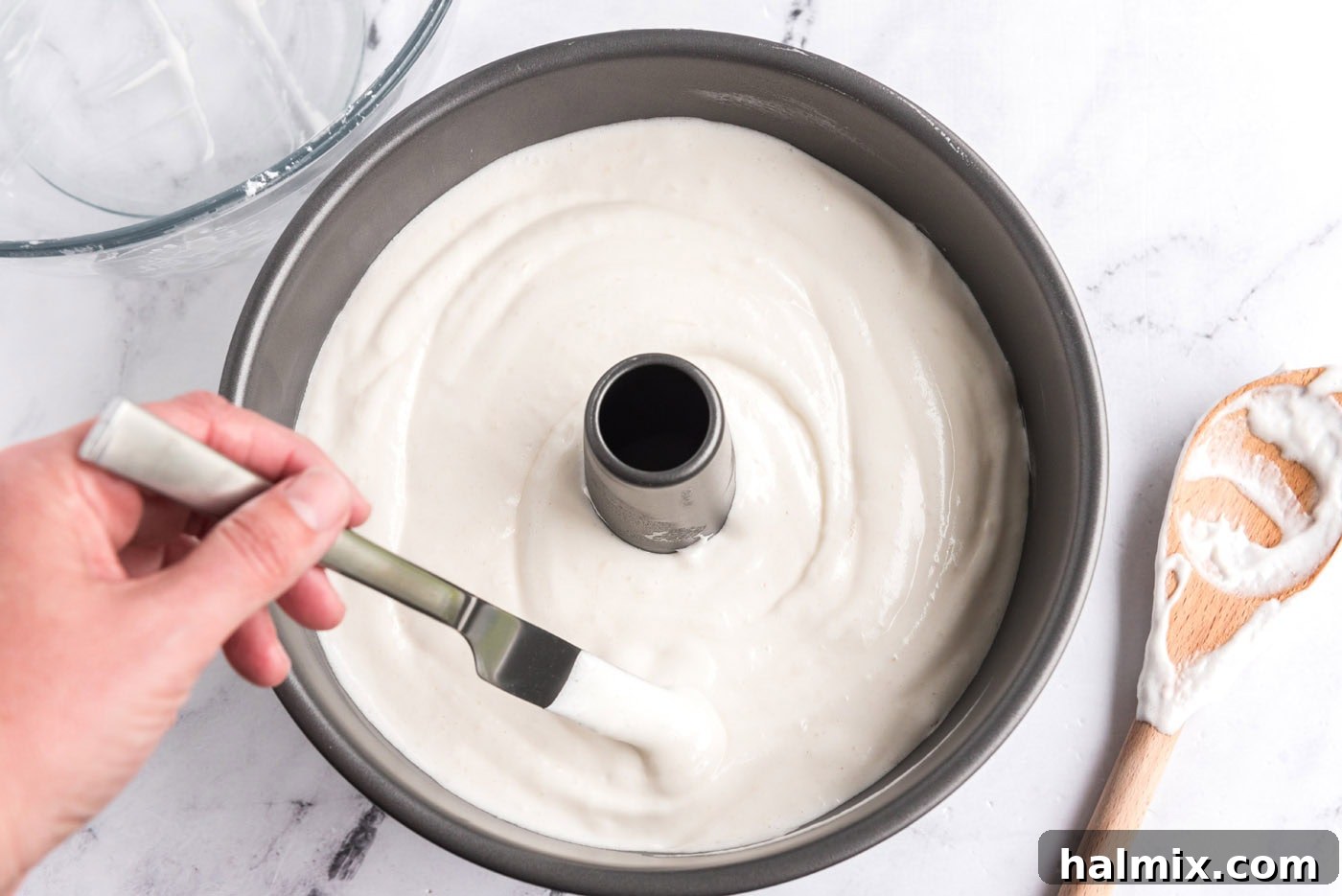
- Fold in Flour Mixture: With great care, fold the sifted flour mixture into the stiff egg whites. Do this gently, about 1/4 cup at a time, using a large rubber spatula. The key is to incorporate the flour without deflating the egg whites, which provide the cake’s lift. Use an upward scooping motion and turn the bowl as you fold. Once combined, gently spoon the batter into an ungreased 10-inch tube pan. Use a knife or skewer to cut through the batter in a circular motion a few times to eliminate any large air pockets.
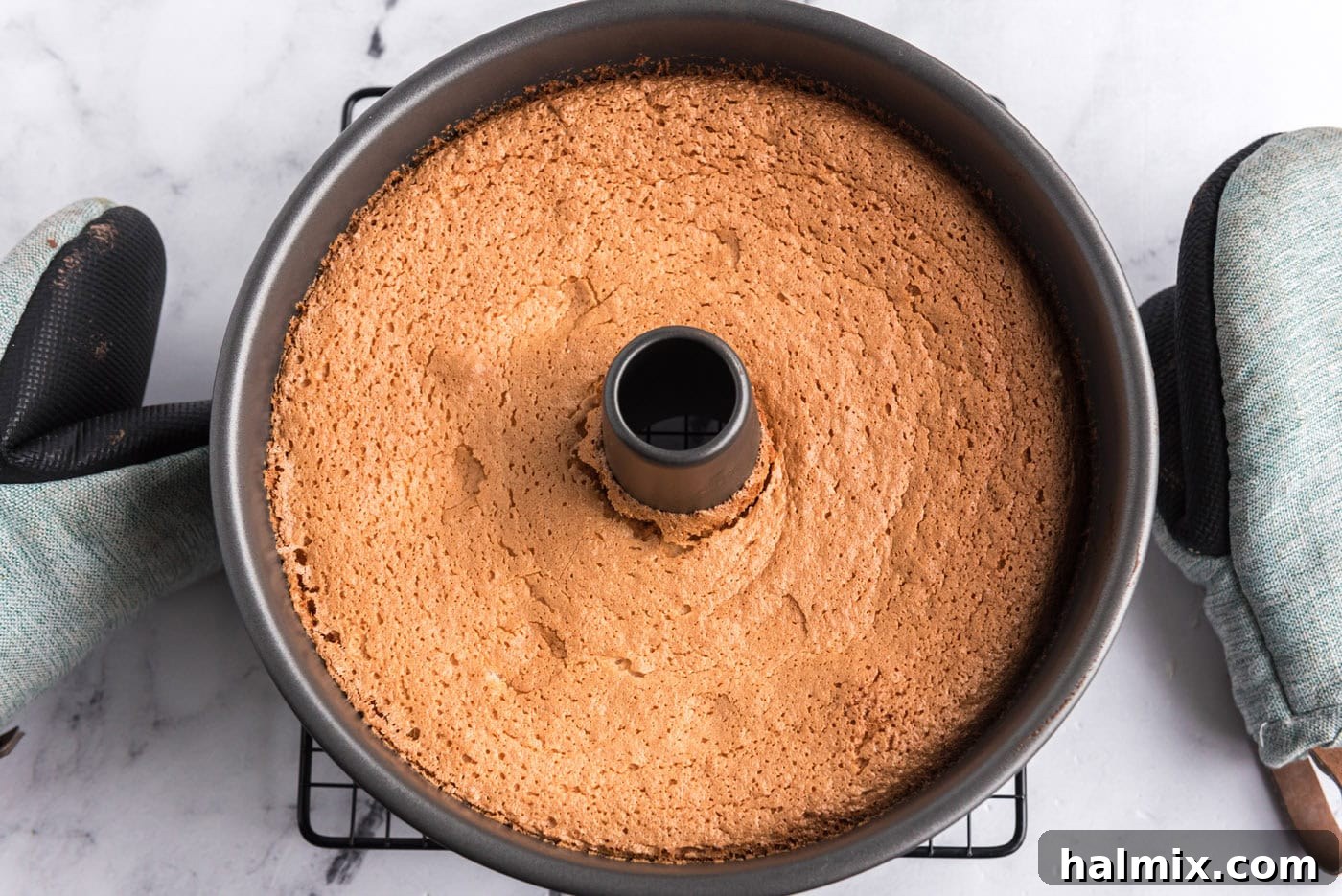
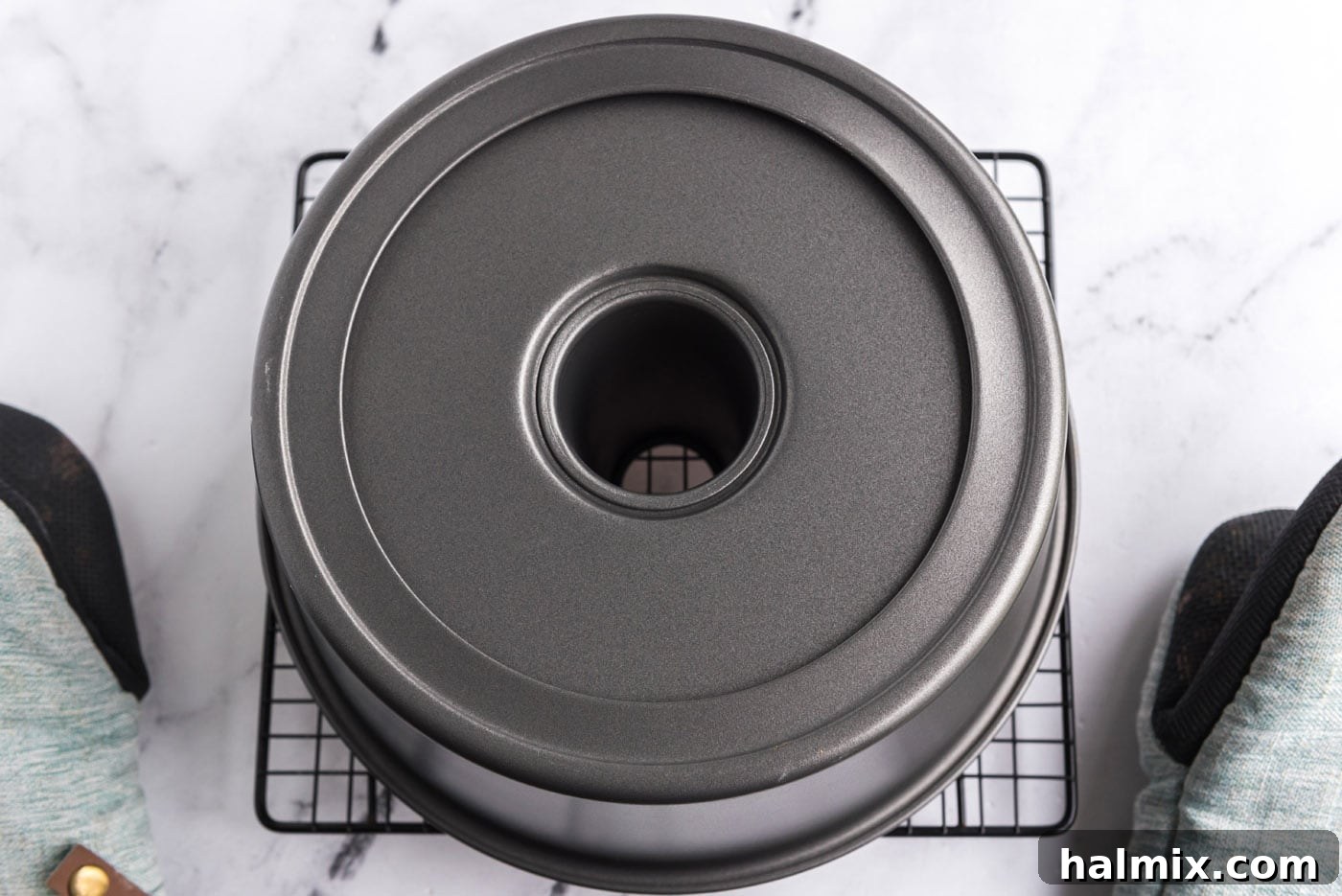
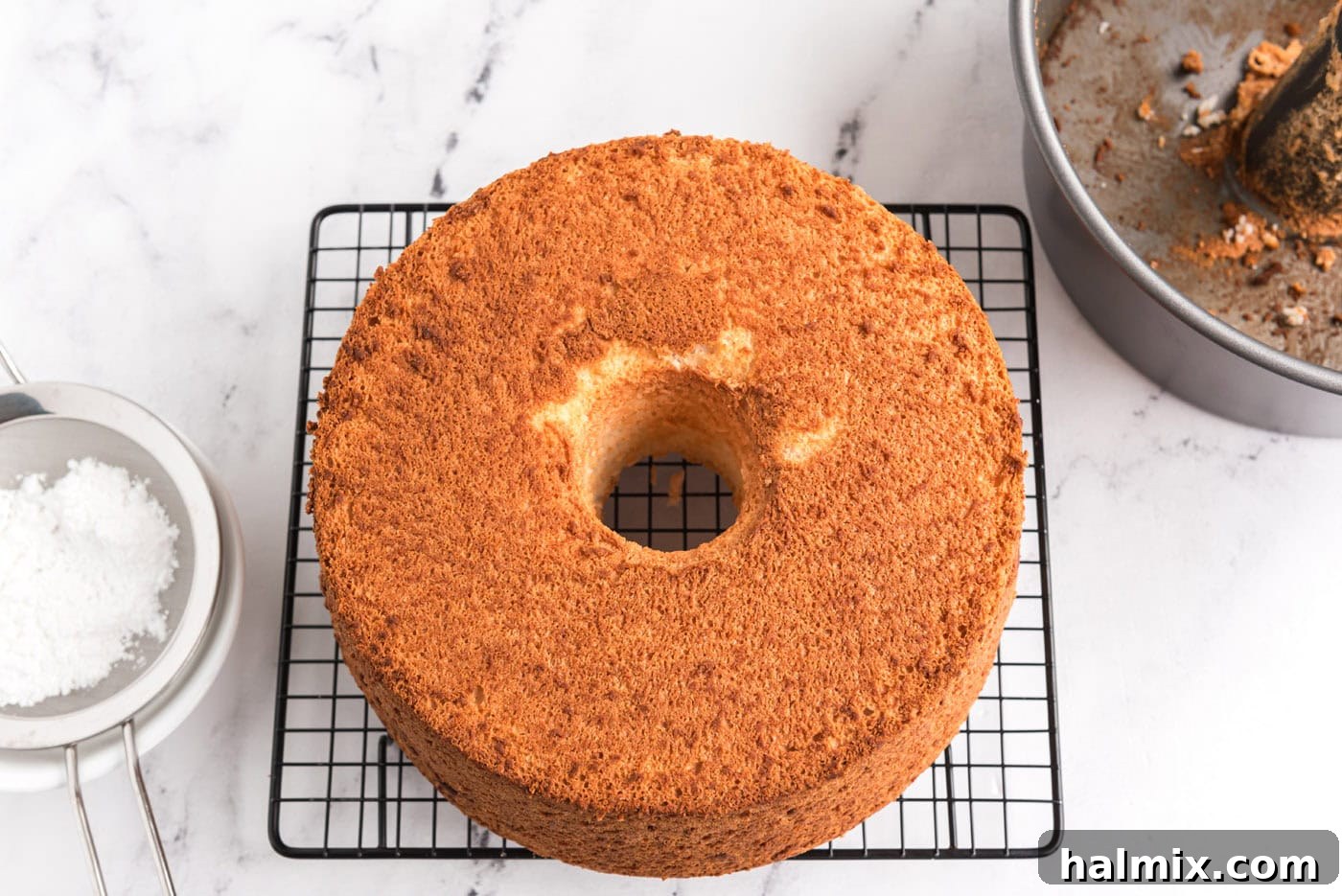
- Bake and Cool: Bake the angel food cake at 350°F (175°C) for 40-45 minutes. The cake is done when the top is golden brown and springs back when lightly touched. Immediately upon removing it from the oven, invert the pan onto its feet (or over the neck of a bottle if your pan doesn’t have feet). This prevents the cake from collapsing as it cools. Allow the cake to cool completely, preferably for several hours or overnight, before attempting to remove it from the pan. Rushing this step can cause the cake to tear.
Frequently Asked Questions & Expert Tips for Angel Food Cake Success
Creating a light, sweet glaze for your angel food cake is incredibly easy. Simply combine sifted powdered sugar with a small amount of milk. Start with about one tablespoon of milk for every cup of powdered sugar, then stir until smooth. Adjust the liquid amount as needed, adding more milk for a thinner glaze or more powdered sugar for a thicker consistency, until you achieve your desired drizzle-able texture. You can also add a drop of vanilla or almond extract for extra flavor.
Homemade angel food cake is undoubtedly best enjoyed fresh, ideally on the day it’s made. However, if you have leftovers, proper storage is key to maintaining its delicate texture. Store the cake in an airtight container, such as a dedicated cake carrier, or wrap it thoroughly in plastic wrap, followed by a layer of aluminum foil. It’s crucial to ensure the entire cake is completely covered to prevent it from drying out. Keep the cake stored at room temperature for up to 2-3 days.
Yes, angel food cake can be frozen, though it’s worth noting that freezing can sometimes lead to a slightly drier texture upon thawing. To freeze, wrap the cooled cake exceptionally well first in plastic wrap, ensuring no surface is exposed to air, then follow with a layer of aluminum foil. Place the well-wrapped cake in a large freezer-safe bag or container and freeze for up to 2 months. You can freeze the cake whole or slice it into individual portions before wrapping. Remember to add any garnishes, such as whipped cream or fresh berries, just before serving after it has fully thawed.
Absolutely! Angel food cake is a great candidate for making ahead. You can prepare and bake the cake one day in advance of when you plan to serve it. Once completely cooled, wrap it securely with plastic wrap or place it in an airtight container. Store it at room temperature. While it’s delightful fresh, it holds up beautifully for serving the day after baking. Avoid refrigerating unless absolutely necessary, as it can dry out the cake.
Several factors can cause an angel food cake to collapse or become dense. The most common culprits include egg whites not being at room temperature (which prevents optimal volume), over-mixing (which breaks down the delicate foam), under-mixing (not reaching stiff peaks), or improper folding of the flour (deflating the egg whites). Additionally, opening the oven door too early, baking at too low a temperature, or not inverting the pan immediately after baking can all contribute to a collapsed cake. Following the steps closely, especially regarding egg white temperature and gentle folding, is key to preventing these issues.
A tube pan (especially one with a removable bottom) is highly recommended and almost essential for angel food cake. Its tall sides and central tube allow the batter to climb higher, giving the cake its characteristic lofty height and airy texture by providing more surface area for the batter to cling to. The ungreased sides are also crucial for the cake to adhere and rise properly. Using a regular round cake pan will likely result in a much shorter, denser cake that won’t achieve the classic angel food texture.
Serving Suggestions for Your Angelic Creation
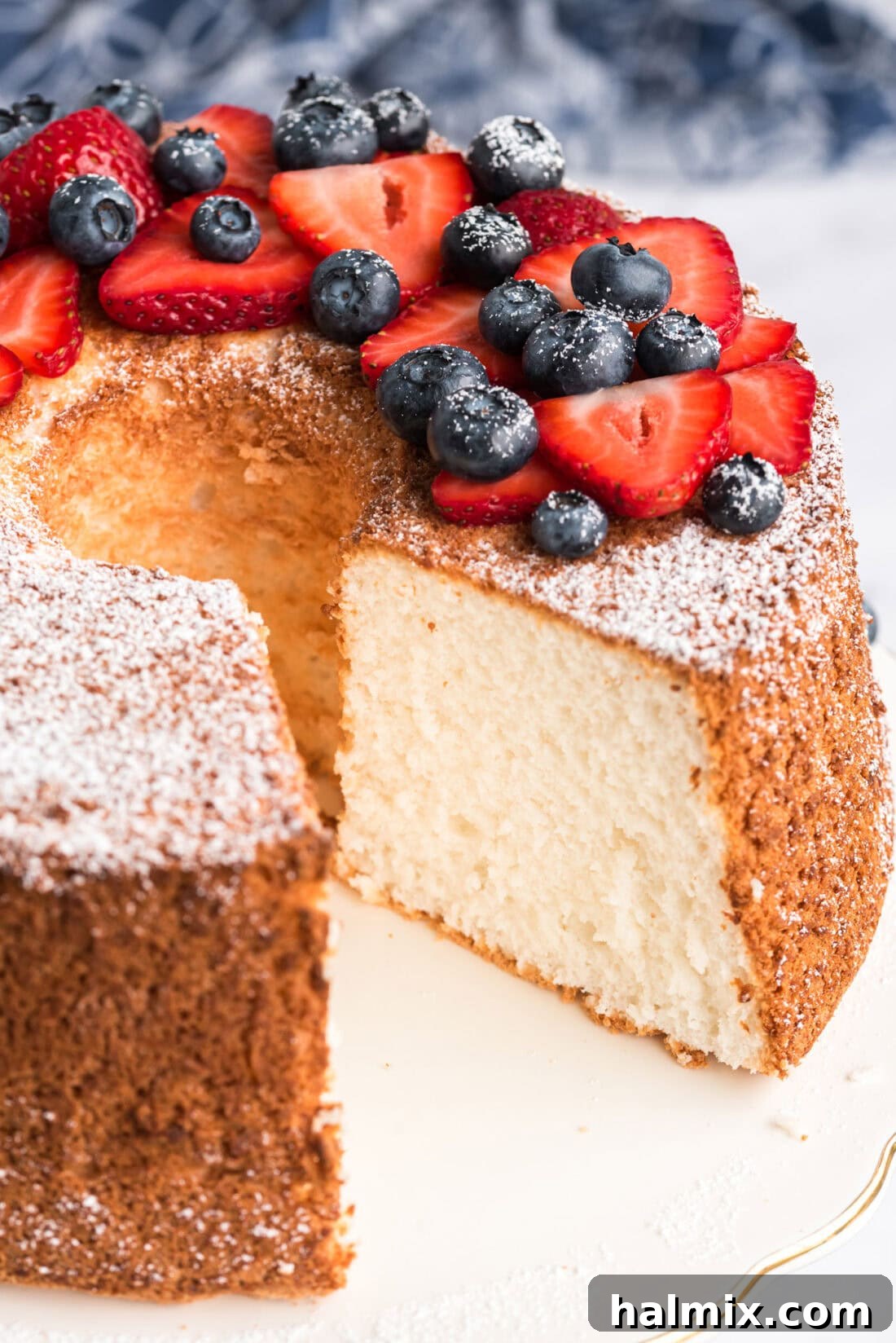
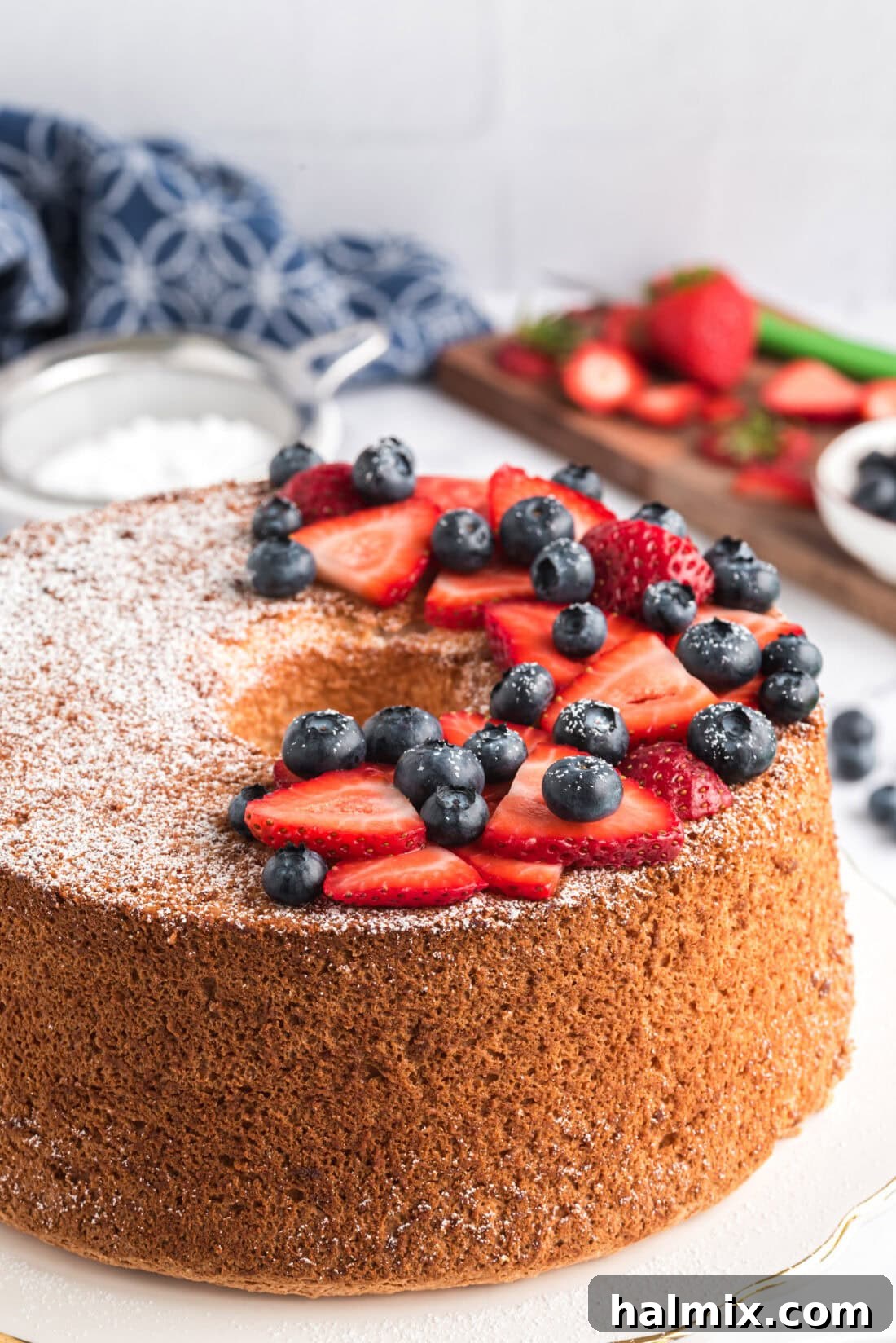
Once your homemade angel food cake is cooled and ready, the possibilities for serving are endless! Its delicate, neutral flavor makes it a perfect canvas for a variety of accompaniments. A simple dusting of powdered sugar adds an elegant touch, or you can elevate it with a light, simple glaze made from powdered sugar and a splash of milk. For a burst of freshness and color, adorn your cake with an abundance of fresh berries – strawberries, blueberries, raspberries, or a vibrant mix. A dollop of freshly whipped cream alongside is always a welcome addition.
Beyond being a standalone dessert, angel food cake is wonderfully versatile. Cube it and layer it into an impressive dessert like a strawberry shortcake trifle or a refreshing lemon blueberry trifle. It also makes for a delightful and light breakfast or brunch treat, perfectly paired with your morning coffee or tea. Whatever the occasion, this classic angel food cake promises a memorable and delightful experience.
Explore More Divine Cake Recipes
If you’ve enjoyed perfecting this angel food cake, you might be inspired to try your hand at other delightful cake creations. Here are a few more of our favorite recipes to expand your baking repertoire:
- Classic Chiffon Cake: Another light and fluffy favorite, a step up in richness from angel food.
- Decadent Chantilly Cake: A rich, berry-filled cake with a luscious frosting.
- Comforting Banana Bundt Cake: A moist and flavorful bundt cake, perfect for any time.
- Rich Whipping Cream Pound Cake: A dense, tender pound cake, excellent for slicing.
We are passionate about baking and cooking and love sharing our culinary adventures with you! To ensure you never miss out on our latest recipes, consider joining our convenient newsletter. Simply subscribe here and start receiving free daily recipes delivered straight to your inbox!
Homemade Angel Food Cake Recipe
Achieve a perfectly light and fluffy angel food cake with an incredibly soft crumb using this homemade recipe – a timeless staple for your dessert collection!
Rating: 5 from 3 votes
IMPORTANT: For additional helpful insights, expert tips, and frequently asked questions, please scroll back up and read the full blog post!
Course: Dessert | Cuisine: American | Servings: 20 servings | Total Time: 1 hour 25 minutes
Ingredients
- 12 egg whites (approximately 1 1/2 cups)
- 1 ¼ cups powdered sugar
- 1 cup all-purpose flour
- 1 ½ teaspoons cream of tartar
- 1 ½ teaspoons vanilla extract
- ½ teaspoon almond extract
- ¼ teaspoon salt
- 1 cup granulated sugar
Things You’ll Need
- Electric mixer (stand mixer recommended)
- 10 inch tube pan (ungreased, with removable bottom)
- Large mixing bowls
- Fine-mesh sieve for sifting
- Rubber spatula
- Sharp knife or skewer
Before You Begin
- Ensure egg whites are at room temperature for 30 minutes before whipping for maximum volume.
- Cream of tartar is crucial for stabilizing the egg whites and achieving a fluffy, light cake structure.
- Do not grease your tube pan; the batter needs to cling to the sides to rise properly.
Instructions
- Measure egg whites, adding or removing whites as needed to equal 1 1/2 cups. Place them in a clean mixing bowl and let stand at room temperature for 30 minutes.
- Preheat your oven to 350°F (175°C).
- Meanwhile, in a separate bowl, sift the confectioners’ sugar and all-purpose flour together three times; set aside. This ensures a light, lump-free mixture.
- To the room-temperature egg whites, add the cream of tartar, both vanilla and almond extracts, and the salt. Using an electric mixer, beat on high speed. Gradually add the granulated sugar, about a tablespoon at a time, continuing to beat until the sugar is fully dissolved and stiff, glossy peaks form.
- Gently fold the sifted flour mixture into the whipped egg whites, adding about 1/4 cup at a time. Use a large rubber spatula and a delicate, upward scooping motion to incorporate the flour without deflating the egg whites. Carefully spoon the batter into an ungreased 10-inch tube pan. Use a knife or skewer to gently cut through the batter in a few spots to release any large air pockets.
- Bake for 40-45 minutes at 350°F (175°C), or until the cake is golden brown and springs back lightly when touched. Immediately invert the pan onto its feet (or over a bottle neck) and let it cool completely in the inverted position before carefully removing the cake from the pan.
Nutrition
Serving: 1 slice | Calories: 102 cal | Carbohydrates: 23g | Protein: 3g | Fat: 0.1g | Saturated Fat: 0.01g | Polyunsaturated Fat: 0.03g | Monounsaturated Fat: 0.01g | Sodium: 59mg | Potassium: 74mg | Fiber: 0.2g | Sugar: 18g | Calcium: 2mg | Iron: 0.3mg
Tried this Recipe? Pin it for Later!
Follow on Pinterest @AmandasCookin or tag #AmandasCookin!
The recipes on this blog are typically tested with a conventional gas oven and gas stovetop. Please note that oven performance can vary, especially with age, leading to inconsistent cooking and baking. We recommend using an inexpensive oven thermometer to verify that your oven is consistently heating to the proper temperature. If using a toaster oven or countertop oven, be aware that heat distribution may differ from a full-sized conventional oven, potentially requiring adjustments to cooking or baking times. For baking recipes where measurements are provided by weight, using volume (cups) instead may yield different results, and we cannot guarantee success with such method variations.
This post originally appeared on August 1, 2012, and has been meticulously updated with fresh photos, enhanced instructions, and invaluable expert tips to ensure your baking success.