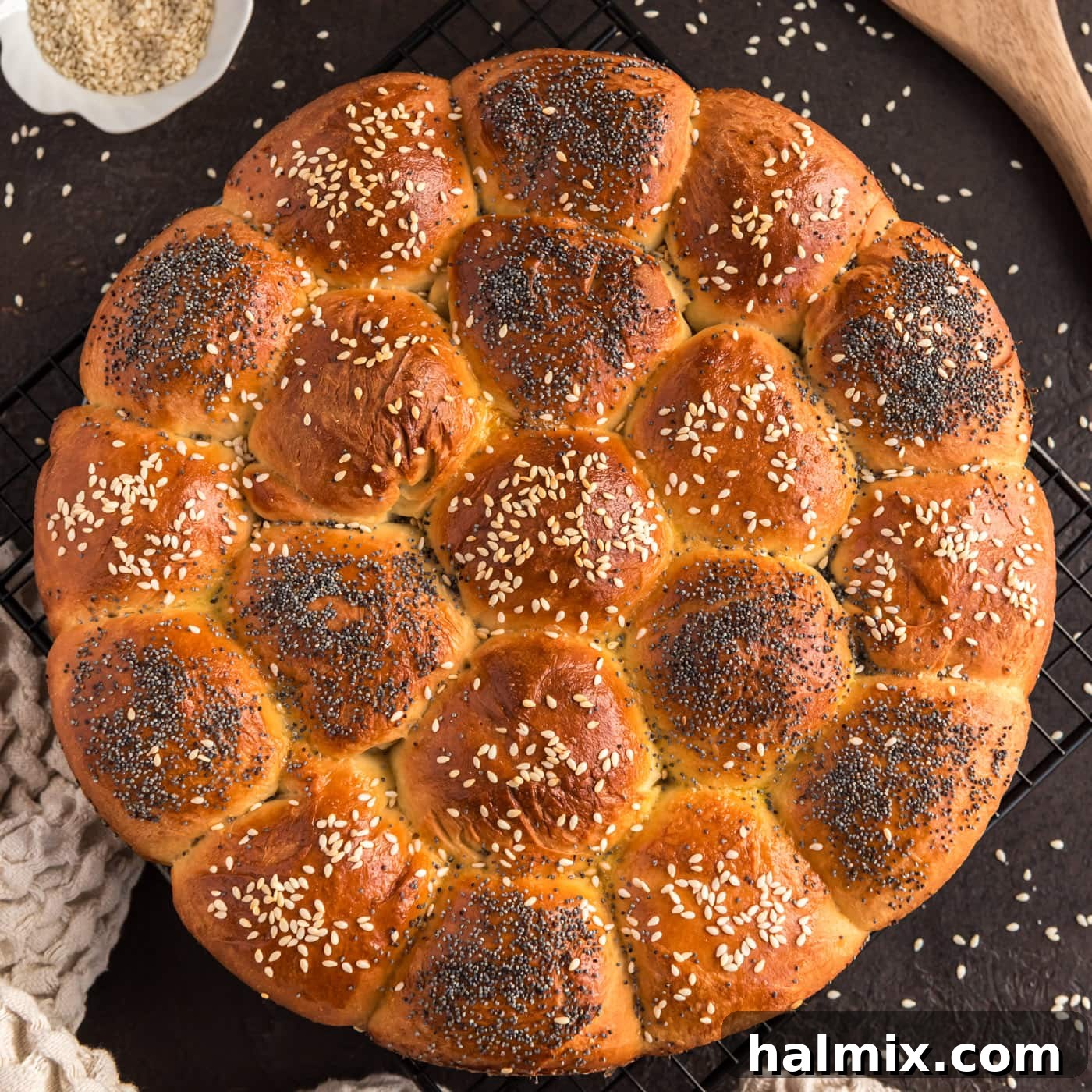
Partybrot: The Ultimate Soft & Fluffy German Party Bread Rolls Recipe
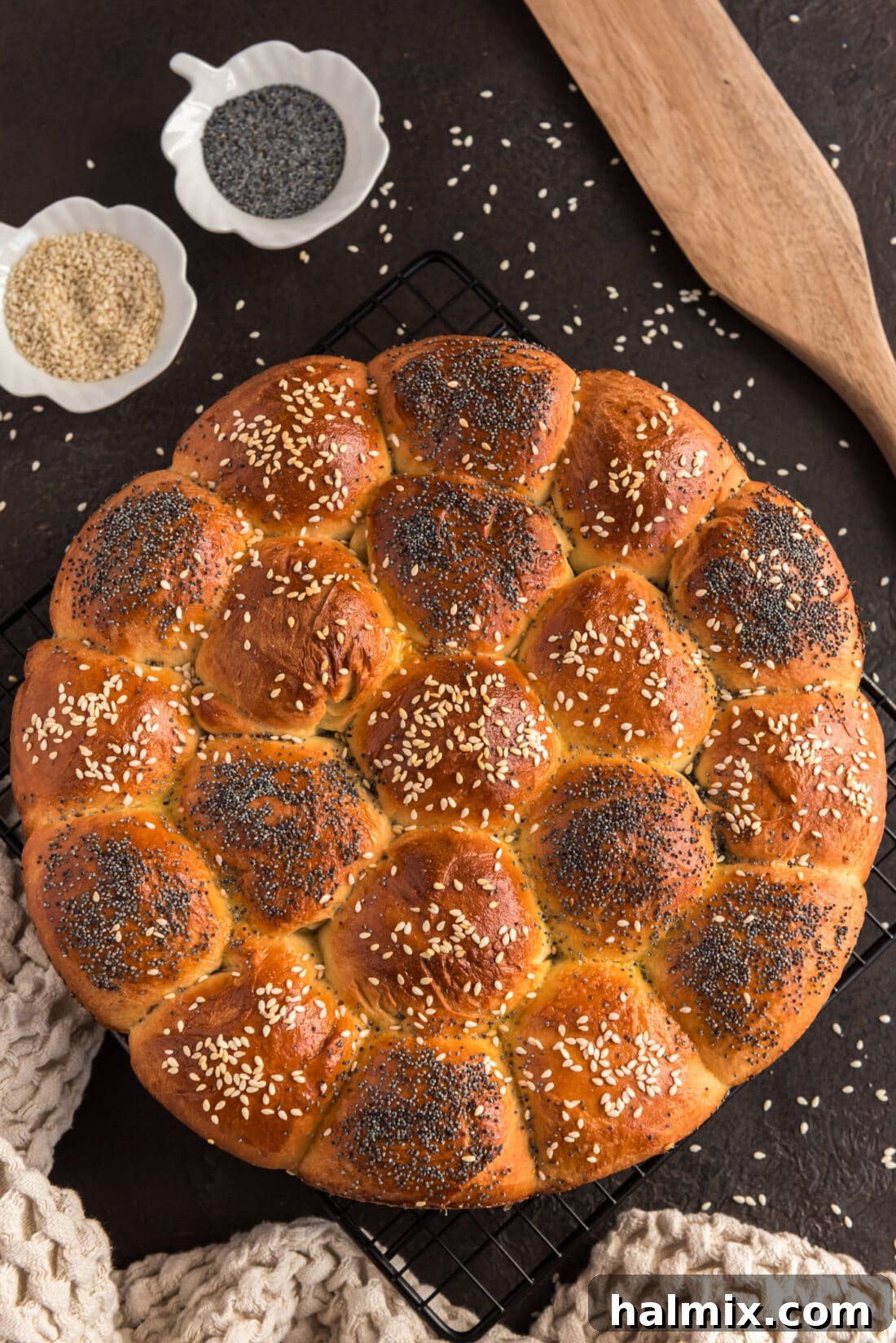
Delight your guests with Partybrot, the incredibly soft, fluffy, and effortlessly shareable German party bread rolls. Topped with a charming sprinkle of poppy and sesame seeds, these golden-baked beauties are guaranteed to be the star of any gathering. Perfect for tearing apart and enjoying, Partybrot brings a touch of warmth and tradition to your table, making every bite a celebration.
Why This Partybrot Recipe is a Must-Try
Partybrot, pronounced “par-tee-broat” (rhyming with “boat”), is more than just bread; it’s a culinary invitation to gather and share. This traditional German specialty perfectly embodies the spirit of communal dining, offering individual rolls that are easily pulled apart, making it ideal for casual get-togethers, potlucks, or family meals. Its versatility is truly remarkable; while our recipe focuses on a classic tear-and-share style, Partybrot can also be prepared as a stuffed loaf, brimming with savory cheeses, meats, and aromatic herbs. The adaptability of this bread means it can perfectly complement a wide array of dishes or stand proudly on its own.
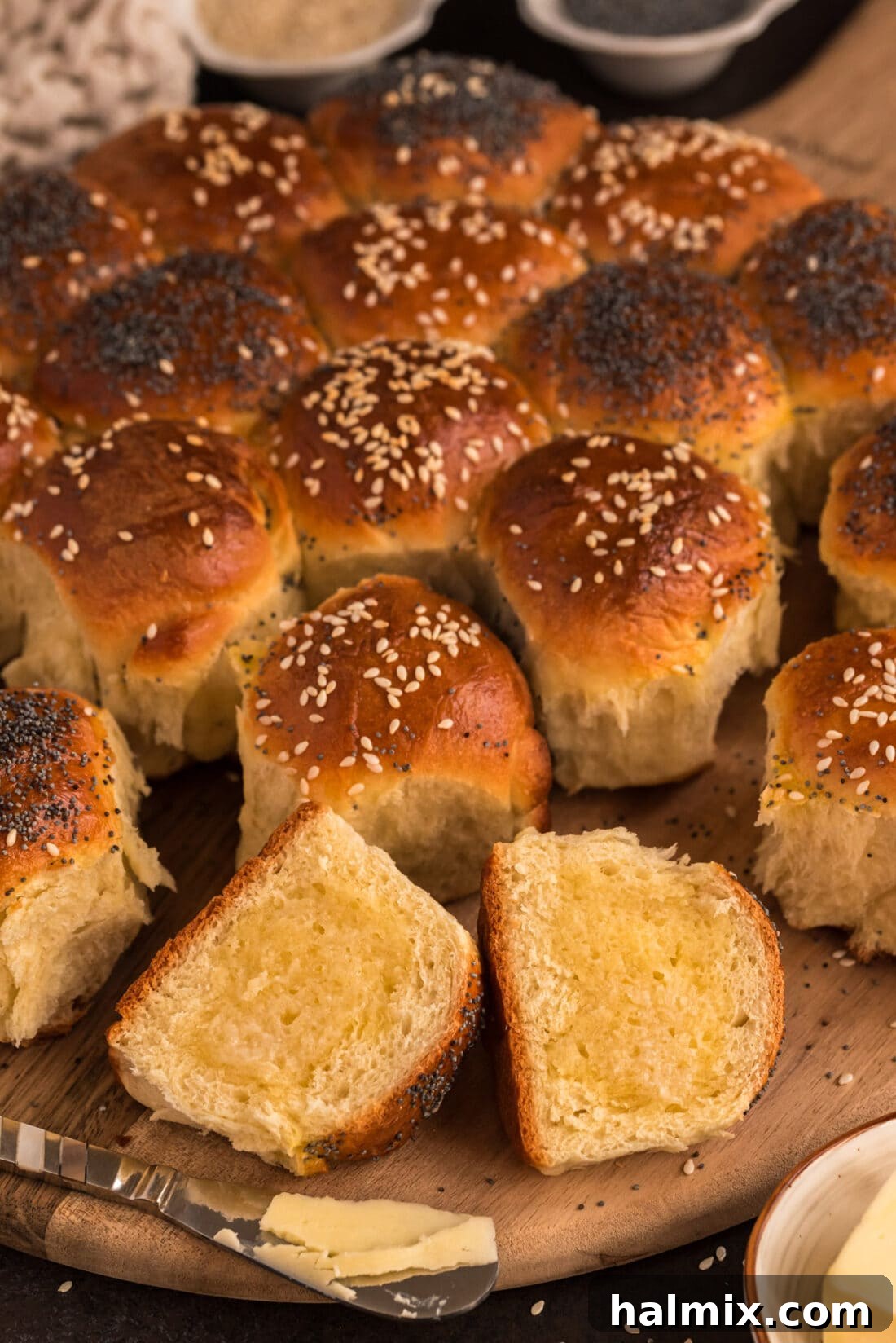
What makes this specific Partybrot recipe truly exceptional is its combination of ease and impressive results. Despite its sophisticated appearance, the preparation process is surprisingly straightforward, making it accessible even for novice bakers. The dough, enriched with milk, butter, and eggs, yields an incredibly soft, tender crumb that remains moist for days. A simple egg wash brushed on before baking creates a beautiful golden crust, while a generous scattering of poppy and sesame seeds adds a delightful crunch and visual appeal. This recipe consistently delivers fluffy, irresistible rolls that evoke the comforting flavors of authentic German baking, ensuring your efforts are met with rave reviews. I first experimented with these delightful rolls back in 2010, shortly after perfecting my homemade German pretzels, and they instantly became a household favorite!
Essential Ingredients for Perfect Partybrot
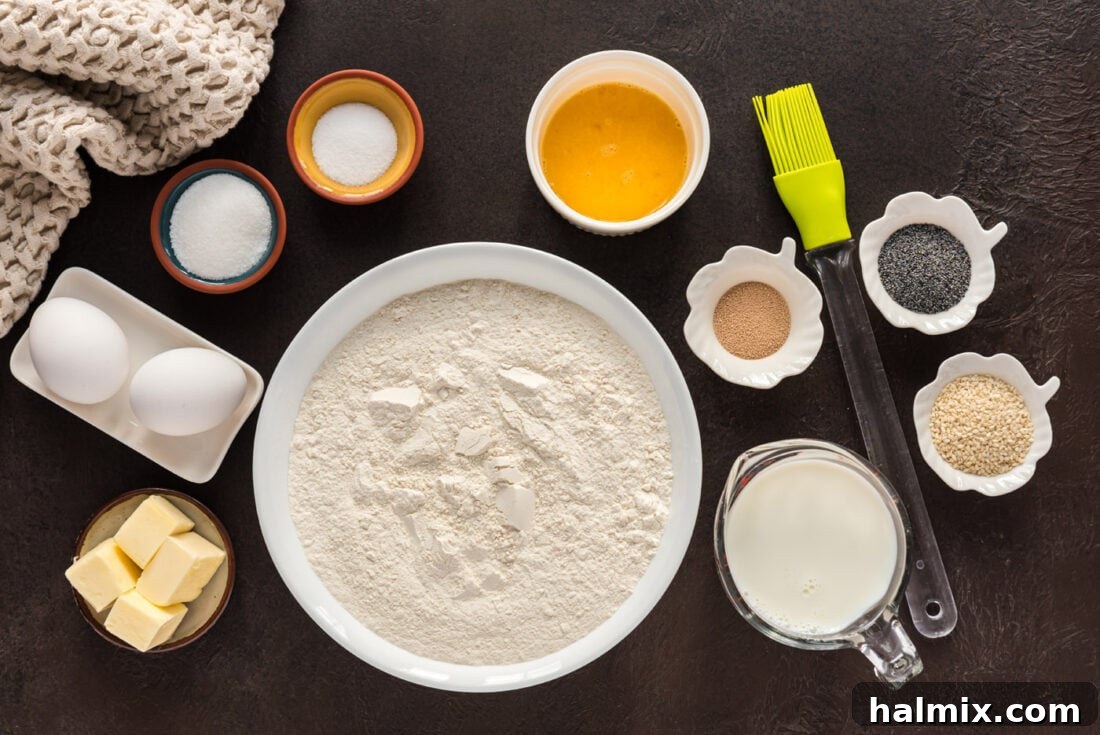
Crafting these delectable German party bread rolls requires a few pantry staples, each playing a crucial role in achieving the signature soft and fluffy texture. You’ll need flour, active dry yeast, milk, unsalted butter, granulated sugar, eggs, and salt for the dough. For that irresistible golden crust and classic finish, an additional egg for an egg wash, along with poppy and sesame seeds, will complete your ingredient list. For precise measurements and step-by-step instructions, be sure to refer to the comprehensive printable recipe card located at the end of this article.
Ingredient Insights and Expert Substitution Tips
Understanding the nuances of each ingredient can significantly elevate your baking success. Here’s a deeper dive into the key components of Partybrot:
FLOUR – The foundation of any great bread. For optimal results, unbleached all-purpose flour is recommended, as it provides a good balance of protein for structure and tenderness. Accurate flour measurement is paramount for consistent baking. Always use the “scoop and sweep” method: first, aerate your flour by fluffing it with a spoon or whisk directly in its bag or container. Then, gently spoon the flour into your measuring cup until it overflows. Finally, use the straight edge of a butter knife to level off the excess flour, ensuring a precise measurement. Avoid tapping the measuring cup on the counter or scooping directly from the bag, as these actions can compact the flour, leading to up to 50% more flour than needed, resulting in a dense, dry bread.
YEAST – Active dry yeast is crucial for the bread’s rise and distinctive texture. Before you begin, always verify that your yeast has not expired. Old yeast can lead to a flat, heavy loaf. To test its viability, sprinkle a small amount into warm (not hot!) water with a pinch of sugar; if it blooms and becomes foamy within 5-10 minutes, it’s active and ready to go. While active dry yeast is specified, instant yeast can generally be substituted at a 1:1 ratio, though you might find the dough rises slightly faster. However, for this recipe, sticking to active dry as directed yields the best results.
MILK – Lukewarm milk is essential for activating the yeast without killing it. The ideal temperature should be between 100°F and 110°F (38°C-43°C). You can easily achieve this by warming milk in the microwave for 30-40 seconds or gently heating it on the stovetop. Milk that is too hot will destroy the delicate yeast organisms, preventing your dough from rising. Conversely, milk that is too cold will significantly delay the proofing process, extending your baking time. Whole milk will yield a richer, softer crumb due to its fat content, but 2% milk can also be used with good results.
BUTTER – Unsalted butter, melted and cooled slightly, adds richness, tenderness, and flavor to the Partybrot. Using unsalted butter allows you to control the overall salt content of your bread. If only salted butter is available, you may slightly reduce the amount of added salt in the recipe.
GRANULATED SUGAR – Besides contributing a subtle sweetness, sugar plays a vital role in feeding the yeast, encouraging a vigorous rise, and promoting browning of the crust. It helps tenderize the dough and enhance the bread’s overall flavor.
EGGS – Eggs enrich the dough, contributing to its soft texture, golden color, and structural integrity. They add moisture and a lovely richness that makes Partybrot so delightful. Ensure eggs are at room temperature for better incorporation into the dough. If you need to bring eggs to room temperature quickly, place them in a bowl of warm (not hot) water for 5-10 minutes.
SALT – Often overlooked, salt is critical in bread making. It enhances the flavor of the bread, balances the sweetness, and, importantly, controls the yeast activity, ensuring a steady and even rise. Without salt, bread can taste bland and doughy.
Step-by-Step Guide: Crafting Your Own Partybrot
These step-by-step photos and detailed instructions are designed to help you visualize each stage of making this delicious Partybrot recipe. For a convenient printable version, complete with all measurements and full instructions, simply Jump to Recipe at the bottom of this post.
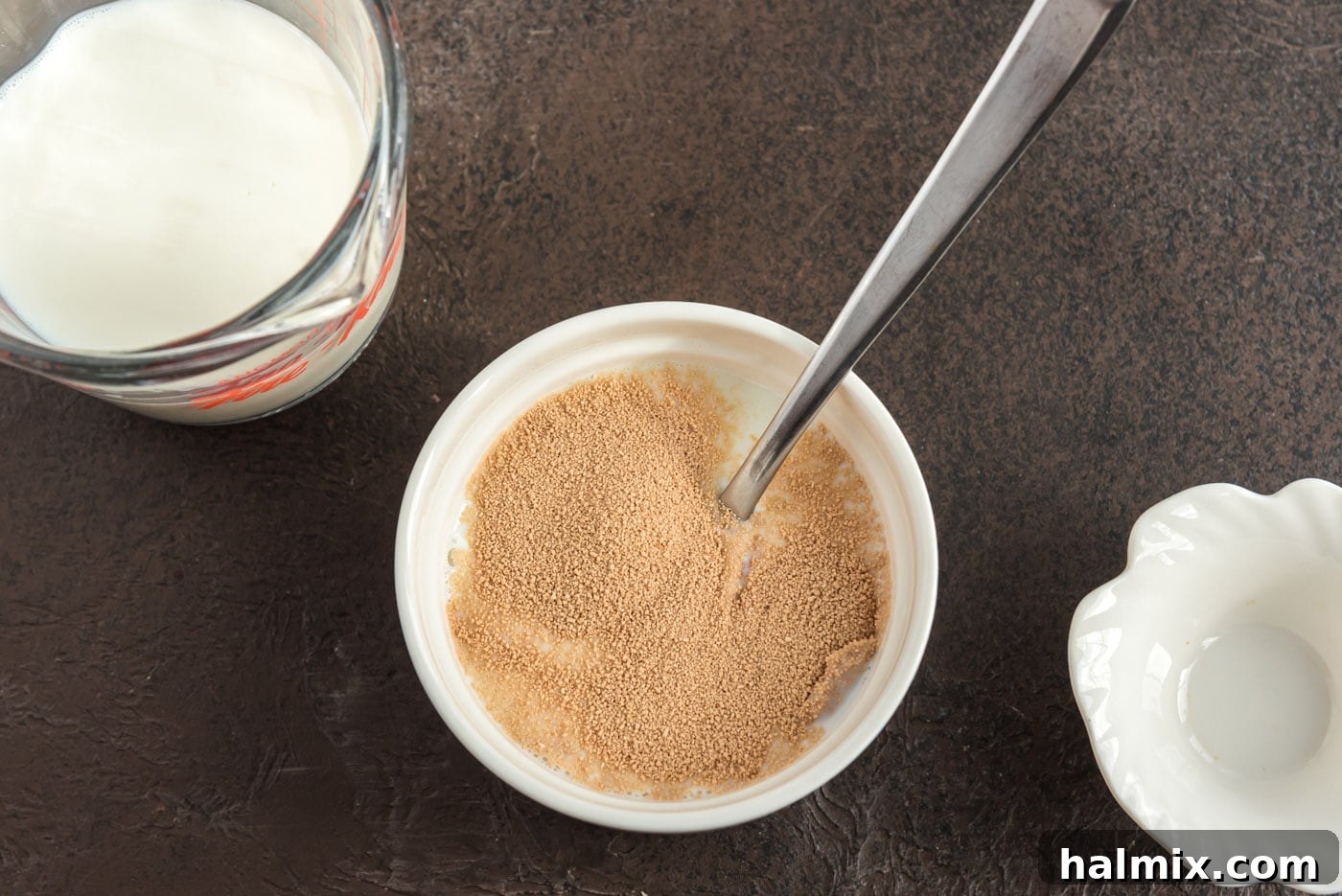
- Activate the Yeast: Begin by warming half a cup of milk in the microwave for approximately 30-40 seconds until it’s comfortably lukewarm (around 100°F). In a small bowl, sprinkle the active dry yeast over this lukewarm milk. Let it sit undisturbed for 5 minutes; this allows the yeast to hydrate. After 5 minutes, stir gently until the yeast is fully dissolved. You should see a frothy layer on top, indicating the yeast is active and ready.

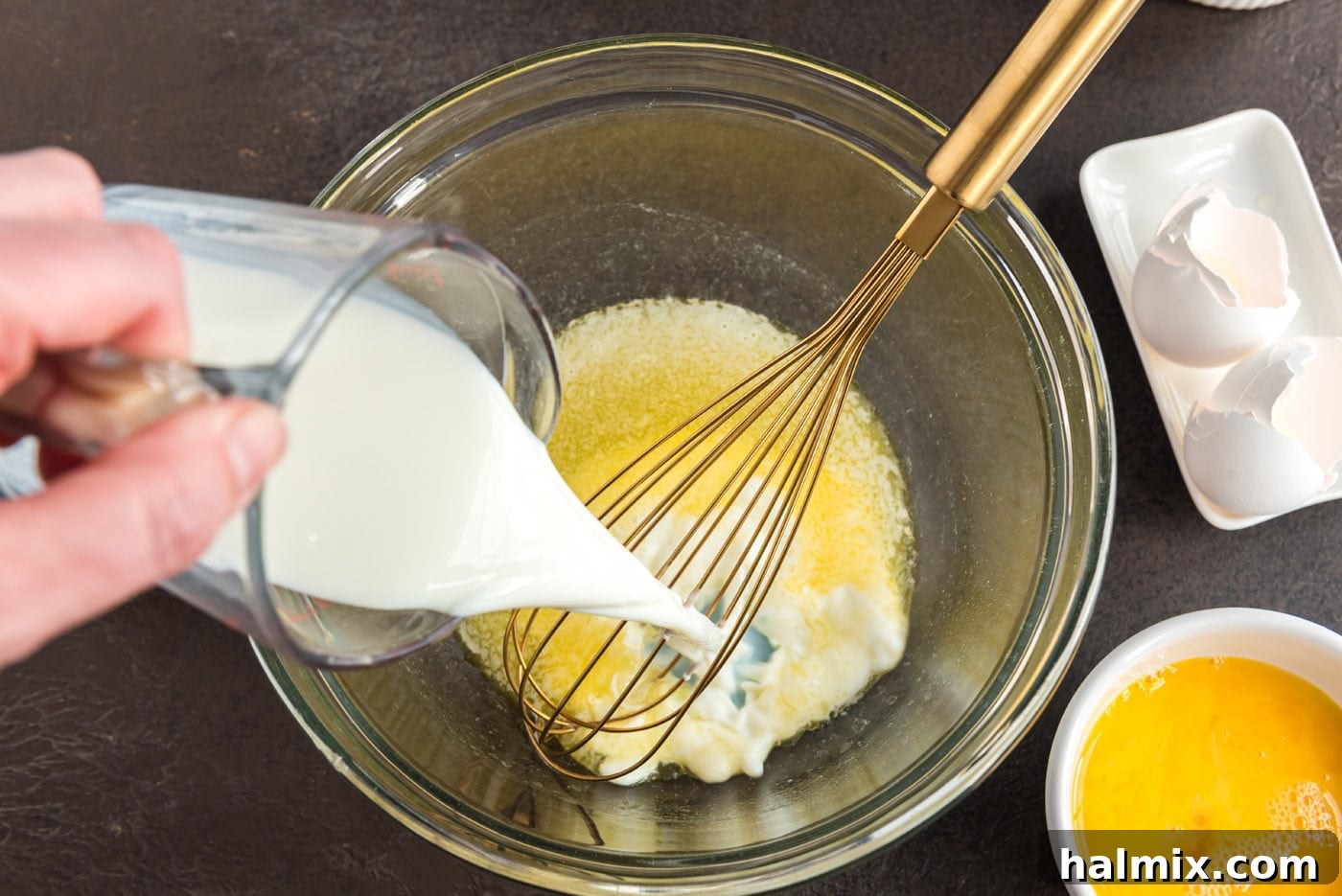
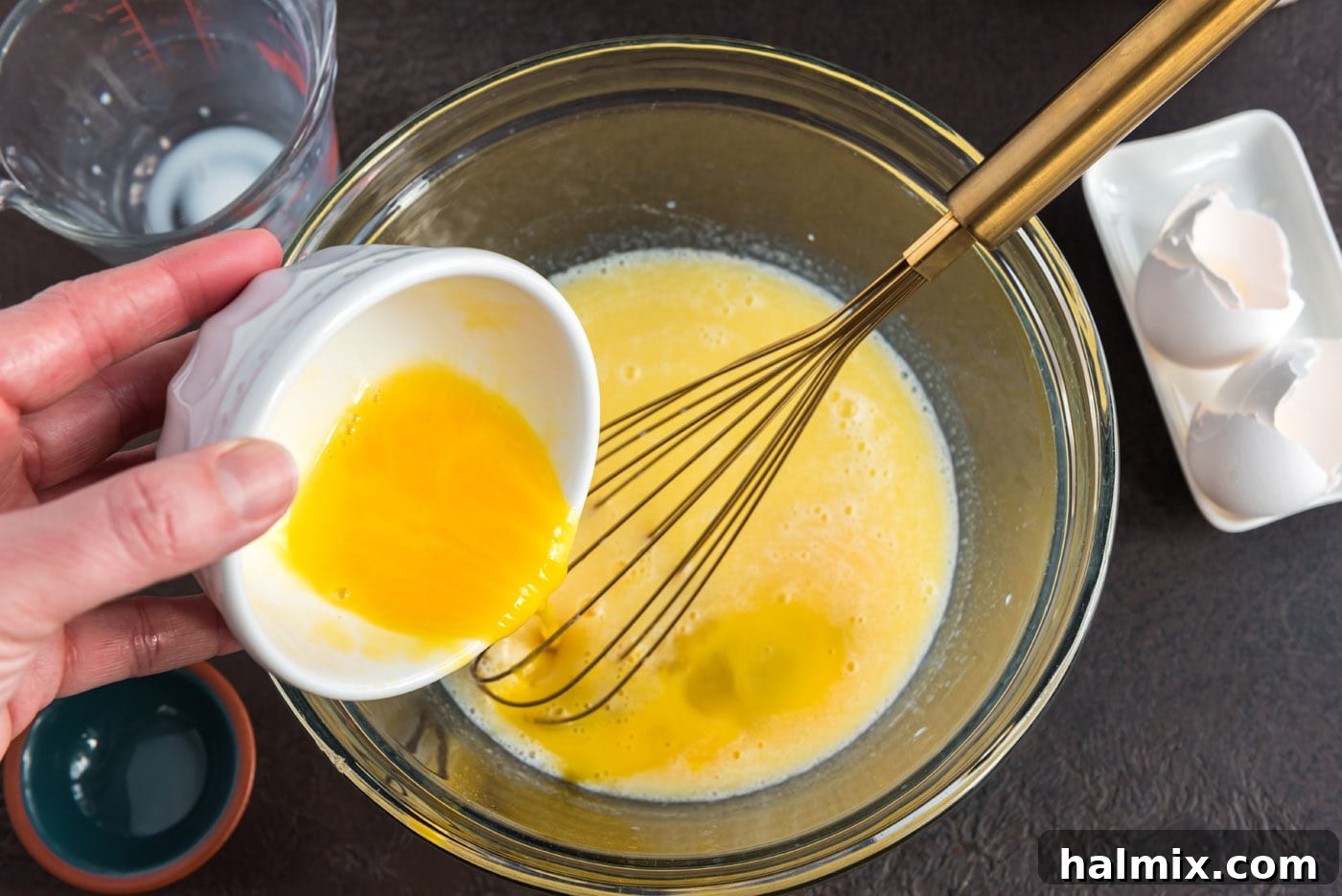
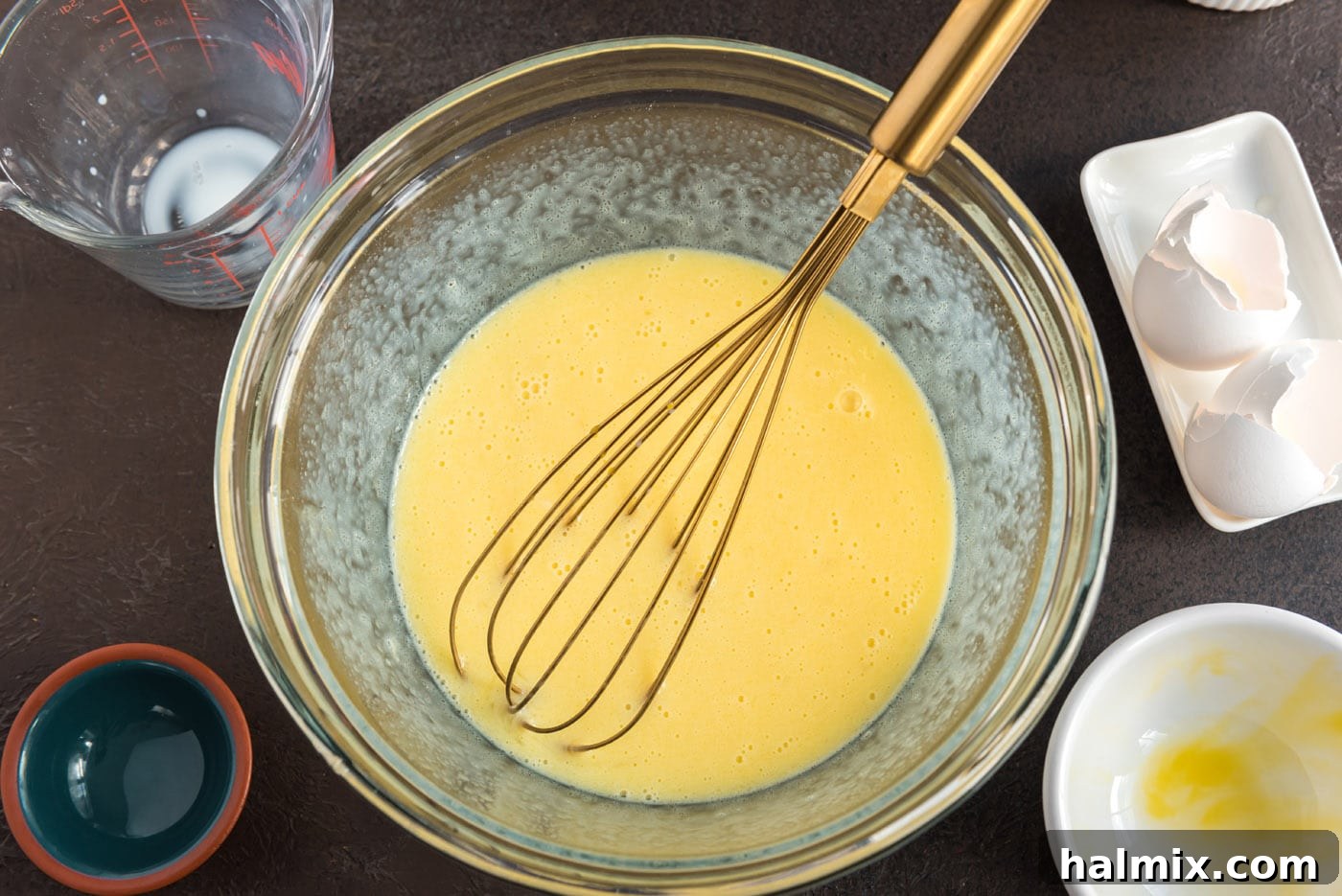
- Prepare Wet Ingredients: In a separate bowl, combine the remaining half cup of milk with the melted butter and granulated sugar. Stir this mixture thoroughly until the sugar completely dissolves. Once the sugar is dissolved, beat in the two eggs until the entire mixture is smooth and evenly combined. This rich liquid base will contribute to the Partybrot’s tender crumb.
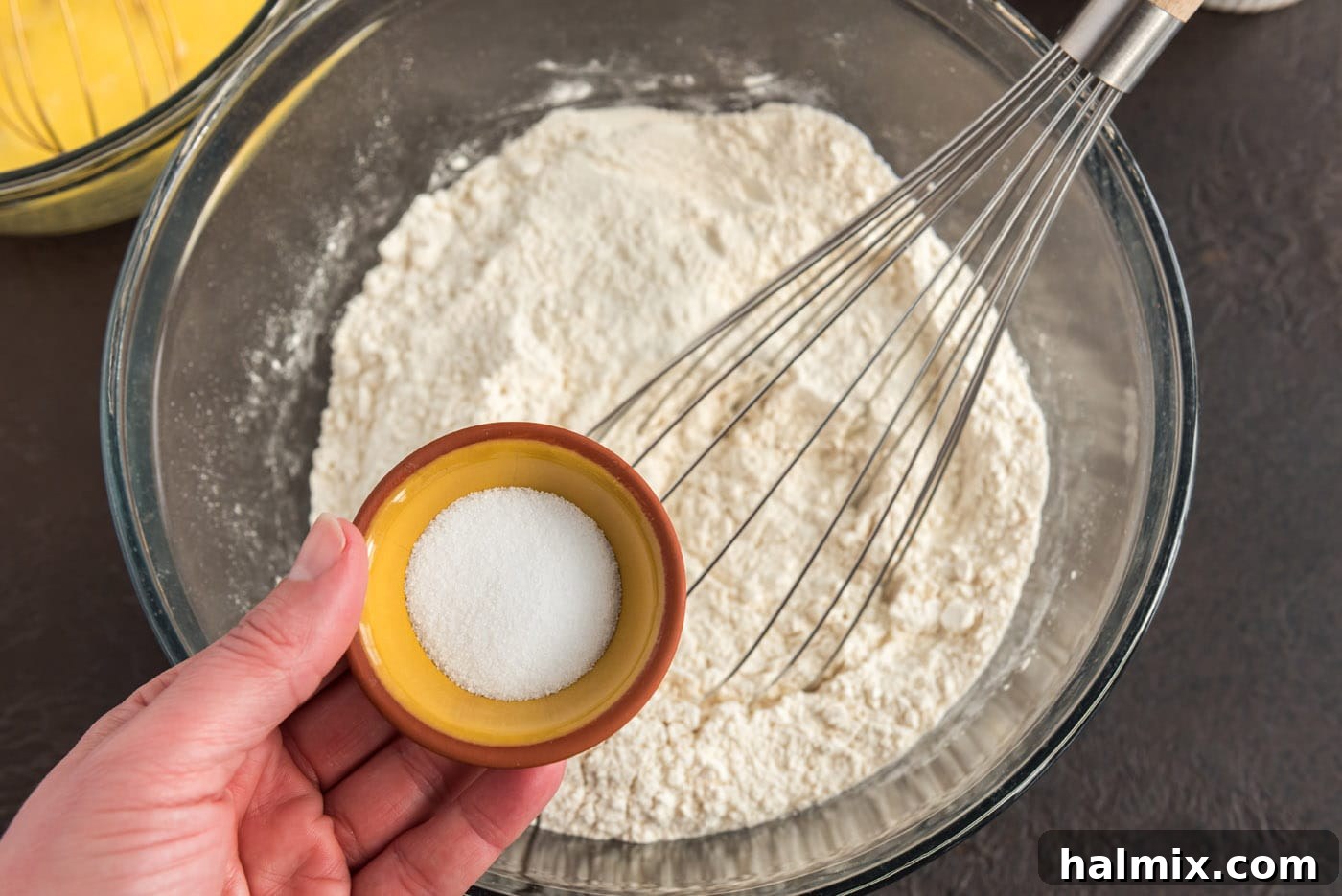
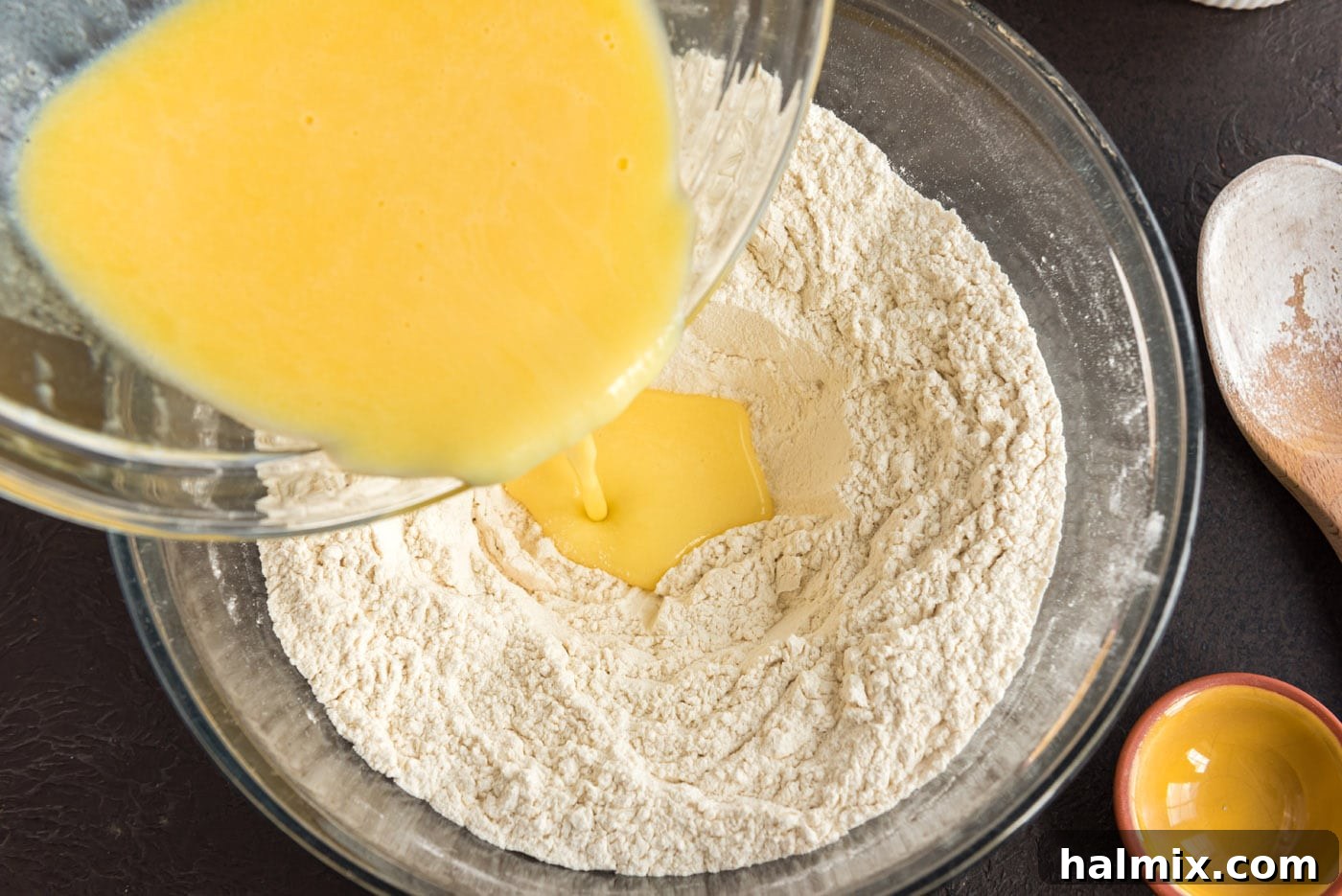
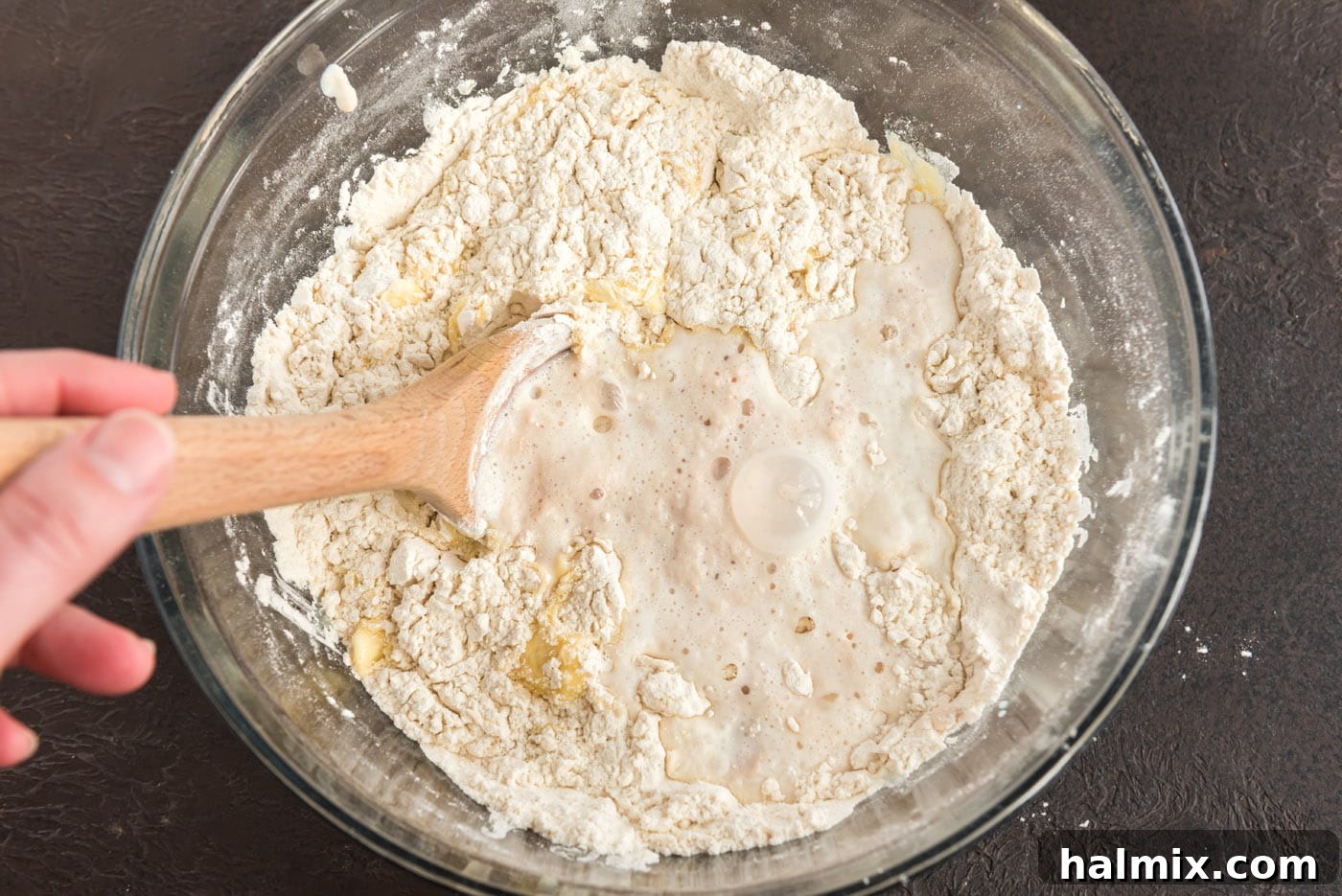
- Combine Dry and Wet Ingredients: In a large mixing bowl, whisk together the flour and salt. Create a deep well in the center of the flour mixture. Pour in both the dissolved yeast mixture and the prepared butter-egg mixture into this well. Using a sturdy wooden spoon or a dough whisk, gradually incorporate the flour from the sides into the wet ingredients until a soft, shaggy, and slightly sticky dough begins to form. Avoid overmixing at this stage.
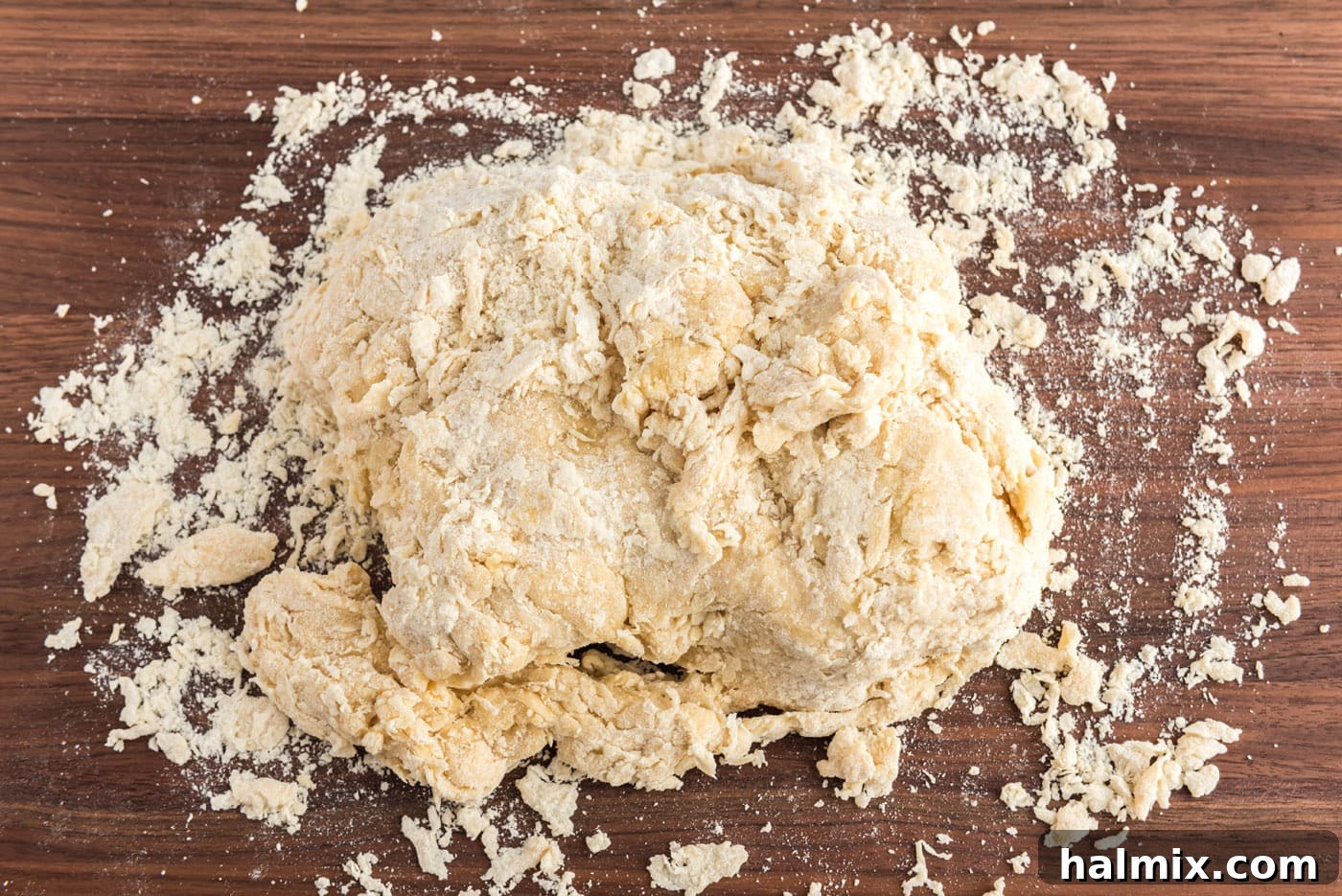
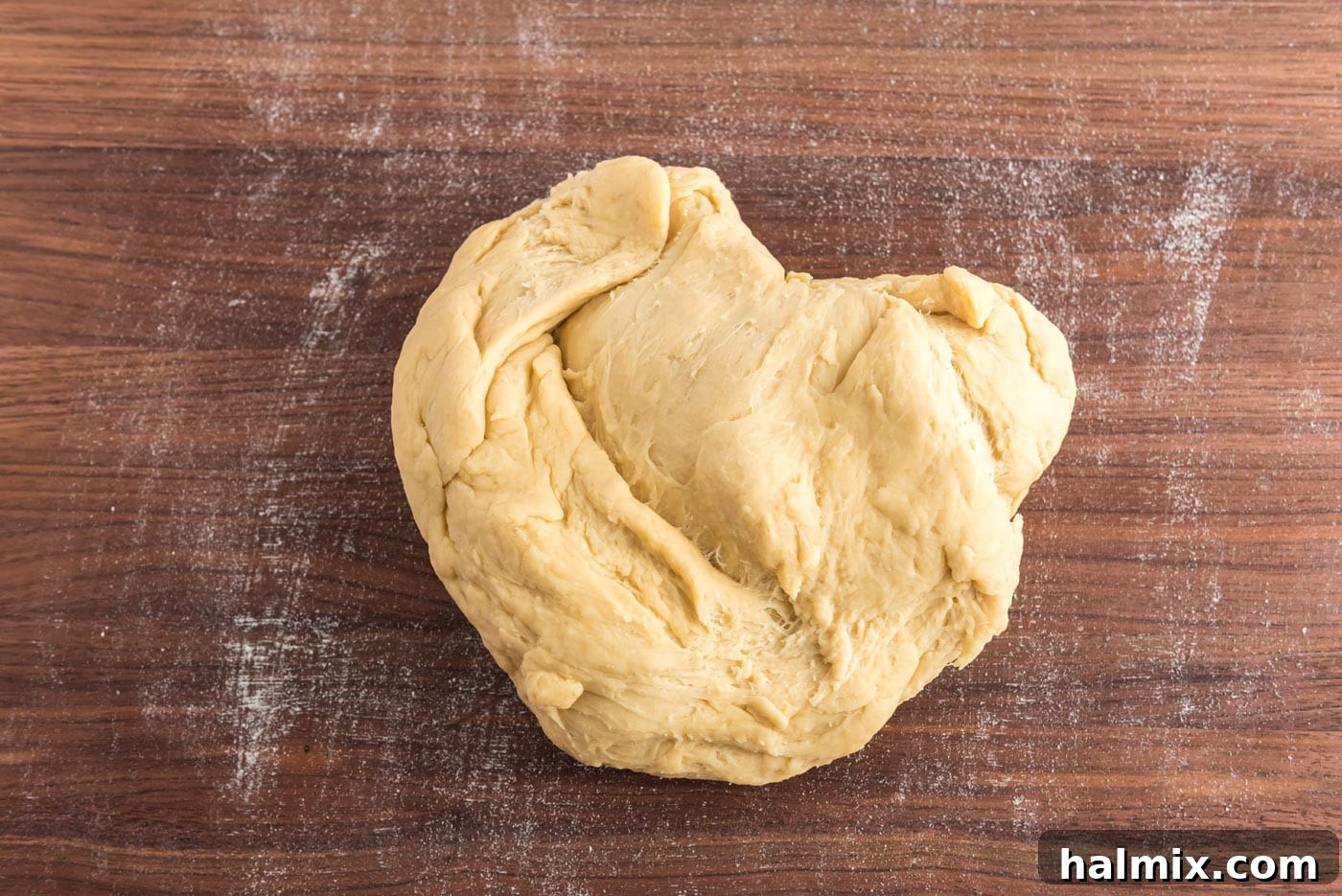
- Knead the Dough: Turn the sticky dough out onto a lightly floured work surface. Begin kneading the dough vigorously. Use a push-fold-turn motion, working the dough with the heels of your hands. Continue kneading for approximately 10 minutes, or until the dough transforms into a smooth, shiny, and elastic ball. This development of gluten is essential for the bread’s structure and chewiness.
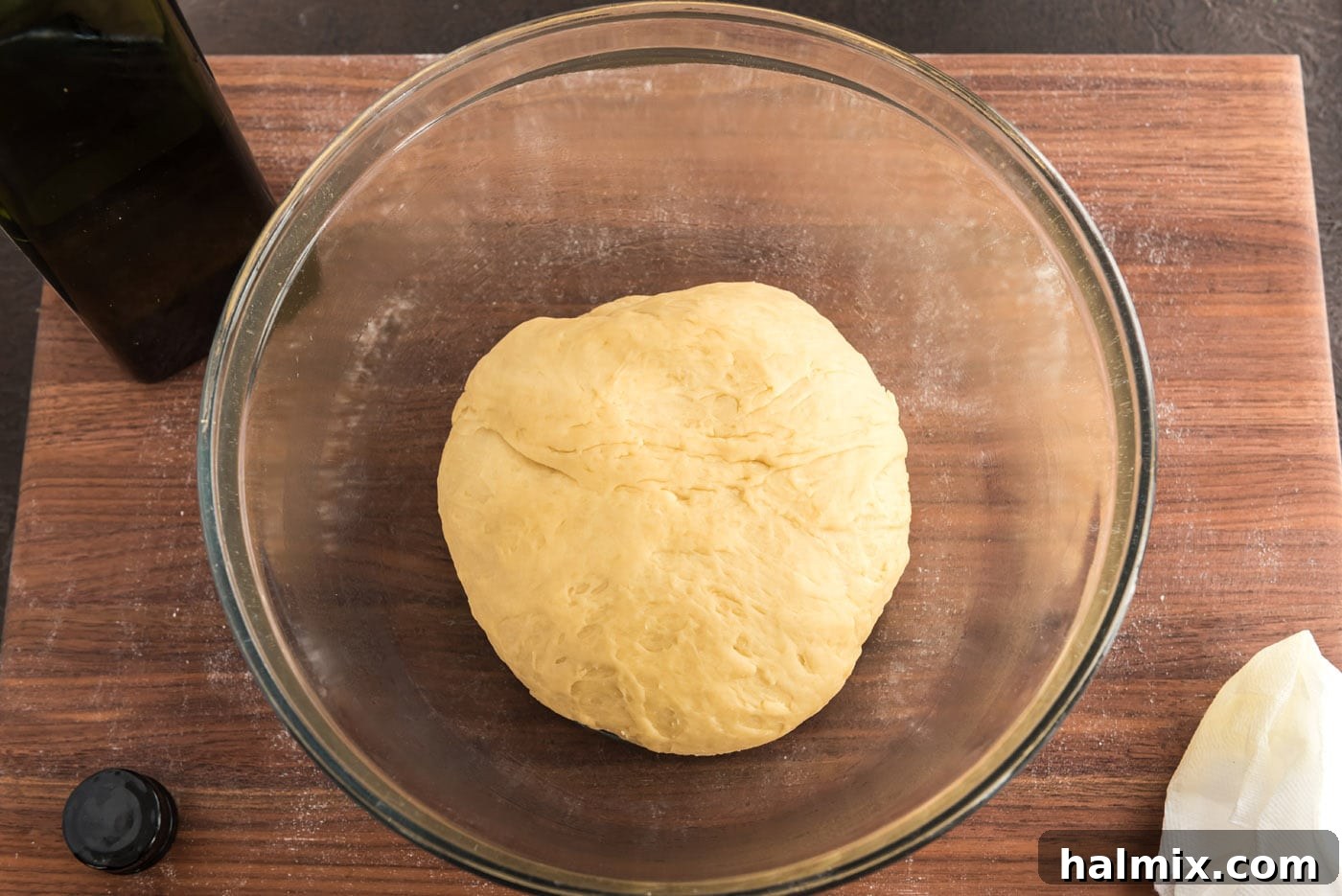
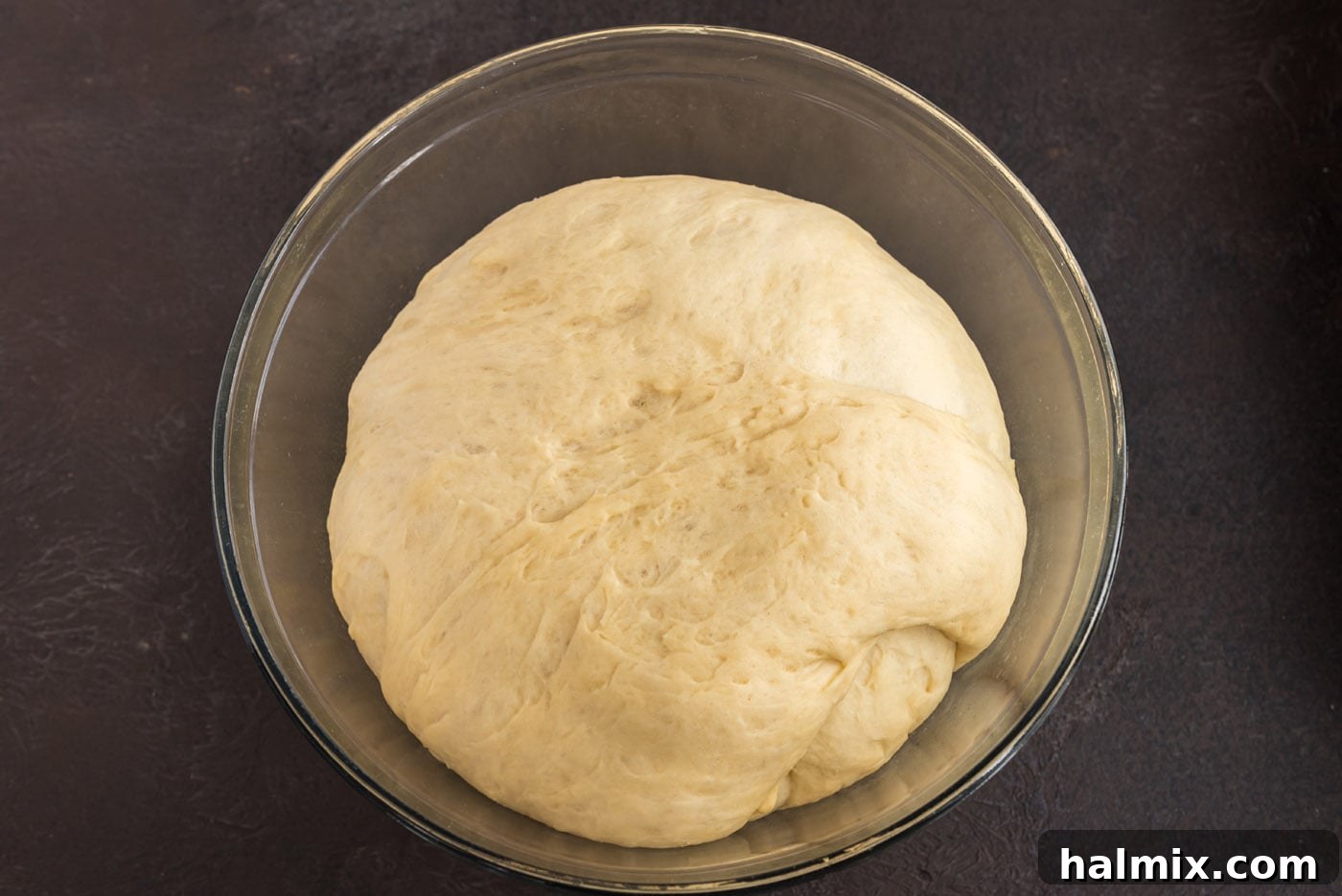
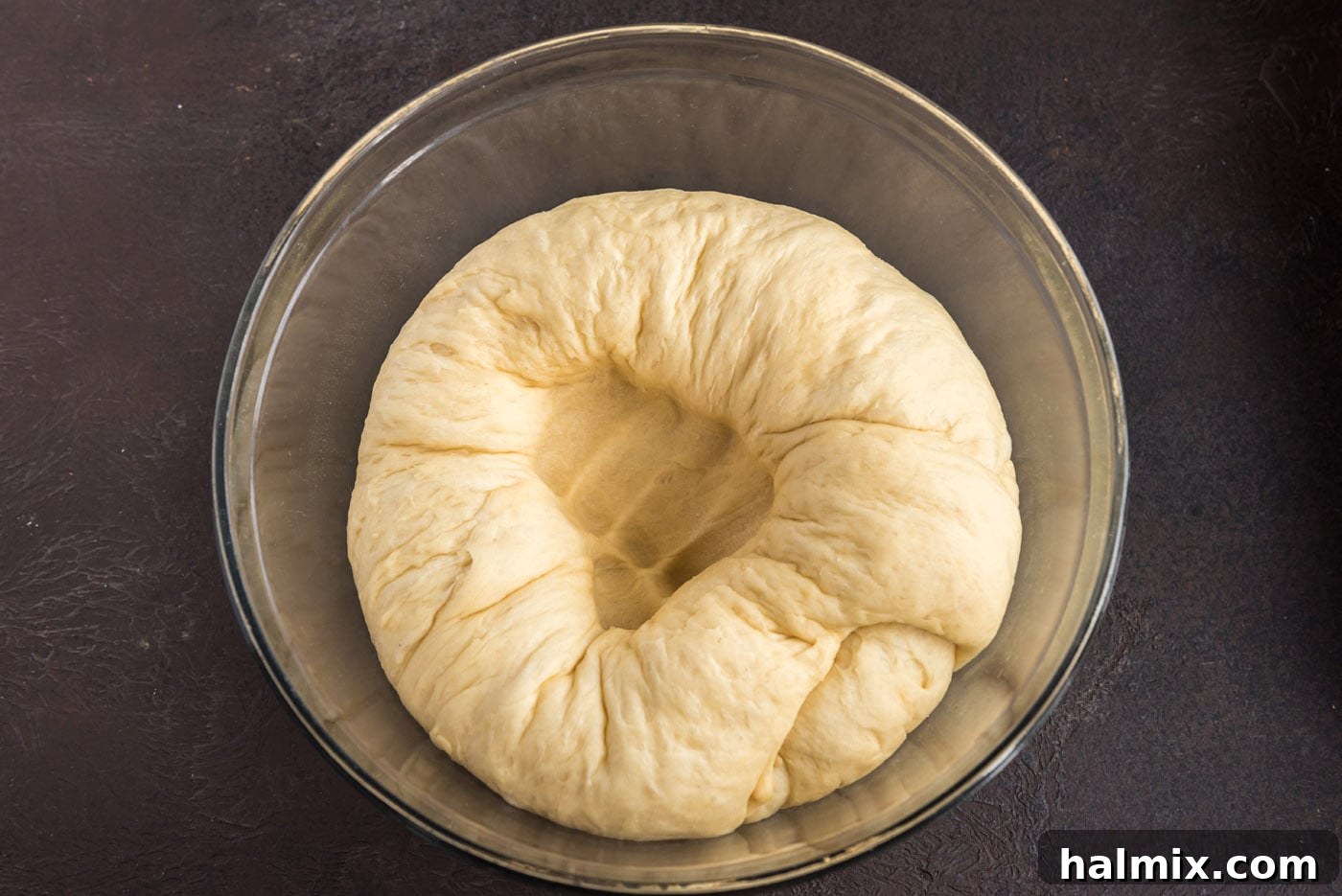
- First Rise and Rest: If your dough feels excessively sticky after kneading, incorporate additional flour, one tablespoon at a time, until it is manageable but still soft. It’s crucial not to add too much flour, as this will result in a dry bread. Transfer the kneaded dough into a large, lightly oiled bowl, turning it once to coat all sides. Cover the bowl loosely with a clean dish towel and let it rise in a warm, draft-free place until it has doubled in size, which typically takes about 1 to 1.5 hours, depending on your ambient temperature. Once doubled, gently punch down the dough to release the air, then let it rest for another 10 minutes.
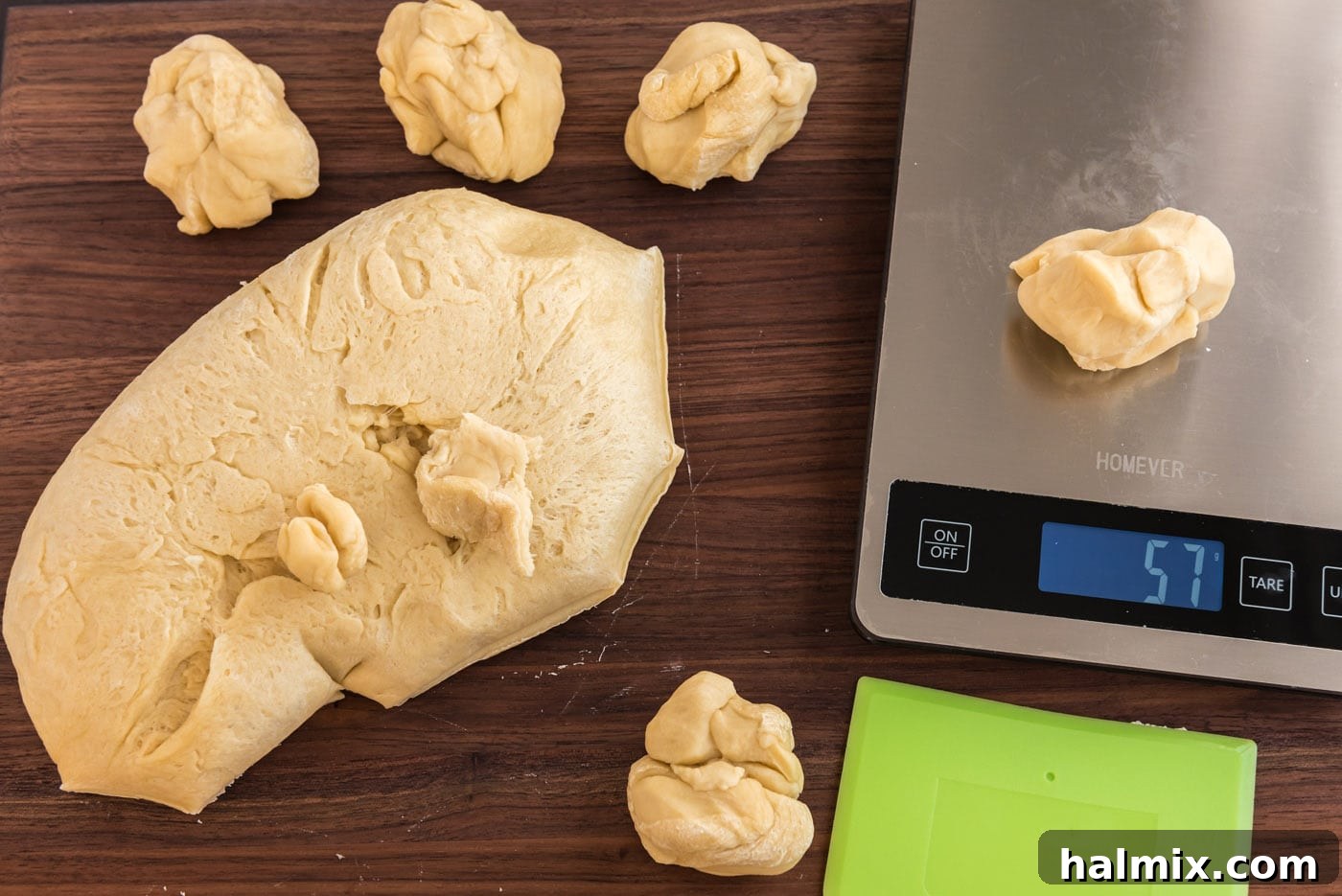
- Divide and Shape Rolls: Lightly grease a 9.5-inch springform pan with some melted butter. Turn the rested dough out onto a clean work surface. The easiest and most accurate way to divide the dough into 19 equal pieces is by using a kitchen scale. Place the entire dough ball on the scale to get its total weight. Convert this weight from pounds to ounces, then divide the total number of ounces by 19. This calculation will give you the approximate weight each individual roll should be. Carefully pull off pieces of dough and weigh them on the scale, adjusting as needed, until you have 19 uniformly sized portions. This method ensures perfectly even rolls. Shape each piece of dough into a smooth, tight ball. To do this, press down on the dough with the heel of your palm, then cup your hand around it and roll it against the counter in a circular motion, creating a taut surface on the ball.
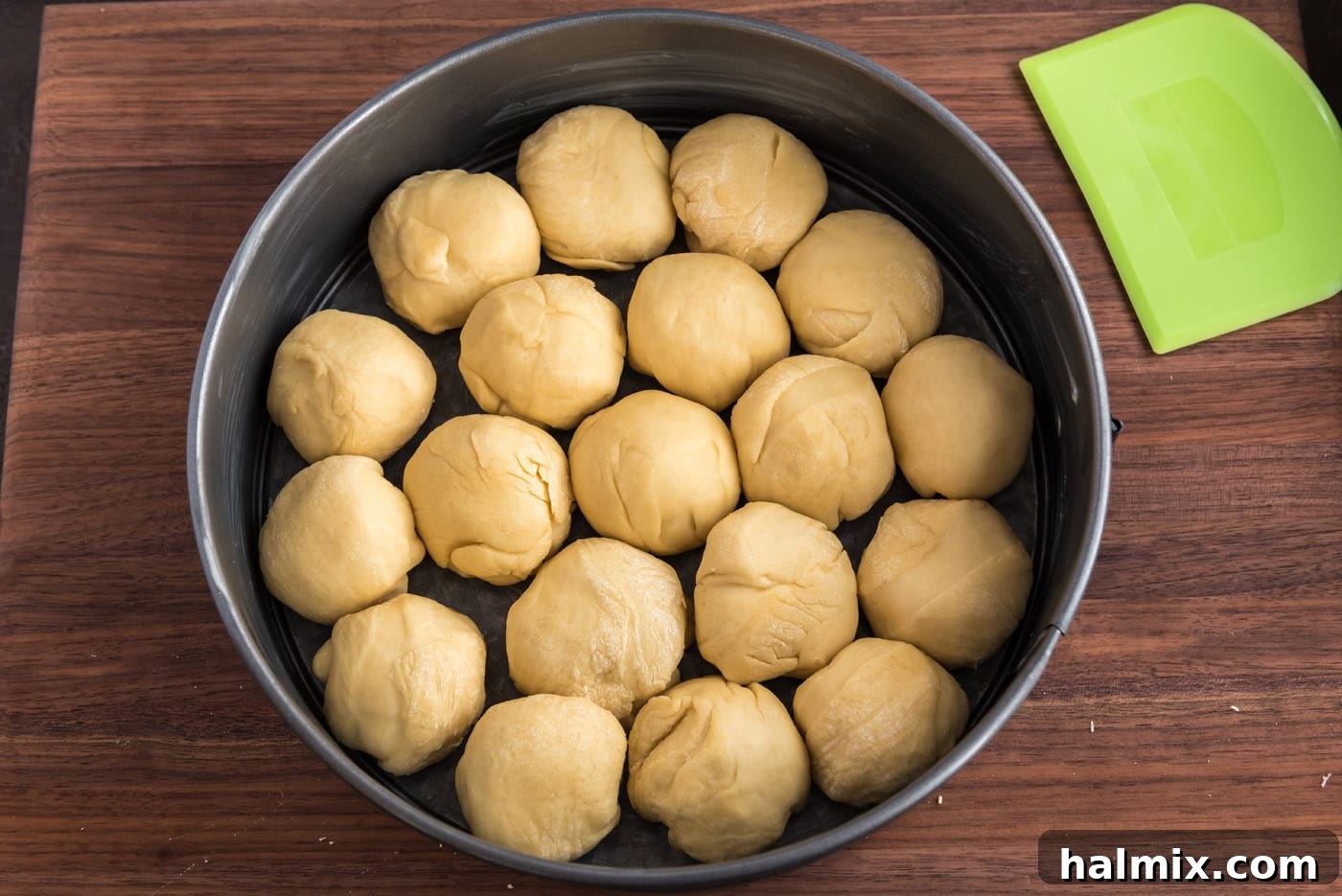
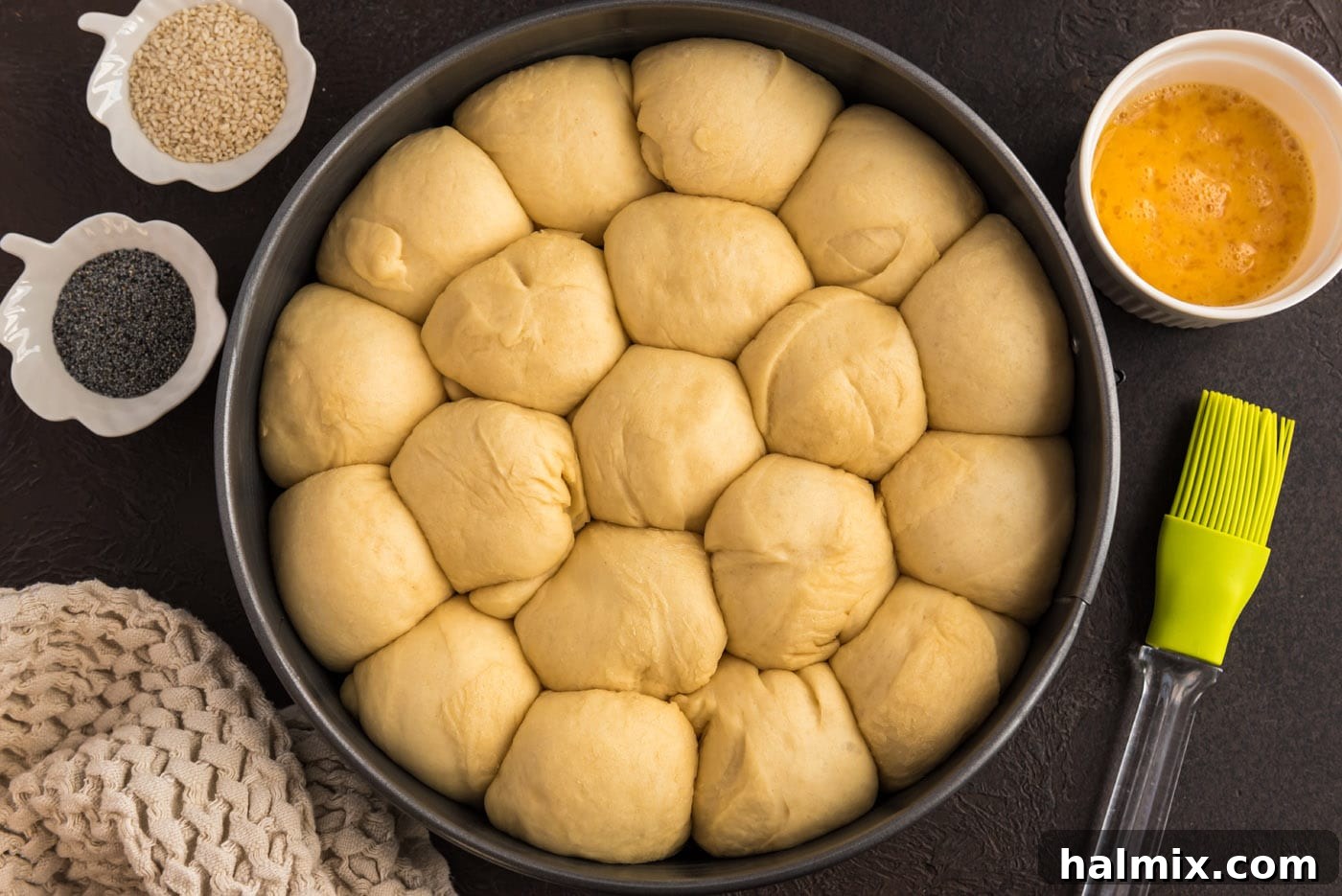
- Second Proof: Arrange the shaped rolls neatly within the prepared springform pan. Create an outer ring using 12 rolls, followed by an inner ring of 6 rolls. Place the final, 19th roll directly in the center of the two rings. This arrangement ensures even baking and easy tearing. Cover the pan loosely with a clean dish towel and let the rolls proof for their second rise in a warm spot until they have visibly doubled in size and are puffy, which typically takes around 45 minutes.
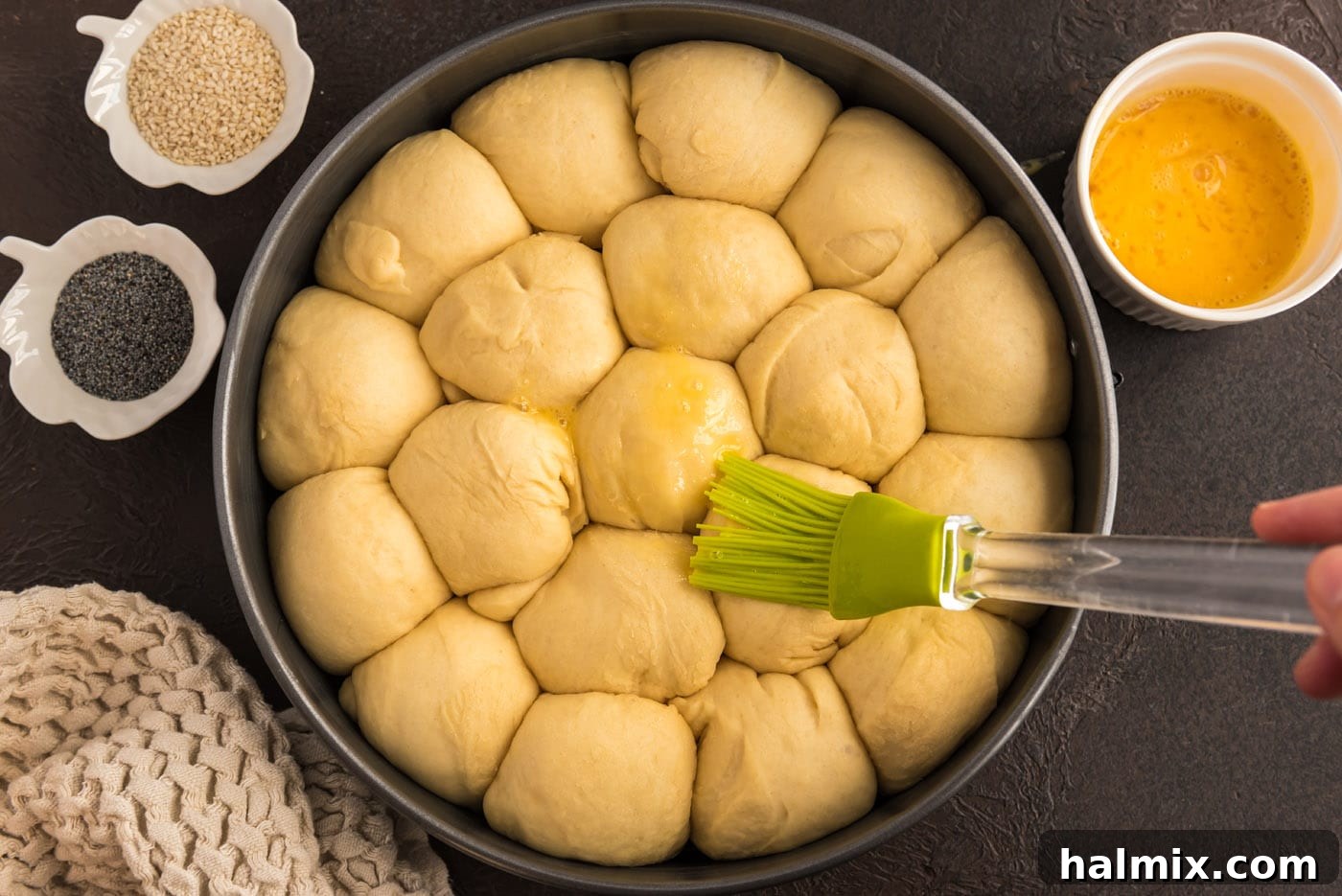
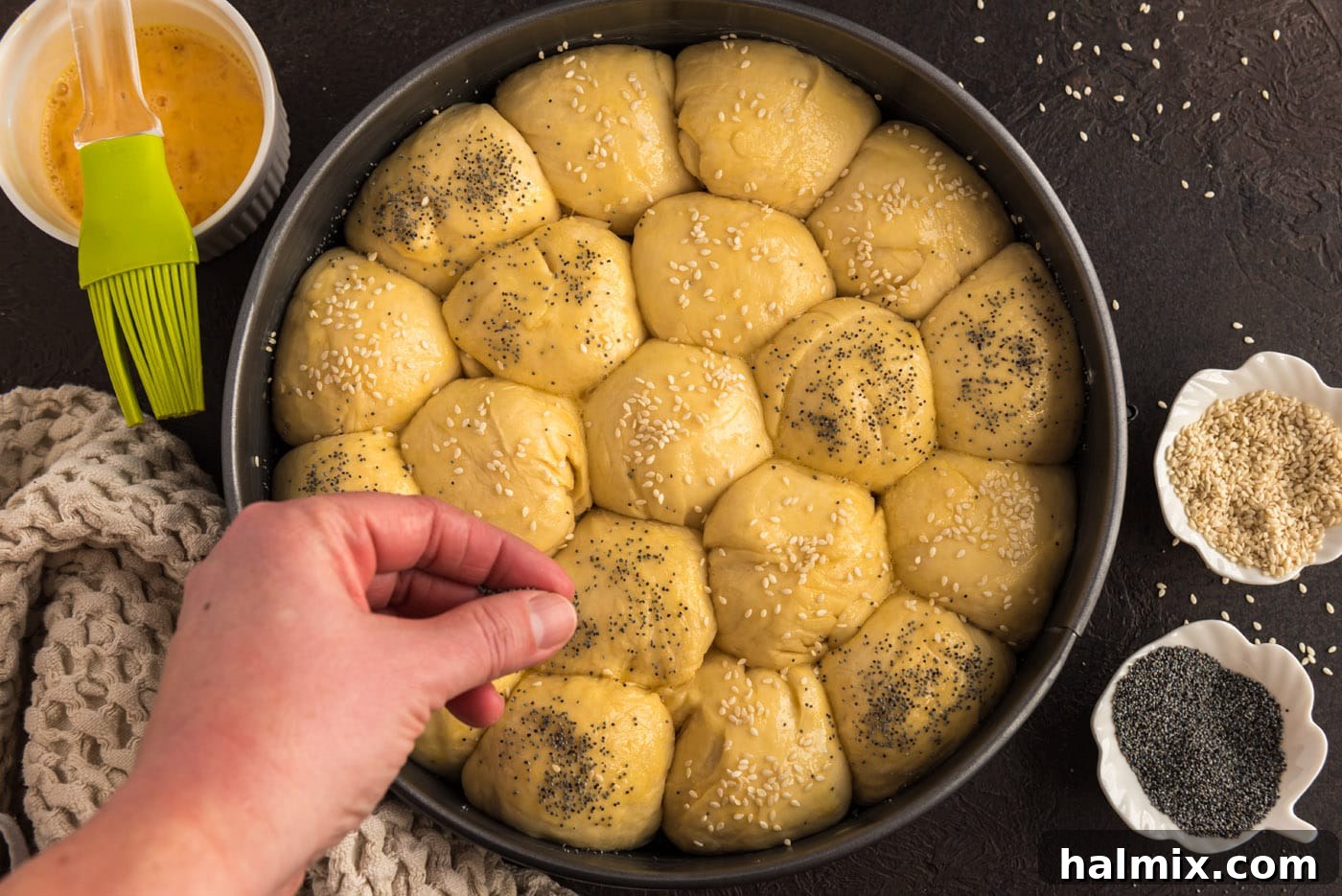
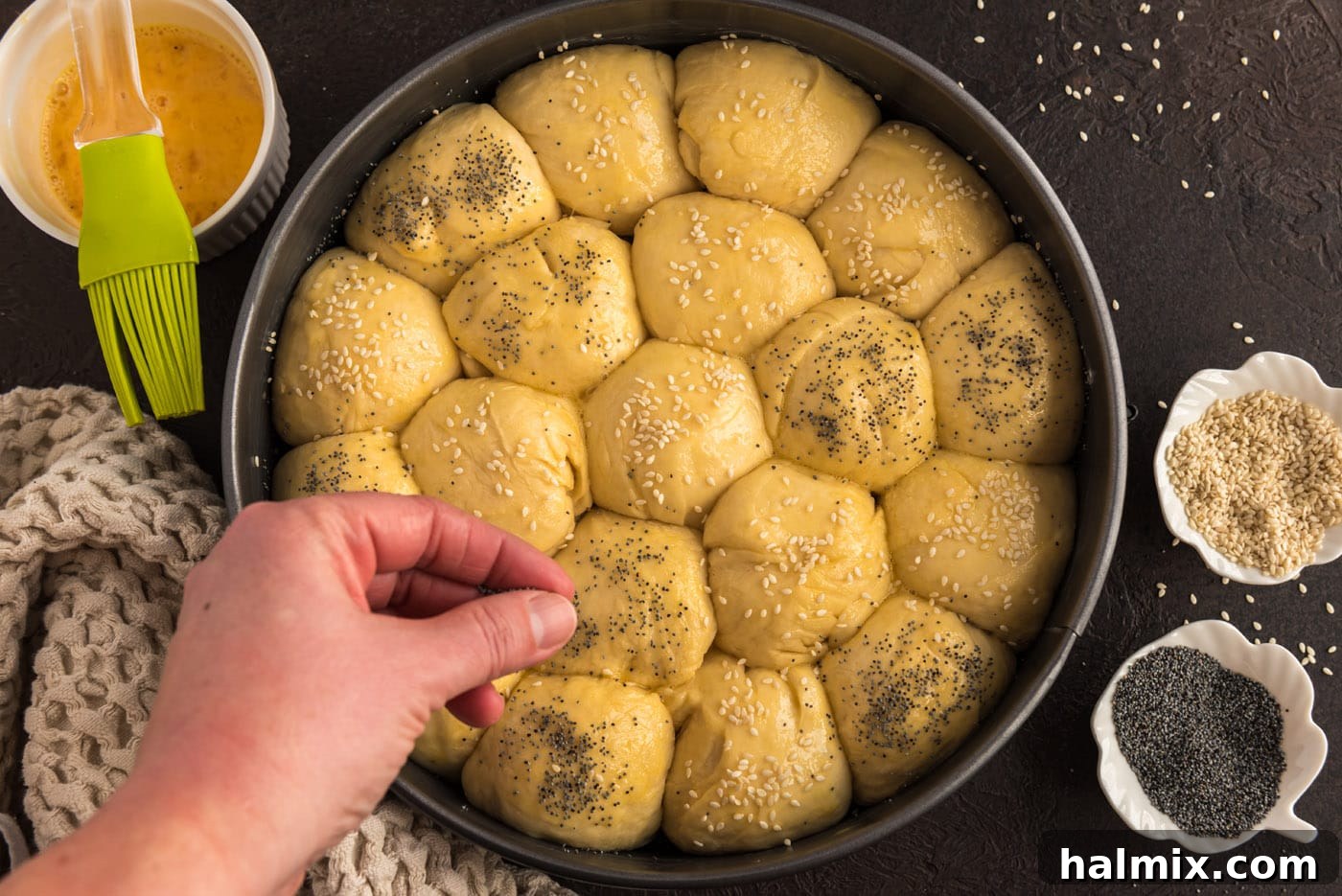
- Egg Wash and Seeds: Once the rolls have fully proofed, gently brush the top of each roll with the beaten egg glaze. This egg wash will give your Partybrot a beautiful, shiny, golden-brown crust. Immediately after brushing, sprinkle the rolls alternately with poppy seeds and sesame seeds, or a combination of your favorite toppings.
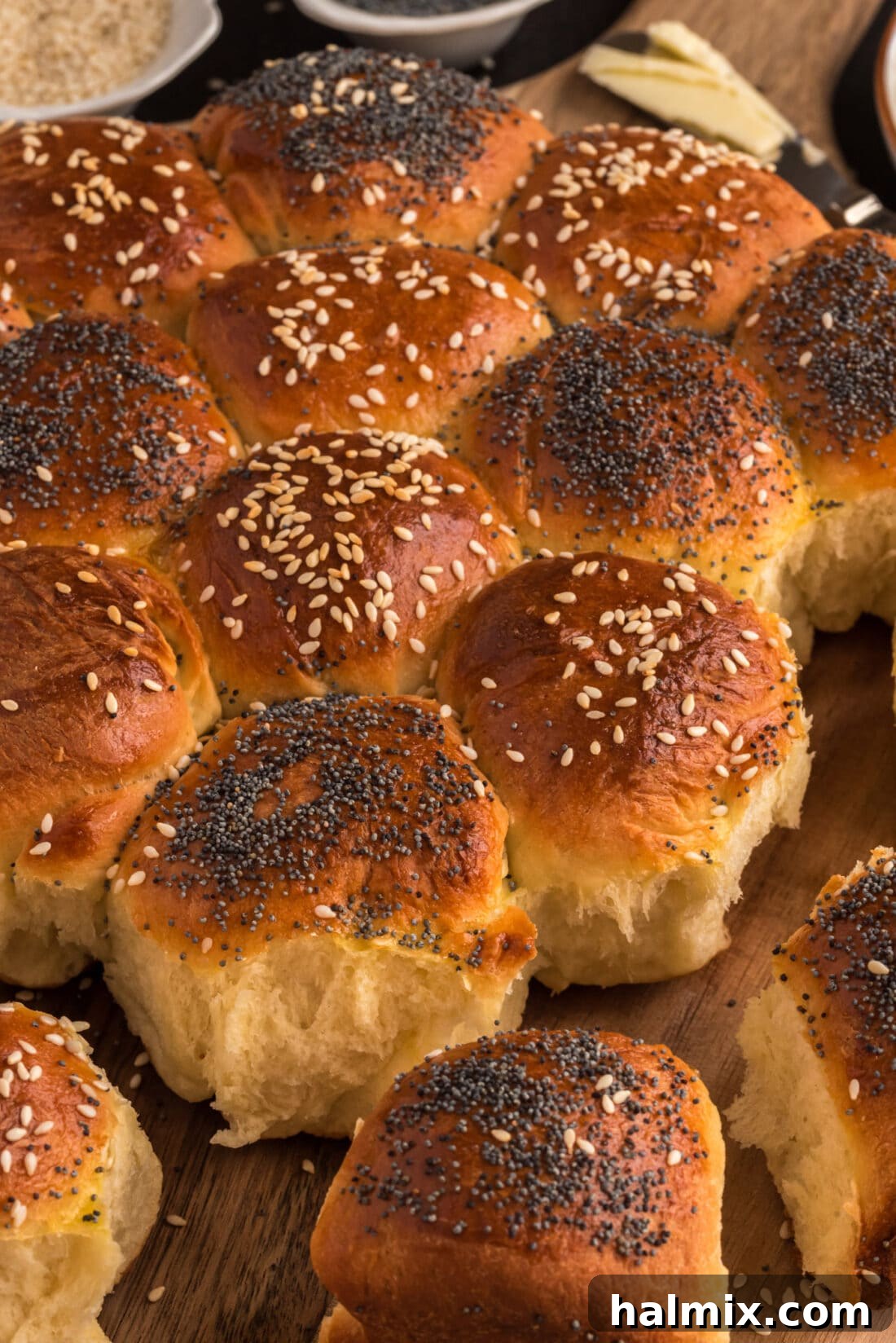
- Bake and Serve: Preheat your oven to 425°F (220°C). Bake the Partybrot in the preheated oven for 25-30 minutes, or until the rolls are gloriously golden brown and cooked through. Once baked, carefully remove the pan from the oven and place it onto a wire rack to cool slightly for about 5-10 minutes. Then, release the springform pan sides and transfer the warm Partybrot onto a serving plate. Serve immediately and watch as everyone tears into these delightful German party bread rolls!
Frequently Asked Questions & Expert Tips for Partybrot
Once your Partybrot has completely cooled to room temperature, you can store the bread rolls in an airtight container or wrapped tightly in aluminum foil. They will maintain their freshness and soft texture at room temperature for up to 2 days. For longer storage, transfer the rolls to an airtight container and keep them in the refrigerator for up to 4 days. Be aware that refrigerating bread can sometimes cause it to go stale a bit more quickly than at room temperature, so gently reheating them before serving is recommended.
Absolutely! Partybrot freezes exceptionally well. After the rolls are fully baked and completely cooled, transfer them to a large freezer-safe bag or an airtight freezer container. Freeze for up to 2 months. To enjoy them again, simply thaw the rolls at room temperature or reheat them gently in a warm oven (around 300°F/150°C) until warmed through and soft.
A lack of rise often points to inactive yeast or incorrect milk temperature. Ensure your yeast isn’t expired and the milk is lukewarm (100-110°F). If the milk is too hot, it kills the yeast; if too cold, it won’t activate it. Your rising environment also matters: a warm, draft-free spot is ideal. If all else fails, your yeast might be old, and it’s best to start with a fresh batch.
Yes, you can! You can prepare the dough up to the first rise. After punching it down, instead of letting it rest for 10 minutes at room temperature, place the oiled dough in a covered bowl in the refrigerator overnight (up to 24 hours). The cold will slow down the yeast activity. The next day, remove the dough from the fridge, let it come to room temperature for about 30-60 minutes, and then proceed with dividing, shaping, and the second rise as directed in the recipe.
Creative Serving Suggestions for Partybrot
Partybrot’s delightful simplicity makes it incredibly versatile for serving. While the classic poppy and sesame seed topping is always a hit, feel free to get creative with other seeds. Consider a combination of caraway, flax, chia, sunflower, or even pumpkin seeds for varied flavors and textures. Each adds its own unique touch, allowing you to customize your Partybrot for any preference.
These German party bread rolls are a fantastic accompaniment to a wide range of dishes. Serve them alongside hearty stews, such as a rich beef goulash or a comforting pot roast, to soak up every last drop of flavorful sauce. They’re equally wonderful with a simple pat of butter, a drizzle of olive oil, or paired with a spread of artisanal cheeses and a vibrant marinara sauce for dipping – transforming them into an irresistible appetizer. As the name suggests, Partybrot shines at gatherings; arrange them on a large platter with a selection of cured meats and cheeses for an impressive charcuterie board that encourages guests to tear and share. They also make a wonderful addition to a brunch spread or a casual weeknight dinner, proving that this humble bread truly fits every occasion.
Explore More Delicious Bread Roll Recipes
If you’ve fallen in love with the art of bread-making and crave more delightful roll recipes, here are some other fantastic options to add to your baking repertoire:
- Bretzel Rolls
- Parmesan Garlic Rolls
- Homemade Pull Apart Dinner Rolls
- Pull Apart Cornmeal Dinner Rolls
I find immense joy in baking and cooking, and sharing my kitchen experiences with all of you! To make sure you never miss a new recipe, I offer a convenient newsletter delivered right to your inbox every time a fresh post goes live. Simply subscribe today and start receiving your free daily recipes!
Partybrot – German Party Bread
IMPORTANT – There are often Frequently Asked Questions within the blog post that you may find helpful. Simply scroll back up to read them!
Print It
Pin It
Rate It
Save It
Saved!
Course: Breads
Cuisine: American, German
Ingredients
- 1 cup milk separated
- 2 ½ teaspoons active dry yeast
- 4 tablespoons unsalted butter melted
- 2 tablespoons granulated sugar
- 2 eggs beaten
- 2 teaspoons salt
- 4 cups unbleached all purpose flour
- 1 egg beaten for egg wash
Things You’ll Need
-
9.5 inch springform pan
-
Kitchen scale
-
Wire cooling racks
Before You Begin
- Be sure that your active dry yeast has not expired before beginning.
- Lukewarm milk is fine. The temperature should be around 100 degrees F. If the milk is too hot it will kill the yeast while milk that is too cold will delay the rise process.
- To accurately measure flour, use the scoop and sweep method. To do so, first aerate the flour in the bag/container then spoon it into your measuring cup until it’s overflowing. Use the backside of a butter knife to level the flour in your cup. Do not tap the cup on the counter or scoop the flour directly from the bag as you’ll likely end up with about 50% more flour than you need.
- You can top partybrot with your favorite seeds or do a combination of a few different types – sesame, poppy, caraway, flax, chia, sunflower, and even pumpkin seeds are all great options.
Instructions
-
Warm milk in the microwave for 30-40 seconds to take the chill off, should be lukewarm. Sprinkle yeast into 1/2 cup of the milk in a bowl. Leave for 5 minutes; then stir to dissolve.
-
Combine the remaining 1/2 cup of milk with melted butter and sugar. Stir until sugar is dissolved. Beat in eggs until evenly combined.
-
Mix flour and salt in a large bowl. Make a well in the center and pour in the dissolved yeast and butter mixture. Use a wooden spoon to mix in the flour to form a soft, sticky dough.
-
Turn the dough out onto a floured work surface. Knead until smooth, shiny, and elastic, about 10 minutes.
-
Knead in extra flour, 1 tablespoon at a time, if the dough is too sticky. Resist adding too much flour, as the dough should not be dry, but soft. Put the dough in an oiled bowl and cover with a dish towel. Let rise until doubled about 1 to 1 1/2 hours. Punch down, then let rest for 10 minutes.
-
Grease a 9.5-inch springform pan with some melted butter. Divide dough into 19 equal pieces (see tip below). Shape each piece of dough into a smooth ball by pressing down with the heel of your palm, then rolling around against the counter to create the ball.
TIP – The easiest and most accurate way to separate the dough into 19 equal pieces is by using a simple kitchen or postage scale. Place the dough on the scale to get the full weight. Convert the total weight from pounds to ounces, then divide the total number of ounces by 19. That will give you approximately how many ounces each of your pieces should weigh. Pull pieces off of the dough and place it on the scale to get the right weight. Works perfectly and you’ll have nice uniform sections.
-
Arrange shaped rolls in the prepared pan by making an outer ring of 12 rolls, an inner ring of 6 rolls, placing the last roll in the center of the 2 rings. Cover the pan with a dish towel and proof until doubled in size, about 45 minutes.
-
Brush the top of each roll with egg glaze and sprinkle alternately with sesame and poppy seeds.
-
Bake in preheated 425° F. oven for 25-30 minutes or until golden brown. Place pan onto a wire rack to cool slightly. Remove the springform from the rolls and place on a plate. Serve immediately.
Expert Tips & FAQs
- Store the fully cooled bread rolls in an air-tight container or wrapped in aluminum foil at room temperature for up to 2 days. To store longer, place the rolls in an air-tight container and keep in the refrigerator for up to 4 days. Refrigerating the rolls may cause them to go stale quickly.
- Freezing – Transfer the fully cooled rolls to a large freezer bag or air-tight container and freeze for up to 2 months. Thaw and reheat.
Nutrition
The recipes on this blog are tested with a conventional gas oven and gas stovetop. It’s important to note that some ovens, especially as they age, can cook and bake inconsistently. Using an inexpensive oven thermometer can assure you that your oven is truly heating to the proper temperature. If you use a toaster oven or countertop oven, please keep in mind that they may not distribute heat the same as a conventional full sized oven and you may need to adjust your cooking/baking times. In the case of recipes made with a pressure cooker, air fryer, slow cooker, or other appliance, a link to the appliances we use is listed within each respective recipe. For baking recipes where measurements are given by weight, please note that results may not be the same if cups are used instead, and we can’t guarantee success with that method.
This post originally appeared here on Feb 16, 2010, and has since been updated with new photos and expanded expert tips for an even better baking experience.