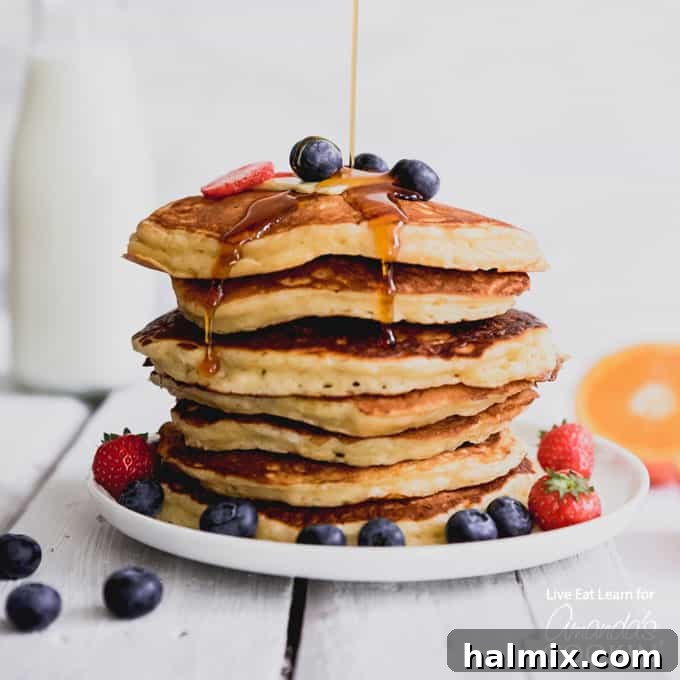
Forget the processed mixes and embrace the joy of creating something truly special from scratch. This weekend, put that boxed pancake mix back in the cabinet and level up your Saturday morning with our irresistible recipe for classic Buttermilk Pancakes! Learning how to make pancakes from scratch is not only surprisingly easy, but the resulting fluffy, tender, and utterly delicious buttermilk pancakes will completely transform your breakfast routine.
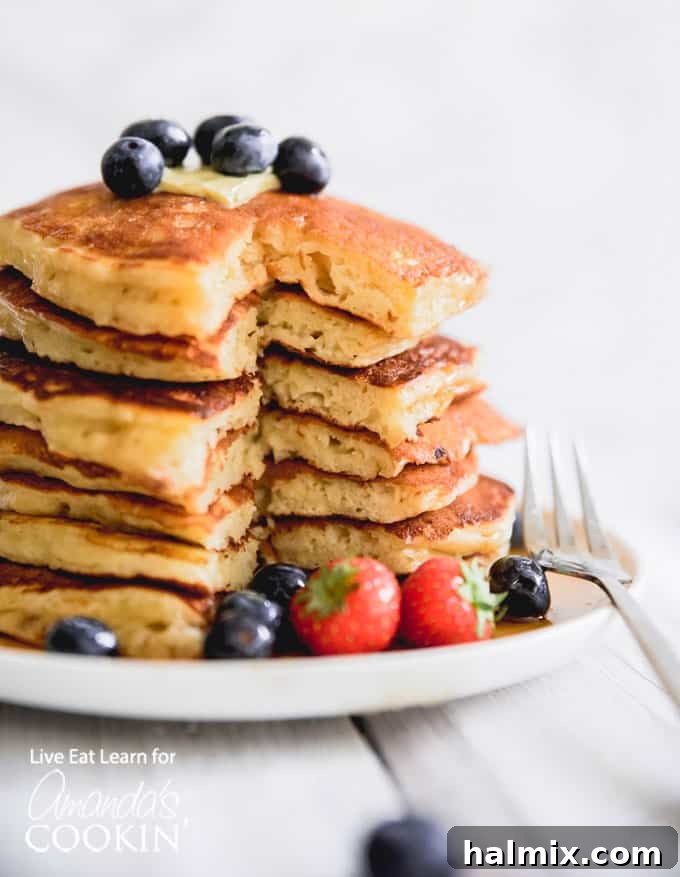
Embrace the Art of Homemade: Ditching the Box Mix for Superior Pancakes
I’ll be the first to admit, for years, I relied heavily on pre-made mixes like Bisquick or similar “master mixes” for any and all breakfast baked goods. In my mind, making pancakes with Bisquick was making homemade pancakes. This mindset shifted dramatically when I moved to Europe, where readily available boxed pancake mixes for those spontaneous Saturday morning cravings became a distant memory. The absence of this convenience forced me into a culinary revelation.
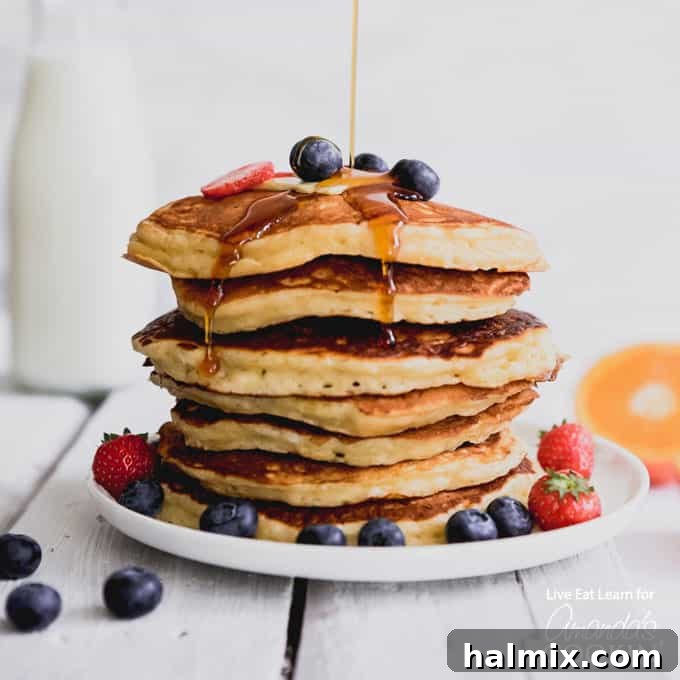
So, I did what I once considered impossible: I made pancakes entirely from scratch. This pivotal moment opened my eyes to a simple truth – you likely already possess all the basic ingredients needed to create astonishingly delicious homemade pancakes, without adding another cluttered box to your pantry. Today, I’m thrilled to share my absolute favorite Saturday morning breakfast staple: Classic Buttermilk Pancakes!
Looking for other delightful breakfast options? You might also enjoy our recipe for a Sheet Pan Breakfast Pizza!
Why Buttermilk is the Secret to Unbeatably Fluffy Pancakes
You might be wondering, “why buttermilk in pancakes?” To which I would enthusiastically reply, “because, pure magic!” Buttermilk performs wonders when it comes to crafting pancakes that are incredibly fluffy and wonderfully tender. The inherent acidity in the buttermilk reacts harmoniously with the baking soda in the batter. This chemical reaction creates tiny pockets of carbon dioxide gas, which are responsible for giving the pancakes their signature light, airy, and cake-like texture, all without the need to incorporate any additional baking powder.
This isn’t just about fluffiness; buttermilk also contributes a subtle tang and richness to the flavor profile that regular milk simply cannot replicate. It adds a depth that makes these classic buttermilk pancakes truly stand out. Don’t have buttermilk on hand? No problem! You can easily make your own DIY buttermilk substitute by combining 1 cup of cow’s milk with 1 tablespoon of lemon juice or white vinegar. Let it sit for 5-10 minutes until it slightly curdles, then use it as you would regular buttermilk. Alternatively, you can use a tablespoon of buttermilk powder mixed with 1 cup of water for convenience. Once you try pancakes with buttermilk, you’ll understand why it’s a non-negotiable ingredient for the best results.
Gather Your Ingredients for the Best Buttermilk Pancakes
Creating these delightful homemade buttermilk pancakes requires just a few basic pantry staples. Here’s what you’ll need:
- 2 cups all-purpose flour
- 3 Tbsp granulated sugar
- 2 tsp baking soda
- ½ tsp salt
- 2 cups buttermilk (or homemade substitute)
- 2 large eggs
- 3 Tbsp unsalted butter, melted
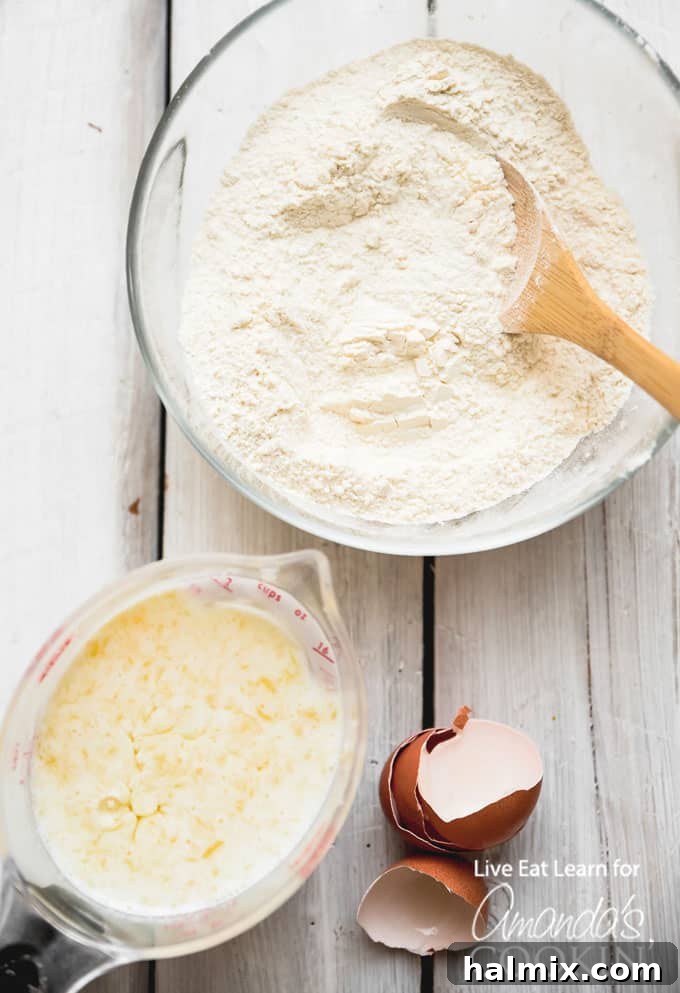
With these simple ingredients, you’re well on your way to a memorable breakfast. The beauty of this recipe lies in its straightforward nature, proving that truly delicious food doesn’t require a complex shopping list or exotic components. Just wholesome ingredients coming together to create magic.
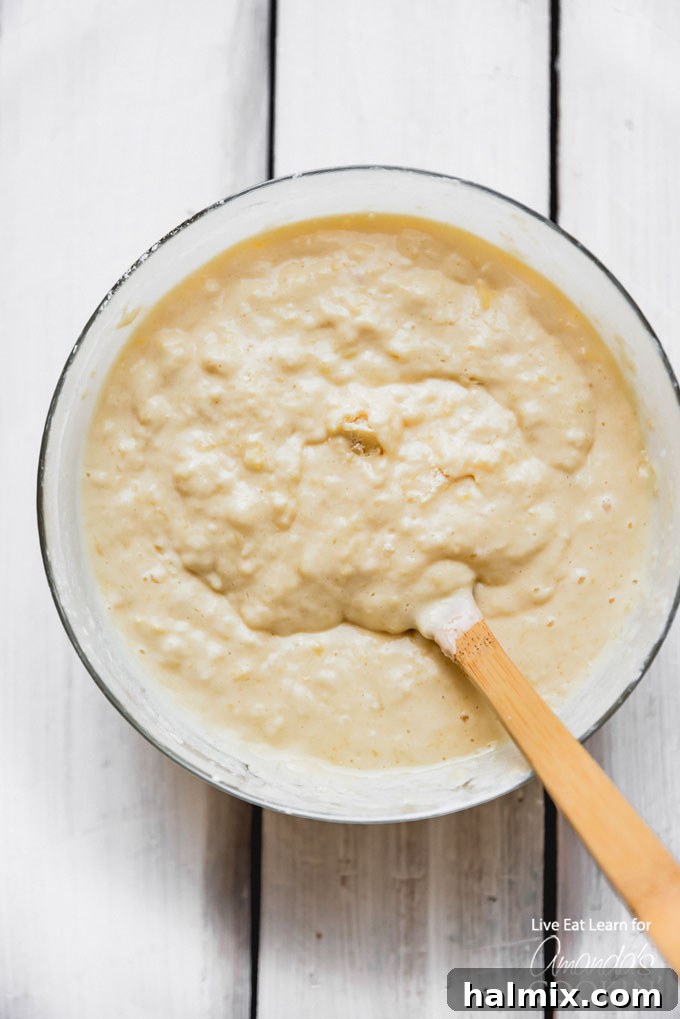
Essential Kitchen Tools for Pancake Perfection
Having the right tools can make your pancake-making experience even smoother. While you don’t need anything fancy, these items will ensure the best results:
- Large Mixing bowl: For combining your dry and wet ingredients separately, then together.
- Rubber spatula: Ideal for gently folding the batter without overmixing, and for scraping the sides of the bowl.
- Large saute pan or griddle: A non-stick surface is highly recommended for easy flipping and perfectly golden pancakes.
- Measuring cups and spoons: For accurate ingredient measurements, crucial for consistent results.
- Whisk: For thoroughly combining liquid ingredients and dry ingredients.
- Ladle or 1/4 cup measure: For portioning out the batter onto the pan evenly.
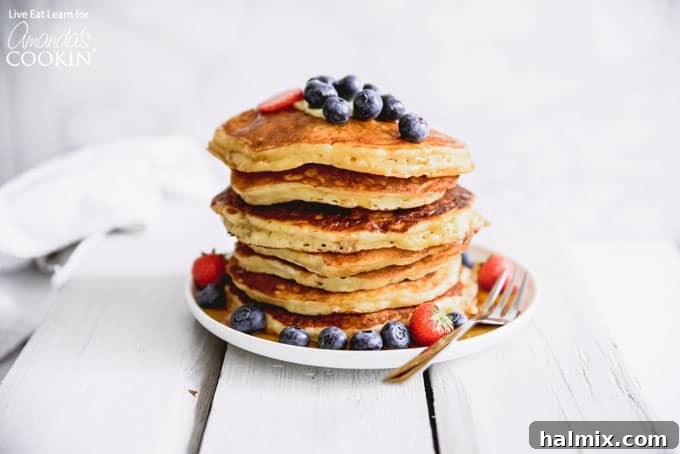
Step-by-Step: Crafting Your Fluffy Buttermilk Pancakes
Making homemade buttermilk pancakes is a simple process, yielding fantastic results every time. Follow these easy steps for pancake perfection:
- Prepare Dry Ingredients: In a large mixing bowl, whisk together the all-purpose flour, granulated sugar, baking soda, and salt. Ensure they are well combined to distribute the leavening agent evenly.
- Combine Wet Ingredients: In a separate medium bowl, whisk together the buttermilk, large eggs, and melted unsalted butter until thoroughly blended.
- Mix Batter Gently: Pour the buttermilk mixture into the dry ingredients. Stir with a rubber spatula or whisk until just combined. It’s perfectly fine, and even desirable, to have a few lumps in the batter – this indicates you haven’t overmixed it. Overmixing develops gluten, leading to tough pancakes.
- Heat the Pan: Lightly grease a large non-stick sauté pan or griddle and set it over medium heat. To test if the pan is ready, sprinkle a few drops of water on it; they should sizzle and evaporate quickly.
- Cook Pancakes: Using a 1/4 cup measure or a ladle, spoon portions of pancake batter onto the hot pan. Cook for 2-3 minutes, or until you see bubbles forming on the surface of the pancake and the edges appear set. The bottom should be golden brown.
- Flip and Finish: Carefully flip the pancakes and continue cooking for another 1-2 minutes on the second side, until it’s also golden brown and the pancake is cooked through.
- Keep Warm: To keep cooked pancakes warm while you finish the batch, preheat your oven to 200 degrees F (93 degrees C). Place the cooked pancakes on an oven-safe baking sheet and put them in the warm oven.
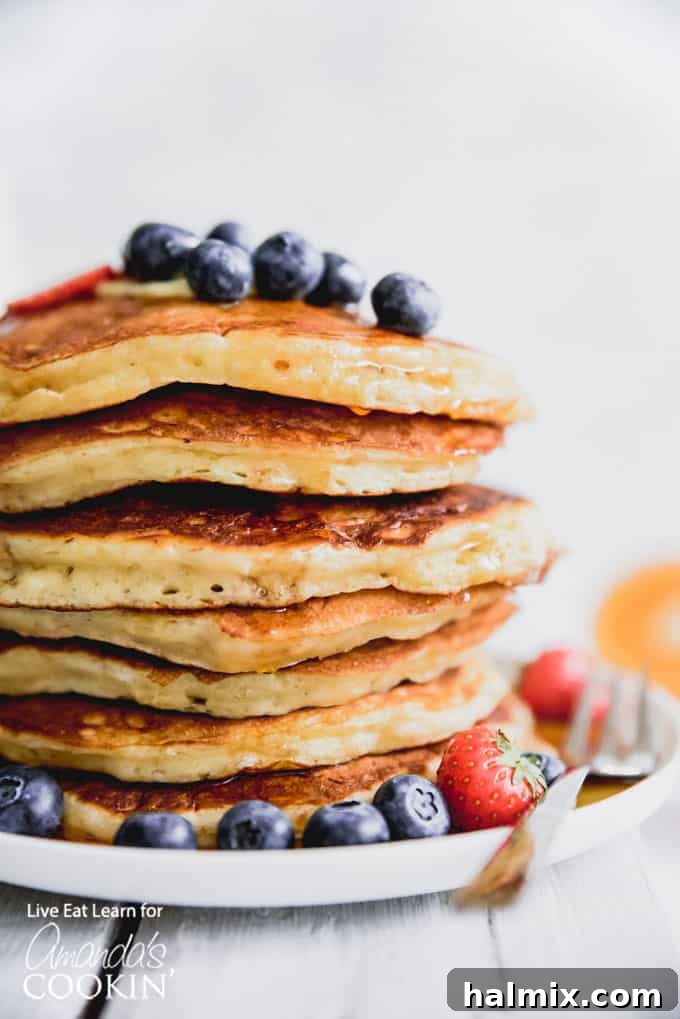
Expert Tips & Frequently Asked Questions for Perfect Pancakes
FAQs
- Can I make this batter ahead of time? While freshly made batter is always best for maximum fluffiness, you can prepare the dry ingredients and wet ingredients separately the night before. Combine them just before cooking for optimal results. If you must combine, store the batter in an airtight container in the fridge for up to 12 hours, but know they might lose a little fluffiness.
- How do I prevent flat pancakes? The key is fresh baking soda and not overmixing the batter. Also, ensure your pan is at the right temperature—too low, and they won’t rise; too high, and they’ll burn before cooking through.
- What are the best toppings for buttermilk pancakes? The possibilities are endless! Classic maple syrup is a must. Fresh berries, sliced bananas, whipped cream, chocolate chips, nuts, a dusting of powdered sugar, fruit compotes, or even a drizzle of honey are all fantastic choices.
Pro Tips for Success
- Don’t Overmix: This is arguably the most important tip. Lumps are your friends when it comes to pancake batter. A few quick stirs until the ingredients are just combined is all you need.
- Rest the Batter: If you have time, let the pancake batter rest for 5-10 minutes after mixing. This allows the flour to fully hydrate and the gluten to relax, resulting in an even more tender pancake.
- Perfect Pan Temperature: Too low, and your pancakes will be pale and greasy. Too high, and they’ll burn on the outside before cooking through. Medium heat is typically ideal. A good indicator is when a drop of water sizzles gently on the pan.
- Even Portions: Use a 1/4 cup measuring cup or a ladle to ensure consistent pancake size, which helps them cook evenly.
- Freezable Pancake Dippers: Make these buttermilk pancakes into convenient freezable pancake dippers! Simply let the cooked pancakes cool completely, then cut them into dipper portions. Flash freeze the dippers on a baking sheet until solid, then transfer them to a large zip-top bag or an air-tight container. Reheat in the microwave or toaster for a quick weekday breakfast.
Explore More Delicious Pancake Adventures
If you’ve fallen in love with homemade pancakes, there’s a whole world of variations to explore! Expand your pancake repertoire with these fantastic ideas:
- Tropical Pineapple Pancakes with Coconut Syrup
- Unique Fluffy Beer Pancakes (you read that right, and they’re delicious!)
- Healthy Flourless Banana Pancakes
- Fun and Colorful Rainbow Pancakes
- Comforting Apple Pancakes
Classic Buttermilk Pancakes
Put that boxed pancake mix back in the cabinet and level up your Saturday with this classic Buttermilk Pancake recipe! Fluffy, homemade pancakes that are easy to make and so delicious.
IMPORTANT – There are often Frequently Asked Questions and expert tips within the blog post that you may find helpful. Simply scroll back up to read them!
Ingredients
- 2 cups all-purpose flour
- 3 Tbsp granulated sugar
- 2 tsp baking soda
- ½ tsp salt
- 2 cups buttermilk
- 2 large eggs
- 3 Tbsp unsalted butter, melted
Instructions
- Stir together flour, sugar, baking soda, and salt in a large bowl. In a separate bowl whisk buttermilk, eggs, and melted butter.
- Add buttermilk mixture to the dry ingredients, stirring until mostly combined (some lumps in the batter is okay, do not overstir).
- Lightly grease a large sauté pan and set over medium heat. Spoon 1/4 cup portions of pancake batter into the pan, cooking until you see bubbles form on top and bottom is golden brown. Flip and continue cooking until golden brown.
- Set oven to 200 degrees F (93 C). Keep cooked pancakes warm by setting on an oven-safe baking sheet and placing in the oven.
Expert Tips & FAQs
- You can make these buttermilk pancakes into freezable pancake dippers by letting them cool, then simply cutting them into dipper portions. Flash freeze the dippers and once solid, transfer them to a large zip-top bag or air-tight container for easy reheating.
- For extra flavor, consider adding a teaspoon of vanilla extract to the wet ingredients.
- Avoid pressing down on the pancakes with your spatula while they are cooking, as this can deflate them and make them less fluffy.
Nutrition Information (per pancake)
Serving: 1 pancake |
Calories: 151 cal |
Carbohydrates: 20g |
Protein: 4g |
Fat: 5g |
Saturated Fat: 2g |
Cholesterol: 47mg |
Sodium: 362mg |
Potassium: 89mg |
Sugar: 5g |
Vitamin A: 205 IU |
Calcium: 55mg |
Iron: 1.1mg
Tried this Recipe? Pin it for Later! Follow on Pinterest @AmandasCookin or tag #AmandasCookin!
The recipes on this blog are tested with a conventional gas oven and gas stovetop. It’s important to note that some ovens, especially as they age, can cook and bake inconsistently. Using an inexpensive oven thermometer can assure you that your oven is truly heating to the proper temperature. If you use a toaster oven or countertop oven, please keep in mind that they may not distribute heat the same as a conventional full sized oven and you may need to adjust your cooking/baking times. In the case of recipes made with a pressure cooker, air fryer, slow cooker, or other appliance, a link to the appliances we use is listed within each respective recipe. For baking recipes where measurements are given by weight, please note that results may not be the same if cups are used instead, and we can’t guarantee success with that method.