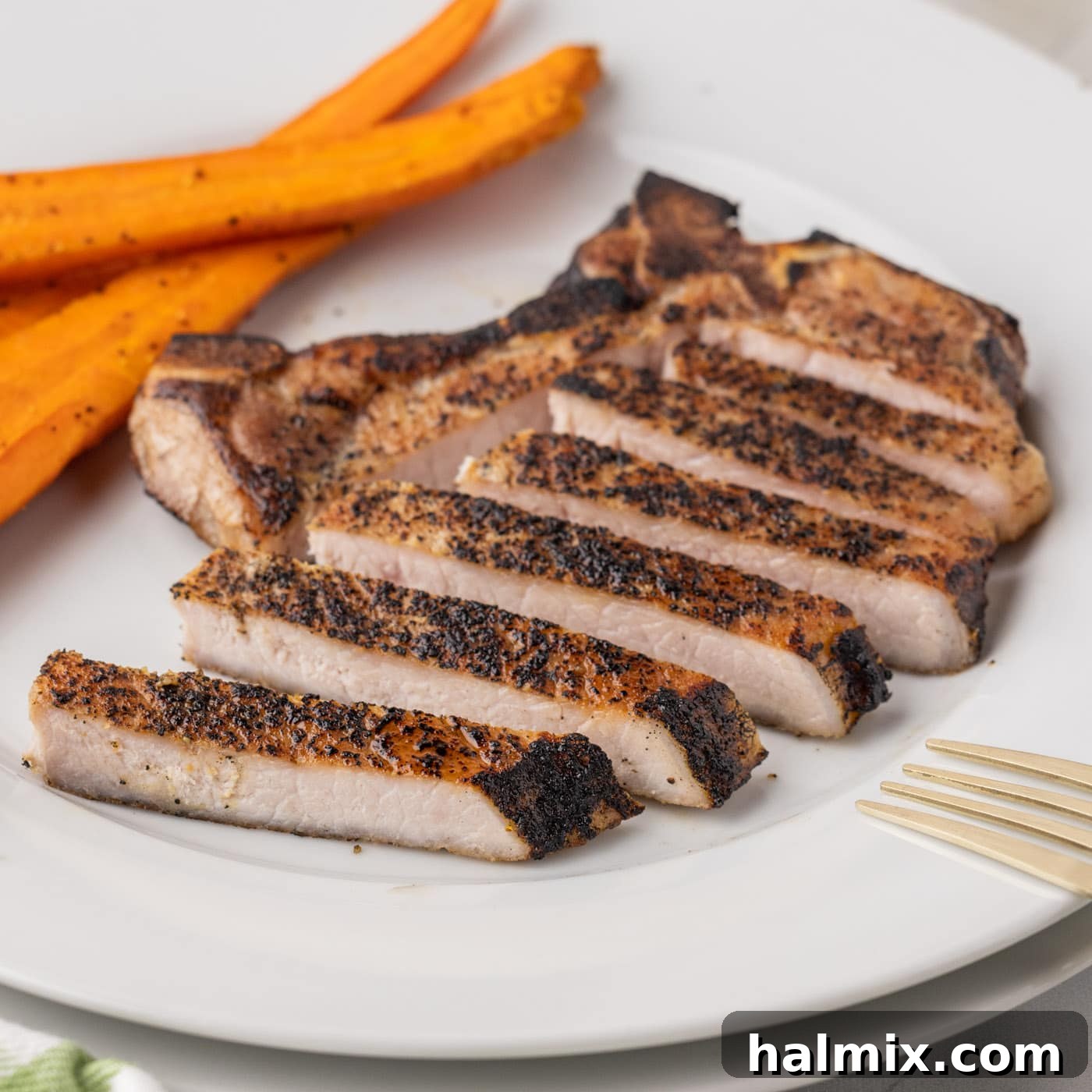
Prepare to transform your perception of pork chops! Once you experience the unparalleled juiciness and melt-in-your-mouth tenderness of sous vide pork chops, you’ll never look back. This innovative cooking method, involving slow and precise temperature control in a water bath, guarantees perfectly cooked pork every time, free from dryness or unevenness.
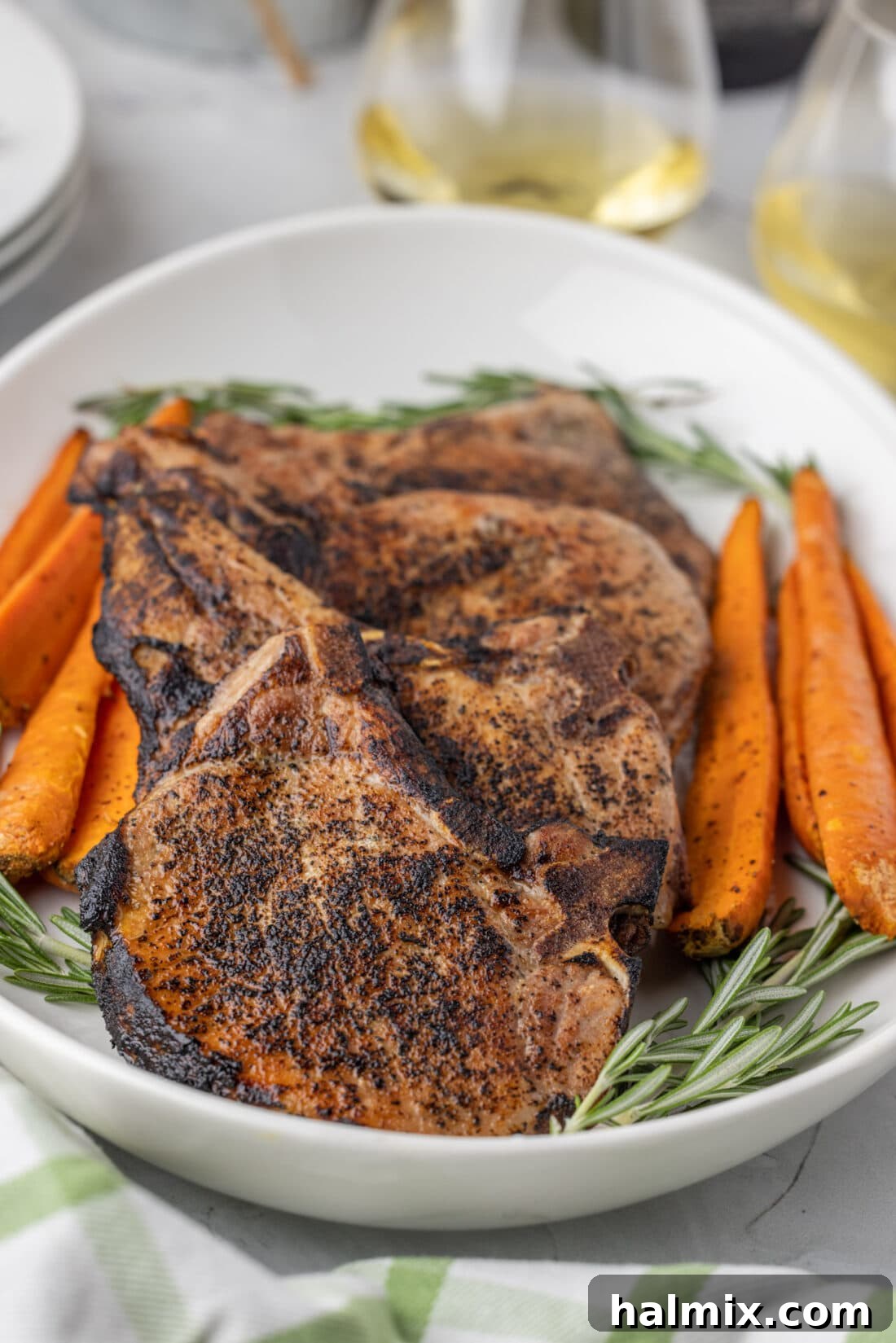
Perfect Sous Vide Pork Chops: The Ultimate Guide to Juicy & Tender Pork
The culinary world is constantly evolving, and among the most impactful innovations for home cooks is the sous vide technique. If you’ve ever struggled with dry, tough, or inconsistently cooked pork chops, this method will be your kitchen savior. Our comprehensive guide to sous vide pork chops will empower you to consistently create restaurant-quality results in your own home – incredibly juicy, uniformly cooked, and bursting with flavor. Get ready to impress your family and friends!
Why Sous Vide Pork Chops Are a Game-Changer
The sous vide technique, a French term meaning “under vacuum,” is a revolutionary way to cook food by sealing it in a vacuum-sealed bag and immersing it in a precisely controlled temperature water bath. For pork chops, this method yields results that are simply impossible to achieve with conventional cooking. Forget dry, tough, or unevenly cooked pork forever. Sous vide ensures the meat cooks uniformly from edge to edge, retaining all its natural moisture and flavor. The result? Insanely juicy and oh-so-tender pork chops that are perfectly cooked every single time, without the guesswork often associated with traditional methods.
While we cherish the smoky char of grilled pork chops and the comforting simplicity of baked pork chops, the sous vide method truly elevates the humble chop to gourmet status. It’s an investment in time and equipment, yes, but for those seeking the absolute pinnacle of tenderness and juiciness, it is unequivocally worth it. Once you try pork chops cooked this way, your palate will understand the difference, and you’ll likely wonder how you ever cooked them otherwise.
The Science of Perfect Pork: How Sous Vide Works
Traditional cooking methods like pan-frying, grilling, or baking expose the exterior of the meat to much higher temperatures than the desired internal doneness. This creates a severe temperature gradient, leading to an overcooked outer layer and a potentially undercooked center. The intense, direct heat also causes muscle fibers to contract rapidly and aggressively, squeezing out precious moisture and leaving the meat notoriously dry and tough.
Sous vide cooking, however, eliminates these common issues. By cooking the pork chops in a water bath set to their exact target internal temperature (e.g., 140°F / 60°C for medium), the meat slowly and gently comes to temperature without ever exceeding it. This gentle, consistent heat prevents overcooking and allows the muscle fibers to relax, retaining all their succulent juices within. The vacuum seal ensures that no moisture escapes into the cooking water, effectively intensifying the pork’s natural flavors and keeping it incredibly moist. The final brief and high-heat sear then creates a beautiful, flavorful, and crispy crust without affecting the perfectly cooked, tender interior.
Essential Equipment for Sous Vide Pork Chops
Before diving into the recipe, ensure you have these key tools on hand to make your sous vide experience seamless and successful. While some items are optional, they significantly enhance the results:
- Sous Vide Immersion Circulator: This is the indispensable heart of your sous vide setup. It heats and circulates water to maintain a precise and consistent temperature throughout the cooking process, ensuring your pork chops cook perfectly and safely. (Recommended Sous Vide Cooker)
- Water Bath Container: A large, heat-safe container is needed to hold the water and the vacuum-sealed pork chops. Options include a dedicated sous vide container, a large stockpot (at least 8-quart capacity), or even a clean cooler. Ensure it’s deep enough for the immersion circulator and wide enough to prevent overcrowding of the food. (Recommended Sous Vide Water Container)
- Vacuum Sealer and Bags: Crucial for removing air and creating a tight, watertight seal around your food. This prevents water from contacting the food directly and ensures efficient, even heat transfer. If you don’t own a vacuum sealer, the “water displacement method” using high-quality, heavy-duty zip-top bags can be a viable alternative. (Recommended Vacuum Seal Bags)
- Large Mixing Bowl: A sturdy bowl makes it easy to combine your seasoning ingredients and coat the pork chops thoroughly.
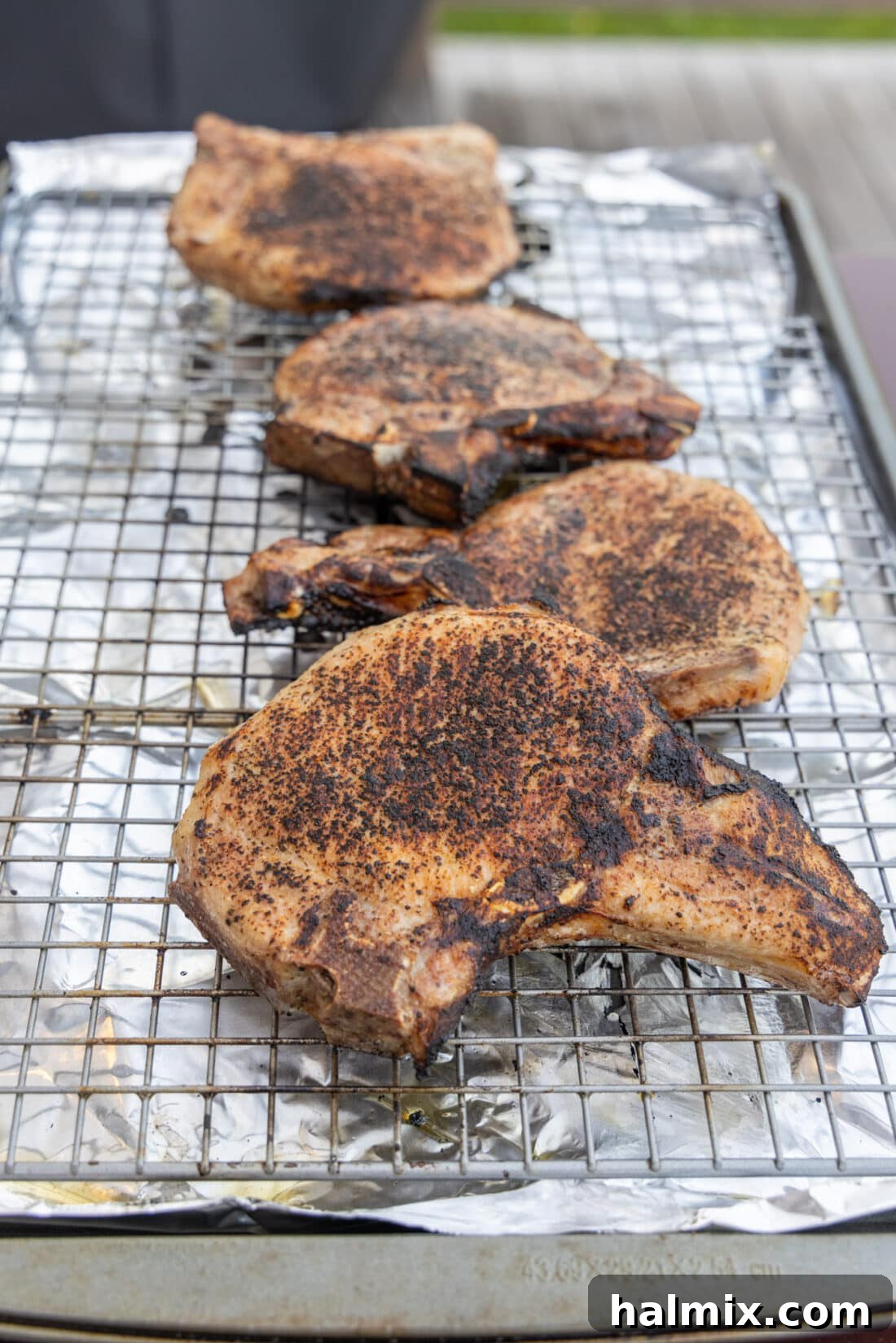
- Wire Rack with Baking Sheet: This setup is ideal for resting the cooked pork chops after their sous vide bath and allowing them to cool slightly and dry their surface before searing. The rack elevates the chops, promoting even air circulation and helping to achieve a superior, crispy crust. (Recommended Wire Rack with Baking Sheet)
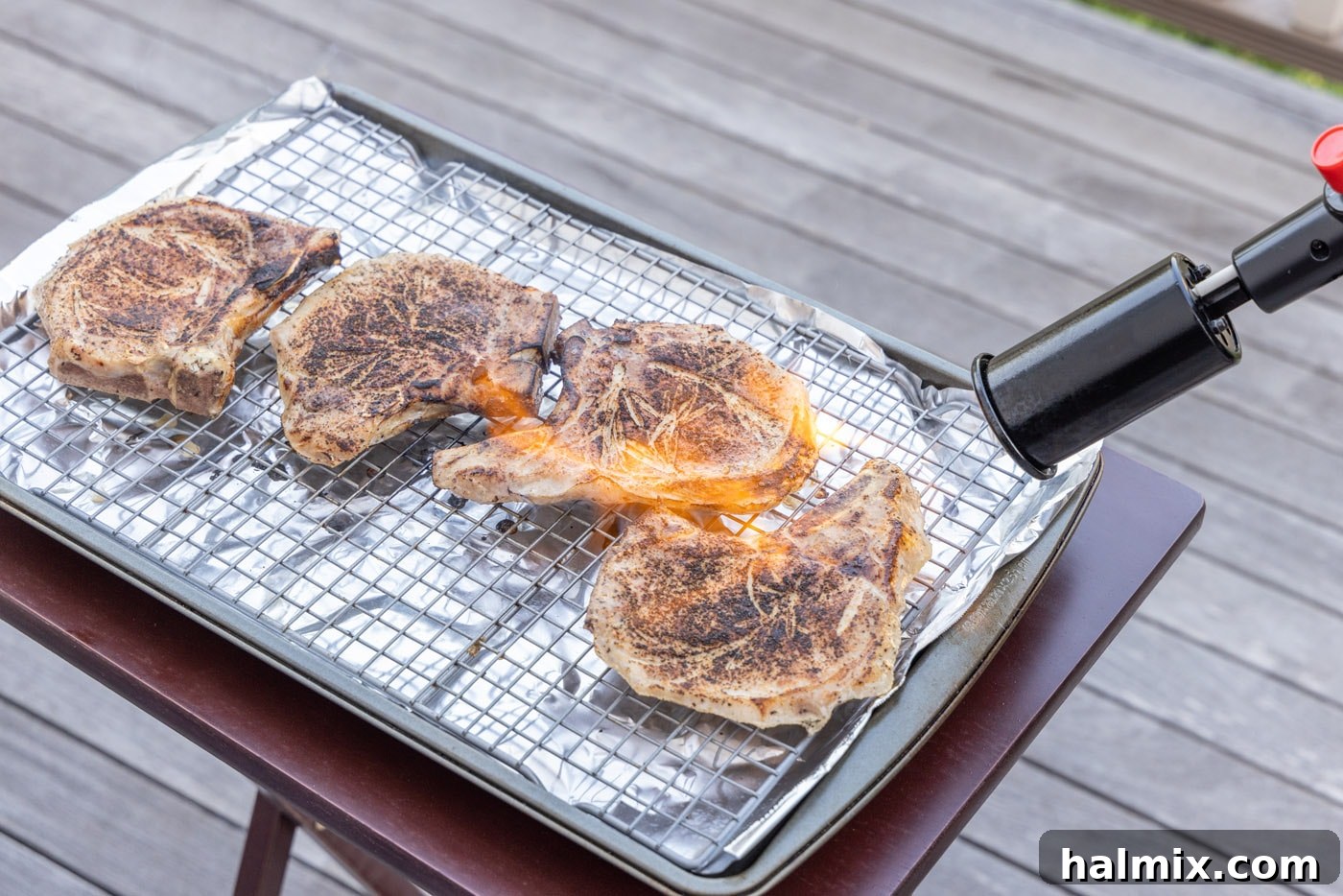
- Kitchen Torch (optional, but highly recommended for best results): A powerful kitchen torch allows for rapid, precise searing, creating a beautiful golden-brown crust and a burst of flavor without overcooking the perfectly tender interior. This is often the preferred method for professional chefs. Alternatively, a scorching hot cast-iron skillet or an outdoor grill can be used. (Recommended Kitchen Torch)
- Gloves (optional): For a mess-free and hygienic application of the seasoning rub, especially if you’re handling multiple chops or prefer not to get your hands messy. (Recommended Vinyl Gloves)
Ingredients for Succulent Sous Vide Pork Chops
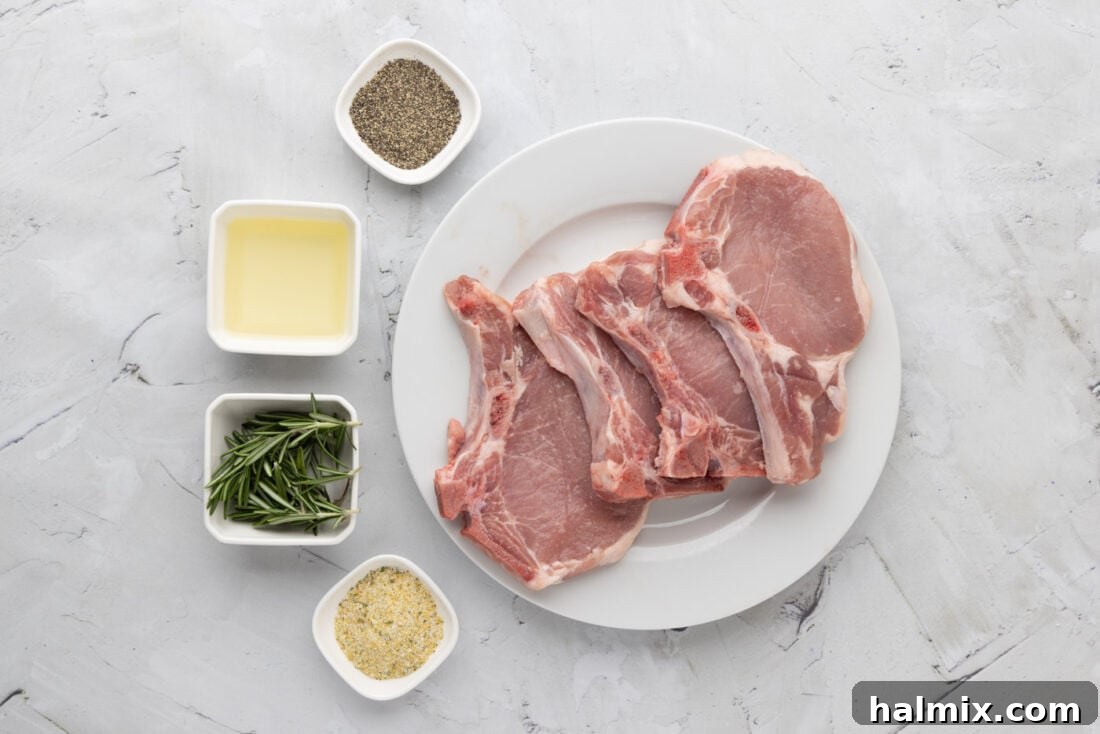
Crafting these unforgettable pork chops requires only a handful of readily available ingredients, ensuring that the natural flavors of the pork truly shine. You’ll find the complete list of measurements and detailed instructions in the comprehensive recipe card located at the end of this guide.
Ingredient Details and Expert Substitutions
- Pork Chops: For the most flavorful and moist results, we highly recommend using center-cut bone-in pork chops, ideally 1 to 1.5 inches thick. The bone contributes to the chop’s overall flavor and helps retain moisture during the extended, gentle cooking process. While boneless pork chops are a perfectly acceptable substitute, they may cook slightly faster and could benefit from being on the thicker side (at least 1 inch) to prevent over-searing. Regardless of your choice, the 140°F (60°C) water bath will consistently yield a perfect medium doneness, characterized by a slight pinkness and exceptional juiciness throughout.
- Olive Oil: This serves as the liquid base for our simple seasoning rub, helping to distribute the flavors evenly across the pork’s surface. Extra virgin olive oil can add a pleasant fruitiness, but a lighter olive oil or other neutral high-smoke-point oils like avocado oil are also great alternatives.
- Garlic Salt & Black Pepper: A classic and universally loved flavor pairing that complements pork beautifully. For a richer, more nuanced garlic flavor, consider using garlic powder alongside sea salt and freshly cracked black pepper. Feel free to experiment with additions like smoked paprika for a hint of smokiness, a pinch of cayenne pepper for a subtle kick, or a dash of onion powder for added depth.
- Fresh Rosemary: The aromatic, piney notes of fresh rosemary infuse the pork with a wonderful, earthy fragrance that is simply irresistible. For best results, always opt for fresh rosemary sprigs, as their vibrant essential oils are unmatched. If fresh rosemary is genuinely unavailable, you can substitute with about 1 teaspoon of dried rosemary per chop, though its potency is stronger, so use sparingly. Other fresh herbs such as thyme, sage, or a mix of “herbes de Provence” also work exceptionally well with pork.
Understanding Doneness with Sous Vide: Our recipe targets a water bath temperature of 140°F (60°C), which is considered the ideal temperature for perfectly medium-done pork. This ensures a tender, juicy interior that is safe and delicious to eat. Remember, the sous vide process cooks the meat uniformly to this precise temperature. The subsequent searing stage is purely for developing a delicious, crispy crust and adding vital surface texture and flavor; it will only minimally raise the internal temperature, ensuring the chop remains perfectly moist and tender within.
How to Master Sous Vide Pork Chops: Step-by-Step Guide
These step-by-step photos and detailed instructions are designed to guide you through making this incredible recipe with confidence. For a concise, printable version with all measurements and instructions, simply scroll down to the full recipe card below.
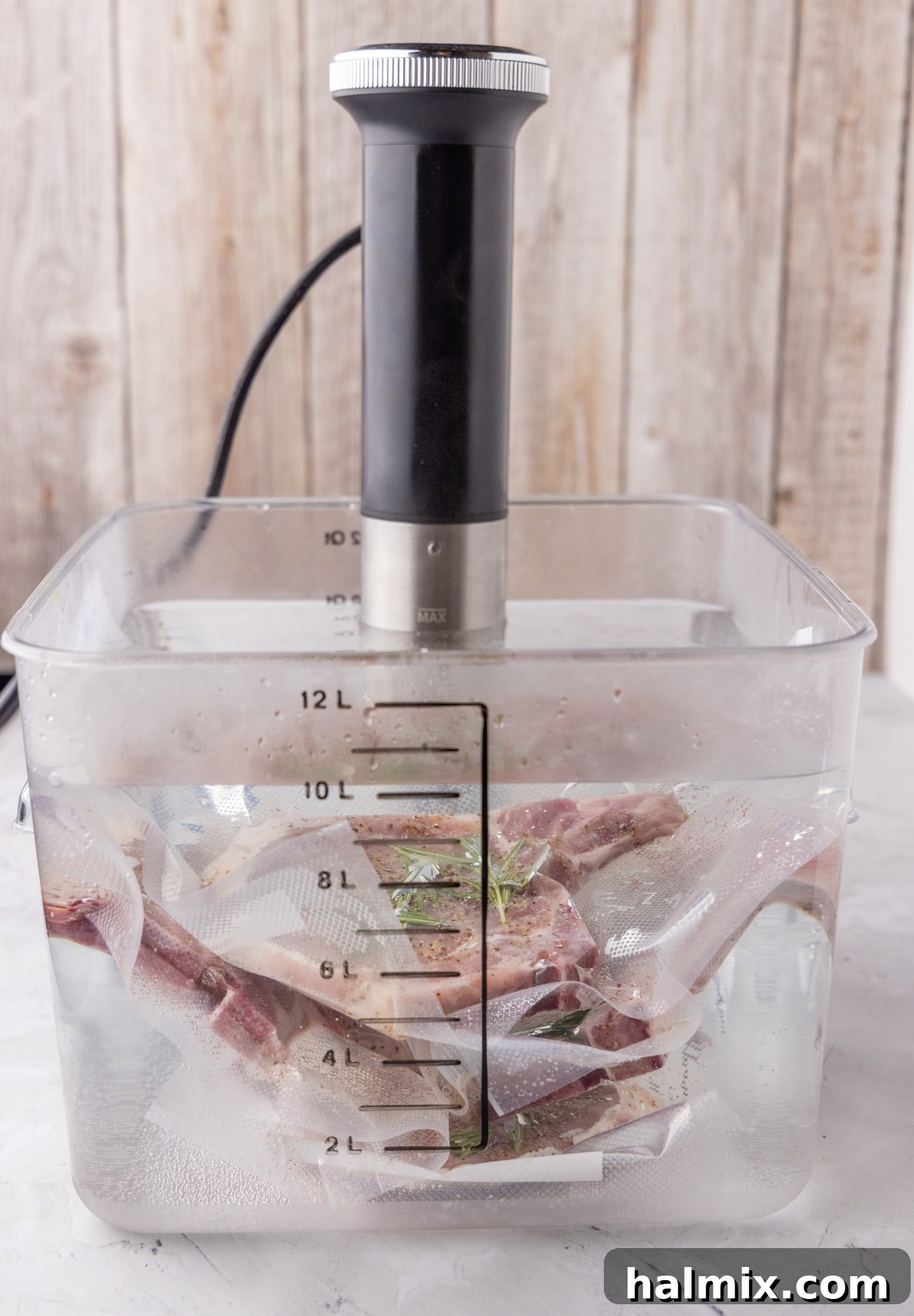
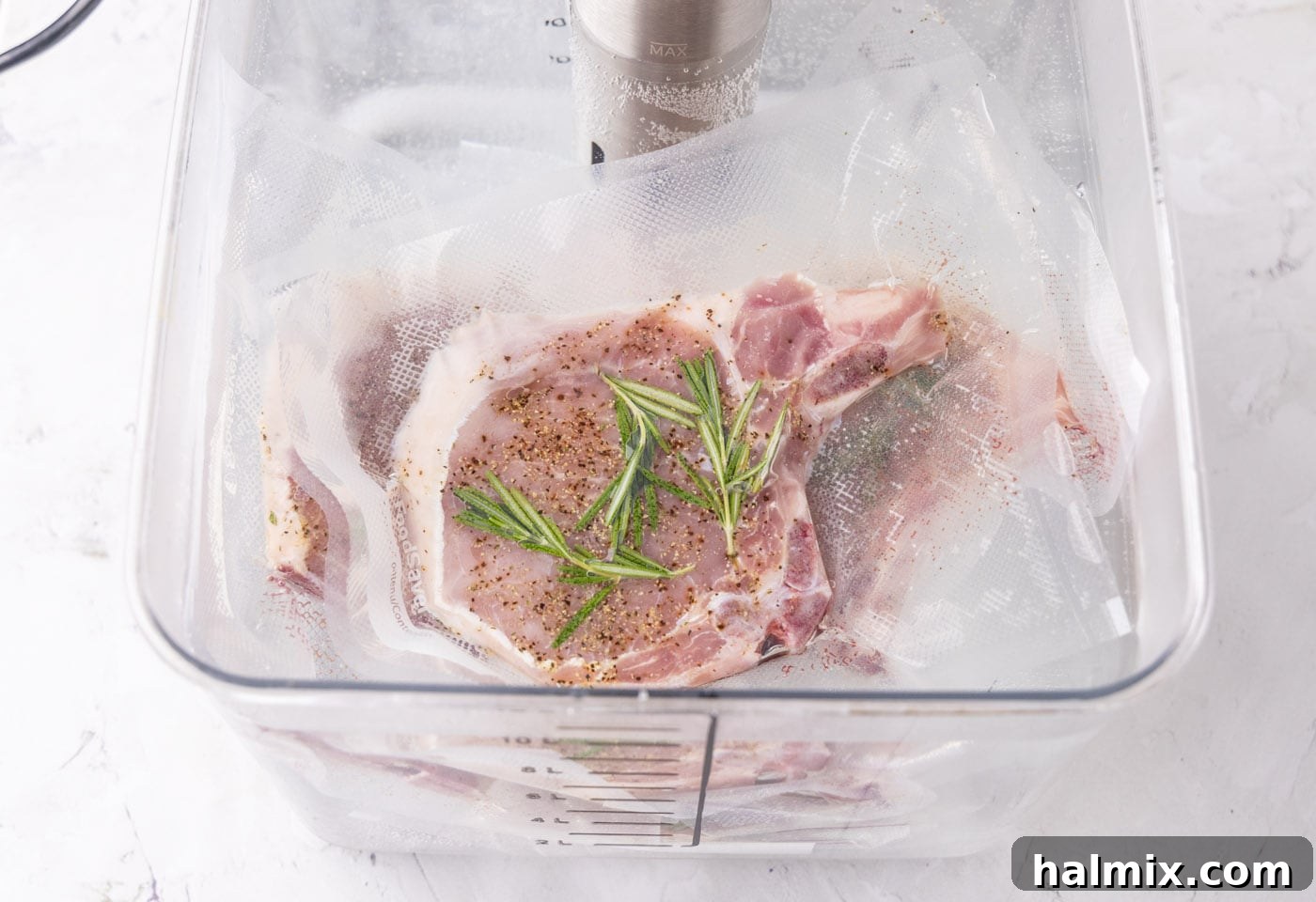
- Prepare the Water Bath: Begin by filling your sous vide water container with water to the appropriate level for your circulator. Securely attach your sous vide immersion circulator and set the target temperature to 140°F (60°C). Allow the water to preheat fully before you proceed to the next steps.
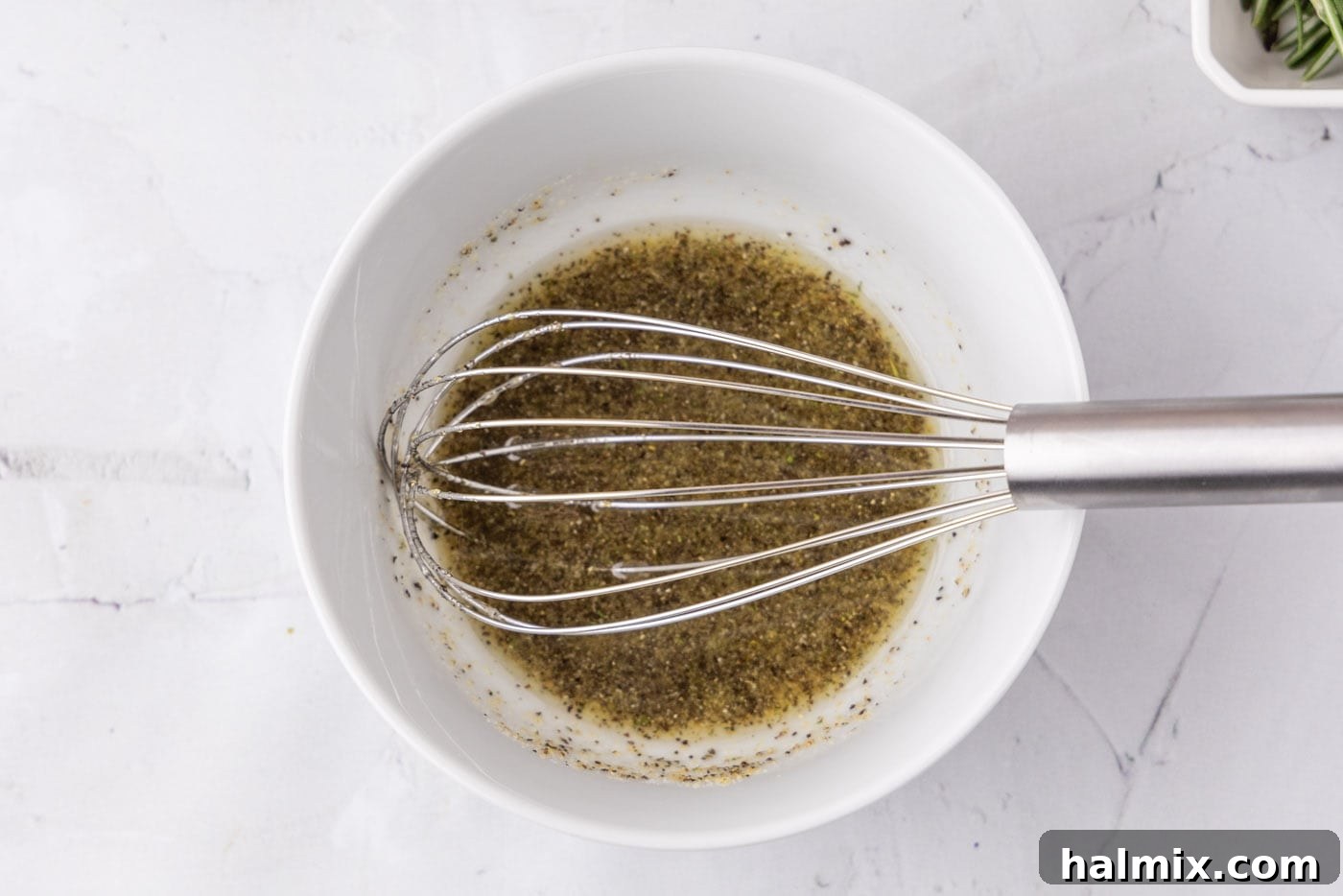
- Craft the Seasoning Rub: In a small mixing bowl, combine the olive oil, garlic salt, and black pepper. Whisk these ingredients thoroughly to create a smooth, aromatic wet rub. This paste will adhere beautifully to the pork, locking in savory flavor and aiding in browning later.

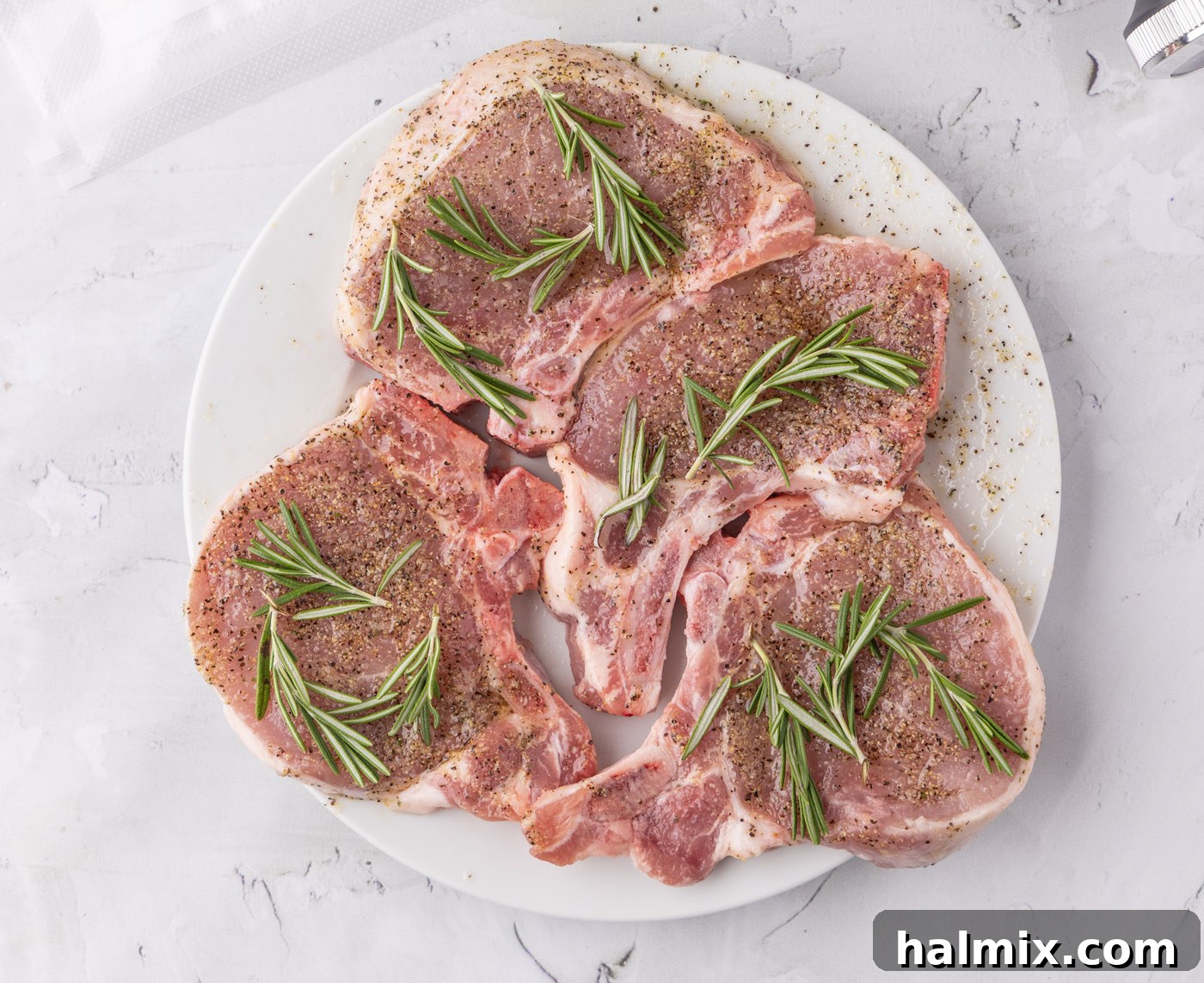
- Season the Pork Chops: For a cleaner process, put on gloves. Then, generously coat both sides of each pork chop with the prepared olive oil seasoning mixture. Ensure every surface, including the edges, is thoroughly covered for maximum flavor penetration and even seasoning.
- Infuse with Rosemary: Gently break the fresh rosemary sprigs into a few manageable pieces. The goal is to have pieces large enough to be easily retrieved and discarded after cooking. Place these fragrant rosemary pieces directly on top of the seasoned pork chops before placing them in the vacuum bags. The rosemary will subtly infuse its vibrant essence into the meat during the sous vide process.
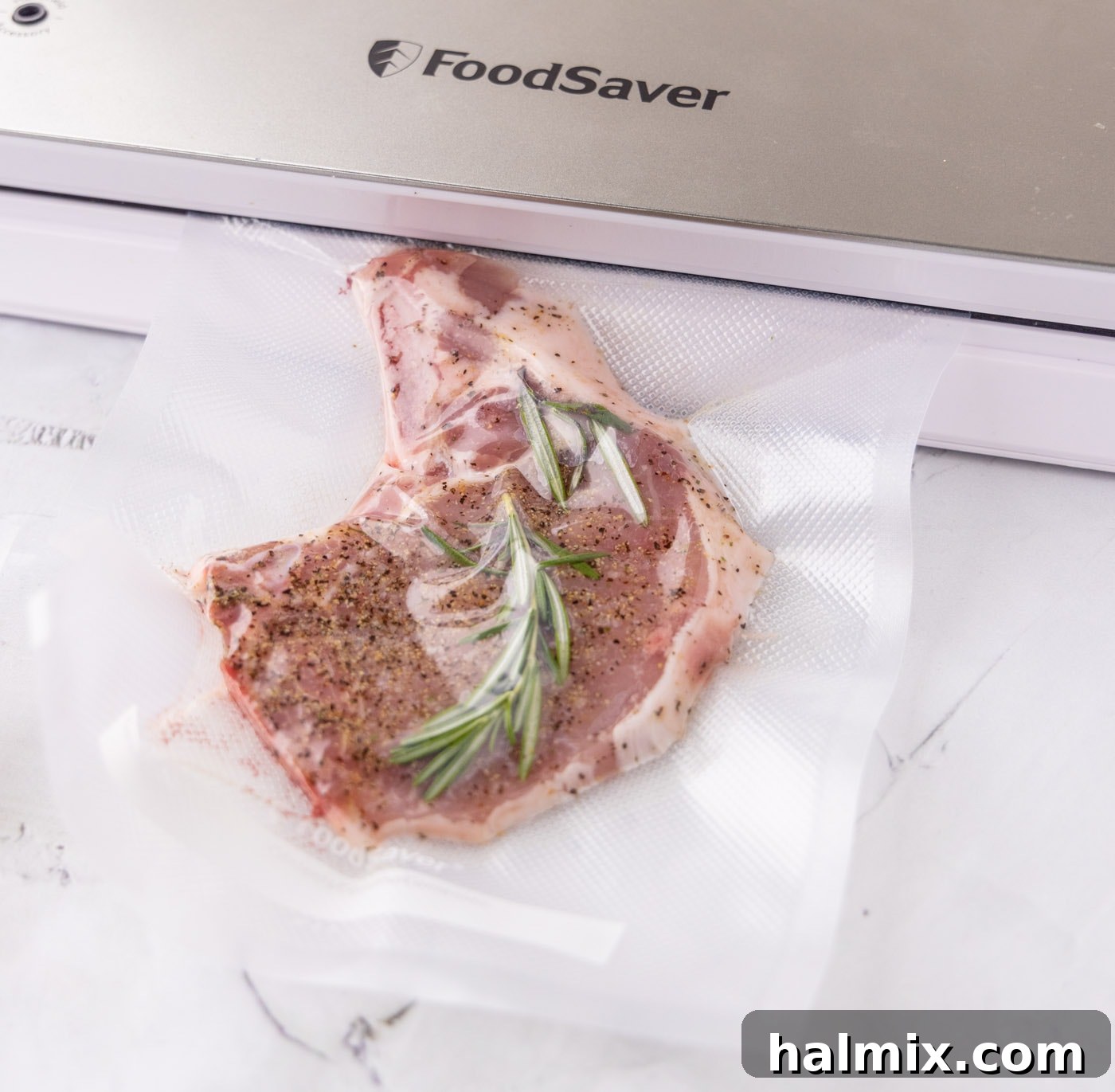
- Vacuum Seal the Chops: Carefully place each seasoned pork chop, along with its fresh herbs, into vacuum seal bags. Ensure there’s sufficient space around each chop if bagging multiples. Use your vacuum sealer to remove all air and create a tight, impermeable seal. This is a critical step for optimal heat transfer and to prevent moisture loss during cooking.
- Sous Vide Cook: Gently lower the sealed bags containing the pork chops into the preheated 140°F (60°C) water bath. Ensure they are fully submerged beneath the water’s surface. Cook for 2.5 hours. This precise timing and temperature guarantee incredibly tender and perfectly cooked pork chops, ready for their final sear.
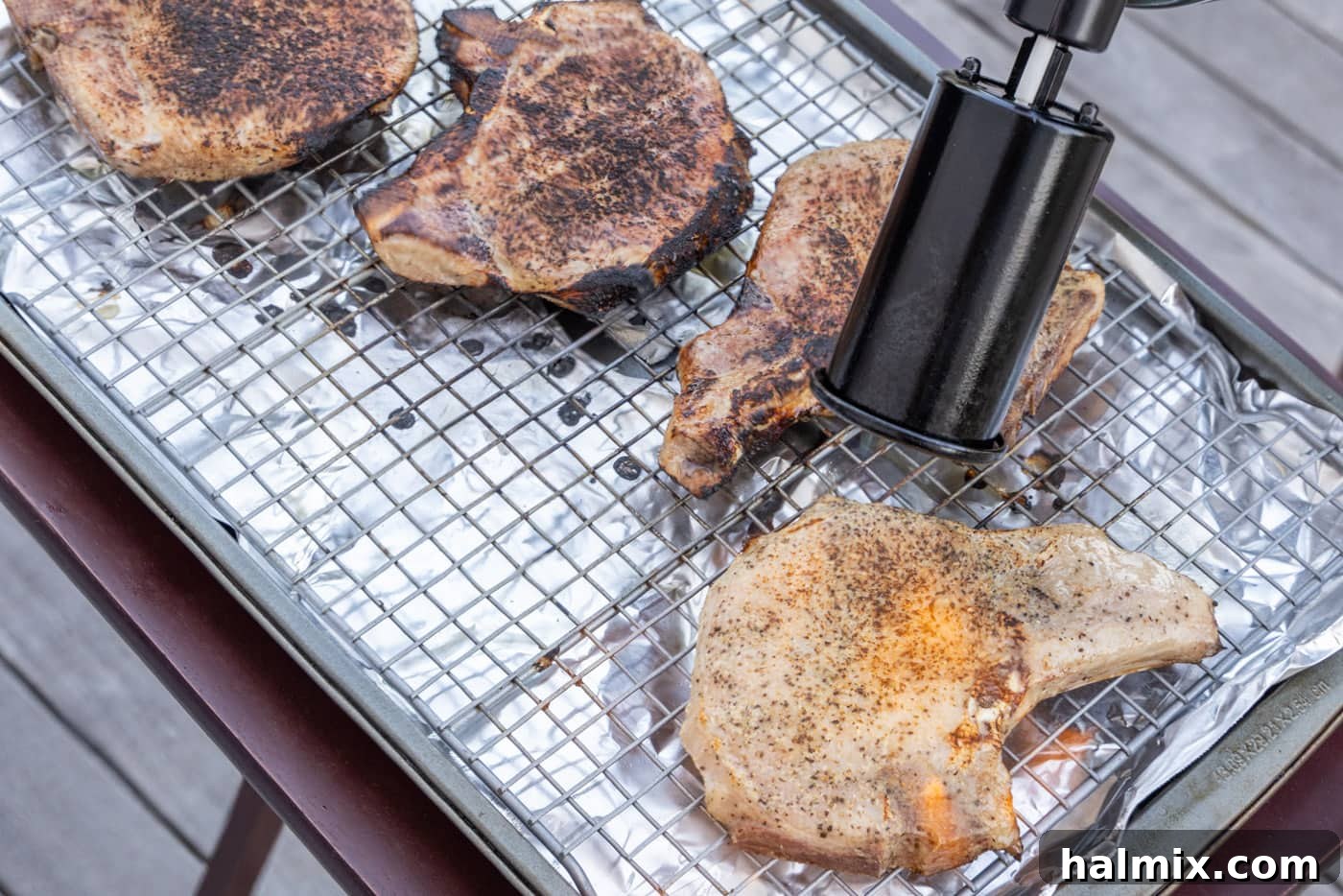
- Rest and Dry: Once the sous vide cooking time is complete, carefully remove the cooked pork chops from their bags. Discard the spent rosemary sprigs. Place the chops on a clean wire rack (set over a baking sheet to catch any drips) and pat them *extremely* dry with paper towels. Removing all surface moisture is absolutely crucial for achieving a crispy, flavorful sear.
- Achieve the Perfect Sear: With your preferred searing method (a kitchen torch, a scorching hot cast-iron skillet, or a grill), quickly sear the outside of each cooked chop until a rich, golden-brown crust forms on all sides. This final, rapid step adds vital texture and flavor without overcooking the perfectly tender interior.
Frequently Asked Questions & Expert Tips for Sous Vide Pork Chops
Absolutely not! While a kitchen torch provides a quick, intense, and even sear, you can achieve fantastic results using alternative methods. Simply heat a cast-iron skillet (or any heavy-bottomed pan) over high heat with a tablespoon of olive oil or butter until it’s smoking hot. Quickly sear the sous vide pork chops for 60-90 seconds per side, just until a beautiful, golden-brown crust forms. Alternatively, a preheated outdoor grill can also provide an excellent sear and a hint of smoky flavor. The key is to sear quickly – the pork chops are already perfectly cooked internally, so prolonged searing can lead to them drying out. Patting them very dry with paper towels before searing is also essential for a crisp crust.
Yes, one of the fantastic benefits of sous vide is its remarkable ability to cook directly from frozen, making meal prep incredibly convenient. If your pork chops are frozen, simply add an additional hour to the cooking time. So, instead of 2.5 hours, cook them for 3.5 hours at 140°F (60°C). For best results, ensure they are seasoned and vacuum-sealed before freezing to maximize flavor and efficiency.
Once your pork chops have reached their target temperature (after approximately 2.5 hours for fresh chops), they can safely remain in the water bath for several additional hours without overcooking or compromising their tender texture. This flexibility is another major advantage of sous vide cooking, making meal timing much easier and less stressful. However, for optimal texture and food safety, especially if holding for an extended period at lower temperatures, we generally recommend removing them within 4 hours.
The secret to a truly fantastic sear lies in two crucial factors: dryness and intense heat. Always pat your cooked sous vide pork chops extremely dry with paper towels before searing. Any surface moisture will create steam upon contact with heat, which will prevent a crisp crust from forming. Secondly, use a very hot cooking surface, whether it’s a skillet, grill, or kitchen torch. High heat quickly triggers the Maillard reaction, developing that irresistible golden-brown crust and complex flavors without cooking the interior further.
Yes, you can absolutely use high-quality, freezer-safe zip-top bags as an effective alternative to dedicated vacuum seal bags. To achieve a good, air-free seal, use the “water displacement method”: place your seasoned pork chops in the zip-top bag, then slowly submerge the bag into the water bath, allowing the water pressure to naturally push the air out. Seal the bag completely just before it’s fully submerged. This creates a similar air-free environment crucial for effective sous vide cooking.
If your vacuum-sealed bags float in the water bath, it indicates that there’s still some air trapped inside, or the pork chops themselves are less dense than water. This can lead to uneven cooking, as the parts of the chop above the waterline won’t cook effectively. You can easily remedy this by using heavy-duty clips to attach the bags to the side of the container, ensuring they stay fully submerged. Alternatively, place a heavy, heat-safe object (like a ceramic plate or another pot lid) on top of the bags to weigh them down and keep them immersed.
Delicious Serving Suggestions for Your Sous Vide Pork Chops
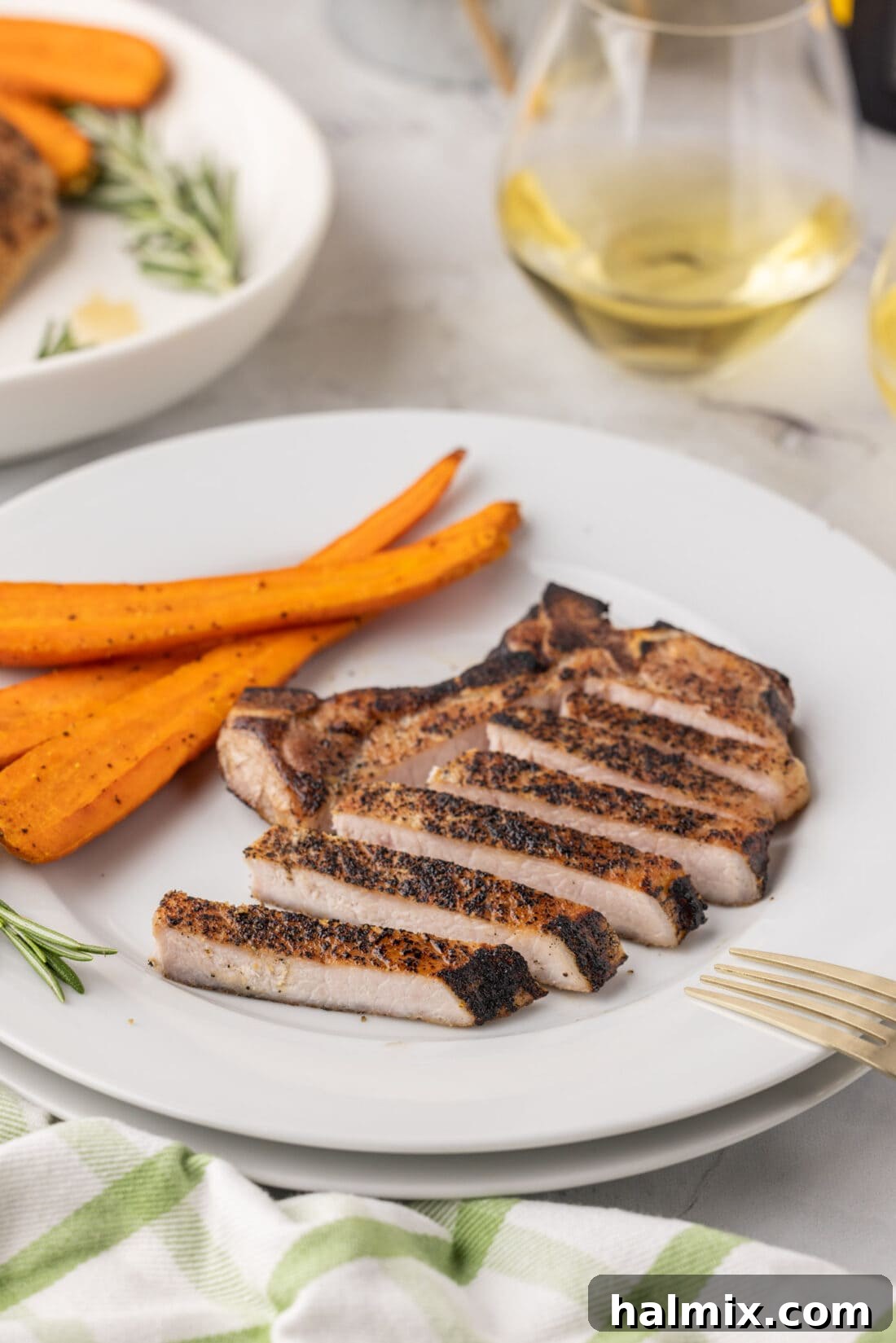
These incredibly flavorful and tender sous vide pork chops are remarkably versatile and pair wonderfully with a wide variety of side dishes, transforming any meal into a memorable dining experience. Here are some ideas to complete your culinary masterpiece:
- Classic Comfort Sides: Elevate your meal with creamy mashed potatoes (garlic or chive infused), rich cheesy bacon chive twice-baked potatoes, a hearty potato gratin, or a velvety sweet potato puree for a touch of natural sweetness.
- Vibrant Roasted Vegetables: Complement the rich pork with the earthy and slightly sweet flavors of roasted carrots, vibrant asparagus spears (perhaps simply roasted with olive oil and a squeeze of lemon), crisp green beans almondine, or savory garlic-parmesan broccoli florets.
- Fresh Salads & Grains: For a lighter yet satisfying option, serve thinly sliced pork chops over a bed of fluffy quinoa, wild rice, or a refreshing pearl couscous salad with fresh herbs. A crisp, fresh garden salad with a light vinaigrette also makes an excellent, palate-cleansing accompaniment.
- Fruity & Savory Pairings: The traditional sweetness of homemade apple sauce or a spiced apple chutney offers a delightful contrast to the savory pork. Consider also a sophisticated pear or cherry reduction for an elegant touch.
- Decadent Sauces: Consider creating a simple pan sauce using the flavorful juices collected from the sous vide bag (after thoroughly defatting), perhaps enriched with a touch of cream, a splash of white wine, and fresh herbs. A rich mushroom cream sauce or a classic red wine reduction would also be exquisite choices.
- Seasonal Favorites: Enjoy with buttery corn on the cob during the summer months, or with warm, savory braised red cabbage in the cooler seasons for a hearty and traditional pairing.
Explore More Delicious Pork Recipes
If you’ve enjoyed the exceptional quality and ease of these sous vide pork chops, we invite you to explore more of our fantastic pork dishes, each crafted to bring deliciousness and culinary inspiration to your table:
- Crispy Pan-Fried Pork Chops
- The Best Sirloin Pork Roast
- Easy Air Fryer Pork Chops
- Perfect Air Fryer Pork Tenderloin
- Melt-in-Your-Mouth Slow Cooker Pulled Pork
- Classic Pork Tenderloin Sandwiches (Schnitzel)
Passionate about cooking and eager to share my culinary adventures with you! Don’t miss out on new, delicious recipes and expert cooking tips – subscribe to my convenient newsletter to receive free daily recipes directly in your inbox. Simply subscribe here and join our thriving community of food lovers!
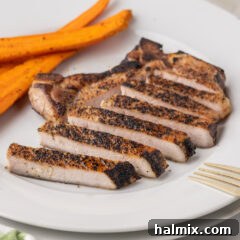
Sous Vide Pork Chops
These sous vide pork chops come out crazy juicy and oh-so-tender when cooked low and slow in a water bath.
5 from 4 votes
IMPORTANT – Many helpful Frequently Asked Questions are provided within the blog post. Scroll up to read them for extra tips!
Pin It
Rate It
Ingredients
- 2 pounds center cut bone-in pork chops
- 2 Tablespoons olive oil
- 1 Tablespoon garlic salt
- 1 ½ teaspoons black pepper
- 1 bunch fresh rosemary
Equipment
- Sous vide water container
- Sous vide cooker
- Food saver vacuum sealer and bags
- Vinyl gloves
- Kitchen torch
- Wire Rack with Baking Sheet
Notes Before You Begin
- We are using bone-in pork chops, but you can use boneless if desired. We are setting our precision cooker to 140°F (60°C), which will yield medium doneness whether your chop is bone-in or boneless. Cooking the pork chops at 140°F (60°C) does not necessarily mean that will be the temperature of the meat when it’s completely done; keep in mind that you will be searing them either using a kitchen torch, a skillet, or the grill, which will continue to raise the temperature of the pork’s surface, creating a delicious crust.
- Instead of a kitchen torch, you can simply sear the sous vide pork chops in a hot skillet with some olive oil or butter. You will want the pan to be scorching hot so that you can sear it very quickly. If you take too long to sear it, the pork chops are already cooked, so they could begin to dry out.
- For best searing results, always pat the cooked pork chops extremely dry before applying heat. Any moisture on the surface will create steam, preventing a crisp crust from forming.
Instructions
- Fill sous vide water container and position sous vide cooker into place. Preheat sous vide cooker to 140°F (60°C).
- In a small bowl, whisk together olive oil, garlic salt, and pepper.
- Using gloved hands, coat all pork chops (on both sides) with oil mixture.
- Break rosemary sprigs into a few smaller pieces. You don’t want it too small because you will be removing it after the pork chop has cooked. Place sprig pieces on top of seasoned pork chops.
- Place each seasoned pork chop with fresh herbs into vacuum seal bags. Vacuum seal them shut.
- Sous vide the pork chops for 2 1/2 hours.
- Remove cooked pork chops from bags, place on wire rack, and discard herbs.
- Use a kitchen torch to sear the outside of the cooked chops until a beautiful crust forms.
Nutrition Facts (Per Serving)
Serving: 1 pork chop
| Calories: 354cal
| Carbohydrates: 1g
| Protein: 35g
| Fat: 22g
| Saturated Fat: 6g
| Polyunsaturated Fat: 3g
| Monounsaturated Fat: 11g
| Trans Fat: 0.2g
| Cholesterol: 117mg
| Sodium: 1838mg
| Potassium: 601mg
| Fiber: 0.3g
| Sugar: 0.01g
| Vitamin A: 44IU
| Vitamin C: 0.2mg
| Calcium: 40mg
| Iron: 1mg
Tried this Recipe? Pin it for Later!
Follow us on Pinterest @AmandasCookin or tag your creations with #AmandasCookin!
The recipes on this blog are carefully tested with a conventional gas oven and gas stovetop. Please note that cooking appliances can vary, especially older ovens, which may heat inconsistently. We recommend using an inexpensive oven thermometer to verify your oven’s true temperature. For countertop or toaster ovens, cooking and baking times might need adjustment due to different heat distribution. When recipes specify measurements by weight, results may differ if cups are used instead, and we cannot guarantee success with volumetric measurements in such cases. For specialized appliances like pressure cookers, air fryers, or slow cookers, links to the specific models we use are provided within their respective recipes to ensure clarity and replicability of results.