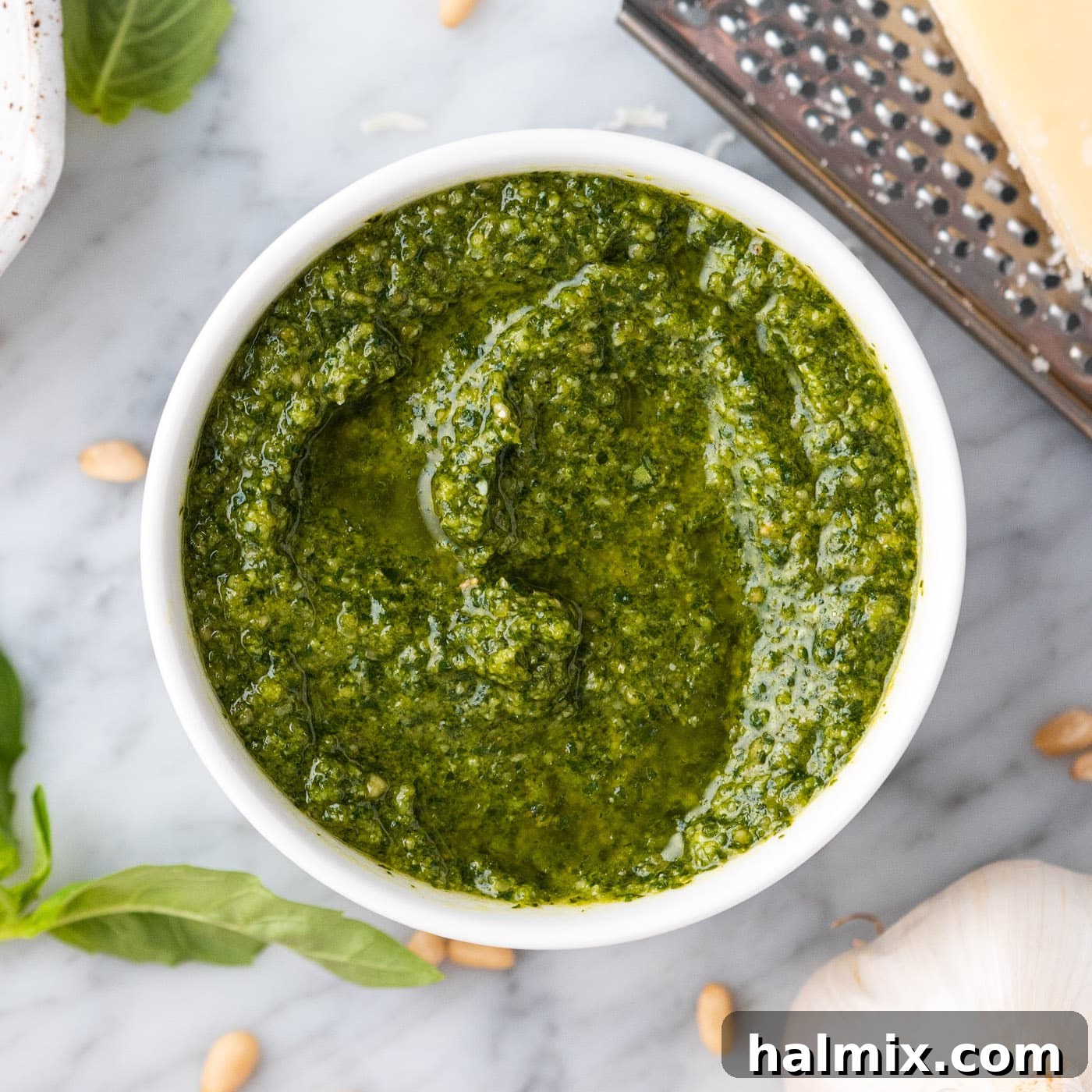
Unlock the secret to vibrant, flavorful meals with this classic basil pesto recipe. Crafted from a harmonious blend of fresh, aromatic basil leaves, toasted pine nuts, pungent garlic, rich Parmesan cheese, and high-quality extra virgin olive oil, this homemade sauce comes together in under 10 minutes. It’s an explosion of fresh, herbaceous taste that elevates everything from pasta to sandwiches and beyond.
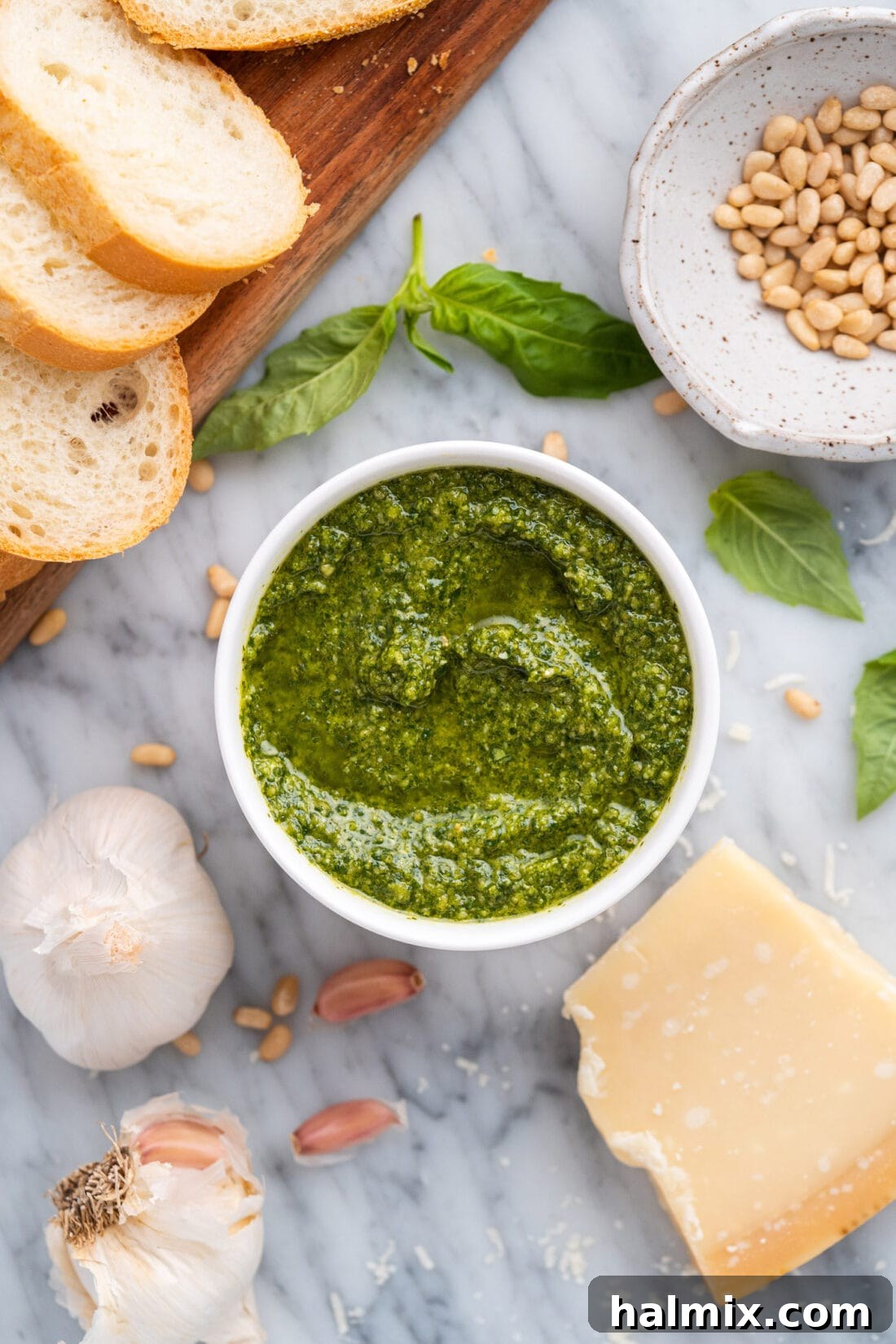
The Irresistible Charm of Homemade Pesto
There’s a profound difference between store-bought pesto and the homemade version, and once you experience the latter, there’s no going back. This recipe for basil pesto isn’t just about mixing ingredients; it’s about creating a sauce that’s rich in flavor, incredibly versatile, and bursting with the freshness of summer. The paste-like texture, vibrant green hue, and pungent aroma make it an ideal companion for a myriad of dishes, transforming simple ingredients into gourmet delights.
Pesto, at its heart, is a celebration of simple, high-quality ingredients working in concert. Unlike many bottled versions that may contain preservatives or inferior oils, preparing pesto from scratch ensures you get the purest taste and the freshest possible product. It’s a rewarding culinary endeavor that offers superior taste, texture, and nutritional value. From coating al dente pasta to spreading on crusty bread, this basil pesto is an essential staple for any home cook looking to infuse their meals with authentic Italian flair.
A Brief History of Pesto Genovese
The origins of pesto trace back to Genoa, the capital city of Liguria in Italy, which is why it is traditionally known as Pesto Genovese. While ancient Romans enjoyed a similar pounded cheese and herb paste called “moretum,” the modern pesto we know today emerged in the mid-19th century. The first documented recipe for Pesto Genovese appeared in Giovanni Battista Ratto’s 1863 cookbook, “La Cuciniera Genovese.”
The word “pesto” itself comes from the Italian word “pestare,” meaning to crush or to pound, referring to the traditional method of preparation using a marble mortar and wooden pestle. This method gently bruises the basil leaves, releasing their essential oils and preventing oxidation, which is key to pesto’s bright green color and intense flavor. While food processors are now commonly used for convenience, the essence of pesto remains rooted in its simple, fresh ingredients and the act of combining them into a fragrant, emulsified sauce that captures the spirit of the Ligurian coast.
Essential Ingredients for Authentic Basil Pesto
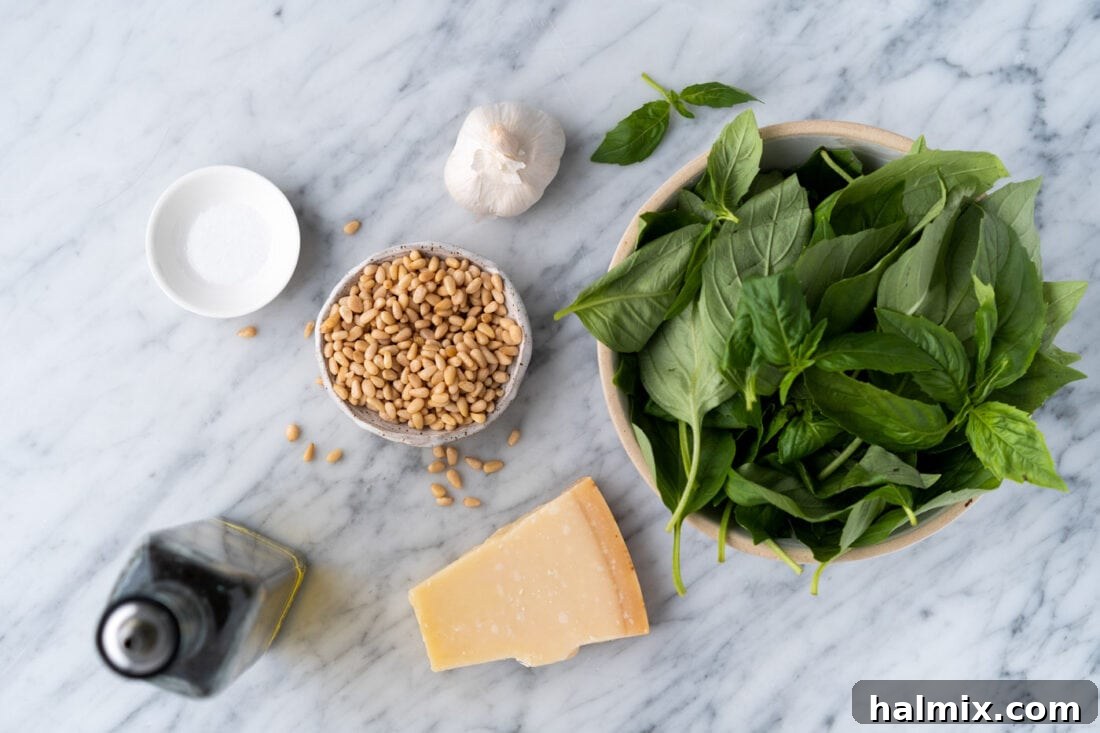
Crafting the perfect pesto begins with selecting the finest ingredients. Each component plays a vital role in achieving that rich, aromatic, and balanced flavor profile. Forget complex cooking techniques; with pesto, the quality of your raw materials shines through. Below is a detailed look at what you’ll need and why each element is crucial for an unparalleled homemade pesto experience.
You’ll find all precise measurements and step-by-step instructions in the printable recipe card located at the conclusion of this article. For now, let’s explore the foundation of this exquisite sauce:
Ingredient Deep Dive & Smart Substitutions
- Fresh Basil Leaves: The heart and soul of any classic pesto. Opt for bright green, unblemished leaves that are free from wilting. Genovese basil is traditionally preferred for its sweet, peppery notes. For optimal flavor, use basil that has been gently washed and thoroughly dried, as excess water can dilute the pesto’s intensity. Avoid packing the basil too tightly in your measuring cup to ensure an accurate quantity.
- Pine Nuts: These small, buttery nuts provide a delicate sweetness and a subtle crunch that balances the savory elements of the pesto. While traditional, pine nuts can be expensive. If you prefer, lightly toast them in a dry pan for a few minutes before adding them to the food processor to enhance their nutty flavor, but be careful not to burn them.
- Extra Virgin Olive Oil: This is more than just a binder; it’s a flavor enhancer. Choose a high-quality, cold-pressed extra virgin olive oil with a fruity, slightly peppery profile. The oil emulsifies with the other ingredients, creating the smooth, rich texture of the pesto. Its flavor is prominent, so a good quality oil truly makes a difference.
- Freshly Grated Parmesan Cheese: Authenticity demands genuine Parmigiano-Reggiano. Its sharp, salty, and nutty flavor is indispensable. While pre-shredded Parmesan can work in a pinch, grating it yourself from a block yields a superior taste and texture, as freshly grated cheese melts and incorporates more smoothly into the sauce. Pecorino Romano, with its stronger, saltier profile, can also be used, often in combination with Parmesan for a bolder flavor.
- Garlic: A few cloves of fresh garlic add a pungent kick and aromatic depth. Adjust the quantity to your personal preference; some prefer a milder garlic note, while others enjoy a more assertive presence. Ensure your garlic cloves are peeled and roughly chopped before adding them to the food processor to facilitate even blending.
- Salt: A crucial seasoning that brings all the flavors together. Start with a pinch and adjust to taste. Remember that Parmesan cheese is naturally salty, so it’s always best to add salt incrementally and taste as you go. Freshly ground black pepper can also be added for an extra layer of spice, though it’s not traditional.
Crafting Your Perfect Pesto: Step-by-Step Guide
These detailed photos and instructions are here to guide you visually through the process of making this delightful recipe. For the complete printable version, including all measurements and comprehensive instructions, please jump to the recipe card at the bottom of this post.
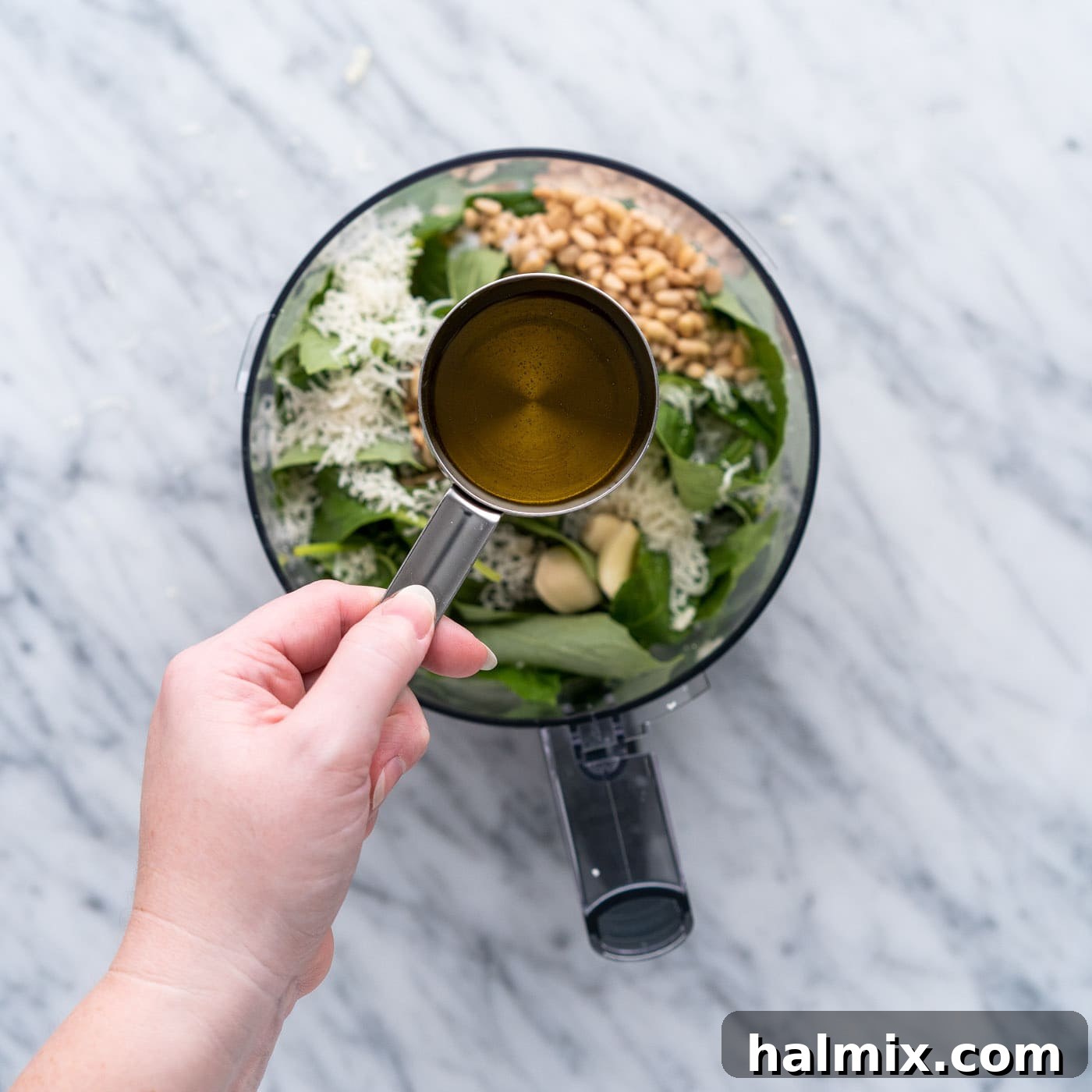
- Prepare Your Ingredients and Food Processor: Gather all your ingredients – fresh basil, pine nuts, peeled garlic cloves, grated Parmesan, extra virgin olive oil, and salt. Place all of these ingredients directly into the bowl of a food processor. Ensure your basil leaves are dry to prevent a watery pesto.

- Pulse to Combine: Secure the lid on your food processor. Begin by pulsing the mixture several times. This initial pulsing action helps to roughly chop and break down the larger ingredients like basil and garlic, ensuring an even blend. Scrape down the sides of the bowl with a spatula if necessary to make sure everything is incorporated.
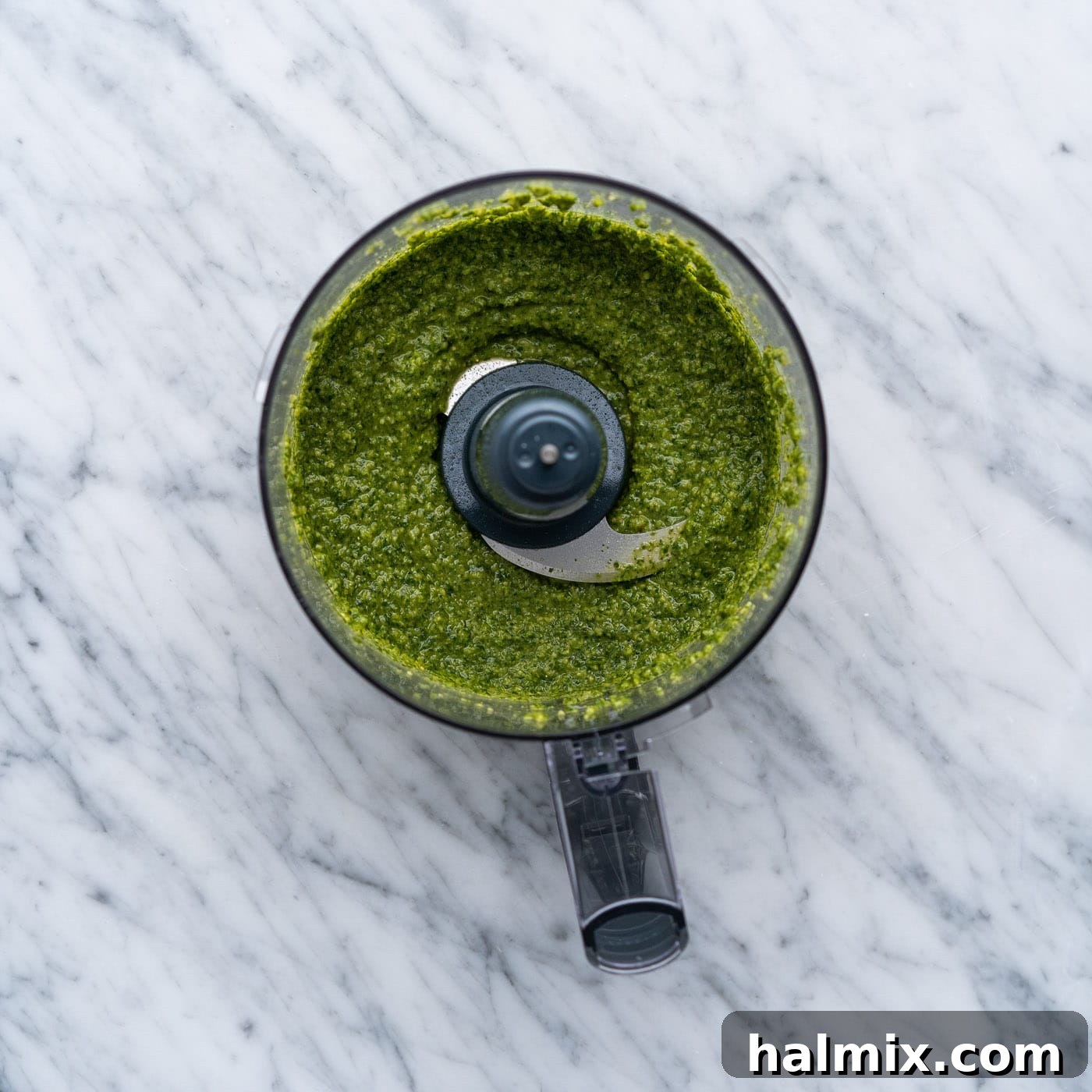
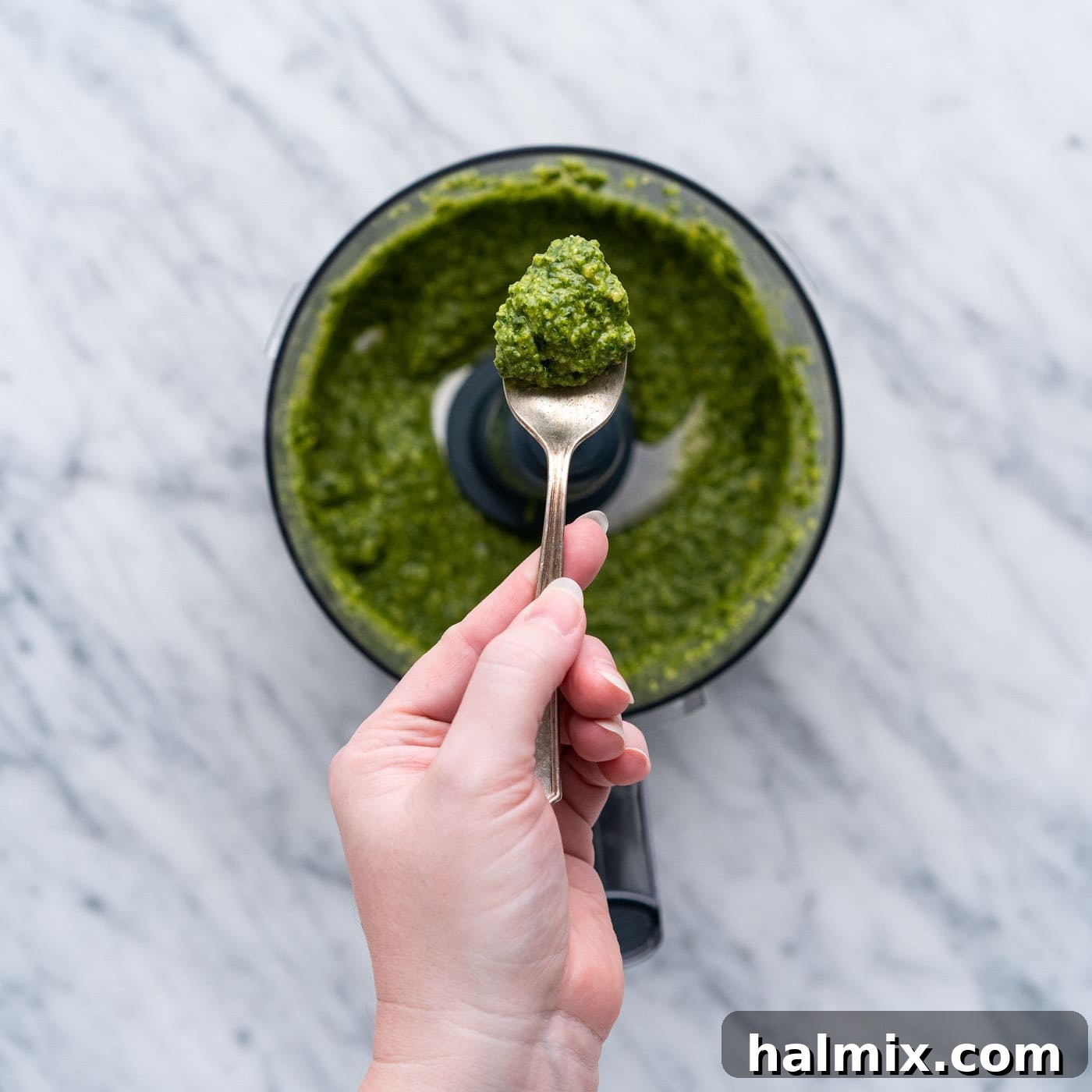
- Process to Desired Consistency: Once the ingredients are roughly chopped, turn the food processor on and process continuously. You’ll watch as the mixture transforms into a vibrant green, paste-like sauce. Continue processing until you reach your desired consistency – whether you prefer a slightly chunky pesto with visible flecks of nuts and basil, or a perfectly smooth, creamy texture. This typically takes just a few minutes.
- Season and Serve: Once you’ve achieved the desired texture, taste the pesto. This is your chance to adjust the seasoning. Add more salt if needed, or a dash of fresh black pepper. If the pesto appears too thick, you can drizzle in a tiny bit more olive oil and pulse again. Serve immediately with your favorite dishes, or prepare for storage.
Expert Tips & Frequently Asked Questions
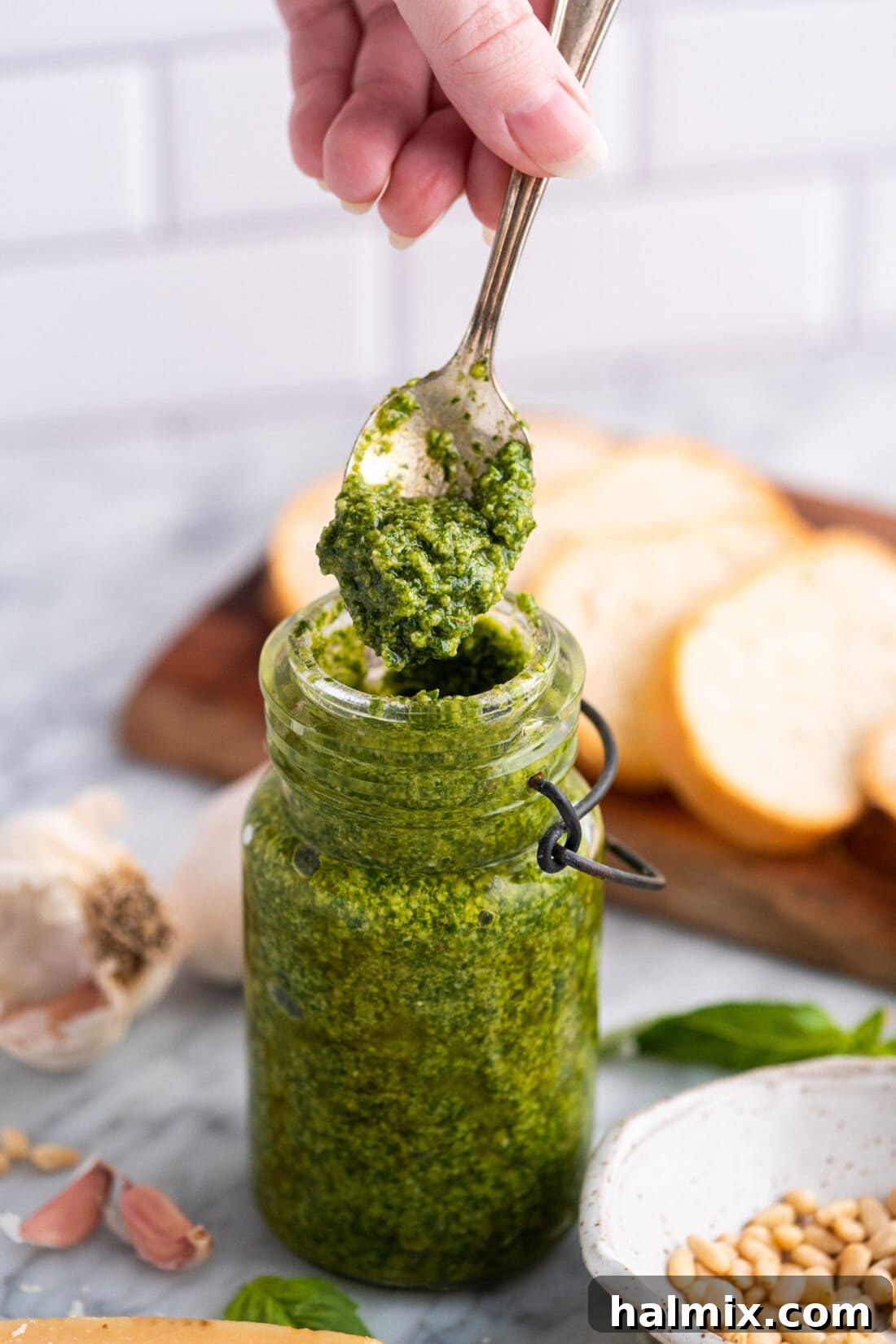
To maintain its freshness and vibrant color, store homemade basil pesto in an air-tight container (like a jar with a sealed lid) in the refrigerator for up to 5 days. A key tip to prevent the top layer from browning due to oxidation is to pour a thin layer of extra virgin olive oil over the surface of the pesto before sealing the lid. Alternatively, you can press a piece of plastic wrap directly onto the surface of the pesto, ensuring no air is trapped between the pesto and the wrap, before covering it with the jar lid.
The consistency of pesto is entirely a matter of personal preference, offering a wonderful degree of customization. Many traditionalists enjoy a slightly coarser, chunkier pesto, which provides a more rustic mouthfeel and noticeable texture to dishes. This can be achieved by pulsing the ingredients fewer times in the food processor. Conversely, a smooth, velvety pesto is fantastic for evenly coating pasta or spreading thinly. If your pesto turns out too chunky and you prefer it smoother, simply add a small amount more of extra virgin olive oil (start with a tablespoon) and process again until it reaches your desired creamy texture.
Absolutely! Freezing is an excellent way to preserve pesto for longer periods, allowing you to enjoy summer’s flavors year-round. Portion your pesto into ice cube trays, small freezer-safe containers, or even zip-top bags (flattened to remove air). Once frozen solid, transfer the pesto cubes to a larger freezer bag. It will keep well in the freezer for up to 3-6 months. When ready to use, simply thaw the desired amount in the refrigerator or add directly to warm pasta, sauces, or soups.
Pesto often browns due to oxidation, a natural reaction when the basil leaves are exposed to air. To minimize browning, work quickly when preparing the pesto. After blending, immediately transfer it to an airtight container. As mentioned in the storage tip, the most effective method to prevent browning is to create an airtight seal on the surface of the pesto. You can achieve this by pouring a thin layer of olive oil over the top, or by pressing plastic wrap directly onto the surface before sealing the container. These methods prevent air from reaching the basil, thus preserving its vibrant green color.
Endless Culinary Creations with Pesto
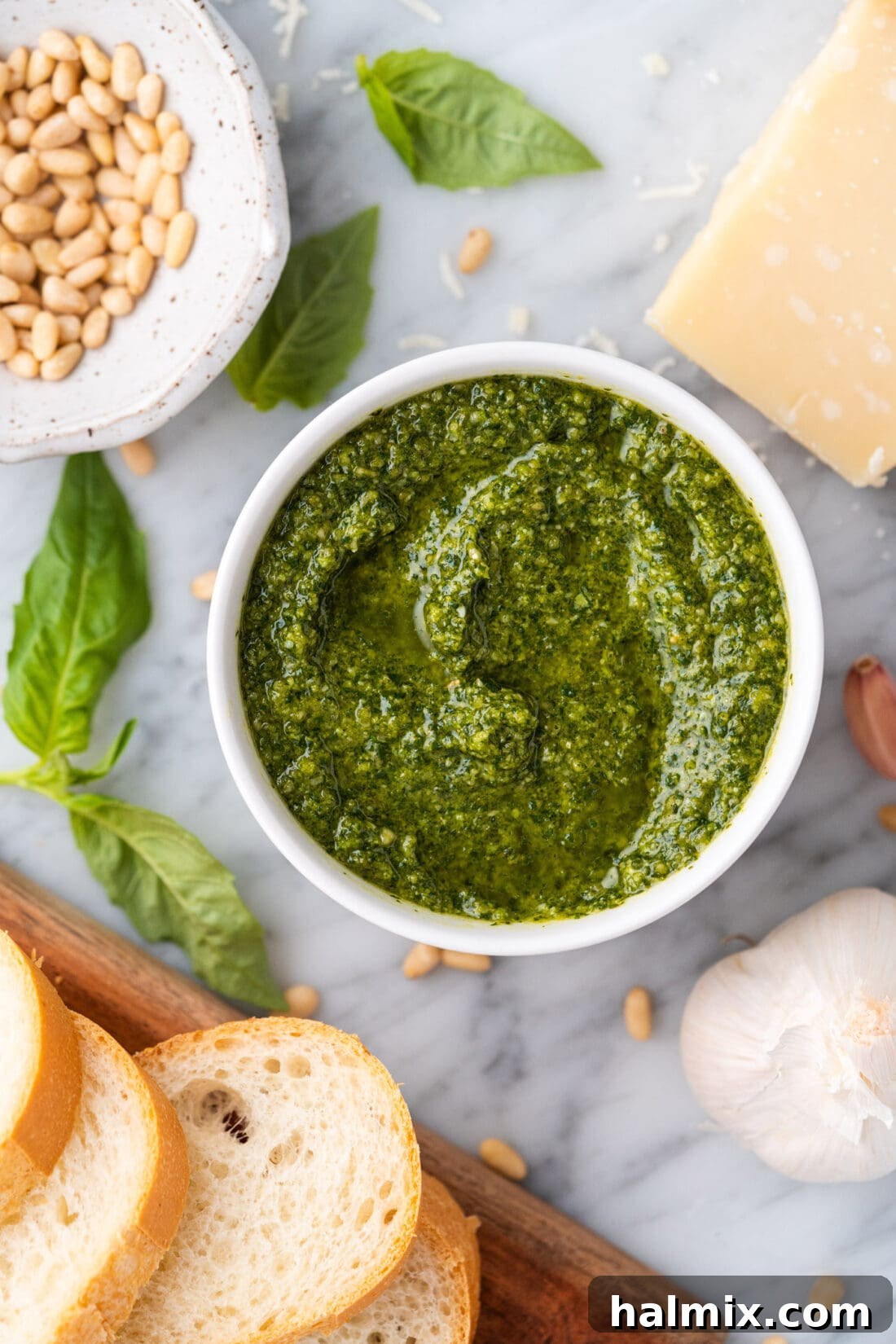
The versatility of homemade basil pesto is truly remarkable, making it a beloved ingredient across many cuisines. Beyond its classic application with pasta, pesto can elevate a myriad of dishes, adding a burst of fresh, herbaceous flavor to almost anything. Here are just a few ideas to get your culinary creativity flowing:
- Pasta Perfection: The most iconic use! Toss it generously with any pasta shape, from spaghetti to penne, for a quick and satisfying meal. Try our dedicated Pesto Pasta recipe or the flavorful Shrimp Pesto Pasta. It’s also fantastic in pasta salads, like a refreshing tortellini pesto pasta salad.
- Sandwiches & Wraps: Spread a thin layer on your favorite bread or tortilla for a gourmet touch. It pairs wonderfully with turkey, chicken, mozzarella, and fresh tomatoes.
- Pizza Base: Use pesto as an alternative to traditional tomato sauce on pizza for a fresh, vibrant flavor. Top with grilled chicken, roasted vegetables, or simply fresh mozzarella.
- Roasted Vegetables: Drizzle pesto over roasted potatoes, zucchini, bell peppers, or asparagus before or after cooking for an extra layer of flavor.
- Eggs: Stir a teaspoon into scrambled eggs, omelets, or frittatas for an unexpected herby kick.
- Soups & Stews: Swirl a spoonful into minestrone, vegetable soup, or even a creamy tomato soup just before serving.
- Dressings & Dips: Whisk pesto with a little extra olive oil or yogurt to create a vibrant salad dressing. Mix it with cream cheese or ricotta for a savory dip.
- Marinade: Use it as a marinade for chicken, fish, or shrimp before grilling or baking.
- Bruschetta: Top toasted bread with a dollop of pesto, fresh tomatoes, and a sprinkle of Parmesan for an easy appetizer.
The options truly are endless, limited only by your imagination. Keep a batch of fresh pesto on hand, and you’ll always have a secret weapon to enhance your meals!
Discover More Homemade Sauce Recipes
If you’ve enjoyed crafting your own pesto, you’ll love exploring other homemade sauce recipes that bring fresh flavors and culinary satisfaction to your kitchen. Elevate your meals with these delightful homemade alternatives:
- Homemade Pizza Sauce
- Rich Bolognese Sauce
- Zesty French Fry Sauce
- Tangy Alabama White Sauce
- Authentic Homemade Enchilada Sauce
I love to bake and cook and share my kitchen experience with all of you! Remembering to come back each day can be tough, that’s why I offer a convenient newsletter every time a new recipe posts. Simply subscribe and start receiving your free daily recipes!
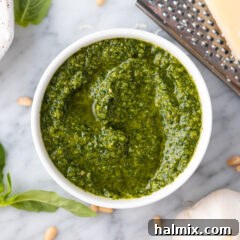
Classic Basil Pesto
IMPORTANT – There are often Frequently Asked Questions within the blog post that you may find helpful. Simply scroll back up to read them!
Print It
Pin It
Rate It
Course:
Condiments, Sauce
Cuisine:
Italian
1 cup
(approx. 4 servings)
10 minutes
414
Amanda Davis
Ingredients
-
4
cups
fresh basil leaves -
½
cup
extra virgin olive oil -
½
cup
pine nuts -
½
cup
freshly grated Parmesan cheese -
3
cloves
garlic
peeled -
½
teaspoon
salt
or more to taste
Equipment You’ll Need
-
Food processor
Before You Begin: Essential Tips for Perfect Pesto
- This recipe yields approximately 1 cup of rich, homemade pesto. It can be easily doubled or tripled to prepare a larger batch for meal prepping or entertaining.
- For optimal freshness and to prevent browning, store your pesto in a lidded glass jar in the refrigerator for up to 5 days. Ensure a thin layer of olive oil covers the surface or press plastic wrap directly onto the pesto before sealing.
- If pine nuts are unavailable or too costly, feel free to substitute with other nuts. Pistachios, pecans, walnuts, and almonds are all excellent alternatives that offer their own unique flavor nuances. Lightly toasting them can enhance their flavor.
- Should your pesto turn out too thick or chunky for your preference, simply add a small, additional amount of extra virgin olive oil (start with 1-2 tablespoons) and pulse the mixture again in the food processor until your desired smooth consistency is achieved.
- Always ensure your basil leaves are thoroughly dry before processing. Excess water can make the pesto watery and reduce its vibrant flavor and color.
Instructions
-
Add all of the fresh ingredients (basil leaves, pine nuts, peeled garlic cloves, freshly grated Parmesan cheese, extra virgin olive oil, and initial salt) to the bowl of your food processor. Secure the lid. Begin by pulsing a few times to roughly chop and combine everything.
-
Once the ingredients are roughly chopped, turn the food processor on to a continuous setting. Process the mixture until it reaches your desired consistency. For a rustic pesto, blend for a shorter period, leaving some texture. For a smoother, creamier pesto, continue blending until thoroughly emulsified.
-
Taste the freshly made pesto and adjust the seasoning as needed. You may wish to add more salt to enhance the flavors further. If the pesto is too thick, drizzle in a tiny bit more olive oil and pulse briefly to incorporate. Serve immediately or store as recommended.
Nutrition
Serving:
1
serving (1/4 cup)
|
Calories:
414
cal
|
Carbohydrates:
5
g
|
Protein:
7
g
|
Fat:
42
g
|
Saturated Fat:
7
g
|
Polyunsaturated Fat:
9
g
|
Monounsaturated Fat:
24
g
|
Cholesterol:
11
mg
|
Sodium:
512
mg
|
Potassium:
204
mg
|
Fiber:
1
g
|
Sugar:
1
g
|
Vitamin A:
1379
IU
|
Vitamin C:
5
mg
|
Calcium:
160
mg
|
Iron:
2
mg
Tried this Recipe? Pin it for Later!
Follow on Pinterest @AmandasCookin or tag #AmandasCookin!
The recipes on this blog are tested with a conventional gas oven and gas stovetop. It’s important to note that some ovens, especially as they age, can cook and bake inconsistently. Using an inexpensive oven thermometer can assure you that your oven is truly heating to the proper temperature. If you use a toaster oven or countertop oven, please keep in mind that they may not distribute heat the same as a conventional full sized oven and you may need to adjust your cooking/baking times. In the case of recipes made with a pressure cooker, air fryer, slow cooker, or other appliance, a link to the appliances we use is listed within each respective recipe. For baking recipes where measurements are given by weight, please note that results may not be the same if cups are used instead, and we can’t guarantee success with that method.