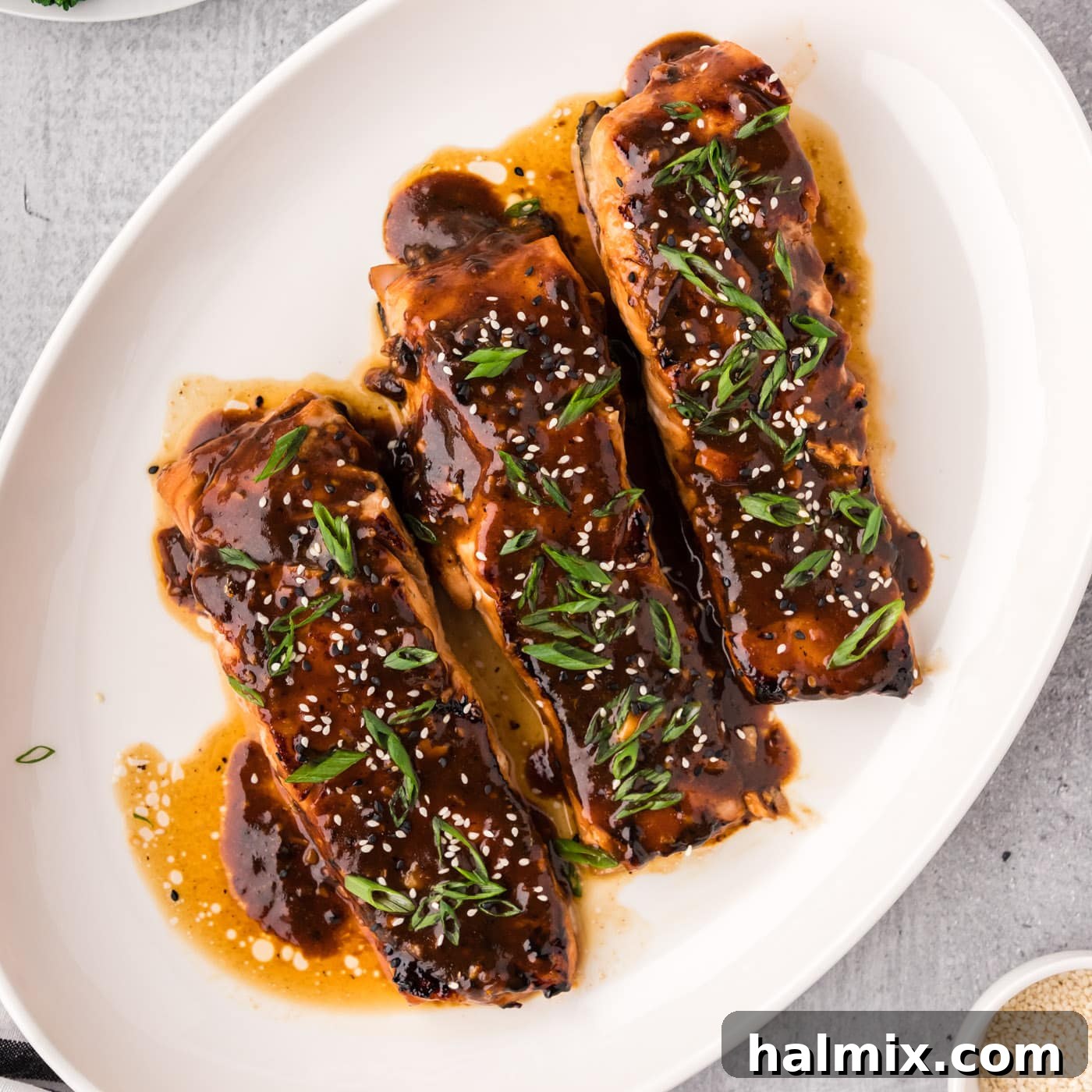
Pan-Seared Teriyaki Salmon: A Recipe for Flavorful, Flaky Perfection
Discover how to create incredibly tender and flaky teriyaki salmon right in your own kitchen. This recipe features a dynamic, flavor-packed teriyaki marinade that not only infuses the salmon with delicious taste but also transforms into a glossy, sticky glaze as it cooks, topping perfectly pan-seared fillets.
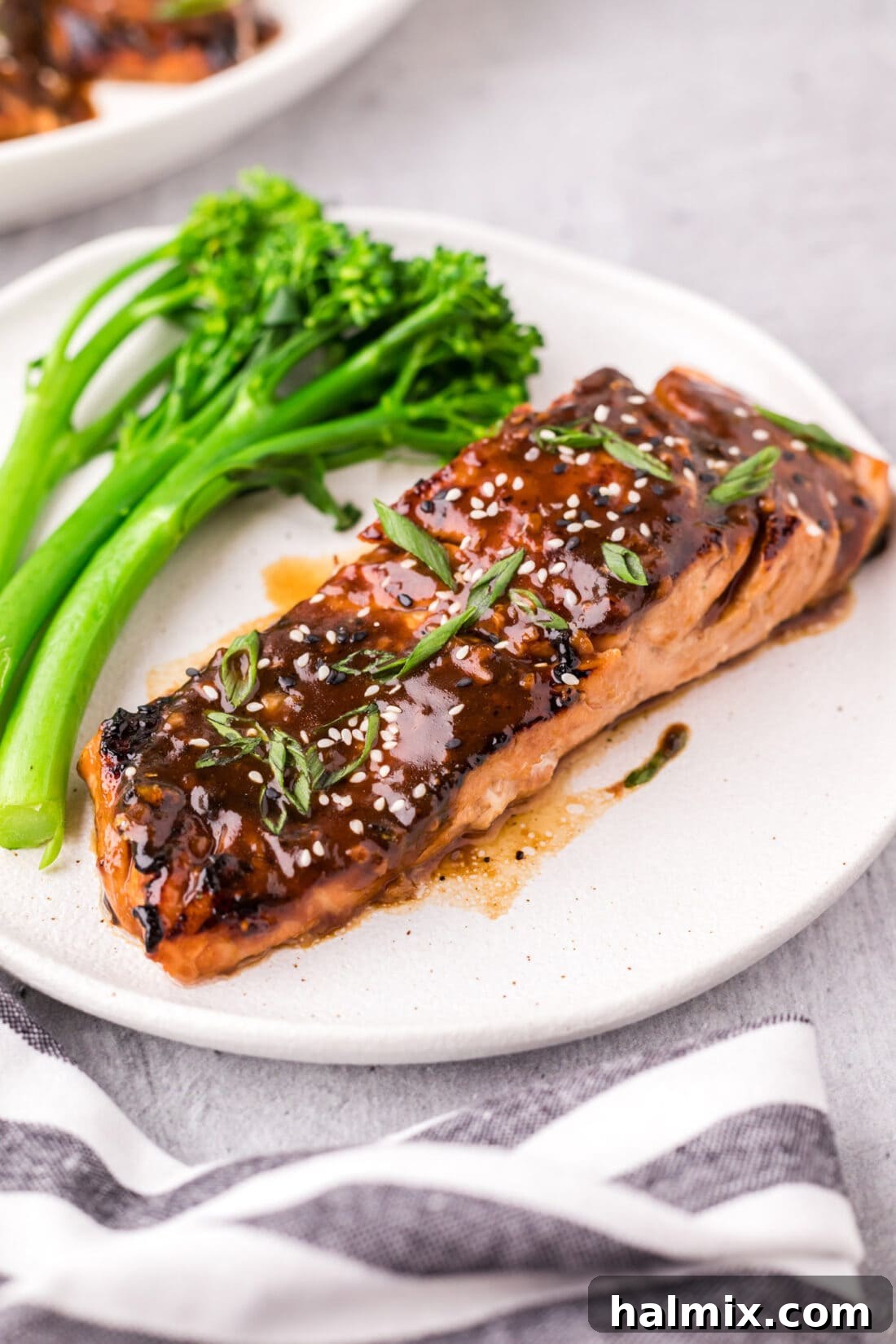
Why You’ll Love This Teriyaki Salmon Recipe
If you’re searching for a salmon recipe that truly stands out, look no further. Our teriyaki salmon is a guaranteed crowd-pleaser, delivering a symphony of sweet and savory notes that perfectly complement the rich, buttery texture of salmon. We believe teriyaki sauce is one of the best companions to salmon, enhancing its natural flavors without overpowering them.
This stovetop method ensures a beautifully seared exterior and a moist, flaky interior every time. While it requires a two-hour marinating period to achieve maximum flavor penetration, the minimal active cooking time makes it an ideal choice for a weeknight dinner or an impressive meal for guests. The deep, umami-rich flavors will have you reaching for seconds, and perhaps even licking the plate clean – we won’t judge!
Craving more teriyaki goodness? Be sure to explore our teriyaki chicken or teriyaki chicken and rice recipes for equally delicious options. Serve this exquisite salmon over a bed of fluffy white or brown rice to soak up every last drop of the homemade teriyaki glaze, creating a complete and satisfying meal.
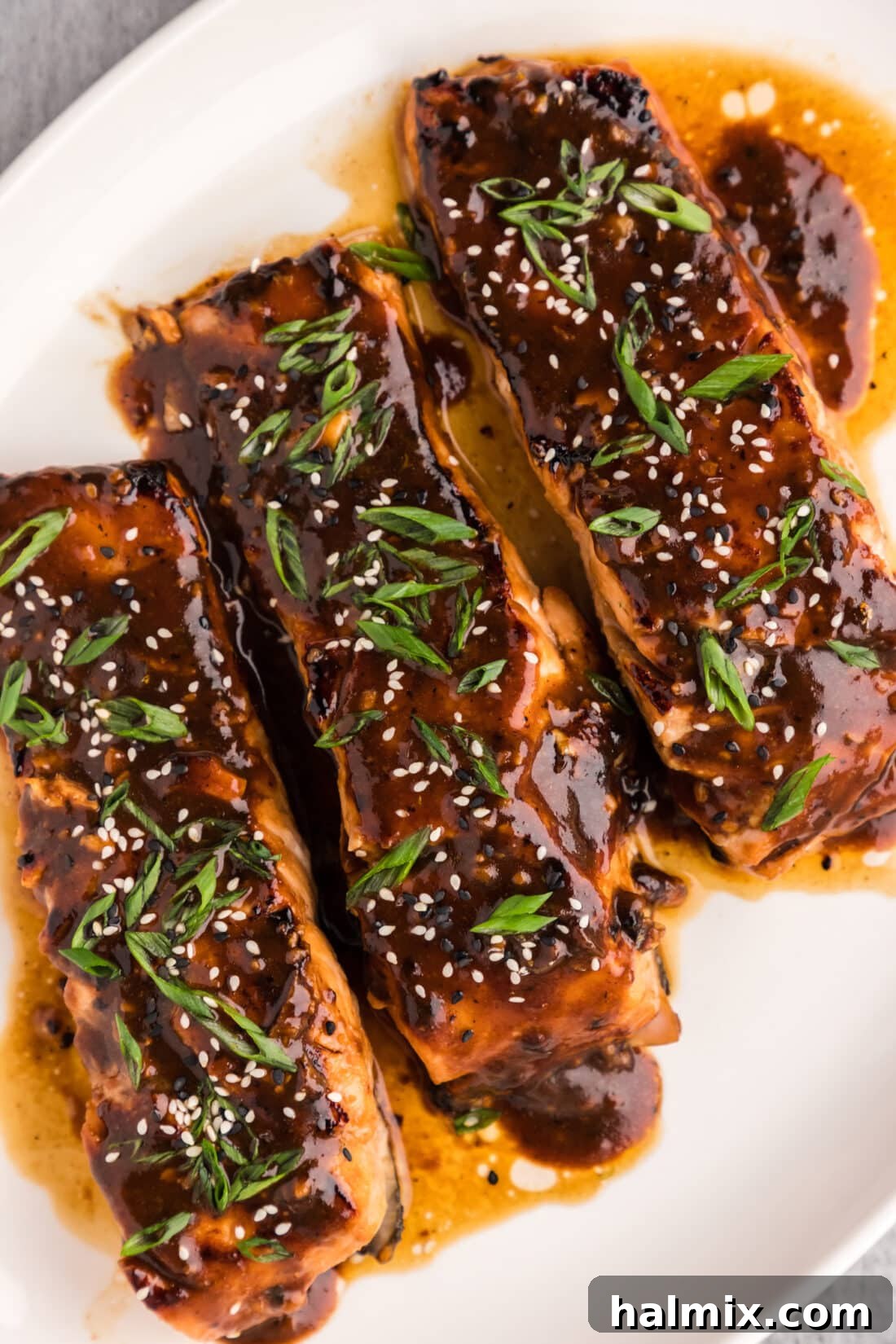
Essential Ingredients for Teriyaki Salmon
Crafting exceptional teriyaki salmon begins with selecting the right ingredients. This recipe calls for a balance of fresh salmon and pantry staples that combine to create an unforgettable marinade and glaze. You’ll find a detailed list of all measurements and instructions in the printable recipe card at the end of this article.
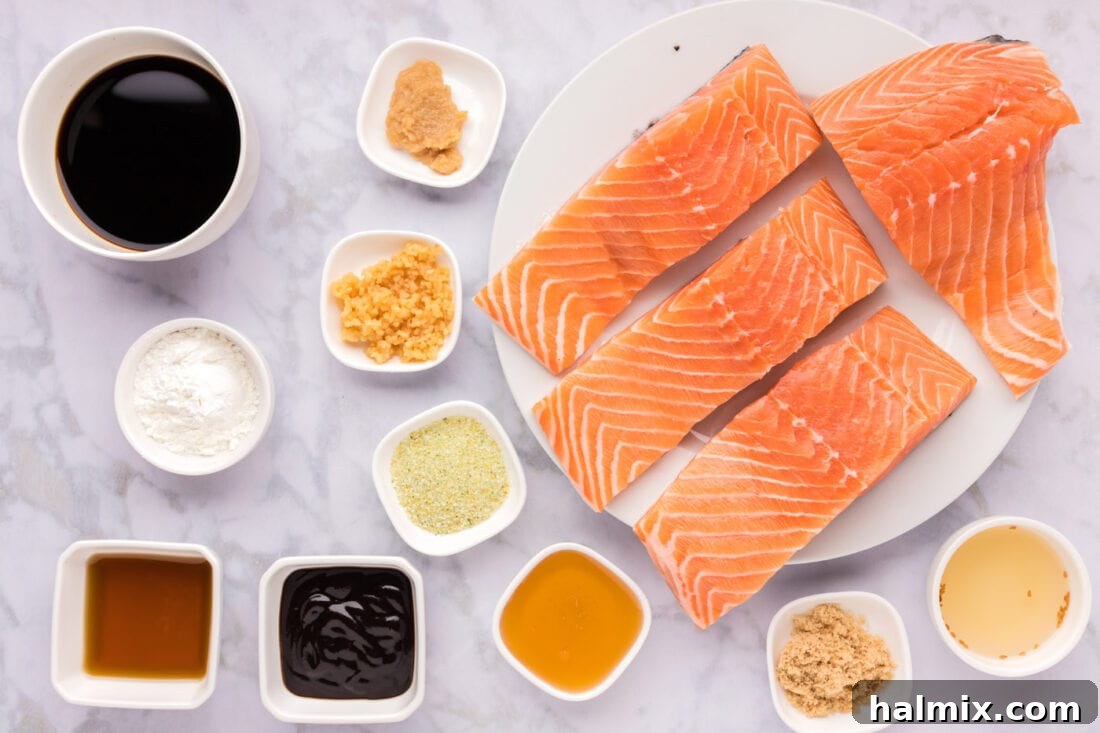
Ingredient Breakdown and Smart Substitutions
- Salmon: We recommend using 2 pounds of center-cut salmon, typically yielding four generous fillets. Center-cut fillets are ideal as they cook more evenly. When selecting salmon, look for vibrant color, firm flesh, and a fresh, ocean-like scent. The thickness of your fillets will influence cooking time, so adjust accordingly. Skin-on salmon is fantastic for pan-searing as it helps protect the delicate flesh and gets wonderfully crispy.
-
Teriyaki Marinade & Glaze: This powerful blend is the heart of our recipe, acting as both a tenderizer and a flavor enhancer. It’s a harmonious mix of:
- Low Sodium Soy Sauce: Forms the savory foundation. Using low-sodium allows you to control the saltiness. For gluten-free options, use tamari or coconut aminos.
- Sesame Oil: Adds a distinctive nutty, aromatic depth characteristic of Asian cuisine.
- Hoisin Sauce: A thick, sweet, and tangy Chinese barbecue sauce that brings an incredible umami punch and helps thicken the glaze.
- Honey: Provides natural sweetness and contributes to that desirable sticky, caramelized glaze. Maple syrup or agave nectar can be used as alternatives.
- Rice Vinegar: Introduces a subtle tanginess that balances the sweetness and richness of the other ingredients, brightening the overall flavor profile.
- Fresh Ginger: For a zesty, pungent kick. Freshly grated ginger is highly recommended for the best flavor, but 1/2 teaspoon of ground ginger can be substituted in a pinch.
- Minced Garlic: An aromatic essential that pairs perfectly with ginger and soy. Freshly minced garlic yields the most robust flavor, but garlic powder can be used if fresh isn’t available (use about 1/2 teaspoon).
- Brown Sugar: Enhances the sweetness and promotes a beautiful caramelization during searing. If you don’t have brown sugar, granulated white sugar works, or you can increase the honey slightly.
- Olive Oil: Used in the marinade to help emulsify and distribute flavors, and as the cooking fat for searing. Any neutral cooking oil like avocado or canola oil can also be used.
- Garlic Salt: Provides additional savory depth and seasoning. If using regular salt, remember to also add a bit of garlic powder.
- Cornstarch & Water (for Slurry): This simple combination is crucial for thickening the reserved marinade into a luscious glaze. Arrowroot powder is a suitable substitute if you prefer.
How to Make Irresistible Teriyaki Salmon: Step-by-Step Guide
These step-by-step photos and instructions are designed to help you visualize the process of making this delicious recipe. For a complete printable version with precise measurements, simply jump to the recipe card at the bottom of this post.
-
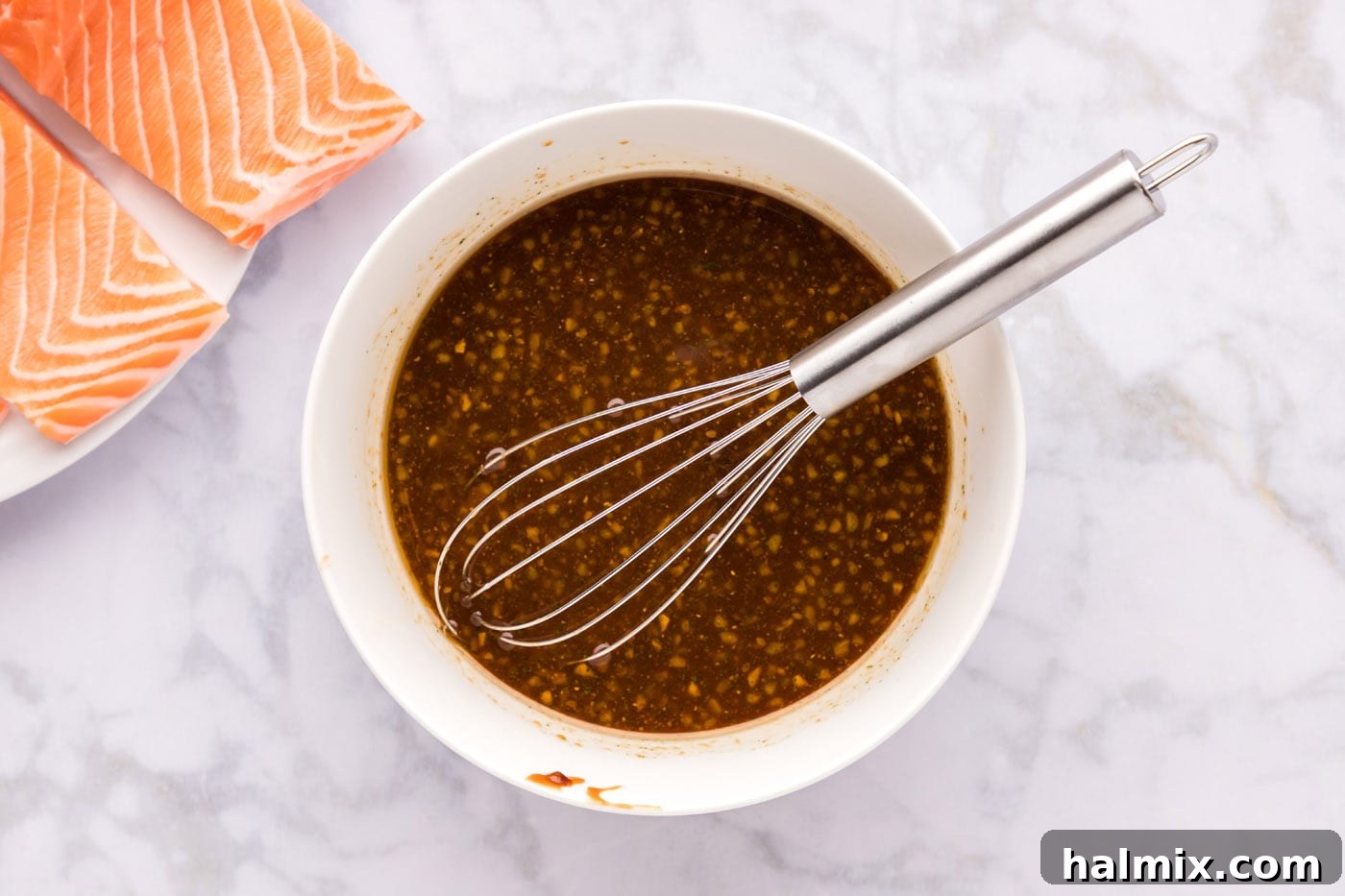
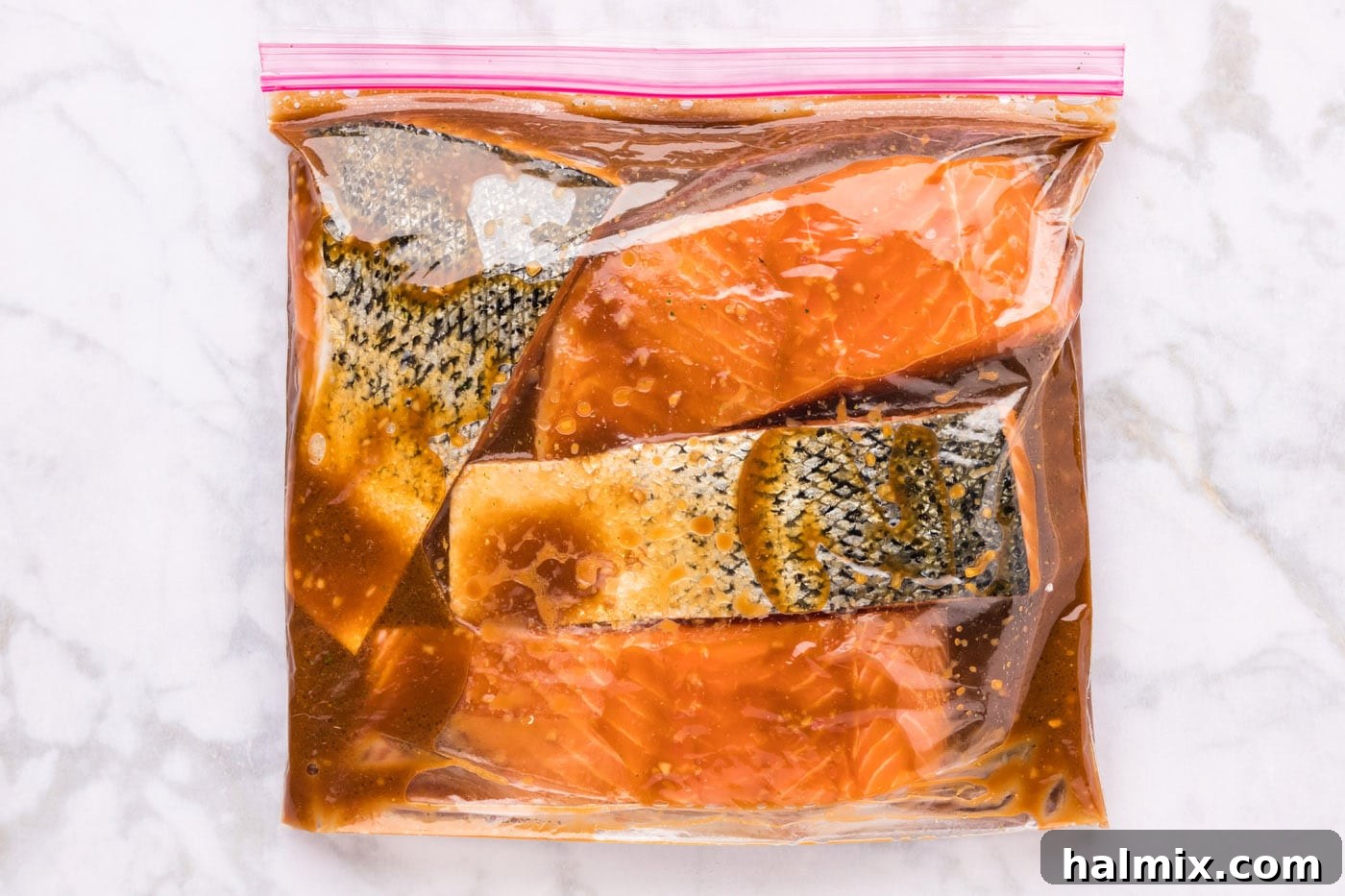
Prepare the Marinade and Marinate the Salmon: In a medium-sized bowl, thoroughly whisk together all the marinade ingredients until well combined. Transfer this flavorful mixture into a gallon-sized zip-top bag. Carefully add the salmon fillets to the bag, ensuring they are fully submerged and coated by the marinade. Seal the bag, pressing out as much air as possible, and lay it flat. Allow the salmon to marinate for at least 2 hours. This can be done either at room temperature (for up to 2 hours) or in the refrigerator (for up to 4 hours for deeper flavor).

Whisking together the simple yet powerful teriyaki marinade ingredients. Salmon fillets soaking up all the delicious flavors of the homemade teriyaki marinade. -
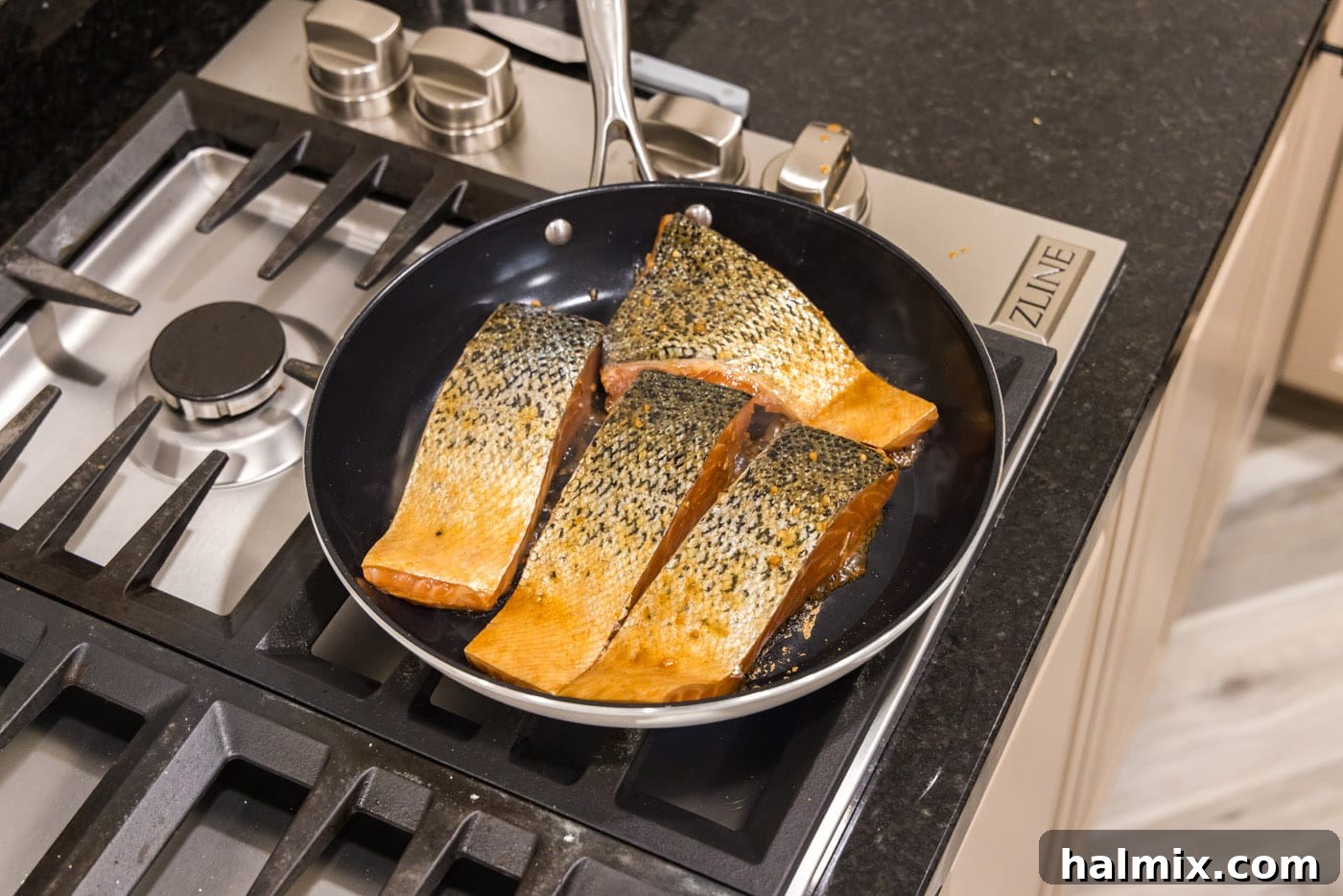
Pan-Sear the Salmon: Preheat a large skillet over medium heat. Once hot, carefully remove the salmon fillets from the zip-top bag and place them into the skillet, skin-side up. Do NOT discard the remaining marinade; it will be used to create your delicious glaze.
Expert Tip: Teriyaki marinade contains sugar, which can make it sticky. To prevent the fish from adhering to the pan, gently shift the fillets a few times during the initial minutes of searing until a crust forms. Ensure the skillet is hot enough before adding the fish to achieve a good sear without excessive sticking.
Achieving a beautiful sear on the salmon fillets. - Prepare the Teriyaki Glaze: While the salmon is cooking, pour the reserved marinade into a small saucepan and place it over medium heat. In a separate small bowl, whisk together the water and cornstarch to create a smooth slurry. Once the marinade in the saucepan is simmering, gradually whisk in the cornstarch slurry. Continue to cook over medium heat, stirring constantly, until the sauce thickens to your desired glaze consistency. Remove from heat immediately to prevent it from becoming too thick.
-
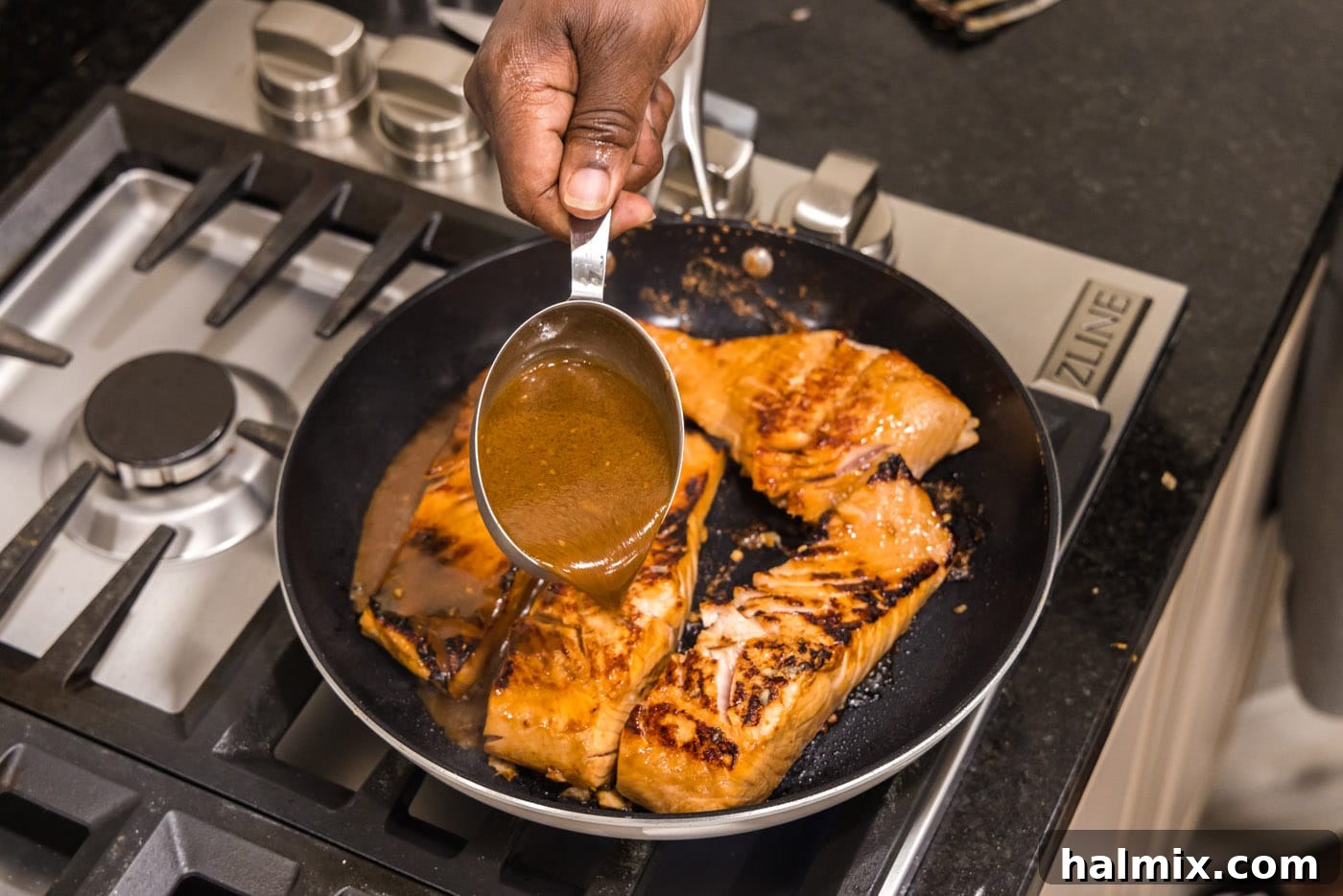
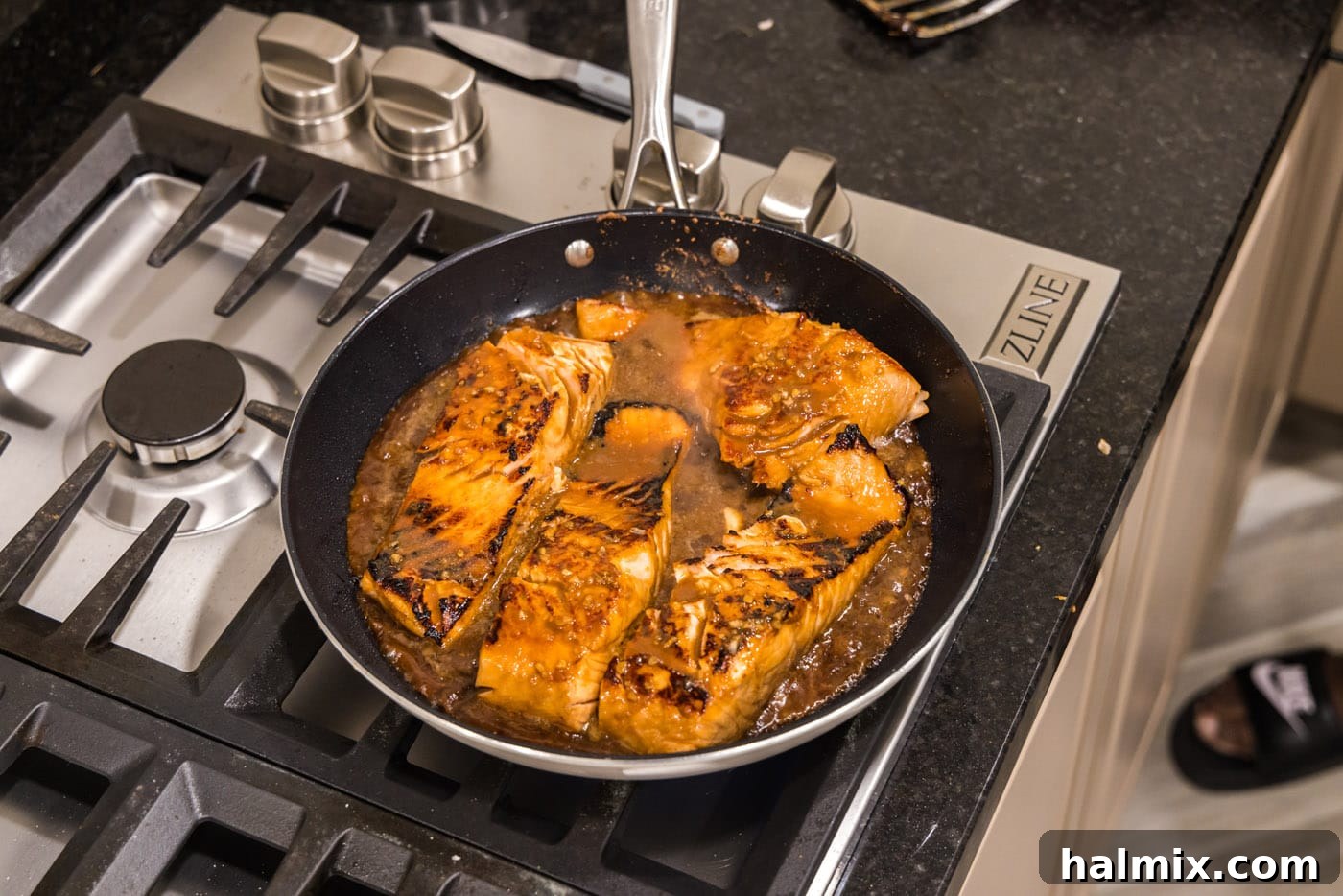
Glaze and Finish Cooking: Cook the salmon fillets for 4-5 minutes on the first side (skin-side up). Then, carefully flip them over. Drizzle approximately 1 cup of the freshly thickened teriyaki glaze generously over the now skin-side down fillets. Increase the heat to medium-high, bringing the glaze in the pan to a gentle boil.
Coating the salmon with the rich, homemade teriyaki glaze. Perfectly glazed salmon simmering in the skillet. -
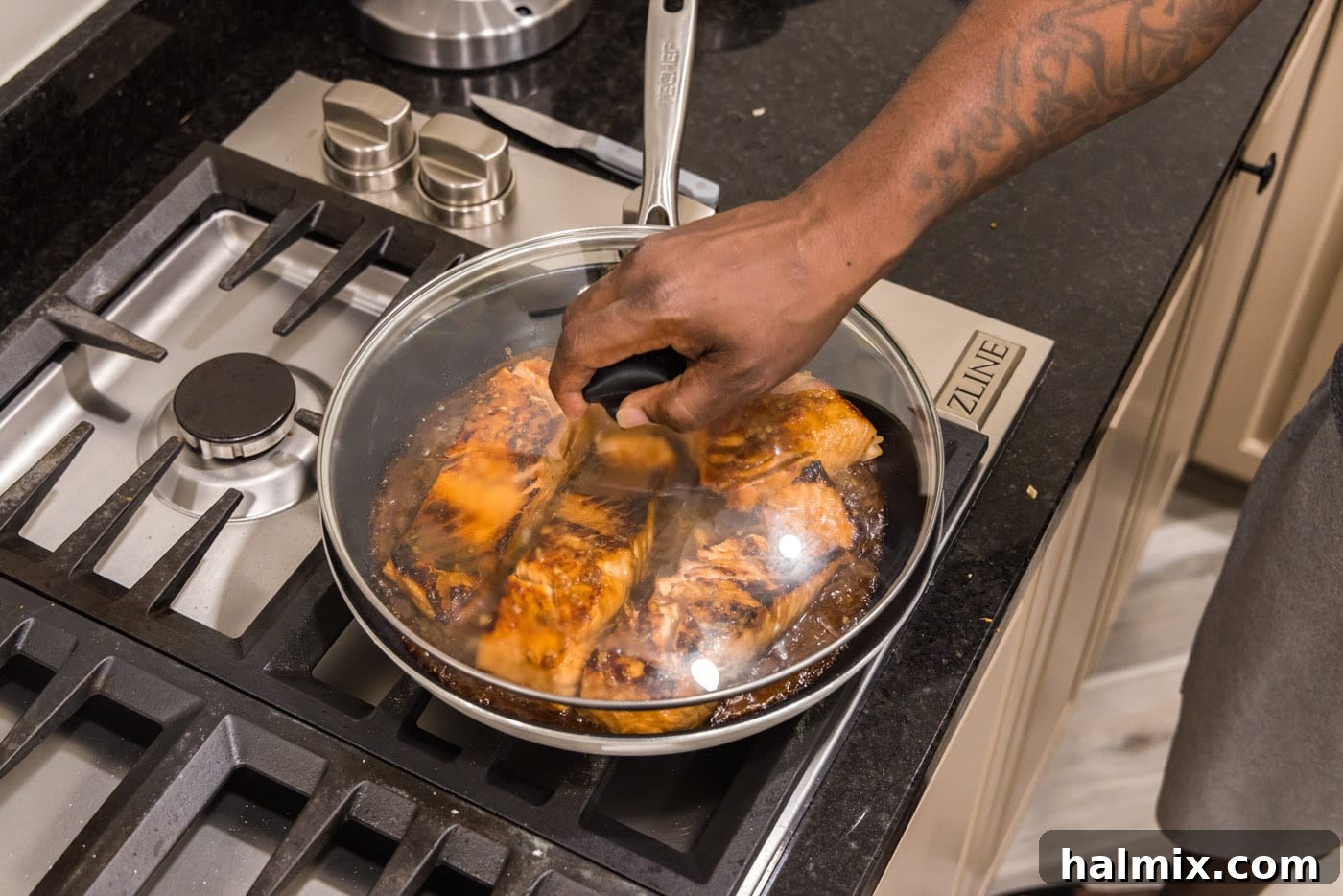
Rest and Serve: Once the glaze is boiling, cover the pan with a lid and reduce the heat to a low simmer. Allow it to simmer for 1-2 minutes to finish cooking the salmon and allow the flavors to meld. Turn off the heat and let the pan sit, still covered, for an additional 3-4 minutes. This resting period allows the salmon to reabsorb juices, resulting in an even more tender and moist fillet.
Covering the pan to steam the salmon and finish the cooking process.
Frequently Asked Questions & Expert Tips for Teriyaki Salmon
How do I store leftover teriyaki salmon?
Store any leftover teriyaki salmon in an airtight container in the refrigerator for up to 3-4 days. This ensures its freshness and prevents any contamination.
At what temperature is salmon done cooking?
Salmon is perfectly cooked when it reaches an internal temperature of 145°F (63°C). Always check the temperature with an instant-read thermometer inserted into the thickest part of the fillet. The flesh should also flake easily with a fork.
Can I bake teriyaki salmon instead of pan-searing?
Absolutely! For a baked version, marinate the salmon as directed. Preheat your oven to 400°F (200°C). Place the salmon fillets on a baking sheet lined with parchment paper. Bake for 12-18 minutes, or until the internal temperature reaches 145°F (63°C). You can brush with some of the thickened glaze during the last few minutes of baking.
How can I ensure crispy skin on my salmon?
For truly crispy skin, start with a hot skillet and cook the salmon skin-side down for most of the cooking time (about 5-7 minutes initially, without flipping). Press down gently on the fillets for the first minute to ensure full contact with the pan. Once the skin is golden and crisp, then flip and finish cooking the flesh side, glazing as directed.
Serving Suggestions for Your Teriyaki Salmon
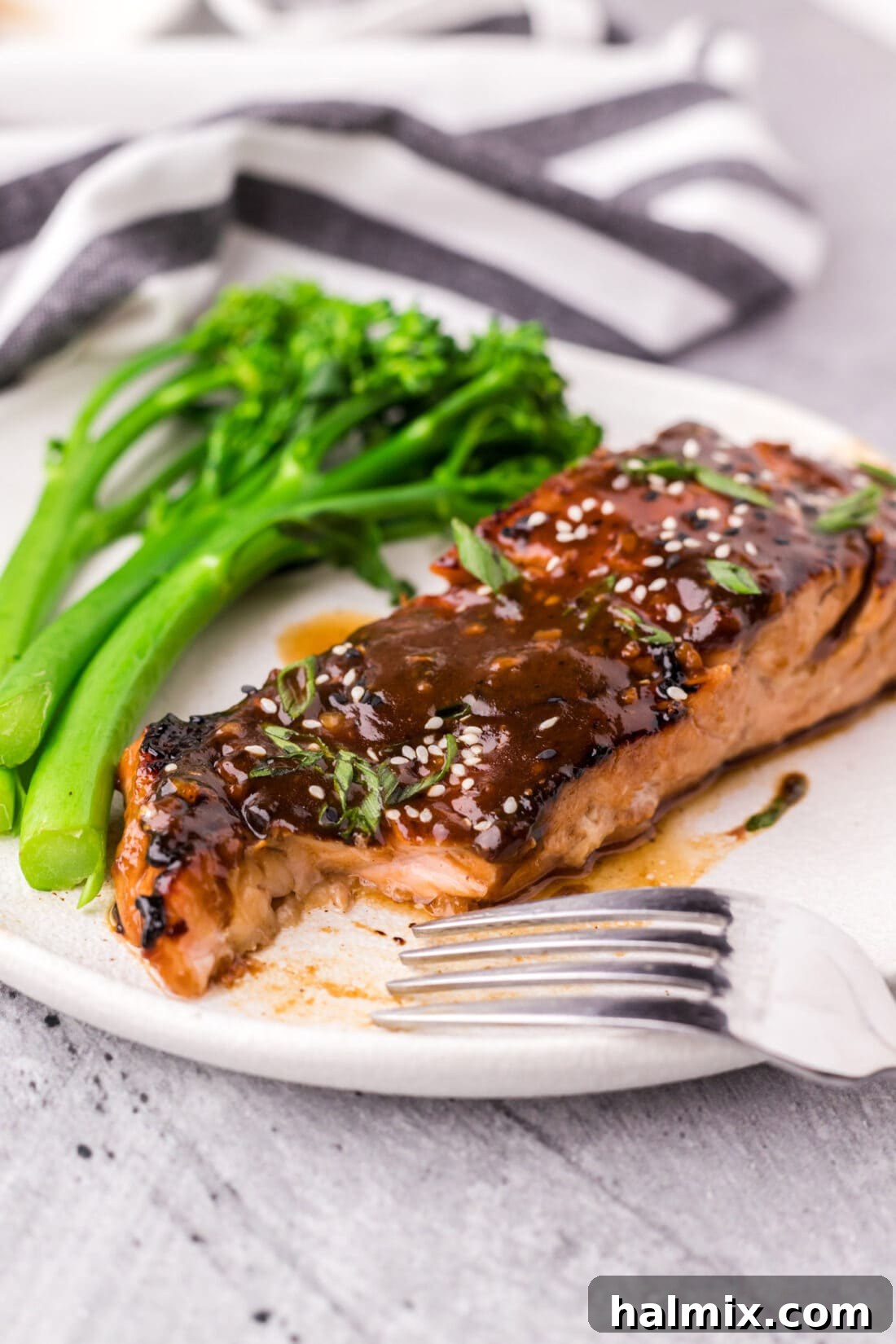
This teriyaki salmon is incredibly versatile and pairs wonderfully with a variety of sides, allowing you to create a complete and satisfying meal. Here are some of our top recommendations:
- Rice: Serve over a bed of fluffy white rice, aromatic jasmine rice, or nutty brown rice to soak up every drop of that irresistible glaze. Quinoa is also an excellent healthy alternative.
- Vegetables: Complement the rich flavors with steamed, roasted, or stir-fried vegetables. Green beans, broccoli florets, tender asparagus spears, or sweet carrots are all fantastic choices. For an extra touch, lightly sauté some bok choy or snap peas in a bit of sesame oil and garlic.
- Garnishes: Elevate the presentation and add extra texture with simple garnishes. A sprinkle of toasted sesame seeds adds a lovely crunch, while thinly sliced green onions (scallions) provide a fresh, mild oniony bite. A tiny dash of chili flakes can introduce a subtle heat.
- Asian Salad: A refreshing side salad with a ginger-sesame dressing can cut through the richness of the salmon.
Explore More Delicious Salmon Recipes
If you loved this teriyaki salmon, you’ll be thrilled to discover other exciting ways to prepare this versatile and healthy fish. Expand your culinary repertoire with these mouth-watering salmon creations:
- Homemade Salmon Sauce Ideas
- Easy Baked Salmon
- Spicy Blackened Salmon
- Sweet and Savory Maple Soy Salmon
- Bright Dijon Lemon Caper Salmon
I love to bake and cook and share my kitchen experience with all of you! Remembering to come back each day can be tough, that’s why I offer a convenient newsletter every time a new recipe posts. Simply subscribe and start receiving your free daily recipes!
Teriyaki Salmon
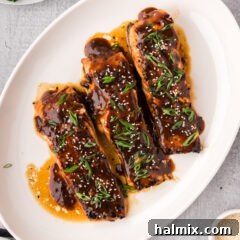
Serve this salmon over and alongside a bed of rice where it can soak up any of the remaining homemade teriyaki sauce, or go ahead and lick the plate clean. We don’t judge.
Pin It
Rate It
Marinate time: 2 hours
Cook time: 10 mins
Total Time: 2 hrs 20 mins
Ingredients
- 2 pounds center cut salmon, cut into 4 fillets
- 3 Tablespoons cornstarch
- ¼ cup water
Marinade
- ½ cup low sodium soy sauce
- 2 Tablespoons sesame oil
- 3 Tablespoons hoisin sauce
- 2 Tablespoons honey
- 1 ½ Tablespoons rice vinegar
- ½ Tablespoon chopped ginger
- 1 Tablespoon minced garlic
- ½ Tablespoon brown sugar
- 2 Tablespoons olive oil
- 2 teaspoons garlic salt
Equipment You’ll Need
- Large skillet
- Mixing bowls
- Whisk
- Saucepan
- Instant-read thermometer (optional, but recommended)
Before You Begin
- The teriyaki sauce is sticky due to sugars. Keep a close watch on the skillet and gently shift the fish fillets during searing to prevent them from sticking to the pan.
- Salmon is perfectly cooked when it reaches an internal temperature of 145°F (63°C) in its thickest part. A reliable instant-read thermometer is your best tool for accuracy.
- Leftovers can be stored in an airtight container in the refrigerator for up to 3-4 days.
Instructions
-
In a medium bowl, whisk together all the marinade ingredients (soy sauce, sesame oil, hoisin, honey, rice vinegar, ginger, garlic, brown sugar, olive oil, and garlic salt). Pour the marinade into a gallon-sized zip-top bag and add the salmon fillets. Seal the bag tightly, removing excess air, and lay it flat. Allow the salmon to marinate for 2 hours at room temperature, or up to 4 hours in the refrigerator for enhanced flavor.
-
Preheat a large skillet over medium heat. Carefully remove the salmon fillets from the marinade bag, allowing any excess marinade to drip off. Place the fillets in the hot skillet, skin-side up. Do not discard the remaining marinade in the bag.
TIP: The marinade contains sugars which can make it sticky. To prevent the salmon from sticking to the pan, gently shift the fish fillets around a few times during the initial 4-5 minutes of searing.
-
While the salmon is searing, pour the reserved marinade from the bag into a small saucepan. Place the saucepan over medium heat. In a separate small bowl, combine the ¼ cup water and 3 tablespoons cornstarch to create a smooth slurry. Once the marinade in the saucepan begins to simmer, gradually whisk in the cornstarch slurry. Cook over medium heat, stirring constantly, until the sauce thickens to a glossy glaze consistency. Remove from heat.
-
Cook the salmon fillets for 4-5 minutes on the first side (skin-side up) until a golden-brown sear is achieved. Then, carefully turn the fillets over. Drizzle approximately 1 cup of the freshly thickened teriyaki glaze evenly over the salmon. Increase the heat to medium-high and bring the glaze in the pan to a gentle boil.
-
Cover the pan with a lid and reduce the heat to a low simmer. Allow the salmon to simmer, covered, for 1-2 minutes to finish cooking through. Turn off the heat and let the pan sit, still covered, for an additional 3-4 minutes. This resting period allows the salmon to become incredibly tender and juicy. Serve immediately with your favorite sides.
Nutrition Information
Tried this Recipe? Pin it for Later!
Follow on Pinterest @AmandasCookin or tag #AmandasCookin!
The recipes on this blog are tested with a conventional gas oven and gas stovetop. It’s important to note that some ovens, especially as they age, can cook and bake inconsistently. Using an inexpensive oven thermometer can assure you that your oven is truly heating to the proper temperature. If you use a toaster oven or countertop oven, please keep in mind that they may not distribute heat the same as a conventional full-sized oven and you may need to adjust your cooking/baking times. In the case of recipes made with a pressure cooker, air fryer, slow cooker, or other appliance, a link to the appliances we use is listed within each respective recipe. For baking recipes where measurements are given by weight, please note that results may not be the same if cups are used instead, and we can’t guarantee success with that method.