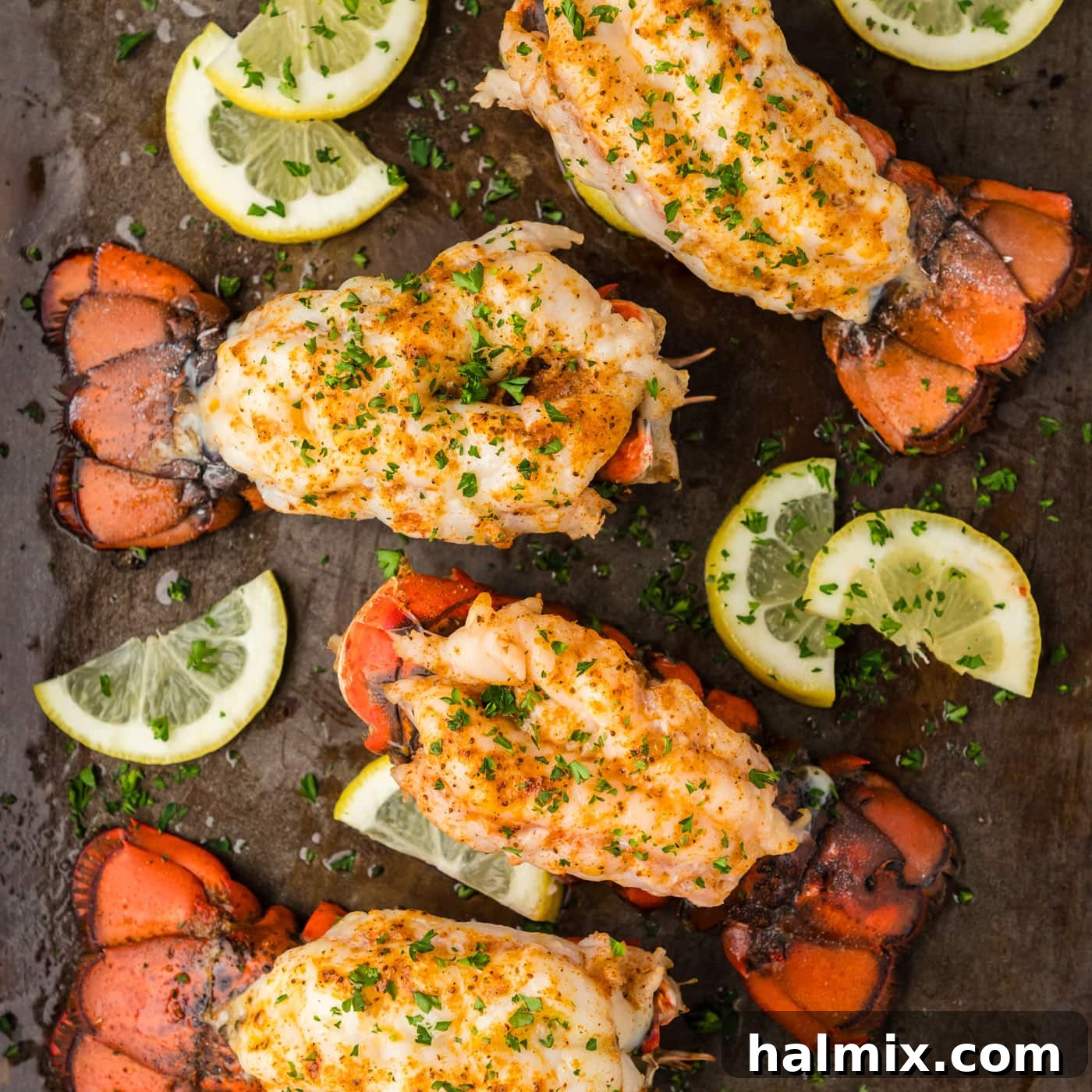
Unlock the secret to a luxurious dining experience with this incredibly easy baked lobster tail recipe. Requiring just a few simple ingredients – a touch of melted butter and a sprinkle of classic Old Bay seasoning – these succulent lobster tails transform from raw to perfectly cooked in a mere 15 minutes in your oven. Forget the intimidation often associated with preparing seafood; this method ensures a perfectly tender, flavorful lobster every time, making gourmet dining accessible for any home cook.
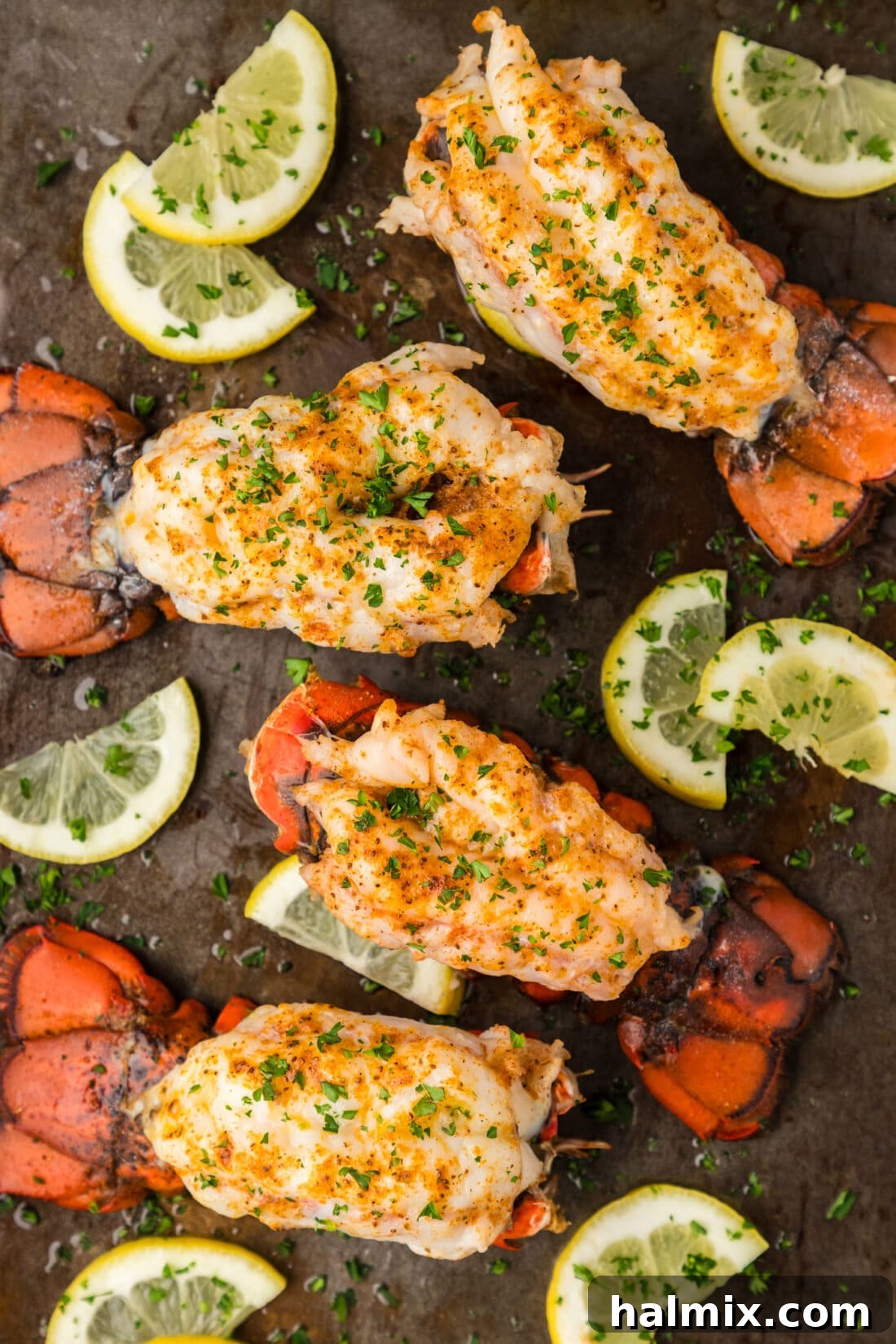
Why This Recipe Is Your Go-To for Perfect Baked Lobster
This baked lobster tail recipe stands out for its elegant simplicity and consistently delicious results. We believe that gourmet meals shouldn’t require complex techniques, and this recipe is a testament to that philosophy. The process begins with “crowning” the lobster meat, a simple yet effective technique that not only creates a stunning presentation but also helps the lobster cook more evenly. Following this, the meat is generously brushed with melted butter and seasoned with the iconic Old Bay blend, infusing it with a rich, savory flavor that complements the sweet notes of the lobster. A quick 15-minute bake in a hot oven is all it takes to achieve tender perfection.
Many home cooks shy away from preparing lobster, reserving it for special occasions or restaurant visits. However, this recipe demolishes the myth that lobster is difficult to make. In under 30 minutes, you can create a dish that tastes like it came from a five-star restaurant. Once you experience the joy of biting into juicy, buttery lobster meat prepared with such ease, you’ll be eager to bake it whenever the craving strikes, turning ordinary evenings into extraordinary culinary celebrations.
While baking is our preferred method for its hands-off convenience and exceptional flavor development, lobster tails can also be prepared in various other ways. Popular alternatives include steaming for a delicate texture or grilling for a smoky char. Each method yields a succulent result, proving that the ultimate choice often comes down to personal preference and the desired culinary experience. However, for a foolproof, elegant, and quick preparation, baking remains an unparalleled choice.
Essential Ingredients for Your Baked Lobster Tail
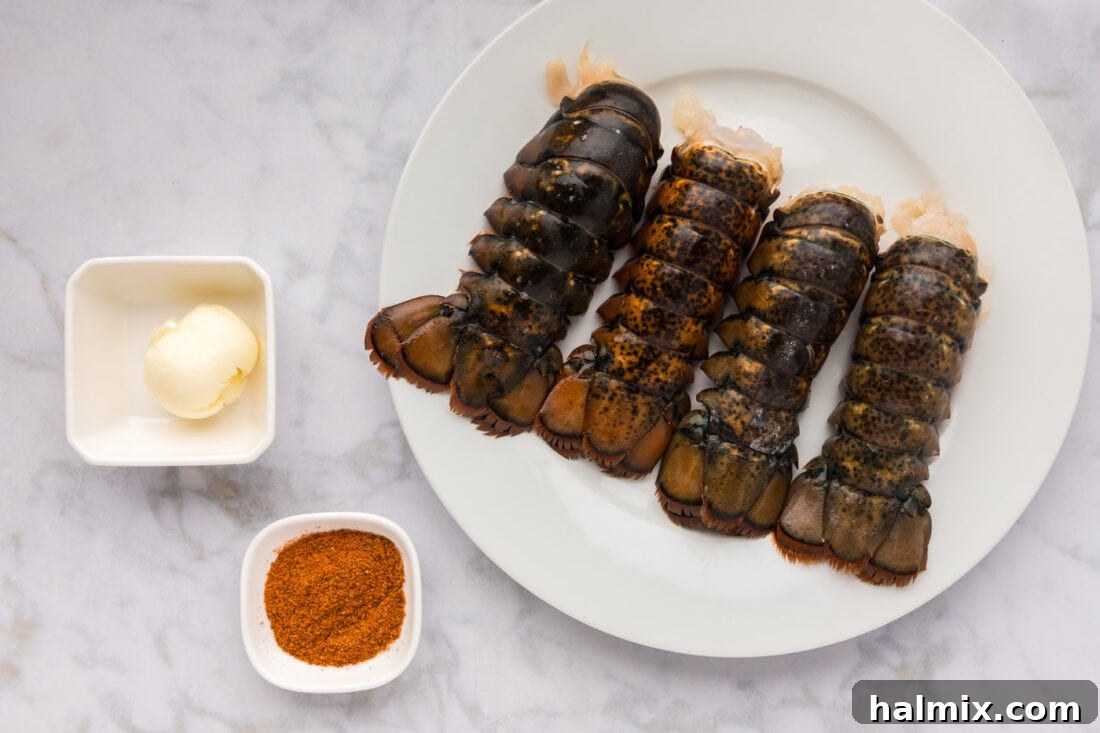
Crafting the perfect baked lobster tail requires only a handful of high-quality ingredients. The beauty of this recipe lies in allowing the natural sweetness and delicate texture of the lobster to shine, enhanced by classic seasonings. You’ll find a complete list of measurements and detailed instructions in the printable recipe card towards the end of this post.
Ingredient Spotlight & Flavor Variations
Understanding your ingredients is key to culinary success. Here’s a deeper look into the components of this recipe and how you can adapt them to your taste:
LOBSTER TAILS: The Star of the Show
For the best results, always purchase frozen lobster tails. This ensures maximum freshness, as lobster is typically flash-frozen shortly after being caught, preserving its quality. Avoid buying pre-thawed lobster tails from the store, as their freshness can be compromised. It’s crucial to defrost your lobster tails properly overnight in the refrigerator. Never rush the thawing process by using hot water, as this can negatively impact the texture and flavor of the delicate meat. When preparing your thawed tails, you might notice a dark line running through the flesh – this is the digestive tract, also known as the vein. While not harmful, it’s generally removed for aesthetic and textural reasons. Simply pull it out gently with your fingers or a small knife before proceeding with the recipe.
When selecting lobster tails, consider the size. Smaller tails (around 4-6 ounces each) are often more tender and cook quicker, while larger tails (8 ounces and up) offer a more substantial portion but may require a slightly longer cooking time. Aim for tails that are firm and free from discoloration for the best experience.
SEASONING: The Perfect Complement
Our recipe highlights Old Bay seasoning, a beloved blend renowned for its harmonious mix of herbs and spices that perfectly complements seafood. Its zesty, savory, and slightly spicy profile enhances the lobster’s natural sweetness without overpowering it. However, if Old Bay isn’t your preference or readily available, the culinary world offers a plethora of alternatives:
- Cajun Seasoning: For a vibrant kick, Cajun seasoning provides a smoky, spicy depth that pairs beautifully with shellfish.
- Garlic Herb Butter: Infuse your melted butter with minced garlic, fresh parsley, and a squeeze of lemon juice. This simple variation offers a bright, aromatic flavor that’s universally loved.
- Lemon Pepper: A classic and simple choice, lemon pepper seasoning provides a tangy and peppery zest that enhances seafood naturally.
- Smoked Paprika & Chili Powder: For a touch of warmth and color, a blend of smoked paprika and a pinch of chili powder can add an inviting depth.
- Custom Herb Blend: Experiment with dried dill, thyme, oregano, and a touch of onion powder for a personalized savory profile.
Feel free to experiment with your favorite spice blends to tailor the flavor to your liking. The goal is to enhance, not mask, the exquisite taste of the lobster.
Step-by-Step Guide to Making Perfect Baked Lobster Tail
Achieving restaurant-quality baked lobster at home is remarkably simple with these clear, easy-to-follow steps. The visual guide and printable recipe at the bottom of this post will ensure your success. Remember, precision in preparation leads to perfection on the plate.
- Preheat Your Oven: Begin by preheating your oven to 400°F (200°C). A properly preheated oven is crucial for even cooking and achieving that perfect tender texture.
- Prepare the Lobster Tails: Gently rinse the defrosted lobster tails under cold running water to remove any potential shell fragments or debris. Pat them thoroughly dry with paper towels. Removing excess moisture helps the butter adhere better and allows for a more even seasoning.
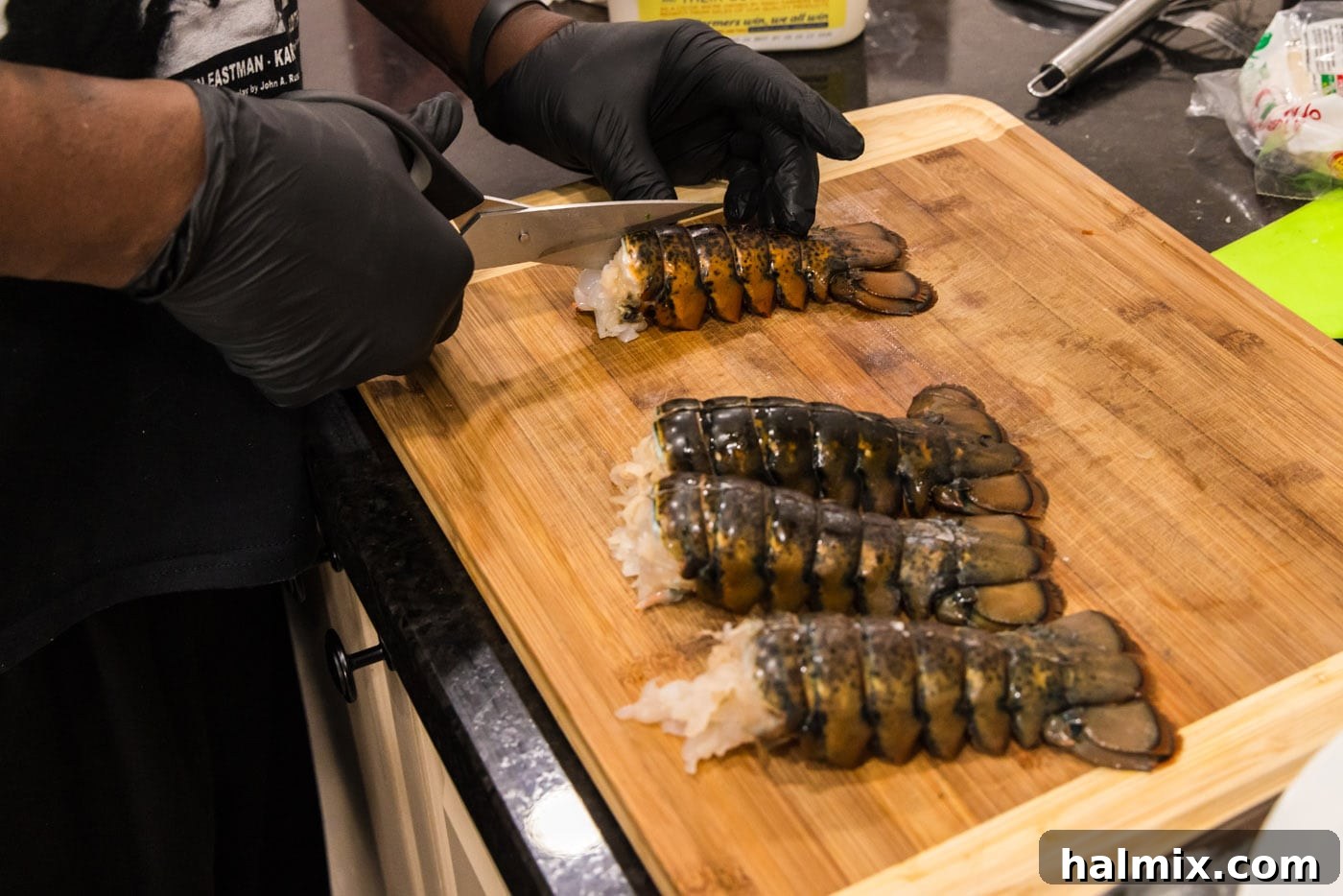
- Butterfly the Shell: Place each lobster tail on a cutting board, shell-side up. Using strong kitchen shears (often referred to as kitchen scissors), carefully cut down the middle of the hard top shell, starting from the thickest part and stopping just before the tail fin. Be careful not to cut through the meat itself.
EXPERT TIP: Chef Antoine suggests wearing vinyl gloves when handling raw seafood. This provides a better grip and ensures optimal hygiene, preventing cross-contamination.

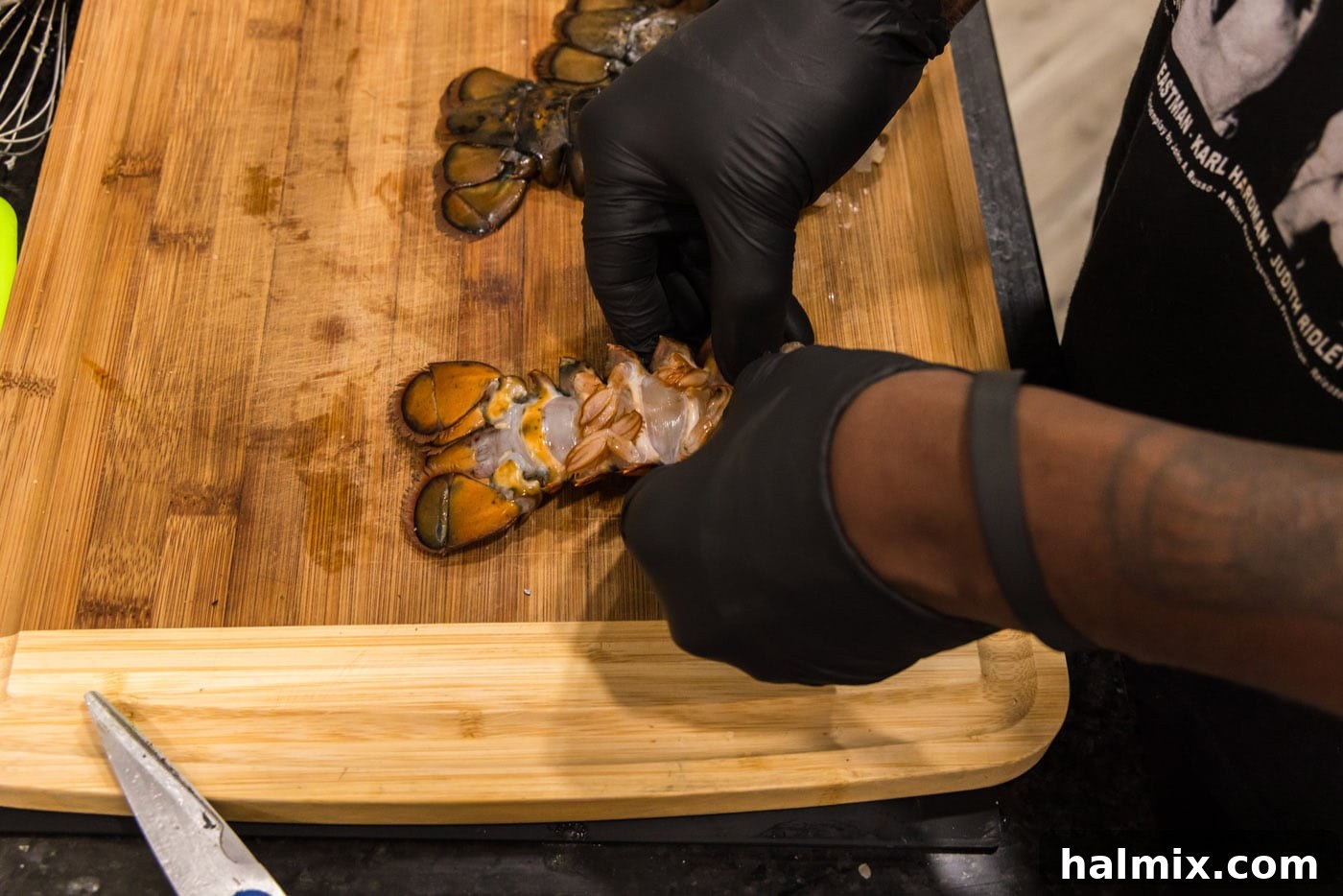
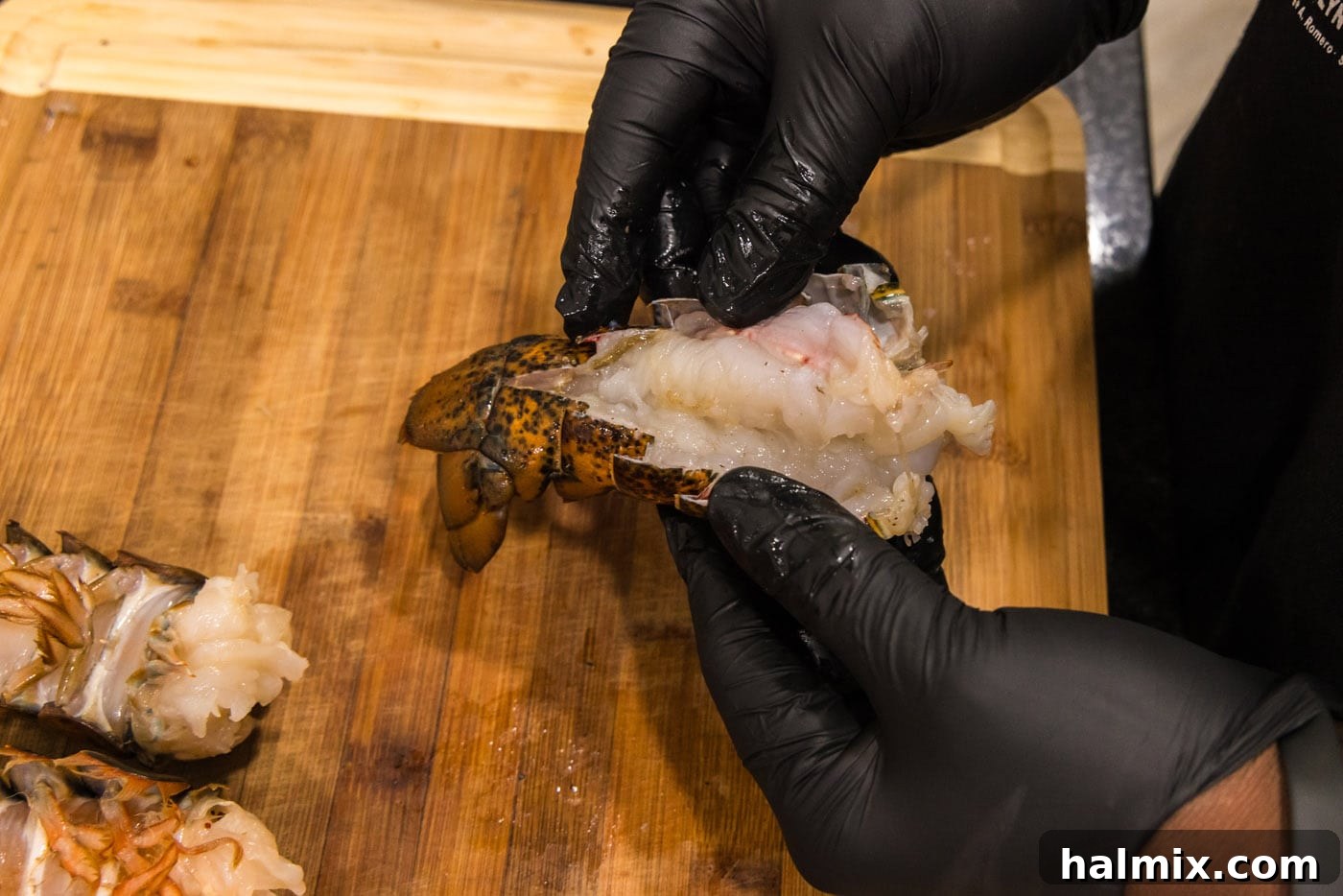
- Loosen the Meat: Gently turn the tail over. Using your thumbs and fingers, carefully loosen the meat from the shell, starting from the head end. Work your way down, lifting the meat out of the shell, but leave it attached at the base of the tail fin. This technique makes the meat easier to remove after cooking and allows for better seasoning distribution.
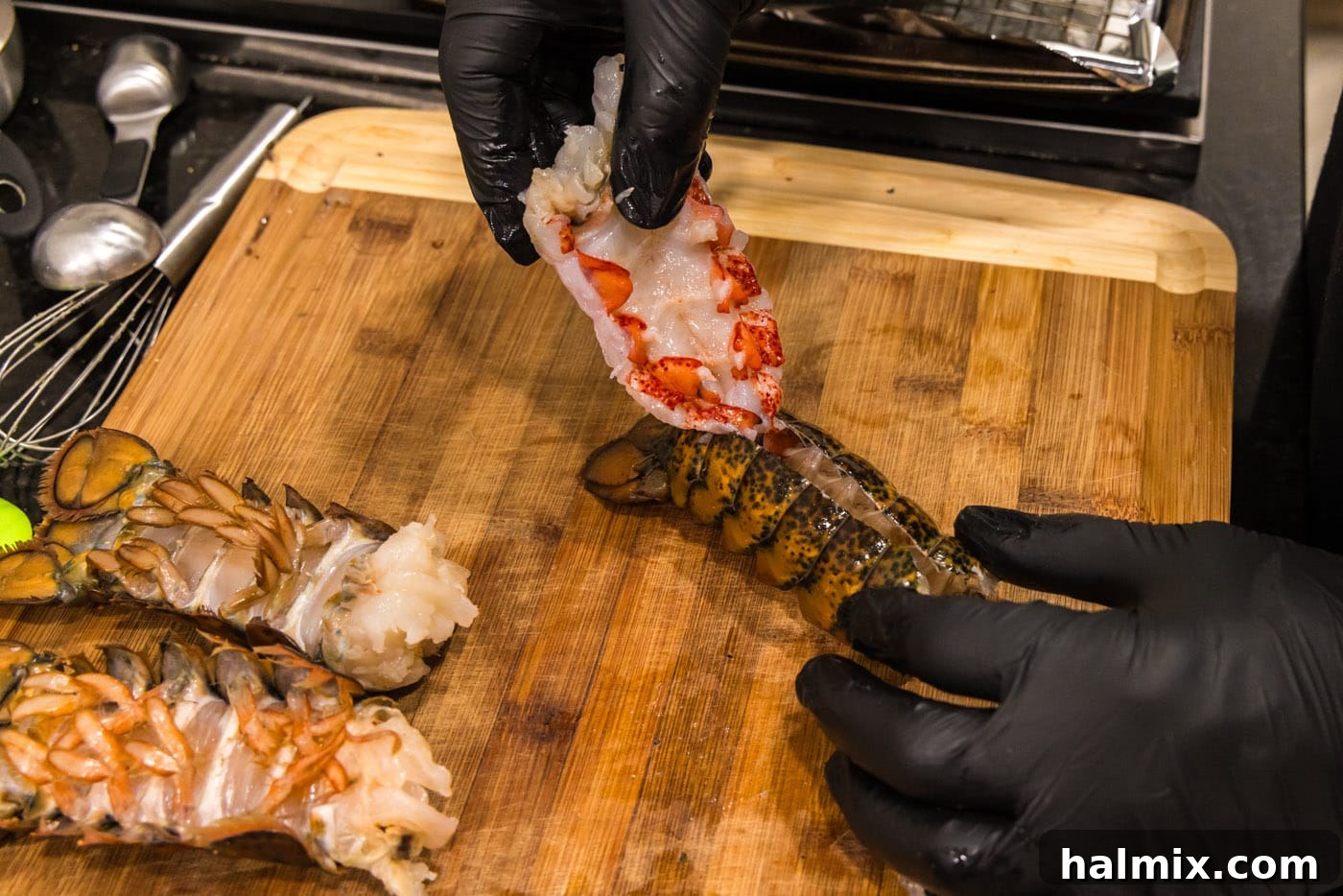
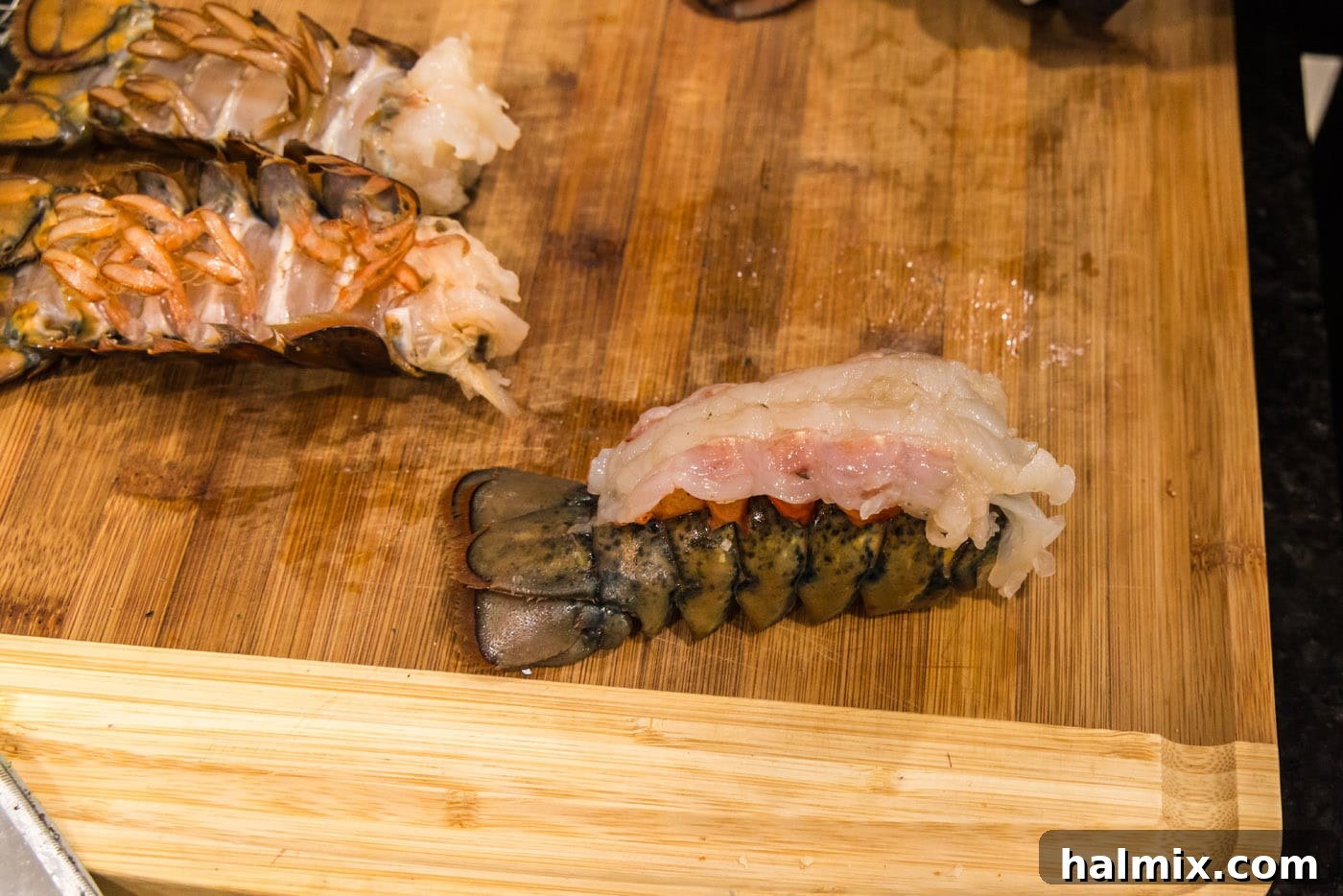
- The Crowning Technique: Once the meat is loosened, lift it out and gently press the two halves of the empty shell back together underneath. Then, rest the lifted lobster meat directly on top of the closed shell. This is known as “crowning” the lobster. It not only creates an impressive visual presentation but also helps the lobster cook more evenly and prevents it from curling up.
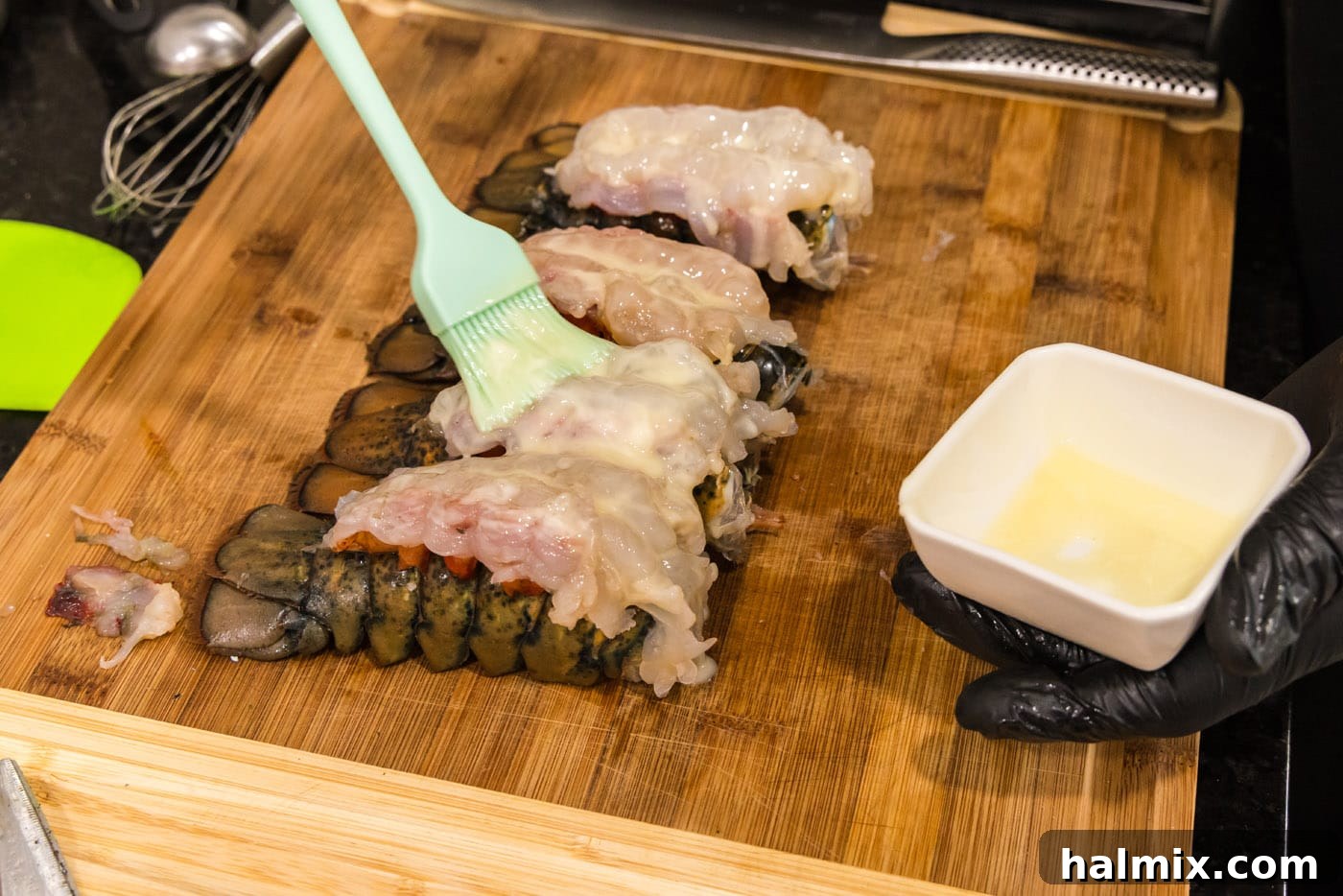
- Brush with Butter: Generously brush the exposed lobster meat with melted unsalted butter. The butter not only adds incredible flavor and richness but also helps to keep the meat moist during baking and promotes beautiful golden-brown edges.
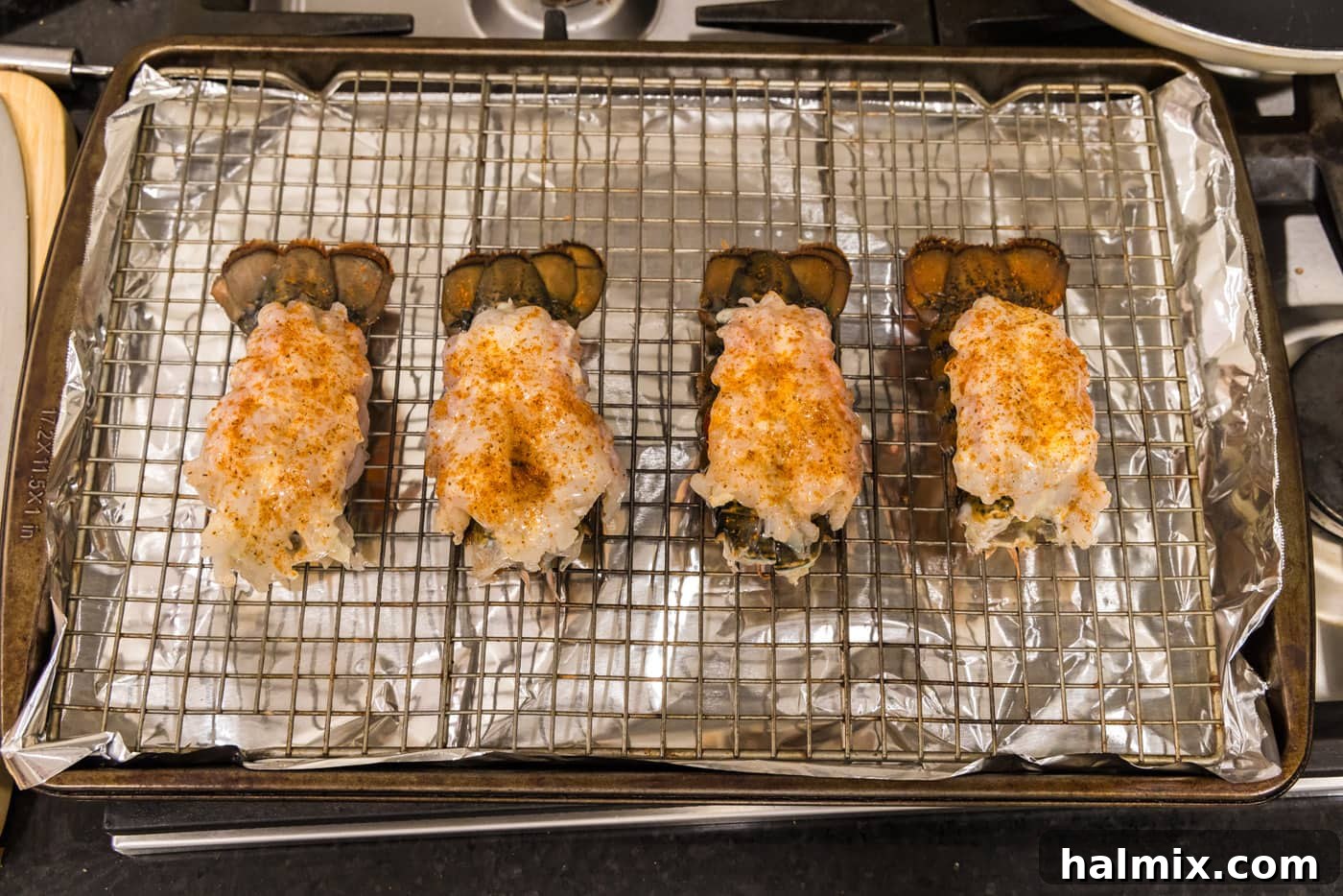
- Season with Old Bay: Carefully lay the crowned lobster tails upside down on your work surface, allowing the exposed meat to rest flat. Sprinkle both sides of the meat with Old Bay seasoning. Then, gently return the meat to its crowned position on the shell. Season the top, exposed side of the meat with additional Old Bay. This ensures every bite is bursting with flavor.
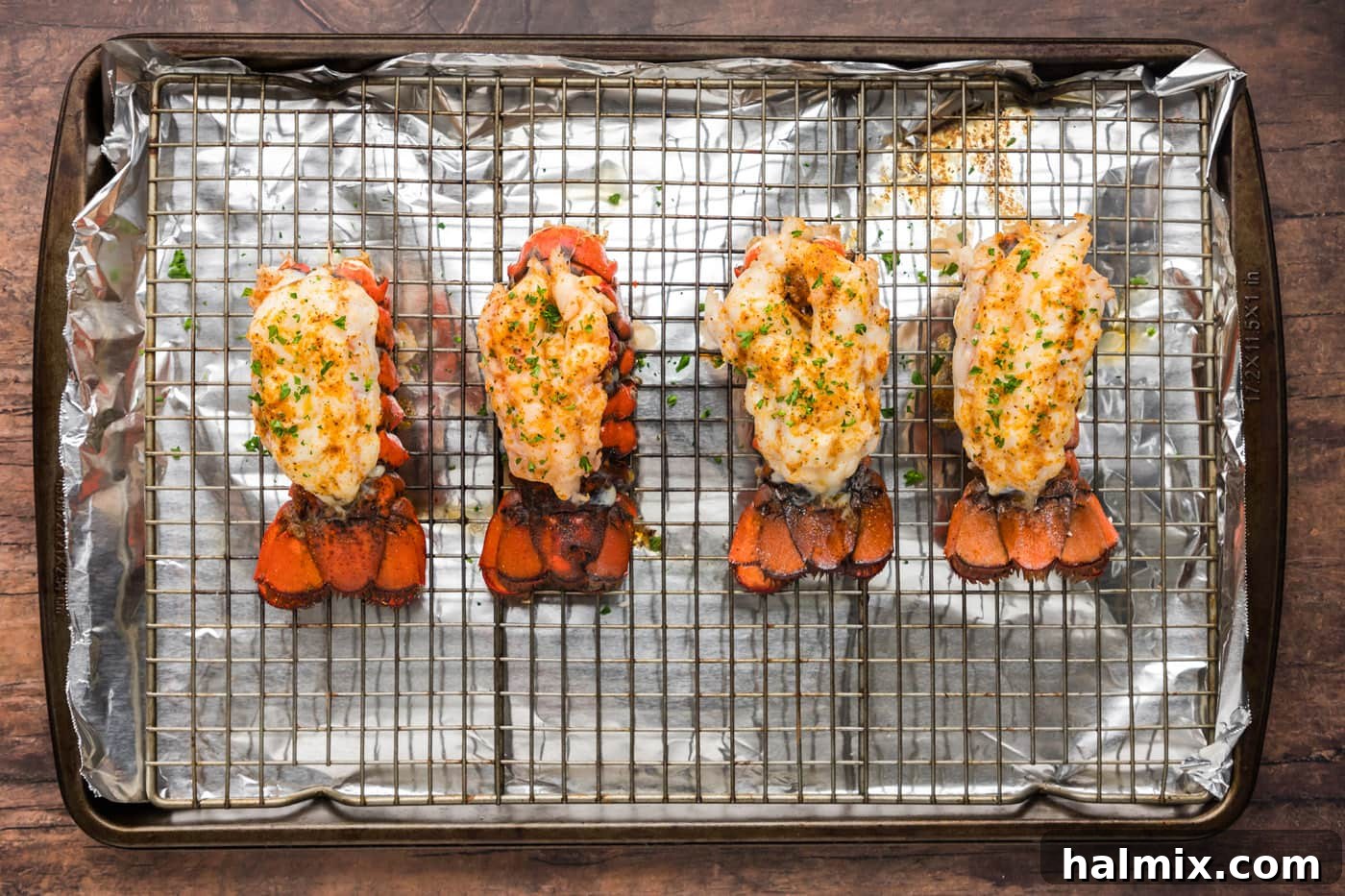
- Prepare for Baking: Arrange the crowned lobster tails on a wire rack placed over a baking sheet. Using a wire rack allows for air circulation around the entire tail, promoting even cooking and preventing the bottom from becoming soggy.
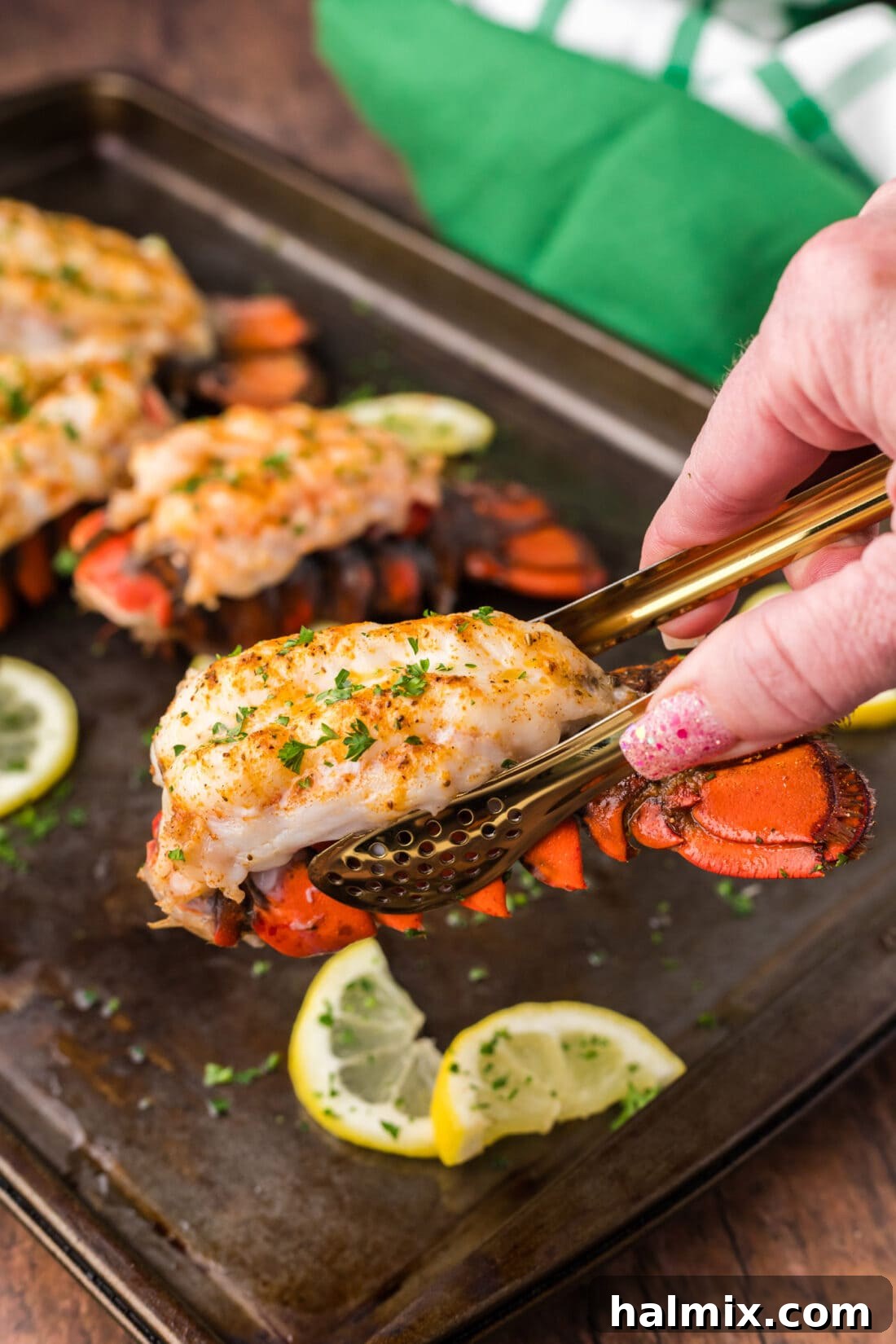
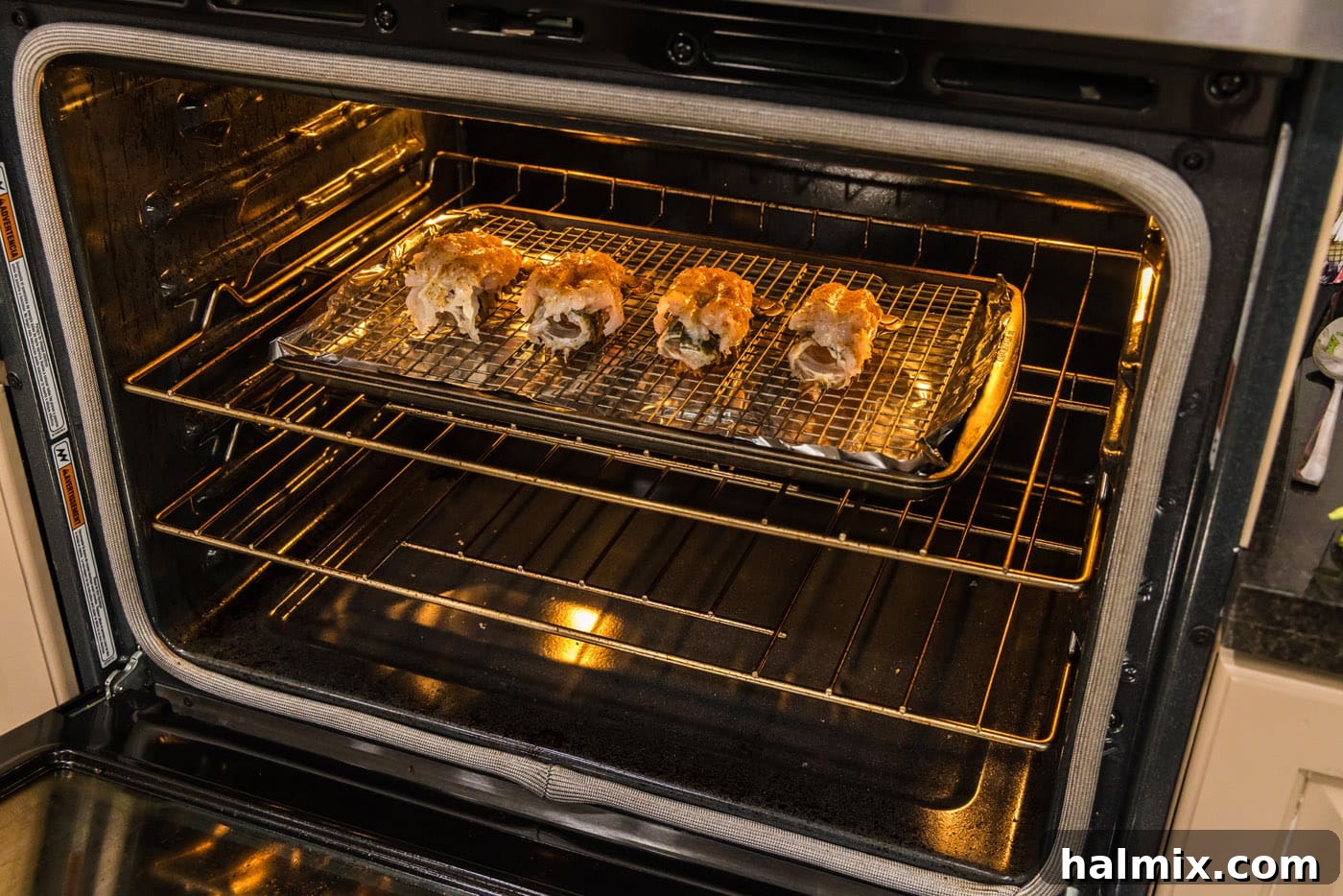
- Bake to Perfection: Transfer the baking sheet to your preheated oven and bake for 12-15 minutes. The precise cooking time will vary depending on the size of your lobster tails and your oven. The lobster meat should turn opaque and pearly white, and the shells will become bright red. Avoid overcooking, as this can lead to tough, rubbery lobster.
Frequently Asked Questions & Expert Tips for Lobster Success
While baked lobster is undeniably best enjoyed fresh from the oven, any leftovers can be stored and savored later. Place the cooled lobster tails, either with or without the shell, in an airtight container or wrap them securely in aluminum foil. They will stay fresh in the refrigerator for 3-4 days. Promptly refrigerating leftovers is key to maintaining quality and safety.
To reheat leftover lobster tails without compromising their delicate texture, it’s essential to do so gently. Add a few small pats of butter directly onto the lobster meat before wrapping each tail tightly in aluminum foil. This added butter helps retain moisture and prevents the meat from drying out. Place the wrapped tails on a baking sheet and reheat in a preheated 350°F (175°C) oven for about 10 minutes, or until just warmed through. Overheating will make the lobster tough. Leftover lobster meat is also fantastic for creating new dishes, like a decadent lobster mac and cheese!
For perfectly cooked and safe-to-eat lobster, aim for an internal temperature of 140°F (60°C). Use an instant-read thermometer inserted into the thickest portion of the lobster meat, avoiding the shell. It’s important to note that lobster, like other proteins, will continue to cook slightly after being removed from the oven due to residual heat, a phenomenon known as carry-over cooking. Removing it just as it hits 140°F ensures it doesn’t overcook while resting.
While an instant-read thermometer is the most reliable tool, you can also look for visual cues. Cooked lobster meat will turn opaque and pearly white, losing its translucent quality. The shells will also turn a vibrant red. If the meat still looks translucent or grayish, it needs more time. Be careful not to cook until the meat is shrunken or rubbery, as that indicates overcooking.
For baking, 4- to 8-ounce lobster tails are generally ideal. Smaller tails (4-6 oz) cook quickly and tend to be very tender, making them perfect for individual servings. Larger tails (7-8 oz) are more substantial and still cook well within the suggested time frame. Extremely large tails can sometimes be tougher and may require slight adjustments to cooking time and temperature to ensure even doneness without drying out.
Elevate Your Meal: Delicious Serving Suggestions
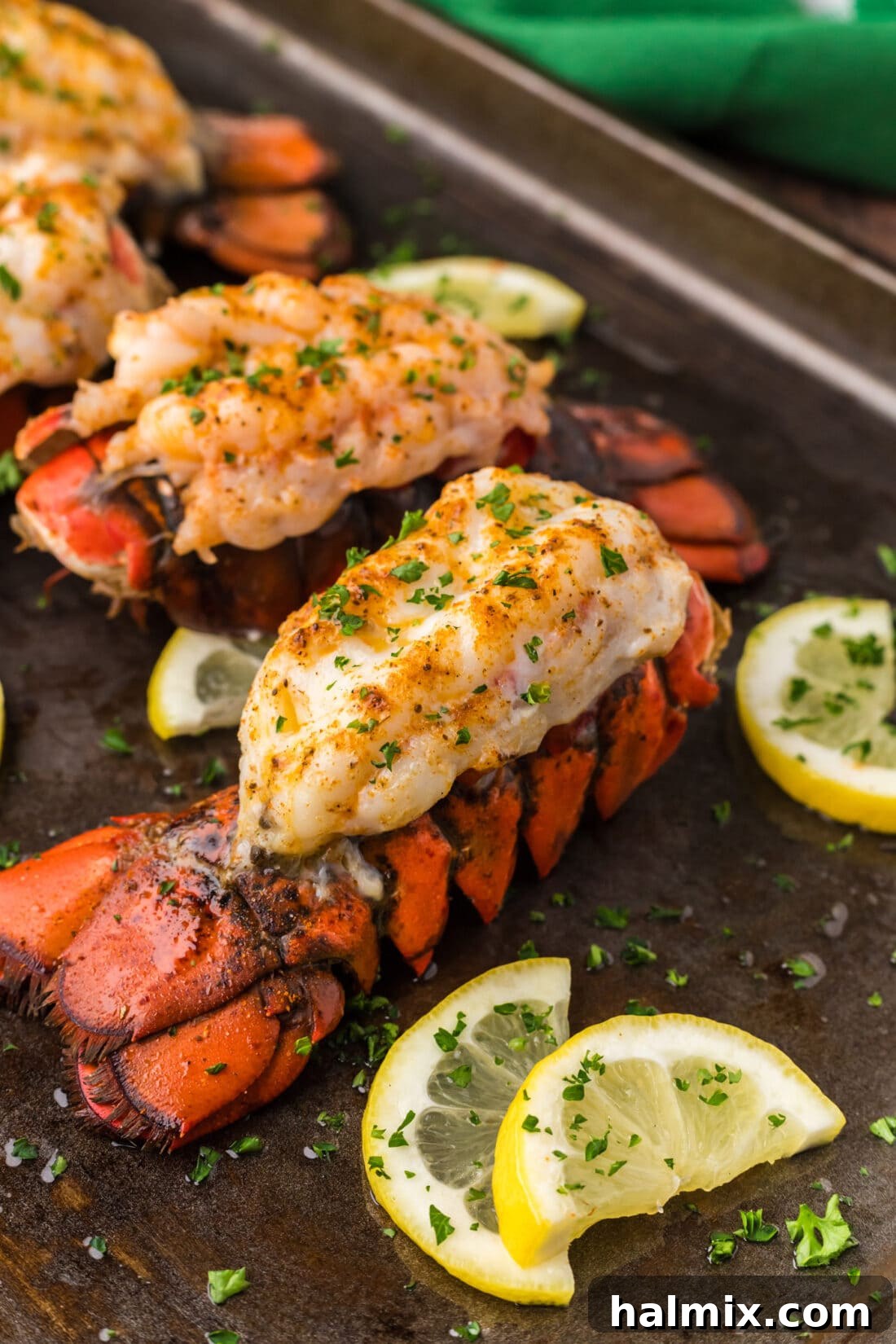
Baked lobster tail is a versatile dish that pairs beautifully with a wide array of sides, transforming a simple meal into an unforgettable dining experience. For a classic, comforting pairing, serve your tender lobster with a perfectly loaded baked potato, its fluffy interior a delightful contrast to the rich lobster meat. A crisp, fresh dinner salad with a light vinaigrette offers a refreshing counterpoint, balancing the richness of the seafood. Don’t forget the vibrant sweetness of corn on the cob, a traditional seafood accompaniment that adds both color and flavor.
For an indulgent surf-and-turf feast, baked lobster tails are an exquisite partner to a juicy, perfectly seared steak. Round out this luxurious meal with steamed green beans or asparagus for a touch of freshness and soft dinner rolls to soak up any flavorful juices. No lobster meal is complete without a side of warm melted butter, optionally infused with garlic, for decadent dunking. A wedge of fresh lemon, artfully placed as a garnish, provides a bright, acidic burst that beautifully cuts through the richness of the lobster and butter, enhancing every bite.
Discover More Exquisite Lobster Recipes
If you’ve fallen in love with the unparalleled taste of lobster, there’s a world of culinary delights awaiting you. Explore these other fantastic lobster recipes:
- Lobster Salad
- Lobster Risotto
- Lobster Newburg
- Lobster Thermidor
- Lobster Mac and Cheese
I find immense joy in cooking and sharing my kitchen experiences with all of you! To make it easy for you to stay updated with my latest culinary creations, I offer a convenient newsletter. Simply subscribe here and start receiving delicious, free daily recipes delivered straight to your inbox!
Baked Lobster Tail
Although lobster tail is typically reserved for fancier occasions, preparing it never has to be difficult. Once you sink your teeth into juicy, buttery lobster meat that took you less than 30 minutes to make, you’ll be baking it whenever you get the chance.
5 out of 5 stars from 2 votes
IMPORTANT – There are often Frequently Asked Questions within the blog post that you may find helpful. Simply scroll back up to read them!
Pin It
Rate It
Ingredients
- 12 ounces lobster tails (Four 3-ounce tails)
- 1 Tablespoon unsalted butter, melted
- Old Bay seasoning, to taste
Things You’ll Need
- Baking sheet
- Wire cooling rack
- Vinyl gloves
- Kitchen scissors
Before You Begin (Helpful Notes)
- Defrost your lobster tails overnight in the refrigerator; do not purchase pre-thawed lobster tails from the store. It’s best to buy them frozen. When cutting open the shell, if you notice a dark line in the flesh, this is the digestive tract which should be removed before beginning.
- Although lobster is best enjoyed right away, you can store any leftovers in an air-tight container kept in the refrigerator for 3-4 days. You can also wrap the lobster tails securely in aluminum foil for storing. You can store the lobster meat with or without the shell.
- To reheat, add a few pats of butter to the meat (this will help keep the meat moist), then wrap it in aluminum foil. Place the wrapped tails on a baking sheet and reheat in a 350°F oven until warmed through, about 10 minutes. We love to use leftover meat for lobster mac and cheese!
- Lobster tail should be cooked to an internal temperature of 140°F. Use an instant-read thermometer inserted into the thickest portion of meat to check the temperature. Do note that the lobster tails will continue to cook while resting after being removed from the oven.
Instructions
- Preheat oven to 400°F.
- Rinse and dry the lobster tails thoroughly.
- Using gloved hands and kitchen shears, cut down the middle of the shell, stopping right before the last hump before the tail fin. TIP – Chef Antoine suggests wearing vinyl gloves whenever working with raw meat, especially seafood.
- Turn tail over and gently loosen meat near the head end and lift out, leaving the meat connected near the tail fin.
- Lift meat and gently close tail shell, resting meat on top of the closed shell. This is called crowning.
- Brush the exposed lobster meat with melted butter.
- Season both sides of the meat with Old Bay. To do this, temporarily lay the shells upside down so that the meat you just crowned will lay on the work surface. Season, then replace the meat to its crowned position. Season the exposed top meat side with Old Bay.
- Place crowned tails onto a wire rack over a baking sheet.
- Bake for 12-15 minutes, or until the internal temperature reaches 140°F and the meat is opaque.
Nutrition Information
Serving: 1 serving | Calories: 43cal | Carbohydrates: 0.003g | Protein: 4g | Fat: 3g | Saturated Fat: 2g | Polyunsaturated Fat: 0.2g | Monounsaturated Fat: 1g | Trans Fat: 0.1g | Cholesterol: 38mg | Sodium: 101mg | Potassium: 48mg | Sugar: 0.003g | Vitamin A: 88IU | Calcium: 21mg | Iron: 0.1mg
Tried this Recipe? Pin it for Later!
Follow on Pinterest @AmandasCookin or tag #AmandasCookin!
The recipes on this blog are meticulously tested using a conventional gas oven and gas stovetop. It’s important to acknowledge that some ovens, particularly as they age, may exhibit inconsistencies in cooking and baking performance. Utilizing an inexpensive oven thermometer is a reliable way to verify that your oven is truly reaching the precise temperature required. If you choose to use a toaster oven or a countertop oven, please be aware that these appliances may not distribute heat in the same manner as a conventional full-sized oven, potentially necessitating adjustments to your cooking or baking times. For recipes prepared with specialized appliances such as a pressure cooker, air fryer, or slow cooker, a link to the specific appliances we use is typically provided within each respective recipe. In the context of baking recipes where measurements are given by weight, please note that substituting with cup measurements may yield different results, and we cannot guarantee success with this alternative method.