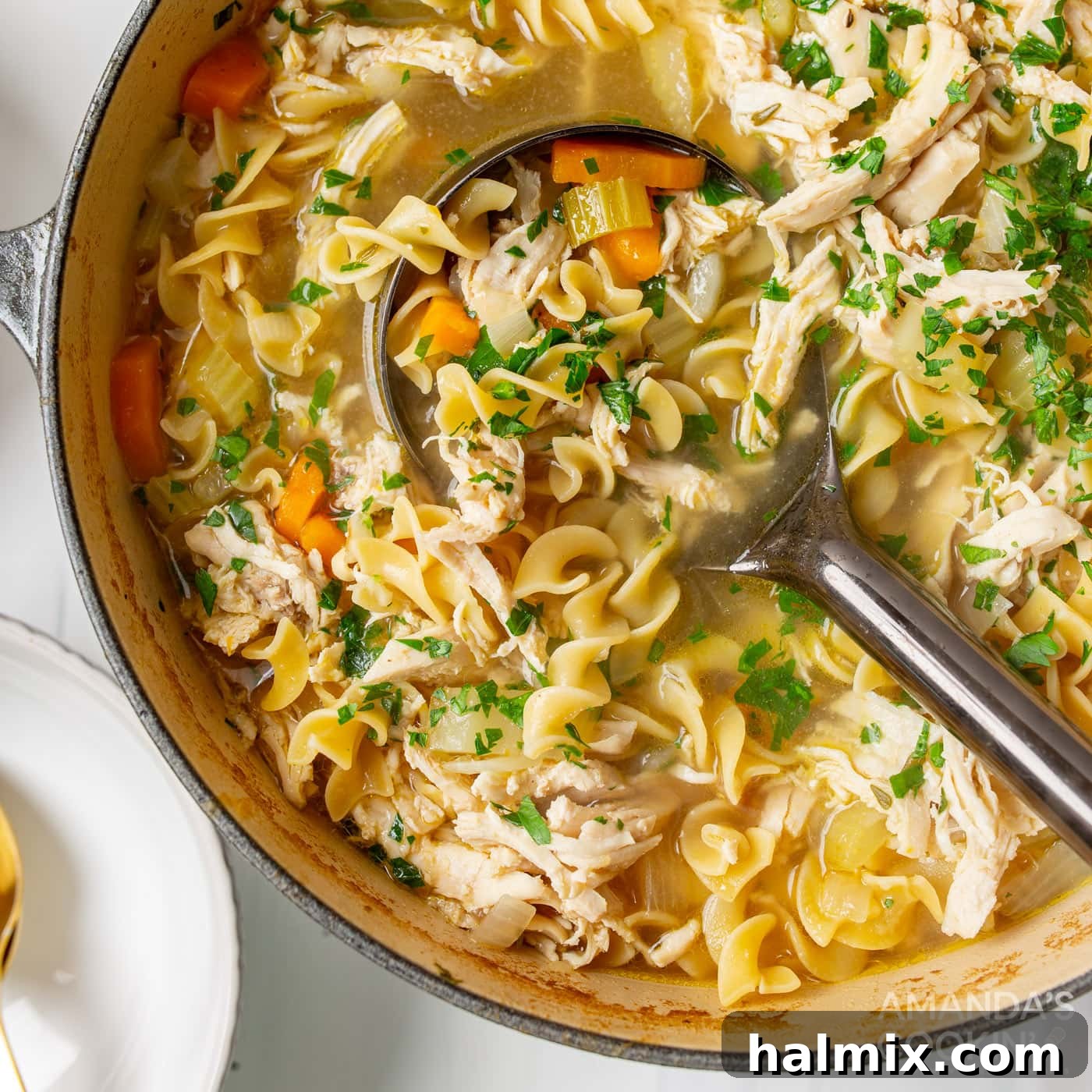
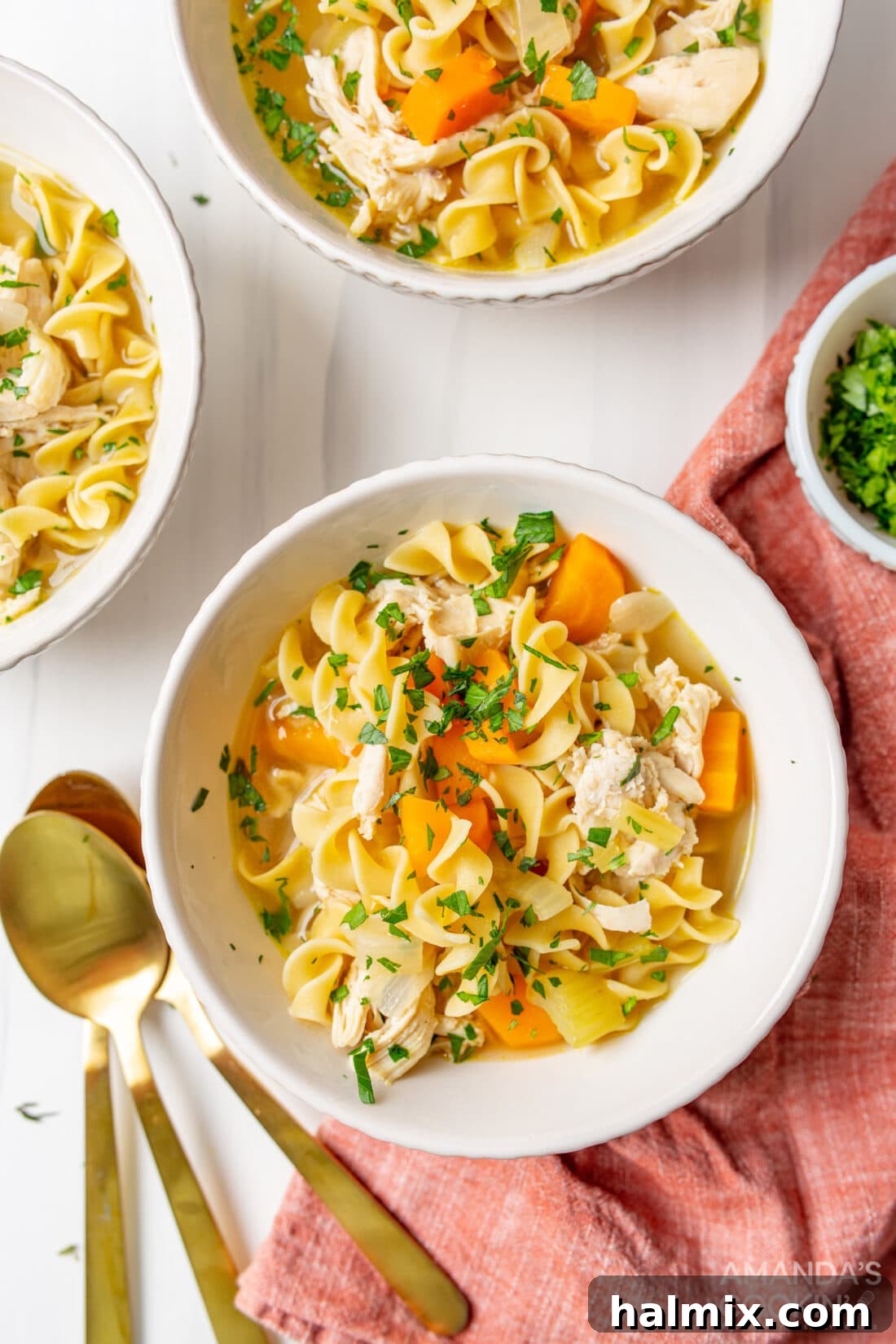
There’s nothing quite like a warm bowl of homemade chicken noodle soup. This classic recipe offers unparalleled comfort, making it the perfect remedy for a chilly day, a comforting meal when you’re feeling under the weather, or simply a hearty, satisfying dinner any night of the week. Forget canned versions; making this soup from scratch is surprisingly easy and yields a far superior flavor that will have everyone asking for seconds.
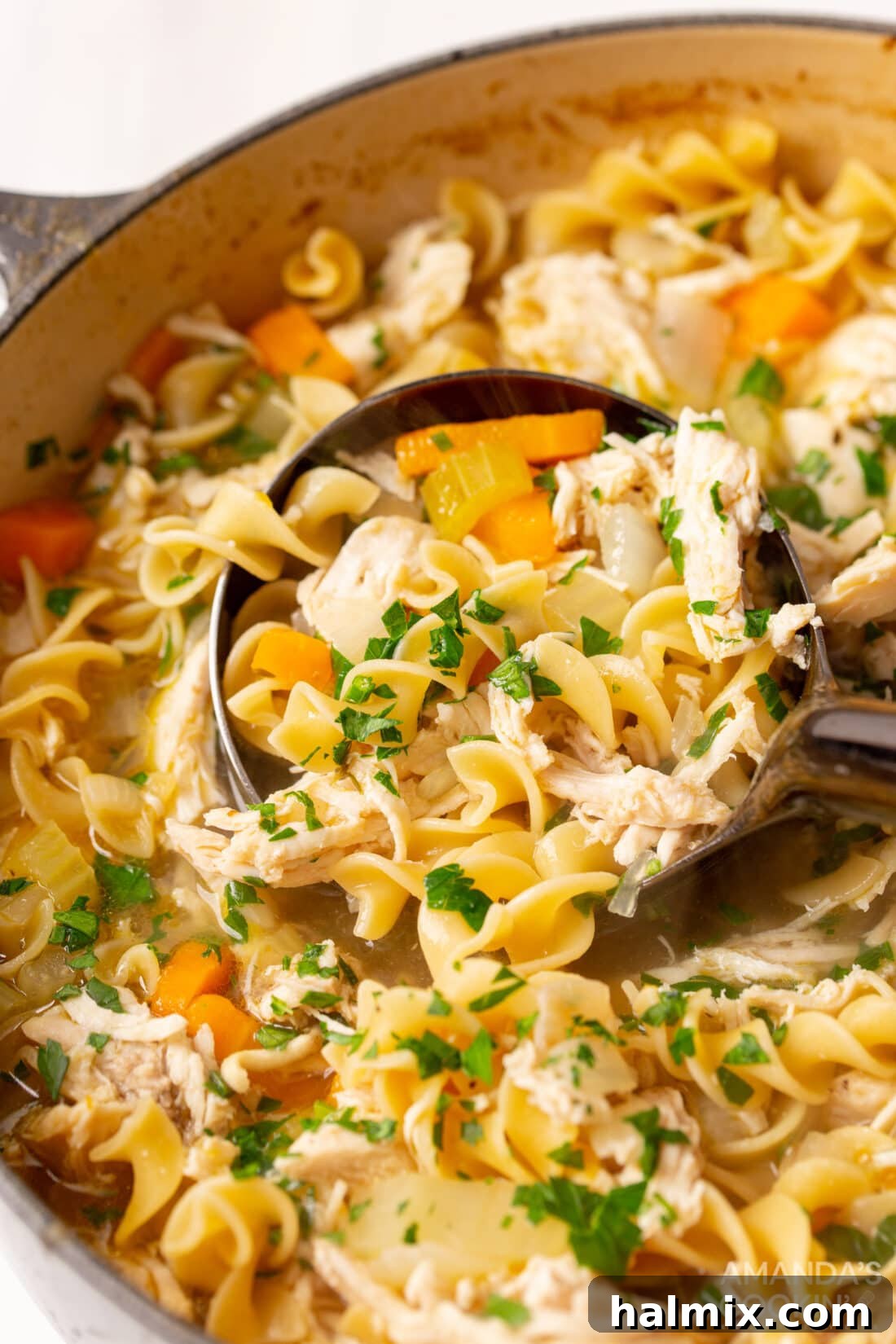
Why This Homemade Chicken Noodle Soup Recipe Works
This isn’t just any chicken noodle soup; it’s a labor of love that rewards you with deep, rich flavors you simply won’t find in store-bought varieties. Our recipe stands out for several reasons, ensuring a delicious and nourishing experience every time.
The Foundation: Fresh, Wholesome Ingredients
At the heart of this recipe is the commitment to fresh, quality ingredients. We start with a aromatic base of diced carrots, sweet yellow onion, and crisp celery, often referred to as a mirepoix. This trio is gently sautéed to release their natural sugars and create a flavorful foundation before any liquids are added. This initial step is crucial for building a complex taste profile that permeates the entire soup.
Perfectly Poached Chicken
Unlike recipes that rely on pre-cooked chicken, this method involves poaching boneless, skinless chicken breasts directly in the broth. This not only ensures tender, juicy chicken that shreds beautifully but also infuses the broth with even more savory chicken essence. The slow simmer allows the flavors to meld together, creating a depth that rushed cooking methods simply can’t achieve. This poaching technique locks in moisture, preventing the chicken from becoming dry or stringy, which is often a pitfall in less carefully prepared soups.
The Magic of Herbs and Seasonings
A generous helping of fresh herbs, particularly bay leaves and thyme, elevates this soup from good to extraordinary. These herbs, along with simple salt and black pepper, are allowed to simmer with the chicken and vegetables, releasing their aromatic oils and creating a wonderfully fragrant and deeply satisfying broth. The addition of fresh parsley at the very end brightens the flavor and adds a touch of vibrant color, making each spoonful a delight for the senses. These carefully selected seasonings don’t just add flavor; they complete the classic profile of comforting chicken noodle soup.
The Ultimate Comfort Food
Chicken noodle soup is renowned globally as a quintessential comfort food. Whether it’s the nostalgic warmth, the soothing broth, or the nourishing ingredients, there’s something inherently healing about a bowl of this soup. It’s often prescribed as a natural remedy for colds and flu, offering hydration, easily digestible nutrients, and a psychological sense of well-being. This recipe captures that essence perfectly, providing a meal that truly sticks to your bones and warms you from the inside out. We find ourselves making a batch of this or our hearty homemade chili whenever we crave a soul-satisfying meal.
Essential Ingredients for Your Perfect Chicken Noodle Soup
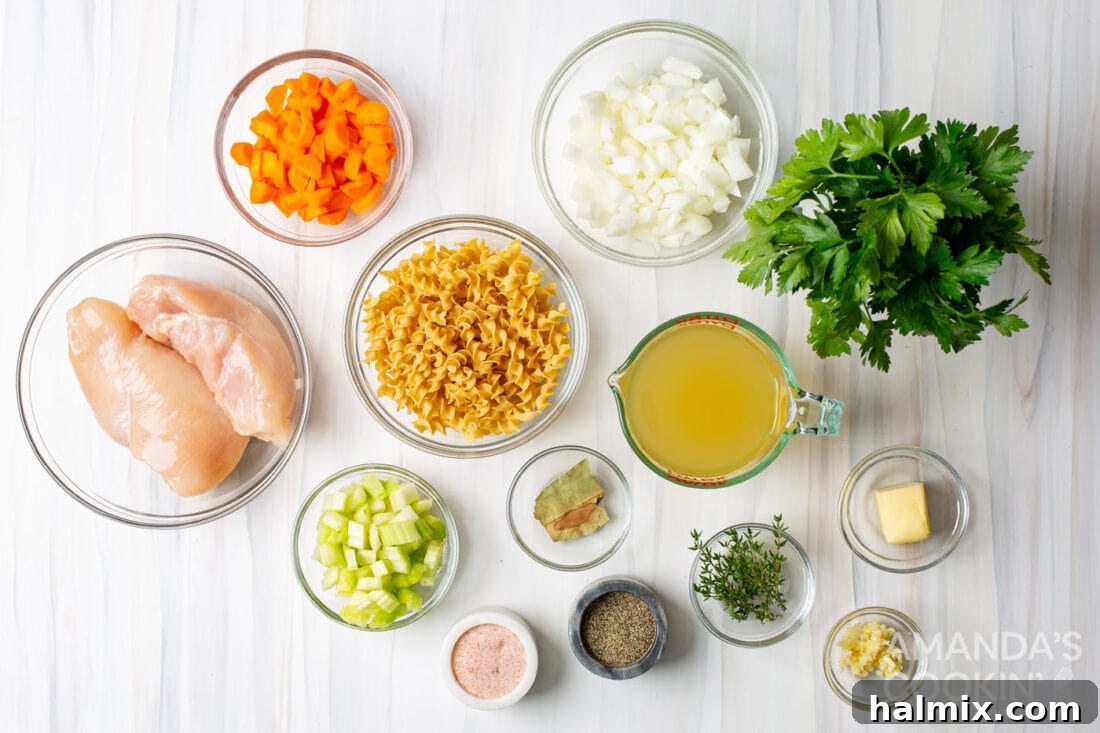
Crafting a truly exceptional chicken noodle soup begins with selecting the right ingredients. Here’s a breakdown of what you’ll need, along with tips for making the best choices for maximum flavor and comfort.
Ingredient Spotlight & Smart Substitutions
Understanding each ingredient’s role and knowing how to make smart substitutions can greatly enhance your soup-making experience. Here’s a deeper dive:
The Chicken: The Heart of the Soup
This recipe specifically calls for **boneless, skinless chicken breasts**. We choose them for their lean texture and ease of shredding once cooked. Poaching them in the broth allows them to absorb maximum flavor while remaining wonderfully tender. If you prefer a richer, deeper chicken flavor, you can substitute bone-in, skin-on chicken breasts or thighs. Just be aware that bone-in chicken will require a longer simmering time to cook through completely and contribute its full flavor to the broth. For an extra boost of flavor, consider browning bone-in chicken pieces slightly before adding the liquid. Alternatively, if you’re short on time, a pre-cooked rotisserie chicken can be a fantastic shortcut. Simply shred the meat and add it towards the end of the cooking process, allowing it to warm through. However, remember that the initial poaching of raw chicken significantly contributes to the broth’s depth, so a rotisserie chicken might yield a slightly less complex broth unless you start with a very good quality stock.
The Noodles: Essential Comfort
The other primary component of this comforting soup is, of course, the noodles. We prefer using **wide egg noodles** for their classic texture and ability to soak up the flavorful broth without becoming overly mushy. However, the beauty of homemade soup lies in its adaptability. Feel free to experiment with any type of noodle you enjoy most. Elbow macaroni, orzo, ditalini, or even thin spaghetti broken into smaller pieces are all excellent alternatives. For a gluten-free option, use gluten-free pasta or rice noodles; just be mindful of their cooking times, as they often cook faster than traditional egg noodles. To prevent noodles from becoming too soft, consider cooking them separately to al dente and adding them to individual bowls just before serving, or add them to the main pot towards the very end of the simmering process.
The Aromatics: Building the Flavor Base
- Butter: Used for sautéing the vegetables, butter adds a rich, unctuous flavor to the base of the soup. Olive oil can be used as a dairy-free alternative, though the flavor profile will be slightly different.
- Yellow Onion: Diced finely, the onion contributes a foundational sweetness and savory depth when sweated down. White onions or even a milder red onion (if you don’t mind a slight color change) can be used.
- Carrots: Halved into crescents, carrots add sweetness, color, and essential nutrients. You can dice them smaller if preferred, or use baby carrots for convenience.
- Celery: Diced celery provides a crucial aromatic and slightly bitter note that balances the sweetness of the carrots and onion.
- Garlic: Minced garlic offers a pungent, savory aroma. Always add it after the other vegetables have softened to prevent burning, which can lead to a bitter taste. Fresh garlic is highly recommended over garlic powder for this recipe.
The Broth & Seasonings: The Soul of the Soup
- Chicken Broth: The backbone of the soup. Use a good quality low-sodium chicken broth or stock to control the saltiness. If using regular broth, adjust added salt accordingly. For an even richer flavor, consider using homemade chicken stock. If you don’t have enough broth, you can certainly use a mix of broth and water, or even a chicken bouillon cube dissolved in water in a pinch.
- Bay Leaves: These aromatic leaves infuse the broth with a subtle, herbaceous note. Remember to remove them before serving, as they can be unpleasant to eat.
- Fresh Thyme Leaves: Fresh herbs are key to this soup’s vibrant flavor. Fresh thyme is preferred for its earthy, slightly floral notes. If fresh isn’t available, use half the amount of dried thyme. Rubbing dried thyme between your palms before adding it can help release its flavors.
- Salt & Black Pepper: Essential for seasoning. Always taste and adjust as you go. The amount of salt needed will vary depending on the chicken broth used.
- Fresh Parsley: Finely chopped fresh parsley is added at the end for a burst of fresh flavor and a beautiful green garnish. Flat-leaf (Italian) parsley generally has a stronger flavor than curly parsley.
Crafting Homemade Chicken Noodle Soup: A Step-by-Step Guide
These step-by-step photos and instructions are here to help you visualize how to make this recipe. You can jump to the full recipe card below to get the printable version of this recipe, complete with precise measurements and detailed instructions.
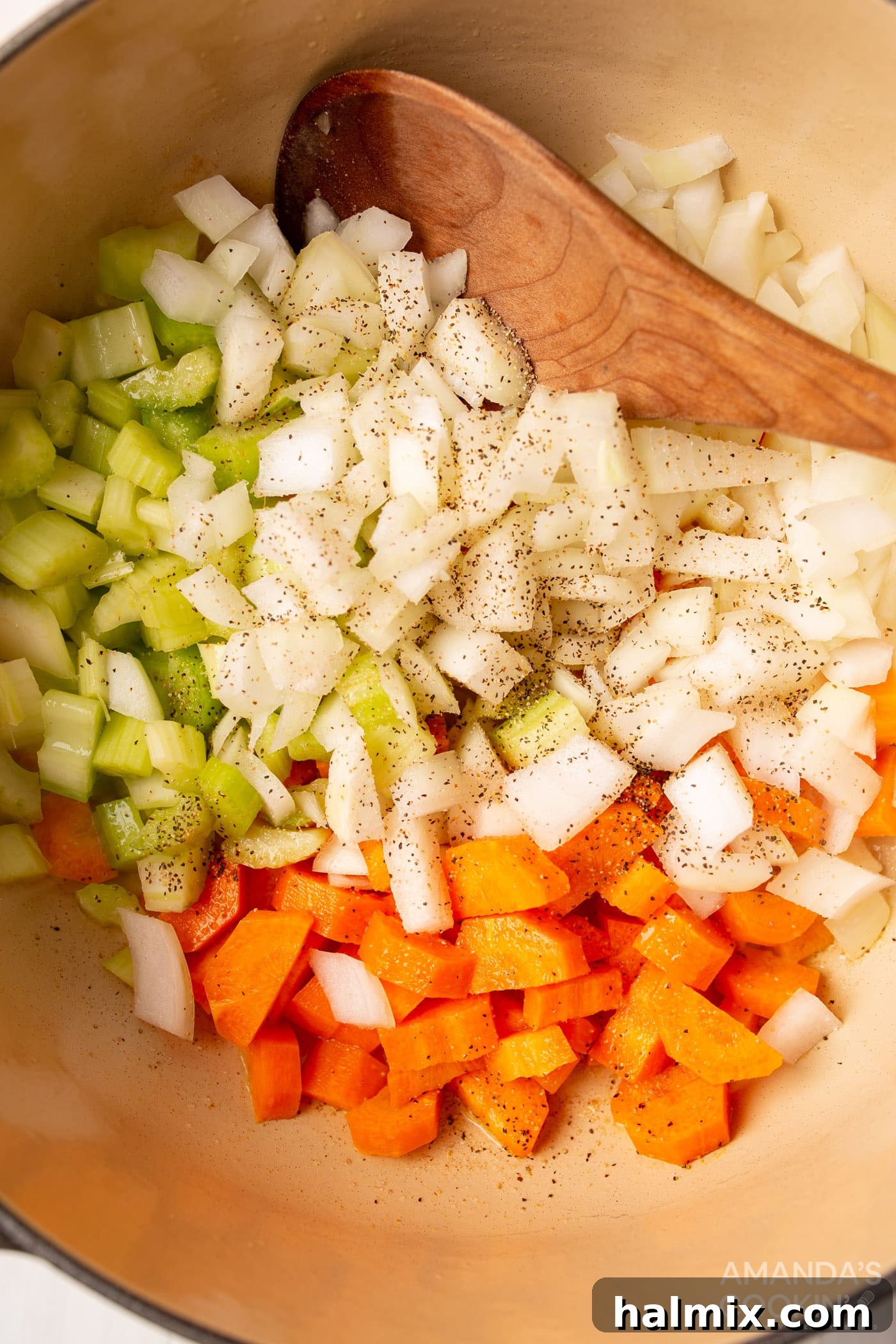
- Sauté the Aromatics: In a 5-quart Dutch oven or large pot, melt the butter over medium heat. Add the diced onion, carrots, and celery. “Sweat” these vegetables for about 5 minutes, stirring occasionally, until they begin to soften and become fragrant but without browning. This process releases their natural sweetness and forms the flavor base. Season generously with salt and pepper to taste. Next, add the minced garlic and cook for an additional 30 seconds until aromatic, being careful not to burn it.

The essential mirepoix gently cooking to build a rich flavor foundation. - Add Broth and Herbs: Pour in the chicken stock (or a mix of broth and water). Add the bay leaves and fresh thyme. Bring the mixture to a rolling boil.
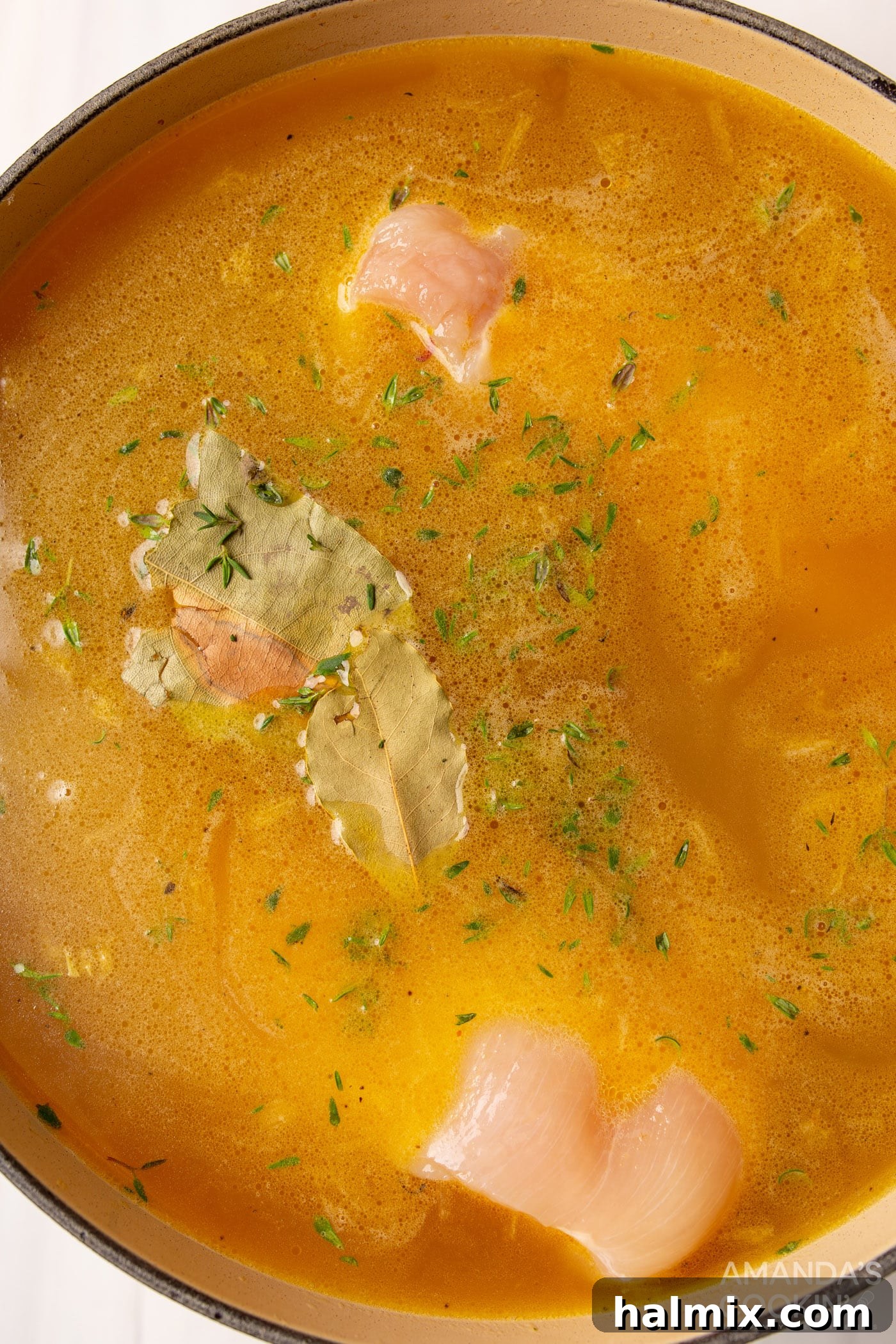
- Poach the Chicken: Carefully add the raw boneless, skinless chicken breasts to the boiling broth, ensuring they are fully submerged. Reduce the heat to a gentle simmer, cover the pot, and let the chicken poach for about 30 minutes, or until cooked through and easily shreddable.
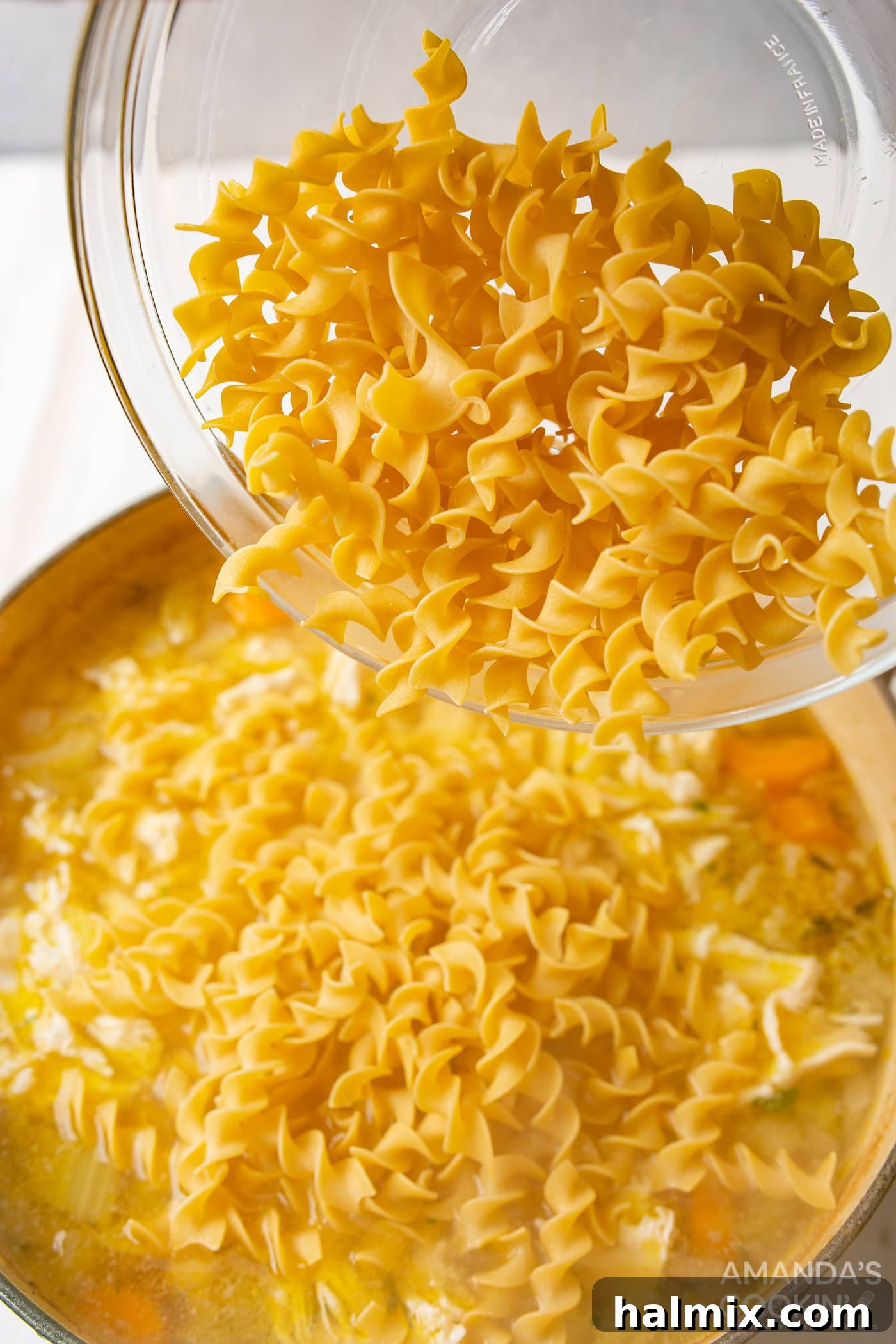
Chicken breasts poaching in the aromatic broth, infusing it with flavor. - Shred Chicken and Cook Noodles: Carefully remove the cooked chicken breasts from the pot and set them aside to cool slightly. Discard the bay leaves from the broth. Once cool enough to handle, shred the chicken using two forks or your hands. Return the shredded chicken to the pot. At this point, add the uncooked wide egg noodles. Increase the heat slightly to bring the soup back to a gentle simmer, then cover and cook until the noodles are al dente and tender, which typically takes about 8 minutes for wide egg noodles. Be careful not to overcook them, as they will continue to soften slightly after the heat is turned off.
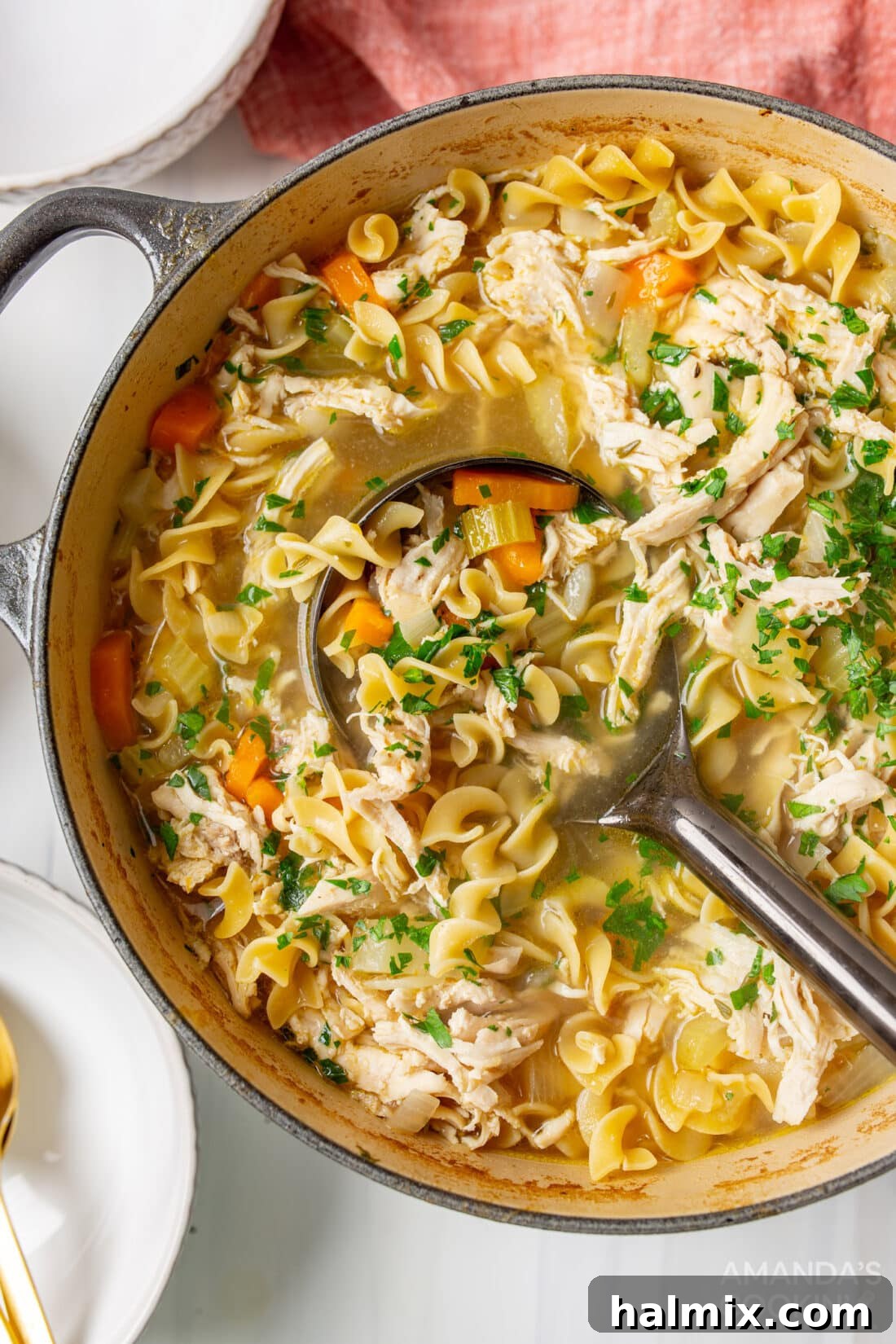
Adding egg noodles to the soup, ensuring they cook perfectly in the flavorful broth. - Finish and Serve: Stir in the finely chopped fresh parsley. Taste the soup and adjust seasonings (salt, pepper) as needed. Ladle the hot soup into bowls and serve immediately.
Frequently Asked Questions & Expert Tips for Chicken Noodle Soup
Yes, you absolutely can freeze chicken noodle soup, but with an important caveat: it’s best to freeze the soup *without the noodles*. Cooked noodles tend to absorb too much liquid and become mushy and soggy once thawed and reheated. To freeze, prepare the soup up to the point of adding the noodles and parsley. Allow it to cool completely, then transfer it to an airtight freezer-safe container or a large freezer bag, removing as much air as possible. It can be stored in the freezer for up to 3 months. When you’re ready to enjoy it, thaw the soup overnight in the refrigerator. Reheat gently on the stovetop, and then cook fresh noodles separately to al dente, adding them to individual bowls or the pot just before serving.
Yes, making chicken noodle soup in the crockpot is a fantastic way to achieve tender chicken and a rich broth with minimal effort. To adapt this recipe for a slow cooker, place the boneless, skinless chicken breasts (or bone-in chicken for extra flavor, adjusting cooking time as needed) directly into the slow cooker. Add the diced onion, carrots, celery, minced garlic, chicken broth, bay leaves, and thyme. Cover and cook on low for 6-8 hours or on high for 3-4 hours, until the chicken is cooked through and easily shreddable. Once cooked, carefully remove the chicken and bay leaves from the crockpot. Shred the chicken and return it to the pot. At this stage, add the uncooked egg noodles. Cover and continue to cook on high for an additional 20-30 minutes, or until the noodles are tender but still have a slight bite (al dente). Stir in fresh parsley before serving. Remember to adjust seasoning after cooking.
Store any leftover chicken noodle soup in an airtight container in the refrigerator for up to 3-4 days. Be aware that the noodles will continue to absorb liquid and may become softer over time. If you prefer firmer noodles in your leftovers, consider cooking them separately and adding them to individual bowls as mentioned in the freezing tip.
Absolutely! This recipe is incredibly versatile. Feel free to add other vegetables to boost flavor and nutrition. Popular additions include frozen peas or corn (stirred in during the last few minutes of cooking), chopped spinach or kale (added at the very end until wilted), sliced mushrooms, or even diced potatoes (add with the carrots and celery to ensure they cook through). Don’t be afraid to customize it to your family’s preferences!
Serving Suggestions for Your Hearty Soup
While chicken noodle soup is a wonderfully complete meal on its own, it also pairs beautifully with a variety of accompaniments. For a classic touch, serve it with a side of crispy saltine crackers or oyster crackers for added texture. A warm, crusty loaf of bread or homemade garlic bread is perfect for soaking up every last drop of the flavorful broth. For a more substantial meal, consider serving it alongside a simple green salad, a grilled cheese sandwich, or a light panini. Enjoy it piping hot from the stovetop, whether it’s for a cozy lunch or a comforting dinner.
Explore More Comforting Soup Recipes
If you love the warmth and satisfaction of a homemade soup, you’ll want to explore these other delicious recipes:
- Hearty Taco Soup
- Classic Ham and Bean Soup
- Creamy Asparagus Soup
- Flavorful Chicken Tortilla Soup
- One Pot Vegetable Rice Soup
- Italian Sausage Tomato Orzo Soup
- Homemade Cream of Chicken Soup
- Comforting Chicken Stuffing Casserole (not a soup, but a beloved comfort food!)
I absolutely adore cooking and baking, and my greatest joy is sharing my kitchen adventures with all of you! To make sure you never miss a new recipe, I offer a convenient newsletter. Simply subscribe here and start receiving delicious daily recipes directly to your inbox!
Homemade Chicken Noodle Soup Recipe
A classic, comforting soup featuring tender shredded chicken, savory broth, fresh vegetables, and wide egg noodles. Perfect for any day!

IMPORTANT – Don’t forget to check the Frequently Asked Questions and Expert Tips sections in the blog post above for helpful advice!
Pin It
Ingredients
- 2 Tbsp butter
- 1 yellow onion, diced (medium to small, about 3/4 cup)
- 3 carrots, halved into crescents (about 1/2 to 3/4 cup)
- ½ cup celery, diced
- ½ tsp salt
- ¼ tsp black pepper
- 2 tsp garlic, minced
- 6-8 cups chicken broth (can also use 1/2 water)
- 2 bay leaves
- 1 Tbsp fresh thyme leaves (or 1/2 tsp dried)
- 2 lbs boneless skinless chicken breasts
- 6-8 oz wide egg noodles
- ¼ cup fresh parsley, chopped
Equipment Needed
- 5 qt Dutch oven or large pot
Before You Begin
- This recipe calls for boneless skinless chicken breasts. You may substitute bone-in skinless chicken breasts if you’d like, but you will likely need to simmer the chicken for longer to ensure it cooks through completely.
- For a vegetarian option, replace chicken with white beans or chickpeas and use vegetable broth.
- Always taste and adjust seasoning throughout the cooking process.
Instructions
- In a 5-quart Dutch oven over medium heat, melt the butter. Add the diced onion, carrots, and celery and sweat for 5 minutes until softened. Season with salt and pepper. Add the minced garlic and cook for 30 seconds until fragrant.
- Pour in the chicken stock along with the bay leaves and fresh thyme. Bring the mixture to a boil.
- Carefully add the raw chicken breasts, ensuring they are fully submerged in the liquid. Lower the heat to a simmer and cook for about 30 minutes, or until the chicken is thoroughly cooked and tender.
- Remove the cooked chicken and set it aside to cool. Discard the bay leaves from the pot. Once the chicken is cool enough to handle, shred it using two forks.
- Return the shredded chicken to the pot along with the uncooked wide egg noodles. Cover and continue to simmer until the noodles are cooked al dente, approximately 8 minutes.
- Stir in the finely chopped fresh parsley. Taste the soup and adjust salt and pepper if necessary. Serve hot and enjoy!
Nutrition Information (per serving, 1 1/2 cups)
Tried this Recipe? Pin it for Later!
Follow on Pinterest @AmandasCookin or tag #AmandasCookin!
The recipes shared on this blog are typically tested using a conventional gas oven and stovetop. Please be aware that cooking and baking times can vary due to differences in oven calibration, especially with older appliances. Using an inexpensive oven thermometer can help ensure your oven reaches and maintains the proper temperature. For recipes made with alternative appliances like toaster ovens, air fryers, or slow cookers, cooking times may need to be adjusted, as heat distribution can differ from full-sized conventional ovens. When baking recipes specify measurements by weight, using cups instead of exact weights may lead to different results, and success with that method cannot be guaranteed.