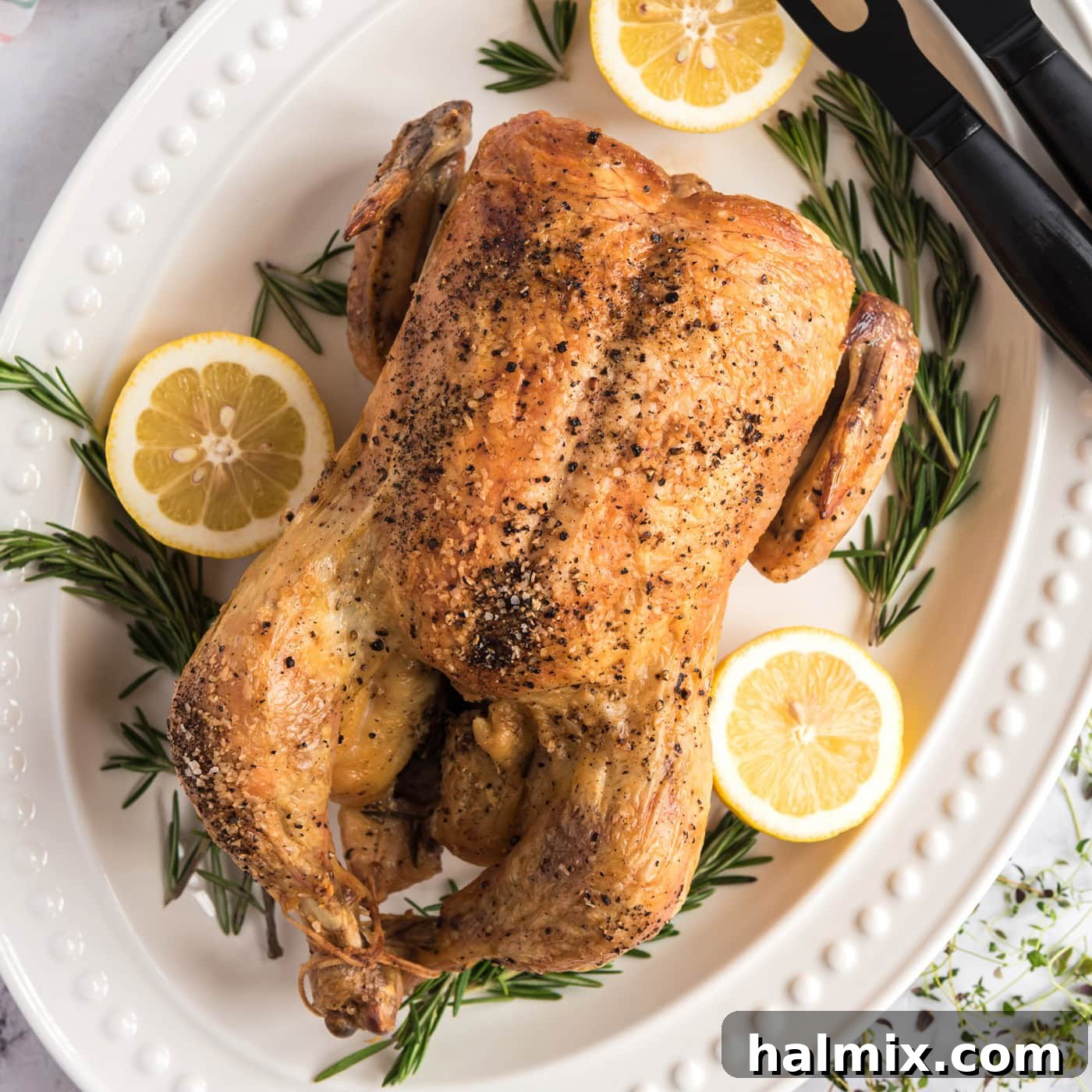
The Ultimate Guide to Perfectly Roasted Whole Chicken: Crispy Skin, Juicy Meat Every Time
Imagine a golden-brown chicken, its skin perfectly crispy, its meat unbelievably juicy, filling your home with an aroma that promises a truly satisfying meal. This isn’t just a dream; it’s the reality of mastering a classic whole roasted chicken. Far from being intimidating, this foundational recipe is a testament to the power of simple ingredients and straightforward techniques. It’s a culinary cornerstone that every home cook deserves in their repertoire, offering consistent deliciousness and endless possibilities for variation. This guide will walk you through every step to ensure your roasted chicken is a triumph, whether you’re a seasoned chef or just starting your culinary journey.
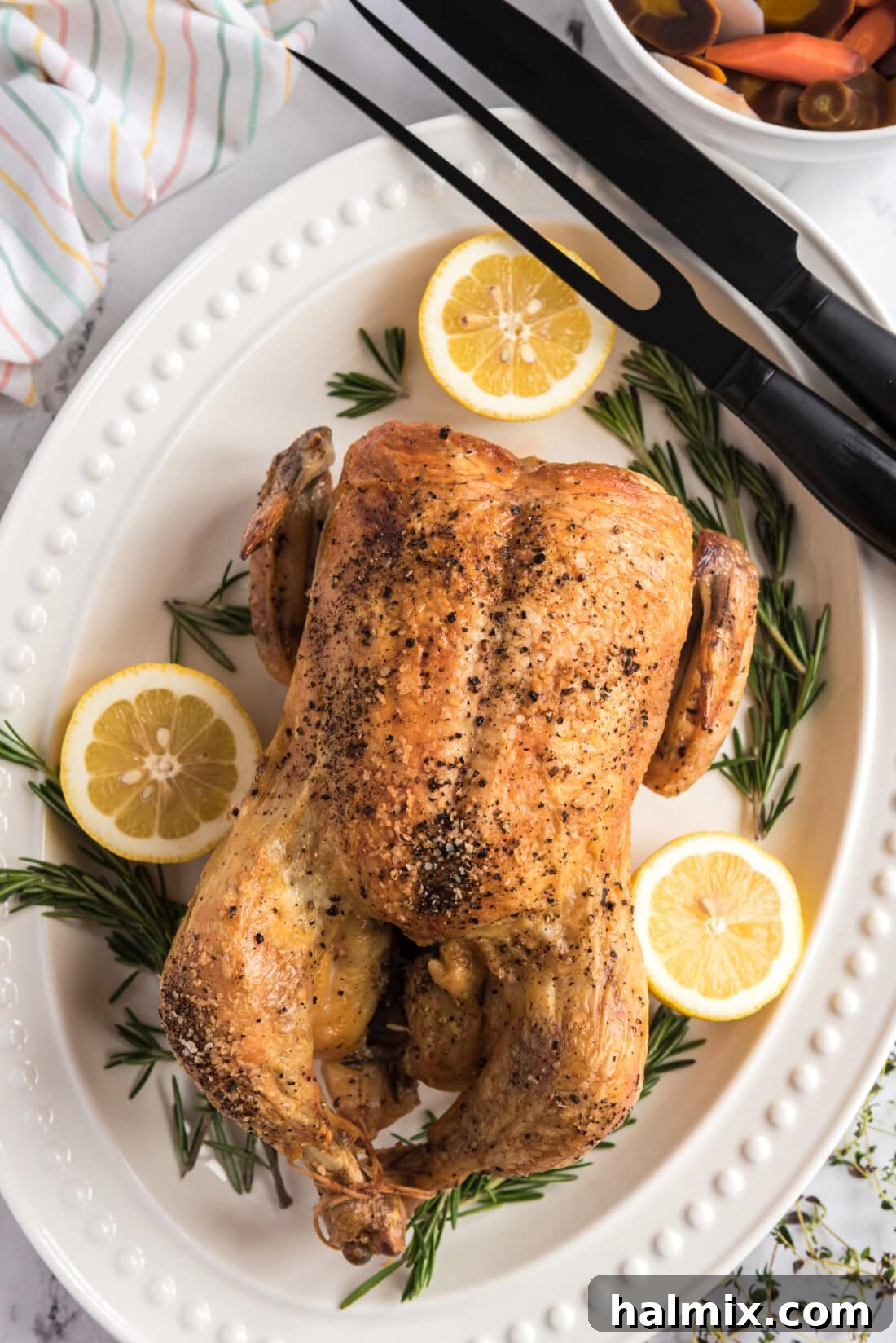
Why This Simple Roasted Chicken Recipe Is a Game-Changer
There’s a reason why a simple whole roasted chicken has stood the test of time as a beloved family meal. It’s not just about the incredible flavor; it’s about the ease, versatility, and the comforting experience it brings to your table. This recipe cuts through the complexity, focusing on fundamental principles that guarantee success. You don’t need a pantry full of exotic spices or advanced culinary skills. With just a few basic ingredients – primarily a whole chicken, some olive oil or butter, and seasoning – you can achieve restaurant-quality results right in your own kitchen.
The magic of this method lies in its ability to consistently deliver a bird with impossibly crispy, golden skin and tender, succulent meat. Many people shy away from roasting a whole chicken, fearing dryness or an uneven cook. However, by understanding a few key steps and having a bit of patience, you’ll discover that roasting is not only simple but also incredibly rewarding. It’s a staple that you can rely on for weeknight dinners, special occasions, or whenever you crave that classic, comforting taste. Compared to other methods like spatchcock chicken, which focuses on speed, this traditional roast offers a more holistic cooking experience, allowing the flavors to meld beautifully over a slightly longer period.
The Pillars of a Perfect Roast: Crispy Skin & Juicy Interior
Achieving the ideal balance of a shatteringly crisp exterior and a moist, flavorful interior is the hallmark of a perfectly roasted chicken. This isn’t left to chance; it’s a direct result of proper preparation and cooking technique. The initial high heat combined with a carefully dried chicken skin kickstarts the browning process, creating that coveted crispy texture. Simultaneously, the consistent oven temperature allows the internal meat to cook gently, retaining its natural juices and ensuring every bite is tender and full of flavor. Forget complex brines or marinades; the natural taste of quality chicken, enhanced by salt, pepper, and perhaps a few aromatic herbs, truly shines through in this straightforward preparation.
The secret lies in controlling moisture and temperature. By diligently patting the chicken dry, you eliminate surface moisture that would otherwise create steam, preventing crispness. The oil or butter then encourages browning and helps conduct heat efficiently. Finally, allowing the cooked chicken to rest is paramount. This allows the muscle fibers to relax and reabsorb the juices that have migrated to the center during cooking, guaranteeing a moist and tender result from breast to thigh.
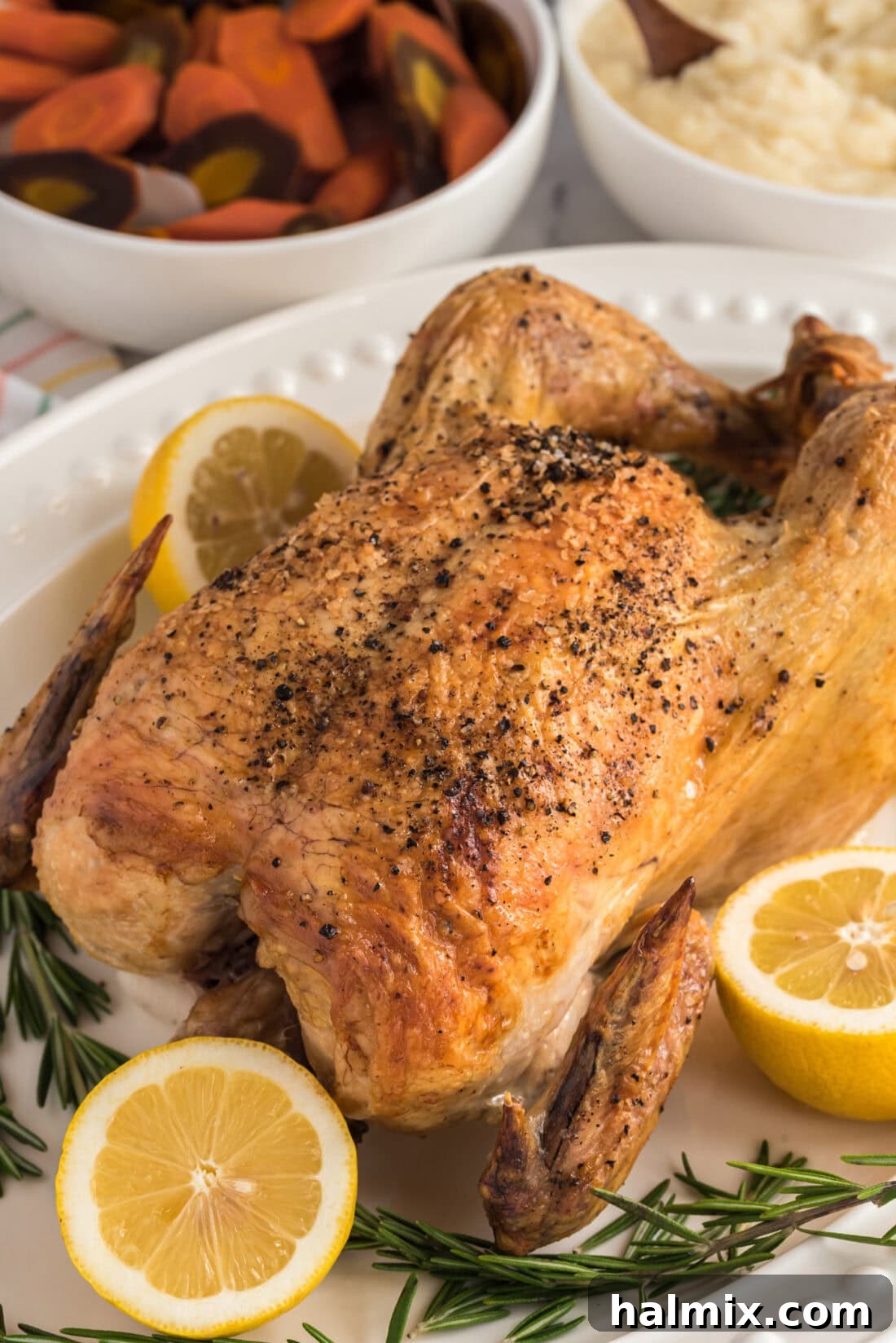
Essential Ingredients for Your Whole Roasted Chicken
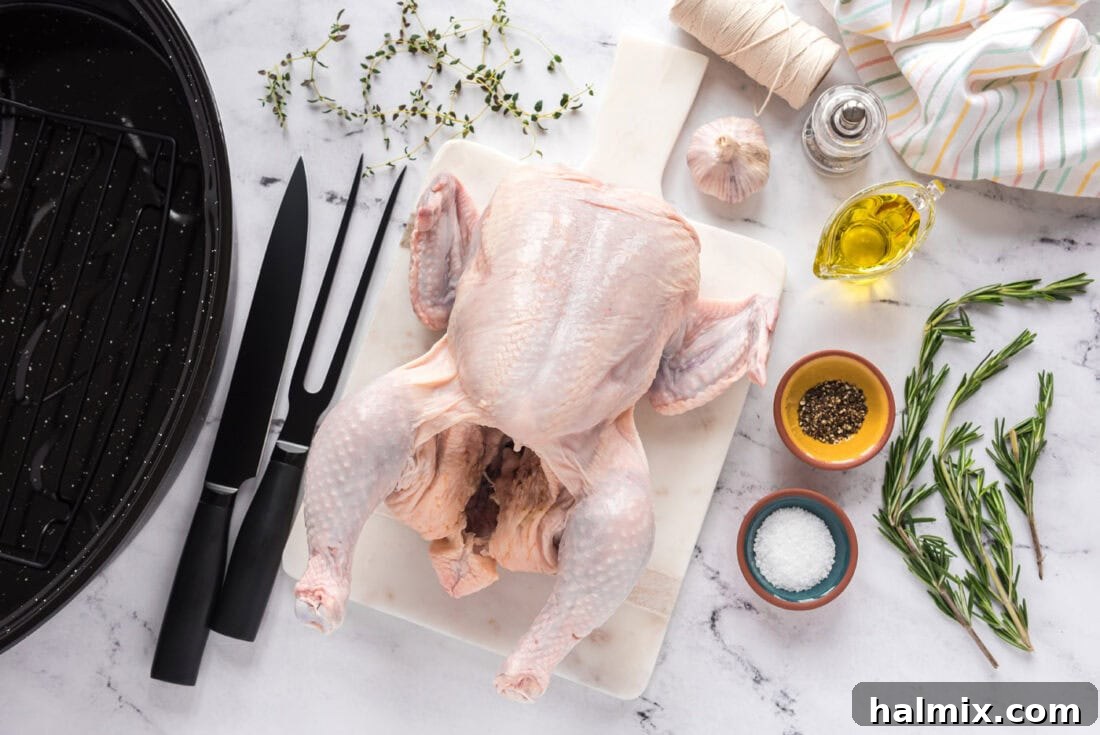
Simplicity is at the heart of this recipe, proving that the best flavors often come from the fewest, highest-quality ingredients. Here’s what you’ll need to create your magnificent roasted chicken, providing clear measurements and details for a flawless outcome:
- Whole Chicken: A 5-7 pound bird is ideal for most families, providing ample meat for a meal and delicious leftovers. For a 6-pound chicken, expect around 6 servings.
- Olive Oil or Unsalted Butter: You’ll need about 2 tablespoons of olive oil or softened unsalted butter. This fat is crucial for crispy skin and flavor.
- Kosher Salt: Approximately 1 tablespoon. Kosher salt has a coarser texture, making it easier to distribute evenly and helping to draw out moisture for crispier skin. Feel free to be liberal with the salt for maximum flavor.
- Freshly Ground Black Pepper: About ½ teaspoon, or to taste. This adds a foundational layer of flavor that complements the chicken beautifully.
- Optional Fresh Herbs: 1-2 sprigs of rosemary and 2 sprigs of thyme are classic choices that infuse the chicken with aromatic goodness.
- Optional Aromatics: 2 cloves of fresh garlic (smashed or whole) can be placed inside the cavity for added depth of flavor. Lemon slices or even a quartered onion can also be used.
Ingredient Deep Dive & Smart Substitution Suggestions
Understanding your ingredients and their roles can significantly elevate your roasting game, ensuring a delicious and perfectly cooked chicken every time.
Selecting and Preparing Your Chicken
The quality of your chicken significantly impacts the final taste and texture. You can use either a fresh whole chicken or a frozen one for this recipe. However, **it is absolutely crucial to ensure that a frozen chicken is completely thawed before you begin cooking.** A partially frozen chicken will cook unevenly, potentially leading to raw spots in some areas and dry, overcooked sections in others. For best results, plan ahead and thaw your chicken slowly in the refrigerator for 24-48 hours, depending on its size (a 6-pound bird typically needs at least 24-36 hours).
One of the most vital steps for achieving that coveted crispy skin is to **pat the chicken dry thoroughly with paper towels.** Moisture on the skin will steam rather than crisp, preventing that beautiful golden-brown finish. Take your time with this step, drying every crevice, inside and out, including the cavity, before applying any fat or seasoning. This single action makes a profound difference in the texture of your roasted chicken, transforming soft skin into a delightful crunch.
Fat and Flavor Additions
Whether you choose **olive oil or softened unsalted butter**, both act as excellent conduits for heat and flavor, while also contributing to the browning and crisping of the skin. Olive oil offers a slightly lighter, fruitier note, and can withstand higher temperatures, making it ideal for the initial blast of heat. Butter, on the other hand, imparts a rich, golden hue and a classic, savory depth that many home cooks adore. Feel free to experiment with what you prefer or have on hand, or even use a combination.
Beyond the essential salt and pepper, this recipe is a blank canvas for your culinary creativity. While we love the timeless combination of **rosemary, thyme, and garlic** tucked into the cavity or scattered over the skin, don’t hesitate to personalize your roast. Consider these additions to enhance flavor:
- Spice Blends: Experiment with a poultry seasoning blend, smoked paprika for a hint of smokiness, garlic powder, onion powder, or a pinch of cayenne for a subtle kick. Rub these under the skin as well as over the surface for deeper flavor penetration.
- Other Fresh Herbs: Fresh sage, oregano, marjoram, or even a bay leaf can offer wonderful aromatic alternatives or additions.
- Citrus: Lemon slices, especially when tucked into the cavity or placed under the skin, release bright, aromatic juices that subtly perfume the meat and add a touch of acidity. Orange slices can also offer a delightful sweetness, especially good with a hint of cinnamon.
- Root Vegetables: Quartered onions, carrots, or celery stalks placed in the cavity or at the bottom of the roasting pan can act as a natural rack and contribute robust flavor to the pan drippings, which are perfect for making a rich gravy.
Step-by-Step: How to Roast the Perfect Whole Chicken
These step-by-step photos and instructions are here to help you visualize how to make this recipe successfully. For a concise, printable version with all measurements, please scroll to the end of this post for the recipe card.
- Preheat Your Oven: Start by preheating your oven to a high temperature of 450 degrees Fahrenheit (230 degrees Celsius). This initial high heat is crucial for shocking the chicken skin, causing it to crisp up rapidly and achieve that desirable golden-brown color before you lower the temperature for the remainder of the cooking time.
- Prepare the Chicken: Carefully remove the whole fresh chicken from its packaging. Using plenty of paper towels, thoroughly pat the entire chicken dry, inside and out. This step is absolutely critical for crispy skin, as any surface moisture will steam rather than crisp. Place the dried chicken on a rack set inside a roasting pan. A rack is important to allow air circulation around the entire bird, promoting even cooking and crisping.
- Remove Giblets and Neck: Reach into the chicken’s cavity and remove the bag containing the neck and giblets. You can either discard these or save them to make a flavorful stock or gravy later.
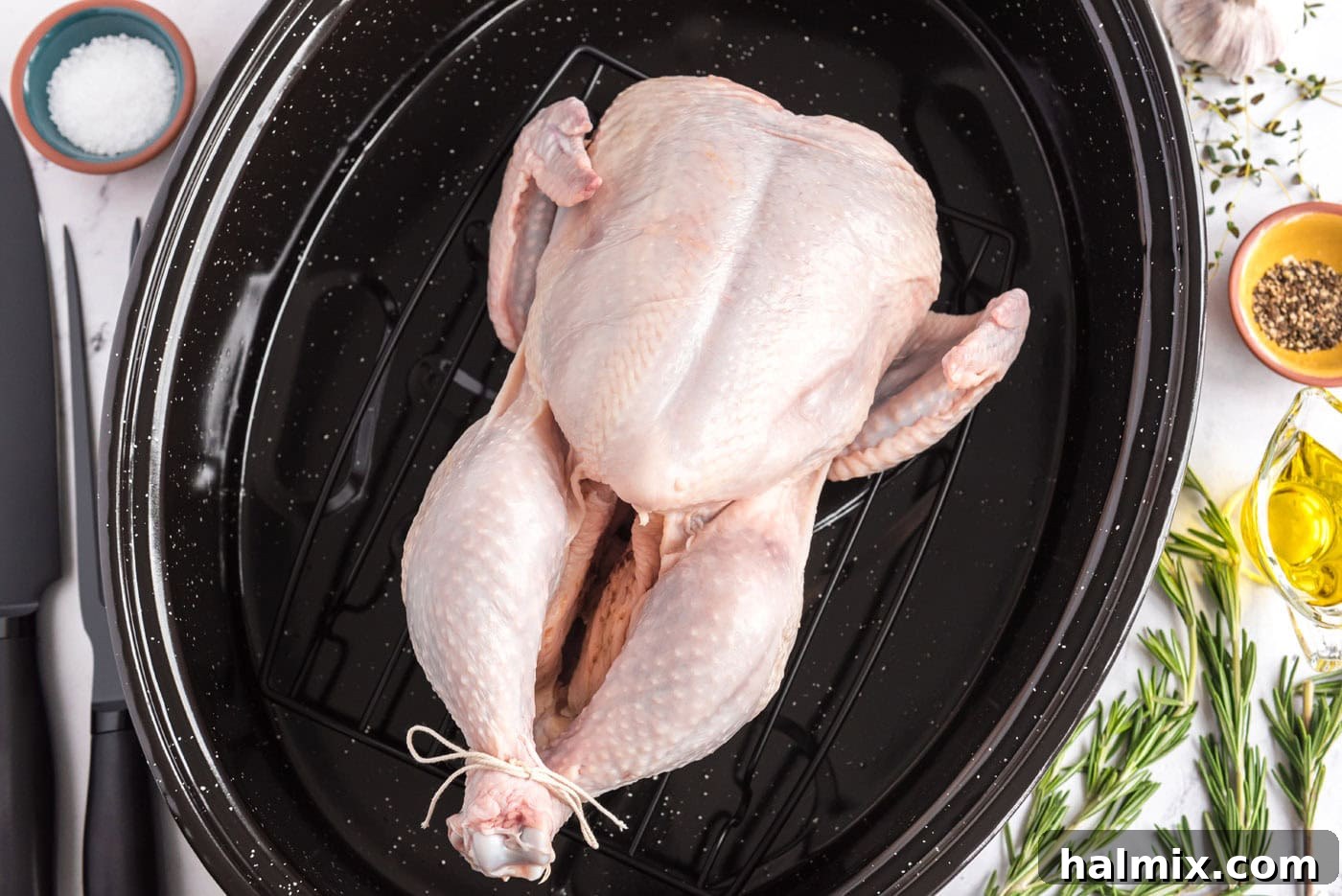
- Truss the Chicken (Optional but Recommended): Tying the legs of the chicken together securely with butcher’s twine helps the chicken cook more evenly by keeping the legs and thighs close to the body. This prevents the leaner breast meat from drying out while the thighs cook to completion, and also creates a more compact, aesthetically pleasing roast.

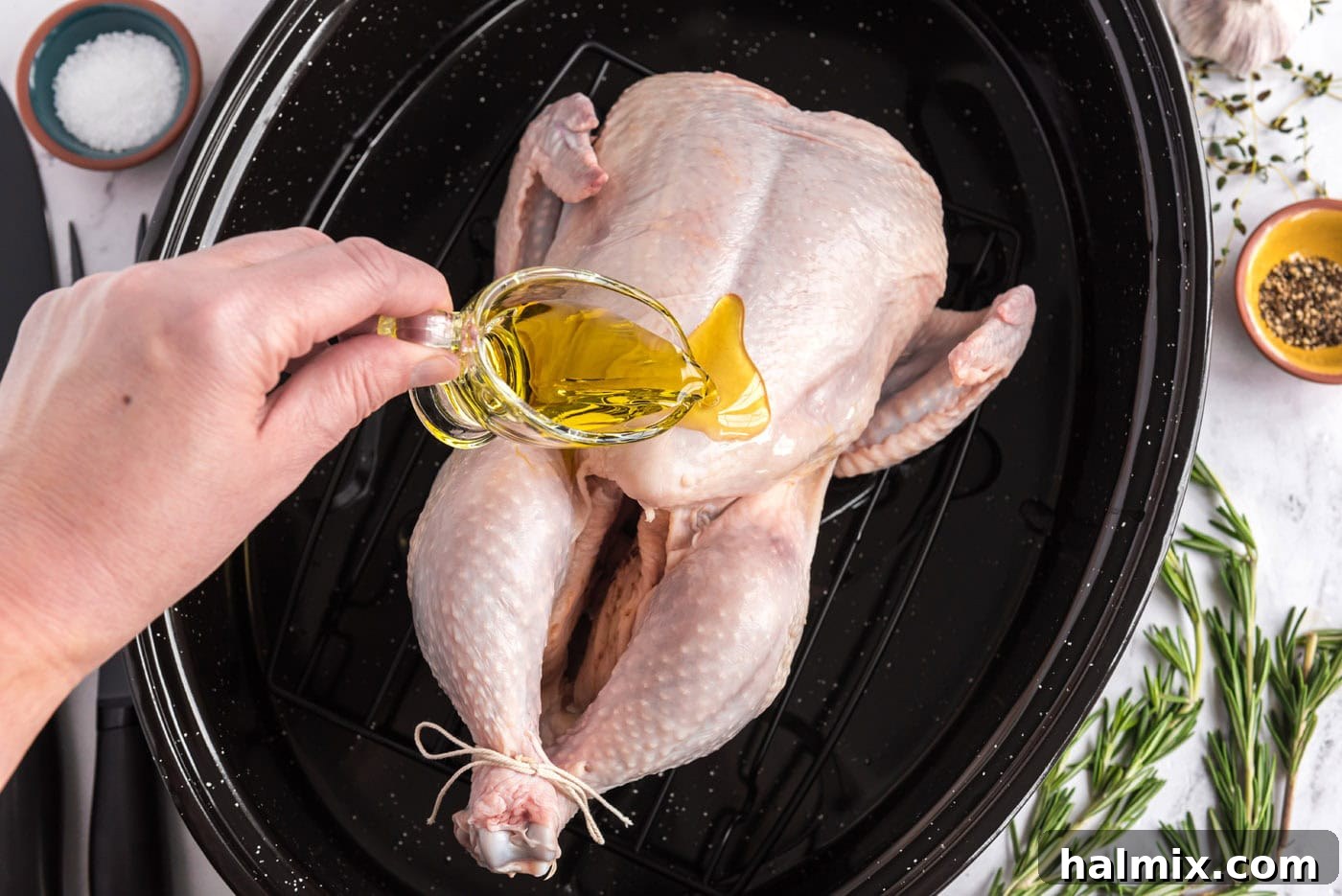
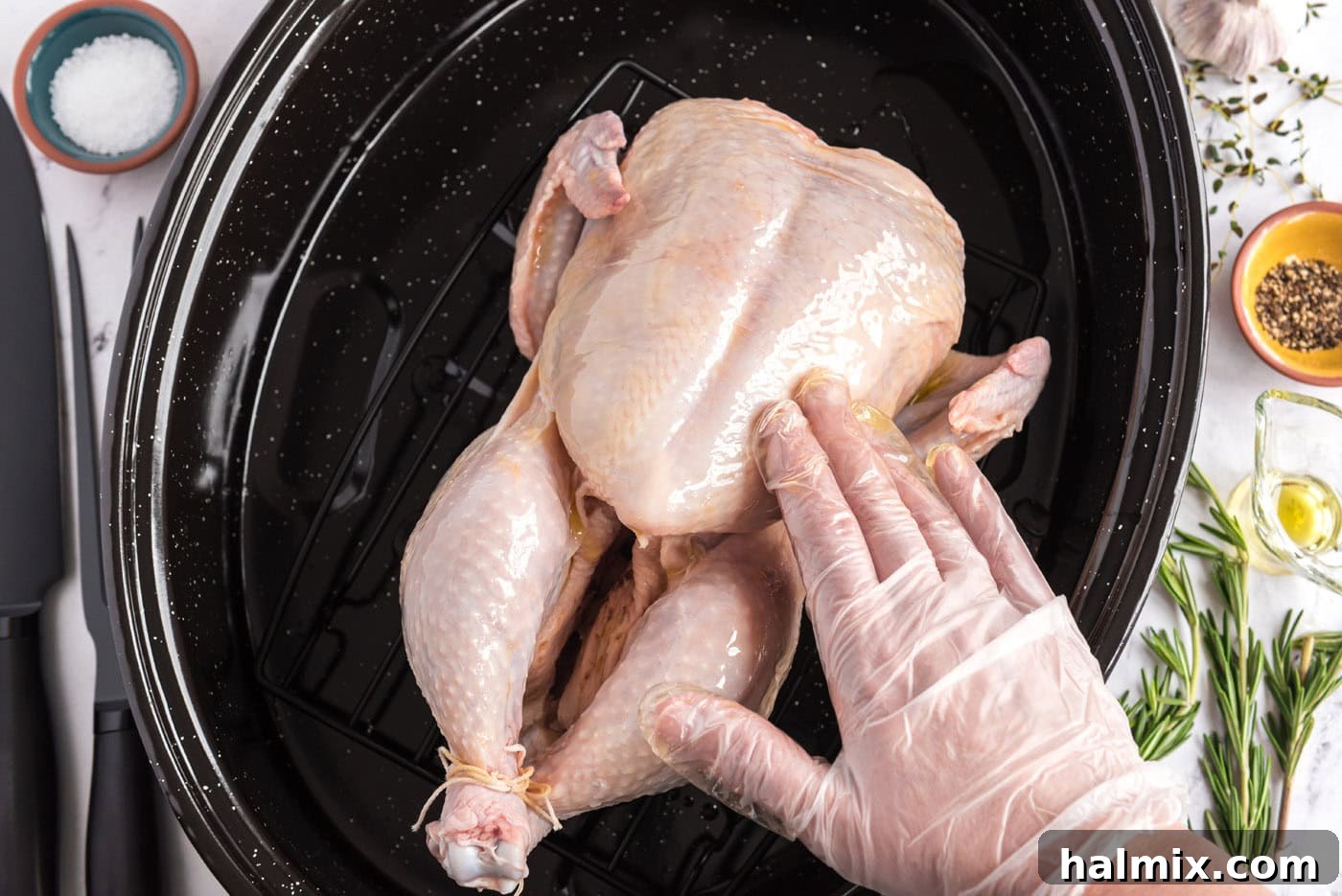
Trussing the chicken ensures even cooking and a beautiful presentation. - Apply Fat: Drizzle and then thoroughly rub olive oil (or softened butter) all over the skin of the chicken. Ensure an even coating across the entire surface, including under the wings and around the legs. This fat layer is essential for creating that golden, crispy skin and helping to transfer heat efficiently to the meat.
Drizzle the chicken generously with olive oil or melted butter. An even coating of fat is key for achieving irresistibly crispy skin. - Tuck the Wings: Tuck the wing tips underneath the back of the chicken. This simple step prevents them from burning and helps to stabilize the bird in the roasting pan, ensuring a more uniform roast.
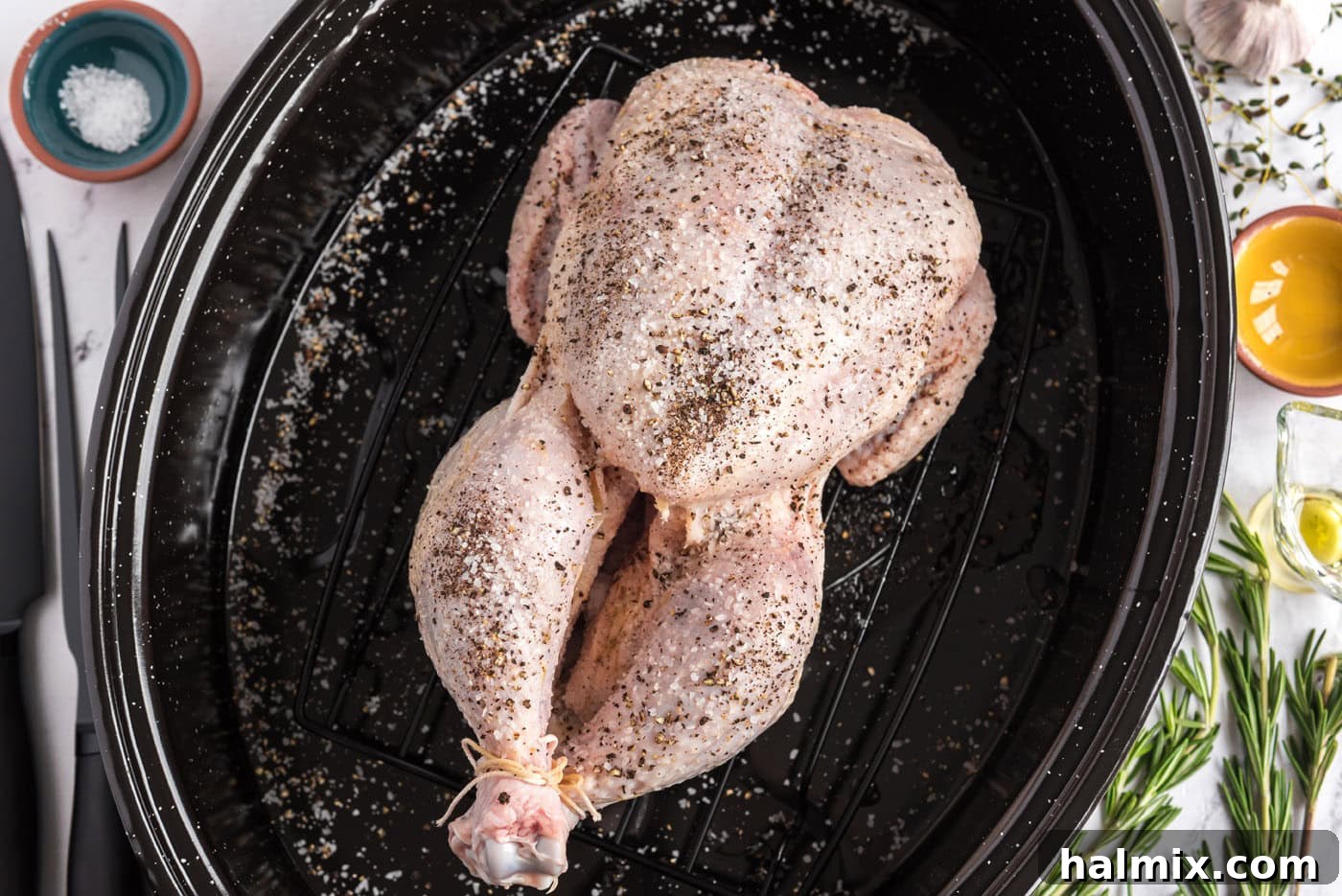
- Season Generously: Liberally sprinkle Kosher salt and freshly ground black pepper all over the chicken’s exterior. Don’t forget to season the cavity as well; this adds flavor to the meat from the inside out. If using, add any optional fresh herbs (like rosemary or thyme sprigs) and garlic cloves or lemon slices into the chicken cavity.
Season the chicken liberally, ensuring flavor penetrates every part. - Roast and Monitor: Place the prepared chicken on the bottom rack of your preheated oven. Immediately after closing the oven door, reduce the oven temperature to 400 degrees Fahrenheit (200 degrees Celsius). Roast for approximately 1 to 1.5 hours, depending on the size of your chicken. Around the 1-hour mark, begin checking the internal temperature using a meat thermometer. Insert the thermometer into the thickest part of the thigh (without touching bone) and the thickest part of the breast. The chicken is done when both areas reach an internal temperature of 165 degrees Fahrenheit (74 degrees Celsius).
EXPERT TIP: If the chicken needs more time, continue roasting and check the temperature at 10-minute intervals. The total roasting time for a typical 6-pound chicken is usually around 1 hour and 15 minutes to 1 hour and 30 minutes. Always rely on the internal temperature rather than time alone, as oven calibration and chicken size can vary. The juices should run clear when pierced with a knife.
Roast until golden brown and the internal temperature reaches a safe 165°F (74°C). - Rest Before Carving: Once the chicken reaches the correct internal temperature, remove it from the oven and transfer it to a clean cutting board or serving platter. **Allow the chicken to rest for at least 15 minutes before carving.** This crucial step allows the juices that have collected in the center of the bird during cooking to redistribute throughout the meat, ensuring a truly moist and flavorful result. If you carve too soon, the juices will run out, leaving you with a dry, less flavorful chicken.
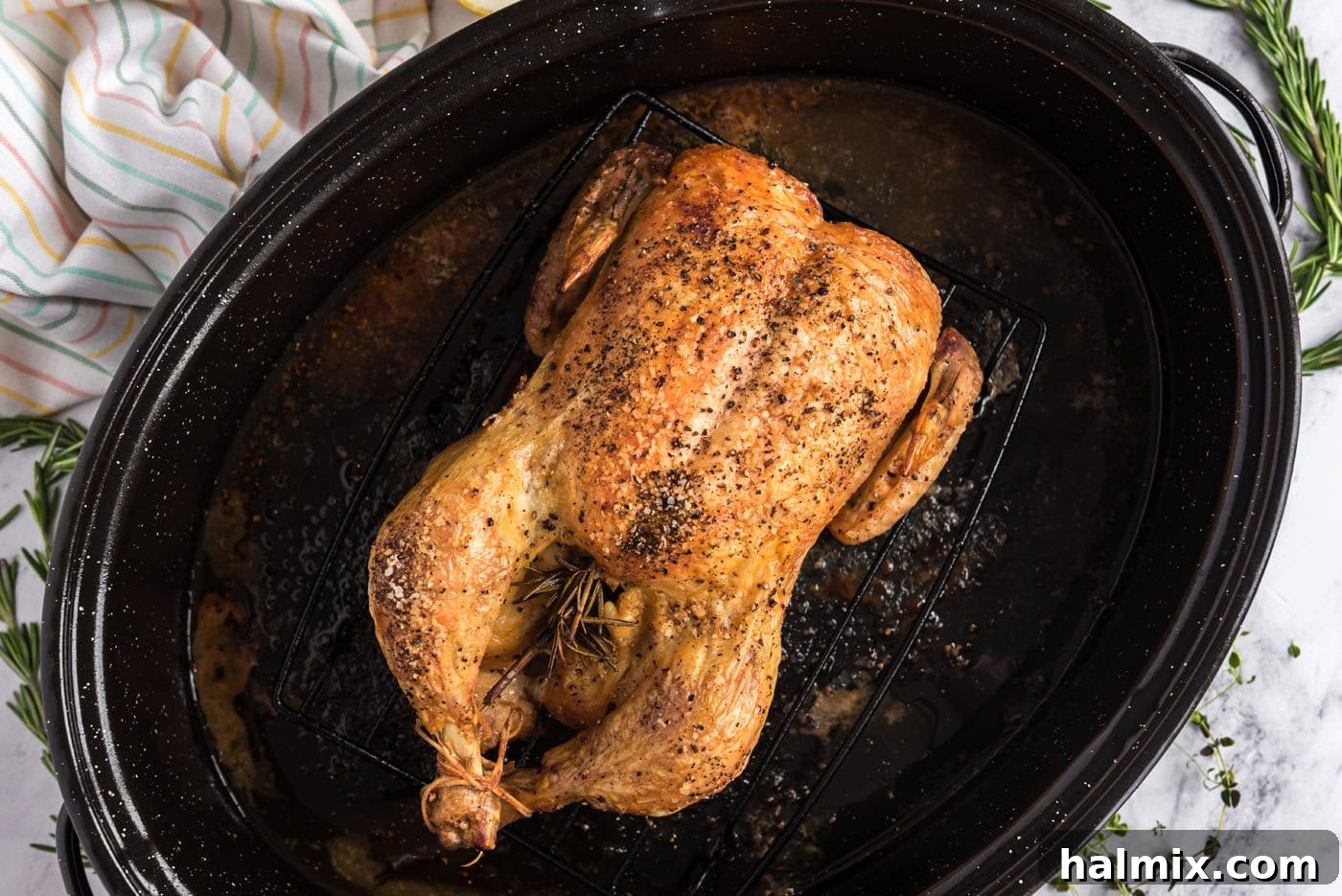
Frequently Asked Questions & Expert Tips for Roasting Chicken
Chicken is considered fully cooked and safe to eat once it reaches an internal temperature of 165°F (74°C). You should always use an instant-read thermometer to check the temperature. Insert the thermometer into the thickest part of the thigh and the thickest part of the breast, ensuring you avoid touching any bone. When properly cooked, the juices should run clear, without any pinkness.
While traditional recipes often call for basting, it’s not strictly necessary for this method and can even hinder crispy skin development. Each time you open the oven door to baste, the oven temperature drops, extending the cooking time and potentially drying out the chicken as moisture escapes. The olive oil or butter rubbed on the skin, combined with proper cooking temperature, is usually sufficient for a beautifully browned and crispy exterior without the need for basting.
Store any leftover roasted chicken in an air-tight container in the refrigerator for up to 3-4 days. To extend its shelf life, you can freeze carved chicken meat in freezer-safe bags or containers for up to 3 months. When reheating, ensure it reaches an internal temperature of 165°F (74°C) throughout to ensure food safety.
A good quality roasting pan with a V-rack or flat rack is highly recommended for optimal results. The rack elevates the chicken, allowing hot air to circulate evenly around the entire bird, which is essential for crispy skin and uniform cooking. If you don’t have a metal rack, you can create a makeshift one using a bed of chopped root vegetables (like carrots, onions, and celery) in the bottom of the pan. This not only elevates the chicken but also infuses the pan drippings with delicious flavor, perfect for gravy.
Absolutely! Roasting vegetables alongside your chicken is a fantastic way to create a complete meal in one pan and soak up all those delicious chicken juices. Heartier vegetables like potatoes, carrots, onions, parsnips, and Brussels sprouts work exceptionally well. Toss them with a little olive oil, salt, and pepper, and add them to the pan during the last 45-60 minutes of the chicken’s cooking time. For very dense vegetables, you might add them earlier, ensuring they are cut into appropriately sized pieces to cook through.
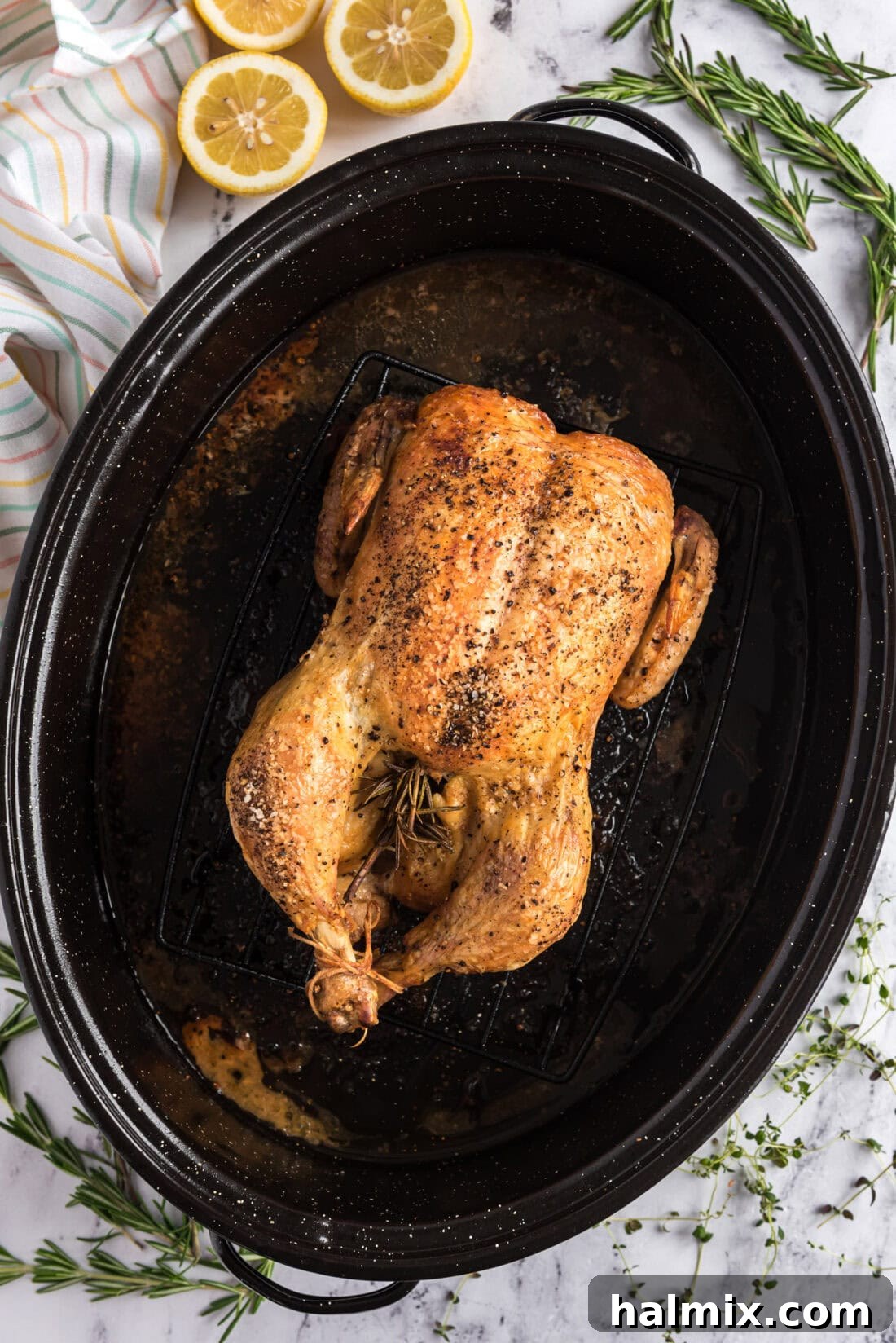
Elevate Your Meal: Serving Suggestions for Roasted Chicken
A perfectly roasted chicken is the star of any meal, but pairing it with the right side dishes can transform it into an unforgettable culinary experience. Its rich, savory flavor complements a wide array of accompaniments, from comforting classics to vibrant, fresh options. Here are some ideas to inspire your next dinner:
- Classic Comfort Sides:
- Creamy Garlic Mashed Potatoes or fluffy twice-baked potatoes are always a crowd-pleaser, perfect for soaking up pan juices.
- Hearty roast potatoes, crispy on the outside and tender on the inside, seasoned with rosemary and garlic, cooked alongside the chicken or separately.
- Traditional bread stuffing or a savory cornbread dressing, infused with herbs, provides a delightful texture and flavor contrast.
- Fresh and Vibrant Vegetables:
- Steamed or roasted broccoli florets with a squeeze of fresh lemon juice for brightness.
- Sweet and tangy Slow Cooker Balsamic Carrots or glazed honey carrots, offering a touch of sweetness.
- Tender asparagus spears, roasted or grilled to perfection, provide an elegant green touch.
- Crisp green beans, sautéed with a hint of garlic or blanched and served with toasted almonds for added texture.
- Seasonal roasted root vegetables like parsnips, sweet potatoes, or turnips, tossed with herbs and olive oil.
- Grains and Salads:
- Fluffy rice pilaf or quinoa, lightly seasoned, can be a lighter alternative to potatoes.
- A vibrant garden salad with a light vinaigrette helps to cut through the richness of the chicken, adding freshness.
- Couscous with roasted vegetables or a fresh herb salad can also make excellent pairings.
- Sauces: Don’t forget to utilize those flavorful pan drippings! Make a simple, rich homemade gravy to pour over slices of chicken and sides. It adds an extra layer of moisture and depth that elevates the entire dish.
More Delicious Poultry & Meat Recipes to Explore
If you’ve enjoyed mastering this classic roasted chicken, you’ll love exploring other impressive and flavorful main courses. Expand your culinary horizons with these related recipes that promise to delight your taste buds and impress your family and friends:
- Roast Duck – For a richer, more luxurious alternative for special occasions.
- Roasted Turkey – Perfect for larger gatherings, holiday feasts, or when you need to feed a crowd.
- Orange Bourbon Glazed Ham – A sweet and savory option that makes a stunning centerpiece.
- Slow Roasted Sticky Chicken with Roasted Vegetables – A flavorful twist for a less traditional, but equally delicious, roast.
- Deep Fried Cornish Hens – A unique and impressive individual serving option that’s surprisingly easy to make.
- Beer Can Chicken – A fun and incredibly juicy method for grilling or roasting, resulting in exceptionally tender meat.
I am passionate about cooking and baking, and it brings me immense joy to share my kitchen adventures and perfected recipes with all of you! To make sure you never miss a new dish, consider subscribing to my convenient newsletter. You’ll receive free daily recipes directly to your inbox, keeping your meal planning fresh and inspiring.
Simply subscribe here to start receiving your free daily recipes!
Classic Whole Roasted Chicken Recipe
This easy-to-follow recipe requires no fancy ingredients, just a bit of olive oil, salt, and pepper to create the most delicious whole roasted chicken you’ll ever taste – with irresistibly crispy skin and tender, juicy meat.
IMPORTANT: For detailed expert tips, FAQs, and step-by-step photos, please refer to the full blog post above.
Ingredients
- 1 whole chicken (approx. 6 pounds)
- 2 Tablespoons olive oil (or softened unsalted butter), or as needed
- 1 Tablespoon Kosher salt (or to taste; be liberal)
- ½ teaspoon freshly ground black pepper (or to taste)
Optional Herbs & Aromatics:
- 1-2 sprigs fresh rosemary
- 2 sprigs fresh thyme
- 2 cloves fresh garlic, smashed or whole
- Lemon slices (for cavity)
Equipment You’ll Need
- Roasting pan with a rack
- Butcher’s twine (optional, for trussing)
- Instant-read meat thermometer
- Paper towels
Instructions
- Preheat Oven: Preheat your oven to 450°F (230°C).
- Prepare Chicken: Remove chicken from packaging. Pat the chicken completely dry with paper towels, inside and out, including the cavity. Place it on the rack in your roasting pan.
- Remove Giblets: Take out the neck and giblets from the chicken cavity; discard or save for gravy.
- Truss (Optional): Securely tie the chicken legs together with butcher’s twine to help it cook more evenly.
- Apply Fat: Rub olive oil (or softened butter) thoroughly over the entire skin of the chicken, ensuring an even coat.
- Tuck Wings: Tuck the wing tips underneath the back of the chicken to prevent them from burning.
- Season: Season the chicken generously all over with Kosher salt and freshly ground black pepper. Place optional herbs, garlic, or lemon slices into the chicken cavity.
- Roast: Place the roasting pan on the bottom rack. Immediately reduce the oven temperature to 400°F (200°C). Roast for 1 hour to 1 hour 30 minutes, or until an instant-read thermometer inserted into the thickest part of the thigh and breast (without touching bone) reads 165°F (74°C). Juices should run clear.
- Rest: Remove the chicken from the oven and let it rest on a cutting board for at least 15 minutes before carving. This is crucial for juicy meat.
Nutrition Information (Approximate per serving)
- Calories: 501kcal
- Carbohydrates: 1g
- Protein: 41g
- Fat: 36g
- Saturated Fat: 10g
- Polyunsaturated Fat: 7g
- Monounsaturated Fat: 16g
- Trans Fat: 0.2g
- Cholesterol: 163mg
- Sodium: 1315mg
- Potassium: 420mg
- Fiber: 0.1g
- Sugar: 0.01g
- Vitamin A: 322IU
- Vitamin C: 4mg
- Calcium: 29mg
- Iron: 2mg
The nutritional values are estimates based on standard ingredient calculations. Actual values may vary depending on specific brands, cooking methods, and optional additions. Always consult a professional nutritionist for precise dietary information.
The recipes on this blog are tested with a conventional gas oven and gas stovetop. It’s important to note that some ovens, especially as they age, can cook and bake inconsistently. Using an inexpensive oven thermometer can assure you that your oven is truly heating to the proper temperature. If you use a toaster oven or countertop oven, please keep in mind that they may not distribute heat the same as a conventional full sized oven and you may need to adjust your cooking/baking times. In the case of recipes made with a pressure cooker, air fryer, slow cooker, or other appliance, a link to the appliances we use is listed within each respective recipe. For baking recipes where measurements are given by weight, please note that results may not be the same if cups are used instead, and we can’t guarantee success with that method.
This comprehensive guide and recipe for whole roasted chicken originally appeared on January 27, 2019, and has been extensively updated with new photos, expanded instructions, enhanced expert tips, and detailed FAQs to ensure your success. Recipe inspiration courtesy of Life’s Little Sweets.