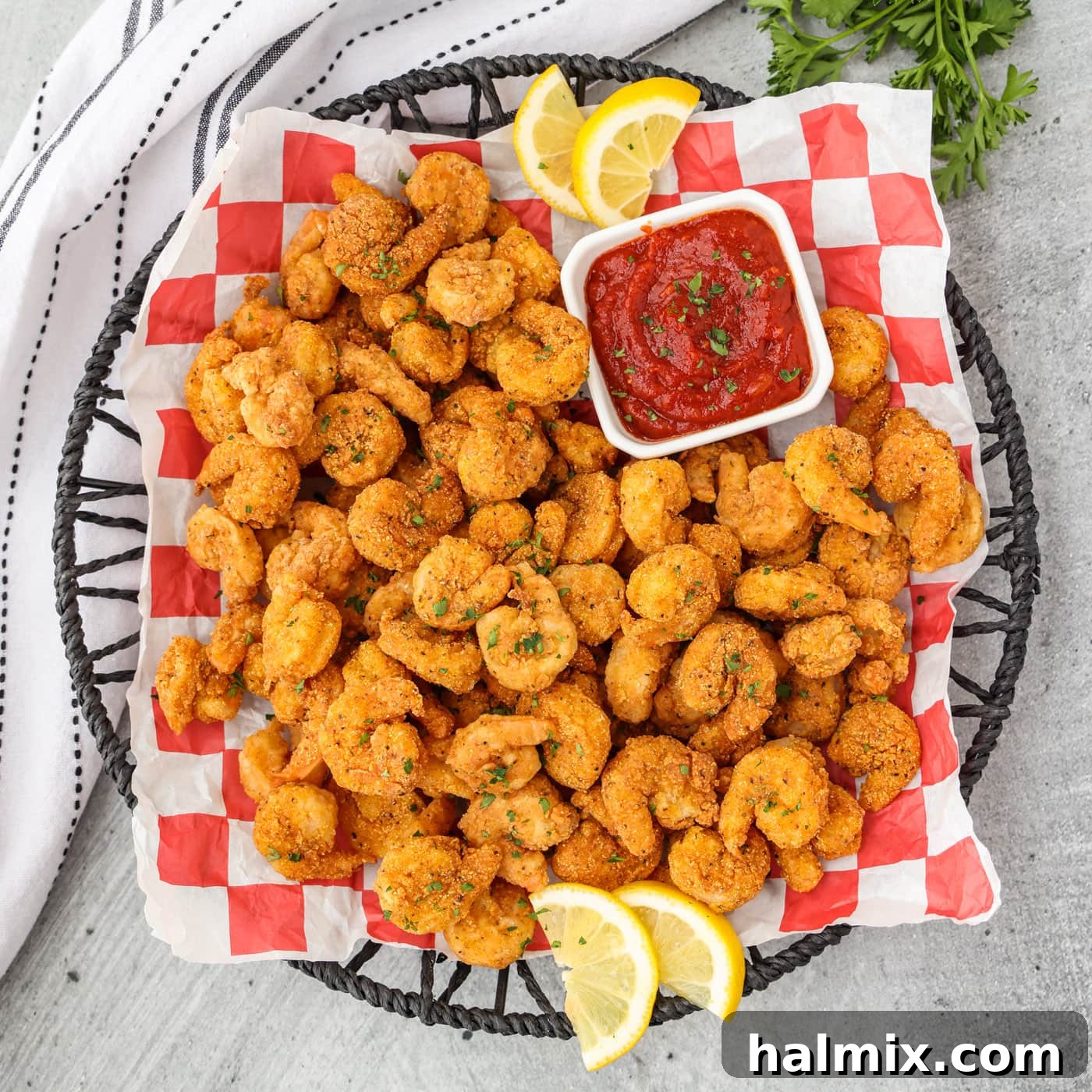
Welcome to the ultimate guide for crafting the most delectable homemade popcorn shrimp you’ll ever taste! Forget those restaurant versions; this recipe delivers perfectly crispy, golden-brown shrimp with a tender, juicy interior, right in your own kitchen. Whether you’re looking for an impressive appetizer to kick off a party or a delightful main course for a family meal, these bite-sized nuggets of seafood perfection are guaranteed to be a crowd-pleaser. We’ll walk you through the precise steps of dredging, dipping, and deep-frying to achieve that irresistible crunch, ensuring every morsel is coated in a savory, seasoned crust. Get ready to elevate your home cooking and savor the incredible flavor of fresh, perfectly prepared popcorn shrimp, ready to be dunked into your favorite sauces.
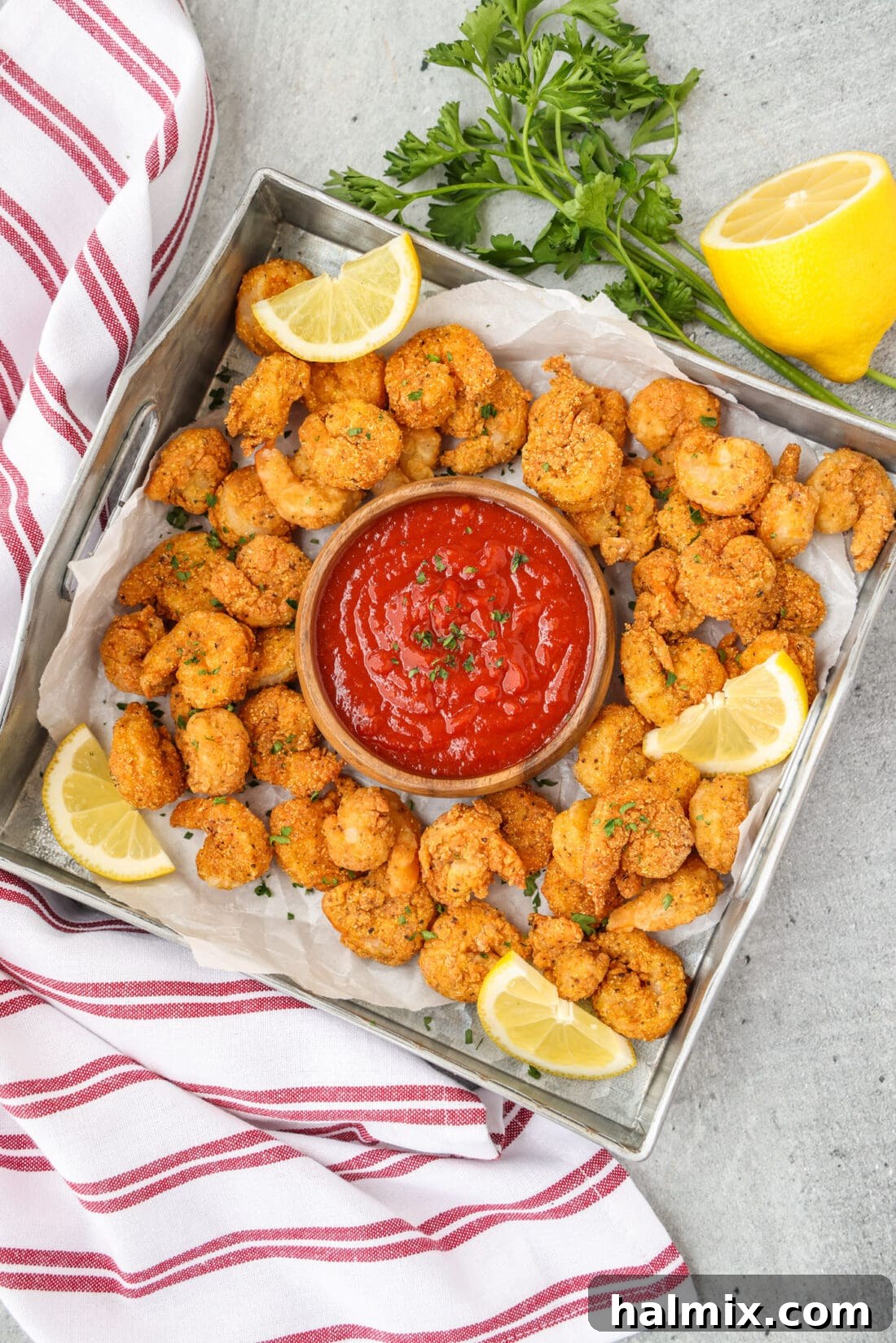
Why This Homemade Popcorn Shrimp Recipe Is a Must-Try
While popcorn shrimp is a beloved classic on many restaurant menus, creating them from scratch at home offers an unparalleled experience. This recipe stands out because it empowers you to control the quality of ingredients, personalize the seasoning, and achieve a freshness that pre-made or frozen options simply can’t match. The secret to its success lies in our meticulous three-step breading process: first, a light dredge in seasoned flour, followed by an enriching egg and milk wash, and finally, a generous coating of cornmeal. This precise layering creates a robust, ultra-crispy crust that locks in the shrimp’s natural sweetness and moisture. The final step of deep frying them to a perfect golden brown ensures a satisfying crunch with every bite, transforming humble shrimp into a gourmet treat. It might seem like a time-consuming endeavor, but the hands-on process is incredibly rewarding, turning cooking into a fun and engaging activity, especially if you enjoy the art of culinary creation. The result is a batch of irresistible popcorn shrimp that boasts superior flavor and texture, making every effort worthwhile.
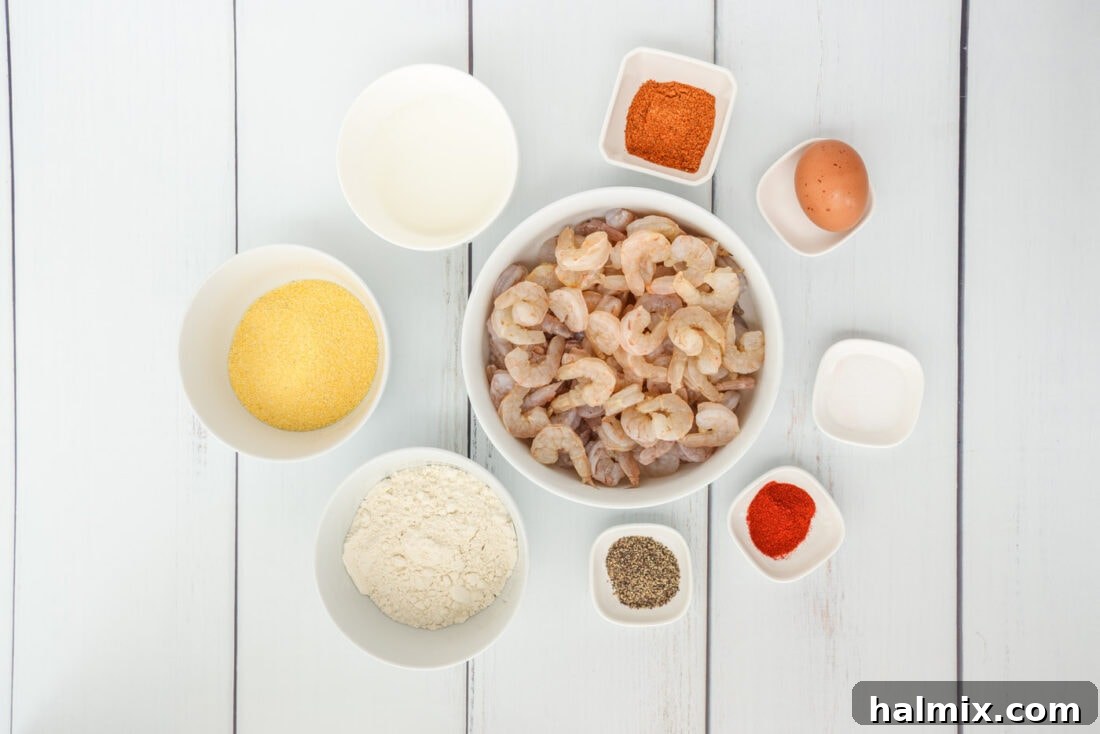
Essential Ingredients for Perfect Popcorn Shrimp
Crafting the best homemade popcorn shrimp starts with selecting the right ingredients. Below, we’ll detail each component, explaining its role and offering valuable substitution suggestions to ensure your success. You’ll find a complete list with specific measurements and detailed instructions in the printable recipe card at the end of this post, but let’s dive into understanding what makes these ingredients shine.
Ingredient Deep Dive and Smart Substitutions
SHRIMP: The Star of the Show
For truly exceptional popcorn shrimp, the quality of your shrimp is paramount. We recommend using raw, medium to small shrimp that have been peeled, deveined, and had their tails removed. Smaller shrimp are ideal for that classic “popcorn” size, ensuring quick and even cooking. While you can purchase pre-peeled and deveined shrimp for convenience, preparing them yourself from whole shrimp often yields a fresher taste. If starting with whole shrimp, two pounds will yield roughly 1.5 pounds once peeled and deveined, which is a good amount for this recipe. If you opt for pre-cleaned shrimp, consider adjusting the quantity to around 1.5 pounds or slightly increasing your batter ingredients to ensure adequate coating. Frozen shrimp can be used, but ensure they are completely thawed and thoroughly patted dry with paper towels before breading. Excess moisture is the enemy of crispiness!
BREADING: The Secret to Supreme Crunch
Our signature crispiness comes from a blend of all-purpose flour and yellow cornmeal. Cornmeal provides a more pronounced crunch and a delightful texture that sets this popcorn shrimp apart from those made with standard breadcrumbs. The slight grit of the cornmeal creates an irresistible, delicate bite. If, however, you prefer a finer, less textured coating, traditional breadcrumbs (panko for extra crispiness) can be substituted. We also incorporate a carefully selected blend of spices into our breading: Old Bay seasoning, black pepper, salt, and smoked paprika. Old Bay adds a classic seafood flavor, while paprika contributes a subtle smoky depth and a beautiful golden color. Feel free to adjust these seasonings to your palate – a pinch of cayenne pepper can add a welcome kick, or garlic powder and onion powder can enhance the savory notes. For those who prefer a different kind of crispy shrimp without a breadcrumb/cornmeal coating, exploring alternatives like our crispy shrimp recipe might be a great option.
OIL: The Medium for Golden Perfection
The type of oil you choose and, more importantly, its temperature, are critical for successful deep-frying. Neutral-flavored oils with high smoke points are best, such as vegetable oil, canola oil, or peanut oil. These oils can withstand the high heat required for frying without burning or imparting off-flavors to your shrimp. Maintaining a consistent oil temperature throughout the cooking process is absolutely essential. If the oil is too hot, the shrimp’s exterior will burn before the interior is cooked, resulting in a dark, bitter crust. Conversely, if the oil isn’t hot enough, the shrimp will absorb excessive oil, becoming greasy, soggy, and unappetizing. Using an instant-read thermometer clipped to the side of your frying vessel is highly recommended to monitor the temperature, aiming for a steady 370°F (185°C). If you don’t have a deep fryer, a heavy-bottomed pot like a Dutch oven or a large cast-iron skillet can serve as an excellent alternative, allowing enough depth for the shrimp to be fully submerged.
EGG WASH: The Flavorful Binder
Our egg wash, a simple mixture of a large egg and milk, acts as the crucial binder that helps the dry breading adhere to the shrimp. The milk also adds a touch of richness and helps to tenderize the shrimp slightly. While whole milk is typically used, you can experiment with buttermilk for a tangier flavor or even a splash of water for a lighter wash. We also remove two tablespoons of the initial flour dredge and mix it into the egg and milk. This small addition helps to create an even more cohesive and robust batter, ensuring that your crispy coating stays firmly attached during frying.
Step-by-Step Guide: Crafting Your Popcorn Shrimp
Follow these detailed steps to achieve perfect popcorn shrimp every time. For your convenience, you can Jump to the full printable recipe at the bottom of this post, which includes all measurements and instructions.
- Prepare the Shrimp: Begin by thoroughly rinsing your peeled, deveined, and tail-removed shrimp under cold water. The cleaner the shrimp, the better the breading will adhere. Once rinsed, it is absolutely crucial to pat them extremely dry using paper towels. Any residual moisture will create steam during frying, which can prevent a crispy crust and cause oil to splatter.
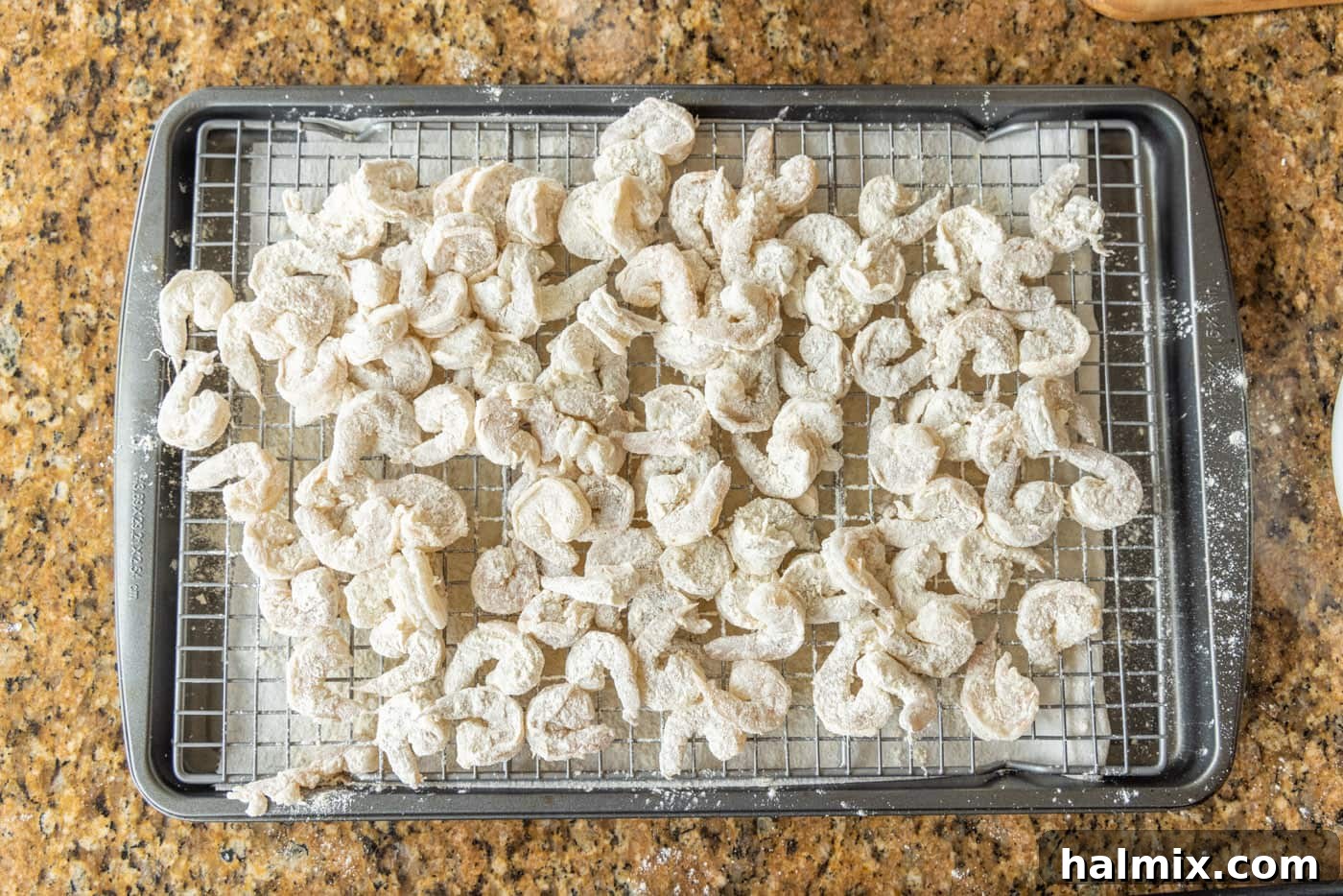
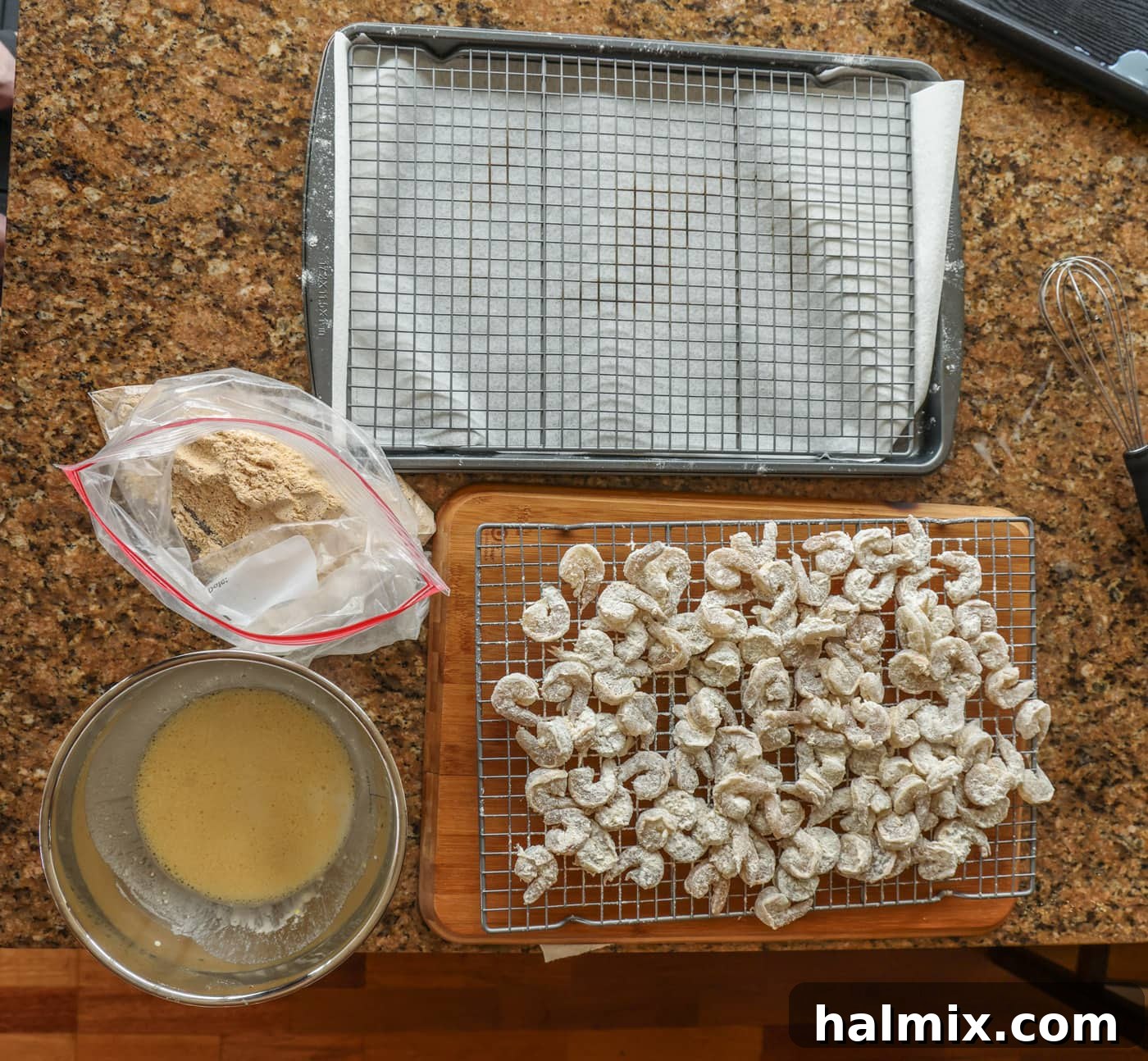
- First Dredge (Flour): Set up your first dredging station. You can either place the all-purpose flour in a gallon-sized ziptop bag for easy shaking and coating, or use a shallow bowl. Dredge the shrimp one by one or in small batches, ensuring each piece is fully coated in flour. This initial layer creates a dry surface for the egg wash to cling to. As you work, place the floured shrimp on a wire rack to prevent them from sticking together.
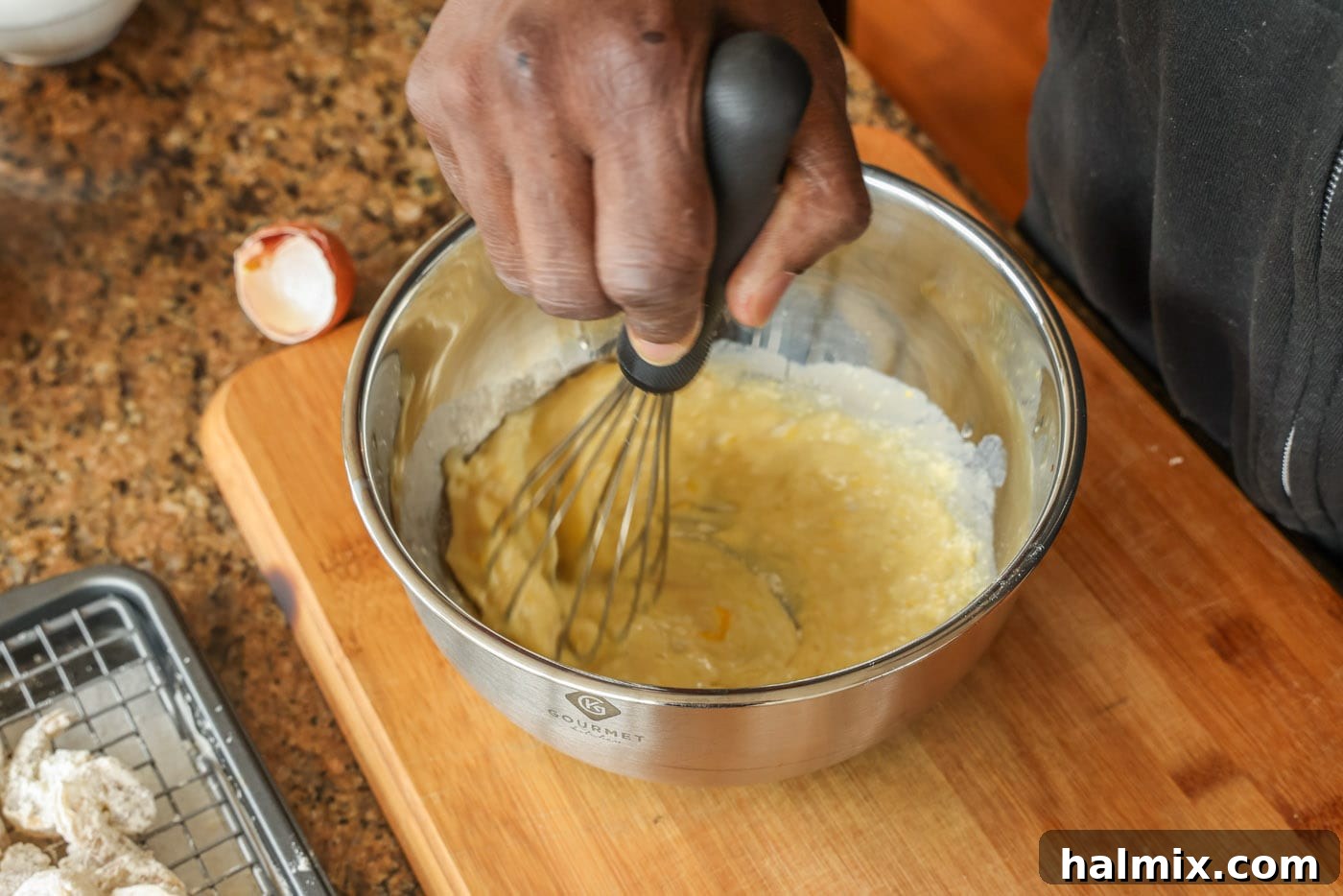
- Prepare the Egg Wash: In a medium bowl, whisk together the large egg and milk until well combined. This is your binding agent. Now, take 2 tablespoons of the all-purpose flour from your initial dredge and whisk it into the egg and milk mixture. This slight addition helps create a thicker, more adhesive wash, ensuring better coverage for the final breading.
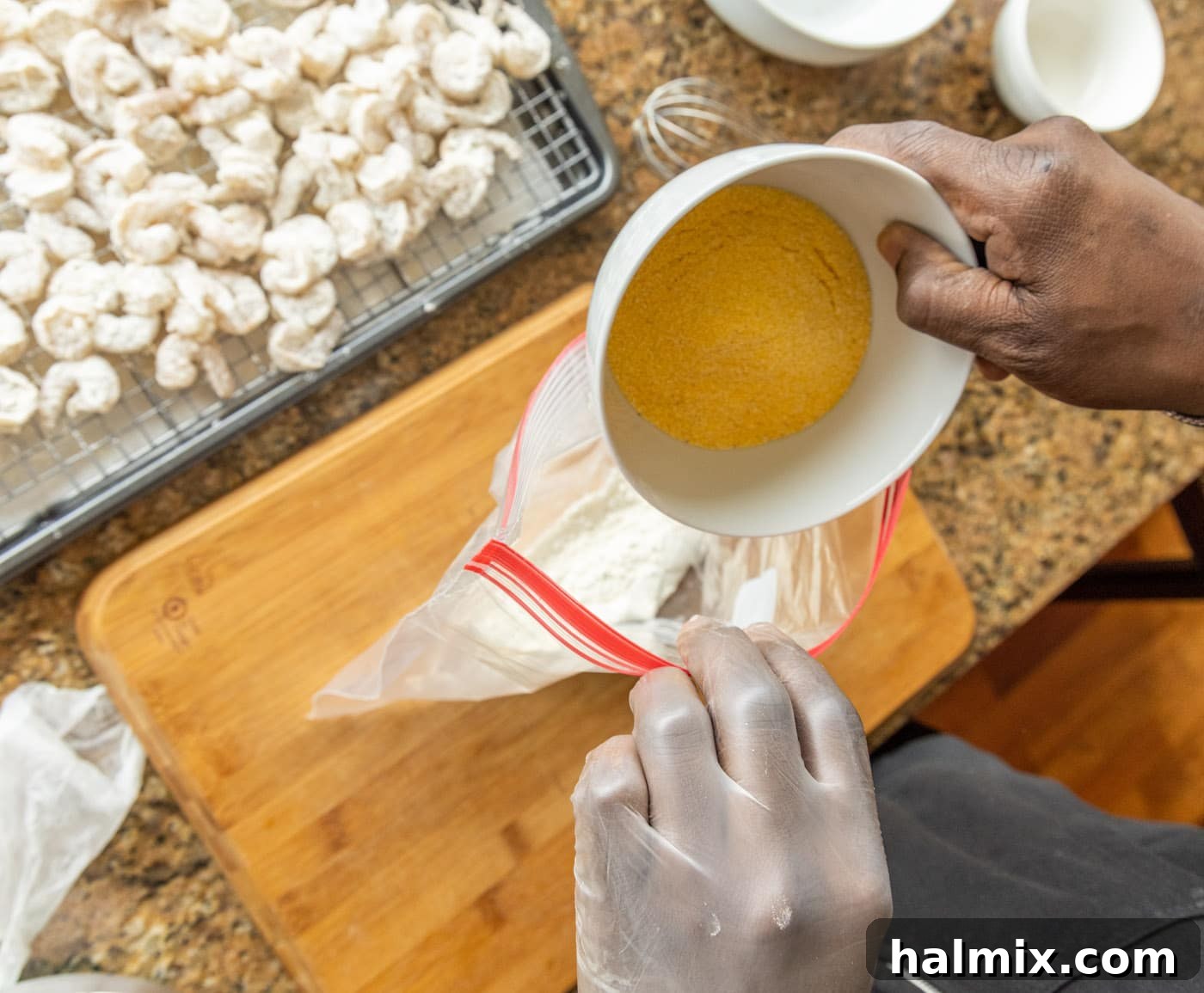
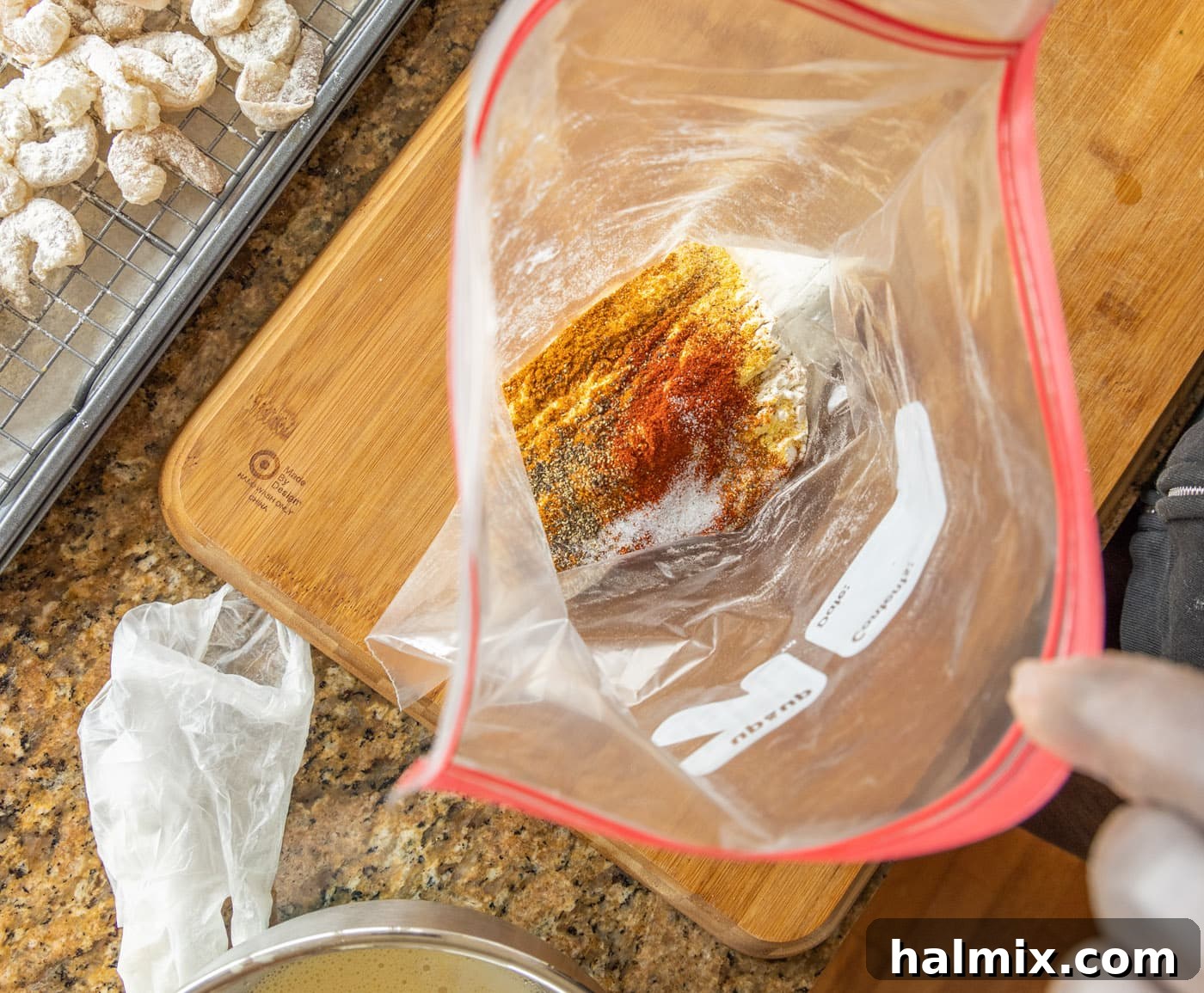
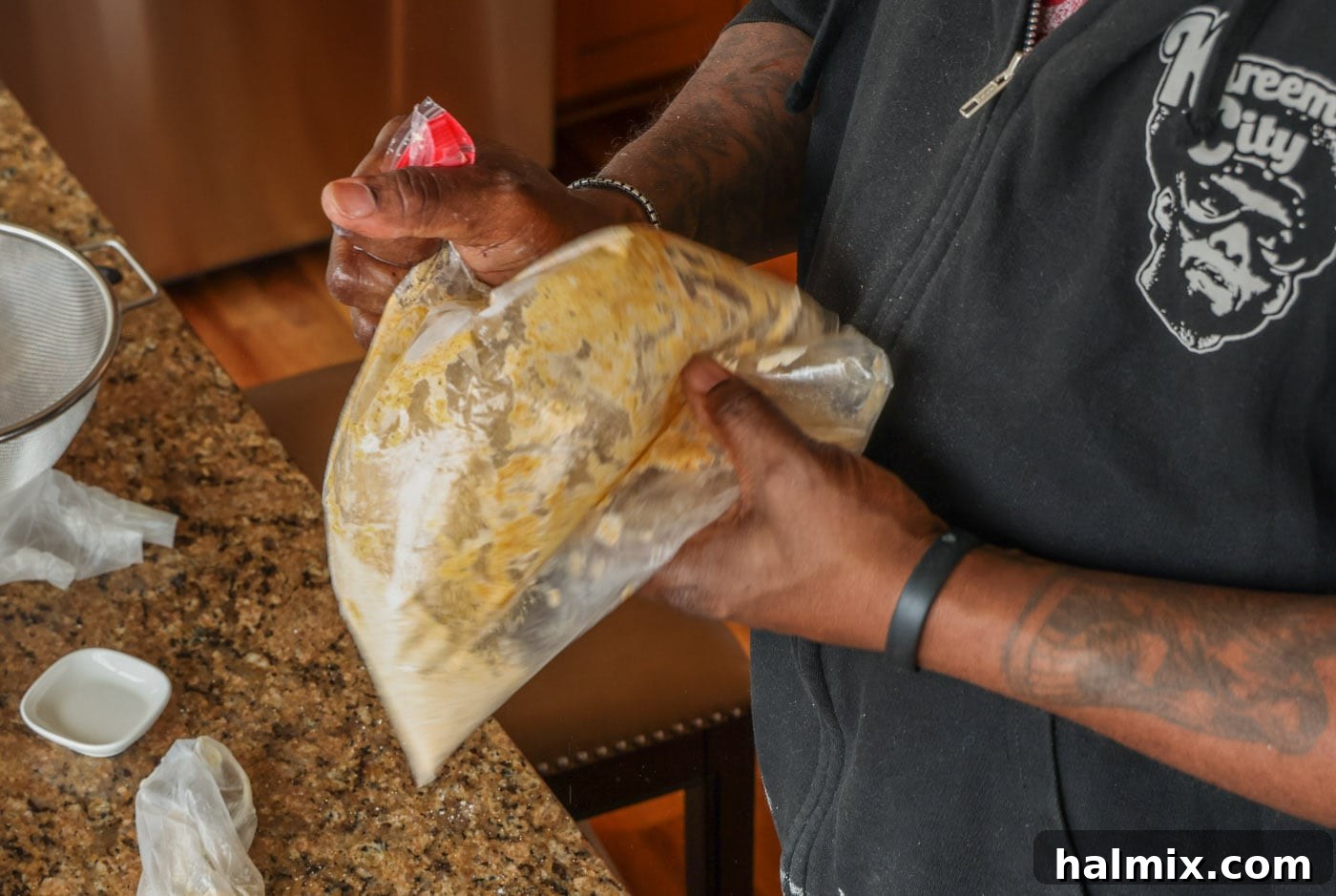
- Create the Seasoned Cornmeal Breading: In a separate shallow bowl or, preferably, a clean gallon-sized ziptop bag, combine the remaining all-purpose flour with the yellow cornmeal, Old Bay seasoning, black pepper, salt, and smoked paprika. Seal the bag (if using) and shake vigorously to thoroughly mix all the dry ingredients. This will be your final, flavorful crispy coating.
- Final Breading: Take a handful of the flour-dredged shrimp and dip them into the egg mixture, ensuring they are completely coated. Gently shake off any excess liquid. Immediately transfer these wet shrimp into the cornmeal/flour mixture. If using a bag, seal and shake to coat evenly. If using a bowl, toss gently. Ensure each shrimp is fully covered with the seasoned breading. Place the newly battered shrimp back onto a clean wire rack as you continue to bread the remaining shrimp. This separation prevents clumping and maintains crispiness.
- Heat the Oil: In a deep fryer or a large, heavy-bottomed pot (like a Dutch oven) over medium-high heat, heat your chosen frying oil (vegetable, canola, or peanut) to precisely 370°F (185°C). Use an instant-read thermometer to monitor the temperature closely. The amount of oil needed will depend on your equipment; ensure there’s enough to submerge the shrimp fully, but do not fill more than halfway to prevent overflow.
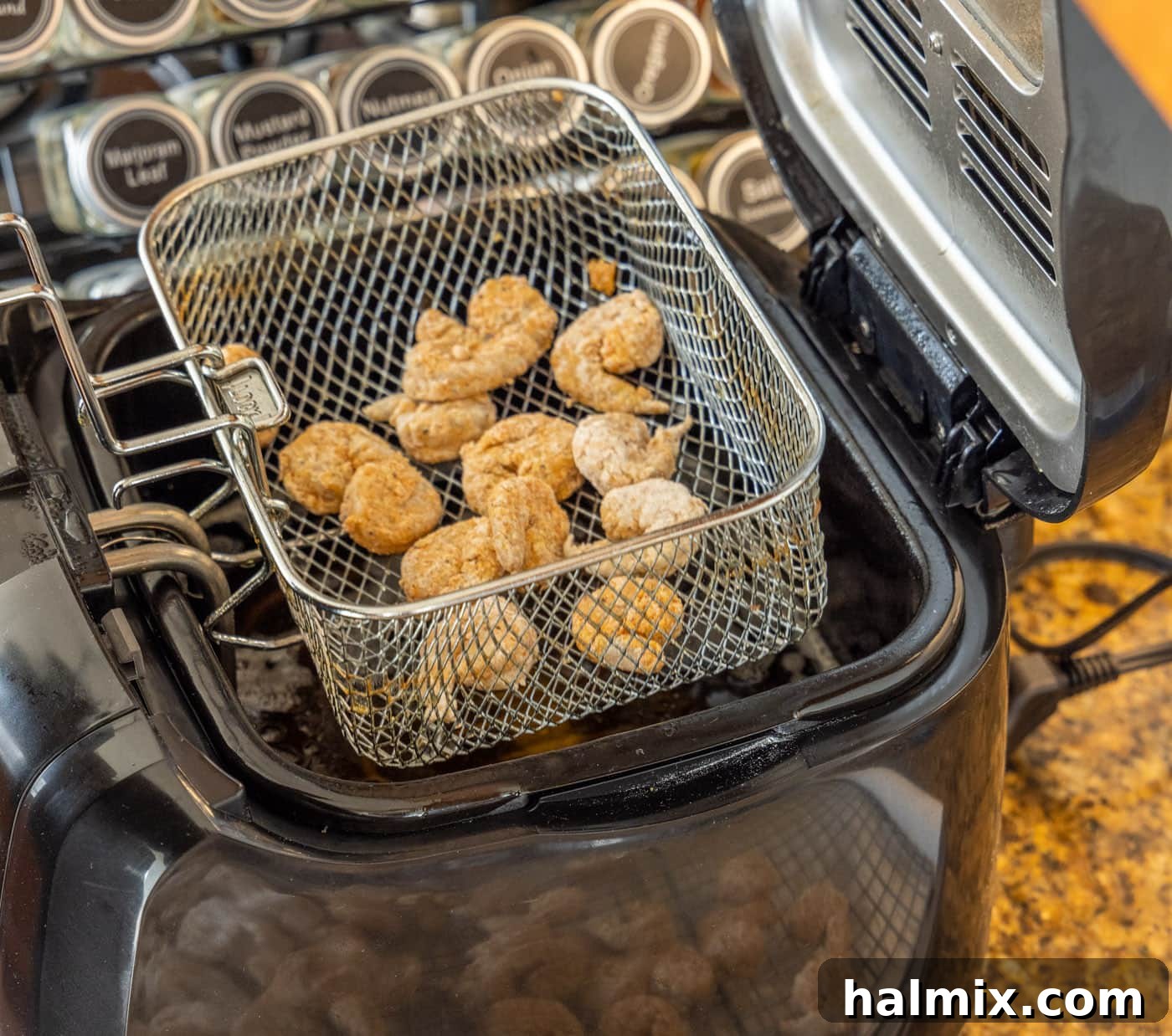
- Fry the Shrimp in Batches: Carefully place a batch of breaded shrimp into the deep fryer basket, ensuring not to overcrowd it. Overcrowding lowers the oil temperature dramatically, leading to soggy, oily shrimp. Fry the shrimp for approximately 2 minutes.
- Second Fry & Shake: After the initial 2 minutes, lift the basket and gently shake it to ensure the shrimp aren’t sticking together and to promote even browning. Replace the basket in the oil and continue to fry for another 2 minutes, or until the shrimp are golden brown and cooked through. The total cooking time should be around 4 minutes. Shrimp cook very quickly, so avoid overcooking, which can make them rubbery.
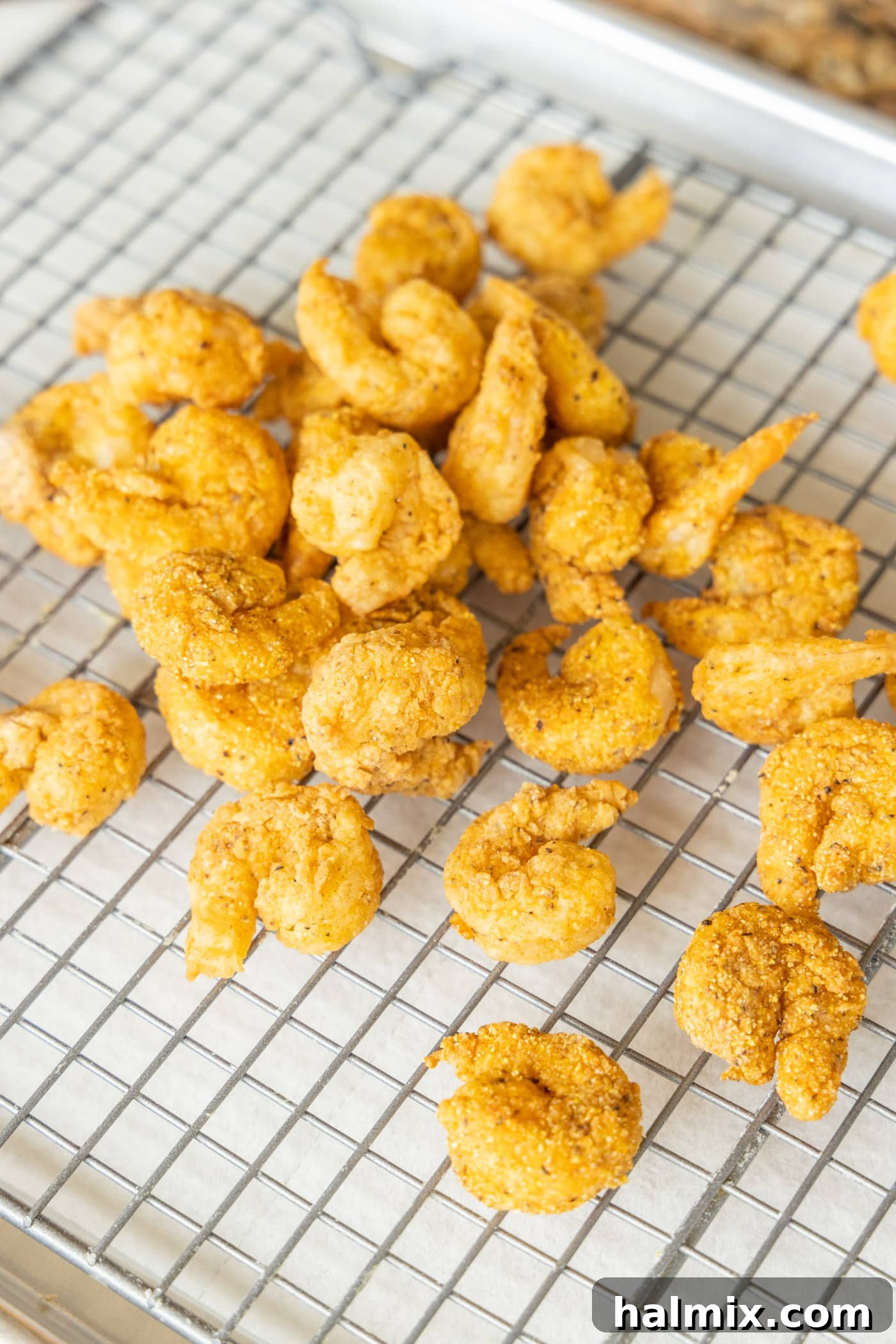
- Drain and Rest: Once perfectly golden and crispy, remove the basket from the oil and allow any excess oil to drain back into the fryer.
- Transfer and Cool: Transfer the cooked shrimp onto a clean, paper towel-lined baking pan. The paper towels will absorb any remaining oil, further ensuring maximum crispiness.
- Serve Warm: Allow the popcorn shrimp to cool slightly for a minute or two before serving. They are best enjoyed warm and fresh. Repeat steps 7-10 with any remaining shrimp, ensuring the oil returns to 370°F (185°C) between batches.
Frequently Asked Questions & Expert Tips for Popcorn Shrimp Success
Popcorn shrimp is undoubtedly at its peak when served immediately after frying. However, if you find yourself with leftovers, store them in an airtight container in the refrigerator for 2-3 days. To revive their crispiness, avoid the microwave, which will make them soggy. Instead, reheat them in an air fryer at 350°F (175°C) for 5-7 minutes, or in a preheated oven at 375°F (190°C) for 8-10 minutes, flipping halfway. Reheating them until they are heated through and the coating is crisp again is key. Be aware that the longer they are stored, the more difficult it will be to fully regain their original texture.
No deep fryer? No problem! A heavy-bottomed pot, such as a Dutch oven, or a large cast-iron skillet works perfectly for frying popcorn shrimp. The key is to use enough oil so that the shrimp can be fully submerged while frying. Heat the oil over medium-high heat and meticulously monitor the temperature with an instant-read thermometer, aiming for a consistent 370°F (185°C). The precise amount of oil will depend on the size and shape of your chosen pan, but typically 2-3 inches of oil is sufficient. Fry in small batches to maintain oil temperature and ensure even cooking.
While the classic method involves deep frying for that signature crispness, you can certainly bake or air fry popcorn shrimp for a lighter alternative. For air frying, preheat your air fryer to 375°F (190°C). Lightly spray the breaded shrimp with cooking spray and cook in a single layer for 8-12 minutes, flipping halfway, until golden and cooked through. For baking, preheat your oven to 400°F (200°C). Arrange the shrimp on a parchment-lined baking sheet, spray lightly with cooking oil, and bake for 15-20 minutes, flipping halfway, until golden. Keep in mind that while these methods will yield a crispy result, the texture will be slightly different from deep-fried shrimp.
Several factors contribute to breading adherence. First, ensure your shrimp are very dry after rinsing. Second, follow the three-step dredging process carefully: flour first (provides a dry surface), then egg wash (acts as a glue), then cornmeal breading (the final, crispy layer). Don’t rush these steps. Lastly, try not to overcrowd the frying pan, as this can lower the oil temperature and cause the breading to separate. Gentle handling of the breaded shrimp before and during frying is also important.
Smaller shrimp, often labeled as “medium” or “small” (e.g., 51-60 count per pound), are ideal for popcorn shrimp. Their size allows for quick cooking and a higher ratio of crispy coating to tender shrimp, perfectly fitting the “popcorn” concept. Always opt for raw shrimp over pre-cooked, as pre-cooked shrimp will become tough and rubbery when fried.
Serving Suggestions for Your Crispy Popcorn Shrimp
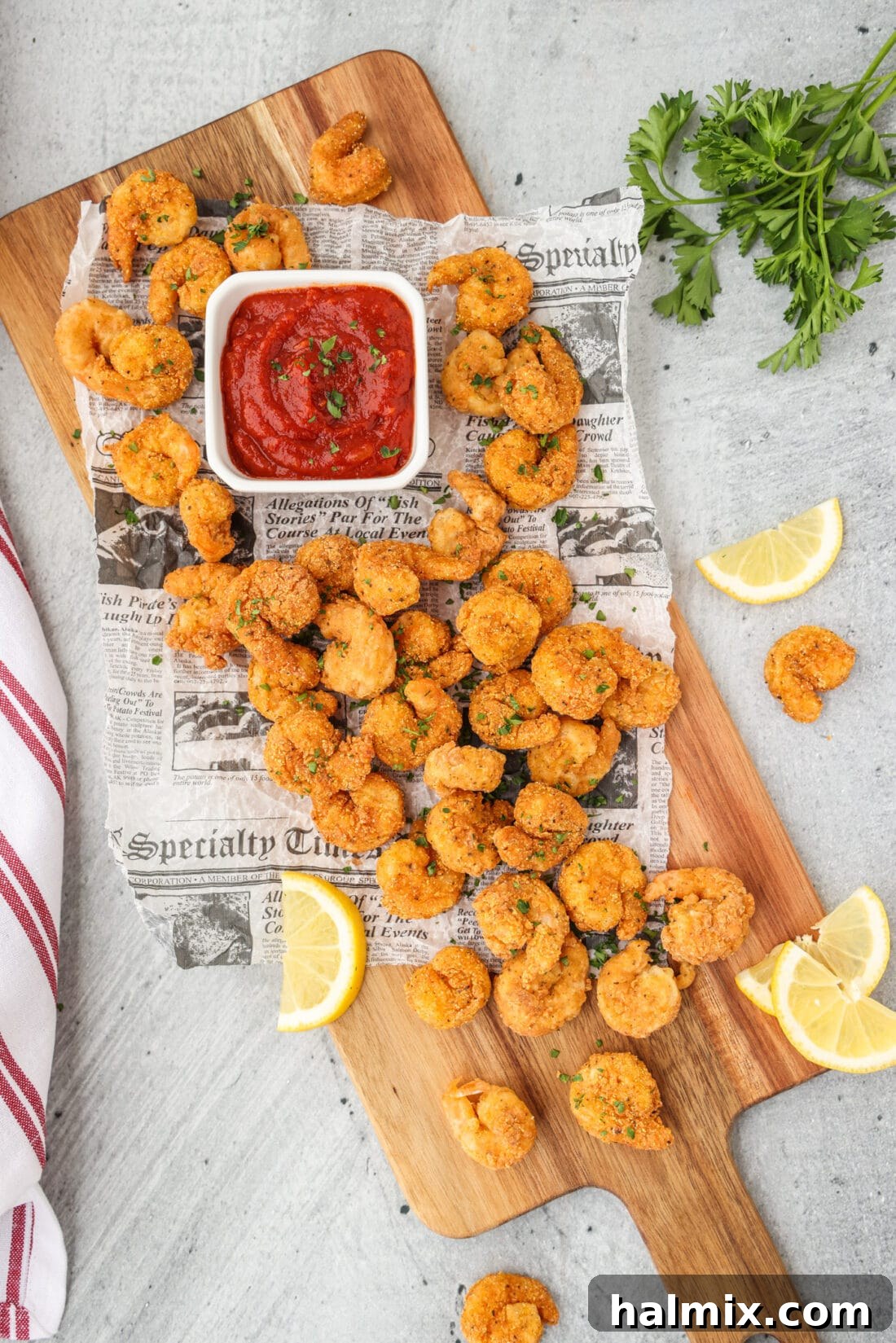
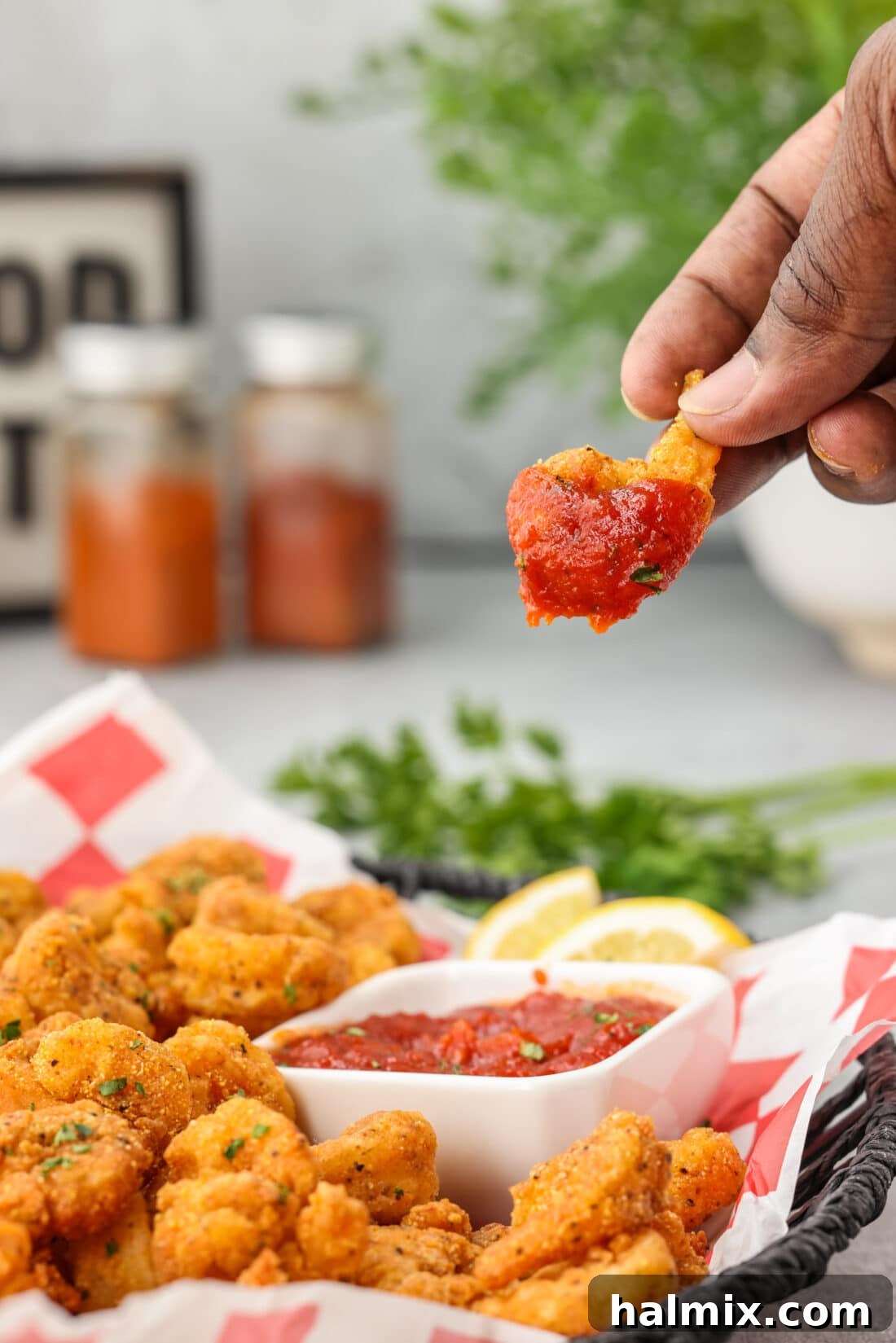
Once your irresistible homemade popcorn shrimp are ready, the fun continues with pairing them with the perfect dipping sauces and accompaniments. These versatile golden nuggets shine as a standalone appetizer but can also be easily transformed into a satisfying main course. For dipping, offer a variety of classic choices such as creamy remoulade, zesty cocktail sauce, tangy ranch dressing, or a rich marinara sauce. For a unique twist, try our Alabama white sauce, which adds a delightful peppery kick. Always serve with fresh lemon wedges on the side; a squeeze of lemon juice brightens the flavors and cuts through the richness of the fried shrimp. To round out a main course, consider serving your popcorn shrimp alongside crispy French fries, a fresh coleslaw, a light green salad, or a bed of fluffy rice. If you’re frying in batches, which is highly recommended to maintain oil temperature and prevent overcrowding, ensure already-fried shrimp are placed in a single layer on a paper towel-lined baking pan. Avoid stacking them while hot, as the trapped steam will quickly make them soggy, diminishing that wonderful crispiness you worked so hard to achieve.
Explore More Delicious Shrimp Recipes
If you’ve enjoyed making and tasting this popcorn shrimp, you’ll be thrilled to discover the diverse world of shrimp recipes. Shrimp is incredibly versatile, adaptable to countless cooking methods and flavor profiles. Here are some more of our favorite shrimp creations for you to explore:
- Shrimp Tacos
- Grilled Shrimp
- Shrimp Po Boy
- Air Fryer Shrimp
- Honey Walnut Shrimp
- Shrimp Scampi Pasta
- Citrus Pepper Shrimp
- Butterfly Shrimp
I genuinely love to bake and cook, and sharing my kitchen experiences and perfected recipes with all of you brings me immense joy! To ensure you never miss out on a delicious new creation, I offer a convenient newsletter delivered directly to your inbox every time a new recipe is posted. Simply subscribe here and start receiving your free daily recipes to inspire your next culinary adventure!
Popcorn Shrimp
Dredge the shrimp in flour followed by a mixture of egg and milk, and finally, cornmeal for that delicate crunchy bite. Lastly, pop them in the fryer until they’ve reached a crispy golden brown.
5 from 6 votes
IMPORTANT – There are often Frequently Asked Questions within the blog post that you may find helpful. Simply scroll back up to read them!
Print It
Pin It
Rate It
Course: Appetizer, Dinner
Cuisine: American
Servings: 8 servings
Total Time: 29 mins
Calories: 239
Author: Amanda Davis
Ingredients
- 2 pounds medium shrimp peeled and deveined, tails removed
- 1 cup all-purpose flour
- 1 cup yellow cornmeal
- 1 large egg
- ¾ cup milk
- 1 Tablespoon Old Bay seasoning
- 1 teaspoon black pepper
- 1 teaspoon salt
- 1 teaspoon smoked paprika
- vegetable oil for frying
Things You’ll Need
- Deep fryer
- Wire cooling racks
- Baking sheets
- Vinyl gloves
- Gallon sized ziptop bag
Before You Begin
- We used 2 pounds of shrimp that still had shells and tails and removed them ourselves. You can purchase peeled, deveined shrimp instead but may want to adjust the amount to 1.5 pounds or increase the batter ingredients.
- If you plan on doubling this recipe or all of your shrimp do not fit in the deep fryer at once, place the already fried shrimp on a paper towel-lined baking pan in a single layer to rest as you fry the others. Do not stack them while they are hot otherwise they will become soggy.
- If you don’t have a deep fryer, you can simply use a cast iron skillet to fry popcorn shrimp. Heat the oil to 370F gauged by an instant-read thermometer. The amount of oil you will need will vary on the size of your pan. Add enough oil so that the shrimp will be submerged when added.
Instructions
- Rinse shrimp and pat dry with paper towels.
- Dredge shrimp in flour, placing them on a wire rack as you work. You can do as we did and place the flour into a bag or you can use bowls as your dredging stations.
- Place egg and milk in a medium bowl. Remove 2 tablespoons of the flour and mix it with the egg and milk.
- To the remaining flour, add cornmeal, Old Bay, pepper, salt, and paprika.
- Dip a handful of the dredged shrimp into the egg mixture at a time and gently shake off excess. Then dip shrimp immediately into the cornmeal/flour mixture to coat. Place battered shrimp on a wire rack as you work.
- Heat oil in deep fryer to 370 F. Amount of oil should be per manufacturer’s instructions. You may need to cook in batches.
- Place shrimp into basket of deep fryer without crowding. Fry for 2 minutes.
- Lift basket and shake to ensure shrimp do not stick together. Replace basket in oil and fry for another 2 minutes.
- Remove basket and allow to drain.
- Dump cooked shrimp onto a paper towel lined baking pan.
- Allow to cool slightly before serving.
Nutrition
Serving: 1 serving (1/4 pound uncooked shrimp) | Calories: 239cal | Carbohydrates: 29g | Protein: 21g | Fat: 4g | Saturated Fat: 1g | Polyunsaturated Fat: 1g | Monounsaturated Fat: 1g | Trans Fat: 0.01g | Cholesterol: 169mg | Sodium: 952mg | Potassium: 264mg | Fiber: 2g | Sugar: 2g | Vitamin A: 413IU | Vitamin C: 0.1mg | Calcium: 103mg | Iron: 2mg
Tried this Recipe? Pin it for Later! Follow on Pinterest @AmandasCookin or tag #AmandasCookin!
The recipes on this blog are tested with a conventional gas oven and gas stovetop. It’s important to note that some ovens, especially as they age, can cook and bake inconsistently. Using an inexpensive oven thermometer can assure you that your oven is truly heating to the proper temperature. If you use a toaster oven or countertop oven, please keep in mind that they may not distribute heat the same as a conventional full sized oven and you may need to adjust your cooking/baking times. In the case of recipes made with a pressure cooker, air fryer, slow cooker, or other appliance, a link to the appliances we use is listed within each respective recipe. For baking recipes where measurements are given by weight, please note that results may not be the same if cups are used instead, and we can’t guarantee success with that method.