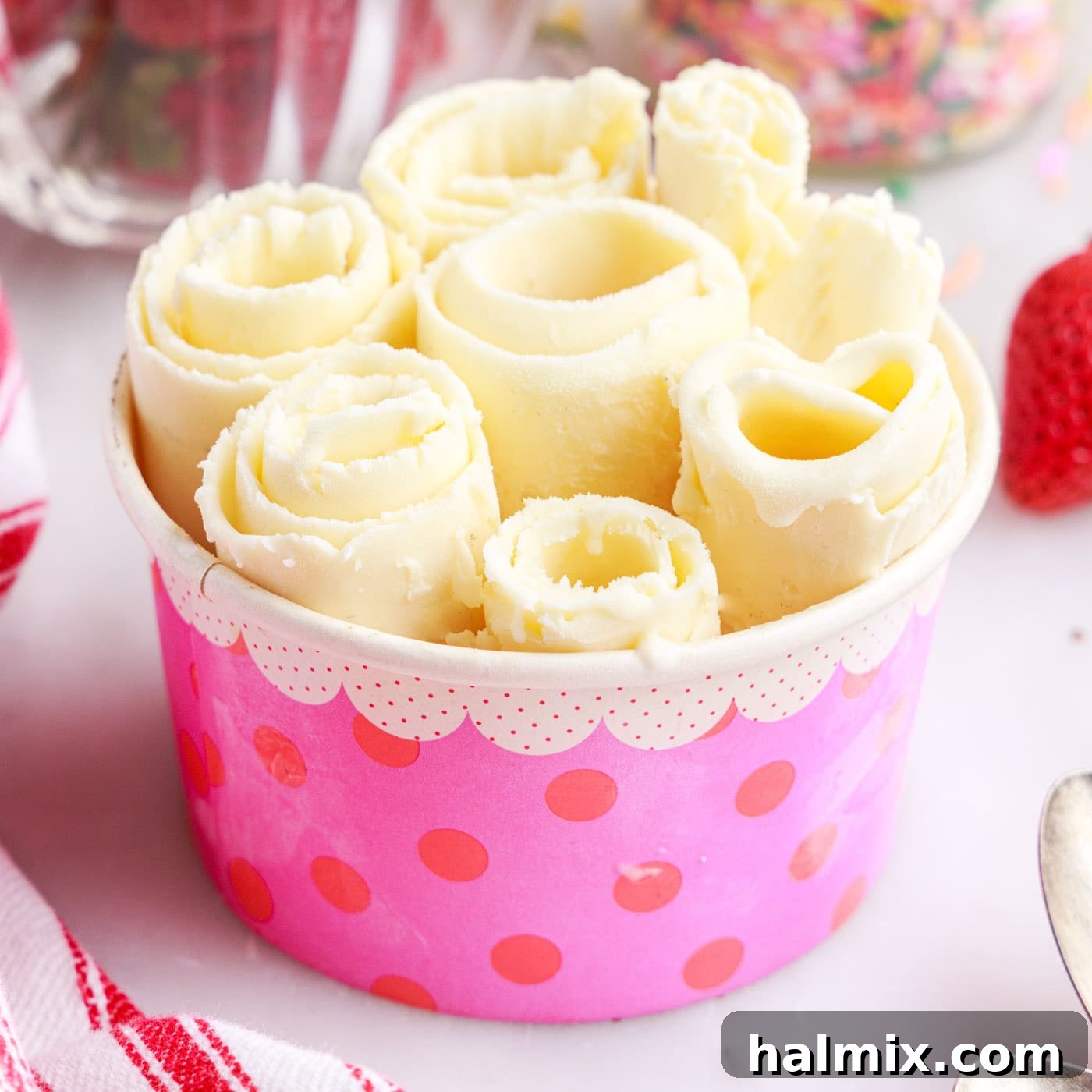
Unlock the delightful secret to crafting your very own rolled ice cream right in your kitchen! Our incredibly easy 4-ingredient vanilla rolled ice cream recipe provides the perfect creamy canvas for an endless array of delicious toppings, from vibrant fresh fruits to crunchy candies and rich sauces. Forget about expensive ice cream parlors or specialized equipment – with just a few basic ingredients and simple tools, you can create this mesmerizing frozen treat at home, impressing family and friends with your culinary flair.
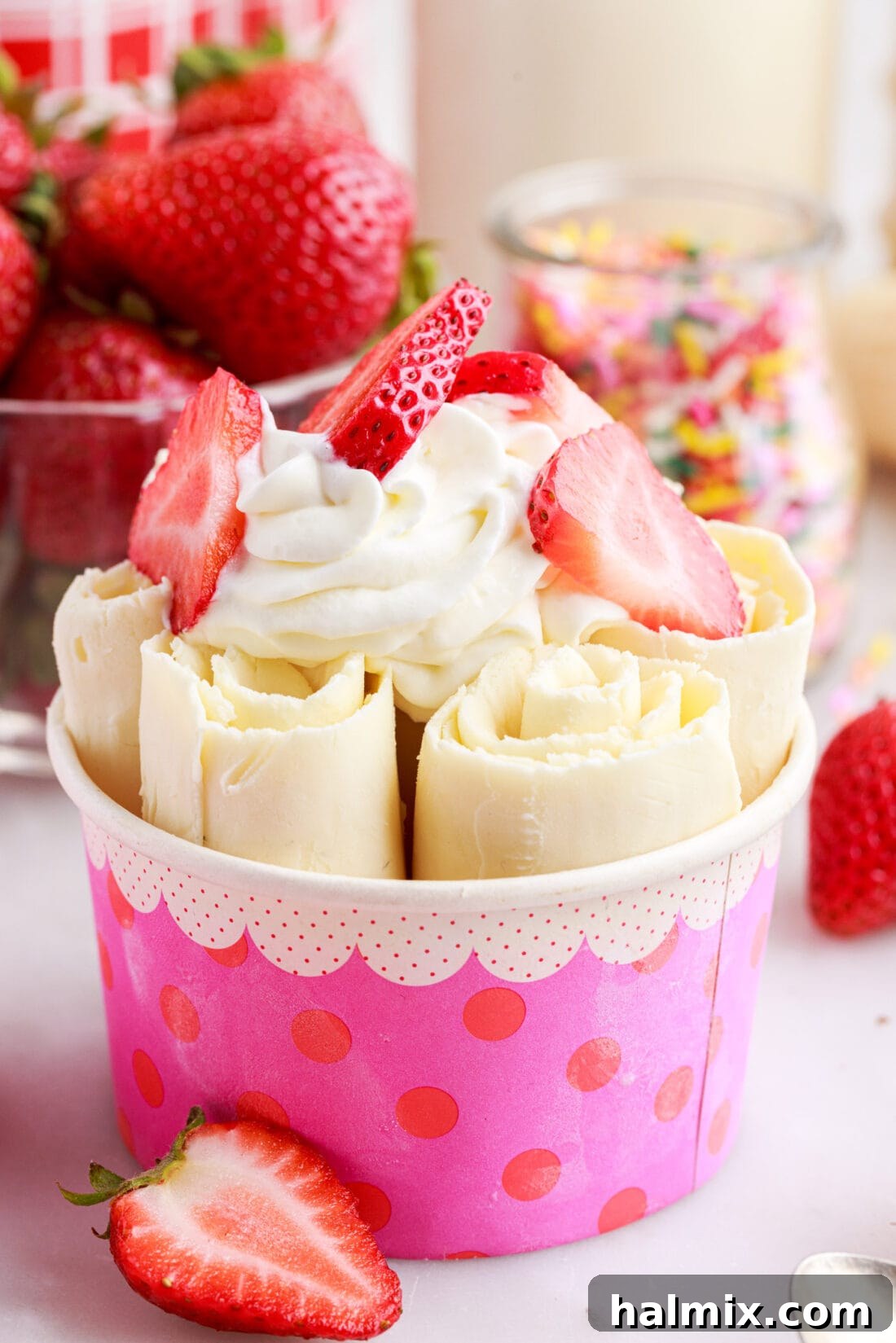
Why This Homemade Rolled Ice Cream Recipe Works So Well
The allure of rolled ice cream often comes with the misconception that it’s a difficult or inaccessible dessert to make outside of a professional setting. We’re thrilled to demystify the process and prove that homemade rolled ice cream is not only achievable but also incredibly rewarding. This recipe has been meticulously tested and refined to ensure consistent, perfect results, transforming what seems like a complex dessert into a simple kitchen project.
Our method is inspired by the simplicity of no-churn ice cream, meaning you won’t need an expensive ice cream maker. The magic truly happens with a few essential ingredients and basic kitchen staples you probably already have: a standard sheet pan, a whisk, and a couple of spatulas. The sweetness and much of the creamy texture come from sweetened condensed milk, eliminating the need for additional granulated sugar and helping prevent the formation of large, icy crystals. The result is an exceptionally creamy and delightfully softer ice cream compared to traditional churned varieties. It offers a unique and fun experience, allowing you to personalize each serving with creative toppings, making it an interactive dessert that’s perfect for any occasion.
Essential Ingredients for Perfect Rolled Ice Cream
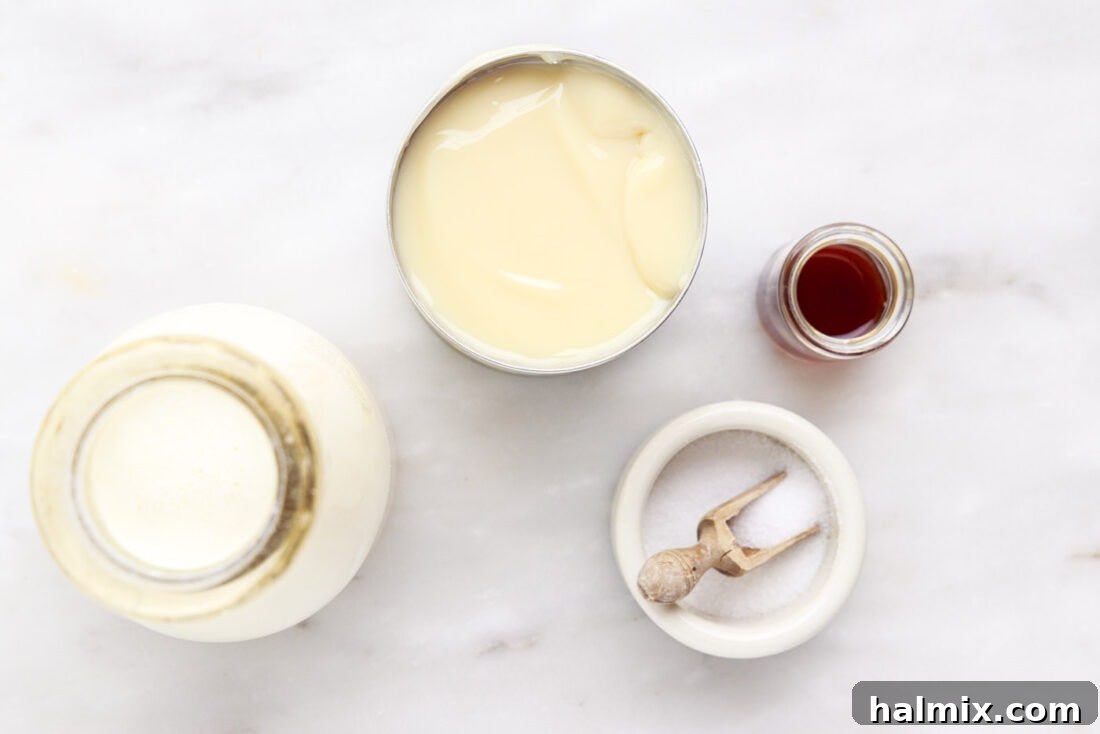
Crafting this irresistible vanilla rolled ice cream requires only four foundational ingredients. This minimalist approach not only simplifies the preparation but also highlights the quality of each component, contributing to the dessert’s delightful flavor and texture. You’ll find the precise measurements and detailed step-by-step instructions in the comprehensive recipe card located at the end of this post.
Understanding the Science: Ingredient Ratios and Substitution Suggestions
The success of your homemade rolled ice cream largely depends on achieving the correct balance between sweetened condensed milk and heavy cream. This particular ratio is incredibly important, especially when preparing a straightforward vanilla base without additional flavor mix-ins, as these two ingredients are the primary determinants of the final consistency. Here’s an in-depth look at each ingredient and crucial tips for success:
- Heavy Whipping Cream: This ingredient is the foundation of your ice cream’s rich and velvety texture. When chilled and whisked, it incorporates air, creating a stable and airy base that freezes beautifully. Always use heavy cream that is very cold to ensure it whips effectively and achieves the desired consistency for freezing.
- Sweetened Condensed Milk: This is the hero ingredient, providing all the necessary sweetness and acting as a crucial emulsifier. It contributes to the ice cream’s signature smooth, soft texture and inhibits the formation of large, undesirable ice crystals. Be aware that different brands of sweetened condensed milk may have slight variations in thickness, which can subtly influence the final texture of your rolled ice cream.
- Pure Vanilla Extract: For that classic, comforting vanilla essence, pure vanilla extract is indispensable. While imitation vanilla can be used, pure extract offers a richer, more authentic flavor profile. Don’t hesitate to experiment with other extracts like almond, peppermint, coconut, or even a hint of espresso for exciting flavor variations.
- Sea Salt: A small pinch of sea salt might seem insignificant, but it’s a powerful flavor enhancer. It cleverly balances the sweetness of the condensed milk and deepens the overall flavor complexity, making the vanilla taste even more prominent and delicious.
Mastering the Texture: Troubleshooting Tips
The ideal rolled ice cream should be firm enough to be cleanly lifted and rolled, yet pliable enough to bend without cracking. If you find your ice cream mixture is too soft, melting into a puddle on the pan despite ample freezing time, it suggests you need to increase the proportion of heavy cream (or slightly reduce the sweetened condensed milk). Conversely, if the ice cream is overly brittle and shatters or breaks when you attempt to roll it, you likely need a greater portion of sweetened condensed milk to achieve a more flexible consistency. Remember, achieving perfection sometimes takes a little trial and error, and that’s part of the fun!
Should you need to adjust the ingredient proportions, there’s no need to discard your batch. Simply remove the sheet pan from the freezer for a few minutes to allow the mixture to soften slightly. Scrape the semi-frozen base back into your mixing bowl, make your adjustments (adding more cream for firmness or more condensed milk for pliability), whisk thoroughly until uniform, and then re-spread it onto your thoroughly chilled pan to refreeze. This flexibility allows you to fine-tune your recipe until it’s absolutely perfect.
Step-by-Step Guide to Crafting Rolled Ice Cream at Home
These step-by-step photos and instructions are designed to guide you through the process of making this incredible dessert. For a comprehensive printable version of this recipe, including exact measurements and nutritional information, please scroll down to the recipe card below.
- Prepare Your Freezing Surface: Begin by placing a full-size sheet pan with rimmed edges into your freezer. It’s crucial to ensure there is ample, level space for the pan to rest undisturbed. Allow the pan to chill thoroughly for at least 15 minutes, or ideally several hours in advance. A super-cold pan is the secret weapon for rapid freezing and successful rolling.
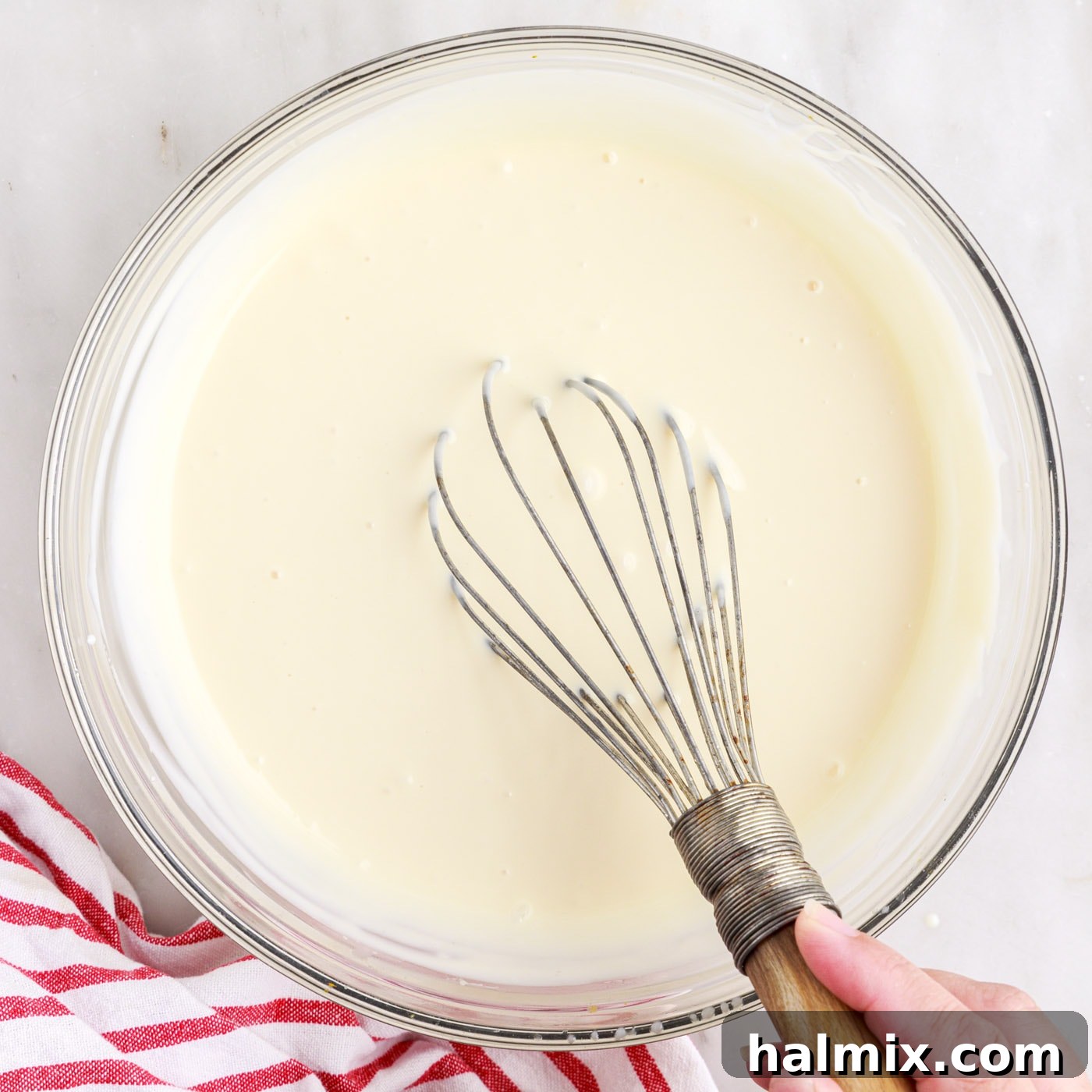
- Combine the Cream Base: In a large mixing bowl, thoroughly whisk together all four ingredients: the cold heavy whipping cream, sweetened condensed milk, pure vanilla extract, and sea salt. Continue whisking until the mixture is smooth, uniform, and slightly thickened.
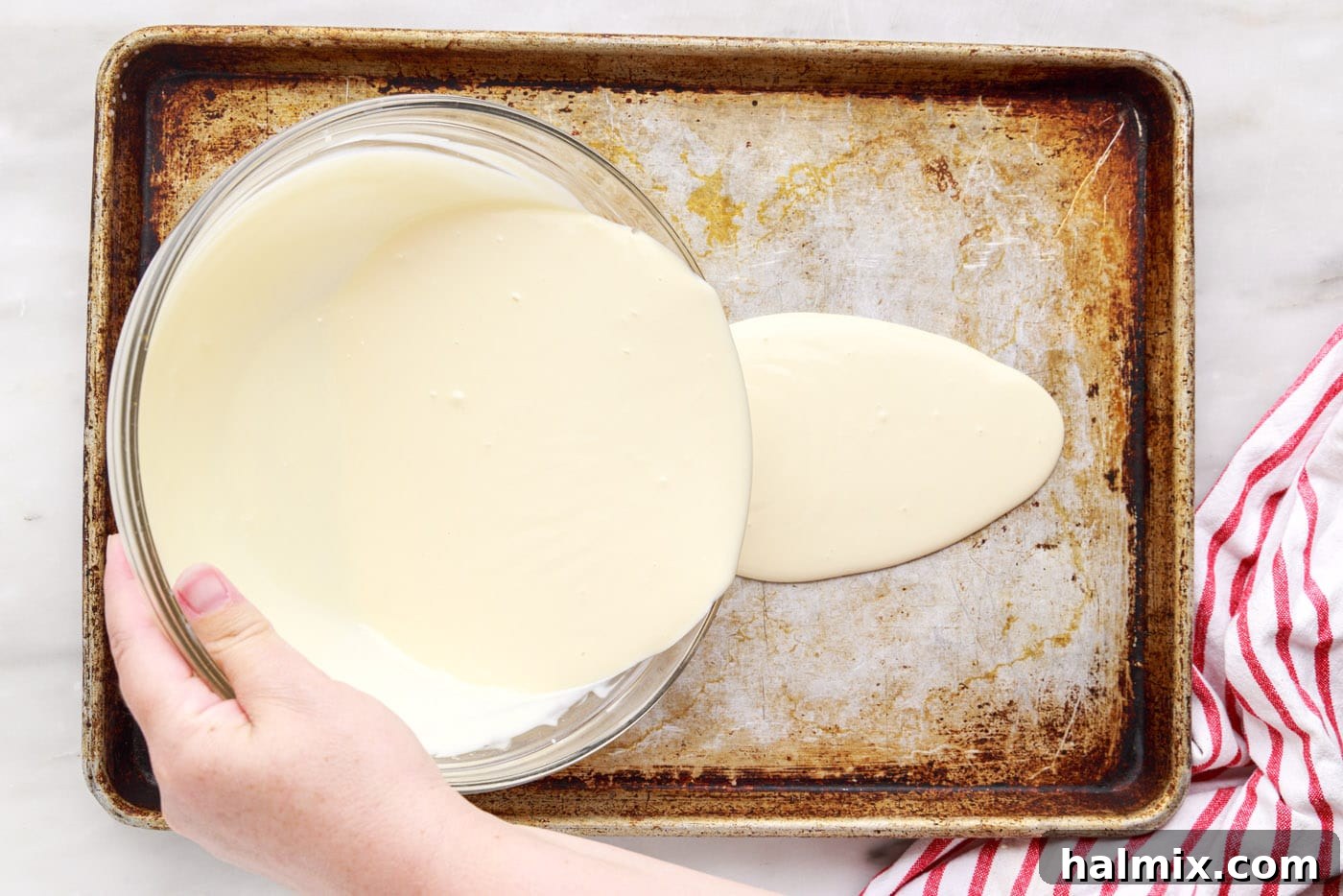
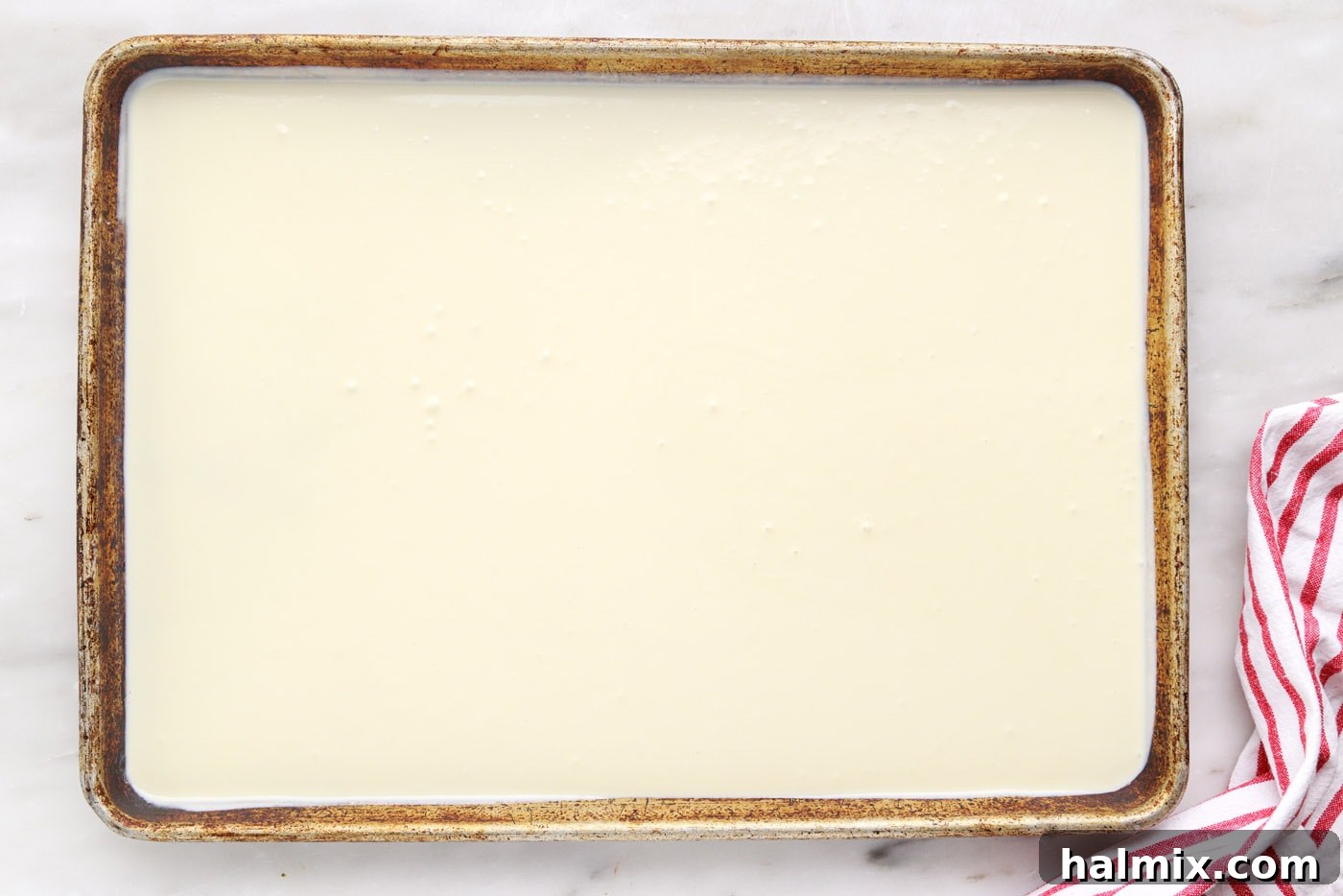
- Spread into a Thin Layer: Carefully retrieve the deeply chilled pan from the freezer. Pour the whisked cream mixture onto the center of the pan. Using a large icing spatula or an offset spatula, swiftly and evenly spread the mixture across the entire bottom surface of the sheet pan. The goal is a very thin, smooth layer – approximately 1/8 inch thick, or even thinner if you can manage. The thinner the layer, the faster it will freeze and the easier it will be to roll.
- Freeze Until Solid: Place the pan with the thinly spread ice cream mixture back into the freezer. Allow it to freeze undisturbed for at least 2-3 hours, or until it becomes completely solid and firm to the touch. This firm consistency is absolutely essential for successful rolling.
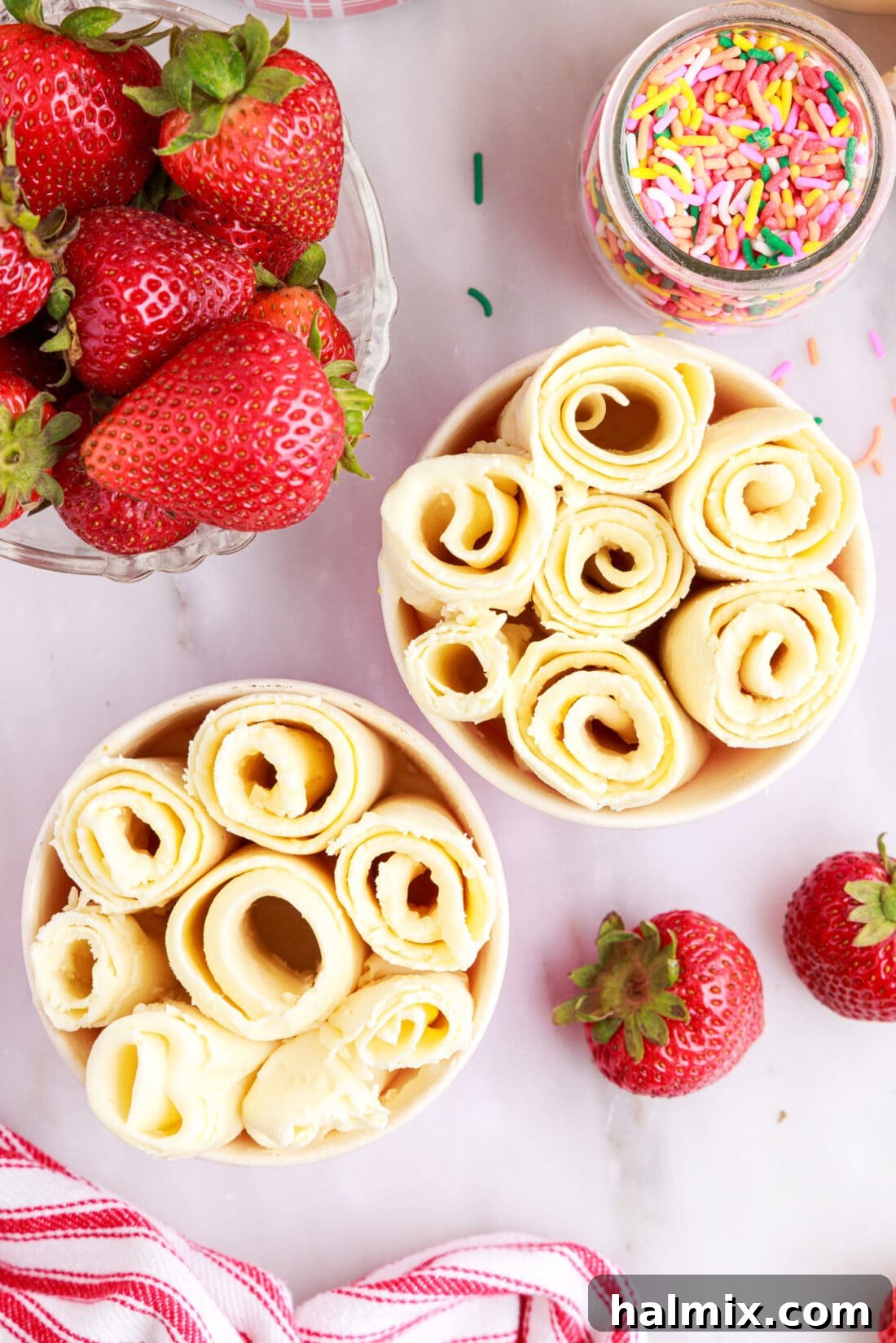
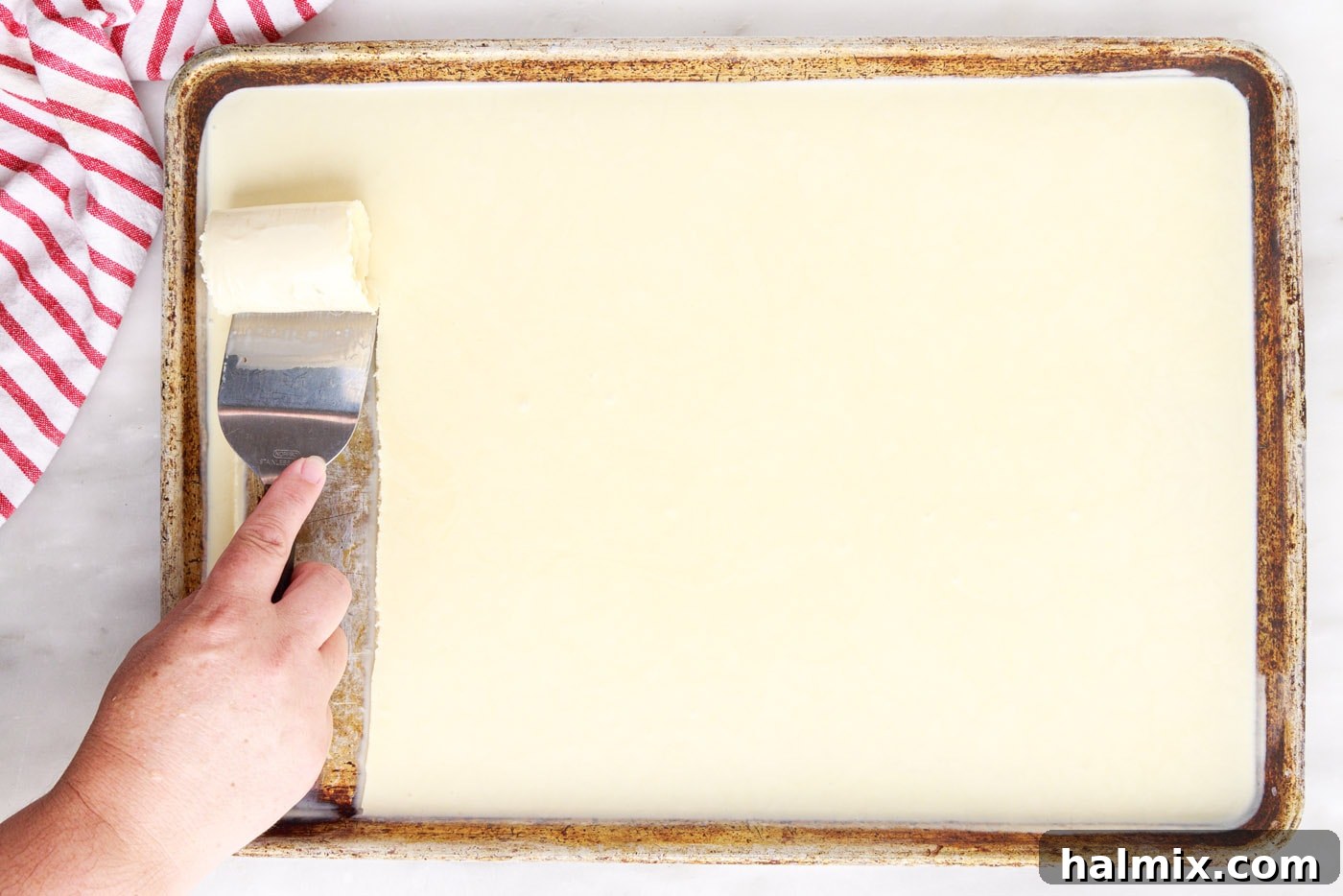
- Roll and Serve: This step requires speed and confidence! Remove the pan from the freezer. Working very quickly with a 3-inch wide straight spatula (a clean paint scraper or a sturdy bench scraper can also work wonders), position the spatula at a slight angle (around 45 degrees) near one edge of the frozen ice cream. Gently but firmly lift the edge, then glide your spatula across the pan with consistent pressure, pushing forward to create beautiful, tight rolls of ice cream. Immediately transfer these delicate rolls into individual paper cups or dessert bowls for serving.
Troubleshooting and Expert Tips for Rolled Ice Cream Success
Homemade rolled ice cream can be stored in the freezer for up to one month. To store, you have a couple of options: you can either cover the entire sheet pan tightly with plastic wrap before freezing, or you can roll the ice cream as instructed and then transfer the individual rolls into an airtight container. Storing them already rolled can be convenient for quick serving later.
The great news is that you can use any size metal pan, as long as it has a rim! For home use, quarter sheet pans (roughly 9×13 inches) are often a popular choice because they are easy to maneuver and fit well in most standard freezers. The critical factor is to pour only enough of the liquid base mixture into the pan to spread a very thin, solid layer – in our experiments, there was no such thing as “too thin” for easy rolling. You can freeze, roll one batch, and then repeat the process with the remaining liquid base, storing it in the refrigerator in between pours. Using smaller pans often allows for more manageable batches, which can be particularly helpful if you’re working in a warmer kitchen environment or have limited freezer space.
Several factors can influence the freezing and rolling success of your ice cream. Firstly, ensure your pan is extremely cold – a longer chilling time (several hours) in the freezer is always beneficial. Secondly, the thickness of your ice cream layer is paramount; it must be spread very thinly. If the layer is too thick, it won’t freeze evenly or quickly enough, leading to soft spots. Thirdly, environmental factors, such as a hot or humid kitchen, can significantly hinder the process. If your indoor temperature is too warm, the ice cream will begin to melt too rapidly to form proper rolls. Always work quickly in the coolest possible environment, and consider chilling your spatulas before use. As discussed in the Ingredient Ratios section, the precise balance of heavy cream to condensed milk is also fundamental for achieving the ideal rollable consistency.
Absolutely! While this recipe focuses on a pure vanilla base, you can certainly incorporate other flavors. For example, you could whisk in a tablespoon of cocoa powder for chocolate rolled ice cream, or a few drops of food coloring and a fruit extract for a colorful, fruity base. If adding small, finely chopped mix-ins like crushed cookies or fruit bits into the liquid base, ensure they are very small so they don’t impede the spreading or rolling process. Larger mix-ins are best added as toppings after the ice cream has been rolled.
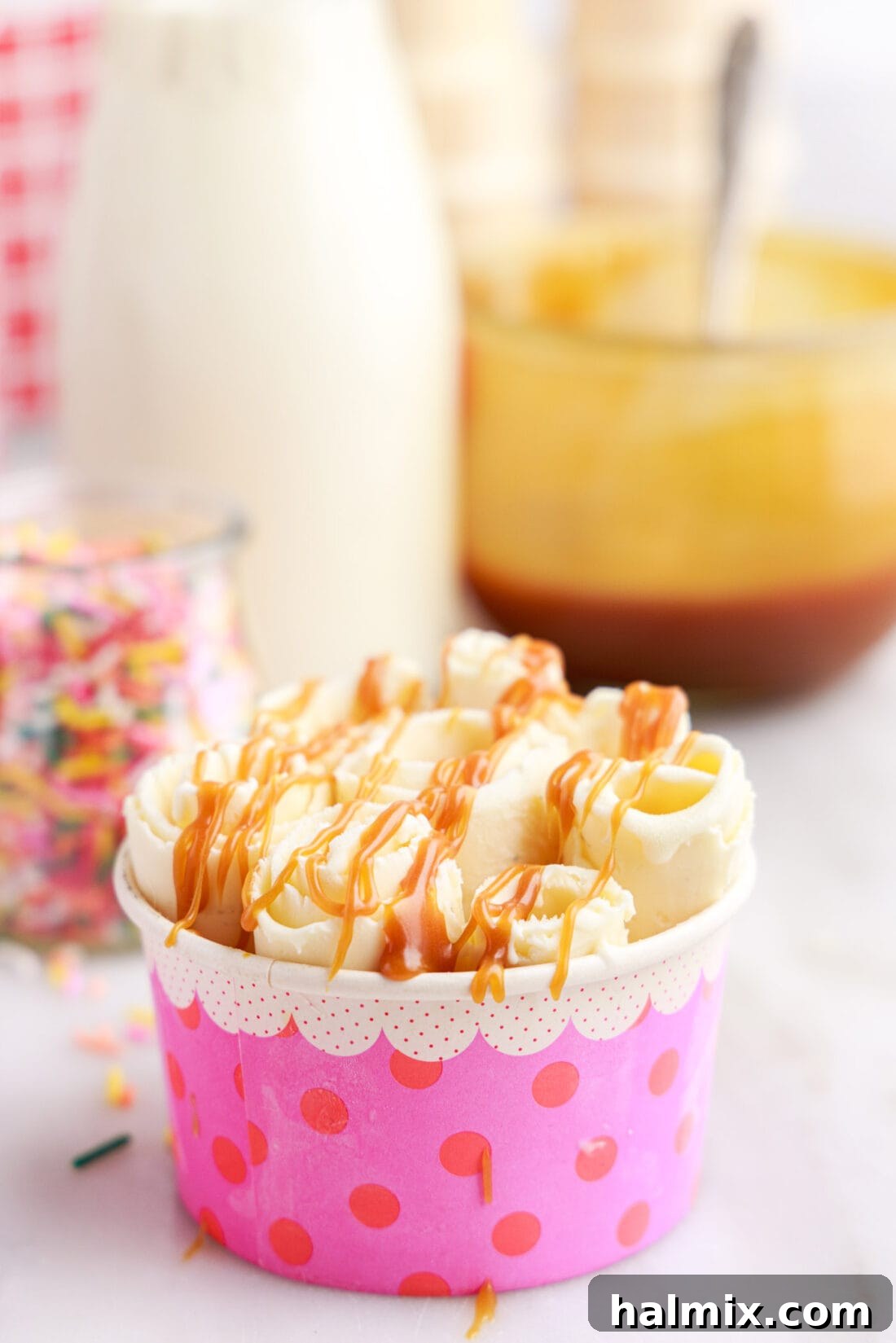
Unleash Your Creativity: Topping Ideas and Serving Suggestions
One of the most thrilling and enjoyable aspects of making rolled ice cream is the opportunity to customize each serving with an almost infinite variety of toppings. Our straightforward vanilla base serves as the perfect neutral canvas, allowing your culinary imagination to run wild! Here are some categories and inspiring ideas to help you create your ultimate rolled ice cream masterpiece:
- Fresh & Fruity: Enhance the natural sweetness with sliced strawberries, plump blueberries, tangy raspberries, sweet banana slices, exotic kiwi, juicy mango chunks, or a vibrant medley of your favorite seasonal berries.
- Crunchy & Textural: Add an exciting textural contrast with crushed cookies (like Oreos or graham crackers), finely chopped nuts (peanuts, walnuts, almonds, pecans), mini pretzels for a salty-sweet kick, a sprinkle of granola, or even colorful breakfast cereals such as Fruity Pebbles for a playful, nostalgic touch.
- Sweet & Decadent: Indulge your sweet tooth with mini chocolate chips, elegant chocolate shavings, crumbled pieces of your favorite candy bars (Snickers, Kit Kat, Reese’s Peanut Butter Cups), chewy gummy bears, fluffy mini marshmallows, or a shower of colorful sprinkles.
- Rich Sauces & Syrups: Drizzle generously with warm chocolate fudge, luxurious caramel sauce, bright raspberry or strawberry syrups, a swirl of creamy peanut butter, or even a shot of freshly brewed espresso for an elegant affogato-like experience.
- Creamy & Complementary: Finish with a dollop of freshly whipped cream, a spoonful of your favorite fruit preserves, or a smooth swirl of Nutella for an extra layer of richness.
It’s important to remember that rolled ice cream melts relatively quickly due to its softer consistency and larger exposed surface area. Therefore, working swiftly when rolling and adding your desired toppings is key. Always keep the prepared rolls in the freezer until just before serving to maintain their ideal texture and prevent premature melting. If you reside in a particularly hot or humid climate, or if your indoor temperature isn’t consistently cool, you might find the rolling process a bit more challenging. However, don’t let this deter you – practice makes perfect, and the utterly delicious and personalized reward is always worth the effort!
Explore More Ice Cream Recipes
If you’ve thoroughly enjoyed the experience of making this homemade rolled ice cream, we invite you to delve into our collection of other delightful and easy-to-make ice cream creations:
- Classic No-Churn Ice Cream
- Rich Homemade Chocolate Ice Cream
- Decadent Rocky Road Ice Cream
- Creamy Peanut Butter Chocolate Chip Ice Cream
- Refreshing Homemade Mint Chocolate Chip Ice Cream
I genuinely love to bake and cook, and it brings me immense joy to share my kitchen experiences and perfected recipes with all of you! Remembering to come back each day for new ideas can be tough, which is why I offer a convenient newsletter delivered directly to your inbox every time a new recipe is posted. Simply subscribe here and start receiving your free daily dose of delicious inspiration!
Vanilla Rolled Ice Cream Recipe

Recipe Summary
Master the art of homemade rolled ice cream! This perfected recipe uses just a handful of ingredients and basic kitchen equipment like a sheet pan, whisk, and spatulas, ensuring a creamy and delicious result every time. Perfect for customizing with your favorite toppings!
Course: Dessert | Cuisine: American | Servings: 4 servings | Prep Time: 5 mins | Freeze Time: 3 hrs | Total Time: 3 hrs 5 mins | Calories: 532 kcal
Author: Amanda Davis
Ingredients
- 2 cups heavy whipping cream
- ½ cup sweetened condensed milk
- ¼ teaspoon sea salt
- 1 ½ teaspoons pure vanilla extract
Equipment Needed
- Sheet pan (full size, rimmed)
- Whisk
- Large Mixing bowl
- 3″ wide straight spatula (or bench scraper)
- Icing spatula (optional, for spreading)
Instructions
- Prior to preparing ingredients, place a full-size sheet pan with rimmed edges into the freezer. Ensure there is ample space for the sheet pan to sit level. Allow the pan to chill in the freezer for at least 15 minutes, up to several hours in advance.
- Whisk together all of the ingredients (heavy whipping cream, sweetened condensed milk, sea salt, and vanilla extract) in a large bowl until well combined and smooth.
- Pour the mixture into the prepped, chilled pan. Use a large icing spatula or an offset spatula to spread the cream mixture evenly across the entire bottom of the sheet pan, forming a very thin, smooth layer (approximately 1/8 inch thick, or thinner if possible).
- Freeze for at least 2-3 hours, or until the ice cream is completely solid and firm.
- Working quickly with a 3-inch wide straight spatula, gently lift the edge of the frozen ice cream. Then, glide your spatula across the sheet pan with firm, consistent pressure to create beautiful rolls of ice cream. Immediately transfer the rolls into paper cups or bowls for serving.
Important Notes & Tips Before You Begin
- The ratio of sweetened condensed milk to heavy cream is critical for the right texture. If the ice cream is too soft and melts before rolling, add more heavy cream (or less condensed milk). If it’s brittle and breaks, add more sweetened condensed milk. Different brands may vary slightly.
- If adjustments are needed, let the pan soften slightly, scrape the mixture back into a bowl, adjust ingredients, whisk, and re-spread onto a chilled pan.
- Any size metal, rimmed pan works. Quarter sheet pans are great for smaller batches. Spread a thin layer, freeze, roll, and repeat, storing the remaining liquid base in the refrigerator between uses.
- No-churn ice cream is naturally softer than traditional ice cream. Work quickly when rolling and decorating, and keep rolls in the freezer until ready to serve to prevent melting.
Nutrition Information (per serving)
Serving: 1 serving | Calories: 532 kcal | Carbohydrates: 24g | Protein: 6g | Fat: 46g | Saturated Fat: 29g | Polyunsaturated Fat: 2g | Monounsaturated Fat: 12g | Cholesterol: 147mg | Sodium: 226mg | Potassium: 257mg | Sugar: 24g | Vitamin A: 1851IU | Vitamin C: 2mg | Calcium: 187mg | Iron: 0.2mg
Tried this Recipe? Pin it for Later!
Follow on Pinterest @AmandasCookin or tag #AmandasCookin!
The recipes on this blog are typically tested with a conventional gas oven and gas stovetop. It’s important to acknowledge that some ovens, particularly as they age, can cook and bake inconsistently. Using an inexpensive oven thermometer can help verify that your oven is truly heating to the proper temperature. If you opt to use a toaster oven or a countertop oven, please keep in mind that these appliances may not distribute heat in the same manner as a conventional full-sized oven, and you may need to adjust your cooking or baking times accordingly. In the case of recipes prepared with a pressure cooker, air fryer, slow cooker, or other specialized appliance, a link to the specific appliance we use is generally provided within each respective recipe. For baking recipes where measurements are given by weight, please note that the results may not be identical if cups are used instead, and we cannot guarantee success with volumetric measurements for those specific recipes.