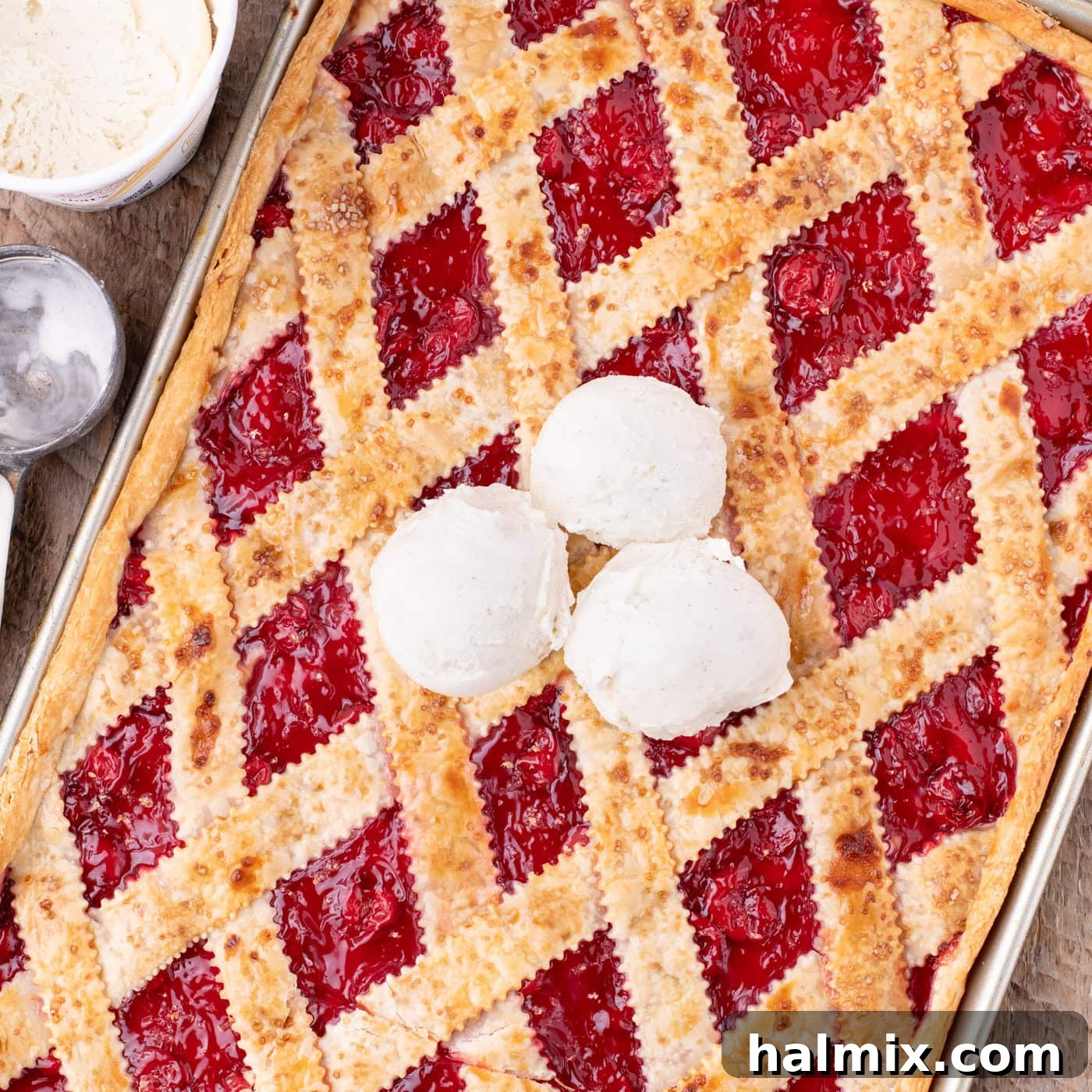
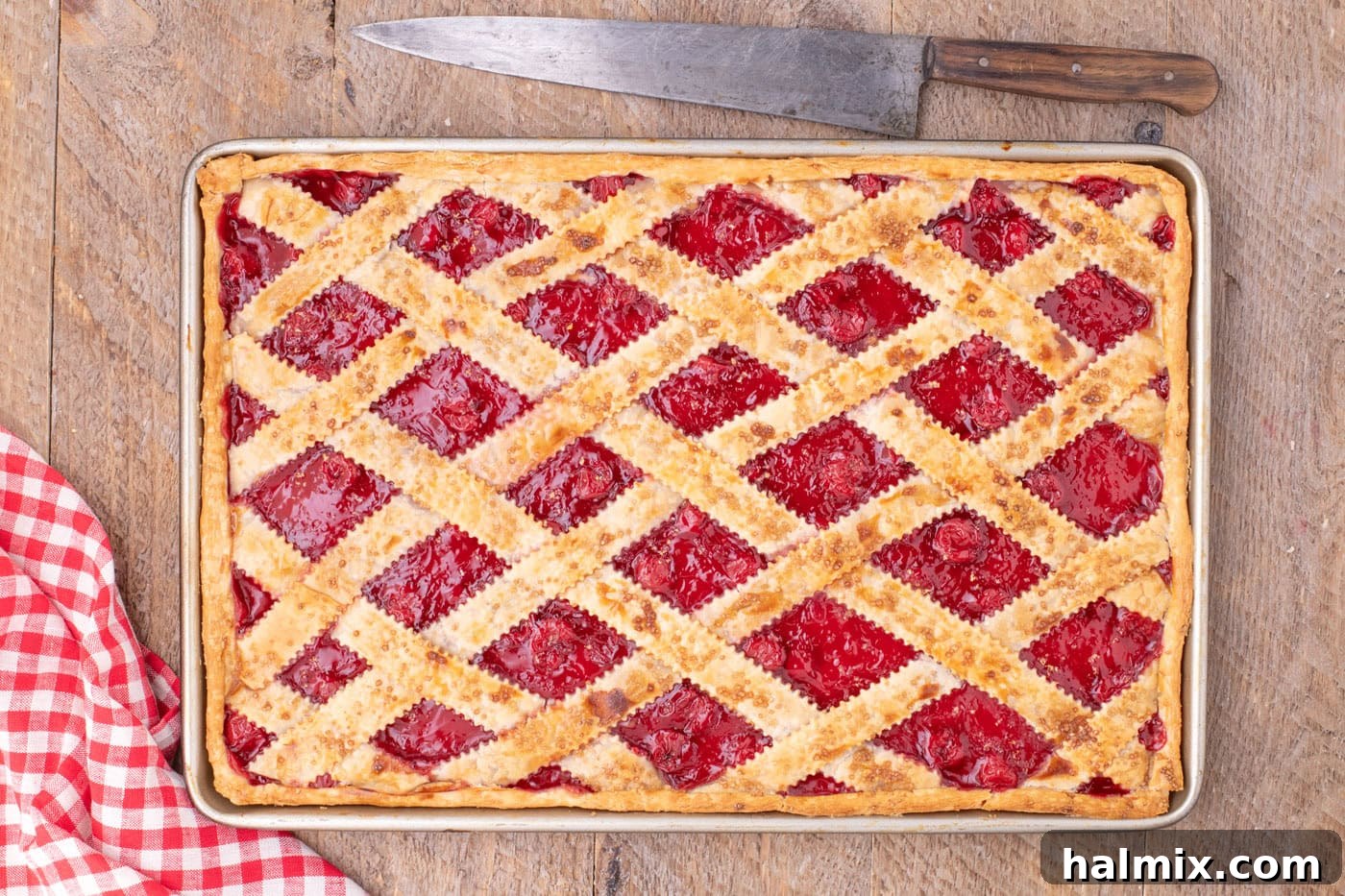
Indulge in the heartwarming delight of a classic American dessert reimagined for a crowd with this incredibly easy Cherry Slab Pie recipe. Imagine a luscious, bubbling cherry pie filling encased within a perfectly golden, flaky lattice crust, all baked to perfection in a convenient sheet pan. This isn’t just a dessert; it’s a celebration, ideal for large family gatherings, summer barbecues, potlucks, or any occasion where you need to impress with minimal effort. Serve it warm with generous scoops of vanilla ice cream, and watch it disappear in minutes!
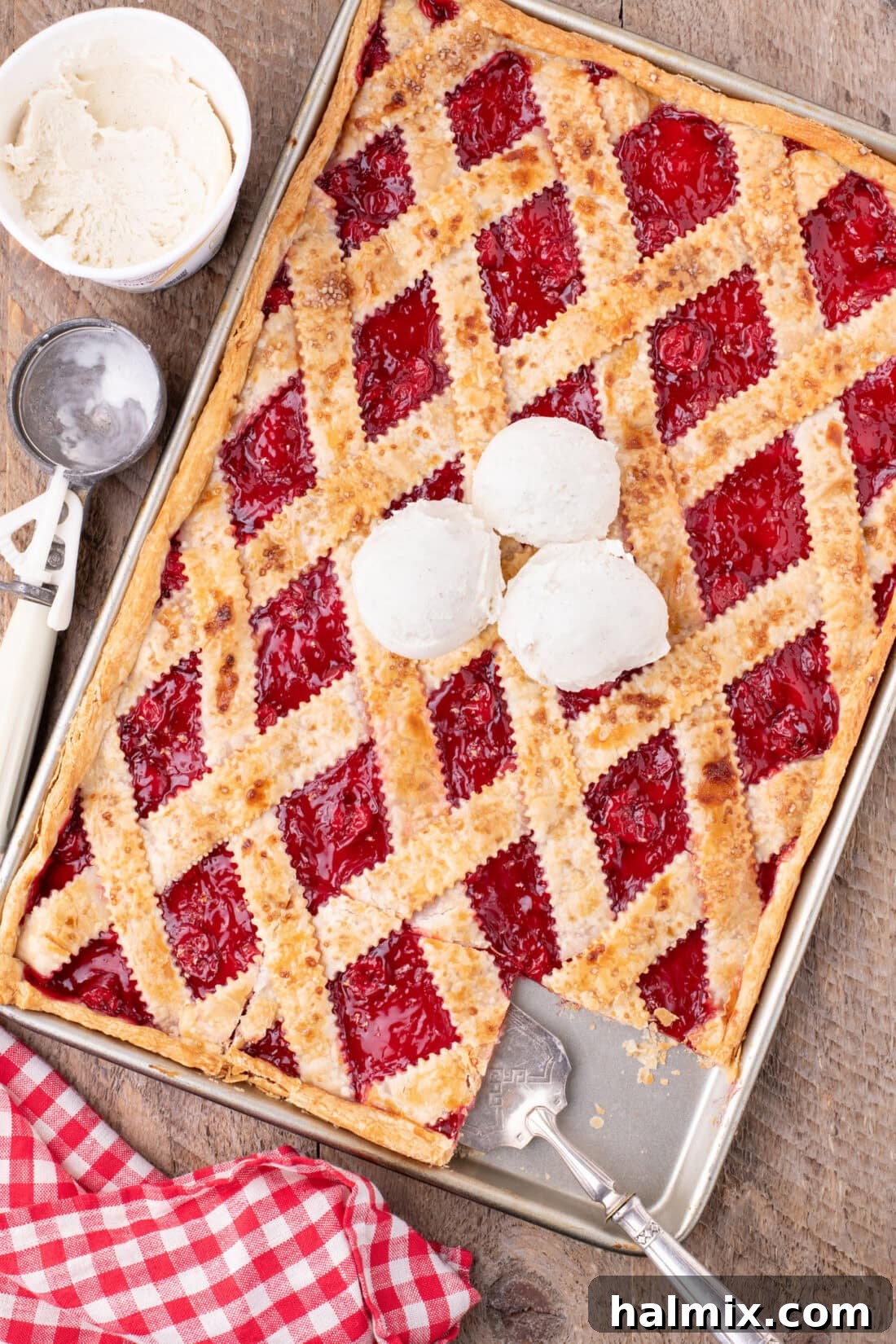
Why This Easy Cherry Slab Pie is a Must-Try
This show-stopping cherry slab pie isn’t just beautiful; it’s also incredibly practical and surprisingly simple to make, especially compared to a traditional, time-intensive homemade round pie. Its genius lies in its convenience and versatility. Using readily available store-bought pie crusts and canned cherry pie filling dramatically cuts down on prep time, making this recipe accessible even for novice bakers or those with busy schedules. Of course, for those who relish a truly from-scratch experience, homemade versions of both the crust and filling can absolutely be substituted, offering a labor of love that’s equally rewarding.
Slab pies, baked in large sheet pans or jelly roll pans, are inherently designed for serving larger groups. They offer a unique advantage over traditional round pies by providing a more balanced crust-to-filling ratio, often leading to a more satisfying bite with every piece. The wider surface area allows for beautiful, even baking and a greater yield, ensuring there’s enough deliciousness for everyone. Furthermore, the adaptability of this recipe is outstanding. While a classic cherry filling is divine, you can easily swap it out for other fruit fillings like blackberry, blueberry, peach, or even a vibrant strawberry slab pie, making it a truly versatile dessert for any season or preference. It’s a dessert that perfectly blends ease, elegance, and incredible flavor.
Essential Ingredients for Your Cherry Slab Pie
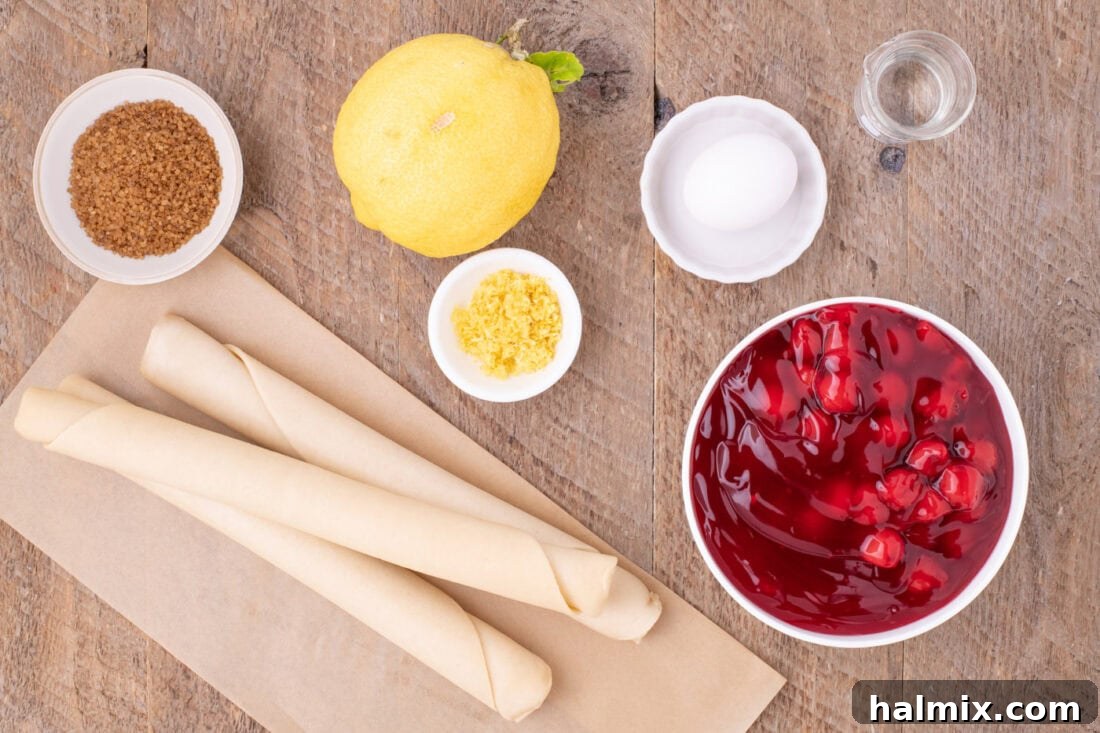
Creating this magnificent cherry slab pie requires just a handful of straightforward ingredients. The beauty of this recipe lies in its simplicity, making it a stress-free baking project. Below, we’ll dive into each component, offering insights and substitution suggestions to ensure your pie turns out perfectly every time. For precise measurements and step-by-step instructions, you’ll find a complete printable recipe card at the end of this article.
Ingredient Spotlight & Smart Substitutions
- Cherry Pie Filling: The star of the show! Canned cherry pie filling is a fantastic shortcut, providing consistent flavor and texture with minimal effort. However, if you have fresh cherries in season or a cherished family recipe, feel free to use your own homemade cherry pie filling for an extra layer of gourmet appeal. This recipe uses two 20-ounce cans, totaling 40 ounces, which ensures a generously filled pie.
- Premade Pie Crusts: The secret weapon for speed and convenience. This recipe calls for two 14.1-ounce boxes of premade pie crusts (typically yielding four individual crusts). Using these eliminates the need for flouring, chilling, and rolling dough from scratch. They unroll beautifully and can be easily joined to fit your sheet pan. Should you prefer to make your own dough, our guide on how to make pie crust can help you achieve a perfectly flaky foundation. Remember, you’ll only need three of the four crusts for this recipe; the fourth can be saved for another baking adventure or used for decorative elements.
- Grated Lemon Zest: A touch of fresh lemon zest brightens the rich cherry flavor, adding a subtle tang and aromatic complexity that elevates the pie from good to spectacular. Don’t skip this ingredient, as it truly enhances the overall taste profile.
- Egg and Water for Egg Wash: A simple mixture of one egg gently beaten with a tablespoon of water creates an egg wash. This is brushed over the lattice crust before baking, yielding that irresistible golden-brown hue and a slight sheen that makes your pie look professionally made.
- Turbinado Sugar: This coarse-grained sugar is sprinkled over the top of the pie before baking. Turbinado sugar is less processed than granulated sugar, retaining some natural molasses, which gives it a beautiful golden-brown color and a richer, deeper flavor. Its larger crystals also provide a delightful crunchy texture to the crust, contrasting beautifully with the soft filling. If turbinado sugar isn’t available, granulated sugar can be used as a 1:1 substitute, though you’ll miss out on some of the textural and flavor nuances.
How to Make Cherry Slab Pie: A Detailed Guide
Follow these easy, step-by-step instructions to create a gorgeous and delicious cherry slab pie. These photos and detailed explanations are designed to guide you through each stage, ensuring a successful bake. For a printable version of the full recipe, including exact measurements and a complete instruction list, scroll to the bottom of this post.
- Prepare Your Oven: Begin by preheating your oven to 375°F (190°C). This ensures the oven is at the correct temperature when your pie is ready to bake, which is crucial for a perfectly cooked crust.
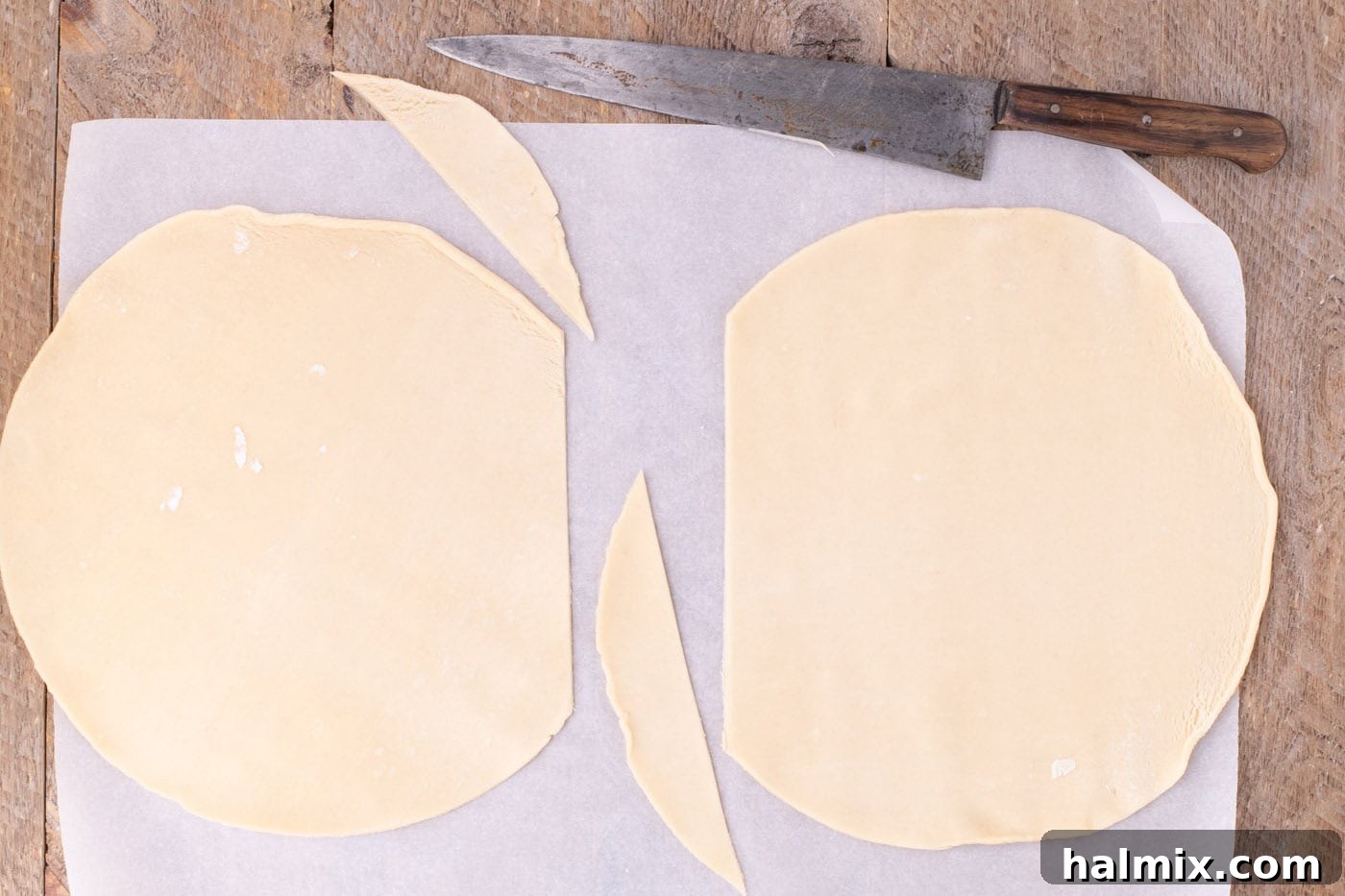
- Unroll and Trim the Crusts: Take two of your premade pie crusts out of their packaging and carefully unroll them onto a parchment-lined surface. This prevents sticking and makes cleanup easier. If you don’t have parchment paper, a lightly floured surface will work. From one side of each crust, trim off approximately 2 inches. These scraps are valuable, so set them aside. They can be used to patch any holes in your bottom crust or to make extra lattice strips if needed.

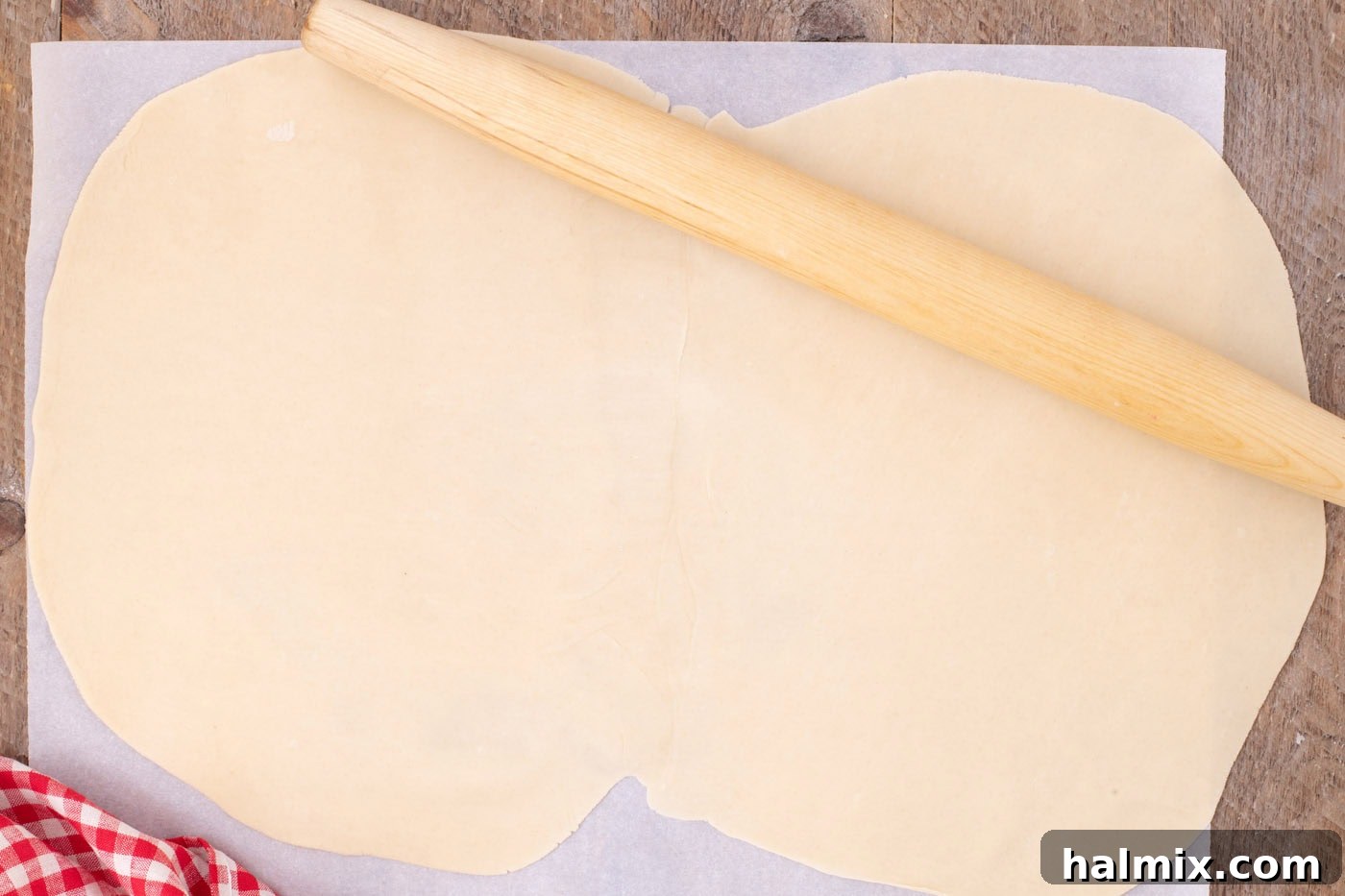
- Join the Crusts for the Base: Overlap the cut edges of the two pie crusts slightly. Using a rolling pin, gently roll over the seam to fuse them together, creating one large, roughly rectangular piece of dough. Continue rolling the combined crusts until they are about 3 inches larger on all sides than your jelly roll pan. This extra overhang is essential for crimping the edges and sealing the lattice top.
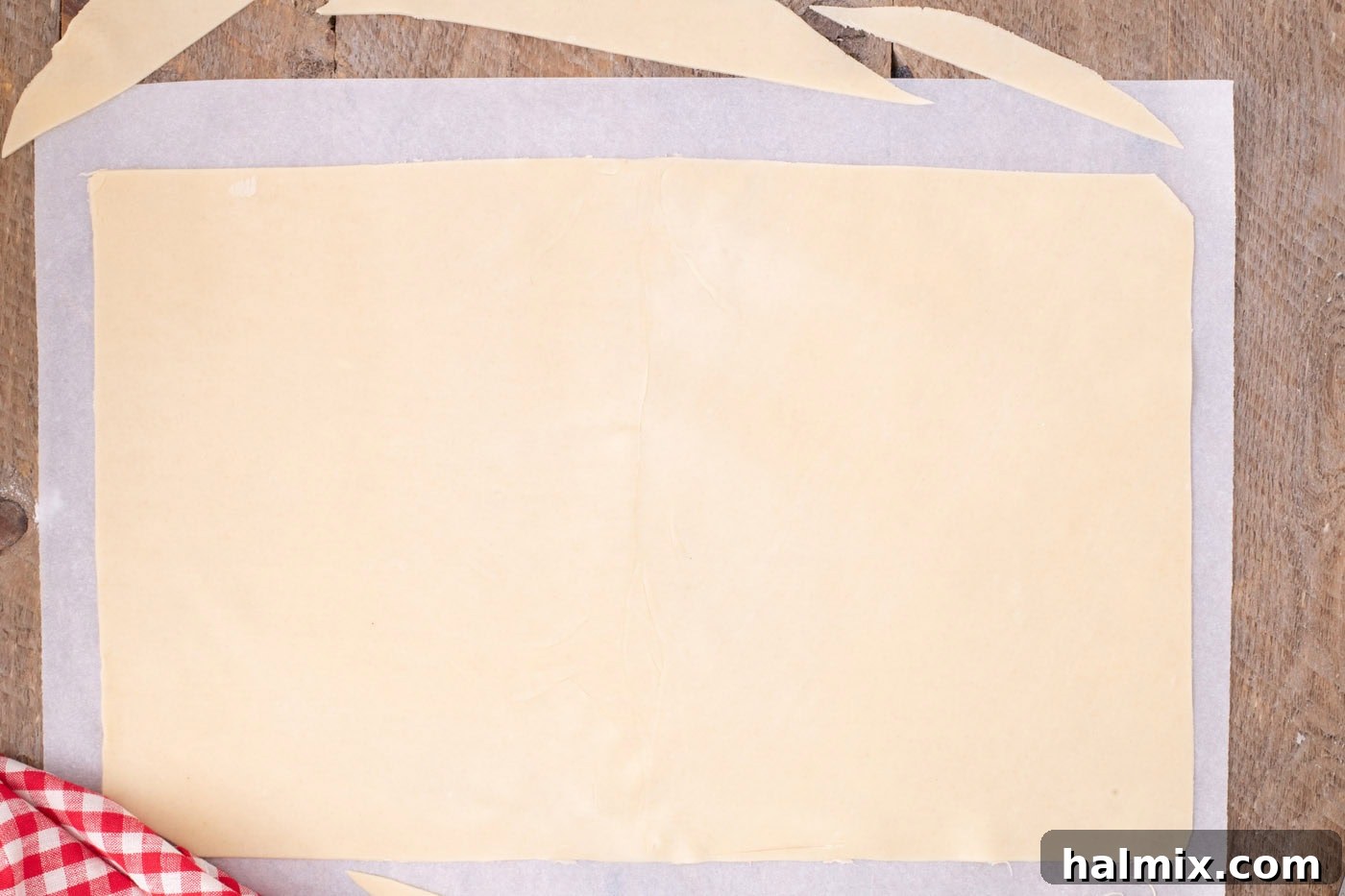
- Refine the Base Crust Shape: Once you have a large rectangle, trim about an inch from each side to create a neat, even rectangular shape. The goal is for the crust to be 1.5 to 2 inches larger than your jelly roll pan on all sides, providing enough dough for the edges.
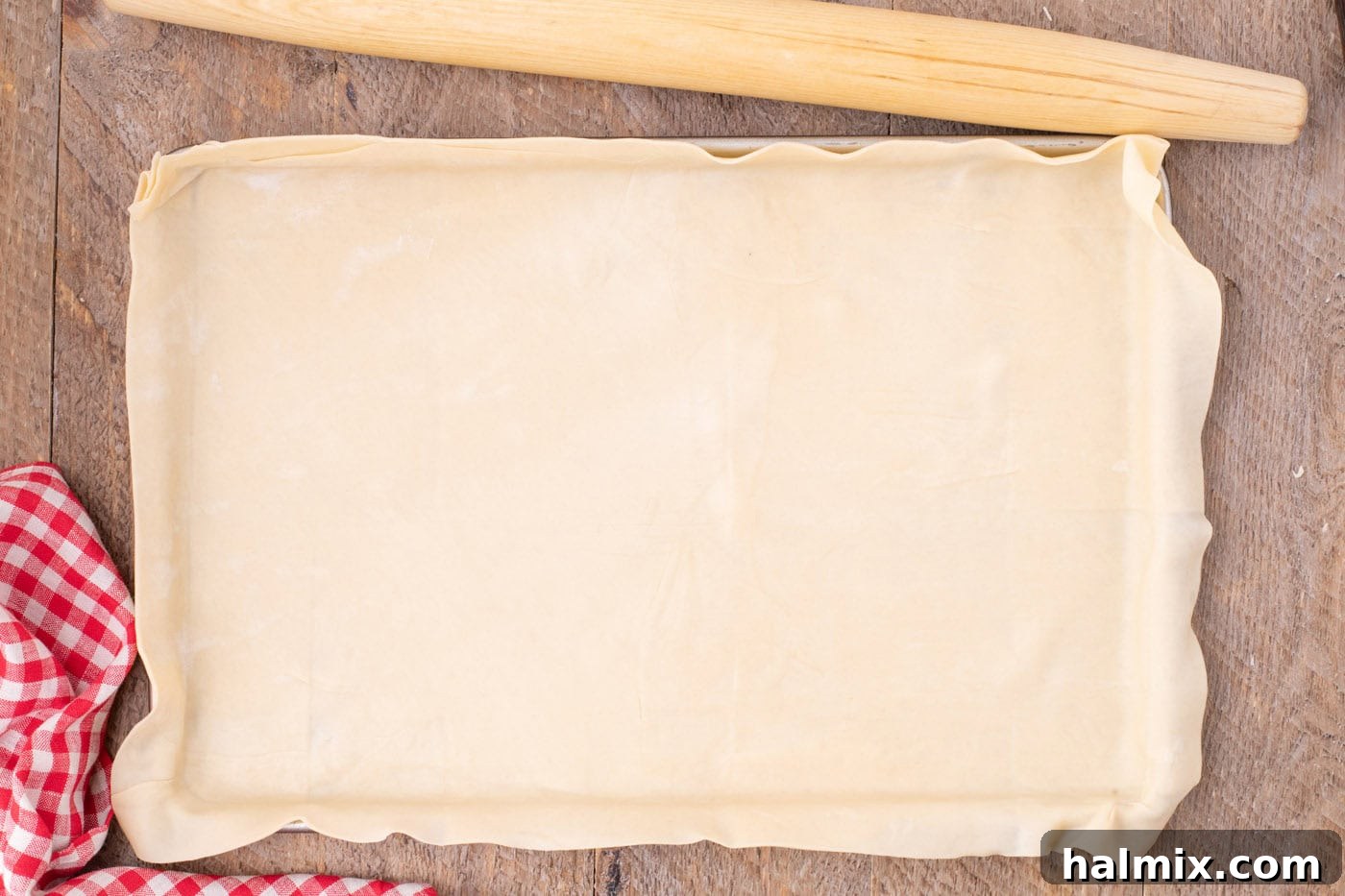
- Line the Pan with Crust: Carefully drape the prepared pie crust over your rolling pin. This technique helps transfer the large, delicate dough without tearing. Gently unroll it into an ungreased 10×15-inch jelly roll pan. Press the dough down along the bottom and up the sides of the pan, ensuring there are no gaps or air pockets. The overhang should extend beyond the pan’s edges.
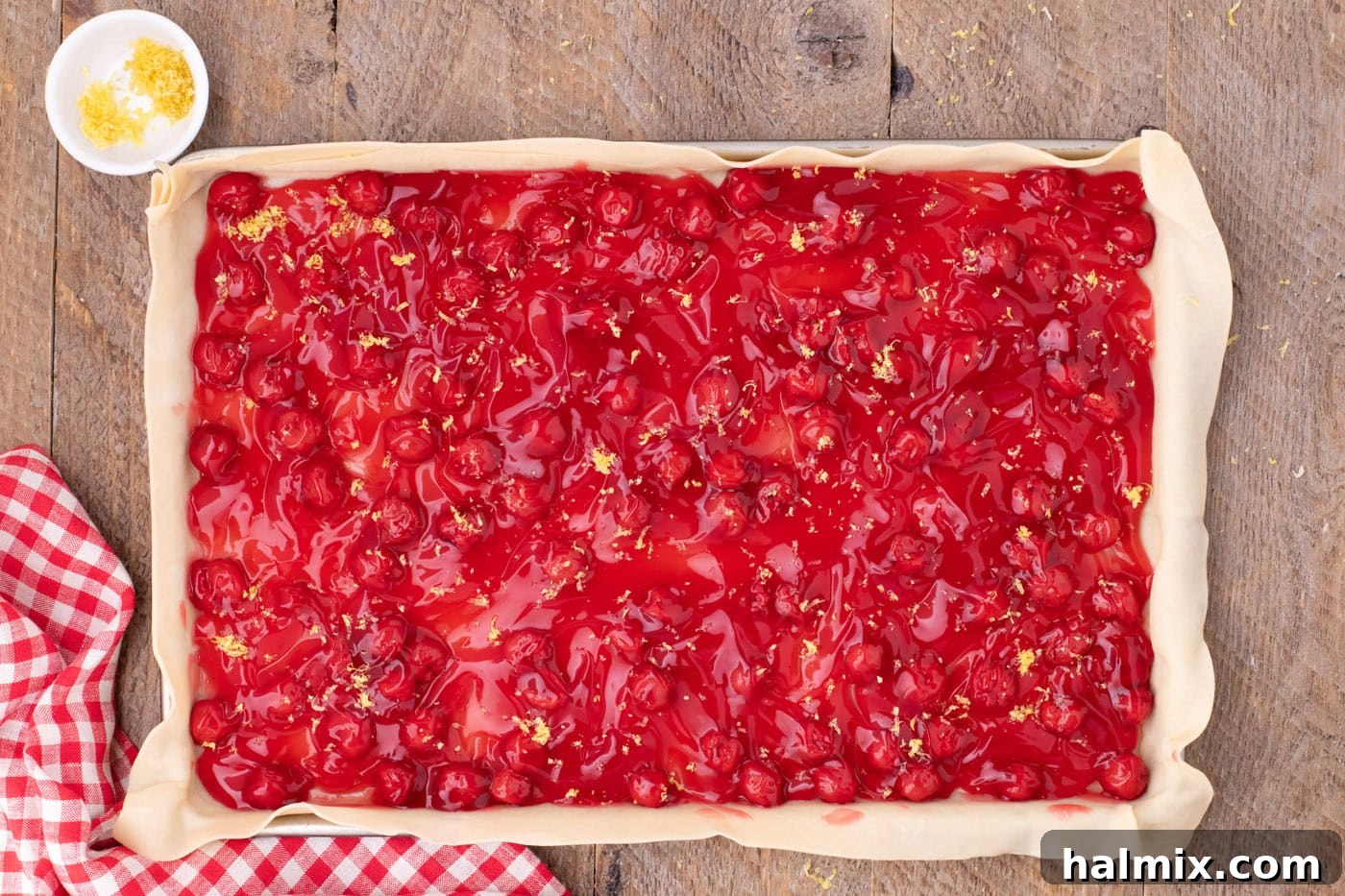
- Add the Cherry Filling: Open your cans of cherry pie filling and pour them evenly over the bottom crust. Use a spatula to spread the filling into all corners of the pan, ensuring a consistent layer.
- Zest and Chill: Sprinkle the grated lemon zest over the cherry pie filling. The citrus brightens the cherry flavor beautifully. Place the entire jelly roll pan in the refrigerator while you prepare the lattice strips for the top. Chilling the filling helps it set slightly and prevents it from becoming too runny when the hot lattice strips are added.
Crafting the Perfect Lattice Weave
A beautiful lattice top is the signature of a classic pie, and it’s easier to achieve than you might think!
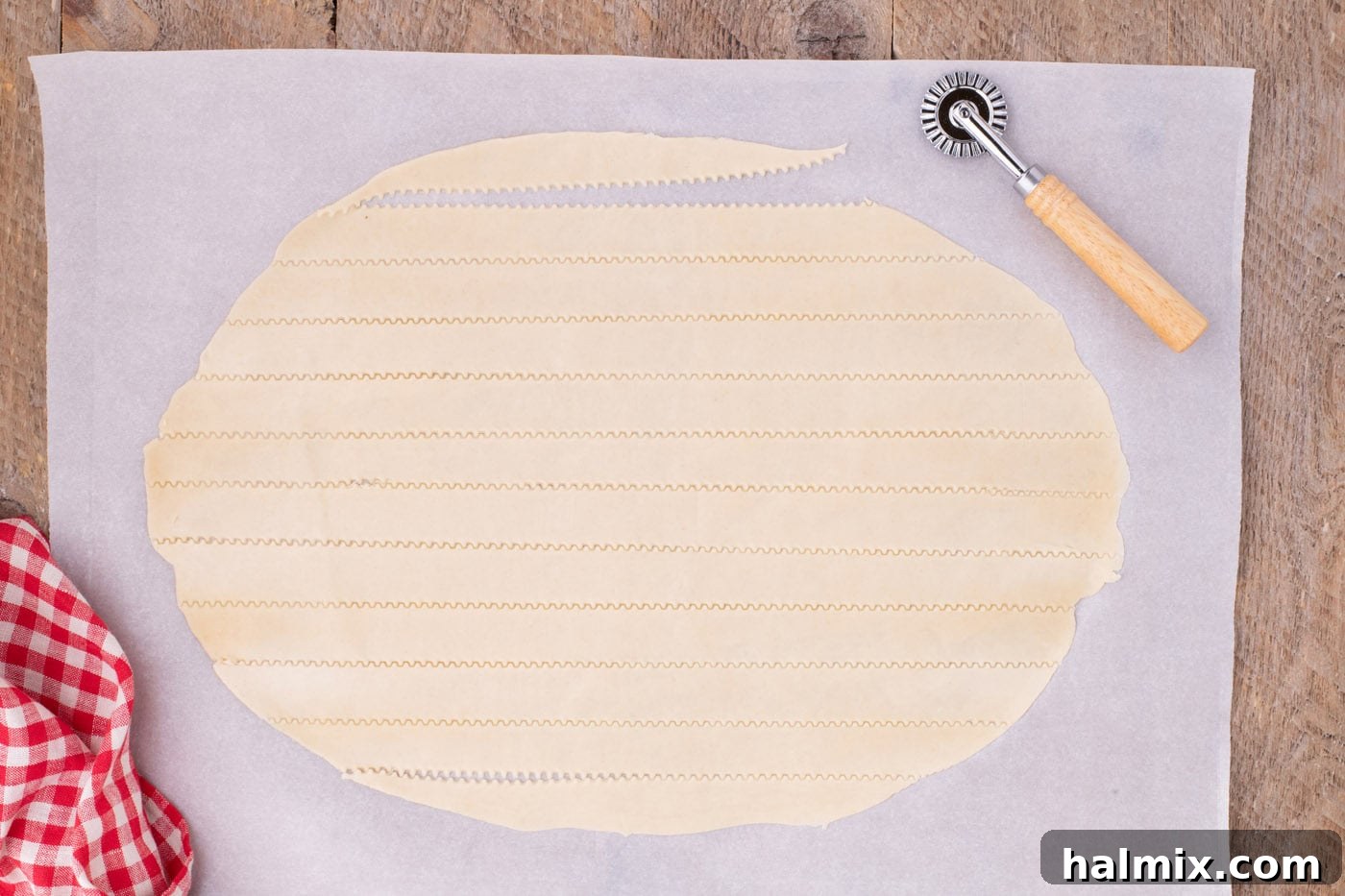
- Prepare Lattice Strips: Unroll the third piece of pie crust onto a parchment-lined or lightly floured surface. Roll it into an oblong shape, making it slightly longer than the width of your jelly roll pan. Using a pizza cutter or a pastry cutter and a metal ruler for accuracy, cut 12 evenly sized strips, each about 1 inch wide. The precision of the ruler helps ensure a uniform and professional-looking lattice.
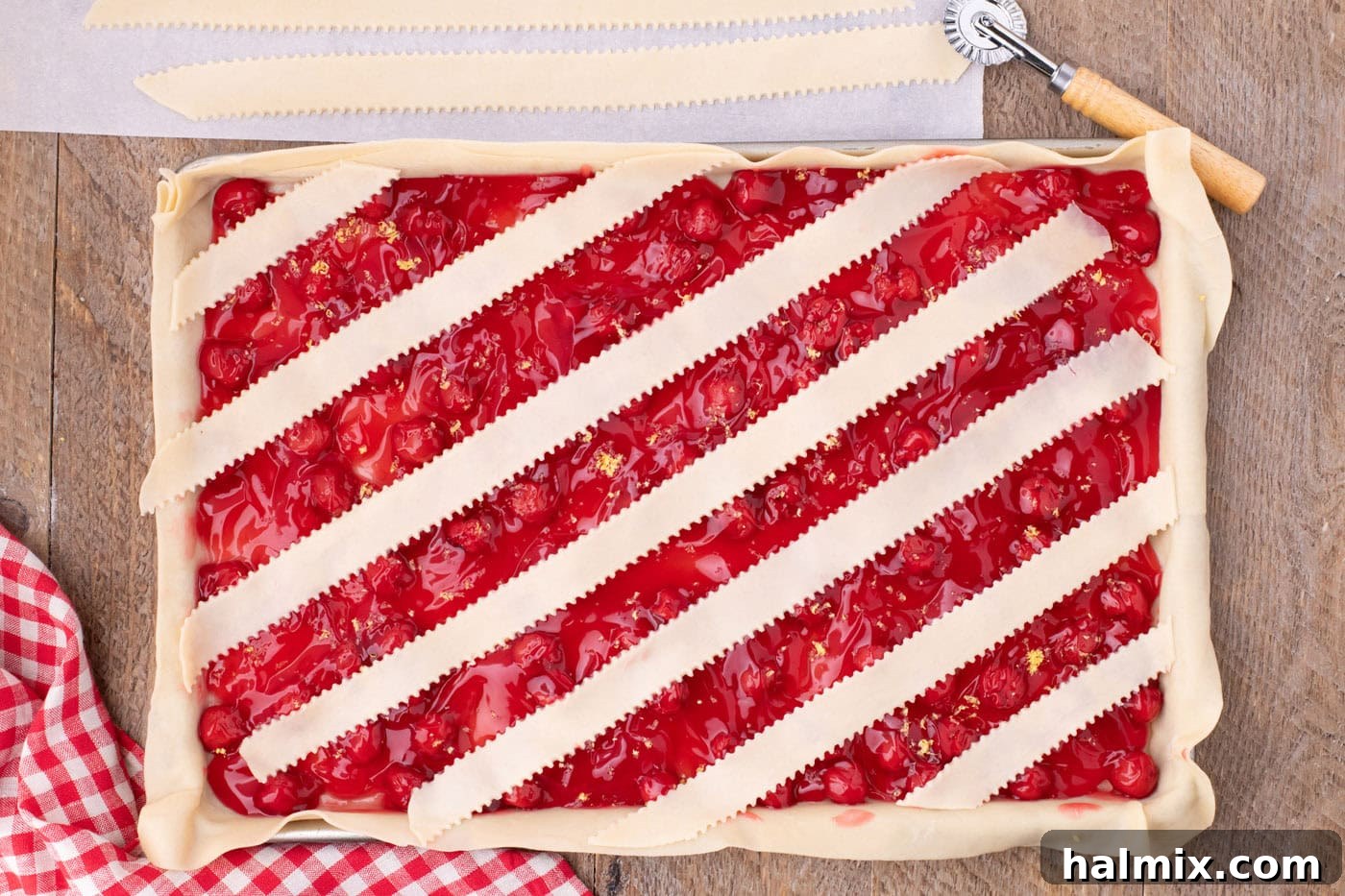
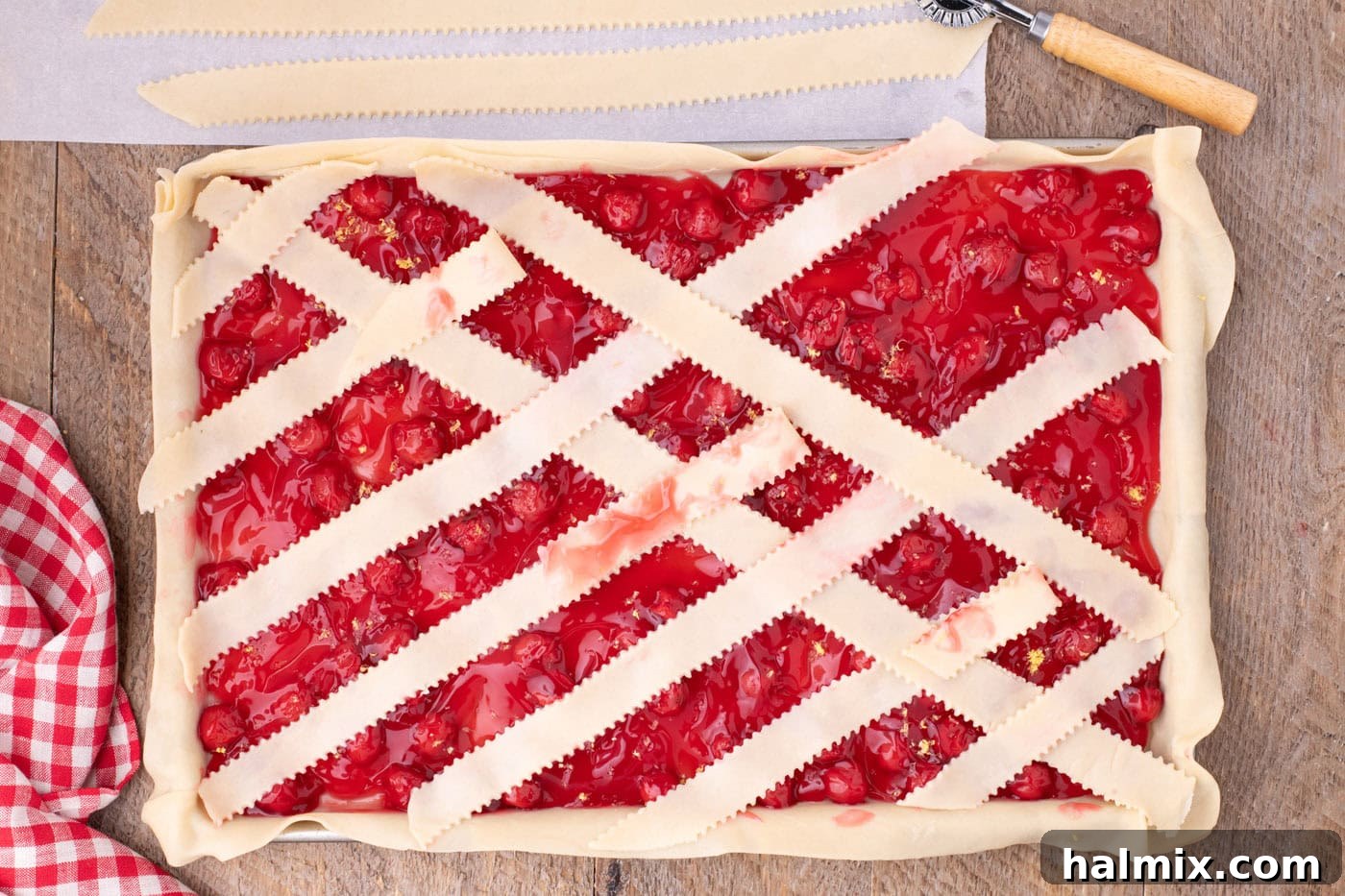
- Lay Initial Strips: Select the two longest strips from your batch. Place one of these diagonally across the widest part of your chilled jelly roll pan, over the cherry filling. Then, proceed to lay out the remaining shorter strips next to each other, spacing them about 1.5 to 2 inches apart across the pie, perpendicular to the first diagonal strip.
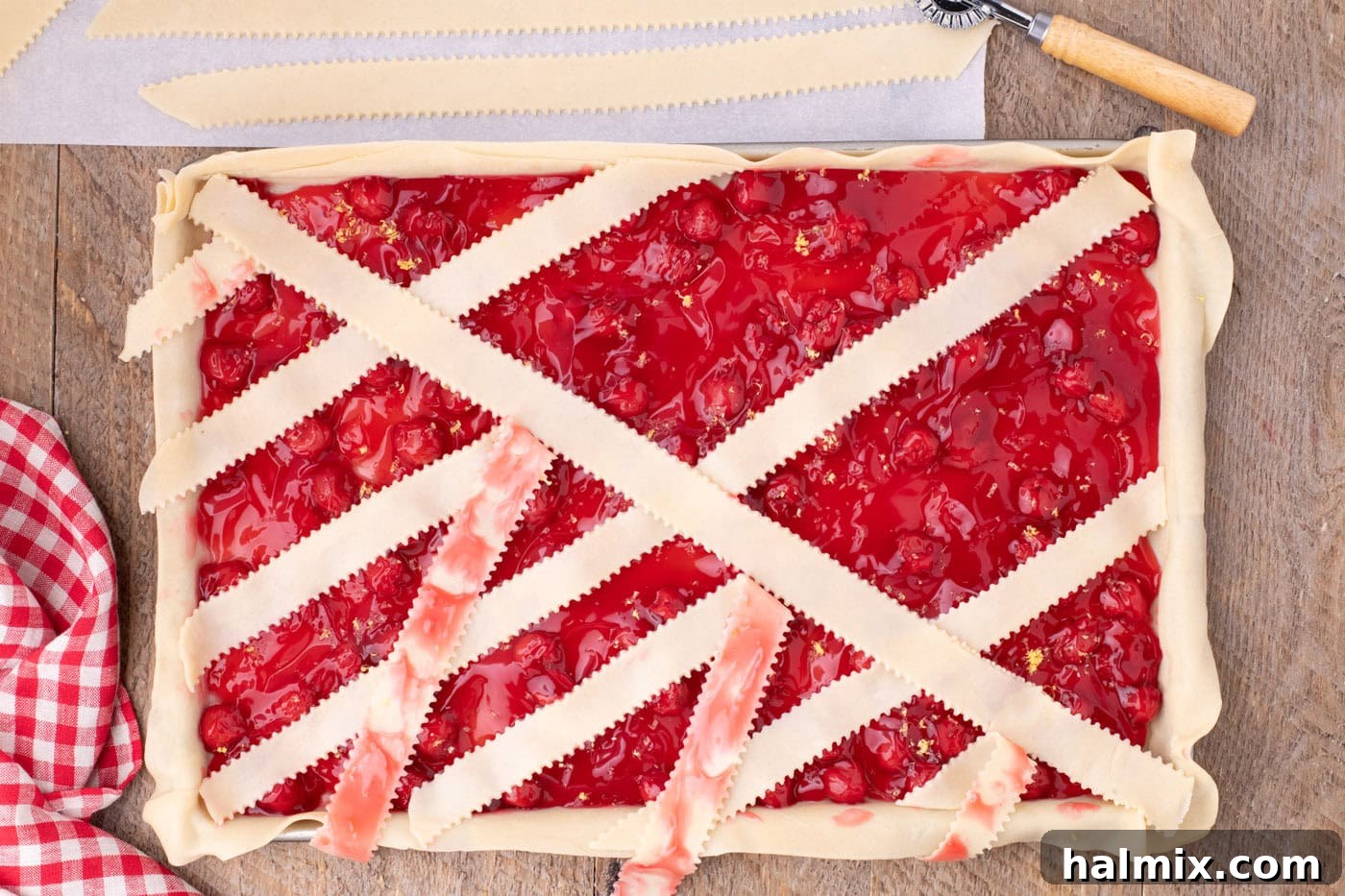
- Begin the Weave: Starting from one end (e.g., the top), carefully fold back every other strip (strips 1, 3, 5, and 7) halfway towards the left-hand side or bottom of the pan. This creates a space for the next strip.
- Add the Second Diagonal Strip: Take the second of your two longest strips. Place it across the widest part of the jelly pan, perpendicular to the strips you just laid, and parallel to the first diagonal strip. This should create a large ‘X’ shape with the two longest strips.
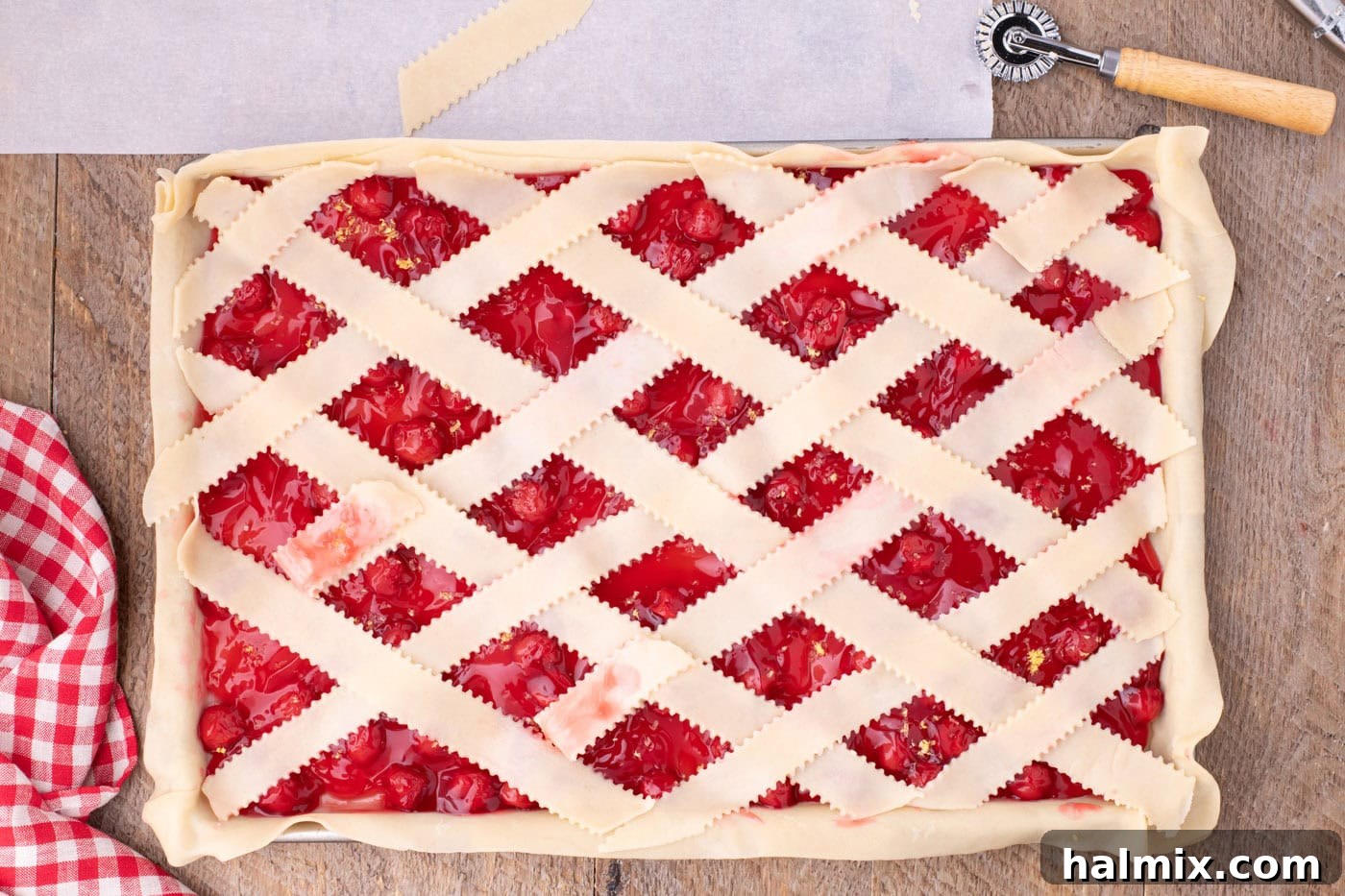
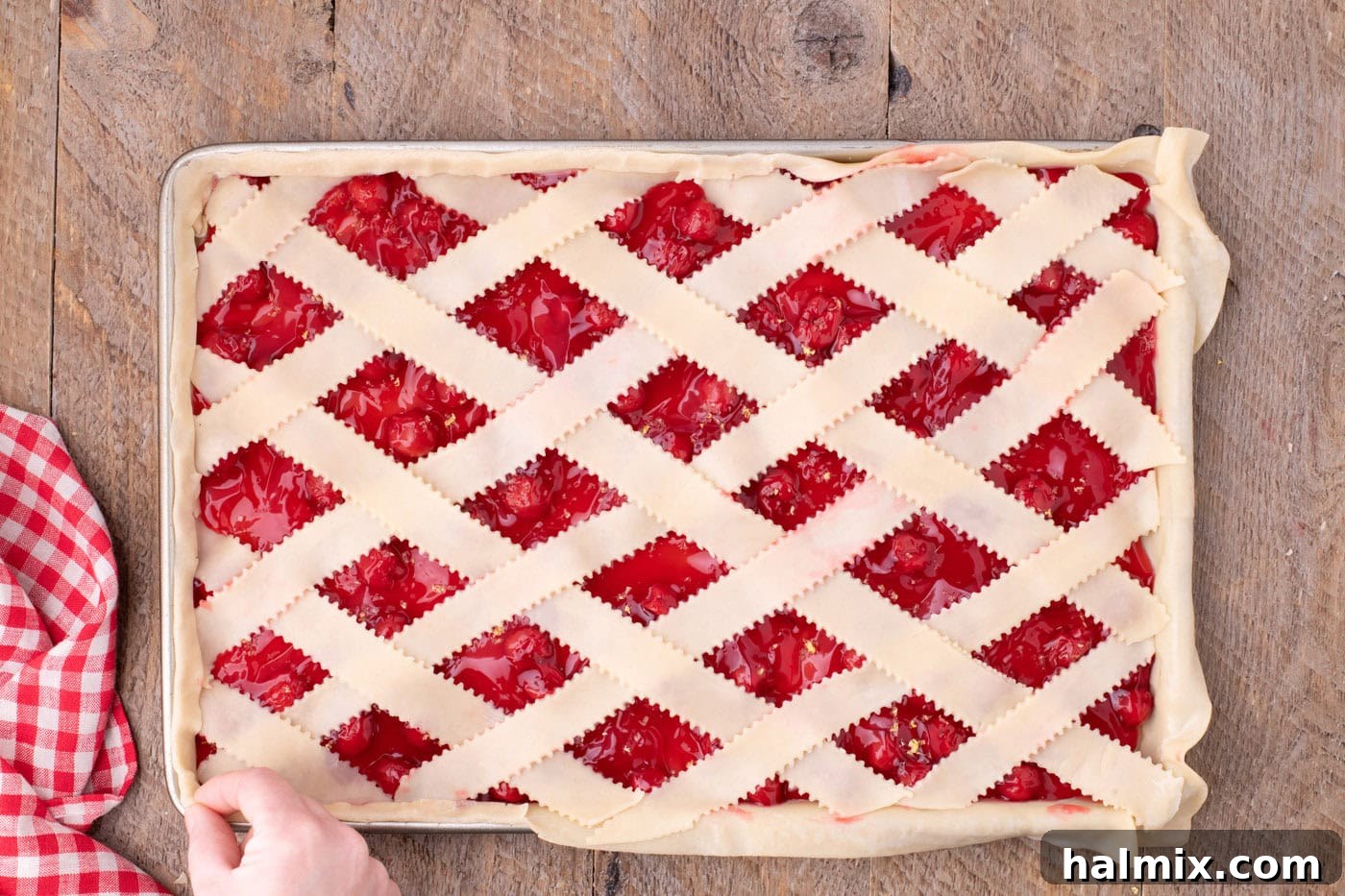
- Complete the Weaving: Unfold the strips you had folded back (strips 1, 3, 5, 7) over the long diagonal strip you just laid down. Now, fold back the *alternating* strips (strips 2, 4, 6, and 8) halfway. Place another 1-inch strip into the newly created gap. Unfold the strips over it. Repeat this process, alternating which strips you fold back, until all your strips have been woven, forming a beautiful lattice pattern. Patience here will yield the best results!
- Seal the Edges: Once the lattice is complete, carefully fold the excess bottom crust (the overhang) over the lattice strips. Pinch the bottom crust and the lattice strips together firmly around the entire perimeter of the pie to form a tight seal. This prevents the filling from bubbling out during baking and creates a neat, finished edge.
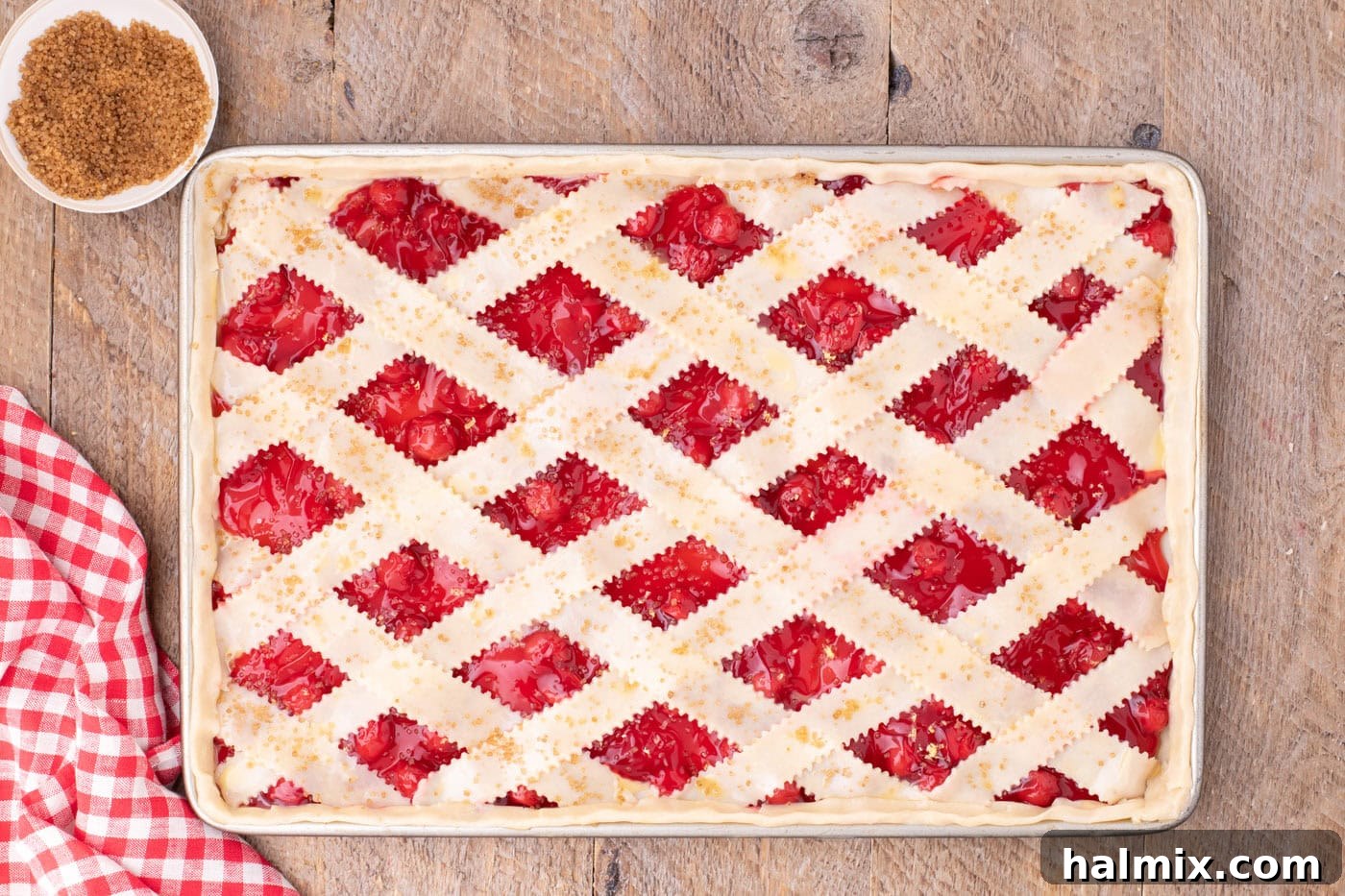
- Apply Egg Wash and Sugar: In a small bowl, combine the gently beaten egg with 1 tablespoon of water to create an egg wash. Using a pastry brush, lightly brush this mixture over all the lattice strips. This will give your crust a beautiful golden-brown color. Immediately after, sprinkle the turbinado sugar evenly over the entire top of the pie.
- Bake to Golden Perfection: Place the slab pie in your preheated oven. Bake for approximately 30-35 minutes, or until the fruit filling is visibly bubbling through the lattice, and the crust has achieved a rich, golden-brown color. Keep an eye on the edges; if they brown too quickly, you can cover them loosely with aluminum foil.
- Cool Before Slicing: Once baked, remove the pan from the oven and place it on a wire rack to cool completely. This cooling period is crucial, as it allows the filling to set properly, preventing it from running out when you slice the pie. While tempting, resist the urge to cut into it too soon!
Expert Tips for a Flawless Cherry Slab Pie
Achieving a perfect slab pie is easy with a few insider tricks. Here are some pro tips to ensure your dessert is a resounding success:
- Maximize Your Dough: You’ll only use three of the four pie crusts from the two boxes. Don’t discard the fourth! Save it for another small tart or a decorative element. Also, any scraps generated from trimming your crusts are gold. Use them to patch up any small holes in your bottom crust or roll them out if you need an extra strip or two for your lattice.
- Tackling Dry Edges: If you find your pie dough starts to dry out a bit, especially when trying to pinch the top lattice strips and bottom crust together, a tiny amount of water can work wonders. Simply moisten the edges of the crust very slightly with your fingertip or a pastry brush, and it will become much more pliable and easier to seal.
- Lattice Alternative for Simplicity: If the lattice weave feels a bit daunting, don’t worry! You can easily cover the pie with a solid top crust instead. Just be sure to cut several slits into the top of the crust before baking. These vents are essential to allow steam to escape during the baking process, preventing a soggy crust and ensuring the filling cooks properly. You can even use a small cookie cutter to create decorative vents.
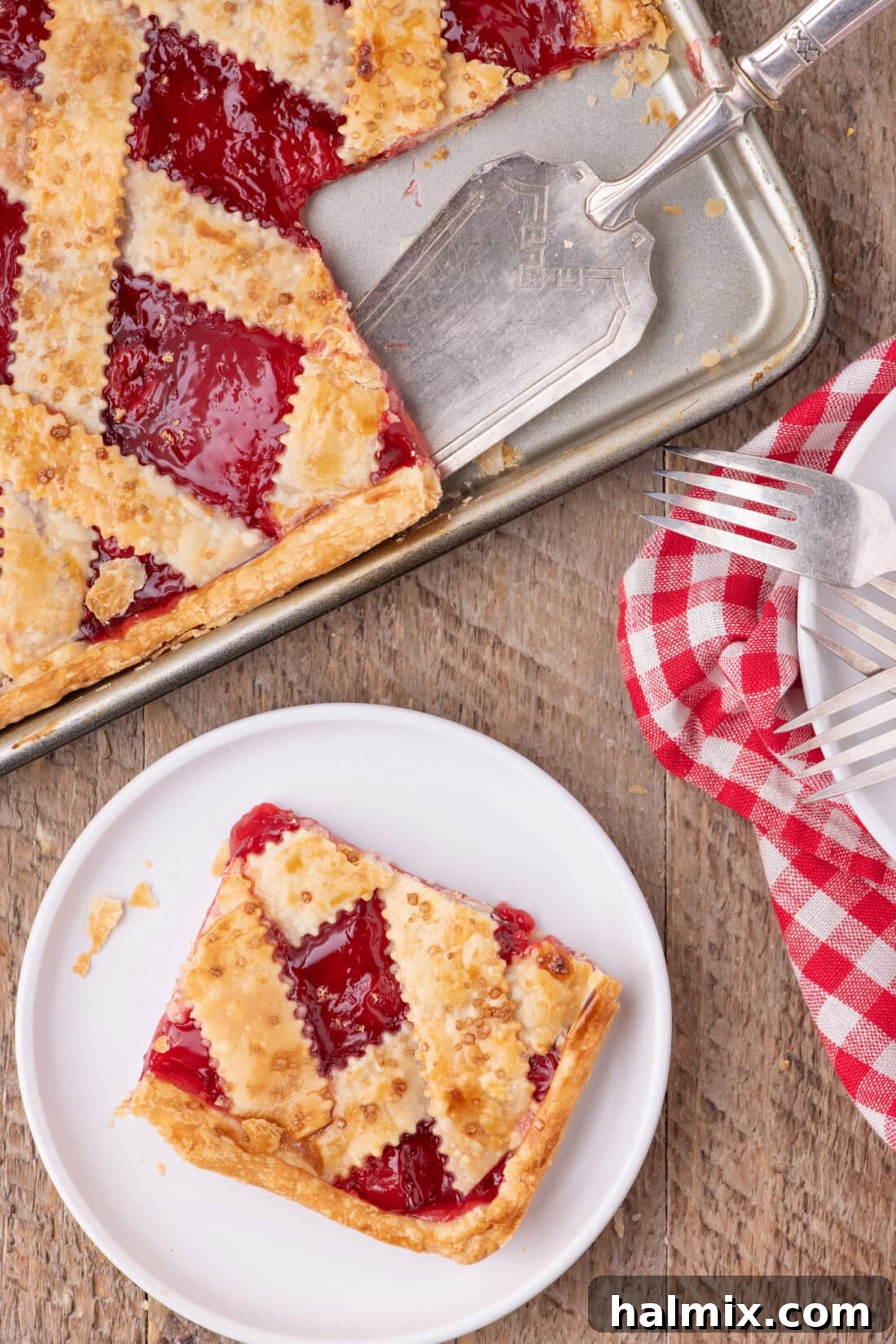
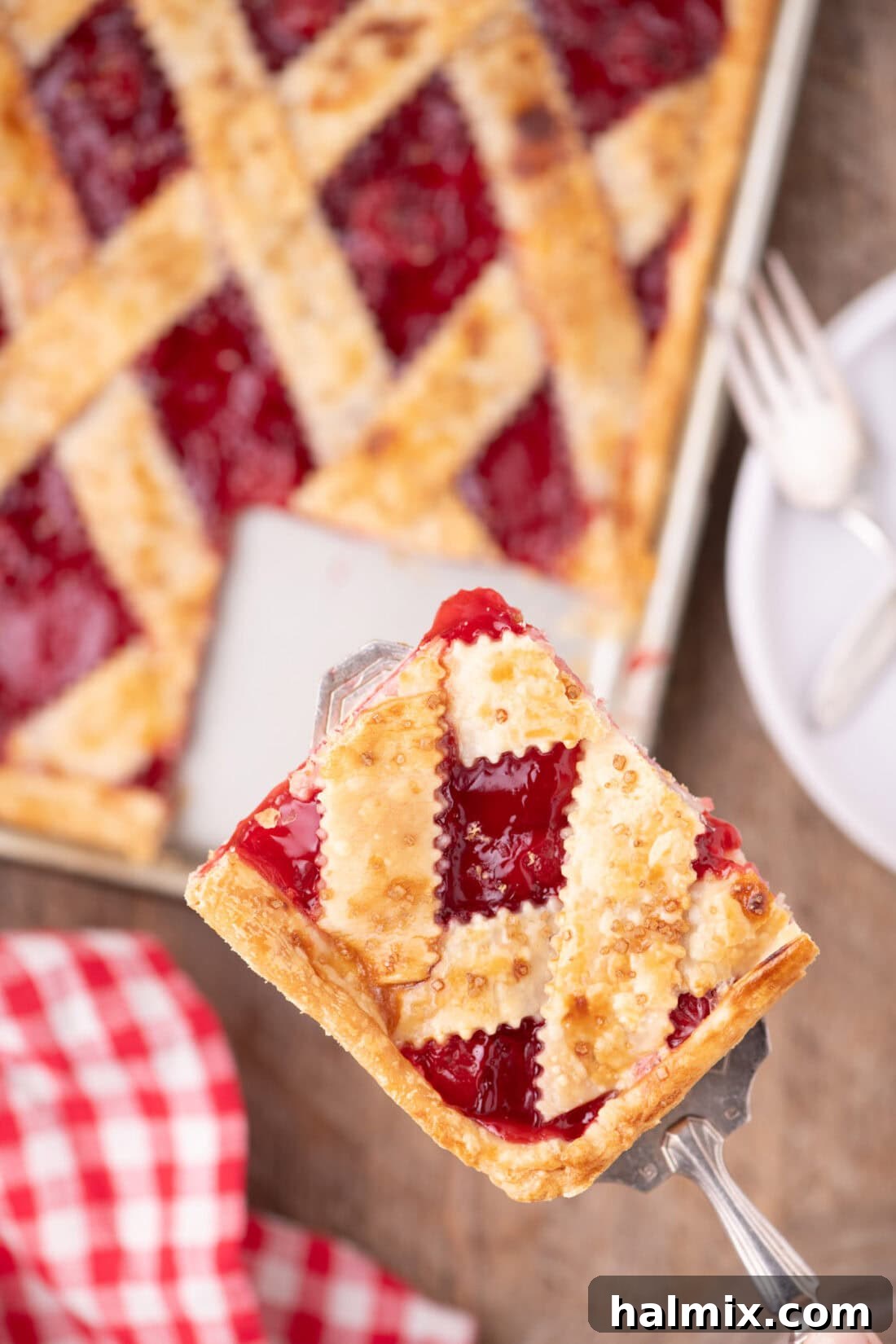
- Cooling is Key: While the aroma of a freshly baked pie is intoxicating, patience is a virtue here. Allowing the cherry slab pie to cool completely before slicing is paramount. This crucial step gives the filling time to set up properly. If you cut into it too soon, the warm filling will be runny, and your slices won’t hold their shape. A fully cooled pie will yield clean, beautiful squares.
- Preventing Burnt Edges: If you notice the edges of your pie crust are browning too quickly during baking, you can loosely tent them with aluminum foil. This protects the delicate crust from over-browning while allowing the rest of the pie to finish baking.
Frequently Asked Questions
Leftovers should be kept in the refrigerator. You can either leave the pie in the jelly roll pan, tightly covered with plastic wrap, or transfer individual slices to an airtight container. For the best taste and texture, it’s recommended to enjoy your cherry slab pie within 1 to 2 days of baking. Beyond that, the crust may start to lose its crispness and become soggy due to moisture from the filling.
Absolutely! Cherry slab pie is a fantastic make-ahead dessert. You can prepare and bake the entire pie a day in advance. Let it cool completely at room temperature, then cover it and refrigerate. When you’re ready to serve, you can enjoy it chilled, at room temperature, or gently warmed. For the best flavor and texture, baking it no more than 24 hours prior to serving is ideal.
Yes, you can freeze baked cherry slab pie. Once the pie has cooled completely, wrap it tightly in plastic wrap and then again in aluminum foil. It can be frozen for up to 2-3 months. To serve, thaw it overnight in the refrigerator, then you can warm it gently in a low oven (around 300°F/150°C) for about 15-20 minutes until heated through, or enjoy it chilled.
Delightful Serving Suggestions
While this cherry slab pie is utterly delicious on its own, a few additions can take it to the next level. The classic way to serve your pie is sliced into generous squares, accompanied by a scoop of creamy vanilla ice cream. The cold, melting ice cream creates a heavenly contrast with the warm, fruity pie. For an extra touch of indulgence, a dollop of freshly whipped cream or a drizzle of a simple glaze made from powdered sugar and milk can also be delightful. You can also enjoy it as is, whether chilled, warm, or at room temperature – it’s versatile enough to please any preference.
More Fruity Dessert Inspirations
- Cherry Lush
- Cherry Pie Cookies
- Deep Dish Peach Pie
- Blueberry Hand Pies
- Rhubarb Pie
I love to bake and cook and share my kitchen experience with all of you! Remembering to come back each day can be tough, that’s why I offer a convenient newsletter every time a new recipe posts. Simply subscribe and start receiving your free daily recipes!
Cherry Slab Pie
IMPORTANT – There are often Frequently Asked Questions within the blog post that you may find helpful. Simply scroll back up to read them!
Print It
Pin It
Rate It
Dessert
American
24
servings
1 hr
15 mins
215
Amanda Davis
Ingredients
-
40
ounces
cherry pie filling
(two 20 ounce cans) -
28.2
ounces
premade pie crusts
(two 14.1 ounce boxes of Pillsbury pie crusts) -
2
teaspoons
grated lemon zest -
1
egg -
1
Tablespoon
water -
3
Tablespoons
turbinado sugar
Things You’ll Need
-
15×10 jelly roll pan
-
Pastry cutter wheel
-
Pastry brush
Before You Begin
- You will only use 3 of the 4 pie crusts (you can save the 4th one for another use).
- If you have any holes or uneven edges after trimming your pie crust into a rectangular shape, you can use the extra scraps to fill them in. Additionally, any scraps you have set aside can be used if you need extra dough for lattice strips.
- If you find the dough is starting to dry out a bit when pinching the top and bottom crusts together, a little bit of water added to the edges of the crust will help make it easier to pinch and seal.
- If you feel intimidated by creating the lattice top weave, you can cover the pie with a regular pie crust. Make sure you cut slits into the top of the crust to allow the steam to vent during baking.
Instructions
-
Preheat the oven to 375° F.
-
Remove 2 pie crusts from their packaging and unroll them. Lay the crusts side by side on a parchment-lined (or floured) surface, and trim 2 inches from the side of each. Set the scraps aside for later use.
-
Overlap the cut edges slightly and roll out the pie crusts, to form one large rectangular-type shape that is 3 inches larger on all sides than your jelly roll pan.
-
Trim about an inch from the sides of the crust to create a neat rectangle. It should measure 1 1/2 to 2 inches larger than the size of your jelly roll pan.
-
Drape the pie crust over the rolling pin and gently place it into an ungreased 10×15-inch jelly pan, press it down along the sides and the bottom to make sure there are no gaps.
-
Add the cherry pie filling and evenly distribute it into all corners.
-
Sprinkle the lemon zest over the cherry pie filling and place the jelly roll pan in the refrigerator while you prepare the lattice strips.
To Make the Lattice Top
-
Unroll the third piece of pie crust, place it on a parchment-lined (or floured) surface, and roll it in an oblong shape. Using a pizza cutter or pastry cutter and metal ruler, cut 12 evenly sized horizontal strips (1 inch wide).
-
Of the two longest strips, place one diagonally across the widest part of the jelly roll pan and proceed to lay out the remaining shorter strips next to each other, spacing them 1 1/2 to 2 inches apart.
-
Starting from the top, fold every other strip (strips 1, 3, 5, and 7) halfway back towards the left-hand side/bottom of the pan.
-
Place the second of the 2 longest strips across the widest part of the jelly pan perpendicular to the strips already there. (it should resemble a large ‘X’ shape).
-
Unfold the strips over the long strip you just laid down and then continue to fold back the alternating strips (strips 2, 4, 6, and 8). Repeat this process until all your strips have been woven.
-
Fold the excess bottom crust over the lattice strips and pinch them together to form a seal.
-
Add the water to a gently beaten egg and brush the egg wash over the lattice strips using a pastry brush.
-
Sprinkle the turbinado sugar over the pie and place it in the oven to bake for 30 -35 minutes or until the fruit is bubbling, and the crust is golden brown.
-
Remove the pan from the oven and let cool before slicing.
Expert Tips & FAQs
- Leftovers should be kept in the fridge, either in the jelly roll pan covered with plastic wrap or stored in an air-tight container. For optimal taste and texture, I recommended eating the cherry slab pie within 1 or 2 days otherwise the crust will start to get soggy.
Nutrition
Serving:
1
slice
|
Calories:
215
cal
|
Carbohydrates:
31
g
|
Protein:
2
g
|
Fat:
9
g
|
Saturated Fat:
3
g
|
Polyunsaturated Fat:
1
g
|
Monounsaturated Fat:
4
g
|
Trans Fat:
0.001
g
|
Cholesterol:
7
mg
|
Sodium:
147
mg
|
Potassium:
85
mg
|
Fiber:
1
g
|
Sugar:
2
g
|
Vitamin A:
107
IU
|
Vitamin C:
2
mg
|
Calcium:
13
mg
|
Iron:
1
mg
Tried this Recipe? Pin it for Later!
Follow on Pinterest @AmandasCookin or tag #AmandasCookin!
The recipes on this blog are tested with a conventional gas oven and gas stovetop. It’s important to note that some ovens, especially as they age, can cook and bake inconsistently. Using an inexpensive oven thermometer can assure you that your oven is truly heating to the proper temperature. If you use a toaster oven or countertop oven, please keep in mind that they may not distribute heat the same as a conventional full sized oven and you may need to adjust your cooking/baking times. In the case of recipes made with a pressure cooker, air fryer, slow cooker, or other appliance, a link to the appliances we use is listed within each respective recipe. For baking recipes where measurements are given by weight, please note that results may not be the same if cups are used instead, and we can’t guarantee success with that method.