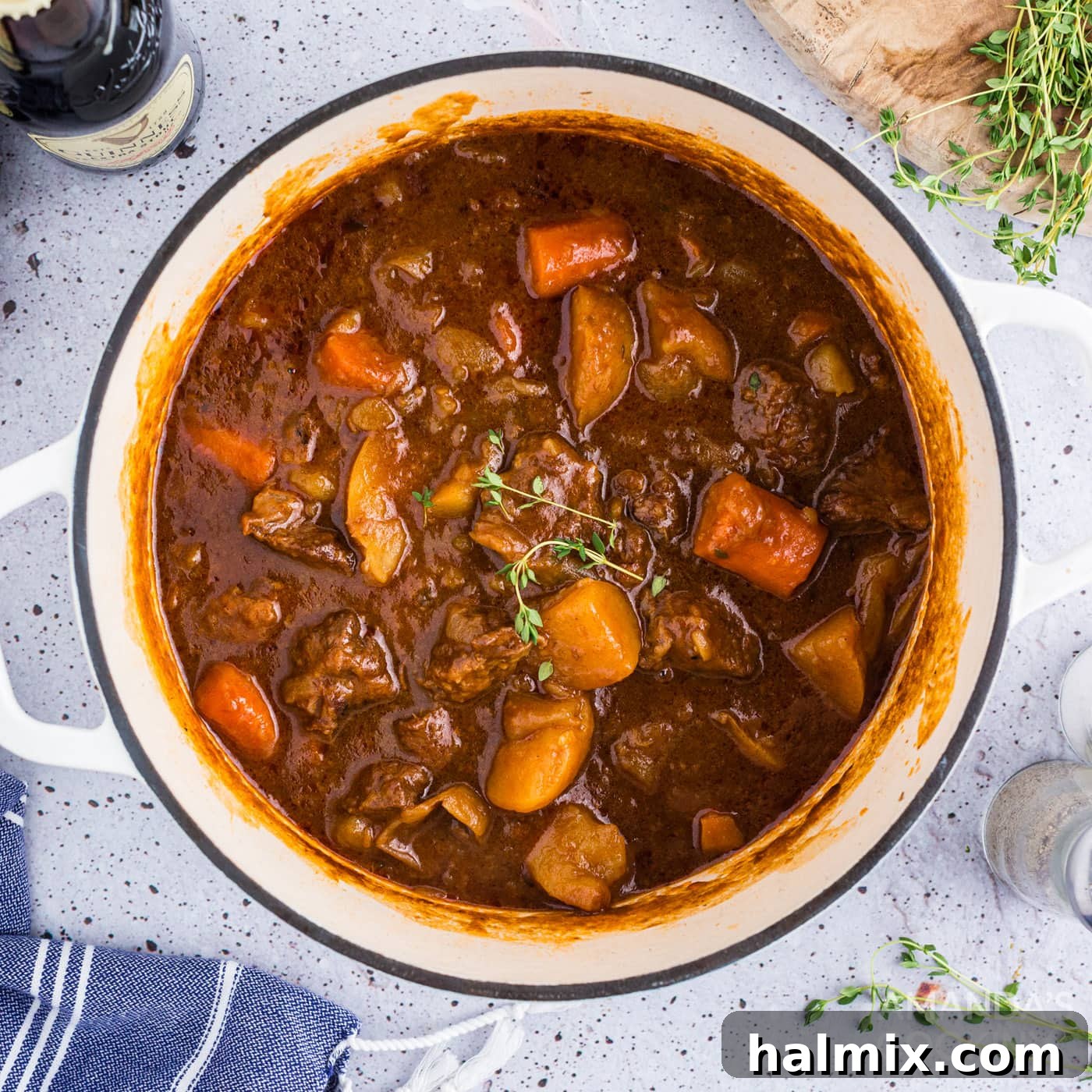
Hearty & Flavorful Irish Stew with Guinness Beer
Unearth the rich, deep flavors of a truly authentic Irish Stew, a comforting classic that warms the soul on even the chilliest of days. This recipe is a celebration of tender, slow-cooked meat, robust root vegetables, and the distinctive, malty notes of Guinness beer that elevate it from a simple meal to an unforgettable culinary experience. Imagine succulent chunks of beef melting in your mouth, perfectly complemented by tender carrots, potatoes, and onions, all swimming in a savory, aromatic broth. This isn’t just a dish; it’s a hearty embrace, a taste of Irish tradition perfect for family dinners or a festive St. Patrick’s Day feast.
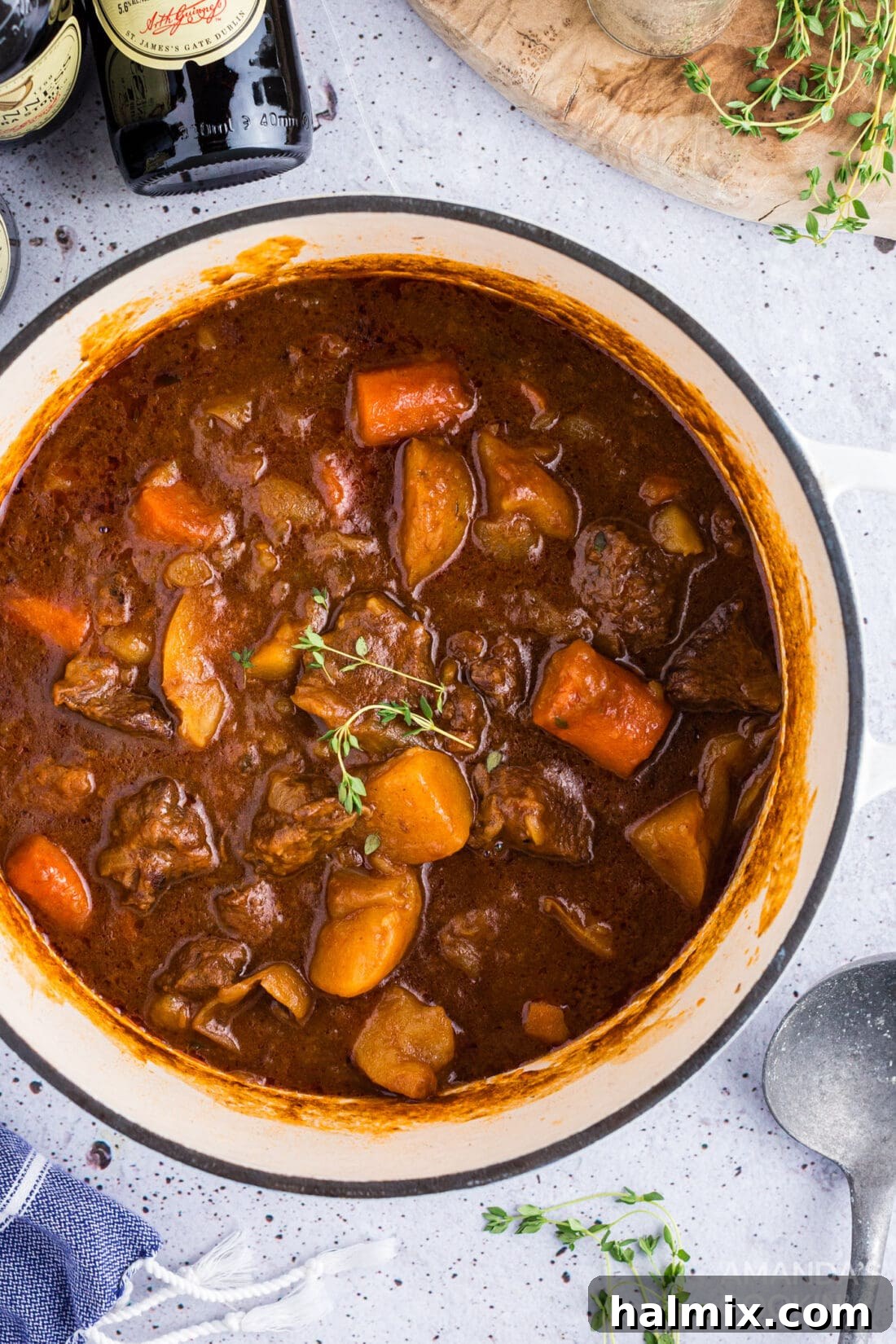
Why This Irish Stew Recipe Stands Out
This Irish Stew, often lovingly referred to as Guinness Stew, offers an unparalleled depth of flavor thanks to a few key elements that make it truly special. It’s not just about throwing ingredients into a pot; it’s about layering flavors and allowing time to work its magic.
The Magic of Guinness
The addition of Guinness beer is perhaps the most defining characteristic of this recipe, setting it apart from other beef stews. Guinness is a dry stout with a complex flavor profile – notes of roasted barley, coffee, and a subtle bitterness. When slow-cooked, these flavors mellow and transform, contributing an incredible richness and a slight sweetness that enhances the beef and vegetables without overpowering them. It tenderizes the meat beautifully, creating a luxuriously thick, dark, and deeply savory gravy that coats every morsel.
The Perfect Meat Choice
While traditional Irish stew often features lamb or mutton, this recipe utilizes beef stew meat for its widespread availability and delicious results. Beef, particularly tougher cuts like chuck, benefits immensely from long, slow braising, becoming incredibly tender and flavorful. For those who prefer a more classic approach, feel free to substitute with lamb or mutton – the cooking method remains largely the same, yielding equally robust and satisfying results. The key is to choose a cut that can withstand a long simmer, allowing it to break down and become fork-tender.
Chunky Vegetables for Hearty Goodness
We believe in substantial vegetables for a truly hearty stew. Large chunks of potatoes, carrots, and onions not only hold their shape and texture throughout the long cooking process but also absorb the rich flavors of the broth, becoming sweet and tender. They contribute essential nutrients, vibrant color, and a satisfying chew, transforming this stew into a complete and balanced meal.
Building Layers of Flavor
Beyond the Guinness and chunky vegetables, our recipe employs a strategic blend of seasonings and Worcestershire sauce. Browning the meat is a crucial first step, creating a flavorful crust through the Maillard reaction. Sautéing onions and garlic builds a fragrant aromatic base. Tomato paste adds a touch of umami and acidity, balancing the richness, while bay leaves and fresh thyme infuse the stew with herbaceous notes. Each step contributes to the overall complexity, resulting in a stew that is robust, deeply satisfying, and utterly delicious.
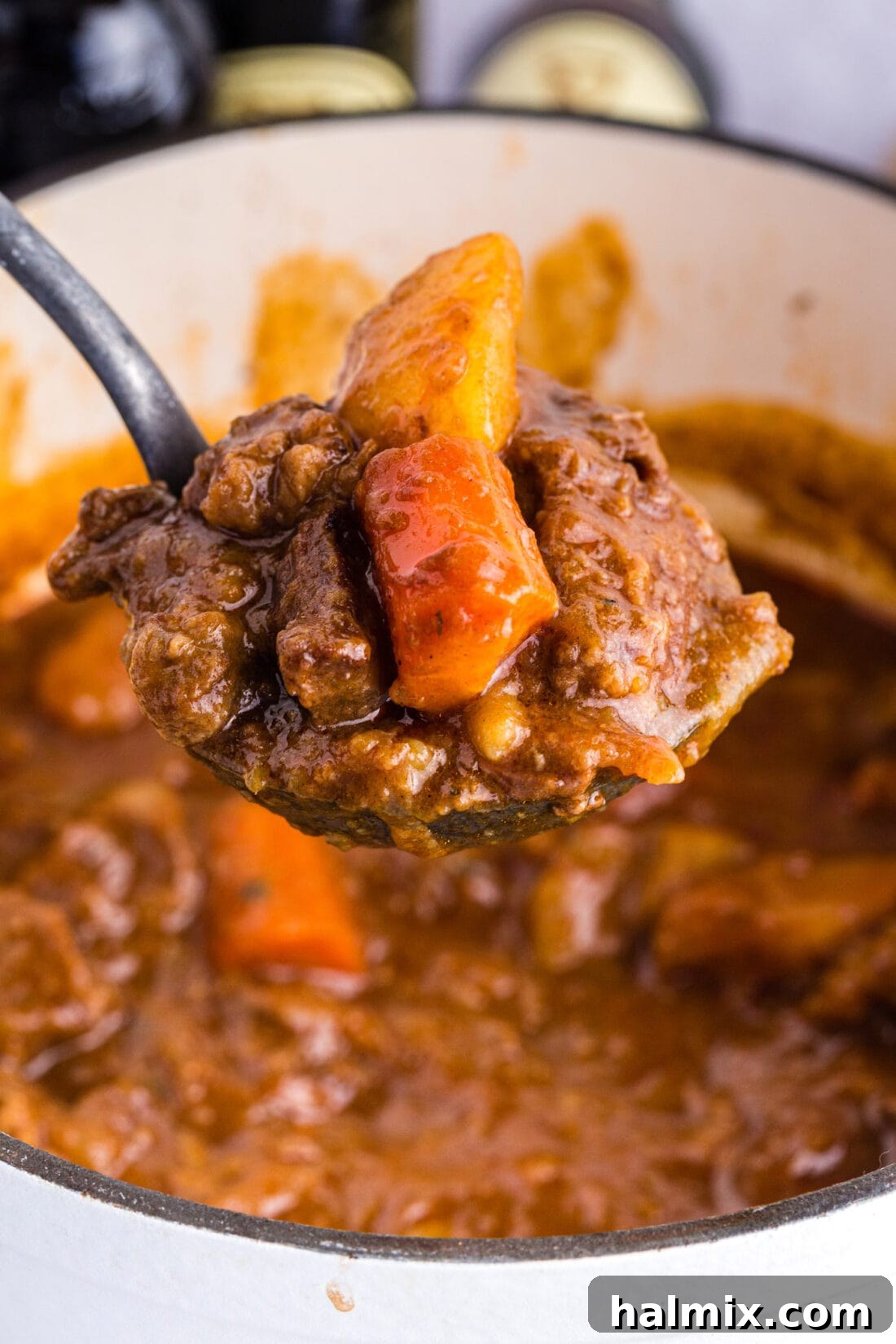
Essential Ingredients for Your Irish Stew
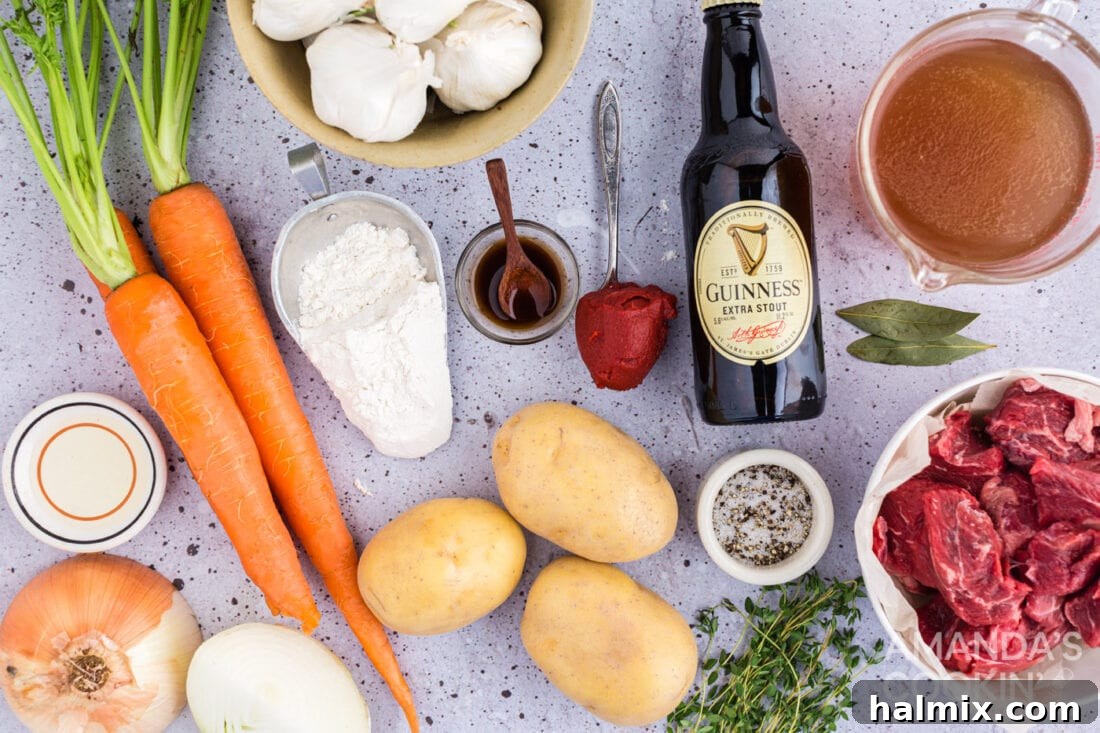
Crafting the perfect Irish stew begins with selecting high-quality ingredients. Here’s a closer look at what you’ll need and why each component is vital to the stew’s success. Remember, for precise measurements and detailed instructions, you can refer to the printable recipe card at the end of this post.
Meat Selection
- Beef Stew Meat (Chuck Roast): We recommend a good quality beef chuck roast, cut into 1.5 to 2-inch chunks. Chuck meat is ideal for stewing because it contains connective tissue that breaks down during long, slow cooking, resulting in incredibly tender and flavorful meat. While beef is our choice here, traditionalists can opt for lamb or mutton for a slightly gamey, authentic flavor.
Aromatics & Vegetables
- Onion: A large yellow or white onion, cut into substantial chunks, forms the aromatic base of the stew. As it sautés, it sweetens and contributes a fundamental layer of flavor.
- Garlic: Minced fresh garlic adds a pungent, savory depth that is indispensable in any stew. Be careful not to burn it during sautéing, as burnt garlic can turn bitter.
- Carrots: Large carrots, cut into hearty pieces, not only add a touch of sweetness and vibrant color but also bring a pleasant earthy flavor and texture that holds up well to slow cooking.
- Yellow Potatoes: We opt for yellow potatoes (like Yukon Gold) for their creamy texture and ability to absorb flavors without completely disintegrating. Cut them into generous chunks to ensure they don’t turn to mush during the extended simmer.
Liquids & Seasonings
- Guinness Beer: The star ingredient! A bottle of dry Irish stout is non-negotiable for that authentic, deep, malty flavor and rich dark color. Its bitterness mellows considerably during cooking, leaving a wonderful complexity.
- Beef Broth: High-quality beef broth or stock forms the main liquid base. Use a low-sodium version to control the overall saltiness of your stew.
- Worcestershire Sauce: A small amount adds a fantastic umami kick and a subtle tang that rounds out the savory profile.
- Tomato Paste: This concentrated ingredient provides a savory depth and helps to thicken the stew slightly, contributing to a rich mouthfeel.
- Bay Leaves: These aromatic leaves infuse the stew with a subtle, earthy, and slightly floral note, enhancing the overall flavor. Remember to remove them before serving.
- Fresh Thyme: Sprigs of fresh thyme contribute a classic herbaceous aroma and taste that pairs perfectly with beef and stout. A little extra for garnish adds visual appeal and fresh fragrance.
For Coating & Seasoning
- All-Purpose Flour: Used to coat the beef, it helps create a delicious crust during browning and acts as a thickening agent for the stew, ensuring a luscious gravy.
- Sea Salt & Black Pepper: Fundamental seasonings to bring out and enhance all the other flavors. Season generously, tasting and adjusting as you go.
Garnish (Optional, but Recommended)
- Fresh Parsley: Chopped fresh parsley adds a burst of freshness and color, brightening up the rich stew just before serving.
Mastering the Art of Irish Stew: A Step-by-Step Guide
These step-by-step photos and instructions are here to help you visualize how to make this recipe. You can Jump to Recipe to get the printable version of this recipe, complete with measurements and instructions at the bottom.
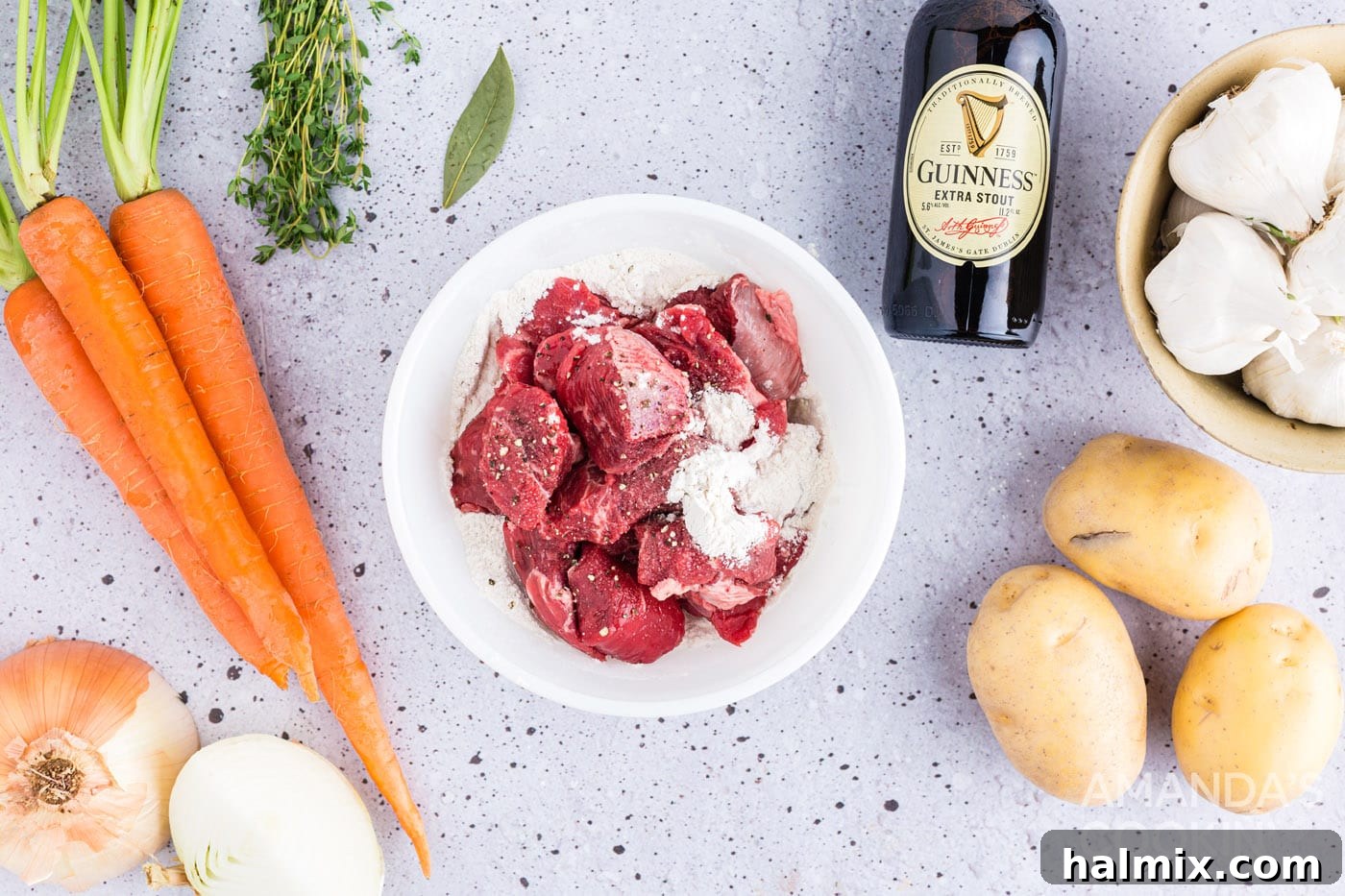
- Prepare the Beef: In a shallow dish or on a piece of parchment paper, combine the salt, pepper, and all-purpose flour. Add the beef stew meat and toss until each piece is evenly coated on all sides. This flour coating is key to developing a beautiful crust and helps to thicken the stew later.

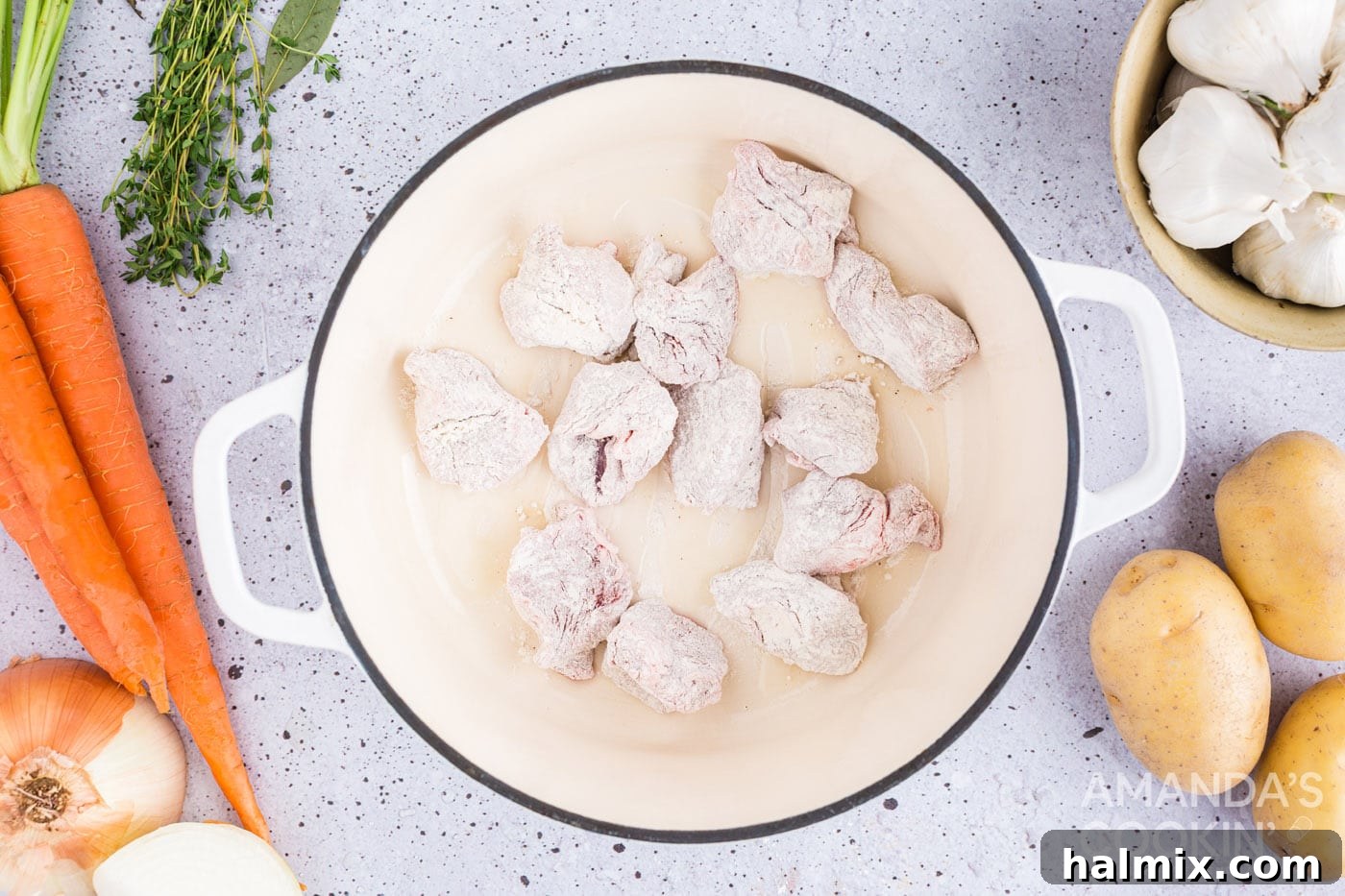
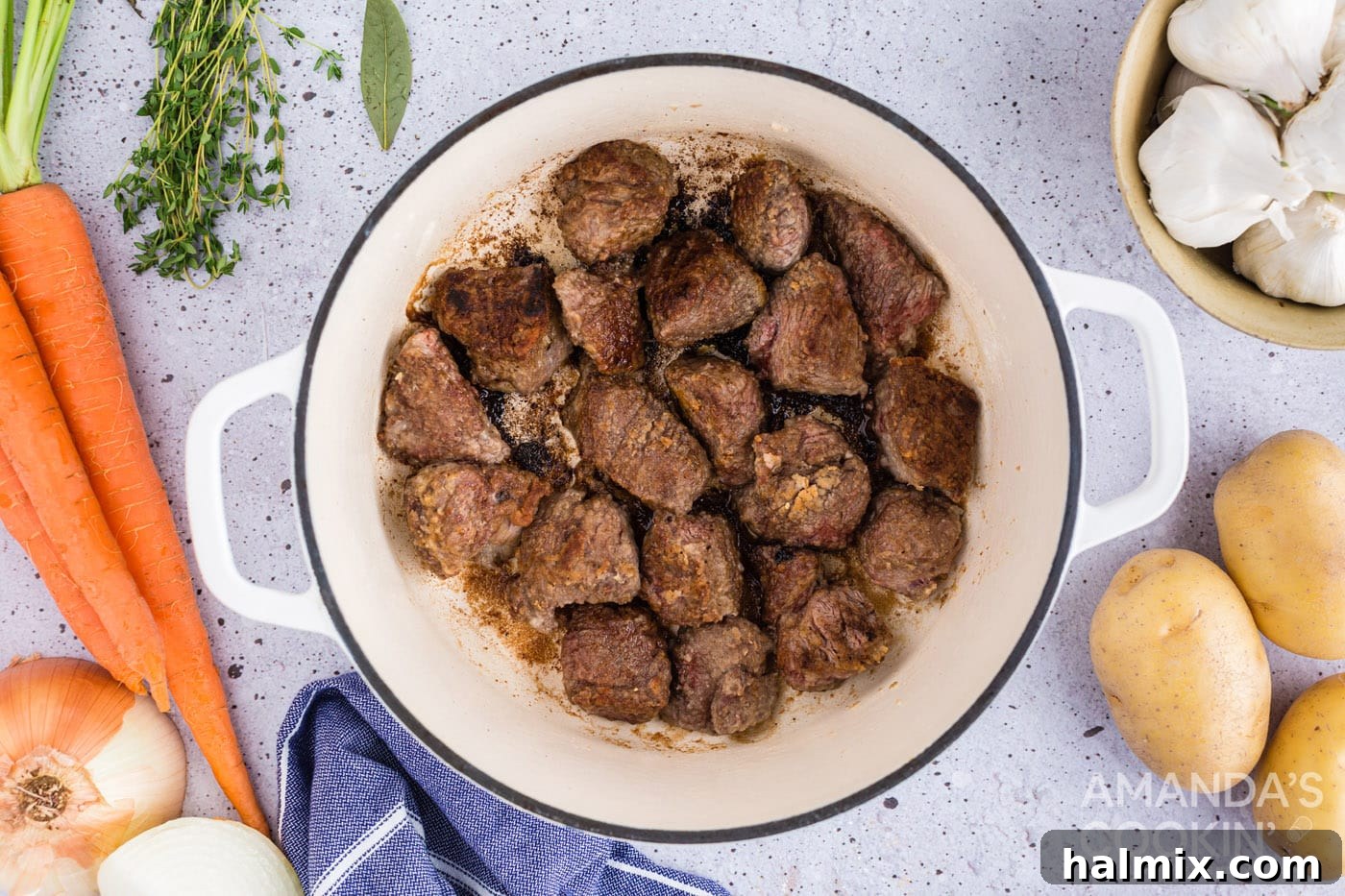
- Sear the Meat: Heat the olive oil (or canola oil) in a large Dutch oven or a sturdy stockpot over medium-high heat. Once the oil is shimmering, add the flour-coated stew meat in batches. It’s crucial not to overcrowd the pot, as this will steam the meat instead of browning it. Sear each batch for about 5 minutes, turning occasionally, until a deep golden-brown crust forms on all sides. This browning step (the Maillard reaction) is essential for developing rich, complex flavors.
- Remove and Reserve: Once all the meat is beautifully browned, remove it from the pot using a slotted spoon and set it aside on a plate.
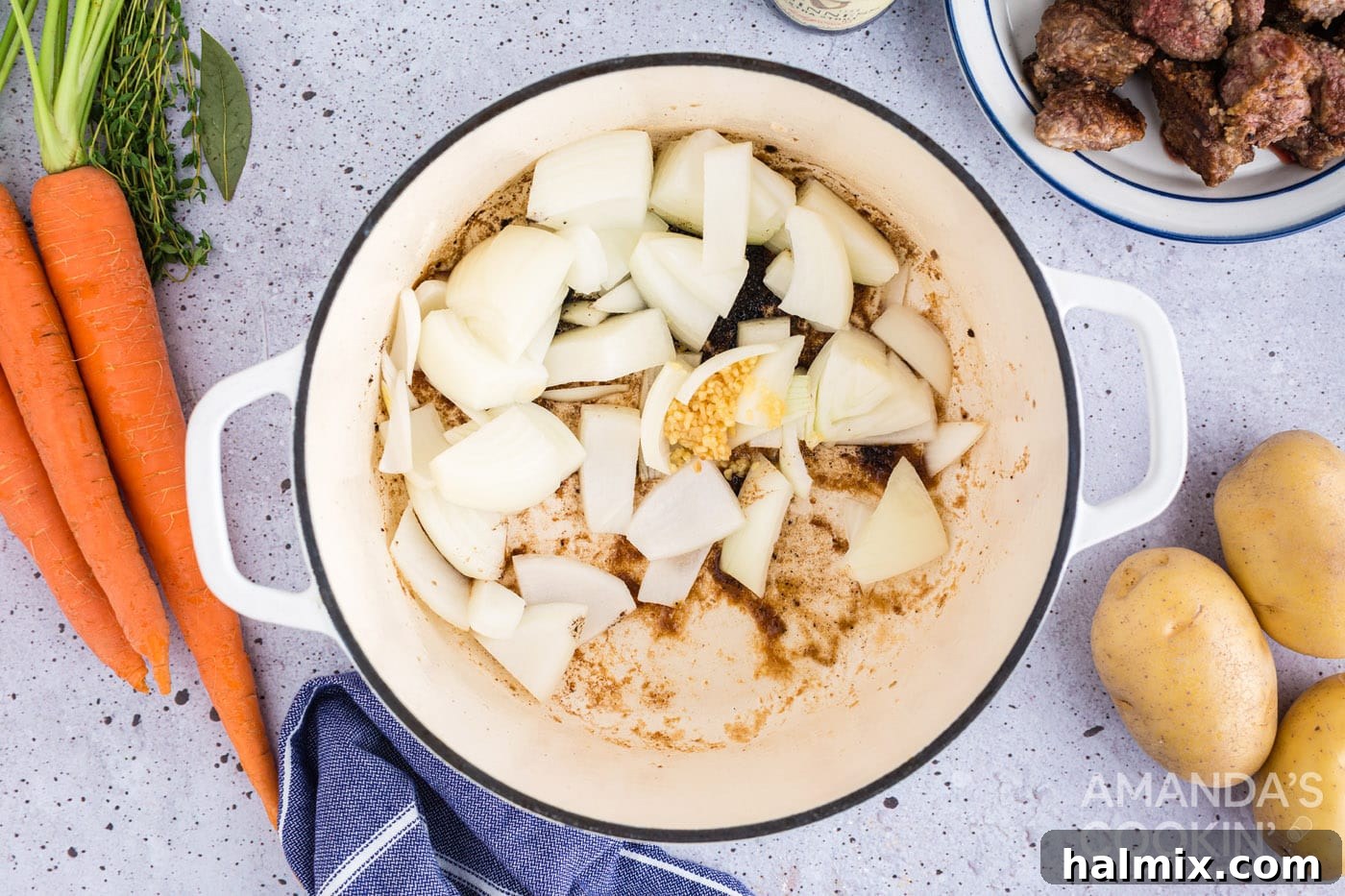
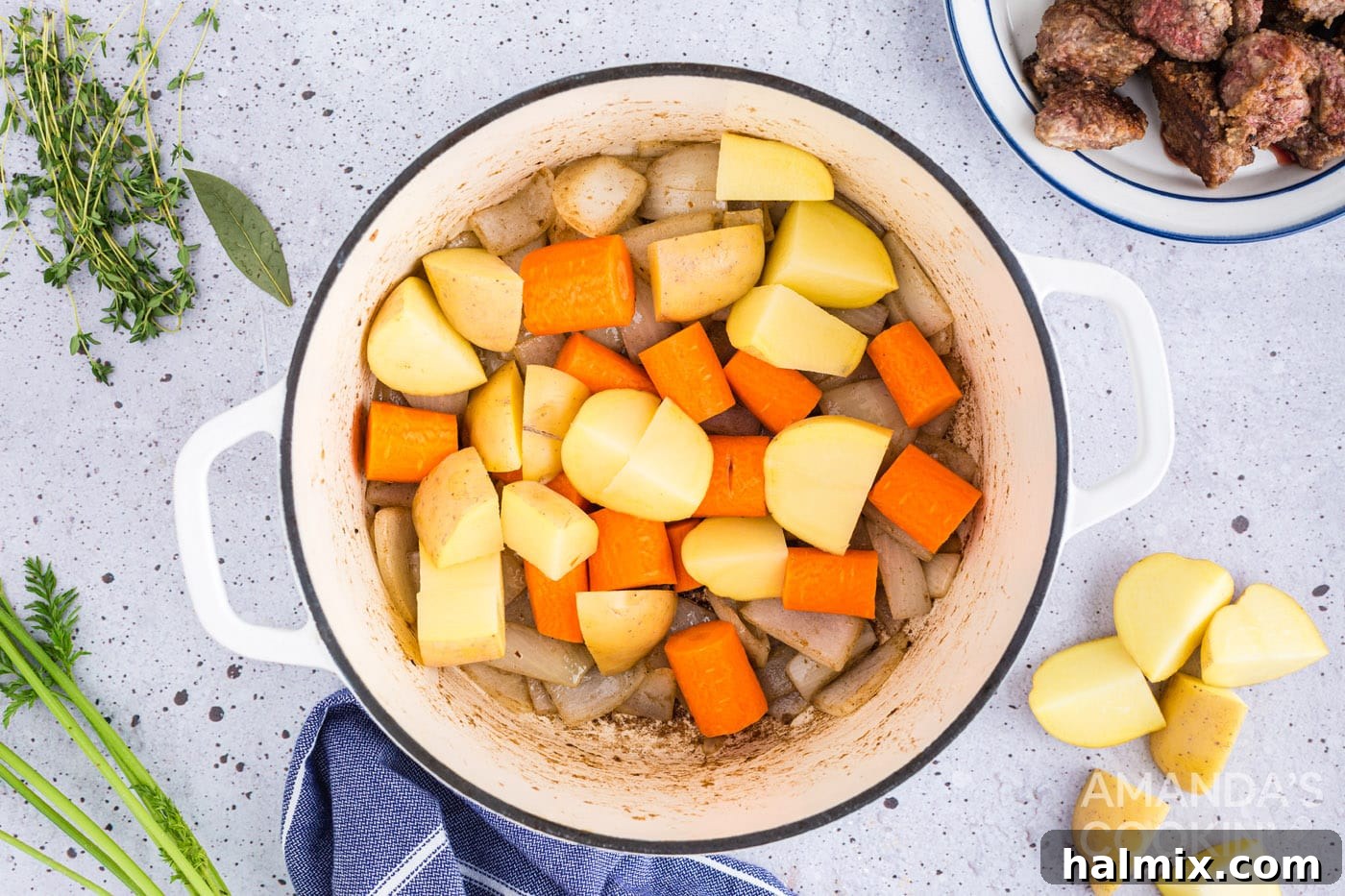
- Sauté the Aromatics: If needed, add a little more oil to the pot. Reduce the heat to medium. Add the chopped onion and minced garlic. Sauté for 3-5 minutes, stirring frequently, until the onions soften and become translucent, just beginning to caramelize around the edges. Be vigilant not to burn the garlic, as it can turn bitter very quickly. The fond (browned bits) at the bottom of the pot will begin to loosen during this step, adding more flavor.
- Add Vegetables and Meat: Layer the chunky potatoes and carrots over the softened onions and garlic in the pot. Then, return the browned stew meat to the pot, distributing it evenly over the vegetables.
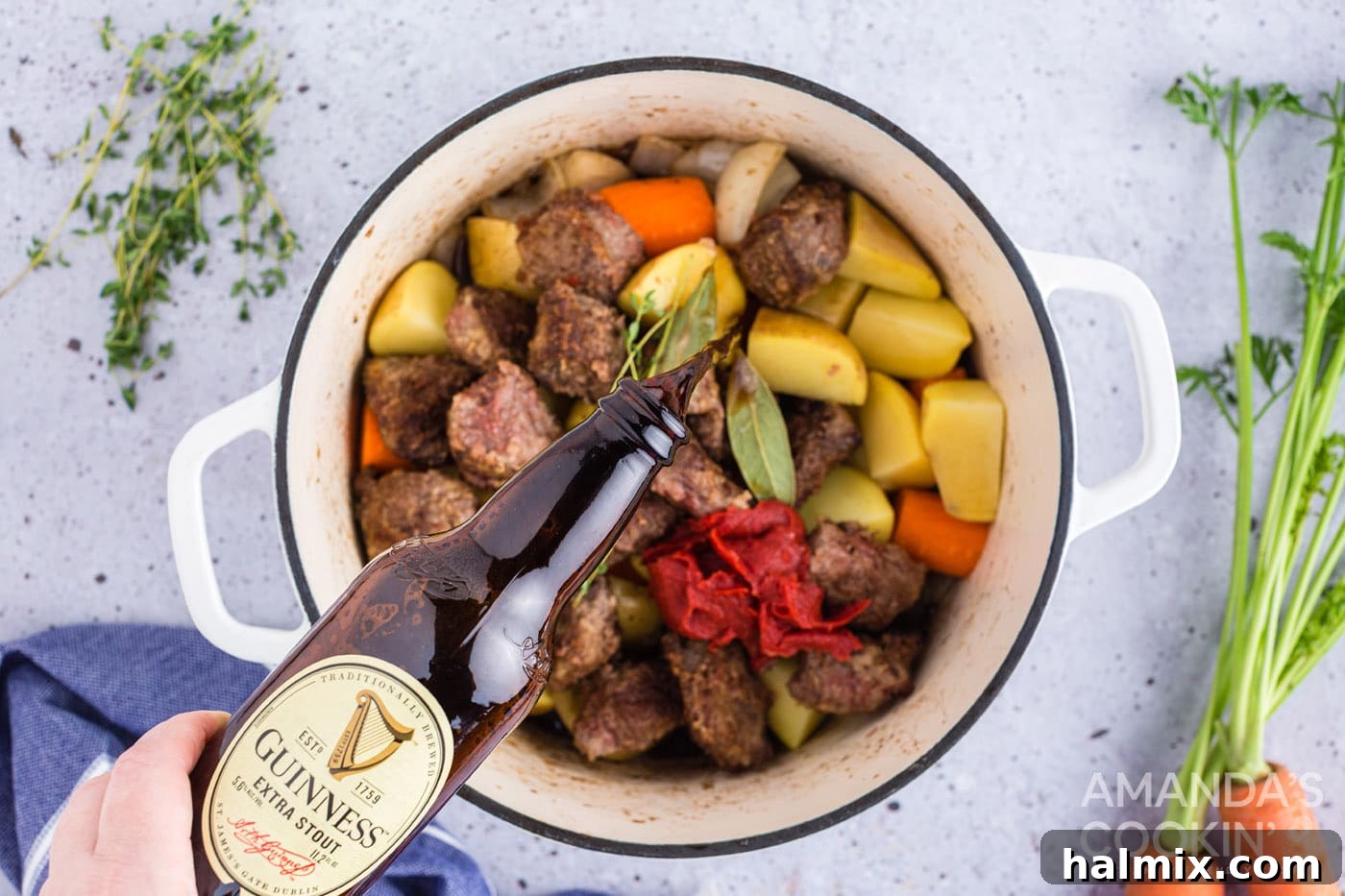
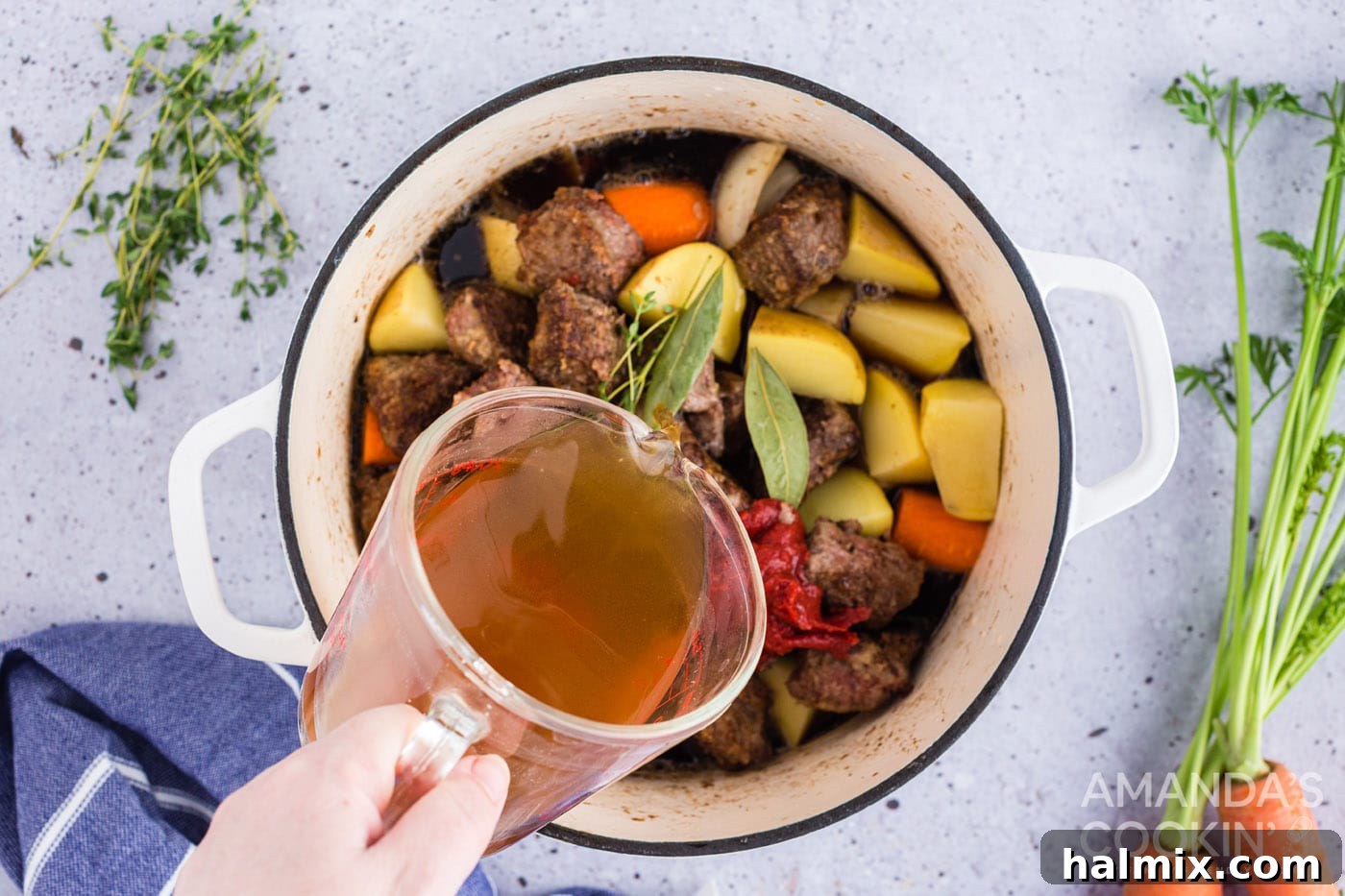
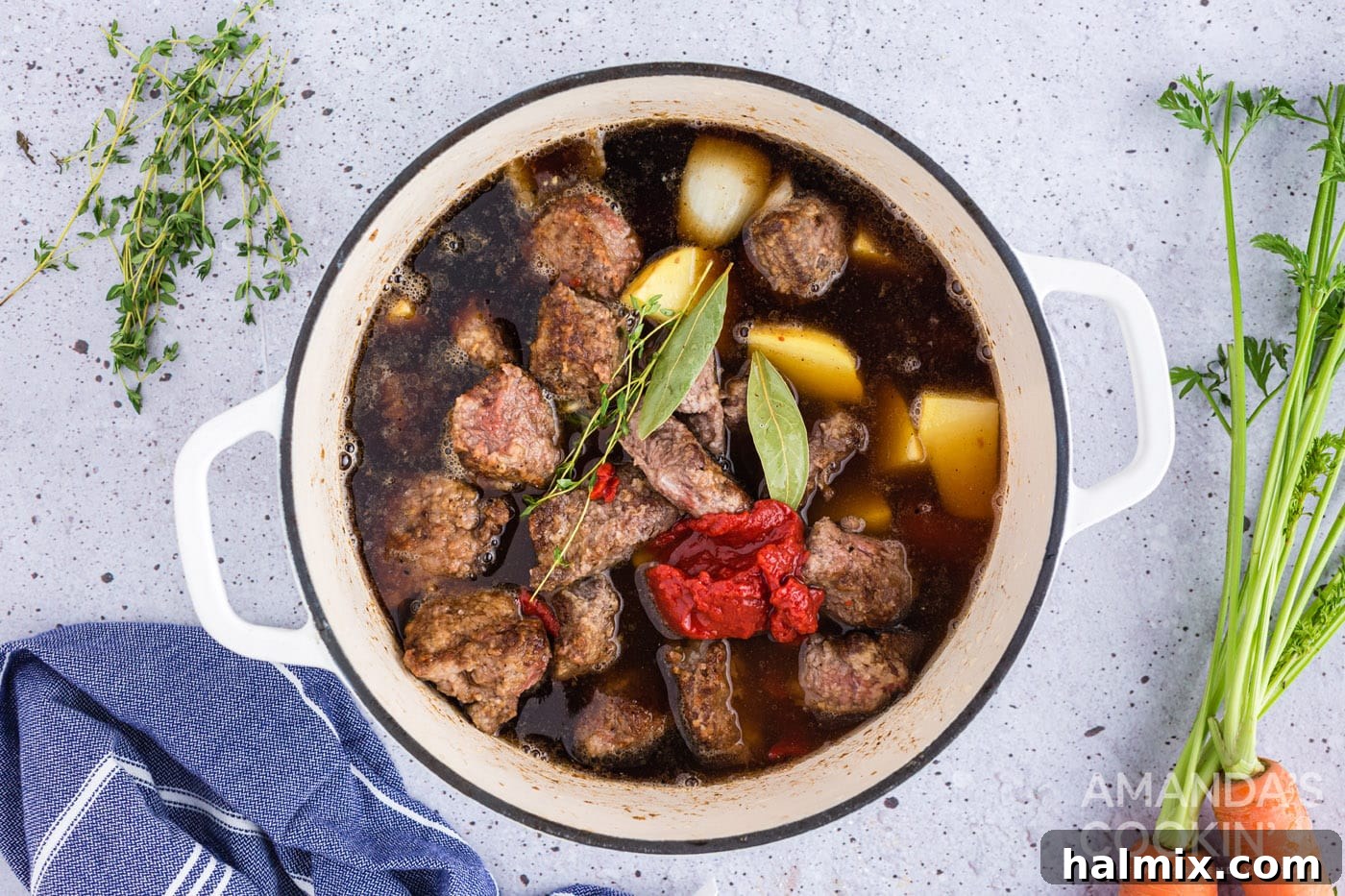
- Introduce the Liquids and Seasonings: Pour the entire bottle of Guinness beer and the beef broth over the ingredients in the pot. Add the Worcestershire sauce, tomato paste, bay leaves, and two sprigs of fresh thyme. Stir gently to combine everything, ensuring the tomato paste is well-distributed.
- Simmer to Perfection: Bring the stew to a gentle boil over medium-high heat. Once boiling, reduce the heat to low, ensuring a steady, slow simmer. Cover the pot with a lid and cook for approximately 2 hours. Stir occasionally, every 30-45 minutes, to prevent the stew from sticking to the bottom of the pot and to ensure even cooking. The goal is for the meat to become incredibly tender and the vegetables soft.
- Thicken and Finish: After 2 hours, remove the lid. Continue to simmer the stew uncovered for an additional 15-30 minutes, or until the liquid has reduced to your desired consistency. The stew should be thick enough to coat the back of a spoon, and the meat should be fall-apart tender when pierced with a fork. Taste and adjust seasonings if necessary. Remove the bay leaves and thyme sprigs before serving.
Frequently Asked Questions About Irish Stew
Absolutely! Irish stew freezes beautifully, making it an excellent meal prep option. Allow the stew to cool completely to room temperature before portioning it into freezer-safe containers or heavy-duty freezer bags. Ensure there’s minimal air in the containers to prevent freezer burn. It can be stored in the freezer for up to 3 months. When ready to enjoy, thaw overnight in the refrigerator and reheat gently on the stovetop or in the microwave until piping hot. You may need to add a splash of beef broth or water to adjust consistency if it thickens too much upon reheating.
While Guinness beer is a signature ingredient that gives Irish stew its distinctive robust flavor and dark color, you can substitute it if needed. For a similar depth, you can use strong black coffee, dry red wine (like a Cabernet Sauvignon or Merlot), or “no salt added” beef broth. Keep in mind that each substitute will slightly alter the final flavor profile. Coffee will offer a similar roasted, slightly bitter note, red wine will add fruitiness and acidity, and extra beef broth will yield a milder, less complex stew. If you omit the beer, consider adding a teaspoon of balsamic vinegar or a dash of liquid smoke for a hint of complexity.
Irish stew is a hearty meal on its own, but it pairs wonderfully with a few simple accompaniments. Crusty bread is always a fantastic choice for soaking up every last drop of the rich gravy. Try our amazing Italian bread, fluffy homemade biscuits, or savory herb buttermilk biscuits. A light, fresh side salad with a tangy vinaigrette offers a refreshing contrast to the richness of the stew. For a truly authentic Irish experience, serve it alongside some Colcannon (mashed potatoes with cabbage or kale) or some simple steamed green beans. A pint of Guinness or a dry red wine would also make excellent beverage pairings.
For the most tender and flavorful Irish stew, we highly recommend using beef chuck roast. This cut, also known as pot roast or blade roast, comes from the shoulder of the cow. It’s well-marbled with fat and connective tissue, which breaks down beautifully during long, slow cooking, resulting in succulent, fall-apart tender meat. Other suitable cuts include beef round (though it can be leaner) or short ribs, but chuck roast generally provides the best balance of flavor, tenderness, and texture for stewing.
Yes, this recipe can be adapted for both slow cookers and Instant Pots, making it even more convenient.
- Slow Cooker: After browning the meat and sautéing the aromatics on the stovetop (steps 1-4), transfer everything to your slow cooker. Add the remaining ingredients (Guinness, broth, seasonings, vegetables). Cook on low for 6-8 hours or on high for 3-4 hours, or until the beef is fork-tender.
- Instant Pot: Use the “Sauté” function to brown the beef in batches and sauté the onions and garlic directly in the Instant Pot. Deglaze the pot with a splash of broth or beer, scraping up any browned bits. Add the remaining ingredients. Seal the lid, set the vent to “Sealing,” and cook on “Manual” or “Pressure Cook” (High Pressure) for 35-45 minutes, followed by a 15-minute natural release. After releasing any remaining pressure, remove the lid, and simmer on “Sauté” for a few minutes if you desire a thicker consistency.
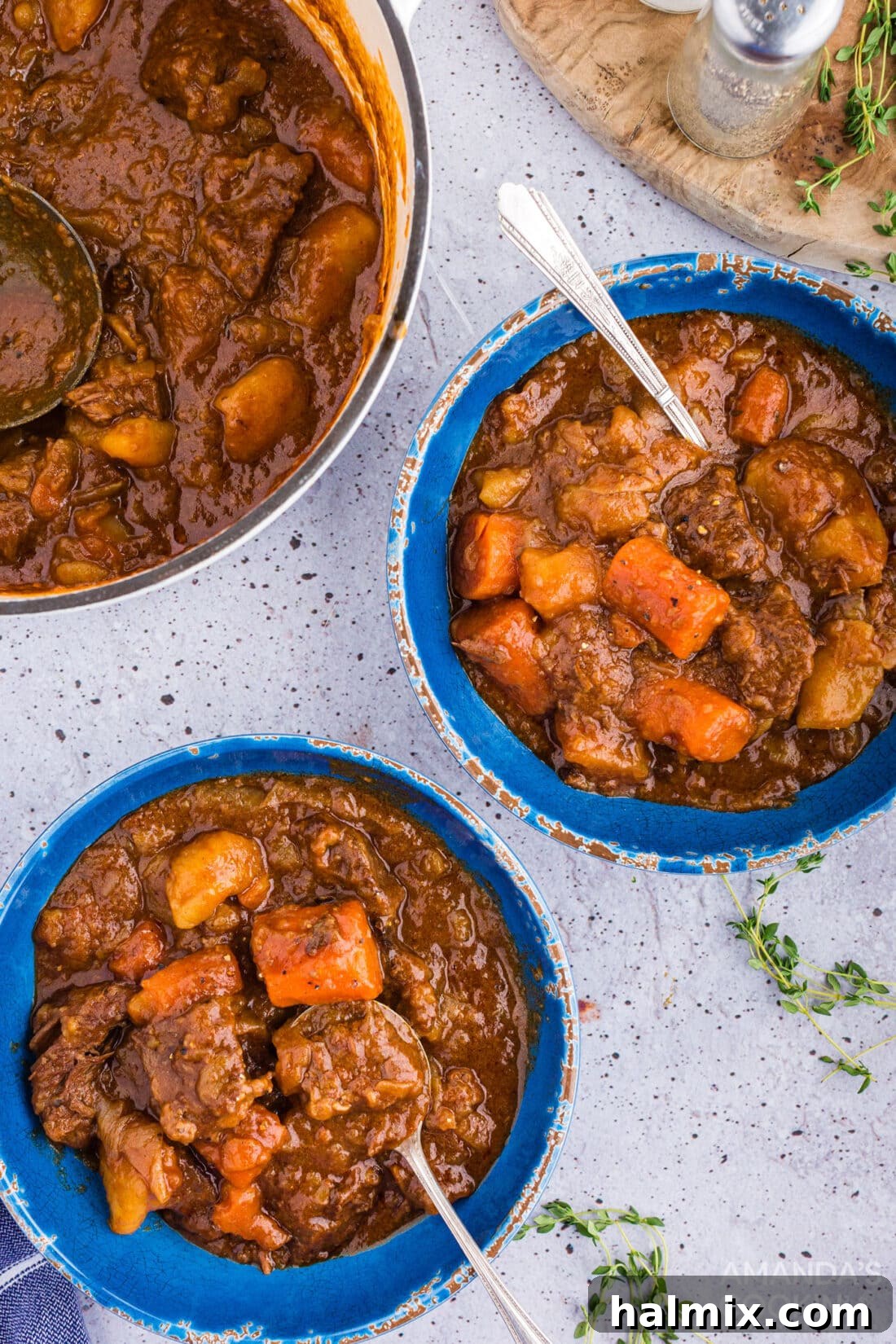
Elevate Your Irish Stew Experience
This beef stew is the epitome of comfort food, a dish where the tender, melt-in-your-mouth meat and savory broth are the stars. To truly complete the meal, consider a few thoughtful serving suggestions:
- Bread for Dipping: A rustic loaf of crusty bread, Irish soda bread, or a basket of warm, buttery biscuits are absolute must-haves. They’re perfect for soaking up every last drop of the rich, Guinness-infused gravy.
- Fresh Green Salad: A simple side salad with crisp greens and a light vinaigrette provides a refreshing contrast to the stew’s heartiness. It cleanses the palate and adds a touch of brightness to the meal.
- Garnish for Freshness: A sprinkle of freshly chopped parsley or a few extra sprigs of thyme just before serving not only adds a pop of color but also a fresh herbaceous aroma that enhances the stew’s appeal.
- Beverage Pairings: For an authentic experience, serve with a pint of stout, like Guinness, or a robust dry red wine. For non-alcoholic options, a sparkling cider or even a strong, dark coffee can complement the flavors.
- Complete the Irish Feast: If you’re hosting a St. Patrick’s Day celebration, consider serving the stew alongside traditional Irish sides such as Colcannon (mashed potatoes with kale or cabbage), Champ (mashed potatoes with scallions), or even a simple dish of roasted root vegetables.
However you choose to serve it, this Irish stew promises a delicious and heartwarming meal that your family and friends will absolutely love!
We hope you enjoy!
More Hearty Beef Recipes to Savor
If you’ve enjoyed this rich Irish Stew, you’ll be delighted to explore more of our comforting beef recipes. From classic hearty meals to quick and easy weeknight dinners, we have something for every beef lover. Discover new family favorites and expand your culinary repertoire with these delicious options:
- Creamy Beef Stroganoff
- Hearty Hamburger Stew
- Traditional Corned Beef and Cabbage
- Speedy Instant Pot Corned Beef
- Effortless Crockpot Corned Beef
- Classic Beef Bourguignon
I love to bake and cook and share my kitchen experience with all of you! Remembering to come back each day can be tough, that’s why I offer a convenient newsletter every time a new recipe posts. Simply subscribe and start receiving your free daily recipes!
Classic Irish Stew
IMPORTANT – There are often Frequently Asked Questions within the blog post that you may find helpful. Simply scroll back up to read them!
Print It
Pin It
Rate It
Ingredients
- 1 teaspoon sea salt
- 1 teaspoon black pepper
- ½ cup all purpose flour
- 1.5 lbs beef stew meat (chuck roast recommended)
- 2 Tablespoons olive oil or canola oil
- 1 large onion cut into large chunks
- 2 teaspoons minced garlic
- 3 large carrots cut into large chunks
- 3 yellow potatoes cut into large chunks
- 11.2 oz Guinness beer (1 bottle)
- 3 cups beef broth
- 1 teaspoon Worcestershire sauce
- 3 oz tomato paste
- 2 bay leaves
- 2 sprigs fresh thyme plus more for garnish
- fresh parsley chopped, for garnish (optional)
Equipment You’ll Need
-
Large Dutch oven or Stockpot
-
Cutting board and Knife
-
Slotted Spoon
Before You Begin
- Keep the vegetables and potatoes in large chunks so that they hold up to the lengthy cook time without becoming mushy.
- Ensure your beef stew meat is cut into roughly 1.5 to 2-inch pieces for even cooking and a substantial bite.
Instructions
-
Combine salt, pepper, and flour. Spread the flour mixture in a shallow dish or on parchment paper, then toss the beef stew meat in the mixture until all sides are evenly coated.
-
Heat olive oil over medium-high heat in a large Dutch oven or stockpot. Brown the stew meat in batches for about 5 minutes per batch, turning to create a golden-brown crust on all sides. Avoid overcrowding the pot to ensure proper searing.
-
Remove the browned meat from the pot and set it aside.
-
If necessary, add a little more oil to the pot. Add the chopped onion and minced garlic, and sauté for 3-5 minutes over medium heat, or until the onions soften and begin to caramelize slightly. Do not burn the garlic.
-
Add the chunky potatoes and carrots to the pot, layering them over the onion and garlic. Return the browned meat to the pot, placing it on top of the other ingredients.
-
Pour the Guinness beer and beef broth over the meat and vegetables. Stir in the Worcestershire sauce, tomato paste, bay leaves, and two sprigs of fresh thyme.
-
Bring the stew to a boil. Reduce the heat to low, cover the pot with a lid, and simmer for approximately 2 hours. Stir occasionally (every 30-45 minutes) to prevent sticking and ensure even cooking.
-
After 2 hours, remove the lid and continue simmering for another 15-30 minutes, or until the liquid has reduced to your desired consistency and the meat is fork-tender. Remove bay leaves and thyme sprigs before serving. Garnish with fresh parsley if desired.
Expert Tips & Storage
- For optimal flavor, consider making the stew a day in advance. Flavors deepen and meld beautifully overnight.
- Store any leftover stew in an airtight container in the refrigerator for up to 4 days.
- This stew freezes exceptionally well. Allow it to cool completely, then portion into freezer-safe containers and freeze for up to 3 months. Thaw in the refrigerator and reheat gently.
Nutrition Information
The recipes on this blog are tested with a conventional gas oven and gas stovetop. It’s important to note that some ovens, especially as they age, can cook and bake inconsistently. Using an inexpensive oven thermometer can assure you that your oven is truly heating to the proper temperature. If you use a toaster oven or countertop oven, please keep in mind that they may not distribute heat the same as a conventional full sized oven and you may need to adjust your cooking/baking times. In the case of recipes made with a pressure cooker, air fryer, slow cooker, or other appliance, a link to the appliances we use is listed within each respective recipe. For baking recipes where measurements are given by weight, please note that results may not be the same if cups are used instead, and we can’t guarantee success with that method.
This post was originally published here on February 15, 2021.