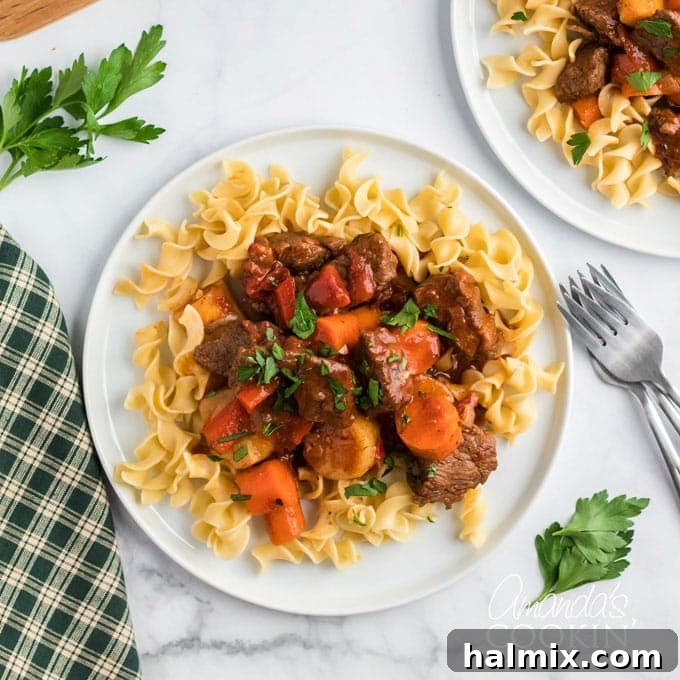
Growing up in a British household, certain dishes like Hungarian Goulash were simply not on our dinner rotation. My parents, like many, weren’t familiar with this hearty, flavorful stew. It wasn’t until I was married that I first encountered a version of goulash – the Americanized take, often featuring ground beef, an abundance of green peppers, and a tomato sauce served over macaroni noodles. This rendition, while comforting, was a far cry from its European origins, often reminding me of a dish quite similar to chili mac.
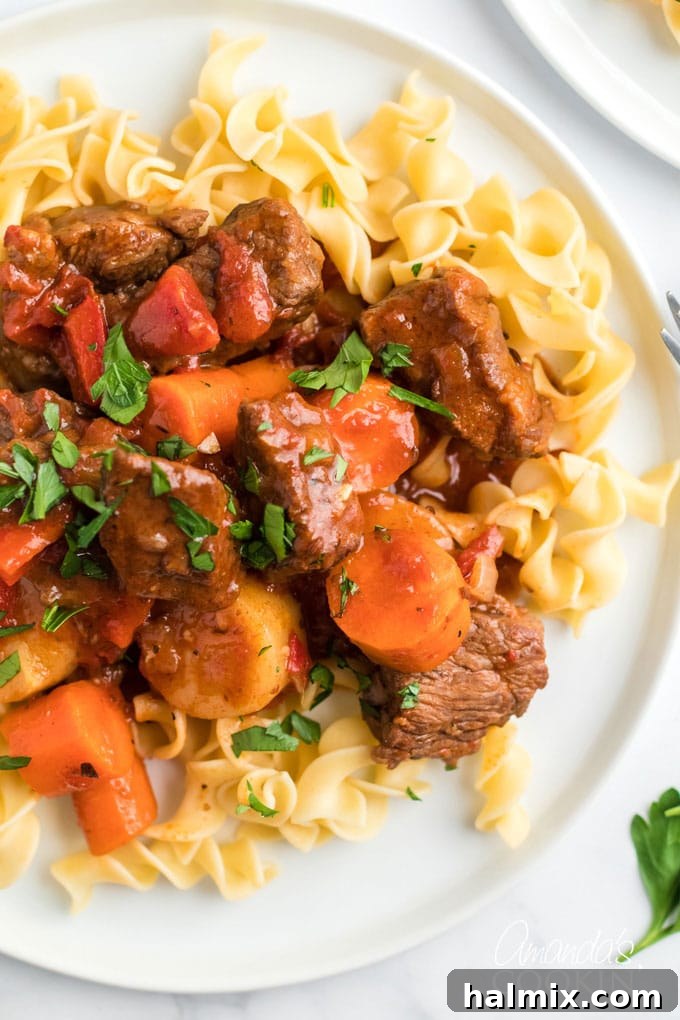
Authentic Slow Cooker Hungarian Goulash with Noodles
For those seeking a deeply satisfying meal, authentic Hungarian Goulash stands apart. It’s a dish rich in history and flavor, a true testament to the culinary heritage of Hungary. Unlike the quick ground beef versions, traditional goulash is a slow-cooked masterpiece, transforming humble ingredients into a luxurious, tender, and incredibly aromatic stew. My journey to discover the true essence of Hungarian goulash led me to a delicious revelation: it’s not just a meal; it’s an experience, especially when prepared in the slow cooker, allowing its complex flavors to meld beautifully over hours.
What Makes Hungarian Goulash Truly Hungarian?
After diving into research, I discovered that goulash has undergone countless adaptations across different cultures. However, the heart of Hungarian goulash remains consistent: it’s a rustic, substantial dish that blurs the line between a thick soup and a rich stew, largely dependent on the liquid content and your personal preference. The defining characteristic, without a doubt, is the generous use of sweet Hungarian paprika, which lends its signature vibrant color and distinctive, mellow spice. Crucially, I learned that authentic goulash is made with beef chuck roast, not ground beef, a detail that immediately elevated my perception of the dish.
The History of a Hearty Stew
The origins of goulash trace back to medieval Hungary, where it was primarily a meal for shepherds and herdsmen. The name “gulyás” itself translates to “herdsman” in Hungarian. These cowboys would cook their beef over an open fire in a “bogrács” (a cauldron), creating a simple yet incredibly nourishing stew. Over centuries, the dish evolved, incorporating new ingredients like potatoes and sweet peppers introduced to Europe, and, most importantly, paprika, which became widely available in the 18th century. Today, it stands as a national dish, revered for its comforting qualities and deep, savory taste.
ANOTHER RECIPE YOU MIGHT LIKE: Crockpot Lasagna
Why the Slow Cooker is Perfect for Goulash
The beauty of using a slow cooker for Hungarian Goulash cannot be overstated. This method ensures the beef chuck roast breaks down into incredibly tender, melt-in-your-mouth pieces, while all the flavors from the paprika, caraway, marjoram, and vegetables have ample time to intertwine. It’s a set-it-and-forget-it approach that yields a dish far superior to quicker stovetop methods, making it ideal for busy weeknights or relaxed weekend cooking. The low and slow cooking process allows the connective tissues in the beef to gelatinize, enriching the sauce and creating that luxurious, full-bodied texture that is a hallmark of truly great goulash. This method also allows for a deeper flavor extraction from the aromatic spices and vegetables, resulting in a robust and deeply satisfying stew that warms you from the inside out.
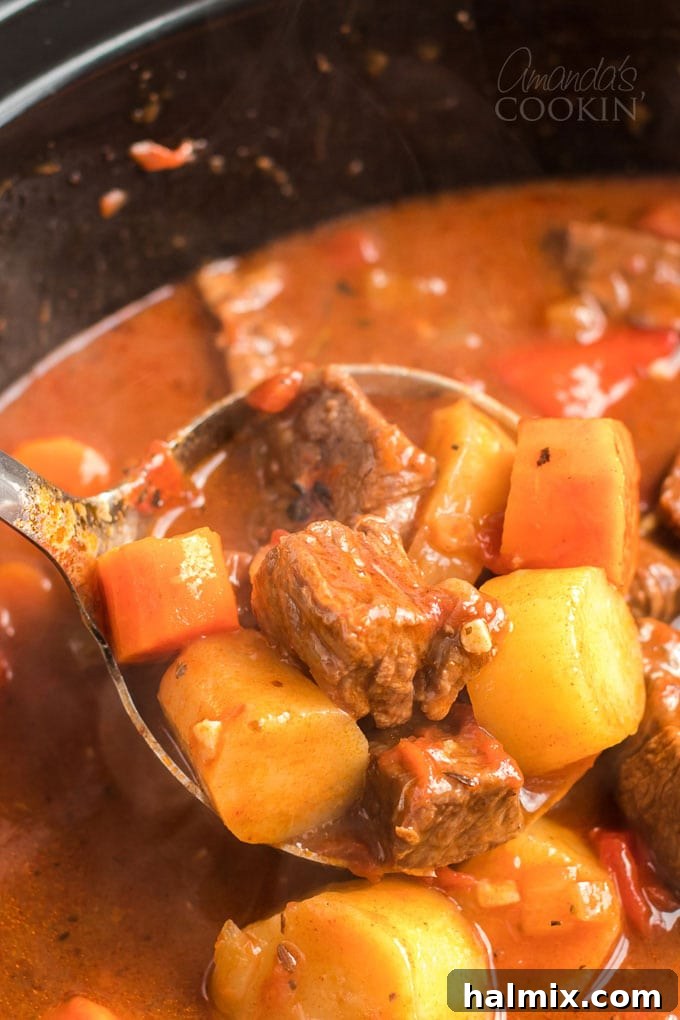
My initial foray into making this traditional dish involved extensive research to ensure I honored its Hungarian roots while adapting it slightly to my own taste. And that’s the beauty of goulash – while core elements remain, there’s a wonderful flexibility for personal touches. The goal was to create a recipe that captures the soul of Hungarian goulash: rich, savory, and incredibly comforting, with tender beef and a beautifully spiced broth.
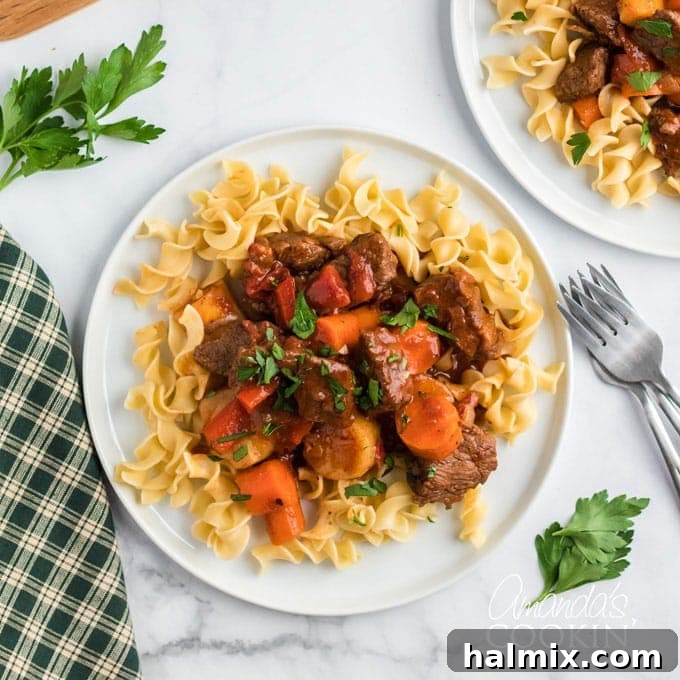
Ingredient Spotlight: Crafting the Perfect Goulash
The secret to an outstanding Hungarian Goulash lies in a few key ingredients, each playing a vital role in developing its signature flavor and texture. Choosing quality ingredients will make all the difference in your final dish.
The Best Beef for Goulash: Chuck Roast
Beef chuck roast is the star of this stew for a good reason. This cut comes from the shoulder of the cow and is rich in connective tissue and marbling. While initially tough, these elements break down beautifully during long, slow cooking, yielding incredibly tender, flavorful meat that practically melts in your mouth. Cutting it into 1-inch cubes ensures even cooking and perfect bite-sized pieces.
The Soul of the Dish: Hungarian Paprika
Do not underestimate the importance of quality paprika. Sweet Hungarian paprika is non-negotiable for this recipe. It’s distinct from smoked paprika or generic paprika, offering a mild sweetness and vibrant red color without excessive heat. It provides the foundational flavor that defines Hungarian goulash. Ensure your paprika is fresh for the best results, as older paprika can lose its potency and color.
Aromatic Foundations: Caraway Seeds, Marjoram, Onion & Garlic
Caraway seeds provide a subtle, earthy, and slightly anise-like flavor that is classic in Hungarian cuisine and pairs wonderfully with beef and paprika. Dried marjoram adds a delicate, savory, and slightly sweet herbal note. Alongside the essential chopped yellow onion and minced garlic, these aromatics form the deeply savory base of our goulash, building layers of flavor from the very beginning.
For Hungarian Goulash you will need:
- 2 pounds beef chuck roast cut into 1-inch cubes
- 1/4 cup sweet paprika
- 1 teaspoon caraway seeds
- 2 teaspoons dried marjoram
- 2 teaspoon Kosher salt
- 1/2 teaspoon freshly ground black pepper
- 1 heaping tablespoon all purpose flour
- 3 tablespoons olive oil
- 1 large yellow onion chopped
- 1 teaspoon minced garlic about two cloves
- 1 14- ounce can fire roasted diced tomatoes undrained
- 3 cups beef broth
- 2 tablespoons Worcestershire sauce
- 4 medium carrots cut into 1/2″ pieces
- 3 medium parsnips cut into 1/2″ pieces
- 5 oz sweet peppers chopped
- 2 tablespoons cornstarch
- Egg noodles (for serving)
Helpful kitchen tools:
- Crockpot
- Skillet
- Measuring spoons
- Liquid measuring cup
How to Make Flavorful Slow Cooker Hungarian Goulash
Preparing this Hungarian Goulash in a slow cooker simplifies the process while maximizing flavor. A small amount of initial prep work on the stovetop ensures a rich, savory depth that can’t be achieved with simply combining raw ingredients.
- First, begin by preparing your beef chuck roast. Cut it into uniform 1-inch cubes. This size allows the meat to become wonderfully tender without disintegrating during the long cooking time.
- In a gallon-sized zipper plastic bag, combine the sweet paprika, caraway seeds, dried marjoram, Kosher salt, freshly ground black pepper, and the heaping tablespoon of all-purpose flour. This seasoned flour mixture will not only flavor the beef but also help create a thicker, more cohesive sauce for your goulash.
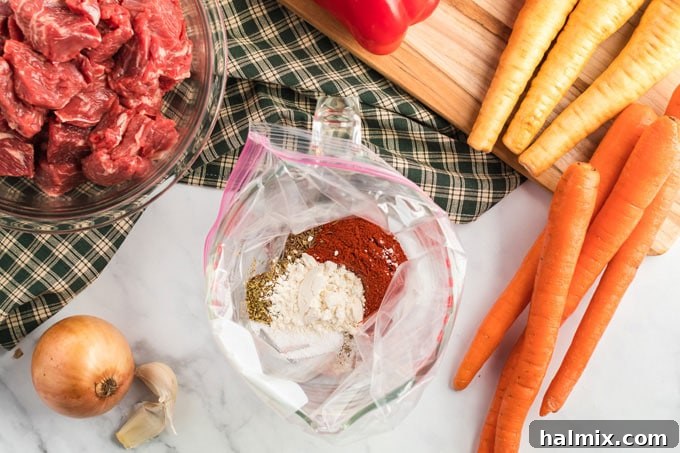
- Add the cubed beef to the bag, seal it tightly, and shake vigorously until each piece of meat is evenly coated with the spice and flour mixture. This step is crucial for building flavor and texture.
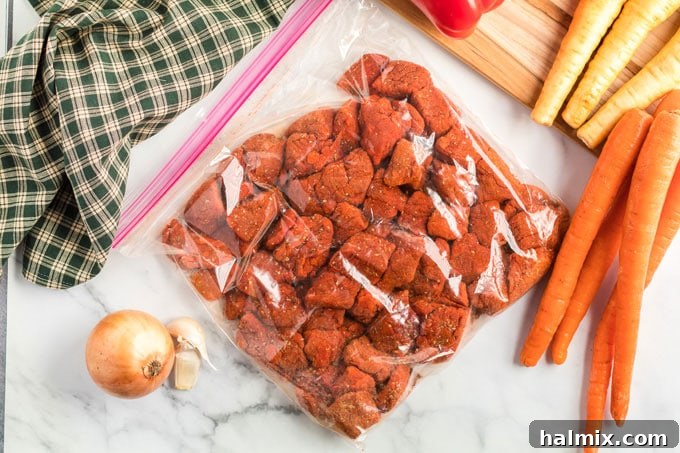
- Heat the olive oil in a large skillet over medium-high heat. Sauté the chopped yellow onion until it softens and becomes translucent, typically 3-4 minutes. Add the minced garlic and cook for another 30 seconds until fragrant. Then, add the entire contents of the meat-shaking bag to the onion and garlic mixture in the skillet. Ensure you scrape out any extra spice mixture from the bag and add it to the skillet. Brown the meat on all sides, turning occasionally. This browning step is essential for developing a deep, rich flavor in your goulash.
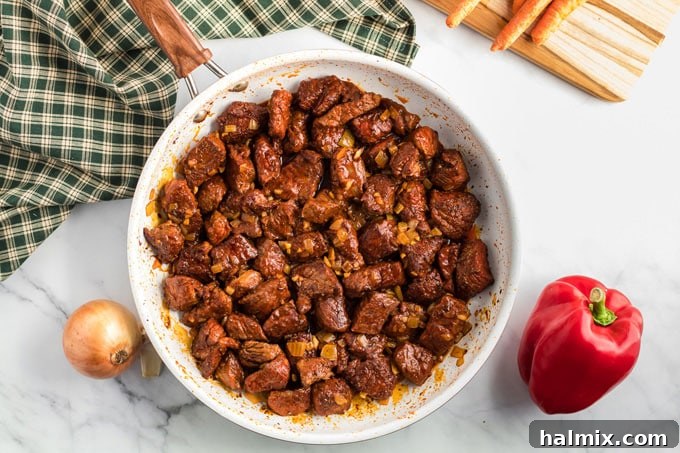
- Stir in the undrained can of fire-roasted diced tomatoes. The juices from the tomatoes will deglaze the pan, picking up all the flavorful browned bits from the bottom. Turn off the heat.
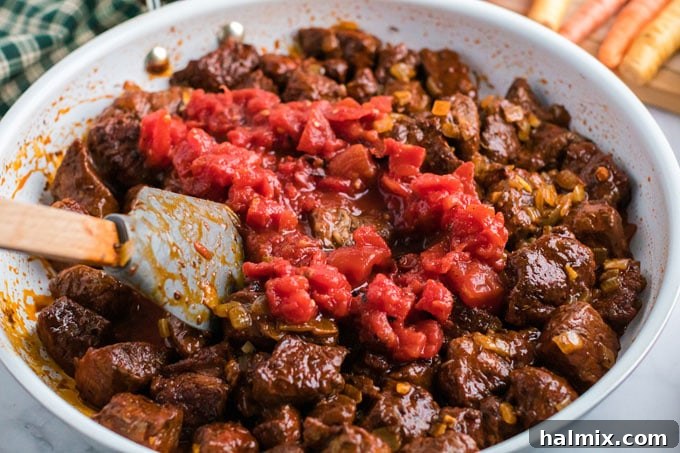
- Carefully transfer the meat mixture from the skillet to the slow cooker crock. Use a rubber spatula to ensure you get every last drop of the rich sauce from the skillet – it’s packed with flavor!
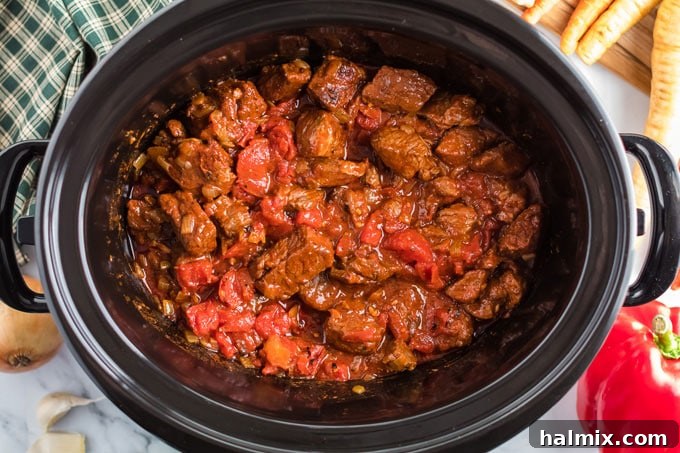
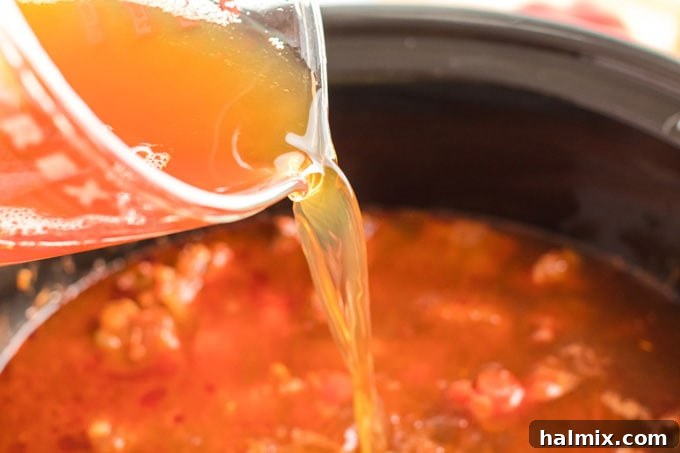
- Pour in the beef broth and Worcestershire sauce, stirring gently to combine. Add the cut parsnips and carrots, stirring once more to distribute them evenly. Cover the slow cooker and cook on high for 4-5 hours, or on low for 6-8 hours, until the beef and vegetables are exceptionally tender.
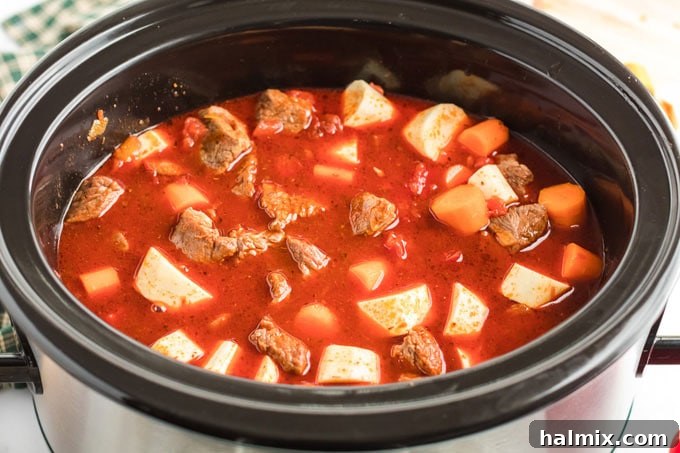
- During the final hour of cooking, add the chopped sweet peppers to the slow cooker. This allows them to soften slightly while retaining some of their vibrant color and fresh taste.
- Once the cooking time is nearly complete, remove the lid from the slow cooker and turn the setting to high. Simultaneously, place a large pot of water on the stove and bring it to a rolling boil for your egg noodles.
- To thicken the goulash, remove about 1/4 cup of the hot liquid from the slow cooker.
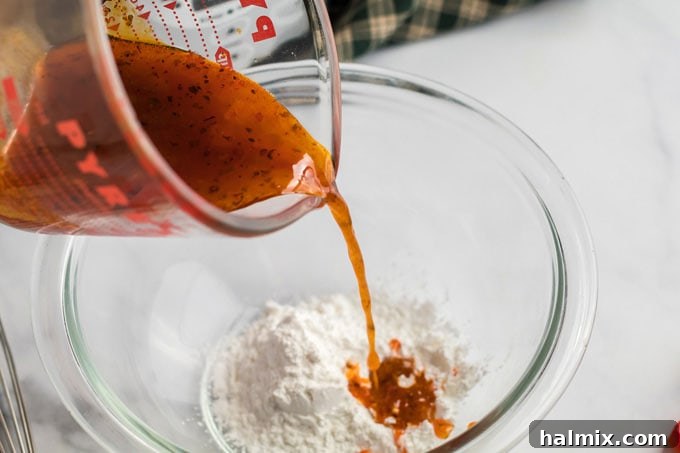
- In a medium bowl, measure out the cornstarch. Slowly add the reserved hot liquid from the slow cooker to the cornstarch, stirring continuously to create a smooth slurry. The key here is to add small amounts of liquid at a time and stir thoroughly; adding it all at once can cause the cornstarch to clump, making it difficult to smooth out. Once you have a thin, smooth cornstarch mixture, pour it into the slow cooker and stir well. Allow the goulash to cook on high, uncovered, for an additional 15-30 minutes, or until the stew has thickened to your desired consistency while your egg noodles cook.
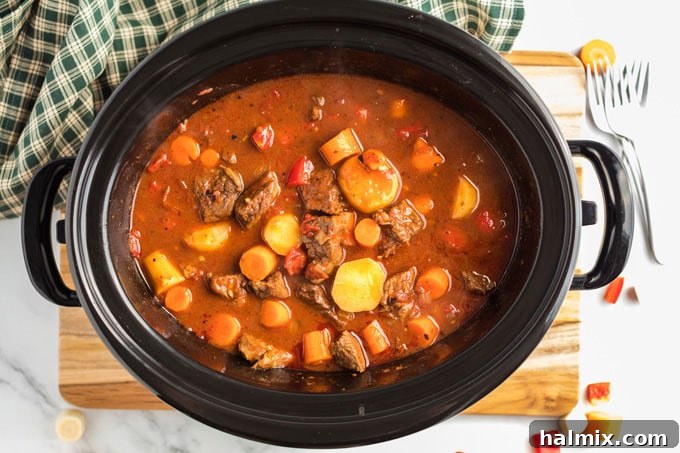
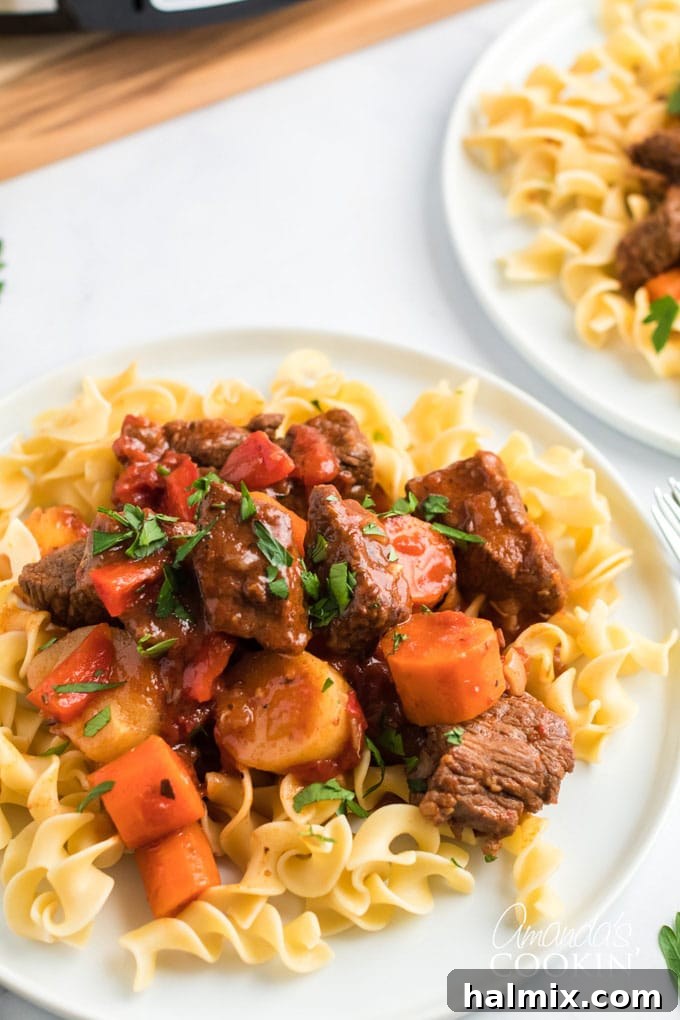
- Add your egg noodles to the boiling water and cook according to the package directions until al dente. Drain the noodles thoroughly. Serve the piping hot, thickened Hungarian goulash generously spooned over the cooked egg noodles.
Serving Suggestions and Variations
While egg noodles are a classic accompaniment to Hungarian Goulash, there are many delicious ways to serve and customize this versatile dish. For an extra touch of authenticity and creaminess, a dollop of sour cream or plain Greek yogurt is highly recommended just before serving. A sprinkle of fresh parsley or chives adds a bright, herbaceous finish.
Classic Pairings
Beyond egg noodles, consider serving your goulash with:
- Crusty Bread: Perfect for soaking up every last drop of the rich, savory sauce.
- Mashed Potatoes: A comforting alternative to noodles, offering a creamy base for the stew.
- Spaetzle: Small German or Hungarian dumplings that provide a delightful texture.
- Rice: For a gluten-free option, white or brown rice works wonderfully.
Recipe Variations
Feel free to experiment with your goulash to suit your preferences:
- Add Potatoes: If you prefer potatoes cooked directly in the stew, add peeled and cubed potatoes (such as Yukon Gold or red potatoes) along with the carrots and parsnips.
- Spice Level: For a spicier goulash, you can add a pinch of hot Hungarian paprika or a small amount of cayenne pepper along with the sweet paprika.
- More Vegetables: Bell peppers (red, yellow, or orange) can be added with the sweet peppers for extra color and flavor. You could also include mushrooms or celery.
- Thicker Broth: If you prefer an even thicker stew, you can increase the amount of cornstarch in the slurry or add a small amount of tomato paste at the browning stage for deeper umami.
Storage and Reheating Tips
Hungarian Goulash is one of those wonderful dishes that often tastes even better the next day as the flavors continue to meld and deepen. This makes it an excellent meal prep option!
- Refrigeration: Store leftover goulash in an airtight container in the refrigerator for up to 3-4 days. It will thicken considerably as it cools.
- Freezing: Goulash freezes beautifully. Transfer cooled goulash to freezer-safe containers or heavy-duty freezer bags, leaving some headspace. It can be stored in the freezer for up to 3 months. Thaw overnight in the refrigerator before reheating.
- Reheating: Gently reheat goulash on the stovetop over medium-low heat, stirring occasionally, until heated through. If it’s too thick, you can add a splash of beef broth or water to achieve your desired consistency. Microwave reheating is also an option for individual portions.
Frequently Asked Questions About Hungarian Goulash
- What kind of paprika should I use?
- Always use sweet Hungarian paprika for an authentic flavor and vibrant color. Avoid hot paprika unless you specifically want a spicy goulash, and avoid generic paprika which lacks the distinct flavor profile.
- Can I make this goulash without a slow cooker?
- Yes, you can! After browning the meat and sautéing the aromatics in a Dutch oven, add all the remaining ingredients (except cornstarch and sweet peppers) and bring to a simmer. Cover tightly and cook in a preheated oven at 325°F (160°C) for 2.5-3 hours, or on the stovetop over very low heat for 2-3 hours, or until the beef is tender. Add sweet peppers during the last 30-60 minutes, and thicken with cornstarch slurry as directed.
- Can I use a different cut of beef?
- While beef chuck roast is highly recommended for its tenderness and flavor when slow-cooked, you could use beef stew meat, boneless short ribs, or even a brisket flat. Ensure the cut is suitable for slow cooking to achieve the desired tender texture.
- Is Hungarian Goulash spicy?
- Traditional Hungarian Goulash, made with sweet paprika, is not inherently spicy. It’s rich in flavor with a gentle warmth. If you prefer a kick, you can add a small amount of hot Hungarian paprika or a pinch of cayenne pepper.
- Can I add potatoes directly to the slow cooker?
- Absolutely! If you wish to include potatoes in your goulash, add cubed potatoes (such as Yukon Gold or red potatoes) along with the carrots and parsnips. They will cook down beautifully with the stew.
More Slow Cooker Recipes You’ll Love
If you’re a fan of the convenience and incredible flavor that slow cooker meals offer, be sure to explore more of our favorites:
- Creamy Crockpot Mac and Cheese
- Our family favorite: Tender Crockpot Roast Beef
- Irresistible Mississippi Pot Roast
- Comforting Crockpot Beef Stroganoff
- Easy Slow Cooker BBQ Meatball Subs
- Hearty Slow Cooker Pinto Beans
- Classic Beef Bourguignon (slow cooked!)
Slow Cooker Hungarian Goulash & Noodles
Hungarian goulash is similar to a soup or stew, depending on the thickness of your liquids, and usually contains a large amount of paprika. This slow-cooked version ensures incredibly tender beef and deep, rich flavors.
Rating: 5 out of 5 stars from 29 votes
IMPORTANT – There are often Frequently Asked Questions within the blog post that you may find helpful. Simply scroll back up to read them!
Print Recipe | Rate It
- Course:
- Dinner
- Cuisine:
- Hungarian
- Servings:
- 6 servings
- Prep time:
- 20 mins
- Cook time:
- 6 hrs
- Total time:
- 6 hrs 20 mins
- Calories:
- 485
- Author:
- Amanda Davis
Ingredients
- 2 pounds beef chuck roast cut into 1-inch cubes
- ¼ cup sweet paprika
- 1 teaspoon caraway seeds
- 2 teaspoons dried marjoram
- 2 teaspoon Kosher salt
- ½ teaspoon freshly ground black pepper
- 1 heaping tablespoon all purpose flour
- 3 tablespoons olive oil
- 1 large yellow onion chopped
- 1 teaspoon minced garlic about two cloves
- 1 14- ounce can fire roasted diced tomatoes undrained
- 3 cups beef broth
- 2 tablespoons Worcestershire sauce
- 4 medium carrots cut into 1/2″ pieces
- 3 medium parsnips cut into 1/2″ pieces
- 5 oz sweet peppers chopped
- 2 tablespoons cornstarch
- Egg noodles
Before You Begin
Over the years goulash has been adapted in many forms and it’s different for everyone. Hungarian goulash is similar to a soup or stew, depending on the thickness of your liquids, and usually contains a large amount of paprika.
Instructions
- Combine paprika, caraway seeds, marjoram, Kosher salt, flour, and black pepper in a large plastic zipper bag. Place cubed meat into the bag and close, then shake to coat.
- Sauté chopped onion in olive oil until tender, about 3-4 minutes. Add garlic and sauté another 30 seconds.
- Add entire contents of meat shaking bag to the onion mixture in the skillet. Cook, turning occasionally until meat is browned well. Add canned tomatoes and its juices and stir. Turn off heat.
- Add meat mixture to the slow cooker crock, using a rubber spatula to ensure you get all of the sauce from the skillet. Add the beef broth and the Worcestershire sauce stir gently. Add the parsnips and carrots and stir.
- Cover and cook on high for 4-5 hours (or low for 6-8), or until meat and vegetables are tender. Add chopped sweet peppers during the last hour of cooking.
- Remove lid from slow cooker and turn up to high. Put a pot of water on the stove for your egg noodles and bring to a rolling boil.
- Remove about 1/4 cup of liquid from the slow cooker. In a medium bowl, measure out the cornstarch. Slowly add the liquid from the slow cooker to the cornstarch, stirring as you go. Only add small amounts at a time, stir, then add more. Adding the liquid all at once will cause your cornstarch to clump and it will be impossible to smooth out. Once you have added enough liquid to make the cornstarch mixture thin, add the cornstarch mixture to the slow cooker and stir. Allow the slow cooker to cook on high, uncovered, to thicken the stew while your egg noodles cook.
- Add your egg noodles to the boiling water and cook according to package directions. Drain and serve thickened goulash over cooked egg noodles.
Nutrition
- Serving: 1 portion
- Calories: 485 cal
- Carbohydrates: 33 g
- Protein: 34 g
- Fat: 26 g
- Saturated Fat: 9 g
- Cholesterol: 104 mg
- Sodium: 1534 mg
- Potassium: 1420 mg
- Fiber: 9 g
- Sugar: 12 g
- Vitamin A: 9922 IU
- Vitamin C: 55 mg
- Calcium: 121 mg
- Iron: 6 mg
Tried this Recipe? Pin it for Later!
Follow on Pinterest @AmandasCookin or tag #AmandasCookin!
The recipes on this blog are tested with a conventional gas oven and gas stovetop. It’s important to note that some ovens, especially as they age, can cook and bake inconsistently. Using an inexpensive oven thermometer can assure you that your oven is truly heating to the proper temperature. If you use a toaster oven or countertop oven, please keep in mind that they may not distribute heat the same as a conventional full sized oven and you may need to adjust your cooking/baking times. In the case of recipes made with a pressure cooker, air fryer, slow cooker, or other appliance, a link to the appliances we use is listed within each respective recipe. For baking recipes where measurements are given by weight, please note that results may not be the same if cups are used instead, and we can’t guarantee success with that method.
This recipe originally appeared here on February 5, 2014, and has since been updated with new photos, expanded tips, and more comprehensive information to help you create the perfect slow cooker Hungarian Goulash.