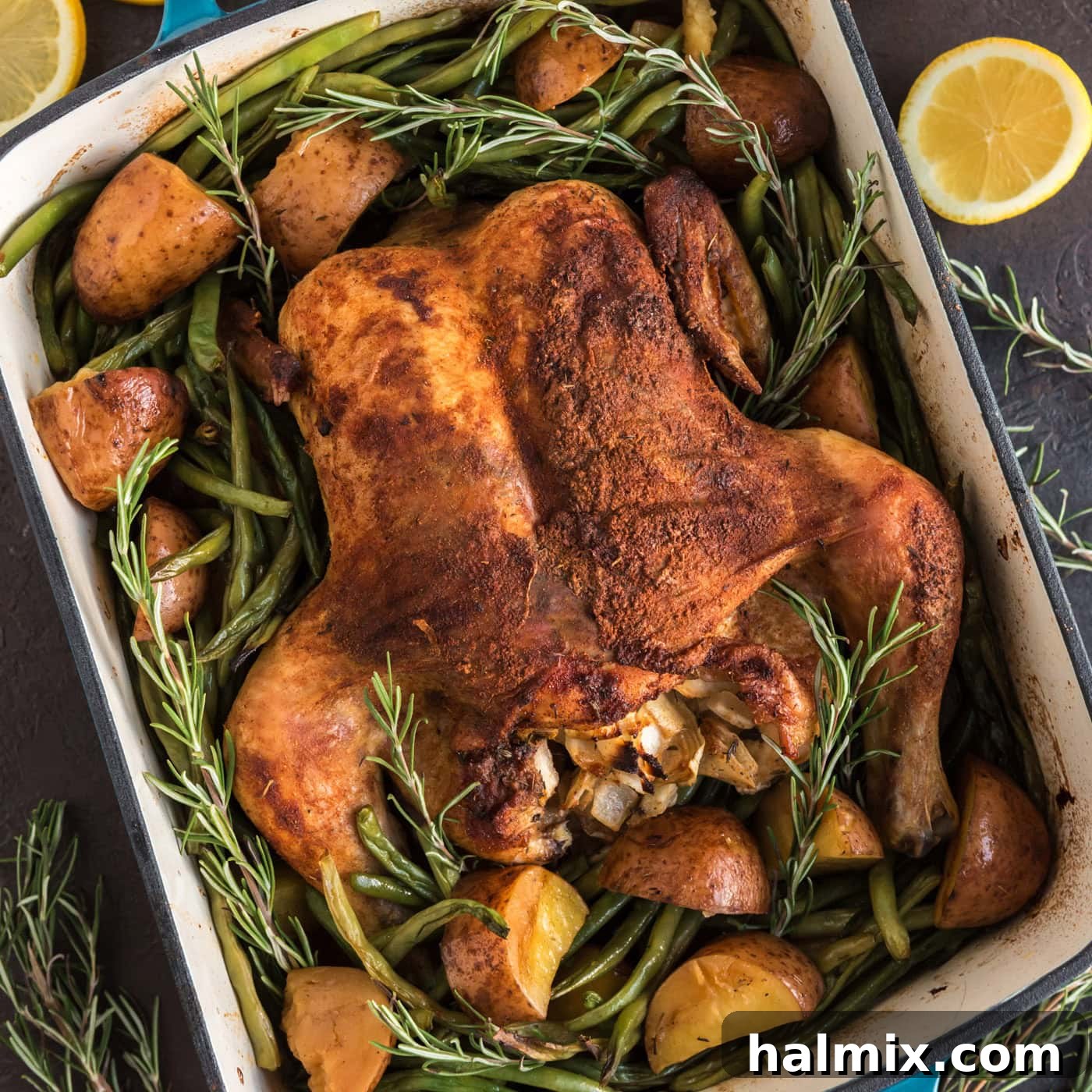
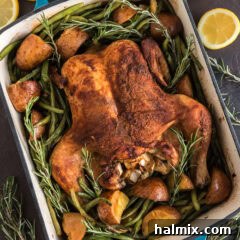
Welcome to the ultimate guide for preparing a truly unforgettable Slow Roasted Sticky Chicken. Imagine a whole chicken, perfectly cooked in your oven, emerging with gloriously crisp, golden-brown skin, incredibly juicy and tender meat, and an aromatic array of vegetables baked right alongside it. This isn’t just a meal; it’s a culinary experience that guarantees perfection on your plate every single time. Get ready to transform a simple chicken into a show-stopping centerpiece that will impress everyone at your table.
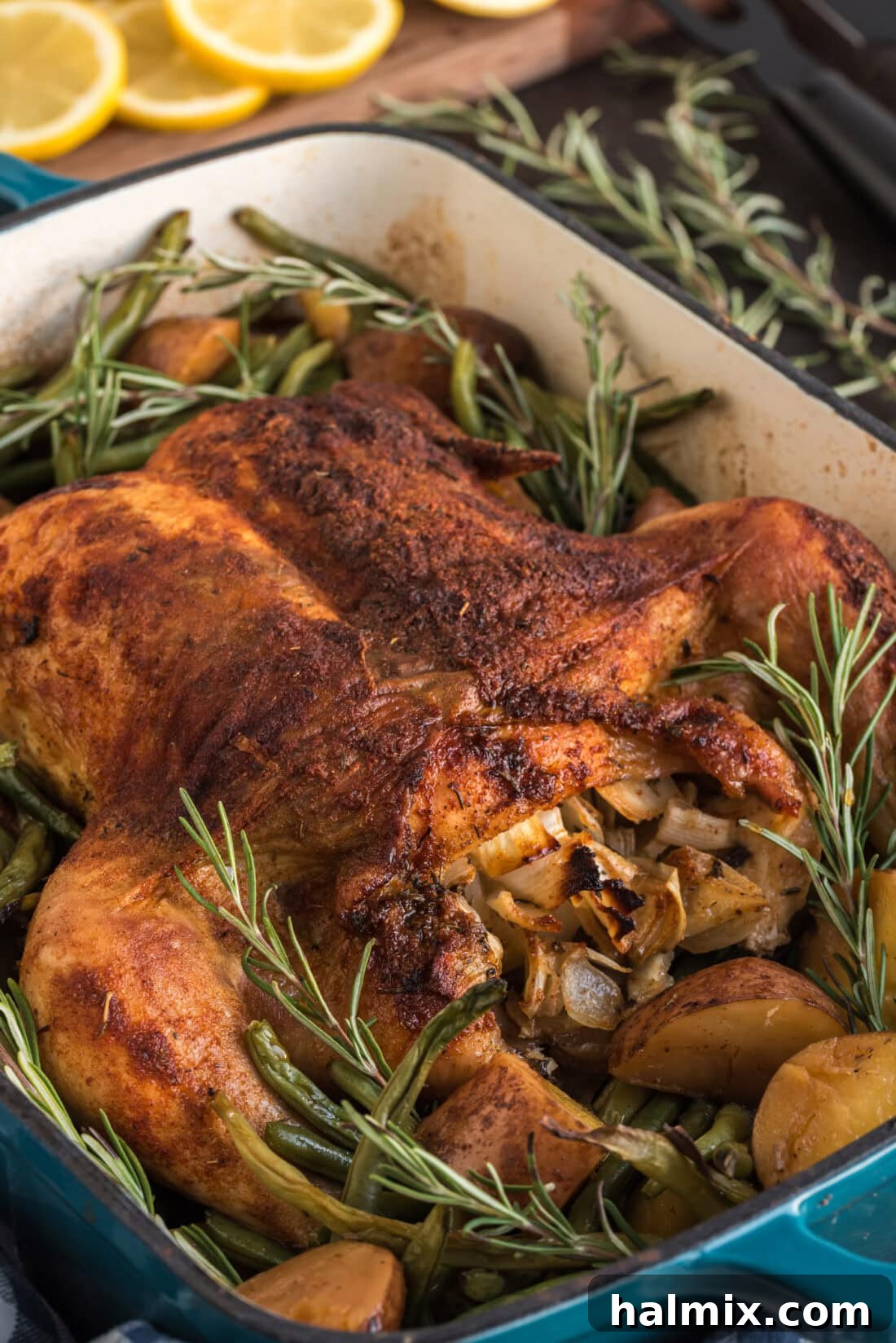
Why This Slow-Roasted Chicken Recipe is a Game Changer
This Slow Roasted Sticky Chicken recipe is more than just a weeknight dinner; it’s a cherished “Sunday Supper” tradition that promises warmth, comfort, and incredible flavor. While it requires a bit of attention for basting, the reward far outweighs the effort. Unlike a hands-off slow cooker version, the oven’s consistent heat and your timely basting create an unparalleled depth of flavor and texture that truly elevates the dish.
Having been a staple in countless households for years, this recipe has been meticulously tested and perfected. It consistently delivers an insanely delicious result using surprisingly minimal ingredients. The magic lies in the slow roasting process, which allows the flavors to meld beautifully, ensuring the chicken stays moist while developing that irresistible crispy skin everyone craves. Each basting session not only adds moisture but also builds a luscious, sticky glaze that locks in the savory goodness.
Beyond its incredible taste, this dish is remarkably budget-conscious, especially when whole chickens are on sale. It’s a fantastic way to stretch your food dollar, providing a hearty meal for the family with plenty of delicious possibilities for leftovers. Don’t forget to save any extra meat for easy weeknight meals like sandwiches, tacos, enchiladas, or comforting soups. Even the carcass can be transformed into a rich, homemade chicken stock with a few simple additions like onion and celery tops, adding another layer of flavor and value to your cooking.
Essential Ingredients for Your Sticky Chicken Masterpiece
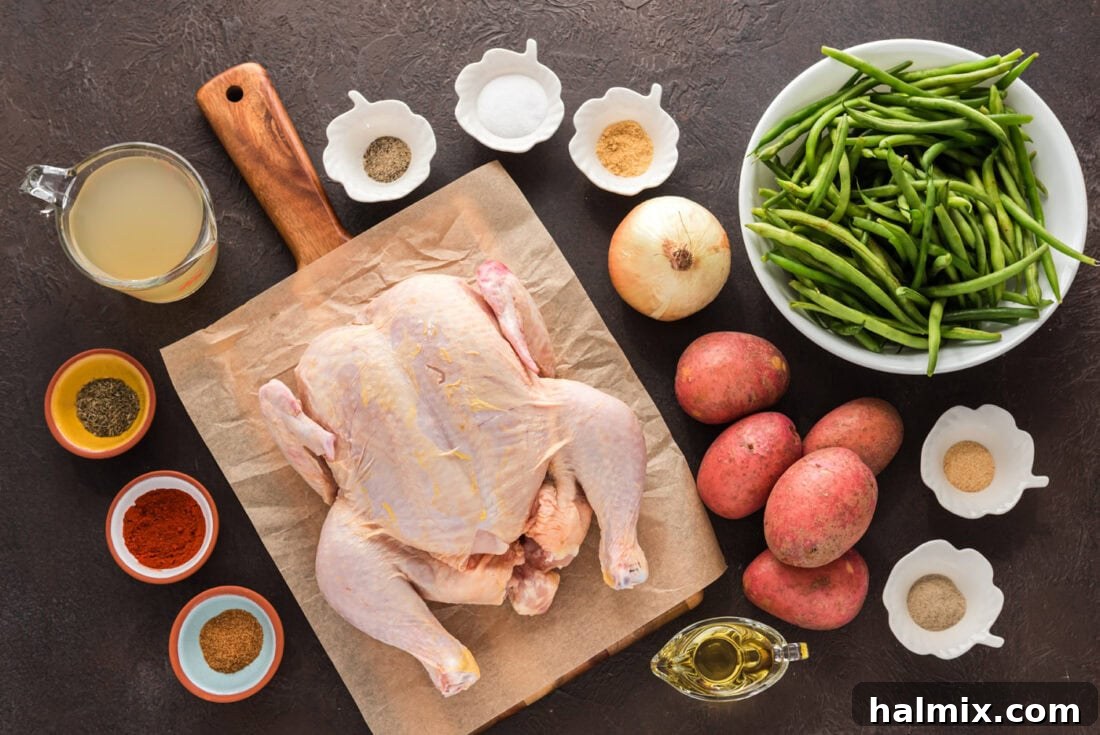
Crafting this succulent slow-roasted chicken requires a thoughtful selection of fresh ingredients and a simple yet potent spice rub. Each component plays a vital role in achieving the dish’s signature sticky, savory, and incredibly tender profile. You’ll find a complete list of measurements and detailed instructions in the recipe card at the end of this article, but let’s take a closer look at what you’ll need to gather to get started.
Decoding Your Ingredients: Tips & Substitution Suggestions
The Chicken
WHOLE CHICKEN: This recipe is designed for a 4-pound whole chicken. The size is ideal for even cooking and ample servings. The most crucial tip for success is ensuring your chicken is completely thawed. A frozen or partially frozen chicken will not allow the spice rub to adhere properly, leading to a less flavorful skin and inconsistent cooking. Patting the chicken thoroughly dry with paper towels before applying the rub is also key for achieving that desirable crispy skin.
The Flavorful Rub
SPICE RUB: The heart of our sticky chicken lies in its simple yet profoundly flavorful spice rub. It’s a harmonious blend of common pantry spices: salt, paprika, cayenne pepper, onion powder, dried thyme, white pepper, garlic powder, and black pepper. Each spice contributes to the overall complexity:
- Salt: Essential for seasoning the meat from within and enhancing all other flavors.
- Paprika: Adds a beautiful reddish hue to the skin and a mild, slightly sweet, peppery flavor.
- Cayenne Pepper: Provides a subtle kick of heat, balancing the richness of the chicken. Adjust the amount to your spice preference.
- Onion Powder & Garlic Powder: Deliver an aromatic base that permeates the chicken.
- Dried Thyme: Offers an earthy, herbaceous note that pairs wonderfully with poultry.
- White Pepper & Black Pepper: A combination for a nuanced peppery warmth.
Substitution Suggestions for the Rub: Feel free to customize! You can substitute with a high-quality pre-made chicken rub that you love. Alternatively, get creative with your favorite spice combinations. Rosemary, oregano, sage, or a pinch of smoked paprika can add different dimensions. Just ensure your chosen blend is well-balanced to complement the chicken without overpowering it.
The Supporting Cast (Vegetables & Liquids)
ONION: A coarsely chopped onion stuffed into the chicken cavity does more than just add flavor; it infuses the chicken with aromatic steam from the inside out, contributing to its juiciness. You can also add lemon halves, garlic cloves, or fresh herbs like rosemary and thyme to the cavity for additional layers of flavor.
RED POTATOES: Medium red potatoes, quartered, are the perfect accompaniment, roasting alongside the chicken to soak up all the delicious drippings. Their waxy texture holds up well to the long cooking time. Feel free to use other sturdy root vegetables like Yukon gold potatoes, small sweet potatoes, or carrots and parsnips (cut into similar-sized pieces) if you prefer.
FRESH GREEN BEANS: Added later in the cooking process, fresh green beans provide a vibrant color and a tender-crisp texture. You can substitute with asparagus, broccoli florets, or even bell peppers, adjusting cooking times as needed to ensure they are perfectly cooked without becoming mushy.
OLIVE OIL: Used to drizzle over the vegetables, it helps them brown beautifully and absorb flavor.
CHICKEN BROTH: This is crucial for basting, adding moisture, and creating that delectable sticky glaze. Low-sodium chicken broth is recommended to control the overall saltiness of the dish.
Crafting Your Slow Roasted Sticky Chicken: A Step-by-Step Guide
Follow these detailed steps to achieve the most succulent and flavorful slow roasted sticky chicken, complete with tender vegetables. The beauty of this recipe lies in its gradual cooking process and strategic additions, ensuring every component reaches perfection. For a printable version of this recipe with all precise measurements, please scroll down to the recipe card.
- Preheat Your Oven: Begin by preheating your oven to a consistent 300°F (150°C). This low and slow temperature is key to tender meat.
- Prepare the Chicken: Carefully remove any giblets or neck from the chicken cavity. Thoroughly rinse the chicken inside and out with cold water, then pat it completely dry with paper towels. Achieving a very dry skin is paramount for maximum crispiness later on.
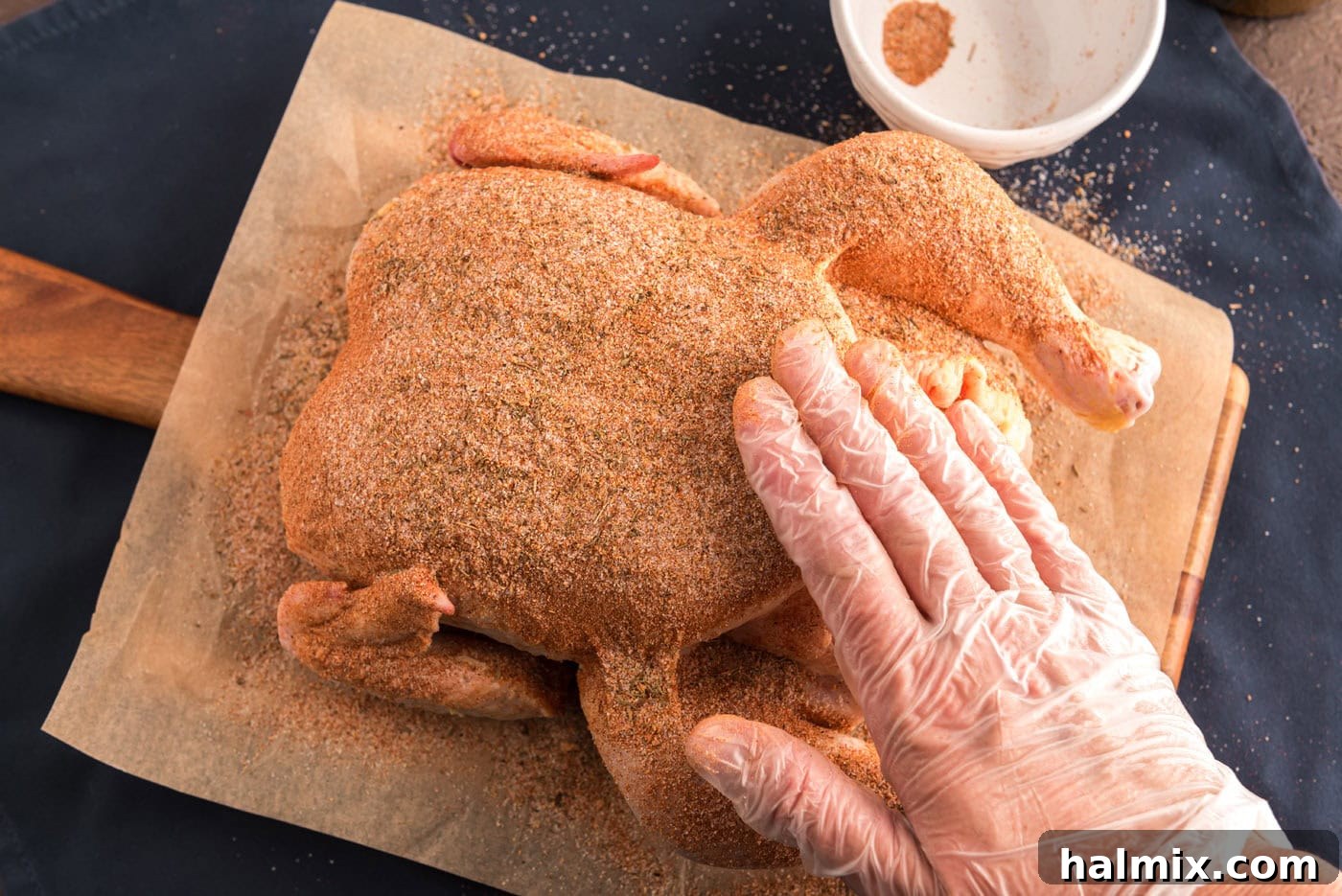
- Apply the Spice Rub: In a small bowl, combine all the rub ingredients (salt, paprika, cayenne pepper, onion powder, dried thyme, white pepper, garlic powder, and black pepper). Mix well. Generously spread this spice mixture all over the chicken, making sure to lift the breast skin gently and rub some of the mixture directly onto the meat underneath. This ensures every bite is bursting with flavor.

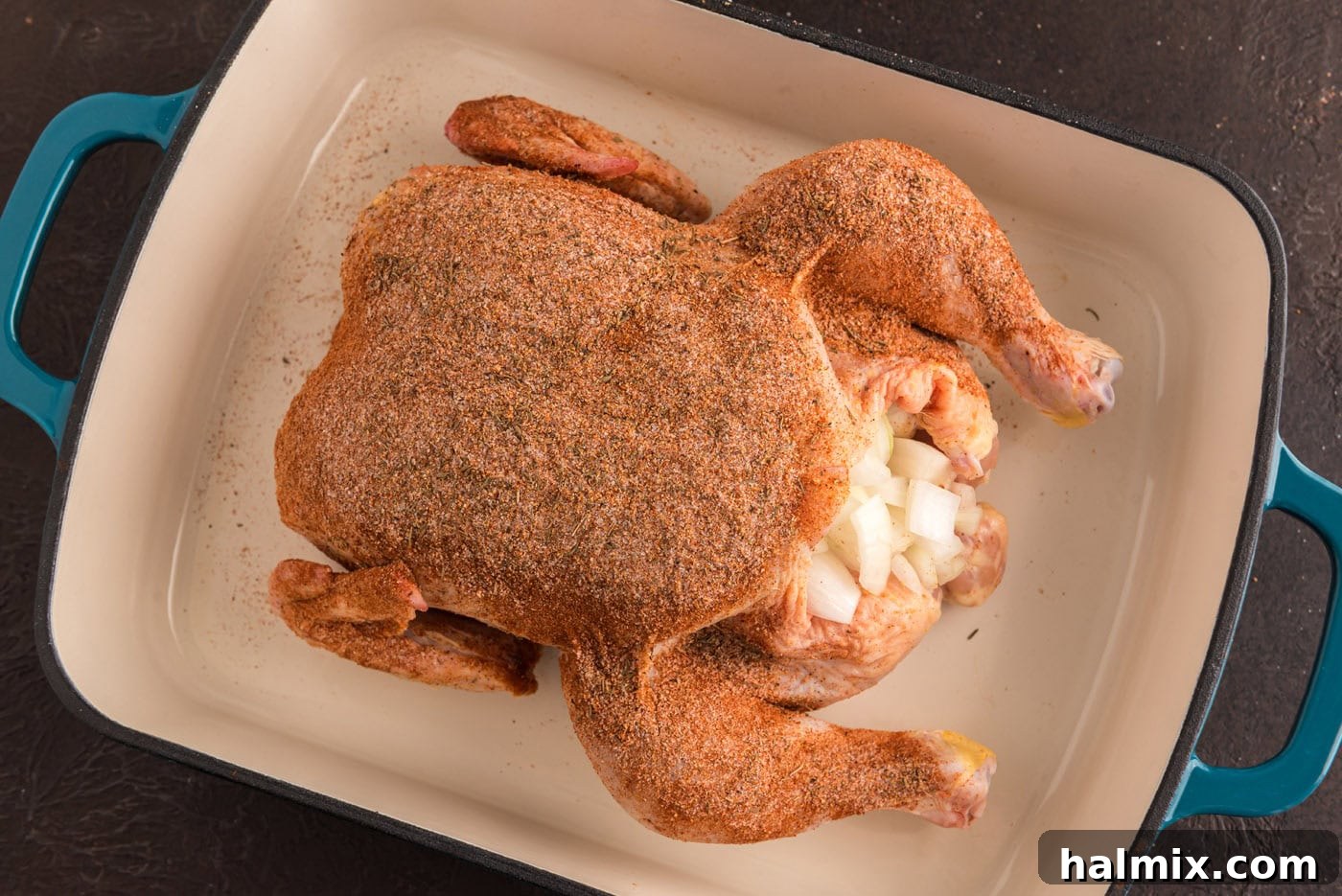
- Initial Roast: Stuff the chicken cavity with the coarsely chopped onions. Place the seasoned and stuffed chicken into a sturdy roasting pan. Bake the chicken for one hour, completely undisturbed. This initial hour allows the chicken to begin cooking gently and renders some fat, building a flavorful base.
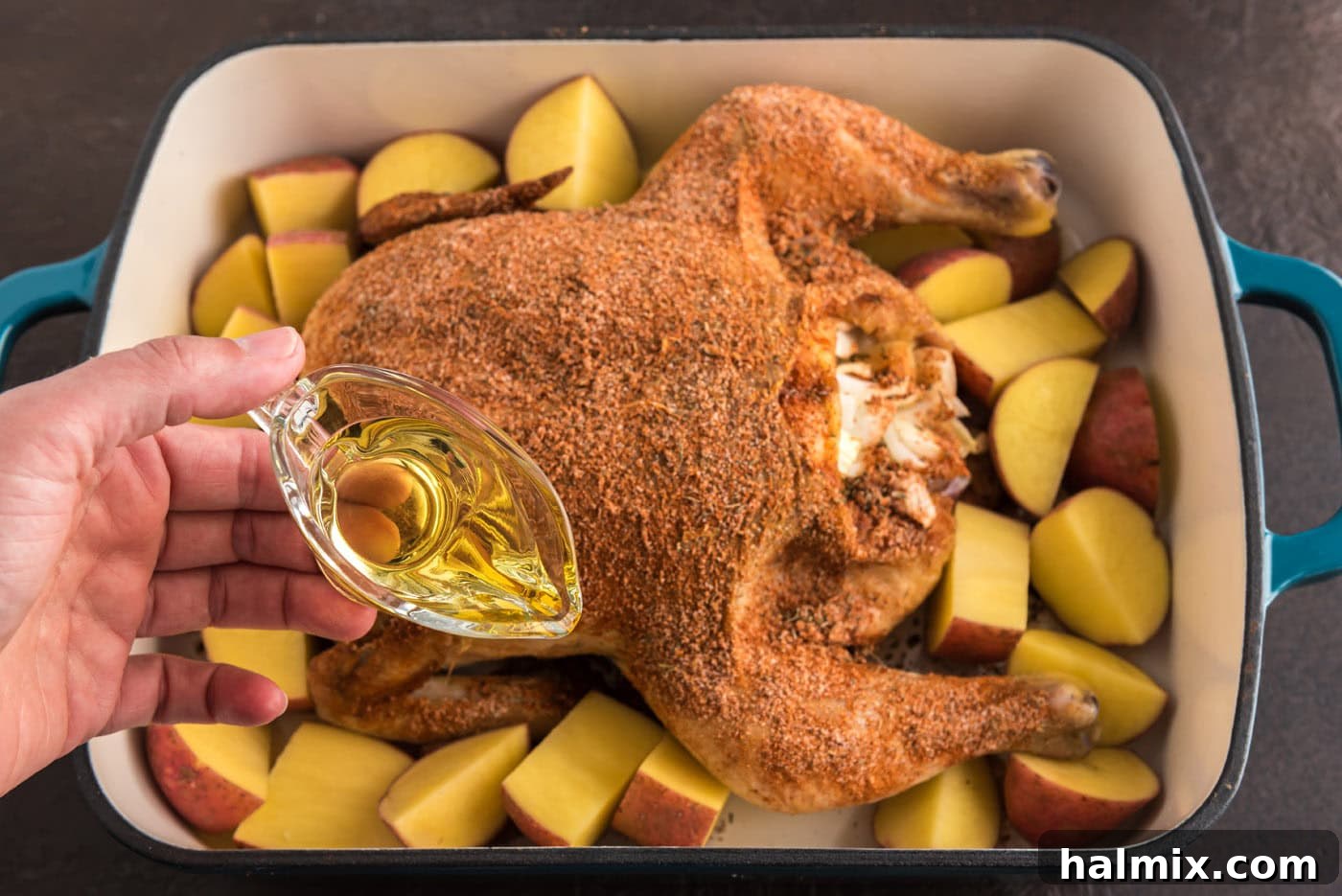
- Add the Potatoes: After the first hour, carefully remove the pan from the oven. Add the quartered red potatoes, scattering them evenly around the chicken in the roasting pan. Drizzle the potatoes lightly with olive oil. Return the pan to the oven and continue baking for another 40 minutes. This timing ensures the potatoes cook through without becoming overly soft.
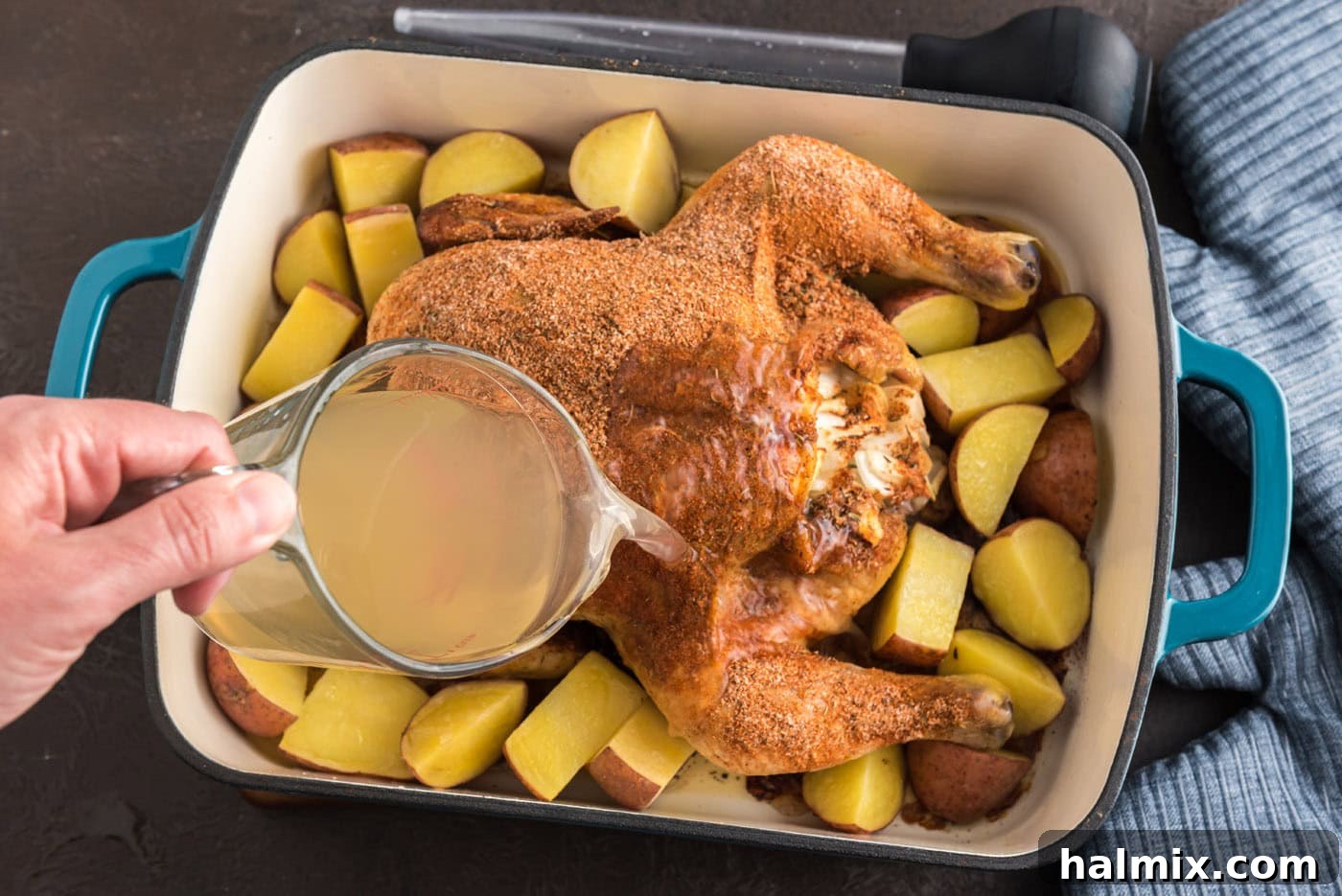
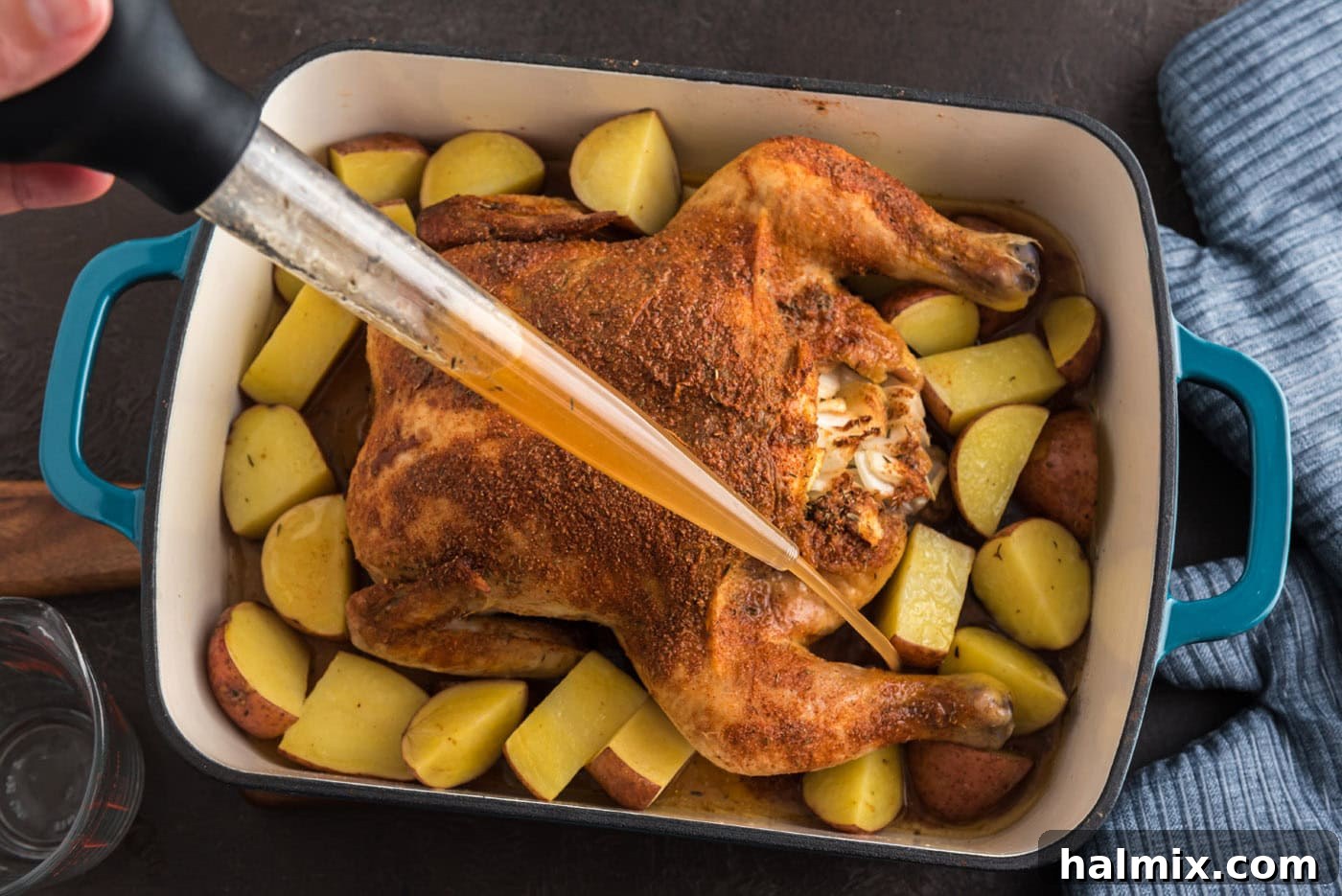
- Baste with Broth: Remove the pan from the oven once more. Pour the chicken broth into the pan, then use a baster or spoon to generously baste both the chicken and the potatoes with the pan drippings and broth. This step adds moisture and helps create that irresistible sticky glaze. Continue baking for another 30 minutes.
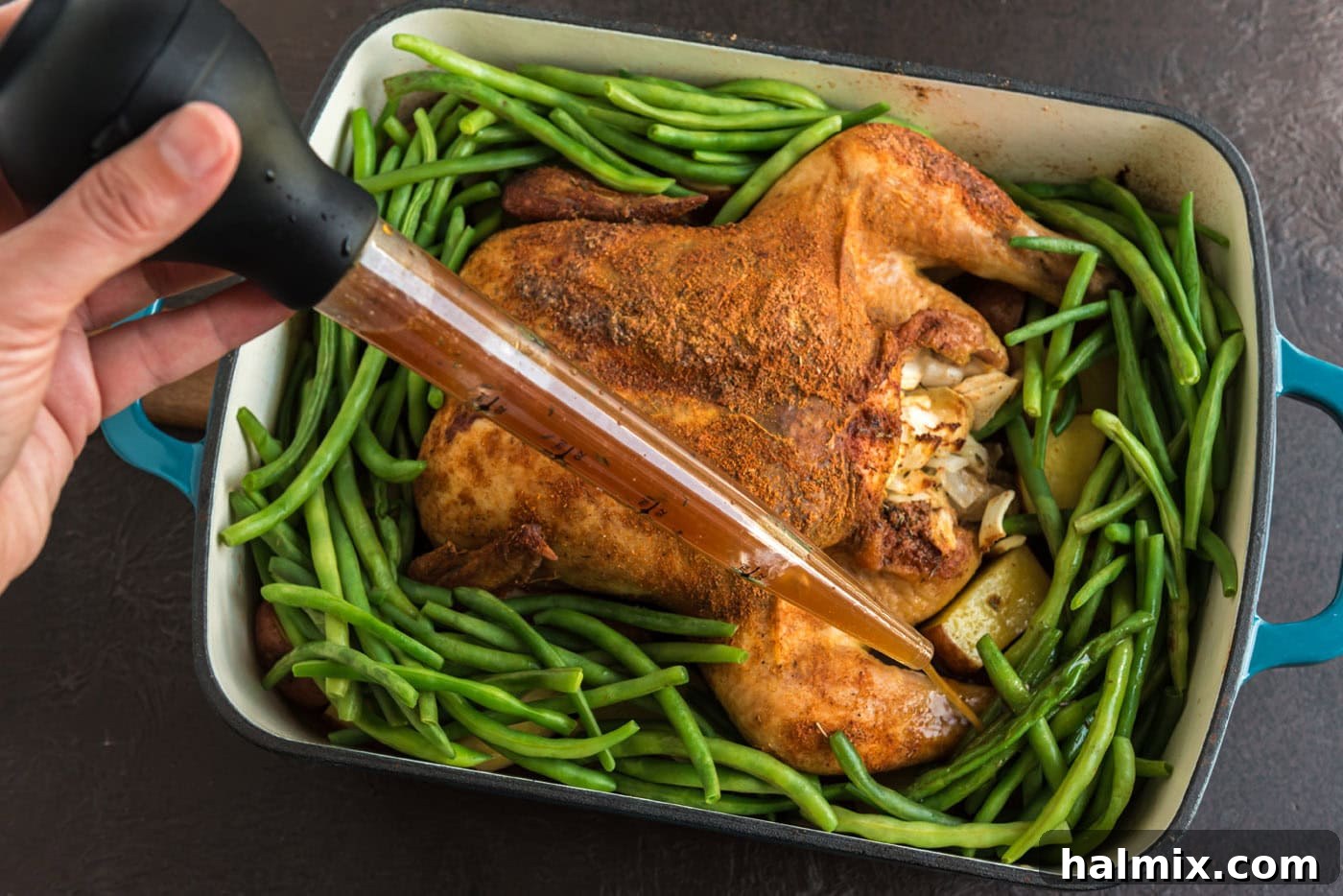
- Incorporate Green Beans: While the chicken bakes, prepare your green beans. Snip off the ends and place them in a microwave-safe bowl with 2 tablespoons of water. Microwave on high for 5 minutes until tender-crisp, then drain. Add the drained green beans to the roasting pan, scattering them amongst the chicken and potatoes. Baste all ingredients once more. Bake for an additional 30 minutes.
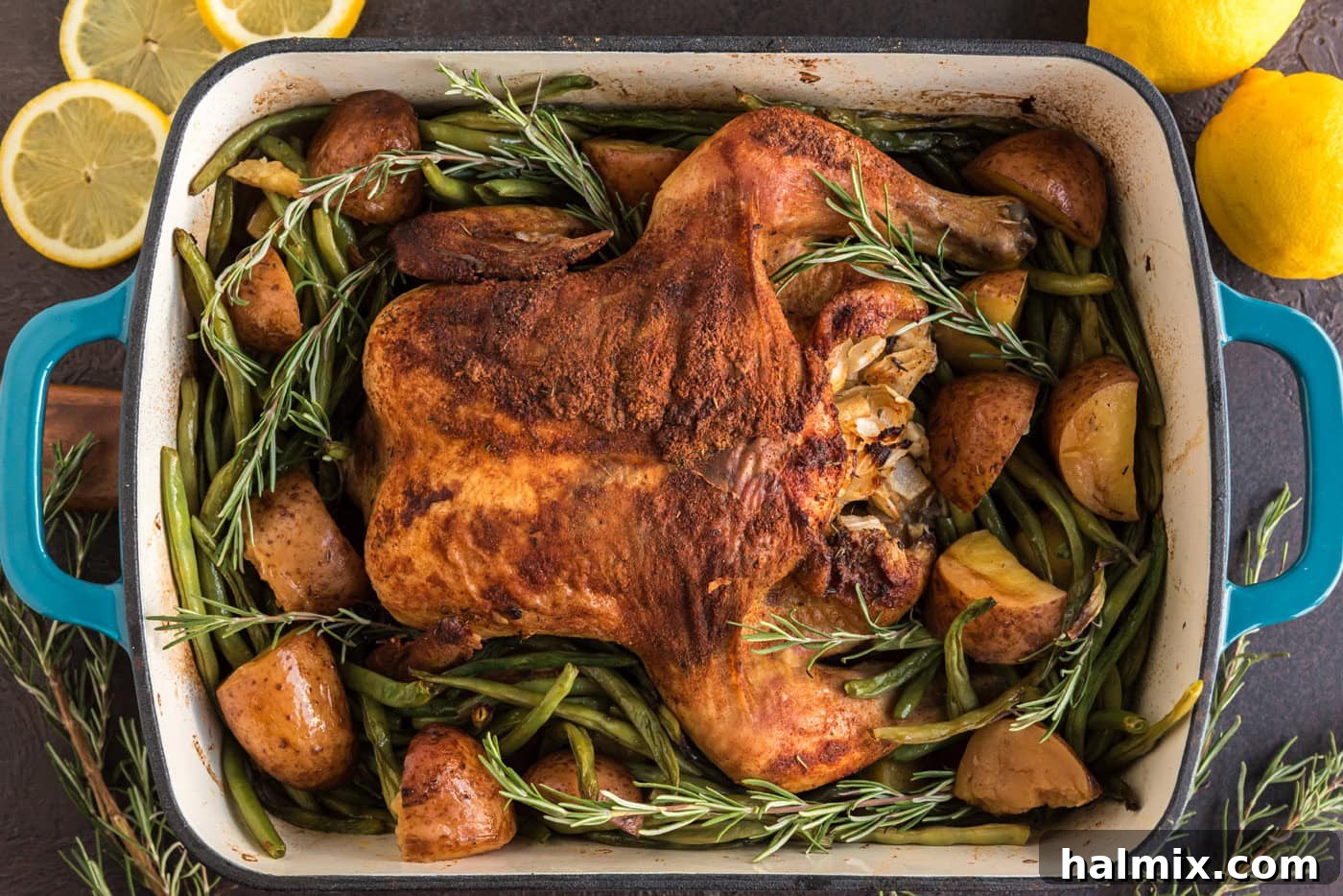
- Crisp it Up: To achieve that perfect crispy skin and beautifully browned vegetables, increase the oven temperature to 375°F (190°C). Bake for an additional 20 minutes, monitoring closely to prevent burning. This higher heat at the end will ensure a golden, caramelized finish.
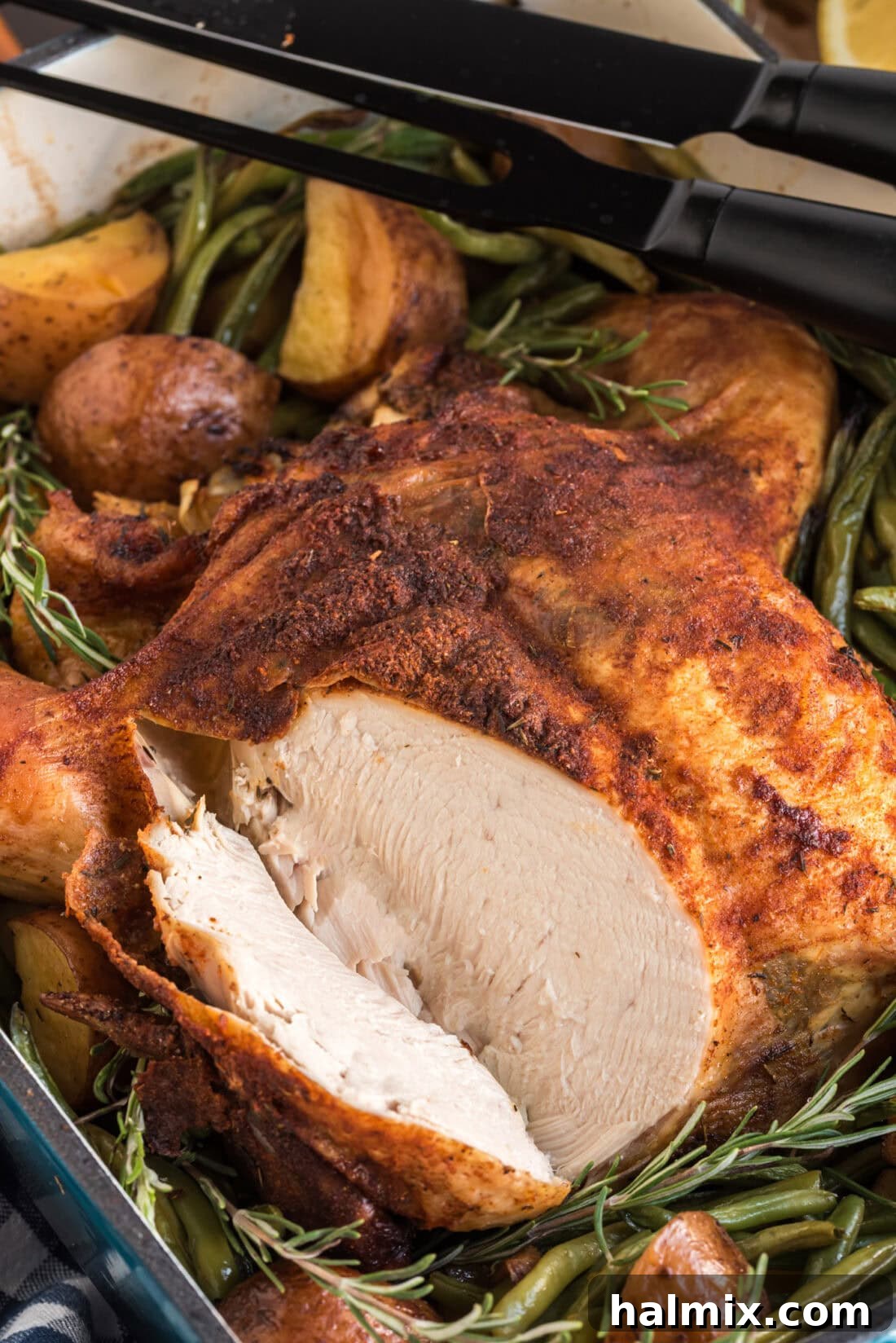
- Rest Before Carving: Once removed from the oven, tent the roasting pan loosely with aluminum foil. Let the chicken rest for 5-7 minutes before carving. This crucial resting period allows the juices to redistribute throughout the meat, ensuring a supremely moist and flavorful result.
Frequently Asked Questions & Expert Roasting Tips
Here are answers to common questions and additional tips to help you master this slow roasted sticky chicken recipe:
How to Store Leftover Slow Roasted Chicken?
Once cooled to room temperature, store any leftover chicken and vegetables in an airtight container in the refrigerator. It will remain fresh and delicious for 4-5 days.
How to Reheat Roasted Chicken Without Drying it Out?
The best way to reheat roasted chicken and keep it moist is to place the pieces in a shallow baking dish with a splash of chicken stock or water. Cover the baking dish tightly with aluminum foil to trap moisture. Warm the chicken in a 350°F (175°C) oven until it’s heated through, usually around 15-20 minutes, depending on the size of the pieces.
Can I Make This Recipe in a Slow Cooker (Crockpot)?
While this slow roasted sticky chicken recipe shines brightest when baked for its crispy skin and rich glaze, a separate crockpot sticky chicken recipe does exist if that’s more convenient for you. Be aware that the textures will differ significantly; the slow cooker version won’t achieve the same crispy skin or caramelized crust, though it still produces wonderfully tender and flavorful chicken.
How Do I Know My Whole Chicken is Fully Cooked?
The most reliable way to check for doneness is by using a meat thermometer. Insert the thermometer into the thickest part of the thigh, avoiding the bone. The chicken is fully cooked when it reaches an internal temperature of 165°F (74°C).
What Other Vegetables Can I Roast with the Chicken?
This recipe is highly adaptable! Beyond potatoes and green beans, you can roast a variety of vegetables. Consider adding carrots, parsnips, sweet potatoes (cut into 1-inch pieces), or even Brussels sprouts. Hardier vegetables like carrots and parsnips can be added with the potatoes, while softer ones like bell peppers or zucchini should be added closer to the end, similar to the green beans, to prevent them from becoming too soft.
Tips for Extra Crispy Chicken Skin
For the ultimate crispy skin, ensure the chicken is very dry before applying the rub. You can even air-dry it in the refrigerator, uncovered, for a few hours or overnight. Basting helps develop flavor and a sticky texture, but a final blast of high heat (as in step 8) is crucial for crisping. Some chefs also rub a thin layer of butter or oil over the skin before seasoning for added richness and browning.
Essential Roasting Tools
To make this recipe a breeze, a few tools are highly recommended: a sturdy roasting pan (with or without a rack), a good quality baster for applying the flavorful pan juices, and a reliable meat thermometer to ensure your chicken is perfectly cooked and safe to eat.
Serving Suggestions for Your Perfect Roasted Chicken
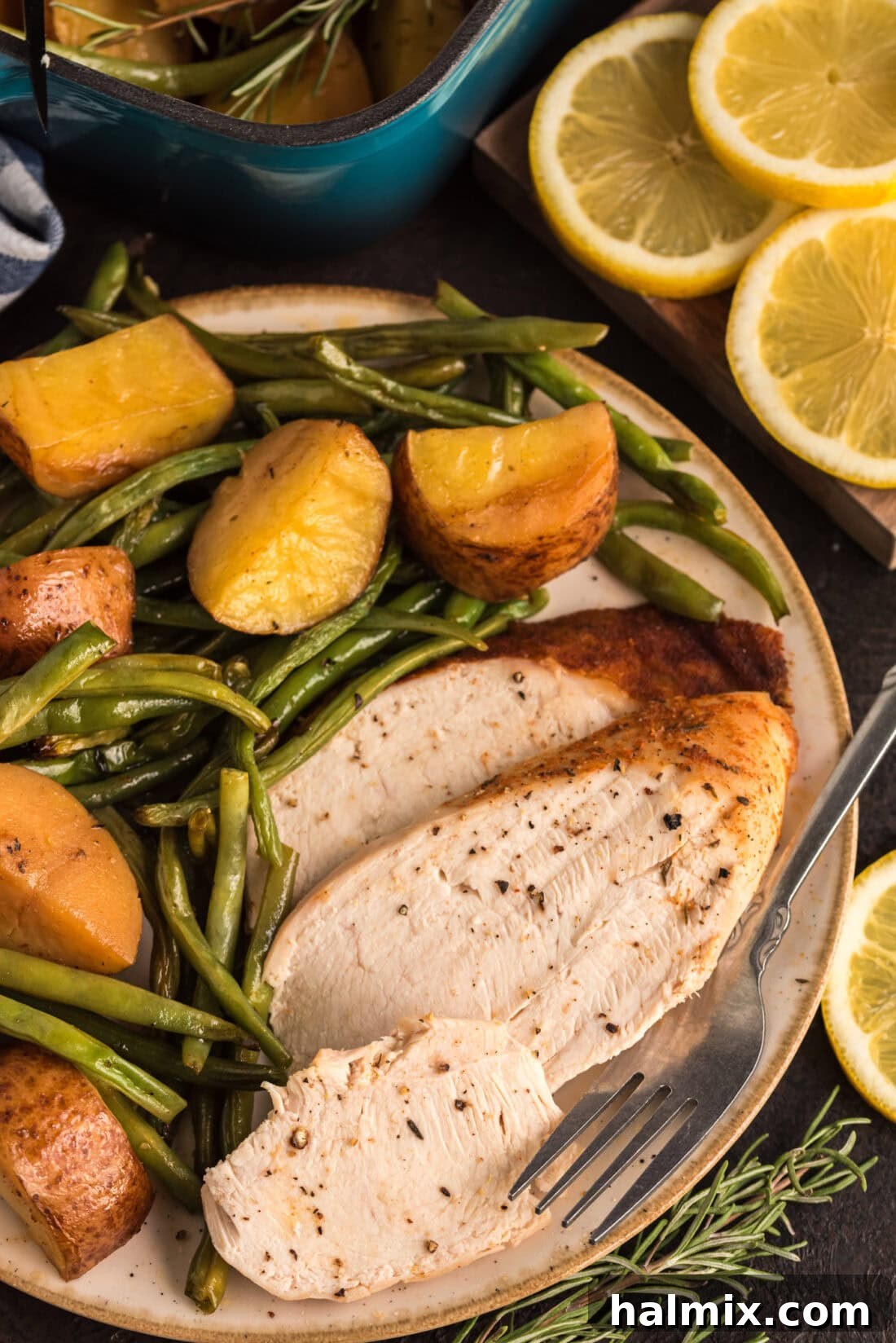
The beauty of this slow roasted sticky chicken is that it’s an all-in-one meal, complete with delicious roasted potatoes and green beans. However, its versatility means you can easily customize your plate. If you prefer, you can omit the vegetables from the roasting pan and serve the chicken with classic creamy mashed potatoes, fluffy rice, or your favorite steamed or roasted seasonal vegetables. It also pairs wonderfully with a warm, crusty dinner roll to soak up all the flavorful pan juices, or a crisp, fresh dinner salad for a lighter contrast. Whether served simply or with additional sides, this chicken is sure to be the star of your meal. Enjoy every tender, flavorful bite!
Explore More Delicious Roast Recipes
If you loved this slow roasted sticky chicken, you might enjoy exploring other comforting and savory roast recipes perfect for family dinners or special occasions:
- Roast Duck
- Roasted Turkey
- Roasted Chicken
- Sirloin Pork Roast
I am passionate about baking and cooking, and I love sharing my culinary adventures with all of you! To make sure you never miss a new recipe, I offer a convenient newsletter delivered straight to your inbox every time a new dish is posted. Simply subscribe and start receiving your free daily recipes today!
Recipe Card: Slow Roasted Sticky Chicken
Recipe Summary
This slow roasted sticky chicken with vegetables recipe is easy, affordable, and comes out perfectly tender every time! It’s rated 5 out of 5 stars from 1 vote.
- Course: Dinner
- Cuisine: American
- Servings: 6 servings
- Total Time: 3 hours 20 minutes
- Calories: 466 cal
- Author: Amanda Davis
Ingredients
- 4 pound whole chicken, thawed
- 1 cup coarsely chopped onion
- 5-6 medium red potatoes, quartered
- 2 handfuls fresh green beans
- Olive oil
- 1 cup chicken broth
Spice Rub
- 4 teaspoons salt
- 2 teaspoons paprika
- 1 teaspoon cayenne pepper
- 1 teaspoon onion powder
- 1 teaspoon dried thyme
- 1 teaspoon white pepper
- ½ teaspoon garlic powder
- ½ teaspoon black pepper
Things You’ll Need
- roasting pan
- baster
Before You Begin
- This recipe calls for a 4-pound whole chicken that has been thawed. If your chicken is frozen then all the flavor of the seasoning rub will slide right off in the oven. Ensure the chicken is thoroughly patted dry for crispy skin.
Instructions
- Preheat oven to 300 F (150 C).
- Remove giblets from chicken; clean the cavity well and pat dry with paper towels to ensure crispy skin.
- Combine all of the rub ingredients and spread the spice mixture all over the chicken and under the breast skin for maximum flavor penetration.
- Stuff the cavity with onions and place the chicken into a roasting pan. Bake chicken for one hour, undisturbed, to start the slow cooking process.
- Add potatoes to the roasting pan, scattering them around the chicken. Drizzle with olive oil. Bake another 40 minutes, allowing the potatoes to begin softening.
- Add chicken broth to the pan and baste the chicken and potatoes thoroughly. Bake another 30 minutes, building that sticky glaze.
- Prepare the green beans by snipping the ends and placing in a microwave bowl with 2 tablespoons of water. Microwave on high for 5 minutes until tender-crisp. Drain green beans and add to the roasting pan with the potatoes. Baste chicken and vegetables again. Bake another 30 minutes.
- Turn oven up to 375 F (190 C) and bake for an additional 20 minutes to brown the edges of the potatoes and beans and crisp the chicken skin.
- Remove from oven and tent loosely with foil. Let rest for 5-7 minutes before carving; this allows juices to redistribute for a juicier chicken.
Nutrition
Serving: 1 serving | Calories: 466 cal | Carbohydrates: 34g | Protein: 32g | Fat: 22g | Saturated Fat: 6g | Polyunsaturated Fat: 5g | Monounsaturated Fat: 9g | Trans Fat: 0.1g | Cholesterol: 110mg | Sodium: 1833mg | Potassium: 1223mg | Fiber: 5g | Sugar: 5g | Vitamin A: 757IU | Vitamin C: 24mg | Calcium: 62mg | Iron: 3mg
The recipes on this blog are tested with a conventional gas oven and gas stovetop. It’s important to note that some ovens, especially as they age, can cook and bake inconsistently. Using an inexpensive oven thermometer can assure you that your oven is truly heating to the proper temperature. If you use a toaster oven or countertop oven, please keep in mind that they may not distribute heat the same as a conventional full-sized oven and you may need to adjust your cooking/baking times. In the case of recipes made with a pressure cooker, air fryer, slow cooker, or other appliance, a link to the appliances we use is listed within each respective recipe. For baking recipes where measurements are given by weight, please note that results may not be the same if cups are used instead, and we can’t guarantee success with that method.
This post originally appeared here on Aug 19, 2013, and has since been updated with new photos and expert tips.