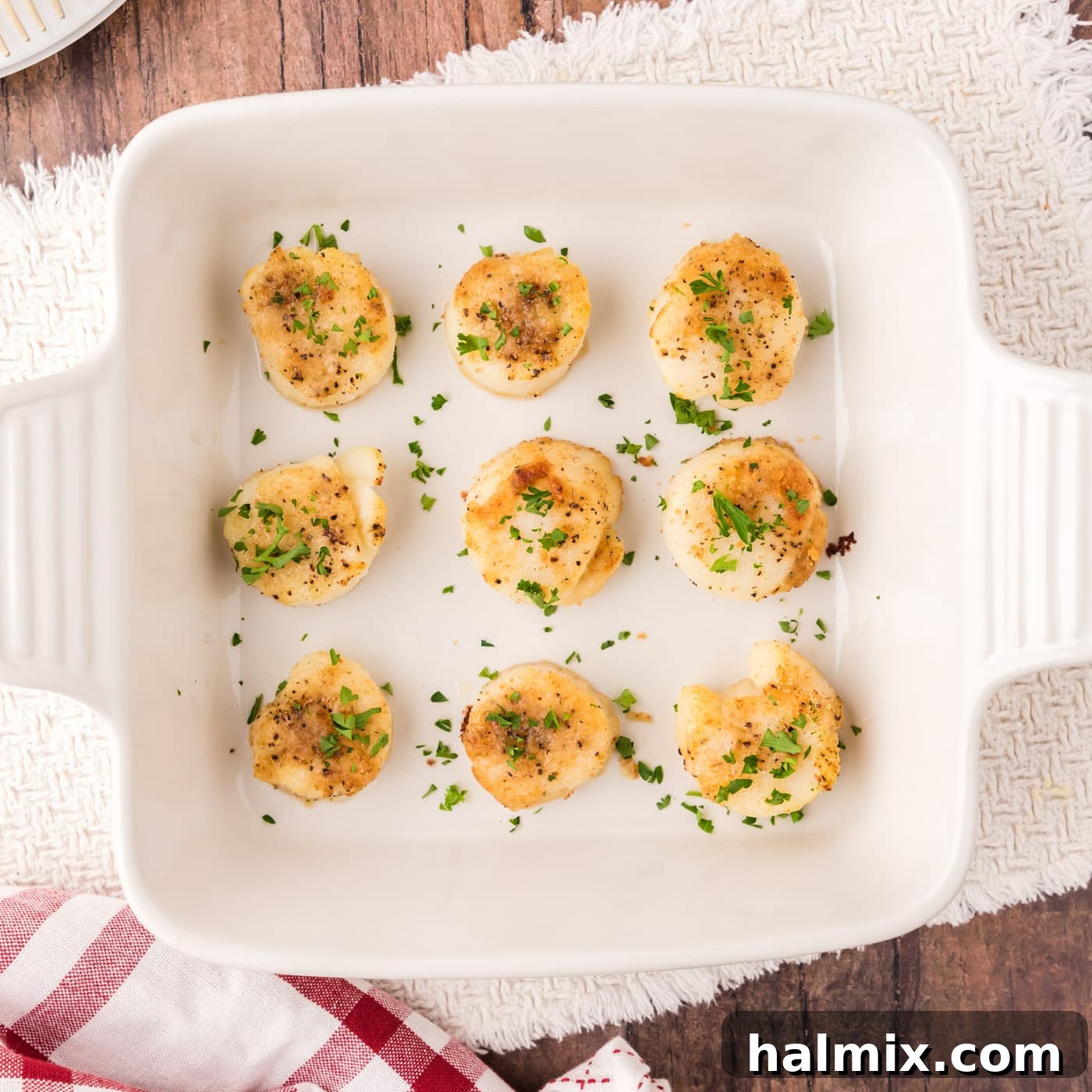
Perfectly Baked Scallops: Your Guide to Succulent Seafood at Home
Imagine tender, sweet scallops, beautifully golden-crusted and infused with savory flavors, all baked to perfection in your own kitchen. This exquisite baked scallop recipe makes that dream a reality, transforming a seemingly gourmet dish into an incredibly simple and quick meal. Topped with a sprinkle of crispy breadcrumbs and rich Parmesan cheese, then brushed with melted butter, these sea scallops emerge from the oven in just 15 minutes, ready to impress even the most discerning palate. Get ready to create a memorable seafood experience that’s surprisingly effortless and incredibly delicious.
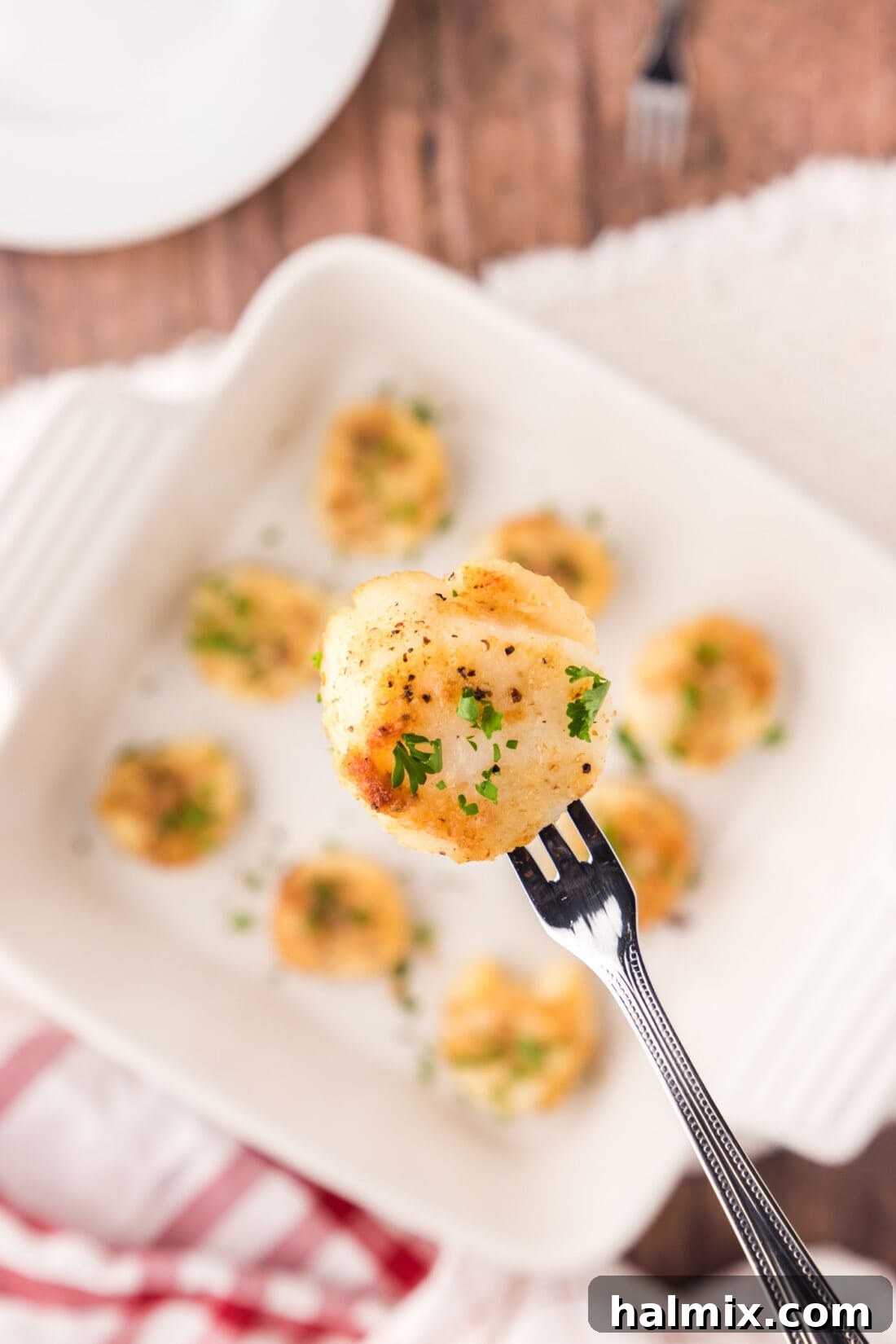
Why This Baked Scallop Recipe is a Must-Try for Home Cooks
Baked scallops are an absolute delight for any seafood enthusiast, offering a luxurious taste experience without the fuss or intimidation often associated with cooking shellfish. This particular recipe stands out for its incredible simplicity, minimal ingredient list, and lightning-fast cooking time, making it perfect for both elegant weeknight dinners and impressive special occasions. Unlike more complex seafood preparations that might require delicate searing techniques or elaborate sauces, baking scallops requires straightforward steps but yields maximum flavor and a beautifully tender texture.
Each succulent sea scallop is first gently seasoned with a blend of garlic salt and freshly ground black pepper, enhancing its natural sweetness and preparing it for the layers of flavor to come. A light, yet effective, dusting of breadcrumbs and finely grated Parmesan cheese creates a wonderfully golden and slightly crispy crust during baking—a textural contrast that elevates the dish significantly. Finally, a touch of softened butter, meticulously brushed over the topping, ensures the scallops remain incredibly moist, adds a rich, decadent flavor, and contributes to that irresistible golden-brown finish and aroma.
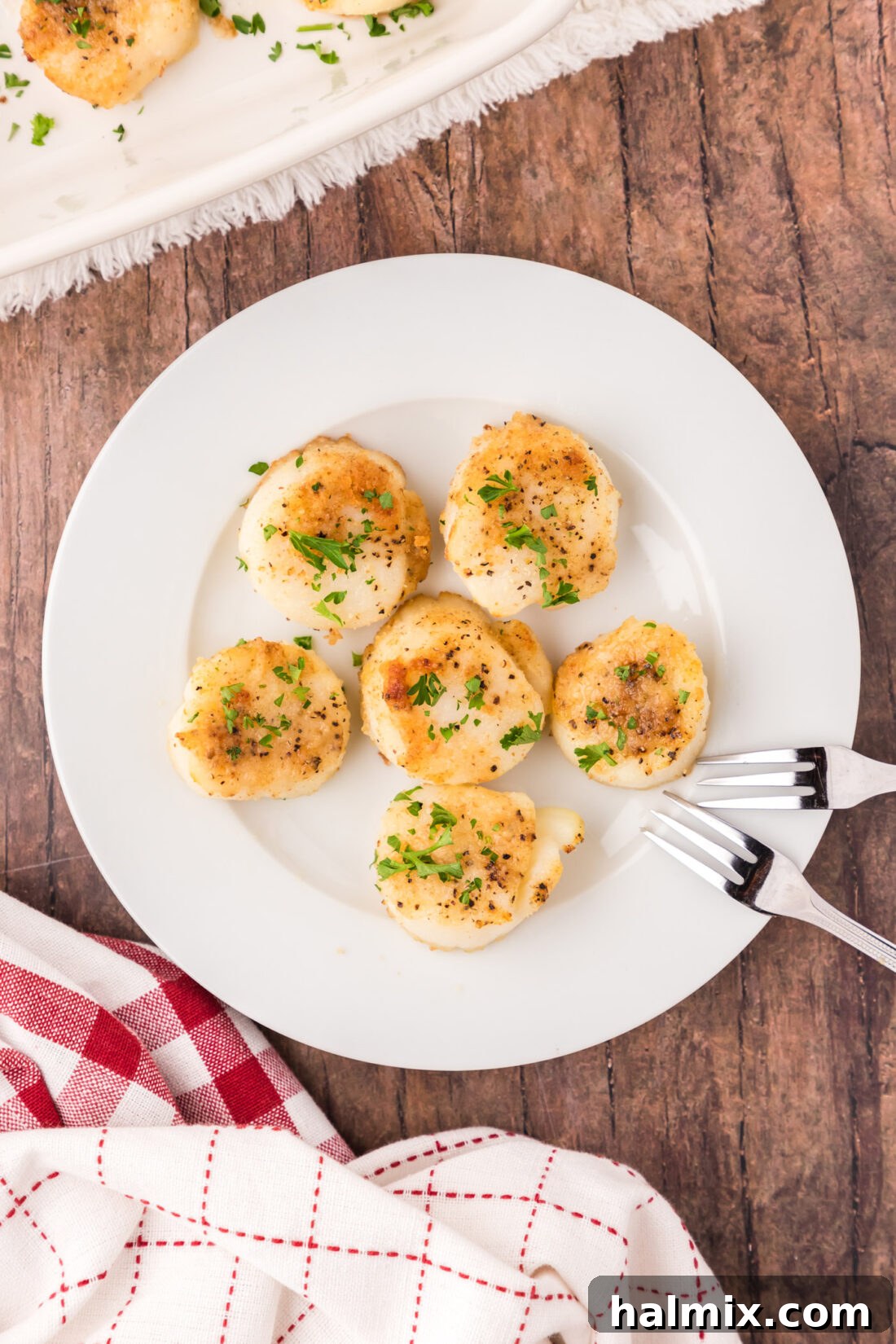
The beauty of this recipe lies in its ability to deliver restaurant-quality results right in your own kitchen, without the steep price tag. Mastering what often appears to be an exclusive, high-end seafood course becomes an approachable task. You don’t have to be a professional chef to achieve perfection; with just a few simple steps and high-quality ingredients, you can confidently serve a dish that tastes truly gourmet. This recipe empowers you to enjoy fresh, perfectly cooked scallops whenever the craving strikes, all while controlling the quality of your ingredients and tailoring the subtle flavors to your personal preference. Whether you’re a seasoned cook looking for a quick yet elegant meal, or a beginner eager to explore the world of seafood, these baked scallops are a guaranteed success, promising succulent, flavorful results every single time.
Essential Ingredients for Your Succulent Baked Scallops
Crafting the perfect baked scallops begins with selecting the finest ingredients. While the comprehensive recipe card at the conclusion of this article provides all precise measurements and detailed instructions, let’s delve into the key components that come together to create this unforgettable dish. Understanding each ingredient’s role and how to choose the best quality will ensure your scallops are nothing short of spectacular.
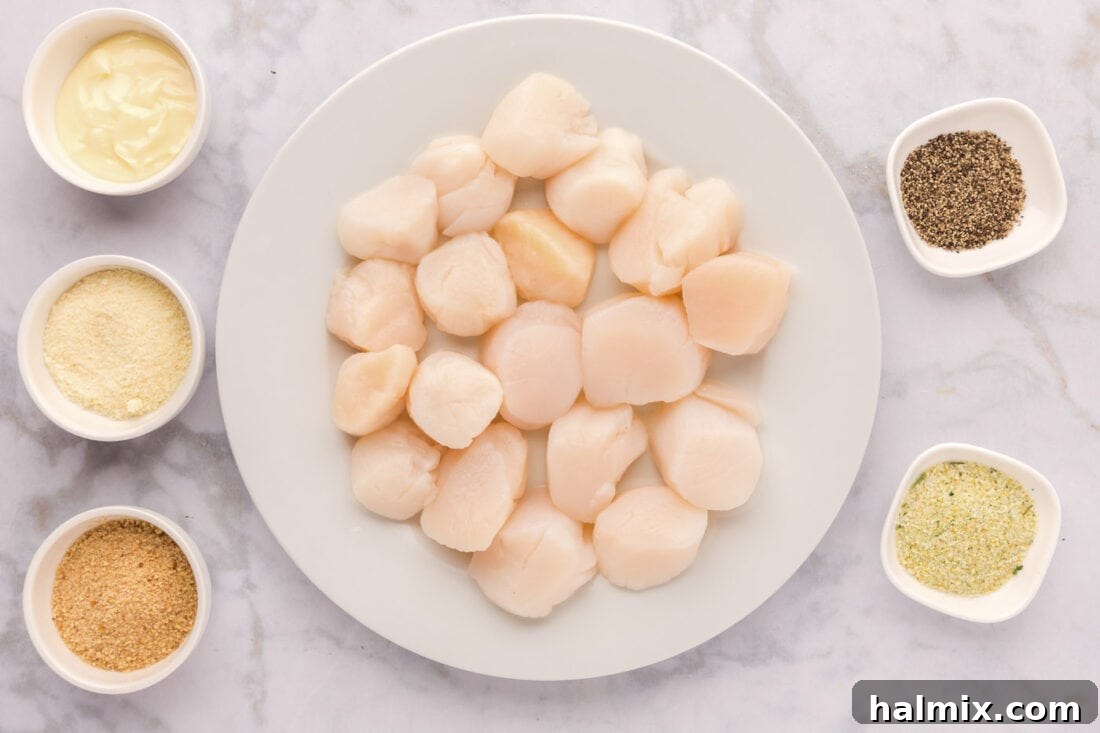
Ingredient Spotlight: Tips, Choices, and Smart Substitutions
- Scallops: The star of our dish! For this recipe, sea scallops are the unequivocally preferred choice due to their generously larger size, meatier texture, and ability to hold up beautifully under the heat of baking. When you’re at the grocery store or fishmonger, you might notice scallops labeled as “wet” or “dry.” It is absolutely crucial to understand this distinction for the success of your dish. “Wet” scallops are typically treated with a sodium tripolyphosphate solution (a preservative) which causes them to absorb and retain excess moisture. This added water not only makes them weigh more (meaning you pay for water, not scallop!), but more importantly, it prevents them from browning properly and achieving that desirable crisp, golden crust. They tend to steam rather than caramelize, leading to a rubbery texture and diluted flavor. Therefore, we highly recommend seeking out and insisting on dry sea scallops. These natural, untreated scallops have a firmer texture, a pure, sweeter flavor, and will caramelize beautifully, forming that coveted golden crust without releasing excessive liquid into your baking sheet. Look for scallops that are firm, translucent, and possess a fresh, slightly sweet aroma, reminiscent of the ocean.
- Garlic Salt & Black Pepper: These humble seasonings lay the essential foundation of flavor, enhancing the natural sweetness of the scallops without overpowering their delicate taste. Garlic salt provides a convenient blend of savory garlic and saline notes. If you happen to be out of garlic salt, a simple and effective substitute is a mix of regular fine sea salt and high-quality garlic powder. Feel free to adjust the quantities of both the garlic salt and freshly ground black pepper to perfectly suit your personal taste preferences.
- Bread Crumbs: A light, even sprinkle of bread crumbs is key to creating a delicate crunch and a visually appealing golden-brown finish on top of your scallops. While regular fine breadcrumbs will work perfectly well, Panko breadcrumbs are an excellent choice if you desire extra crispiness and a lighter texture. For an artisanal touch, you can also easily make your own breadcrumbs by toasting stale bread until golden and then processing it in a food processor.
- Parmesan Cheese: Finely grated Parmesan cheese is indispensable for this recipe. As it bakes, it melts into the breadcrumb topping, contributing a wonderful salty, umami depth and significantly aiding in the formation of that rich, golden crust. Always opt for freshly grated Parmesan cheese over pre-shredded varieties, as fresh Parmesan offers a vastly superior flavor profile and a smoother melting texture that truly elevates the dish.
- Butter: Well-softened butter serves multiple critical roles in this recipe. When gently brushed over the breadcrumb and cheese topping, it acts as a binder, helping the topping adhere to the scallops. More importantly, it ensures the scallops remain incredibly moist and flavorful as they bake, preventing them from drying out. The butter also contributes significantly to the desirable golden-brown coloration and rich aroma of the crust. Using high-quality unsalted butter allows you precise control over the overall saltiness of your dish, letting the natural flavors shine.
- Lemon Juice (Optional): A final, optional, but highly recommended squeeze of fresh lemon juice just before serving is a game-changer. The vibrant acidity of fresh lemon brightens all the flavors, cutting through the richness of the butter and cheese, and adding a delightful zesty counterpoint. It’s a simple garnish that provides a surprisingly big impact, elevating the entire culinary experience. A sprinkle of fresh chopped parsley or chives can also add a touch of color and fresh herb aroma.
How to Perfectly Bake Scallops: A Detailed Step-by-Step Guide
Follow these meticulously detailed steps to create truly tender, perfectly golden-crusted baked scallops that are sure to impress everyone at your table. For a convenient printable version of this recipe, complete with exact measurements for each ingredient, please refer to the full recipe card located at the very bottom of this post.
- Preheat Oven and Prepare Baking Sheet: Begin by precisely preheating your oven to 400°F (200°C). Achieving the correct starting temperature is vital for ensuring even cooking and promoting that desirable golden-brown crust. While your oven is coming to temperature, thoroughly and lightly spray a baking sheet with a good quality nonstick cooking spray. This crucial step prevents the delicate scallops from sticking to the pan and makes your cleanup process significantly easier later on.
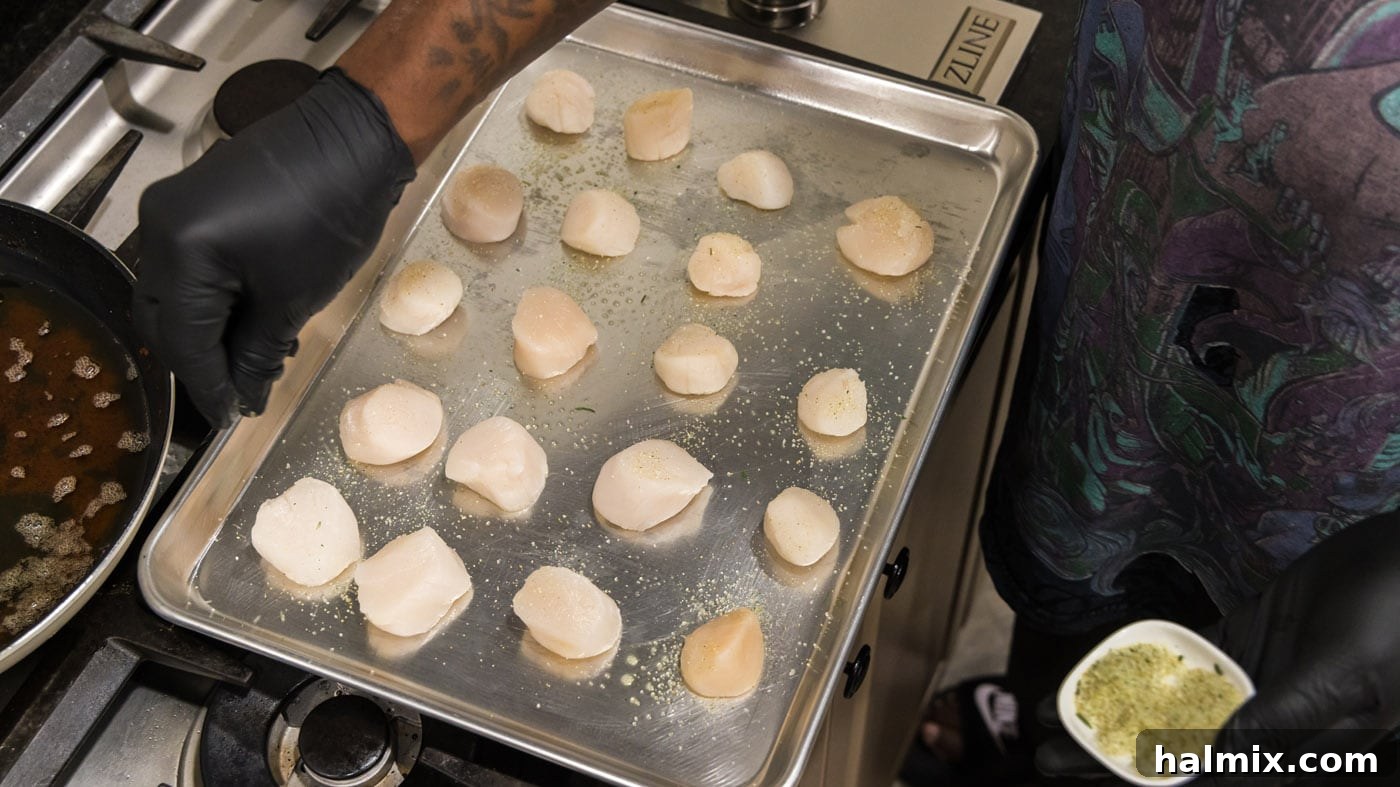
- Arrange Scallops on Baking Sheet: Carefully arrange the prepared sea scallops in a single, even layer on your nonstick-sprayed baking sheet. It is absolutely imperative to ensure there is adequate space between each individual scallop. This allows for proper air circulation around each piece, which is critical for even cooking and encouraging a uniform golden browning. Overcrowding the pan will cause the scallops to steam rather than bake, resulting in a rubbery texture and a lackluster crust. If necessary, use two baking sheets or bake your scallops in separate batches to avoid this common mistake.
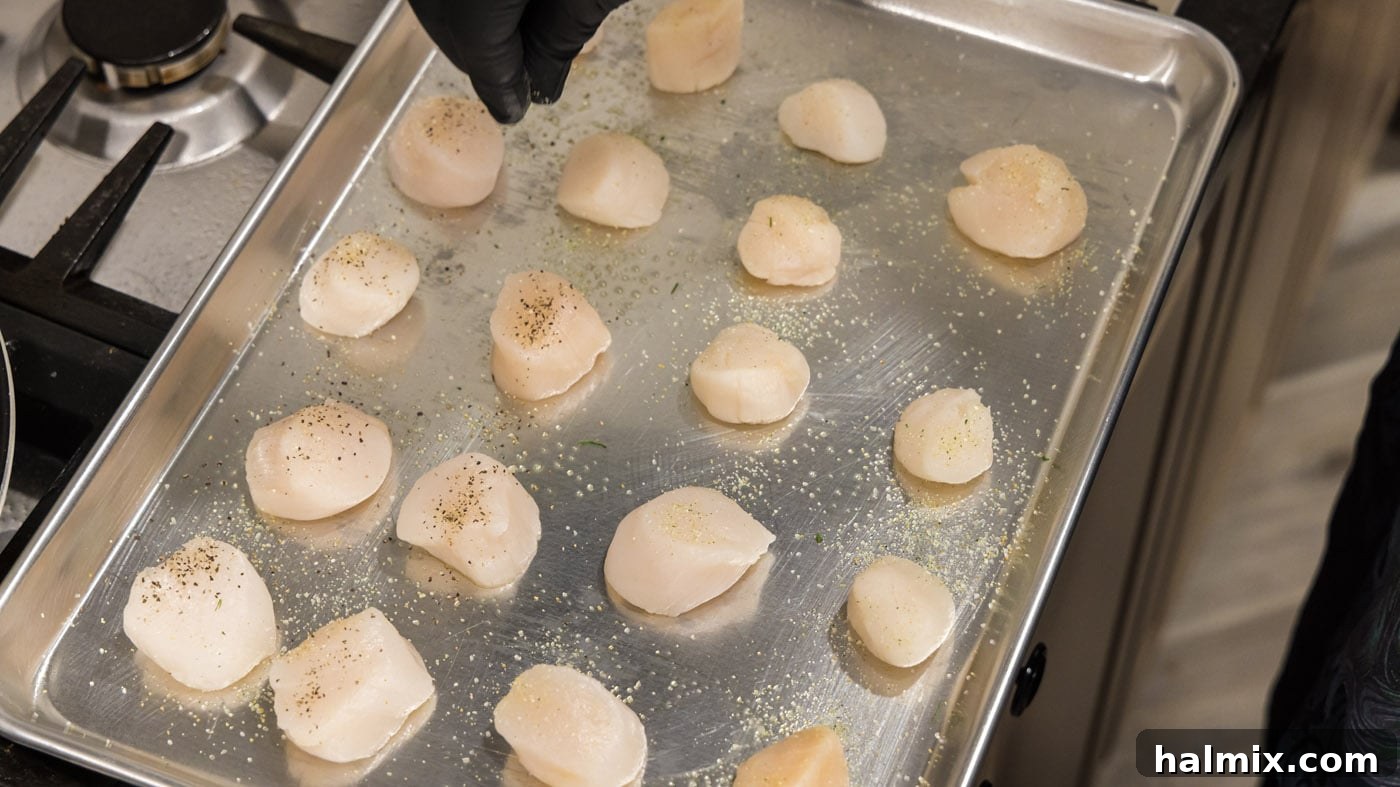
- Season Generously: Now it’s time to infuse your scallops with flavor. Season them evenly and thoroughly with garlic salt and freshly ground black pepper. Do not be hesitant with the seasoning, as scallops possess a mild flavor and absorb seasonings beautifully. This foundational layer of flavor is key to enhancing their natural sweetness and developing a rich, savory taste throughout the dish.
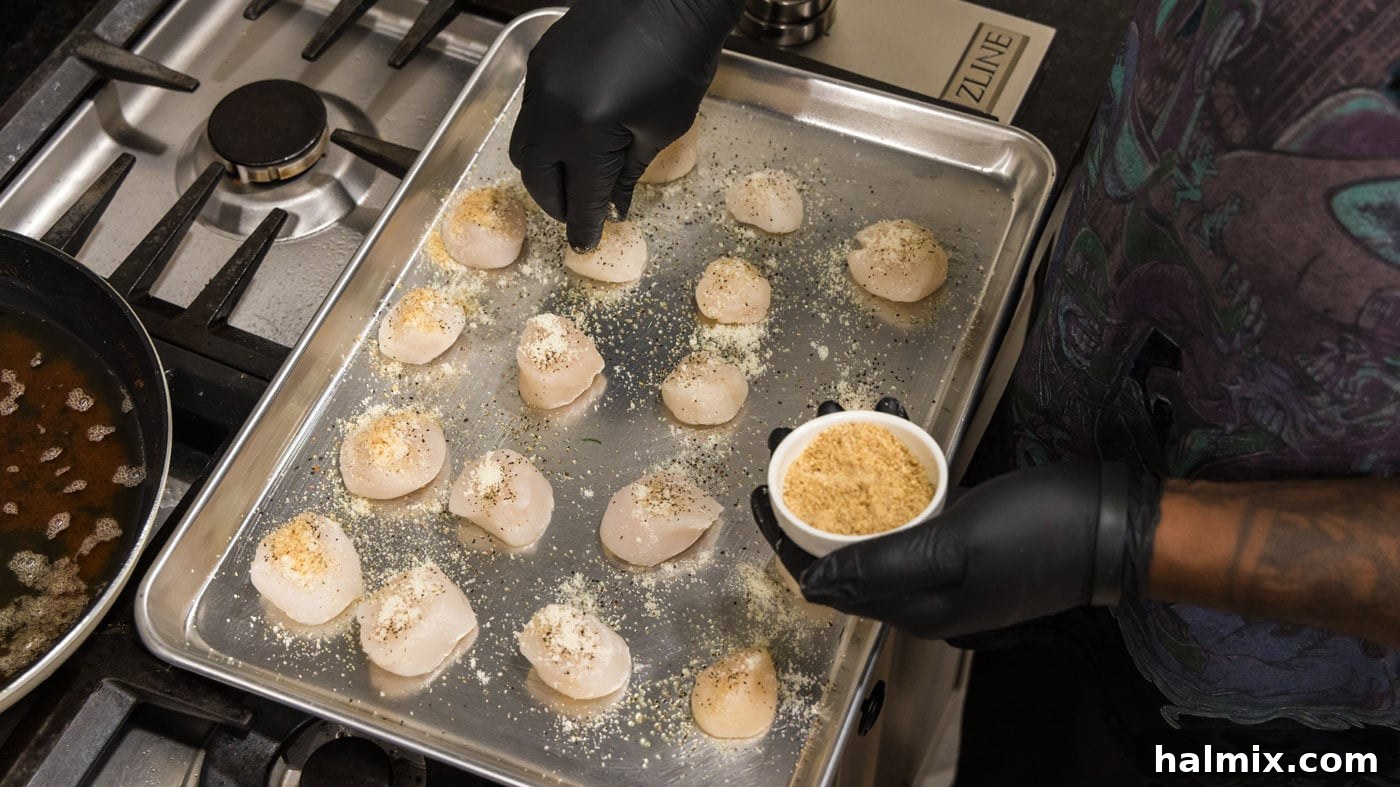
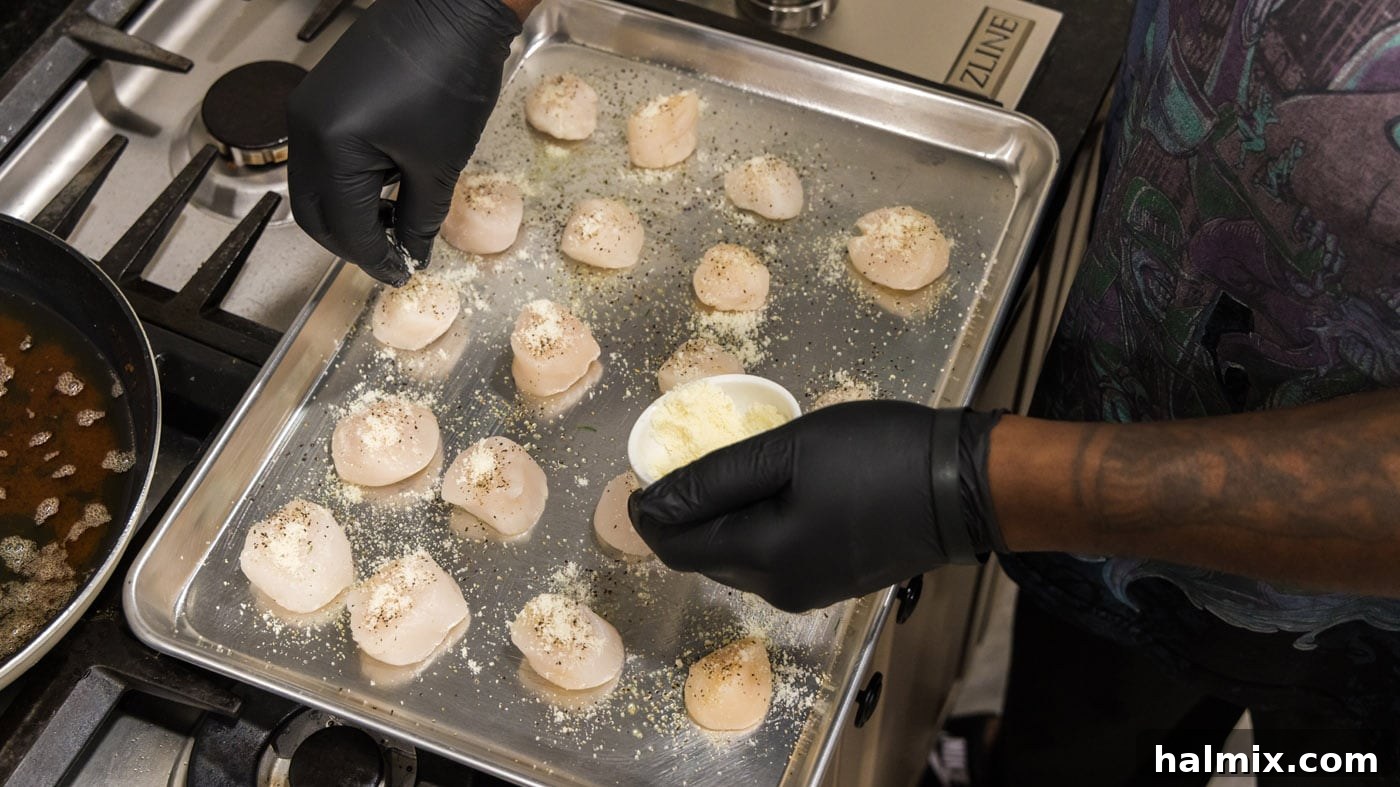
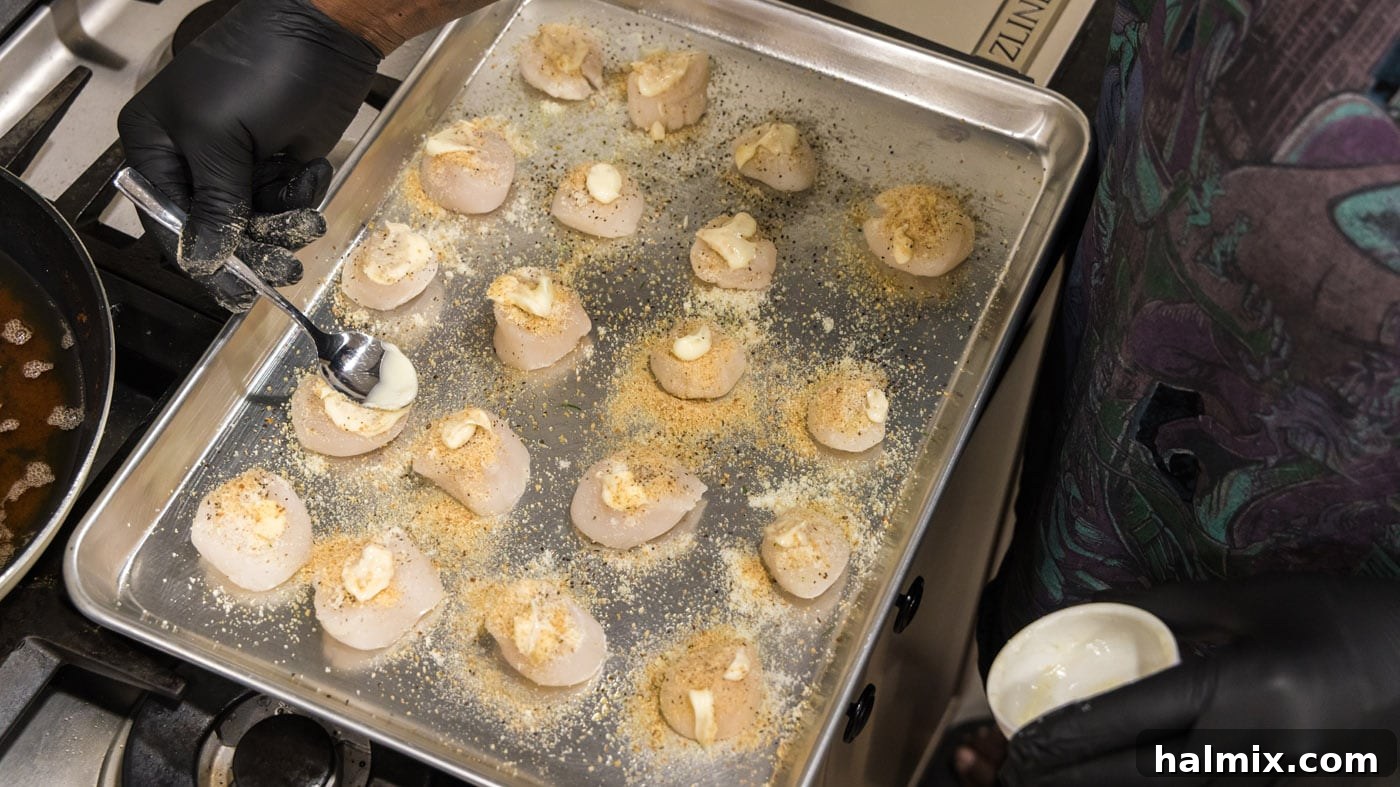
- Apply Topping & Butter: With the scallops seasoned, lightly and evenly sprinkle the breadcrumbs and grated Parmesan cheese over each one. Aim for a thin, consistent layer – the goal is to create a delicate, crispy crust, not a thick, heavy coating that might overshadow the scallops’ natural flavor. Following this, take a small, measured dollop of your well-softened butter and gently spread or flatten it slightly over the top of each scallop. The butter should possess a soft, almost pudding-like texture, making it effortless to spread and ensuring uniform coverage over the breadcrumb and cheese topping. This butter layer is essential; it not only acts as a binder, helping the breadcrumbs and cheese adhere, but also ensures the scallops remain incredibly moist and flavorful as they bake, while simultaneously contributing to the development of that irresistible golden-brown, crispy crust.

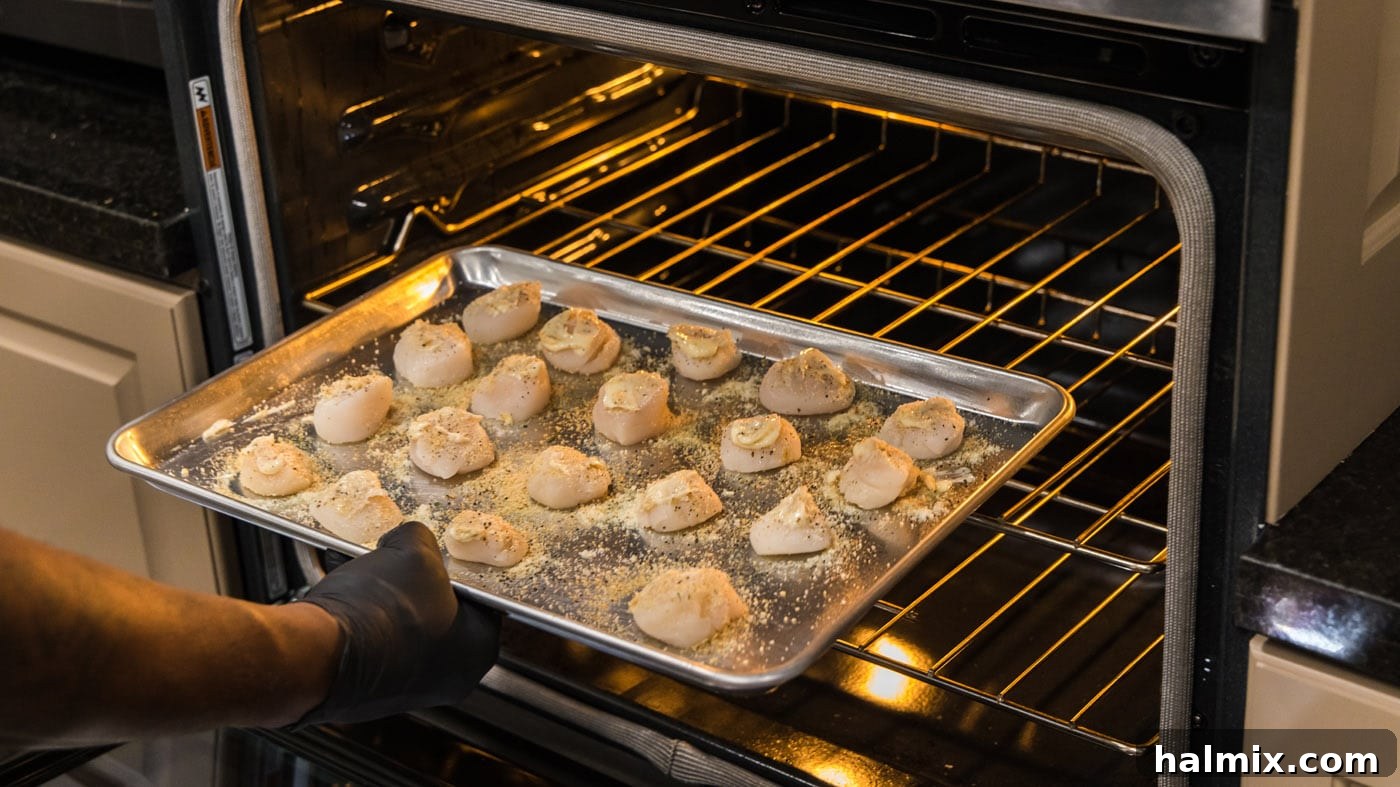
Arrange scallops with space for even baking. Seasoning the scallops with garlic salt and pepper. Adding a light layer of breadcrumbs for texture. Sprinkling Parmesan cheese for savory depth. Gently brushing scallops with softened butter. - Bake to Perfection: Carefully transfer the baking sheet, with your beautifully prepped scallops, into the preheated oven. Bake, uncovered, for a precise duration of 12-15 minutes. It is important to note that the exact baking time can vary slightly depending on several factors, including the precise size and thickness of your individual scallops, as well as the unique calibration and heat distribution of your specific oven. We strongly recommend keeping a close eye on the scallops towards the latter part of the cooking time to prevent overcooking, which can lead to a less desirable texture.
Baking the scallops until golden and tender.
Frequently Asked Questions & Expert Tips for Scallop Success
How do I store leftover baked scallops?
Scallops, like most delicate seafood, are always at their absolute best when enjoyed immediately after cooking. This ensures optimal texture, flavor, and freshness. However, if you find yourself with a few delicious leftovers, allow them to cool completely to room temperature before carefully transferring them to an airtight container. Store this container in the coldest part of your refrigerator for a maximum of two days. It’s important to note that reheating scallops can sometimes compromise their tender texture, potentially making them a bit tough. If reheating is necessary, do so very gently. You can briefly warm them in a preheated oven at a low temperature (around 275°F / 135°C) for just a few minutes, or quickly sauté them in a pan with a tiny bit of butter until they are just warmed through, being careful not to overcook them.
How do you know when scallops are perfectly cooked?
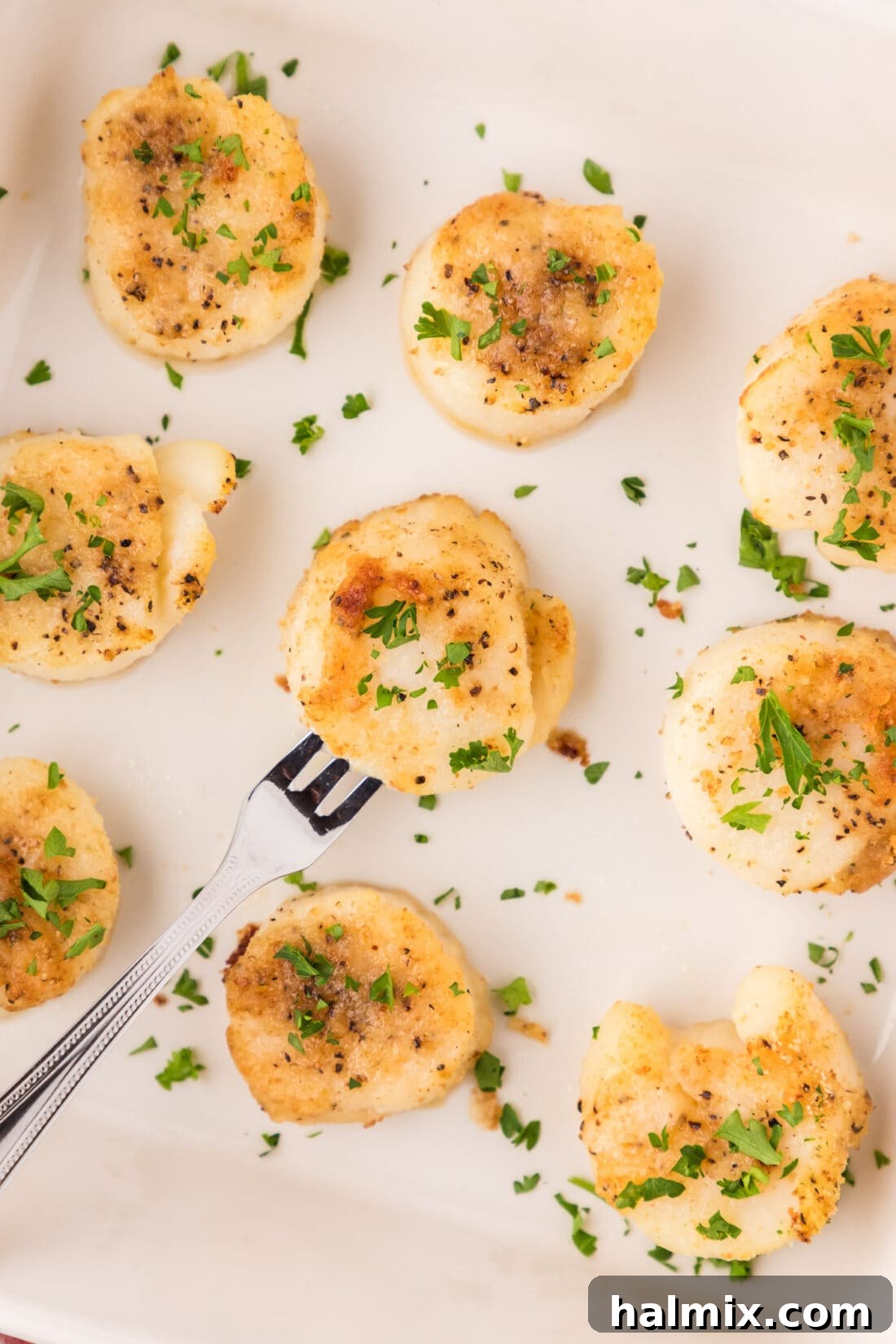
Knowing exactly when scallops are done is the key to culinary triumph, as overcooking can quickly transform them into a rubbery disappointment. Begin checking your scallops for doneness around the 12-minute mark of baking, as individual oven temperatures and scallop sizes can cause slight variations. Perfectly baked scallops will be completely opaque throughout their center, with a beautiful, appealingly lightly browned, golden crust developed on the outside. When gently pressed with a fork or your finger, a properly cooked scallop should feel tender-firm; it should not be overly squishy (indicating it’s undercooked) nor should it be rigid with very little give (a sign of overcooking). For the ultimate level of precision, consider using an instant-read thermometer. Aim for an internal temperature of approximately 115°F (46°C) when you remove them from the oven. Keep in mind that scallops, like other meats, will continue to cook slightly from residual heat (known as carry-over cooking) as they rest outside the oven, typically rising an additional 5-10 degrees, reaching a perfect, tender-firm internal temperature of about 120-125°F (49-52°C).
What’s the difference between “wet” and “dry” scallops, and why does it matter so much for baking?
This distinction is absolutely vital for achieving culinary success when cooking scallops! “Wet” scallops are those that have been treated and preserved in a solution containing sodium tripolyphosphate. This process causes them to absorb significant amounts of water, artificially inflating their size and weight (meaning consumers end up paying more for water rather than actual scallop meat!). Crucially for cooking, this excess moisture makes them incredibly challenging, if not impossible, to brown properly in a pan or achieve a crisp, golden crust in the oven. Instead of caramelizing beautifully, they tend to release their water and steam, resulting in a rubbery texture and a diluted, less appealing flavor. “Dry” scallops, conversely, are natural, untreated, and chemical-free. They retain their natural moisture content, possess a firmer texture, deliver a purer and sweeter flavor, and will caramelize and brown exquisitely, forming that desirable golden crust without releasing excessive liquid. Always, always opt for “dry” scallops for the best possible culinary experience, particularly when baking or searing.
Can I overcrowd the baking sheet when baking scallops?
No, it is critically important to resist the urge to overcrowd your baking sheet when preparing scallops. If the scallops are placed too close together on the pan, they will not have enough space for the hot air to circulate freely around them. This lack of circulation causes the scallops to steam rather than truly bake and brown. The result will be a disappointing rubbery texture and a complete absence of that coveted delicious golden crust that makes baked scallops so appealing. To ensure even heat distribution and proper caramelization, always arrange your scallops in a single layer with ample space between each piece. If your batch of scallops is too large for a single sheet with proper spacing, do not hesitate to use two separate baking sheets or bake them in carefully managed batches.
How should I properly thaw frozen scallops before cooking?
If you are planning to use frozen scallops for this recipe, it is absolutely essential to ensure they are completely and properly thawed before you begin the cooking process. The best and most recommended method for thawing is a slow, gradual approach: transfer the sealed package of frozen scallops from your freezer to the refrigerator the night before you intend to cook them. This allows them to thaw gently and evenly. If you find yourself pressed for time and need a quicker thawing method, you can place the sealed package of scallops in a bowl filled with cold water, changing the water every 30 minutes until they are fully thawed. Once the scallops are completely thawed, regardless of the method used, it is crucial to thoroughly pat them dry with several layers of paper towels. Any excess moisture remaining on the scallops will hinder their ability to brown beautifully and achieve that desired crisp crust, ultimately resulting in a less flavorful and textural appealing dish.
Serving Suggestions: What to Pair with Your Perfect Baked Scallops
Baked scallops are incredibly versatile, and their delicate, sweet flavor makes them a wonderful centerpiece that pairs harmoniously with a wide array of side dishes. Whether you prefer light accompaniments or something more substantial, you can easily create a complete and satisfying meal.
- Fresh Vegetables: Complement the richness of the scallops with vibrant, lightly cooked vegetables. Lightly steamed or roasted green beans, tender asparagus spears, or crisp broccoli florets make excellent companions. Their fresh, sometimes slightly bitter, textures and vibrant flavors provide a lovely contrast. Sautéed spinach with a touch of garlic and a squeeze of lemon is another fantastic and healthful choice.
- Hearty Starches: For a more substantial and fulfilling meal, consider serving your baked scallops alongside a bed of fluffy white rice, a fragrant wild rice pilaf, or a creamy, simple pasta dish tossed with a light olive oil or butter sauce. Classic au gratin potatoes offer a rich, comforting, and indulgent pairing that many adore. Alternatively, roasted baby potatoes with herbs or a light, fluffy quinoa salad can provide a healthier yet equally satisfying alternative.
- Light Salads: A simple, fresh garden salad adorned with a bright vinaigrette dressing, or a refreshing cucumber and dill salad, can offer a welcome acidity and crispness. These help to cut through the richness of the butter and Parmesan cheese, providing a delightful palate cleanser between bites of scallop.
- Artisan Bread: Do not underestimate the joy of having some crusty artisan bread or warm garlic bread on hand. It’s perfect for soaking up any delicious pan juices left behind on your plate, ensuring no flavor goes to waste. Warm dinner rolls or a freshly baked baguette are always a welcome addition to any seafood meal.
- The Essential Garnish: Always, and we truly mean always, finish your baked scallops with an optional, but highly recommended, squeeze of fresh lemon juice just before serving. The bright acidity instantly elevates and brightens all the flavors, adding a zesty counterpoint to the inherent sweetness of the scallops and the richness of the other ingredients. A final sprinkle of finely chopped fresh parsley, chives, or even a delicate sprinkle of red pepper flakes can also add a beautiful touch of color and a fresh herbaceous aroma.
Explore More Delicious Scallop Recipes
If you’ve fallen in love with cooking scallops and are eager to experiment with different preparations and flavor profiles, here are some other fantastic scallop recipes to expand your culinary repertoire and satisfy your seafood cravings:
- Crispy Fried Scallops: For those who adore a delightful, golden crunch.
- Luxurious Scallop Pasta: A wonderfully rich and comforting pasta dish featuring tender, perfectly cooked scallops.
- Effortless Air Fryer Scallops: A quick, convenient, and healthy method for achieving perfectly cooked scallops with minimal oil.
- Classic Pan-Seared Scallops: Master the art of achieving that irresistible golden-brown crust and tender interior with this timeless technique.
- Indulgent Bacon-Wrapped Scallops: A popular and utterly delicious appetizer or main course, beautifully combining the sweet delicate flavor of scallops with savory, crisp bacon.
- Flavorful Grilled Scallops: Perfect for summer barbecues and outdoor cooking, offering a delightful smoky flavor profile.
I genuinely love to bake, cook, and passionately share my kitchen experiences and delicious creations with all of you! Remembering to come back each day for new inspiration can sometimes be tough amidst busy schedules, which is precisely why I offer a convenient newsletter every time a new recipe is posted. Simply subscribe here and start receiving your free daily recipes delivered straight to your inbox – it’s the easiest way to stay updated and never miss a tasty new dish!
Baked Scallops Recipe
These tender, buttery baked scallops come together quickly in the oven with a lightly crisp topping of bread crumbs and parmesan cheese. A truly gourmet meal made simple for any occasion.
IMPORTANT: Always refer to the Frequently Asked Questions within the blog post for helpful tips and detailed guidance on cooking and storing your scallops!
Print Recipe |
Pin Recipe |
Rate This Recipe
Course: Dinner
Cuisine: American
Servings: 8 servings
Total Time: 30 minutes
Calories: 120 per serving
Author: Amanda Davis
Ingredients
- 2 pounds large sea scallops (ensure they are dry-packed for best results)
- 1 teaspoon black pepper (freshly ground recommended)
- 1 teaspoon garlic salt (or blend of salt and garlic powder)
- 2 Tablespoons bread crumbs (Panko for extra crispiness)
- 2 Tablespoons grated parmesan cheese (freshly grated for best flavor)
- 2 Tablespoons butter, well softened (should have a soft, almost pudding-like texture)
- 2 Tablespoons lemon juice (optional, for a zesty garnish)
Equipment You’ll Need
- Baking sheet (large enough for a single layer)
- Vinyl gloves (optional, for hygienic handling)
- Instant-read thermometer (highly recommended for precision)
Important Notes Before You Begin
- The ingredient measurements provided are generous to ensure you have enough. It is not always necessary to use them all if you are satisfied with the coverage and level of seasoning on your scallops.
- Always prioritize purchasing “dry” sea scallops for this recipe. “Wet” scallops, treated with preservatives, retain excess moisture which will prevent proper browning and can lead to a less desirable rubbery texture.
- Begin checking the scallops for doneness around the 12-minute mark of baking. Oven temperatures can vary significantly. Baked scallops are perfectly cooked when they appear opaque throughout, boast a beautiful light brown crust on the outside, and feel tender-firm when gently pressed. For precise cooking, aim to remove them from the oven when an instant-read thermometer registers approximately 115°F (46°C). They will continue to rise in temperature by a few degrees (typically 5-10°F) as they rest, reaching optimal doneness at about 120-125°F (49-52°C).
Instructions
- Preheat your oven to 400°F (200°C). Lightly spray a baking sheet with nonstick cooking spray to prevent sticking.
- Arrange the cleaned scallops in a single layer on the prepared baking sheet, ensuring there is ample space between each scallop to allow for even cooking and browning.
- Season the scallops evenly and generously with garlic salt and freshly ground black pepper.
- Evenly sprinkle a light layer of bread crumbs and grated Parmesan cheese over the seasoned scallops. Then, take a small dollop of your well-softened butter and gently spread or flatten it over the top of each scallop, ensuring a light, even coating.
- Bake the scallops, uncovered, in the preheated oven for 12-15 minutes, or until they are opaque throughout, have developed a beautiful golden-brown crust, and are tender-firm when pressed.
- Serve immediately, optionally garnished with a squeeze of fresh lemon juice.
Nutrition Information (Approximate per Serving)
Serving Size: 1 serving (approximately 4 ounces cooked scallop)
- Calories: 120 cal
- Carbohydrates: 6g
- Protein: 14g
- Fat: 4g
- Saturated Fat: 2g
- Polyunsaturated Fat: 0.3g
- Monounsaturated Fat: 1g
- Trans Fat: 0.1g
- Cholesterol: 36mg
- Sodium: 798mg
- Potassium: 248mg
- Fiber: 0.2g
- Sugar: 0.3g
- Vitamin A: 103 IU
- Vitamin C: 1mg
- Calcium: 25mg
- Iron: 1mg
Tried this Delicious Recipe? Pin it for Later!
If you loved these baked scallops, don’t forget to save the recipe! Follow on Pinterest @AmandasCookin or share your culinary creations by tagging #AmandasCookin! We love seeing what you make!
A Note on Oven Consistency: The recipes shared here are typically tested using a conventional gas oven and stovetop. It is important to acknowledge that ovens, particularly older models, can sometimes cook and bake inconsistently. To ensure the most accurate results, investing in an inexpensive oven thermometer can be incredibly helpful in verifying that your oven is truly reaching and maintaining the proper temperature. If you are using a toaster oven or a countertop oven, please be aware that these appliances may not distribute heat identically to a full-sized conventional oven, and consequently, you might need to adjust your cooking or baking times accordingly. For recipes prepared with specialized appliances like pressure cookers, air fryers, or slow cookers, a link to the specific type of appliance we use is usually provided within each respective recipe. Furthermore, for baking recipes where ingredient measurements are given by weight, please note that substituting with volumetric cup measurements may yield different results, and we cannot guarantee the same level of success with that alternative method.