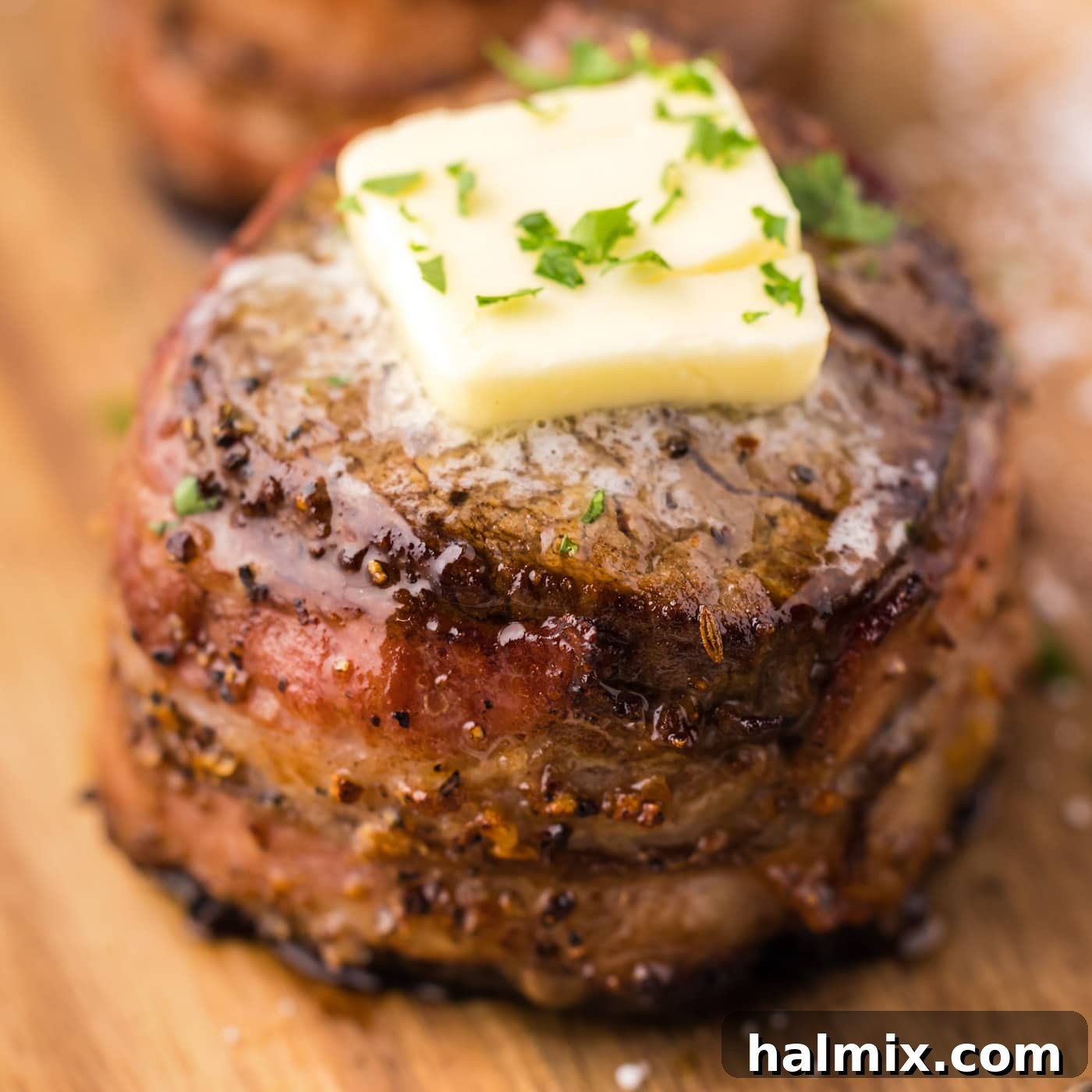
Imagine a steak so tender it practically melts in your mouth, perfectly complemented by the smoky, savory crispness of bacon. This isn’t just a dream; it’s a reality achievable in your own kitchen with our impressive bacon-wrapped filet mignon recipe. Far easier than its elegant presentation suggests, this dish goes from pan to plate in under 20 minutes, making it ideal for both weeknight indulgence and special occasions. With a quick sear in a hot skillet for that coveted golden-brown crust, followed by a brief finish in the oven, you’ll consistently achieve a juicy, medium-rare masterpiece every time.
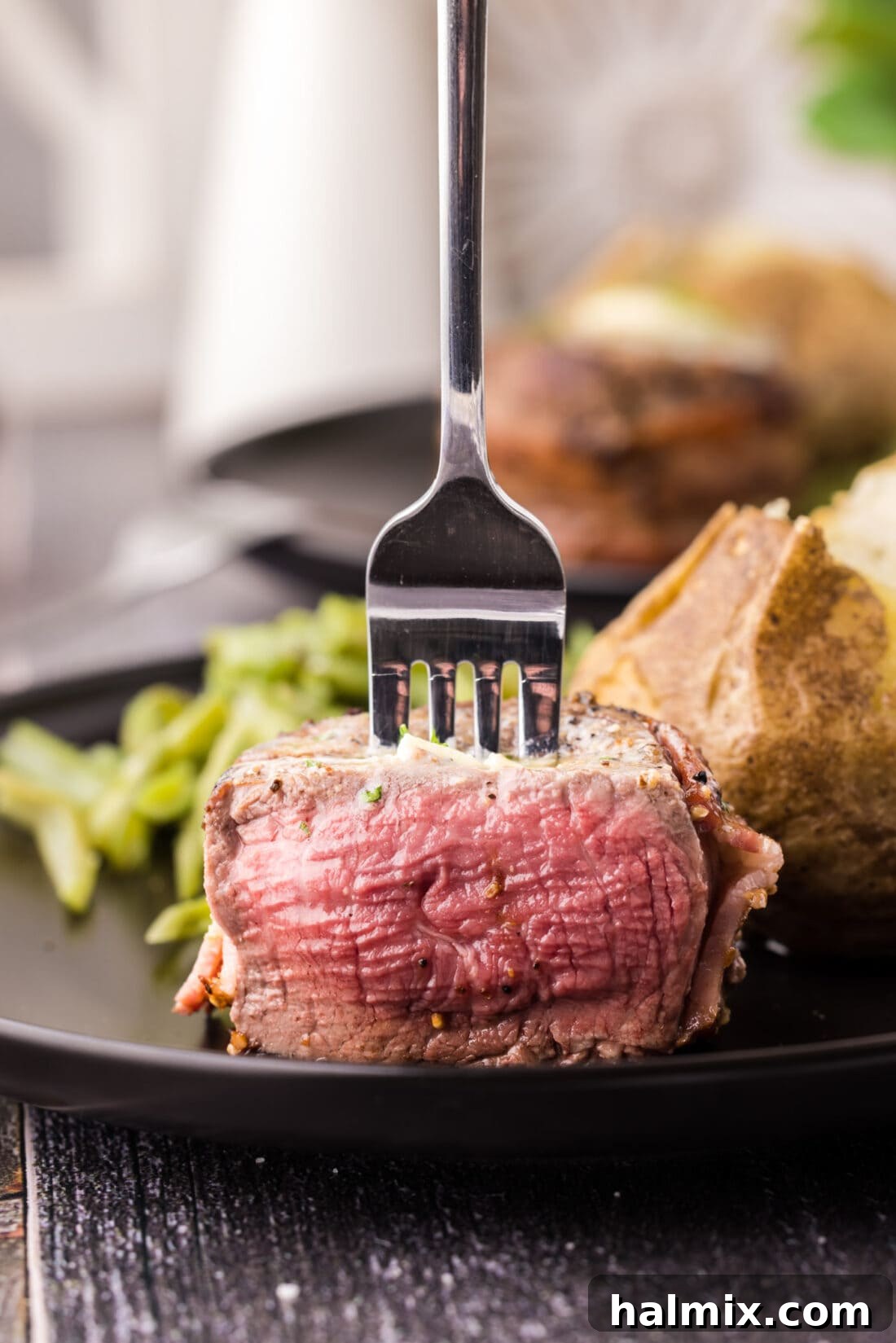
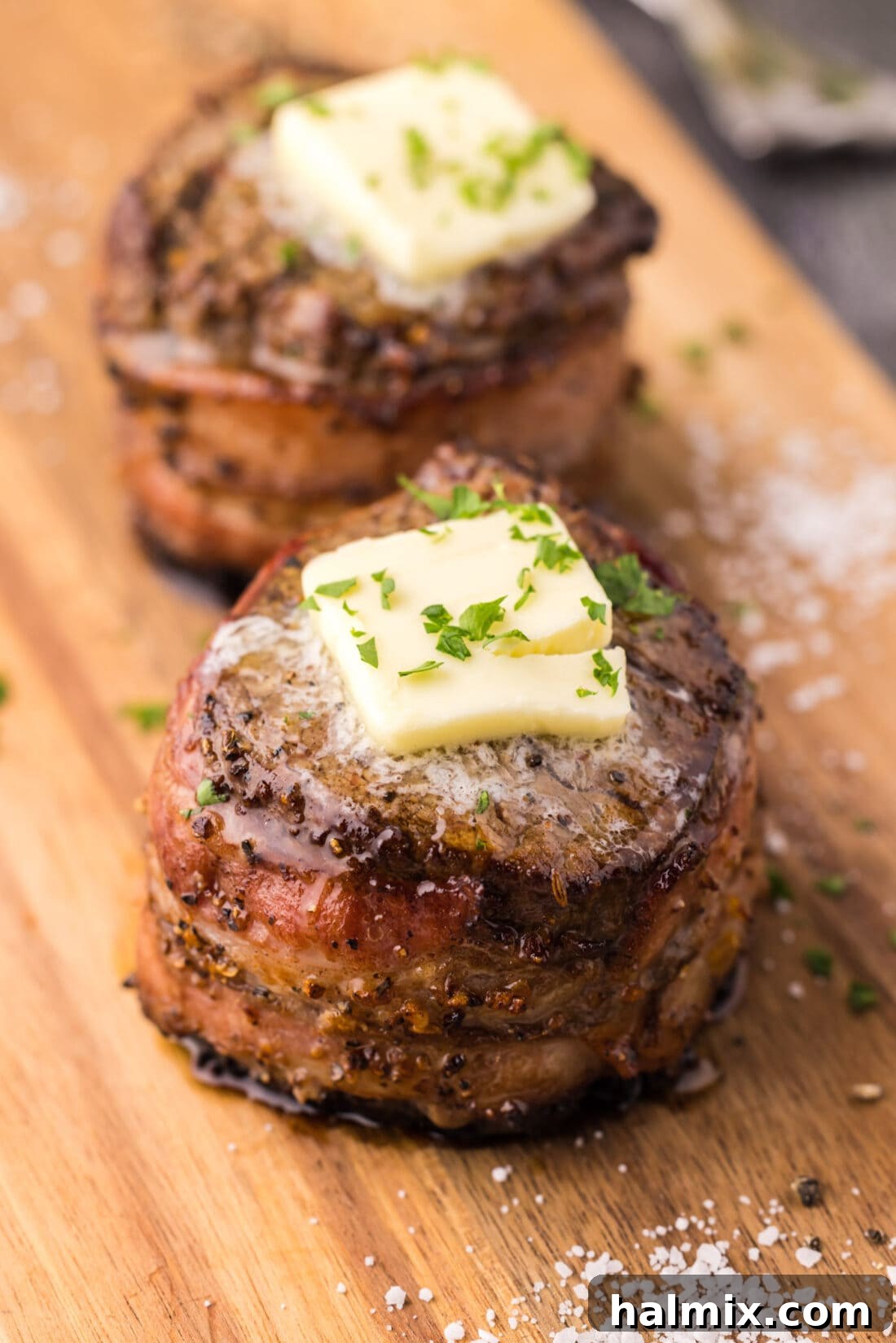
Why This Recipe Works: The Science Behind a Flawless Steak
The secret to a flawlessly cooked bacon-wrapped filet mignon lies in a tried-and-true method that combines the best of stovetop searing and oven roasting. This two-stage cooking process is a chef’s favorite for its ability to ensure maximum flavor, ideal texture, and precise doneness. Here’s a closer look at why this technique yields such exceptional results:
- The Searing Stage: Building Flavor and Crust
By initially searing the filet in a screaming hot skillet (preferably cast iron), you kickstart the Maillard reaction. This complex chemical process is responsible for creating hundreds of new flavor compounds and giving the steak its irresistible deep brown, flavorful crust. The intense, direct heat instantly caramelizes the proteins and sugars on the steak’s surface, locking in juices and building a robust foundation of savory flavor that simply cannot be achieved by oven-cooking alone. - The Oven Finishing Stage: Achieving Perfect Internal Doneness
After developing that gorgeous crust, the steak is gently transferred to a preheated oven. This allows the internal temperature to rise slowly and evenly throughout the filet. Unlike continuous searing, which can lead to an overcooked exterior and an undercooked center, oven finishing provides gentle, indirect heat. This method prevents the delicate exterior from burning while the center gradually reaches your desired level of doneness, typically a tender medium-rare for filet mignon. The result is a consistently juicy interior from edge to edge, with no grey bands of overcooked meat. - The Bacon Advantage: Flavor, Moisture, and Texture
Wrapping the lean filet mignon in bacon isn’t just for show; it adds multiple layers of flavor and texture that truly elevate the dish. As the bacon crisps, it renders its flavorful fat, which bastes the tenderloin, keeping it incredibly moist and infusing it with a smoky, salty essence. This natural basting is particularly beneficial for filet mignon, which is a very lean cut. The crispy bacon also provides a delightful textural contrast to the melt-in-your-mouth steak, making every bite an experience.
This simple yet highly effective technique ensures incredible, gourmet-quality results every single time, proving that an elegant, restaurant-worthy meal can indeed be achieved with ease and confidence in your own home. For an even more extravagant culinary adventure, consider pairing your perfectly cooked filet with bacon-wrapped scallops, which come together with similar speed and elegance, creating a truly unforgettable dining experience.
Essential Ingredients for Your Filet Mignon Masterpiece
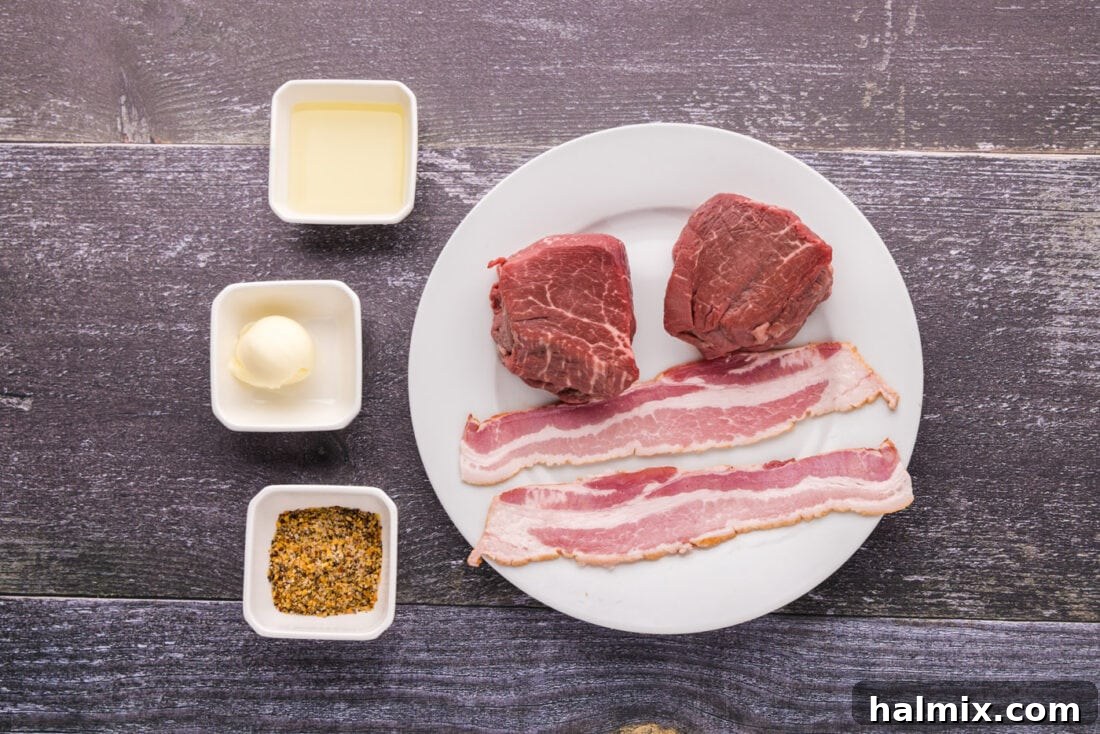
Crafting the perfect bacon-wrapped filet mignon begins with selecting quality ingredients. Here’s a detailed look at what you’ll need, along with insights to help you make the best choices for a truly exceptional meal:
Ingredient Info and Substitution Suggestions
- Filet Mignon: This recipe calls for two 1-pound filet mignons, which are typically 1.5 to 2 inches thick. Filet mignon, also known as beef tenderloin steak, is prized for its unparalleled tenderness and mild, almost buttery flavor. When selecting your filets, look for cuts that are a vibrant deep red color with minimal marbling, as this cut is naturally very lean. Uniform thickness is crucial for even cooking; if your steaks vary greatly in size, tie them with twine to create a more consistent shape. For best results, bring your filets to room temperature for about 30-60 minutes before cooking.
- Bacon: Choose regular-cut bacon for this recipe. While thick-cut bacon might seem tempting for extra flavor, it requires a longer cooking time to crisp up thoroughly, which can lead to overcooking your delicate filet. Regular bacon crisps beautifully in the time it takes to sear and roast the steak, adding that perfect salty, smoky counterpoint without compromising the steak’s tenderness. Opt for a high-quality, flavorful bacon to maximize the overall taste.
- Olive Oil: A good quality olive oil with a medium-high smoke point is essential for searing. It helps create that gorgeous, dark crust on the steak and prevents the bacon from sticking to the pan. You can substitute with other high-smoke-point oils like avocado oil, grapeseed oil, or canola oil if preferred. Avoid extra virgin olive oil for high-heat searing as it has a lower smoke point.
- Butter: Unsalted butter is used to brush onto the filets, contributing to an even richer, golden-brown crust and an extra layer of decadent flavor. The milk solids in butter caramelize beautifully during searing, enhancing the steak’s exterior and adding a wonderful aroma. Using unsalted butter allows you to control the overall saltiness of the dish, especially when using a seasoned rub.
- Chicago Steak Seasoning: This blend typically contains a robust mix of coarse salt, black pepper, garlic powder, onion powder, and various other spices (like paprika, red pepper, and coriander), specifically designed to complement beef without overpowering its natural flavor. We recommend a quality brand like Weber for its balanced profile. If Chicago steak seasoning isn’t available, or you prefer to make your own, a simple yet effective blend of coarse sea salt, freshly cracked black pepper, garlic powder, and a touch of smoked paprika works wonderfully. Feel free to experiment with your favorite steak rubs!
How to Prepare and Cook Your Bacon Wrapped Filet Mignon
These step-by-step photos and instructions are here to guide you through the process visually, ensuring confidence with every move. For a comprehensive printable version of this recipe, including exact measurements and detailed instructions, please refer to the recipe card at the end of this post.
- Preheat Your Oven: Begin by preheating your oven to a precise 450°F (232°C). It’s crucial for the oven to be at the correct temperature when the steaks are transferred, ensuring rapid and even cooking to achieve the perfect internal doneness.
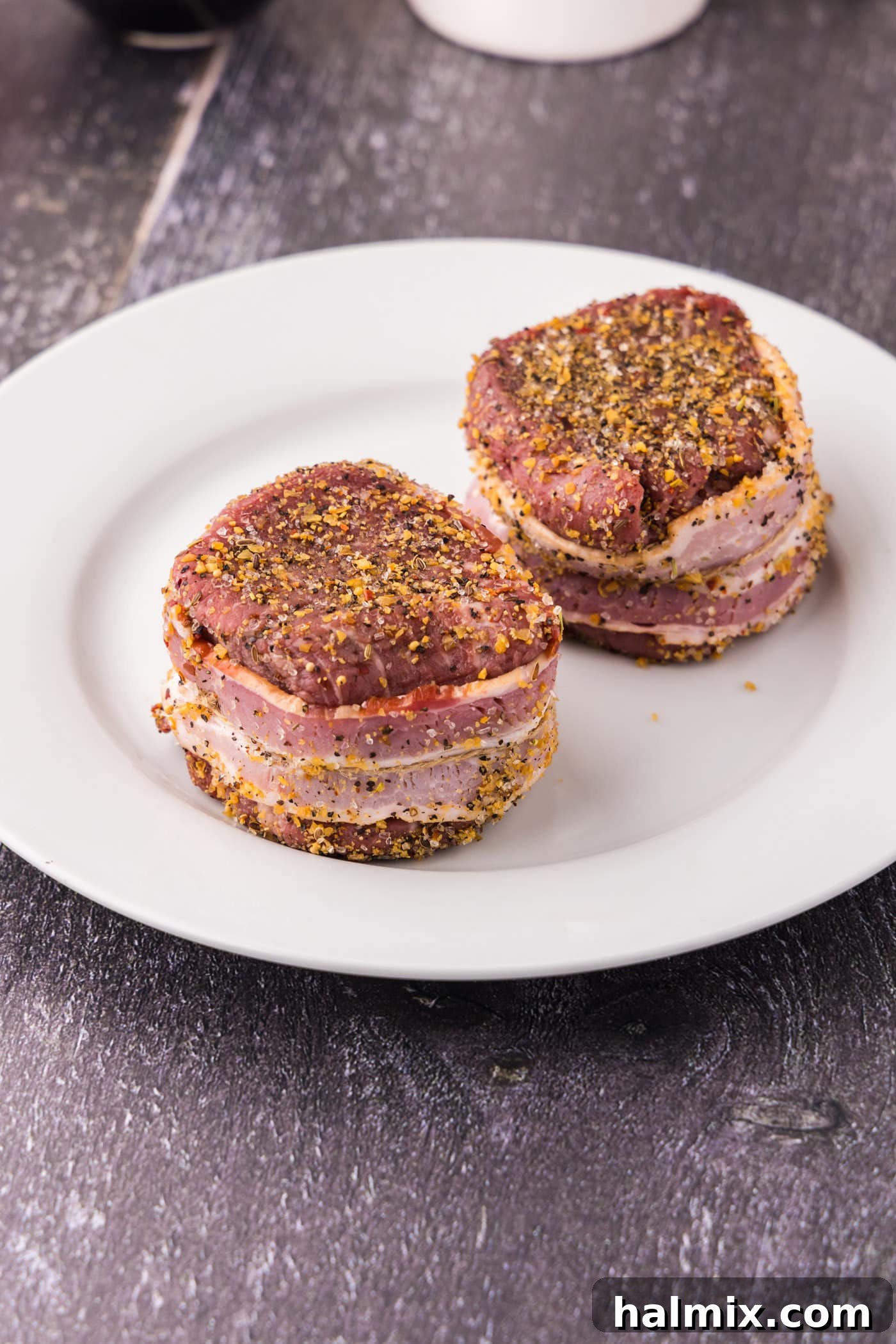
- Prepare and Wrap the Filets: Before wrapping, ensure your filets are thoroughly patted dry with paper towels. This step is vital for achieving a good sear. Then, take one slice of regular-cut bacon and carefully wrap it around the circumference of each filet mignon. Secure the bacon tightly in place using kitchen twine or sturdy wooden toothpicks. This not only keeps the bacon snug around the steak but also helps the filet maintain its desirable round shape during the cooking process.
- Season Generously: Place your chosen Chicago Steak seasoning (or your preferred homemade blend) on a small, flat plate. Carefully roll all sides of each bacon-wrapped filet in the seasoning, pressing gently to ensure the seasoning adheres well to both the beef and the bacon. Don’t be shy with the seasoning; it forms a crucial part of the steak’s flavorful crust.
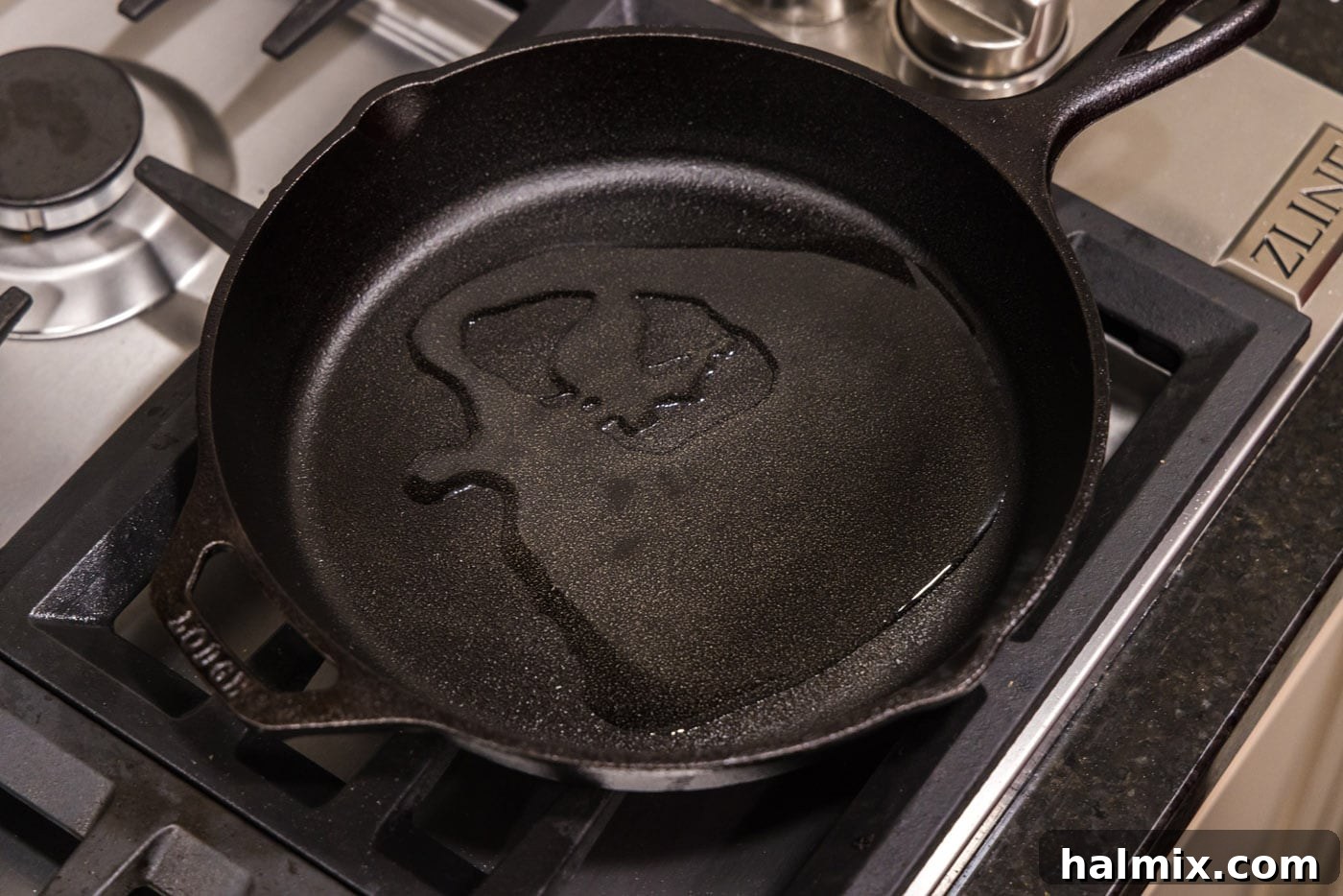
- Heat the Skillet: Add 2 tablespoons of olive oil to an oven-proof skillet. A heavy-bottomed cast-iron skillet is highly recommended for this recipe due to its superior heat retention and ability to create an even, consistent sear. Place the skillet over medium-high heat and allow the oil to heat until it shimmers and just begins to smoke lightly. This is your cue that the pan is hot enough for a proper sear.
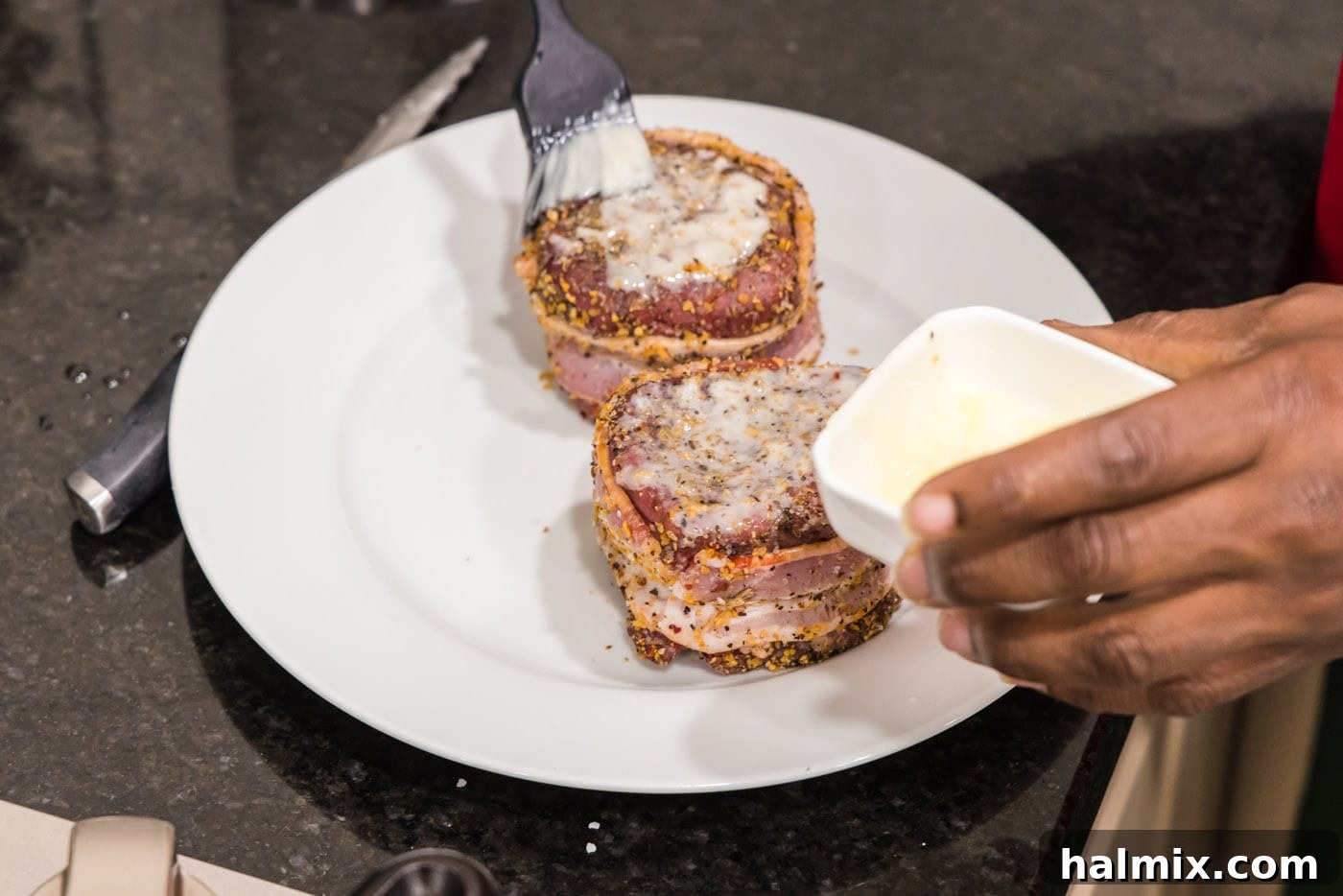
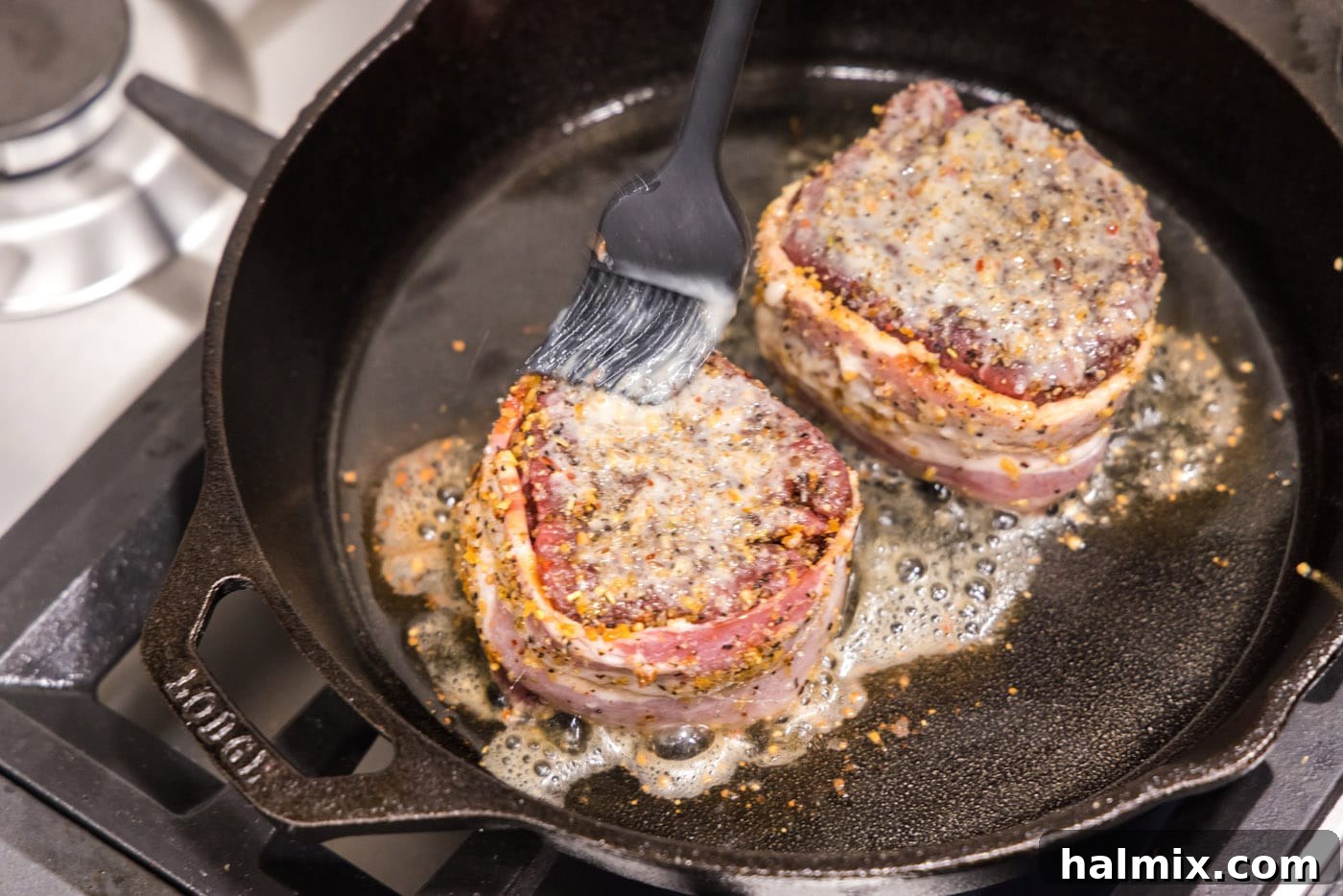
- Prepare and Apply Butter: While the skillet heats, melt 1 tablespoon of unsalted butter until it reaches a soft, pudding-like consistency—it should be pliable but not completely liquid. Using a pastry brush, liberally brush the entire top side of both filets with this softened butter. This step contributes to a beautiful golden crust and adds a layer of rich flavor.
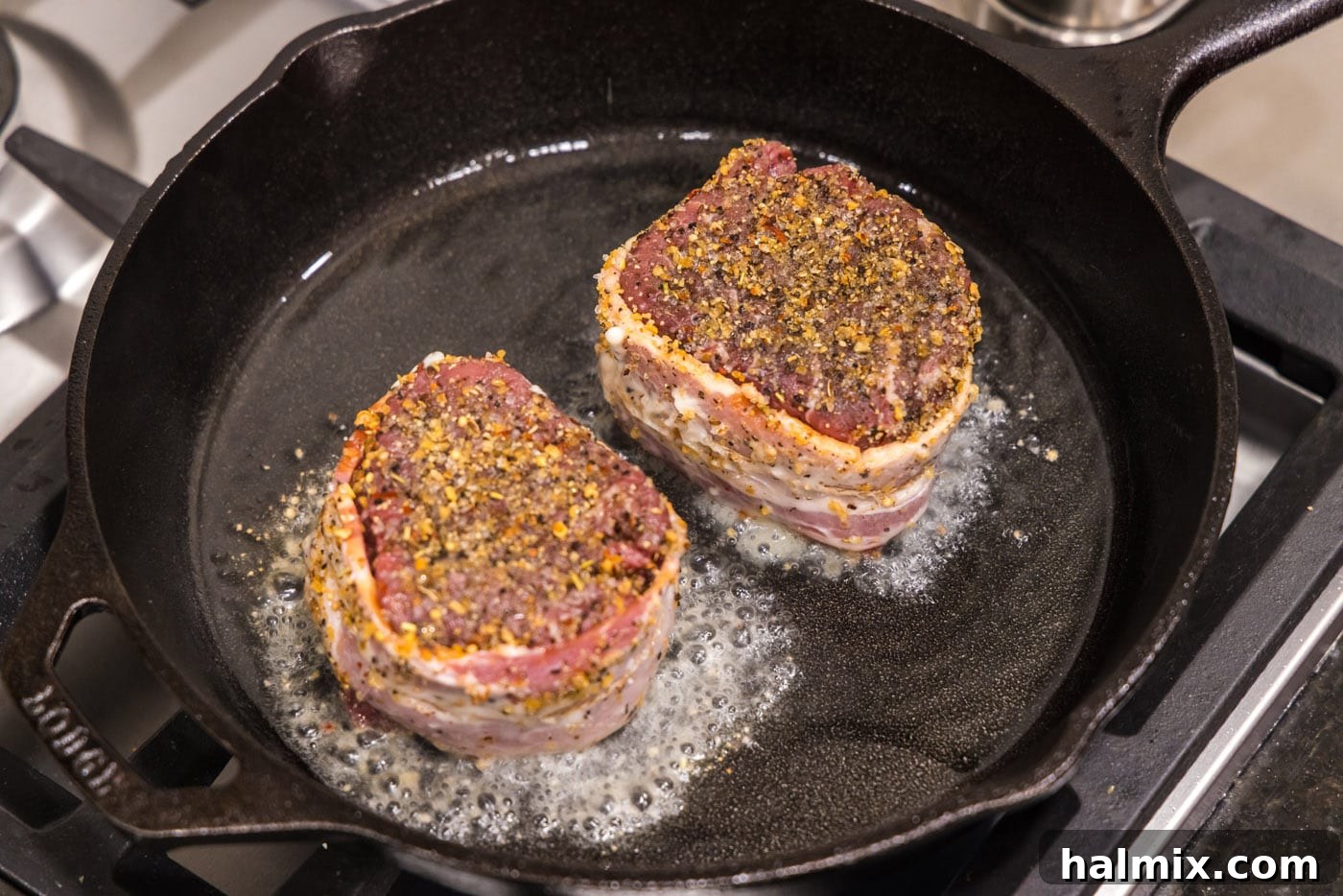
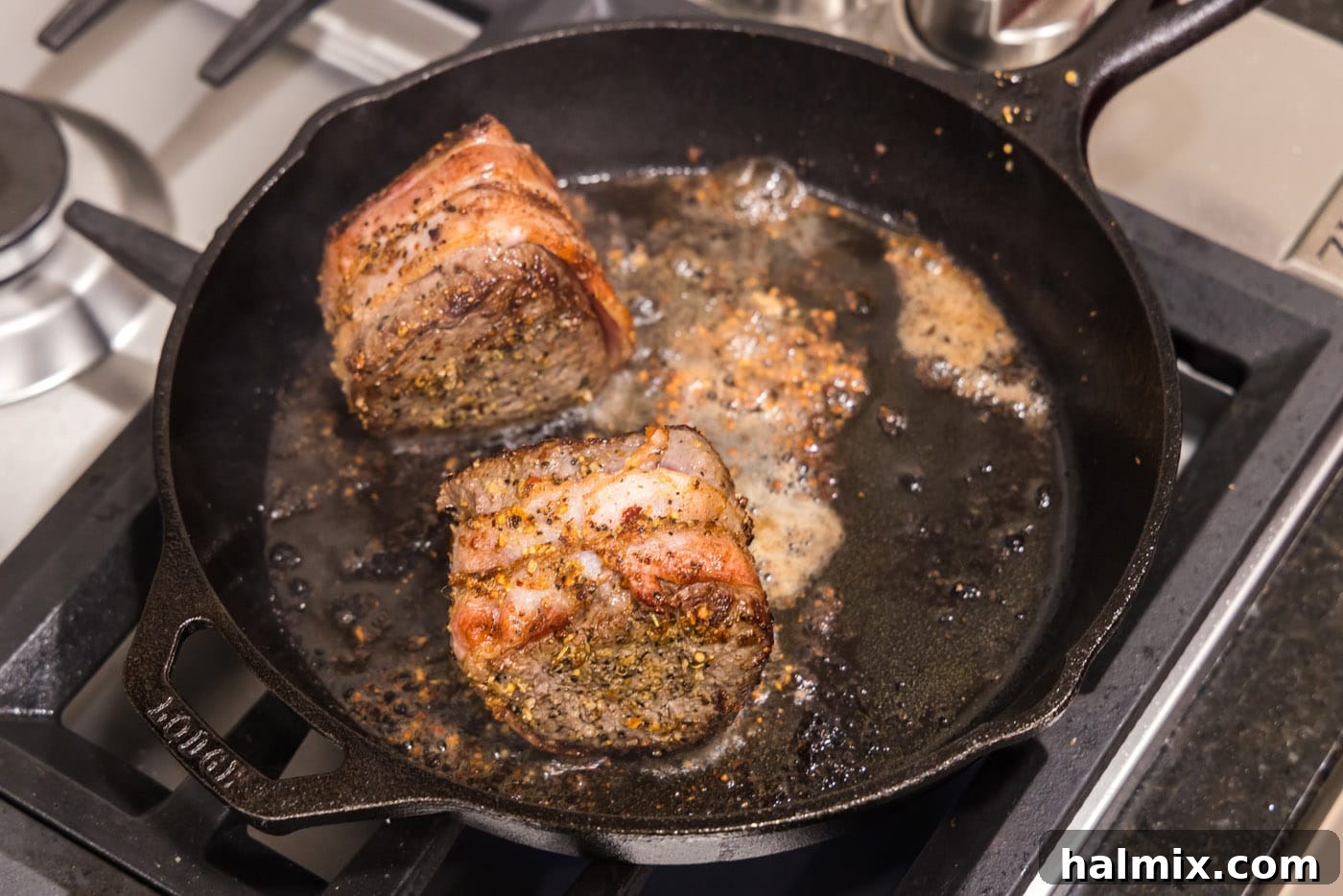
- Sear for a Golden Crust: Carefully place the butter-brushed filets into the hot skillet, butter-side down. Allow them to sear undisturbed for 2-3 minutes until a beautiful, deep golden-brown crust forms. While the first side sears, brush the uncooked top side of the filets with any remaining softened butter. Using sturdy tongs, turn the filets to sear all remaining sides, including the edges wrapped with bacon, for about 1-2 minutes per side. This ensures the bacon begins to crisp up and render its fat, contributing to the steak’s overall flavor and texture.
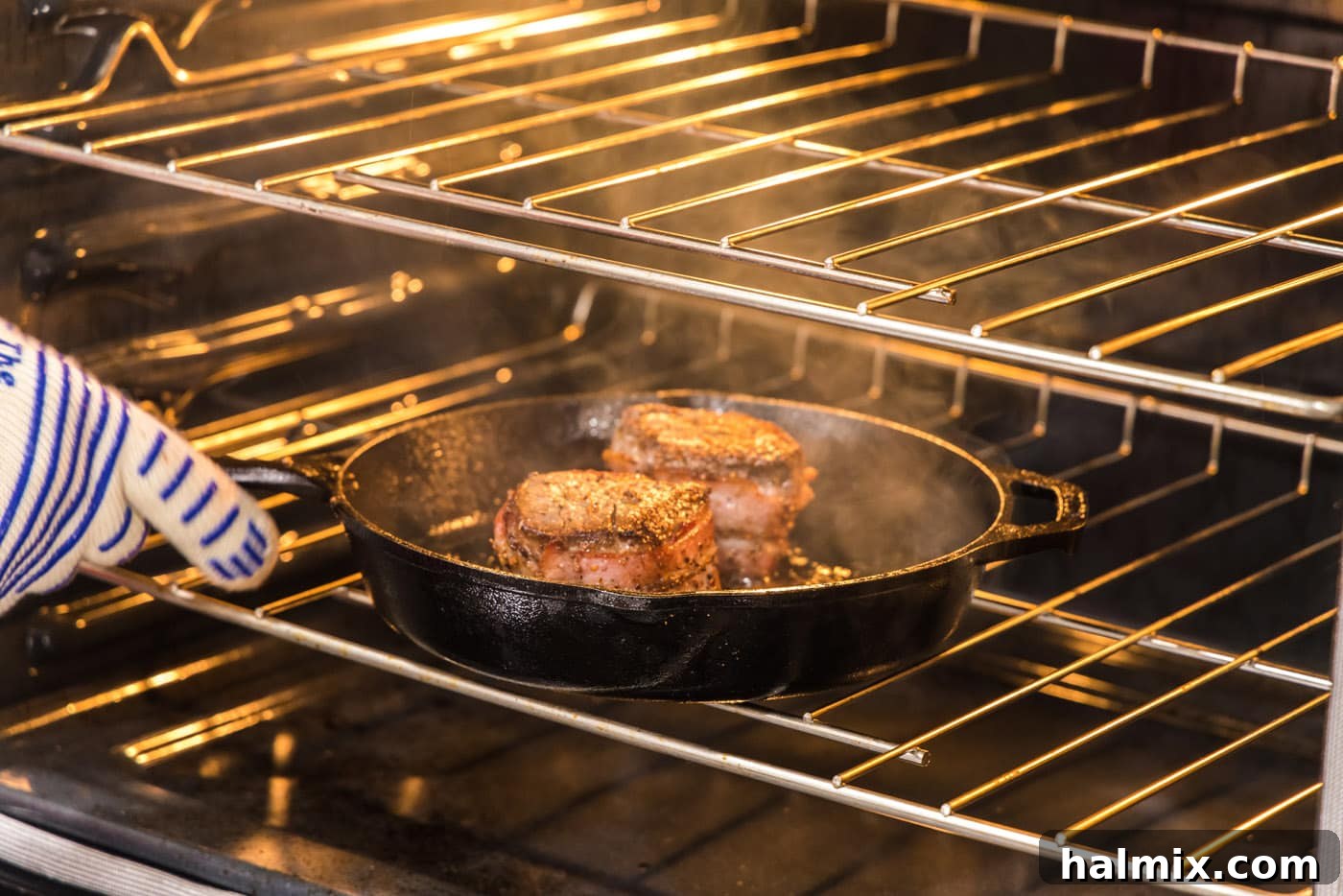
- Finish in the Oven: Once all sides are beautifully seared and the bacon is beginning to crisp and render, transfer the skillet directly into the preheated 450°F (232°C) oven, uncovered. Roast for 6-8 minutes for a perfect medium-rare doneness. For other doneness levels, always refer to the internal temperature guide provided in our expert tips below, using an instant-read meat thermometer for accuracy.
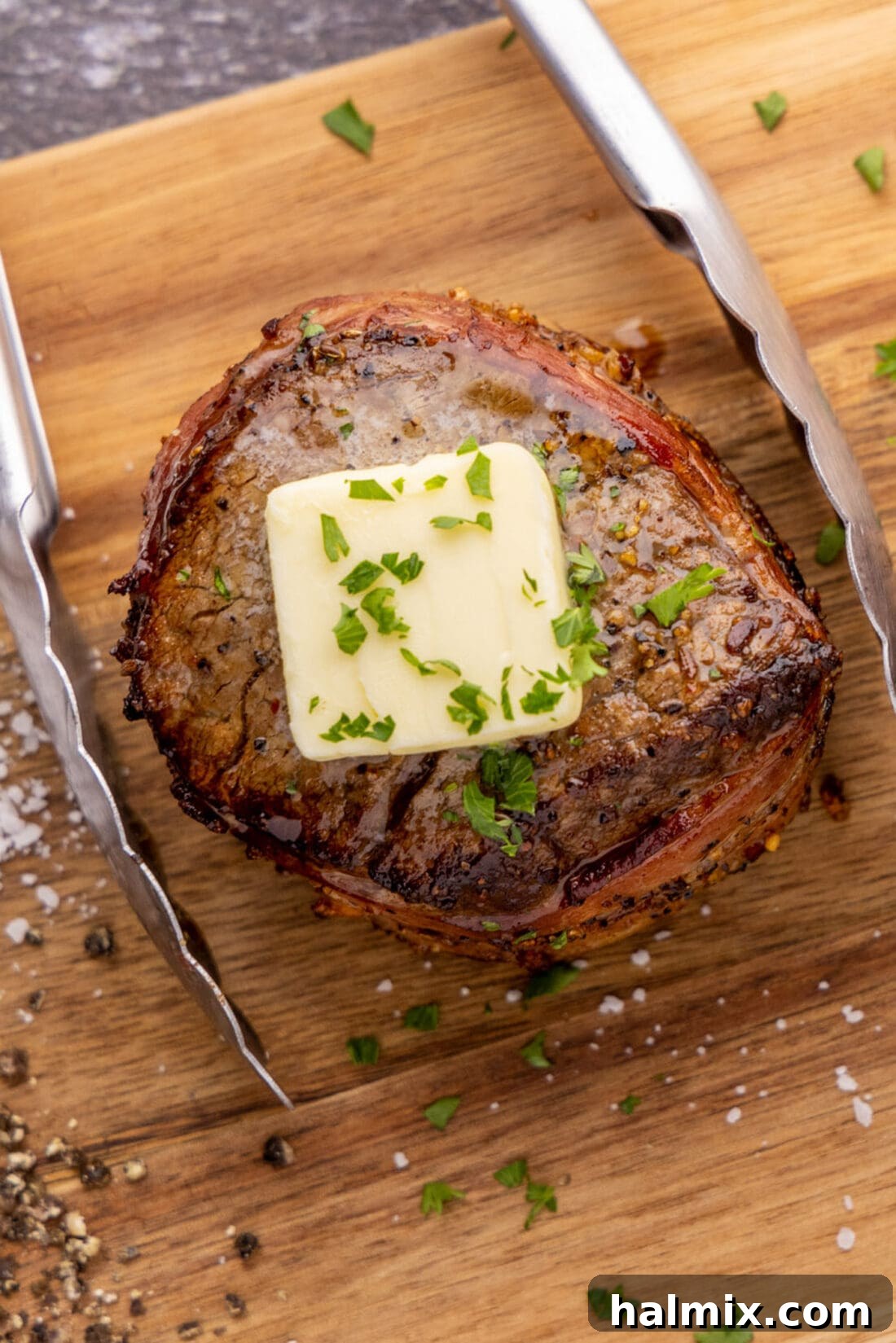
- Rest Before Serving: This is a crucial step for juicy steaks! Carefully remove the hot skillet from the oven. Using tongs, transfer the cooked filets to a clean cutting board. Tent them loosely with aluminum foil to keep them warm and allow them to rest for a full 5 minutes before slicing or serving. This resting period is vital as it allows the internal juices, which have concentrated in the center during cooking, to redistribute throughout the entire steak, ensuring every bite is incredibly tender, moist, and succulent. Do not skip this step! Remove any twine or toothpicks before presenting your masterpiece.
Expert Tips and Frequently Asked Questions for Perfect Filet Mignon
Achieving steakhouse-quality results at home is easier than you think when you’re equipped with the right knowledge. Here are some expert tips and answers to common questions to help you cook the perfect bacon-wrapped filet mignon every time:
How do I store and reheat leftovers?
Any leftover bacon-wrapped filet mignon should be stored promptly in an air-tight container and kept in the refrigerator for up to 3-4 days. To reheat without compromising the steak’s tenderness, avoid high heat. Gently warm the filet in a non-stick skillet over low heat until just warmed through, or place it in a low oven (around 275°F / 135°C) for 10-15 minutes, until it reaches your desired temperature. This method helps maintain moisture and prevents the steak from drying out.
What is the ideal internal temperature for filet mignon doneness?
Using an instant-read meat thermometer is the most accurate and foolproof way to gauge steak doneness. Remember that the steak’s internal temperature will continue to rise by a few degrees (known as carryover cooking) after it’s removed from the heat, especially during the resting period. Therefore, always remove the steaks when they reach the lower end of your desired temperature range:
- Rare: 120-125°F (49-52°C) – Remove from heat at 115-120°F (46-49°C)
- Medium-Rare (Recommended for Filet Mignon): 130-135°F (54-57°C) – Remove from heat at 125-130°F (52-54°C)
- Medium: 140-145°F (60-63°C) – Remove from heat at 135-140°F (57-60°C)
- Medium-Well: 150-155°F (66-68°C) – Remove from heat at 145-150°F (63-66°C)
- Well-Done: 160°F+ (71°C+) – Remove from heat at 155°F+ (68°C+)
For this recipe, we specifically aim for a succulent medium-rare finish, which means removing the filets from the oven when their internal temperature reaches approximately 130°F.
Why is resting the steak after cooking so important?
Resting your steak is perhaps the most crucial yet often overlooked step for a truly juicy and tender result. When meat cooks, the muscle fibers contract, pushing the internal juices towards the center. If you cut into the steak immediately after removing it from the heat, those valuable juices will readily spill out onto your cutting board, leaving you with a drier, less flavorful steak. Resting allows the muscle fibers to relax and gently reabsorb those delicious, flavorful juices, ensuring every bite is incredibly moist and succulent. A minimum of 5 minutes is recommended for filets of this size.
Can I use a different type of pan for searing and oven finishing?
While an oven-proof cast-iron skillet is highly recommended for its superior heat retention, even heat distribution, and ability to transfer seamlessly from stovetop to oven, a good quality heavy-bottomed stainless steel skillet can also work. The key is to ensure that whatever pan you choose is oven-safe and can withstand high temperatures without damage.
What if I don’t have kitchen twine to secure the bacon?
If you find yourself without kitchen twine, wooden toothpicks are an excellent and readily available alternative. Simply use two or three toothpicks to securely fasten the ends of the bacon around the circumference of the steak. Just remember to carefully remove all toothpicks before serving to avoid any surprises!
Should I bring the steaks to room temperature before cooking?
Yes, absolutely! Allowing your filets to sit out at room temperature for 30-60 minutes before cooking helps them cook more evenly. A cold steak will take longer to heat through to the center, leading to a wider band of overcooked meat around the edges and a less consistent doneness throughout.
Perfect Pairings: Serving Suggestions for Your Gourmet Filet Mignon
A beautifully cooked bacon-wrapped filet mignon deserves equally delicious and complementary accompaniments to create a truly complete and memorable gourmet meal. Here are some inspired ideas to elevate your dining experience:
- Potato Perfection: Rich, creamy, and satisfying potato dishes are classic steak partners for a reason. Consider decadent cheesy bacon chive twice-baked potatoes for an extra layer of flavor, elegantly layered au gratin potatoes for a touch of sophistication, or classic loaded baked potatoes piled high with your favorite toppings like sour cream, chives, and extra bacon bits. For a simpler yet equally delicious option, perfectly roasted garlic mashed potatoes or crispy rosemary-garlic roasted potatoes would also be exquisite.
- Fresh and Crisp Salads: A vibrant, refreshing salad provides a delightful textural and flavor contrast to the richness of the steak. A classic wedge salad, adorned with blue cheese dressing, crispy bacon bits, and juicy cherry tomatoes, is always a sophisticated hit. Alternatively, a fresh leafy green dinner salad with a light vinaigrette, perhaps with some candied pecans, crumbled goat cheese, or thinly sliced apples, would offer a refreshing counterpoint.
- Vibrant Green Vegetables: Complement your meal with bright, flavorful green vegetables that add both color and essential nutrients. Garlic-roasted asparagus spears, sautéed green beans with toasted almonds, or a rich and creamy creamed spinach are all excellent choices that harmonize beautifully with beef. Brussels sprouts roasted with balsamic glaze also make a fantastic addition.
- Decadent Sauces and Butters: While this steak is incredibly flavorful on its own, a complementary sauce or compound butter can take it to the next level of indulgence. Consider a classic béarnaise sauce for its tangy richness, a sophisticated red wine reduction, or a simple dollop of herbed garlic butter melting over the hot steak for an aromatic finish.
- Wine Pairings: For the ultimate dining experience, pair your exquisite bacon-wrapped filet mignon with a robust red wine. A bold Cabernet Sauvignon, a smooth Merlot, an elegant Pinot Noir, or a spicy Zinfandel are all excellent choices that will beautifully complement and enhance the rich flavors of the beef and crispy bacon.
Discover More Delicious Steak Recipes
If you loved mastering this bacon-wrapped filet mignon, you’ll surely enjoy exploring other fantastic steak preparations and techniques. Expand your culinary repertoire and impress your taste buds with these related recipes from our kitchen:
- Perfect Grilled Steak: Your Guide to BBQ Perfection
- The Best Steak Marinade: Infuse Your Steaks with Flavor
- Reverse Sear Ribeye: Unlocking Ultimate Tenderness
- Smoked Ribeye Steak: For an Unforgettable Smoky Flavor
- Blue Cheese Crusted Steak: A Bold and Flavorful Finish
I love to bake and cook and share my kitchen experience with all of you! Remembering to come back each day can be tough, that’s why I offer a convenient newsletter every time a new recipe posts. Simply subscribe and start receiving your free daily recipes!

Bacon Wrapped Filet Mignon
This method yields melt-in-your-mouth bacon wrapped filets cooked to a tender medium-rare. It doesn’t have to be a complicated process to have such an incredible result.
5 from 20 votes
IMPORTANT – There are often Frequently Asked Questions within the blog post that you may find helpful. Simply scroll back up to read them!
Pin It
Rate It
Ingredients
- 1 pound filet mignons (typically 2 individual filets, about 1.5-2 inches thick)
- 2 slices regular-cut bacon
- 2 Tablespoons olive oil (or other high-smoke-point oil)
- 1 Tablespoon unsalted butter, softened
- 2 Tablespoons Chicago steak seasoning (such as Weber brand, or your preferred steak rub)
Things You’ll Need
- Oven-proof skillet (a cast-iron skillet is highly recommended)
- Kitchen twine or wooden toothpicks
- Instant-read meat thermometer (essential for accurate doneness)
- Pastry brush
- Tongs
- Aluminum foil
- Cutting board
Before You Begin (Important Notes)
- Temperature Control: Always remove steaks from the oven when they are a few degrees below your target internal temperature, as they will continue to cook as they rest (carryover cooking). For a medium-rare filet, aim to pull them at 130°F (54°C).
- Resting is Key: Allowing the cooked steaks to rest for at least 5 minutes before slicing is absolutely crucial. This process redistributes the juices throughout the meat, ensuring a tender and succulent result with every bite.
- Bacon Choice: For best results and optimal crisping without overcooking the steak, use regular-cut bacon, not thick-cut.
- Storage: Store any leftover bacon-wrapped filet mignon in an air-tight container in the refrigerator for up to 3-4 days. Reheat gently to preserve tenderness.
- Room Temperature Steaks: For even cooking, allow your filets to come to room temperature for 30-60 minutes before you start the cooking process.
Instructions
- Preheat Oven: Preheat your oven to 450°F (232°C).
- Prepare Filets: Pat the filet mignons dry with paper towels. Wrap one slice of regular-cut bacon around the side of each filet and secure it tightly with kitchen twine or wooden toothpicks.
- Season Steaks: Pour the Chicago steak seasoning onto a small plate. Roll all sides of each bacon-wrapped filet in the seasoning until evenly coated, pressing gently to adhere.
- Heat Skillet: Add 2 tablespoons of olive oil to an oven-proof skillet (preferably cast iron) and place over medium-high heat. Heat until the oil shimmers and just begins to smoke lightly.
- Butter Application: Melt 1 tablespoon of unsalted butter until it’s soft and pudding-like. Using a pastry brush, liberally brush the top side of both filets with this softened butter.
- Sear Steaks: Carefully place the filets into the hot skillet, butter-side down. Sear for 2-3 minutes until a deep golden-brown crust forms. While the first side sears, brush the uncooked top side of the filets with any remaining softened butter. Using tongs, turn and sear all remaining sides (including the bacon-wrapped edges) for 1-2 minutes per side until the bacon starts to crisp.
- Oven Finish: Transfer the skillet directly to the preheated 450°F (232°C) oven, uncovered. Roast for 6-8 minutes for medium-rare doneness (internal temperature of 130°F). Use an instant-read thermometer to verify.
- Rest and Serve: Carefully remove the skillet from the oven. Transfer the steaks to a cutting board, tent loosely with foil, and let rest for 5 minutes before serving. Remove any twine or toothpicks before enjoying.
Nutrition Information
Per Serving (1 filet):
Carbohydrates: 3g |
Protein: 44g |
Fat: 64g |
Saturated Fat: 27g |
Polyunsaturated Fat: 4g |
Monounsaturated Fat: 26g |
Trans Fat: 0.3g |
Cholesterol: 188mg |
Sodium: 303mg |
Potassium: 762mg |
Fiber: 0.5g |
Sugar: 0.1g |
Vitamin A: 288IU |
Vitamin C: 0.5mg |
Calcium: 58mg |
Iron: 7mg
Tried this Recipe? Pin it for Later!
Follow on Pinterest @AmandasCookin or tag #AmandasCookin!
The recipes on this blog are tested with a conventional gas oven and gas stovetop. It’s important to note that some ovens, especially as they age, can cook and bake inconsistently. Using an inexpensive oven thermometer can assure you that your oven is truly heating to the proper temperature. If you use a toaster oven or countertop oven, please keep in mind that they may not distribute heat the same as a conventional full sized oven and you may need to adjust your cooking/baking times. In the case of recipes made with a pressure cooker, air fryer, slow cooker, or other appliance, a link to the appliances we use is listed within each respective recipe. For baking recipes where measurements are given by weight, please note that results may not be the same if cups are used instead, and we can’t guarantee success with that method.
This post was originally published here on January 9, 2023.