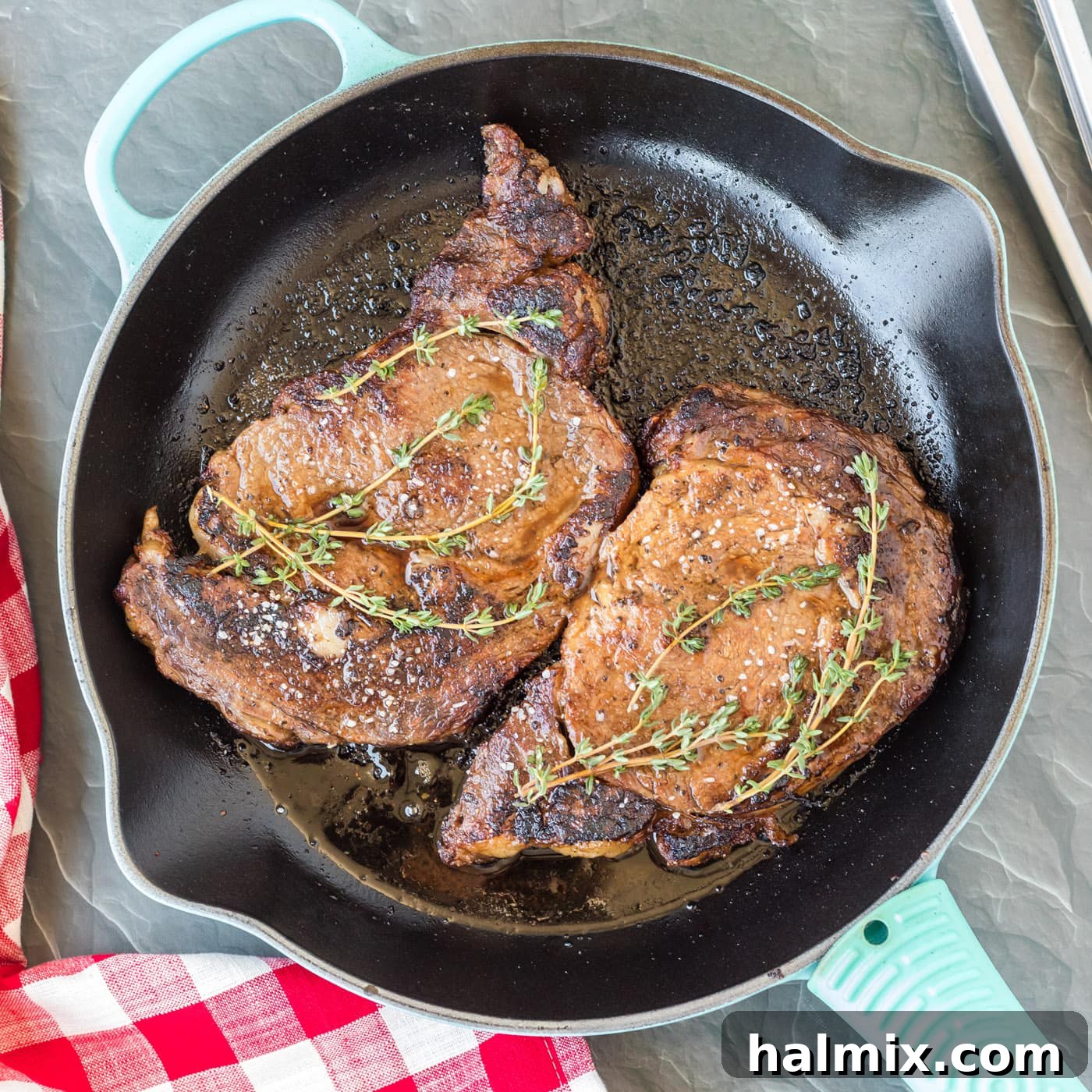
Unlock the secret to a perfect steak every single time with the reverse sear method. This technique guarantees an ultra-juicy ribeye, complete with an exquisitely crusted exterior that simply melts in your mouth. Forget dry, overcooked edges and undercooked centers; reverse searing is a foolproof way to achieve culinary perfection, ensuring a consistent, edge-to-edge medium-rare (or your preferred doneness) and an irresistible, savory crust that will elevate your home-cooked steak to restaurant quality.
Why the Reverse Sear Method is Your New Go-To for Ribeye
You might be familiar with traditional steak cooking methods, perhaps even our smoked ribeye steak recipe where we smoke first and sear last. However, the reverse sear ribeye method stands out as a true game-changer, promising the easiest path to a flawlessly cooked steak. It’s time to properly introduce this technique in a comprehensive, step-by-step tutorial designed to help you conquer steak cooking with absolute confidence.
If you’ve never experienced a reverse-seared ribeye, prepare to be amazed. This method consistently delivers incredibly tender beef that boasts even cooking throughout, from the center to the very edges, eliminating that unappetizing grey band often seen in traditionally cooked steaks. The magic of reverse searing lies in its name: it flips the conventional process on its head. Instead of searing first and then finishing the cook, you’ll begin by gently baking your steak at a low temperature in the oven. This slow, gradual heat brings the steak to your desired internal temperature without overcooking the exterior. Once it’s almost perfectly done inside, you’ll transfer it to a screaming hot skillet to create that signature, mouth-watering, deeply caramelized crust. This two-phase approach—baking first, searing last—ensures maximum juiciness and an unbeatable texture.
The science behind reverse searing is simple yet brilliant. By cooking the steak slowly in the oven, you allow the heat to penetrate the meat more evenly, gently raising the internal temperature. This controlled process prevents the muscle fibers from seizing up and expelling precious moisture, which is a common issue with high-heat-only methods. The result is a steak that retains its natural juices, staying incredibly tender and flavorful. The final, high-heat sear then rapidly develops a rich, savory crust through the Maillard reaction—a chemical process that browns the surface and creates hundreds of new flavor compounds. This combination of slow cooking for tenderness and quick searing for flavor and texture is what makes the reverse sear method truly superior for thick cuts of meat like ribeye.
Key Ingredients for Your Perfect Reverse Sear Ribeye
Crafting an exceptional reverse sear ribeye begins with quality ingredients. While the method itself is powerful, the flavors you build into your steak are just as crucial. Below, we’ll delve into the components that make this recipe truly special.
Ingredient Spotlight & Expert Tips for Selection
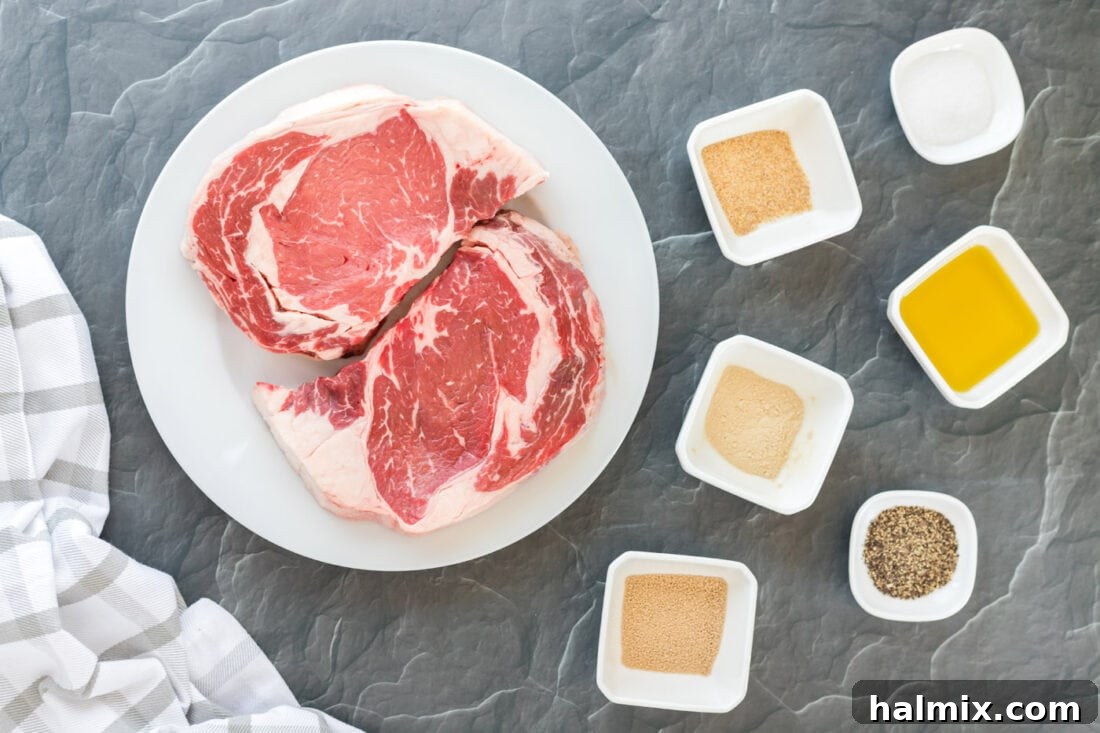
STEAK – For optimal results, seek out two pounds of high-quality ribeye steak, ideally around one pound per steak. The thickness is paramount for the reverse sear method; aim for steaks that are 1 1/2 to 2 inches thick. Thicker cuts benefit most from the low-and-slow cooking, allowing for a more even internal temperature before the sear. Look for good marbling – the intramuscular fat that adds incredible flavor and tenderness. Don’t hesitate to ask your butcher for a well-marbled, thick-cut ribeye. While our instructions are designed to yield a delicious medium doneness, remember that steak thickness and your desired doneness will influence cooking time. For a more well-done steak, you might add an extra 5-10 minutes in the oven, always checking with a meat thermometer. Other thick cuts like New York Strip or even a thick sirloin can be reverse-seared, but ribeye is prized for its marbling and rich flavor.
Olive Oil – This serves as the binding agent for our rub, helping the spices adhere beautifully to the meat. It also contributes to the initial fat content, aiding in moisture retention during the baking phase. Any good quality olive oil will work here. You could experiment with a flavored olive oil, such as garlic-infused, for an extra layer of taste.
Brown Sugar – A secret weapon for an incredible crust! The brown sugar in the rub caramelizes beautifully during the searing process, adding a subtle sweetness and a deep, mahogany color to your ribeye. This caramelization also contributes to the irresistible crunch of the exterior. If you prefer a less sweet rub, you can reduce the amount slightly or omit it, but you’ll miss out on some of that fantastic crust development.
Onion Powder & Granulated Garlic – These aromatic spices are staples in many rubs for good reason. They provide a foundational savory flavor that complements the rich taste of the beef without being overpowering. Granulated garlic offers a more intense flavor than garlic powder, and onion powder adds a subtle depth. Feel free to adjust quantities to your preference, or consider adding a pinch of smoked paprika for a smoky undertone, or a touch of dried rosemary or thyme for an herbaceous note.
Salt & Black Pepper – Essential seasonings. Salt enhances the natural flavor of the beef and helps create a savory crust. Freshly ground black pepper adds a delightful aromatic heat. Don’t be shy with the salt and pepper; a generous seasoning is key for a well-flavored steak.
Mastering the Reverse Sear: Step-by-Step Perfection
These step-by-step photos and instructions are here to guide you in visualizing how to make this recipe. For the complete printable version of this recipe, including all measurements and detailed instructions, simply scroll down to the recipe card at the bottom of this post.
- Before you begin, ensure your ribeye steaks are thoroughly patted dry with paper towels. This step is critical for achieving a magnificent crust. Excess surface moisture will steam the steak rather than sear it. Preheat your oven to 400°F (200°C). Place a wire rack on top of a baking sheet. This setup allows air to circulate around the entire steak, promoting even cooking and preventing the bottom from getting soggy.
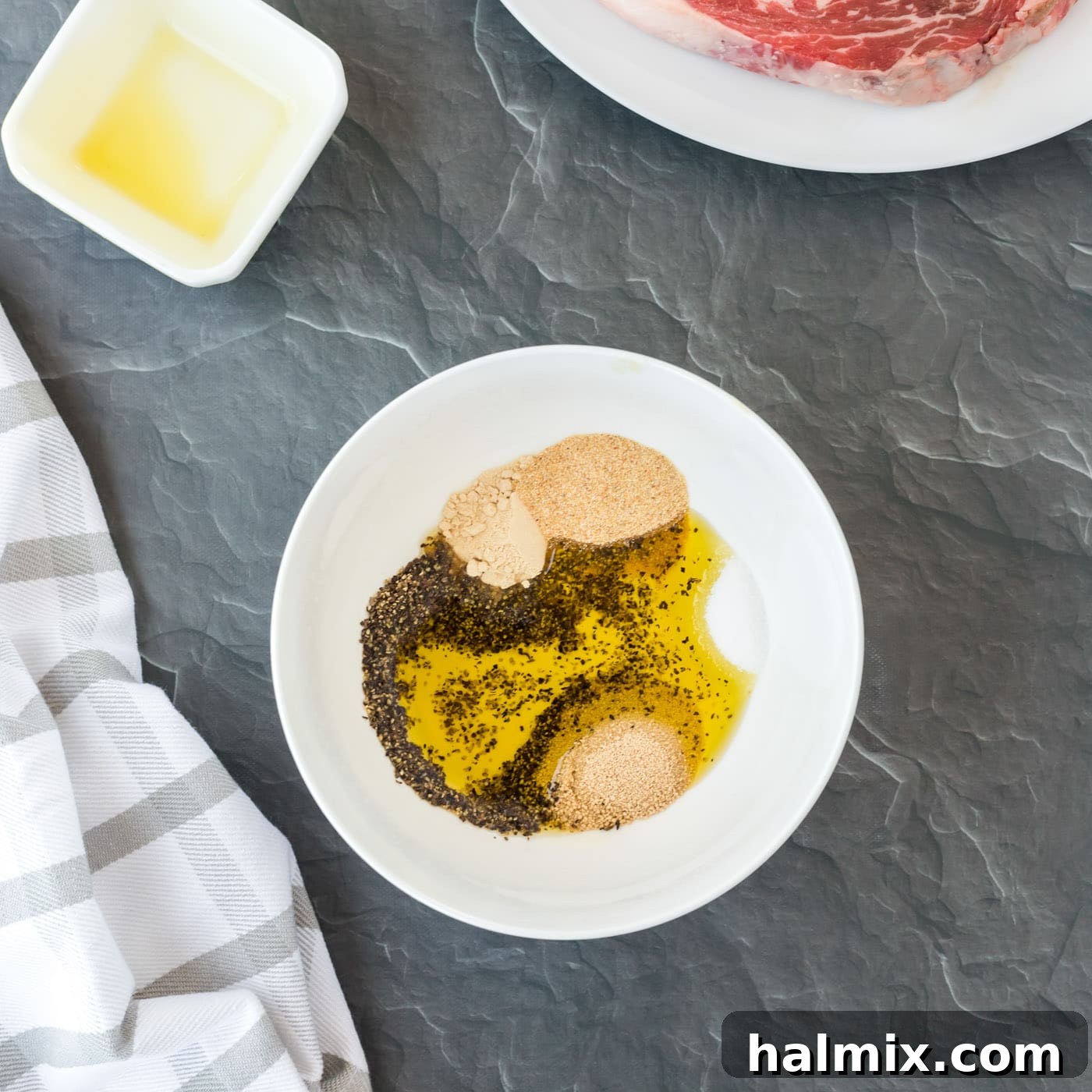
- In a small bowl, combine the olive oil, brown sugar, onion powder, granulated garlic, salt, and black pepper. Mix thoroughly until you have a cohesive, slightly pasty rub. This ensures the flavors are evenly distributed.

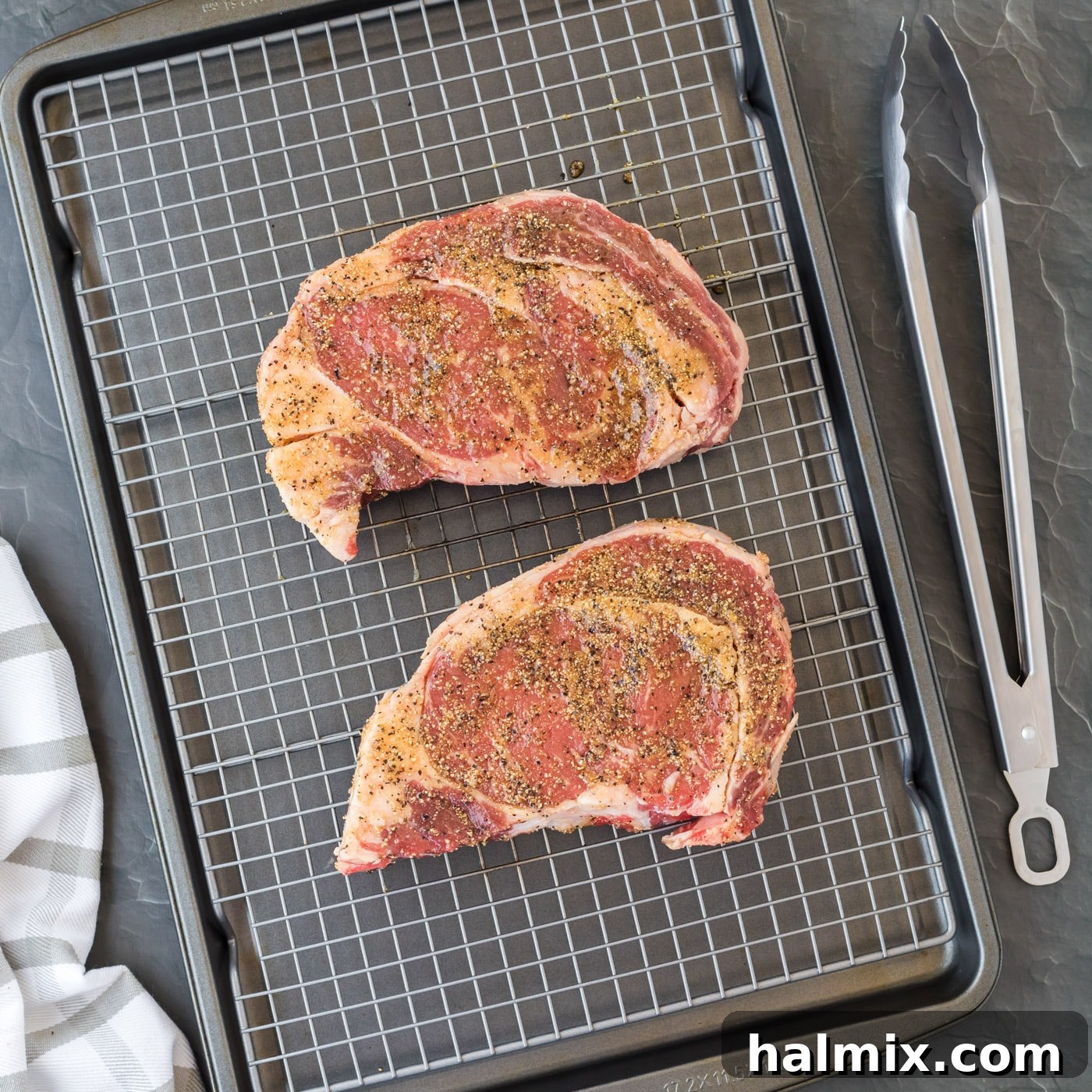
- Wearing gloves, if desired, generously rub the oil and spice mixture all over the entire surface of each ribeye steak. Don’t forget the sides! Ensure every inch is coated, pressing the rub gently into the meat to help it adhere.
- Carefully place the seasoned steaks on the wire rack over the baking sheet. Space them out so they are not touching, which further aids in even cooking. This arrangement allows air to circulate around the steak, ensuring it cooks evenly from all sides in the oven.
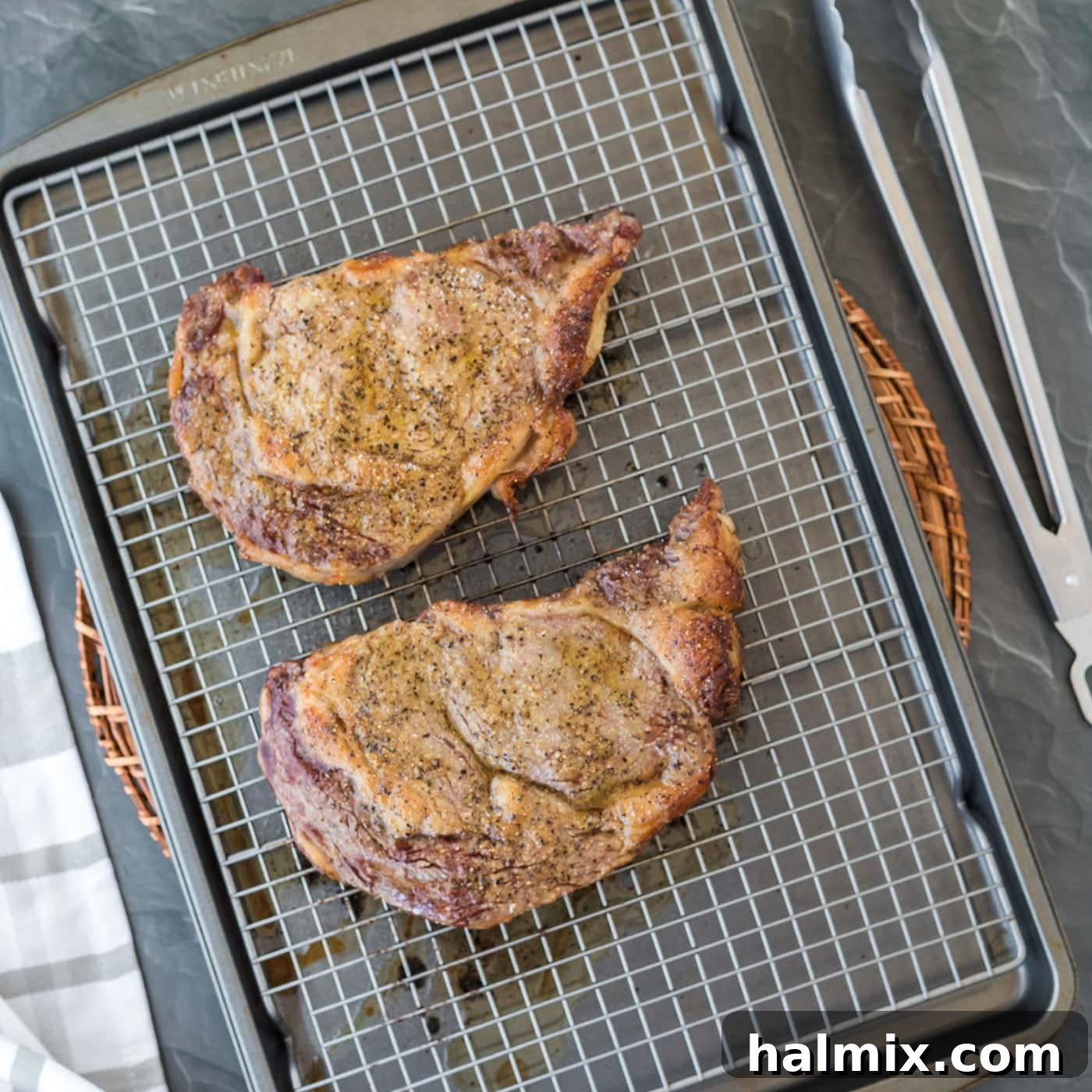
- Bake the steaks in the preheated oven for 15-20 minutes. The exact timing will depend on the thickness of your steaks and your desired level of doneness. This initial baking stage is crucial for bringing the internal temperature up slowly and evenly. For precise results, use an instant-read meat thermometer inserted into the thickest part of the steak. You’re aiming for an internal temperature roughly 10-15°F below your target doneness (e.g., 115-120°F for medium-rare).
- Approximately 3-4 minutes before the oven baking time is complete, begin preheating your cast iron skillet over high heat on your stovetop. It is essential to preheat the skillet dry, without any oil or butter, to ensure it reaches a sufficiently high temperature for a deep, dark crust. A hot skillet is key to an effective sear.
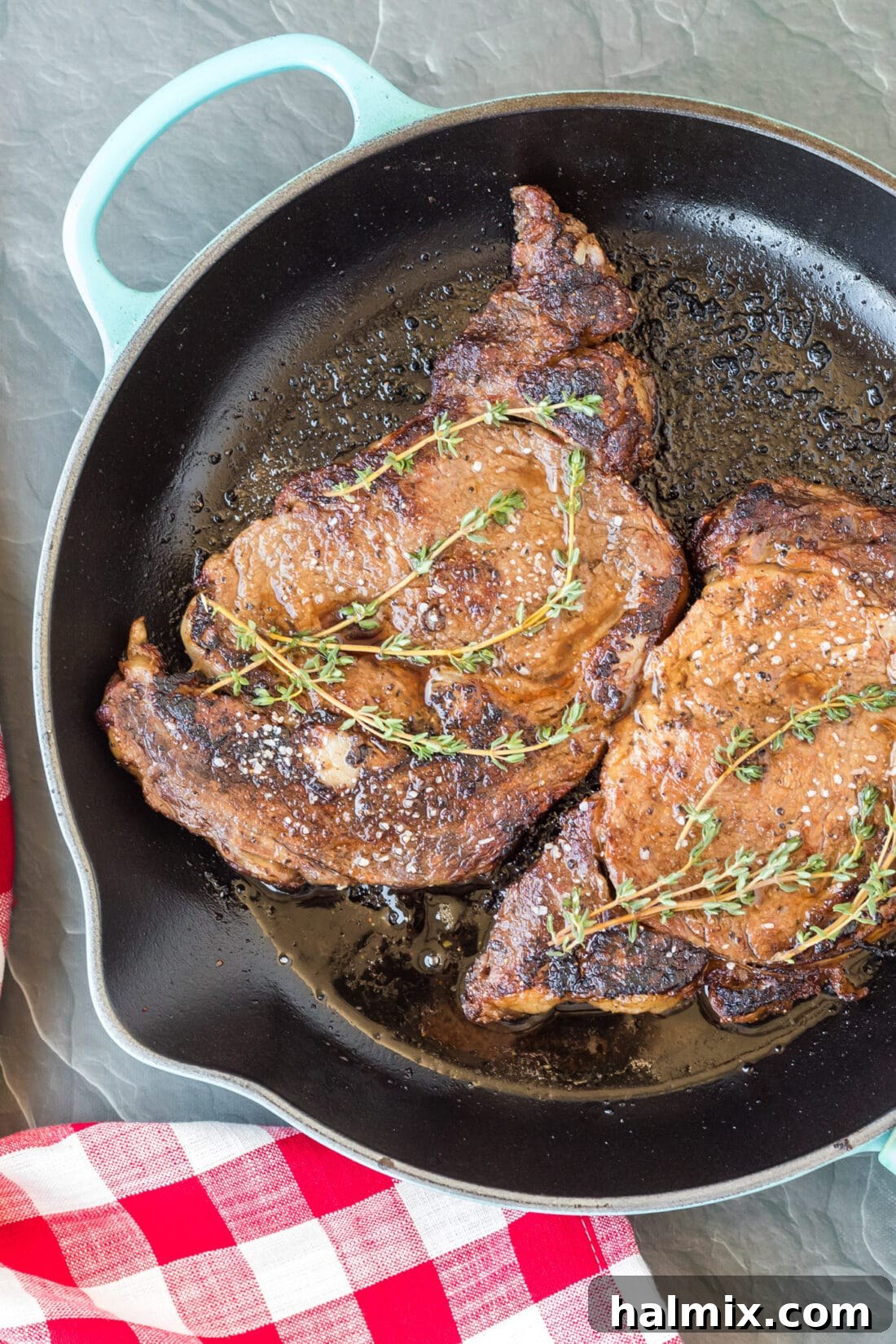
- Once the steaks are removed from the oven, immediately transfer them to the sizzling hot skillet. Sear for 2-4 minutes on each side. For an even more robust crust, you can also sear the edges of the steak by holding it with tongs. The goal here is to achieve a beautiful, deep brown, crusty exterior. Watch carefully to avoid burning.
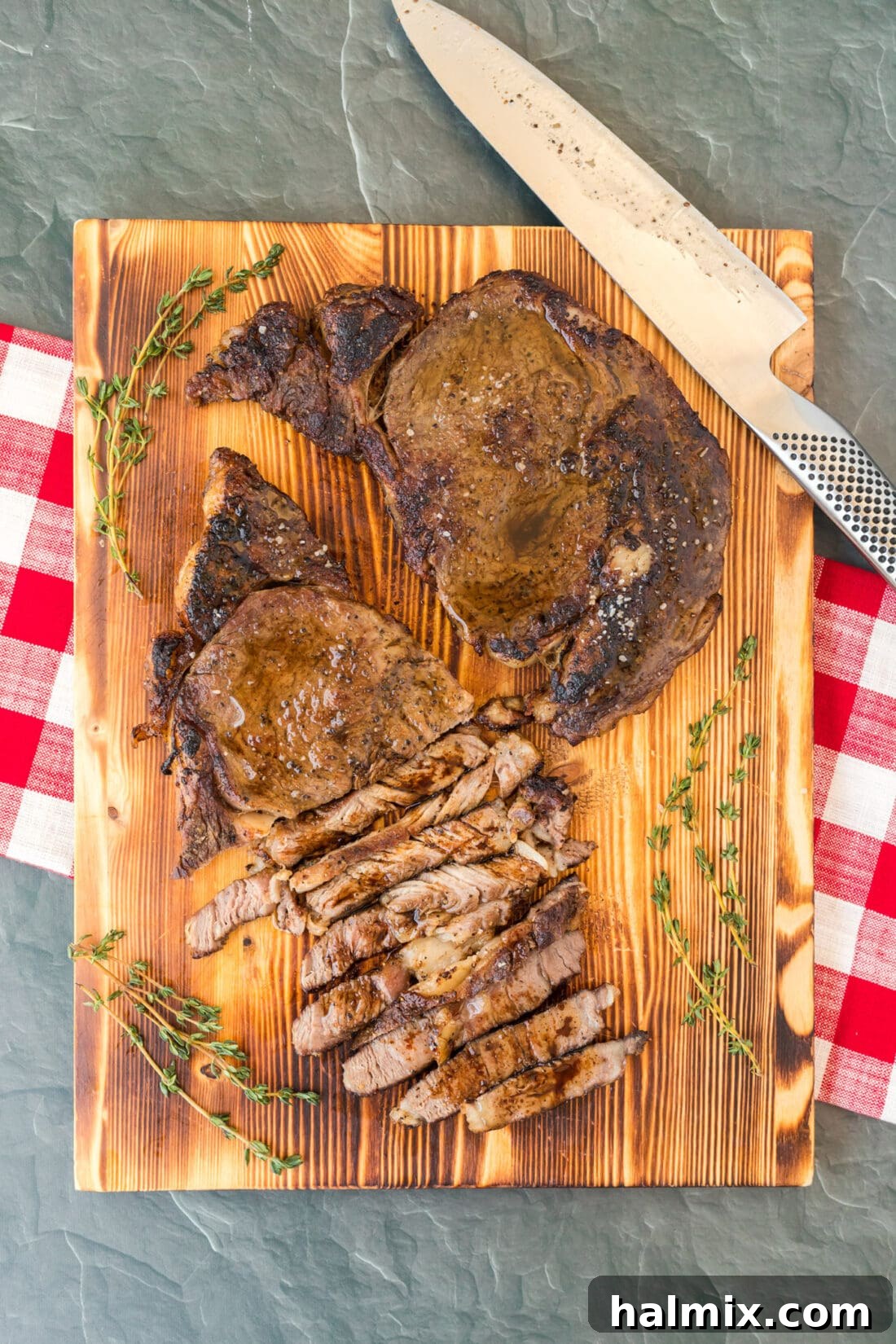
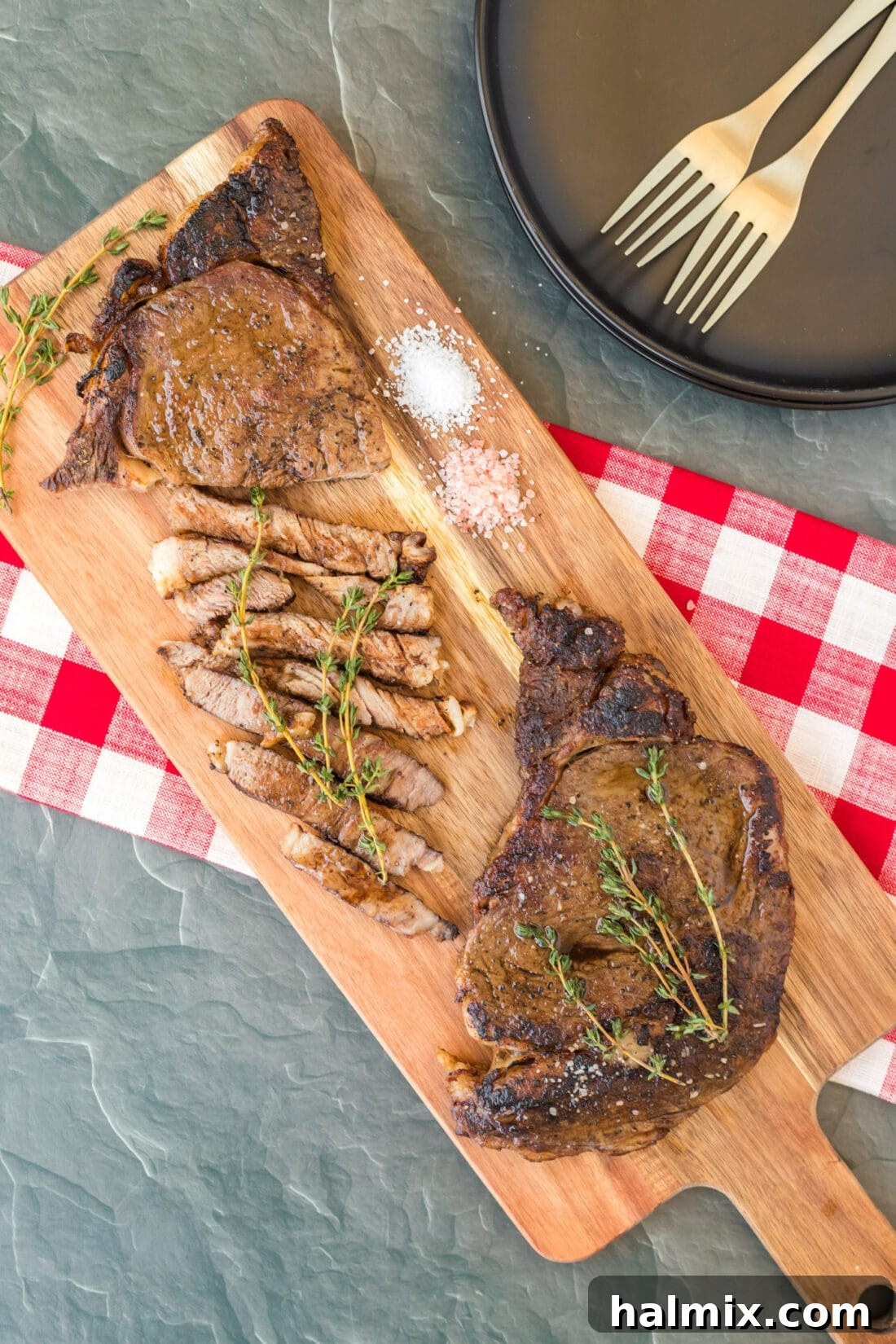
- After searing, remove the steak to a clean cutting board and allow it to rest for at least 5-10 minutes. This resting period is incredibly important: it allows the juices, which have been pushed to the center of the steak during cooking, to redistribute throughout the meat, ensuring every bite is succulent and tender. Do not cover the steak with foil during this time, as it will continue to cook and soften the coveted crust you just created. Slice against the grain and serve immediately.
Frequently Asked Questions & Expert Tips for Steak Success
Achieving your preferred steak doneness is crucial for a satisfying meal. Always use an instant-read thermometer inserted into the thickest part of the beef, avoiding any bone. Here’s a guide to target temperatures (after resting):
- Rare: 125°F (52°C) – Cool red center.
- Medium-Rare: 130-135°F (54-57°C) – Warm red center. This is often considered the ideal for ribeye.
- Medium: 140-145°F (60-63°C) – Warm pink center.
- Medium-Well: 150-155°F (66-68°C) – Slightly pink center.
- Well-Done: 160°F+ (71°C+) – Little to no pink.
Remember, the steak’s temperature will rise slightly (carryover cooking) during the resting period, so pull it from the heat 5°F below your target temperature. For reverse searing, you’ll remove it from the oven about 10-15°F below your final target, as the searing process will add significant heat.
This is perhaps one of the most critical steps for achieving a crispy, flavorful crust. Any moisture on the surface of the steak will cause it to steam in the hot pan rather than sear. Steaming prevents the Maillard reaction (the browning process that creates complex flavors) from occurring effectively. Pat your steak thoroughly dry with paper towels before applying the rub.
Absolutely! While ribeye is exceptional for reverse searing due to its marbling and thickness, other thick-cut steaks like New York Strip, Porterhouse, T-bone, or even a thick sirloin will also benefit greatly from this method. Just ensure the steak is at least 1.5 inches thick for the best results, as thinner steaks might cook through too quickly in the oven.
While common advice often suggests letting steak sit at room temperature, for reverse searing, it’s not strictly necessary or even always beneficial. Starting a slightly cooler steak in a lower temperature oven allows for a more gradual and even warming of the internal meat, which is what the reverse sear method aims for. However, ensure it’s not ice-cold from the fridge; letting it sit for 15-30 minutes can be fine, but hours are usually overkill.
Resting your steak is non-negotiable for a truly juicy result. During cooking, the muscle fibers contract, pushing the meat’s natural juices to the center. If you cut into the steak immediately, all those juices will spill out onto your cutting board, leaving you with a dry steak. Resting allows the muscle fibers to relax and the juices to redistribute throughout the entire cut, ensuring every bite is moist and flavorful. Aim for 5-10 minutes of rest time, depending on the steak’s thickness. And remember, don’t cover it with foil, as that will continue to cook the steak and soften your hard-earned crust.
Elevate Your Meal: Serving Suggestions for Reverse Sear Ribeye
A perfectly cooked reverse sear ribeye deserves equally delicious accompaniments. Serve your succulent steak with classic sides like creamy crockpot mashed potatoes or rich, buttery garlic mashed potatoes. Complement the richness of the beef with vibrant roasted vegetables such as tender roasted carrots, crisp asparagus, sweet corn on the cob, or fresh green beans. For a lighter touch, a crisp side salad with a tangy vinaigrette offers a refreshing contrast. Don’t forget a finishing touch! A dollop of compound butter (garlic herb, blue cheese, or truffle butter) melting over the hot steak adds an extra layer of decadence. A rich pan sauce made from the drippings in your cast iron skillet can also take your meal to the next level. Pair with a bold red wine like a Cabernet Sauvignon or a robust Merlot for the ultimate dining experience. Enjoy every magnificent bite!
Discover More Delectable Beef Recipes
- Hearty Salisbury Steaks
- Tender Oven Beef Ribs
- Classic Oven Swiss Steak
- Slow-Cooked Crockpot Beef Burgundy
- Comforting Ground Beef Stroganoff
- Elegant Veal Chops
I’m passionate about baking and cooking, and I love sharing my culinary adventures with all of you! To make sure you never miss a new recipe, I offer a convenient newsletter. Simply subscribe and start receiving your free daily recipes directly to your inbox!
Reverse Sear Ribeye
With this reverse sear ribeye method, you’ll first gently bake the steak in the oven, then transfer it to a sizzling hot skillet to develop a gorgeous, flavorful crust. It’s a revolutionary way to cook steak, ensuring ultimate juiciness and perfect doneness every time by baking first and searing last.
Rated 5 out of 5 stars by 8 users.
Ingredients
- 2 ribeye steaks (approximately 2 pounds total, around 1 1/2 – 2 inches thick)
- 1 ½ Tablespoons olive oil
- 1 Tablespoon granulated brown sugar
- 1 Tablespoon onion powder
- 1 Tablespoon granulated garlic
- 2 teaspoons salt
- 2 teaspoons black pepper
Things You’ll Need
- Cast iron skillet
- Wire cooling racks
- Baking sheets
- Tongs
- Instant-read meat thermometer (highly recommended for accuracy)
Before You Begin
- Select ribeye steaks that are about 1 1/2 – 2 inches thick for the best reverse sear results. Thicker steaks cook more evenly with this method.
- The cooking time in the oven is a guideline; actual time may vary based on steak thickness and your desired doneness. Our instructions typically yield a medium doneness.
- Always pat your steaks very dry with paper towels before applying the rub to promote an excellent crust.
Instructions
- Preheat oven to 400°F (200°C). Place a wire rack over a baking sheet to ensure even air circulation around the steak.
- In a small bowl, mix together the olive oil, brown sugar, onion powder, granulated garlic, salt, and pepper until well combined.
- Using gloved hands, thoroughly rub the oil and spice mixture all over the entire surface of the ribeye steaks, pressing gently to adhere.
- Place the prepared, seasoned steaks on the wire rack over the baking sheet, ensuring they are not touching.
- Bake in the preheated oven for 15-20 minutes. Use an instant-read thermometer to check the internal temperature, aiming for about 115-120°F (46-49°C) for medium-rare before searing.
- About 3-4 minutes before the oven cooking time is complete, place your cast iron skillet (dry, without any oil or butter) over high heat on the stovetop. Allow it to get screaming hot.
- Carefully remove the steaks from the oven and immediately transfer them to the hot skillet. Sear for 2-4 minutes on each side until a deep, beautiful crust forms. You can also sear the edges.
- Remove the seared steaks to a cutting board and allow them to rest for at least 5-10 minutes. Do not cover with foil, as this will trap steam and soften the crust. Slice against the grain and serve immediately.
Nutrition Facts
Per serving (1 steak)
- Calories: 616 cal
- Carbohydrates: 13g
- Protein: 47g
- Fat: 43g
- Saturated Fat: 16g
- Polyunsaturated Fat: 3g
- Monounsaturated Fat: 23g
- Cholesterol: 138mg
- Sodium: 2450mg
- Potassium: 723mg
- Fiber: 1g
- Sugar: 6g
- Vitamin A: 45IU
- Vitamin C: 1mg
- Calcium: 48mg
- Iron: 5mg
Tried this Recipe? Pin it for Later!
Follow on Pinterest @AmandasCookin or tag #AmandasCookin!
The recipes on this blog are typically tested with a conventional gas oven and gas stovetop. It’s important to note that some ovens, especially as they age, can cook and bake inconsistently. Using an inexpensive oven thermometer can assure you that your oven is truly heating to the proper temperature. If you use a toaster oven or countertop oven, please keep in mind that they may not distribute heat the same as a conventional full-sized oven and you may need to adjust your cooking/baking times. In the case of recipes made with a pressure cooker, air fryer, slow cooker, or other appliance, a link to the appliances we use is listed within each respective recipe. For baking recipes where measurements are given by weight, please note that results may not be the same if cups are used instead, and we can’t guarantee success with that method.