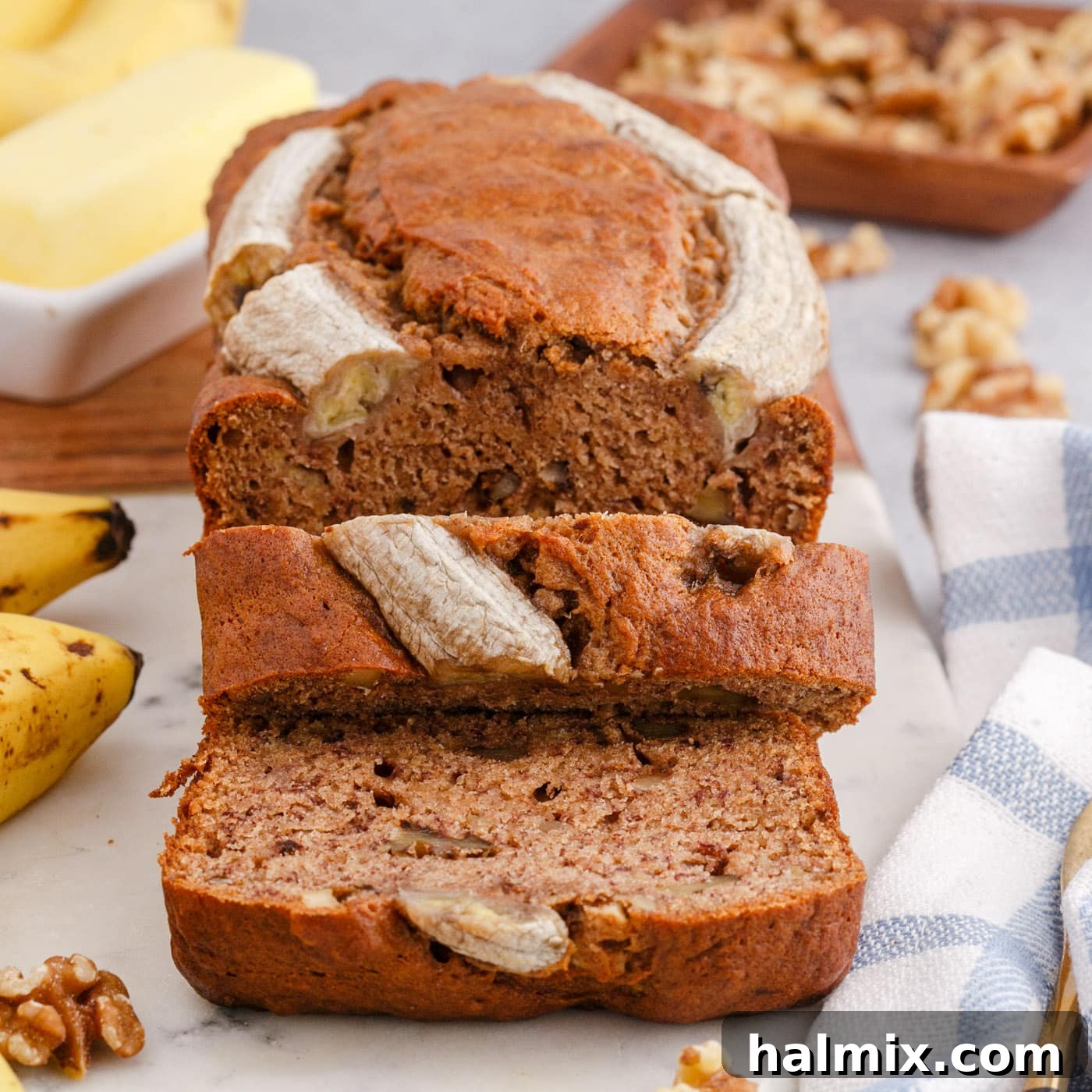
There’s nothing quite like the comforting aroma of freshly baked banana nut bread filling your kitchen. This classic quick bread, celebrated for its tender crumb and rich, sweet flavor, gets an irresistible upgrade with the satisfying crunch of walnuts. Our recipe combines perfectly ripe bananas with a few pantry staples to create an incredibly moist and flavorful loaf that’s hard to resist. Whether you enjoy it as a hearty breakfast, a delightful snack, or a simple dessert, this homemade banana nut bread is a timeless treat that promises to become a family favorite.
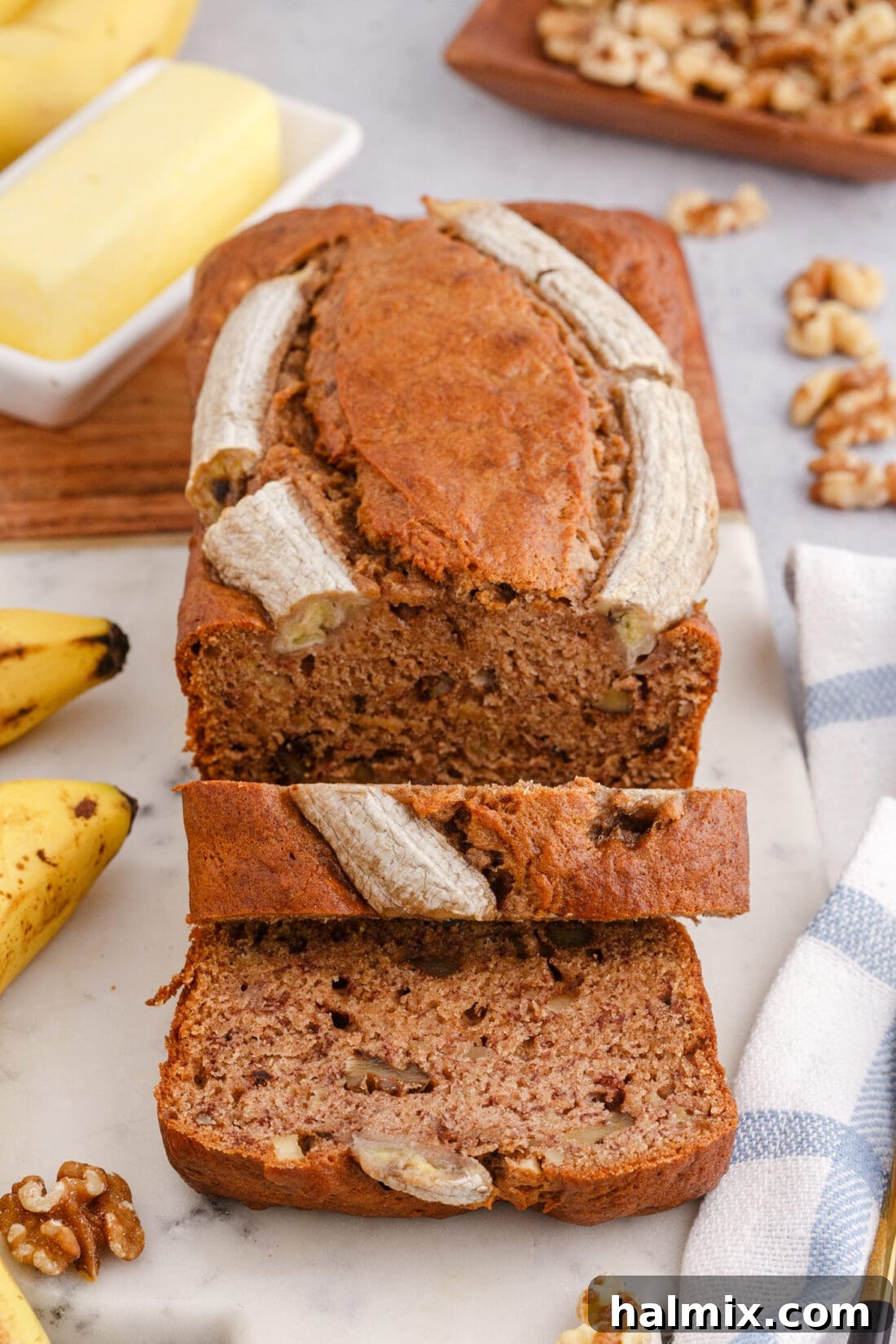
Why This Banana Nut Bread Recipe is a Must-Try
Achieving the perfect banana bread means striking a delicate balance: it must be incredibly moist, tender, and boasting a soft, yielding crumb. Our recipe consistently delivers on these promises, making it a standout choice for both novice and experienced bakers alike. The secret lies in a combination of carefully selected ingredients and precise techniques that ensure every slice is a testament to baking perfection.
The Magic of Ripe Bananas
The cornerstone of truly exceptional banana bread is the banana itself. We utilize deeply ripe bananas, often overlooked for their brown or black-spotted peels. These overripe fruits are not only sweeter, having converted more starch into sugar, but also softer and easier to mash, integrating seamlessly into the batter. This heightened sweetness means you might even use slightly less added sugar if you prefer, and the increased moisture content is paramount for that coveted tender texture. The riper the banana, the more profound and complex the banana flavor in your finished bread.
Flour Measurement: A Crucial Step
One of the most common pitfalls in banana bread baking is incorrectly measuring flour. Too much flour can transform your beautifully moist loaf into a dry, dense, and crumbly disappointment. Our recipe emphasizes the “fluff and spoon” method: instead of scooping directly from the bag (which compacts the flour), you gently aerate the flour with a spoon, then spoon it into your measuring cup, leveling it off with a straight edge. This technique ensures you add just the right amount, preventing a heavy, stiff batter and guaranteeing a light, airy, and moist end product.
Room Temperature Ingredients: The Unsung Heroes
Another often-underestimated tip for achieving supreme moistness and a smooth batter is to use room temperature eggs. Cold ingredients can cause the butter or oil in your batter to seize up, leading to a lumpy mixture and a denser bread. Allowing your eggs to come to room temperature ensures they emulsify better with the other ingredients, creating a homogeneous, silky batter that bakes up evenly and beautifully. This simple step makes a significant difference in the overall texture and consistency of your banana nut bread.
The Perfect Blend of Texture and Flavor
Beyond the fundamental elements, our recipe incorporates crunchy walnuts, which provide a delightful textural contrast to the soft bread. Their earthy, nutty flavor complements the sweet banana notes beautifully, adding another layer of complexity. With these quick tips and staple ingredients, you’ll master an irresistible loaf of banana nut bread that’s so good, having just one slice will be a genuine challenge.
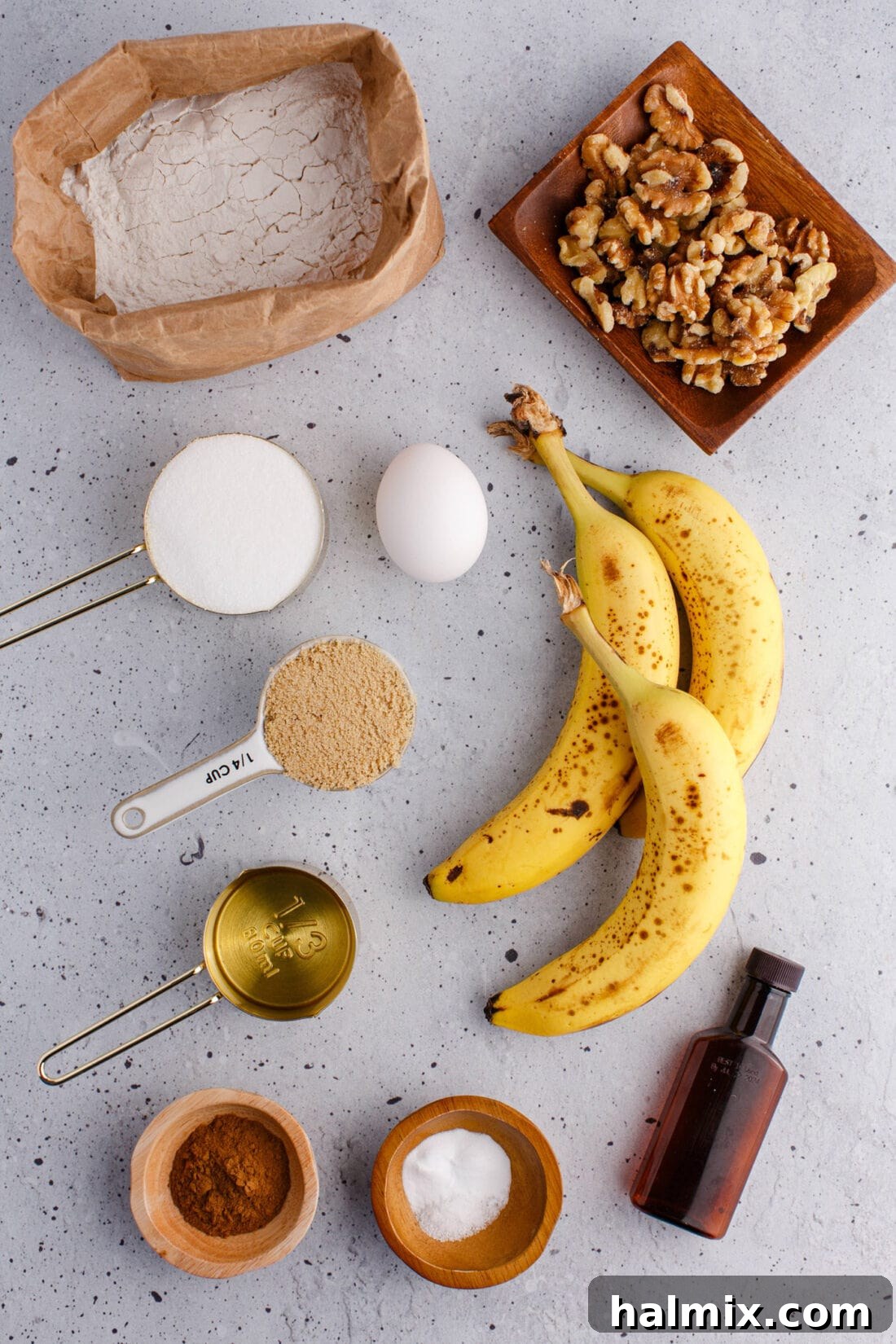
Essential Ingredients You Will Need
Crafting the perfect banana nut bread starts with gathering the right components. You’ll find a detailed list of all measurements and comprehensive instructions in the printable recipe section further down this post. But first, let’s delve into the roles of our key ingredients and some helpful substitution suggestions.
Ingredient Insights and Smart Substitutions
Bananas: The Heart of the Bread
For truly exceptional banana bread, ripeness is key. Don’t shy away from bananas with black, brown, or extensively spotted yellow peels. In fact, these are precisely what you’re looking for! As bananas ripen, their starches convert into sugars, intensifying their sweetness and making them incredibly soft and easy to mash. This natural sweetness is what gives the bread its deep, authentic banana flavor. The riper they are, the more pronounced and delicious the banana taste will be in your finished loaf. If your bananas aren’t quite ripe enough, you can speed up the process by placing them in a paper bag with an apple for a day or two, or baking them in their peels at 300°F (150°C) for 15-30 minutes until soft and black (let them cool before handling).
Flour: The Structural Foundation
All-Purpose Flour: This is the standard for quick breads and provides the necessary structure.
Accurate Measurement is Crucial: The most important tip for moist banana nut bread is to measure your flour correctly. Too much flour will result in dry, crumbly, and stiff bread – the exact opposite of what you want! To avoid this, do not scoop flour directly from the bag. Instead, first mix the flour in its bag or container with a spoon to aerate it. Then, gently spoon the aerated flour into your measuring cup until it overflows. Level it off with the flat side of a butter knife or similar straight edge. Do NOT pack the flour into the cup or tap the cup on the counter, as this will compact it and add too much to your recipe. This “fluff and spoon” method ensures a light, tender crumb.
Leavening and Seasoning
Baking Soda: This is our leavening agent, reacting with the acidic bananas and brown sugar to help the bread rise and achieve its fluffy texture. Ensure your baking soda is fresh for optimal results.
Sea Salt: A touch of salt balances the sweetness and enhances all the flavors in the bread.
Cinnamon: This warm spice beautifully complements the banana flavor, adding a cozy depth to every bite. You can adjust the amount to your preference or even add a pinch of nutmeg or allspice for more complexity.
Fats and Sweeteners for Moisture and Flavor
Vegetable Oil: We use vegetable oil for its neutral flavor and its ability to keep the bread exceptionally moist. Unlike butter, oil remains liquid at room temperature, contributing to a softer crumb that stays fresh longer. You can substitute with other neutral oils like canola oil.
Granulated White Sugar & Light Brown Sugar: The combination of these two sugars creates a balanced sweetness and contributes to the bread’s moistness. Granulated sugar provides sweetness, while brown sugar adds a deeper, caramelized flavor and extra moisture due to its molasses content. Ensure your brown sugar is packed tightly when measuring.
Eggs and Extract for Richness
Large Egg: The egg acts as a binder, adding structure, richness, and moisture.
Room Temperature Eggs: Always use room temperature eggs when baking. Cold eggs can cause the batter to stiffen and become lumpy, preventing ingredients from mixing smoothly. If you forgot to take them out, simply place eggs in a bowl of warm water for 5-10 minutes.
Pure Vanilla Extract: A crucial flavor enhancer, vanilla extract adds a layer of aromatic sweetness that completes the banana bread profile.
Walnuts: The Signature Crunch
Walnuts: We used 3/4 cup of chopped walnuts to provide a delightful nutty flavor and a satisfying crunchy texture. If you’re not a fan of walnuts, you can easily omit them for a plain banana bread.
Substitution Suggestions: Feel free to substitute walnuts with other nuts like pecans, or add chocolate chips for a sweeter treat. For an enhanced flavor, lightly toast your nuts in a dry pan for a few minutes before adding them to the batter.
Step-by-Step: How to Make Irresistible Banana Nut Bread
Follow these detailed steps and accompanying photos to visualize each stage of making this delicious recipe. For a convenient printable version, complete with all measurements and instructions, simply refer to the recipe card at the bottom of this post.
- Prepare Your Pan and Preheat Oven: Begin by preheating your oven to 350°F (175°C). Line an 8×4 inch loaf pan with parchment paper, leaving an overhang on the longer sides. This creates “slings” that make it incredibly easy to lift the baked bread out of the pan once cooled. Lightly grease the exposed sides of the pan or the parchment paper if desired.
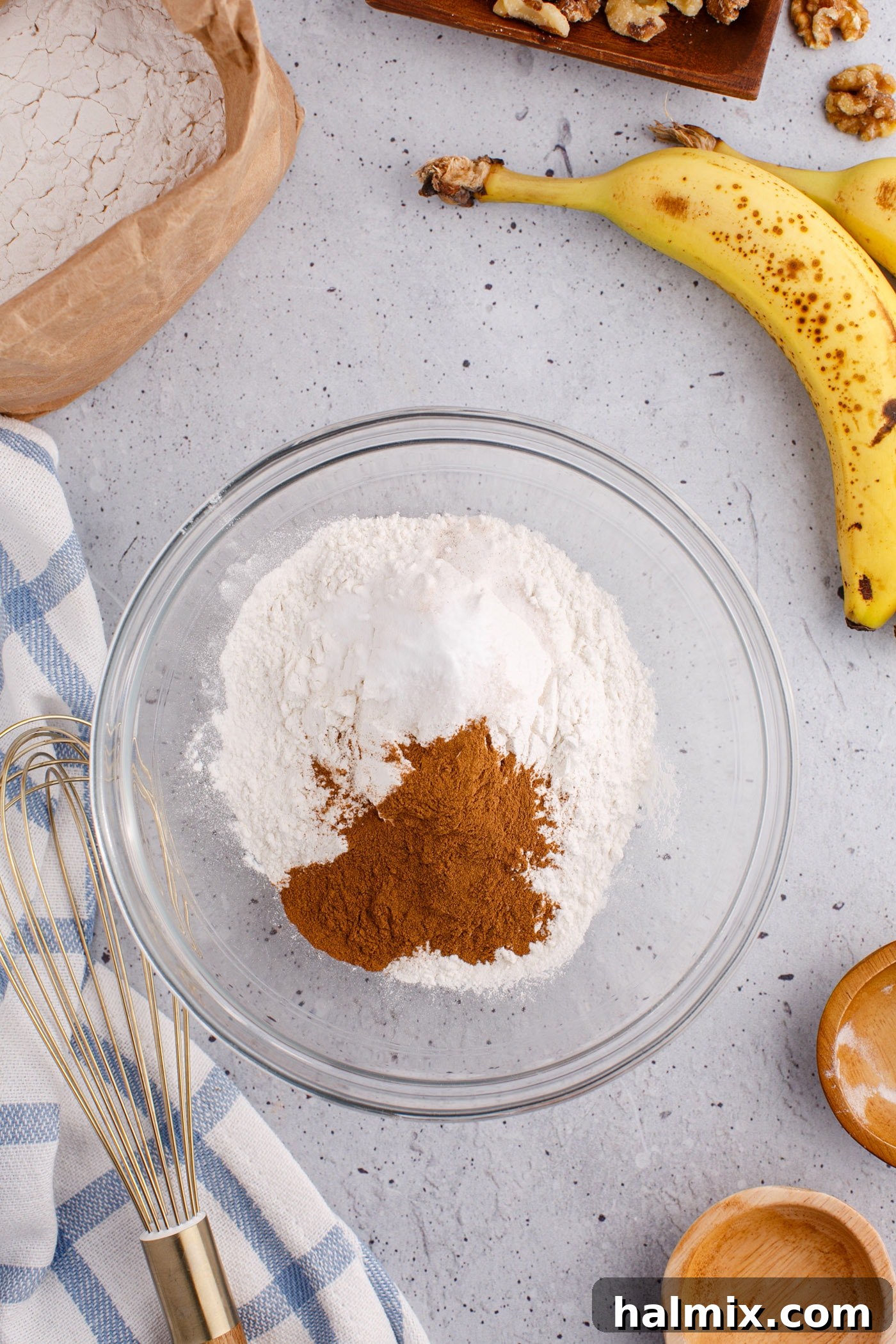
- Combine Dry Ingredients: In a medium-sized mixing bowl, whisk together the all-purpose flour, baking soda, sea salt, and cinnamon until thoroughly combined. This ensures that the leavening and spices are evenly distributed throughout the bread. Set this dry mixture aside.

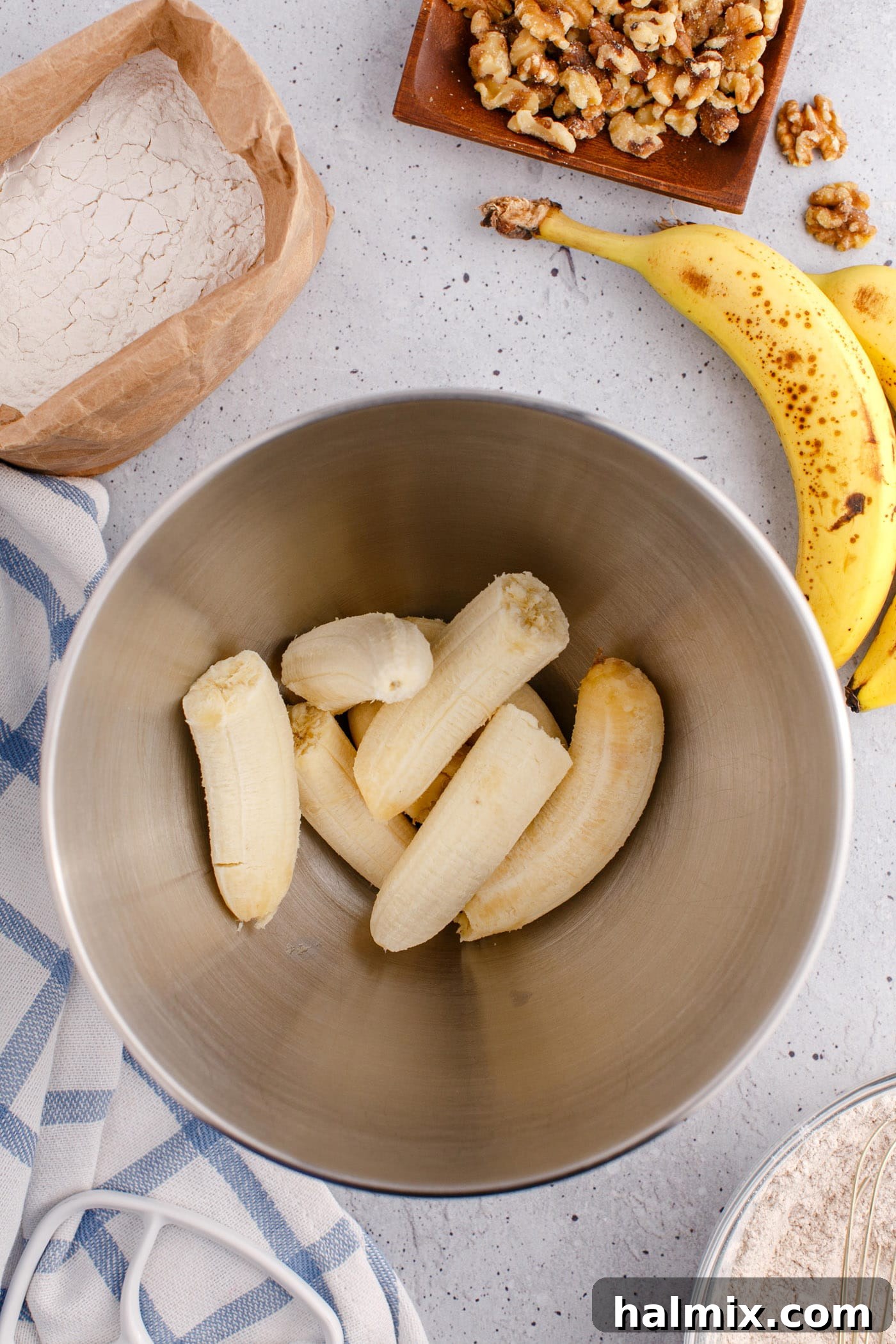
- Mash the Bananas: Place your 4 ripe bananas into the bowl of an electric mixer (a stand mixer with a paddle attachment works best, but a hand mixer is also fine). Mash them well until mostly smooth, with only a few small lumps remaining. Over-mashing can make them too watery, so aim for a thick, pulpy consistency.
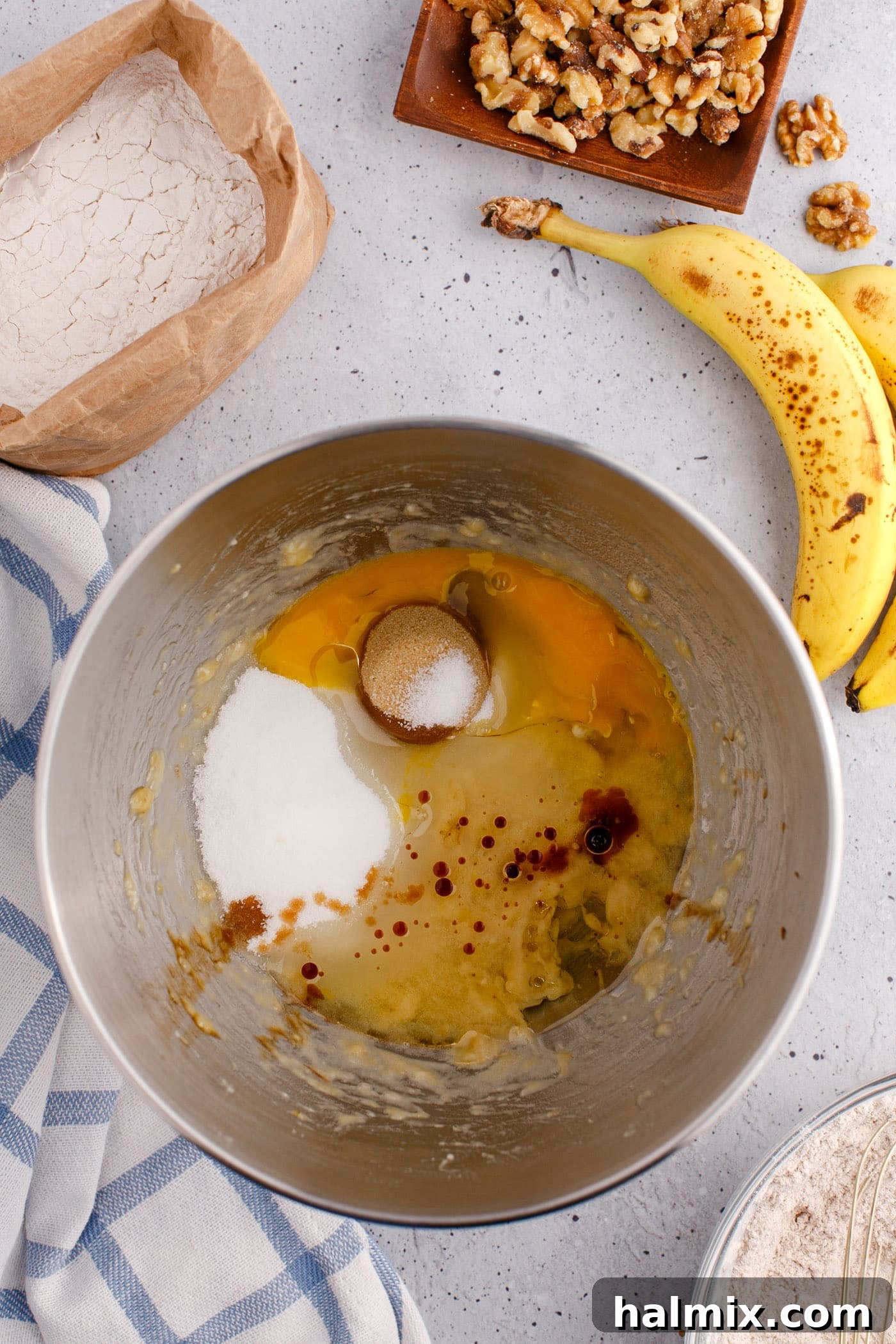
- Add Wet Ingredients: To the mashed bananas in the mixer bowl, add the vegetable oil, granulated white sugar, packed light brown sugar, room temperature large egg, and pure vanilla extract. Mix on the lowest setting for approximately 2 minutes, or until all the ingredients are well combined and the mixture is smooth and creamy. Avoid overmixing at this stage.
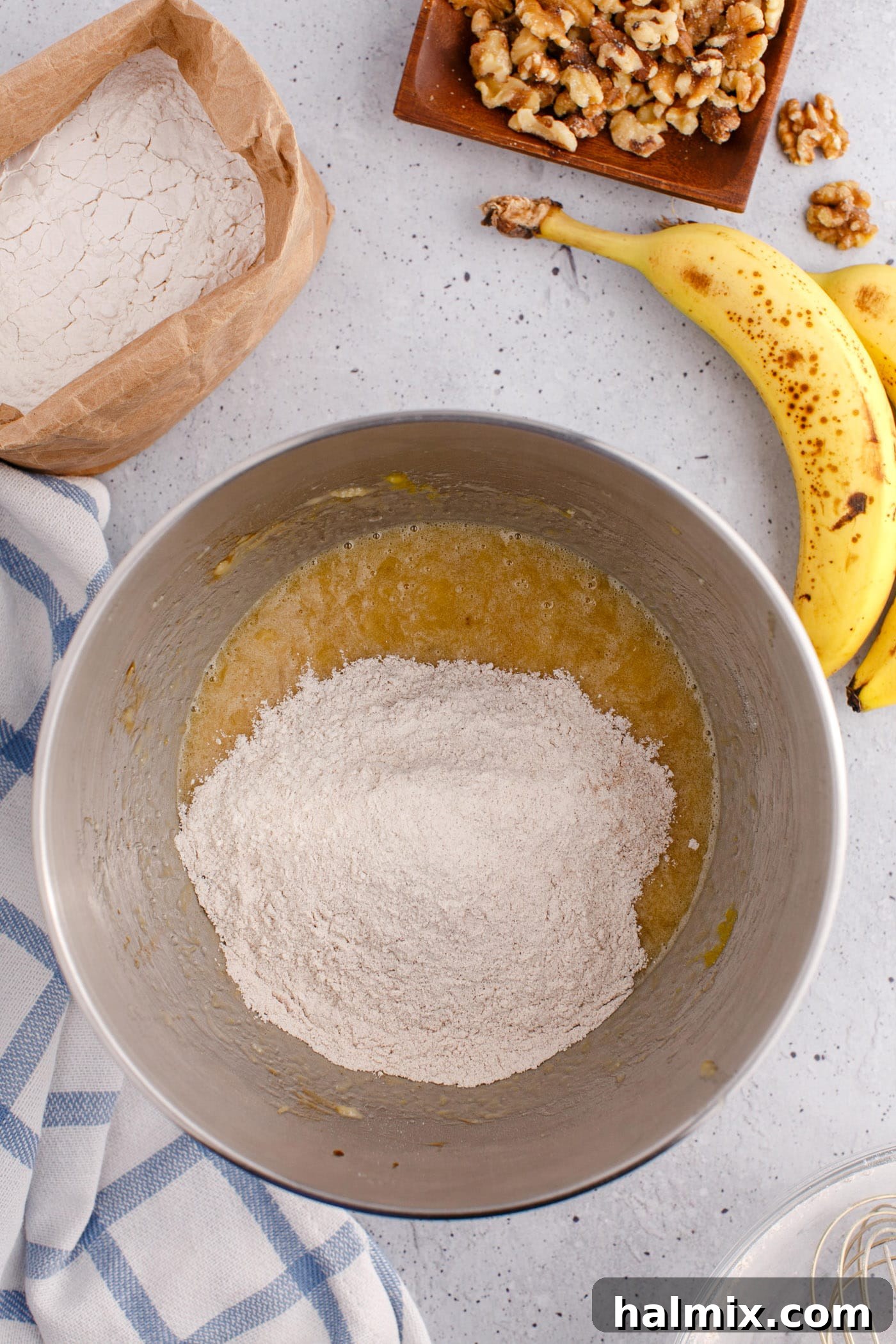
- Incorporate Dry into Wet: Gradually add the reserved flour mixture to the wet ingredients in the mixer bowl. Mix on low speed just until combined. It’s crucial not to overmix here; overworking the flour can develop gluten, resulting in a tough, dry bread. A few streaks of flour are perfectly acceptable.
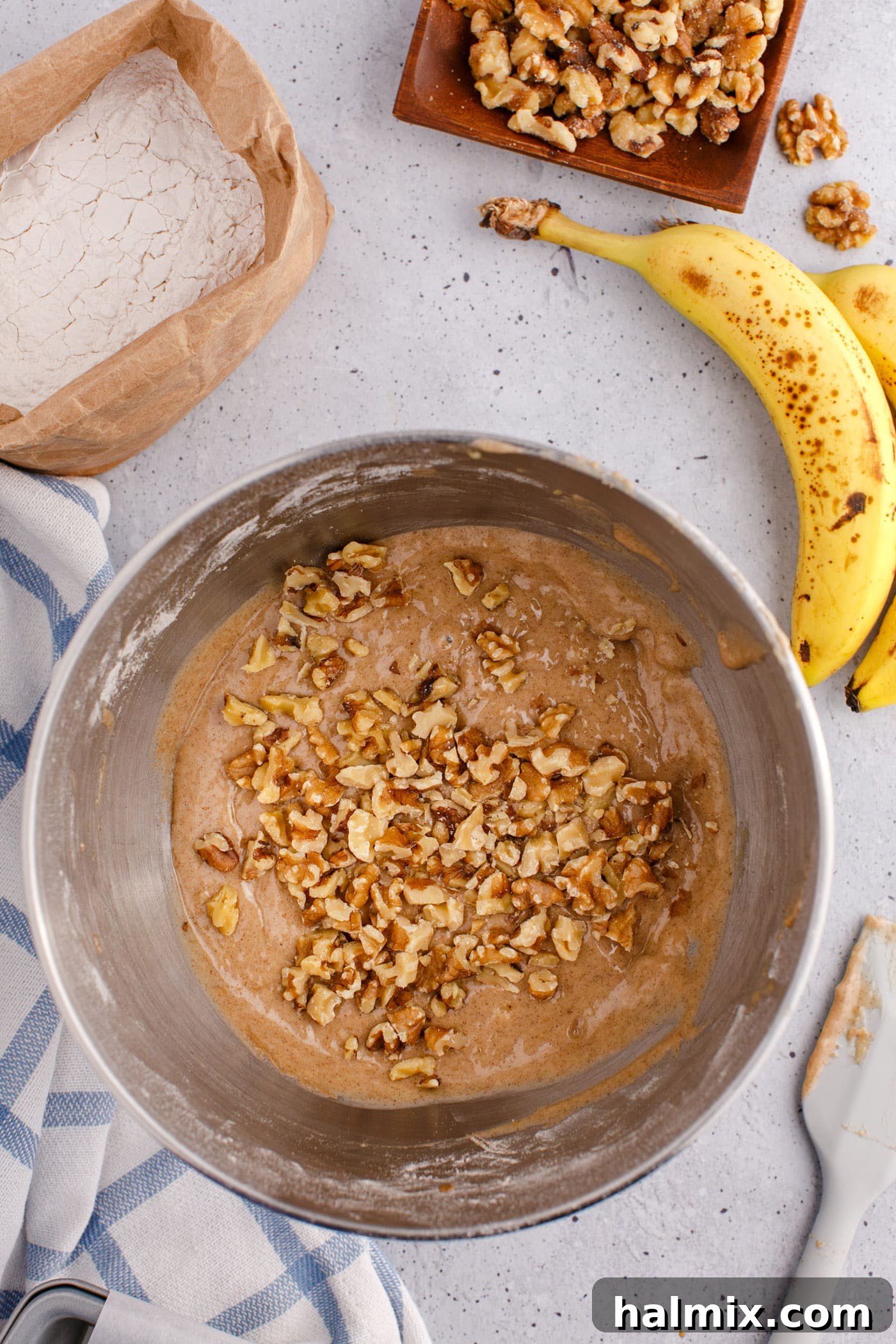
- Fold in Walnuts: Using a rubber spatula, gently fold the chopped walnuts into the batter. This ensures they are evenly distributed without overmixing the batter.
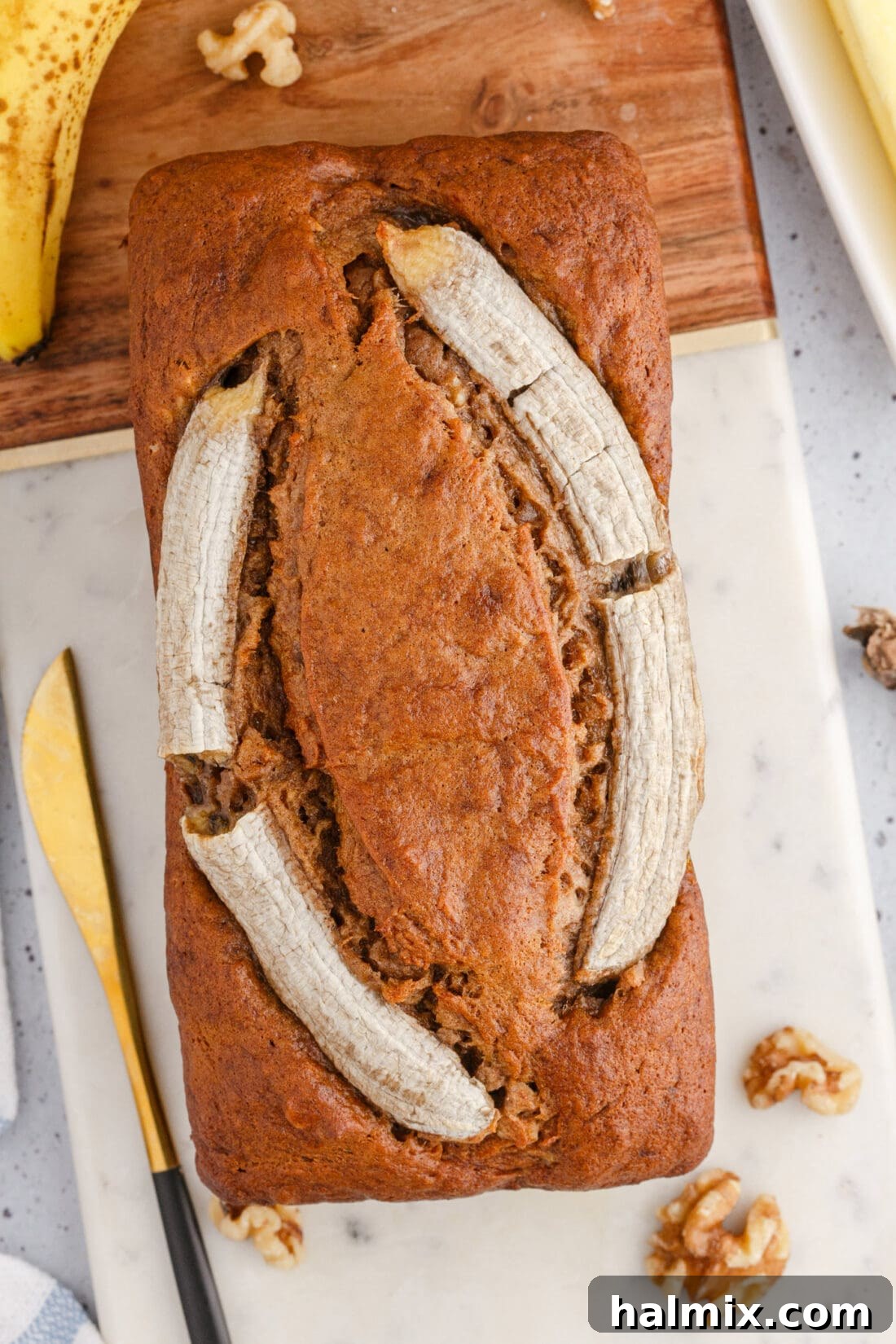
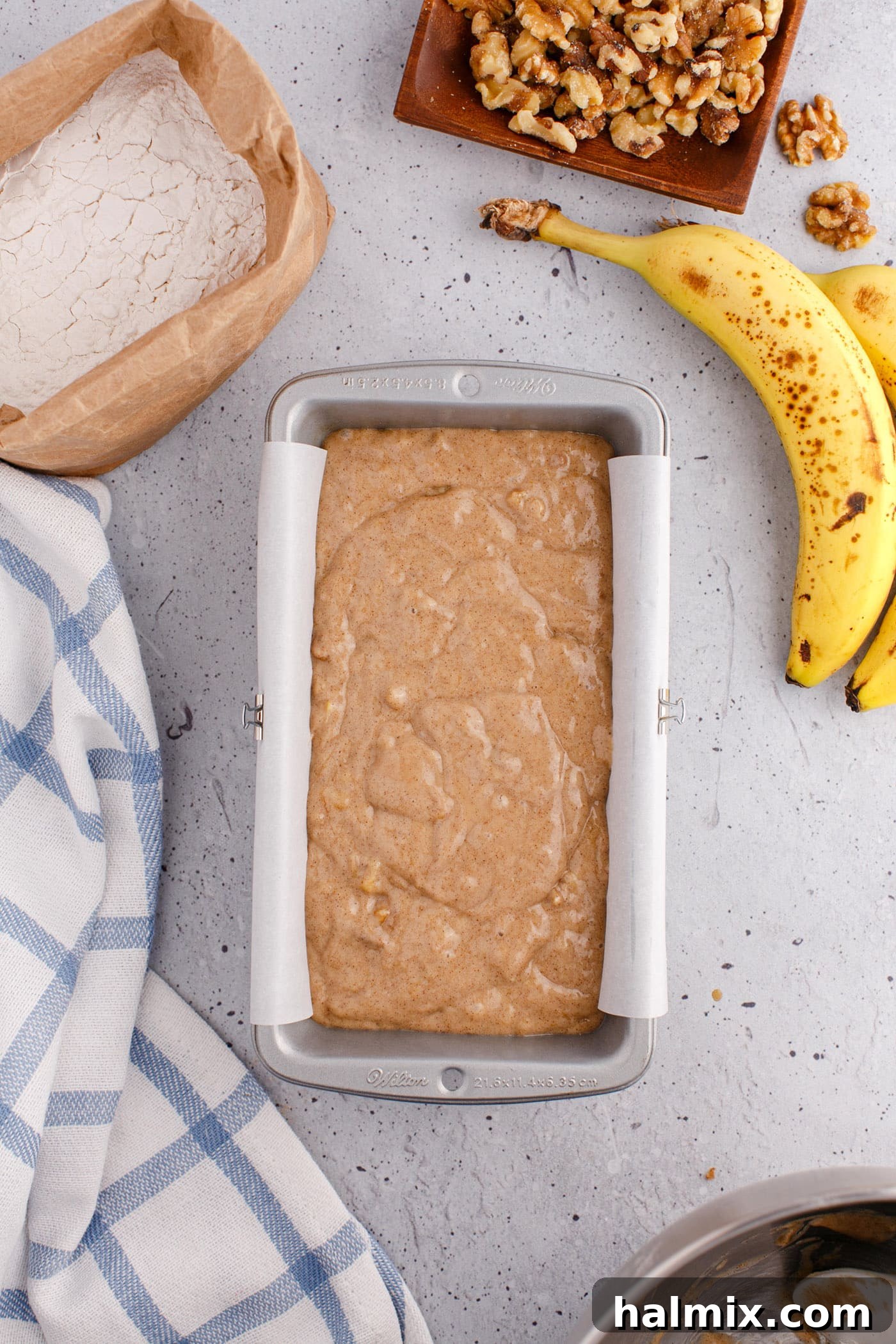
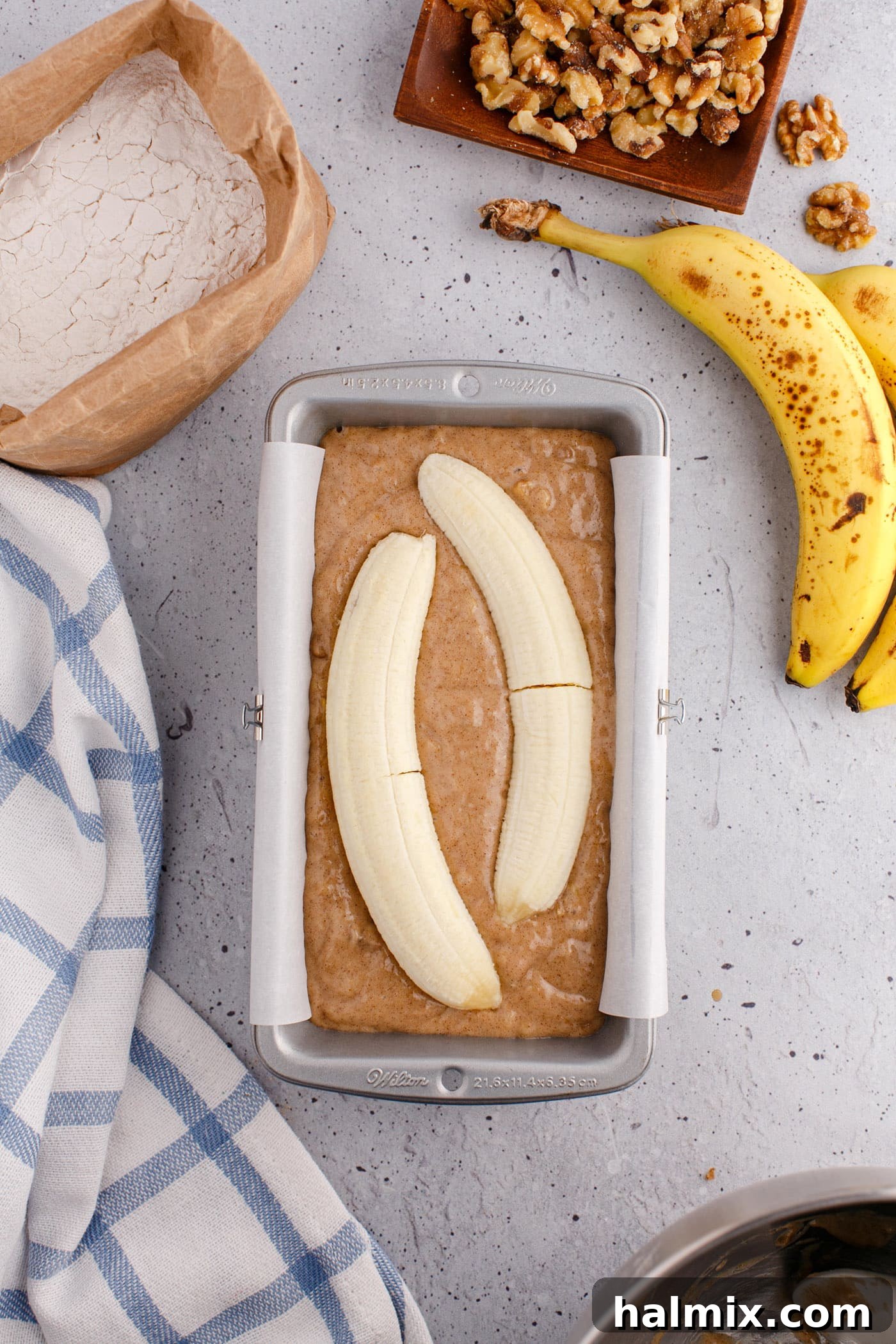
- Fill Loaf Pan and Garnish: Pour the prepared banana nut bread batter into your lined 8×4 loaf pan. If you wish to garnish with a banana slice for an extra touch of elegance, carefully slice an additional banana in half lengthwise and place it gently on top of the batter. This is entirely optional but adds a lovely visual element.
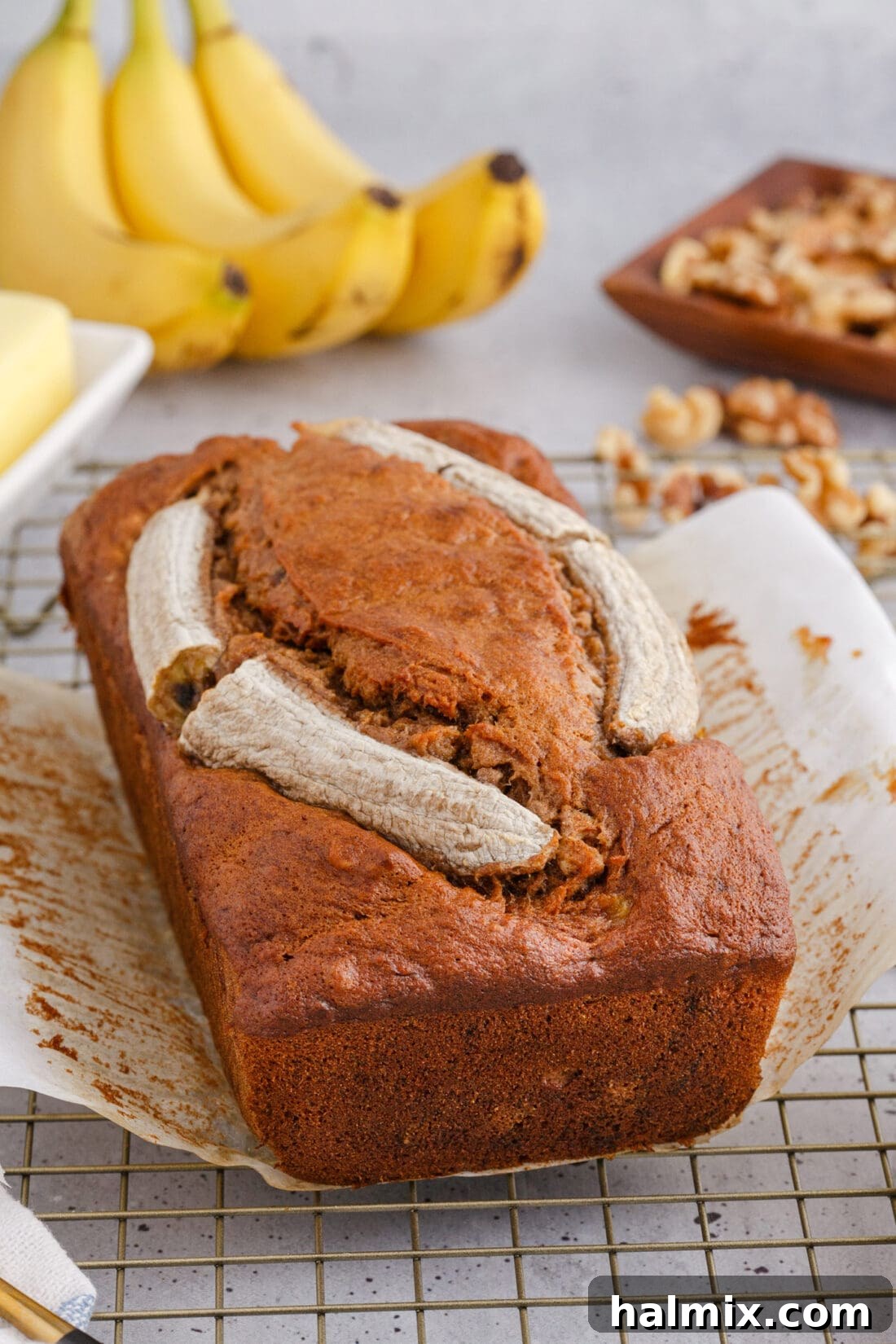
- Bake to Perfection: Bake for 60-65 minutes. The bread is done when a toothpick inserted into the highest point in the center comes out clean, or with just a few moist crumbs clinging to it (indicating perfect moistness, not raw batter). If it’s browning too quickly on top, you can loosely tent it with aluminum foil during the last 15-20 minutes of baking.
- Cool and Enjoy: Once baked, remove the loaf pan from the oven and allow the banana bread to cool in the pan on a wire cooling rack for about 30 minutes. This allows the bread to set and prevents it from crumbling when removed. After 30 minutes, use the parchment paper slings to gently lift the bread out of the pan and transfer it directly to the wire rack to cool completely before slicing and serving.
Frequently Asked Questions & Expert Baking Tips
Yes, you can certainly use a 9.5×5 inch loaf pan instead of an 8×4 inch pan. The primary difference will be that your loaf will be slightly longer and not quite as tall. Rest assured, it will taste equally delicious! When using a different pan size, it’s crucial to keep a closer eye on your bread in the oven, as baking times may vary. Always use the toothpick test to accurately check for doneness.
Freezing banana nut bread is an excellent way to enjoy it long after it’s baked. First, ensure the banana bread is completely cooled to room temperature. Wrap the entire loaf tightly in plastic wrap, then place it inside a large freezer-safe ziptop bag, pressing out as much air as possible before sealing. It can be stored in the freezer for up to 3 months. For individual servings, slice the bread, wrap each slice in plastic wrap or aluminum foil, and then place them in a sealed ziptop bag. To thaw, simply unwrap and let it sit at room temperature for about an hour to an hour and a half, then enjoy!
To keep your banana nut bread fresh, make sure it has fully cooled first. Wrap the loaf tightly in plastic wrap, and then place it inside a large ziptop bag, removing as much air as possible. Store it at room temperature for up to 4 days. Alternatively, you can store the bread in an airtight container. If storing in the refrigerator, it will keep for a few extra days, but can sometimes dry out slightly faster than at room temperature.
If your banana bread has an overly dense, heavy, or even gummy texture, the most likely culprit is overmixing the batter. When you add the flour mixture to the wet ingredients, it’s vital to mix only until just combined. A few streaks of flour are acceptable. Overworking the batter develops the gluten in the flour, which leads to a tough, dense crumb rather than the light, tender texture we’re aiming for. Always mix on the lowest speed and stop as soon as the dry ingredients are incorporated.
To ensure your walnuts (or other add-ins like chocolate chips) are evenly distributed throughout the loaf, try tossing them with a tablespoon or two of the dry flour mixture before folding them into the batter. The light coating of flour helps them suspend in the batter, preventing them from sinking during baking.
Absolutely! Chocolate chips are a fantastic addition to banana nut bread. You can substitute some of the walnuts with an equal amount of chocolate chips, or add an extra 1/2 to 3/4 cup of chocolate chips along with the walnuts. For best results, fold them in at the same time as the walnuts.
Delicious Serving Suggestions for Your Banana Nut Bread
One of the many joys of banana nut bread is its incredible versatility. A warm, thick slice is simply divine with your morning coffee or a soothing cup of tea, making for a perfect start to the day. However, its charm extends far beyond breakfast. This delightful quick bread can be enjoyed at any time:
- For Breakfast or Brunch: Serve it alongside a fresh fruit salad, scrambled eggs, or a dollop of Greek yogurt for a well-rounded meal.
- As a Snack: It’s a wonderful pick-me-up in the afternoon, providing a boost of energy and satisfying your sweet cravings.
- A Simple Dessert: Warm a slice slightly and top it with a scoop of vanilla bean ice cream or a drizzle of caramel sauce for an elevated dessert experience.
- Classic Pairings: Many adore their banana nut bread simply as is, while others prefer to warm it slightly and slather it with a generous pat of butter. A spread of cream cheese frosting or a drizzle of honey can also transform it into an even more decadent treat.
- Creative Toppings: Consider a sprinkle of powdered sugar, a spoonful of apple butter, or even a light spread of peanut butter for an extra layer of flavor and protein.
No matter how you choose to enjoy it, this moist and flavorful banana nut bread is sure to bring a smile to your face.
Explore More Irresistible Banana Recipes
If you’ve fallen in love with the sweet versatility of bananas in this bread, you’ll be thrilled to discover other delicious ways to incorporate them into your baking and cooking. Here are some more beloved banana recipes to try:
- Crispy Banana Fritters: A delightful fried treat perfect for breakfast or dessert.
- Soft Banana Cookies: Chewy, sweet cookies bursting with banana flavor.
- Easy Banana Cake: A simple yet indulgent cake, ideal for any occasion.
- Classic Banana Cream Pie: Layers of creamy custard, fresh bananas, and a flaky crust.
- Banana Pudding Poke Cake: A moist cake infused with banana pudding, a true crowd-pleaser.
- Velvety Homemade Banana Pudding: The ultimate comfort dessert, rich and creamy.
- Banana Cake with Vanilla Cream Cheese Frosting: A decadent cake topped with a luscious, tangy frosting.
I genuinely love sharing my passion for baking and cooking with all of you! To make sure you never miss a new recipe, I offer a convenient newsletter delivered straight to your inbox every time a fresh post goes live. Simply subscribe here and start receiving your free daily recipes!
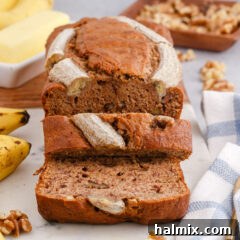
Moist Banana Nut Bread
IMPORTANT – Don’t forget to scroll up and read the Frequently Asked Questions and Expert Tips section for valuable insights!
Print It
Pin It
Rate It
Course: Breads, Breakfast, Dessert, Snack
Cuisine: American
Ingredients
- 1 ⅓ cups all-purpose flour
- 2 tsp cinnamon
- ¾ tsp baking soda
- ½ tsp sea salt
- 4 ripe bananas plus 1 for garnish, optional
- ⅓ cup vegetable oil
- ½ cup granulated white sugar
- ¼ cup light brown sugar packed
- 1 large egg at room temperature
- 2 tsp pure vanilla extract
- ¾ cup walnuts chopped, or more if desired
Things You’ll Need
-
8×4 inch loaf pan
-
Electric mixer (stand or hand)
-
Mixing bowls
-
Measuring cups and spoons
-
Rubber spatula
-
Wire cooling rack
Before You Begin & Expert Tips
- Yield & Scaling: This recipe is perfectly scaled to make one moist and delicious loaf. If you’re looking to share or keep some for later, simply double the ingredients to bake two loaves!
- Banana Ripeness is Key: For the most flavorful and moist banana bread, use very ripe bananas. Their peels can be black, dark brown, or yellow with ample brown spots. When bananas develop freckles, they’ve reached their peak sweetness and softness, making them ideal for baking. The riper the banana, the stronger the natural banana flavor in your finished bread. Don’t be afraid to use very dark or even black bananas – they’re perfect!
- Precise Flour Measurement: To avoid a dry, dense, or crumbly bread, accurate flour measurement is essential. Never scoop flour directly from the bag, as this compacts it, leading to too much being added. Instead, use the “fluff and spoon” method: first, aerate the flour in its container with a spoon. Then, gently spoon the flour into your measuring cup until it overflows, and level it off with the flat edge of a butter knife. Do NOT pack the flour into the cup or tap it on the counter. This technique ensures a lighter, more tender crumb.
- Room Temperature Ingredients: Always use room temperature eggs. Cold ingredients can cause the batter to stiffen up and ingredients to not combine as smoothly, impacting the final texture. If you forget to take your egg out in advance, simply place it in a bowl of warm water for 5-10 minutes.
- Optional Banana Garnish: The banana slice garnish adds a beautiful visual touch to your bread, making it look extra appealing. However, it is entirely optional and can be omitted if you prefer a simpler look.
- Freezing for Future Enjoyment: To freeze banana bread, ensure it is completely cooled. Wrap the entire loaf tightly in plastic wrap, then place it into a large freezer-safe ziptop bag, pressing out excess air. It can be stored in the freezer for up to 3 months. For convenience, you can also freeze individual slices by wrapping each piece in plastic wrap or aluminum foil before placing them in a sealed bag. Thaw unwrapped at room temperature for 1 to 1.5 hours and savor!
- Proper Storage: Store any leftover banana bread by wrapping the (fully cooled) loaf tightly in plastic wrap, then sealing it in a large ziptop bag (remove as much air as possible). This keeps it fresh at room temperature for up to 4 days. An airtight container also works well for storage.
- Preventing Sinking Nuts/Add-ins: To keep walnuts or chocolate chips evenly distributed throughout the bread, lightly toss them with about a tablespoon of the measured flour mixture before folding them into the batter. This light coating helps them stay suspended during baking.
- Avoid Overmixing: Overmixing the batter, especially after adding the flour, develops gluten, which can lead to a tough, rubbery texture. Mix on the lowest speed and stop as soon as the dry ingredients are just combined. A few lumps are perfectly fine!
Instructions
-
Preheat your oven to 350˚F (175°C). Prepare an 8×4 inch loaf pan by lining it with parchment paper, allowing some overhang on the longer sides to create “slings” for easy removal.
-
In a medium bowl, thoroughly whisk together the all-purpose flour, cinnamon, baking soda, and sea salt. Set this dry mixture aside.
-
Place the 4 very ripe bananas into the bowl of your electric mixer (stand mixer with paddle attachment or a hand mixer) and mash them well until a mostly smooth, pulpy consistency is achieved.
-
To the mashed bananas, add the vegetable oil, granulated white sugar, light brown sugar, room temperature egg, and pure vanilla extract. Mix on the lowest setting for about 2 minutes, or until the wet ingredients are smoothly combined.
-
Gradually add the reserved flour mixture to the wet ingredients in the mixer bowl. Mix on low speed, just until the ingredients are combined and no dry streaks of flour remain. Be careful not to overmix.
-
Using a rubber spatula, gently fold the chopped walnuts into the batter until they are evenly distributed.
-
Pour the banana nut bread batter into your prepared 8×4 inch loaf pan. If desired, carefully slice the additional banana in half lengthwise and place it on top of the batter for garnish.
-
Bake for 60-65 minutes. The bread is done when a toothpick inserted into the highest point in the center comes out clean or with a few moist crumbs. If the top starts to brown too quickly, loosely tent it with aluminum foil.
-
Allow the banana bread to cool in the pan on a wire rack for approximately 30 minutes before gently removing it using the parchment paper slings. Transfer it to the wire rack to cool completely before slicing and serving.
Nutrition Information
Tried this Recipe? Pin it for Later!Follow on Pinterest @AmandasCookin or tag #AmandasCookin!
Please note: The recipes on this blog are typically tested using a conventional gas oven and gas stovetop. Oven temperatures can vary, especially with older appliances, so an inexpensive oven thermometer can help ensure your oven is truly heating to the proper temperature. If using a toaster oven or countertop oven, be aware that heat distribution may differ from a full-sized conventional oven, and you might need to adjust cooking or baking times accordingly. For baking recipes where measurements are provided by weight, using cups instead may yield different results, and we cannot guarantee success with that method.