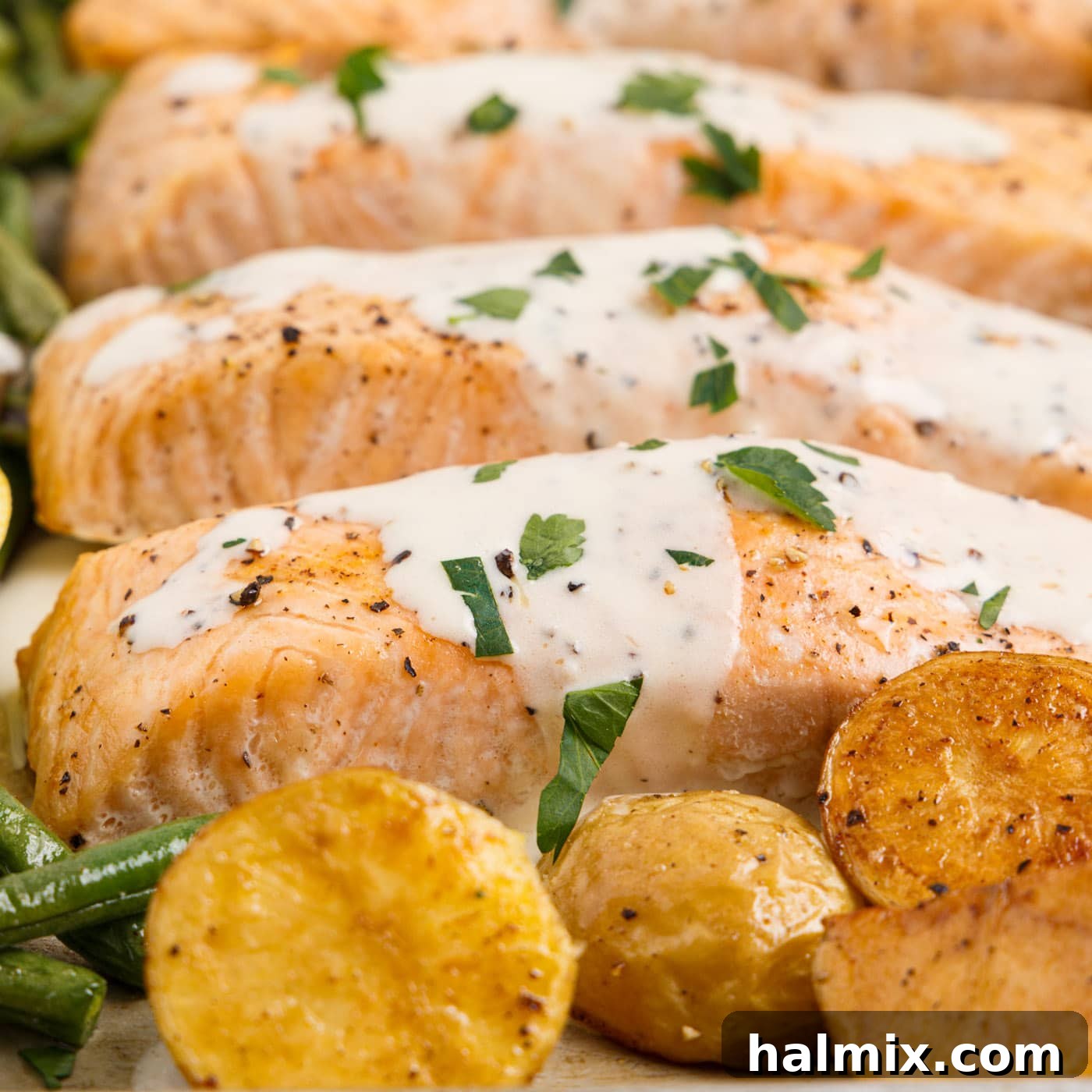
Indulge in the exquisite simplicity of perfectly baked salmon, crowned with a lusciously rich yet refreshing lemon cream sauce. This exceptional oven-baked salmon recipe promises a delightfully flaky and incredibly tender result every time, making it an ideal choice for a weeknight dinner or a special occasion. Best of all, this gourmet-tasting dish comes together in under 25 minutes, proving that incredible flavor doesn’t have to mean endless hours in the kitchen.
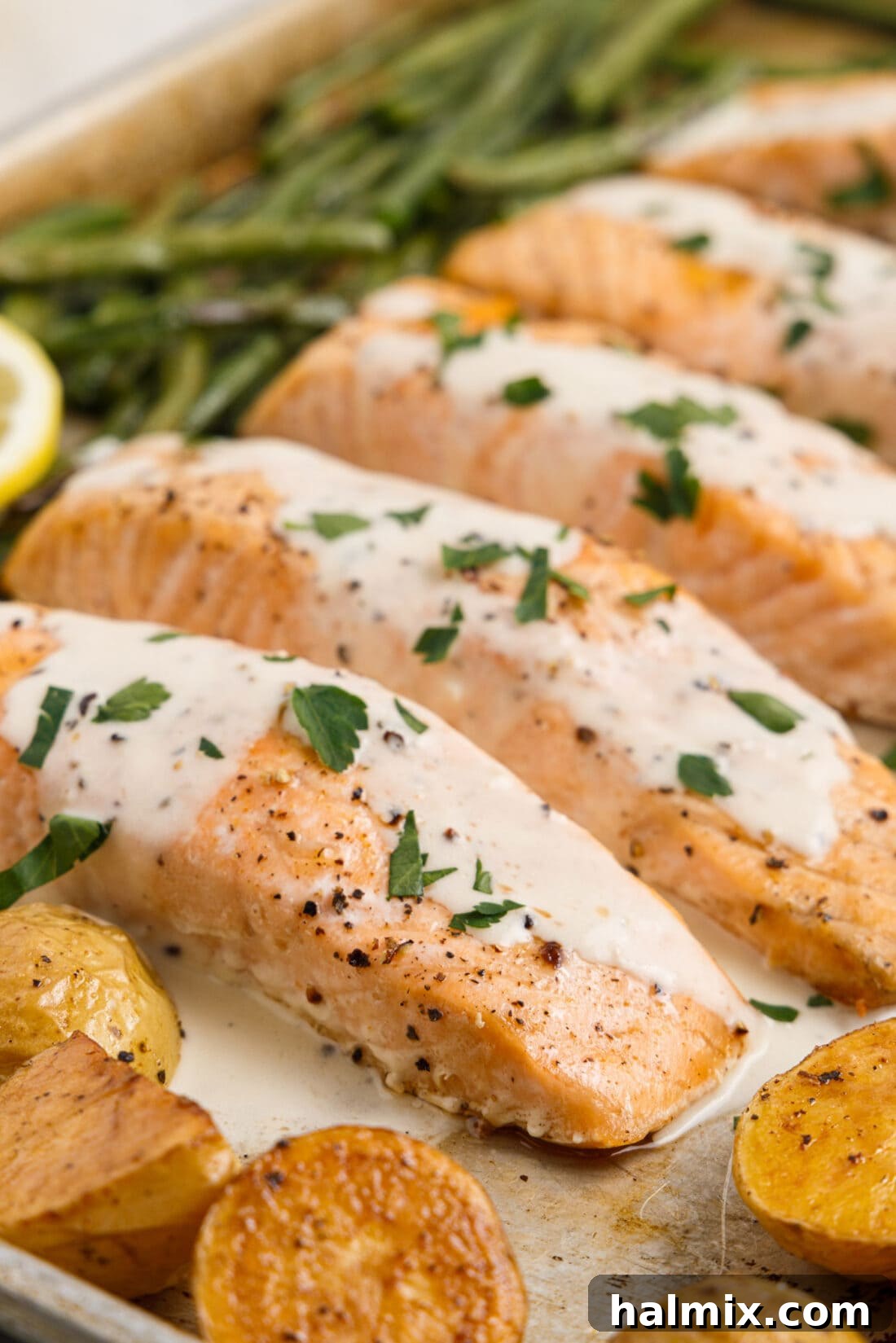
Why This Oven-Baked Salmon Recipe Will Become Your New Favorite
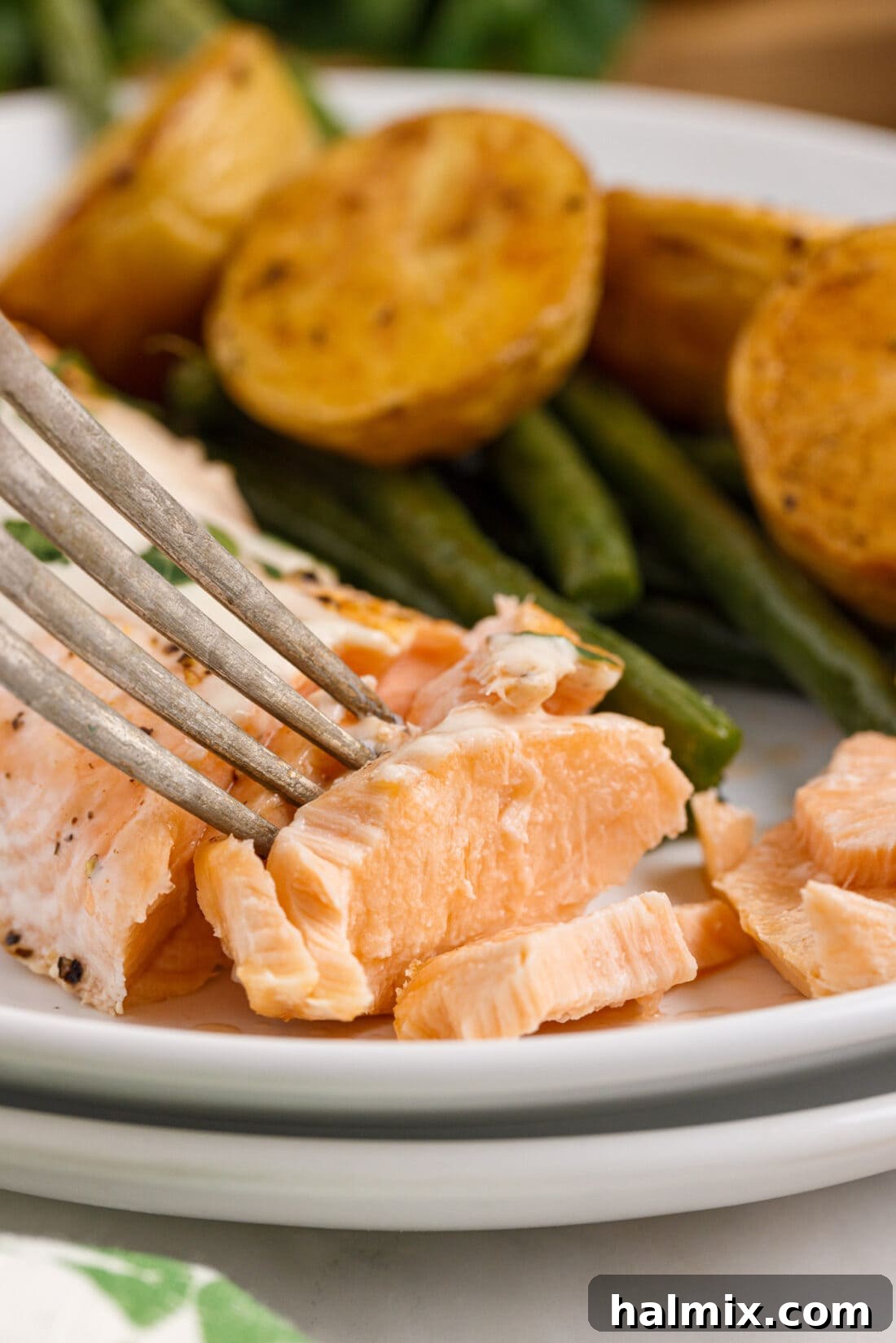
While there are numerous delightful ways to prepare salmon – from pan-seared and grilled to poached – baking it in the oven consistently delivers the most tender, juicy, and flaky texture. This method ensures even cooking and minimizes the risk of drying out the delicate fish, sealing in its natural moisture and flavor.
This particular baked salmon fillet recipe stands out for its vibrant flavors and incredible efficiency. The accompanying lemon cream sauce is a game-changer; it’s creamy and decadent without being heavy, thanks to the bright, zesty notes of fresh lemon. What truly makes this recipe a winner is its speed. The sauce can be effortlessly prepared in the 12-15 minutes your salmon is baking, transforming a simple piece of fish into an elegant, restaurant-quality meal that’s ready in under half an hour. It’s perfect for busy weeknights when you crave something wholesome, delicious, and quick.
Essential Ingredients for Perfect Baked Salmon with Lemon Cream Sauce
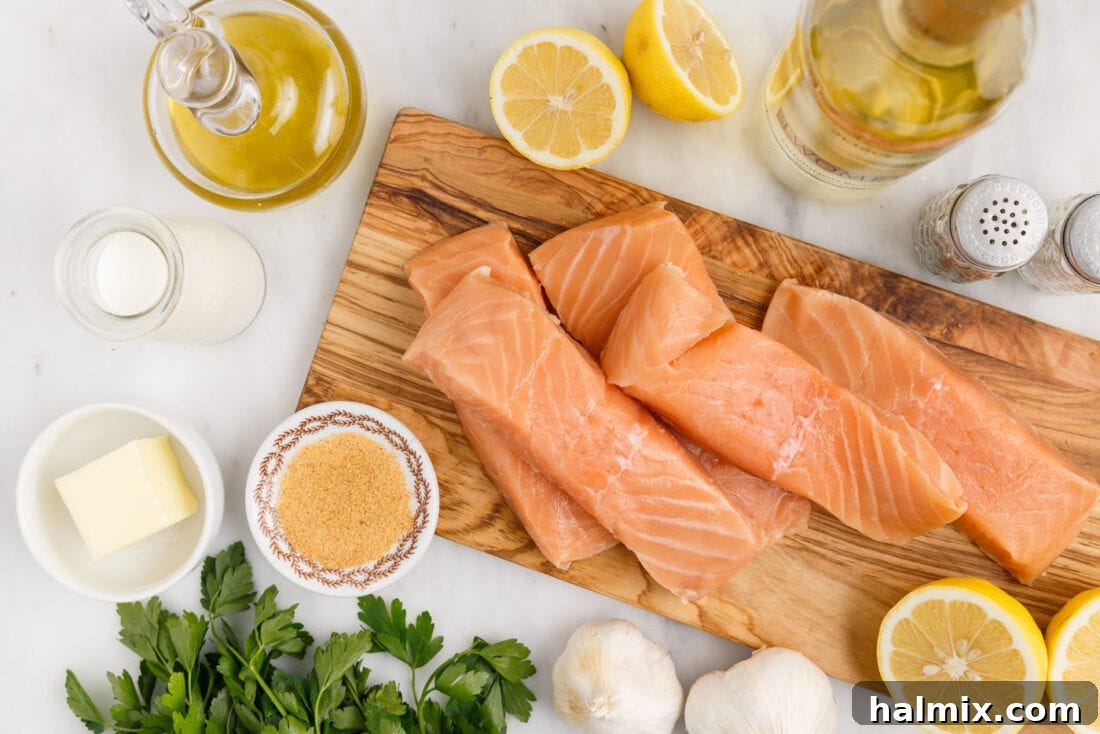
Crafting this mouthwatering dish requires just a handful of fresh, high-quality ingredients. You’ll find a detailed list with precise measurements in the printable recipe card towards the end of this post, but let’s highlight the stars of the show:
Ingredient Deep Dive and Flavorful Variations
SALMON: The foundation of this dish is fresh salmon. For the most delightful results, cooking salmon to the perfect internal temperature is crucial. Overcooked salmon, especially individual fillets, can quickly become dry and less enjoyable. Aim for an internal temperature of 135°F (57°C) when checked with an instant-read thermometer at the thickest part of the fillet. Keep in mind that larger or thicker fillets may require a few extra minutes in the oven. Look for vibrant, orange-pink flesh with a moist appearance. Both skin-on and skin-off fillets work well; skin-on can help protect the flesh and make it easier to handle after baking, while some prefer skin-off for serving.
THE LEMON CREAM SAUCE: This sauce is what truly elevates the baked salmon. It’s incredibly flavorful, striking a beautiful balance between creamy richness and bright, light citrus notes. While garlic is a key aromatic, consider sautéing finely diced shallots alongside or as a substitute for an even more nuanced sweetness. For the dry white wine, a Sauvignon Blanc is an excellent choice, offering a crispness that complements the lemon beautifully. If you prefer to avoid alcohol, chicken stock or vegetable broth can be substituted without compromising the creamy texture and savory depth of the sauce. Don’t forget a generous amount of fresh lemon juice, which provides that essential refreshing tang.
SEASONINGS: Beyond simple salt and pepper, feel free to experiment with other seasonings that pair wonderfully with salmon. A dash of paprika can add a subtle warmth and color, while garlic salt can enhance the garlicky notes without needing extra fresh cloves. Fresh or dried dill is a classic companion to salmon and lemon, bringing an aromatic, slightly anise-like freshness. Other herbs like thyme or rosemary can also be lovely additions.
How to Prepare Perfect Baked Salmon with Lemon Cream Sauce
These step-by-step photos and detailed instructions are designed to guide you through the process, ensuring a perfect outcome. For a quick reference or to print, scroll down to the full recipe card at the end of this post, complete with all measurements and instructions.
- Begin by preheating your oven to 450°F (230°C). This high heat helps to sear the outside of the salmon quickly, locking in moisture and creating a beautiful crust. Rinse your salmon fillets under cool water and pat them thoroughly dry with paper towels. Placing them on a parchment paper-lined sheet pan, spaced 1-2 inches apart, prevents sticking and makes cleanup a breeze.
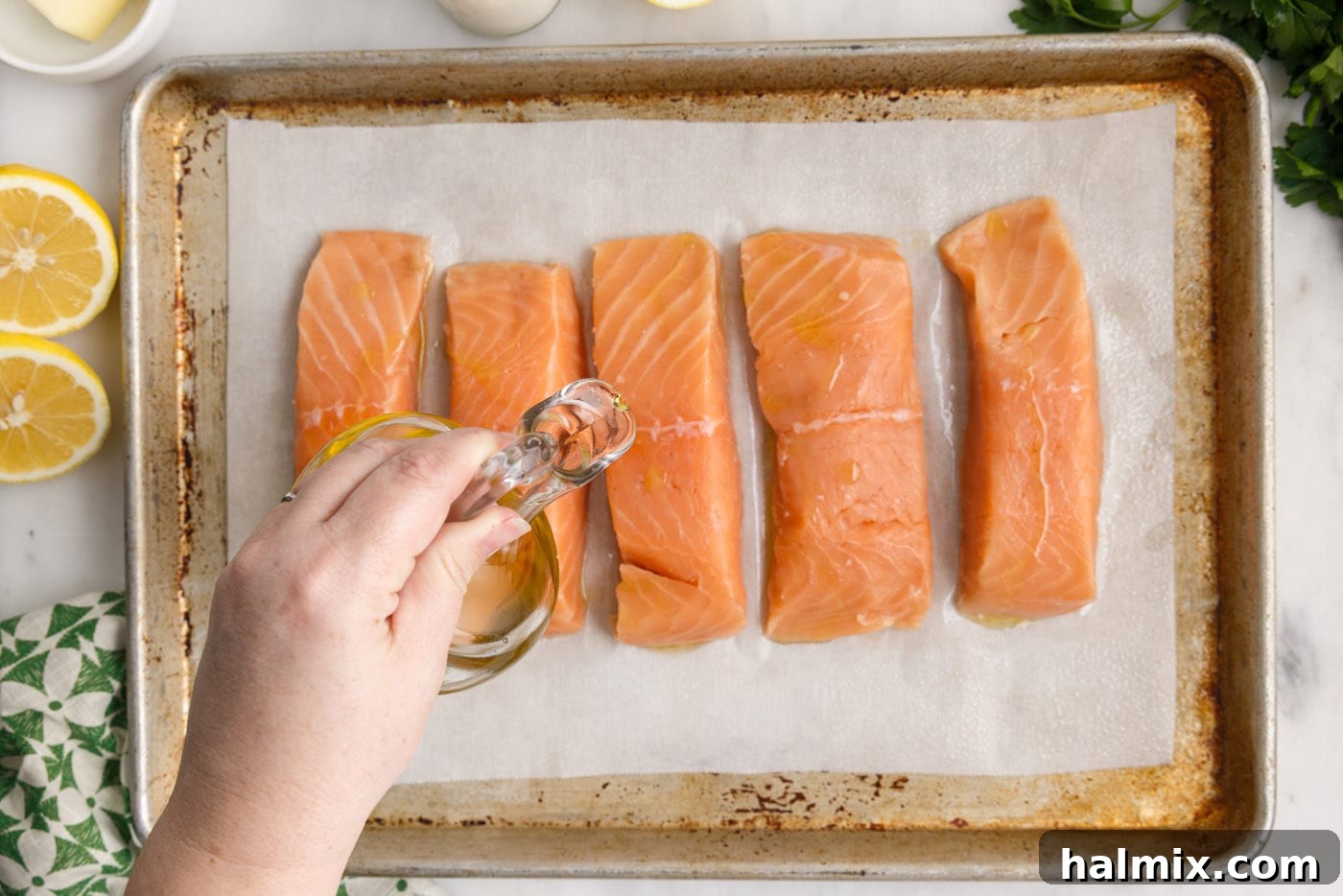
- Generously drizzle olive oil over each salmon fillet. Use your fingers to gently rub the oil evenly across the surface of the fish, ensuring a consistent coating. This not only helps with seasoning adhesion but also contributes to a lovely crisp exterior.

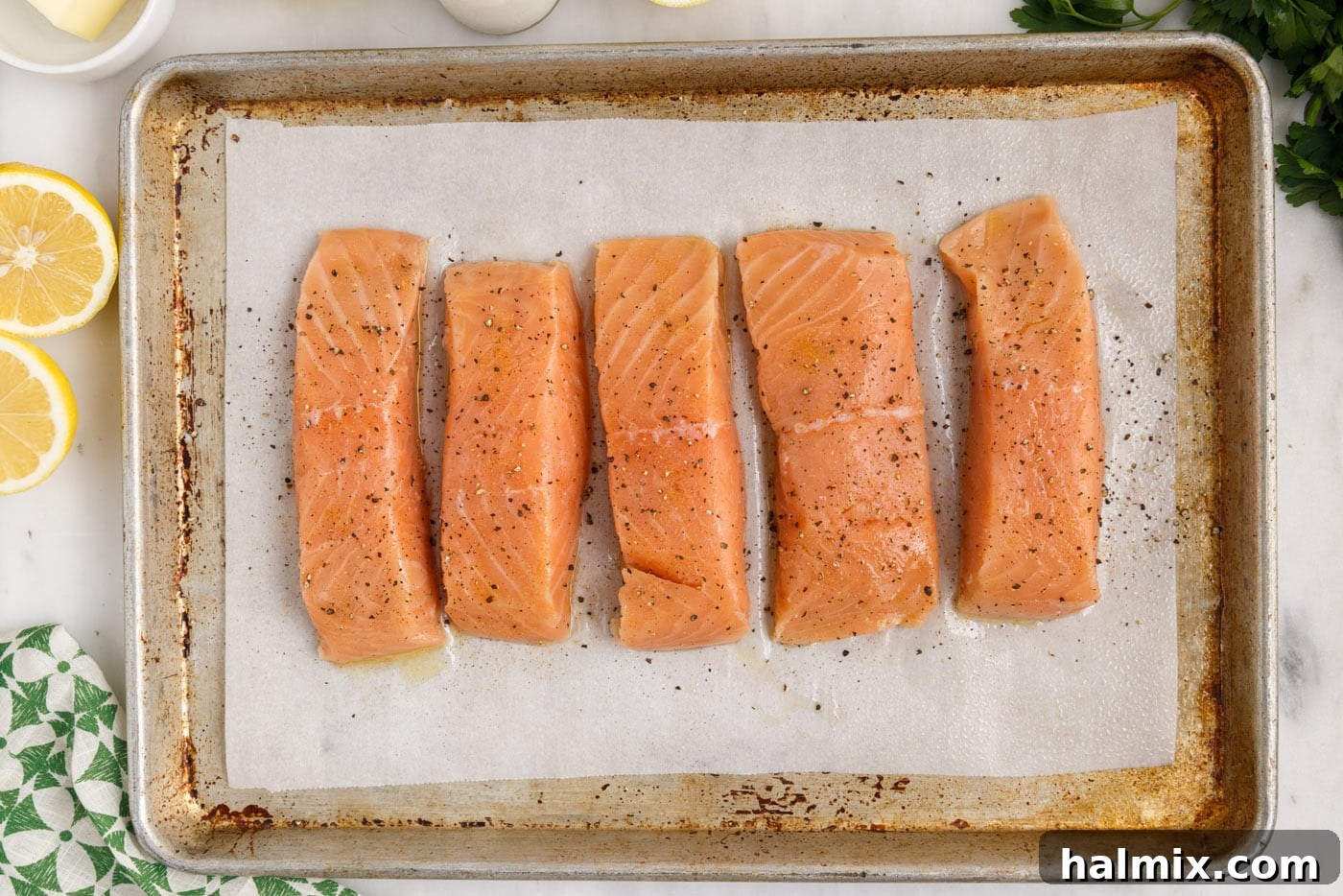
- Season the salmon fillets liberally with ground black pepper and seasoned salt. This simple seasoning allows the natural flavor of the salmon to shine. As mentioned, feel free to add other complementary seasonings like paprika, garlic powder, or dried dill for an extra layer of flavor.
- Bake the salmon for 12-15 minutes. The precise time will depend on the thickness of your fillets. The salmon is perfectly cooked when the thickest part registers an internal temperature of 135°F (57°C) on an instant-read thermometer. Once cooked, remove the salmon from the oven and let it rest for 5 minutes. This resting period allows the juices to redistribute, ensuring maximum tenderness and flavor.
- While the salmon bakes, prepare the delicious lemon cream sauce. In a heavy-bottomed saucepan over medium heat, melt about 1 tablespoon of unsalted butter.
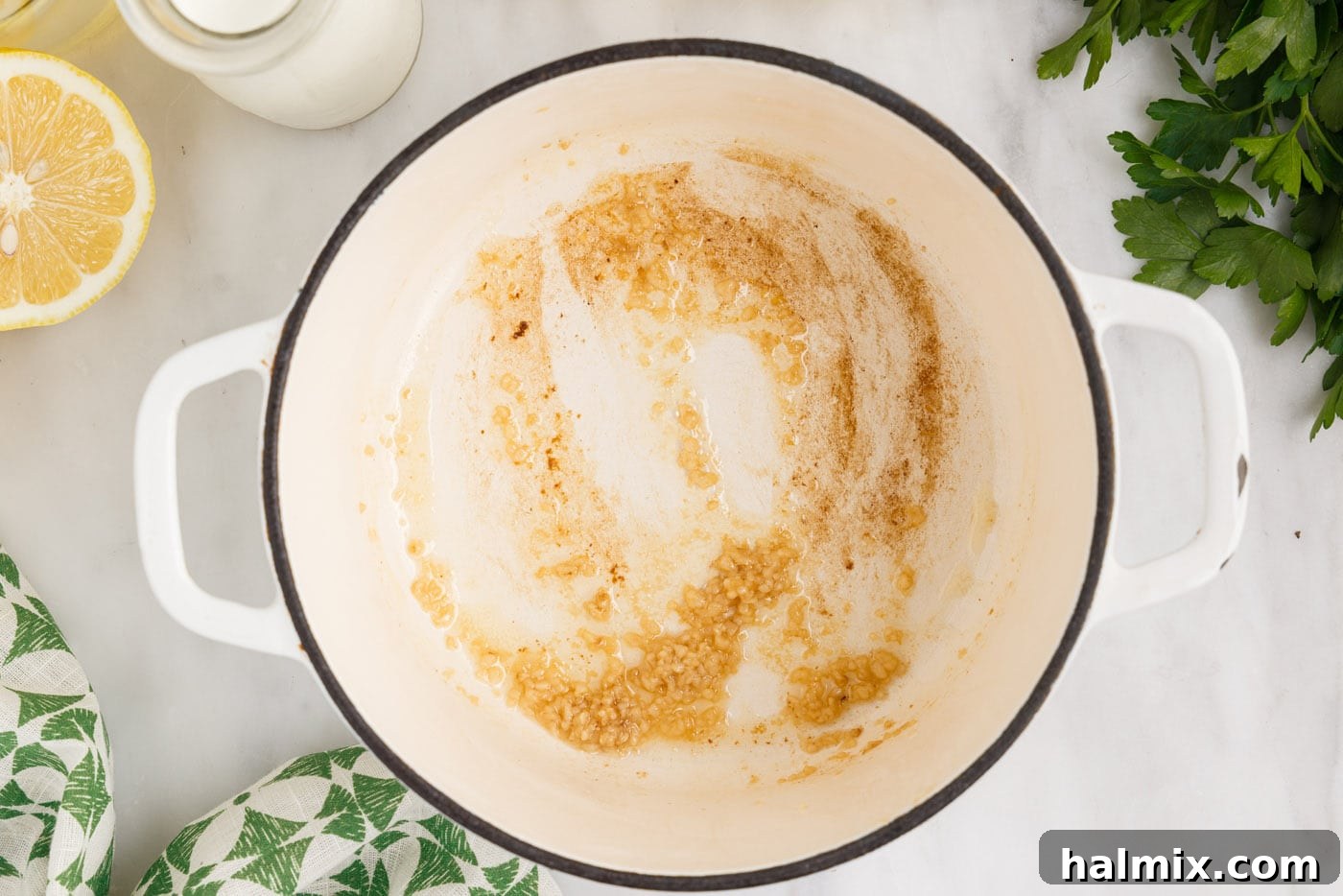
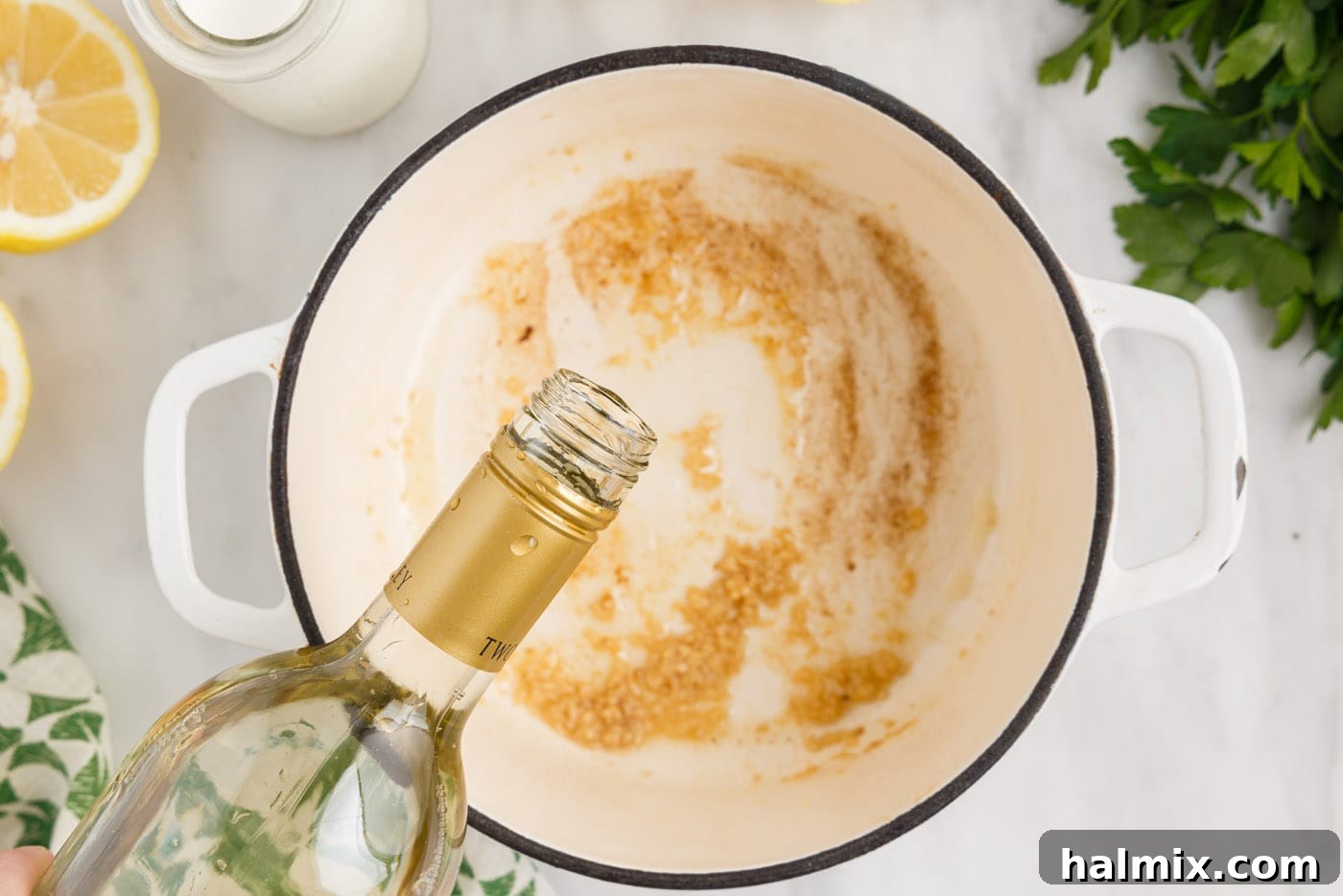
- Add the minced garlic to the melted butter and sauté for approximately 30 seconds, or until it becomes fragrant. Be careful not to burn the garlic. Pour in the dry white wine (or chicken stock if using a non-alcoholic option) and simmer gently for 2-3 minutes. Allow the sauce to reduce by about half, concentrating its flavors.
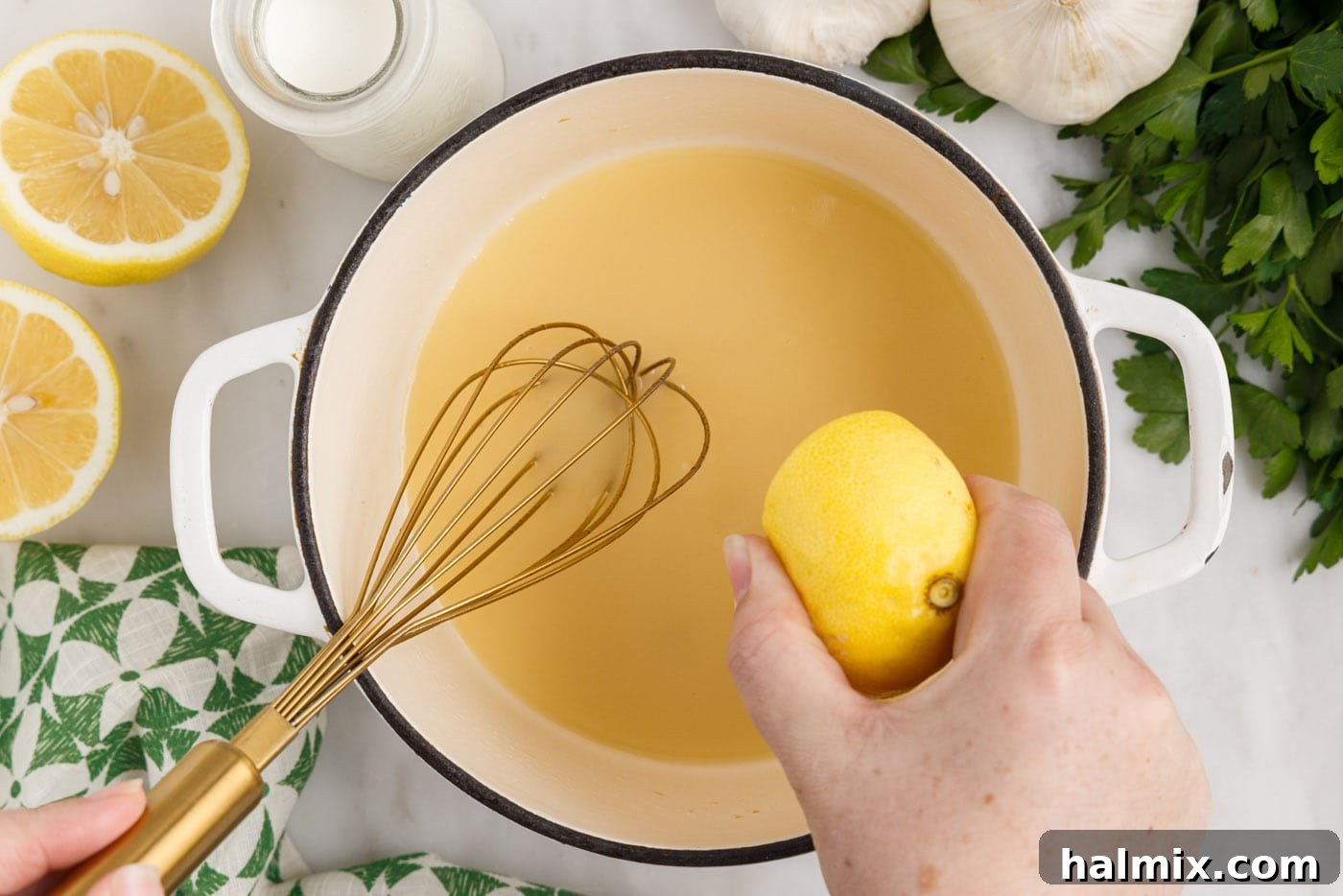
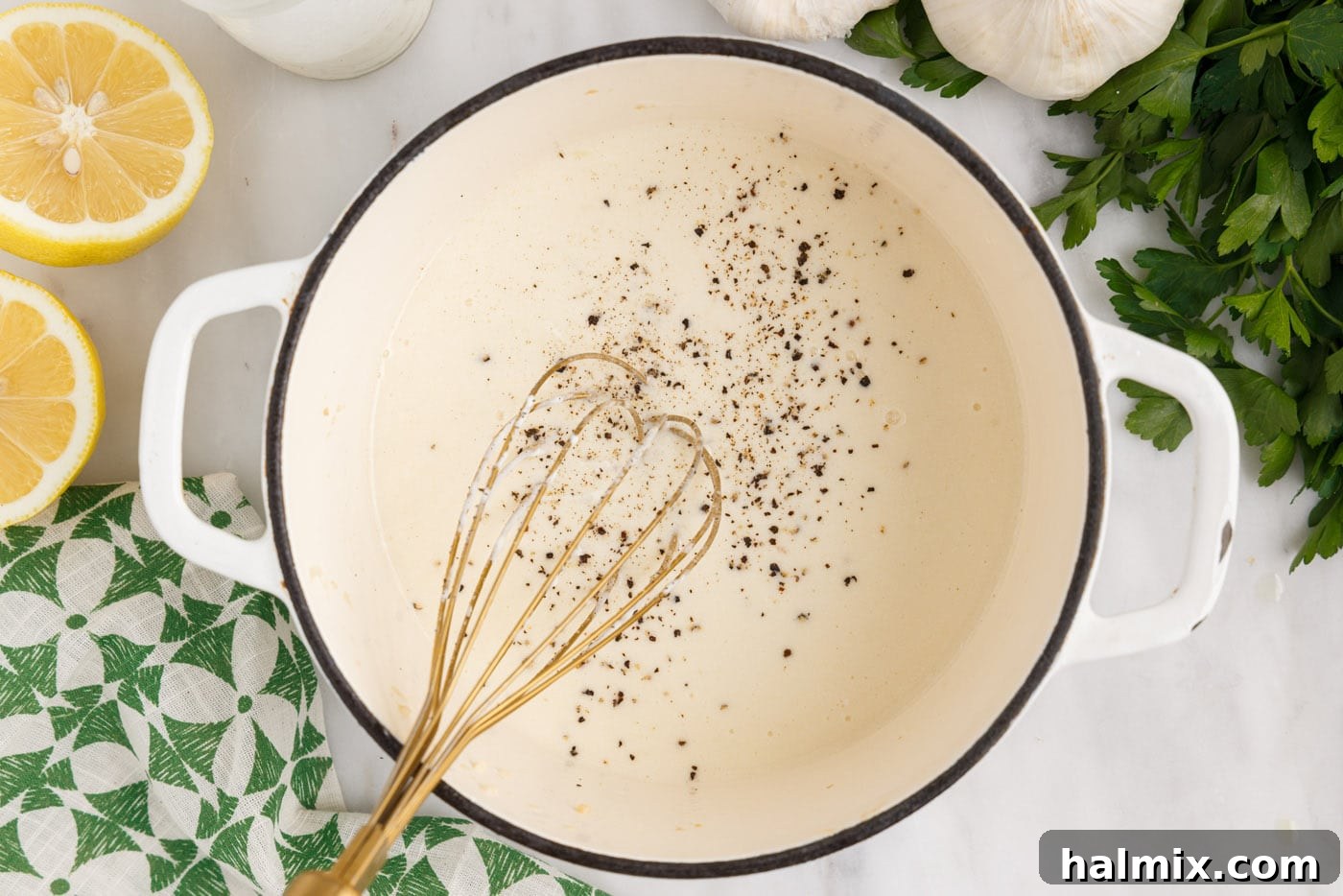
- Cut the remaining butter into small pieces and whisk them into the reduced sauce until fully incorporated, adding a silky richness. Stir in the fresh lemon juice and heavy cream. Continue to simmer for an additional 3-4 minutes, whisking constantly, until the sauce thickens enough to beautifully coat the back of a spoon. Taste and adjust seasoning with salt and pepper as desired.
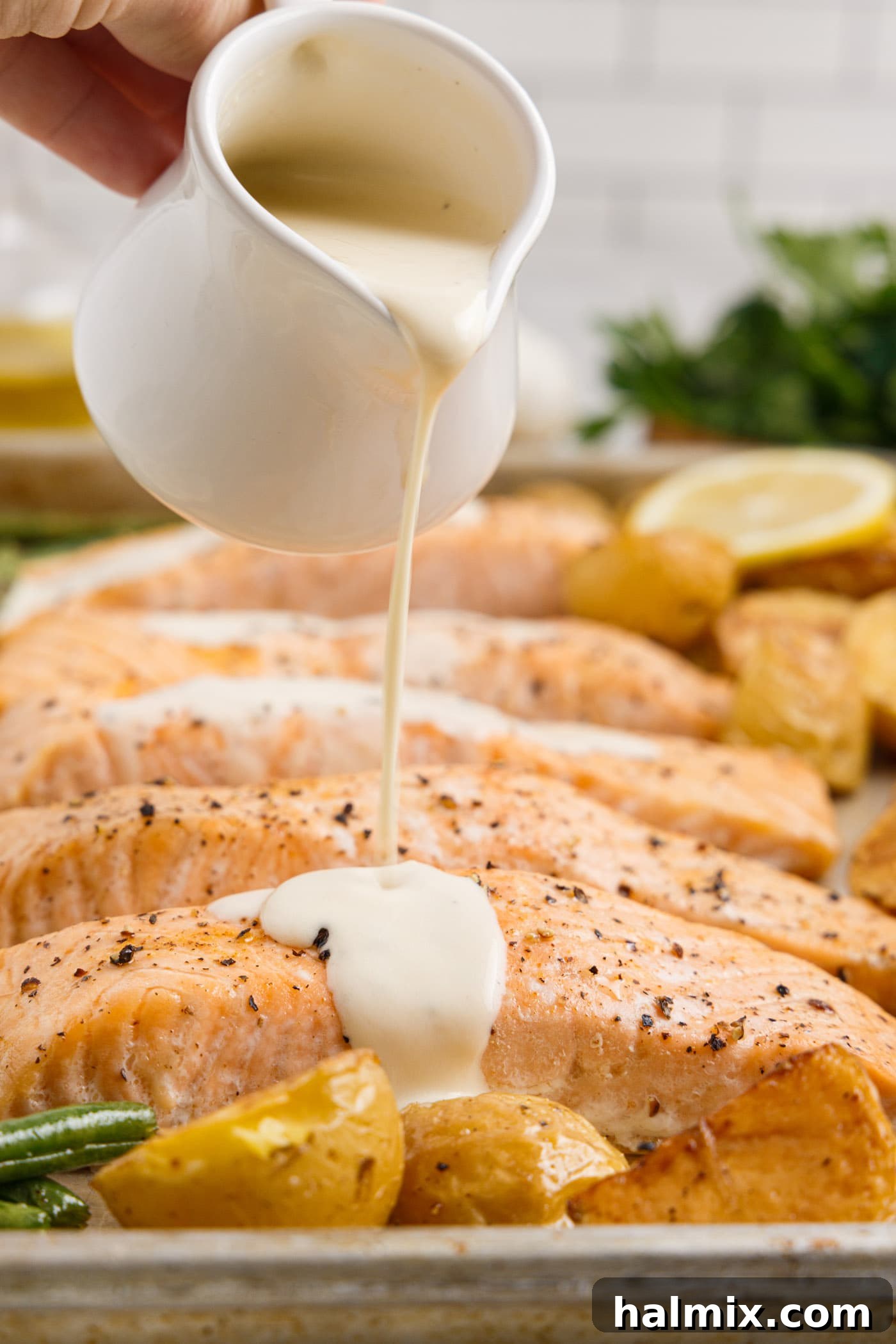
- To serve, carefully pour the warm lemon cream sauce generously over the baked salmon fillets. Garnish with a sprinkle of fresh chopped parsley for a pop of color and additional freshness.
Expert Tips & Frequently Asked Questions
Leftover baked salmon and lemon cream sauce should be stored in separate, airtight containers in the refrigerator. The salmon is best consumed within 2 days, and the sauce can last for up to 3 days. Reheat salmon gently in the oven at a low temperature (around 275°F / 135°C) or in a skillet with a lid to prevent it from drying out. Reheat the sauce gently on the stovetop over low heat, whisking occasionally, adding a splash of milk or broth if it becomes too thick.
Absolutely, frozen salmon fillets work perfectly for this recipe! For the best results, it’s always recommended to thaw the salmon in the refrigerator overnight. This ensures even cooking and maintains the texture. However, if you’re short on time, you can bake salmon directly from frozen. If baking from frozen, first rinse the fillets under cool water to remove any ice glaze. Hold off on adding the olive oil and seasonings until the salmon has cooked lightly in the oven and is no longer completely frozen, as oil and spices won’t adhere well to frozen fish. Simply bake for about 5-7 minutes until slightly softened, then remove, season, and return to the oven. You will need to add an additional 5-10 minutes to the overall baking time if cooking from frozen. Always use a meat thermometer to confirm doneness, aiming for an internal temperature of 135°F (57°C).
While most varieties of salmon will bake beautifully, Sockeye, Coho, and King (Chinook) salmon are popular choices known for their rich flavor and firm texture. Atlantic salmon, often farmed, is also widely available and bakes up moist and tender. Choose fillets that are relatively uniform in thickness for even cooking.
Using parchment paper is key, as instructed in the recipe. Additionally, ensuring your oven is fully preheated to the high temperature of 450°F (230°C) before placing the salmon in helps to create a quick sear that prevents sticking. A light coating of olive oil on the fillets also contributes to this.
Delightful Serving Pairings
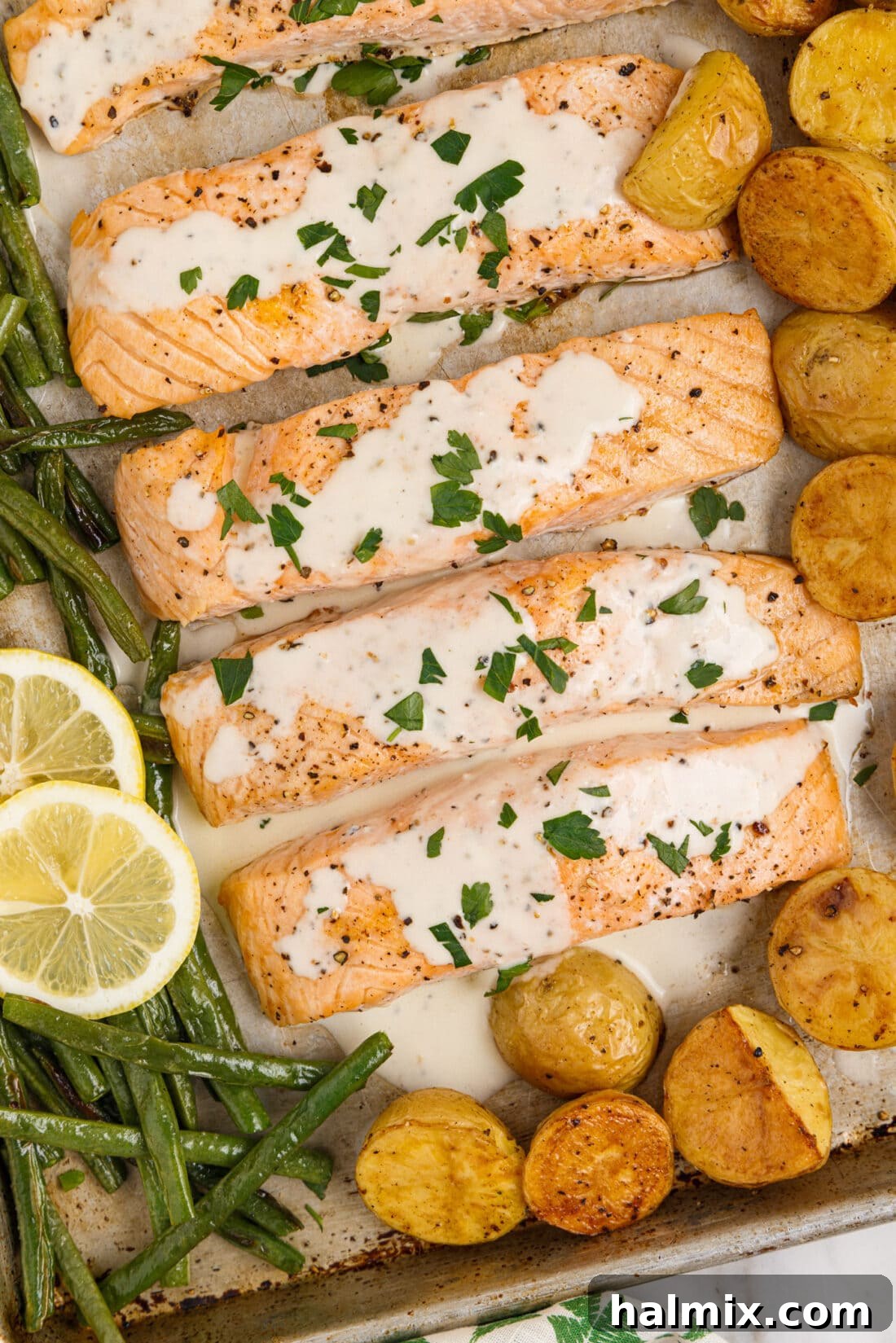
Baked salmon with lemon cream sauce is a versatile dish that pairs wonderfully with a variety of sides. For a light and healthy meal, consider serving it alongside roasted vegetables like tender green beans, crisp asparagus, vibrant broccoli, or sweet potatoes. If you prefer a heartier option, creamy mashed potatoes, fluffy rice, or even a simple quinoa pilaf can soak up the delicious sauce beautifully. A crisp side salad with a light vinaigrette also provides a refreshing contrast. Don’t forget a slice of crusty bread to sop up any leftover sauce! Leftovers can be transformed into a delicious lunch by flaking the salmon and mixing it into leafy green salads, a hearty pasta dish, or even light salmon salad sandwiches.
Explore More Delicious Salmon and Fish Recipes
- Hearty Fish Chowder
- Zesty Salmon Tacos
- Flavorful Skillet Broiled Cod
- Elegant Poached Salmon
- Effortless Sheet Pan Salmon Dinner
- Tangy Dijon Lemon Caper Salmon
- Sweet & Savory Maple Soy Salmon
I love sharing my kitchen adventures and delicious recipes with all of you! To stay updated and receive new recipes directly in your inbox, simply subscribe to my newsletter and start receiving your free daily recipes!
Baked Salmon with Lemon Cream Sauce
The ultimate recipe for incredibly flaky and juicy salmon fillets, perfectly oven-baked and crowned with a light, creamy, and zesty lemon sauce!
Course: Dinner | Cuisine: American | Servings: 6 servings | Prep Time: 10 mins | Cook Time: 15 mins | Total Time: 25 mins
Author: Amanda Davis
Ingredients
- 48 oz salmon fillets (6 – 8 oz fillets)
- 2 Tbsp olive oil
- 1 tsp ground black pepper
- 1 tsp seasoned salt
- 4 Tbsp unsalted butter (divided)
- 3 cloves garlic (minced)
- ½ cup dry white wine (or chicken stock)
- 2 Tbsp lemon juice (juice of 1 lemon)
- ⅓ cup heavy whipping cream
- fresh chopped parsley (for garnish)
Equipment Needed
- Baking sheet
- Instant-read Meat thermometer
- Saucepan
Before You Begin
- If you plan to roast potatoes or other root vegetables with your salmon, they will likely need a longer cooking time. Start them earlier on a separate sheet pan. Quicker-cooking vegetables like green beans or asparagus can typically roast alongside the salmon.
- A dry white wine like Sauvignon Blanc is ideal for the sauce, but chicken stock or broth can be used as a non-alcoholic substitute.
- Store leftovers in an airtight container in the refrigerator for up to 2 days.
Instructions
- Preheat oven to 450°F (230°C). Rinse salmon fillets and pat thoroughly dry with paper towels. Place each fillet 1-2 inches apart on a parchment paper-lined sheet pan.
- Drizzle olive oil generously over the salmon and use your fingers to rub it around to coat the salmon fillets evenly.
- Sprinkle black pepper and seasoned salt over the salmon fillets. Optionally, add other favorite seasonings like paprika, garlic salt, or dill.
- Bake the salmon for 12-15 minutes, or until the thickest part of the salmon registers 135°F (57°C) with an instant-read thermometer. Remove from the oven and let rest for 5 minutes.
- While the fillets cook, prepare the lemon cream sauce. Melt about 1 tablespoon of the unsalted butter in a heavy-bottomed saucepan over medium heat.
- Add the minced garlic and sauté for about 30 seconds until fragrant. Pour in the wine (or chicken stock) and simmer for 2-3 minutes, allowing the sauce to reduce by half.
- Cut the remaining butter into pieces and whisk into the sauce until fully melted and smooth. Add fresh lemon juice and heavy cream. Simmer for an additional 3-4 minutes, whisking constantly, until the sauce thickens enough to coat the back of a spoon. Season with salt and pepper to taste.
- Pour the prepared lemon cream sauce over the warm salmon fillets and garnish with fresh chopped parsley before serving.
Nutrition Information
- Serving:
- 1 serving
- Calories:
- 496 cal
- Carbohydrates:
- 2 g
- Protein:
- 46 g
- Fat:
- 32 g
- Saturated Fat:
- 11 g
- Polyunsaturated Fat:
- 7 g
- Monounsaturated Fat:
- 12 g
- Trans Fat:
- 1 g
- Cholesterol:
- 163 mg
- Sodium:
- 495 mg
- Potassium:
- 1153 mg
- Fiber:
- 1 g
- Sugar:
- 1 g
- Vitamin A:
- 521 IU
- Vitamin C:
- 2 mg
- Calcium:
- 45 mg
- Iron:
- 2 mg
Please note: The recipes on this blog are tested with a conventional gas oven and gas stovetop. Oven temperatures can vary, especially with older appliances. Using an inexpensive oven thermometer can help ensure your oven maintains the correct temperature. If using a toaster oven or countertop oven, be aware that heat distribution may differ, and cooking times may need adjustment. For baking recipes where measurements are provided by weight, using volume (cups) instead may yield different results, and we cannot guarantee success with that method.