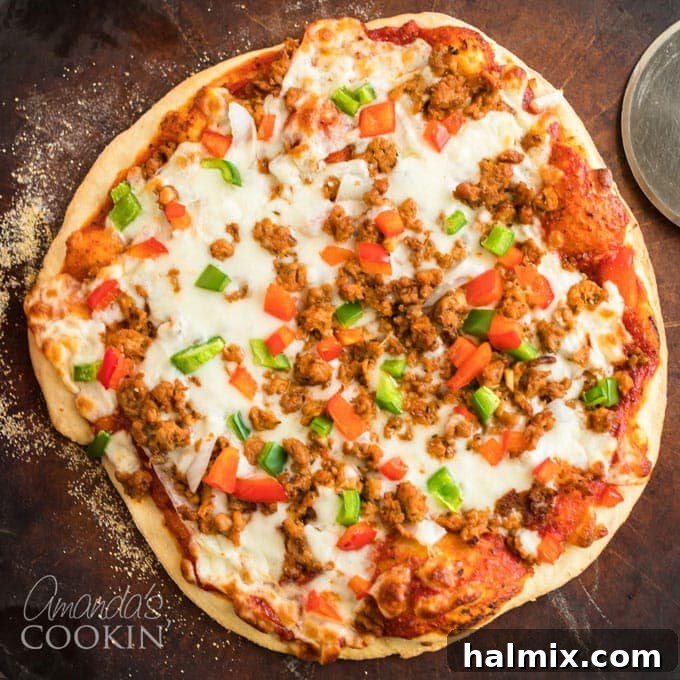
Embarking on the journey of making homemade pizza dough is a culinary revelation. For those who haven’t yet experienced the sheer joy and superior flavor of pizza crafted from scratch, I wholeheartedly believe it’s an essential kitchen adventure you must undertake at least once. But be warned: the moment you taste pizza made with this incredibly easy and delicious homemade dough, the pre-made, store-bought alternatives will likely become a distant memory. The process itself is rewarding, transforming simple ingredients into a versatile base for endless topping possibilities, creating not just a meal, but a memorable experience for family and friends. Beyond the conventional oven, I’ve also discovered the incredible taste and unique texture of pizza made on the grill, adding another exciting dimension to homemade pizza night.
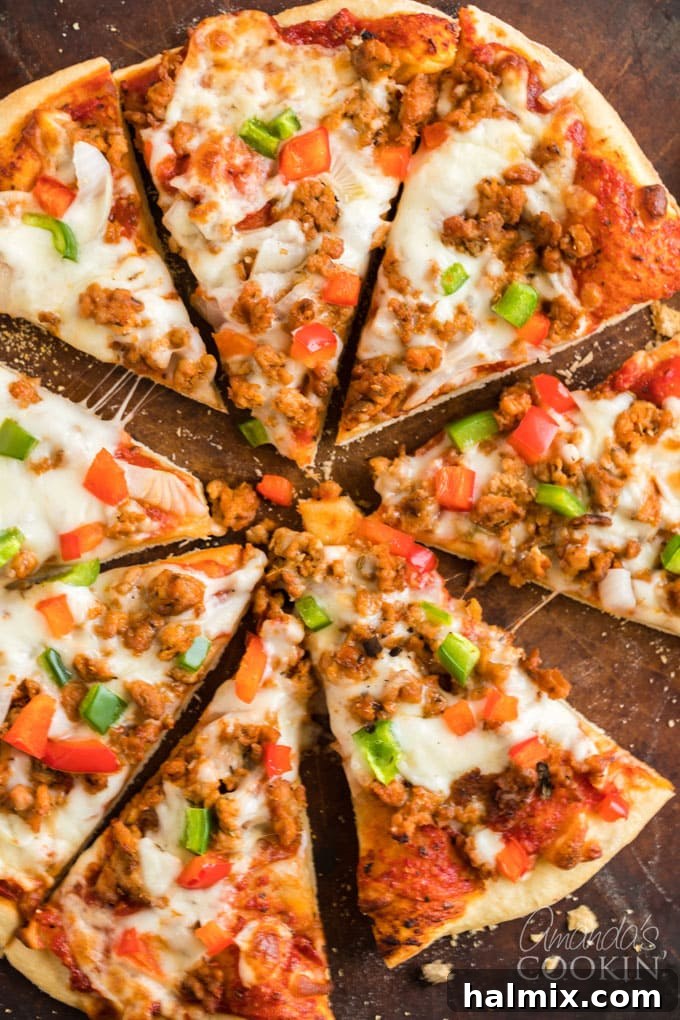
Unveiling the Best Homemade Pizza Dough Recipe
Declaring a recipe as “the best” is undoubtedly a bold claim, particularly in the diverse world of pizza. However, after years of experimenting with various recipes and countless batches, I can confidently say that this homemade dough stands head and shoulders above the rest. It consistently delivers a wonderfully soft, yet perfectly chewy crust that forms the ideal foundation for any pizza. This recipe wasn’t just a personal favorite; it became a cherished staple in my household, turning homemade pizza night into one of the most highly anticipated and frequently requested dinners as my children grew up. The sheer demand from my own family is a testament to its exceptional quality and irresistible appeal.
My quest for the perfect pizza crust began out of necessity. Having grown up in the Midwest, an area renowned for its excellent pizza traditions, I developed a discerning palate. Later, living near Las Vegas, Nevada, the quality of readily available pizza simply couldn’t compare to what I was used to. This geographical shift, from the deep-dish delights of Chicago to the arid desert, highlighted a significant gap in my culinary life. Rather than settle for subpar options, I took matters into my own hands, diving into the art of pizza dough making. The inspiration for this specific recipe came from an unexpected source: my early days as a webmaster in 1997, where I met Mitch and Cheri, owners of a popular recipe website. It was there, amidst a treasure trove of culinary delights, that I stumbled upon this extraordinary pizza dough recipe, forever changing our family dinners.
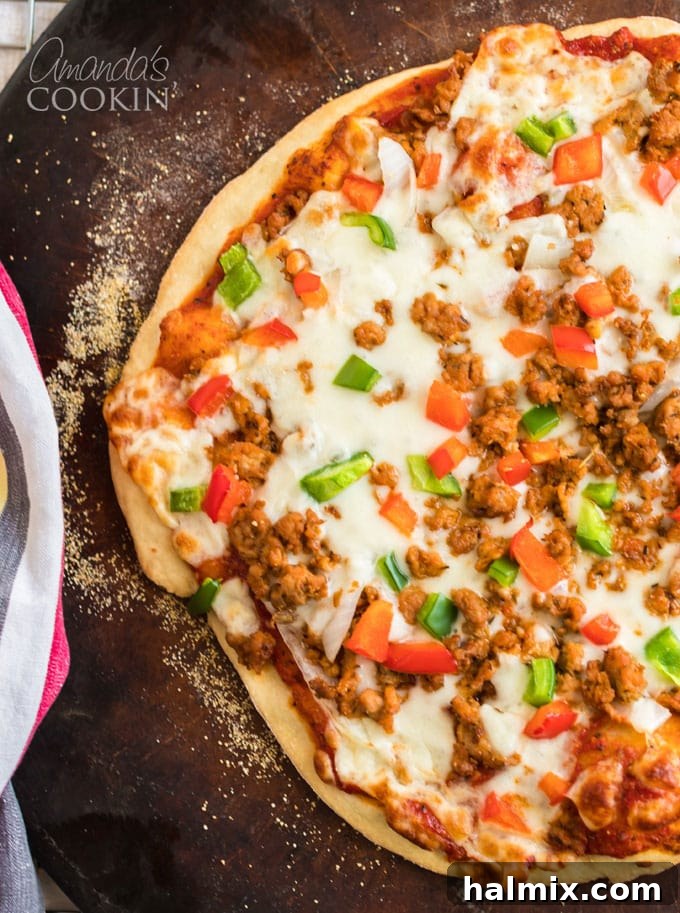
Essential Ingredients for Your Perfect Pizza Dough
Crafting exceptional pizza dough begins with selecting the right ingredients. Each component plays a vital role in achieving that ideal texture and flavor profile:
- Bread Flour: This is a non-negotiable for a superior crust. Bread flour boasts a higher protein content compared to all-purpose flour. This higher protein level is crucial because it facilitates the development of stronger gluten networks. Gluten is what gives your dough its elasticity and chewiness, allowing it to stretch thin without tearing and contributing to that satisfying ‘pull’ in every bite.
- Semolina Flour: Often mistaken for cornmeal due to its golden hue, semolina flour is a key ingredient typically used in pasta making. In pizza dough, it works wonders, contributing to a wonderfully soft, almost cake-like crumb structure. It imparts a delicate tenderness to the crust, ensuring it’s not overly dense and offering a delightful contrast to the outer crispness.
- Warm Water: The temperature of your water is paramount for activating the yeast. Aim for a range between 85 to 115°F (29 to 46°C). While a kitchen thermometer provides precision, with practice, you’ll learn to judge the temperature by feel—it should be comfortably warm to the touch, like a baby’s bath. Water that’s too cold will slow down or inhibit yeast activity, leading to poor rising, while water that’s too hot can kill the yeast entirely, resulting in a flat, dense dough.
- Yeast: I personally prefer SAF instant yeast for its reliability and efficiency, but standard active dry yeast will work just as effectively. Yeast is the living organism responsible for the dough’s rise, consuming sugars and producing carbon dioxide, which creates those airy pockets that define a great crust.
- Honey: Beyond its sweet and delicious flavor, honey serves a critical function: it acts as a food source for the yeast. This simple sugar kickstarts the fermentation process, allowing the yeast to become active and thrive, which is essential for a well-risen and flavorful dough.
- Extra Virgin Olive Oil: I always reach for extra virgin olive oil for its robust flavor, but any good quality olive oil will suffice. Olive oil contributes to the dough’s tenderness, elasticity, and overall richness. It also adds a subtle flavor that enhances the pizza, making for a more aromatic and satisfying crust.
- Salt: A seemingly simple ingredient, salt plays several crucial roles. It tightens the gluten structure, providing strength and stability to your dough. More importantly, it enhances the flavor of the crust, balancing the sweetness from the honey and preventing the dough from tasting bland. Without salt, your pizza crust would lack depth and character.
- Cornmeal: While not incorporated into the dough itself, cornmeal is an indispensable tool for handling. When sprinkled on your pizza peel or work surface, it acts as tiny “ball bearings.” This allows the rolled-out pizza dough to effortlessly slide off the peel and onto the hot pizza stone or baking surface in your oven, preventing sticking and ensuring a smooth transfer.
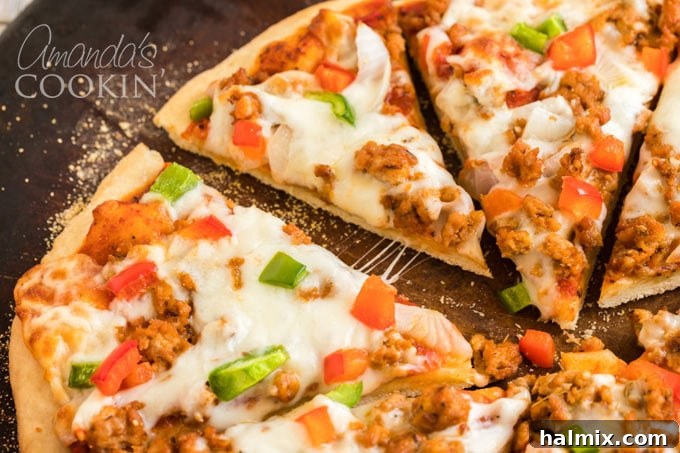
Helpful Kitchen Tools for Pizza Making:
Having the right tools at hand can significantly streamline your pizza-making process and elevate your results:
- Food processor: An excellent appliance for quickly bringing the dough together, saving you time and effort compared to hand-kneading.
- Liquid measuring cup: Essential for accurately measuring the warm water, crucial for yeast activation.
- Measuring spoons and cups: For precise measurement of all dry and smaller liquid ingredients, ensuring consistent results every time.
- Wooden cutting board: Provides a stable surface for kneading and rolling out your dough.
- Large bowl: Necessary for the dough to rise comfortably and double in size.
- Pizza peel: A flat shovel-like tool used to transfer the raw pizza into the hot oven and retrieve the baked pizza.
- Pizza stone: A preheated stone ensures a perfectly crispy crust by drawing moisture out of the dough and providing even heat distribution.
- Pizza cutter: For effortlessly slicing through your finished pizza with clean cuts.
- Kitchen towel: Used to cover the dough during its rising period, creating a warm, moist environment.
Step-by-Step: Crafting Your Delicious Homemade Pizza Dough
Creating this amazing homemade pizza dough is a straightforward process, especially if you prepare your workspace and ingredients in advance. Before you begin, take a moment to measure out all your ingredients. This practice, known as “mise en place,” makes the entire process incredibly smooth and stress-free. Also, lightly oil a large mixing bowl and have a clean kitchen towel ready for the rising stages.
- Activate the Yeast: Start by pouring the warm water into your food processor. The ideal temperature for the water is between 85 to 115°F (29 to 46°C). You can test this with a kitchen thermometer for accuracy, but if you don’t have one, it should feel very warm but comfortable to your hand—not hot enough to scald, and not lukewarm. This temperature is critical: water that is too cold will cause your dough to rise too slowly, if at all, while water that is too hot will kill the yeast, preventing any rise.
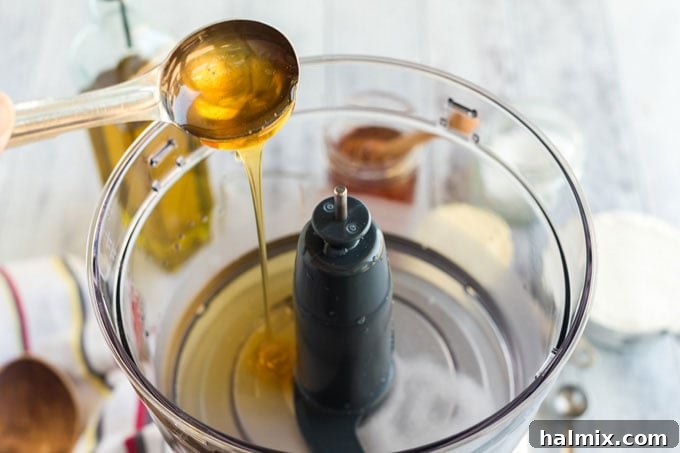
- Dissolve Sweeteners and Salt: Add the honey and salt to the warm water in the food processor. Secure the lid and process on a low setting for about 20 seconds. This step ensures the honey dissolves evenly, providing an accessible food source for the yeast, and the salt begins to integrate into the liquid.
- Introduce the Yeast: Next, add your yeast to the mixture. Process on low for another 5 seconds. This brief mix allows the yeast to disperse and begin its activation process in the warm, sweetened water. You might notice a slight frothing or bubbling on the surface, indicating the yeast is coming to life.
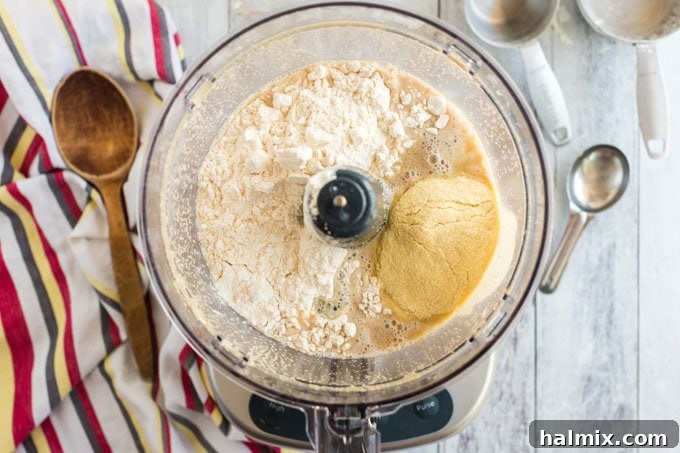
- First Flour Addition: Now, add 1 cup of bread flour along with all of the semolina flour to the food processor. Process on low for about 10 seconds. At this stage, the mixture will start to come together, taking on a thicker, more paste-like consistency.
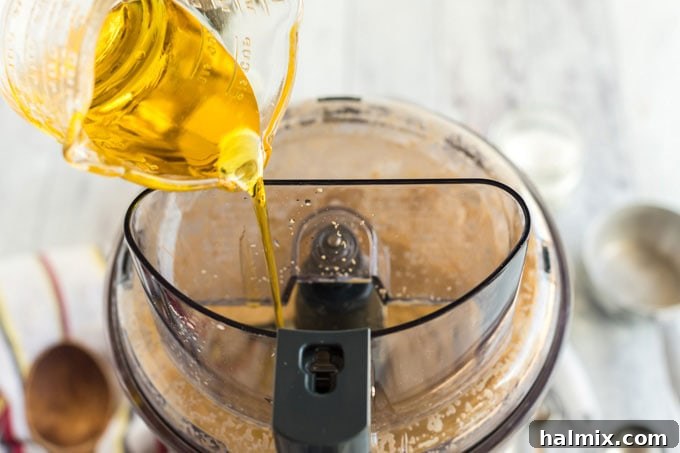
- Incorporate Olive Oil: Pour in the olive oil and continue to process until it is fully blended into the dough, which usually takes about 15 to 20 seconds more. The olive oil will add richness, tenderness, and flexibility to the dough.
- Final Flour and Dough Formation: Add the remaining bread flour to the food processor. Process for approximately one to two minutes. During this time, the dough should begin to come together, forming a cohesive ball that rolls around the processor bowl. This indicates proper mixing and the beginning of gluten development.
- Troubleshooting Dough Consistency: If your dough appears too dry and doesn’t form a ball, add water, one tablespoon at a time, allowing the processor to mix for a few seconds after each addition, until it reaches the desired consistency. Conversely, if your mixture is too wet and resembles a batter rather than a dough, add flour, one tablespoon at a time, until it forms a firm, workable ball. Adjusting flour or water in small increments is key to achieving the perfect dough every time.
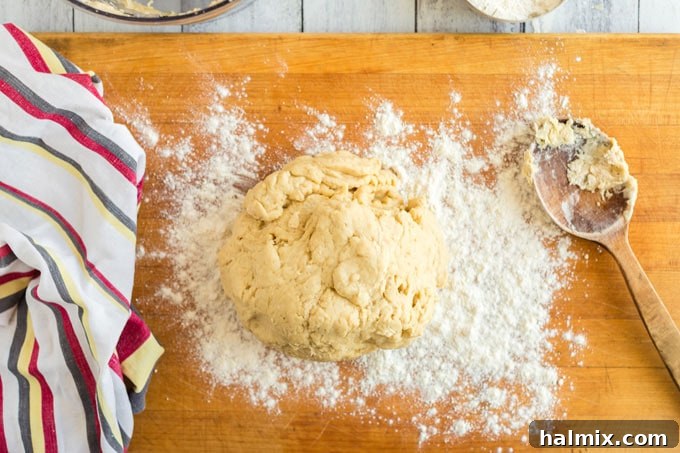
- Brief Kneading: Once the dough has formed a ball in the food processor, transfer it to a lightly floured cutting board or clean countertop. Knead the dough by hand for about one minute. This additional brief kneading helps to further develop the gluten, which is essential for giving the dough its structure, elasticity, and the ability to rise into a fluffy, airy crust when baked.
- First Rise: Place the kneaded dough ball into the lightly oiled large bowl. Turn the dough once to coat it evenly with oil, then cover the bowl with a clean kitchen towel. Find a warm, dry place that is free from drafts for the dough to rise. A slightly warm oven (turned off, but warmed for a few minutes then turned off) or a sunny spot can work well.
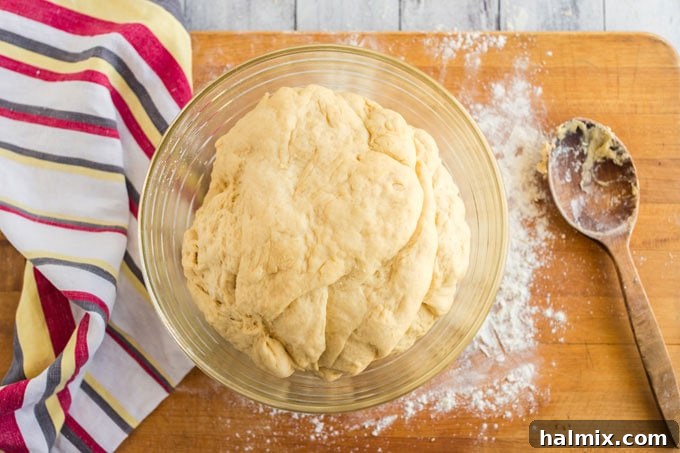
- Monitor First Rise: Allow the dough to rise for approximately 45 minutes. By this point, it should have visibly doubled in size, indicating that the yeast is active and the dough is developing its airy texture.
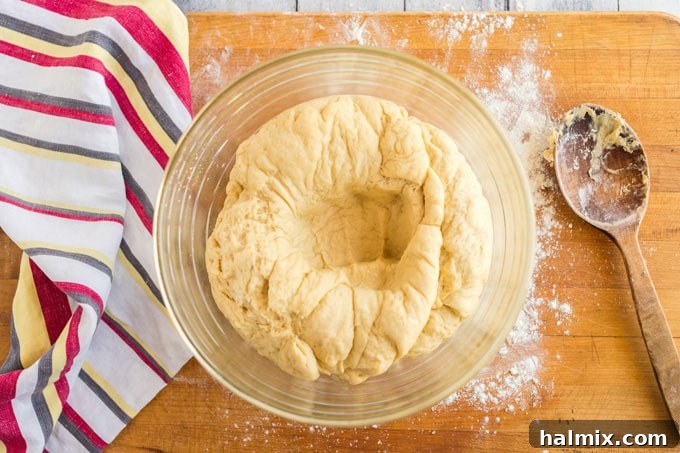
- Second Rise: Gently “punch down” the risen dough to release the accumulated gases. This redistributes the yeast and nutrients, leading to a finer texture and enhanced flavor. Cover the dough again with the kitchen towel and let it rise for another 45-60 minutes. This second rise is crucial for developing a richer flavor and a more tender crumb.
- Preheat Oven and Stone: While your dough is undergoing its second rise, place a pizza stone (or a heavy-duty baking sheet) into a cold oven. Turn the oven on and preheat it to 425°F (220°C). It is absolutely essential for the pizza stone to be thoroughly preheated to achieve a crispy crust, so allow it to heat up for at least 45-60 minutes before you plan to bake your pizza. This intense initial heat will mimic a professional pizza oven.
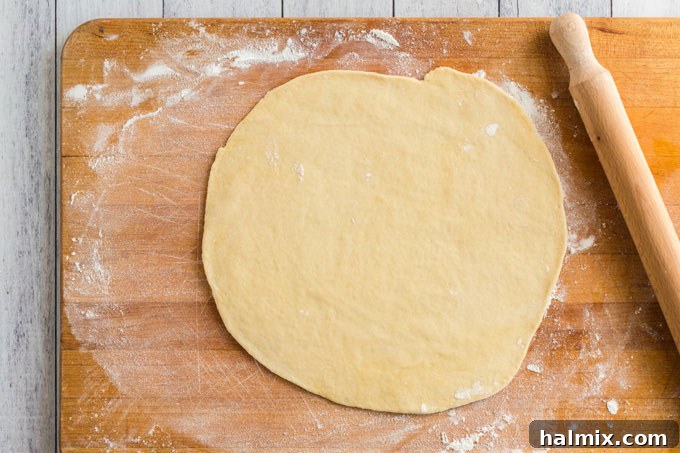
- Roll Out the Dough: Once the dough has completed its second rise, transfer it to a lightly floured surface. Using a rolling pin, roll out the dough to your desired thickness and shape. Whether you prefer a thin, crispy crust or a thicker, chewier one is entirely up to your personal taste. I typically suggest aiming for a thickness between 1/4 inch and 1/2 inch for a balanced texture.
- Prepare for Transfer: Generously sprinkle your pizza peel* with cornmeal. Carefully transfer the rolled-out pizza dough onto the cornmeal-dusted peel. The cornmeal creates a low-friction surface that is vital for smoothly sliding your prepared pizza from the peel directly onto the scorching hot pizza stone in the oven.
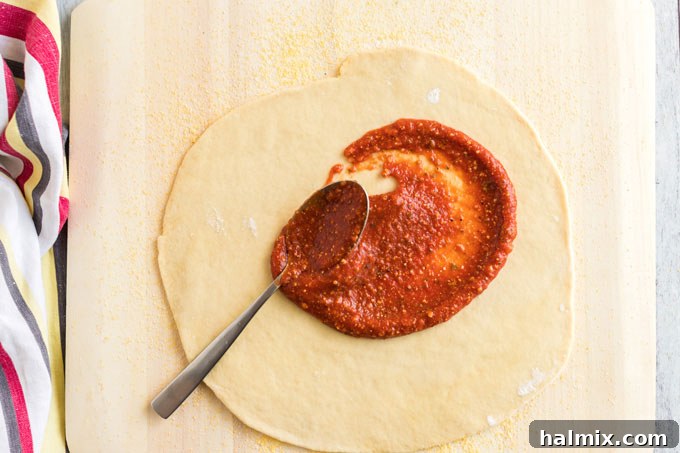
- Add Toppings: Now comes the fun part! Spread your favorite pizza sauce evenly over the dough, leaving a small border for the crust. Layer with your preferred cheeses, then add all your delicious toppings. Be mindful not to overload the pizza, as too many toppings can make the crust soggy and difficult to cook evenly.
- Bake Your Pizza: With a swift and confident motion, slide the pizza off the peel and directly onto the preheated pizza stone or pan in the oven. Close the oven door quickly to retain heat.
- Baking Time: Bake for 10-14 minutes. The exact baking time will vary depending on the thickness of your dough, the moisture content of your toppings, and your oven’s specific characteristics. Look for a golden-brown crust and bubbling, melted cheese with slightly charred edges.
- Dough Preparation: The pizza dough can be made earlier in the day or even the day before you plan to bake. After its second rise, simply punch it down, shape it into a ball, and wrap it tightly in plastic wrap. Refrigerate it until you’re ready to use it. Just remember to bring it back to room temperature for about 30-60 minutes before rolling it out.
- Topping Prep: Save time on the actual pizza-making day by preparing your toppings in advance. Chop all your vegetables (onions, bell peppers, mushrooms, etc.) and shred your cheese. Store them in airtight containers in the refrigerator.
- Sauce and Meat: If you’re using homemade sauces or meats, these can also be prepared ahead. Make your pizza sausage and pizza sauce days prior and store them in the fridge or even freeze them for longer storage.
- Can I freeze pizza dough? Yes, you can! After the first rise, punch down the dough, divide it into individual portions, and shape them into balls. Lightly oil each ball, then wrap tightly in plastic wrap and place in a freezer-safe bag. It can be frozen for up to 1-2 months. Thaw overnight in the refrigerator, then bring to room temperature before rolling out and baking.
- Why is my pizza crust not crispy? Several factors contribute to a less-than-crispy crust. Ensure your oven and pizza stone/steel are fully preheated for at least 45-60 minutes before baking. A very hot surface provides an initial burst of heat that crisps the bottom. Also, avoid overloading your pizza with too many wet toppings, as excess moisture can steam the crust instead of crisping it.
- What kind of flour is best for pizza dough? Bread flour is generally recommended because its higher protein content develops more gluten, leading to a chewier, more elastic crust. While all-purpose flour can work, the texture won’t be quite the same. The addition of semolina flour in this recipe further enhances the crust’s unique texture.
- How do I know if my yeast is active? When you combine yeast with warm water and a little sugar (like honey), it should become foamy or bubbly within 5-10 minutes. If there’s no activity, your yeast might be expired or the water temperature was incorrect. It’s best to start with fresh yeast.
- Can I make this dough without a food processor? Absolutely! You can mix the ingredients in a large bowl and knead the dough by hand on a floured surface for about 8-10 minutes until it’s smooth and elastic. The food processor simply speeds up the initial mixing and kneading process.
- 3 cups bread flour
- ½ cup semolina flour
- 1 cup warm water
- 2 tablespoons yeast
- 2 tablespoons honey
- ¼ cup olive oil
- ½ teaspoon salt
- ¼ cup cornmeal
-
Pour warm water into food processor. The water should be about 85 to 115° F.
-
Add the honey and salt. Mix on low for about 20 seconds.
-
Add the yeast and mix on low for another 5 seconds.
-
Add 1 cup of bread flour and all semolina flour, mix on low for 10 seconds.
-
Add the olive oil and mix until blended (about 15 or 20 seconds more).
-
Add the rest of the flour and process for about a minute or two. The dough should turn into a ball and roll around the processor. If the dough does not ball up because it’s too dry, add water one tablespoon at a time until it does. If your mixture is more like a batter, add flour one tablespoon at a time. Adding water or flour as needed to get the right consistency will assure you always get a perfect dough. Just remember to do it in small amounts.
-
Once the dough is balled up, place the ball on a floured board and knead for about a minute. This builds the gluten which helps the dough to rise and become fluffy when cooked. Place the dough in a covered bowl in a warm, dry area to rise.
-
After about 45 minutes the dough should have about doubled in size.
-
Punch down the dough, cover, and let it rise for another 45-60 minutes.
-
While the dough is rising, place a pizza stone or high heat pizza pan in a cold oven. Preheat the oven to 425F. The oven needs to be good and hot, so preheat it about 45-60 minutes before adding the pizza.
-
Once risen, roll out the dough on a lightly floured surface. How thick or thin you make it depends on your tastes. We suggest between 1/4″ and 1/2″.
-
Sprinkle a pizza peel with cornmeal and transfer rolled dough to the peel. The cornmeal helps slide the pizza off the peel and onto the pan in the oven.
-
Add sauce, cheese, and toppings. Slide pizza off the peel onto pan or stone in the oven. Bake for 10-14 minutes depending on the thickness of your dough.
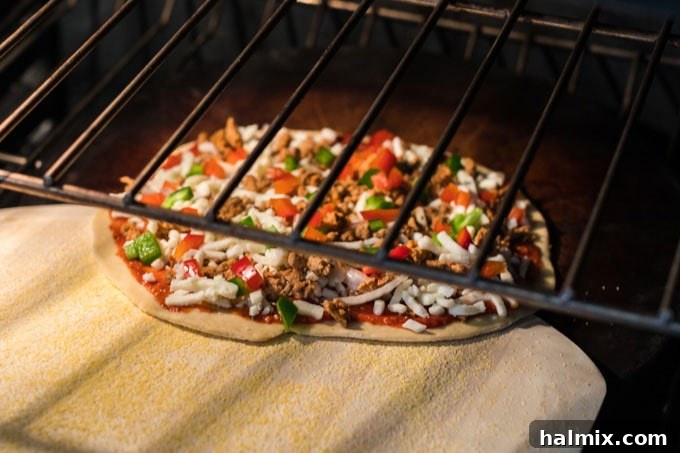
*Here’s a helpful tip – if you don’t own a dedicated pizza peel, the round glass turntable tray from your microwave can serve as an excellent substitute for transferring your pizza!
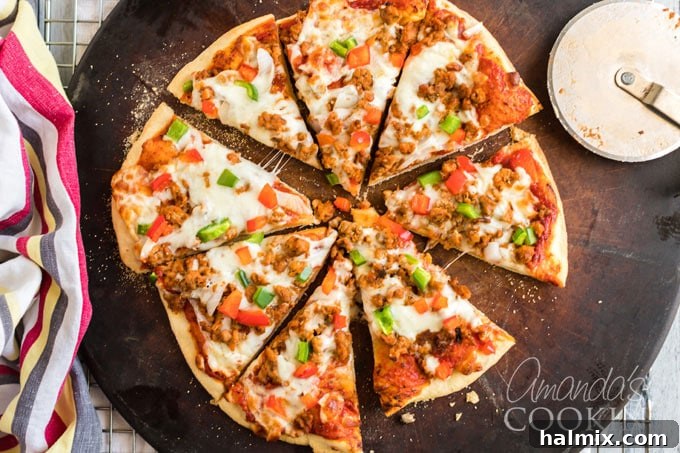
Preparing Ahead: Smart Tips for Busy Bakers
One of the many advantages of making homemade pizza is the flexibility it offers for meal planning and preparation. You can get a head start on several components, making pizza night even more convenient:
For those seeking a lighter, low-carb alternative, be sure to explore my recipe for cauliflower pizza crust, offering a delicious and healthier twist.
Frequently Asked Questions About Homemade Pizza Dough

Homemade Dough
IMPORTANT – There are often Frequently Asked Questions within the blog post that you may find helpful. Simply scroll back up to read them!
Print It
Rate It
Ingredients
Before You Begin
Instructions
Nutrition
The recipes on this blog are tested with a conventional gas oven and gas stovetop. It’s important to note that some ovens, especially as they age, can cook and bake inconsistently. Using an inexpensive oven thermometer can assure you that your oven is truly heating to the proper temperature. If you use a toaster oven or countertop oven, please keep in mind that they may not distribute heat the same as a conventional full sized oven and you may need to adjust your cooking/baking times. In the case of recipes made with a pressure cooker, air fryer, slow cooker, or other appliance, a link to the appliances we use is listed within each respective recipe. For baking recipes where measurements are given by weight, please note that results may not be the same if cups are used instead, and we can’t guarantee success with that method.
This recipe was originally published here on December 12, 2008. We have since updated the content and images to provide an even better user experience.