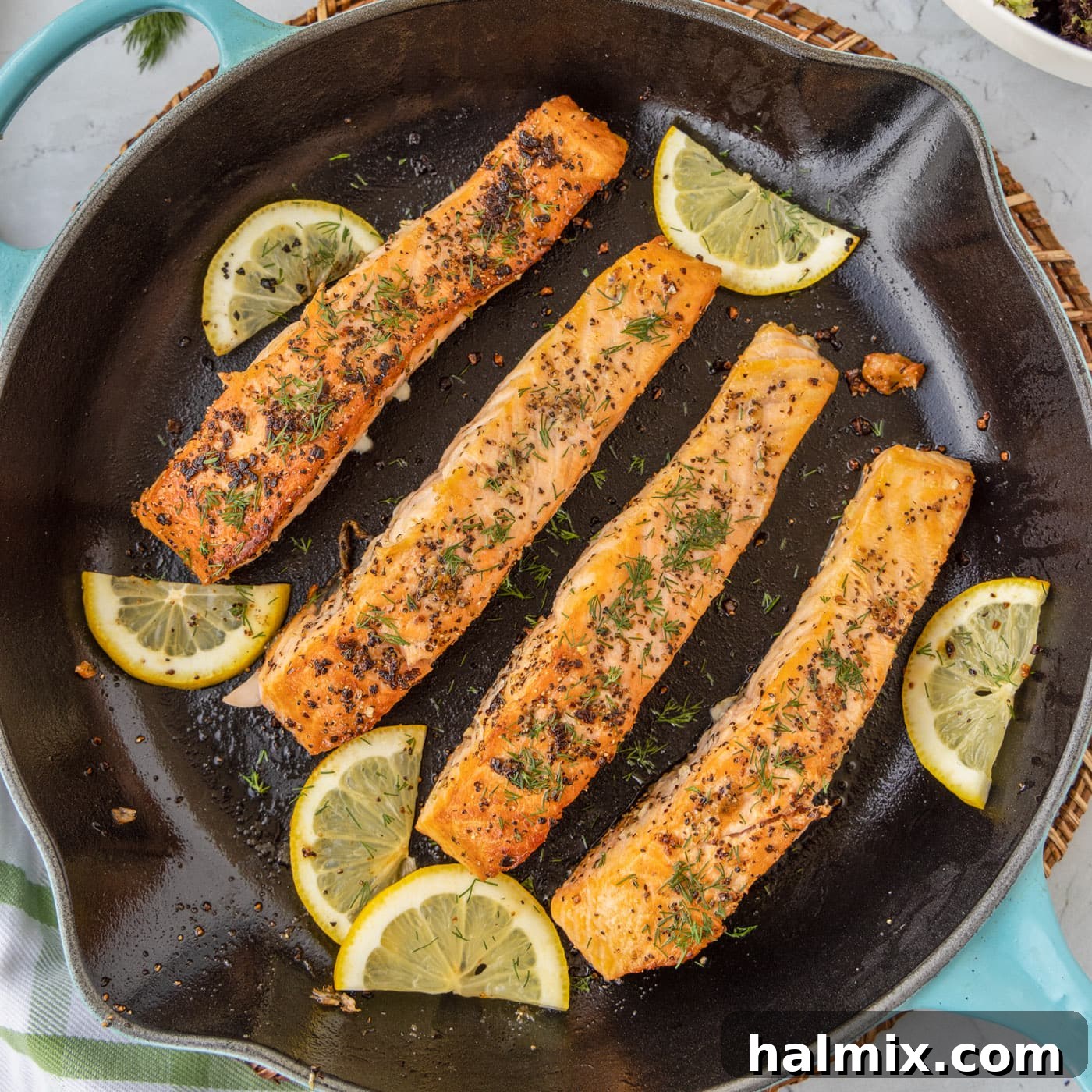
Unlock the secret to a perfectly cooked salmon filet with this incredibly simple yet utterly delicious pan-seared salmon recipe. In just about 10 minutes, you can transform fresh salmon into a culinary masterpiece, boasting a delicate golden-brown crust on the outside and a succulent, flaky, melt-in-your-mouth interior. This method highlights the natural richness of the fish, proving that gourmet flavors don’t always require complex techniques or a long list of ingredients. Whether you’re a seasoned chef or a kitchen novice, achieving restaurant-quality salmon at home has never been easier.
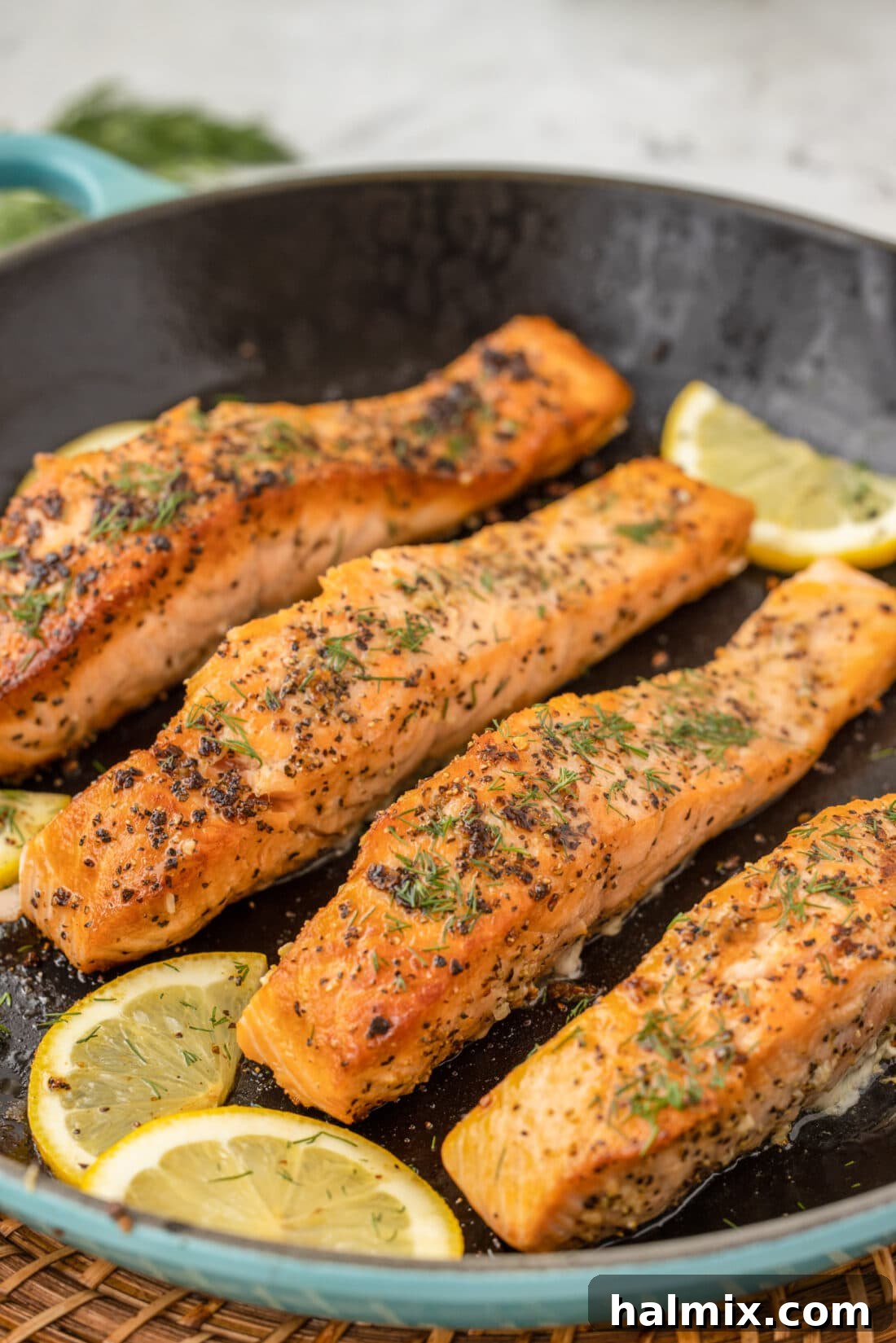
Why This Pan-Seared Salmon Recipe Is a Must-Try
Sometimes, the best recipes are those that keep things simple, allowing the quality of the main ingredient to truly shine. This pan-seared salmon recipe is a prime example. It masterfully showcases the exquisite flavor and texture of fresh salmon with a minimalist approach, requiring only five core ingredients: quality olive oil, a pinch of salt, a dash of pepper, and aromatic minced garlic. This simple seasoning blend enhances the natural taste of the salmon without overpowering it, making it an ideal choice for a quick weeknight dinner or an elegant meal for guests.
Beyond its straightforward preparation, this recipe offers numerous advantages. Pan-searing creates an incredible contrast in textures – a wonderfully crisp skin and a tender, moist flesh that practically falls apart with a fork. It’s also an incredibly fast cooking method, perfect for busy evenings when you want a healthy, satisfying meal without spending hours in the kitchen. The high heat of the skillet locks in the salmon’s juices, ensuring every bite is bursting with flavor and beneficial omega-3 fatty acids.
We absolutely adore salmon and its incredible versatility. From baking it to perfection in the oven to grilling it on a cedar plank for a smoky aroma, or even poaching it for a delicate touch, there are countless ways to enjoy this nutritious fish. However, pan-searing stands out as one of the quickest and most rewarding methods, consistently delivering exceptional results. While the minimalist approach is fantastic, don’t hesitate to elevate it further with a drizzle of a luxurious rosemary cream sauce or a squeeze of fresh lemon for an extra layer of brightness.
Salmon is not just delicious; it’s a nutritional powerhouse. Rich in omega-3 fatty acids, it supports heart health, brain function, and can reduce inflammation. It’s also an excellent source of lean protein, essential vitamins (like D and B12), and minerals (like selenium and potassium). Incorporating salmon into your diet regularly can contribute significantly to a balanced and healthy lifestyle. This pan-seared method ensures that these valuable nutrients are preserved, offering a meal that is as good for you as it is delicious.
Essential Ingredients for Perfect Pan-Seared Salmon
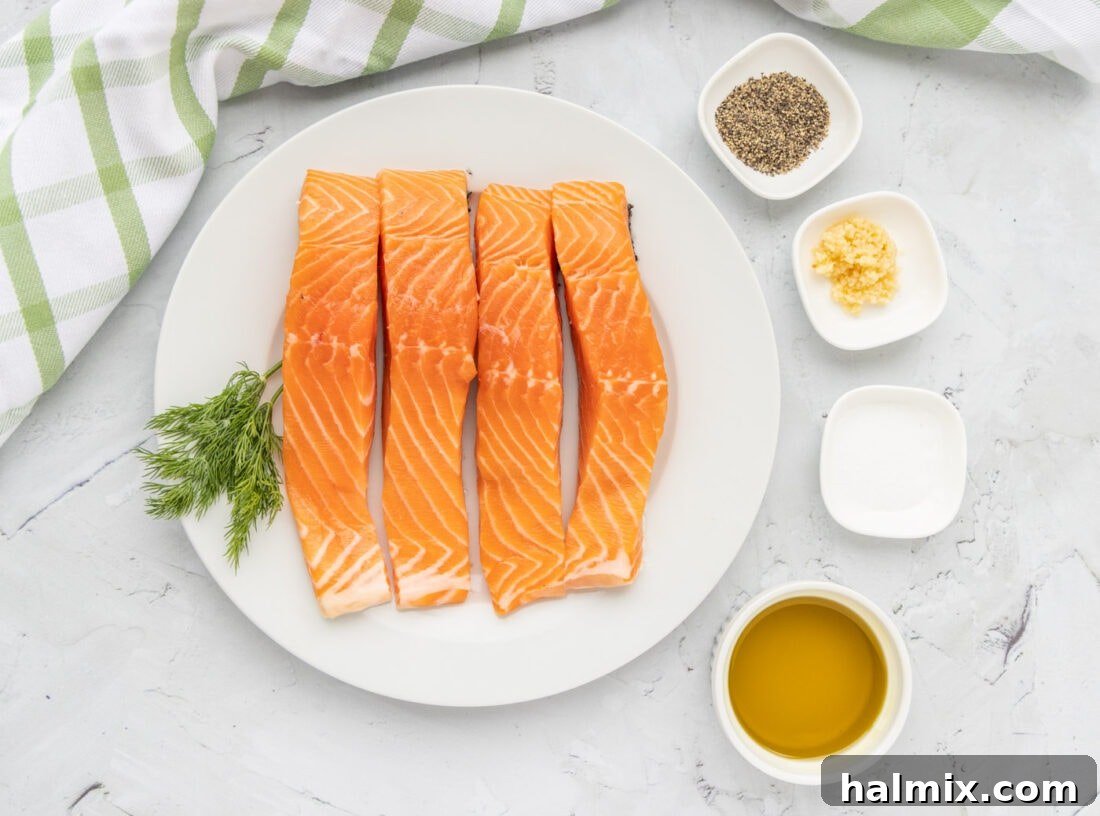
Crafting this phenomenal pan-seared salmon requires just a handful of fresh ingredients, allowing the natural goodness of the fish to truly shine. Each component plays a vital role in creating that desirable golden crust and a flavorful, tender interior. Here’s a detailed look at what you’ll need to prepare this delightful dish.
Ingredient Spotlight & Expert Substitution Tips
Understanding each ingredient and knowing how to make smart substitutions can elevate your cooking experience and ensure a successful outcome every time. Here’s a closer look at the components of this recipe:
- SALMON: We recommend using 1 ½ pounds of center-cut salmon, divided into four approximately 6-ounce fillets. Center-cut portions are often thicker and cook more evenly. When selecting salmon, look for vibrant, moist flesh without any browning or strong fishy odor. The skin should be intact and shiny. If fresh center-cut salmon is hard to find, readily available 6-ounce fillets from your grocery store’s seafood counter will work perfectly. Always aim for wild-caught salmon if possible, such as Sockeye, Coho, or Chinook, for superior flavor and nutritional benefits. Atlantic salmon is also a popular and widely available choice, though it’s often farmed. Before cooking, it’s crucial to bring your salmon fillets to room temperature for about 15-20 minutes. This practice ensures more even cooking and helps achieve that desired flaky texture from edge to edge. If starting with frozen salmon, thaw it completely in the refrigerator overnight, then pat it very dry with paper towels before seasoning.
- OLIVE OIL: A good quality extra virgin olive oil is ideal for its flavor, but for searing, a lighter olive oil or even an avocado oil with a higher smoke point can be used. You’ll divide the oil: a small amount for the rub and the rest for searing in the skillet.
- SALT & PEPPER: These foundational seasonings are non-negotiable. We use ½ teaspoon of salt and ½ teaspoon of black pepper. Fine sea salt or Kosher salt are excellent choices. Freshly ground black pepper will always offer more aroma and flavor than pre-ground. These create a simple yet effective crust.
- MINCED GARLIC: ½ tablespoon of freshly minced garlic infuses the salmon with a subtle, aromatic depth. Fresh garlic is always preferred for its potent flavor. If you don’t have fresh garlic, you can substitute with about ½ teaspoon of garlic powder, mixed directly into the rub.
- RUB ENHANCEMENTS: To introduce an herbal note, consider adding ½ tablespoon of fresh, finely chopped herbs to your rub mixture. Dill and rosemary are classic pairings for salmon, but fresh thyme, parsley, or chives would also be delightful. For a little heat, a pinch of cayenne pepper or smoked paprika can add a delicious twist. A touch of lemon zest mixed into the rub can also brighten the overall flavor.
Mastering Pan-Seared Salmon: A Step-by-Step Guide
These step-by-step photos and detailed instructions are designed to help you visualize each stage of making this incredibly satisfying pan-seared salmon. For a printable version of this recipe, complete with precise measurements and comprehensive instructions, please refer to the recipe card located further down the page.
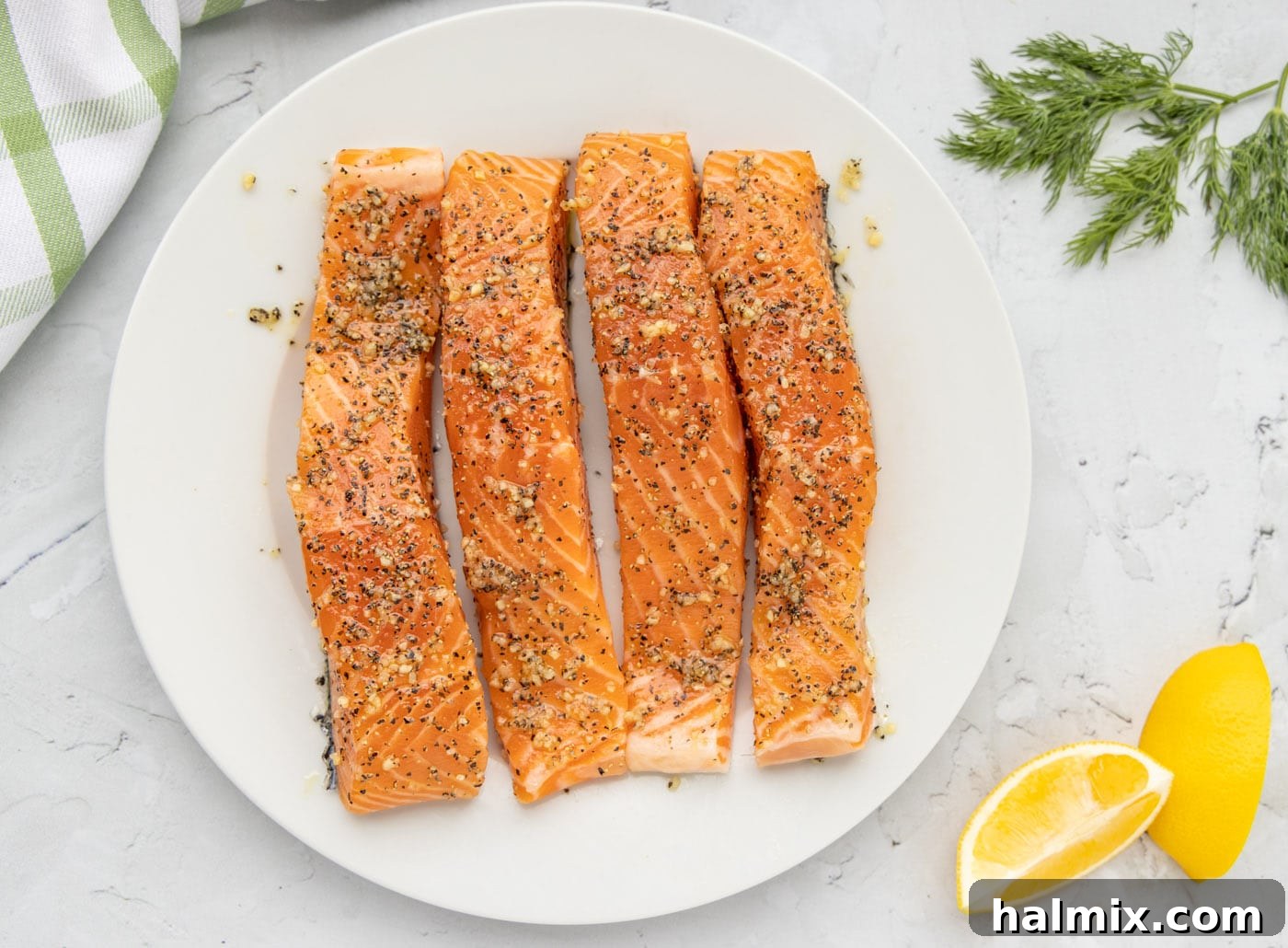
- Prepare the Seasoning Rub: In a small bowl, combine the salt, black pepper, and minced garlic with 1 teaspoon of the olive oil. Mix these ingredients thoroughly to form a cohesive paste. This paste ensures the flavors adhere beautifully to the salmon.
- Season the Salmon Fillets: Gently rub the prepared seasoning paste evenly over all sides of your salmon fillets. Pay particular attention to the flesh side, ensuring it’s well coated. Patting the salmon dry with paper towels before applying the rub is crucial for achieving a crispy skin later on.
- Heat the Skillet to Perfection: Place a heavy-bottomed skillet (cast iron or stainless steel works best for searing) over medium-high heat. Add the remaining olive oil to the pan. Heat the oil until it is shimmering but not smoking. A properly hot skillet is key to developing that beautiful golden crust and preventing the fish from sticking. If your pan is not hot enough, the salmon will steam rather than sear, resulting in a less desirable texture.
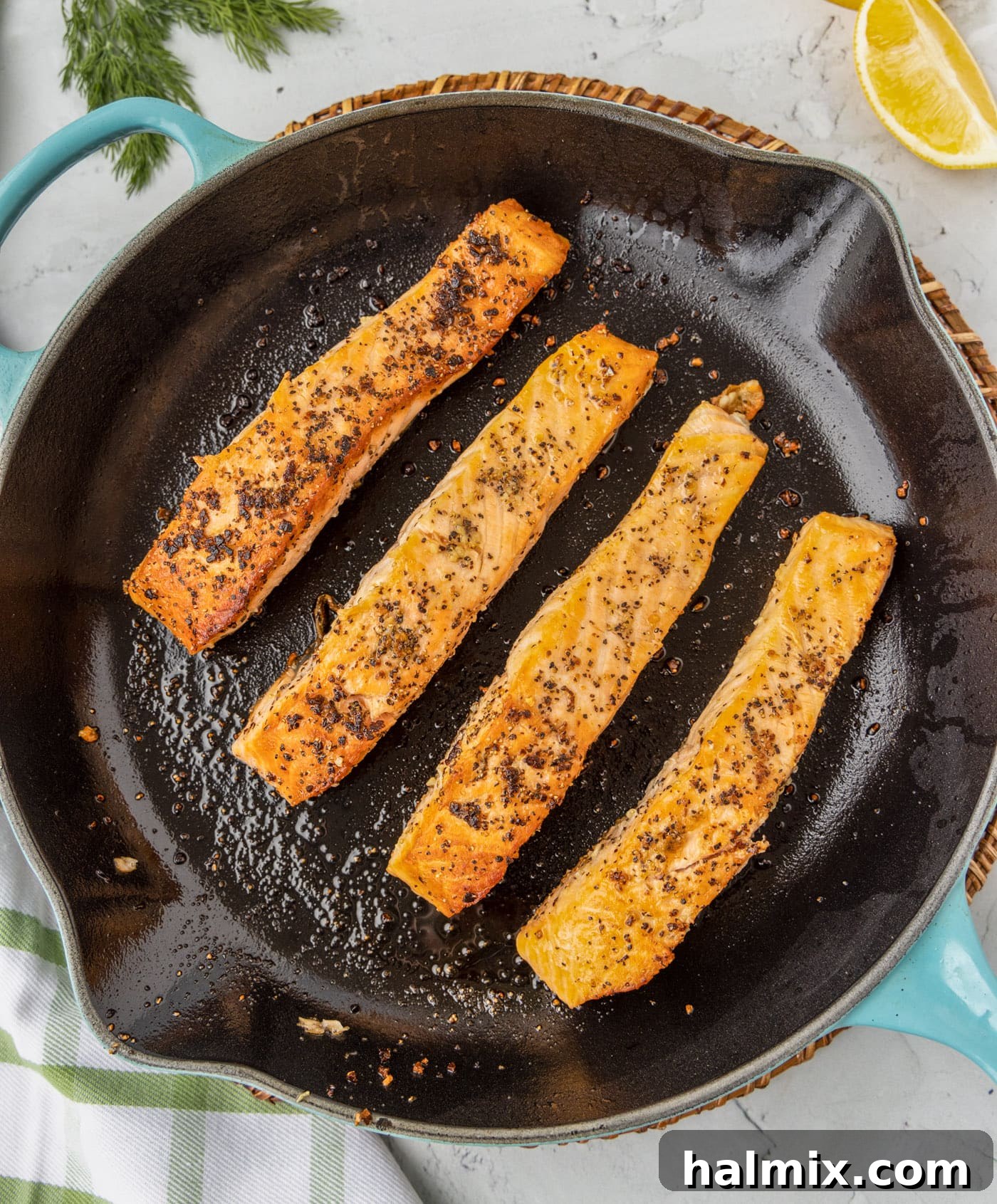
- First Sear (Flesh Side Down): Carefully place the salmon fillets into the hot skillet, flesh side down. Cook for 3-4 minutes without moving them. This initial sear on the flesh side is essential for creating the signature golden-brown crust. Resist the urge to move or peek at the fillets during this stage; allowing them to sit undisturbed ensures optimal browning.
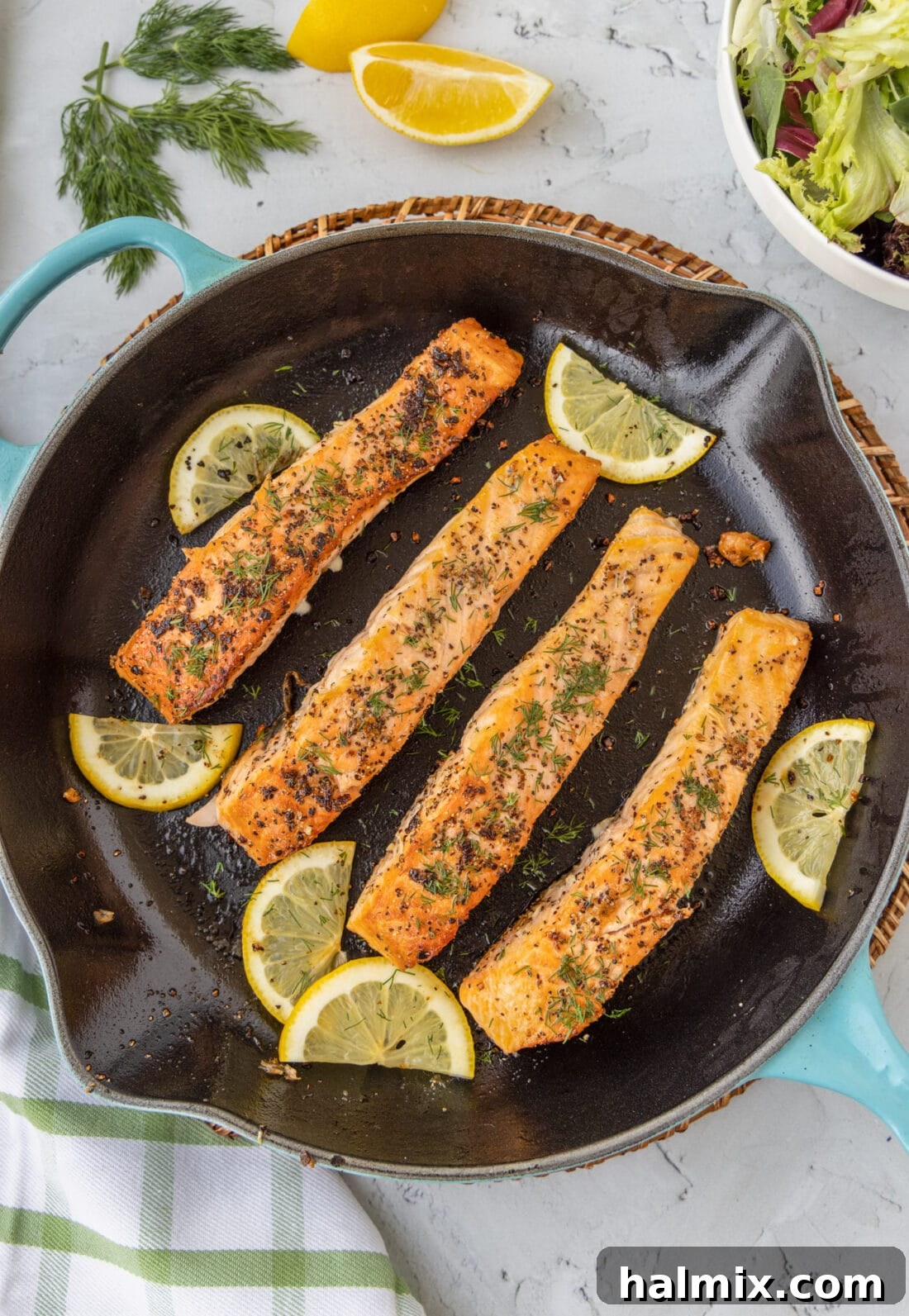
- Second Sear (Skin Side Down) & Cook Through: Gently turn the fillets over, so they are now skin side down. Continue to cook for another 3-4 minutes, or until the flesh turns an opaque pink and flakes easily with a fork. Cooking skin-side down allows the skin to crisp up beautifully while the internal temperature of the fish reaches its perfect doneness. If your fillets are thicker, they might require an additional minute or two of cooking.
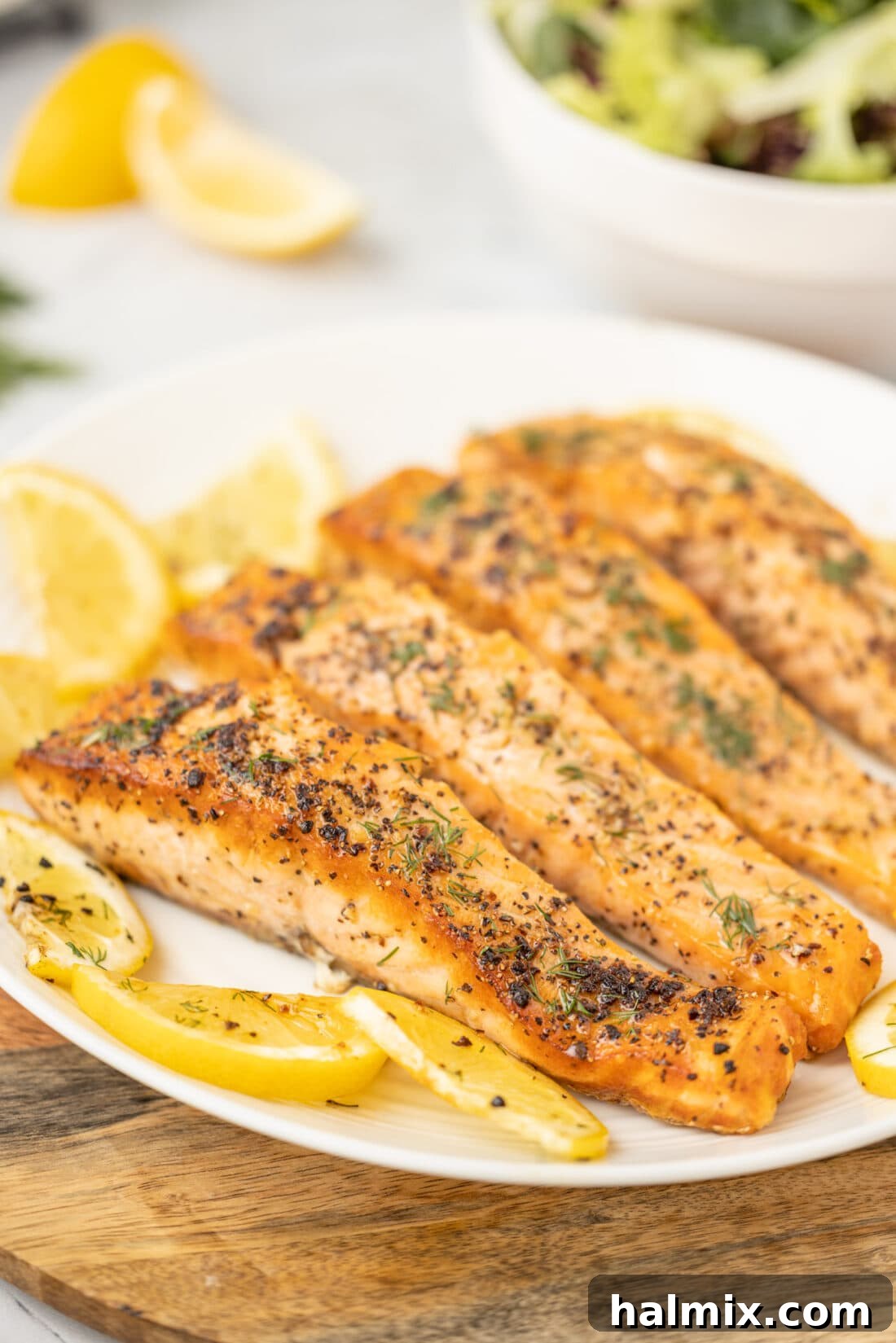
- Serve Immediately: Once cooked to your liking, remove the pan-seared salmon from the skillet and serve immediately. A brief resting period (1-2 minutes) can help the juices redistribute, resulting in an even more succulent fish.
Frequently Asked Questions & Expert Tips for Pan-Seared Salmon
At what temperature is salmon done cooking?
Salmon is considered perfectly cooked when it reaches an internal temperature of 145°F (63°C) as measured by an instant-read thermometer inserted into the thickest part of the fillet. Visually, the flesh should turn opaque pink throughout and flake easily when gently pressed with a fork. While 145°F is the FDA recommendation, some chefs prefer to pull salmon off the heat around 135-140°F (57-60°C), as it will continue to cook slightly from residual heat (carryover cooking) to a perfect medium-rare, which can be incredibly moist and tender. Experiment to find your preferred doneness, but always err on the side of slightly undercooked rather than overcooked, as dry salmon is a common pitfall.
How do I store leftovers?
Leftover pan-seared salmon should be stored in an airtight container in the refrigerator for up to 2 days. To reheat, gently warm it in a skillet over low heat, or in an oven preheated to 275°F (135°C) for about 10-15 minutes, or until just warmed through. Avoid high heat when reheating, as this can dry out the fish. Leftover salmon is also fantastic when flaked and added cold to salads, sandwiches, or even turned into salmon cakes.
What kind of pan is best for pan-searing salmon?
For achieving the best sear and a crispy skin, a heavy-bottomed skillet is essential. Cast iron skillets are highly recommended due to their excellent heat retention and ability to reach very high temperatures, creating an exceptional crust. Stainless steel skillets are another great option. Non-stick pans can also be used, but they might not achieve the same level of browning and crispiness as cast iron or stainless steel. Regardless of the pan type, ensure it’s large enough so the salmon fillets don’t overcrowd the pan; leave some space between them to allow for proper searing.
Should I remove the salmon skin before cooking?
Whether to remove the skin is a matter of personal preference. Keeping the skin on offers several benefits: it acts as a protective layer, helping the fish retain moisture and preventing it from sticking to the pan. When cooked properly, the skin becomes wonderfully crispy and edible, adding a delightful texture. Many people enjoy the crispy skin as part of the meal. If you prefer to remove it, you can do so before or after cooking. If removing before, be gentle as the flesh can be delicate.
How do I prevent salmon from sticking to the pan?
Preventing sticking involves a few key steps. First, ensure your salmon fillets are patted completely dry with paper towels before seasoning. Moisture is the enemy of a good sear and causes sticking. Second, use a heavy-bottomed skillet (like cast iron or stainless steel) and heat it properly until the oil is shimmering. Adding the fish to a cold or insufficiently heated pan greatly increases the chances of sticking. Lastly, once the fish is in the pan, resist the urge to move it for the first few minutes. Let it develop a crust – this crust will naturally release the fish from the pan when it’s ready to be flipped.
Can I use frozen salmon for this recipe?
Absolutely! Frozen salmon can be used, but proper thawing is crucial. Transfer the frozen fillets from the freezer to the refrigerator the night before you plan to cook them, allowing them to thaw slowly. Alternatively, you can use the cold water thawing method: place the sealed salmon in a bowl of cold water, changing the water every 30 minutes until thawed. Once thawed, pat the fillets extremely dry with paper towels before seasoning and cooking, as excess moisture will hinder the searing process.
Delectable Serving Suggestions for Pan-Seared Salmon
Pan-seared salmon is incredibly versatile, making it an ideal centerpiece for a wide array of side dishes. Its rich flavor pairs wonderfully with both light and hearty accompaniments. Here are some ideas to complete your meal:
- Sauces and Garnishes: While delicious on its own, a simple squeeze of fresh lemon juice brightens the flavor. Consider a drizzle of rosemary cream sauce for a luxurious touch, a vibrant fresh dill sauce, a simple garlic-herb butter, or a tangy caper-lemon sauce. Fresh chopped parsley or dill can also add a beautiful pop of color and herbaceousness.
- Vegetable Pairings:
- Green Vegetables: Roasted asparagus, sautéed green beans with garlic, steamed broccoli or broccolini, or a simple side salad with a light vinaigrette.
- Root Vegetables: Roasted baby potatoes, creamy mashed potatoes, or glazed carrots offer a comforting balance.
- Leafy Greens: A bed of wilted spinach or kale provides a healthy and delicious foundation.
- Grains and Starches:
- Rice: Fluffy white rice, nutty brown rice, or a flavorful lemon-herb couscous.
- Quinoa: A protein-packed quinoa salad with mixed vegetables.
- Pasta: A light pasta dish with cherry tomatoes and basil, or a creamy Alfredo for a richer meal.
- Salads: A refreshing Mediterranean salad with cucumbers, tomatoes, and olives, or a crisp Caesar salad, can complement the salmon beautifully. For a heartier option, flake the salmon and serve it over a power bowl with mixed greens, avocado, and a variety of fresh vegetables.
- Wine Pairings: For an elevated dining experience, pair your pan-seared salmon with a crisp white wine such as Sauvignon Blanc, Pinot Grigio, or an unoaked Chardonnay. Rosé also makes a delightful pairing, especially in warmer months.
No matter how you choose to serve it, enjoy this exquisite pan-seared salmon warm, savoring every tender, flavorful bite.
Explore More Delicious Salmon Creations
If you’ve fallen in love with salmon, you’ll be thrilled to discover the incredible variety of ways this versatile fish can be prepared. Here are some of our other favorite salmon recipes to inspire your next meal:
- Salmon Tacos
- Maple Soy Salmon
- Instant Pot Salmon
- Smoked Salmon Dip
- Dijon Lemon Caper Salmon
- Blackened Salmon
- Salmon Croquettes
I love to bake and cook and share my kitchen experience with all of you! Remembering to come back each day can be tough, that’s why I offer a convenient newsletter every time a new recipe posts. Simply subscribe and start receiving your free daily recipes!
Pan Seared Salmon
Pan-fried salmon delivers a perfectly crisp exterior with a tender and flaky interior that melts in your mouth and cuts with a fork like butter. This quick and easy method ensures a delicious and healthy meal every time.
IMPORTANT – There are often Frequently Asked Questions within the blog post that you may find helpful. Simply scroll back up to read them!
Pin It
Rate It
Dinner
American
4 servings
20 mins
363
Amanda Davis
Ingredients
- 1 ½ pounds center cut salmon, cut into 4 filets (about 6 ounces each)
- ¼ cup olive oil, divided
- ½ teaspoon salt
- ½ teaspoon black pepper
- ½ Tablespoon minced garlic
Things You’ll Need
- Large skillet
Before You Begin
- Fish should be at room temperature to ensure even cooking.
- Skillet should be hot to provide a nice “crust”. You can turn the heat down a little if you like, just watch for doneness in the color.
- If you would like to incorporate an herb such as dill or rosemary, add 1/2 tablespoon of fresh herbs to the rub mixture.
- Salmon is considered cooked when it reaches 145F on an instant-read thermometer that’s been inserted into the thickest part of the filet.
Instructions
- Combine salt, pepper, minced garlic, and 1 teaspoon of the olive oil.
- Rub paste all over salmon filets.
- Heat skillet over medium-high heat with remaining olive oil. Heat oil to shimmering but not smoking.
- Place filets into skillet flesh side down and cook for 3-4 minutes.
- Turn filets over, skin side down, and cook another 3-4 minutes or until flesh turns an opaque pink.
- Remove from skillet and serve.
Nutrition
Calories: 363cal |
Carbohydrates: 0.5g |
Protein: 34g |
Fat: 24g |
Saturated Fat: 4g |
Polyunsaturated Fat: 6g |
Monounsaturated Fat: 13g |
Cholesterol: 94mg |
Sodium: 366mg |
Potassium: 841mg |
Fiber: 0.1g |
Sugar: 0.01g |
Vitamin A: 69IU |
Vitamin C: 0.3mg |
Calcium: 24mg |
Iron: 1mg
Tried this Recipe? Pin it for Later!
Follow on Pinterest @AmandasCookin or tag #AmandasCookin!
The recipes on this blog are tested with a conventional gas oven and gas stovetop. It’s important to note that some ovens, especially as they age, can cook and bake inconsistently. Using an inexpensive oven thermometer can assure you that your oven is truly heating to the proper temperature. If you use a toaster oven or countertop oven, please keep in mind that they may not distribute heat the same as a conventional full sized oven and you may need to adjust your cooking/baking times. In the case of recipes made with a pressure cooker, air fryer, slow cooker, or other appliance, a link to the appliances we use is listed within each respective recipe. For baking recipes where measurements are given by weight, please note that results may not be the same if cups are used instead, and we can’t guarantee success with that method.