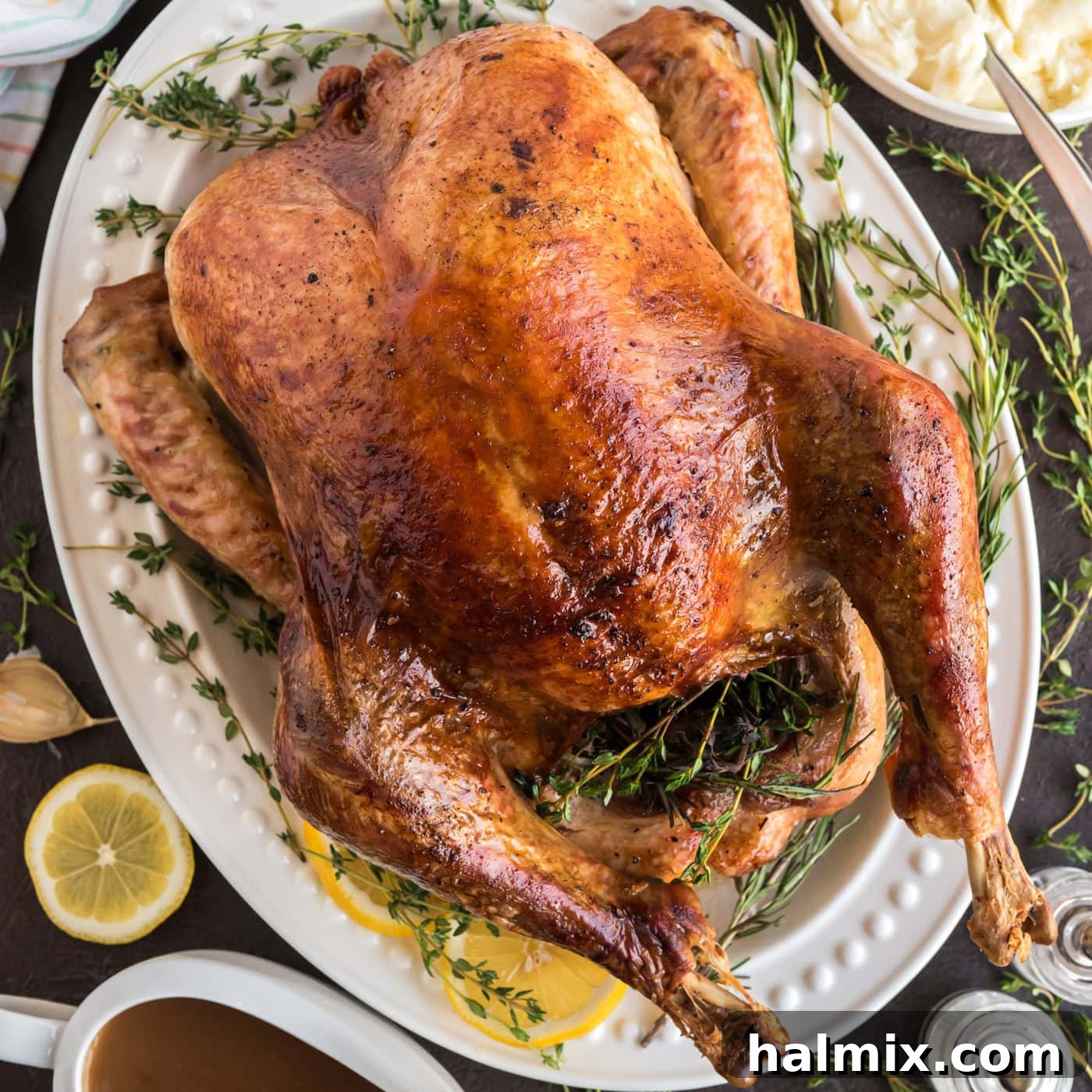
Effortless Golden Roasted Turkey: A Foolproof Recipe for Any Holiday
Unlock the secret to a perfectly roasted turkey with golden, crispy skin and incredibly juicy meat. This foolproof, easy-to-follow recipe is designed for both novice and experienced cooks, ensuring a spectacular centerpiece for your holiday table or any special gathering. Forget complicated techniques and endless ingredient lists – we focus on simple elements to deliver maximum flavor and an unforgettable dining experience.
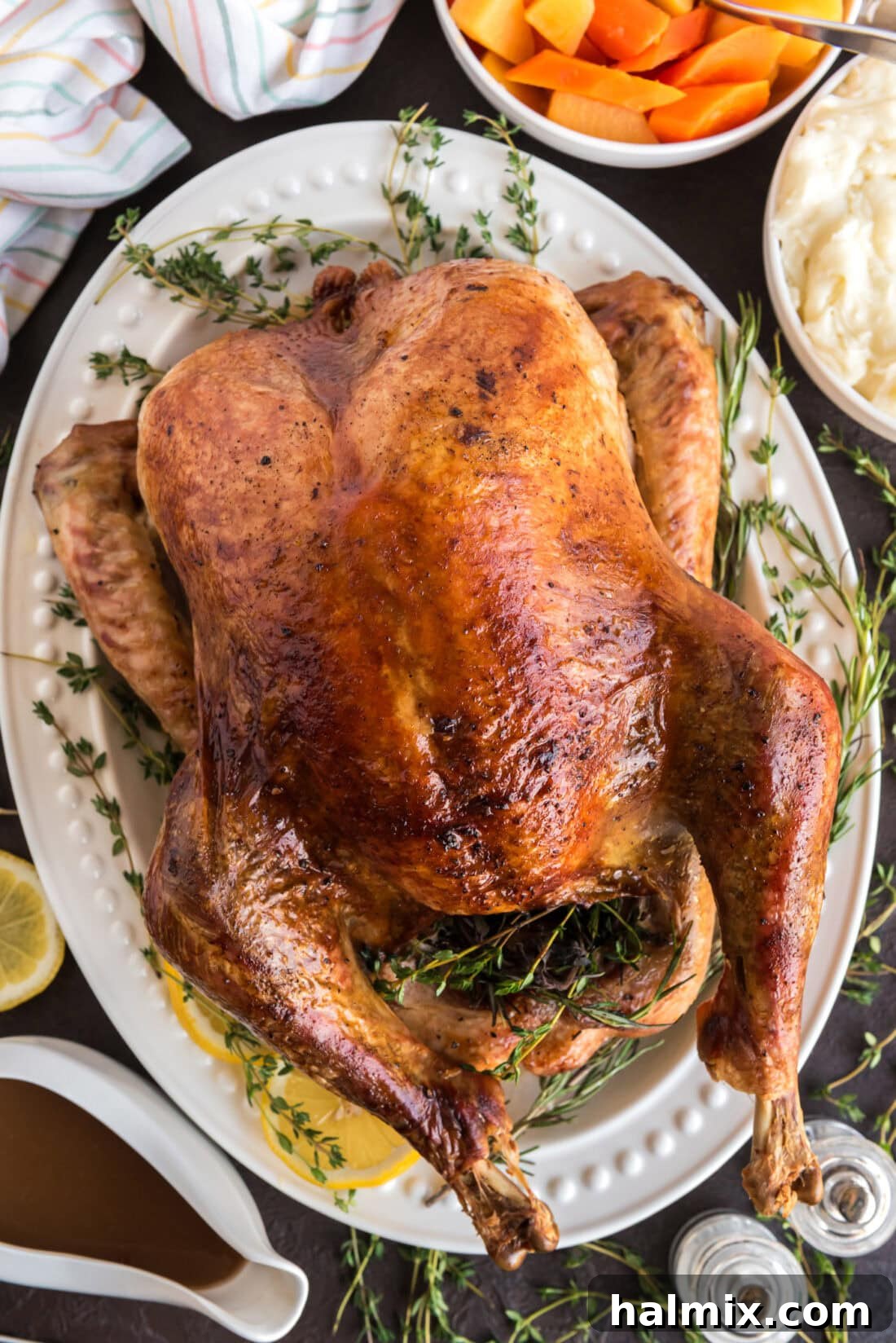
Why This Recipe Guarantees Success
Preparing a delicious roasted turkey doesn’t have to be a daunting task. This recipe simplifies the process, making it accessible to everyone while promising outstanding results. You’ll only need a handful of staple ingredients: rich butter, savory broth, a blend of salt and pepper, and your favorite aromatic herbs. These components work in harmony to infuse the turkey with incredible flavor, resulting in tender, moist meat and that highly sought-after crispy, golden-brown skin. What’s more, the flavorful pan drippings are a treasure, easily transformed into a rich, homemade turkey gravy that will elevate every bite. It’s a truly satisfying culinary endeavor.
Whether you’re hosting your first Thanksgiving dinner or simply looking for a stress-free turkey preparation, this guide covers all the essentials. We’ll walk you through crucial steps, including how to properly thaw your turkey, the ideal cooking temperature for safety and succulence, and exactly how long to roast it for perfection. Consider this your crash course in creating a show-stopping holiday roast with confidence.
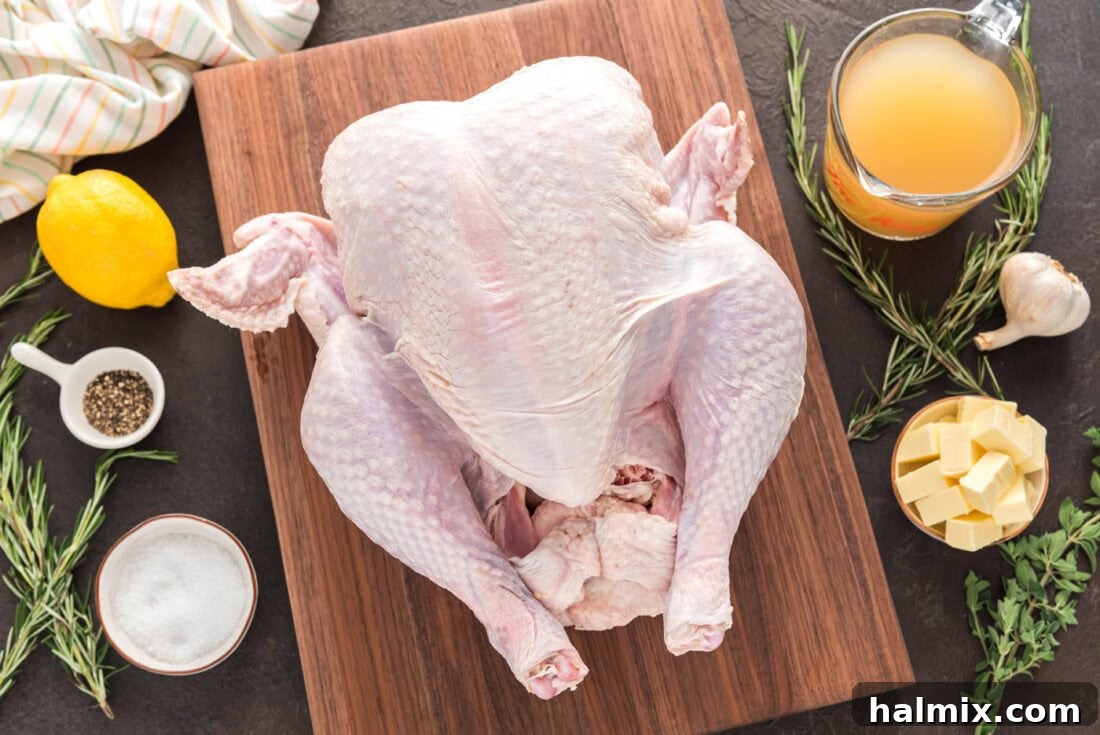
Essential Ingredients for Your Perfect Turkey
Gathering your ingredients is the first step towards a magnificent roasted turkey. This recipe calls for minimal items, focusing on quality to achieve the best flavor. While a detailed list with measurements is provided in the printable recipe card at the end of this post, here’s an overview of what you’ll need to prepare this delightful dish.
Ingredient Insight and Smart Substitution Tips
Understanding each ingredient’s role can make a significant difference in your roasting success. Here’s a closer look at the key components:
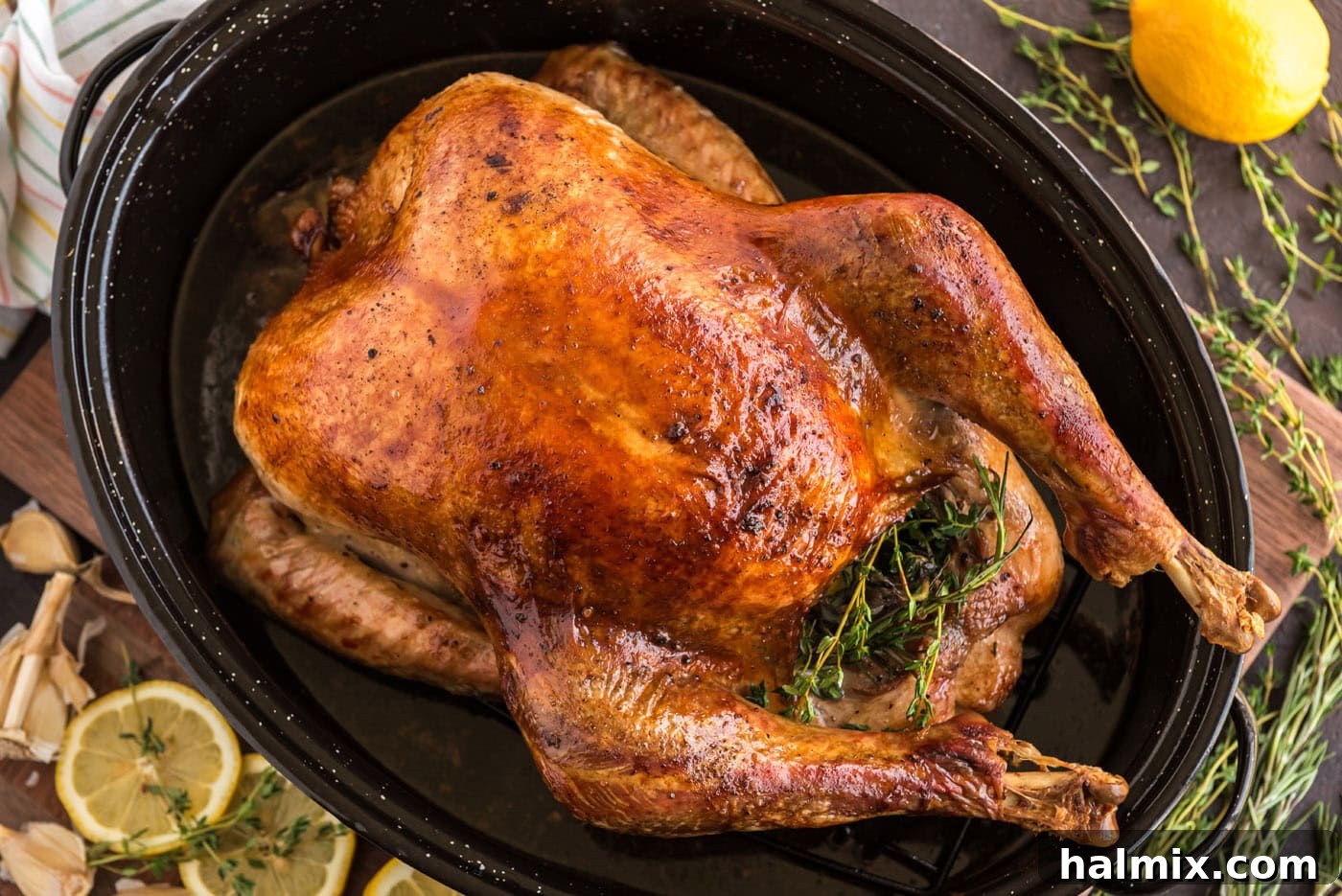
TURKEY: This recipe is ideally suited for a 13-14 pound whole turkey, with a maximum recommended size of 16 pounds. The golden rule for roasting an unstuffed turkey is to allow approximately 13 minutes of cooking time per pound. Use this simple metric to accurately calculate the roasting duration based on your turkey’s weight. For instance, our 14-pound turkey was perfectly cooked in just under 3 hours. It’s crucial not to truss the turkey legs; leaving the cavity open allows for better air circulation, which promotes more even cooking and helps achieve that desirable crispy skin. Remember to remove the giblets and neck from the cavity before you begin – you can save them for gravy or discard them.
BUTTER: We highly recommend using softened unsalted butter for rubbing all over the turkey. Butter is a game-changer for achieving that irresistible golden, crispy skin and adding a layer of rich flavor. However, if you prefer or need an alternative, good quality olive oil can be used as a substitute. While olive oil will still help crisp the skin, butter tends to impart a richer, more traditional roasted flavor.
BROTH/STOCK: Chicken or vegetable broth (or even water) added to the bottom of the roasting pan serves multiple purposes. It keeps the environment inside the oven moist, preventing the turkey from drying out. More importantly, it collects all those delicious turkey drippings, which are the fundamental base for an incredible homemade gravy. This liquid also helps to prevent scorching the bottom of the pan.
SALT AND PEPPER: Simple Kosher salt and freshly ground black pepper are all you truly need for seasoning. These basic seasonings enhance the turkey’s natural flavor without overpowering it. For an extra layer of complexity, you can use a peppercorn medley or even a seasoned salt blend, but always adjust to your taste preferences.
OPTIONAL AROMATICS: To further infuse your turkey with delightful aromas and flavors, consider adding ingredients like sliced lemon, fresh sprigs of rosemary and thyme, or minced garlic to the cavity. These aromatics contribute moisture and a fragrant depth that permeates the meat as it roasts, elevating the overall taste profile. While optional, they are highly recommended for a truly gourmet experience.
How to Prepare the Ultimate Roasted Turkey: Step-by-Step Guide
Follow these detailed steps to roast a turkey that will impress everyone at your table. The process is straightforward, focusing on techniques that guarantee a succulent, flavorful bird with perfectly crispy skin.
- Prepare Your Oven: Begin by preheating your oven to a high temperature of 450 degrees F (232 degrees C). Starting at a higher temperature helps the skin crisp up beautifully before you reduce the heat for the majority of the cooking time.
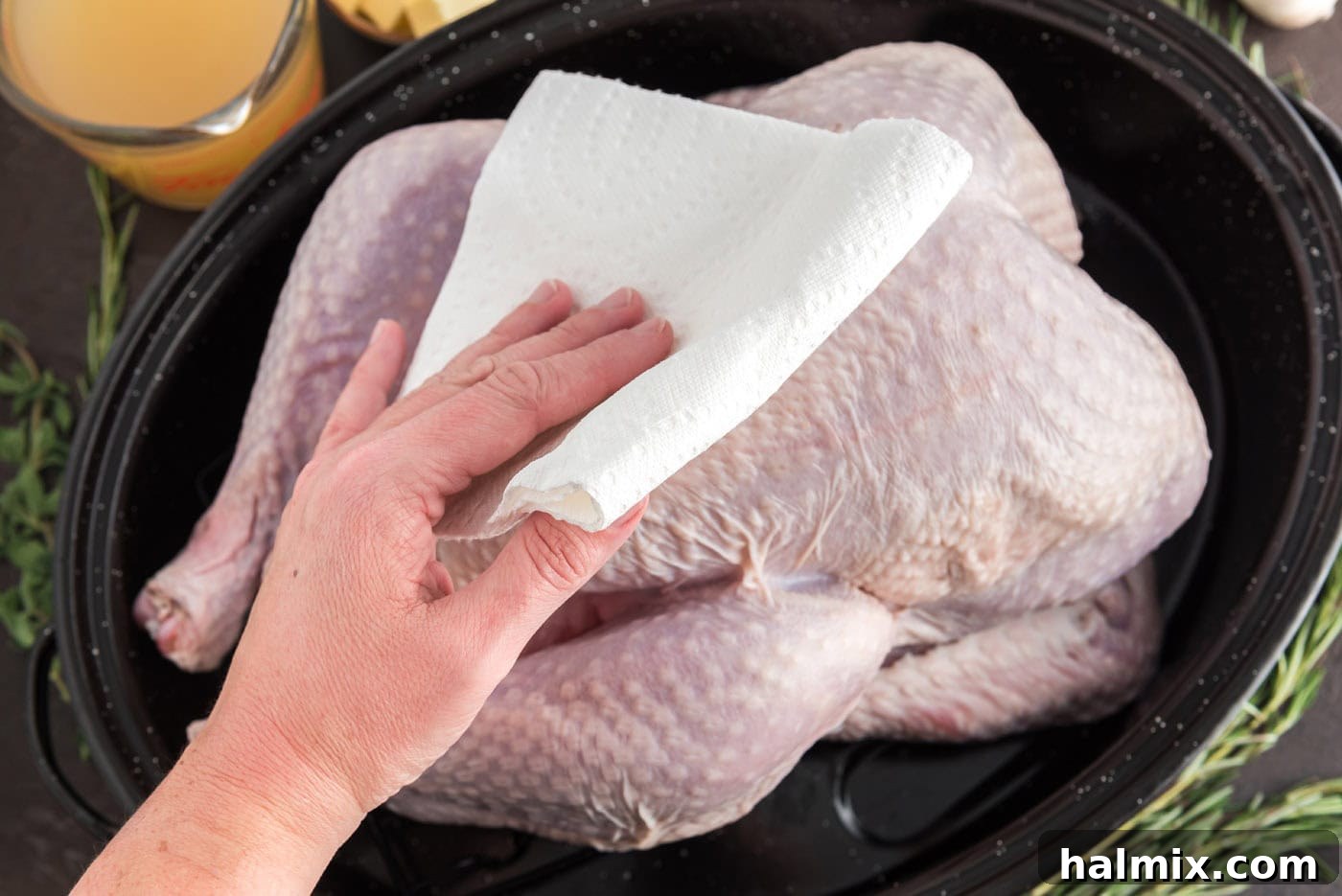
- Pat the Turkey Dry: Thoroughly pat the entire turkey, inside and out, with paper towels until it is completely dry. This step is crucial for achieving crispy skin. Excess moisture will steam the skin instead of allowing it to crisp. Discard the used paper towels immediately after.

- Prepare the Turkey and Roasting Pan: Place the dried turkey in a sturdy roasting pan. Ensure you have removed any giblets or the neck from the turkey’s cavity; you can either save these for making gravy or discard them. Tuck the wing tips behind the turkey’s shoulders to prevent them from burning and ensure even cooking. If you’re using optional aromatics like sliced lemon, fresh rosemary, thyme, or minced garlic, now is the time to place them inside the turkey cavity.
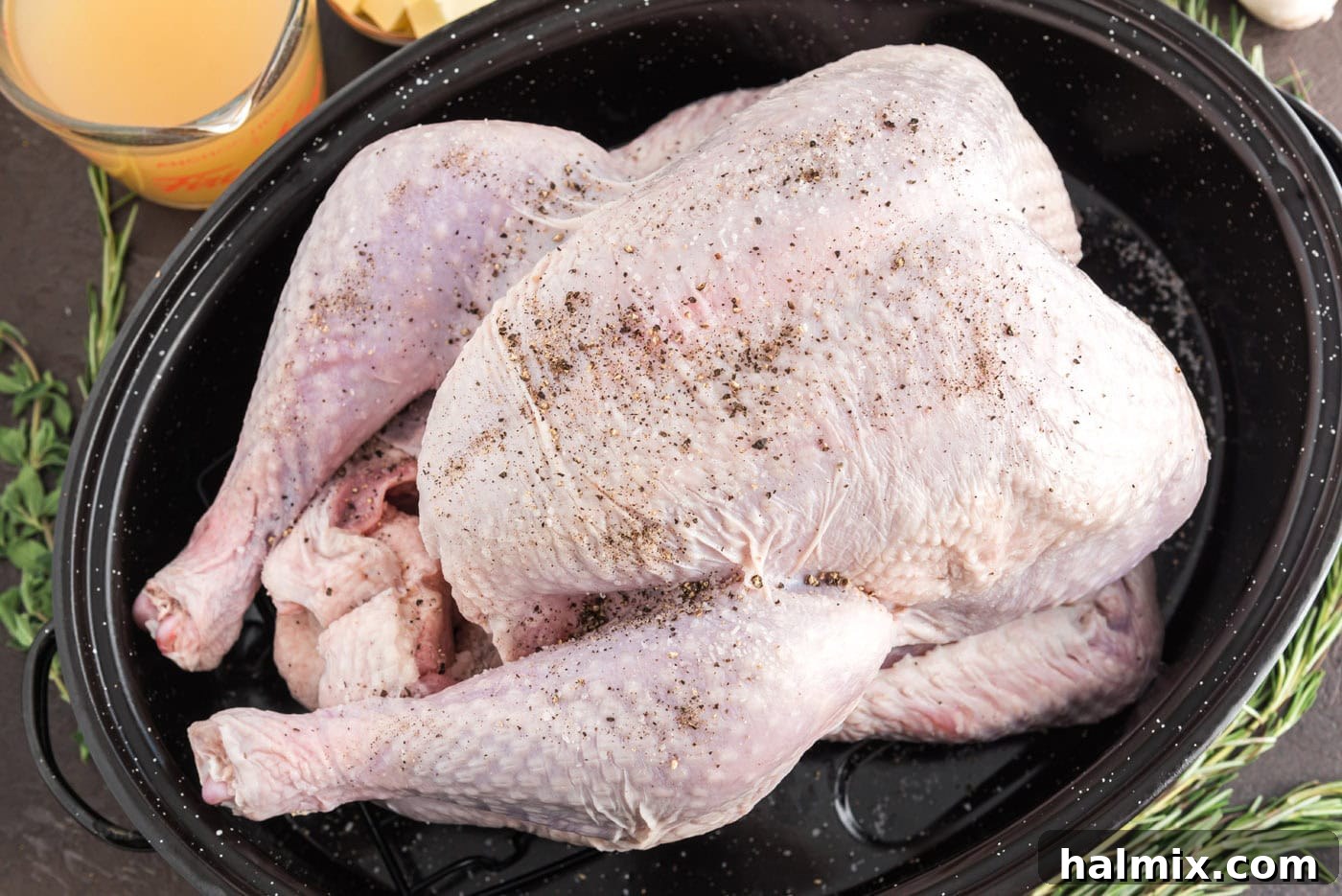
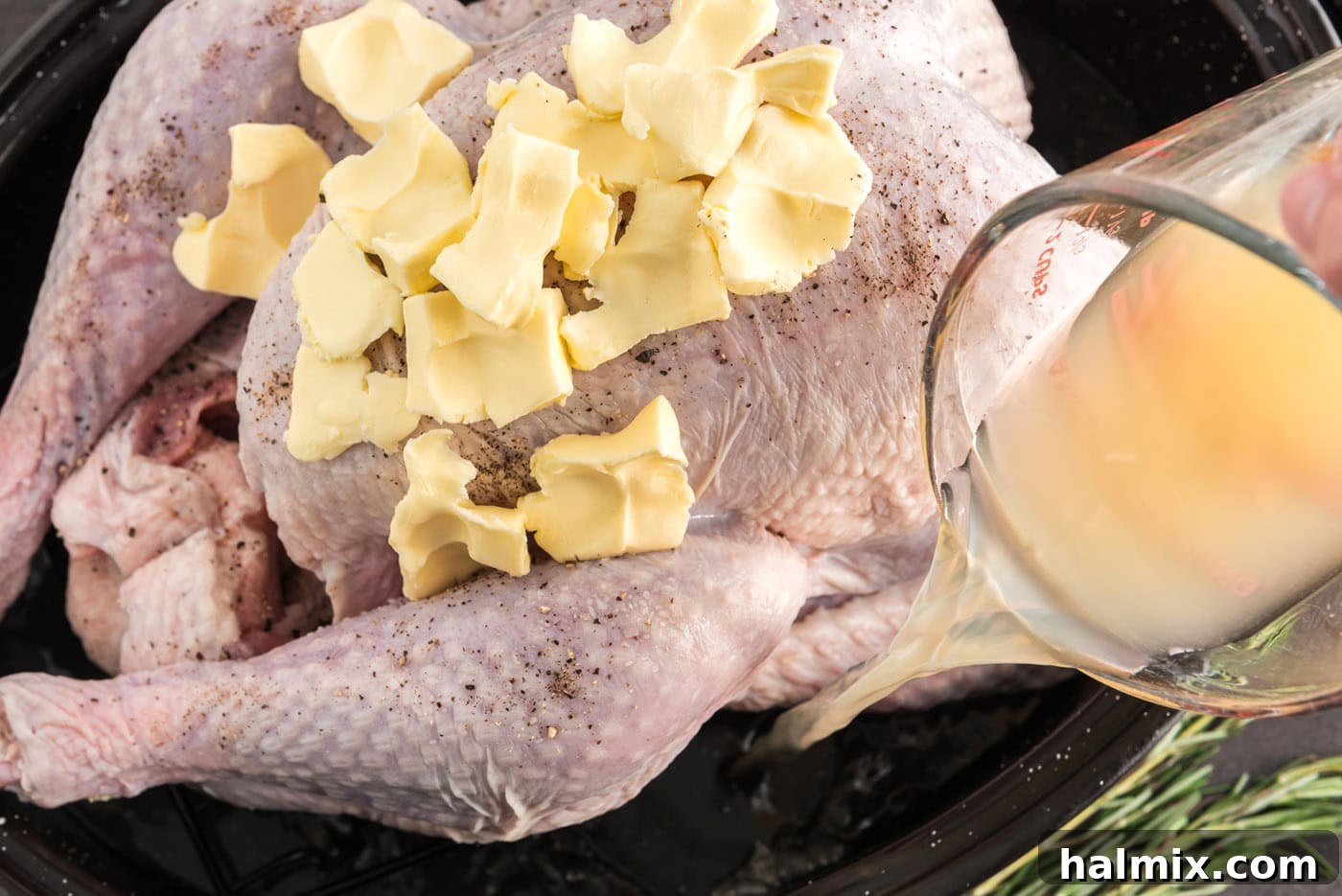
- Season Generously: Sprinkle Kosher salt and freshly ground black pepper generously over the entire surface of the turkey, ensuring good coverage. Next, evenly distribute the softened butter over the top of the turkey. You can gently rub it in to coat the skin, ensuring every part will crisp up nicely and turn golden.
- Add Broth to the Pan: Pour 2 cups of chicken broth (or vegetable broth or water) into the bottom of the roasting pan, around the turkey. This liquid will prevent drippings from burning and create a flavorful base for your gravy.
- Begin Roasting: Carefully place the roasting pan with your prepared turkey onto the center rack of your preheated oven. Close the oven door. Immediately reduce the oven temperature to 350 degrees F (175 degrees C). Roast the turkey for approximately 13 minutes per pound. For a 13-14 pound turkey, this typically means a total cooking time of just under 3 hours.
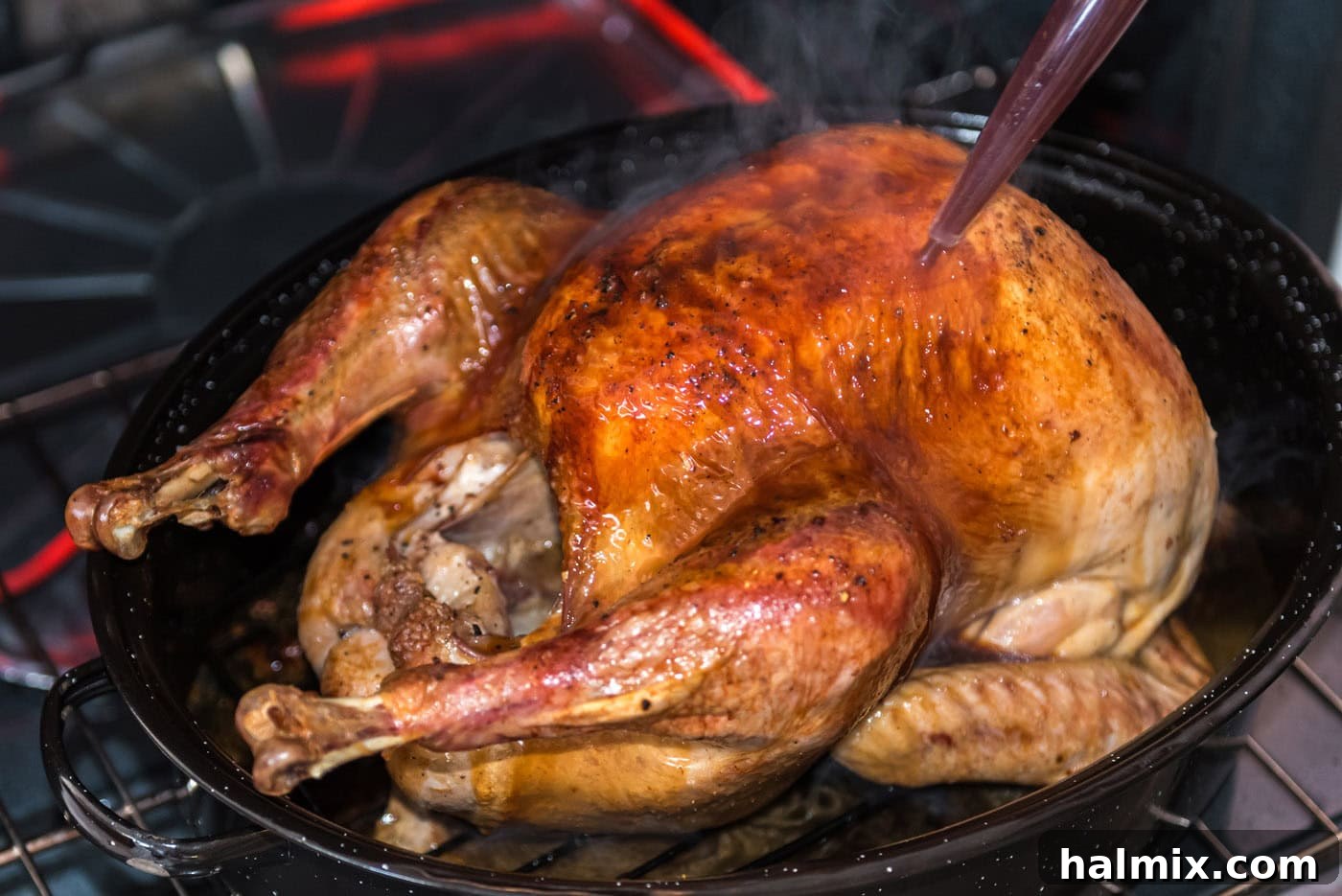
- Baste for Moisture: Every 45 minutes, use a turkey baster to drizzle the pan liquids over the top of the turkey. Basting helps to keep the skin moist and promotes even browning, contributing to a rich, flavorful exterior. As the turkey nears the end of its cooking time, monitor the skin closely. If the top appears to be browning too quickly or becoming too dark, you can create a loose “foil tent” over the turkey to protect it from over-browning while the interior continues to cook.
- Check for Doneness: The most accurate way to determine if your turkey is fully cooked is by using a meat thermometer. Insert the thermometer into the thickest part of the breast and thigh, being careful not to touch any bones. The internal temperature should register 165 degrees F (74 degrees C) when the turkey is done. For a juicier result, you can remove the turkey from the oven when it reaches 160 degrees F (71 degrees C), as it will continue to cook and rise in temperature during the resting period (this is known as carryover cooking).
- Rest Before Carving: This step is non-negotiable for a truly juicy turkey. Once removed from the oven, loosely tent the turkey with foil and allow it to rest for a minimum of 15-20 minutes before carving. Resting allows the juices to redistribute throughout the meat, preventing them from escaping when you slice and ensuring every piece is tender and moist.
Frequently Asked Questions & Expert Tips for Turkey Roasting
A whole roasted turkey is safely cooked when it reaches an internal temperature of 165°F (74°C). Use an instant-read thermometer inserted into the thickest part of the breast and also into the deepest part of the thigh, avoiding bones. Many experienced cooks prefer to remove the turkey from the oven when it reaches 160°F (71°C), as the temperature will continue to rise to 165°F (74°C) during the resting period (carryover cooking), which helps keep the meat incredibly juicy.
Thawing your turkey correctly is crucial for both food safety and optimal cooking. The safest method is thawing in the refrigerator. Allocate approximately 24 hours for every 5 pounds of turkey. Place the turkey (still in its original packaging) on a baking sheet to catch any drips, then put it in the refrigerator. For example, a 15-pound turkey will need about 3 days to thaw. I always recommend adding an extra day just in case.
If you’re pressed for time, you can opt for the cold water thawing method. Submerge the packaged turkey in a cooler or clean sink filled with cold water. Change the water every 30 minutes to ensure it stays cold. This method requires approximately 30 minutes per pound, so a 15-pound turkey would take about 7.5 hours. Crucially, never use warm or hot water, as this can bring the turkey into the temperature danger zone and promote bacterial growth.
While traditional, it is generally recommended to cook your stuffing separately in a casserole dish or create a batch of crockpot stuffing. The main reason is that cooking stuffing inside the turkey can hinder air circulation within the cavity, leading to uneven cooking of both the turkey and the stuffing. The stuffing needs to reach 165°F (74°C) to be safe, which often means the turkey itself can become overcooked and dry while you wait for the stuffing to reach temperature. Cooking them separately ensures both components are perfectly cooked and safe to eat.
To maintain freshness and safety, store any leftover roasted turkey in an airtight container in the refrigerator for up to 3-4 days. For longer storage, you can freeze leftovers in an airtight container or heavy-duty freezer bag for up to 3 months. Be aware that turkey meat can sometimes become a bit drier after being frozen and thawed, so it’s best consumed within the first few weeks for optimal texture.
Absolutely, letting your turkey rest after it comes out of the oven is a critical step that should not be skipped. During cooking, the juices in the meat are pushed towards the center. Resting allows these juices to redistribute throughout the entire bird. If you carve the turkey too soon, those precious juices will simply run out onto your cutting board, leaving you with dry meat. A resting period of 15-20 minutes, loosely tented with foil, is sufficient to lock in moisture and tenderness. Use this valuable time to whip up some delicious homemade turkey gravy on the stovetop using the pan drippings!
More Expert Tips for a Flawless Turkey
- Use a V-Rack: If your roasting pan comes with a V-rack, use it! It lifts the turkey, allowing hot air to circulate all around the bird, resulting in more even cooking and crispy skin on all sides. If you don’t have one, placing vegetables like carrots and celery at the bottom can serve a similar purpose while flavoring the drippings.
- Brining (Optional but Recommended): For an even juicier and more flavorful turkey, consider brining it overnight before roasting. A simple salt and sugar brine can work wonders, especially if you tend to worry about dry turkey.
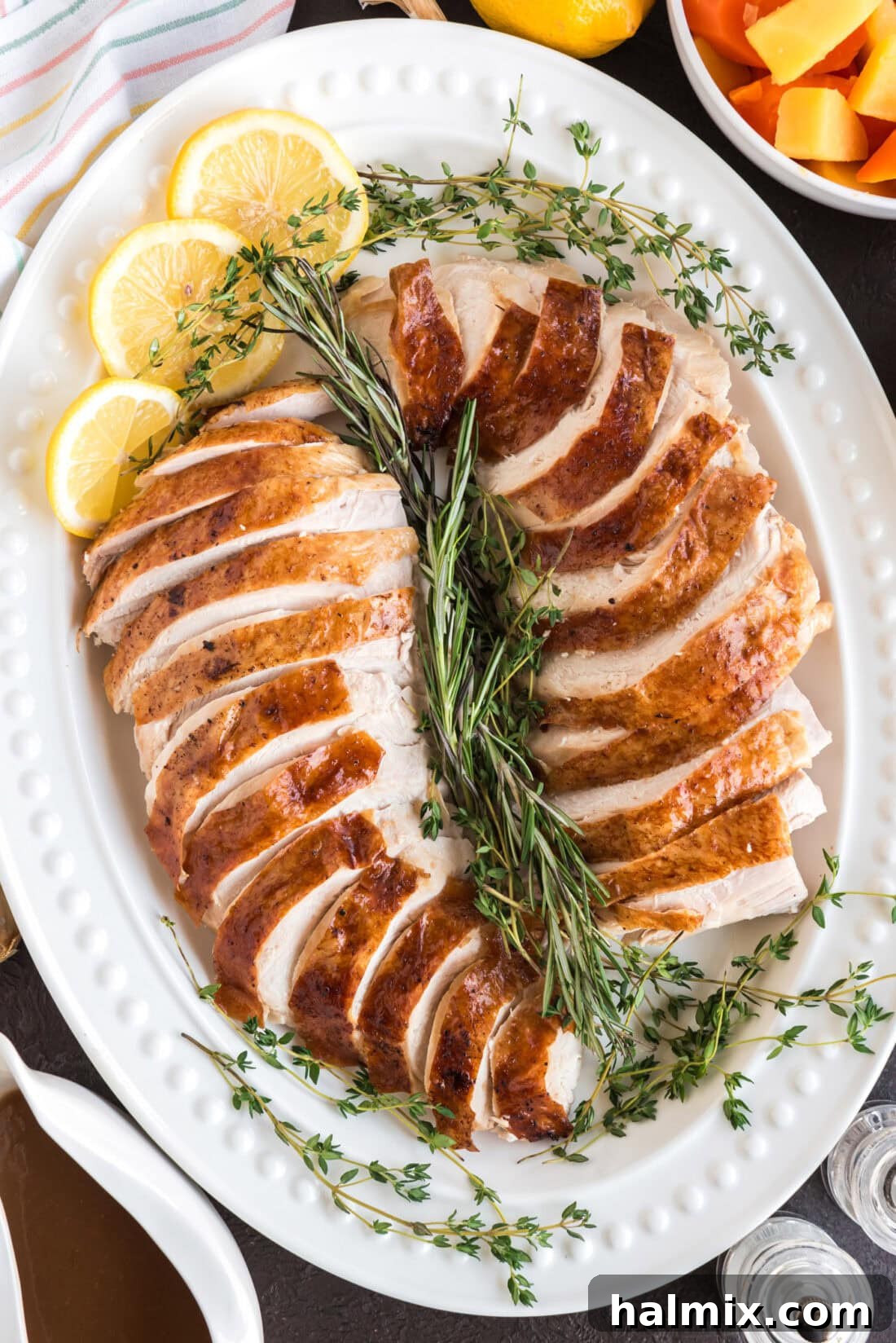
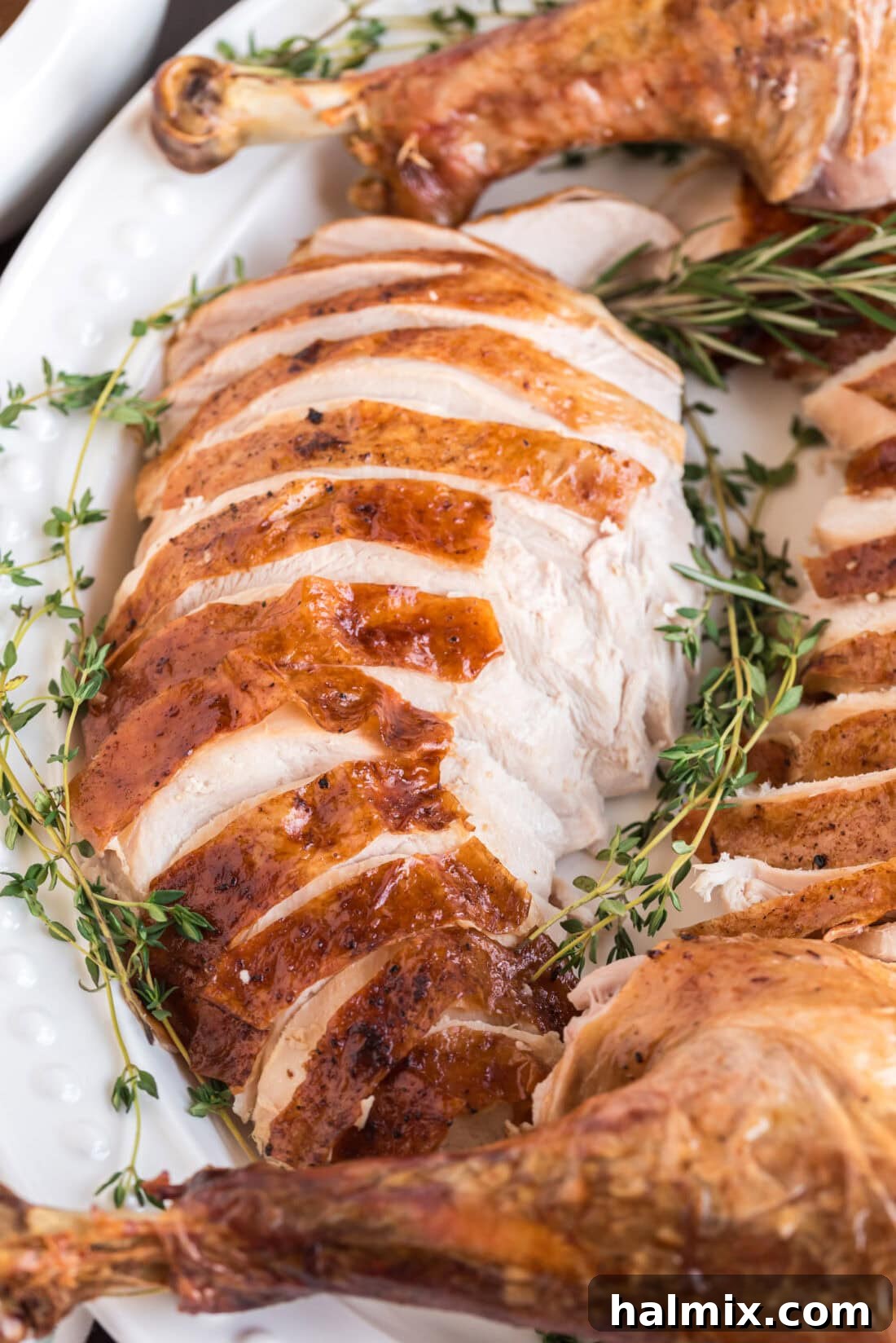
- Carving Techniques: Once rested, carve your turkey against the grain to ensure the most tender slices. Start by removing the legs and thighs, then carve the breast meat off the bone.
Serving Suggestions for Your Roasted Turkey Feast
Roasted turkey traditionally takes center stage at grand holiday celebrations like Thanksgiving, Easter, and Christmas. Its versatility, however, means it can be enjoyed year-round for family dinners or special occasions. Pair your magnificent turkey with classic, comforting side dishes that complement its rich flavor profile. Consider serving it alongside creamy sweet potato casserole, a hearty crockpot green bean casserole, or the ultimate fluffy garlic mashed potatoes. Don’t forget a generous pour of homemade gravy made from the pan drippings and, perhaps, a vibrant cranberry sauce to complete your festive spread.
Discover More Delicious Roast Recipes
If you enjoyed making this roasted turkey, you might also like to explore other delightful roast recipes that are perfect for family meals or entertaining:
- Roast Duck
- Roasted Chicken
- Spatchcock Chicken
- Crockpot Turkey Breast
I find immense joy in cooking and baking, and I love sharing my culinary adventures with all of you! To make sure you never miss a new recipe, I offer a convenient newsletter. Simply subscribe today and start receiving delicious daily recipes directly in your inbox!
Roasted Turkey
IMPORTANT – There are often Frequently Asked Questions within the blog post that you may find helpful. Simply scroll back up to read them!
Print It
Pin It
Rate It
Ingredients
- 14 pound whole turkey thawed or fresh
- 2 cups chicken stock or substitute the same amount water or vegetable stock
- ½ cup unsalted butter 1 stick, softened to room temperature
- 1-2 Tablespoons Kosher salt or amount to taste
- ½ teaspoon fresh ground black pepper or peppercorn medley or amount to taste
Optional Ingredients
- 1 lemon sliced
- 2-4 sprigs fresh rosemary
- 4 sprigs fresh thyme
- 2-4 cloves garlic minced
Things You’ll Need
-
roasting pan
-
turkey baster
-
Instant read thermometer
Before You Begin
- We are partial to using butter on the turkey as it yields golden crispy skin; however, you can easily substitute with olive oil if preferred.
- Don’t truss the turkey legs – you’re banking on the air circulating in the cavity while in the oven in order to cook evenly.
- Thawing – It’s best to allot 24 hours for every 5 pounds of turkey when thawing in the refrigerator. Place the turkey, in its packaging, on a baking sheet in the fridge. I always recommend giving yourself 1 extra day for the turkey to thaw in the refrigerator just in case.
- If you are pressed on time and your turkey is still frozen then you can submerge the packaged turkey in either a cooler or sink filled with cold water. Change the water every 30 minutes until thawed. Do not use warm or hot water.
- A whole roasted turkey should be cooked to an internal temperature of 165F on an instant-read thermometer inserted into the thickest portion of the breast or 175F when inserted into the thigh. I typically remove my turkey from the oven when it reaches 160F as it will continue to cook when resting.
Instructions
-
Preheat the oven to 450 degrees F.
-
Pat the turkey dry with paper towels. Discard paper towels.
-
Place the turkey in a roasting pan. Remove the giblets and neck, either save for use or discard. Tuck the wings behind the turkey’s shoulders. At this point, if you want to add the optional ingredients, you can add them to the turkey’s cavity.
-
Sprinkle Kosher salt and fresh ground black pepper all over the turkey. Add the butter on the top of the turkey.
-
Add 2 cups of chicken broth (or vegetable broth or water) to the bottom of the pan.
-
Place the roasting pan with the prepared turkey in the center rack of the preheated oven. Close the door. Reduce the heat to 350 degrees F. Bake for 13 minutes per pound, so a 13-14 pound turkey should be done in just under 3 hours.
-
Using a turkey baster, you can baste the liquids over the top of the turkey every 45 minutes. As the turkey gets close to being done, keep an eye on it, if the top looks too brown, you can use a foil tent to protect the top from over-browning.
-
When you think the turkey is done, using a meat thermometer, check the thickest part of the breast and thigh. It should register at 165 degrees F when done.
-
Allow the turkey to rest for 15-20 minutes before carving.
Expert Tips & FAQs
- Don’t forget to save the pan juices to make homemade turkey gravy!
- Leftovers should be stored in an air-tight container kept in the refrigerator for up to 4 days. You can freeze leftovers in an air-tight container or large ziptop bag for up to 3 months, though it tends to dry out when frozen and thawed.
Nutrition
Tried this Recipe? Pin it for Later!Follow on Pinterest @AmandasCookin or tag #AmandasCookin!
The recipes on this blog are tested with a conventional gas oven and gas stovetop. It’s important to note that some ovens, especially as they age, can cook and bake inconsistently. Using an inexpensive oven thermometer can assure you that your oven is truly heating to the proper temperature. If you use a toaster oven or countertop oven, please keep in mind that they may not distribute heat the same as a conventional full-sized oven and you may need to adjust your cooking/baking times. In the case of recipes made with a pressure cooker, air fryer, slow cooker, or other appliance, a link to the appliances we use is listed within each respective recipe. For baking recipes where measurements are given by weight, please note that results may not be the same if cups are used instead, and we can’t guarantee success with that method.
This post originally appeared here on Mar 17, 2019 and has since been updated with new photos and expert tips.