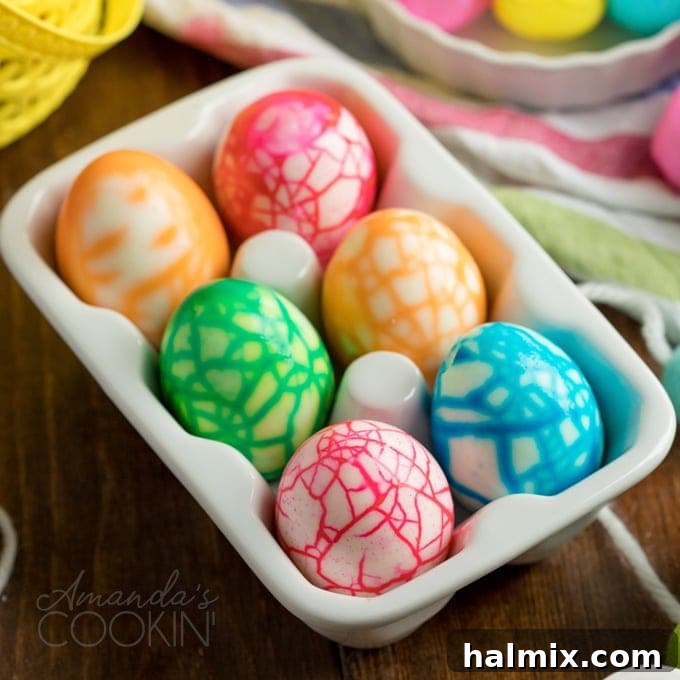
Welcome to a truly enchanting way to decorate Easter eggs that will captivate both young and old alike! Forget the standard, single-color dyes; we’re about to dive into the mesmerizing world of cracked colored Easter eggs, a beautiful technique that yields eggs with intricate, marble-like patterns. This method takes inspiration from tea-dyed eggs but elevates the visual appeal with a vibrant spectrum of colors. It’s incredibly simple, making it a fantastic activity for children, while the stunning results are sure to impress any adult. Get ready to transform ordinary hard-boiled eggs into works of art that are almost too pretty to eat! If you enjoy unique egg decorating, you might also love exploring other creative methods like tie-dye Easter eggs for even more festive fun.
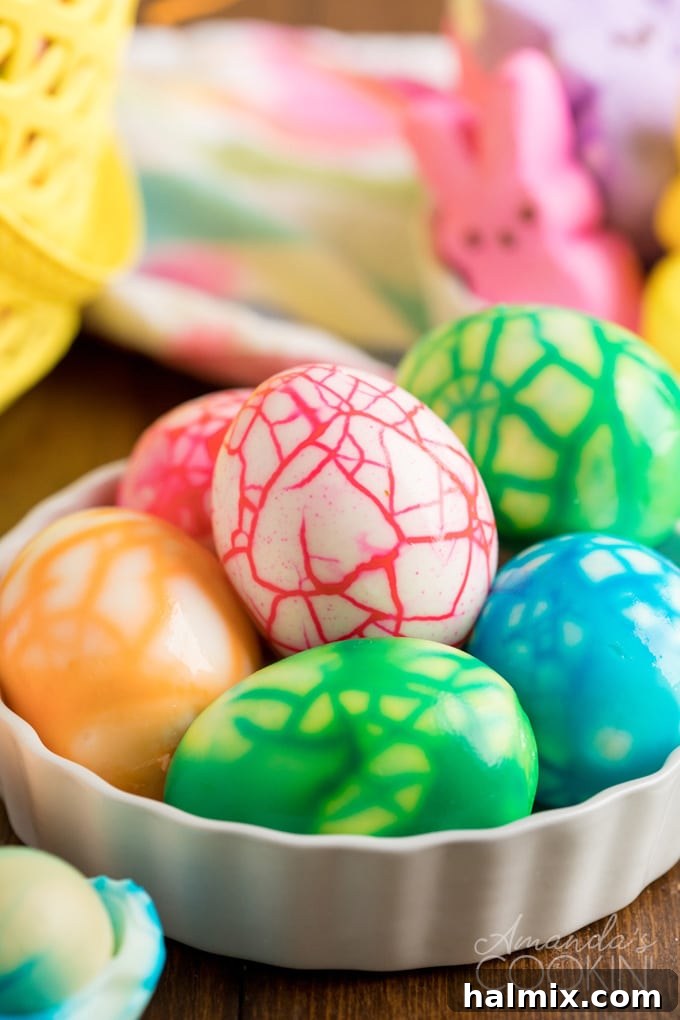
The Art of Cracked Colored Eggs: A Unique Easter Tradition
The first time I unveiled a batch of these vibrant, crackled beauties, I was absolutely awestruck. The outcome is so remarkably colorful and visually appealing that it instantly becomes a delightful deviation from the traditional, uniformly dyed Easter eggs. Each egg tells its own unique story with a delicate network of lines, making them truly special. Beyond their decorative charm, these eggs are also perfect for culinary creations, adding a pop of unexpected color to dishes like deviled eggs, transforming a classic appetizer into a festive delight. Imagine the gasp of delight when your guests discover the hidden artistry beneath the shell!
Essential Supplies for Your Cracked Egg Project
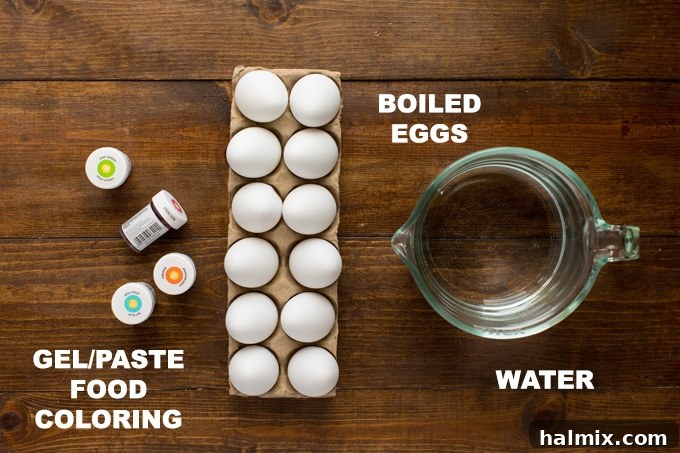
Embarking on this fun Easter project requires just a few basic items, most of which you likely already have in your kitchen. The secret to those brilliant colors lies in the quality of your food coloring, so choose wisely!
Ingredients You Will Need:
- Hard-boiled eggs: The canvas for your colorful creations. Make sure they are fully cooked and cooled.
- Gel/paste food coloring in a variety of vibrant shades such as red, blue, orange, green, and purple. Gel or paste colors are crucial for achieving intense, rich hues.
- Water: To mix with your food coloring.
Helpful Kitchen Tools:
- Saucepan: For boiling your eggs to perfection.
- Kitchen towel: A soft towel is essential for gently cracking the eggshells without removing them.
- Deep bowls or coffee mugs: You’ll need one for each color you plan to use, ensuring the eggs can be fully submerged in the dye baths.
Expert Tips for Vibrant Cracked Easter Eggs
To ensure your cracked colored eggs turn out as stunning as possible, here are a few invaluable tips to keep in mind. These insights will help you achieve the best results and make the process smoother and more enjoyable.
- Choose Your Colors Wisely: The key to truly vibrant cracked eggs lies in the type of food coloring you use. Liquid food coloring, often found in standard grocery stores, is generally not as concentrated and will produce lighter, more pastel shades. For the deep, rich, and truly striking patterns seen in these eggs, opt for gel or paste food coloring. These highly pigmented options are available online, in the cake decorating sections of larger craft stores, and specialty baking shops. A little goes a long way, and the intensity of the color will dramatically impact the final look.
- Plan Ahead for Soaking: This isn’t a last-minute project! The magic of these eggs happens during the soaking process. After the shells are cracked and the eggs are submerged in the dye baths, they need significant time to absorb the colors and develop those intricate patterns. Plan to let them soak for several hours, ideally a minimum of 4 hours, or even better, overnight in the refrigerator. The longer they soak, the deeper and more pronounced the crackled effect will be.
- Gentle Cracking is Key: When cracking the eggshells, remember the goal is to create a network of fine lines, not to remove large pieces of the shell. A gentle roll on a kitchen towel or a light tap against a hard surface is usually sufficient. Too much force will cause the shell to detach, which can result in less defined patterns or uneven coloring.
- Experiment with Color Combinations: While using a single color for each egg creates a beautiful monochromatic crackle, don’t hesitate to experiment! You can try soaking an egg in one color for an hour or two, then transferring it to a different color bath to create multi-toned effects. Just be mindful of how colors combine (e.g., blue and yellow make green).
- Prepare for Cleanup: While gel food coloring is fantastic for vibrancy, it can also stain. Wear gloves if you’re concerned about staining your hands, and protect your work surfaces with newspaper or an old tablecloth.
Step-by-Step Guide: How to Make Stunning Cracked Dyed Easter Eggs
Creating these visually striking Easter eggs is a rewarding experience. Follow these detailed steps to achieve perfect, beautifully patterned cracked colored eggs.
-
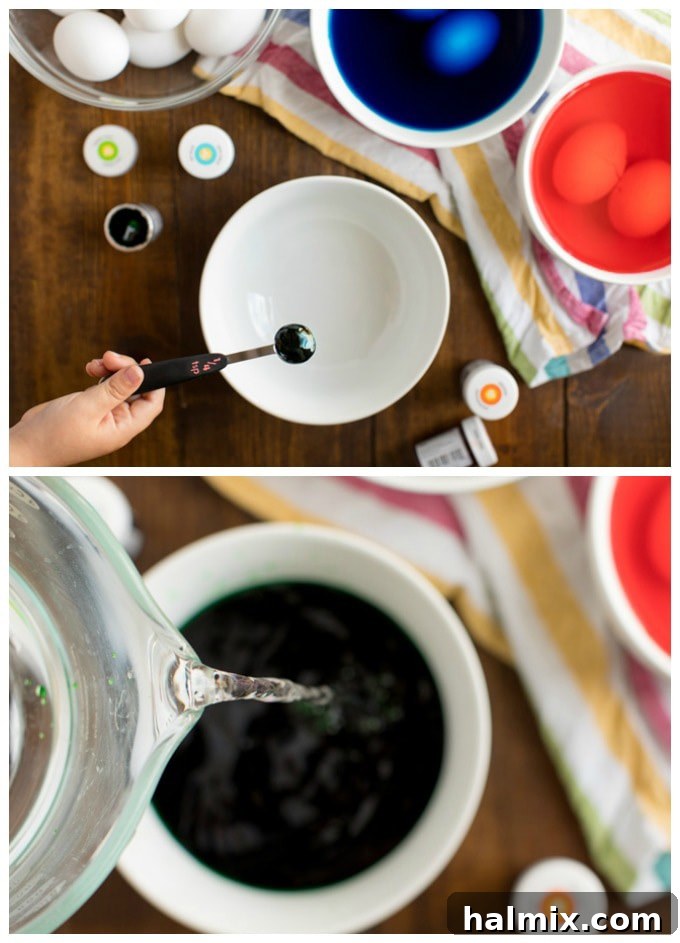
Prepare Your Dye Baths: Begin by filling several deep bowls or coffee mugs with warm water. For each bowl, add approximately 1/4 teaspoon of your chosen gel or paste food coloring. Use a spoon or a small whisk to stir the coloring thoroughly until it is completely dissolved and the water has a uniform, vibrant hue. The warmth of the water helps the dye dissolve and absorb more effectively. Prepare one bowl for each color you intend to use.

-
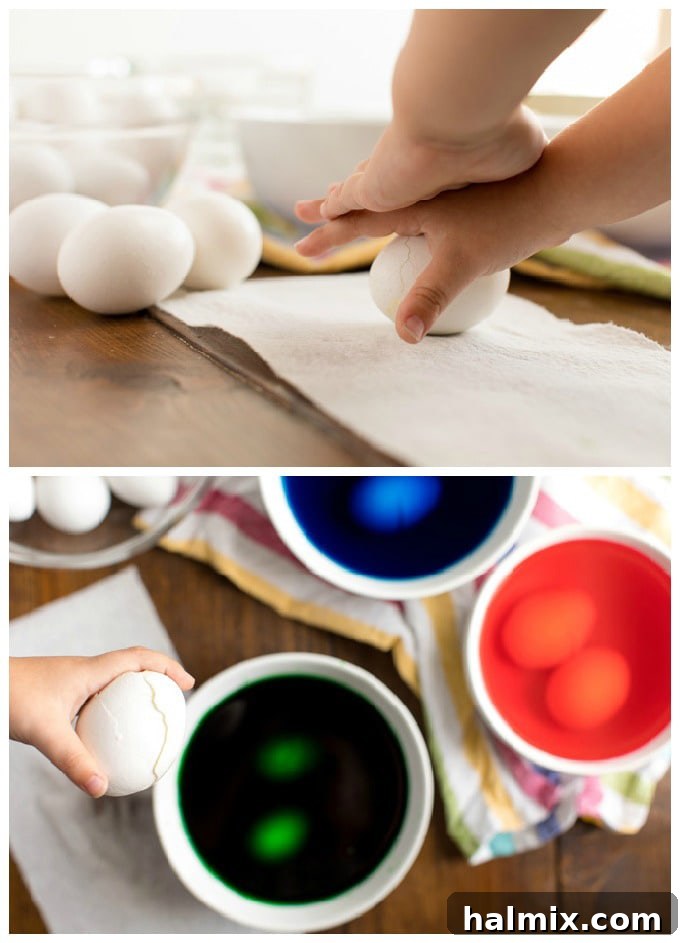
Gently Crack the Eggs: Once your eggs are hard-boiled and cooled (do not peel them!), it’s time to create the “cracked” effect. Place an egg on a kitchen towel or a clean, soft surface. Gently roll the egg around, applying light pressure, or tap it softly against a countertop. The goal is to create a network of fine cracks all over the shell, similar to a spiderweb, without actually removing any large pieces of the shell. Be careful not to press too hard, as you want the shell to remain mostly intact to hold the color in its unique patterns.
-
Submerge and Soak: Carefully place one or more cracked eggs into each of the prepared bowls of colored water. Ensure that the eggs are fully submerged in the dye solution. The colored water will seep into the tiny cracks, creating the beautiful patterns we’re aiming for. If the eggs float, you can gently rotate them every now and then to ensure even exposure to the dye.
-
Refrigerate for Best Results: Once all your eggs are submerged, transfer the bowls to the refrigerator. Allow the eggs to soak for a minimum of several hours – about 4 hours is a good starting point for noticeable patterns. For the most intense colors and striking crackle effects, let them soak overnight. The longer the soaking period, the deeper and more defined the colors will be within the cracks.
-
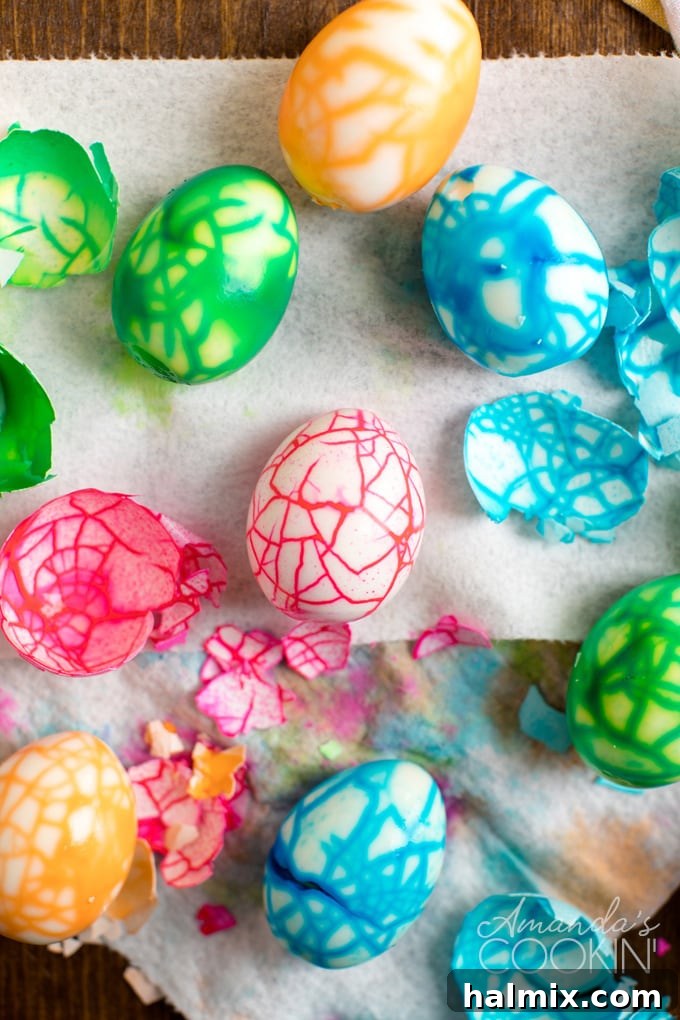
Reveal Your Masterpieces: Once the soaking time is complete, carefully remove the eggs from the dye baths. Gently peel off the cracked shells. As you peel, the incredible, vibrant patterns will be revealed. Rinse each egg gently under cool water to remove any excess dye or small shell fragments. Pat them dry with a paper towel, and admire your unique creations!
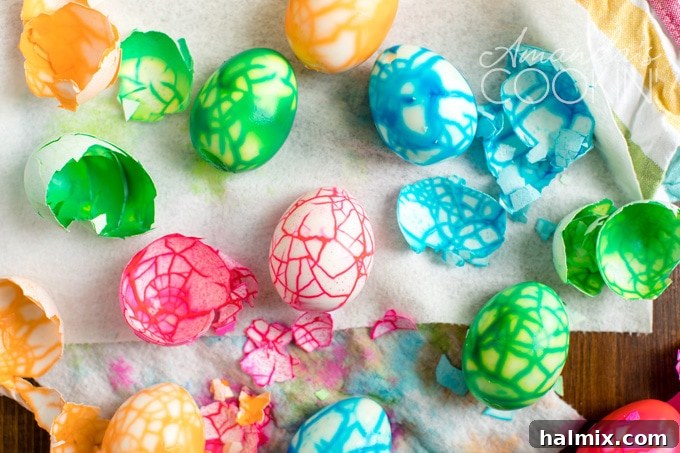
These exquisitely colored cracked eggs are guaranteed to be a focal point at any Easter gathering or spring celebration. Their distinct and artistic appearance offers a refreshing alternative to conventional Easter egg dyeing methods, delighting both children and adults with their unexpected beauty. Prepare for compliments and requests for your secret technique!
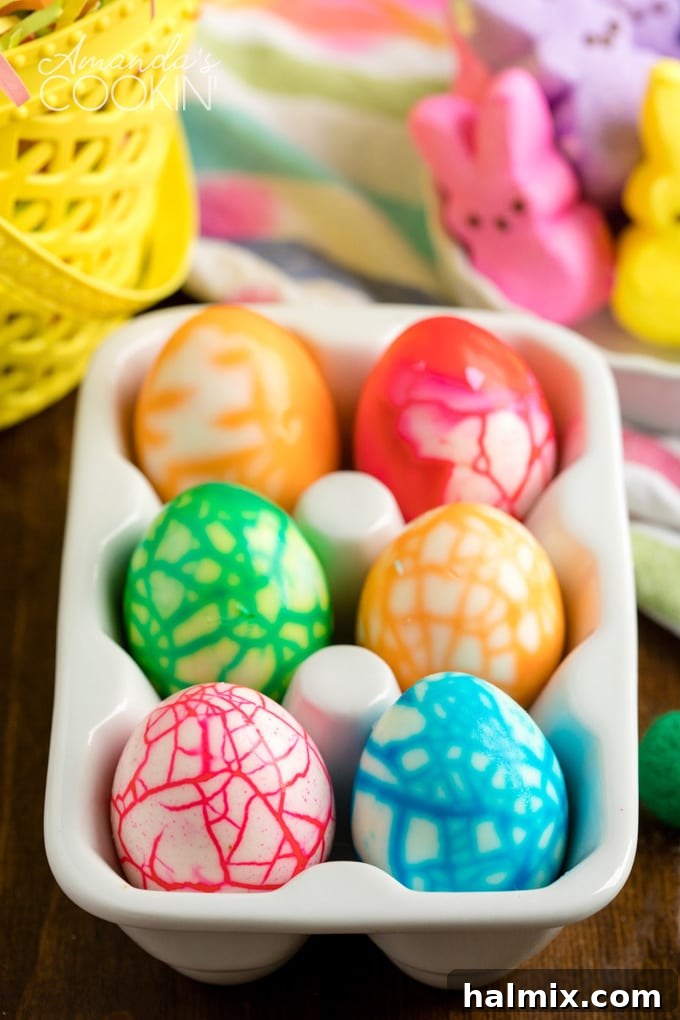
Unleash Your Creativity: Variations & Serving Suggestions
The beauty of cracked colored eggs lies not only in their unique appearance but also in the endless possibilities for customization and presentation. Here are some ideas to make your Easter eggs truly unforgettable:
Creative Variations:
- Multi-Color Marvels: For an even more complex pattern, try double-dipping! Soak an egg in a light color (like yellow) for an hour, then transfer it to a darker, complementary color (like blue or purple) for the remainder of the soaking time. The first color will create a subtle base, while the second will fill the cracks with striking contrast.
- Layered Hues: Instead of fully cracking the egg initially, crack it lightly, dye it, then crack it more aggressively and dye it again in a different color. This can create a fascinating layered effect with varying depths of color.
- Natural Dyes: For a more organic approach, experiment with natural dyes like onion skins (for orange/brown), red cabbage (for blue/purple), or turmeric (for yellow). While the colors might be less intense than gel dyes, they offer a beautiful, earthy palette.
- Patterned Cracks: Before dyeing, try to create specific crack patterns. For example, gently tap the egg only on one side to concentrate cracks, or roll it more on the ends to create varied density of lines.
Serving & Display Suggestions:
- Deviled Egg Delights: As mentioned, these eggs make spectacular deviled eggs. The vibrant patterns on the egg whites will surprise and delight everyone. Garnish with fresh herbs like dill or chives to enhance their visual appeal.
- Easter Brunch Centerpiece: Arrange a beautiful collection of your cracked colored eggs in a rustic basket, on a bed of fresh grass (real or artificial), or in a decorative bowl as a stunning centerpiece for your Easter table.
- Edible Gifts: Package a few perfectly cracked eggs in a small, clear box tied with a ribbon for a unique and thoughtful Easter gift.
- Salad Toppers: Slice them in half or quarters and add them to spring salads for a burst of color and protein. They look especially good in a green salad with contrasting elements.
- Egg Salad Sandwich Reinvention: Make your everyday egg salad extraordinary by using these colorful eggs. The flecks of color will make your sandwich instantly more appealing.
Frequently Asked Questions (FAQs) About Cracked Colored Eggs
Here are some common questions and helpful answers to ensure your cracked colored egg project is a smashing success!
Q: What kind of eggs should I use for this project?
A: Any white or brown chicken eggs will work! However, white eggs tend to show the colors more brightly and vividly, making the crackle patterns stand out more clearly. Ensure they are hard-boiled and cooled before you begin the cracking and dyeing process.
Q: Can I use liquid food coloring instead of gel/paste?
A: While you can use liquid food coloring, be aware that the results will likely be much less vibrant and the patterns might be more subtle. Gel or paste food colorings are highly concentrated and produce the deep, rich colors that make these cracked eggs so stunning. If using liquid, you may need to use significantly more to achieve even a moderate intensity, and longer soaking times might be necessary.
Q: Are the cracked colored eggs safe to eat?
A: Absolutely! As long as you use food-safe dyes and the eggs are hard-boiled and handled properly (refrigerated during soaking, consumed within a few days), they are perfectly safe to eat. The dye only penetrates the egg white through the cracks, leaving the yolk untouched.
Q: How long do these eggs last?
A: Hard-boiled eggs, whether dyed or not, should be stored in the refrigerator and consumed within 5-7 days for optimal freshness and safety.
Q: My cracks aren’t very visible after dyeing. What went wrong?
A: Several factors could contribute to this:
- Insufficient Cracking: The cracks might not have been deep or numerous enough.
- Weak Dye: Liquid food coloring or too little gel/paste dye can result in faint colors.
- Short Soaking Time: The eggs need ample time (at least 4 hours, preferably overnight) to absorb the color into the cracks.
- Too Much Pressure While Peeling: Rough peeling can obscure or smudge the delicate patterns.
Q: Can I reuse the dye baths?
A: Yes, if the dye baths haven’t become cloudy or contaminated, you can often reuse them for another batch of eggs within the same day. Just ensure the color concentration is still strong; you might need to add a tiny bit more food coloring.
More Easter Fun & Festive Recipes
Easter is a time for bright colors, sweet treats, and joyful crafts! If you loved making these cracked colored eggs, you’ll surely enjoy these other delightful Easter-themed recipes and ideas that are perfect for your holiday celebration:
- Easter Bunny Cupcakes: Adorable and delicious cupcakes decorated to look like fluffy bunnies, perfect for a festive dessert.
- Bunny Butt Cupcakes: A whimsical and humorous cupcake design featuring the backside of an Easter bunny, sure to get a laugh!
- Rice Krispie Nests: Easy-to-make, crunchy nests made from Rice Krispies treats, often filled with candy eggs for a cute edible display.
- Frosted Sugar Cookie Bars: A convenient and crowd-pleasing alternative to individual cookies, these soft sugar cookie bars with frosting are always a hit.
- Rainbow Deviled Eggs: Elevate your deviled egg game with a spectrum of colors, making them as visually appealing as they are tasty.

Cracked Colored Easter Eggs
IMPORTANT – Scroll up in the blog post for Frequently Asked Questions and detailed tips that you may find helpful!
Print It
Rate It
Course: Appetizer
Cuisine: American
4 hours
20 minutes
Amanda Davis
Ingredients
- Hard boiled eggs
- Gel/paste food coloring in red blue, orange, green, purple
- Water
Things You’ll Need
-
Saucepan
-
Kitchen towel
-
Deep bowls or coffee mugs
Before You Begin
- Liquid food coloring is not as vibrant as gel or paste food coloring.
- You can find gel or paste food coloring online and in the cake decorating section of big box stores and craft stores.
- Plan ahead! These eggs have to sit and soak for several hours or even overnight.
Instructions
-
After boiling your eggs, do not peel them. Gently roll them around on a towel to create cracks in the shell, but you don’t want to remove the shells. Just roll enough to crack the outer shell.
-
Add warm water to deep bowls or coffee mugs. Add about 1/4 teaspoon of gel/paste food coloring and stir/whisk until dissolved.
-
Place egg(s) into each of the bowls, making sure the eggs are covered with the water.
-
Place the bowls into the refrigerator to soak for several hours (roughly 4) or up to overnight.
-
Carefully peel eggs and rinse gently with cool water.
Tried this Recipe? Pin it for Later!
Follow on Pinterest @AmandasCookin or tag #AmandasCookin!
The recipes on this blog are tested with a conventional gas oven and gas stovetop. It’s important to note that some ovens, especially as they age, can cook and bake inconsistently. Using an inexpensive oven thermometer can assure you that your oven is truly heating to the proper temperature. If you use a toaster oven or countertop oven, please keep in mind that they may not distribute heat the same as a conventional full sized oven and you may need to adjust your cooking/baking times. In the case of recipes made with a pressure cooker, air fryer, slow cooker, or other appliance, a link to the appliances we use is listed within each respective recipe. For baking recipes where measurements are given by weight, please note that results may not be the same if cups are used instead, and we can’t guarantee success with that method.
This post originally appeared here on Apr 12, 2009.