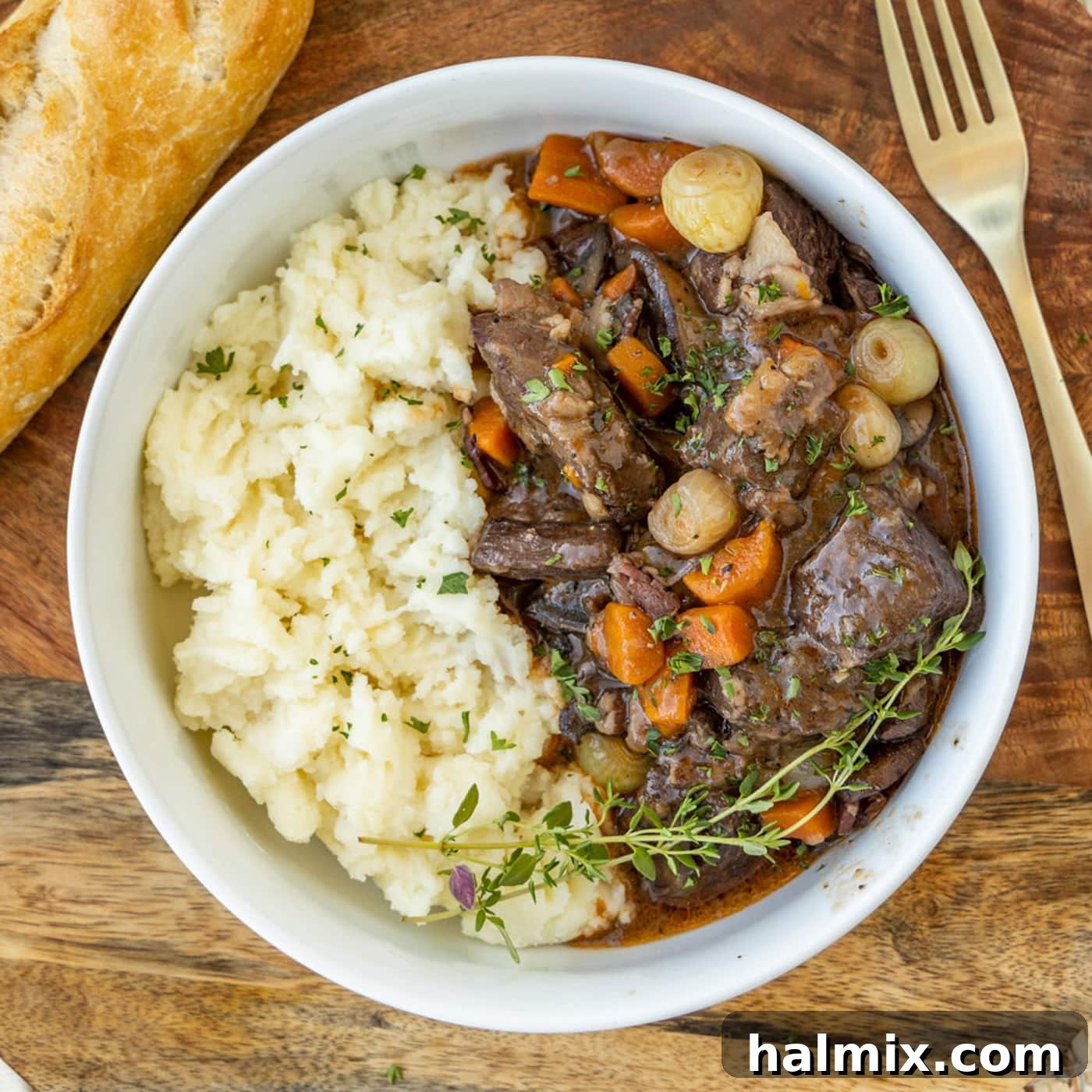
Embark on a culinary journey to the heart of France with this exquisite Beef Bourguignon recipe. A true classic of French country cooking, this hearty stew features succulent, tender beef braised in a rich, deeply flavored red wine sauce, harmoniously stewed with crispy bacon, earthy mushrooms, sweet carrots, and aromatic onions. Perfect for a comforting family dinner or an impressive gathering, this recipe promises a melt-in-your-mouth experience that will transport your taste buds straight to Burgundy.
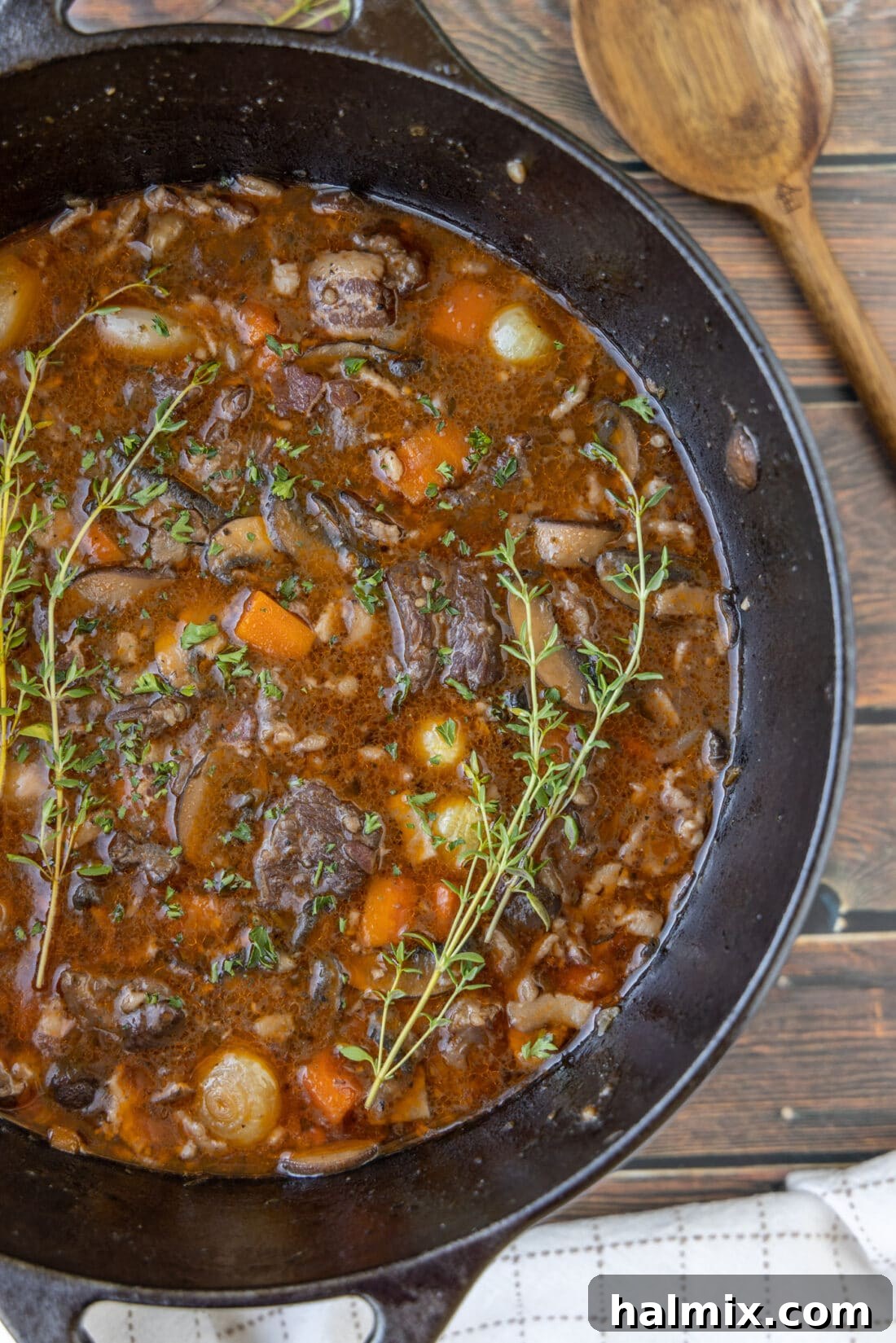
Why This Beef Bourguignon Recipe is a Culinary Masterpiece
Beef Bourguignon isn’t just a meal; it’s an experience, a celebration of slow cooking and robust flavors. While it might appear daunting at first glance, this recipe breaks down the process into manageable steps, making it accessible even for aspiring chefs. Unlike a simple beef stew, Beef Bourguignon elevates the dish through a strategic layering of flavors and a precise cooking method that ensures every bite is incredibly tender and deeply satisfying.
The magic begins with high-quality ingredients – succulent beef, smoky bacon, a full-bodied red wine, and a medley of fresh vegetables. The “low and slow” cooking method is paramount, allowing the beef to gently break down, absorbing the rich flavors of the wine, broth, and aromatics over several hours. This extended braising time is what transforms tougher cuts of meat into unbelievably tender morsels that truly melt in your mouth. The combination of searing the beef to develop a caramelized crust, deglazing the pan, and then slowly stewing creates an unparalleled depth of flavor that is the hallmark of classic French cuisine. This recipe isn’t just a step up from regular beef stew; it’s a gourmet journey that rewards patience with exquisite taste and a dish that leaves a lasting impression.
A Brief History of Beef Bourguignon
Beef Bourguignon, or Bœuf Bourguignon in French, originates from the Burgundy region in eastern France, an area renowned for its exceptional beef and exquisite Pinot Noir wines. Traditionally, it was a peasant dish, born out of necessity to tenderize tougher cuts of meat by slow cooking them in local red wine. Farmers and cooks in Burgundy would simmer beef, often from older or less tender animals, in their regional red wine, along with local vegetables, to create a nourishing and flavorful meal.
Over centuries, it evolved from a simple country stew into a sophisticated dish, becoming a celebrated staple of French gastronomy served in bistros and homes alike. Its international fame soared largely thanks to the legendary American chef Julia Child, who featured a meticulous and detailed recipe in her iconic 1961 cookbook “Mastering the Art of French Cooking.” Child’s approach introduced countless home cooks around the world to the intricacies and delights of French cuisine, popularizing Beef Bourguignon as a quintessential dish for elegant entertaining and comforting family meals. This recipe draws inspiration from those timeless techniques, ensuring an authentic and deeply flavorful result that honors its rich heritage.
Essential Ingredients for an Authentic Beef Bourguignon
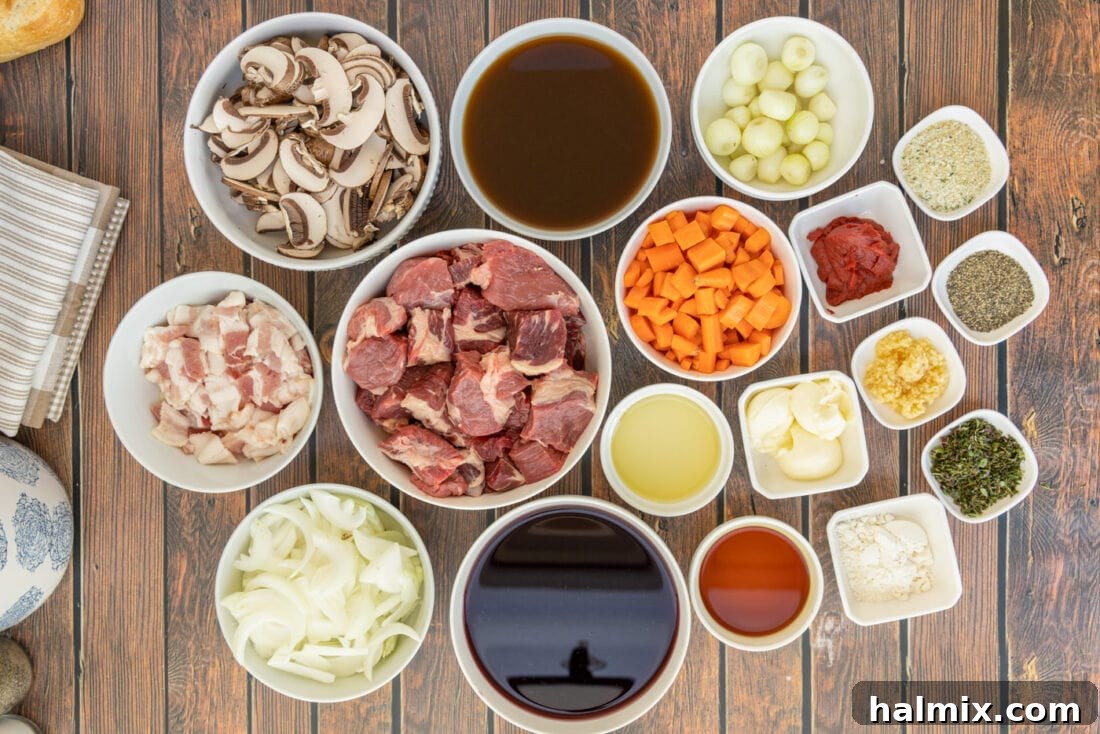
Crafting the perfect Beef Bourguignon starts with selecting the right ingredients. Each component plays a vital role in building the complex flavor profile that makes this stew so beloved. While specific measurements are detailed in the full recipe card below, here’s an overview of what you’ll need to create this French culinary masterpiece.
Key Ingredient Insights and Smart Substitutions
Understanding the purpose of each ingredient not only helps you master this recipe but also empowers you to make informed substitutions if needed, ensuring a delicious outcome every time.
BEEF – The star of the show! We highly recommend using beef chuck roast for this recipe. Its abundant marbling and connective tissue break down beautifully during long, slow cooking, resulting in incredibly tender, succulent meat that easily pulls apart. Other excellent options include beef brisket or short ribs, which offer similar characteristics and benefit greatly from extended braising. The key is to choose a tougher cut that requires time to become tender, rather than a lean, quick-cooking steak which would dry out. Ensure most of the larger pieces of fat are trimmed, then cut into uniform 1 ½-inch cubes for even cooking.
WINE & COGNAC – These spirits are crucial for developing the authentic, deep flavor of Beef Bourguignon.
- Red Wine: Do not skip the red wine! It’s one of the defining ingredients of this dish, lending its name and character. A dry red Burgundy wine, specifically a Pinot Noir, is traditional and ideal. You don’t need an expensive bottle; choose one you would genuinely enjoy drinking. The alcohol cooks out during the long braising process, but it leaves behind a profound depth of flavor, a beautiful rich color, and acidity that tenderizes the meat while enriching the sauce beyond measure.
- Cognac: While optional, Cognac adds an extra layer of sophisticated flavor and aromatic complexity that elevates the stew. The process of flambéing (lighting the Cognac) burns off the alcohol quickly while leaving behind its complex essence. If you’re not comfortable with flambéing, you can simply omit the Cognac. Alternatively, you can substitute it with ¼ cup of good quality brandy for a similar profile, or ¼ cup of Worcestershire sauce for an umami boost, though the overall flavor profile will differ slightly from the traditional.
BACON – Thick-cut applewood smoked bacon is preferred for this recipe. When cooked gently, it renders richly flavored fat, which is then used to brown the beef and sauté the initial round of vegetables. This fat builds the foundational layers of taste, imparting a smoky, savory depth to the entire dish. The cooked bacon pieces are added back later, contributing a wonderful textural contrast and an additional burst of smoky flavor to the final stew.
AROMATIC VEGETABLES – Yellow onions, carrots, and minced garlic form the classic aromatic base, often referred to as a mirepoix (with garlic added for extra pungency). These vegetables are sautéed until tender and translucent, a step that allows them to release their sweet and savory notes, which then infuse into the sauce during the long braising process. They contribute significant underlying flavor without overpowering the main components.
MUSHROOMS & PEARL ONIONS – These vegetables are typically added towards the end of the cooking process to retain their texture and add fresh bursts of flavor. Baby bella mushrooms (also known as cremini) offer a robust, earthy taste and a meaty texture. Pearl onions, with their delicate sweetness and charming visual appeal, are a traditional addition. For convenience, frozen pearl onions are highly recommended over fresh (which require tedious peeling) or canned varieties, providing great flavor with minimal effort.
TOMATO PASTE & THYME – Tomato paste is a concentrated powerhouse of flavor, adding a crucial umami richness and a touch of acidity that deepens the sauce’s color and complexity. Fresh thyme leaves, with their distinct woody and herbaceous notes, contribute an essential fragrant aroma that is characteristic of classic French cuisine. Always opt for fresh thyme if possible for the best results.
BEEF BROTH – Used in conjunction with the red wine, beef broth forms the essential braising liquid. It adds savory depth and ensures the stew remains moist and flavorful throughout the entire low-and-slow cooking process. Opt for low-sodium beef broth to better control the overall saltiness of your dish.
FLOUR – All-purpose flour is used strategically at the end of the cooking process to thicken the sauce slightly. When whisked into a small portion of the hot pan juices, it creates a smooth slurry that, when returned to the pot, transforms the liquid into a luscious, velvety consistency that beautifully coats the tender beef and vegetables.
Step-by-Step Guide: Crafting Your Perfect Beef Bourguignon
Follow these detailed instructions and step-by-step photos to visualize the entire process of making this exquisite Beef Bourguignon. This guide is designed to help you achieve a truly professional result. For the printable version of this recipe, complete with precise measurements and comprehensive instructions, please refer to the full recipe card located at the bottom of this post.
- Prepare Your Oven: Begin by preheating your oven to 250°F (120°C). This low and steady temperature is absolutely crucial for the long, slow braising process that ensures the beef becomes unbelievably tender without drying out.
-
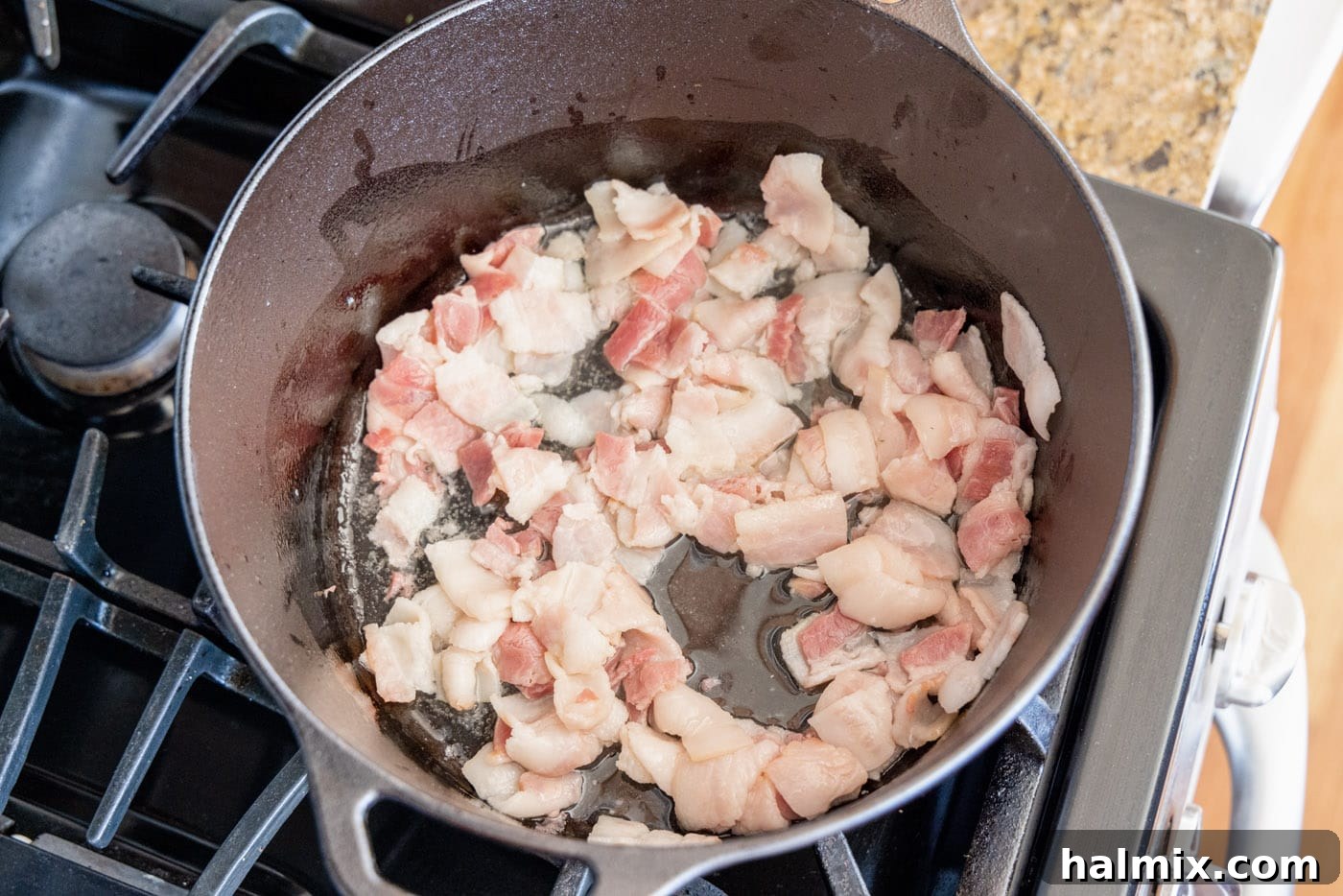
Render the Bacon: In a large, heavy-bottomed, oven-proof Dutch oven, heat 3 tablespoons of olive oil over medium heat until it shimmers gently. Add the chopped bacon and cook it slowly until it’s soft and its fat has rendered significantly. The goal here is to extract maximum flavor from the bacon, so avoid cooking it until it’s crispy.

Cook bacon until soft, not crispy, to render its flavorful fat into the pot. -
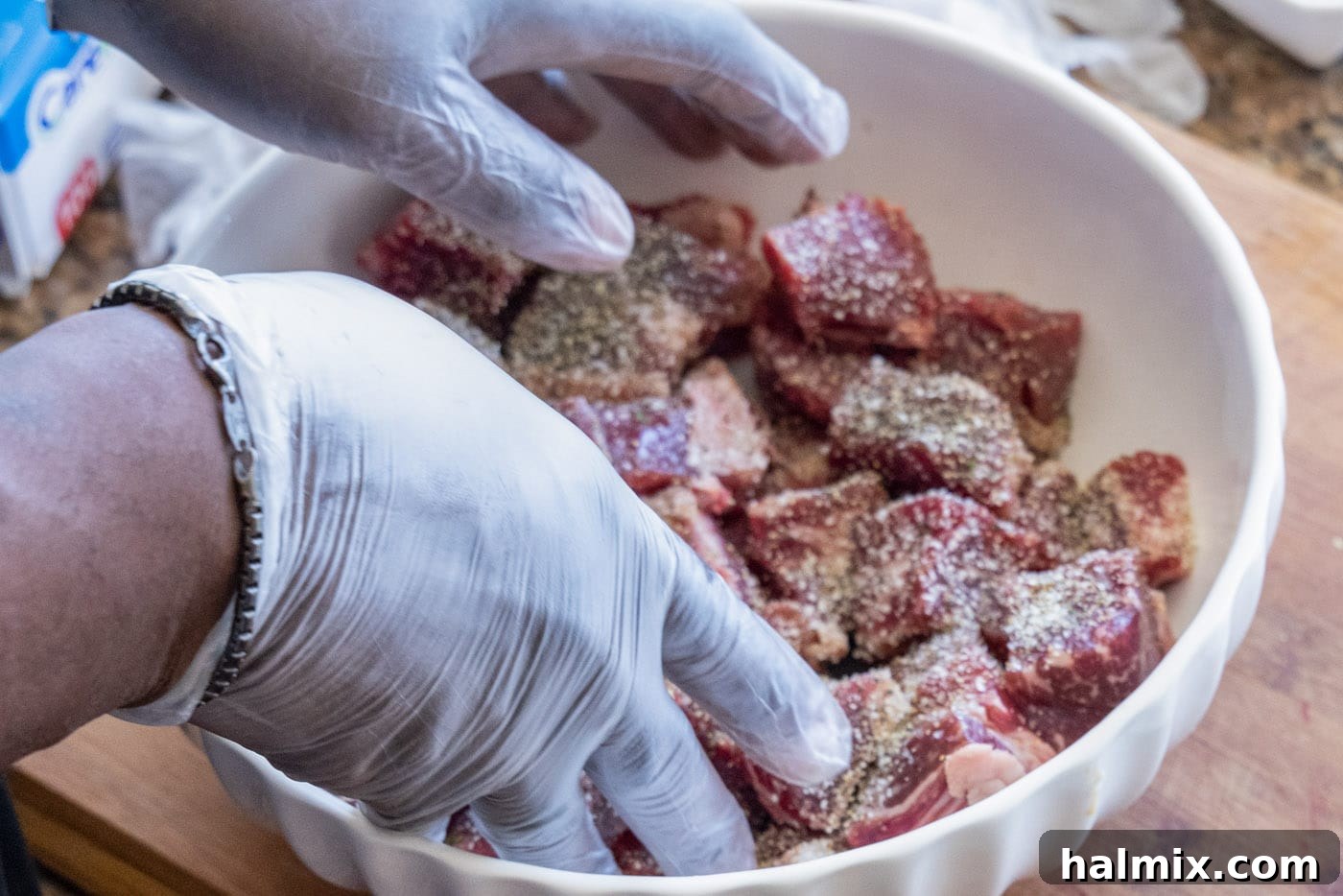
Season the Beef: While the bacon cooks, prepare your beef. Season the cubed beef chuck roast generously and evenly with half of the garlic salt and half of the black pepper. Ensure all sides of the beef cubes are thoroughly coated to build a strong flavor base.
Generously season your beef before browning for maximum flavor development and a delicious crust. -
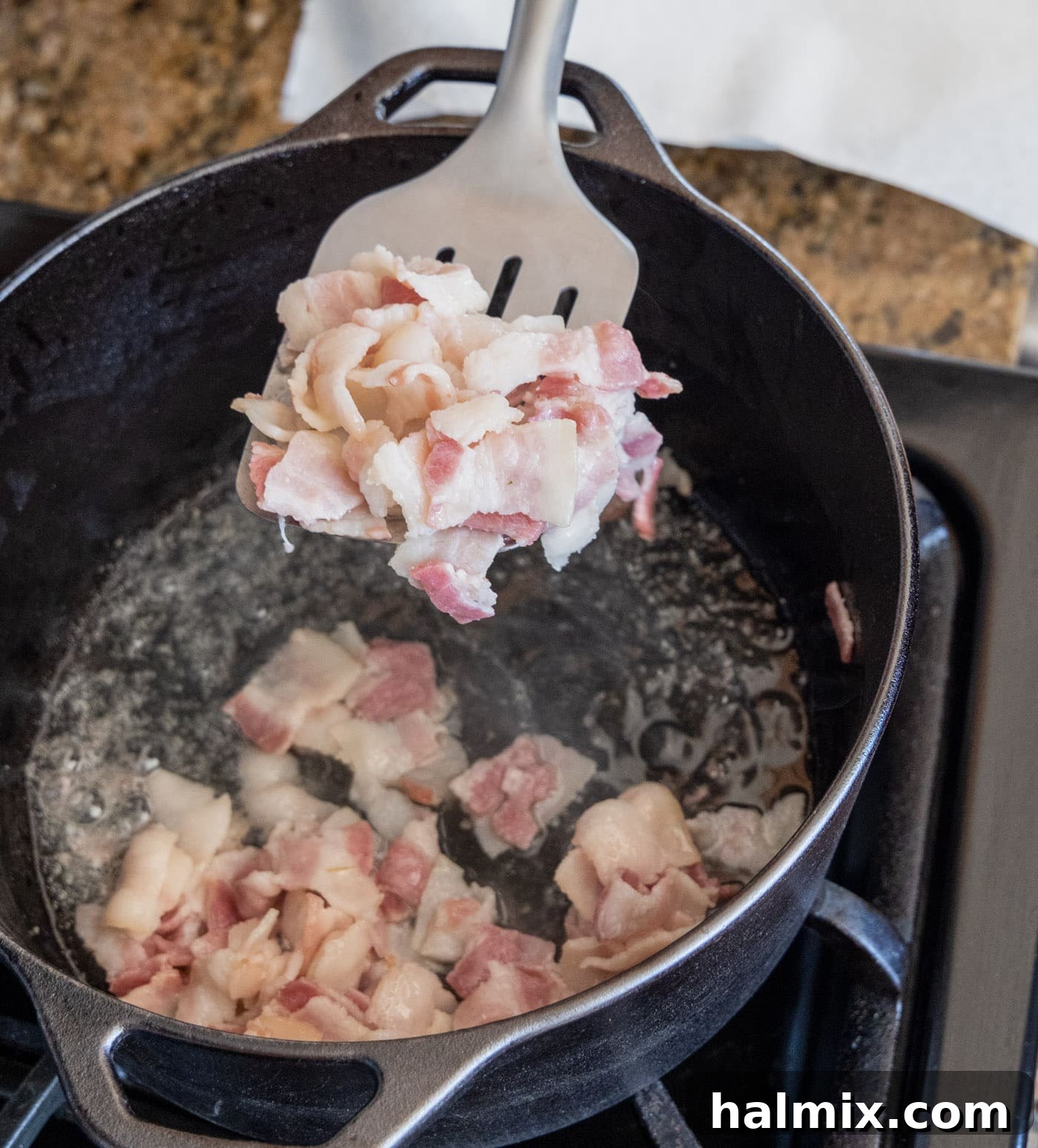
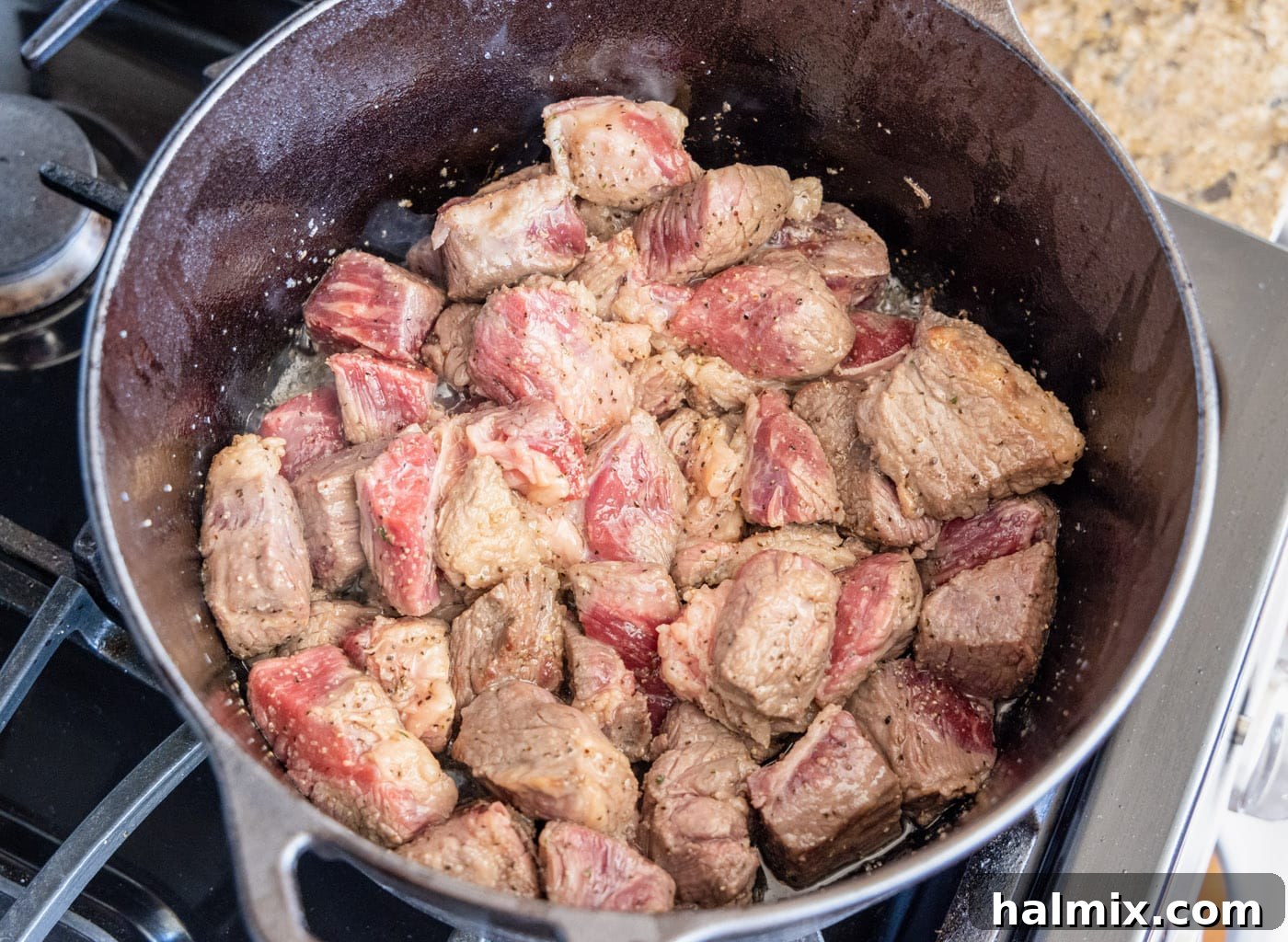
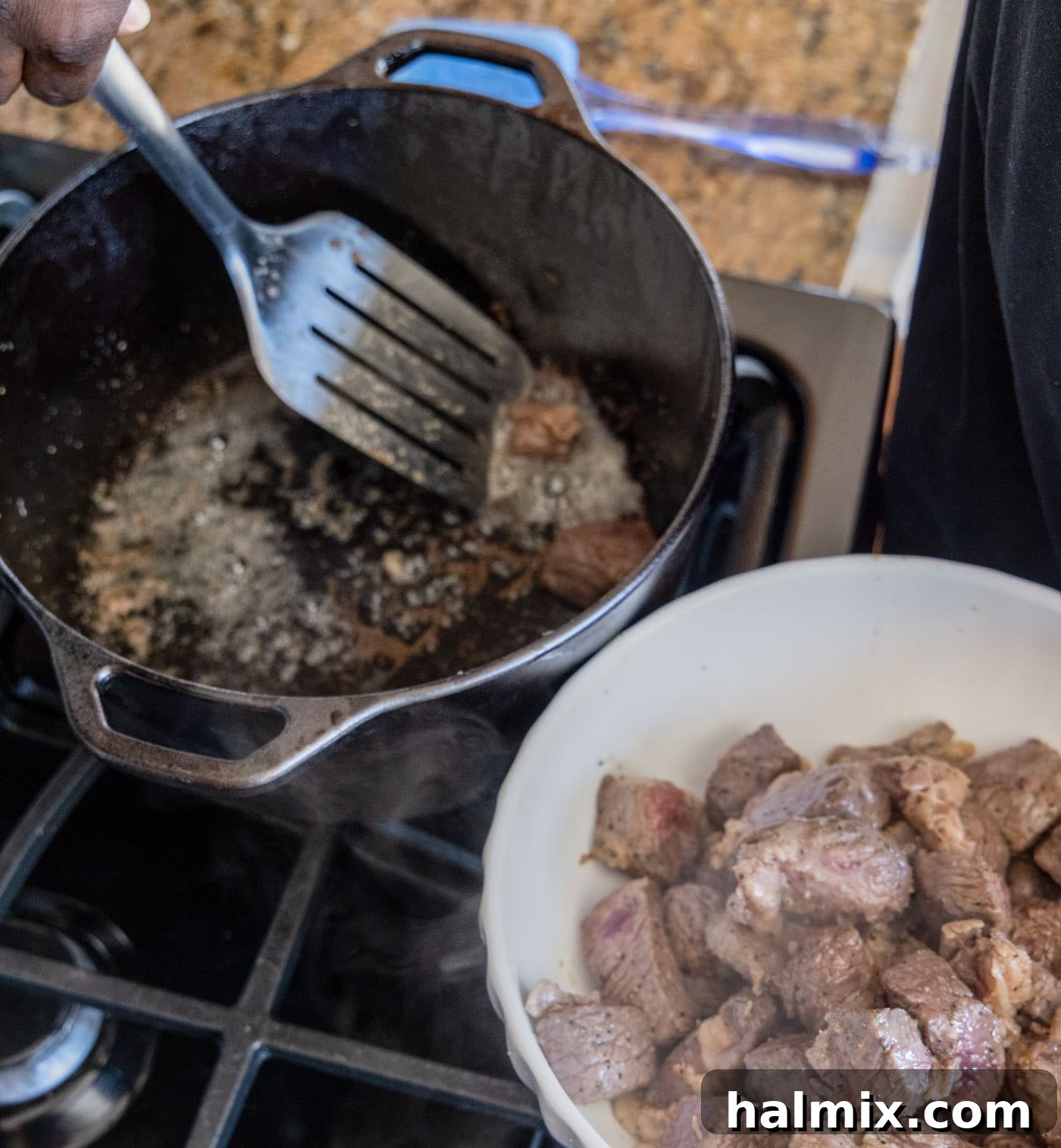
Sear the Beef: Using a slotted spoon, carefully remove the cooked bacon from the Dutch oven, draining it on paper towels. Leave the richly flavored rendered bacon fat and olive oil in the pot. Add the seasoned beef cubes to the hot pan in batches, taking care not to overcrowd the pot. Overcrowding will steam the meat instead of searing it. Cook each batch until deeply browned on all sides. This browning step is absolutely critical for developing rich, complex, umami flavors through the Maillard reaction.
Carefully remove the rendered bacon, reserving the flavorful fat in the Dutch oven. Brown the beef thoroughly in batches to build a robust and deeply savory flavor base for the stew. Once all beef is browned, remove it from the pot and set aside. -
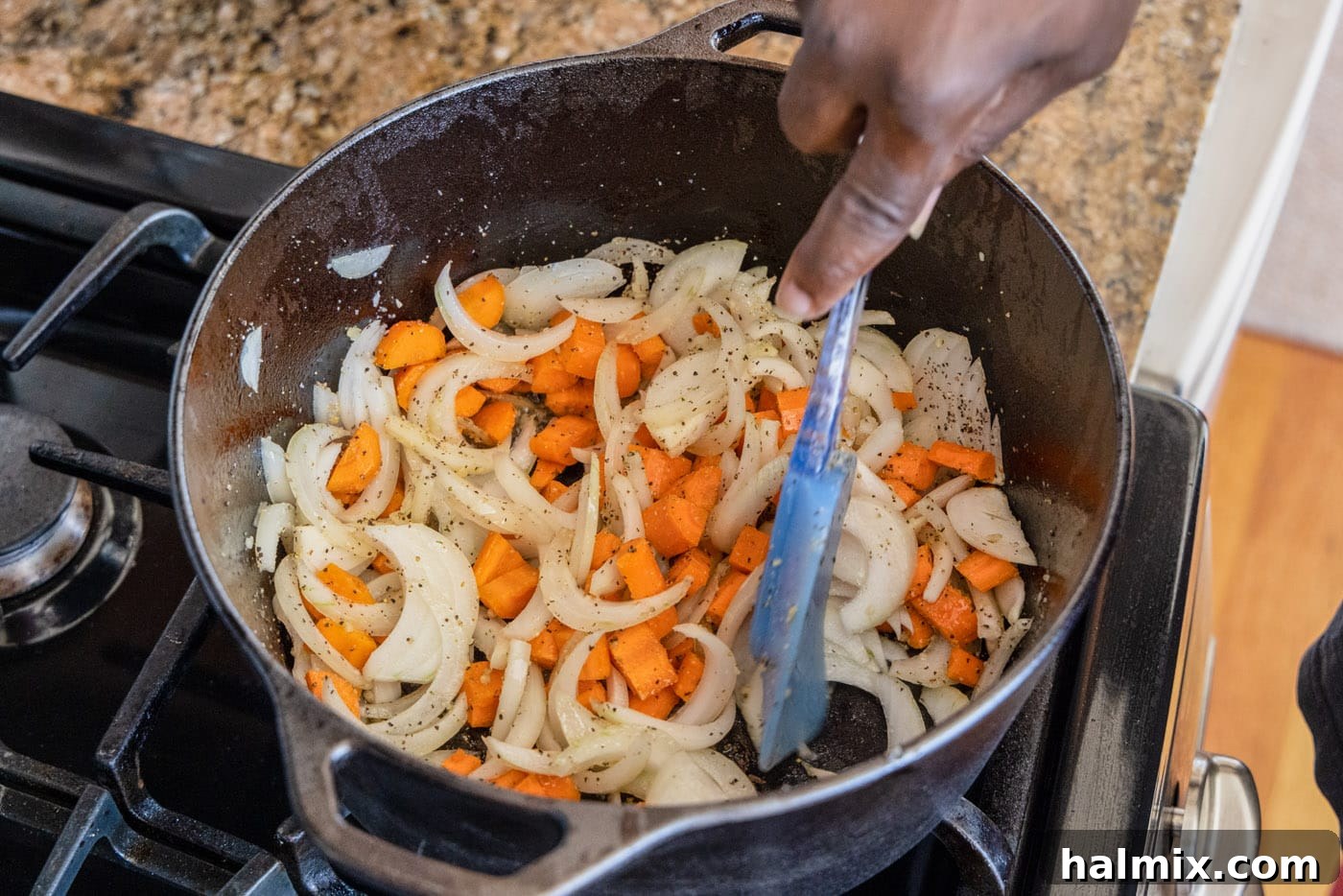
Sauté the Aromatics: With the beef removed, add the slivered yellow onion, minced garlic, diced carrots, and the remaining garlic salt and pepper to the same Dutch oven (adding a tiny bit more olive oil if the pan seems dry). Cook over medium heat, stirring occasionally, until the onions are tender and translucent, typically about 5-7 minutes. As you stir, make sure to scrape up any browned bits (fond) from the bottom of the pan; these are packed with flavor and will dissolve into the sauce.
Sauté onions, garlic, and carrots until tender, allowing their moisture to deglaze the pan and incorporate rich fond. -
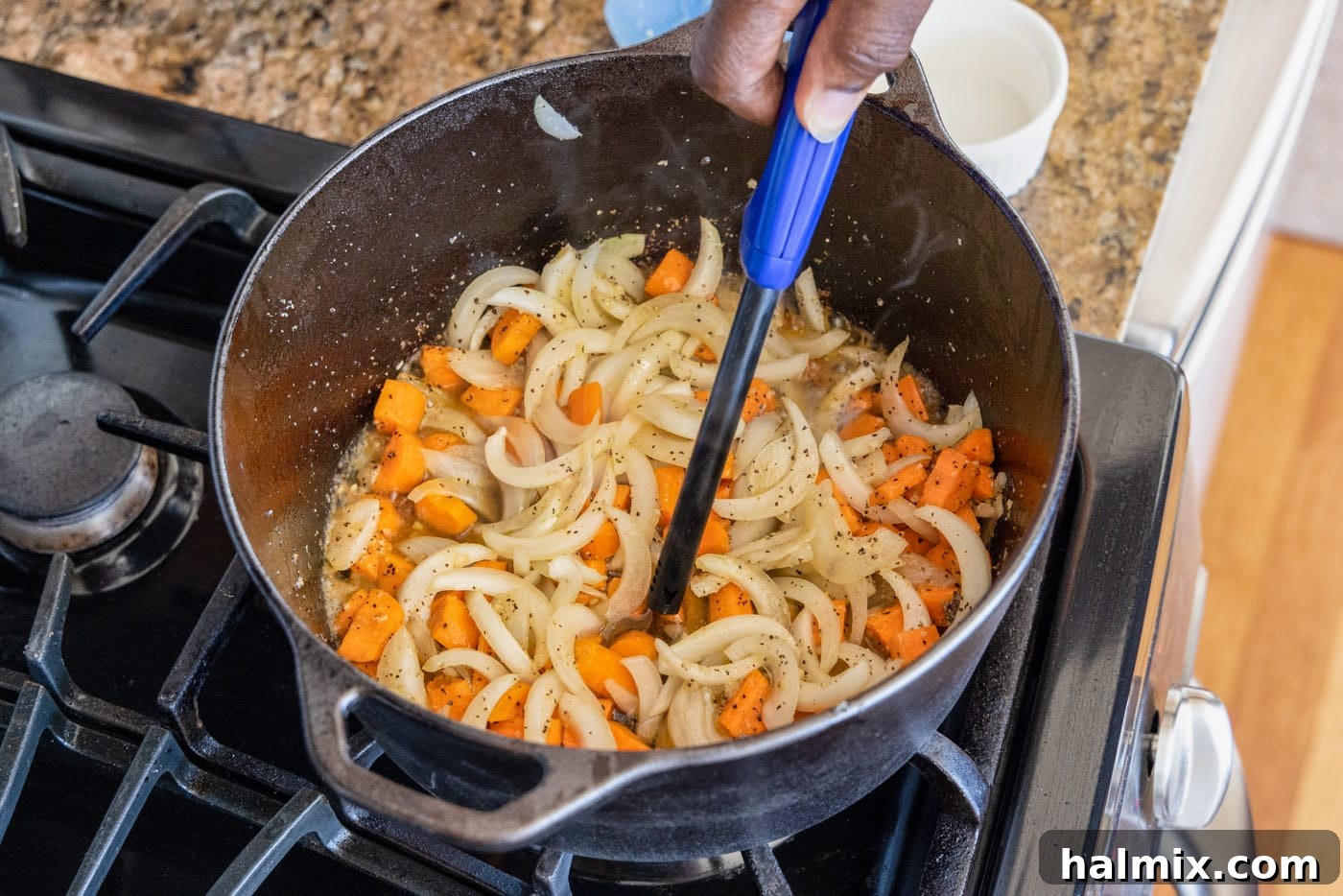
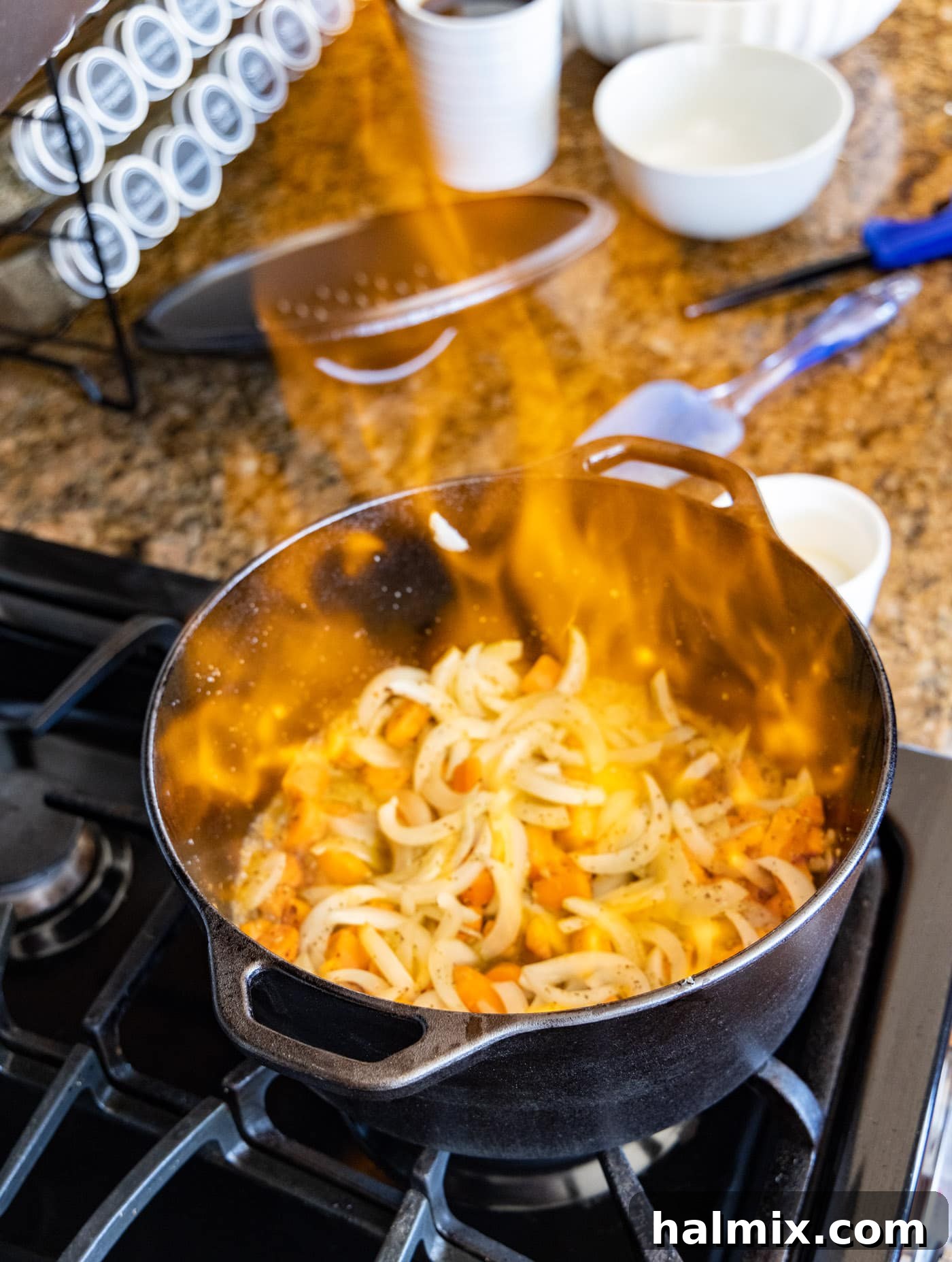
Flambé the Cognac (Optional but Highly Recommended): Pour the Cognac into the onion mixture. This exciting step involves lighting the Cognac to burn off the alcohol, leaving behind its deep, complex, and slightly sweet flavor.
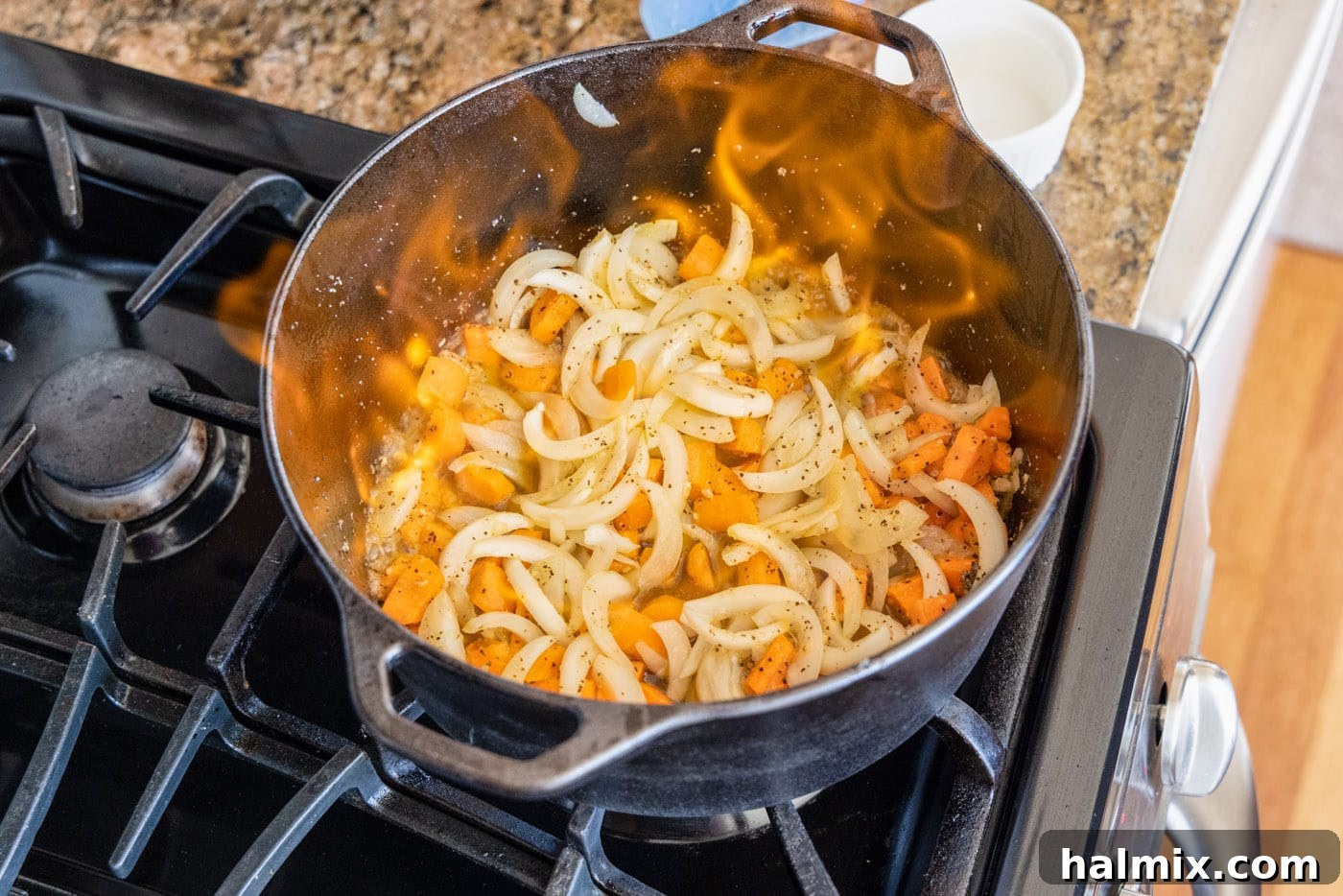
Safety First: For your safety, use a long-handled match or a long-handled grill lighter. Stand back from the pot, carefully ignite the Cognac, and ensure there are no flammable items directly overhead or nearby. The flame will ignite quickly and can be tall, so be prepared! Allow the flame to die down on its own, which usually takes about 2-3 minutes.
Igniting the Cognac to deepen the stew’s flavor (always use extreme caution during this step). Allow the Cognac flame to naturally subside completely before proceeding. CHEF TIP: If you have a microwave or any overhead cabinets directly above your stovetop, be extremely vigilant. The flame from flambéing can reach considerable heights. Always exercise the utmost caution, or simply omit this step if you are uncomfortable.
A visual reminder of potential flame height during flambéing; safety is paramount. -
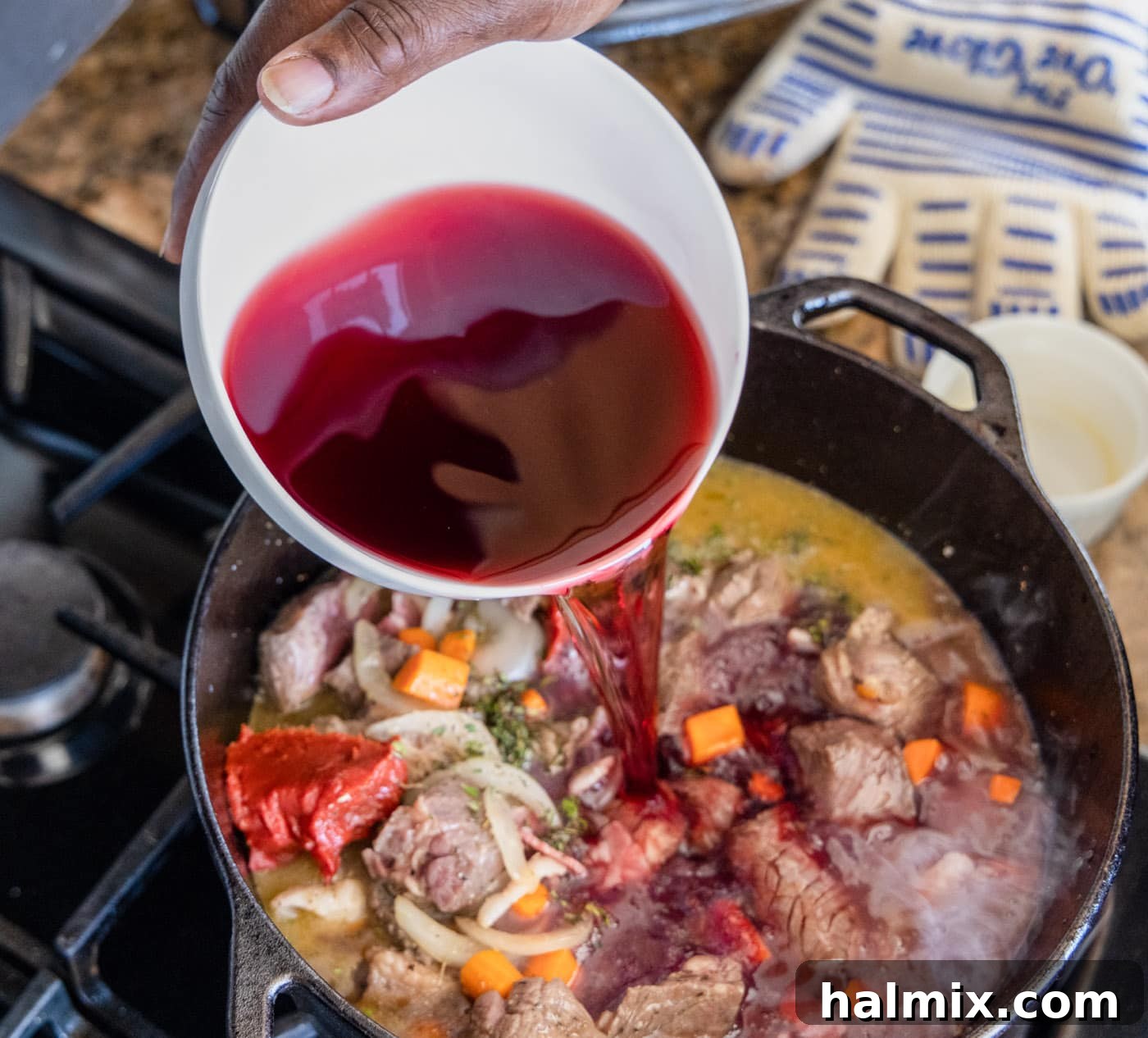
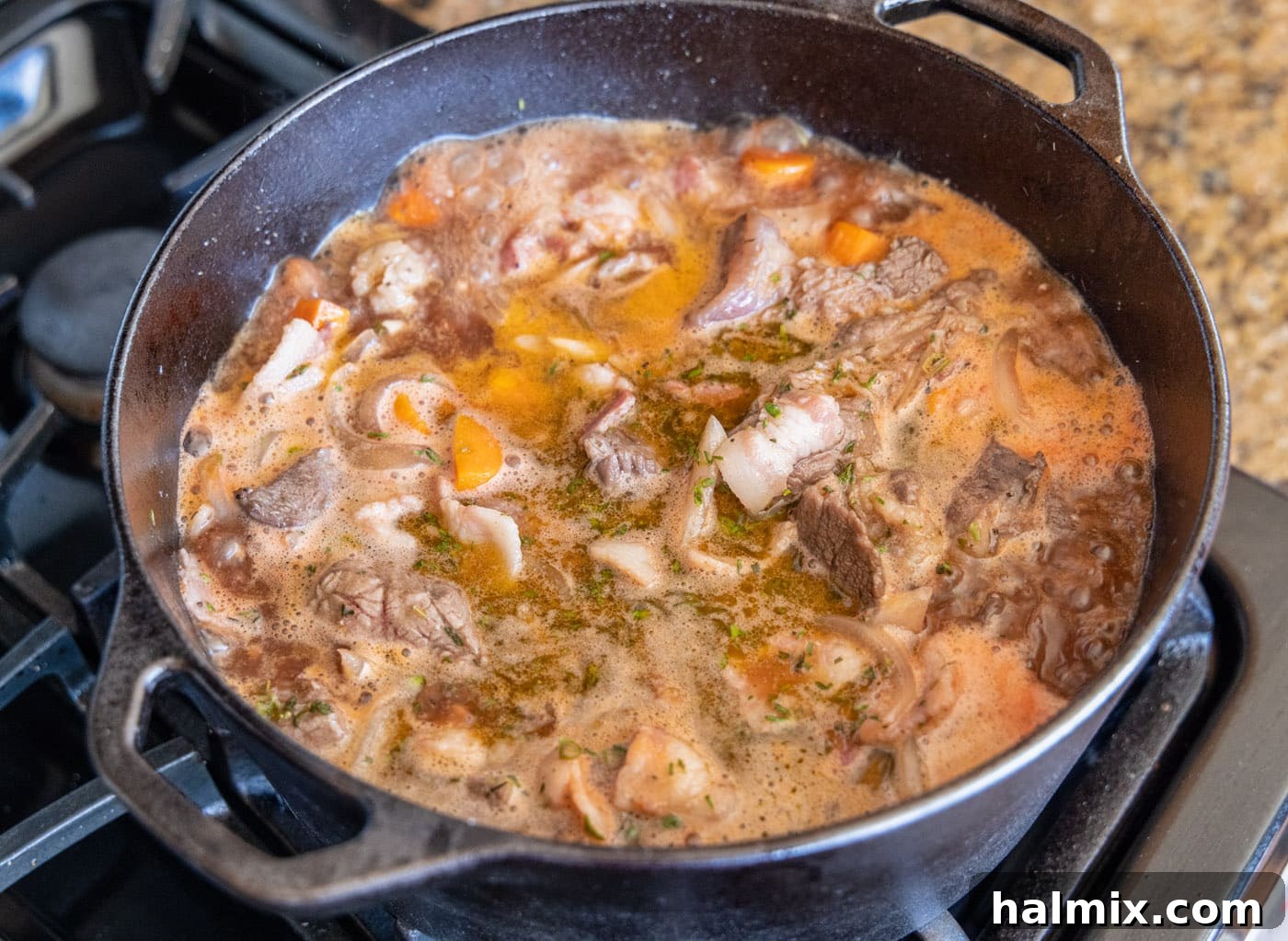
Combine and Simmer: Once the Cognac flame has completely subsided, return the browned beef and the cooked bacon to the Dutch oven. Stir in the 2 tablespoons of tomato paste, 1 ½ tablespoons of fresh thyme leaves, 1 ¾ cup beef broth, and 1 ¾ cup Pinot Noir. Bring the mixture to a gentle boil on the stovetop, ensuring all ingredients are well combined, then immediately turn off the heat.
Add red wine, broth, tomato paste, and thyme, bringing the mixture to a gentle boil on the stovetop. Ensure all ingredients are well combined and the mixture reaches a gentle boil before proceeding to oven braising. -
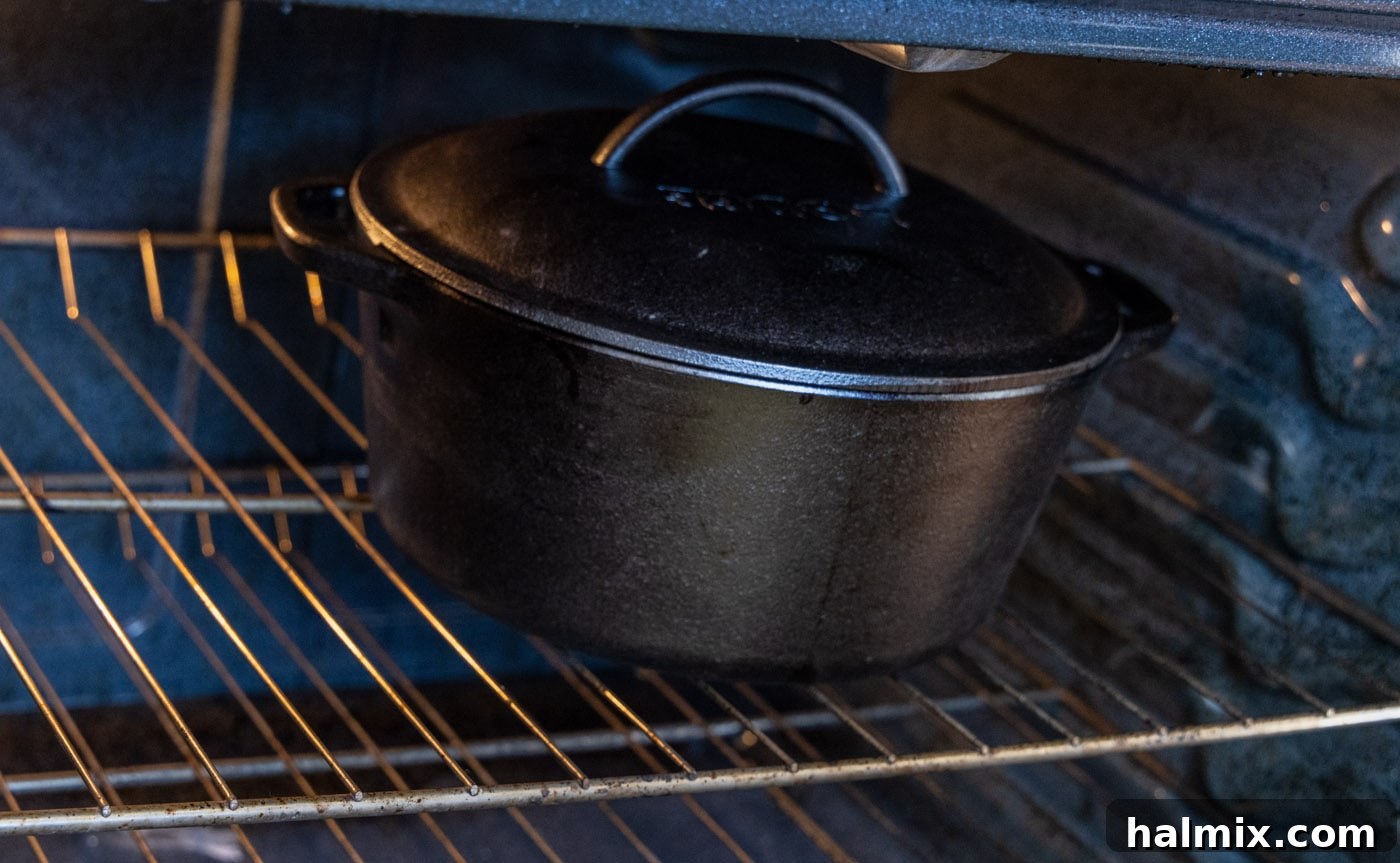
Oven Braise: Cover the Dutch oven tightly with its lid and carefully transfer it to your preheated oven. Bake for 1 hour and 45 minutes. This prolonged, gentle heat is crucial for tenderizing the beef to perfection and allowing all the rich flavors to meld and deepen beautifully.
Braise the stew in the oven for ultimate tenderness and profound flavor infusion. -
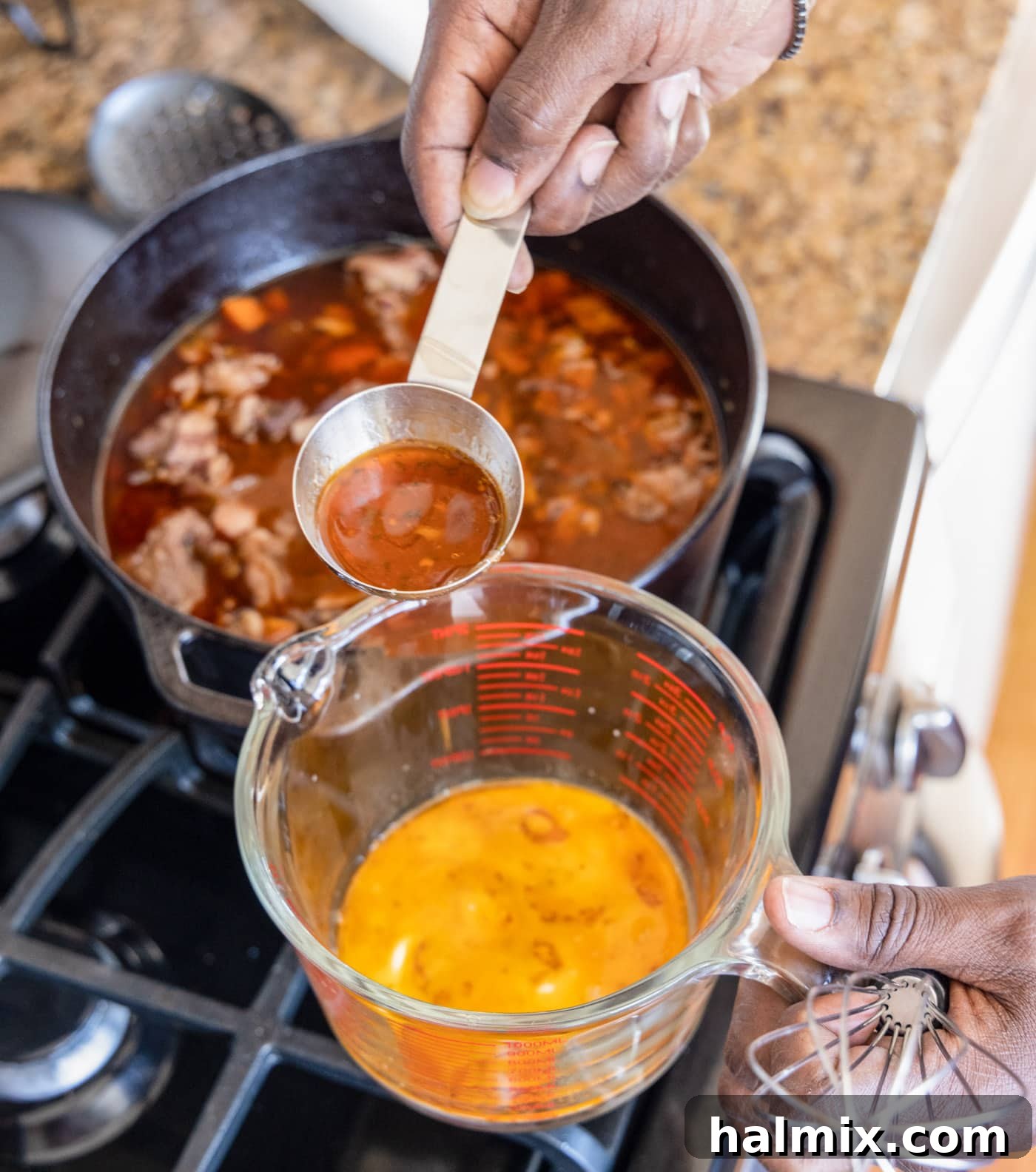
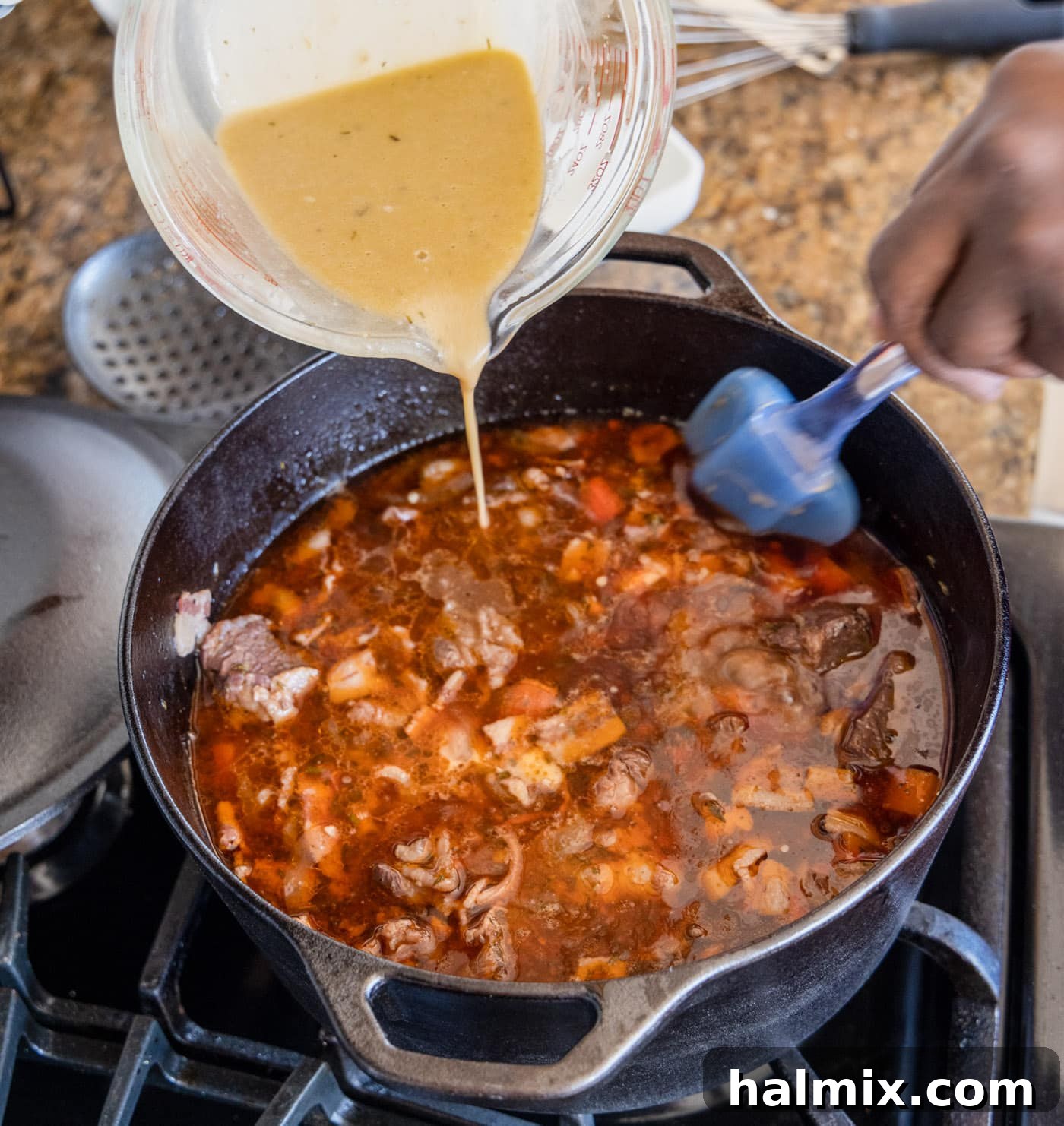
Thicken the Sauce: Remove the Dutch oven from the oven. Carefully spoon out ¼ cup of the hot pan juices into a small glass measuring cup. Add the 1 ½ tablespoons of all-purpose flour to these juices and whisk vigorously until a smooth paste forms with no lumps. Pour this flour mixture (slurry) back into the Dutch oven, stirring thoroughly to combine. This slurry will help to thicken and enrich the sauce to a perfect consistency.
Extract pan juices to create a smooth flour slurry for thickening the stew. Thoroughly stir the thickening mixture back into the stew to ensure a consistent, rich sauce. -
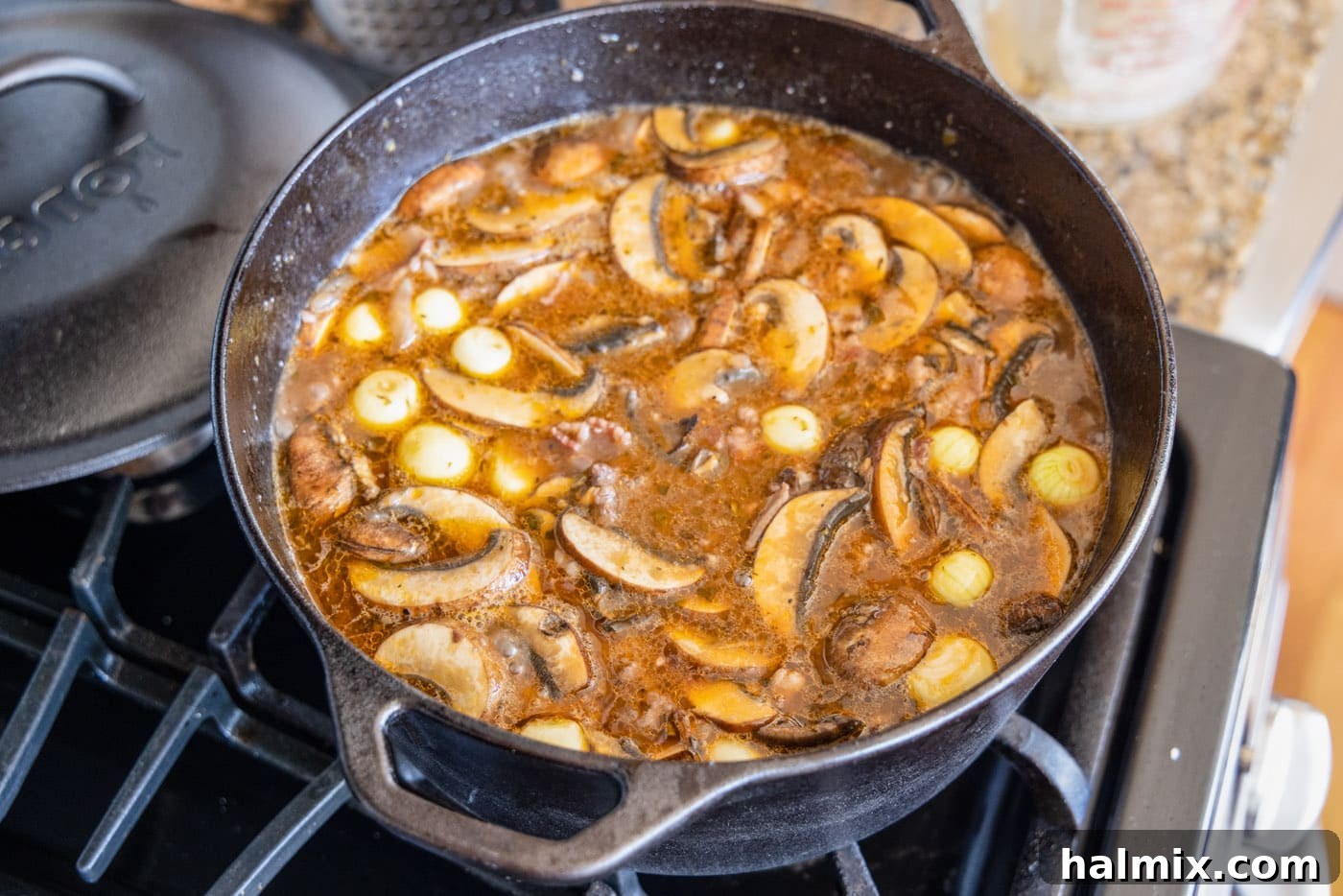
Finish with Fresh Vegetables: Add the ½ pound of sliced baby bella mushrooms and 3 ounces of pearl onions to the pot. Return the Dutch oven to the stovetop (uncovered this time) and cook over medium heat, stirring occasionally, until the mushrooms and onions are tender, and the broth has thickened to your desired luscious consistency. Reduce the heat to low and simmer for an additional 20 minutes to allow the flavors to deepen further and the sauce to fully reach its optimal, velvety texture.
Add fresh mushrooms and pearl onions to finish the stew, simmering until they are tender and the sauce is perfectly thickened.
Frequently Asked Questions & Expert Cooking Tips
Here are answers to common questions and additional expert tips to help you master your Beef Bourguignon and ensure it’s a resounding success every time you prepare it.
How do I store leftovers?
Store any leftover Beef Bourguignon in an airtight container in the refrigerator for up to 3 days. The flavors often deepen and improve overnight, making it an excellent dish for meal prepping. To reheat, gently warm on the stovetop over low-medium heat, stirring occasionally, until thoroughly heated through. A microwave can also be used, but stovetop reheating helps maintain the sauce’s texture and prevents the beef from becoming tough.
Can I freeze Beef Bourguignon?
Absolutely! Beef Bourguignon freezes beautifully, making it perfect for preparing a large batch. We recommend transferring the completely cooled stew into large freezer-safe bags or airtight containers, filling them about ¾ full to allow for expansion during freezing. Lay the bags flat in the freezer for up to 3 months. To serve, thaw overnight in the refrigerator, then reheat gently in a heavy-bottomed skillet or Dutch oven on the stovetop over low-medium heat until warmed through. This slow reheating method prevents the sauce from separating.
Can I make Beef Bourguignon ahead of time?
Yes, and it’s often even better the next day! Preparing Beef Bourguignon a day in advance allows the flavors more time to meld and deepen, resulting in an even more harmonious and rich dish. Simply prepare the entire recipe up to the point of serving, let it cool completely, then store it in an airtight container in the refrigerator. Reheat gently as described above before serving.
Can I make this recipe gluten-free?
To make this Beef Bourguignon gluten-free, you can easily substitute the all-purpose flour. Replace it with an equal amount of a gluten-free all-purpose flour blend (ensure it contains xanthan gum for thickening) or use cornstarch. If using cornstarch, create a slurry by mixing 1 tablespoon of cornstarch with 2 tablespoons of cold water for every cup of liquid you want to thicken. Whisk this slurry in at the end of the cooking process, simmering until the sauce reaches your desired thickness.
What if I don’t have a Dutch oven?
While a Dutch oven is ideal due to its excellent heat distribution and oven-safe properties, you can still make this delicious stew without one. You can use any large, heavy-bottomed pot that is oven-safe and comes with a tight-fitting lid. Ensure your chosen pot can safely go from stovetop to oven. If your pot isn’t oven-safe, you can transfer the stew to an oven-safe casserole dish after simmering on the stovetop, cover it tightly with foil, and proceed with the oven braising.
Tips for Perfect Browning
Do not rush the browning step for the beef! This is arguably the most crucial step for developing deep flavor. Ensure your pan is hot, and brown the beef in small batches. Overcrowding the pan will lower the temperature, causing the meat to steam instead of sear, preventing the formation of that delicious caramelized crust. Patience here will significantly impact the final taste.
Serving Suggestions for an Unforgettable Meal
Beef Bourguignon is a complete meal in itself, but it truly shines when paired with the right accompaniments to soak up its rich, luxurious sauce and balance its robust flavors.
- Classic Starches: The most traditional and beloved pairings include creamy mashed potatoes, buttery egg noodles, or fluffy white rice. These provide the perfect comforting canvas for the deep flavors of the stew. Consider a garlic mashed potato for an extra layer of flavor.
- Crusty Bread: A warm, crusty baguette or a rustic sourdough loaf is absolutely essential. It’s perfect for soaking up every last drop of the decadent, wine-infused sauce, ensuring no flavor goes to waste.
- Green Salad: A simple, lightly dressed green salad with a sharp vinaigrette (such as a Dijon vinaigrette) can offer a refreshing and acidic counterpoint to the richness of the stew, cleansing the palate between bites.
- Roasted Vegetables: While the stew contains carrots, serving it with additional roasted root vegetables like parsnips or small roasted potatoes can add more texture and earthy notes.
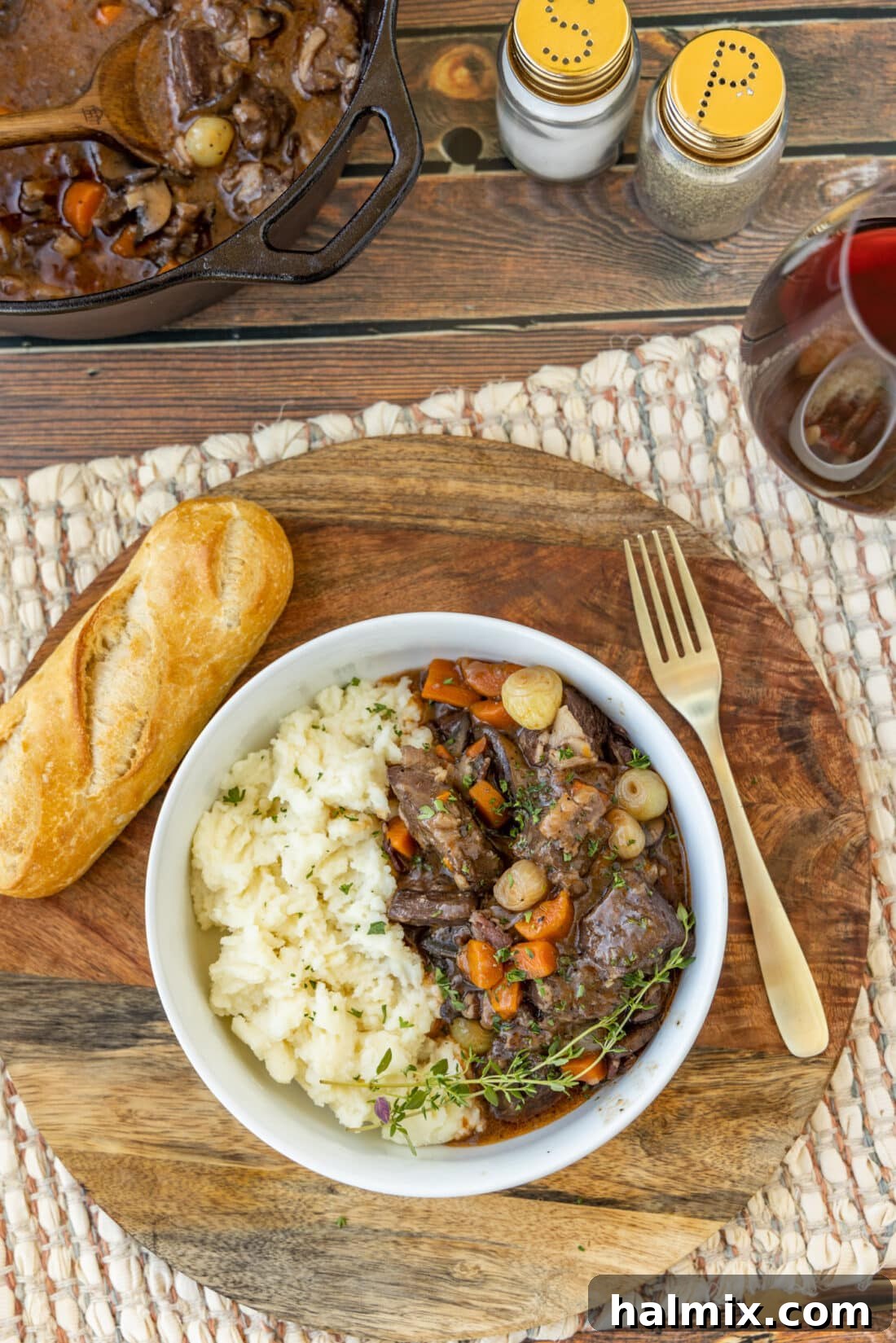
- Wine Pairing: Continue the Burgundy theme by pairing your Beef Bourguignon with a dry red wine like a Pinot Noir or a similar medium-bodied red from the Burgundy region. This complements the flavors in the stew beautifully.
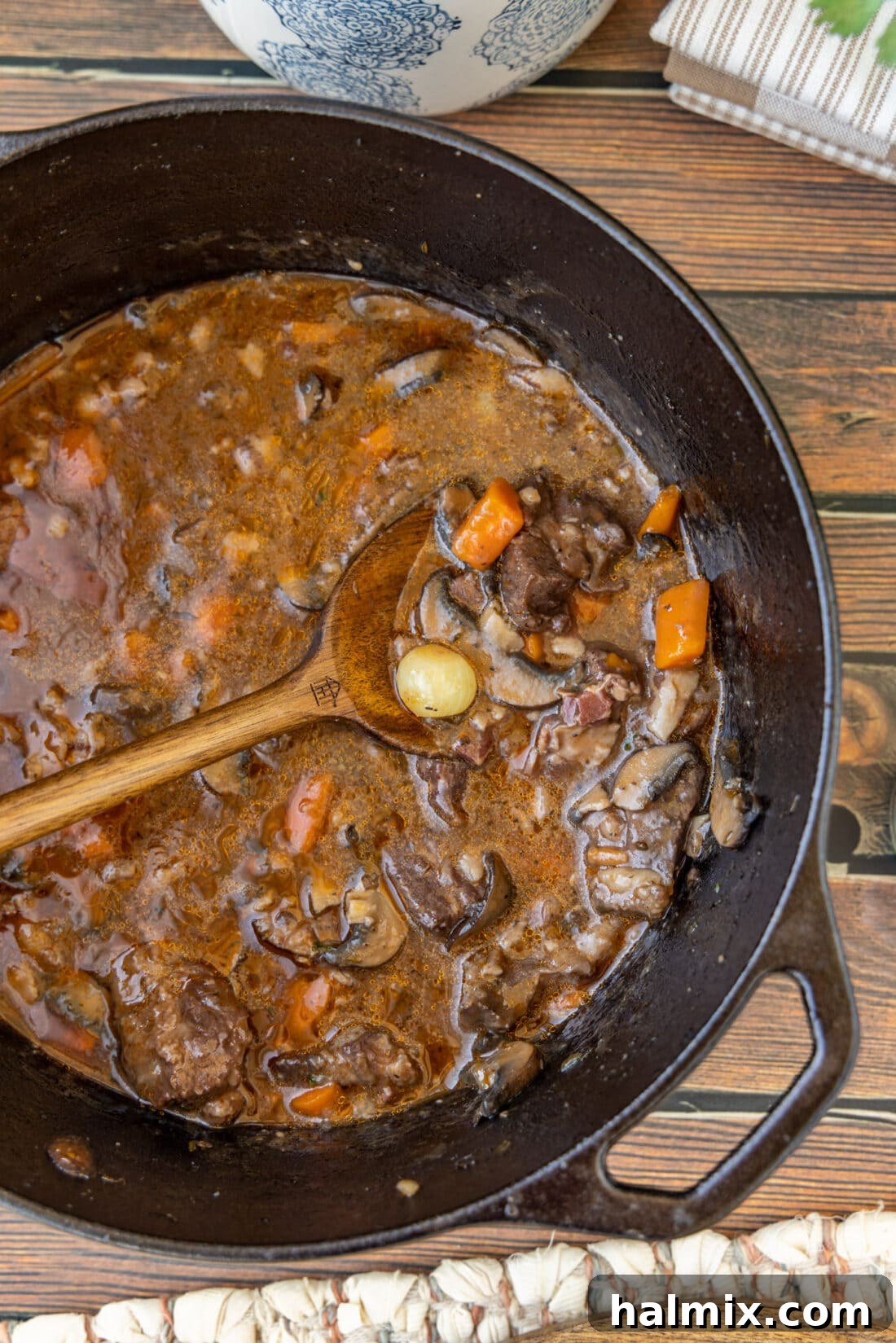
Channel your inner Julia Child with this gorgeous Beef Bourguignon recipe. Impress not only yourself with your enhanced cooking skills but also delight your family and guests with this truly magnificent French classic. Enjoy the compliments and the unforgettable flavors!
Explore More Hearty Beef Recipes
If you loved this comforting and flavorful beef stew, you might enjoy exploring these other delicious beef-centric dishes from our kitchen. Each offers its own unique twist on hearty beef preparation.
- Hearty and Traditional Irish Stew
- Creamy and Comforting Beef Stroganoff
- Classic Oven Swiss Steak, Tender and Flavorful
- Tender Instant Pot Beef Short Ribs for Easy Weeknights
- Slow Cooker Hungarian Goulash & Noodles
- Rich and Elegant Veal Osso Buco
I love to bake and cook and share my kitchen experience with all of you! Remembering to come back each day can be tough, that’s why I offer a convenient newsletter every time a new recipe posts. Simply subscribe and start receiving your free daily recipes!
Complete Classic Beef Bourguignon Recipe
Below you’ll find the full, printable recipe card for our Beef Bourguignon, including precise ingredient measurements, detailed instructions, essential equipment, and comprehensive nutritional information. Get ready to cook a French classic!
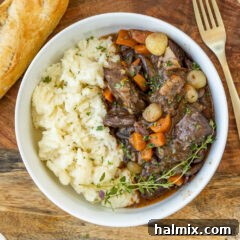
Beef Bourguignon
This Beef Bourguignon recipe delivers incredibly tender, melt-in-your-mouth beef simmered in a rich red wine sauce with bacon, mushrooms, carrots, and onions. It’s a truly flavorful French-inspired classic that’s a step up from regular beef stew!
Rating: 5 out of 5 stars (based on 15 votes)
IMPORTANT: For additional helpful advice, ingredient substitution ideas, and expert cooking tips, please refer to the Frequently Asked Questions and Expert Tips section above in the blog post.
Pin Recipe
Course: Dinner
Cuisine: American, French
Servings: 6 servings (approximately 12 cups total)
Total Time: 2 hours 50 minutes (Includes prep and cooking)
Calories: 720 kcal per serving
Author: Amanda Davis
Ingredients
- 2 ½ pounds beef chuck roast, most of the fat trimmed, cut into 1 ½-inch cubes
- ½ pound applewood smoked thick-slice bacon, chopped
- 3 Tablespoons olive oil
- 1 Tablespoon garlic salt, divided
- ½ Tablespoon black pepper, divided
- 1 medium yellow onion, slivered
- 1 Tablespoon minced garlic (about 3 cloves)
- ½ pound carrots, diced into ½-inch pieces
- ½ cup Cognac (optional, see “Important Notes Before You Begin”)
- 2 Tablespoons tomato paste
- 1 ½ Tablespoons fresh thyme leaves, finely chopped
- 1 ¾ cup beef broth (low sodium preferred)
- 1 ¾ cup Pinot Noir (or other dry red Burgundy wine)
- 1 ½ Tablespoons all-purpose flour
- ½ pound baby bella mushrooms, thinly sliced
- 3 ounces pearl onions (frozen or canned, see “Important Notes Before You Begin”)
Equipment You’ll Need
- Dutch oven (oven-safe with lid, 6-8 quart recommended)
- Long-handled grill lighter or long-handled stick matches
- Heat-resistant vinyl gloves (optional, for handling hot pan)
- Liquid measuring cup
- Whisk
- Cutting board and sharp chef’s knife
- Slotted spoon
- Paper towels
Important Notes Before You Begin
- Cognac Flambé: Using Cognac adds an extra layer of complexity, but the flambéing step is optional. If you are not comfortable lighting alcohol, you can omit the Cognac entirely. A possible (though different flavor) substitute is ¼ cup of good quality brandy or even Worcestershire sauce.
- Pearl Onions: For maximum convenience, frozen pearl onions are highly recommended as they come peeled and ready to use. Canned pearl onions are also an acceptable alternative. If you opt for fresh pearl onions, be prepared for a more tedious peeling process.
- Wine Selection: Always choose a dry red wine like Pinot Noir for Beef Bourguignon. It doesn’t need to be an expensive bottle, but avoid “cooking wines” or overly sweet varieties, as they will negatively impact the stew’s flavor.
- Browning the Beef: Do not overcrowd your Dutch oven during the browning stage. Work in batches if necessary to ensure the beef truly sears and develops a rich, flavorful crust, rather than steaming. This step is key to the stew’s depth of flavor.
Detailed Instructions
- Preheat your oven to 250°F (120°C).
- In a large, oven-proof Dutch oven, heat the 3 Tablespoons of olive oil over medium heat until it shimmers. Add the chopped bacon and cook until soft and the fat is rendered, but do not cook until crispy. Remove the cooked bacon and set aside on paper towels.
- While the bacon cooks, season the cubed beef chuck roast evenly with ½ Tablespoon of garlic salt and ½ Tablespoon of black pepper.
- Add the seasoned beef to the hot Dutch oven (using the rendered bacon fat). Cook in batches to avoid overcrowding, until deeply browned on all sides. Remove the browned beef and set it aside with the bacon.
- Add the slivered yellow onion, minced garlic, diced carrots, and the remaining ½ Tablespoon of garlic salt and black pepper to the same pan. Cook over medium heat, stirring occasionally, until the onions are tender and translucent (about 5-7 minutes). Scrape up any browned bits from the bottom of the pan as you stir.
- Carefully pour the ½ cup Cognac into the onion mixture. Using a long-handled match or grill lighter, carefully ignite the Cognac. Stand back as the flame will light quickly and can be tall. Allow the flame to go out on its own, which should take about 2-3 minutes. (Refer to the “Chef Tip” in the main post regarding flame height if you have an overhead microwave.)
- Once the flame has subsided, return the browned beef and cooked bacon to the Dutch oven. Stir in the 2 Tablespoons of tomato paste, 1 ½ Tablespoons of fresh thyme leaves, 1 ¾ cup beef broth, and 1 ¾ cup Pinot Noir. Bring the mixture to a gentle boil on the stovetop, then turn off the heat.
- Cover the Dutch oven with its lid and place it in the preheated oven. Bake for 1 hour 45 minutes.
- Remove the Dutch oven from the oven. Ladle out ¼ cup of the hot pan juices into a glass measuring cup. Add 1 ½ Tablespoons of all-purpose flour to the juices and whisk until completely combined and smooth. Pour this flour slurry back into the Dutch oven, stirring well to incorporate.
- Add the ½ pound of sliced baby bella mushrooms and 3 ounces of pearl onions to the pan. Return the Dutch oven to the stovetop (uncovered) and cook over medium heat, stirring occasionally, until the mushrooms and onions are tender and the sauce has thickened. Reduce heat to low and simmer for another 20 minutes to allow flavors to deepen and the sauce to reach optimal consistency. Serve hot and enjoy!
Nutrition Information (per serving)
Serving Size: 1 serving (approx. 2 cups) | Calories: 720kcal | Carbohydrates: 14g | Protein: 44g | Fat: 44g | Saturated Fat: 16g | Polyunsaturated Fat: 5g | Monounsaturated Fat: 23g | Trans Fat: 1g | Cholesterol: 155mg | Sodium: 1899mg | Potassium: 1157mg | Fiber: 3g | Sugar: 4g | Vitamin A: 6521IU | Vitamin C: 9mg | Calcium: 80mg | Iron: 5mg
Tried this Recipe? Pin it for Later!
Follow us on Pinterest @AmandasCookin or tag your creation with #AmandasCookin!
The recipes on this blog are tested with a conventional gas oven and gas stovetop. It’s important to note that some ovens, especially as they age, can cook and bake inconsistently. Using an inexpensive oven thermometer can assure you that your oven is truly heating to the proper temperature. If you use a toaster oven or countertop oven, please keep in mind that they may not distribute heat the same as a conventional full-sized oven and you may need to adjust your cooking/baking times accordingly. In the case of recipes made with a pressure cooker, air fryer, slow cooker, or other appliance, a link to the specific appliances we use is often listed within each respective recipe. For baking recipes where measurements are primarily given by weight, please note that results may not be the same if volumetric cups are used instead, and we cannot guarantee success with that method due to variations in ingredient density.