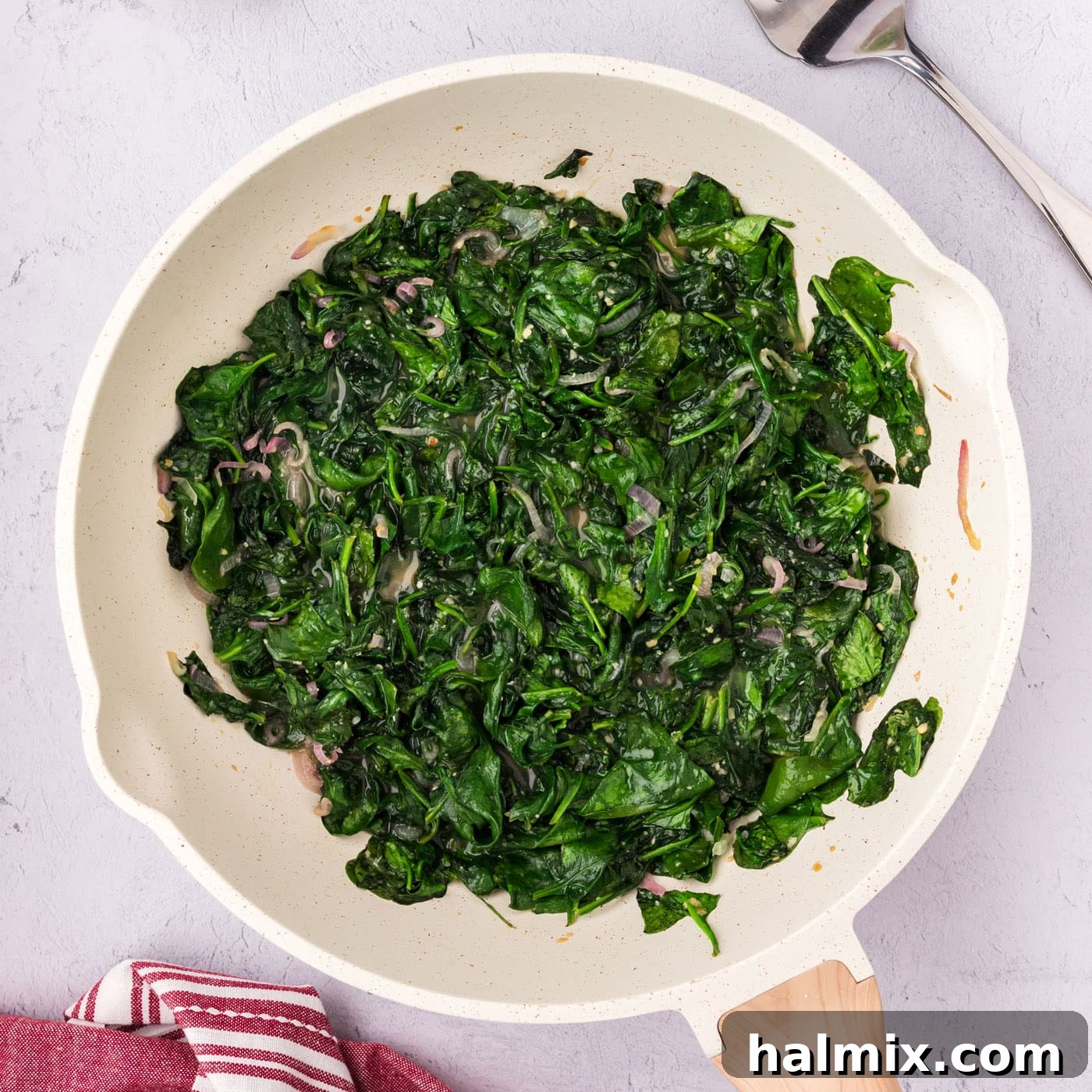
Transforming fresh spinach into a delectable side dish has never been easier or more rewarding. This Sautéed Spinach recipe is a true kitchen hero, delivering exceptional flavor and vital nutrients in a mere 10 minutes. Infused with aromatic garlic and delicate shallots, and cooked to perfection in rich olive oil, this quick and healthy side dish is guaranteed to become a family favorite. Whether you’re a seasoned chef or a beginner in the kitchen, this simple yet elegant preparation method elevates ordinary greens into an extraordinary culinary experience.
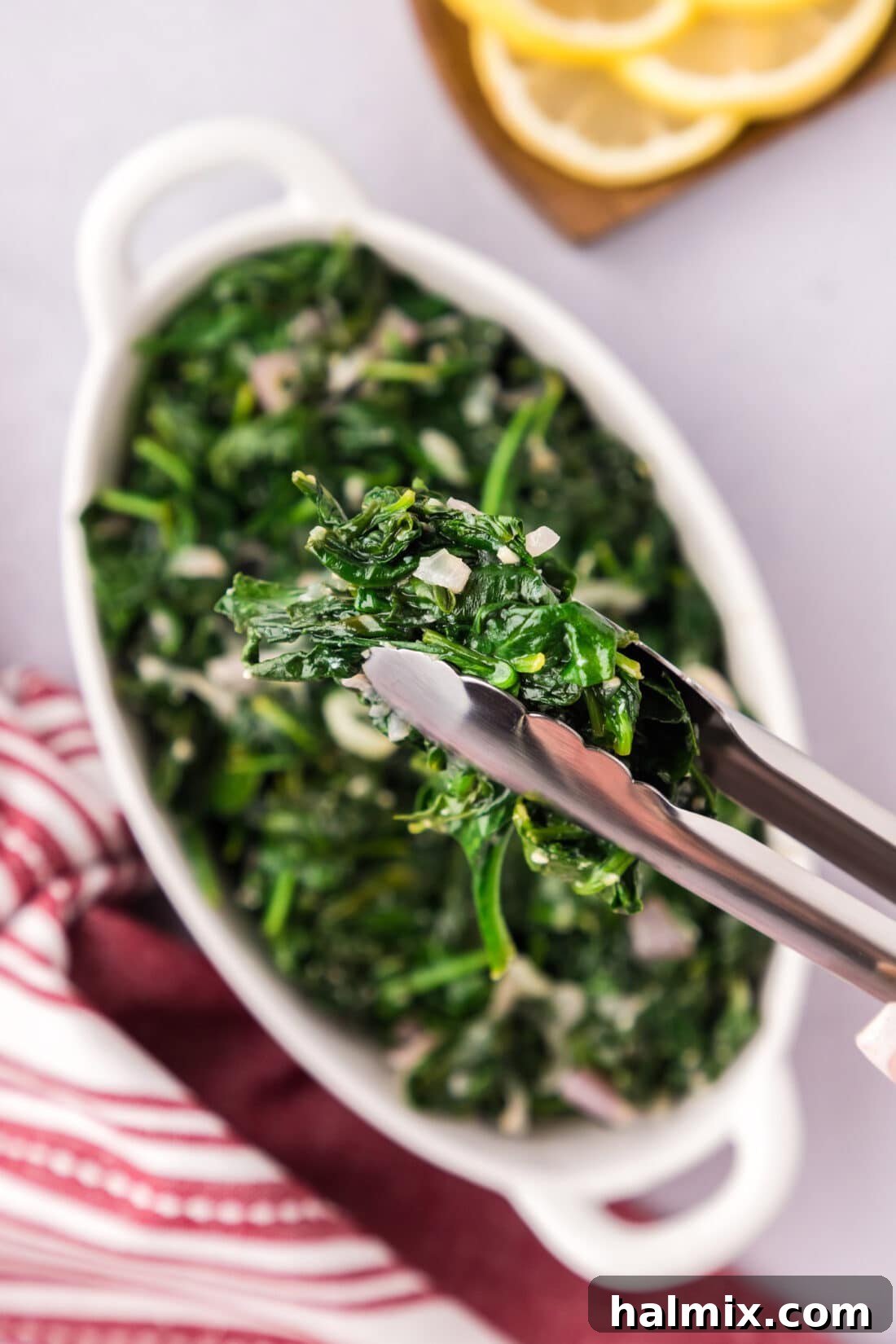
Why This Sautéed Spinach Recipe Is a Must-Try
Integrating more greens into your diet doesn’t have to be a chore, and this sautéed spinach recipe proves it. It’s not just another side dish; it’s a vibrant, nutrient-dense addition that complements almost any meal. What makes this recipe truly stand out is its incredible simplicity combined with its powerful health benefits and delicious taste. Forget complicated cooking techniques; this dish requires minimal effort and yields maximum flavor. It’s truly one of the most delightful and efficient ways to enjoy spinach, making healthy eating both accessible and enjoyable.
Unlocking the Nutritional Powerhouse of Spinach
Spinach is widely celebrated as a superfood, and for good reason. It’s an exceptionally rich source of essential vitamins and minerals, crucial for maintaining overall health. A serving of sautéed spinach provides an excellent dose of Vitamin K, vital for bone health and blood clotting, and a significant amount of Vitamin A, which supports vision, immune function, and skin health. It’s also packed with Vitamin C, a powerful antioxidant that boosts immunity, and folate, essential for cell function and growth. Beyond vitamins, spinach offers minerals like iron, critical for energy and oxygen transport, and magnesium, important for muscle and nerve function, blood sugar control, and blood pressure regulation.
Furthermore, spinach is loaded with antioxidants such as lutein and zeaxanthin, known for their protective effects on eye health, helping to guard against age-related macular degeneration. The anti-inflammatory compounds found in spinach also contribute to reducing oxidative stress in the body, promoting long-term wellness. While some nutrients, like Vitamin C, can be slightly reduced by heat, cooking spinach actually increases the bioavailability of other important nutrients, such as Vitamin A and iron, making cooked spinach an incredibly healthy choice. This leafy green powerhouse is incredibly versatile, fitting seamlessly into various dishes. Enjoy it fresh in vibrant salads like our Spinach Salad with Mango and Avocado, blend it into refreshing Tropical Smoothies, or sauté it in a skillet for a warm, savory side to your main course. For an extra layer of savory depth, don’t hesitate to load your skillet with extra minced garlic to create a truly irresistible garlic spinach!
Effortless Preparation for Busy Lifestyles
In today’s fast-paced world, finding recipes that are both healthy and quick is a game-changer. This sautéed spinach recipe is designed with efficiency in mind. From start to finish, you’re looking at about 10 minutes, making it perfect for weeknight dinners, last-minute gatherings, or whenever you need a nutritious boost without the fuss. The straightforward process involves just a few simple steps, allowing you to whip up a gourmet-tasting side dish with minimal clean-up. Its ease of preparation means you can focus more on enjoying your meal and less on the cooking process, proving that healthy eating doesn’t have to be time-consuming.
Essential Ingredients for Perfect Sautéed Spinach
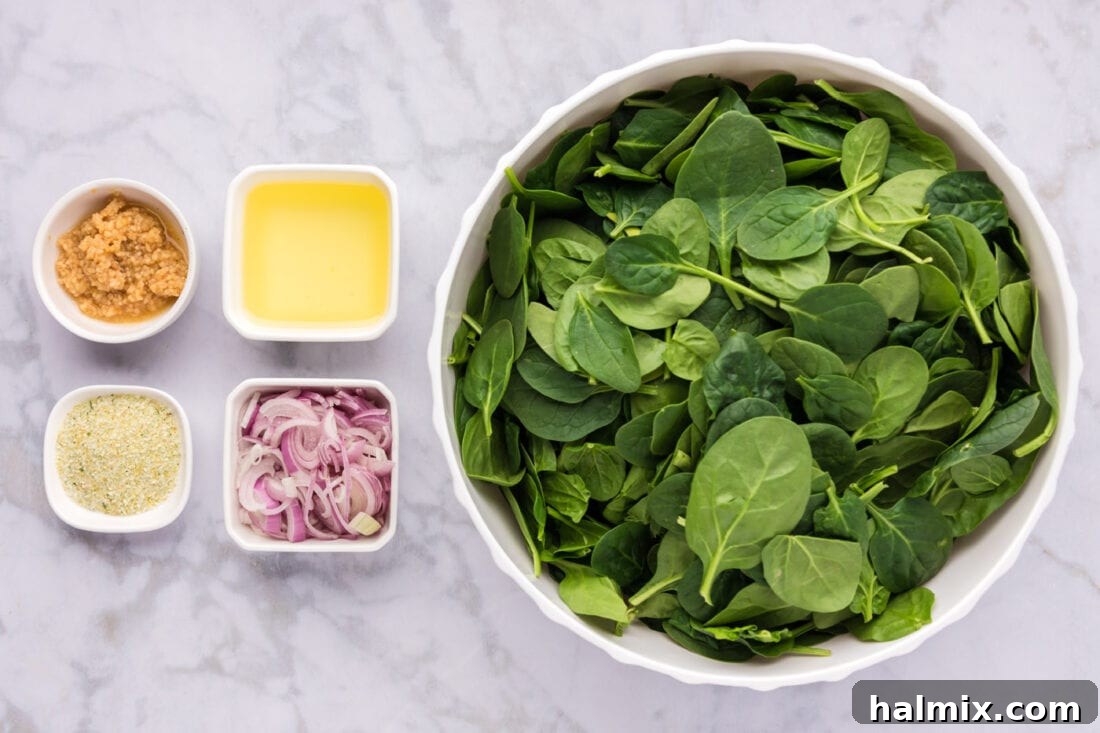
Crafting the perfect sautéed spinach requires just a handful of fresh, high-quality ingredients. Each component plays a crucial role in building the delightful flavor profile of this simple dish. While the full printable version of the recipe, complete with precise measurements and instructions, is available at the end of this post, here’s a closer look at the key players and why they’re essential for an unforgettable culinary experience.
Ingredient Spotlight & Smart Substitutions
- Spinach: The star of our show! You can opt for either delicate baby spinach or the more robust mature spinach. Baby spinach is typically ready to use straight from the package, requiring just a quick rinse. For mature spinach, I highly recommend trimming any tough stems before cooking, as they can be fibrous and less pleasant to eat. Remember, spinach dramatically reduces in volume when cooked – what might seem like a mountain of leaves will shrink down to a manageable portion. Don’t be surprised if your skillet overflows a bit when you first add the spinach; it will wilt down quickly.
- Garlic: Freshly minced garlic is indispensable for its pungent, aromatic flavor that defines this dish. Using fresh cloves will always yield the best results, providing a bright, sharp taste that pre-minced garlic often lacks. Aim for a fine mince to ensure the garlic evenly disperses its flavor without overwhelming the spinach.
- Shallots: These small, mild members of the onion family offer a delicate, sweet, and subtle oniony flavor that complements the garlic beautifully without being too aggressive. They add a sophisticated layer of taste. If shallots are unavailable, a small amount of finely minced yellow or red onion can serve as a substitute, though the flavor will be slightly stronger.
- Olive Oil: A good quality extra virgin olive oil is key. It provides the medium for sautéing and infuses the spinach with a rich, fruity undertone. It’s healthier than many other oils and its flavor pairs exceptionally well with greens and aromatics.
- Garlic Salt: This convenient seasoning adds both saltiness and an extra layer of garlic flavor. It’s perfect for a quick season. If you don’t have garlic salt, you can easily substitute with regular sea salt or kosher salt, combined with a pinch of garlic powder. Adjust to your personal taste preferences, and don’t forget freshly ground black pepper for a touch of warmth and spice.
Mastering the Art of Sautéed Spinach: A Step-by-Step Guide
These step-by-step photos and detailed instructions are designed to help you visualize each stage of making this incredibly simple yet flavorful recipe. For the complete printable version with all measurements and full instructions, please Jump to the Recipe Card at the bottom of this post.
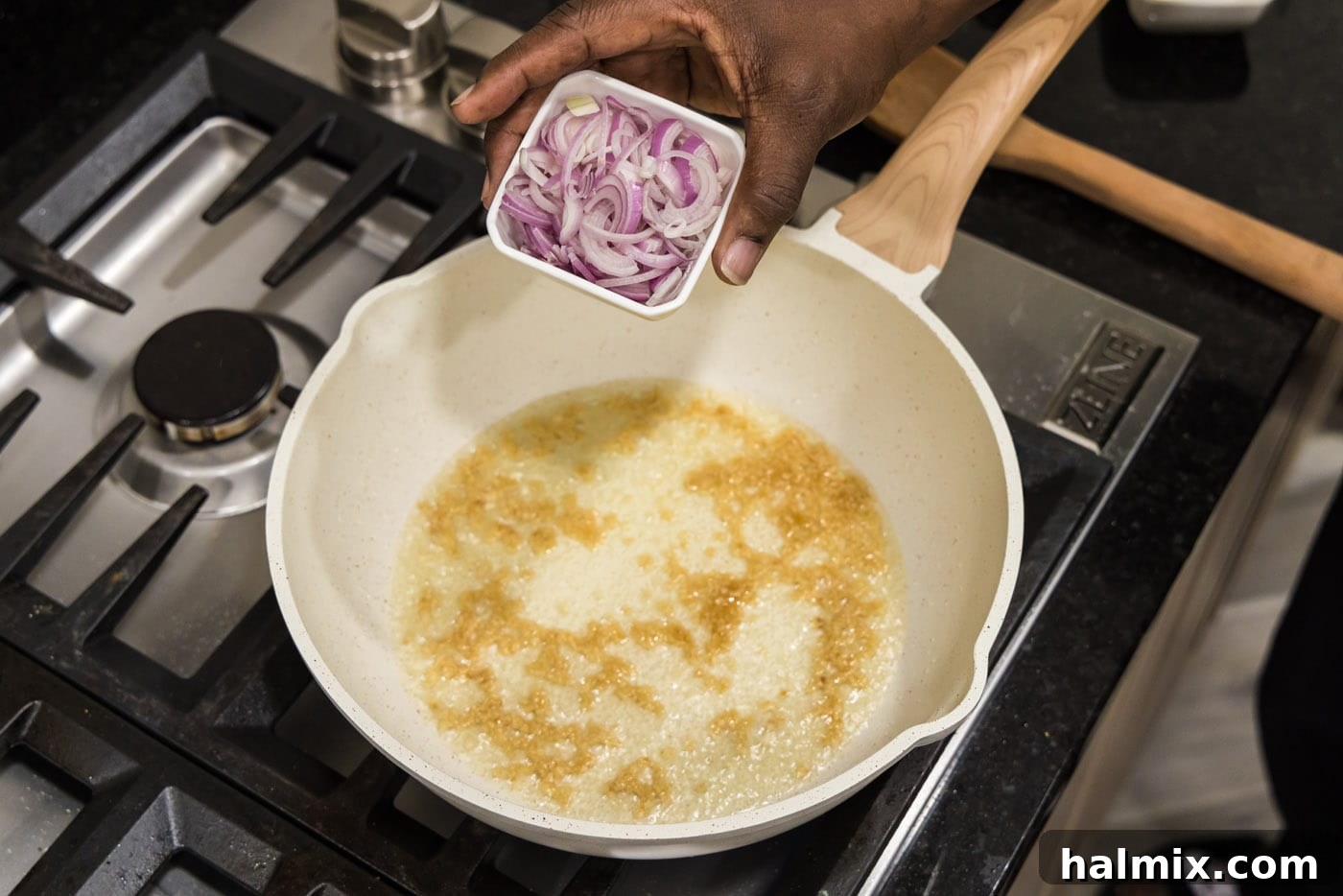
- Heat the Olive Oil: Begin by adding a generous amount of olive oil to a large, heavy-bottomed skillet. Place the skillet over medium-high heat. You’ll know the oil is ready when it starts to shimmer gently, indicating it’s hot enough to cook the aromatics efficiently without burning. Avoid letting the oil smoke, as this means it’s too hot and can impart a bitter flavor.
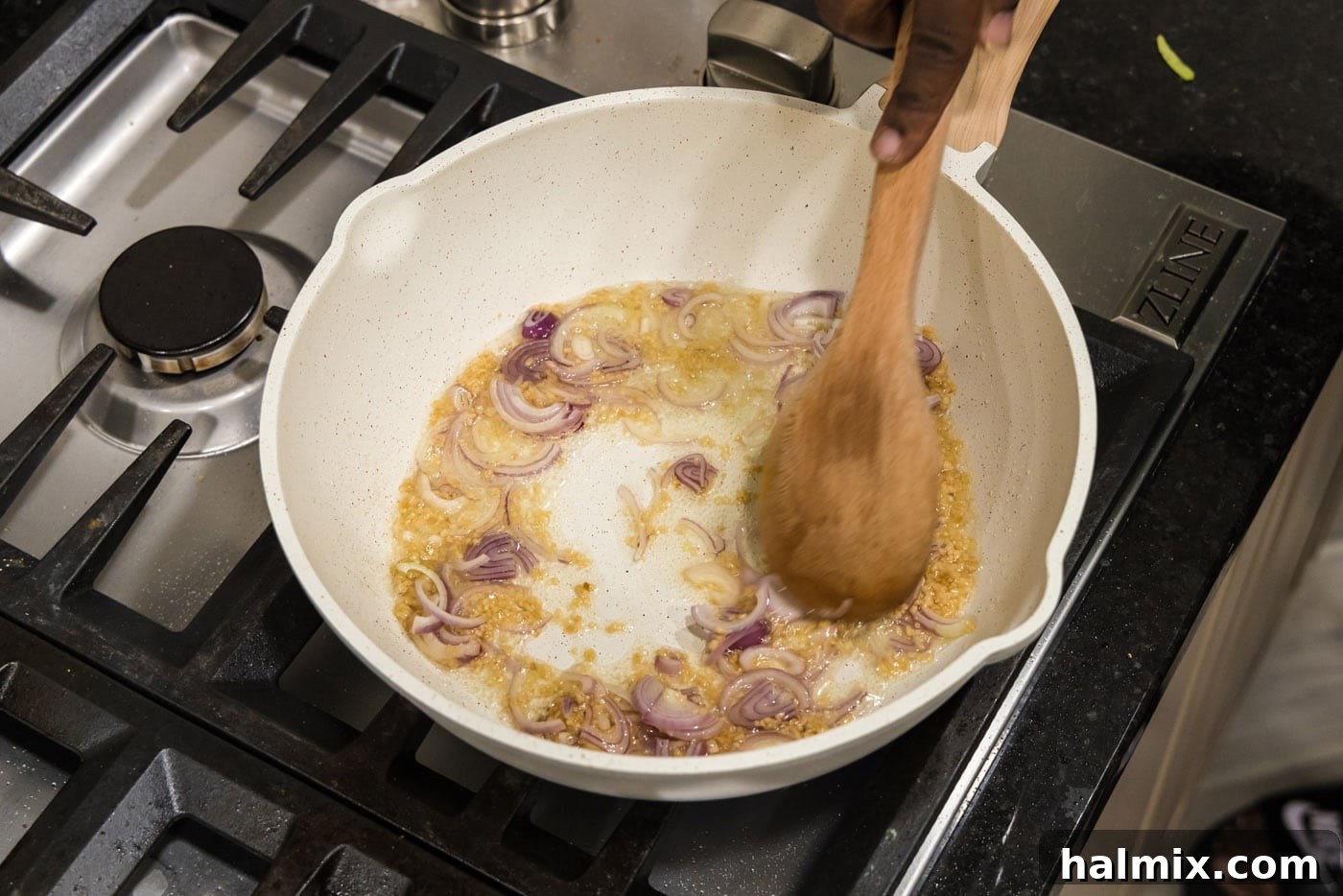
- Sauté the Aromatics: Carefully add the minced garlic and chopped shallots to the shimmering olive oil. Sauté them for approximately 2 minutes, stirring frequently. The goal here is to soften them and allow their fragrant aromas to release, infusing the oil with their delightful essence. Be vigilant to prevent the garlic from browning or burning, as burnt garlic can become bitter.

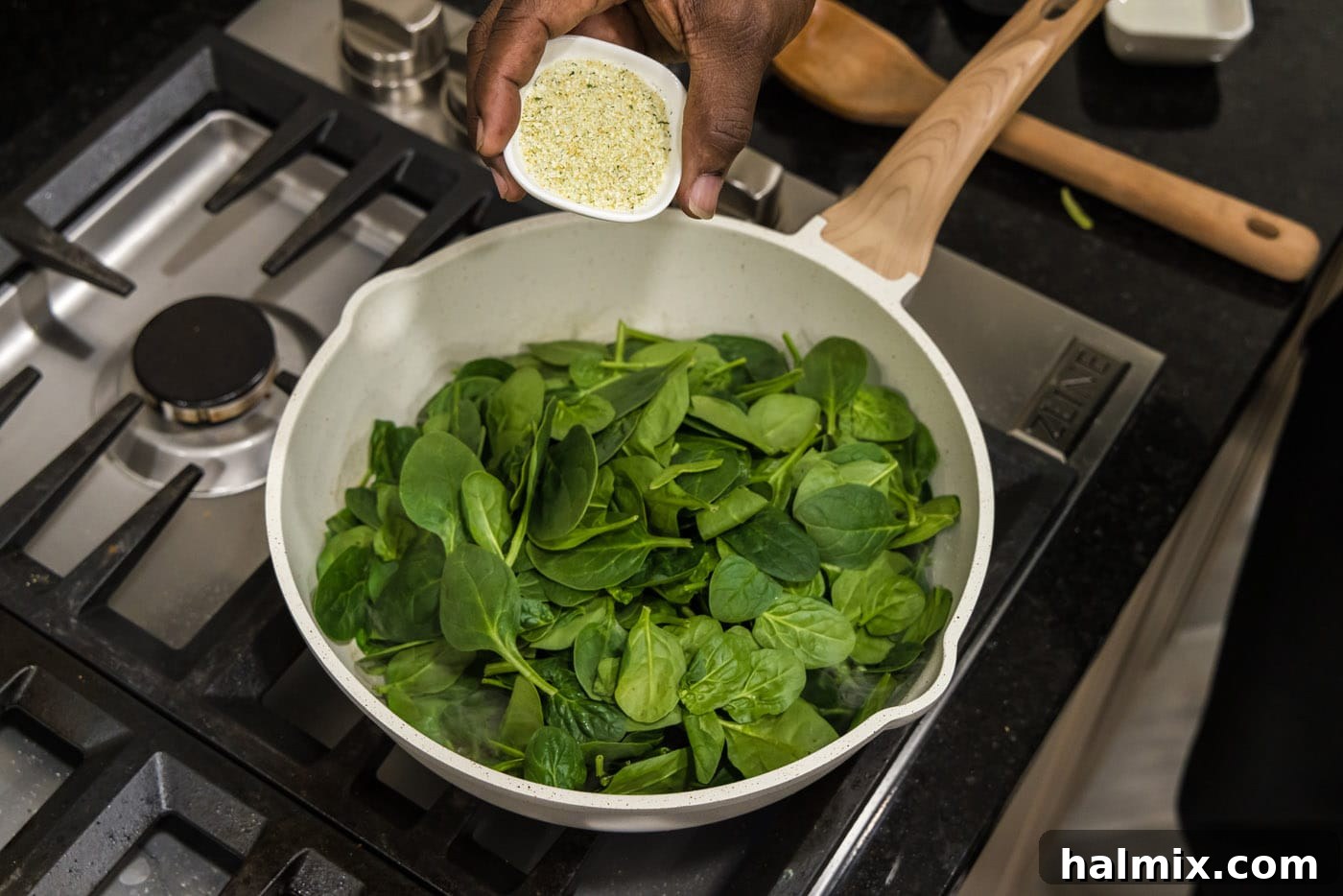
- Add and Season the Spinach: Now, it’s time to introduce the star ingredient. Add the raw spinach leaves to the skillet. If you’re working with a large quantity, you might need to add it in batches, allowing the first batch to wilt slightly before adding more. Season generously with garlic salt to taste. This step is crucial for building flavor from the start.
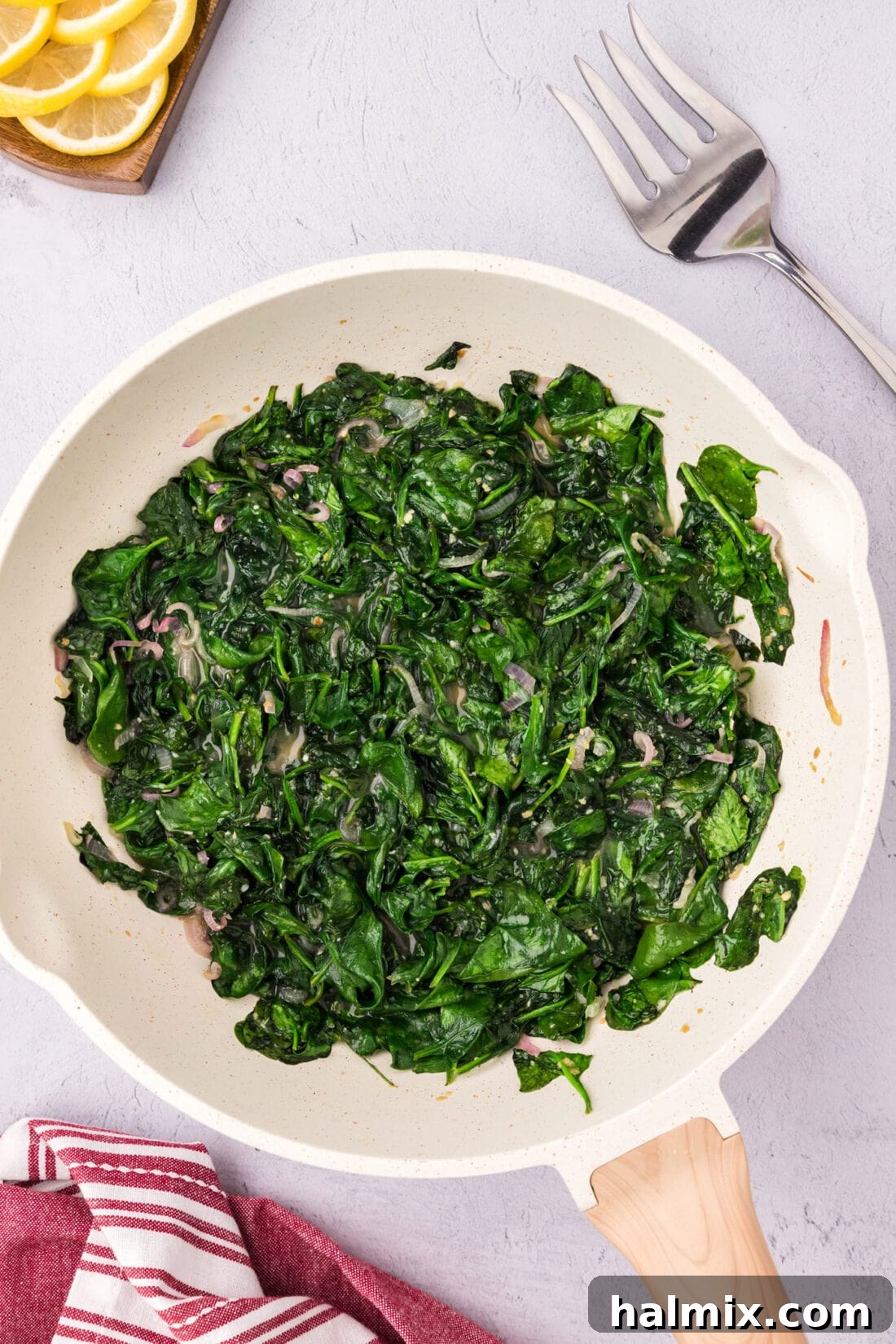
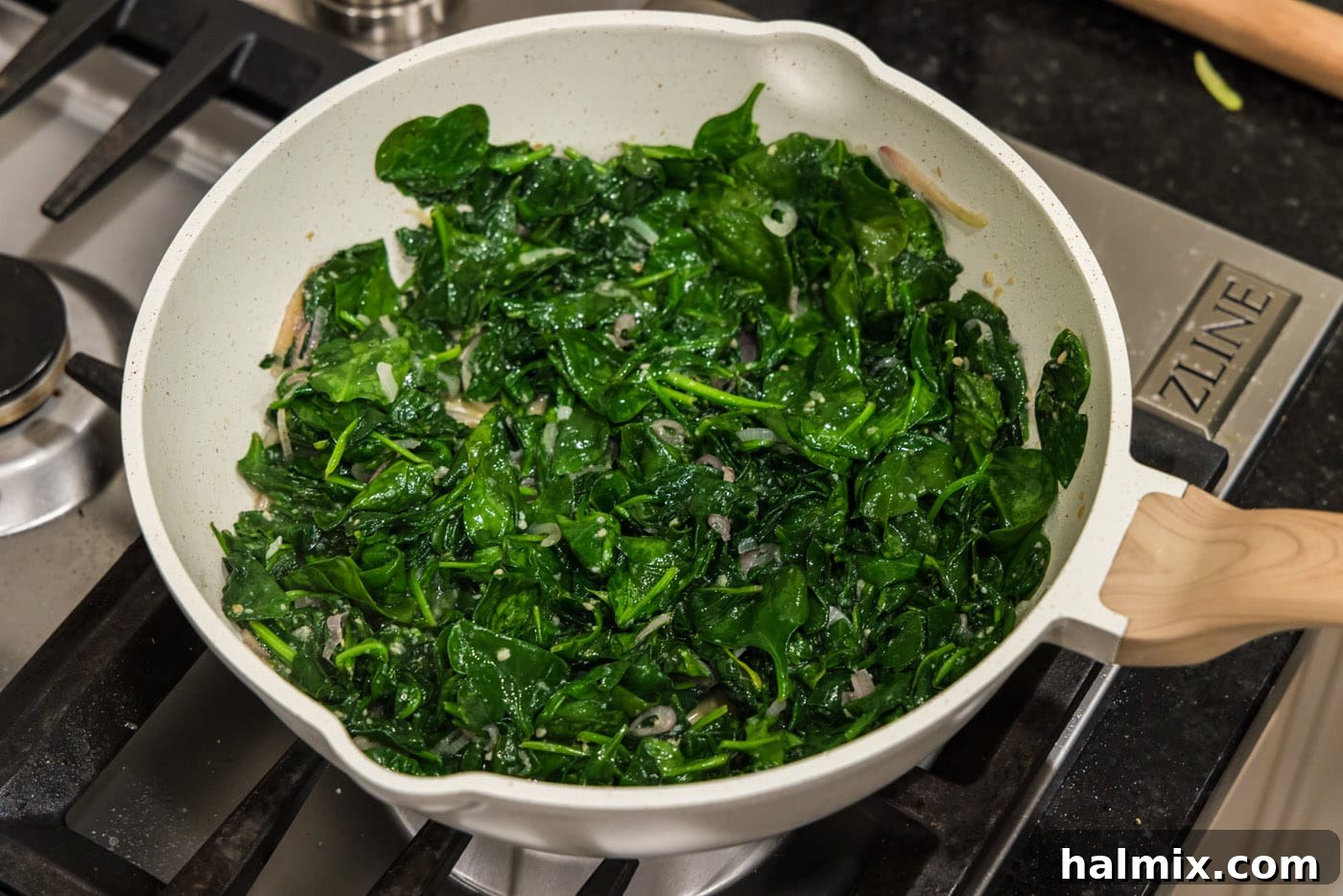
- Wilt to Perfection: Continue to cook the spinach, turning it often with tongs or a spatula. This ensures even cooking and helps all the leaves come into contact with the heat and seasoned oil. The spinach will quickly begin to wilt down. Keep cooking until all the leaves are thoroughly wilted and warmed through, retaining a vibrant green color and tender texture. Avoid overcooking, as this can result in mushy spinach.
Frequently Asked Questions & Expert Tips for Sautéed Spinach
Absolutely, sautéed spinach is incredibly healthy! Contrary to some misconceptions, cooking spinach does not diminish its overall health benefits. While a small amount of Vitamin C potency might be lost due to heat, cooked spinach actually shows an increase in the bioavailability of other key nutrients, such as Vitamin A and iron, making them easier for your body to absorb. This means you’re still getting a significant intake of essential vitamins (like K, A, and C), minerals (iron, magnesium, potassium), and powerful antioxidants (lutein, zeaxanthin). Whether you prefer it raw in a salad or lightly sautéed, spinach remains a nutritional powerhouse, providing numerous benefits for your immune system, vision, bone health, and overall well-being.
Storing leftover sautéed spinach is straightforward. Once the spinach has cooled completely to room temperature, transfer it to an airtight container. Keep it in the refrigerator for up to 3 days. Reheat gently in a skillet over low heat or in the microwave until just warmed through. Avoid over-reheating, as this can make the spinach mushy.
Yes, you can freeze sautéed spinach, although the texture might become slightly softer upon thawing. To freeze, allow the cooked spinach to cool completely. Gently squeeze out any excess liquid, as this helps prevent ice crystals and maintains a better texture. Transfer the squeezed spinach into freezer-safe bags or containers, pressing out as much air as possible before sealing. It can be stored in the freezer for up to 3 months. Thaw in the refrigerator overnight and reheat as needed, or add directly to soups and stews.
To prevent watery spinach, the key is high heat and not overcrowding the pan. Cook spinach in batches if necessary, ensuring there’s enough space for moisture to evaporate rather than steam the spinach. Also, make sure your skillet is sufficiently hot before adding the spinach. A hot pan immediately wilts the leaves and helps to quickly cook off excess moisture. Lastly, avoid washing the spinach right before cooking; ensure it’s well-drained or spun dry after rinsing.
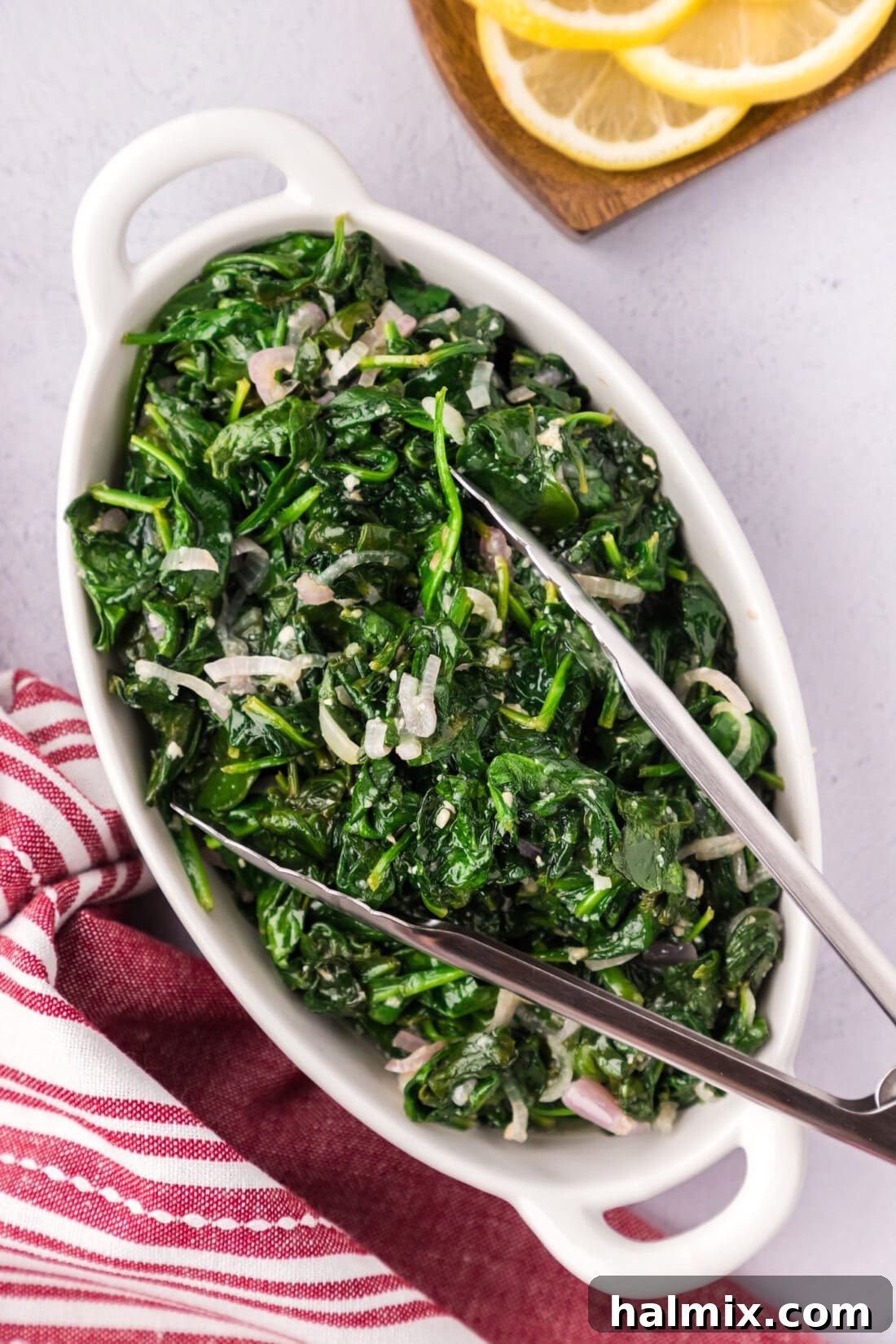
Creative Serving Suggestions for Sautéed Spinach
Sautéed spinach is a wonderfully versatile side dish that can elevate a wide array of meals. Its earthy flavor and tender texture make it a perfect companion for various proteins and an excellent addition to many culinary creations. Here are some inspiring ideas to enjoy your freshly sautéed spinach:
- Classic Garnishes: For an extra burst of flavor, consider a squeeze of fresh lemon juice just before serving; the acidity brightens the spinach beautifully. A sprinkle of grated Parmesan cheese adds a salty, umami kick, while crumbled cooked bacon brings a delightful smoky, savory crunch.
- Protein Pairings: Sautéed spinach pairs exceptionally well with virtually any main course protein. Serve it alongside perfectly grilled chicken or roasted turkey, a tender pork chop, a juicy steak, or any kind of flaky baked or pan-seared seafood like salmon or cod. Its lightness balances richer meats, while its robust flavor complements leaner options.
- Breakfast & Brunch Boost: Don’t limit spinach to dinner! Stir it into your morning scrambled eggs for a nutritious start to the day, or fold it into a fluffy omelet for a delightful brunch option. It also makes a fantastic filling for quiches or frittatas.
- Pasta & Grains: Toss warm sautéed spinach with your favorite pasta and a light sauce for a simple, quick meal. It’s also a fantastic addition to grain bowls, risottos, or even as a flavorful bed for poached or fried eggs.
- Sandwiches & Wraps: Elevate your sandwiches and wraps by adding a layer of sautéed spinach for extra flavor, texture, and nutrition. It’s particularly good in vegetarian sandwiches or as a healthy addition to a classic deli sandwich.
- Enhanced Garlic Spinach: Building upon this basic recipe, you can easily create a more intense garlic spinach. Since all the foundational ingredients are already present, simply increase the amount of fresh minced garlic to your desired level, allowing it to gently soften and infuse the spinach with even more of its pungent, savory flavor.
- Soups & Stews: Stir a handful of sautéed spinach into your favorite soups, stews, or lentil dishes during the last few minutes of cooking for added color, texture, and a boost of nutrients.
Discover More Delicious & Healthy Side Dishes
If you loved this easy and nutritious sautéed spinach recipe, you’ll be thrilled to explore our other fantastic side dish ideas. From crispy greens to perfectly roasted vegetables, we have a variety of recipes to complement any meal and satisfy every palate. Expand your culinary repertoire with these wholesome and delicious options:
- Crispy Kale Chips: A healthy and addictive snack or side.
- Flavorful Fried Spinach: Another quick and delicious way to enjoy spinach with a slightly different texture.
- Sweet and Savory Roasted Carrots: Simple, vibrant, and packed with natural sweetness.
- Assorted Grilled Vegetables: Perfect for summer barbecues or a healthy meal prep.
- Rich and Creamy Spinach: A decadent take on the classic side dish.
- Tender Sautéed Asparagus: Elegant, easy, and bursting with fresh flavor.
I am passionate about baking and cooking, and I love sharing my kitchen adventures and tested recipes with all of you! Remembering to check back for new recipes daily can be a challenge, which is why I offer a convenient newsletter. Simply subscribe today and start receiving your free daily recipes directly in your inbox, ensuring you never miss a delicious meal idea!

Sauteed Spinach
IMPORTANT – There are often Frequently Asked Questions within the blog post that you may find helpful. Simply scroll back up to read them!
Print It
Pin It
Rate It
Course:
Side Dish
Cuisine:
American
5
servings
10 minutes
104
Amanda Davis
Ingredients
- 16 ounces raw spinach leaves
- 3 Tablespoons chopped shallots
- 2 Tablespoons minced garlic
- 3 Tablespoons olive oil
- garlic salt to taste
Things You’ll Need
-
Large heavy bottomed skillet
Before You Begin
- Spinach shrinks considerably when cooked. It may look like a ton of leaves to begin with, but the volume will decrease drastically once it’s done.
- You can use either baby spinach or mature spinach. I recommend trimming mature spinach stems before cooking.
- Optionally garnish sautéed spinach with either lemon juice, Parmesan cheese, or crumbled bacon. Spinach pairs well with proteins like chicken, pork, beef, and seafood. You can also toss your sautéed spinach into omelets or mix it into scrambled eggs for breakfast.
Instructions
-
Add olive oil to skillet. Heat over medium-high until shimmering.
-
Add garlic and shallots and sauté for 2 minutes.
-
Add spinach to the skillet and season with garlic salt to taste.
-
Cook spinach, turning often, until all leaves are wilted and warmed through.
Nutrition
Serving: 1serving
|
Calories: 104cal
|
Carbohydrates: 5g
|
Protein: 3g
|
Fat: 9g
|
Saturated Fat: 1g
|
Polyunsaturated Fat: 1g
|
Monounsaturated Fat: 6g
|
Sodium: 73mg
|
Potassium: 539mg
|
Fiber: 2g
|
Sugar: 1g
|
Vitamin A: 8507IU
|
Vitamin C: 27mg
|
Calcium: 98mg
|
Iron: 3mg
Tried this Recipe? Pin it for Later!
Follow on Pinterest @AmandasCookin or tag #AmandasCookin!
The recipes on this blog are tested with a conventional gas oven and gas stovetop. It’s important to note that some ovens, especially as they age, can cook and bake inconsistently. Using an inexpensive oven thermometer can assure you that your oven is truly heating to the proper temperature. If you use a toaster oven or countertop oven, please keep in mind that they may not distribute heat the same as a conventional full sized oven and you may need to adjust your cooking/baking times. In the case of recipes made with a pressure cooker, air fryer, slow cooker, or other appliance, a link to the appliances we use is listed within each respective recipe. For baking recipes where measurements are given by weight, please note that results may not be the same if cups are used instead, and we can’t guarantee success with that method.