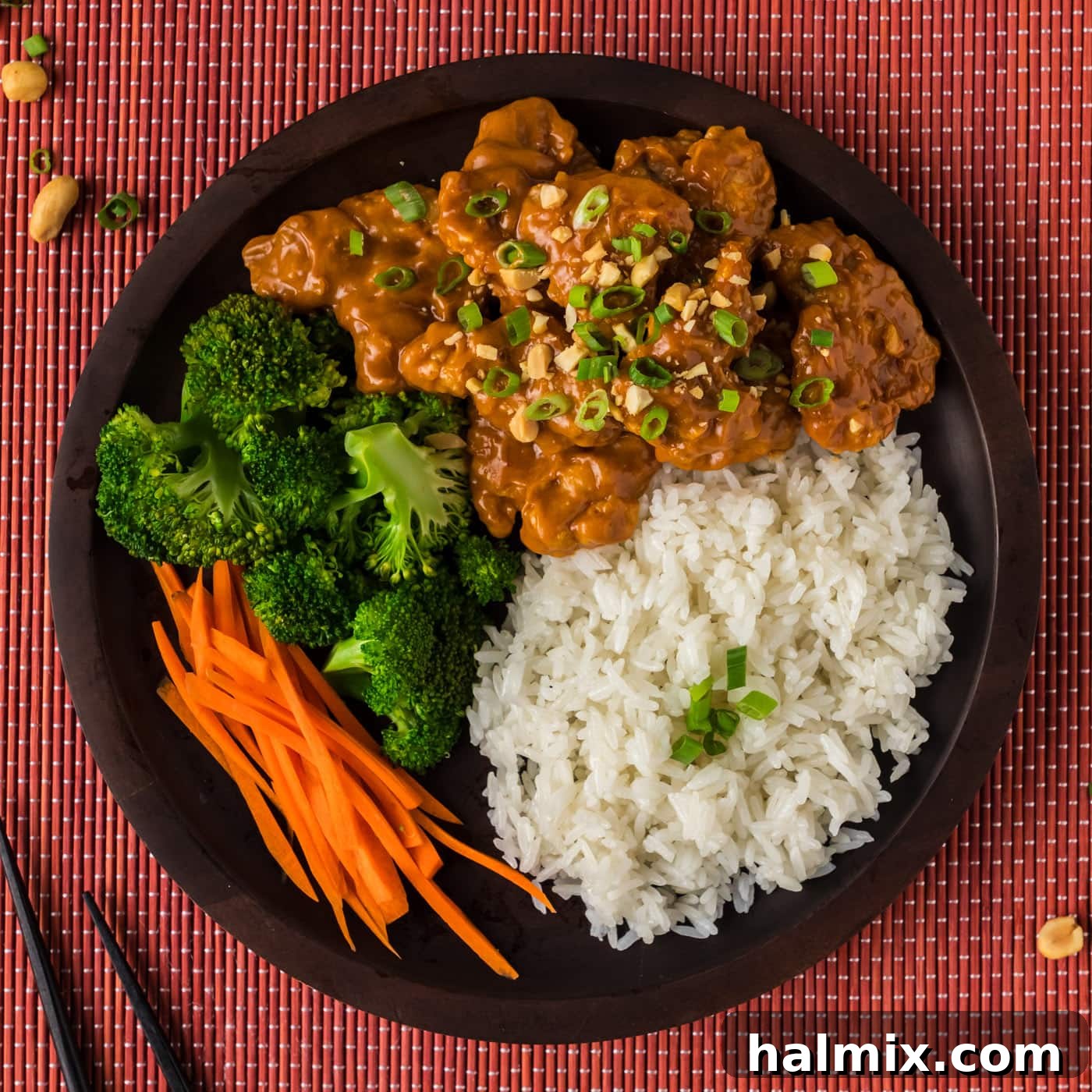
Elevate your weeknight dinner with our irresistible Peanut Butter Chicken recipe, a harmonious fusion of crispy fried chicken bites enveloped in a rich, velvety peanut butter sauce. This unique dish takes your taste buds on an adventure, blending the savory depth of umami with hints of sweet, spicy, and tangy notes, all brought to life with a vibrant blend of hot sauce, garlic, ginger, and Asian sweet chili sauce.
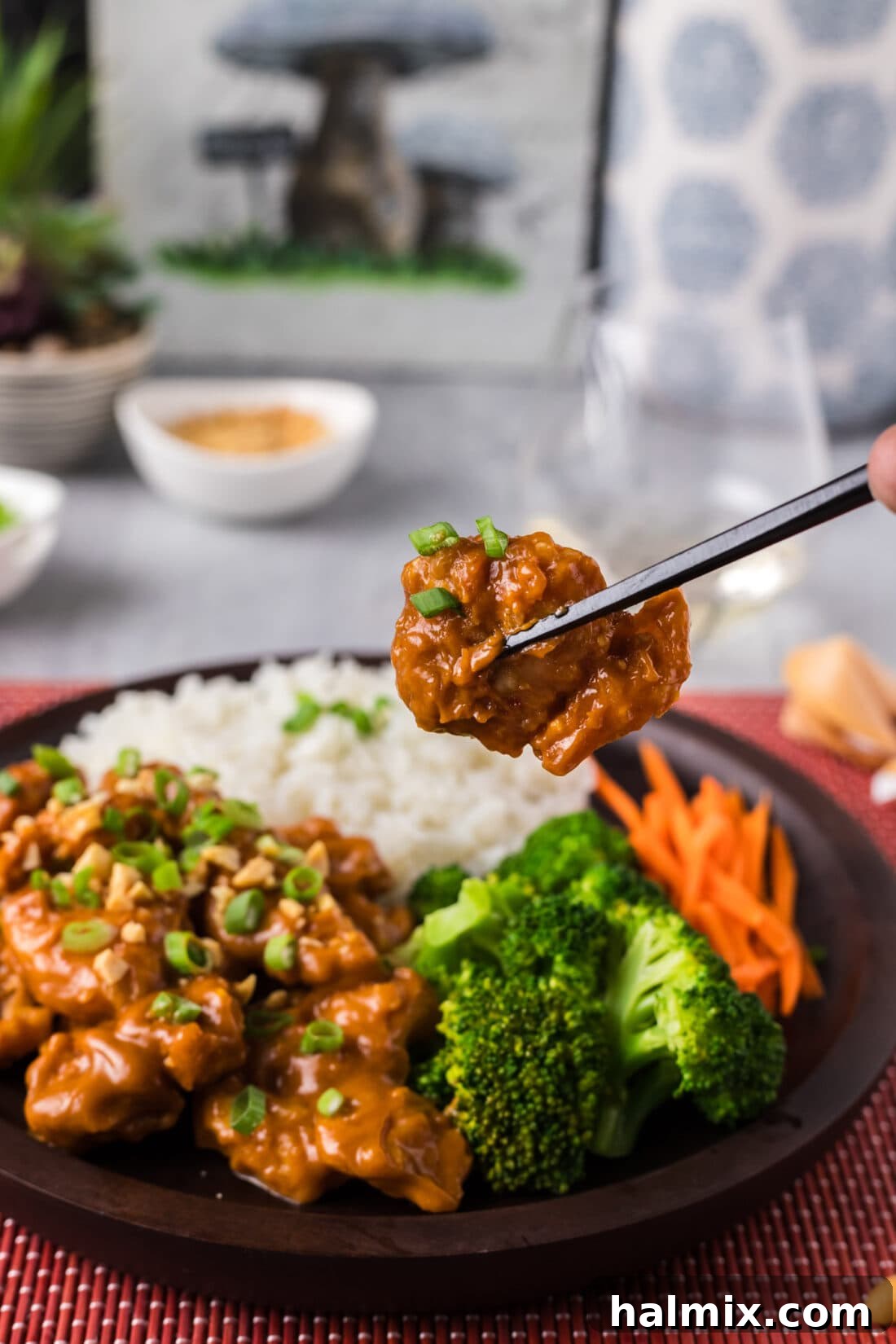
Why This Peanut Butter Chicken Recipe is a Must-Try
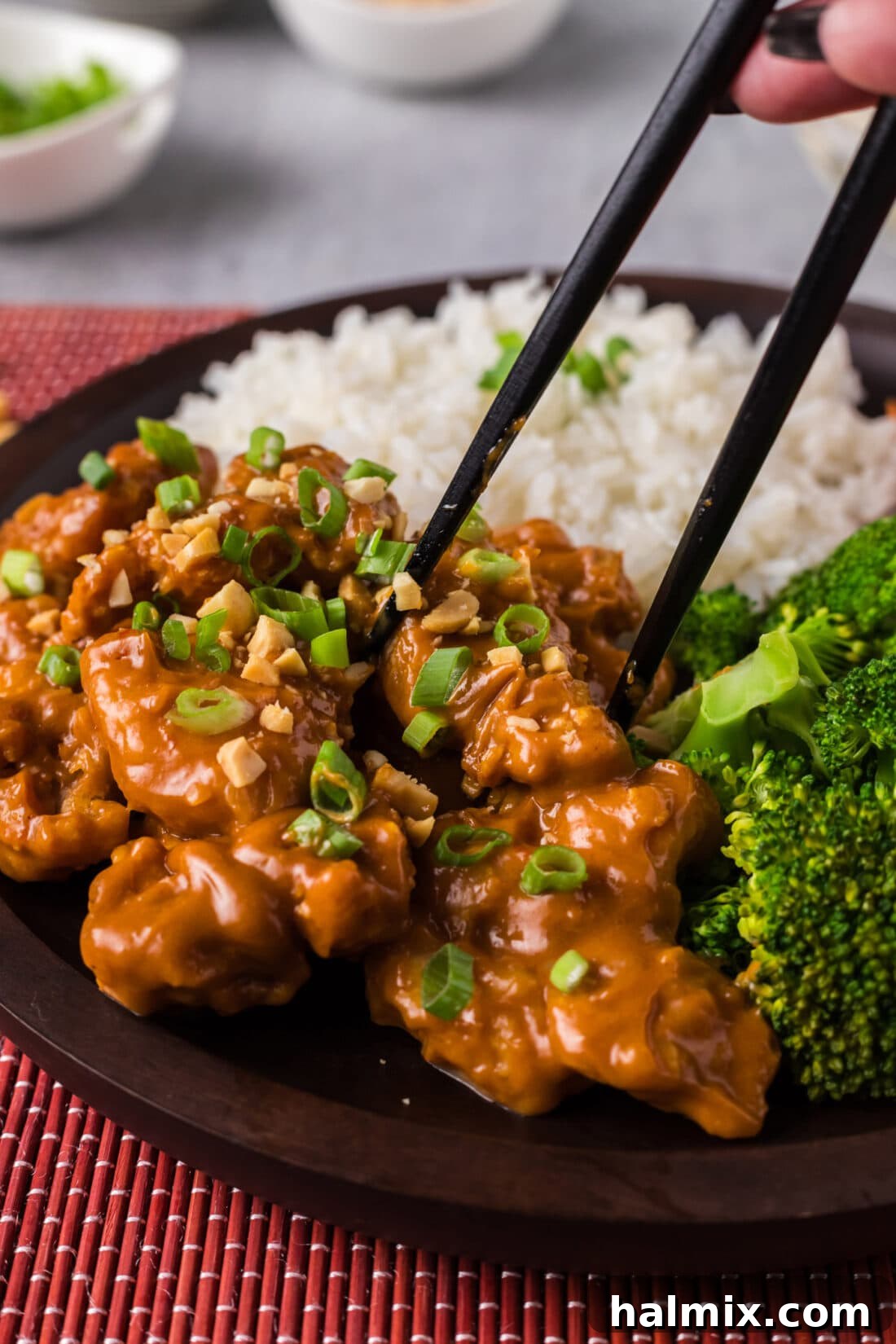
Prepare to be amazed by this savory sensation that perfectly marries tender, succulent chicken with an incredibly flavorful peanut butter sauce. Our Peanut Butter Chicken recipe stands out not just for its unique ingredient combination, but for the symphony of textures and tastes it delivers. Each bite offers a satisfying contrast: the delightful crunch of perfectly fried chicken giving way to juicy meat, all coated in a luxuriously creamy and intensely aromatic sauce. It’s an Asian-inspired dish that defies expectations, proving that peanut butter’s savory side is just as compelling as its sweet counterpart.
Many home cooks relegate peanut butter to breakfast spreads or baked goods, but its naturally salty and nutty profile makes it an exceptional base for savory applications. In this dish, peanut butter acts as a foundation, absorbing and enhancing the robust flavors of garlic, ginger, and the kick from hot sauce and sweet chili. The result is a complex, multi-layered experience where sweet, salty, savory, and a gentle heat dance together, creating a truly unforgettable meal. Whether you’re a long-time fan of peanut sauce or new to the concept, these crispy, saucy bites are guaranteed to become a new family favorite, offering a gourmet experience with surprisingly simple steps.
Key Ingredients for Your Crispy Peanut Chicken
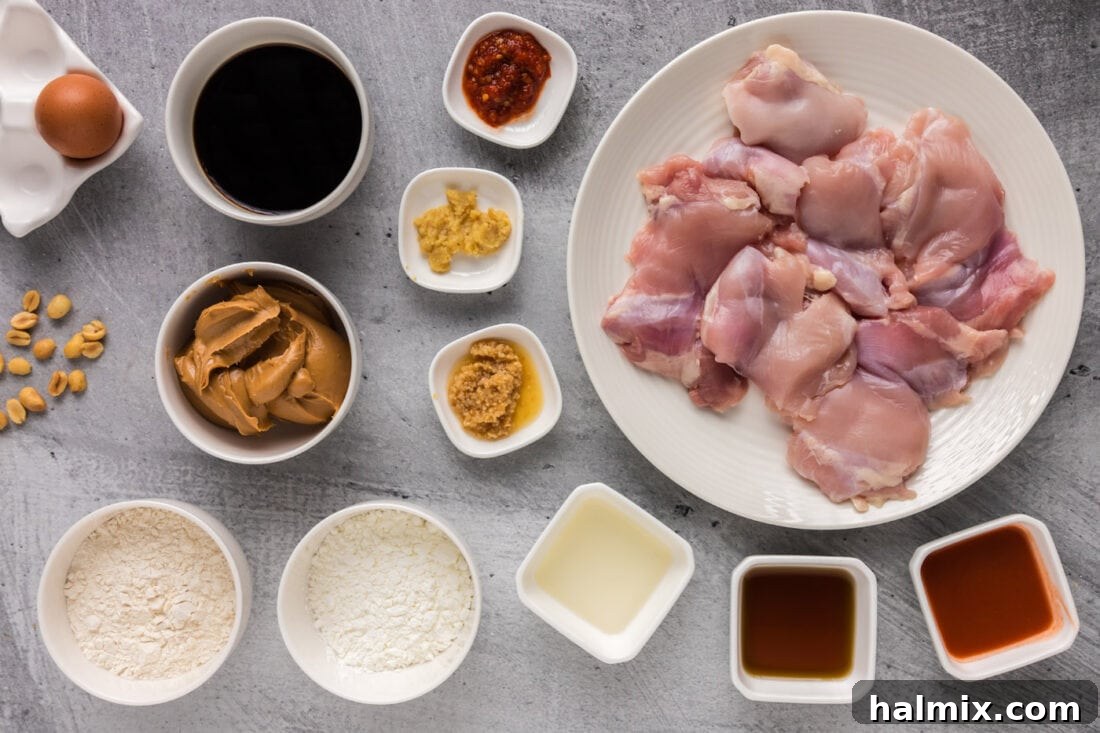
Crafting the perfect Peanut Butter Chicken begins with a selection of fresh, high-quality ingredients that contribute to its distinctive taste and texture. Below is a comprehensive list, with detailed explanations and substitution ideas to help you prepare this exquisite dish.
Ingredient Breakdown & Smart Substitutions
Understanding each component is key to mastering this recipe and making it your own. Here’s a deeper dive into the ingredients:
CHICKEN: We highly recommend using 1 1/2 pounds of boneless, skinless chicken thighs for this recipe. Chicken thighs are inherently juicier and more flavorful than breasts, holding up beautifully to frying and absorbing the rich sauce without drying out. If you prefer, boneless, skinless chicken breasts can be substituted in equal amounts. To ensure chicken breasts remain tender, consider brining them for 20-30 minutes before preparation, and be mindful not to overcook them during frying. Cut your chosen chicken into uniform 2-inch chunks for even cooking.
COATING AGENTS: The secret to truly crispy chicken lies in the breading. We use a combination of all-purpose flour and cornstarch for a superior crunch. The flour provides the initial adhesion, while cornstarch, when fried, creates an extra-crisp texture that locks in moisture. A large egg acts as the essential binder, ensuring the dry coating adheres well to the chicken pieces. For a gluten-free alternative, you can substitute gluten-free all-purpose flour and use arrowroot powder or tapioca starch instead of cornstarch.
FRYING OIL: A neutral-flavored vegetable oil is ideal for frying, such as canola, sunflower, or peanut oil. Ensure you use enough oil to come about an inch up the sides of your skillet for proper shallow frying. Maintaining the oil temperature at 350°F (175°C) is crucial for achieving that golden-brown crispness without burning or becoming greasy.
PEANUT BUTTER SAUCE: This is where the magic happens! The sauce is a symphony of flavors that creates the distinct character of the dish.
- Creamy Peanut Butter: The star of the show. Use a good quality creamy peanut butter for a smooth, rich base. While natural peanut butter can work, a standard creamy variety often yields a more consistent sauce texture.
- Honey: Provides natural sweetness and helps to balance the savory and spicy elements. Maple syrup or brown sugar are excellent alternatives if you prefer.
- Hot Sauce (like Frank’s Red Hot): Adds a tangy, vinegary heat that cuts through the richness of the peanut butter. Feel free to experiment with other hot sauces like Sriracha for a different type of spice, or adjust the amount to your preferred heat level.
- Fish Sauce: The umami powerhouse! Don’t let the name deter you; fish sauce adds incredible depth and savory complexity without making the sauce taste “fishy.” It’s a cornerstone of Southeast Asian cuisine. If absolutely necessary, a dash of soy sauce can be a substitute, but the flavor profile will be slightly different.
- Minced Garlic & Ginger: Freshly minced garlic and ginger are essential aromatics that infuse the sauce with vibrant, pungent flavors. Avoid powdered versions if possible, as they lack the same freshness and intensity. Use a microplane or a good garlic press for finely minced results.
- Asian Sweet Chili Sauce: This versatile sauce contributes a delightful balance of sweet, tangy, and mildly spicy notes, bringing all the other flavors into harmony. It’s readily available in most grocery stores in the international aisle.
Crafting Your Delicious Peanut Butter Chicken
Follow these step-by-step photos and instructions to visualize the process. For a complete, printable recipe card with exact measurements and detailed instructions, please scroll to the end of this post.
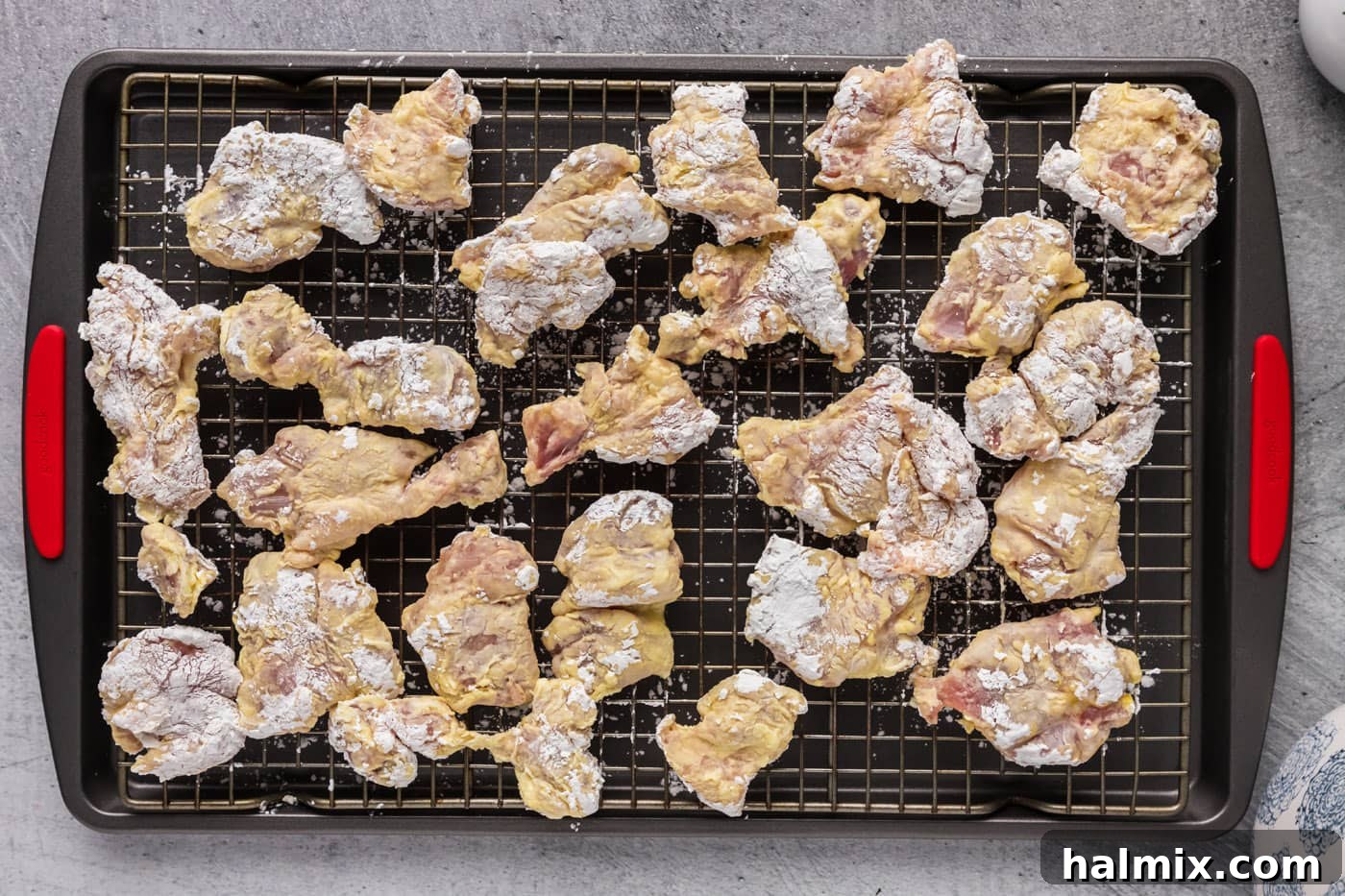
- Begin by preparing your workspace. Place a wire rack over a baking sheet. This setup is crucial for allowing excess oil to drip off the fried chicken, ensuring maximum crispness.
- Cut your boneless, skinless chicken thighs into uniform 2-inch chunks. Consistency in size helps the chicken cook evenly.
- Set up your dredging station: Place about ½ cup of cornstarch on one plate and ½ cup of all-purpose flour on another plate.
- In a medium bowl, whisk the egg until it’s well combined. This will be your binder.
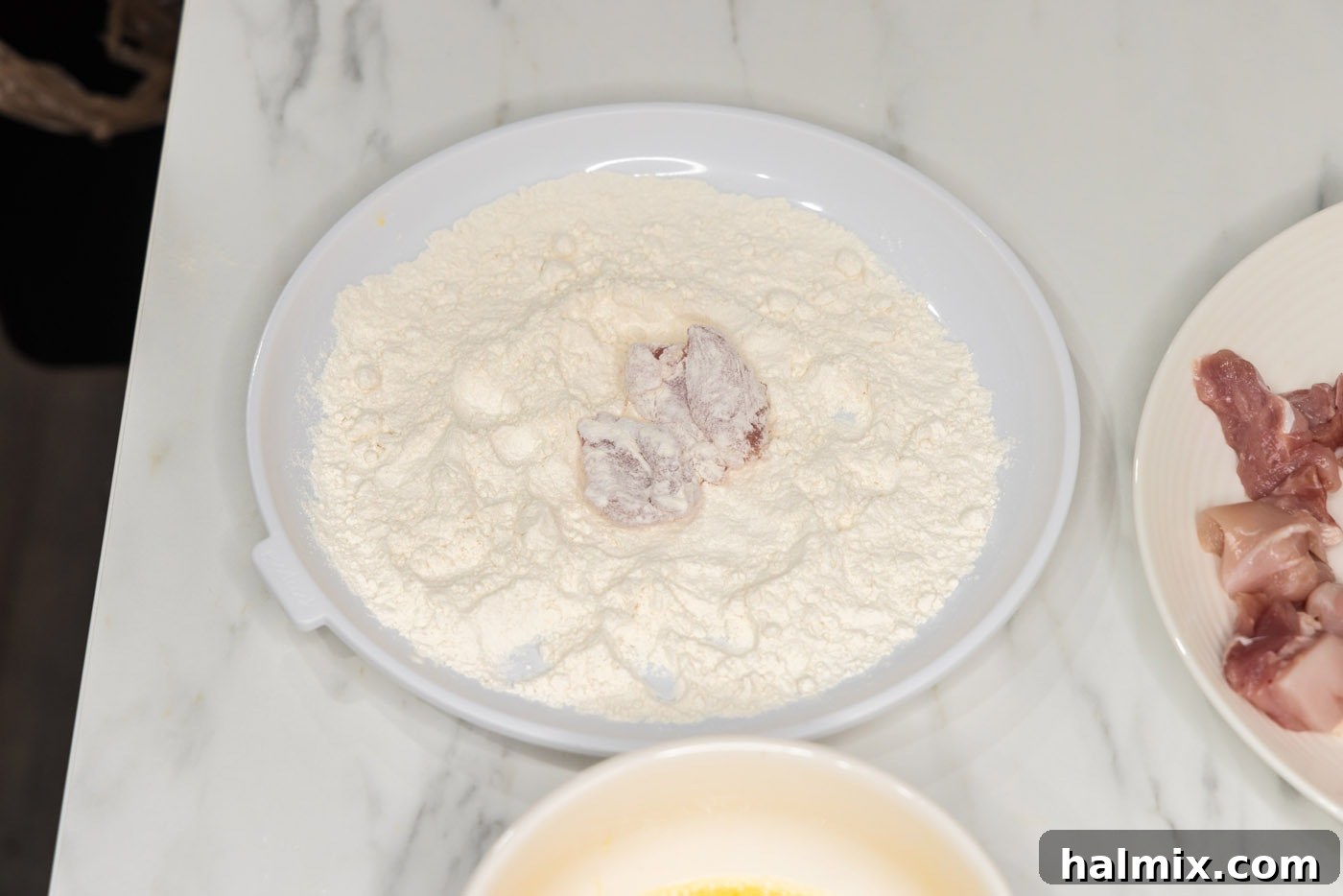
- Take each chicken piece, one at a time, and first dredge it thoroughly in the flour, shaking off any excess. This initial coating helps the egg adhere properly.

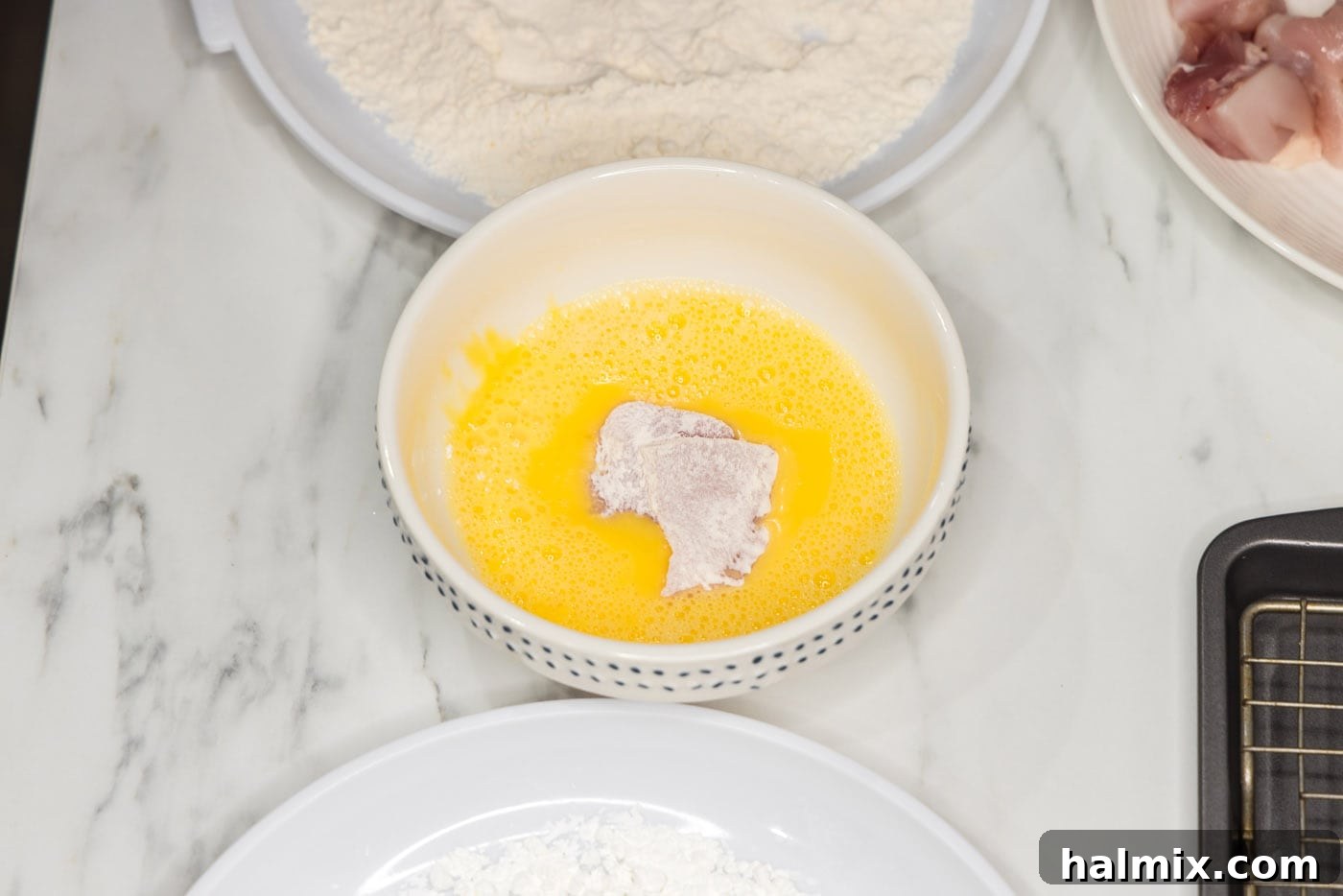
- Next, dip the flour-dredged chicken piece into the whisked egg, allowing any excess egg to drip off. The egg acts as a glue for the final cornstarch coating.
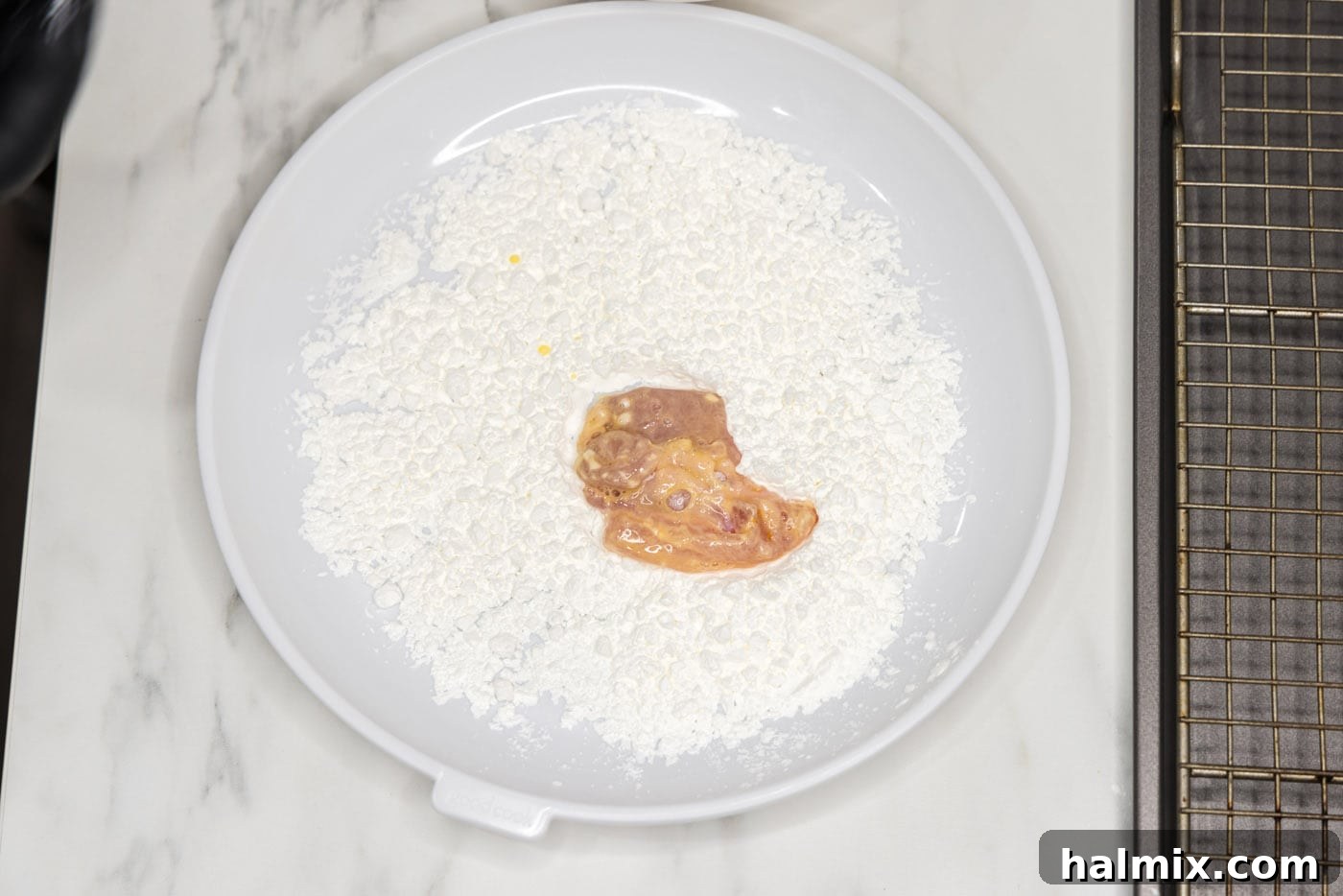
- Finally, coat the chicken piece thoroughly in cornstarch, ensuring both sides are fully covered. Place the coated chicken onto your prepared wire rack. Repeat this process for all chicken pieces.
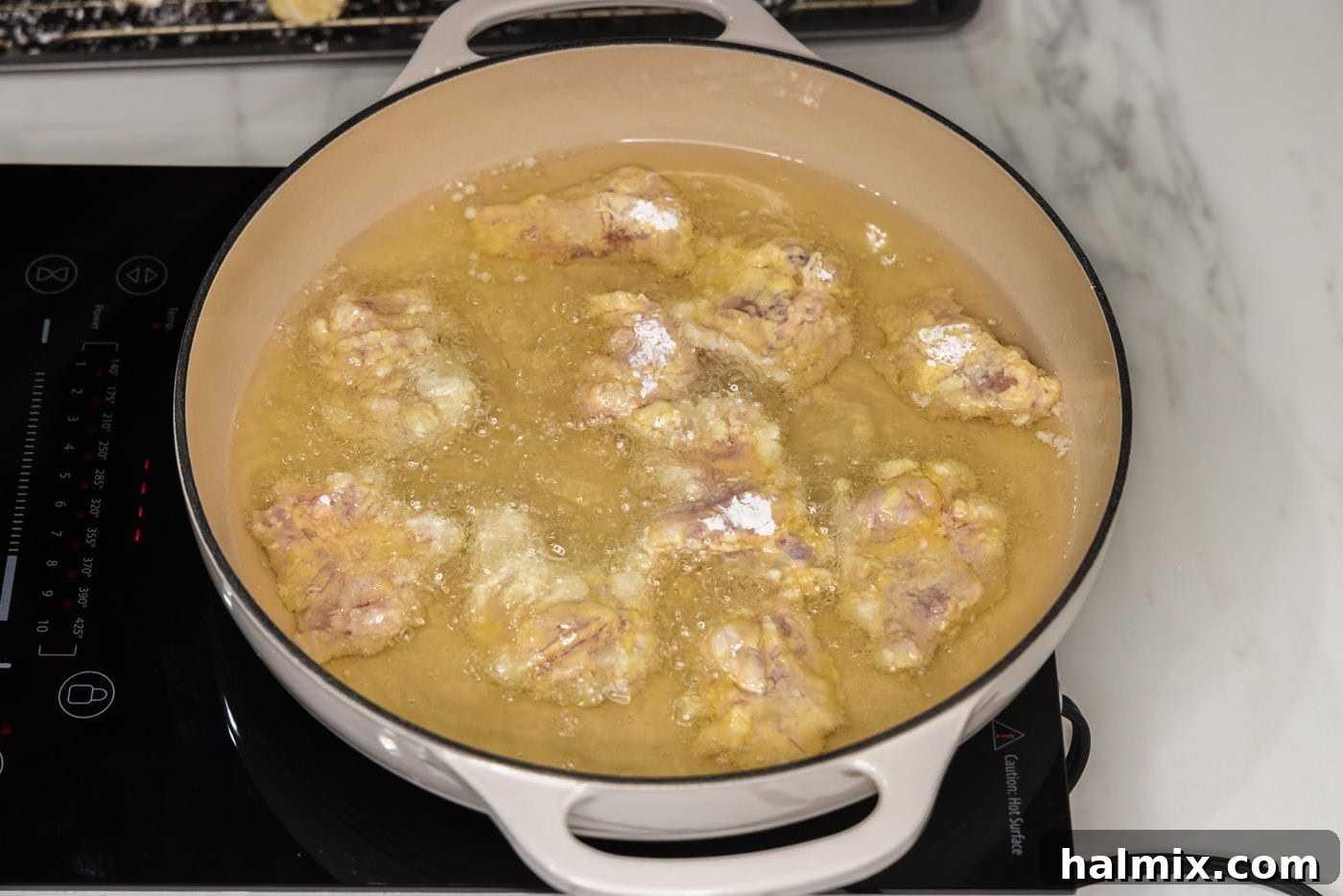
- Heat vegetable oil in a deep-sided skillet over medium-high heat. Add enough oil to come an inch up the sides. The ideal temperature for frying is 350°F (175°C). Use a thermometer to ensure accuracy for optimal crispness.
- While the oil heats, lay out a few layers of paper towels on a plate or cutting board. This will be used to drain the cooked chicken.
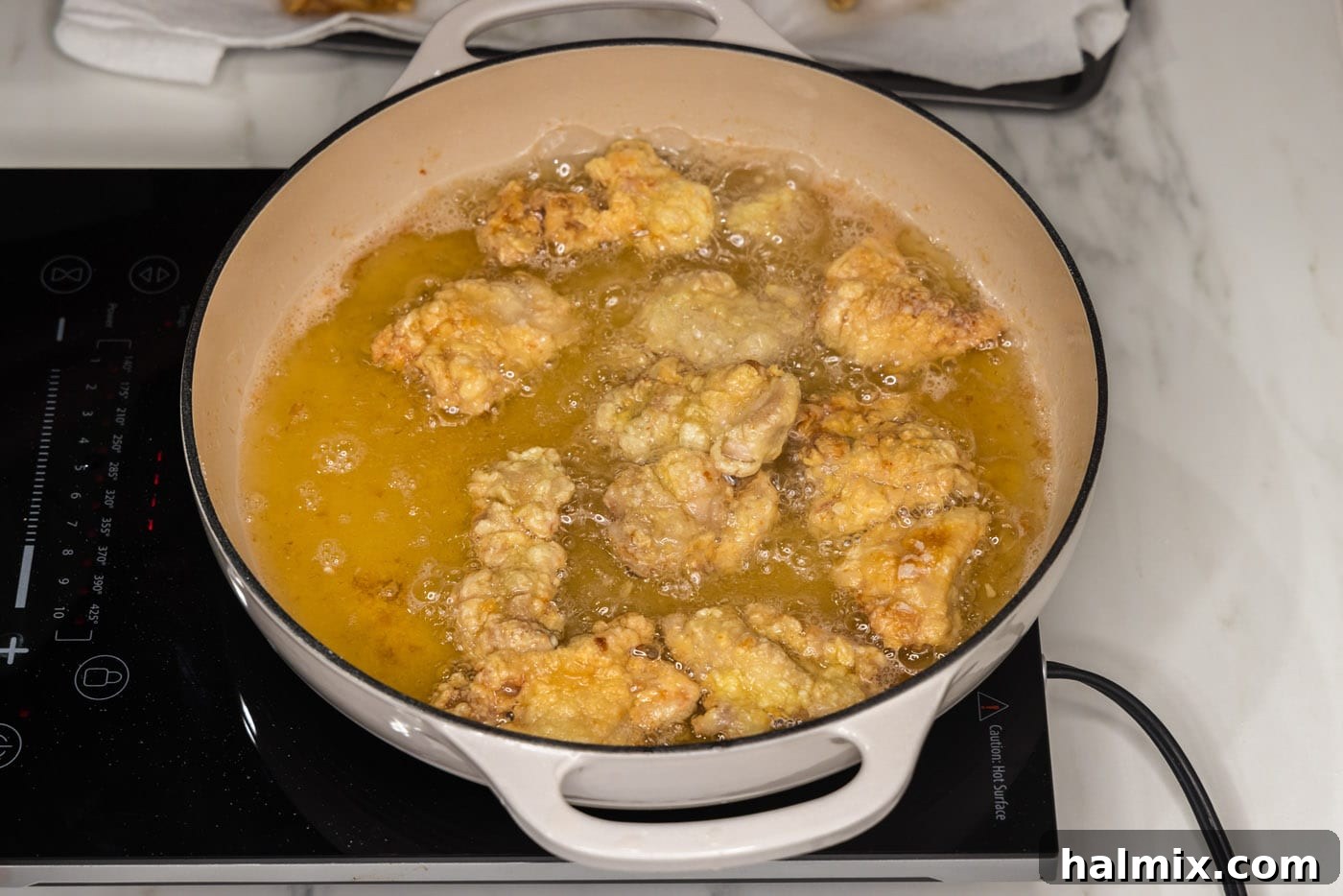
- Carefully place the prepared chicken pieces into the hot oil. Fry in batches, ensuring not to overcrowd the pan, which can lower the oil temperature and lead to soggy chicken. Cook for 2-3 minutes on each side, turning once or twice, until the chicken is golden brown and crispy. The internal temperature should reach 165°F (74°C).
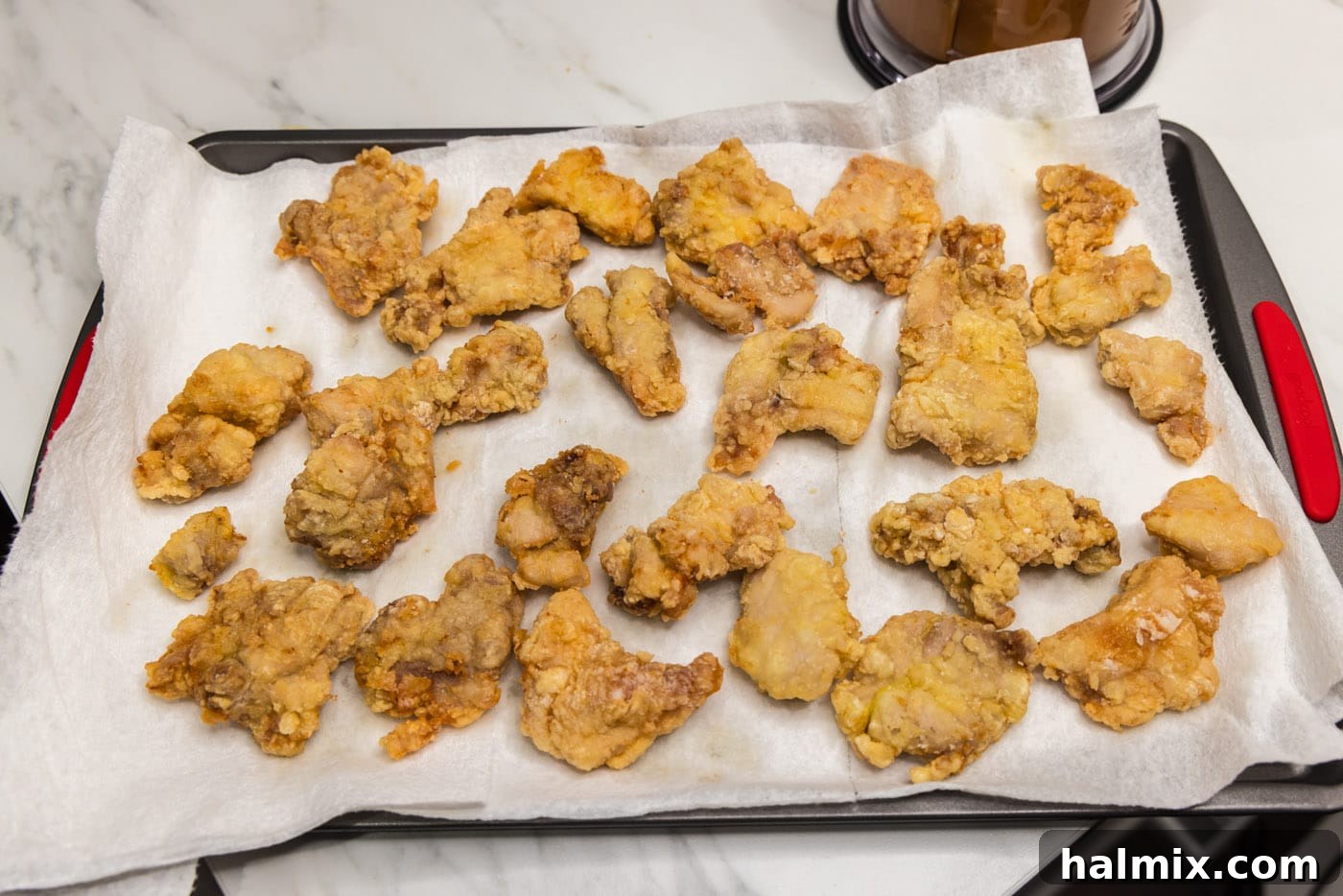
- Once cooked, transfer the crispy chicken pieces to the paper towels to drain excess oil. This helps maintain their crunchy texture.
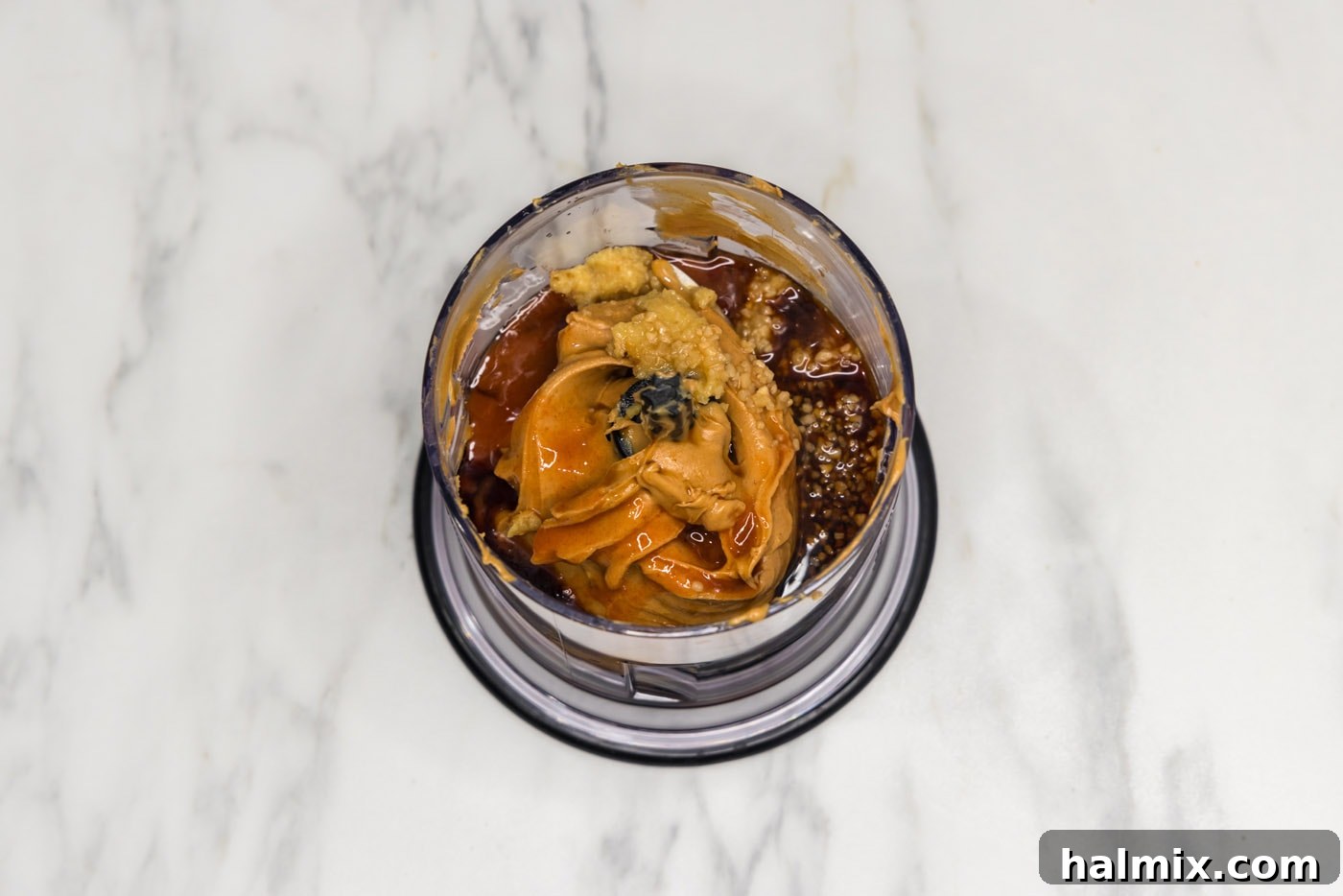
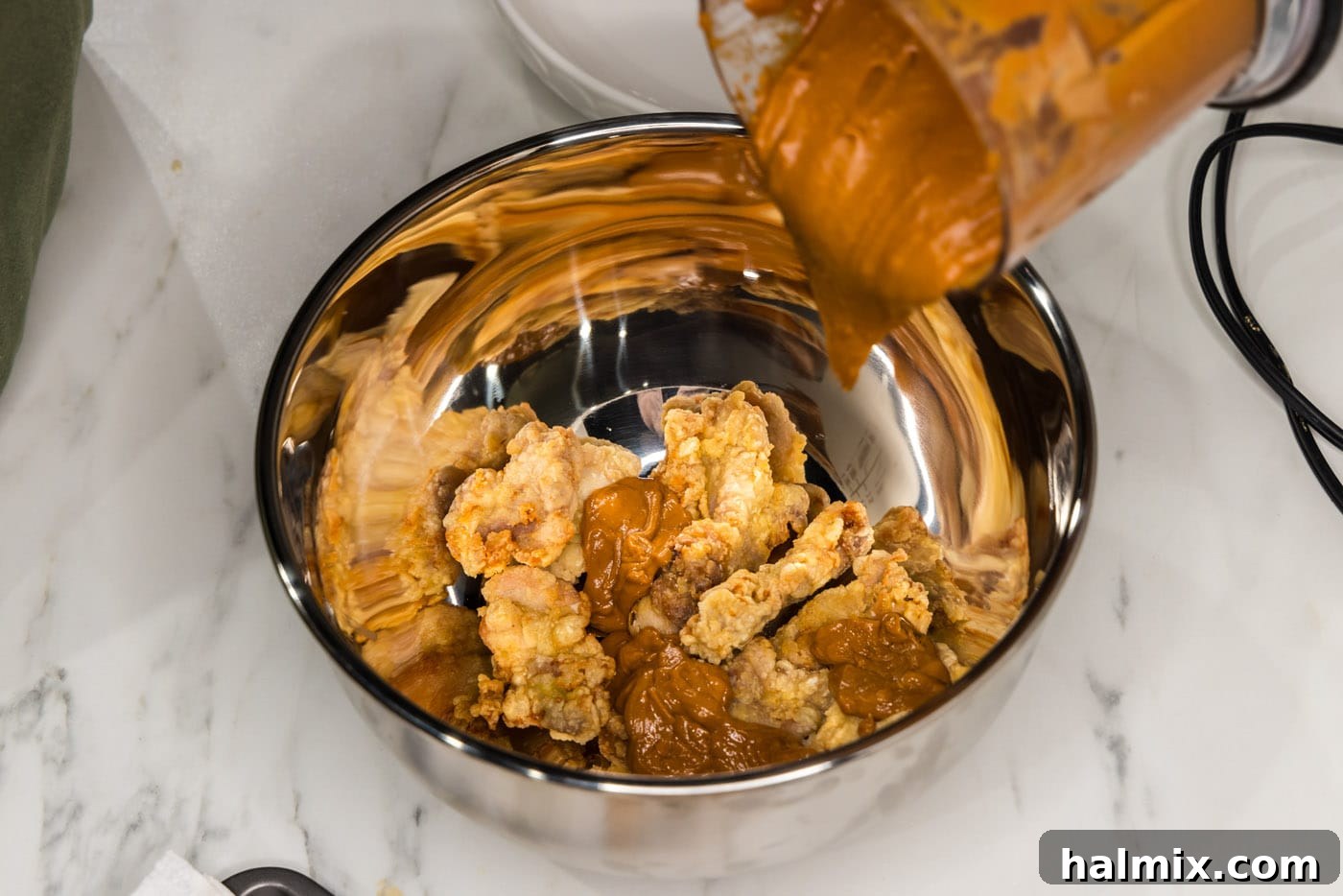
- To prepare the peanut butter sauce, combine all sauce ingredients – creamy peanut butter, honey, hot sauce, fish sauce, minced garlic, minced ginger, and Asian sweet chili sauce – in a mini food chopper or a blender. Blend until completely smooth and creamy.
CHEF’S TIP: The sauce will taste very strong and intense if sampled before combining with the chicken. It’s highly recommended to refrain from taste testing the sauce on its own! Once it coats the fried chicken, its flavors mellow beautifully and complement the chicken perfectly, creating a balanced and delicious experience.
- Finally, place the cooked chicken pieces into a large mixing bowl. Pour the freshly blended peanut butter sauce over the chicken. Use a rubber spatula to gently turn and coat each piece of chicken evenly with the luscious sauce. Serve immediately and enjoy!
Frequently Asked Questions & Expert Tips
How do you store leftover peanut butter chicken?
Store any leftover Peanut Butter Chicken in an airtight container in the refrigerator for up to 3 days. For best results when reheating, use an air fryer or oven at 350°F (175°C) for 10-15 minutes, or until heated through and crisp again. This method helps restore some of the chicken’s original crispiness that can be lost in the fridge.
Can I use chicken breast instead of chicken thighs in peanut butter chicken?
Absolutely! You can easily substitute boneless, skinless chicken breasts for thighs in equal amounts; it truly comes down to personal preference. Chicken thighs tend to be juicier, but breasts work well too. Regardless of the cut, chicken should always be cooked to an internal temperature of 165°F (74°C) as registered on an instant-read thermometer to ensure it is safely cooked.
Can I bake or air fry the chicken instead of frying?
Yes, for a lighter version, you can bake or air fry the chicken. To bake, preheat your oven to 400°F (200°C). Place the coated chicken pieces on a baking sheet lined with parchment paper and bake for 20-25 minutes, flipping halfway through, until cooked through and golden. For air frying, preheat your air fryer to 375°F (190°C) and cook in batches for 10-15 minutes, shaking the basket periodically, until crispy and cooked. The texture won’t be identical to deep-frying, but it will still be delicious!
How can I adjust the spice level of the sauce?
The spice level is easily customizable! For a milder sauce, reduce the amount of hot sauce or omit it entirely. If you crave more heat, feel free to add extra hot sauce or a pinch of red pepper flakes to the sauce mixture. Taste and adjust incrementally after the sauce is fully blended.
Can I make the peanut butter sauce ahead of time?
Yes, the peanut butter sauce can be prepared up to 2-3 days in advance and stored in an airtight container in the refrigerator. Before serving, let it come to room temperature or gently warm it slightly to ensure it’s pourable and smooth. This can be a great time-saver for meal prep!
What if my sauce is too thick or too thin?
If your sauce is too thick, you can thin it out with a small amount of warm water, chicken broth, or even a splash of milk (dairy or non-dairy) until it reaches your desired consistency. If it’s too thin, you can try simmering it gently on low heat for a few minutes to allow it to reduce and thicken, or mix in a tiny bit more peanut butter or a cornstarch slurry (1 tsp cornstarch mixed with 1 tsp cold water) and heat until thickened.
Delightful Serving Suggestions
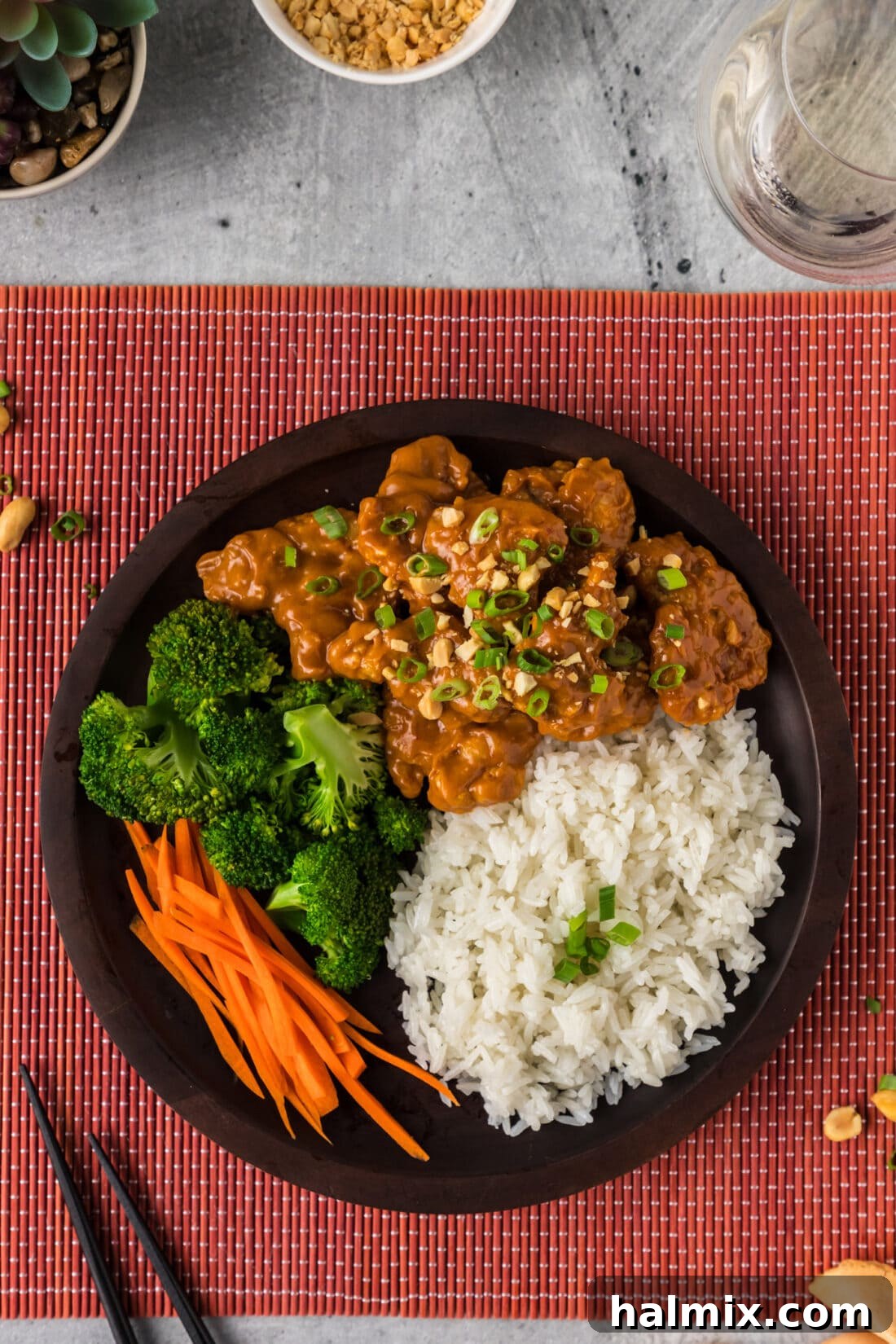
Peanut Butter Chicken is incredibly versatile and pairs wonderfully with a variety of sides. For a classic and comforting meal, serve it generously over fluffy white rice, such as jasmine or basmati rice, allowing the extra sauce to mingle with the grains. Noodles are another fantastic option; try it with ramen noodles, egg noodles, or even rice vermicelli. For those looking for a low-carb alternative, cauliflower rice or spiralized zucchini noodles make excellent bases.
Complete your meal with fresh vegetables to add color and nutrition. Steamed broccoli, stir-fried bell peppers, sugar snap peas, or roasted asparagus spears are all excellent choices. Don’t forget the garnishes! A sprinkle of chopped roasted peanuts will add an extra layer of crunch and nutty flavor, while sliced green onions or fresh cilantro provide a refreshing, aromatic finish. A squeeze of lime juice just before serving can brighten the entire dish. To complement the rich flavors, consider a glass of refreshing plum wine, a crisp sake, or even a light lager.
More Irresistible Chicken Recipes
If you loved this unique chicken dish, you might also enjoy exploring these other flavorful recipes:
- Garlic Chicken
- Chicken Curry
- Hunan Chicken
- Kung Pao Chicken
I love to bake and cook and share my kitchen experience with all of you! Remembering to come back each day can be tough, that’s why I offer a convenient newsletter every time a new recipe posts. Simply subscribe and start receiving your free daily recipes!
Peanut Butter Chicken
IMPORTANT – There are often Frequently Asked Questions within the blog post that you may find helpful. Simply scroll back up to read them!
Print This Recipe
Pin This Recipe
4 servings
Ingredients
- 1 ½ pounds boneless skinless chicken thighs
- ½ cup cornstarch
- ½ cup all purpose flour
- 1 large egg
- vegetable oil for frying
Peanut Butter Sauce
- 1 ½ cups creamy peanut butter
- 1 cup honey
- 1 ½ Tablespoons Franks red hot sauce
- 1 ½ Tablespoons fish sauce
- 1 Tablespoon minced garlic
- ½ Tablespoon minced ginger
- 1 Tablespoon Asian sweet chili sauce
Equipment You’ll Need
-
Baking sheet
-
Wire cooling racks
-
Large deep sided skillet
-
Mini food processor or mini chopper
Before You Begin
- We use a mini chopper to mix up the sauce. You can also mix it by hand with a whisk, but it won’t be as smooth.
- You can easily substitute with boneless skinless chicken breasts if preferred.
Instructions
-
Place wire rack over a baking sheet.
-
Cut chicken thighs into 2-inch chunks.
-
Put cornstarch on one plate and flour on another plate.
-
In a medium bowl, whisk the egg.
-
Dredge chicken pieces, one at a time, in flour, shake off excess.
-
Dip dredged chicken in egg, allowing excess to drip off.
-
Coat chicken piece in cornstarch, coating both sides. Place on wire rack.
-
Add enough vegetable oil to a deep sided skillet to come an inch up the sides. Heat over medium-high, the temperature of the oil should be 350 F.
-
Lay paper towels out on a plate or cutting board.
-
Place prepared chicken pieces into the hot oil, enough to fill the pan but not crowd the chicken. Cook for 2-3 minutes on each side, turning once or twice during the cooking process. Chicken should be crispy.
-
Move cooked chicken pieces to paper towels.
-
To prepare the sauce, in a mini food chopper, add all sauce ingredients and blend until smooth.
TIP – the sauce will taste very strong if you try it before combining with the chicken. We suggest that you refrain from taste testing before combining everything! Once combined with the chicken the flavor of the sauce mellows and compliments the fried chicken beautifully.
-
Place cooked chicken pieces into a large mixing bowl and add the sauce. Use a rubber spatula to carefully turn and coat the chicken.
Expert Tips & FAQs
- Chicken should be cooked to an internal temperature of 165F registered on aninstant-read thermometer when done cooking.
- This recipe makes 3 cups sauce. We only used about 2 cups on the chicken so you will have leftovers. Serve it on the side for dipping or drizzle it over rice if desired.
- Store leftovers in an airtight container in the refrigerator for up to 3 days.
Nutrition Information
| Calories: 1190 cal
| Carbohydrates: 108 g
| Protein: 58 g
| Fat: 65 g
| Saturated Fat: 13 g
| Polyunsaturated Fat: 18 g
| Monounsaturated Fat: 29 g
| Trans Fat: 0.1 g
| Cholesterol: 208 mg
| Sodium: 1334 mg
| Potassium: 1068 mg
| Fiber: 5 g
| Sugar: 82 g
| Vitamin A: 109 IU
| Vitamin C: 1 mg
| Calcium: 83 mg
| Iron: 4 mg
Tried this Recipe? Pin it for Later!
Follow on Pinterest @AmandasCookin or tag #AmandasCookin!
The recipes on this blog are tested with a conventional gas oven and gas stovetop. It’s important to note that some ovens, especially as they age, can cook and bake inconsistently. Using an inexpensive oven thermometer can assure you that your oven is truly heating to the proper temperature. If you use a toaster oven or countertop oven, please keep in mind that they may not distribute heat the same as a conventional full sized oven and you may need to adjust your cooking/baking times. In the case of recipes made with a pressure cooker, air fryer, slow cooker, or other appliance, a link to the appliances we use is listed within each respective recipe. For baking recipes where measurements are given by weight, please note that results may not be the same if cups are used instead, and we can’t guarantee success with that method.