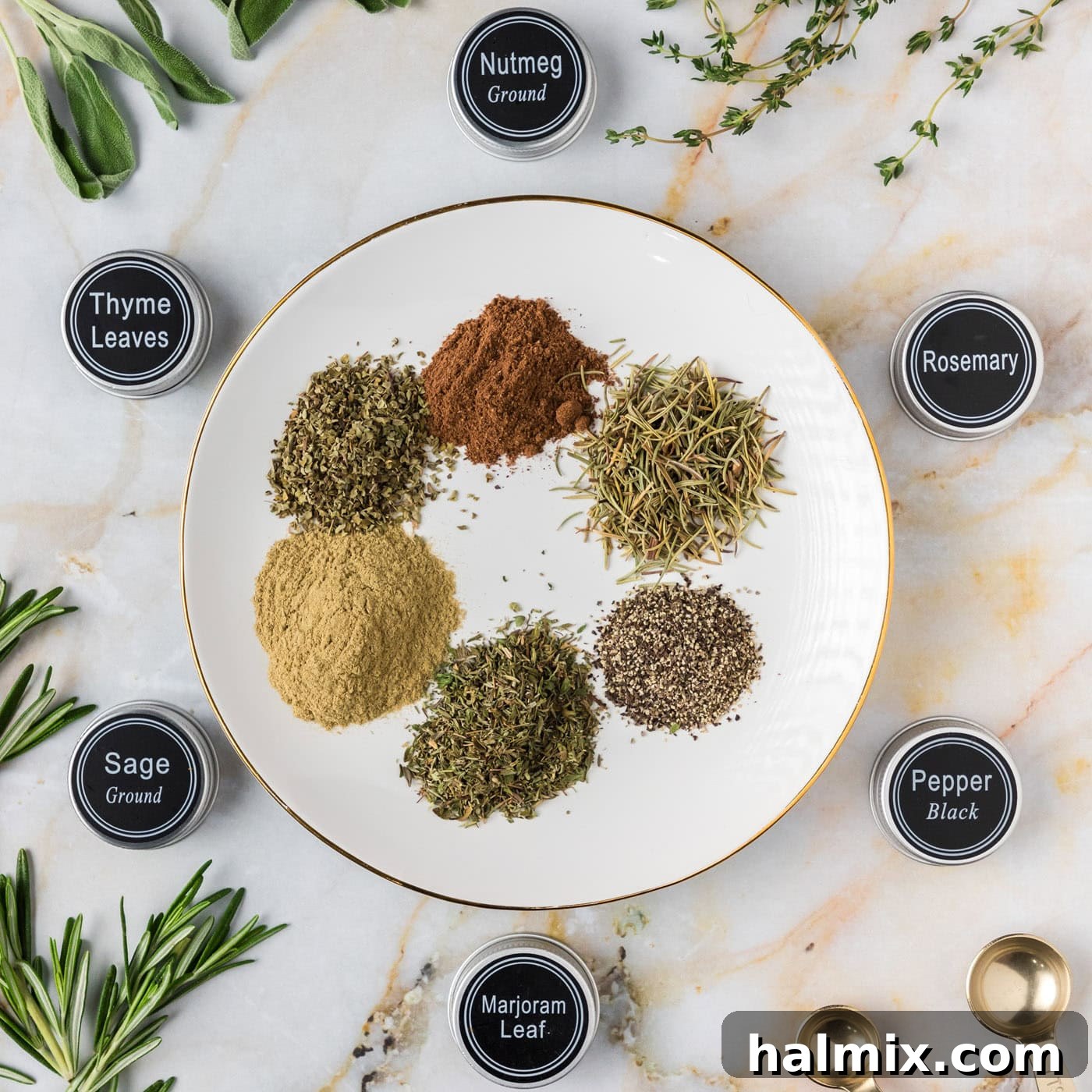
Homemade Poultry Seasoning: Your Ultimate Guide to Flavorful Chicken, Turkey, and Beyond
Elevate your culinary creations with a perfectly crafted homemade poultry seasoning recipe, utilizing a blend of aromatic herbs and spices you likely already have in your pantry. This versatile blend isn’t just for poultry; it brings exceptional flavor to stuffing, roasted vegetables, and even other meats, transforming everyday meals into extraordinary dining experiences.
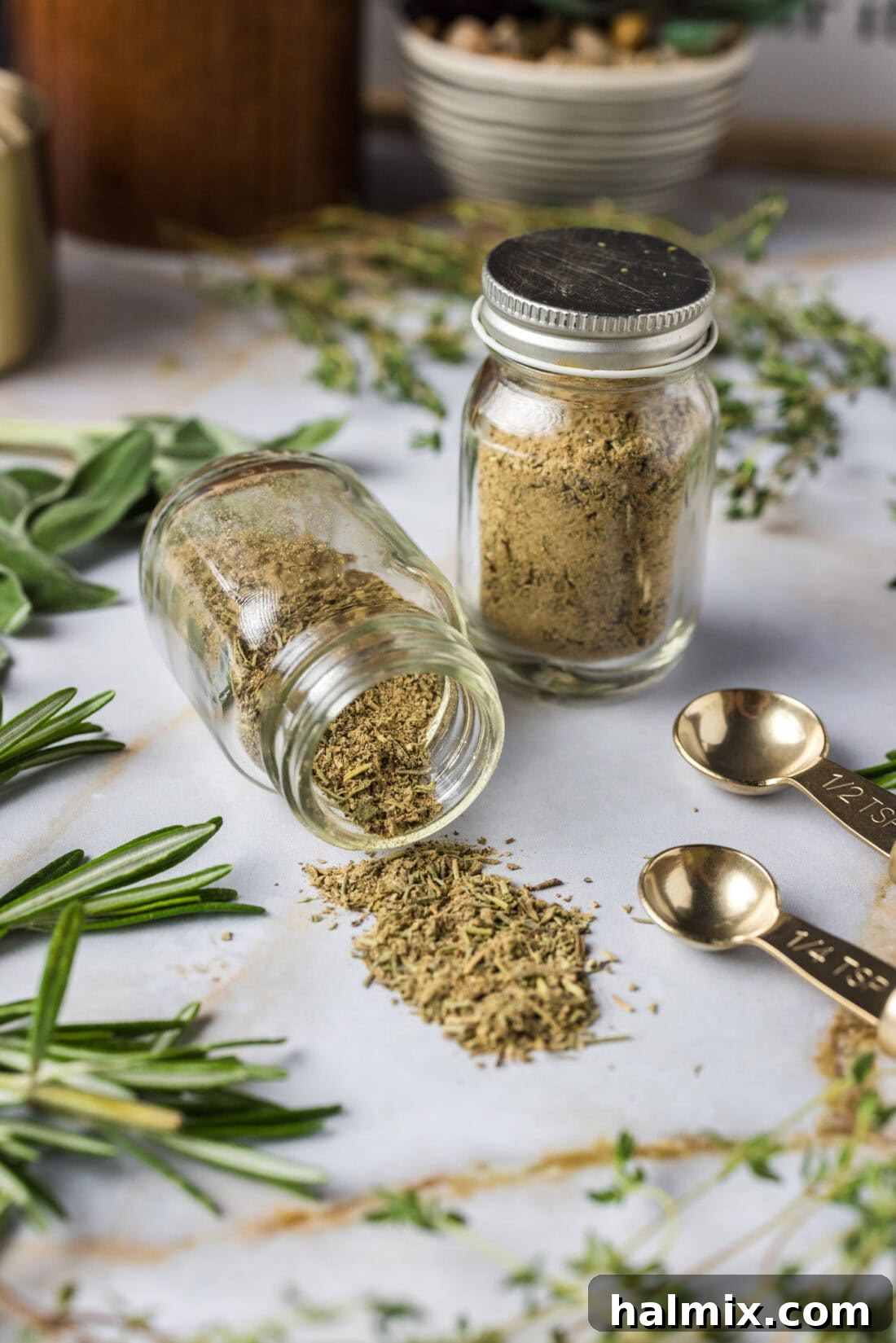
Why Homemade Poultry Seasoning is a Culinary Game-Changer
In just five quick minutes, you can create a vibrant, flavorful poultry seasoning that far surpasses store-bought versions in freshness and potency. This carefully balanced mix of dried rosemary, marjoram, thyme, sage, nutmeg, and black pepper is designed to enhance the natural flavors of poultry without overpowering them. From a succulent roasted turkey to everyday pan-seared chicken breasts, savory Cornish hens, or even a classic holiday stuffing, this blend promises depth and warmth.
The beauty of crafting your own seasoning lies in the control you gain. You can adjust the ratios to suit your personal palate, omit ingredients you dislike, and ensure your blend is free from unwanted anti-caking agents, excess sodium, or artificial flavors commonly found in commercial options. It’s a simple, cost-effective way to infuse your cooking with authentic, vibrant taste every time.
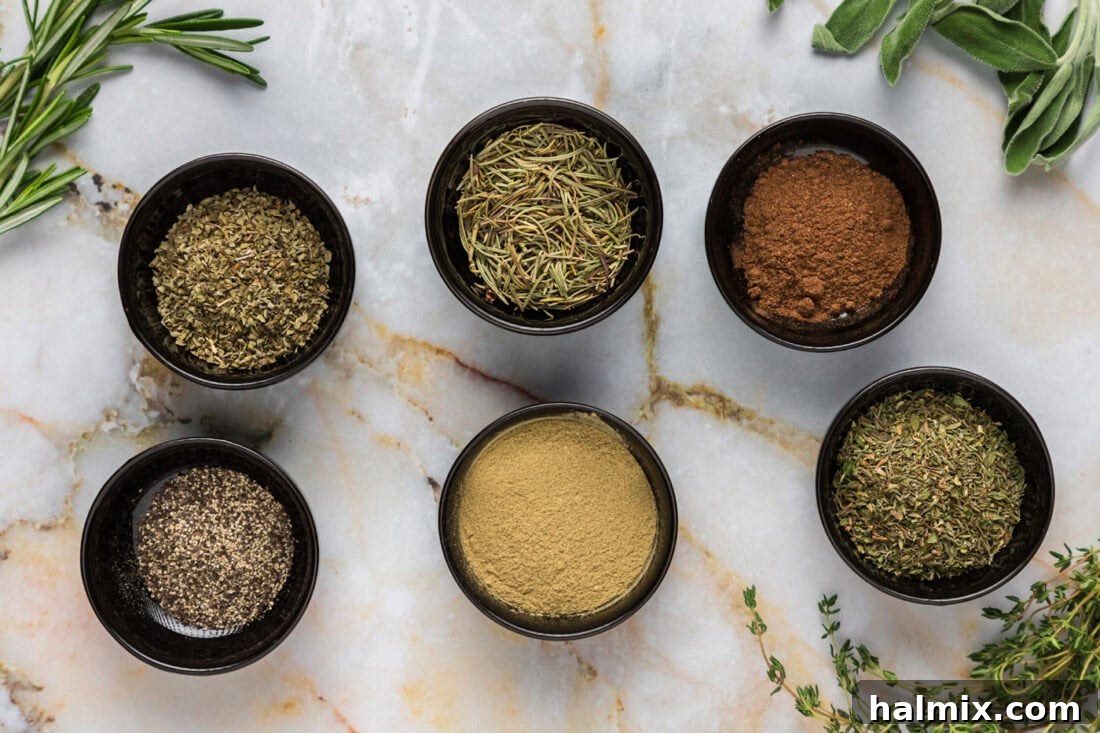
Essential Ingredients for Your Perfect Poultry Blend
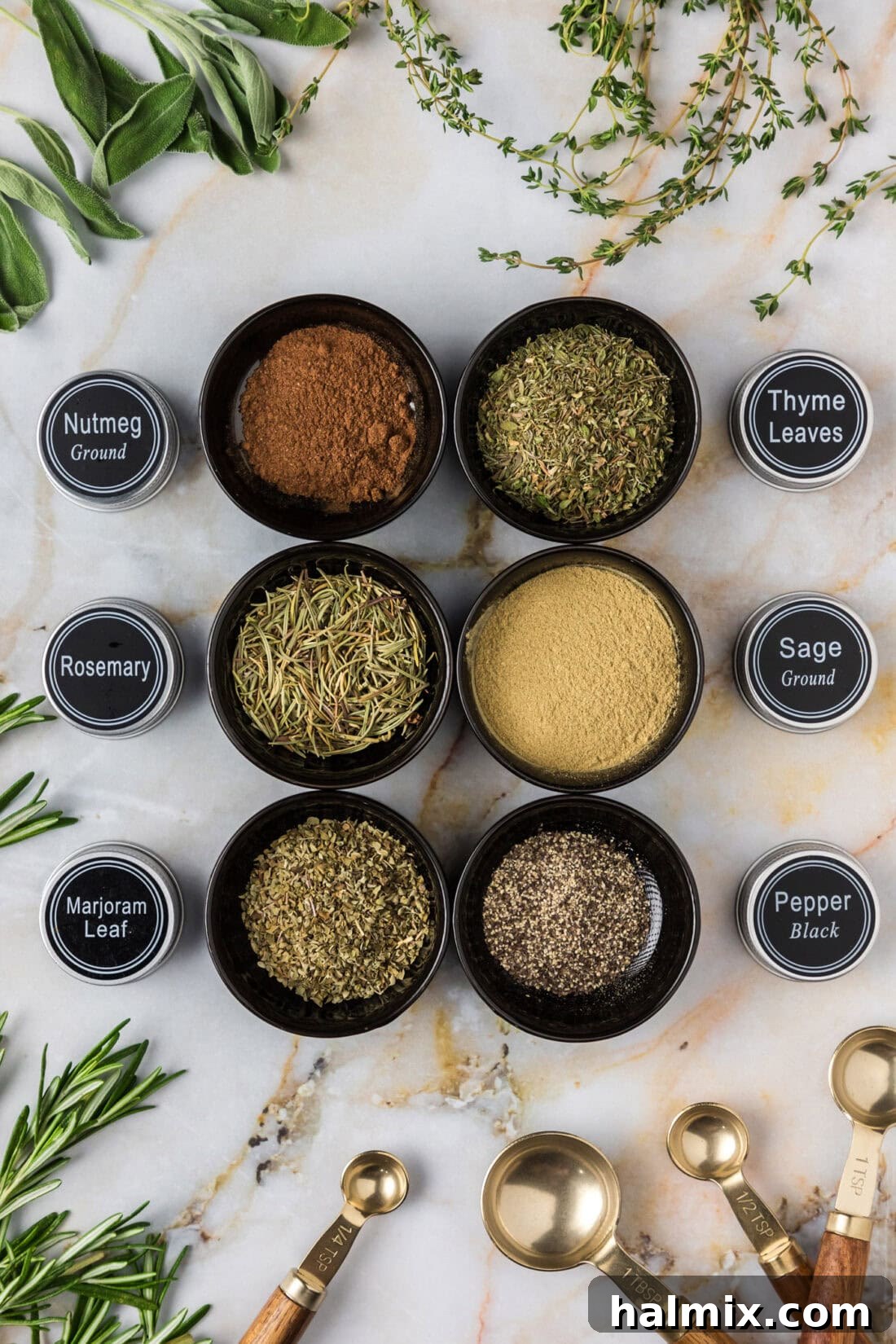
The magic of this poultry seasoning comes from a harmonious blend of classic herbs and spices. While the full measurements and instructions are provided in the printable recipe card below, understanding each ingredient’s contribution helps appreciate the blend’s overall complexity.
Ingredient Information and Smart Substitutions
This homemade poultry seasoning combines six key dried herbs and spices, each playing a crucial role in its distinct flavor profile. Always start with fresh, high-quality dried herbs for the most potent and delicious results.
- Dried Rosemary Leaves: Known for its distinctive piney, woody, and slightly peppery notes, rosemary pairs beautifully with robust meats like poultry. Its strong aroma stands up well to high heat cooking methods like roasting. For finer texture, especially if not using a grinder, a quick chop before blending helps.
- Dried Marjoram Leaves: Often confused with oregano, marjoram offers a milder, sweeter, and more delicate flavor profile with subtle floral and citrus undertones. It’s a staple in poultry dishes, lending a gentle warmth without overwhelming other ingredients.
- Dried Thyme Leaves: Earthy, minty, and slightly lemony, thyme is an incredibly versatile herb. It adds a subtle savory depth that complements poultry beautifully and integrates seamlessly into many culinary styles.
- Ground Sage: The undisputed king of poultry seasonings, sage provides a warm, earthy, slightly peppery, and robust flavor that is synonymous with Thanksgiving turkey and stuffing. Its strong, distinctive taste is what truly defines a traditional poultry blend.
- Ground Nutmeg: A warm, sweet, and slightly spicy spice, nutmeg adds a hint of sophistication and depth. It might seem unexpected in a savory blend, but a small amount beautifully rounds out the earthy herb flavors and enhances the overall aroma.
- Black Pepper: The ubiquitous spice, black pepper provides a subtle heat and pungent aroma that sharpens and balances the other flavors. Freshly ground black pepper, if possible, will always offer the best flavor.
Customization is Key: Feel free to adjust the quantities of these herbs based on your personal preference. If you’re particularly fond of sage, add a little extra. If rosemary is too strong for your liking, slightly reduce it. This is your blend, so make it perfect for *you*!
Optional Additions: Consider incorporating a few other spices to further personalize your blend:
- Garlic Powder: For an umami kick.
- Onion Powder: Adds a foundational savory note.
- Paprika (Sweet or Smoked): For color and a mild, sweet, or smoky flavor.
- Cayenne Pepper: If you prefer a little heat.
- Celery Seed: A classic complement to poultry, especially in stuffing.
Crafting Your Own Poultry Seasoning: Step-by-Step Guide
For exact measurements and a printable version of this recipe, please refer to the detailed recipe card at the bottom of this post.
- Gather Your Ingredients: Ensure all your dried herbs and spices are fresh and ready. High-quality ingredients are the foundation of an exceptional seasoning blend.
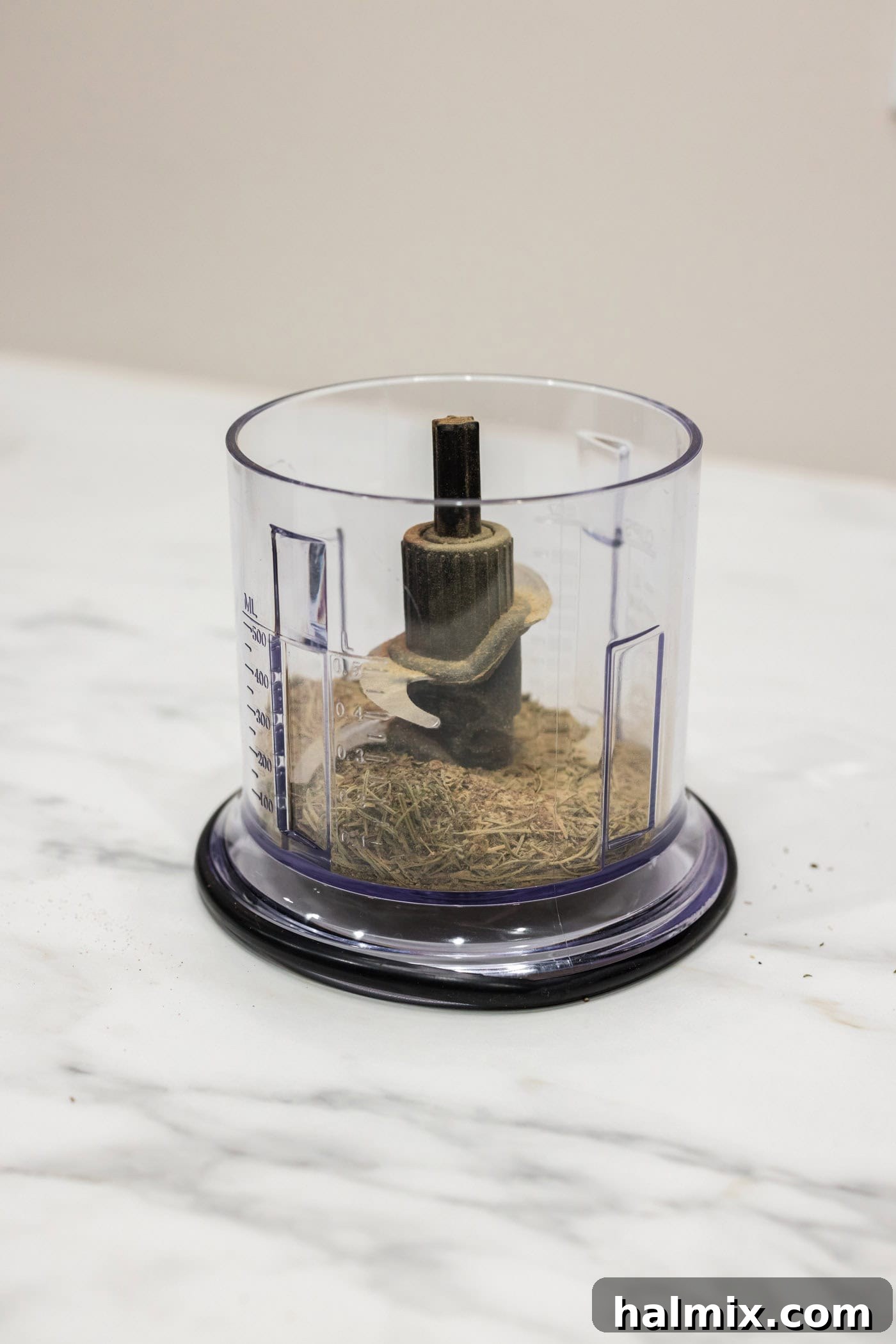
- Combine the Herbs: Add all the measured dried rosemary leaves, marjoram leaves, thyme leaves, ground sage, ground nutmeg, and black pepper into an herb grinder.
- Pulse to Perfection: Secure the lid and pulse the grinder a few times until the herbs are finely blended. The goal is a consistent texture, where larger leaves like rosemary are broken down enough to mix evenly with finer spices.

- Store Properly: Transfer your freshly made poultry seasoning to an airtight container with a lid. A small glass jar is ideal for optimal freshness and longevity.
Frequently Asked Questions & Expert Tips for the Best Results
No herb grinder? No problem! You have several excellent alternatives to achieve a well-blended seasoning. You can combine all ingredients by hand in a bowl, ensuring thorough mixing. For a finer texture, particularly with larger herbs like rosemary, you can use a mortar and pestle for a more traditional approach, or a small food chopper. If hand-mixing, we strongly recommend roughly chopping any larger dried herbs first to prevent them from settling at the bottom of your jar and separating from the finer spices. A more uniform texture ensures an even distribution of flavor in your dishes.
Homemade poultry seasoning, when stored correctly, can maintain its potency and flavor for 1-2 years. The key is an airtight container, preferably glass, kept in a cool, dark place away from direct sunlight and heat. Glass jars are superior to plastic for spice storage as they are non-porous and won’t absorb or impart odors. The best way to tell if your blend is still good is to smell it; once it loses its fragrant aroma, its flavor will have significantly diminished, indicating it’s time to make a fresh batch.
While this recipe does not include salt, you certainly can add it if you prefer. We often omit salt from our general seasoning blends to allow for more control over the sodium content in the final dish. Different recipes and personal dietary needs require varying amounts of salt. If you choose to add salt to the blend, start with a small amount (e.g., 1-2 teaspoons of fine sea salt) and label your jar clearly to indicate it’s a salted blend. This way, you won’t accidentally oversalt your food.
For optimal flavor, purchase whole dried herbs and grind them yourself just before making the blend. This preserves their essential oils and aroma. However, pre-ground spices are perfectly fine and more convenient for most home cooks. Always check the expiration dates and buy from stores with high turnover to ensure freshness. Store individual spices in airtight containers away from heat and light, just like your finished blend.
Versatile Uses Beyond Poultry
While named “poultry seasoning,” this versatile blend’s aromatic profile makes it suitable for a much wider array of dishes. Don’t limit its use to just chicken and turkey!
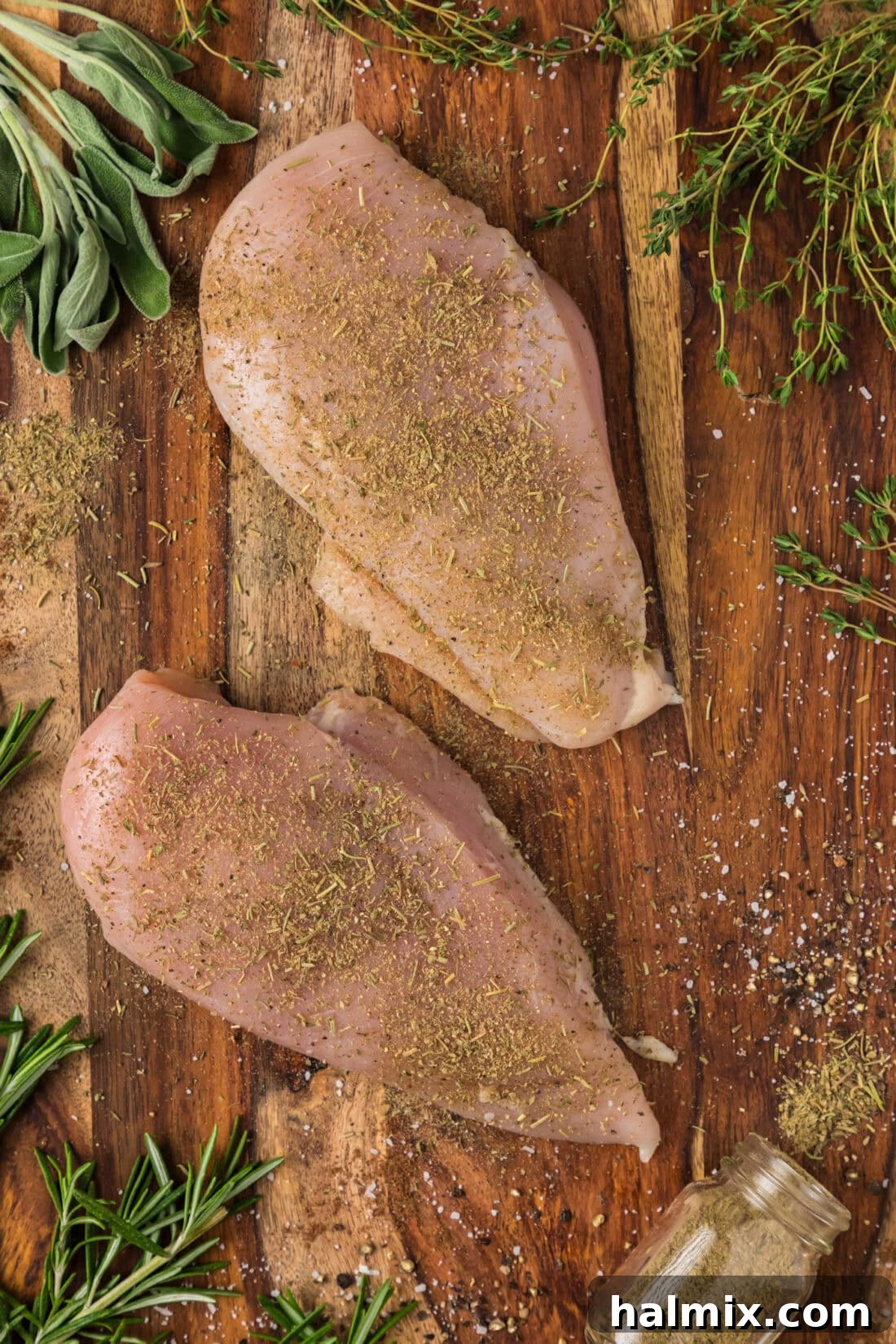
- All Things Poultry: Naturally, it’s perfect for roasting, grilling, baking, or pan-frying chicken, turkey, roast duck, pheasant, quail, and Cornish hens. Use it as a dry rub or mix it into marinades.
- Stuffing and Dressings: An absolute must-have for classic stuffing recipes, whether it’s a traditional bread stuffing or a savory crockpot stuffing. It provides that quintessential holiday flavor.
- Roasted Vegetables: Sprinkle it generously over root vegetables like potatoes, carrots, parsnips, or brussels sprouts before roasting. It transforms simple vegetables into savory side dishes.
- Other Meats: Experiment with lamb roasts, pork chops, or even game meats. The earthy herbs complement these proteins beautifully.
- Soups and Stews: Add a teaspoon or two to your chicken noodle soup, vegetable stew, or any broth-based dish for a deeper, more complex flavor.
- Gravies and Sauces: Whisk a pinch into homemade gravies or pan sauces made from drippings to enhance their savory notes.
- Compound Butters: Mix with softened butter to create a flavorful compound butter that can be melted over roasted chicken, corn on the cob, or used to baste a turkey.
- Eggs: A surprising but delicious addition to scrambled eggs, omelets, or frittatas for a unique twist.
More Homemade Seasoning Recipes to Explore
Once you discover the joy and flavor of making your own poultry seasoning, you’ll want to explore other homemade blends. They’re equally simple to prepare and offer endless possibilities for customizing your meals.
- Homemade Italian Seasoning
- Versatile All-Purpose Seasoning
- Flavorful Homemade Chili Seasoning
- Authentic Homemade Taco Seasoning
I love to bake and cook and share my kitchen experience with all of you! Remembering to come back each day can be tough, that’s why I offer a convenient newsletter every time a new recipe posts. Simply subscribe and start receiving your free daily recipes!
Homemade Poultry Seasoning
IMPORTANT – Detailed tips and answers to frequently asked questions are available within the main blog post above. Scroll up to discover more!
Print It
Pin It
Rate It
Course: Condiments, Seasoning
Cuisine: American
Ingredients
- 2 Tablespoons dried rosemary leaves
- 1 Tablespoon dried marjoram leaves
- 2 Tablespoons dried thyme leaves
- 2 Tablespoons ground sage
- 2 teaspoons ground nutmeg
- 2 teaspoons black pepper
Equipment You’ll Need
-
Herb grinder
-
Spice jar or small glass jar
Notes & Pro Tips
- If you don’t have an herb grinder, you can mix everything together by hand. For optimal consistency, we suggest roughly chopping up some of the larger dried herbs, such as rosemary, so that the finer herbs don’t sink and separate from the others. A mortar and pestle is also an excellent traditional tool for this task.
- Store your homemade poultry seasoning in an air-tight glass jar in a cool, dark pantry. This helps preserve its flavor and aroma for up to 1-2 years. Discard when the fragrance fades.
- Feel free to customize this blend! Add a teaspoon of garlic powder, onion powder, or a pinch of cayenne for a subtle kick if desired.
Instructions
-
Combine all the measured dried herbs and spices in an herb grinder.
-
Pulse the grinder a few times until the blend reaches a consistent, fine texture.
-
Transfer the freshly made poultry seasoning to an airtight glass container with a lid for storage.
Additional Expert Tips
- For the best flavor, use your homemade poultry seasoning within one year. Although it lasts longer, the intensity of the aromatics will gradually diminish.
- Always taste your dishes before adding extra salt when using this unsalted blend, as you have full control over the sodium content.
- Consider making a larger batch if you use poultry seasoning frequently, as it’s quick to prepare and stores well.
Nutrition Information
Tried this Recipe? Pin it for Later!Follow on Pinterest @AmandasCookin or tag #AmandasCookin!
The recipes on this blog are tested with a conventional gas oven and gas stovetop. It’s important to note that some ovens, especially as they age, can cook and bake inconsistently. Using an inexpensive oven thermometer can assure you that your oven is truly heating to the proper temperature. If you use a toaster oven or countertop oven, please keep in mind that they may not distribute heat the same as a conventional full sized oven and you may need to adjust your cooking/baking times. In the case of recipes made with a pressure cooker, air fryer, slow cooker, or other appliance, a link to the appliances we use is listed within each respective recipe. For baking recipes where measurements are given by weight, please note that results may not be the same if cups are used instead, and we can’t guarantee success with that method.