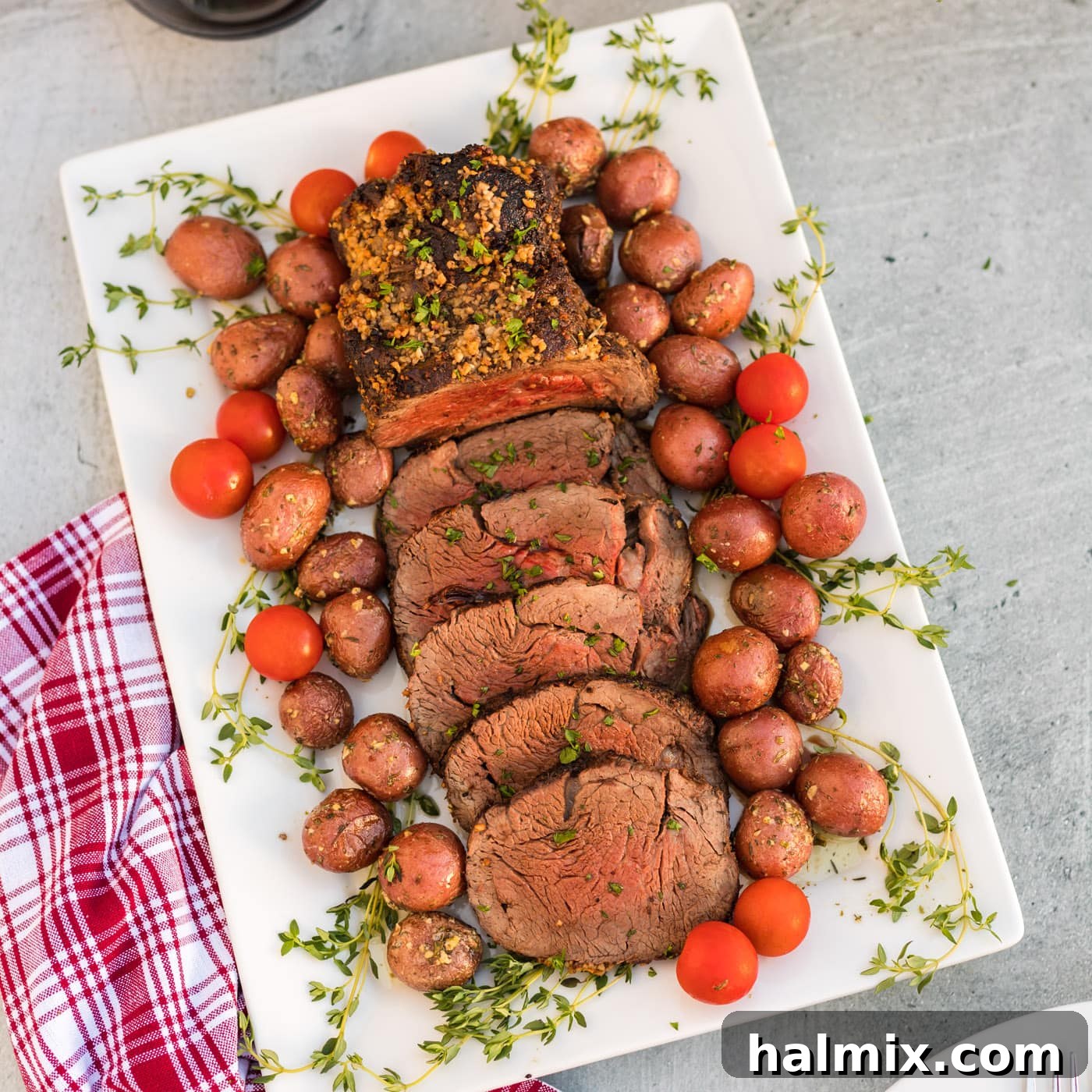
Unlock the secret to crafting the ultimate beef tenderloin right in your home kitchen. This exquisite recipe promises a culinary experience that’s both impressive and remarkably straightforward. We begin with a high-heat sear, creating an irresistible, golden-brown crust, then transition the masterpiece to a scorching oven where it roasts to an unparalleled, melt-in-your-mouth tenderness. Perfect for special occasions or simply elevating a weeknight meal, this beef tenderloin will quickly become a cherished favorite.
Why This Beef Tenderloin Recipe Is Unbeatable
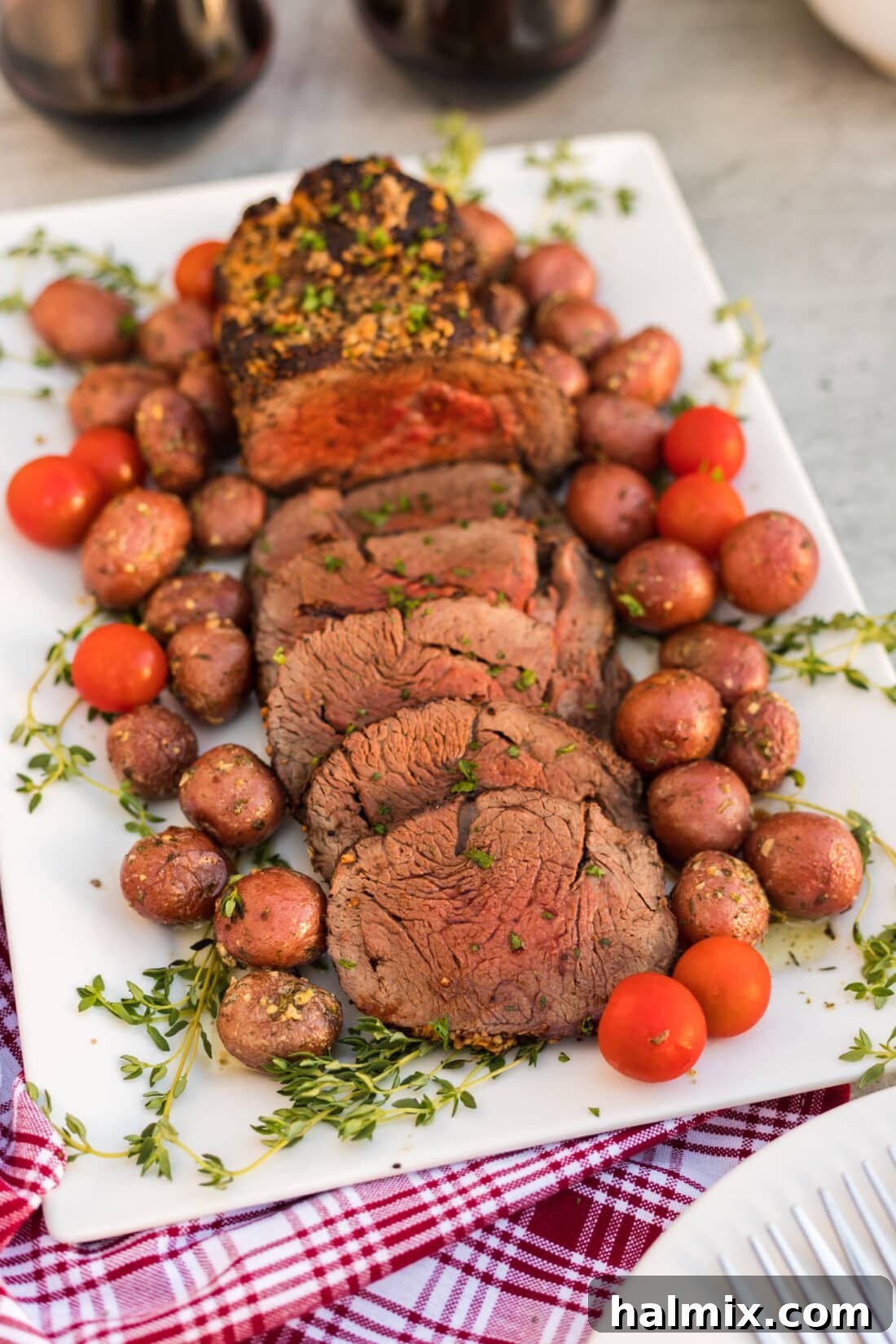
Achieving a restaurant-quality beef tenderloin might seem daunting, but this recipe simplifies the process, ensuring spectacular results every time. In just about 30 minutes of active cooking, you’ll present an unbelievably tender and flavorful slab of beef tenderloin. The beauty of truly exceptional dishes often lies in their simplicity, and this roast is a testament to that principle. You don’t need a pantry full of exotic ingredients to create a culinary marvel; a few quality components and precise techniques are all it takes to make this dish shine.
The magic begins with a quick, intense sear in a hot skillet. This crucial step is more than just browning; it’s about initiating the Maillard reaction, a chemical process that transforms the sugars and amino acids on the surface of the meat into hundreds of new flavor compounds. This reaction is responsible for developing that deep, savory crust and complex aroma that makes seared meats so appealing. Following the sear, the tenderloin roasts at a high temperature, allowing the heat to gently penetrate the center without drying out the exterior. This two-stage cooking method ensures a perfectly cooked interior, ranging from a vibrant medium-rare to a succulent medium, while maintaining that irresistible crispy crust.
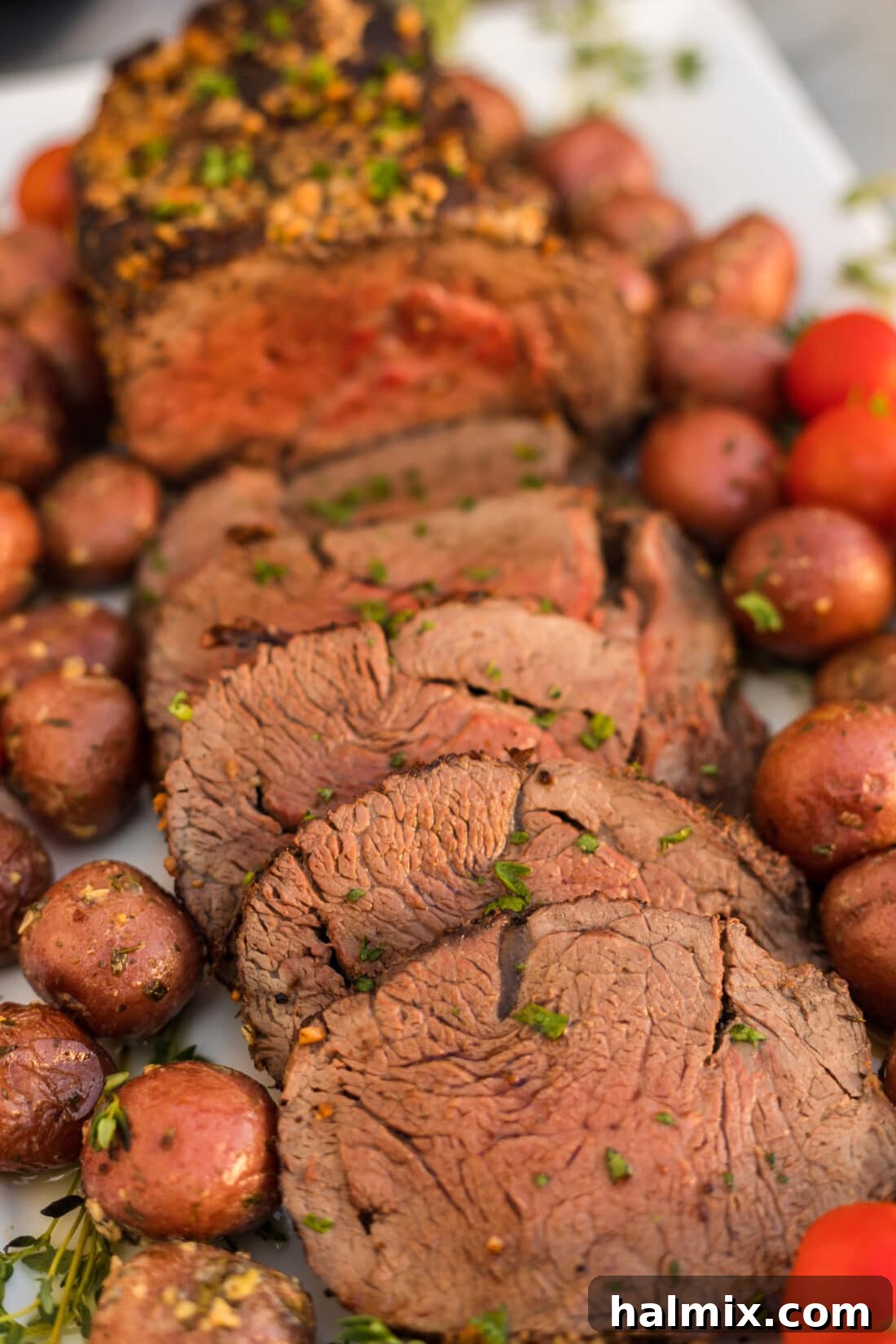
Perhaps the most overlooked, yet vital, step in preparing any roast is the resting period. After removing the tenderloin from the oven, it’s essential to allow it to rest undisturbed. During cooking, the muscle fibers contract, pushing the juices towards the center. Resting allows these fibers to relax, reabsorbing the juices back throughout the meat. This redistribution is key to achieving that incredibly tender, succulent texture, preventing the juices from spilling out onto the cutting board when you slice it. The result is a beef tenderloin that is not only visually stunning with its gorgeous exterior crust but also boasts an interior that is so tender it practically melts in your mouth. This method truly elevates beef tenderloin, even surpassing the tenderness of other premium cuts like a smoked ribeye steak, which is renowned for its tenderness and flavor.
Essential Ingredients for Your Perfect Beef Tenderloin
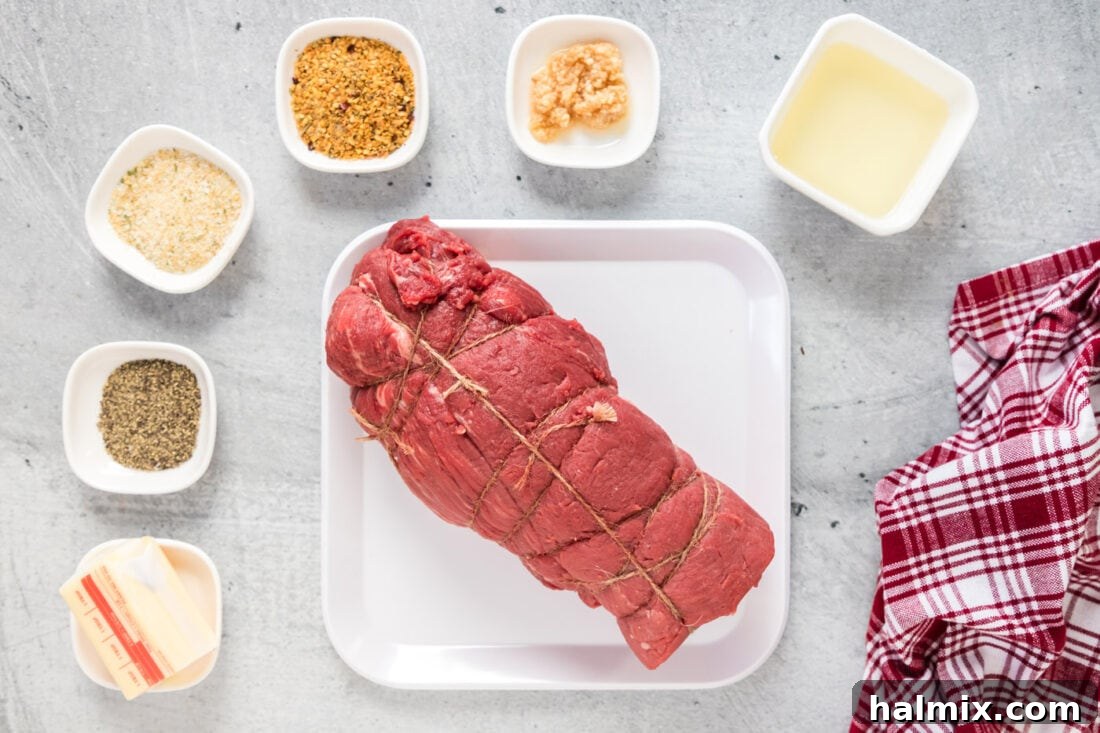
Crafting a truly memorable beef tenderloin relies on a select few high-quality ingredients. While the full, printable recipe with precise measurements and detailed instructions can be found at the end of this post, let’s explore the key components that bring this dish to life. You’ll find that gourmet results don’t require an extensive shopping list, but rather an appreciation for each ingredient’s role.
Ingredient Spotlight: Tips for Selection and Substitutions
Understanding each ingredient’s contribution is key to culinary success. Here’s a closer look at what you’ll need and how to make the best choices or smart substitutions.
BEEF TENDERLOIN: The Star of the Show – For this recipe, we recommend a 2 1/4 pound beef tenderloin. When selecting your tenderloin, look for a cut that is bright red with minimal marbling (beef tenderloin is naturally a lean cut). If you can, choose a “center cut” or “chateaubriand” as these are the most uniform in thickness. Before cooking, you may need to trim any silverskin, a tough, silvery membrane that won’t render during cooking. A sharp boning knife is best for this. Tying the tenderloin with butcher’s twine is a simple yet crucial step. This technique helps to keep the roast from expanding excessively and, more importantly, ensures it maintains a uniform shape. A consistent diameter means the meat cooks evenly throughout, preventing drier ends and an undercooked middle. Always make a mental note, or even take a quick photo, of where you’ve tied the meat. Once cooked and browned, the string can become hard to spot. If your tenderloin is larger or smaller, remember that cook times will vary significantly. An instant-read meat thermometer is your best friend here, ensuring perfect doneness without guesswork.
SEASONINGS: Elevating Flavor – While garlic salt and black pepper form our foundational seasoning, feel free to experiment. Garlic salt provides both savory depth and a hint of salinity. Freshly cracked black pepper adds a pungent kick. For an extra layer of flavor, consider adding a teaspoon of dried herbs like rosemary or thyme, or a pinch of onion powder. Montreal Steak seasoning is an excellent alternative if you prefer a pre-blended spice mix with robust flavors. The melted butter, roasted garlic seasoning, and minced garlic mixture applied midway through cooking acts as a flavorful basting liquid, enhancing the crust and infusing the meat with aromatic notes. Using fresh minced garlic is highly recommended over garlic powder for its superior flavor and fragrance.
OLIVE OIL: The Searing Agent – We use olive oil for searing due to its relatively high smoke point and flavor. It helps create that beautiful, crusty exterior. You can substitute with other high smoke point oils such as avocado oil, grapeseed oil, or canola oil if preferred. Avoid butter alone for the initial sear, as its low smoke point can cause it to burn quickly at the high temperatures required.
Crafting the Perfect Beef Tenderloin: A Step-by-Step Guide
These step-by-step photos and detailed instructions are designed to help you visualize each stage of making this incredible recipe. For a convenient printable version, complete with precise measurements and a full list of ingredients, simply Jump to Recipe at the bottom of this post.
- Prepare Your Oven: Begin by preheating your oven to 425°F (220°C). A properly preheated oven is crucial for achieving an even cook and developing that sought-after crust.
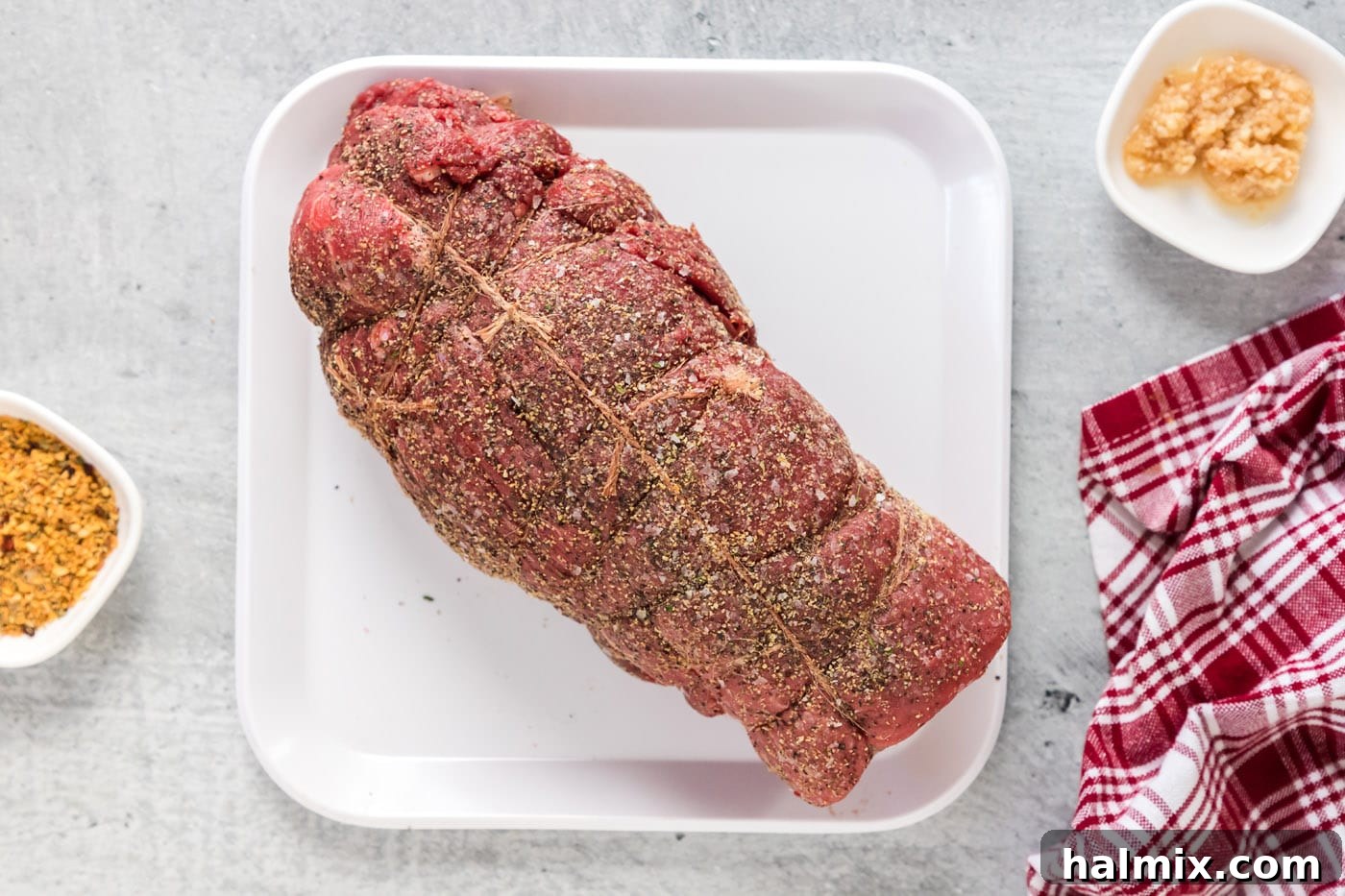
- Shape and Secure the Roast: For an evenly cooked tenderloin, uniform thickness is key. Often, the thinner end of the roast cooks faster than the thicker middle section. To remedy this, take the thinner end and fold it over itself, then secure it firmly with butcher’s or baker’s twine. This simple step creates a more consistent cylindrical shape, ensuring every part of the tenderloin reaches the desired doneness simultaneously.
EXPERT TIP – As mentioned, making a mental note (or even a quick photo) of where you’ve tied the meat is a smart move. The twine can become obscured by the rich, browned crust during cooking, making it tricky to locate later.

- Season Generously: Liberally season the entire surface of the beef tenderloin with garlic salt and freshly ground black pepper. Don’t be shy; a good seasoning layer builds flavor. Ensure all sides are coated evenly for maximum taste and crust development.
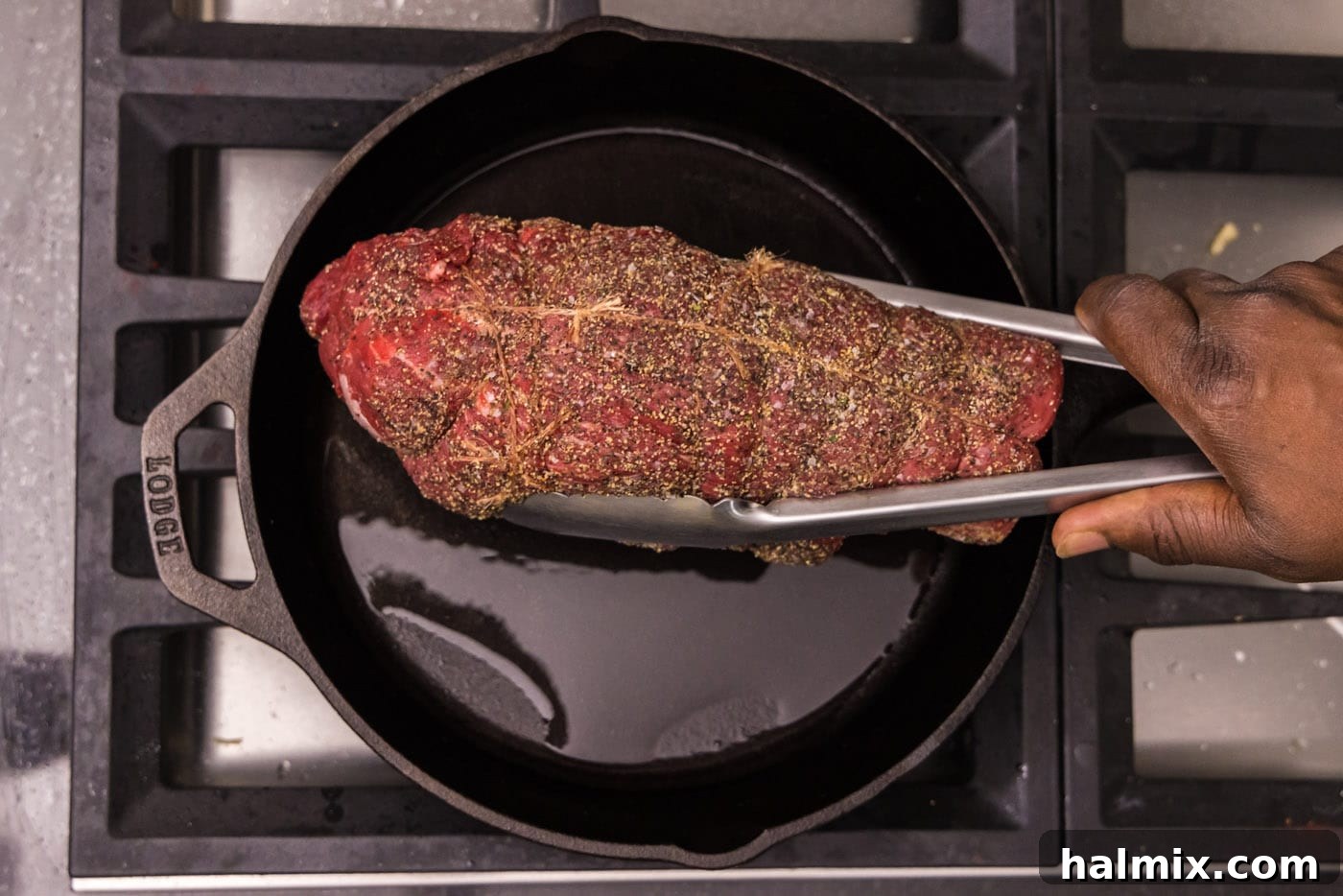
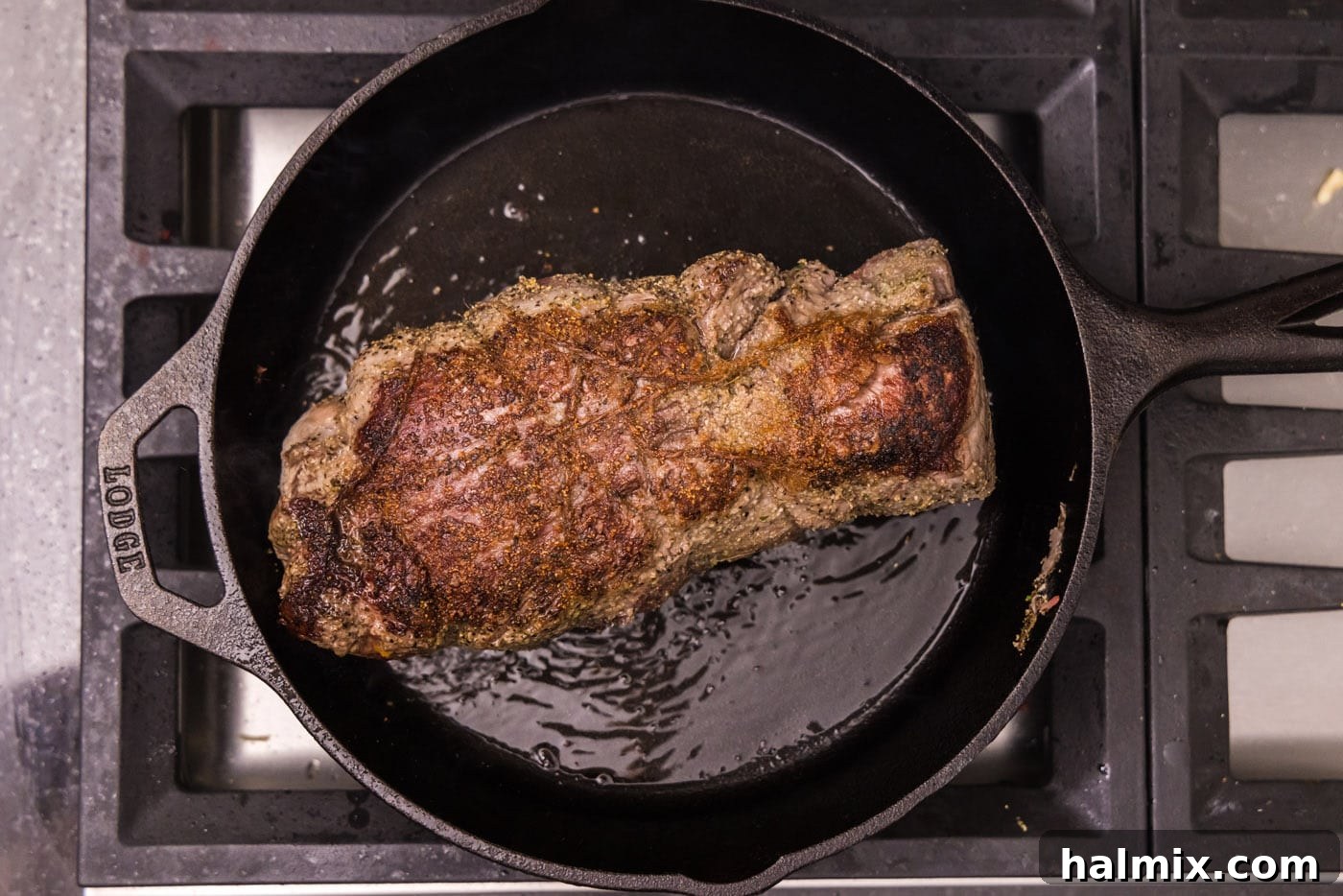
- Achieve the Perfect Sear: Place an oven-proof skillet over medium-high heat. Once hot, add the olive oil. When the oil shimmers, carefully place the seasoned beef tenderloin into the skillet. Sear both sides of the meat for 2-3 minutes per side, or until a beautiful, deep golden-brown crust forms. This high-heat searing locks in juices and creates an incredible depth of flavor.
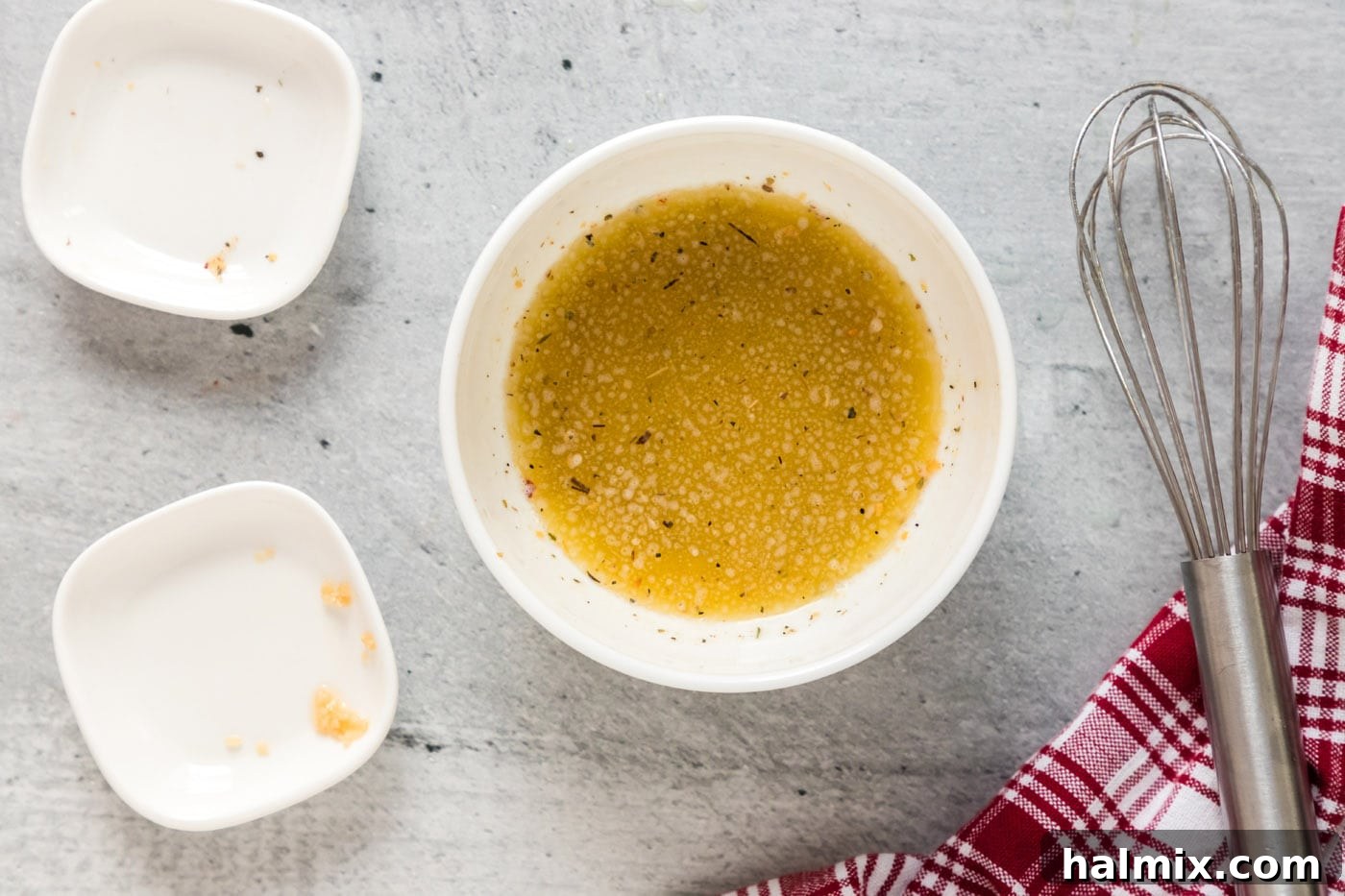
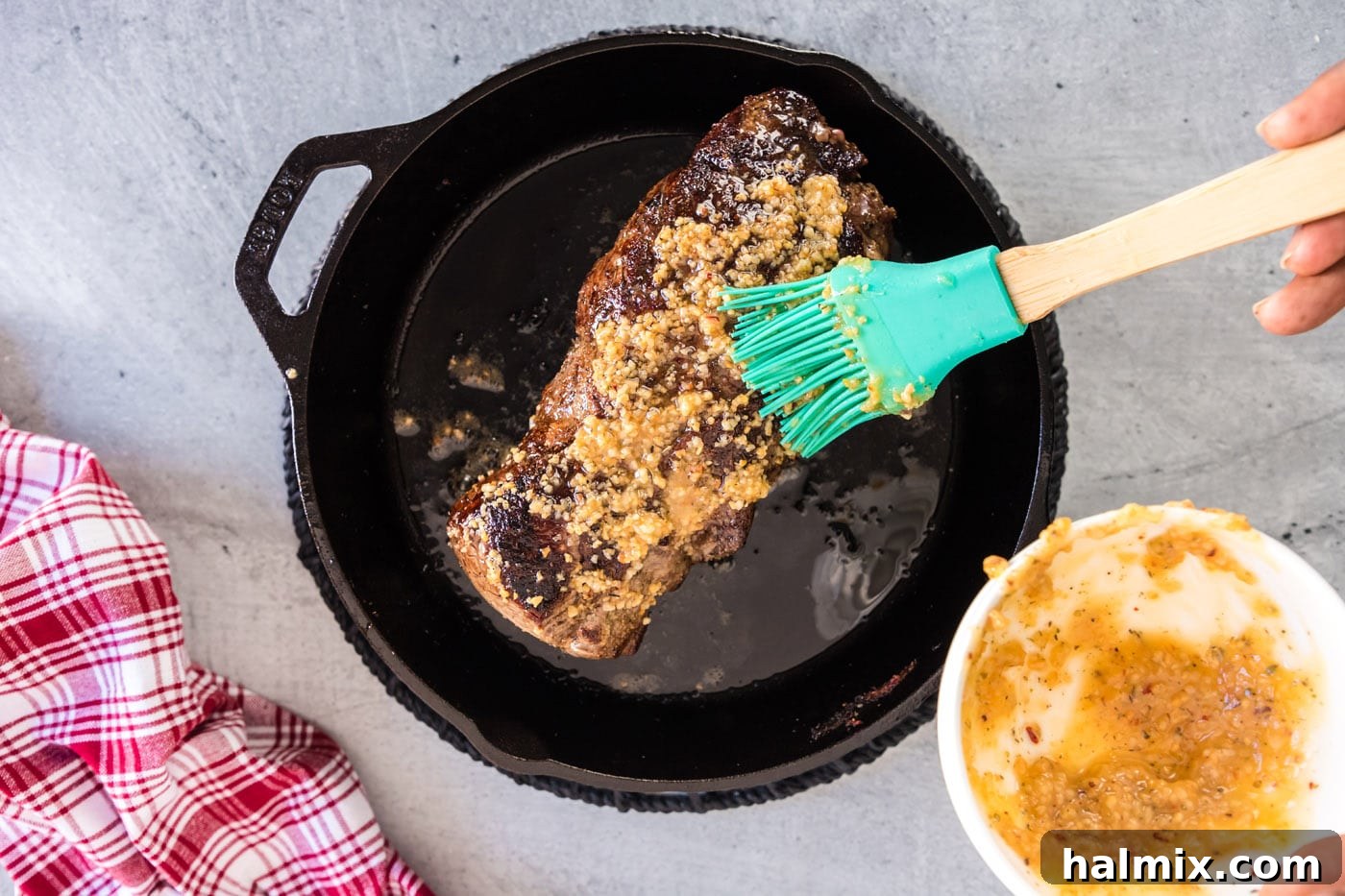
- Baste with Flavorful Butter: In a small bowl, combine the melted butter, roasted garlic seasoning, and minced garlic. Stir well to integrate the flavors. Carefully brush half of this aromatic mixture over one side of the seared tenderloin. Flip the beef over and generously brush with the remaining butter and garlic mixture. This step adds moisture and infuses the roast with rich, garlicky notes as it bakes.
- Roast to Perfection: Transfer the skillet (or the tenderloin to a separate baking sheet if your skillet isn’t oven-safe) to the preheated oven. Bake uncovered for approximately 20 minutes. The exact cooking time can vary based on the thickness of your tenderloin and your desired level of doneness. Always use an instant-read meat thermometer to ensure accuracy. For medium-rare, aim for an internal temperature of 120-125°F (49-52°C).
- Crucial Resting Period: Once the tenderloin reaches your desired internal temperature, remove it from the oven and immediately transfer it to a clean cutting board. Allow the meat to rest undisturbed for at least 5 to 10 minutes before removing the twine and slicing. This resting period is critical for the juices to redistribute throughout the meat, resulting in a more tender and flavorful slice.
EXPERT TIP – To catch any precious juices that might escape during resting, it’s best to use a cutting board equipped with a well or groove. If you don’t have one, simply place a large piece of aluminum foil on your cutting board, place the tenderloin in the center, and loosely tent or wrap it. This creates a makeshift well and keeps the roast warm.
Frequently Asked Questions & Expert Tips for Beef Tenderloin
Proper storage is key to enjoying your delicious leftovers. Once cooled, store any leftover beef tenderloin in an airtight container. Keep it in the refrigerator, and it will remain fresh and flavorful for up to 3 days. When reheating, consider methods that won’t dry it out, such as warming gently in a skillet with a little beef broth or slicing thinly for sandwiches.
The ideal doneness for beef tenderloin is often a matter of personal preference, but it is typically best enjoyed medium-rare to medium to fully appreciate its tenderness. We highly recommend using an instant-read thermometer inserted into the thickest portion of the roast, avoiding bone or fat. For a perfect medium-rare, aim to remove the roast from the oven when its internal temperature reaches 120-125°F (49-52°C). It’s crucial to remember that the temperature will continue to rise by about 5-10 degrees during the resting period (this is called carryover cooking). For a medium doneness, cook to 130-135°F (54-57°C) before resting. For those who prefer medium-well, target 135-140°F (57-60°C). Always allow for that essential resting time for optimal juiciness.
Absolutely! Searing the beef tenderloin before roasting is a technique known as the reverse sear (when done after roasting) or, in this case, a conventional sear-then-roast method. It’s incredibly beneficial because it creates a rich, caramelized crust through the Maillard reaction. This not only enhances the flavor profile significantly but also improves the overall texture and appearance of the roast, locking in moisture and creating a beautiful outer layer that contrasts wonderfully with the tender interior.
While it’s best served fresh, you can certainly do some prep work in advance. Seasoning the tenderloin up to 24 hours ahead of time can actually enhance its flavor, allowing the salt and pepper to penetrate the meat more deeply. Store it uncovered in the refrigerator. You can also prepare your garlic butter mixture in advance and store it in the fridge, then gently warm it before use. This makes the final cooking process much quicker and less stressful.
Elevate Your Meal: Delicious Serving Suggestions
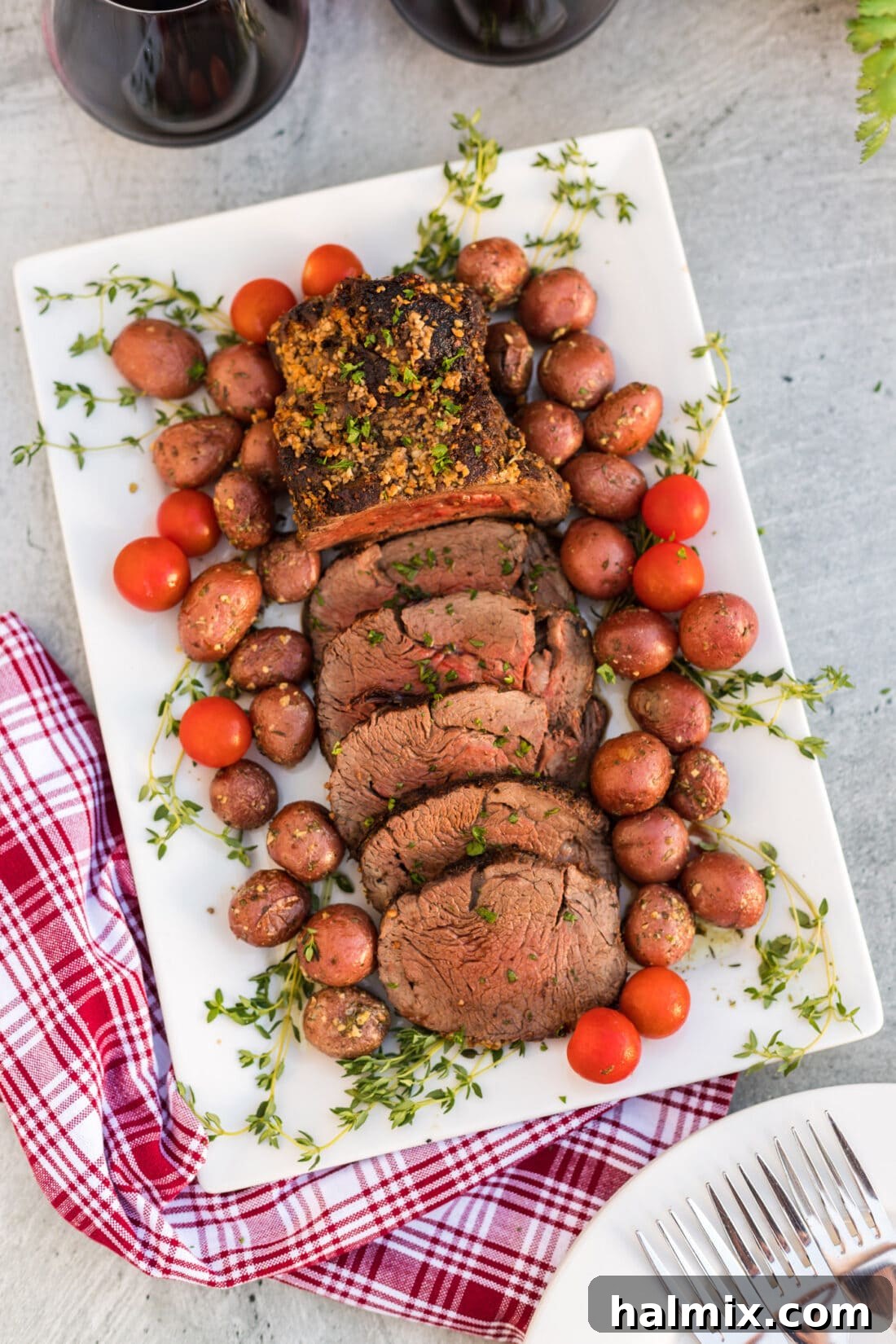
Beef tenderloin, with its elegant simplicity, pairs beautifully with a variety of side dishes, making it versatile for any occasion. For classic accompaniments, consider hearty potato dishes like creamy baby red potatoes, smooth and rich mashed potatoes, or decadent au gratin potatoes. These starchy sides provide a comforting counterpoint to the tender beef. If you’re leaning towards vegetables, roasted green beans, sweet and caramelized carrots, or crispy Brussels sprouts are all excellent choices that complement the beef’s rich flavor without overpowering it. For a truly elegant touch, a side of crisp asparagus or a vibrant garden salad can add freshness and color to your plate. Don’t forget the bread! Crusty bread is perfect for soaking up any delicious pan juices, or try light and airy popovers for a festive touch. A simple dinner salad, dressed with a light vinaigrette, can complete the meal, offering a refreshing contrast and keeping the overall spread balanced and delightful.
Discover More Delectable Beef Recipes
If you loved this beef tenderloin recipe, you’ll be thrilled to explore more of our fantastic beef creations. From hearty stews to perfectly seared steaks, we have a recipe to satisfy every craving. Dive into these other beef favorites:
- Beef Bourguignon
- Oven Beef Ribs
- Oven Swiss Steak
- Crockpot Roast Beef
- Reverse Sear Ribeye
I genuinely love to bake and cook, and my greatest joy comes from sharing my kitchen experiences and successful recipes with all of you! Remembering to visit the blog daily for new inspirations can sometimes be a challenge, which is why I offer a convenient newsletter delivered straight to your inbox every time a new recipe is posted. Simply subscribe today and start receiving your free daily recipes, making it easier than ever to discover your next favorite meal!
Beef Tenderloin
IMPORTANT – Don’t forget to scroll back up through the blog post for helpful Frequently Asked Questions and Expert Tips!
Print It
Pin It
Rate It
Ingredients
- 2 ¼ pounds beef tenderloin
- 1 ½ Tablespoons garlic salt
- 2 teaspoons black pepper
- 4 Tablespoons butter melted
- 1 ½ Tablespoons roasted garlic seasoning or any seasoning of your choice, Montreal Steak seasoning works well
- 2 Tablespoons minced garlic
- 4 Tablespoons olive oil
Things You’ll Need
-
Butcher’s twine
-
Oven proof skillet
-
Instant Read Meat Thermometer
Before You Begin
- For the resting step, it’s best to use a cutting board with a well to catch any juices. If you don’t have a board with a well, place a large piece of foil on the cutting board, place tenderloin in the center of the foil, and wrap it loosely to create a tent. This helps retain heat and collect juices.
- Always make a mental note of where you tied the meat with butcher’s twine. Once the roast is cooked and beautifully browned, the string can become surprisingly difficult to see.
- Beef tenderloin is best enjoyed medium-rare. The internal temperature should reach 120-125°F (49-52°C) on an instant-read thermometer inserted into the thickest portion of the roast before resting. Cooking the roast to this range will yield perfect medium-rare results. Do note that the temperature will continue to rise as it rests, by up to 5-10 degrees or so. For medium doneness, cook to 130-135°F (54-57°C) before resting.
- Store any leftover beef tenderloin in an airtight container kept in the refrigerator for up to 3 days. This ensures maximum freshness and flavor.
Instructions
-
Preheat oven to 425°F (220°C).
-
To ensure uniform cooking, fold the thinner end of the tenderloin over itself and tie it securely with butcher’s or baker’s twine to achieve a consistent thickness.
-
Generously season the entire surface of the meat with garlic salt and black pepper.
-
In an oven-proof skillet, heat olive oil over medium-high heat. Sear both sides of the tenderloin until a beautiful, deep crust forms, about 2-3 minutes per side.
-
In a small bowl, combine melted butter, roasted garlic seasoning, and minced garlic. Brush half of this mixture onto one side of the seared tenderloin. Flip the beef and brush with the remaining mixture.
-
Bake uncovered in the preheated oven for approximately 20 minutes, or until desired internal temperature is reached (120-125°F for medium-rare).
-
Remove the tenderloin from the oven and transfer it to a cutting board. Allow it to rest for 5-10 minutes before carefully removing the twine and slicing to serve.
Nutrition
The recipes on this blog are tested with a conventional gas oven and gas stovetop. It’s important to note that some ovens, especially as they age, can cook and bake inconsistently. Using an inexpensive oven thermometer can assure you that your oven is truly heating to the proper temperature. If you use a toaster oven or countertop oven, please keep in mind that they may not distribute heat the same as a conventional full sized oven and you may need to adjust your cooking/baking times. In the case of recipes made with a pressure cooker, air fryer, slow cooker, or other appliance, a link to the appliances we use is listed within each respective recipe. For baking recipes where measurements are given by weight, please note that results may not be the same if cups are used instead, and we can’t guarantee success with that method.