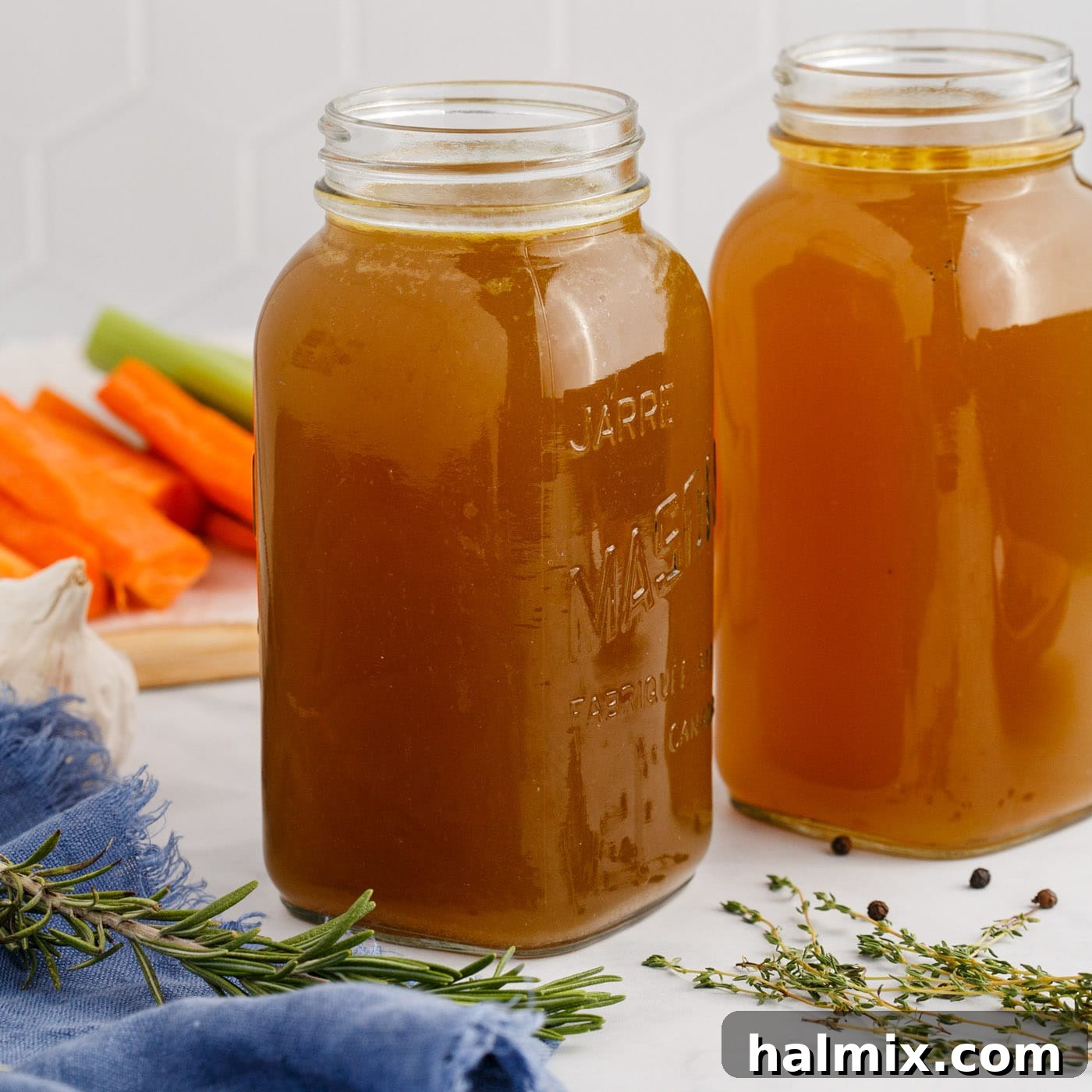
Unlock a world of rich flavor and culinary versatility with homemade chicken stock – a kitchen essential that transforms simple ingredients into liquid gold. This guide shows you how to craft a deeply flavorful, gelatinous chicken stock using the leftover bones from a store-bought rotisserie chicken. More than just a base for soups, this rich elixir elevates countless dishes, offering unparalleled depth and a satisfying savory foundation that no store-bought alternative can truly match.
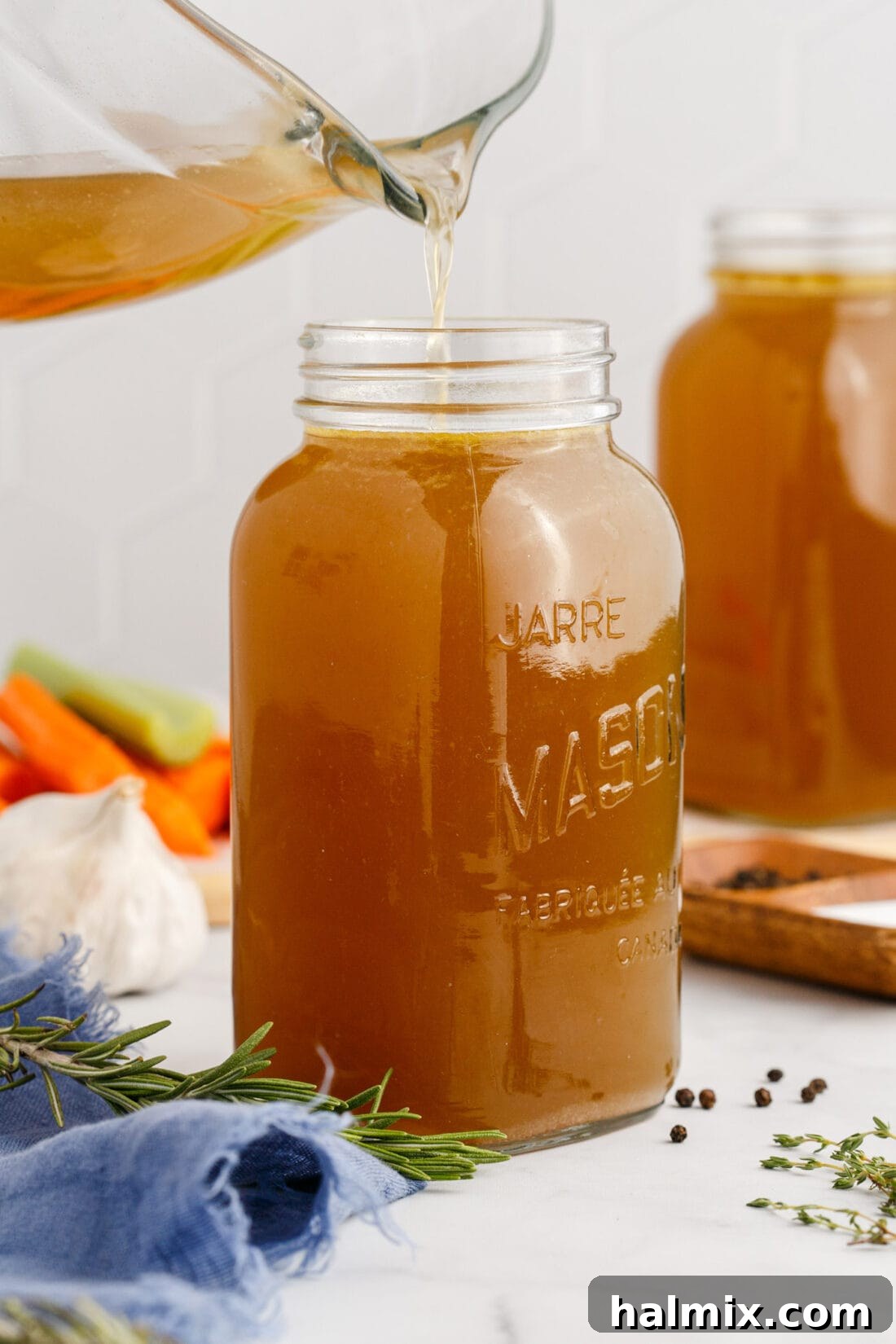
Why Crafting Your Own Chicken Stock is a Culinary Game-Changer
There’s a unique satisfaction in transforming something destined for the trash into a robust, flavorful ingredient. Using the leftover carcass from a rotisserie chicken to make homemade stock is not only incredibly economical but also incredibly rewarding. Once you’ve enjoyed the succulent meat in dishes like a hearty chicken tortilla soup or a comforting chicken and dumpling casserole, discarding the bones feels like a missed opportunity. Those bones hold the key to a deeply flavorful stock, a secret weapon that can infuse richness into an array of different recipes. It’s truly the gift that keeps on giving, extending the value of your initial meal.
Beyond the ethical and economical advantages, the quality of homemade chicken stock far surpasses its store-bought counterparts. The distinguishing factor is the thick, often jiggly layer of fat and gelatin that forms as the stock cools. This isn’t just fat; it’s collagen, meticulously broken down from the chicken bones during a long, slow simmer. This natural collagen is what gives homemade stock its incredible body, luscious mouthfeel, and rich flavor, making it superior for gravies, sauces, and any recipe requiring a truly robust base. For an even more aromatic and complex flavor profile, we meticulously select a blend of fresh vegetables and herbs, including sweet onions, earthy carrots, crisp celery, pungent garlic, fragrant bay leaves, and the woody notes of thyme and rosemary. These elements slowly release their essential oils and flavors into the simmering liquid, creating a symphony of taste that forms the backbone of any great dish.
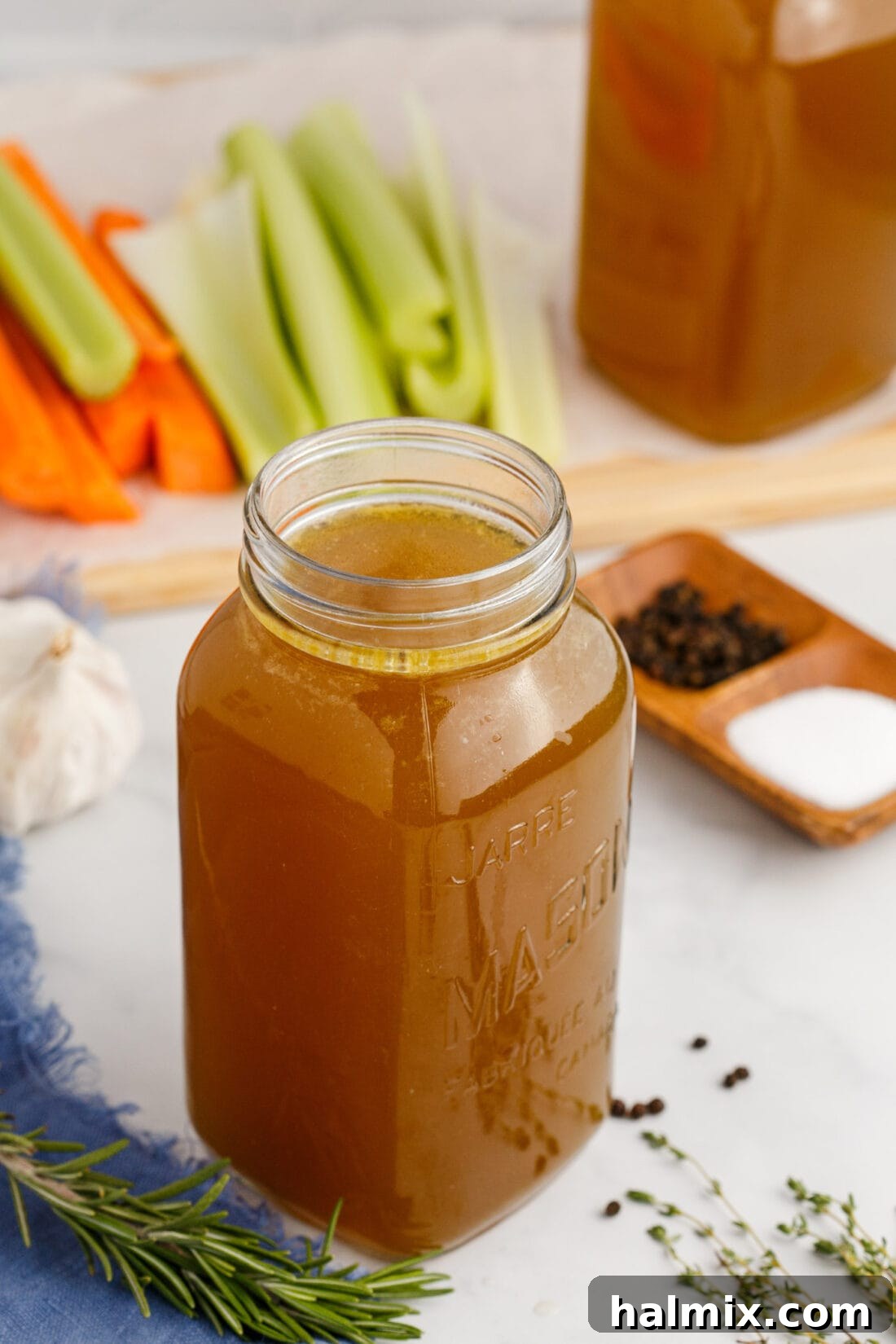
Essential Ingredients for Your Homemade Chicken Stock
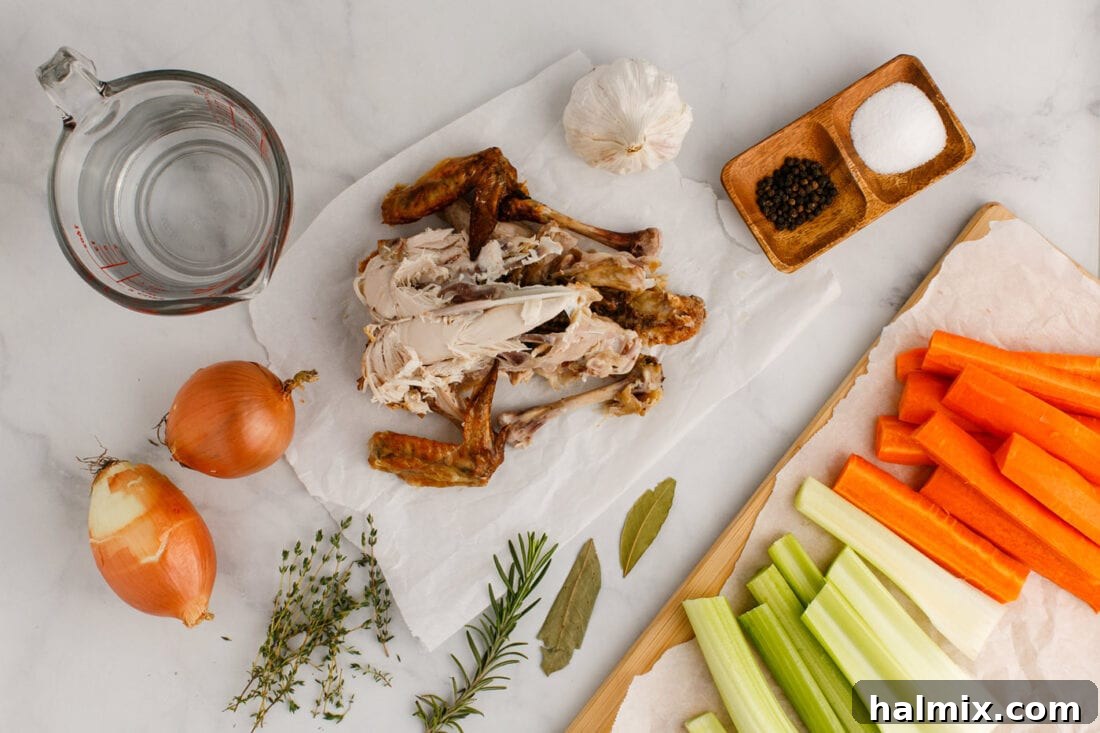
Creating an exceptional chicken stock begins with quality ingredients. While the star of the show is undoubtedly the chicken carcass, the supporting cast of fresh vegetables and aromatic herbs plays an equally crucial role in building layers of complex flavor. Here’s a detailed look at what you’ll need to create your own culinary masterpiece:
Ingredient Spotlight and Smart Substitutions
The Chicken Foundation: This recipe calls for the bones from two rotisserie chickens. The beauty of using rotisserie chicken carcasses is that they often retain a small amount of roasted meat and savory juices, which contribute immense depth and flavor to your stock. While you want the bones to be mostly picked clean, a little residual meat is actually beneficial. This method is truly the most ingenious way to utilize your rotisserie chicken leftovers, transforming them from waste into a valuable cooking ingredient. For those who prefer to roast their own chicken, you can certainly use the bones from a home-roasted bird as well, just ensure it’s well-seasoned.
Vegetable Aromatics: The classic trio of onions, carrots, and celery (often called mirepoix) forms the aromatic base of any good stock. These vegetables impart natural sweetness and a foundational savory flavor. However, the true beauty of homemade stock lies in its flexibility. Feel free to incorporate any clean vegetable scraps you might have on hand. Think leek tops, mushroom stems, parsley stalks, or even the ends of bell peppers. Avoid cruciferous vegetables like broccoli or cabbage, as they can impart a bitter flavor to your stock. Root vegetables like parsnips or a potato peel (scrubbed clean) can also add a subtle sweetness and body. Garlic cloves, whole and unpeeled, add a pungent kick that mellows beautifully during the long simmer.
Herbal Infusion: Fresh herbs are non-negotiable for a vibrant stock. Bay leaves contribute a subtle, almost floral note, while fresh thyme offers an earthy, herbaceous aroma. Rosemary adds a deep, piney essence that complements chicken beautifully. If fresh herbs aren’t available, dried herbs can be used in smaller quantities (about 1/3 of the fresh amount) but may not provide the same bright, fresh flavor. A handful of fresh parsley is also a fantastic addition for its bright, clean notes.
Seasoning and Water: Whole peppercorns add a gentle warmth without making the stock overtly spicy. Sea salt is essential for seasoning, but remember that you can always adjust the saltiness later. Start with the recommended amount and taste as you go. Cold water is crucial for stock-making, as it allows impurities to slowly rise to the surface, which can then be skimmed off for a clearer stock. Ensure you use enough water to cover all the ingredients completely, allowing for a deep extraction of flavors.
The Art of Making Homemade Chicken Stock: A Step-by-Step Guide
Embark on the journey of creating your own liquid gold with these simple, yet effective, steps. The process is mostly hands-off, allowing the ingredients to slowly meld into a rich, flavorful stock.
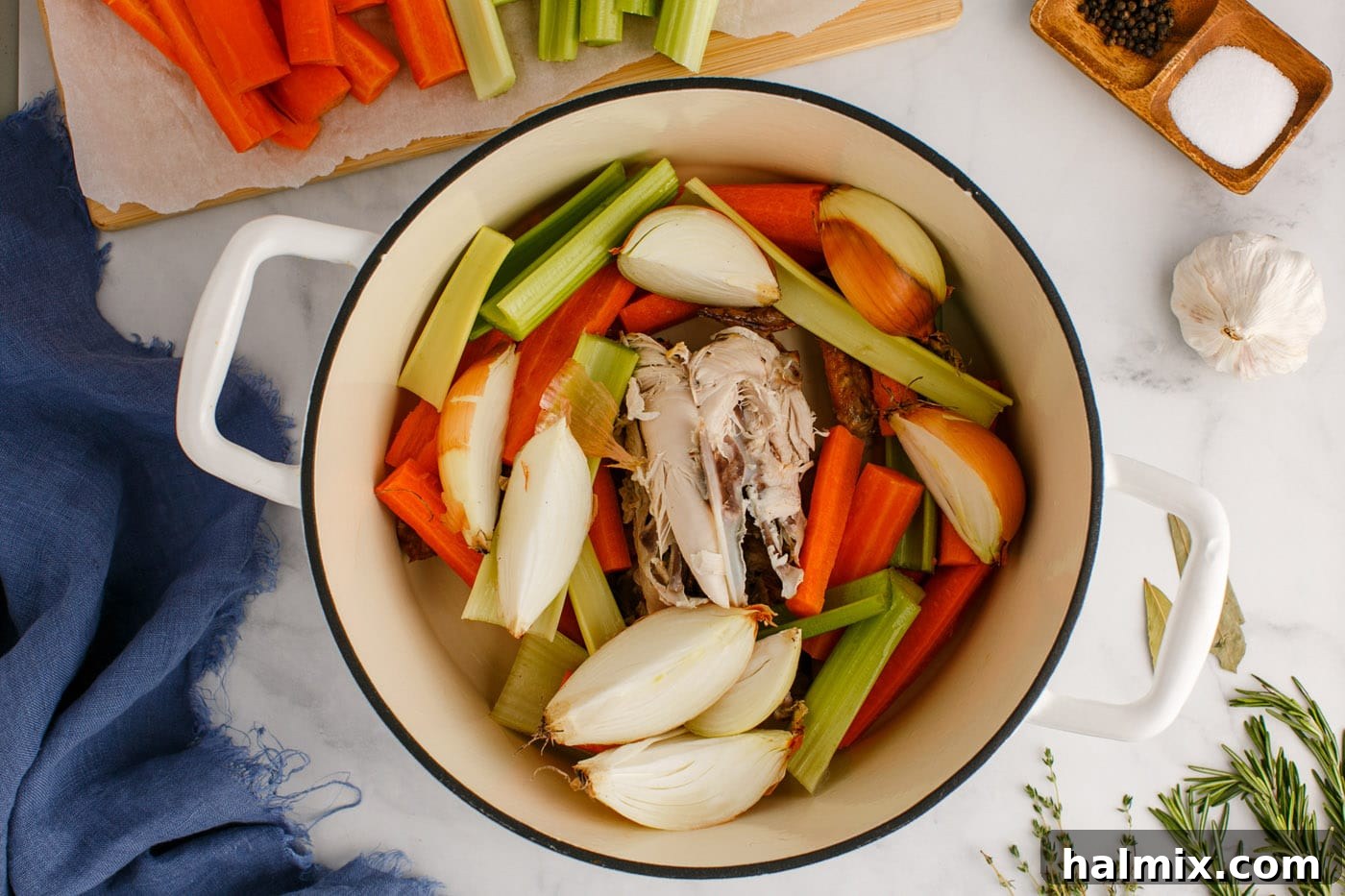
- Prepare Your Pot and Carcasses: Begin by placing your rotisserie chicken carcasses into a large stockpot. Depending on the size of your pot and the chicken, you might need to break down the carcasses slightly to ensure they fit snugly and stay submerged in the liquid. A 14-quart stockpot or larger is ideal for a full batch of this recipe, allowing ample room for ingredients and water. For a smaller batch, a 7-quart stockpot will suffice.
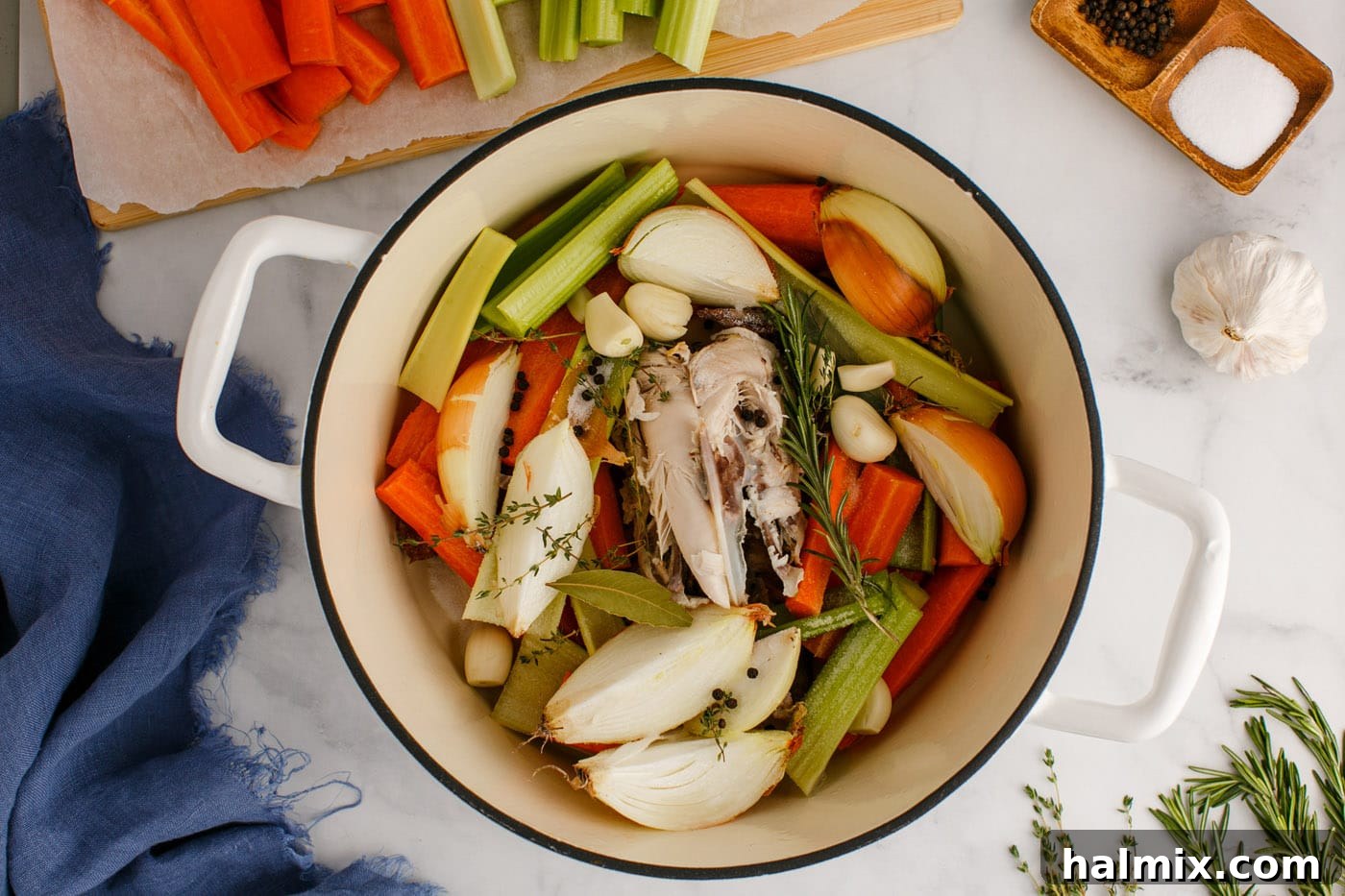
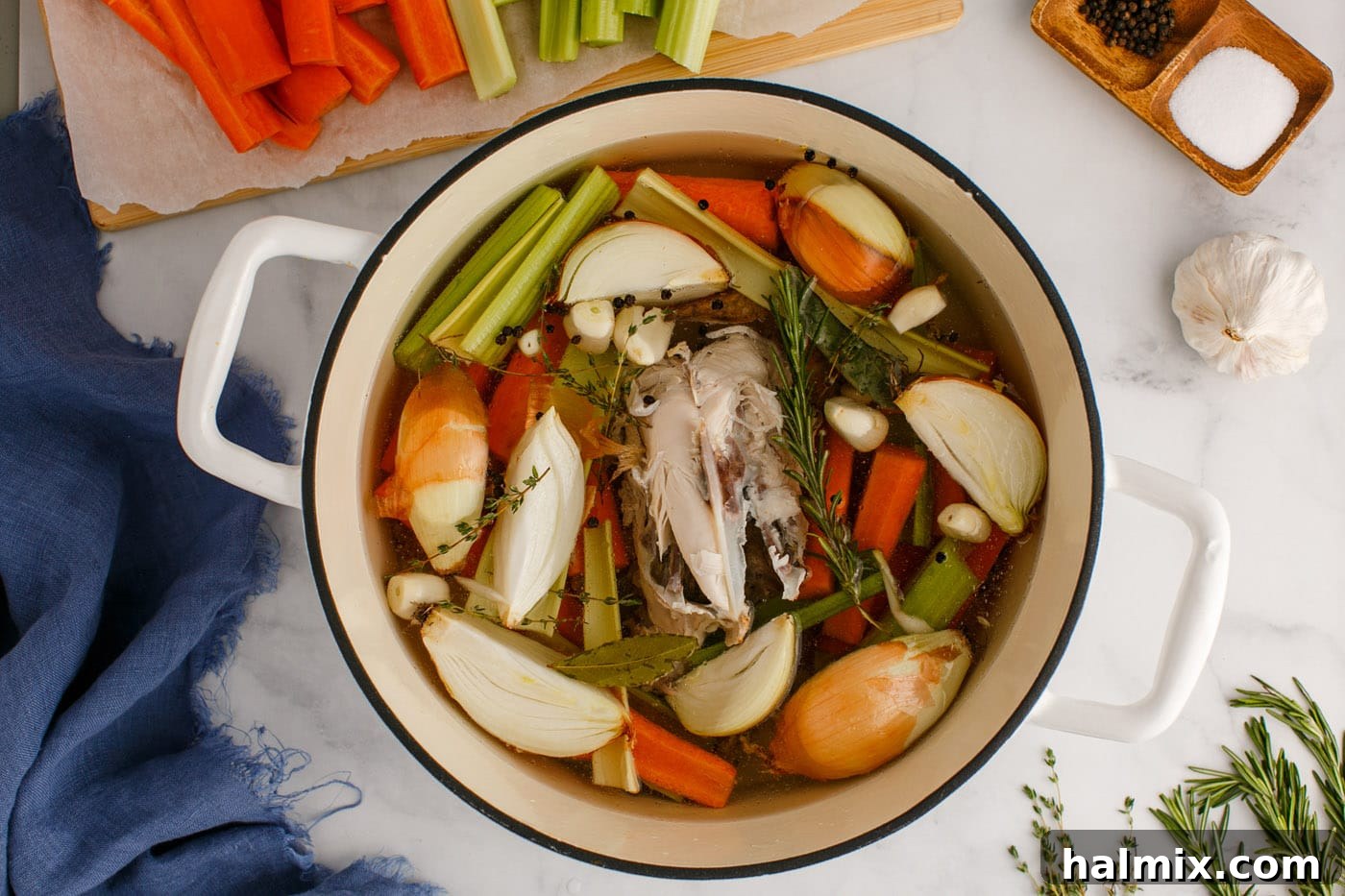
- Combine All Ingredients: Add all the remaining ingredients – the chopped onions, carrots, celery, garlic cloves, bay leaves, fresh thyme, rosemary, whole peppercorns, and sea salt – to the stockpot with the chicken carcasses. Pour in 20 cups of cold water, or enough to completely cover all the ingredients. If you find yourself stacking ingredients, ensure there’s enough water to almost fully submerge everything for optimal flavor extraction.
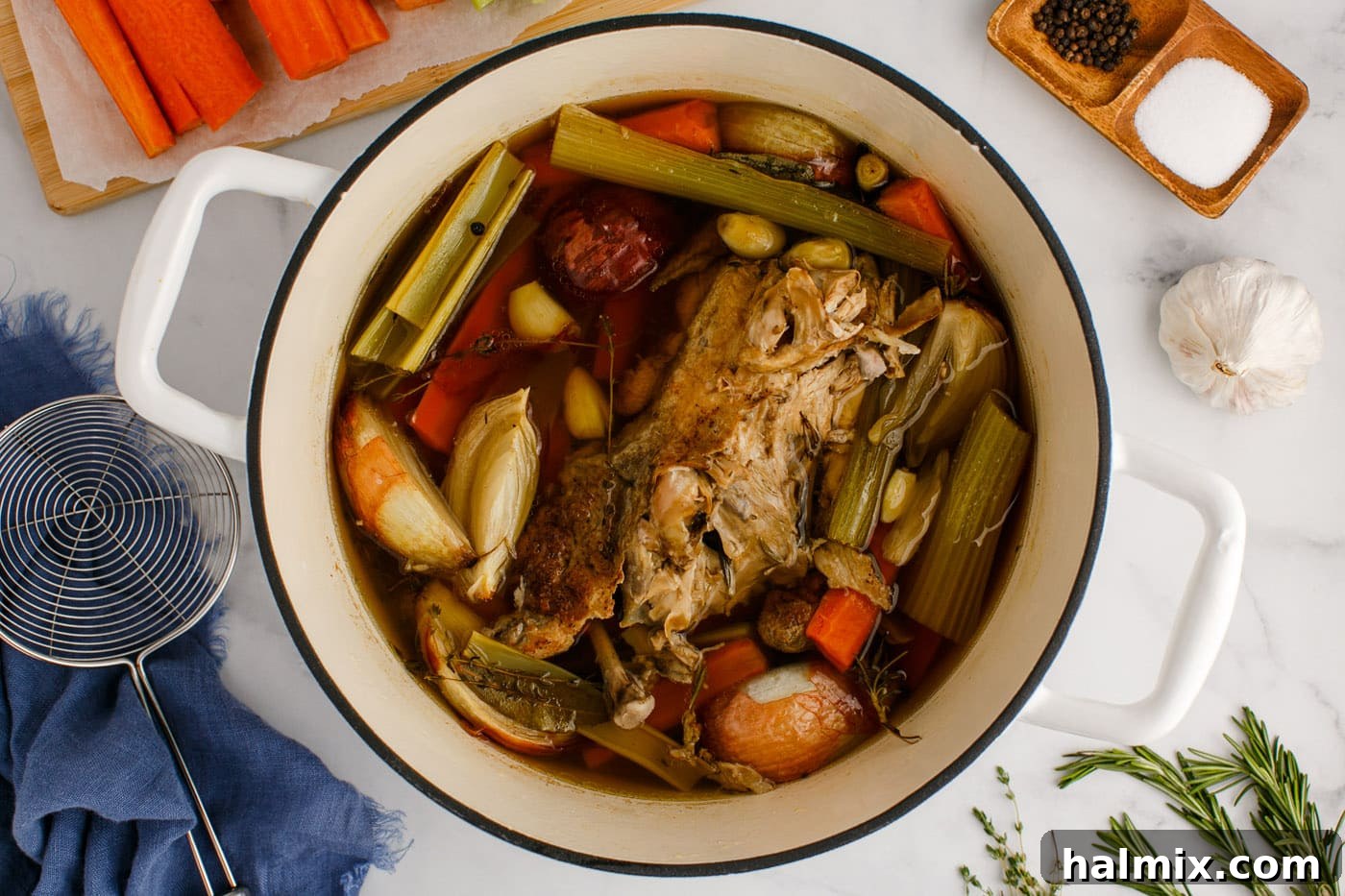
- Simmer to Perfection: Place the stockpot on the stove over medium-high heat and bring the water to a rolling boil. Once boiling, reduce the heat to low, just enough to maintain a gentle simmer. Do not cover the pot; allowing it to simmer uncovered helps in the evaporation of water, intensifying the flavors of your stock. Let it simmer for at least 4 hours. Around the 3-hour mark, taste the broth and adjust the salt if necessary. The longer it simmers, the more flavor and gelatin will be extracted from the bones, resulting in a richer, more robust stock.
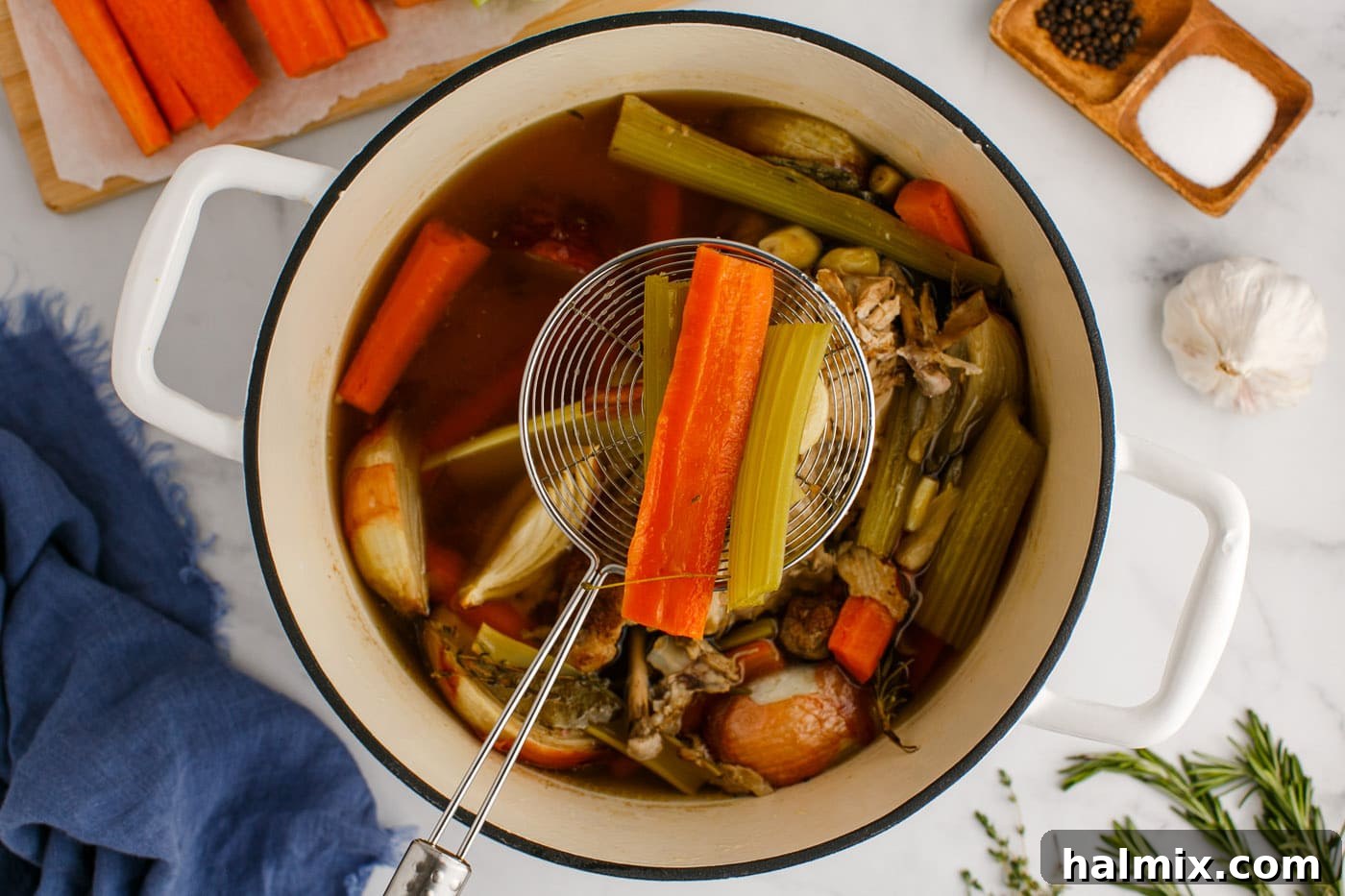
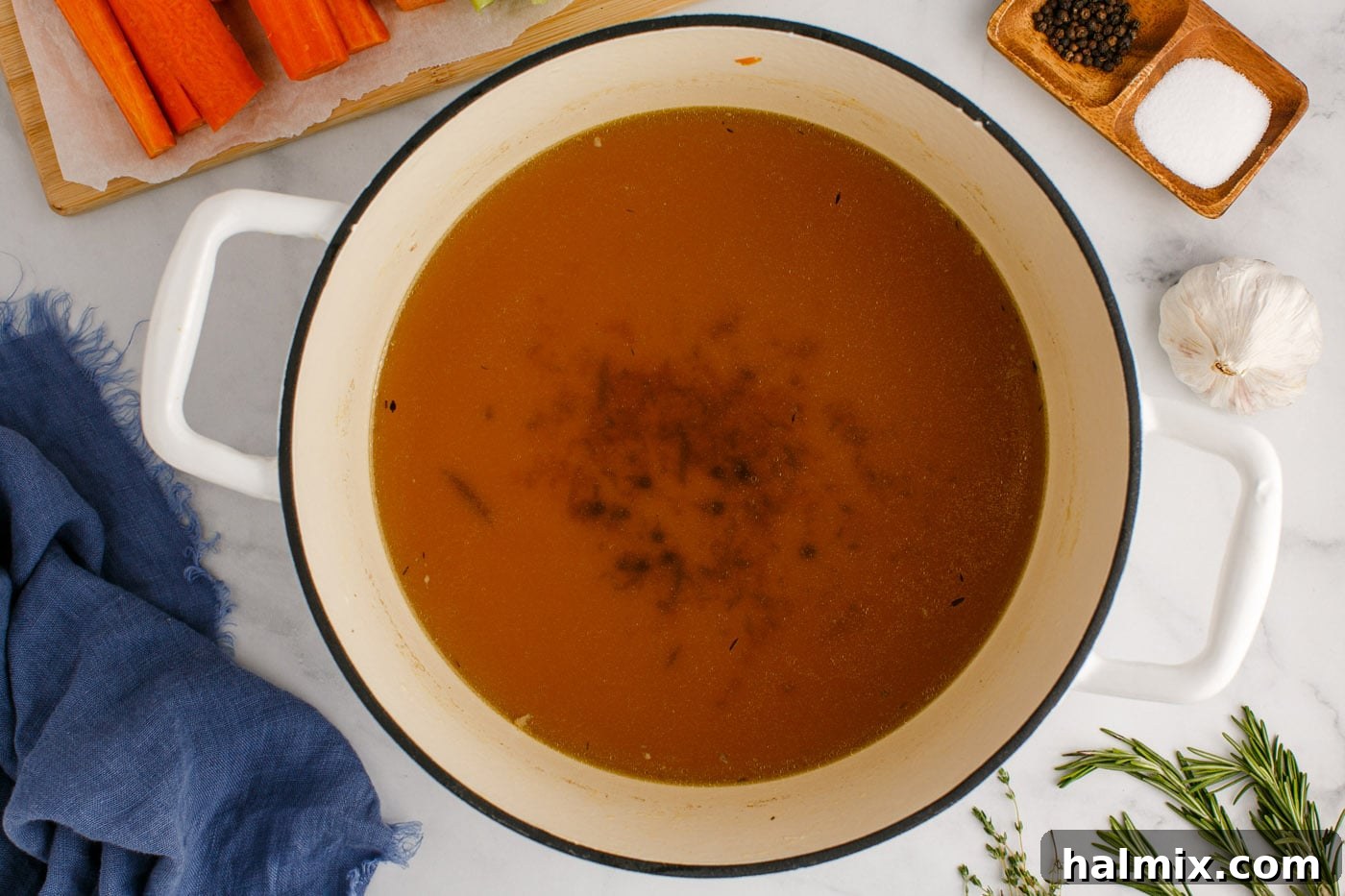
- Strain and Clarify: After the simmering time, carefully remove the large pieces of chicken carcass and vegetables from the pot using a slotted spoon. For a clearer stock, strain the remaining liquid through a fine-mesh strainer lined with cheesecloth. Repeat this process as needed until your stock reaches your desired level of clarity. As the stock cools, a layer of fat will rise to the top. You can spoon this off while it’s warm, but it’s often easier to do once the stock has completely cooled and the fat has solidified into a solid cap, which can then be easily lifted off.
- Cool and Store: Allow the finished stock to cool completely at room temperature before transferring it to airtight jars or containers for storage. This prevents condensation and keeps your stock fresh.
Frequently Asked Questions & Expert Tips for Perfect Stock
What is the difference between chicken stock and chicken broth?
While often used interchangeably, there’s a key distinction. Chicken stock is primarily made by simmering chicken bones, often including some connective tissues, which release gelatin and collagen. This gives stock a richer body and mouthfeel, and it often appears jiggly when cold. Chicken broth, on the other hand, is typically made by simmering chicken meat (with or without some bones) and vegetables. It tends to be lighter in consistency and flavor, often used for sipping or as a lighter liquid base.
How do you store homemade chicken stock for maximum freshness?
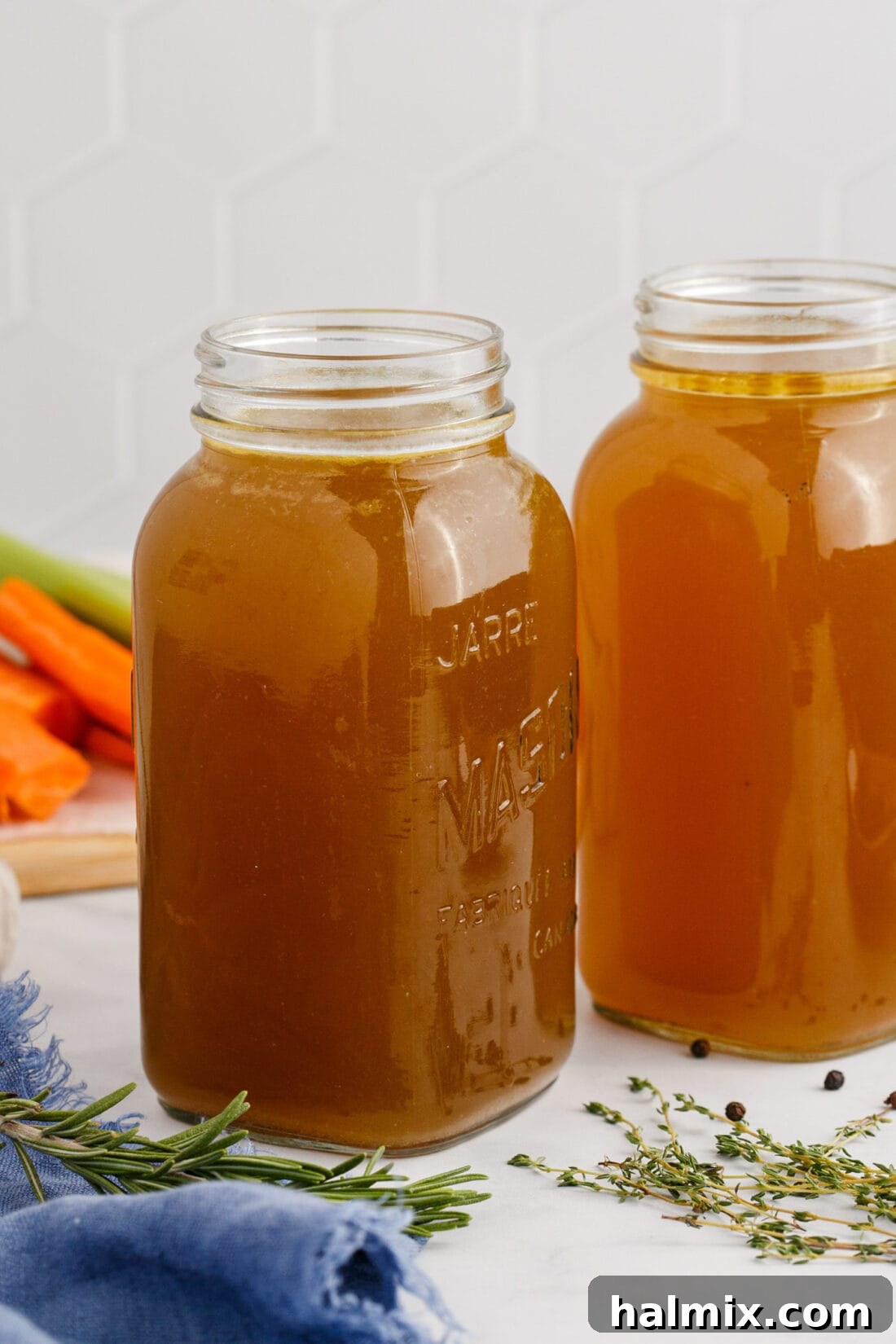
Proper storage is essential to enjoy your homemade chicken stock safely. Once completely cooled, transfer your stock to airtight containers. Mason jars with sealed lids are excellent choices. Store it in the refrigerator for up to 7 days. This recipe yields approximately 2 quarts (64 ounces) of stock. You can use a single 64-ounce mason jar or two 32-ounce jars, depending on your preferred portion sizes.
Can you freeze homemade chicken stock, and what are the best practices?
Absolutely! Freezing is an excellent way to extend the shelf life of your homemade stock for up to 3 months. The most important step is to ensure the stock is completely cool before transferring it to freezer-safe containers. When using mason jars or any rigid container, remember to leave at least an inch of headspace at the top. This allows for expansion as the stock freezes, preventing the container from cracking. You can also freeze stock in ice cube trays for smaller, convenient portions, then transfer the frozen cubes to a freezer bag.
What are some expert tips for making the best chicken stock?
For truly exceptional stock, always start with cold water; it helps slowly extract impurities and flavor. Avoid boiling the stock vigorously; a gentle simmer is key to a clear and flavorful result. Don’t over-pack your pot, as the ingredients need space to release their flavors effectively. Skim off any foam that rises to the surface during the first hour of simmering to ensure a cleaner stock. Finally, taste and adjust seasoning throughout the simmering process, especially the salt, to achieve a perfectly balanced flavor profile.
Serving Suggestions: Unleash the Versatility of Your Homemade Stock
The culinary possibilities with homemade chicken stock are virtually endless. Its rich, nuanced flavor provides a superior base compared to any store-bought version, elevating everyday meals to gourmet experiences. Of course, a classic chicken noodle soup is a natural choice; you can simply toss your favorite noodles straight into a pot of heated stock with some leftover chicken and fresh vegetables for a quick and comforting meal. Beyond soup, consider using it as the liquid for cooking grains like rice pilaf or quinoa, adding an incredible depth of flavor. It’s perfect for making savory gravies, pan sauces, or deglazing a pan after searing meat. Use it to braise meats like beef or lamb, or as the liquid component in casseroles and stews. It’s even wonderful simply sipped warm from a mug on a chilly day, perhaps with a sprinkle of fresh herbs. Homemade stock is a foundational ingredient that will quickly become indispensable in your kitchen.
Recipes That Sing with Homemade Chicken Stock
- Flavorful Rice Pilaf
- Tender Braised Beef
- Hearty Cabbage Soup
- Comforting Chicken Noodle Soup
- Juicy Instant Pot Chicken Thighs
I love to bake and cook and share my kitchen experience with all of you! Remembering to come back each day can be tough, that’s why I offer a convenient newsletter every time a new recipe posts. Simply subscribe and start receiving your free daily recipes!
Homemade Chicken Stock
There’s really no better option than to make delicious homemade chicken stock with the leftover bones from your rotisserie chicken!
IMPORTANT – There are often Frequently Asked Questions within the blog post that you may find helpful. Simply scroll back up to read them!
Print Recipe | Pin Recipe
Course: Dinner, Soup
Cuisine: American
Servings: 8 servings (64 ounces/2 quarts total)
Total Time: 4 hours 40 minutes
Calories: 58 cal
Author: Amanda Davis
Ingredients
- 2 rotisserie chicken carcasses (picked, but not cleaned)
- 4 medium yellow onions
- 6 medium carrots (chopped)
- 8-10 celery stalks (chopped)
- 12 cloves garlic
- 4 bay leaves
- 16 sprigs fresh thyme
- 2 sprigs rosemary
- 2 teaspoons whole peppercorns
- 4 teaspoons sea salt (more to taste)
- 20 cups cold water (or enough to almost cover the chicken)
Things You’ll Need
- 14 quart stockpot
- two 32 ounce mason jars (or one 64 ounce mason jar)
Before You Begin
- This recipe uses the bones from two rotisserie chickens. You want the bones to be mostly picked of the meat, but not completely cleaned off. The meat will help add flavor to the stock.
- Store homemade chicken stock in an air-tight container, preferably a mason jar with a sealed lid, kept in the refrigerator for up to 7 days. This recipe yields 2 quarts (64 ounces) total, so you can store it in a 64-ounce mason jar or two 32-ounce jars.
- To freeze: It’s important to let the stock cool before transferring to a freezer-safe mason jar or plastic air-tight container. Leave some space at the top (about an inch) so the stock has room to expand when frozen. Freeze for up to 3 months.
Instructions
- In a large stockpot, place your chicken carcasses. You may need to break one down a little bit to try to keep them lower in the pot. You will need a 14-quart stockpot or larger for a full batch, or a 7-quart stockpot for a half batch.
- Add all your remaining ingredients plus 20 cups of water or enough to almost cover the chicken. If you are stacking them, you will need to keep that in consideration.
- Bring to a boil on medium-high heat, then reduce to low heat and simmer for 4 hours, uncovered. Taste the broth after 3 hours and add more salt if needed.
- Strain out any large pieces with a slotted spoon. Use a cheesecloth or a fine strainer to catch any smaller pieces. Repeat as needed. Spoon off any fat that rises to the top – sometimes it is easier to do this when it is cool as the fat will harden on the top.
- Allow to cool then transfer to an air-tight jar or container.
Nutrition
Calories: 58 cal |
Carbohydrates: 13g |
Protein: 2g |
Fat: 0.3g |
Saturated Fat: 0.1g |
Polyunsaturated Fat: 0.1g |
Monounsaturated Fat: 0.04g |
Sodium: 1259mg |
Potassium: 376mg |
Fiber: 4g |
Sugar: 5g |
Vitamin A: 7929IU |
Vitamin C: 13mg |
Calcium: 84mg |
Iron: 1mg
Tried this Recipe? Pin it for Later!
Follow on Pinterest @AmandasCookin or tag #AmandasCookin!
The recipes on this blog are tested with a conventional gas oven and gas stovetop. It’s important to note that some ovens, especially as they age, can cook and bake inconsistently. Using an inexpensive oven thermometer can assure you that your oven is truly heating to the proper temperature. If you use a toaster oven or countertop oven, please keep in mind that they may not distribute heat the same as a conventional full sized oven and you may need to adjust your cooking/baking times. In the case of recipes made with a pressure cooker, air fryer, slow cooker, or other appliance, a link to the appliances we use is listed within each respective recipe. For baking recipes where measurements are given by weight, please note that results may not be the same if cups are used instead, and we can’t guarantee success with that method.