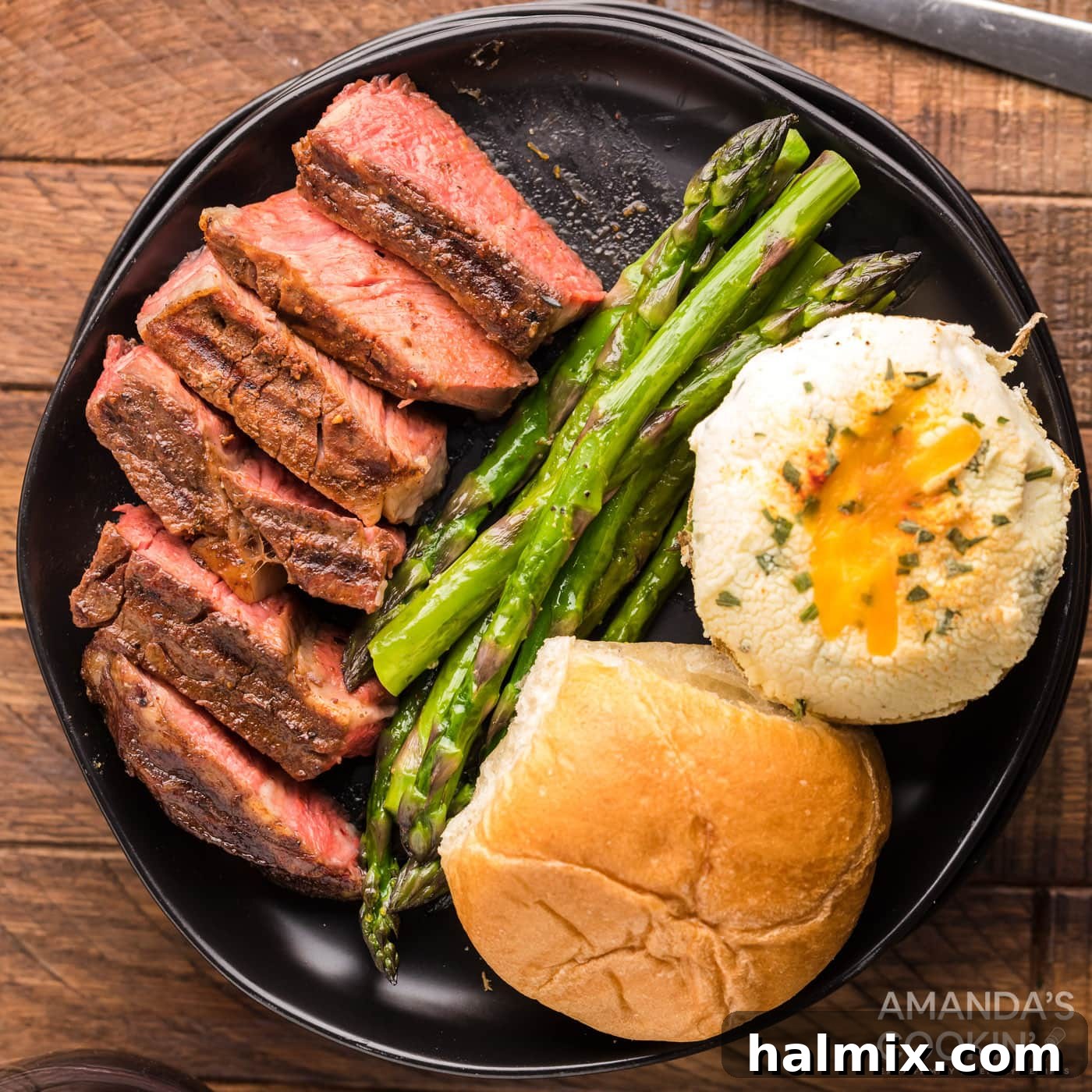
Unlock the secret to a perfectly cooked steak with this incredible method for reverse searing smoked ribeye. This technique yields a beautiful, light crust packed with an intense smoky, beefy flavor, all while ensuring the most tender and juicy bite imaginable. Prepare to impress your taste buds and your guests with this culinary masterpiece.
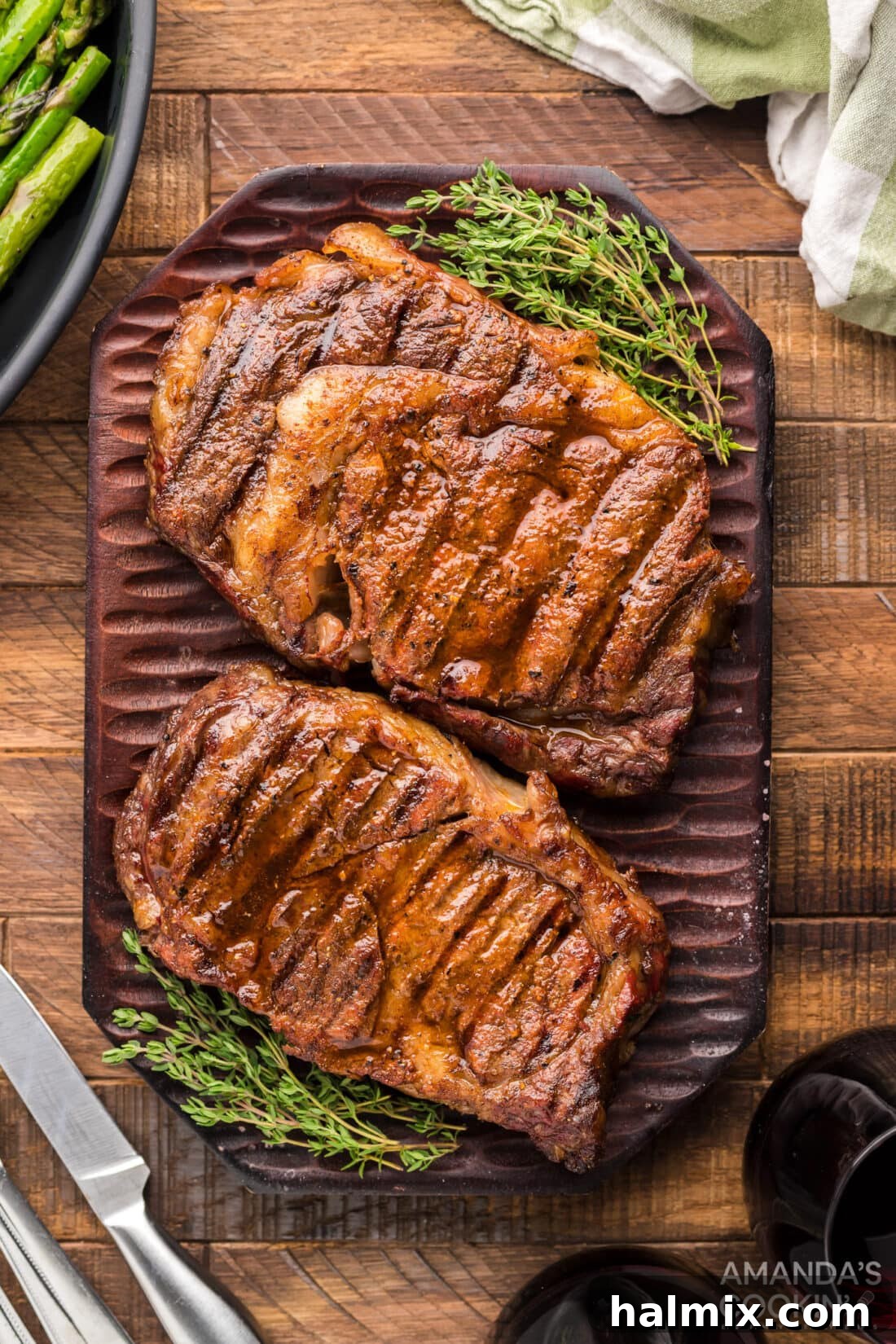
Why Reverse Searing Works Wonders for Smoked Ribeye
While there are many excellent ways to cook a ribeye, from grilled steak and pan-seared steak to even oven-baked steak, the reverse searing method, especially after a slow smoke, stands in a league of its own. This technique fundamentally changes the cooking process, resulting in a tender, incredibly juicy, and flavor-packed cut of meat that’s simply unbeatable.
Reverse searing isn’t just a fancy term; it’s a revolutionary approach to steak preparation. Traditionally, you might sear your steak first to lock in juices before a slow roast. However, reverse searing flips this order: you cook your steak slowly at a lower temperature first, allowing it to reach near-perfect doneness evenly throughout, and only then do you apply a high-heat sear to develop that coveted crust. This “reverse” process minimizes the gray band of overcooked meat often found beneath the crust in traditionally seared steaks, ensuring edge-to-edge tenderness and maximum juice retention. When combined with the irresistible flavor of smoke, you create a ribeye with unparalleled depth and texture.
Related Recipe: Explore another fantastic steak cooking method with our Classic Reverse Sear Ribeye Recipe.
Essential Ingredients for a Flavorful Smoked Ribeye
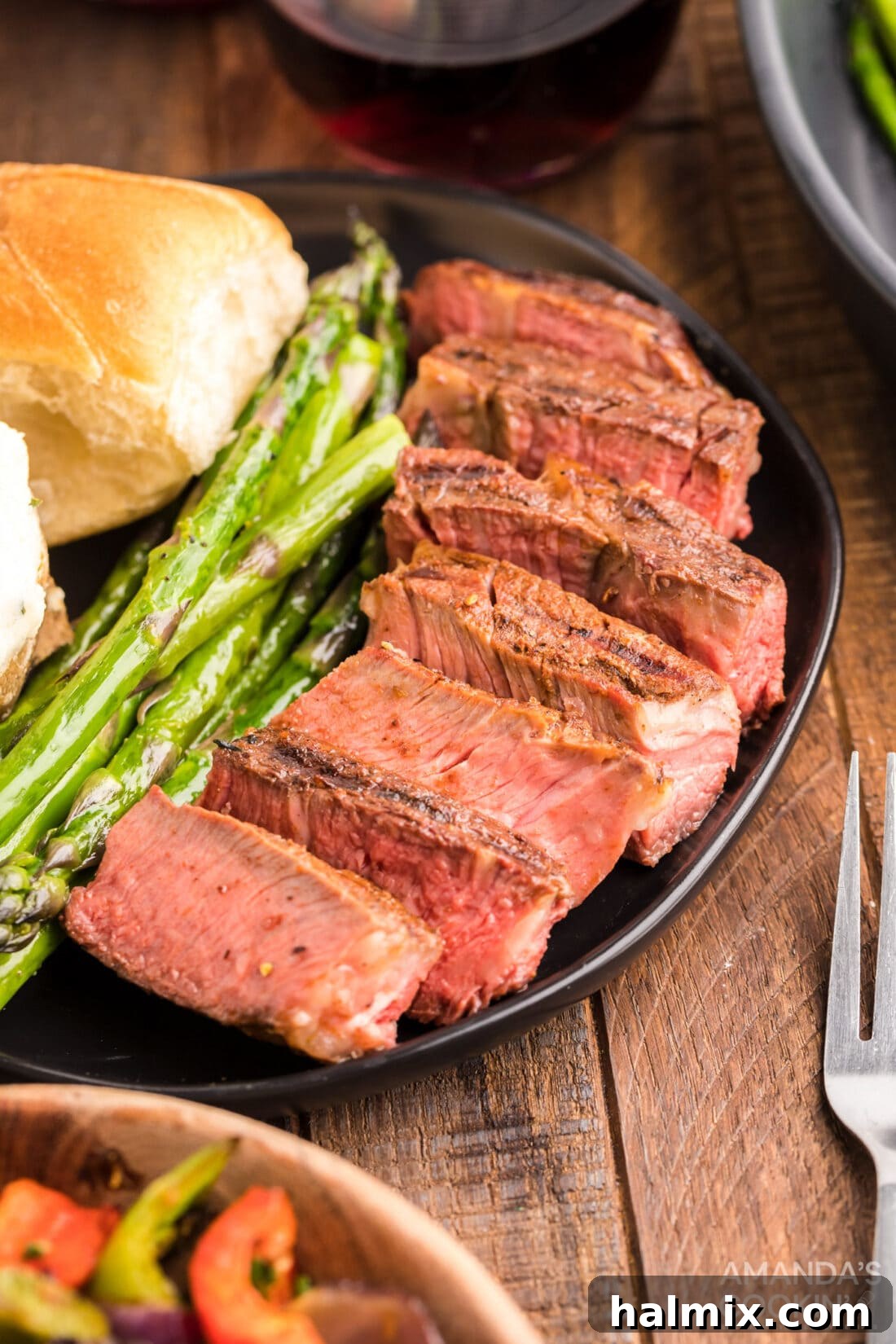
Crafting the perfect smoked ribeye starts with high-quality ingredients. You’ll find a complete list of measurements and detailed instructions in the printable recipe card towards the end of this post.
Ingredient Spotlight & Expert Substitution Tips
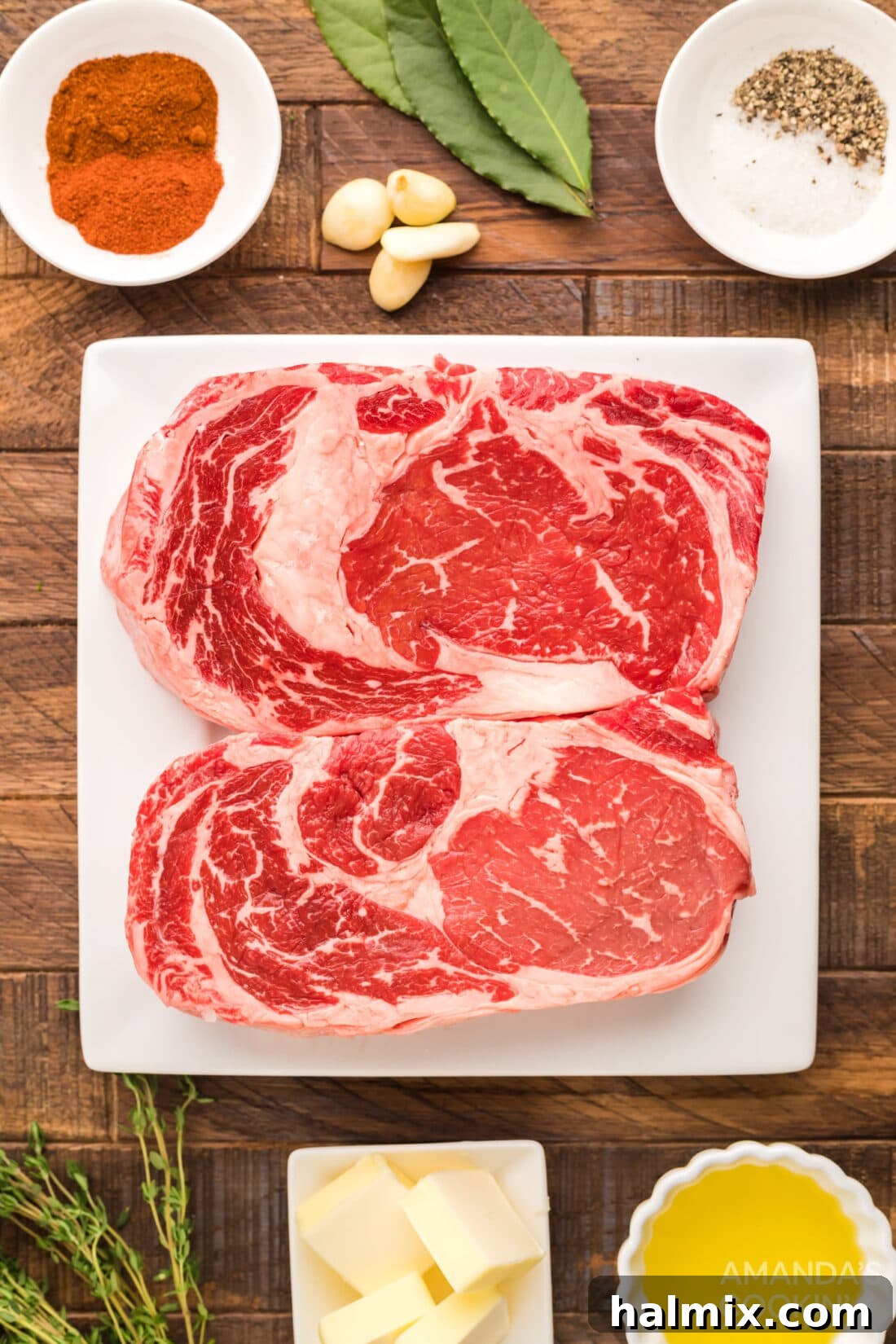
The Star: Ribeye Steak – This recipe shines brightest with a premium ribeye. When selecting your cut, prioritize a boneless ribeye that is approximately 1.5 inches thick. The key to a truly decadent steak lies in its marbling – those beautiful streaks of fat woven throughout the meat. Excellent marbling melts during cooking, basting the steak from within and intensifying its rich, beefy flavor. The thickness is crucial for the reverse sear method, allowing for a gradual, even cook before the final high-heat sear. While 1.5 inches is ideal, slight variations in thickness may alter cooking times, so an accurate instant-read thermometer is your best friend. For medium-rare perfection, aim for an internal temperature of 130-135°F, while a medium steak will register between 135-145°F.
The Flavor Makers: Seasonings – Our chosen blend includes chili powder, paprika, flaky sea salt, and cracked peppercorn, all complemented by salted butter, fresh thyme, aromatic bay leaves, and whole garlic cloves. This combination provides a smoky, savory, and herbaceous profile that enhances the natural richness of the ribeye without overpowering it. However, if you prefer a simpler approach, a generous coating of good quality sea salt and freshly cracked black pepper is often all a high-quality ribeye needs. Feel free to experiment with your favorite steak rub or add a touch of garlic powder or onion powder for extra depth. The beauty of steak lies in its versatility, so adjust the seasonings to your personal preference.
Aromatics & Fat: The cold salted butter, fresh thyme, bay leaves, and garlic cloves are not just for garnish. As the steak slowly smokes, the butter melts, infusing the meat with richness, while the herbs and garlic release their aromatic compounds, adding subtle layers of flavor. These elements elevate the overall experience, creating a more complex and satisfying taste.
Mastering the Art of Smoked & Reverse Seared Ribeye
These step-by-step photos and detailed instructions are designed to guide you visually through the entire cooking process. For a concise, printable version of this recipe with all measurements and instructions, simply jump to the recipe card at the bottom of this post.
- Prepare Your Smoker: Begin by preparing your smoker for optimal performance. For easier cleanup, lay a sheet of foil directly under the grill grates. This will catch any drips and prevent a greasy mess. Fill the hopper about one-quarter full with mesquite pellets. Mesquite offers a strong, distinctive smoke flavor that pairs wonderfully with beef, but feel free to choose your preferred wood pellet type (e.g., hickory, oak, cherry) based on your flavor preference. We typically use a Traeger smoker for consistent results.
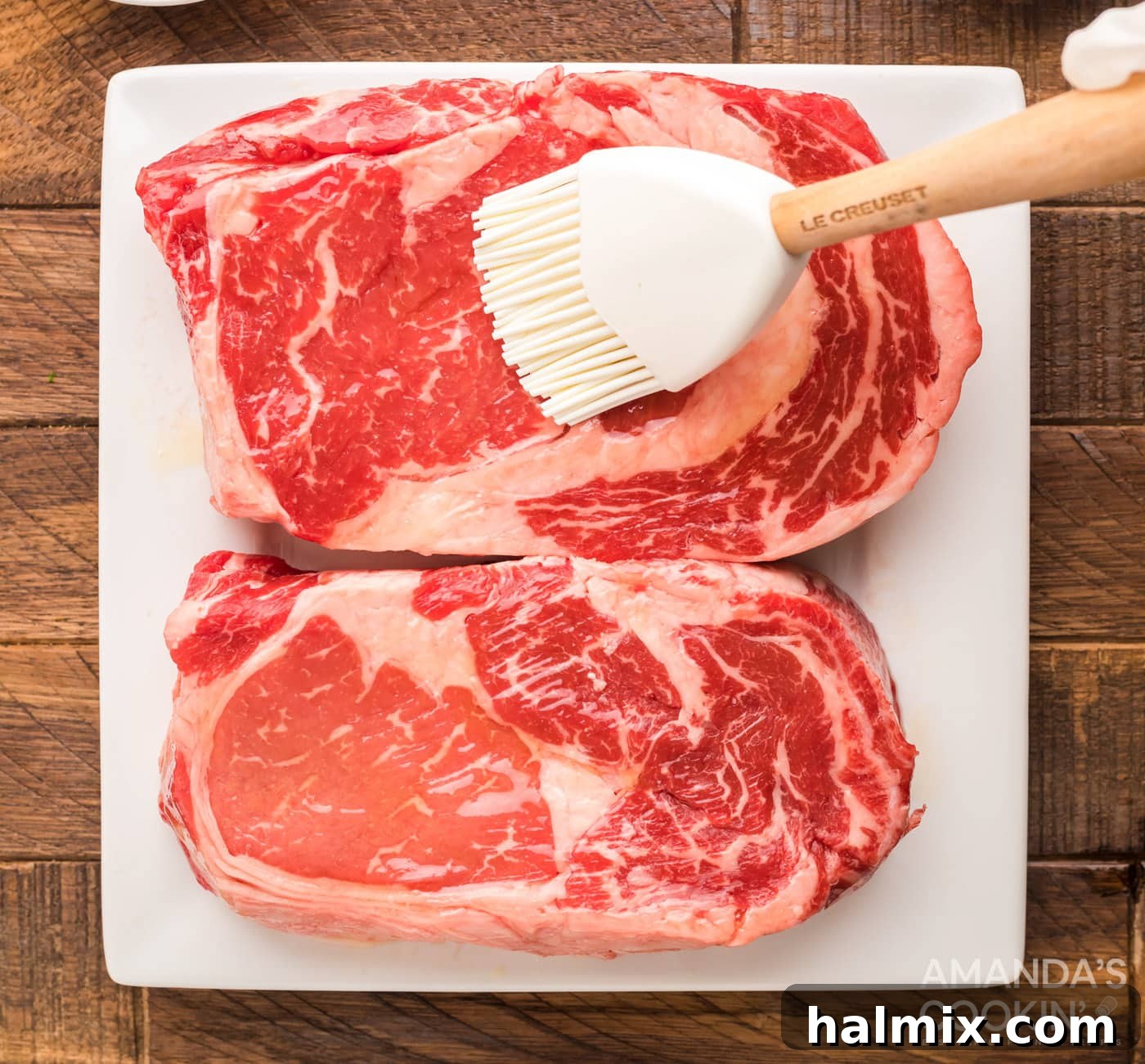
- Season the Ribeyes: Place your boneless ribeyes on a clean plate or cutting board. Generously brush both sides of each ribeye with extra virgin olive oil. The olive oil acts as a binder, helping the seasoning adhere evenly to the meat, and contributes to a beautiful crust during searing.

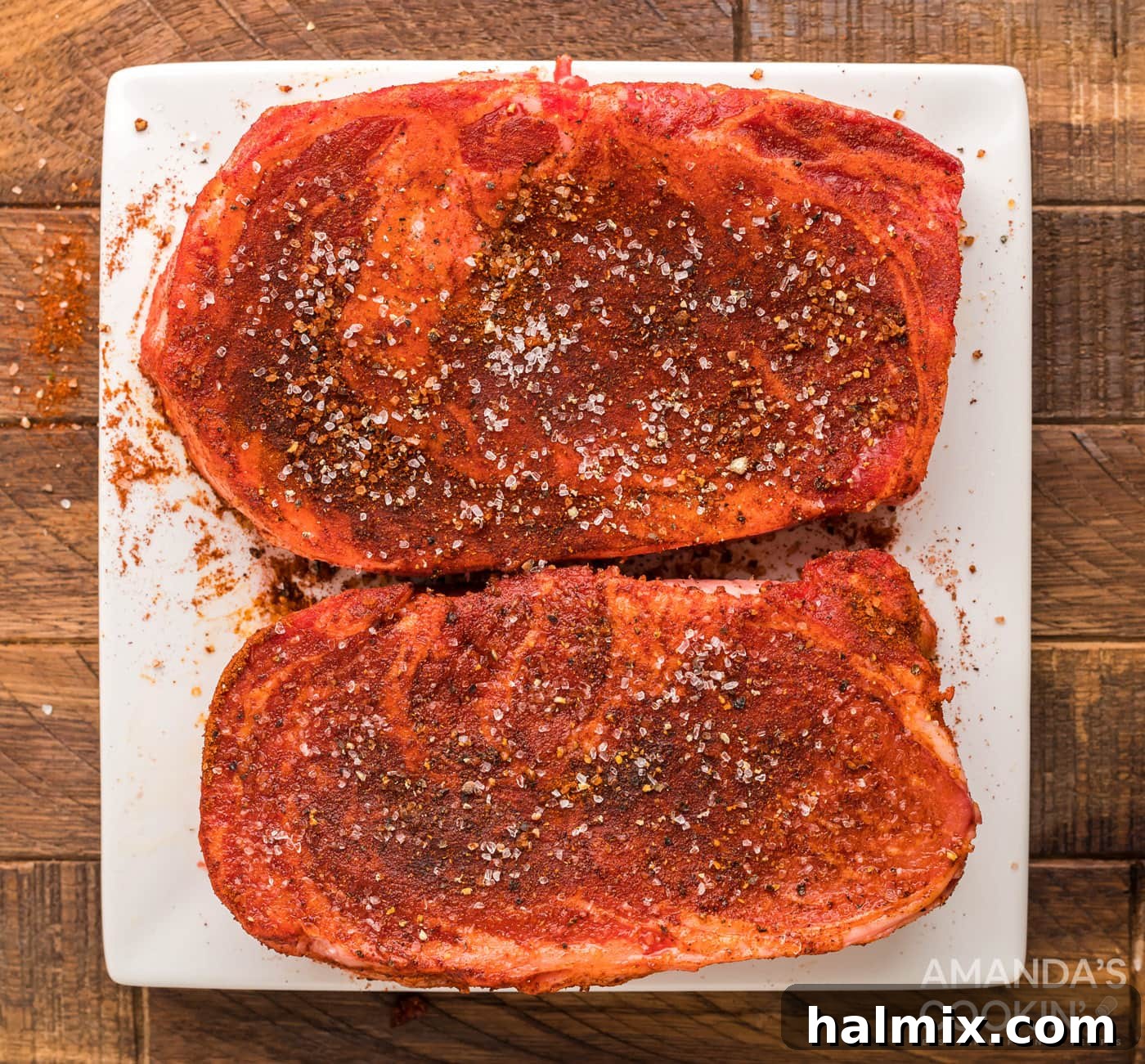
- Apply the Flavorful Rub: In a small bowl, combine your chili powder, paprika, sea salt, and cracked peppercorn. Mix thoroughly. Liberally season both sides of each ribeye with this spice blend. Use your hands to gently rub the seasoning into the steak, ensuring it adheres well. Don’t forget the edges! Dip the sides of the steak into any leftover seasoning on the board to coat them completely. Allow the seasoned steaks to rest at room temperature for at least 15 minutes while your smoker preheats.
EXPERT TIP: This resting period, often called “dry brining,” is crucial. It allows the salt to draw moisture out of the steak. This moisture then dissolves the spices, forming a flavorful brine that is reabsorbed back into the meat. The result is an incredibly juicy, tender, and deeply flavored ribeye throughout.
- Preheat the Smoker: Close the smoker lid and preheat it to 225°F (107°C) for 15 minutes. This low temperature is ideal for the slow smoking process, which will impart maximum smoky flavor and gradually bring the steak up to temperature.
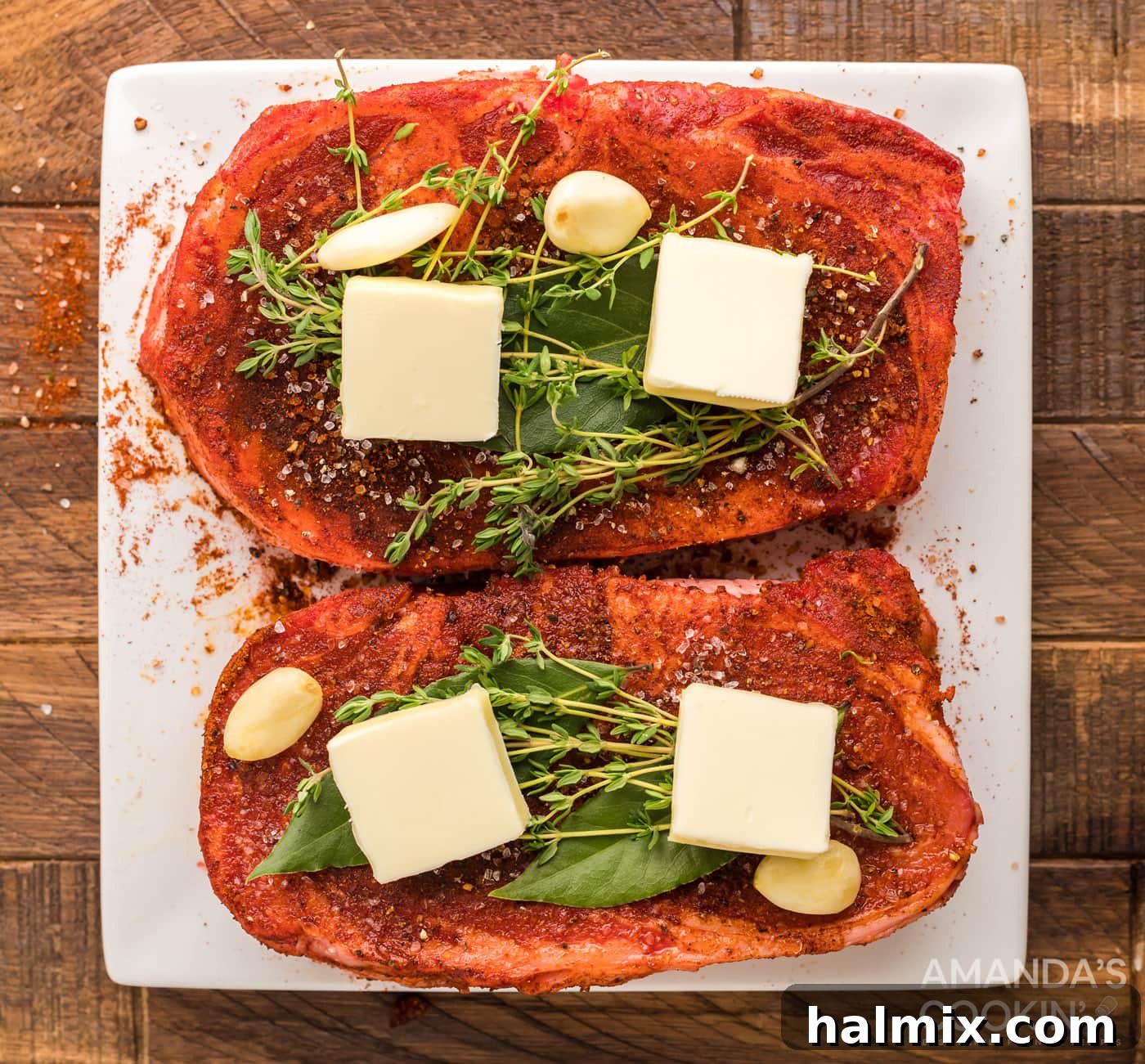
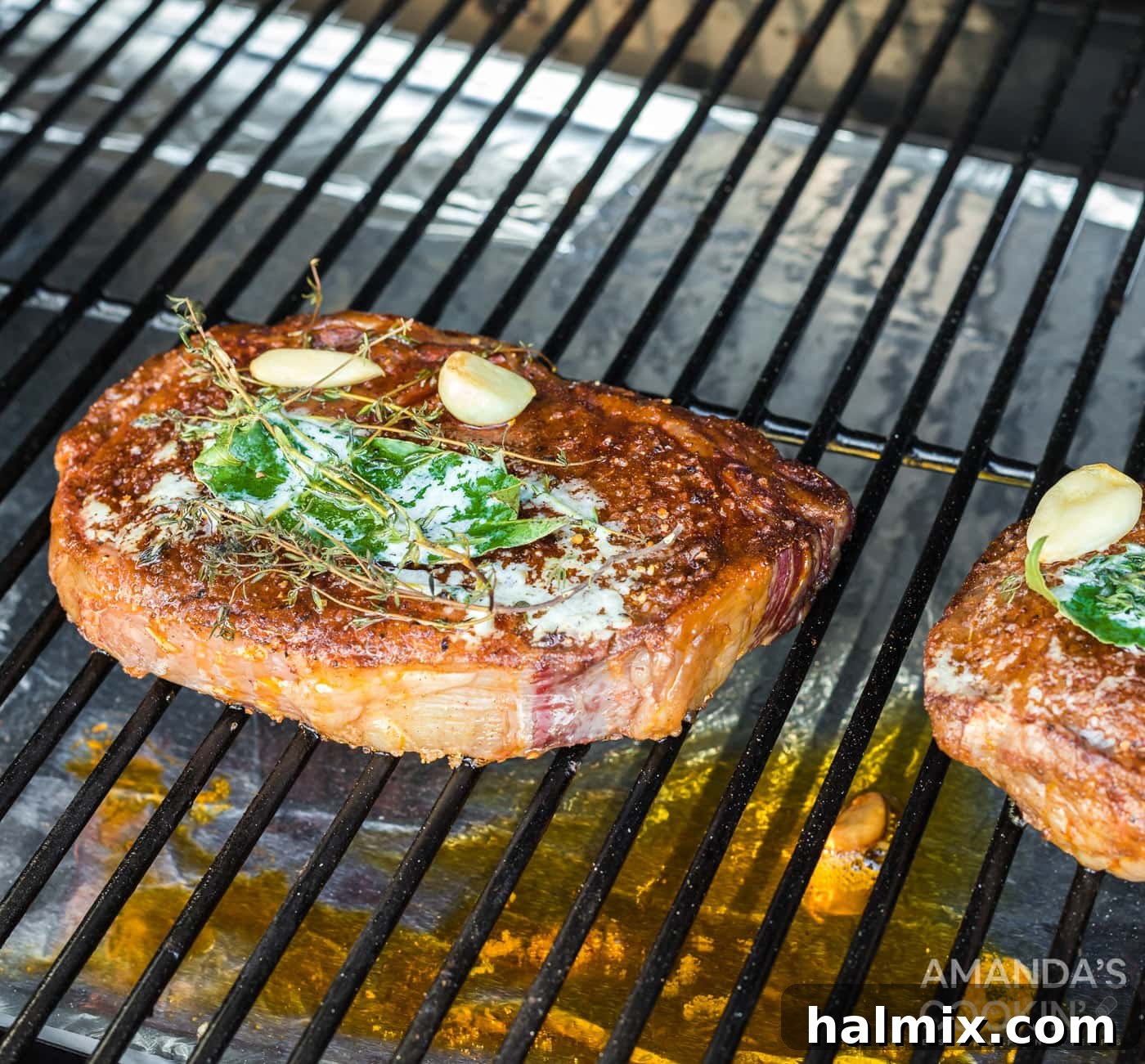
- Add Aromatics and Butter: While the smoker heats, cut your cold salted butter into tablespoon-sized pats. Top each ribeye with 2-3 sprigs of fresh thyme, 2 bay leaves, 2 smashed garlic cloves, and 2 tablespoons of cold butter. These aromatics will infuse the steak with incredible flavor as it smokes.
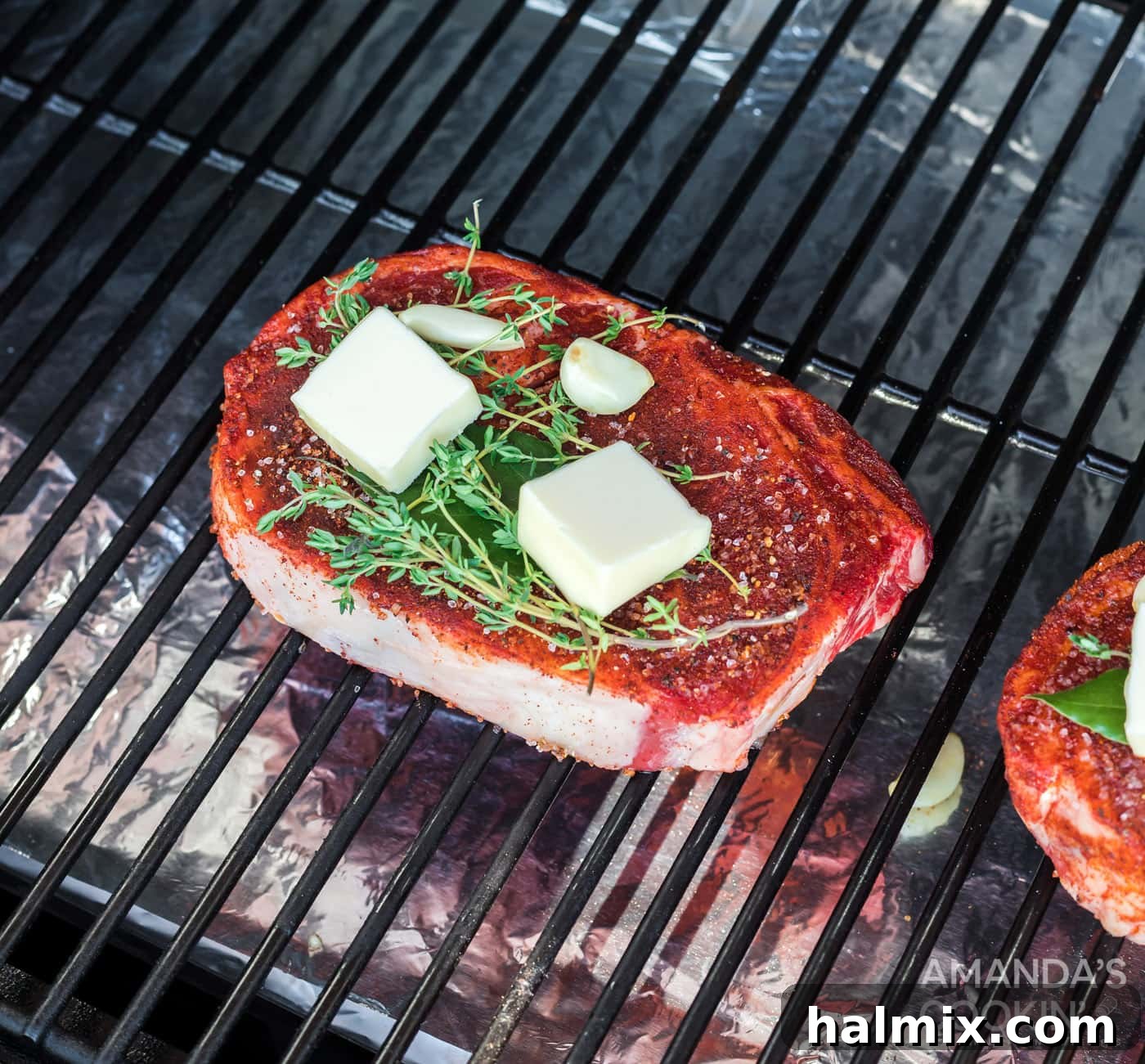
- Slow Smoke the Ribeyes: Carefully place the prepared ribeyes directly onto the grill grates in the center of your preheated smoker. Close the lid and smoke the steaks for approximately 45 minutes, or until an instant-read thermometer inserted into the thickest part of the meat (avoiding bone if applicable) registers 120°F (49°C). This low internal temperature allows for carryover cooking during the rest and sear phases.
- Rest and Prepare for Searing: Once the steaks reach 120°F, remove them from the smoker and discard the thyme, bay leaves, and garlic cloves (or save the smoked garlic to create a delightful smoked aioli!). Place the steaks on a clean cutting board or plate and let them rest. While the steaks rest, increase your smoker’s temperature to a high heat, around 450°F (232°C). Allow the smoker to reach this high temperature for about 10 minutes. This resting period is critical for juicy results, and increasing the smoker temperature simultaneously saves time.
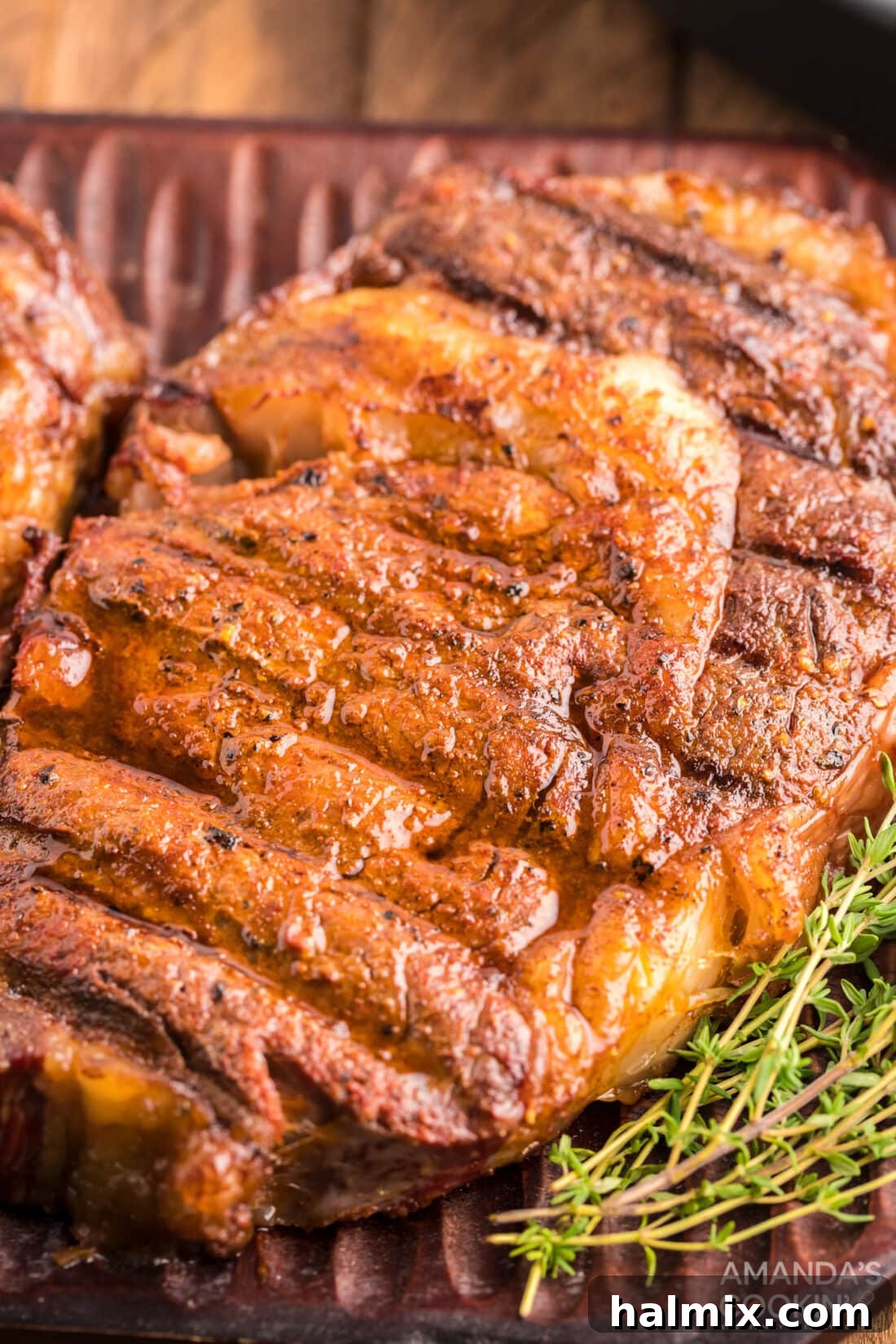
- Execute the Reverse Sear: Once the smoker is screaming hot, carefully place the rested ribeyes back onto the grill grates. Sear each side for 1 minute. This quick, high-heat sear will create that beautiful, irresistible crust without overcooking the interior. This searing time should achieve a perfect medium-rare doneness. If you prefer your steak medium, add an additional minute of searing per side. Immediately remove the steaks from the heat after searing.
EXPERT TIP: Remember that steak continues to cook after it’s removed from the heat, a phenomenon known as “carryover cooking.” The internal temperature will rise by approximately 5°F during the resting period. Always account for this when targeting your desired doneness. Due to variations in steak size and thickness, actual cooking times may vary slightly.
- Final Rest and Serve: Transfer the seared ribeyes to a clean cutting board and allow them to rest for a final 10 minutes. This second rest is just as important as the first; it allows the muscle fibers to relax and reabsorb the juices, ensuring a uniformly tender and juicy steak.
- Slice and Enjoy: Slice your perfectly cooked smoked ribeye against the grain into desired portions. Serve immediately with your favorite side dishes and savor every mouthwatering bite. Enjoy the rich, smoky, and unbelievably tender experience!
Frequently Asked Questions & Expert Tips for Smoked Ribeye
For a medium-rare smoked ribeye steak, aim for an internal temperature of 130-135°F (54-57°C). If you prefer a medium steak, the target range is 135-145°F (57-63°C). Always use a reliable instant-read thermometer for accurate readings to ensure your steak is cooked to perfection without guessing.
If your smoker can’t reach the high temperatures required for a good sear, don’t worry! You have excellent alternative options. You can sear the cooked ribeye on a preheated cast iron pan on your stovetop until a crust forms. Alternatively, an indoor grill or even a very hot outdoor gas grill can be used for the searing step after the smoking process is complete. The key is to achieve a very high surface temperature for that quick, intense sear.
Mesquite provides a strong, bold smoke flavor that complements beef beautifully, as used in this recipe. However, you can experiment with other wood pellets to tailor the flavor profile to your liking. Hickory offers a robust, bacon-like flavor. Oak is versatile and provides a medium smoke flavor. Cherry or apple wood can impart a milder, slightly sweet and fruity smoke that can also be delightful with ribeye. Choose a wood that you enjoy and that complements the richness of the steak.
While it’s best to cook and serve ribeye fresh, you can season the steaks and allow them to dry brine in the refrigerator for up to 24 hours before smoking. This can actually enhance the flavor and tenderness even further. Once cooked, leftover smoked ribeye can be stored in an airtight container in the refrigerator for 3-4 days. Reheat gently to avoid drying out the meat.
Perfect Pairings: What to Serve with Smoked Ribeye
A magnificent smoked ribeye deserves equally impressive accompaniments. Its rich, smoky flavor pairs beautifully with a variety of side dishes, elevating your meal to a truly memorable experience. Consider these fantastic options:
- Cheesy Bacon Chive Twice Baked Potatoes: Creamy, savory, and satisfying – a classic steakhouse companion.
- Grilled Asparagus: Simple yet elegant, the smoky char on asparagus complements the steak perfectly.
- Grilled Corn on the Cob: Sweet and smoky, a delightful seasonal side.
- Homemade Pull-Apart Dinner Rolls: Soft, warm rolls are perfect for soaking up any delicious juices.
- Baked Sweet Potato Fries: A slightly healthier and sweeter alternative to regular fries.
- Grilled Corn and Zucchini Salad with Feta: A refreshing and vibrant salad that cuts through the richness of the steak.
- A robust red wine, such as a Cabernet Sauvignon or Syrah, would also be an excellent beverage pairing.
I love sharing my kitchen adventures and delicious recipes with all of you! To make sure you never miss a new post, I offer a convenient newsletter delivered right to your inbox. Simply subscribe and start receiving your free daily recipes – it’s the easiest way to stay inspired!
Smoked Ribeye Steak
IMPORTANT – There are often Frequently Asked Questions within the blog post that you may find helpful. Simply scroll back up to read them!
Print It
Pin It
Rate It
Course:
Dinner
Cuisine:
American
4
servings
1
hour
413
Amanda Davis
Ingredients
-
2
boneless ribeye
at 1 1/2 inchs thick -
2
Tbsp
extra virgin olive oil -
1
Tbsp
chili powder -
1
Tbsp
paprika -
1
tsp
sea salt flakes -
1
tsp
cracked peppercorn -
4
Tbsp
salted butter
cold -
4
sprigs
thyme -
4
bay leaves -
4
cloves
garlic
Things You’ll Need
-
Smoker
-
Tongs
-
Instant-Read Thermometer
Before You Begin
- Keep in mind the steak will continue to cook as it rests and will rise by about 5°F in temperature (carryover cooking). Depending on the size and thickness of the steak, cooking times can vary slightly. For medium-rare, the internal temperature should be 130-135°F. For medium, it should be 135-145°F. Always use an instant-read thermometer for accuracy.
- Consider resting your seasoned steaks at room temperature for 15-30 minutes before smoking, which helps in even cooking.
Instructions
-
Prepare your smoker by laying foil under the grates and filling the hopper ¼ full with mesquite pellets.
-
Brush both sides of the ribeyes with olive oil.
-
Combine chili powder, paprika, salt, and pepper in a bowl. Generously season both sides of each ribeye, rubbing the seasoning into the steak. Let rest for 15 minutes.
-
Preheat the smoker to 225°F (107°C) for 15 minutes with the lid closed.
-
Cut cold butter into tablespoons. Top each ribeye with 2-3 sprigs of thyme, 2 bay leaves, 2 garlic cloves, and 2 tbsp of butter.
-
Place ribeyes onto the grill grates in the center of the smoker. Smoke for 45 minutes, or until internal temperature reaches 120°F (49°C).
-
Remove ribeyes, discard toppings. Increase smoker temperature to 450°F (232°C) and allow to come to temp for 10 minutes as the steak rests.
-
Place ribeyes back onto grill grates and sear for 1 minute per side for medium-rare (add 1 min per side for medium). Remove from heat and let rest for 10 minutes.
-
Slice and serve with your favorite veggies. Enjoy!
Nutrition
Serving:
1
serving (half a sliced steak)
|
Calories:
413
cal
|
Carbohydrates:
3
g
|
Protein:
24
g
|
Fat:
35
g
|
Saturated Fat:
15
g
|
Polyunsaturated Fat:
2
g
|
Monounsaturated Fat:
16
g
|
Trans Fat:
1
g
|
Cholesterol:
99
mg
|
Sodium:
193
mg
|
Potassium:
403
mg
|
Fiber:
2
g
|
Sugar:
1
g
|
Vitamin A:
1870
IU
|
Vitamin C:
3
mg
|
Calcium:
31
mg
|
Iron:
3
mg
Tried this Recipe? Pin it for Later!
Follow on Pinterest @AmandasCookin or tag #AmandasCookin!
The recipes on this blog are tested with a conventional gas oven and gas stovetop. It’s important to note that some ovens, especially as they age, can cook and bake inconsistently. Using an inexpensive oven thermometer can assure you that your oven is truly heating to the proper temperature. If you use a toaster oven or countertop oven, please keep in mind that they may not distribute heat the same as a conventional full sized oven and you may need to adjust your cooking/baking times. In the case of recipes made with a pressure cooker, air fryer, slow cooker, or other appliance, a link to the appliances we use is listed within each respective recipe. For baking recipes where measurements are given by weight, please note that results may not be the same if cups are used instead, and we can’t guarantee success with that method.